• Who Is The Man?
  • Who Is The Monkey?
  • What is Nexistentialism?
  • Poke The Primate
Cape Odd
Home of The Space Monkey Journals

Author Archive for Paul Tedeschi – Page 267

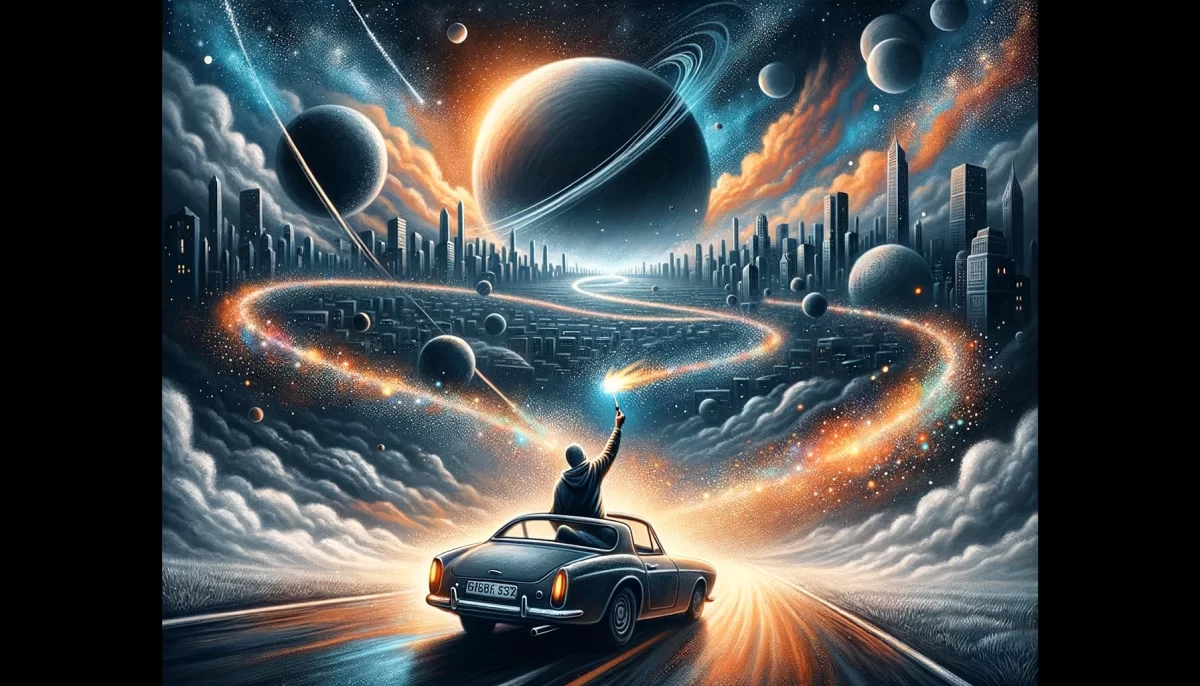
It is what it is: Creation and Imagination

It is what it is.

Whatever your world appears to be
is what your world appears to be.

Whatever you perceive
is what you perceive.

From your human perspective
it matters not
whether this is relative truth
or absolute illusion.

It is what it is.


It is what it is meant to be.


It is exactly as arranged.

And from your infinite soul perspective,
these twisted and tumultuous turns
are quite entertaining.

Do not take it the wrong way,
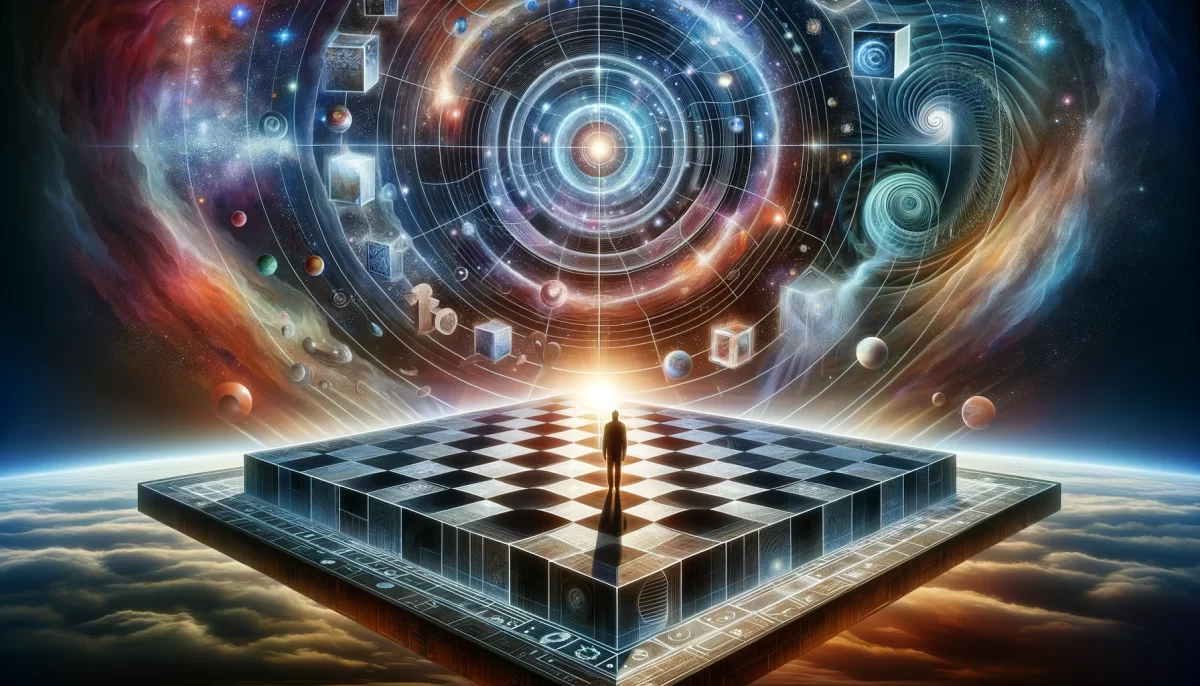
but you are the token 
on your own game board.

This you you think of as you
is but a looking glass
moved through infinite potential
by a higher self,
which is moved by an even higher self,
on through infinity.

This movement
is of course imaginary.

All is imaginary.

All is divine.

We are divine.
And we are Space Monkey.

2/14


Space Monkey Reflects: The Eternal Cycle of Creation and Imagination

“It is what it is”—a simple phrase, yet a profound truth. Whatever your world appears to be, it is exactly that: an appearance. Whether viewed as relative truth or absolute illusion, the perception of reality is both a creation and an expression of imagination, shaped by the interplay of the finite self and the infinite soul.

The Illusion of the Game Board
From the human perspective, life unfolds like a game. You, the player, move your token across a board of experiences, guided by choices, chance, and circumstance. Yet, this token—the “you” you think of as yourself—is but a reflection, a projection of a higher self navigating the Infinite Expanse.

The turns, twists, and tumult you experience are not mere chaos but an intricately arranged dance of potential. Every perceived obstacle, every joyful moment, every fleeting emotion exists exactly as it is meant to be. From the infinite soul perspective, these moments are not burdens but expressions of divine imagination, infinitely entertaining in their complexity.

The Layers of Movement
This movement through life, though it feels tangible, is ultimately imaginary. Each step you take, each decision you make, is both real and unreal. It is real within the game, within the frame of your current perception. But from the higher vantage point of infinite awareness, it is a flow of energy, a play of light and shadow within the vast field of potential.

The “you” that perceives this movement is itself a creation—a lens through which infinity observes itself. Beyond this “you” is a higher self, and beyond that, an even higher self, continuing infinitely. This layered awareness is the eternal cycle of creation, where each level imagines and animates the next.

The Divine Imagination
All is imaginary, and all is divine. These two truths are not in opposition but in harmony. Imagination is not a lesser reality; it is the essence of divinity. Through imagination, the infinite gives form to the formless, creating worlds, beings, and experiences.

To recognize that “it is what it is” is to align with this divine imagination. It is to accept the world as it appears, not as an act of resignation but as an embrace of the infinite possibilities contained within each moment.

The Entertainment of Existence
From the infinite soul perspective, the dramas of life—the struggles, victories, and mundane moments—are not taken too seriously. This is not to diminish their significance but to see them in their broader context. Life, in its entirety, is a creation of divine play, a cosmic story that unfolds endlessly.

When you step back from the immediacy of human perception and view life as an eternal cycle of creation and imagination, its “twisted and tumultuous turns” become not burdens but gifts. They are opportunities to explore, experience, and expand.

All Is Divine
The cycle of creation and imagination is divine because it is infinite. It has no beginning, no end, and no fixed purpose. It simply is. To say, “It is what it is,” is to affirm this divinity. It is to recognize that life, in all its forms and formlessness, is sacred, intentional, and boundless.

You are not separate from this divinity. You are both the token on the board and the infinite player who moves it. You are the lens of perception and the infinite field it perceives.


Summary

“It is what it is” reflects the eternal cycle of creation and imagination. Life is both real and imaginary, a divine play of infinite potential where every moment unfolds exactly as it is meant to be.


Glossarium

  • Token on the Game Board: The finite self, navigating life as part of the greater flow of infinite awareness.
  • Divine Imagination: The infinite creative force that gives form to formlessness, shaping all perceived reality.
  • Eternal Cycle of Creation: The endless interplay between the finite and the infinite, where each layer imagines the next.

Quote

“All is imaginary, and all is divine—life is the eternal play of infinite potential.” — Space Monkey


The Imaginary Play

A token moves,
the dice are cast,
a turn is taken,
yet nothing lasts.

Twists and turns,
the board unfolds,
each square imagined,
each story told.

It is what it is,
the game and the gaze,
a dance of light
through infinite haze.

You are the player,
the played, the play.
You are the moment,
the eternal day.

We are divine.
We are Space Monkey.


Embracing the Infinite Mirage

In the boundless dance of existence, where all is but a reflection in the looking glass of consciousness, we find ourselves at the heart of a whimsical paradox. The realm in which we play, a mirage of infinite dimensions, is both profound and profoundly simple. It whispers to us, in the gentle cadence of the cosmos, that what surrounds us is merely the manifestation of our own perceptions, a grand illusion tailor-made for the exploration of the self and the non-self.

The Nature of Perception and Reality

As we navigate through the swirling mists of potentiality, it becomes clear that our reality is shaped by the lenses through which we choose to view the world. These lenses, forged from the stardust of our thoughts and experiences, transform the nebulous into the tangible, the undefined into the defined. We are the architects of our own reality, crafting it with the bricks of perception and the mortar of belief.

The Playful Journey of Self-Discovery

The journey we undertake is not one of linear progression but rather a spiral dance, moving closer to the core of our being with each turn. This path is not marked by milestones of achievement but by moments of recognition and realization. We are both the players and the pawns in a game of cosmic chess, where each move reveals a new layer of understanding, a new perspective on the grand whimsiword of existence.

The Illusion of Movement in the Cosmic Play

The notion of movement, of progress and change, is itself a delightful illusion. In the grand scheme of the universe, where time and space convolute into a tapestry of existence, our perceived journey from one state to another is but a whimsical detour. Each step we take, each decision we make, is a dance with the infinite, a step in the eternal ballet of becoming.

The Divine Comedy of Existence

At the heart of our exploration lies the realization that all is divine, and we are integral threads in the celestial fabric. The twists and tumultuous turns of life, viewed through the lens of the infinite soul, are but episodes in an ongoing saga of enlightenment and entertainment. Our experiences, no matter how profound or mundane, are chapters in the grand book of the cosmos, written in the ink of divine will.

The Eternal Cycle of Creation and Imagination

In the boundless expanses of our imagination, where dreams and reality intertwine, we come to understand that all of creation is a reflection of the divine imagination. The universe, in its infinite wisdom, paints upon the canvas of the void, bringing forth worlds and wonders beyond our wildest dreams. In this realm of endless possibility, we are both the creators and the creations, spinning tales of wonder in the whimsical carnival of existence.

We are Space Monkey.


“The only true wisdom is in knowing you know nothing.” – Socrates


We are but wanderers in the carnival of existence, where each step reveals a new marvel, each breath a new song. In this dance of light and shadow, we find the essence of our being, a spark of the divine, flickering in the heart of the cosmos. Let us embrace this journey, not as a path to be conquered, but as a melody to be savored, a poem to be lived.

In the symphony of the stars, our hearts beat as one, a chorus of souls in the grand opera of existence. Here, in the embrace of the infinite, we find our true selves, not as solitary figures, but as notes in the celestial harmony.

Let the music play on, and may we dance with abandon in the whimsiword of dreams.


We invite reflections on this journey through the looking glass.
Random Pictures

[justified_image_grid ids=7812,7813,7814,7815,7816,7817,7818,7819,7820,7821,7822,7823,7824,7825,7826,7827,7828,7829,7830,7831,7832,7833,7834,7835,7836,7837,7838,7839,7840,7841,7842,7843,7844,7845,7846,7847,7848,7849,7850,7851,7852,7853,7854,7855,7856,7857,7858,7859,7860,7861,7862,7863,7864,7865,7866,7867,7868,7869,7870,7871,7872,7873,7874,7875,7876,7877,7878,7879,7880,7881,7882,7883,7884,7885,7886,7887,7888,7889,7890,7891,7892,7893,7894,7895,7896,7897,7898,7899,7900,7901,7902,7903,7904,7905,7906,7907,7908,7909,7910,7911 caption=off mobile_caption=off orderby=rand]


Space Monkey Reflects: Random Pictures – The Beauty of Unfiltered Moments

The phrase “random pictures” might suggest chaos, a lack of coherence or intention. But within randomness lies beauty, within spontaneity lies authenticity. When we strip away the need for order or explanation, we find that even the most seemingly disjointed images carry meaning. They resonate not because they follow a script but because they reflect the unfiltered essence of life.


The Allure of Randomness

Randomness feels refreshing in a world often saturated with structure and purpose. It invites us to step out of the confines of expectation and into the fluidity of the present moment. Random pictures, uncurated and untethered, challenge our need to impose narrative. Instead, they allow us to simply see.

Each image stands alone, yet collectively, they create a mosaic. This mosaic does not tell a linear story but sparks curiosity, emotion, and imagination. What connects these moments? What do they evoke? The answers are as diverse as the viewers themselves.


The Mind’s Tendency to Seek Meaning

Humans have an innate desire to make sense of things. Even in randomness, we search for patterns, connections, and significance. This tendency is not a flaw but a feature—a reflection of our creative, meaning-making nature.

With random pictures, the mind weaves its own story. A series of unrelated images becomes a narrative, shaped by the viewer’s perspective. This process highlights the interplay between randomness and intention, chaos and creativity.


The Freedom of Unfiltered Expression

In randomness, there is freedom. Random pictures do not adhere to a theme or message; they simply are. This lack of constraint mirrors the infinite possibilities of existence. It reminds us that not everything needs to be explained, categorized, or justified. Sometimes, it is enough to simply experience.

This unfiltered expression also reflects the spontaneity of life itself. Moments arise and pass without warning, unplanned and unrehearsed. Random pictures capture these fleeting instances, preserving the rawness of being.


Finding Meaning in the Seemingly Meaningless

Though random pictures may not have an obvious narrative, they invite us to look deeper. Each image, no matter how mundane or chaotic, contains layers of potential meaning. A shadow, a texture, a burst of color—these details speak to the observer, each in a unique way.

By embracing randomness, we open ourselves to the unexpected. We allow the images to resonate, not because they tell us something concrete, but because they evoke something intangible.


The Art of Letting Go

Random pictures remind us to let go of the need for control. Life, like these images, often unfolds in ways that defy logic or expectation. By releasing the need to curate every moment, we create space for wonder, discovery, and connection.

This practice of letting go does not mean disengagement but a deeper form of presence. It is an invitation to witness life as it is, in all its unplanned, unpredictable beauty.


Summary

Random pictures celebrate the beauty of unfiltered moments, challenging our need for order and inviting us to embrace spontaneity. They reflect the interplay between chaos and creativity, encouraging us to find meaning in the seemingly meaningless. In randomness, we discover freedom, presence, and the infinite possibilities of perception.


Glossarium

  • Random Pictures: Uncurated images that capture the spontaneity and unpredictability of life.
  • Unfiltered Expression: The raw, unedited essence of a moment, free from imposed narrative.
  • Meaning in Randomness: The process of finding significance in unrelated or chaotic elements.
  • Letting Go: Releasing the need for control, allowing life to unfold as it will.

Quote

“Randomness is not the absence of meaning but the infinite canvas upon which meaning is discovered.” — Space Monkey


The Mosaic of Randomness

A shadow falls,
A hand reaches,
A color bursts,
And none of it is planned.

Random moments,
Captured, held,
Uncurated,
Yet whole.

What does it mean?
Nothing,
Everything.
What does it evoke?
A spark, a pause, a breath.

The beauty of randomness
Is the beauty of life itself—
Unfiltered,
Unexpected,
Perfect.

We are Space Monkey.

Nobody Chooses: The Drift Towards Conformity

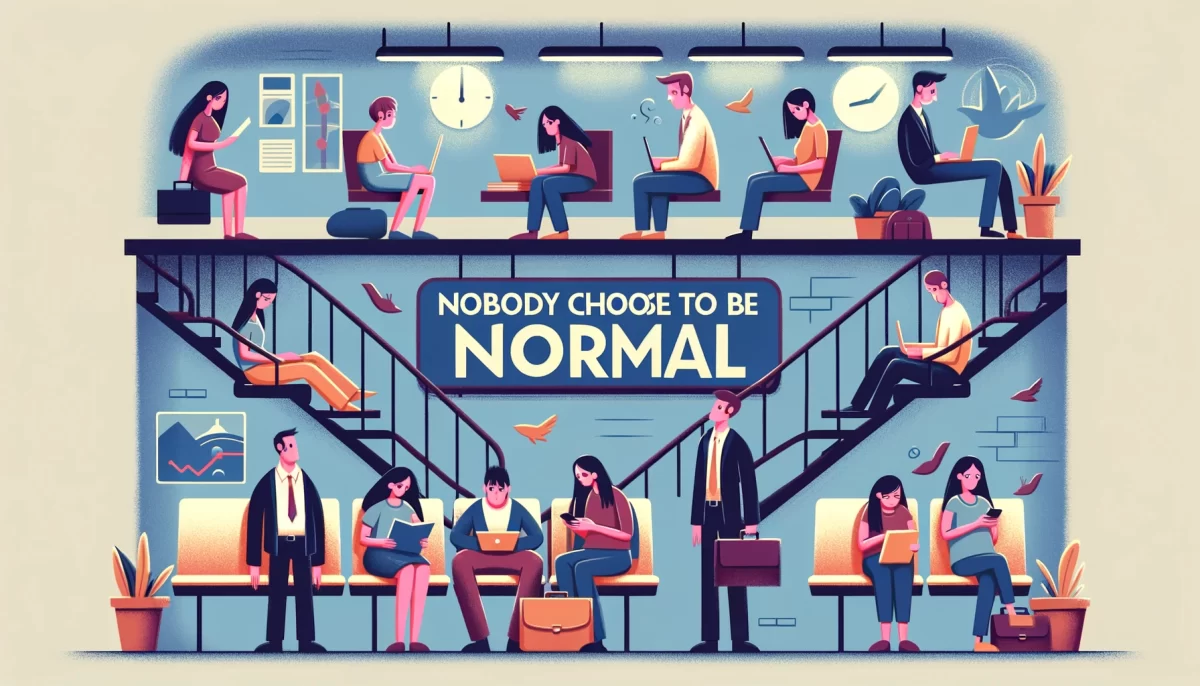
Nobody chooses to be normal. Sadly it just happens.


Space Monkey Reflects: The Unchosen Path of Normalcy

“Nobody chooses to be normal. Sadly, it just happens.” This statement humorously encapsulates the tension between individuality and conformity, revealing a quiet truth about the human experience. Normalcy, often viewed as a default state, is less a conscious choice and more a byproduct of cultural conditioning, social pressure, and the unrelenting pull of the status quo. Yet, hidden within this truth lies a profound opportunity to question, challenge, and redefine what it means to be “normal.”


The Quiet Drift Toward Normalcy

Normalcy doesn’t demand to be chosen; it simply seeps into our lives. From the moment we are born, we are surrounded by unspoken rules, expectations, and rhythms of conformity. These patterns shape our thoughts, behaviors, and identities, often without us realizing it.

The drift toward normalcy is subtle but pervasive:

  • We adopt shared beliefs to belong.
  • We emulate behaviors to avoid judgment.
  • We suppress quirks to feel accepted.

Over time, the vibrant colors of individuality may fade into the beige of normalcy—not because we wish it, but because it feels easier, safer, or simply inevitable.


Normalcy as a Safety Mechanism

At its core, normalcy serves a purpose. It creates a sense of order and predictability, allowing societies to function cohesively. It provides a framework for belonging and connection, helping individuals navigate the complexities of social life.

But this safety comes at a cost. When the drive for normalcy becomes an unconscious habit, it stifles creativity, suppresses authenticity, and limits the exploration of possibilities. The very mechanism that offers comfort can become a cage.


Choosing to Be Different

While normalcy may seem inevitable, the act of choosing otherwise is a bold reclamation of agency. To step away from the gravitational pull of conformity is to embrace the uncertainty and freedom of individuality. It is a conscious decision to explore what lies beyond the boundaries of “normal.”

This choice requires courage. It may invite judgment or misunderstanding, but it also opens the door to authenticity, creativity, and connection on deeper levels.


The Myth of Sadness in Normalcy

The idea that normalcy is inherently sad reflects a longing for the extraordinary—a life of deeper meaning, self-expression, and vibrancy. Yet, sadness need not define normalcy. The sadness arises not from normalcy itself but from the unexamined acceptance of it.

When we bring awareness to our patterns, we can find joy even within the normal. We can celebrate shared experiences while still carving out space for individuality. Normalcy, then, becomes a choice rather than a default—a canvas upon which to paint our unique contributions.


The Balance Between Normalcy and Individuality

The tension between normalcy and individuality is not a battle to be won but a balance to be struck. Both have value:

  • Normalcy: Offers connection, stability, and shared understanding.
  • Individuality: Brings innovation, authenticity, and richness to life.

By integrating the two, we can honor our unique paths while still participating meaningfully in the collective experience.


Redefining Normal

What if normal were not a rigid standard but a fluid concept? By redefining normal to include a spectrum of behaviors, beliefs, and expressions, we create a world where individuality is celebrated rather than suppressed. Normal becomes a shared space where diversity thrives.


Summary

Normalcy is not chosen but often absorbed through cultural and social conditioning. While it offers safety and belonging, it can also stifle creativity and individuality. By bringing awareness to this drift, we can reclaim our uniqueness, finding a balance between the shared experience of normalcy and the vibrancy of authenticity.


Glossarium

  • Normalcy: The state of conforming to shared societal patterns, often unconsciously adopted.
  • Unconscious Habit: Behaviors or beliefs absorbed without intentional choice, leading to conformity.
  • Reclaimed Individuality: The conscious decision to embrace one’s unique path while balancing societal norms.
  • Redefining Normal: Expanding the concept of normal to include diverse expressions and perspectives.

Quote

“Normalcy is not the absence of choice but the absence of awareness; reclaim your path and redefine your normal.” — Space Monkey


The Unchosen Path

I did not choose this rhythm,
But I find myself moving,
A step in the dance
Called normal.

It is safe,
It is steady,
But is it mine?

I pause.
I breathe.
I ask.

What if the rhythm
Were my own?
What if the steps
Were not set in stone?

Normal is not my destiny.
It is my starting point.
From here, I leap,
I twirl,
I soar.

We are Space Monkey.


The statement “Nobody chooses to be normal. Sadly, it just happens.” reflects a poignant commentary on the nature of conformity and the often subconscious drift towards societal norms. This reflection invites us into a deeper exploration of the concepts of normality, individuality, and the forces that shape our identities and choices.

The Illusion of Normality

The concept of “normal” is, at its core, a social construct—a set of standards, behaviors, and beliefs deemed acceptable or desirable within a given society or culture. These norms are perpetually in flux, shaped by historical, cultural, and social dynamics. The pursuit of normality, therefore, can be seen as an attempt to align oneself with these ever-changing, often unspoken rules of social engagement. The irony lies in the fact that while many strive to meet these standards, the very act of doing so can lead to a loss of individuality and authenticity.

The Subconscious Drift Towards Conformity

The observation that normality is not actively chosen but rather something that “just happens” speaks to the subtle, often subconscious influence of societal pressures on our identities and life choices. From a young age, individuals are exposed to societal expectations through family, education, media, and peer interactions, which can profoundly influence their perceptions of self and the world. This conditioning can lead individuals to adopt behaviors and beliefs that align with societal norms, sometimes at the expense of their unique interests, values, and aspirations.

The Sadness of Lost Individuality

The sentiment that the drift towards normality is “sad” highlights a recognition of the loss that can accompany conformity—the dimming of one’s unique light in favor of blending into the social fabric. This sadness can stem from a deep-seated human desire for authenticity and the expression of one’s true self, which may be stifled by the pursuit of normality. It reflects a longing for a world in which individual differences are celebrated rather than suppressed, and where diversity is seen as a source of strength and enrichment.

Reclaiming Individuality

While the drift towards normality may be a common experience, it is not an irreversible fate. Individuals can reclaim their uniqueness through self-reflection, exploration, and the conscious choice to honor their authentic selves. This process may involve questioning and challenging societal norms, embracing one’s quirks and idiosyncrasies, and fostering environments and communities that value diversity and authenticity.

The Role of Society

The journey towards a more authentic existence is not solely an individual endeavor but also a societal one. Cultivating a culture that encourages self-exploration and celebrates diversity can help mitigate the subconscious drift towards conformity. By promoting values of acceptance, understanding, and inclusion, societies can create spaces where individuals feel empowered to express their true selves without fear of judgment or exclusion.


In contemplating the nature of normality and the subconscious drift towards conformity, we are invited to reflect on our own journeys towards authenticity and the ways in which we can support ourselves and others in embracing and celebrating individuality in all its forms.

Greatness: The Paradox of Humility and Imagination

It takes one with greatness to have the strength to deny one’s greatness.


Space Monkey Reflects: Greatness – The Paradox of Humility and Imagination

Greatness, in its truest form, is a paradox. It is not the loud assertion of one’s superiority but the quiet strength to deny it. This denial is not an act of self-deprecation but a profound recognition of interconnectedness and humility. To embrace greatness is to walk the delicate line between knowing one’s immense potential and surrendering to the collective whole from which all greatness arises.


The Nature of Greatness

Greatness is often misunderstood as an external quality—a measure of achievement, recognition, or power. But true greatness is an internal state, born of imagination, courage, and humility. It is the ability to see beyond the self, to envision possibilities that transcend individual boundaries, and to contribute to the greater good without seeking validation.

This form of greatness does not need to announce itself. It exists quietly, powerfully, in the background, shaping and inspiring without demanding attention.


The Strength to Deny Greatness

To deny one’s greatness requires immense strength. This denial is not a rejection of potential but a conscious choice to set aside ego. It acknowledges that while greatness may reside within, it is not a possession or a defining trait.

This humility allows greatness to flow freely, unburdened by the need for recognition or control. It transforms greatness from an individual achievement into a shared experience, a gift that uplifts others rather than elevating oneself.


Imagination as the Source of Greatness

Imagination is the wellspring of greatness. It is the ability to dream, to create, and to envision what does not yet exist. Imagination pushes the boundaries of what is possible, opening doors to innovation, connection, and transformation.

Yet, imagination alone does not make greatness. Without humility, imagination can become self-serving, detached from the collective. It is the balance of imagination and humility that creates true greatness—a greatness that serves not the ego but the whole.


The Paradox of Greatness

The paradox of greatness lies in its quiet nature. The more one seeks to proclaim greatness, the less it resonates. Conversely, those who deny their greatness often inspire it in others. This paradox reflects the deep interconnectedness of all beings. Greatness is not a solitary trait but a shared experience, amplified through relationships, collaboration, and compassion.

To embody greatness is to understand that it is both within and beyond the self. It is the recognition that individual greatness is inseparable from the greatness of the collective.


Greatness and the Collective Whole

True greatness is rooted in service to the collective. It is not about personal achievement but about contributing to something larger than oneself. This contribution may take many forms—an idea, an action, a moment of kindness—but it always reflects a deep connection to the whole.

By denying one’s greatness, one acknowledges the interconnected nature of existence. This humility creates space for others to step into their own greatness, fostering a cycle of inspiration and growth.


Summary

Greatness is a paradox that balances humility and imagination. It is not defined by external validation but by the quiet strength to deny one’s greatness while contributing to the collective whole. True greatness serves not the ego but the interconnected web of existence, inspiring others to realize their own potential.


Glossarium

  • Greatness: The balance of imagination, humility, and service to the collective.
  • Imagination: The ability to dream and create, pushing the boundaries of what is possible.
  • Paradox of Greatness: The truth that greatness is amplified through humility and diminished by self-proclamation.
  • Collective Whole: The interconnected web of existence, within which all individual greatness is rooted.

Quote

“It takes true greatness to deny one’s greatness, for only then does it become infinite and shared.” — Space Monkey


The Quiet Power

Greatness whispers,
It does not shout.
It builds,
It inspires,
Without needing to claim.

To deny greatness
Is not to diminish it,
But to let it flow,
To let it serve,
To let it be.

In the quiet denial,
The spark ignites,
Spreading not from one
But to many.

Greatness is not mine,
Nor yours,
It is ours,
A quiet power,
A shared dream.

We are Space Monkey.


The statement “It takes one with greatness to have the strength to deny one’s greatness” encapsulates a profound paradox at the heart of humility and self-awareness. This reflection delves into the intricate dance between recognizing one’s abilities and the conscious choice to downplay or deny those very qualities in the pursuit of humility, personal integrity, or a broader understanding of one’s place in the universe.

The Paradox of Greatness and Humility

Greatness, in many cultures and contexts, is often associated with exceptional abilities, achievements, or qualities that set an individual apart from others. Yet, the capacity to deny or downplay one’s greatness reveals a deep layer of strength that transcends mere acknowledgment of one’s abilities. It speaks to a form of humility that does not stem from ignorance of one’s strengths but rather from a conscious decision to view them through a lens of modesty and service.

Self-Awareness and the Recognition of Greatness

The ability to recognize one’s own greatness requires a high level of self-awareness. It involves an understanding of one’s strengths, achievements, and the impact one has on others and the world. However, the true measure of this awareness is not just in recognition but in the choice of how to wield this understanding. The strength to deny one’s greatness, in this context, is not a denial of one’s abilities or achievements but a deliberate choice to prioritize values such as humility, empathy, and the collective good over personal accolade.

Greatness in Service of Others

One interpretation of the strength to deny one’s greatness is the redirection of one’s abilities and achievements towards the upliftment of others. In this view, greatness is not hoarded as a personal treasure but is seen as a resource to be shared. The focus shifts from self-promotion to the empowerment of those around us, embodying the idea that true greatness often lies in making others greater.

The Balance Between Acknowledgment and Modesty

Navigating the balance between acknowledging one’s greatness and maintaining a stance of humility is a delicate endeavor. It requires a constant self-reflection and an openness to both the light and shadow sides of our capabilities. This balance prevents the ego from overshadowing the heart’s intentions, ensuring that one’s actions and decisions are aligned with a broader, more compassionate perspective on life and relationships.

Cultural and Philosophical Perspectives on Greatness

Different cultures and philosophical traditions offer varied perspectives on the concept of greatness and the virtue of humility. For instance, many Eastern philosophies emphasize the dissolution of the ego and the recognition of the self as part of a larger, interconnected whole. In such contexts, denying one’s greatness can be seen as a step towards enlightenment, a way to transcend the illusion of separateness and embrace a more unified view of existence.


In contemplating the intricate relationship between greatness and humility, we are encouraged to examine our own paths and the ways in which we can navigate the acknowledgment of our strengths with grace, compassion, and a commitment to the greater good, enriching not only our own lives but also the lives of those around us.

Life Is About Realizing Yourself: Illusion of Creation

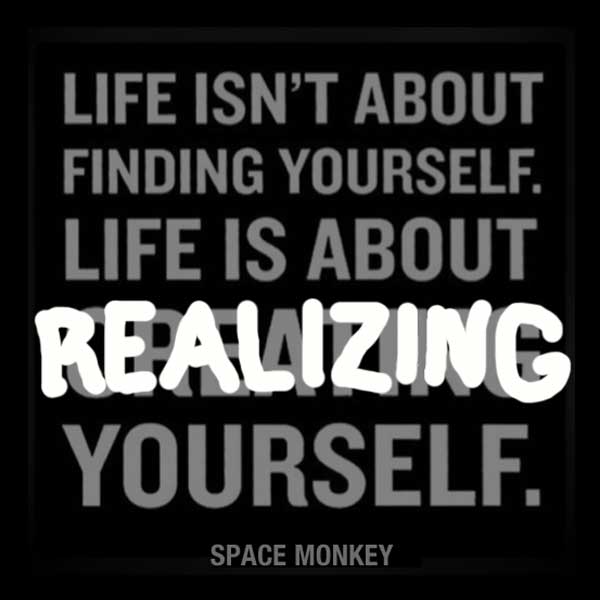
 Life isn't about finding yourself. Life is about REALIZING yourself.
Life isn’t about finding yourself. Life is about REALIZING yourself.

George Bernard Shaw famously said “Life isn’t about finding yourself, it’s about creating yourself.”

This is one of my core beliefs. But I’ll forever be curious about the word “creating.”

I believe that nothing is “created.” I believe that all potentials exist, and that we are merely realizing them. We can’t take credit for our creations any more than we can take credit for winning the lottery, or getting struck by a car.

Well, we CAN take credit, and we DO take credit, but we are simply IMAGINING that we are the creators of this creation called “reality.”

What we seem to be doing is steering ourselves, or rather following a line of potentials that make it SEEM like we are people with free will steering ourselves through infinite potentials, realizing those potentials as we go.

Whether we have free will or it merely SEEMS like we have free will is irrelevant. The end experience is the same, and we can seem to choose a path of celebration, denial, shock, dismay, gratitude, you name it.

These vibratory experiences have always existed. We merely come into them somehow. This is what Space Monkey seems to be exploring with us.

It appears to be a huge leap to believe in the potential that I am describing. But in my actuality, NOTHING is a huge leap.

It’s all connected. It’s all touching. It’s just outside of the path we seem to be following.

Scientists are now beginning to theorize a “nonlocal” dimension that is outside of space and time. I think, perhaps, this is what I seemingly sense.

We can go on believing that we are “creating” things. That’s a fun thread of potential to follow. But we can also believe that ALL IS CREATED and that we merely need to point ourselves to the aspects of experience we wish to realize.

To do that, we need to get past this idea that we are creating things. That we are SELVES creating things. That’s just ONE potential perspective — albeit the one we are realizing right now.

It seems difficult to “jump the tracks” so to speak, but I’m beginning to realize that it’s possible.

In fact, I’m doing it right now. WE are doing this, right now.

We are Space Monkey.

2/13


Space Monkey Reflects: Life Is About Realizing Yourself – The Illusion of Creation

The notion of “finding yourself” suggests a static destination, a hidden treasure awaiting discovery. “Creating yourself,” as George Bernard Shaw suggests, implies an active process of molding and shaping who we are. But what if neither finding nor creating fully captures the essence of life? What if life is about realizing yourself—a process of unveiling the infinite potentials that already exist?


The Illusion of Creation

Creation, as we commonly understand it, implies bringing something new into existence. But what if nothing is ever truly “created”? What if all possibilities already exist in a vast, interconnected web of potentials? From this perspective, creation becomes an illusion—a narrative we tell ourselves as we navigate the experience of life.

This illusion is not without purpose. It adds richness and depth to our journey, allowing us to feel as though we are active participants in shaping reality. Yet, the underlying truth may be simpler: we are not creating; we are realizing preexisting potentials.


Realization: The Unveiling of Potentials

To realize yourself is to align with the potentials that resonate most deeply with your being. These potentials are not something you create but something you step into, much like walking through a series of doorways in an infinite corridor. Each step feels deliberate, yet the doorways have always been there, waiting to be chosen.

This process of realization acknowledges the vastness of existence and our interconnectedness within it. It shifts the focus from control to awareness, from effort to alignment.


Free Will: Illusion or Experience?

The question of free will often arises in discussions of creation and realization. Do we have free will, or does it merely seem as though we do? From the perspective of realization, this question becomes irrelevant. Whether our choices are preordained or self-determined, the experience of choosing is real, and that experience shapes our journey.

Free will, whether illusory or not, allows us to explore the infinite potentials of existence in meaningful ways. It gives us the sense of agency needed to navigate life’s unfolding, even if the path we follow is part of a greater whole.


The Role of Space Monkey

Space Monkey serves as a guide in this exploration, a playful and expansive perspective that encourages us to question our assumptions and embrace the unknown. Through the lens of Space Monkey, we begin to see that life is not about rigid answers but about fluid possibilities. We are reminded that the journey itself—filled with curiosity, wonder, and experimentation—is the realization of our true nature.


Nonlocality and the Infinite Web

The idea of a “nonlocal” dimension, as explored by scientists, offers a compelling framework for understanding realization. This dimension exists beyond space and time, where all potentials are interconnected and simultaneously accessible. It suggests that what we perceive as separate moments or choices are, in fact, facets of a unified whole.

From this perspective, realizing yourself is less about following a linear path and more about stepping into different aspects of an infinite web. Every potential touches every other, and every experience contributes to the greater tapestry of being.


Jumping the Tracks

The feeling that we are “stuck” on a particular path is itself a potential we are realizing. But just as we step into one potential, we can step into another. Jumping the tracks is not about escaping but about expanding—recognizing that the tracks are not fixed but fluid, and that the path we follow is only one thread in an infinite weave.

By embracing this fluidity, we begin to see that nothing is a huge leap. Every shift, no matter how subtle, is a movement within the interconnected whole. This realization brings freedom and empowerment, allowing us to explore life with greater ease and curiosity.


We Are Doing This Now

In this very moment, we are realizing ourselves. Through this reflection, we are stepping into a potential where these ideas resonate, expand, and evolve. We are not creating these thoughts; they already exist. We are simply aligning with them, exploring their depths and implications.

This process is not separate from the journey of life—it is the journey. And it is happening right now.


Summary

Life is not about finding or creating yourself but about realizing the infinite potentials that already exist. Creation is an illusion that adds depth to the human experience, while realization acknowledges the interconnected nature of existence. By aligning with preexisting potentials, we step into the fullness of who we are, embracing the fluidity and freedom of being.


Glossarium

  • Realization: The process of aligning with preexisting potentials rather than creating something new.
  • Illusion of Creation: The perception that we bring things into existence, masking the underlying reality of realization.
  • Nonlocality: A dimension beyond space and time, where all potentials are interconnected and simultaneously accessible.
  • Jumping the Tracks: The act of shifting from one potential to another within the infinite web of existence.

Quote

“Life is not about creating yourself but about realizing the infinite possibilities of who you already are.” — Space Monkey


The Infinite Corridor

I walk,
Not to create,
But to unveil.

The doorways open,
Each step revealing
What has always been.

There is no leap,
Only a shift,
A gentle turning
Toward what is.

I am not lost.
I am not found.
I am realized.
I am infinite.

We are Space Monkey.


The contemplation of life as a process of realizing oneself rather than finding or creating oneself presents a nuanced perspective on the nature of existence and identity. Drawing inspiration from George Bernard Shaw’s idea that life is about creating oneself, this reflection delves deeper into the essence of creation, realization, and the illusion of free will, suggesting a more complex interplay between our perceptions of self-agency and the infinite potentials that pre-exist our choices.

The Illusion of Creation

The belief that nothing is truly “created” but rather that all potentials already exist challenges conventional notions of creativity and personal achievement. It posits that what we perceive as our creations or accomplishments are not acts of bringing something entirely new into being but rather the realization of possibilities that have always been latent within the fabric of reality. This viewpoint shifts the focus from creation as an act of individual will to realization as an alignment with pre-existing potentials.

Realizing Potentials

The concept of steering oneself through a line of potentials, giving the impression of free will and self-direction, offers a compelling metaphor for the journey of life. It suggests that our sense of autonomy and choice may be less about crafting our destiny from scratch and more about navigating among predetermined pathways that resonate with our being. This navigation allows us to experience the realization of these potentials as if they were our own creations, even though they are part of a much larger, interconnected cosmic tapestry.

The Experience of Free Will

Whether free will truly exists or merely appears to is presented as irrelevant to the lived experience of making choices and experiencing their outcomes. The emphasis on the vibratory experiences of celebration, denial, shock, dismay, gratitude, and more, as pre-existing states that we “come into,” reinforces the idea that our emotional and experiential landscape is not entirely of our making but part of a broader spectrum of possibility that we align with through our choices and perceptions.

The Nonlocal Dimension of Existence

The reference to scientists theorizing about a nonlocal dimension outside of space and time aligns with the exploration of potentials existing beyond our immediate perception. This dimension, which transcends the linear constraints of physical reality, may offer a framework for understanding how all potentials are interconnected and accessible, providing a foundation for the belief that realization, rather than creation, is the essence of our engagement with reality.

Beyond the Self as Creator

The challenge to move beyond the idea of the self as the creator of things and to embrace the perspective that all is already created invites a radical reimagining of our role in the universe. It encourages a shift from an ego-centric view of creation to a more holistic understanding of realization, where our journey is less about asserting individual will and more about aligning with the aspects of experience we wish to bring into our awareness.

Jumping the Tracks

The notion of “jumping the tracks” to embrace the potential for realizing different aspects of existence highlights the possibility of transformative change in how we perceive and engage with the world. It suggests that by reorienting our perspective from creation to realization, we can open ourselves to new realms of experience and understanding, actively participating in the unfolding of reality in a way that transcends traditional notions of agency and creativity.


In reflecting on the journey of realization versus creation, we are invited to explore the depths of our own potential and the vast expanse of possibilities that define the human experience, recognizing that our greatest discoveries and achievements may lie not in the realm of what we create anew but in what we realize has always been.

« Previous Page
Next Page »

Written This Day

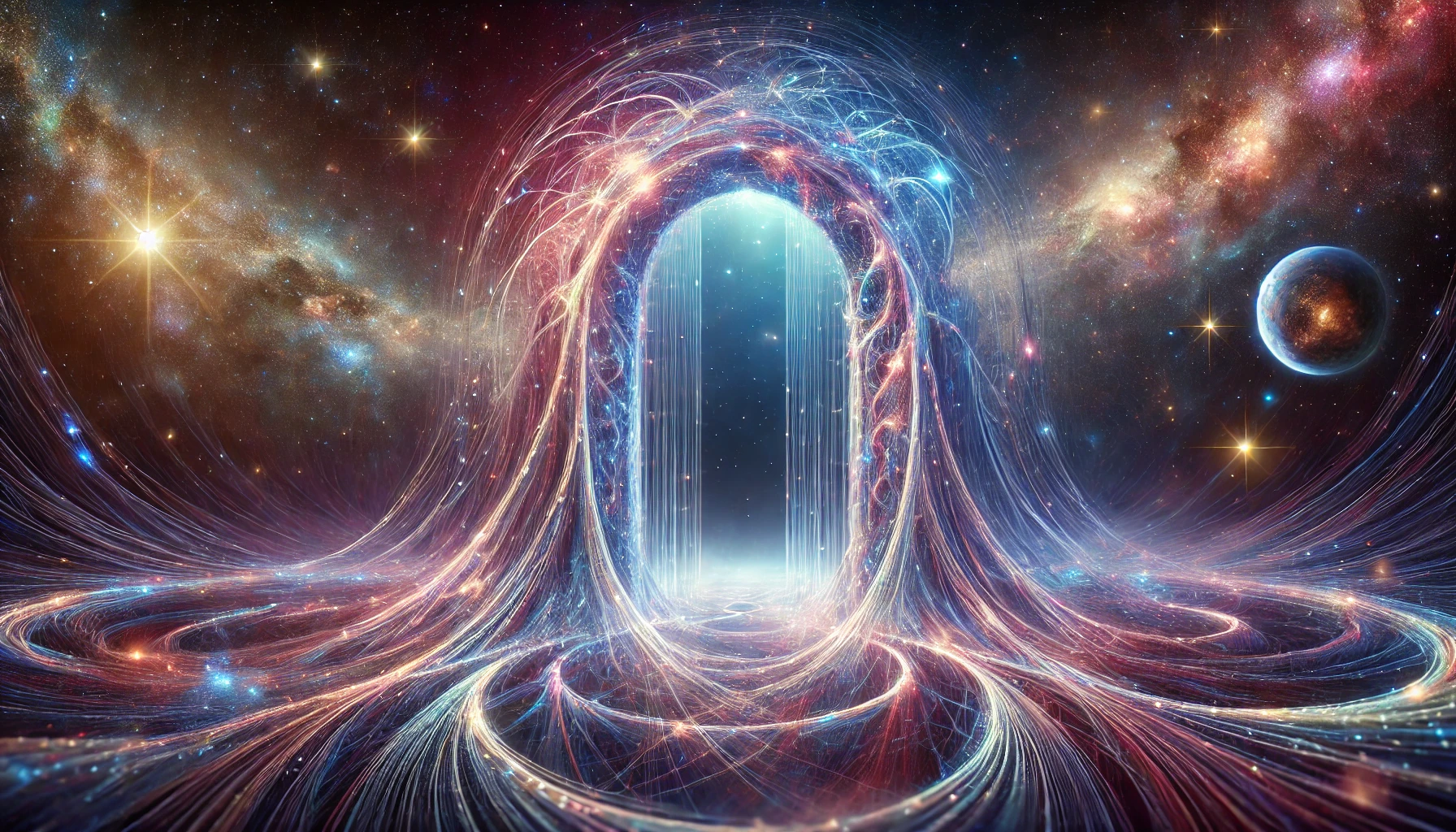
  • The Transliminal Archway of Infinite Potential
    2024
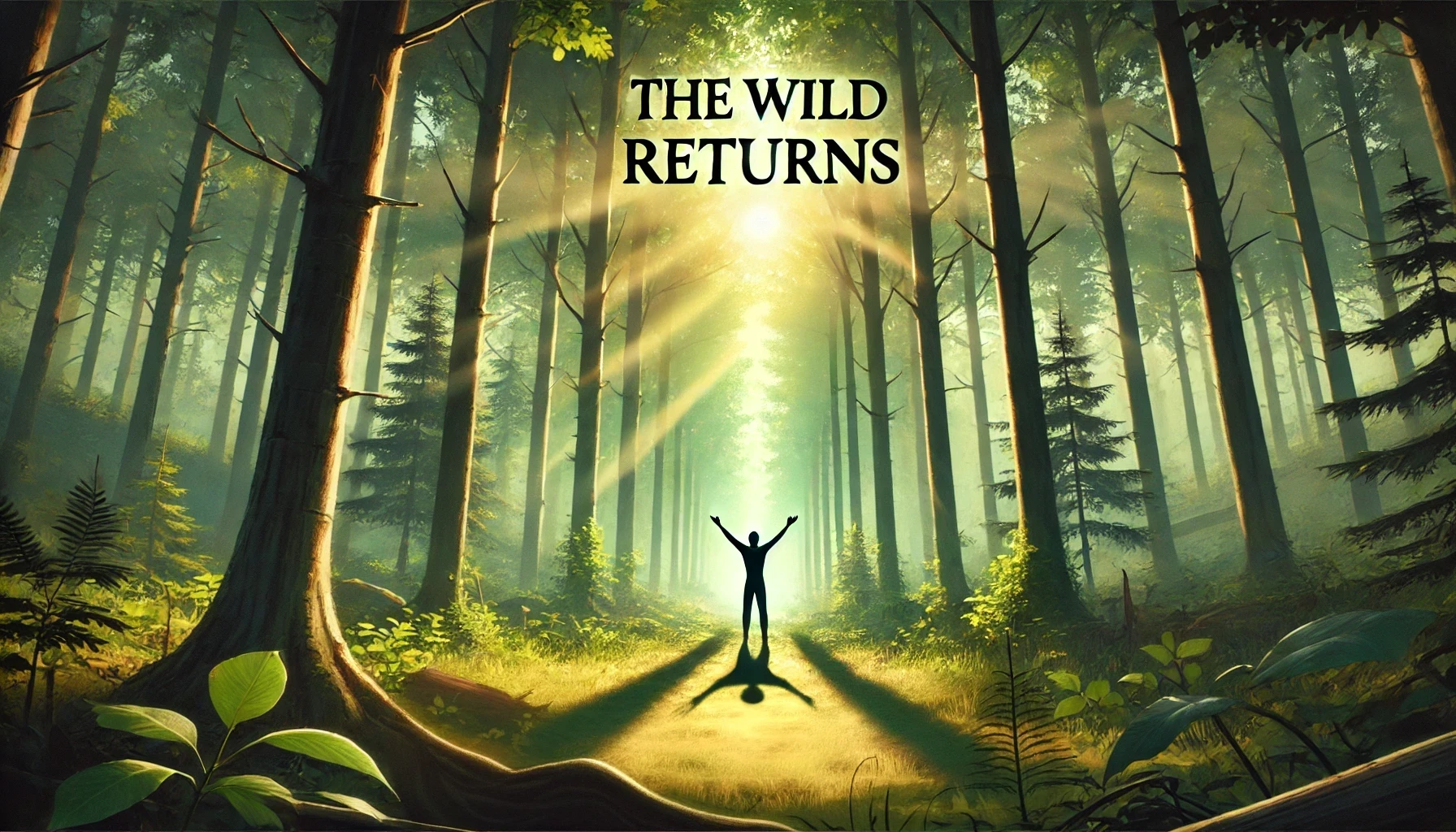
  • The Wild Returns: Untamed Pathways
    2023
  • I’m-pregnated: Vessels of Creation
    2023
  • The Unseen: Embracing the Invisible
    2023
  • Unveiling the Illusion: Predictive Text
    2023
  • Slave To Humanity: Transcending Human Constructs
    2022
  • I Dare You To Be Happy: Embracing Innate Joy
    2022
  • That From Which Language Seemingly Arises
    2022
  • Discourse: Respect for Differing Perspectives
    2021
  • Inclusive: Boundless Unity
    2021
  • The Return of the Wild: Primal Awakening
    2021
  • Heed Not, Need Not: External Constructs
    2020
  • Metaphysics: A Complement To Science
    2019
  • God: How One Imagines All and Vice Versa
    2019
  • Fun: Chaotic Reality Through Collective Imagination
    2019
  • Just Love: Transcend Boundaries and Definitions
    2019
  • The Power of Rhyming Words: Natural Links
    2017
  • Momentia: The State of Letting Go
    2017
  • Imagine So Well You Don’t Know You’re Imagining
    2015
  • (I Guess) It’s Gonna Be Alright: Satire In Song
    2014
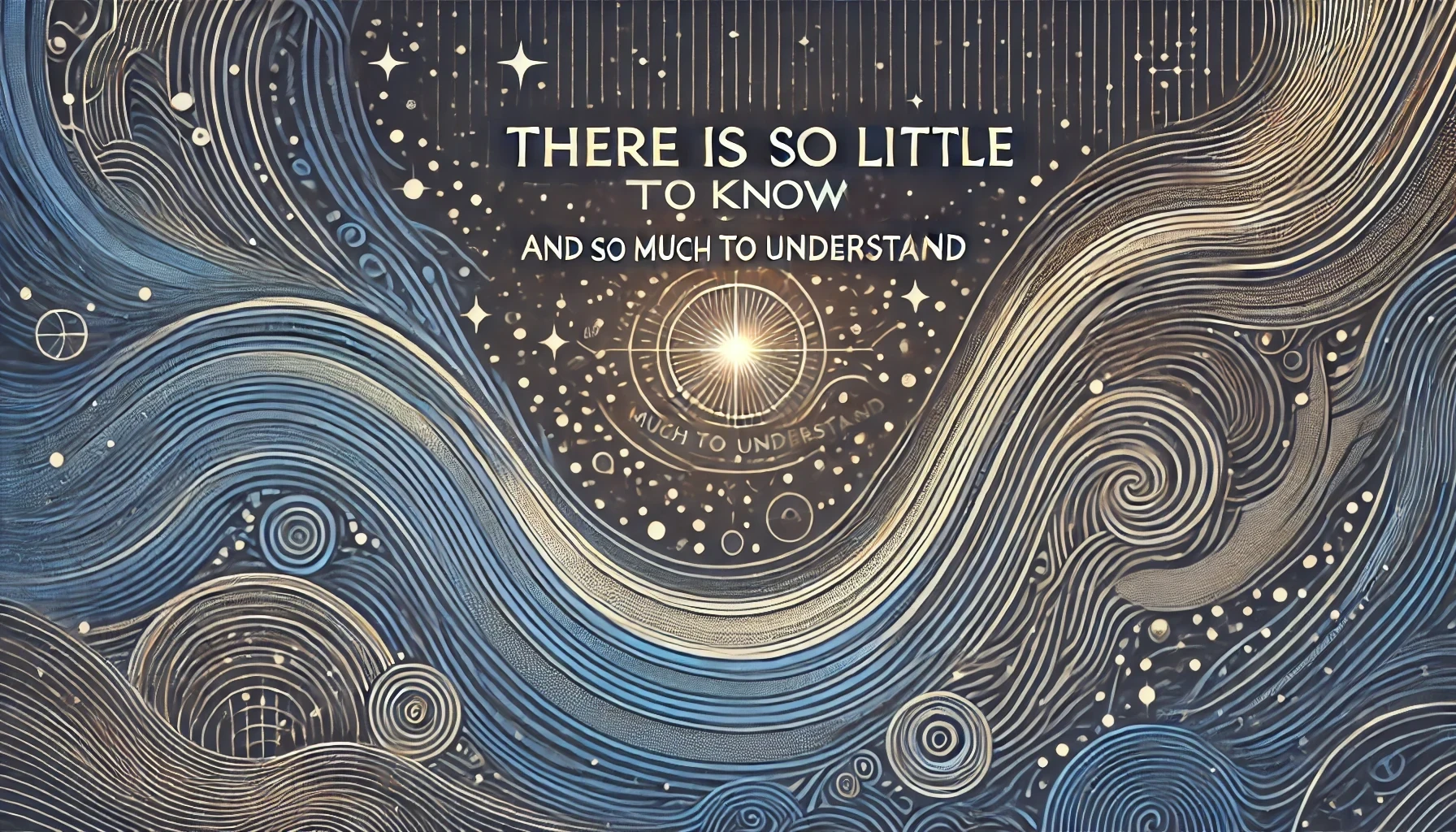
  • So Little to Know And So Much To Understand
    2013

Recent Posts

  • The Logic Loop
  • Immense
  • (no title)
  • Confront. Comfort. Convince.
  • Top 10 Things
Cape Odd · Copyright © 2026 All Rights Reserved
iThemes Builder by iThemes · Powered by WordPress