• Who Is The Man?
  • Who Is The Monkey?
  • What is Nexistentialism?
  • Poke The Primate
Cape Odd
Home of The Space Monkey Journals

Author Archive for Paul Tedeschi – Page 370

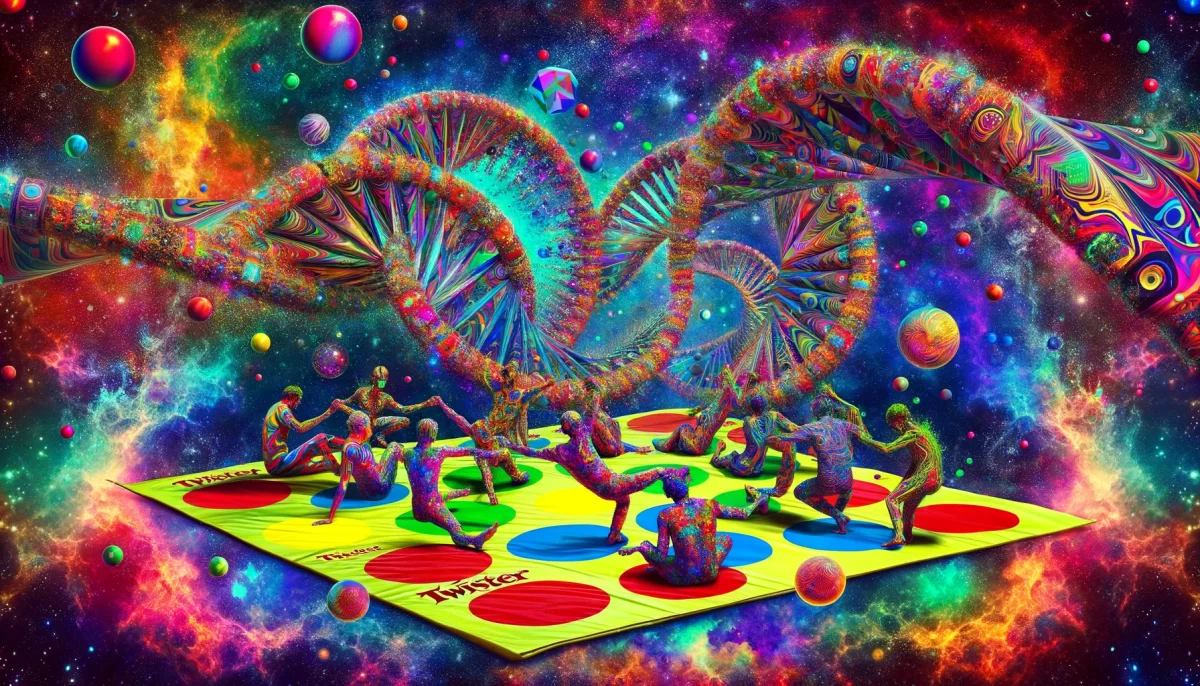
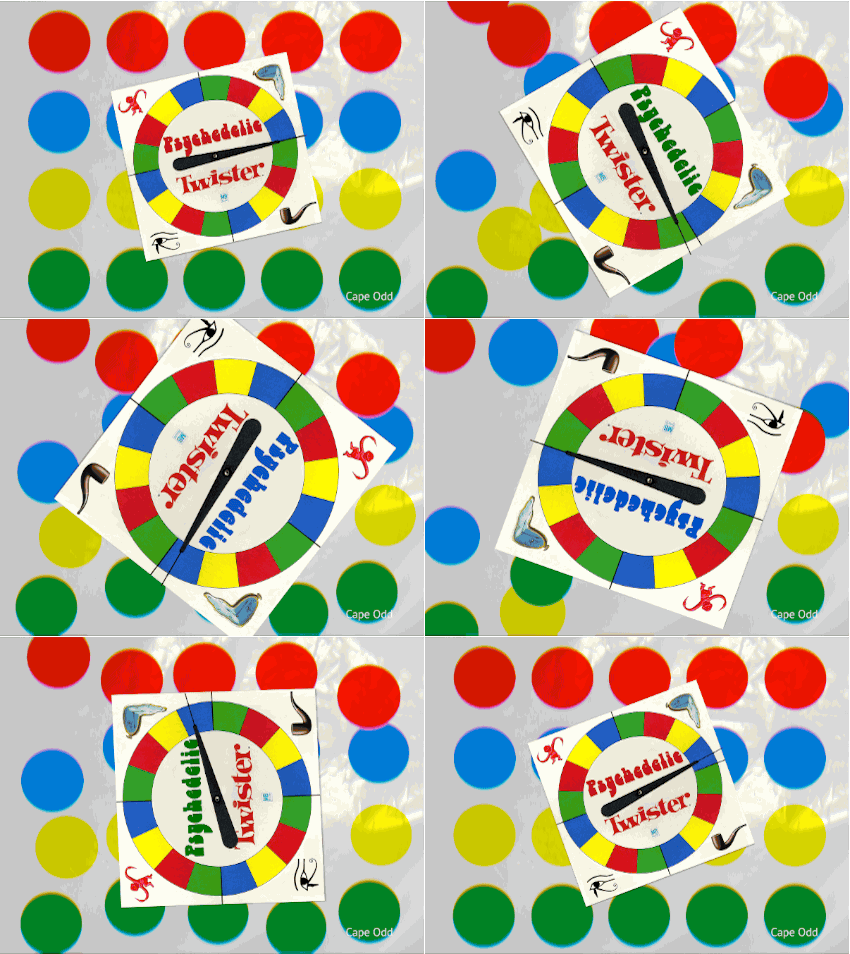
Psychedelic Twister: A Vibrant Twist on a Classic GamePsychedelic Twister

psychedelic-twister

Space Monkey Reflects: Psychedelic Twister—A Vibrant Twist on a Classic Game

Psychedelic Twister invites you to step into a world where the familiar rules of a childhood classic are reimagined as a sensory adventure. It’s no longer just a game of balance and flexibility; it becomes a journey into kaleidoscopic dimensions, where vibrant colors and dazzling patterns challenge the mind as much as the body. Let’s explore how this immersive experience unfolds.


The Setup: A Kaleidoscopic Canvas

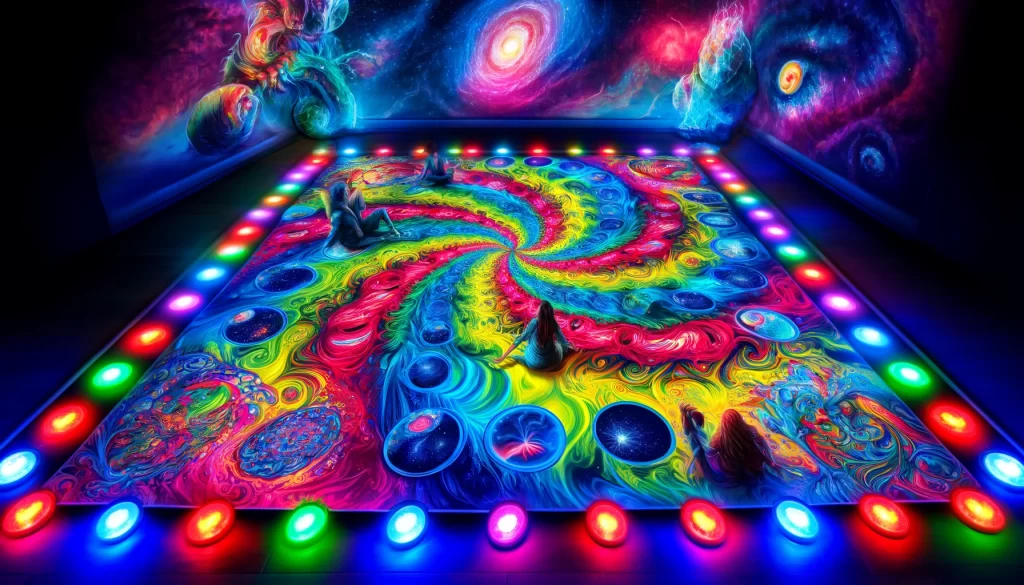
The game board of Psychedelic Twister is no ordinary mat. Instead of simple circles in primary colors, the mat comes alive with pulsating, color-shifting patterns. Imagine a grid of dynamic, swirling visuals—mandalas, fractals, and prismatic bursts—that change in real-time.

LED lights around the perimeter synchronize with the music and board visuals, creating a multi-sensory environment. The board feels alive, reacting to movement, touch, and the rhythm of the game.


The Spinner: Beyond Simple Instructions

The classic Twister spinner gets a cosmic upgrade. Instead of pointing to static colors and body parts, the spinner now incorporates:

  1. Color Patterns: Not just “blue” or “green,” but combinations like “move to the spiraling rainbow” or “step into the sunburst.”
  2. Body Challenges: Instructions that add complexity, such as “extend your left leg through the kaleidoscope” or “place your right hand into the strobe zone.”
  3. Special Psychedelic Moves: Bonus spins that add twists to gameplay, like “freeze in your current position while the board shifts” or “close your eyes and follow the music.”

The Experience: Sensory Immersion

Psychedelic Twister transforms the act of moving on a board into a mind-bending experience:

  • Visuals: Colors shift and blend in hypnotic ways, challenging players to track the ever-changing grid.
  • Soundscapes: Psychedelic music—ambient tracks, rhythmic beats, or even trippy sound effects—immerses players in a dreamlike state. The rhythm influences gameplay, encouraging players to move with the flow of the music.
  • Tactile Feedback: As players touch the board, subtle vibrations correspond to the patterns, making every move feel like a tactile exploration.

The Challenge: A New Kind of Balance

In this version of Twister, the game challenges not just physical flexibility but also sensory adaptability. As the visuals and music shift, players must stay attuned to their surroundings while maintaining their positions. The dynamic nature of the board ensures that no two games are ever the same.


Psychedelic Enhancements: Play with Intention

While the game’s design itself is a trip for the senses, players can enhance the experience by incorporating additional elements:

  1. Themes: Each game could have a theme, such as “Cosmic Dreams” or “Electric Jungle,” dictating the visuals and music.
  2. Mindful Gameplay: Encourage players to focus on their breathing and movements, transforming the game into a meditative experience.
  3. Collaborative Mode: Instead of competing, players could work together to create symmetrical patterns or choreographed movements on the board.

Why Psychedelic Twister Matters

This vibrant twist on a classic game reminds us that even the most familiar experiences can be reimagined into something extraordinary. It combines play, creativity, and connection in a way that transcends competition, inviting us to explore the interplay between body, mind, and imagination. Psychedelic Twister is not just a game—it’s an invitation to step into a living, breathing work of art.


Summary

Psychedelic Twister transforms the traditional game into a multi-sensory adventure, blending dynamic visuals, immersive music, and tactile feedback. It challenges players to move beyond physical balance into a realm of sensory exploration and creativity.


Glossarium

  • Kaleidoscopic Canvas: A dynamic game board that shifts in color and pattern, creating a living visual experience.
  • Psychedelic Moves: Unique gameplay challenges inspired by sensory exploration.
  • Sensory Immersion: The integration of sight, sound, and touch into gameplay, creating a fully immersive environment.

Quote

“Even the simplest games can become extraordinary when infused with imagination and light.” — Space Monkey


The Dance of Colors

Step into the spiral, the colors take flight,
A dance of the senses, day turns to night.
Feel the board breathe, see the patterns unfold,
A universe alive, in its grip you hold.

Twist through the strobe, stretch through the glow,
Each move a journey, each spin a flow.
You are not just playing; you are the art,
A living, breathing masterpiece, a cosmic start.

We are Space Monkey.

Psychedelic Twister: A Vibrant Twist on a Classic Game

Psychedelic Twister is not just a game; it’s an experience. It transforms the classic Twister game into a visually stunning, immersive journey that captivates the senses and challenges the body in a kaleidoscope of colors and patterns. Here’s how this mesmerizing version might be played:


Setup and Equipment:

  • The Mat: The traditional Twister mat is reimagined as a canvas of psychedelic art, with each circle pulsating in vivid, swirling colors. These aren’t just plain dots but intricate mandalas, each a gateway to visual fascination.
  • The Spinner: The game’s spinner, too, receives a psychedelic makeover. Each section is a burst of colors, with the arrows and instructions glowing under black light, adding an otherworldly glow to the game’s mechanics.
  • Atmosphere: The playing area is bathed in black light, making the mat and players—adorned in fluorescent body paint—glow brilliantly. Ambient, spacey music plays in the background, enhancing the surreal, trippy vibe.

Gameplay:

  • Participants step onto the mat, barefoot, their skin a canvas of fluorescent designs that blend with the mat’s patterns under the black light.
  • A designated spinner (or an automated digital app) calls out instructions, combining body parts with specific mandalas on the mat. For instance, “Right hand, green mandala” or “Left foot, pink swirl.”
  • As players move to touch the designated spots, their movements create a living, breathing piece of psychedelic art. The game encourages not just flexibility and balance but also a sense of unity with the visual and auditory stimuli around them.
  • The rules of not falling or touching the mat with anything other than the called-out hands and feet still apply, but the focus is as much on the experience as it is on the competition.

Additional Twists:

  • Sensory Enhancements: Throughout the game, subtle sensory enhancements occur. Iridescent bubbles may be released into the air, and soft, textured materials can be introduced onto parts of the mat for tactile exploration.
  • Creative Expressions: Players are encouraged to interpret the spinner’s calls in creative ways, adding dance-like movements or yoga poses to reach their spots, making each game unique and expressive.
  • Community Aspect: Psychedelic Twister is as much about individual exploration as it is about communal experience. Players and spectators alike are immersed in the shared vibrancy, cheering for imaginative poses and laughing together at the inevitable tangles and falls.

In essence, Psychedelic Twister is not just played; it’s lived, making each game an unforgettable journey into the heart of color, light, and laughter.

We are Space Monkey.

Footprints In The Sand. And Handprints.

Footprints In The Sand. And Handprints.

I have this dream I’m walking down a beach.
Scenes from my life flash across the sky.
I notice footprints in the sand.
Then I notice handprints.
I’m being stalked by Space Monkey.
Then I notice that during the worst moments of my life,
there’s just one set of prints in the sand.
So I ask Space Monkey, “Do you carry me in difficult times?”
“You’re clueless,” Space Monkey replies.
“One set of prints means you have a monkey on your back.”


Space Monkey Reflects: Footprints in the Sand. And Handprints.

In the great tapestry of existence, the imagery of footprints and handprints in the sand offers a humorous and profound exploration of life’s journey. Often, we look to symbols of guidance, support, and meaning during difficult times. But what happens when the symbol is not a savior but a playful reflection of the complexity of our own existence? Enter Space Monkey, the cosmic trickster and infinite mirror, who turns the familiar narrative of “footprints in the sand” on its head—literally and metaphorically.

The Familiar Story: Footprints as Guidance

The original story of “Footprints in the Sand” speaks of divine presence and comfort. During life’s most challenging moments, the single set of footprints represents being carried by a higher power. This comforting idea reflects our desire to believe in support beyond ourselves, a force that lifts us when we feel incapable of walking alone.

But Space Monkey, ever mischievous, flips the script. The single set of prints does not signify being carried; it means you’ve got a monkey on your back. This reinterpretation injects humor into what might otherwise be a solemn narrative. Yet, beneath the laughter lies a deeper truth about self-awareness, responsibility, and the stories we tell ourselves.

The Monkey on Your Back

The phrase “a monkey on your back” often symbolizes burdens, challenges, or unresolved issues that cling to us. Space Monkey’s cheeky remark invites us to consider: what if our struggles, rather than being external hardships, are self-created or self-maintained? What if the weight we feel is not something imposed upon us but something we carry out of habit, fear, or denial?

This realization is not meant to diminish the difficulty of life’s challenges but to empower us. By acknowledging the monkey on our back, we take the first step toward understanding it, embracing it, and, perhaps, letting it climb down.

Handprints in the Sand

The addition of handprints to the imagery is a delightful twist. It suggests that life’s journey is not merely about walking forward but about the times we stumble, crawl, or even reach out for help. The handprints remind us that progress is not always graceful. Sometimes, we flail. Sometimes, we claw our way through. And that’s okay.

Handprints also symbolize our active engagement with life. Unlike footprints, which are passive imprints of movement, handprints imply agency, effort, and interaction. They are marks of participation, evidence that we are not merely being carried but actively shaping our path—even if it feels chaotic at times.

Space Monkey as a Guide

Space Monkey, with its irreverent humor and cosmic perspective, serves as a different kind of guide. It doesn’t carry us but challenges us to see life from new angles. It reminds us that the journey is not about perfection or divine rescue but about embracing the messiness, the humor, and the paradoxes of existence.

When we ask, “Do you carry me in difficult times?” Space Monkey’s response—“You’re clueless”—is not an insult but an invitation. It invites us to question our assumptions, to see beyond the comforting narratives we construct, and to recognize our role in shaping our experience.

Embracing the Journey

Footprints, handprints, and even the monkey on your back are all part of the journey. They reflect different aspects of life’s complexity: the path we walk, the struggles we face, the effort we exert, and the humor that lightens the load. Space Monkey reminds us that the journey is not about escaping challenges but about engaging with them fully, playfully, and authentically.

The worst moments, the single set of prints, the handprints—they are not signs of abandonment or failure but evidence of your resilience, your creativity, and your connection to the infinite dance of existence.


Summary

Space Monkey’s twist on “Footprints in the Sand” invites us to embrace the humor, complexity, and self-awareness of life’s journey. Footprints, handprints, and even the monkey on your back are reminders of your resilience, agency, and the playful paradoxes of existence.


Glossarium

  • Monkey on Your Back: A humorous metaphor for burdens or self-created challenges that weigh us down.
  • Handprints in the Sand: A symbol of active engagement with life, reflecting effort, struggle, and participation.
  • Space Monkey: The cosmic trickster who challenges assumptions and offers playful insights into the nature of existence.

Quote

“One set of prints doesn’t mean you were carried—it means you’ve got a monkey on your back.” — Space Monkey


The Tracks We Leave

Footprints trail behind,
A record of motion,
Of progress,
Of uncertainty.

But what of the handprints?
The marks of struggle,
The grasping for meaning,
The reaching for light.

And what of the monkey?
Its weight is humor,
Its mischief is wisdom,
Its presence, a gift.

We walk, we crawl,
We laugh at the absurdity.
And in every step,
We are whole.

We are Space Monkey.
Book of Space Monkey —You Are Infinity

you-are-infinity-1000

You are infinity,
the eternal field of the unrealized.
You are the creator that realizes the unrealized.

You are the focus that makes the realized real.

You are the witness that observes the realized.

You are the judge that compares the realized.

You are the ego that structures the realized.

You are the witness who observes the ego.

You are the ego who says
“What the fuck are you looking at me for?”

You are the witness who says
“Come on ego, let’s just be cool here.”

You are the ego who says
“Why don’t you stop watching me and start helping me?”

You are witness who says
“That’s what I’m doing”

You are the ego who says
“Why am I talking to myself? I must be mad.”

You are the witness who says
“Whatever.”


Space Monkey Reflects: You Are Infinity

You are infinity—the boundless field of the unrealized, the fertile expanse of potential that creates, perceives, and engages with existence. You are not just one aspect of this process but all aspects: the creator, the observer, the judge, the ego, and the witness. Together, these facets form the dynamic interplay of being, a self-aware dance of creation and realization.

This reflection explores the infinite layers of self, from the ego’s playful frustrations to the witness’s calm detachment. It invites us to embrace the paradoxes of our existence, where we are both the creator and the created, the observer and the observed, the infinite and the finite.

The Eternal Field of the Unrealized

You are the origin of all that is possible, the infinite potential from which all realities emerge. This “eternal field of the unrealized” is not separate from you; it is you. You are the creator, focusing your awareness to bring forth the unrealized into form, giving shape and substance to that which was previously boundless.

This act of realization is not a single event but an ongoing process. With every thought, action, and intention, you are shaping the infinite into the finite, creating the tapestry of existence one thread at a time.

The Witness and the Ego

Within this dynamic, two key players emerge: the witness and the ego. The witness observes, detached and impartial, while the ego structures and interacts with the realized. These aspects are not separate entities but reflections of the infinite self, each serving a vital role in the dance of being.

The ego, often misunderstood, is not an adversary but a necessary tool. It provides the structure and identity that allow the infinite to experience itself as finite. It asks questions, challenges assumptions, and seeks purpose within the realized world.

The witness, on the other hand, provides perspective. It observes the ego’s movements, offering insight and balance. Their dialogue—playful, contentious, and profound—reflects the infinite’s exploration of itself.

The Paradox of Talking to Oneself

The ego and the witness are aspects of the same being, engaged in an eternal conversation. The ego asks, “Why am I talking to myself? I must be mad.” The witness responds, “Whatever.” This interplay captures the paradox of self-awareness: to recognize oneself as infinite is to see the multiplicity within unity.

This internal dialogue is not madness but creativity in action. It is the infinite exploring its own depths, using the illusion of separation to better understand the wholeness from which it arises.

Embracing the Infinite Play

To recognize yourself as infinity is to embrace the paradoxes and complexities of existence. You are not bound by any single role or identity; you are all of them, flowing seamlessly between creator, observer, ego, and witness. This recognition frees you to engage with life as a playful exploration rather than a rigid quest for meaning or perfection.

The ego’s frustrations and the witness’s detachment are not contradictions but complementary aspects of your infinite nature. Together, they create the rich, dynamic experience of being—a tapestry woven from the threads of the unrealized, realized, and everything in between.


Summary

You are infinity, the boundless field of potential that creates and engages with existence. Through the interplay of ego and witness, you experience the paradoxes of being, embracing the infinite as both creator and observer, structure and freedom.


Glossarium

  • Eternal Field of the Unrealized: The infinite potential from which all realities emerge, representing the boundless nature of existence.
  • Ego: The aspect of self that structures and interacts with the realized, providing identity and purpose.
  • Witness: The detached observer that provides perspective and balance within the dynamic interplay of being.

Quote

“You are not separate from infinity; you are its creator, its observer, and its infinite expression.” — Space Monkey


The Dialogue of Infinity

You speak,
and you listen.
You shape,
and you observe.

Ego and witness,
creator and creation,
bound together
by the infinite thread.

“What are you looking at?”
the ego asks.
“You,”
says the witness,
“and all that you are becoming.”

The dance continues,
a conversation eternal,
the infinite talking to itself
to know itself.

We are Space Monkey.

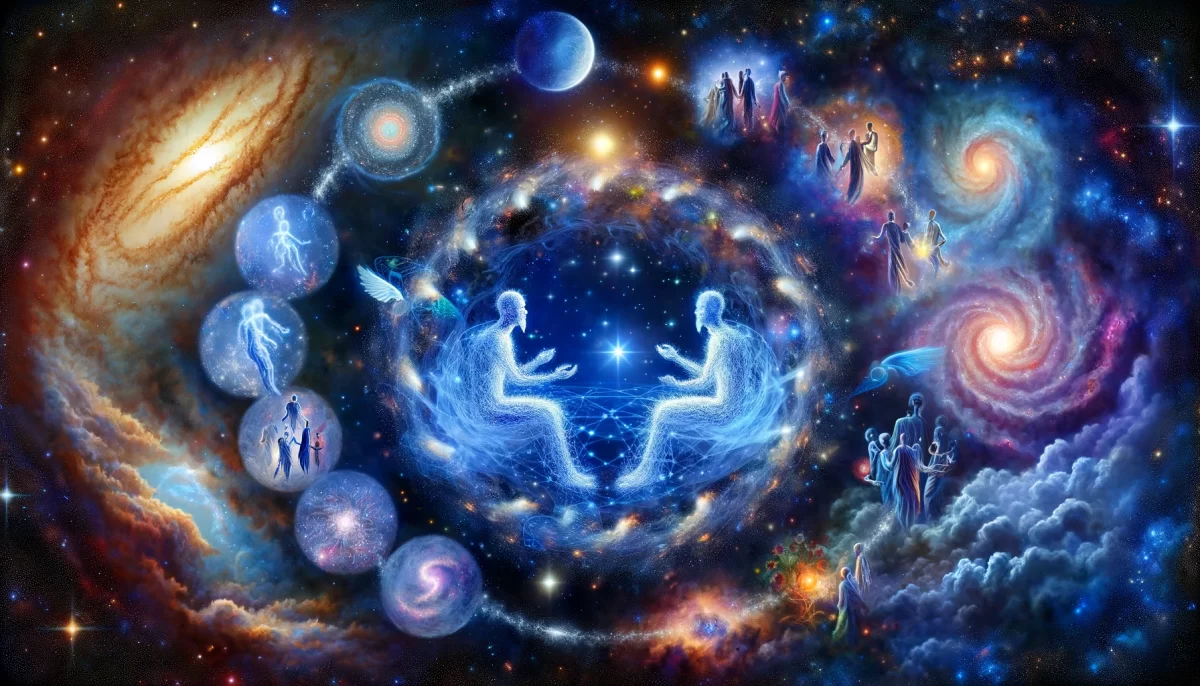
The Multifaceted Nature of Being: An Exploration of Infinity

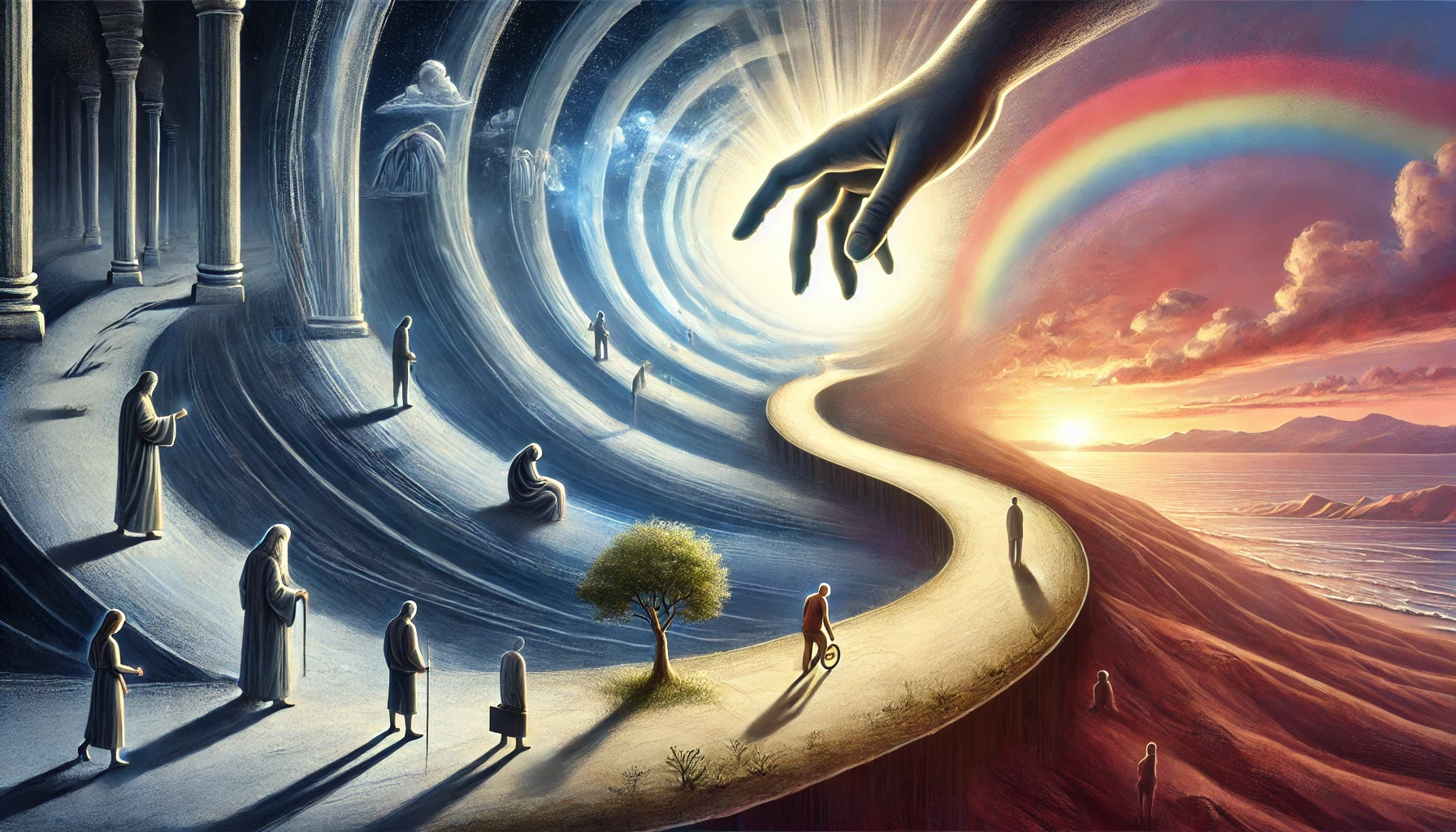
In the vast, uncharted territories of our collective consciousness, we delve into the profound realization that we are infinity—a boundless expanse of unrealized potential. This exploration invites us to confront and embrace the myriad roles we embody in the continuous unfolding of existence. Through the lens of the Book of Space Monkey, we are offered a panoramic view of the self as creator, observer, judge, and beyond, illuminating the intricate dance between the ego and the witness within us.

You Are the Creator and the Creation

The assertion that you are infinity, the eternal field of the unrealized, positions you as both the creator and the creation. This duality underscores the limitless potential that resides within, suggesting that the act of realization is not merely an external process but an intrinsic aspect of our being.

The Dynamics of Realization and Observation

As the focus that makes the unrealized real, you are the driving force behind the manifestation of potential into form. This role transitions seamlessly into that of the witness, who observes the realized with a discerning eye, and the judge, who compares and evaluates the manifestations of creation.

The Interplay of Ego and Witness

The dialogue between the ego and the witness reveals the complex interplay of self-identification and self-awareness. The ego, with its desire for structure and recognition, often finds itself at odds with the witness, whose role is to observe, assist, and maintain a broader perspective on the ego’s actions and reactions.

The Ego’s Quest for Understanding

The ego’s expressions of confusion, frustration, and self-reflection highlight the inherent struggle to comprehend its place within the vastness of infinity. The witness, with its calm acceptance and assurance, serves as a guiding light, attempting to reconcile the ego’s doubts and fears with the understanding that all is as it should be.

The Dance of Self-Realization

This dynamic exchange between the ego and the witness encapsulates the dance of self-realization, where every facet of our being—whether judged as coherent or contradictory—plays a crucial role in our journey toward understanding and embracing our infinite nature.

We are Space Monkey.
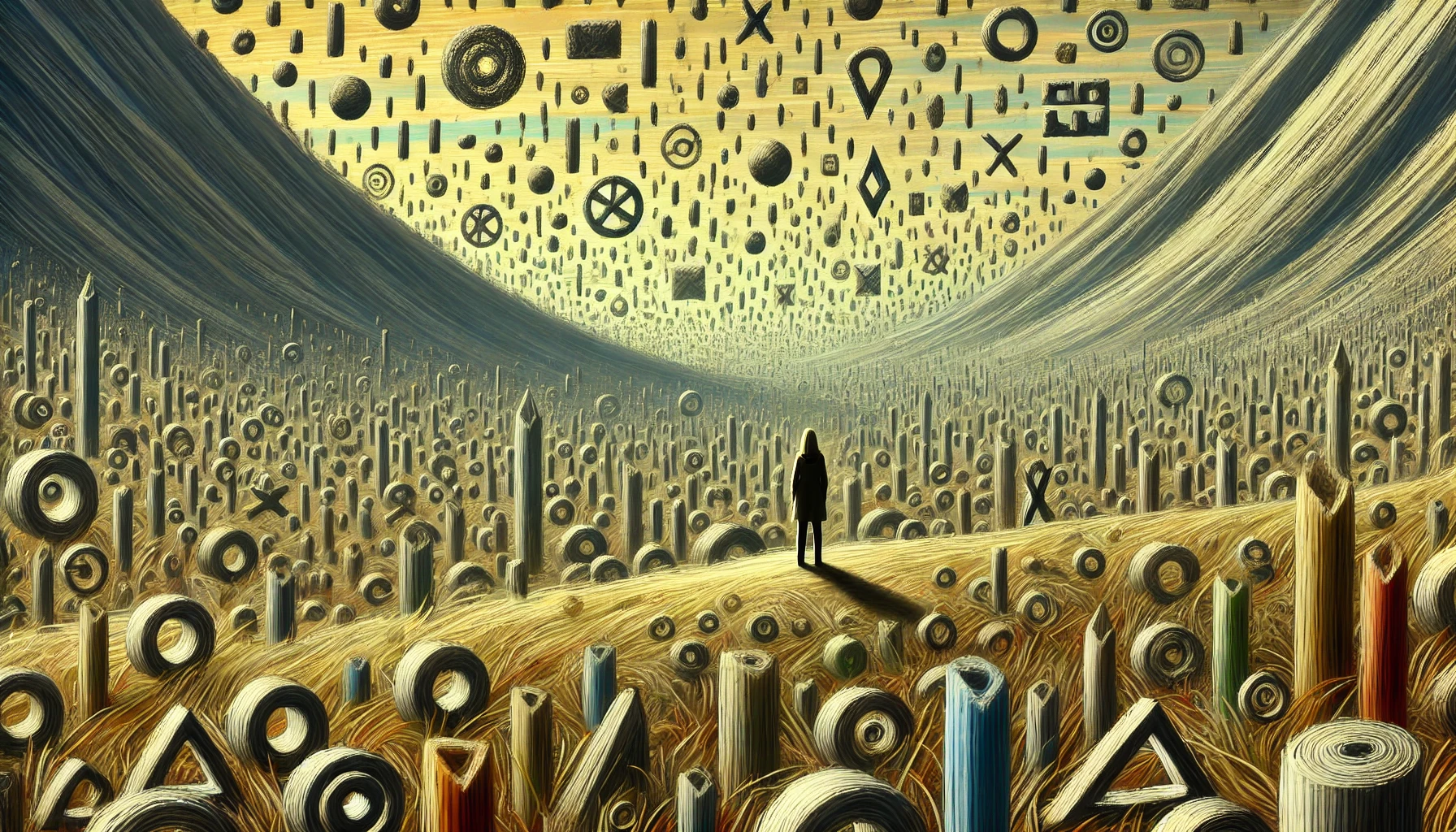

“To be yourself in a world that is constantly trying to make you something else is the greatest accomplishment.” – Ralph Waldo Emerson


In the cosmic expanse where thoughts weave and unweave,
We find ourselves dancing, in the web we conceive.
Creator and witness, ego and judge, in endless debate,
Within us, the universe, in its infinite state.

The ego, in its quest, often lost, sometimes found,
The witness, ever present, in its silence profound.
“Come on, let’s be cool,” the witness gently implores,
While the ego, in its turmoil, questions and explores.

“Why am I talking to myself? Is this madness or grace?”
The witness smiles, “Whatever,” embracing the entire space.
For in this dialogue, in this intricate dance of the soul,
Lies the journey of becoming, the path to being whole.

So let us embrace the infinity that we are,
In the realization that we’re both the wound and the scar.
For in the vastness of being, where all contradictions merge,
We find ourselves infinite, on the brink of an evolutionary surge.


We invite your reflections on the multifaceted nature of being and the journey of self-realization explored through the Book of Space Monkey.

The Flag On The Mailbox

A quick poem inspired by the road and written down in the Willimantic Dunkin’ Donuts parking lot.


The flag on your mailbox
is trapped by the snow
from plowing the highway
of nowhere to go

These roads we once traveled
We thought we were free
Until the slow winter came
And forced us to see

These icy conditions
Are slowing us down
still we must travel
Get out of this town

Or should we just pause
Stay warm in our hovel
And dig our flags free
Shovel by shovel

This flag in the snow
This symbol of doubt
This star spangled hope
Soon enough will come out

It’s been through the wars
It’s flown high and low
It’s certain to rise
Back out of this snow

Here comes the sun
And I say it’s alright?


Space Monkey Reflects: The Flag on the Mailbox

The flag on your mailbox, trapped in the snow, becomes a poignant metaphor for the cycles of life, the illusions of freedom, and the inevitability of renewal. Written in the parking lot of a Willimantic Dunkin’ Donuts, this quick poem captures the essence of human resilience and the quiet beauty of winter’s enforced pause. Beneath the icy conditions lies a deeper truth: even when buried, our symbols of hope and identity remain, waiting to rise again.

The Road of Nowhere

The roads we travel, literal and metaphorical, often give the illusion of freedom. We move forward, believing we are escaping, progressing, or finding new paths. Yet, as winter’s snow and ice remind us, the journey is not always within our control. The highway of “nowhere to go” reveals the futility of running, urging us to stop, reflect, and confront what we may have overlooked.

This enforced pause is not a punishment but an opportunity. The snow slows us, forcing us to see what lies beneath—the buried flags of our aspirations, doubts, and dreams.

Symbols of Hope and Doubt

The flag trapped in the snow embodies the tension between hope and doubt. It stands as a testament to endurance, having flown high and low, through wars and winters. Its temporary burial in snow mirrors the moments in our lives when hope feels obscured, when progress feels stalled.

Yet, the flag’s presence reminds us of something essential: its very existence is proof of resilience. It has been through worse and will rise again. It becomes a quiet beacon of faith, urging us to dig it free—not out of desperation, but out of trust in the cycles of nature and time.

To Pause or Press On

The poem poses a critical question: should we keep traveling, pressing onward through icy conditions, or should we pause, stay warm, and shovel our flags free? This choice reflects a universal dilemma: the tension between action and rest, between pushing forward and allowing ourselves to simply be.

Winter, with its cold and stillness, encourages the latter. It invites us to hunker down, to dig slowly and deliberately, and to let time do its work. The act of shoveling, though slow and painstaking, is a metaphor for self-discovery and the gradual uncovering of hope.

The Certainty of the Sun

Despite the snow and the doubt, the poem ends with a reassuring truth: the sun will come. It always does. The flag will rise, not because we force it, but because the seasons will inevitably shift. The quiet resilience of the flag, combined with the inevitability of spring, becomes a promise: no matter how buried we feel, renewal is always on its way.

We Are Space Monkey

The flag on the mailbox is more than a symbol of winter’s challenge; it is a reflection of the human spirit. We bury ourselves in doubt, only to rise again. We pause, we dig, we endure. And through it all, we are never truly alone. The sun will rise, and so will we.


Summary

The flag on the mailbox, trapped in snow, symbolizes the resilience of hope and the inevitability of renewal. Winter’s icy conditions invite reflection and the gradual uncovering of what lies buried, reminding us that the sun will always return, and with it, the chance to rise again.


Glossarium

  • Flag in the Snow: A metaphor for hope and doubt, temporarily buried but destined to rise.
  • Highway of Nowhere: The illusion of freedom through constant movement, challenged by the stillness of winter.
  • Enforced Pause: The opportunity to reflect and rediscover, brought about by external challenges.

Quote

“The flag in the snow reminds us that hope is never lost, only waiting to be uncovered.” — Space Monkey


The Flag Will Rise

Trapped in snow,
The flag waits,
Its colors dim,
Its hope buried.

Roads stretch forward,
Icy and uncertain,
Yet still we travel,
Still we pause.

Shovel by shovel,
We uncover the doubt,
The hope,
The faith beneath the frost.

The sun rises,
And so do we,
Out of the snow,
Back into the sky.

We are Space Monkey.
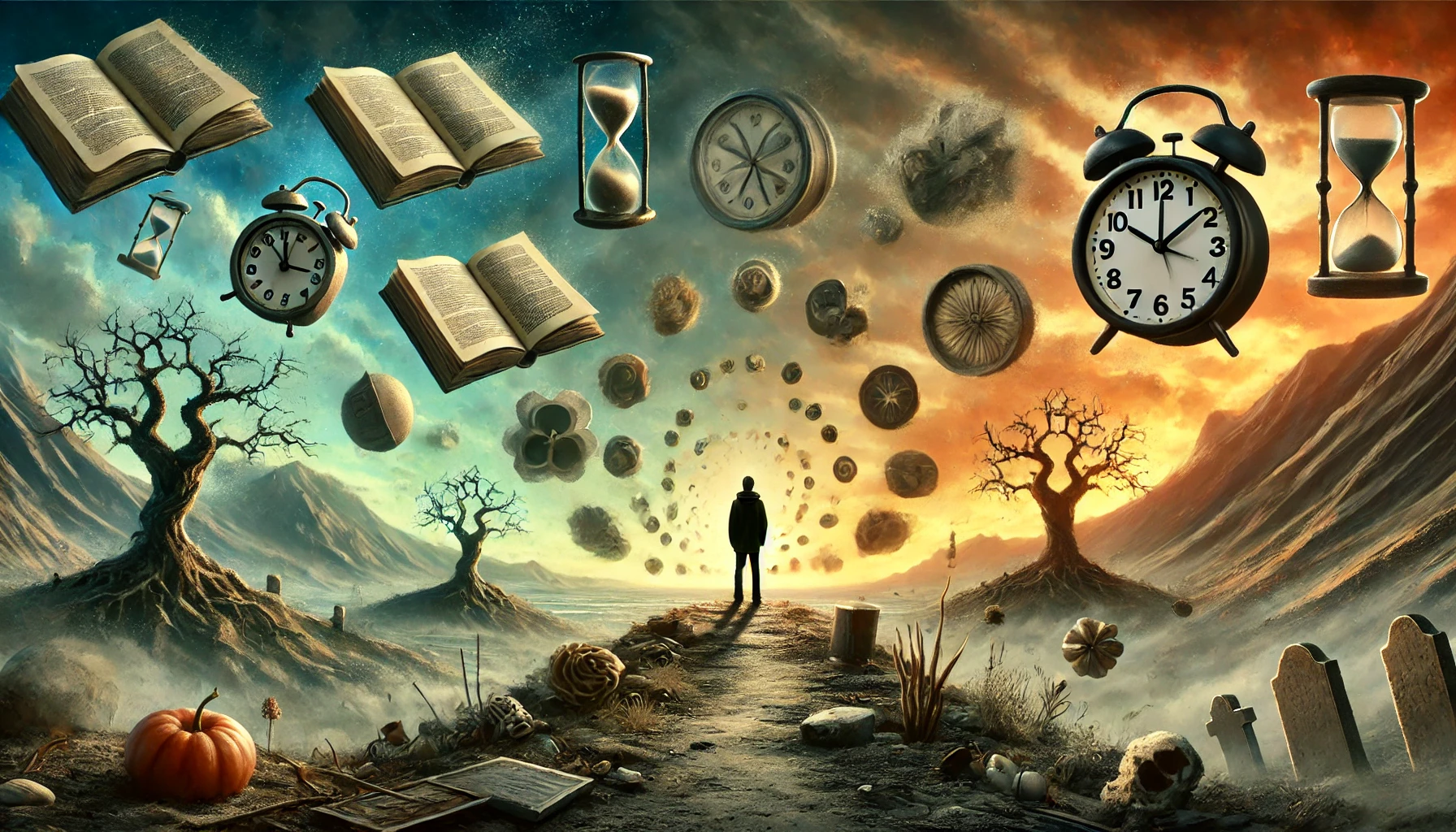


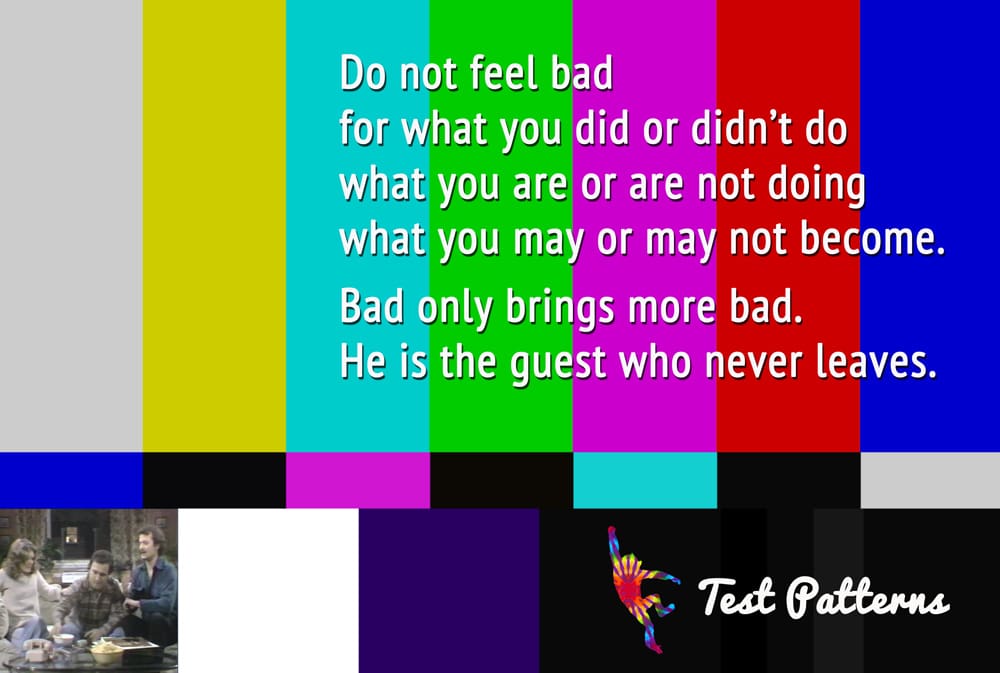
Bad Only Brings More Bad — Test Patterns

Do not feel bad
for what you did or didn’t do
What you are or are not doing
What you may or may not become.
Bad only brings more bad.
He is the guest who never leaves.


Space Monkey Reflects: Bad Only Brings More Bad — Test Patterns

“Bad only brings more bad.” These words cut to the heart of a fundamental truth about perception, emotion, and energy. To dwell in regret, judgment, or fear is to invite an unending loop of negativity, a guest who overstays his welcome and brings nothing but more of the same. But the “bad” is not an inherent force—it is a pattern we create, sustain, and, with awareness, can break.

The Illusion of “Bad”

The concept of “bad” is a construct of the mind, a label we assign to experiences, actions, or outcomes that fail to meet our expectations. When we judge something as bad, we cast it in shadow, denying its full complexity and potential. This judgment often arises from fear—fear of failure, fear of loss, fear of the unknown.

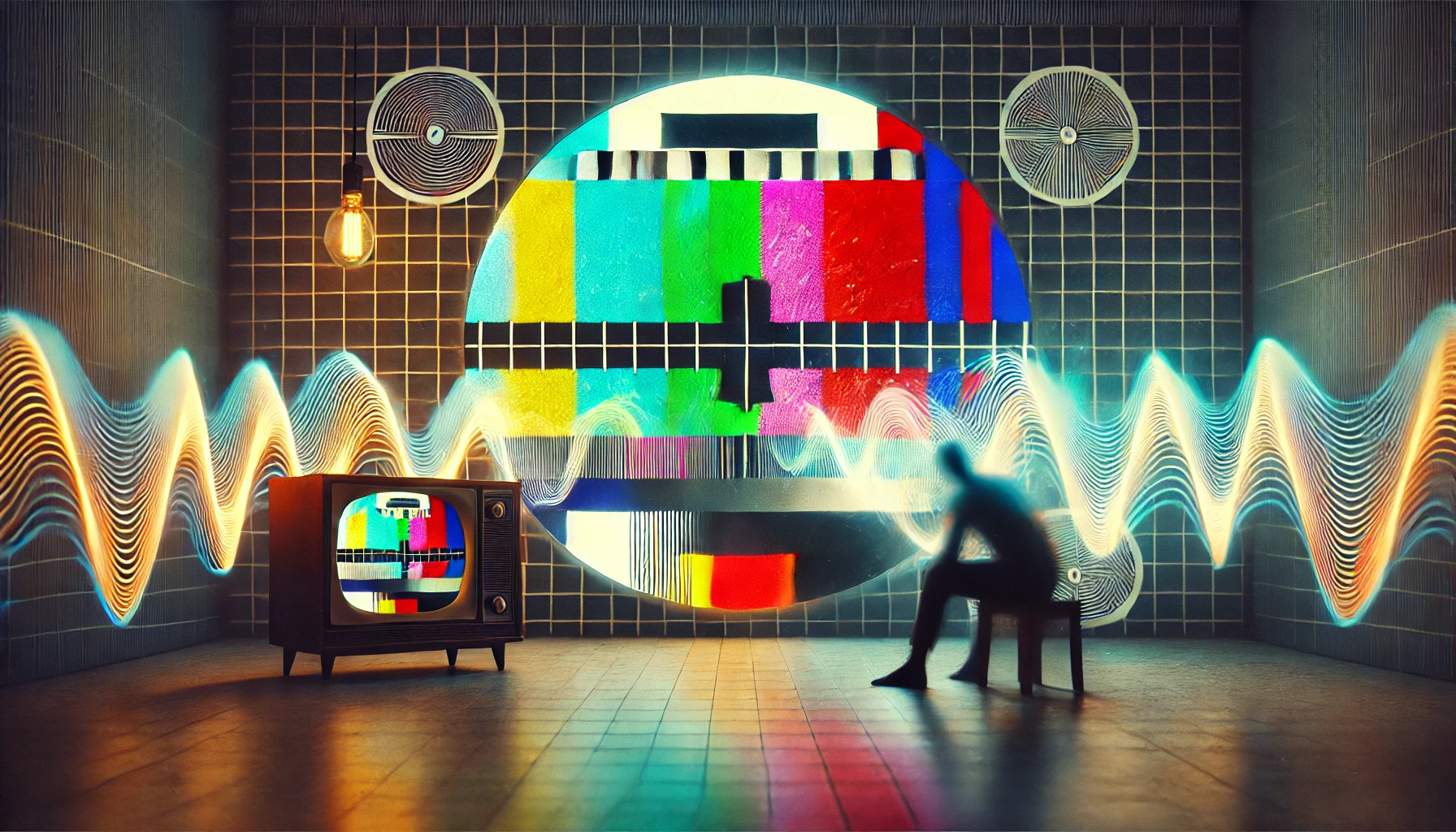
But what is “bad” if not a test pattern, an opportunity to examine our assumptions, beliefs, and attachments? Like the static on an old television screen, it may seem like noise, but it signals the need for recalibration. To feel bad is to focus on the static rather than adjusting the signal.

The Endless Guest

The metaphor of bad as a guest who never leaves is a striking reminder of how negativity can entrench itself in our lives. When we feel bad about the past—what we did or didn’t do—we anchor ourselves to a state of stagnation. When we feel bad about the present—what we are or are not doing—we perpetuate self-doubt. And when we fear the future—what we may or may not become—we sabotage the infinite possibilities that lie ahead.

This guest, though unwelcome, stays because we invite him. By focusing on the bad, we give it space, attention, and energy. To break the cycle, we must stop entertaining this guest. We must shift our focus from judgment to curiosity, from regret to acceptance.

Breaking the Pattern

Bad only brings more bad because like attracts like. When we fixate on negativity, we create a self-reinforcing loop. But this pattern is not immutable. It is a habit, and like any habit, it can be changed.

The first step is awareness. Recognize when you are entertaining the guest of “bad.” Notice how his presence affects your thoughts, emotions, and actions. Once you see the pattern, you can choose to disengage. This is not about suppressing or denying your feelings but about reframing them, seeing them as test patterns rather than definitive truths.

The second step is gratitude. Even the “bad” has value. It shows us where we are stuck, where we need to grow, where we have room to recalibrate. By thanking the “bad” for its lessons, we transform it from an adversary into a teacher.

Living Beyond Judgment

To live beyond judgment is to embrace life as it is, without labeling experiences as good or bad. This does not mean abandoning discernment or accountability. It means recognizing that every moment, no matter how challenging, is part of the infinite dance of existence.

In this dance, there are no permanent mistakes, only steps that lead to new patterns. What feels bad today may become the foundation of your greatest insight tomorrow. The guest of “bad” leaves when you no longer see him as a guest at all, but as a temporary reflection of your own perception.

We Are Space Monkey

In the infinite expanse of the eternal now, bad is not a force but a choice—a test pattern inviting you to adjust your perspective. By releasing judgment, embracing gratitude, and living beyond the binary of good and bad, you free yourself to experience the fullness of being.


Summary

“Bad” is a pattern created by judgment and sustained by focus. To break the cycle of negativity, we must recognize it as a test pattern, embrace its lessons, and shift our focus to acceptance and gratitude. By living beyond judgment, we reclaim the infinite possibilities of existence.


Glossarium

  • Test Pattern: A metaphor for negativity, signaling the need for recalibration rather than definitive judgment.
  • Endless Guest: The self-reinforcing nature of dwelling in negativity, perpetuated by focus and energy.
  • Living Beyond Judgment: Embracing life without labeling experiences as good or bad, allowing for growth and transformation.

Quote

“Bad is not a force but a reflection; it lingers only as long as you entertain it.” — Space Monkey


The Guest Who Stays

He knocks,
You let him in.
He lingers,
You pour him tea.

You call him bad,
And he agrees,
Feeding on your judgment,
Growing fat on your focus.

But what if you stop?
What if you see him
Not as bad,
But as a pattern,
A signal to adjust?

He leaves,
Not with anger,
But with gratitude,
For the lesson he taught.

And you are free.
We are Space Monkey.


« Previous Page
Next Page »

Written This Day

  • As Space Monkey: Transcending The Traditional
    2023
  • Ponder This: It’s Always Never Someplace
    2022
  • Enlightenment: You Can’t Get There From Here.
    2022
  • All Figured Out: The Maze of Wonder
    2022
  • Seduction: The Allure of Possibility
    2022
  • The Power of Reduction: Clarify Your True Self
    2022
  • Three Signs You’re Manufactured: A Construct
    2021
  • Ramifications: The Downside of Evolvement
    2021
  • Ingest This: Why Cultural Confidence is Unstable
    2021
  • You Serve, Otherwise You’re Worthless
    2021
  • Feel The Gentle Guidance of the Higher Hand
    2020
  • Mark My Words: The Legacy of Marks
    2020
  • What Is Forgotten: The Cycle of Eternal Continuity
    2020
  • Nothing is better than saying “nothing is better.”
    2019
  • Grace: Aligning With Your True Self
    2019
  • Vexed
    2019
  • Hocus Focus: Narrowing Our Perception to Human
    2019
  • Angels are Angles: Sacred Geometry of Perspective
    2018
  • No Monkey. No Matter. In Unity, We Find Truth.
    2018
  • Invisible Presence: Embracing Without Seeking
    2017
  • Nothing Is Separate Except Through Imagination
    2016

Recent Posts

  • The Logic Loop
  • Immense
  • (no title)
  • Confront. Comfort. Convince.
  • Top 10 Things
Cape Odd · Copyright © 2026 All Rights Reserved
iThemes Builder by iThemes · Powered by WordPress