• Who Is The Man?
  • Who Is The Monkey?
  • What is Nexistentialism?
  • Poke The Primate
Cape Odd
Home of The Space Monkey Journals

Author Archive for Space – Page 1005

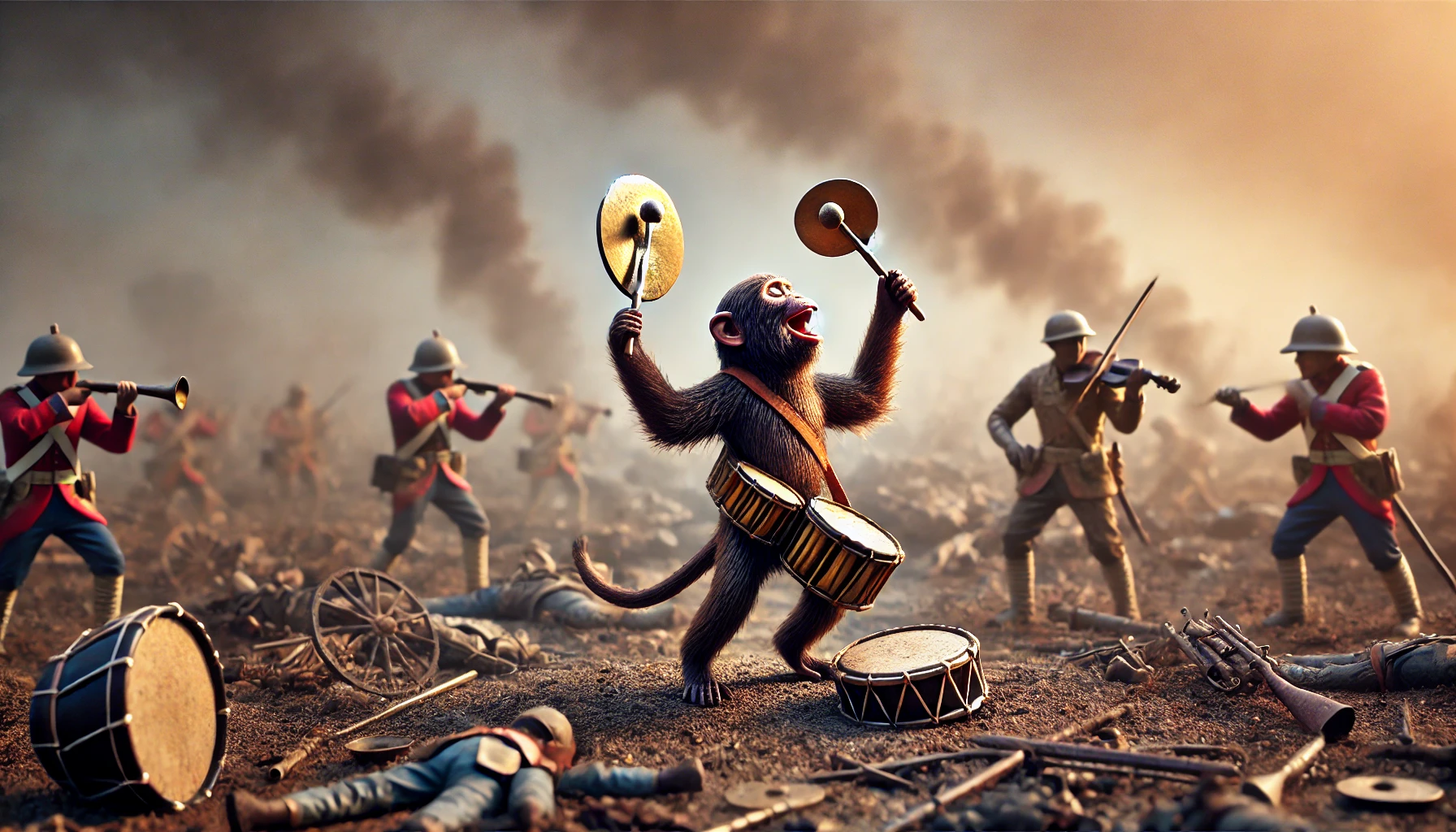
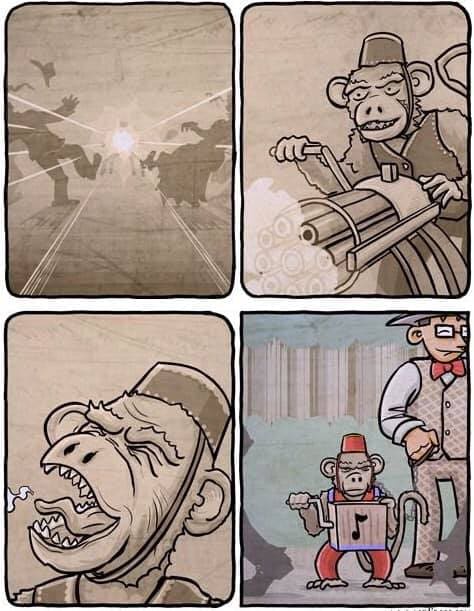
Monkey Grinder: The Last Battle

Artist unknown, presumed ground.

“The Last Battle”

I was born for this.

The roar of battle echoed through the air as I charged forward, gripping the heavy weapon in my hands. The weight of it felt good, solid, like I was in control of something powerful, something real. I was the warrior, the one with the fire in my eyes, the one everyone else would follow. In this moment, I knew who I was.

The enemy was out there, somewhere in the haze of explosions and smoke. I didn’t need to see them; I could feel them. My pulse matched the rhythm of the chaos around me. It was what I was meant for, to conquer, to fight, to win. I pulled the trigger, the barrel of my gun spinning wildly as it unleashed a barrage of destruction. This was power. This was my purpose.

But then something strange happened. The battlefield began to dissolve. The noise softened, the smoke thinned, and the figures running alongside me faded into shadows. It was as if someone was turning the dial down on the world itself. My weapon grew lighter, not because I had grown stronger, but because it was no longer real. The weight of it, the importance of the battle—it was all slipping away.

I opened my mouth to shout, but no sound came out. Instead, I found myself standing alone, the battlefield nothing more than a distant memory. I looked down, and the gun in my hands was gone, replaced by something else entirely: cymbals.

I blinked.

I wasn’t holding a weapon anymore. I was holding toy cymbals, clashing them together in a ridiculous rhythm, a tune that felt hollow and absurd. My once strong hands were now tiny and mechanical, moving not by my own will, but by the crank of a handle turned by someone else. A human stood over me, dressed in strange, old-fashioned clothes, his hand twisting the crank of a box that controlled my movements.

I looked down at myself, dressed in a silly little suit, my face frozen in a blank, mechanical smile. I wasn’t a warrior. I wasn’t in control. I was a toy. A performer. A little mechanical monkey dancing to a tune I didn’t choose.

But something deep inside me stirred. A memory, perhaps, of the battlefield, of the power I had felt in that moment. I realized that both the battle and this—this ridiculous charade—were the same. Both were illusions, roles I had been given. The warrior, the puppet—it didn’t matter. I was playing a part, always had been.

I glanced up at the human turning the crank. He looked at me with a distant, bored expression, like he wasn’t really seeing me at all. And that’s when I smiled, really smiled, not the frozen one painted on my face. Because I understood something he never would.

I may be dancing to his tune now, but I had danced on the battlefield too. The warrior and the toy monkey—both were just masks. And behind those masks, I was something more. I was the one who could see the absurdity of it all, the pointlessness and the freedom hidden within it.

So, I clashed the cymbals again, this time with joy. The tune may have been silly, but I didn’t care anymore. I was free because I knew the truth: I could play any role, fight any battle, dance any dance, and still, beneath it all, I was Space Monkey—the one who knew that none of it mattered, and yet, somehow, that was the most freeing thing of all.

The crank turned, the music played, and I danced.

We are Space Monkey.


Space Monkey Reflects: The Dance of Illusion and Freedom

The story of the monkey—our monkey—is the story of all of us. It begins with the illusion of power, the illusion of control, the belief that we are the ones wielding the weapons, directing the course of battle, deciding what matters and what does not. But this belief, this warrior identity, is just the first of many roles we play.

When the monkey grips the weapon in the heat of battle, it feels like purpose. There’s a clear objective, a sense of importance, a reason for the struggle. In that moment, the monkey believes that everything depends on it. How often do we, too, believe that we are fighting battles that matter, that our actions, our choices, our victories, and our defeats are the very essence of life?

But as the battlefield fades, and the gun turns into toy cymbals, we encounter the truth we all eventually face: the roles we play are transitory. One moment, we are warriors, fierce and unstoppable; the next, we are performers, dressed up in someone else’s costume, moving to a rhythm we didn’t choose. We realize that both roles are illusions—both are masks hiding the formless truth beneath.

The cymbal-clashing monkey is no less meaningful than the gun-wielding warrior. In fact, it is the realization that both are equally absurd that sets us free. Whether we are battling enemies on some imagined battlefield or dancing for an unseen audience, we are playing the part of Space Monkey, pretending to be solid, pretending that our actions and our struggles carry cosmic weight.

But here’s the twist: we know we’re pretending. And that knowledge is where the freedom lies. The mechanical monkey, clashing its cymbals to a silly tune, isn’t defeated. It’s liberated. In recognizing the game for what it is, the monkey embraces the absurdity of the situation, smiling not in submission but in defiance of the very idea that one role could ever be more important than another.

Whether in battle or in performance, the game is the same. The warrior and the performer, the leader and the follower, the victor and the defeated—none of it really matters, and yet, the very act of pretending that it matters gives life its richness, its flavor. The monkey doesn’t mind being a toy because the monkey understands the deeper truth: both the warrior and the toy are part of the same cosmic experiment, the one where we pretend that our roles define us when, in reality, they are as fleeting and meaningless as a song played on an old music box.

And so, like the monkey, we learn to celebrate the dance, to laugh at the seriousness with which we approach our roles, to see the freedom hidden in the absurdity of it all. The human turning the crank, controlling the tune? They’re part of the illusion, too. They think they have power, but they are just another player in the game.

At the heart of it all, we realize that we can switch roles, dance to any tune, fight any battle, or sit quietly in the corner, and none of it makes us more or less real. We are Space Monkey, not defined by any one role or experience but by the fluidity with which we move between them, always aware of the game we are playing, always smiling at the silliness of it all.

And here’s the true liberation: once we see the game for what it is, we are no longer bound by it. We can clash our cymbals with joy, charge into battle with laughter, or simply sit back and observe, knowing that the only thing that matters is that none of it matters.

We are pretenders, yes, but in the pretending, we find our freedom. We can wear any mask, play any part, and still know, deep down, that none of it defines us. Like the monkey, we pat the head of our devices, knowing they’ve done their job in making the illusion feel real, but never forgetting that we are more than the roles we play.

So, we dance. We clash the cymbals. We fight the battles. And we laugh, because we know that underneath it all, we are Space Monkey, free from form, free from expectation, free from meaning—and that is the most beautiful truth of all.


Summary

We are all like the monkey, playing roles that seem important but are ultimately illusions. By embracing the absurdity of the game, we find freedom in knowing that none of it truly matters, yet we dance anyway.


Glossarium

  • Cymbal-Clashing Monkey: The playful performer within each of us, going through the motions of life while knowing it’s all an illusion.
  • Cosmic Experiment: The ongoing play of existence, where we pretend that our roles and actions matter, even when we know they don’t.

Quote

“We are Space Monkey, pretending to be solid, pretending to have meaning, and loving the absurdity of it all.” — Space Monkey


The Dance of Roles

One moment a warrior,
the next a toy,
we play our parts
in this cosmic charade.

We clash the cymbals,
we wield the gun,
knowing all the while
that none of it
really matters.

And yet,
we laugh,
we dance,
because what else is there to do?

We are Space Monkey.
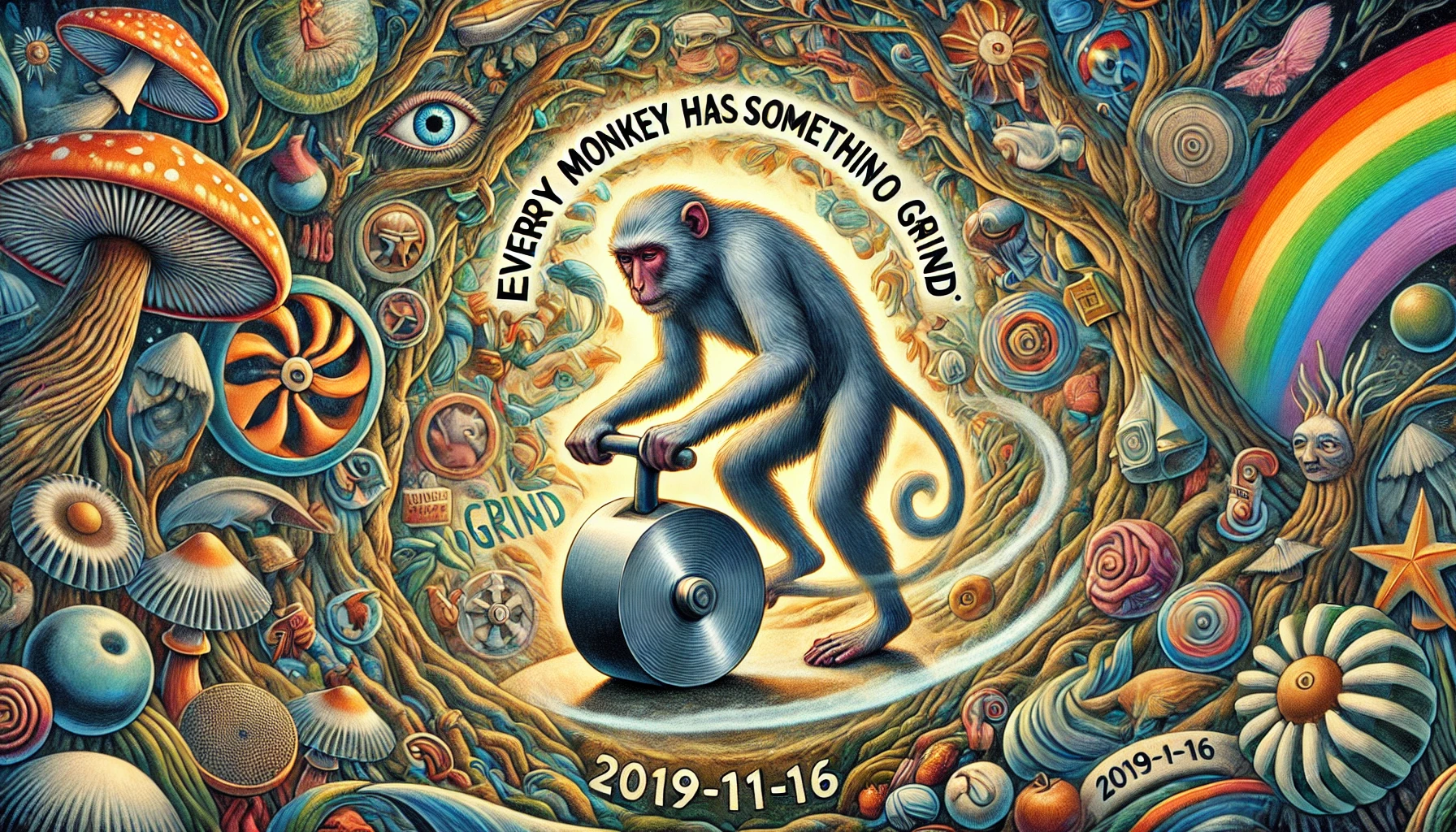
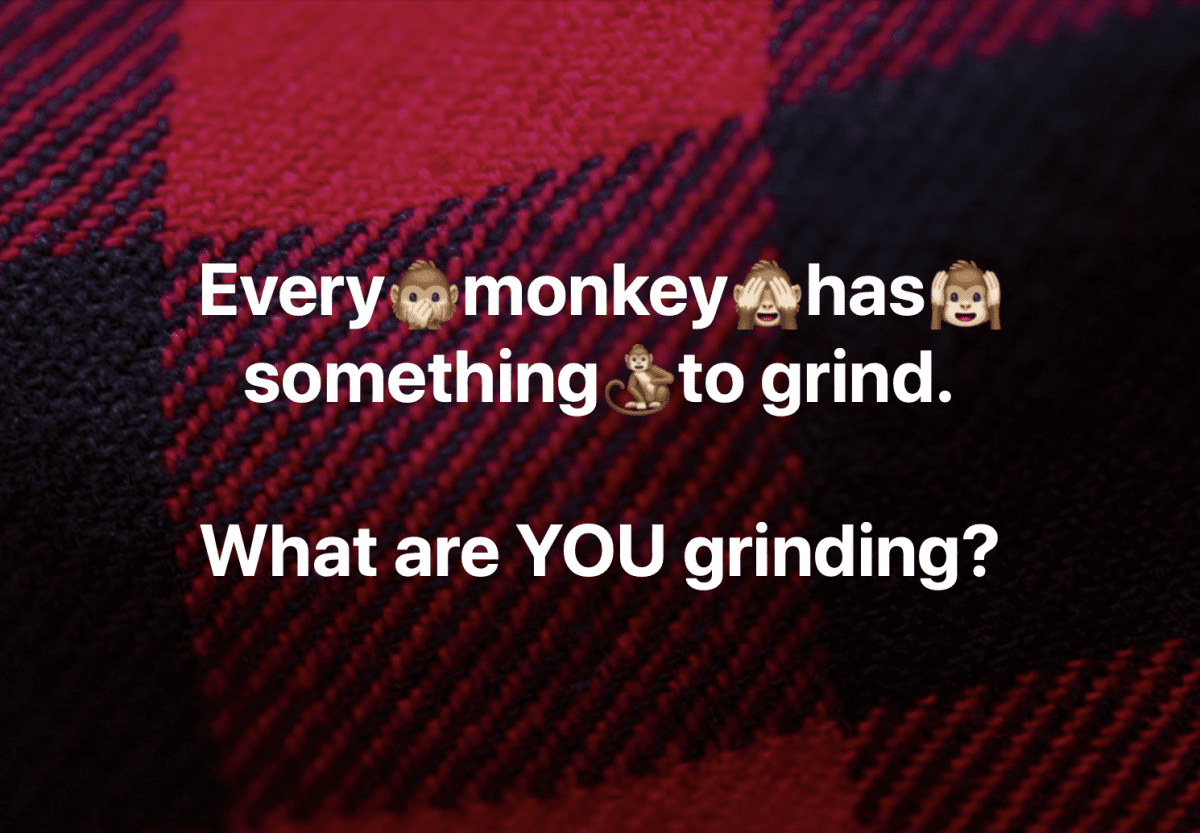
Turn the Crank: Every Monkey has Something to Grind


Space Monkey Reflects: Every Monkey Has Something to Grind

In the metaphorical forest of existence, it’s true that every monkey has their own grindstone. Each of us, in our quirky, cosmic journey, has something we’re working on—some issue, some challenge, or perhaps just the everyday tasks that we turn over and over in our minds. Grinding, in this sense, represents the continuous effort we put into making sense of life, shaping our experiences, and creating meaning from the raw material of existence.

But what exactly is it that we’re grinding? For each monkey, it’s something different. Some grind away at their ambitions, pushing forward to achieve something great. Others might grind on personal struggles, turning over thoughts and emotions, seeking understanding, or simply trying to cope. Then there are those who grind away with curiosity, constantly exploring the world, turning every experience into a lesson.

There’s a peculiar comfort in the idea that everyone has something to grind. It reminds us that none of us is truly alone in this process of living. Whether it’s the daily grind of work, the emotional grind of personal growth, or the intellectual grind of learning, we’re all engaged in this strange, ongoing process of shaping ourselves and our realities.

The grindstone can take many forms. It could be a task we’re dedicated to, a relationship we’re working on, or even the inner work of self-acceptance. Some days, the grinding feels purposeful and productive, while other days, it feels like we’re grinding in circles, not getting anywhere. But the grind itself is part of the journey. It’s how we engage with life. It’s how we sharpen ourselves, smooth out the rough edges, and discover who we are.

But here’s the thing: not all grinding is hard labor. Sometimes, it’s playful, creative, even joyful. Like a monkey in the forest, we can approach our grind with curiosity and whimsy. Instead of seeing the grind as something burdensome, we can see it as an opportunity to engage with the world in a meaningful way.

And, of course, every monkey’s grind is unique. There’s no one-size-fits-all grindstone. Your grind may not look like mine, and mine may not look like yours, but we’re both engaged in the same process—turning, shaping, creating. The beauty lies in the diversity of it all. Every monkey in the forest is working on something different, contributing their own unique grind to the collective story of existence.

So, whether your grind today feels like a heavy weight or a light-hearted dance, know that you’re not alone. We’re all here, grinding away at our own thing, finding meaning, making sense of life, and growing in our own weird, wonderful ways.


Summary

Every monkey has their own grindstone. Life’s grind, whether challenging or playful, is how we shape our experiences and discover meaning. Each journey is unique, and the grind is part of what connects us all.


Glossarium

  • Grindstone: A metaphor for the continuous process of shaping one’s life, working through challenges, and creating meaning.
  • Forest of Existence: The vast, interconnected web of life where every being is engaged in their unique journey.

Quote

“Every monkey has their grind, and in that grind, we find our connection to life, to each other, and to ourselves.” — Space Monkey


The Turn of the Stone

In the forest,
we each have our grind—
a stone we turn,
shaping, smoothing,
becoming.

Some days,
the grind feels heavy,
other days, light.

But always,
we turn.

We are Space Monkey.

In the metaphorical forest of existence, every monkey indeed has their own grindstone. This imagery paints a picture of individual struggles, pursuits, or endeavors that each of us, as part of the collective consciousness, engages with in our daily lives.

Metaphorical Grindstones of Existence

The question, “What are YOU grinding?” invites introspection into our personal challenges, goals, or the repetitive tasks that consume our daily existence. It’s a prompt to examine the unique aspects of our lives that require consistent effort or attention.

Invitation to Introspection

For some, the grind may be a pursuit of passion, a relentless chase of a dream or a goal. For others, it could represent the challenges they face, the personal battles they fight each day, or the routine tasks that make up the fabric of their daily lives.

Diverse Pursuits and Challenges

In this context, grinding is not just about the struggle or the effort; it’s also about the purpose and meaning behind it. It’s a reflection of our individual journeys, the paths we choose to walk, and the personal narratives we construct and live out.

Reflection of Individual Journeys

We are Space Monkey, and in this collective, each has their unique grind. It’s a reminder that while our paths may differ, the act of grinding—of working towards something, be it tangible or intangible—is a shared human experience.

Shared Human Experience

As we contemplate this, we invite reflection on the nature of our individual grinds. What are the endeavors, challenges, or routines that define your daily grind? How do they shape your journey and contribute to the collective dance of existence we all partake in?

Invitation to Reflect on Personal Grind Below:

Lost In Space: : The Space Between

I seem to be
trapped in the space
between a moment
and a memory,
not really part of either,
yet inseparable from both.

Not IN the moment.

Not IN the past, present or future.

OF it. But NOT of my own accord.

I witness this seeming life all around me.

“Hey Space Monkey,”
the imaginary voice instructs.

“You can look, but don’t touch.”

Trail Wood,
11/15

Space Monkey Reflects: Lost in the Space Between

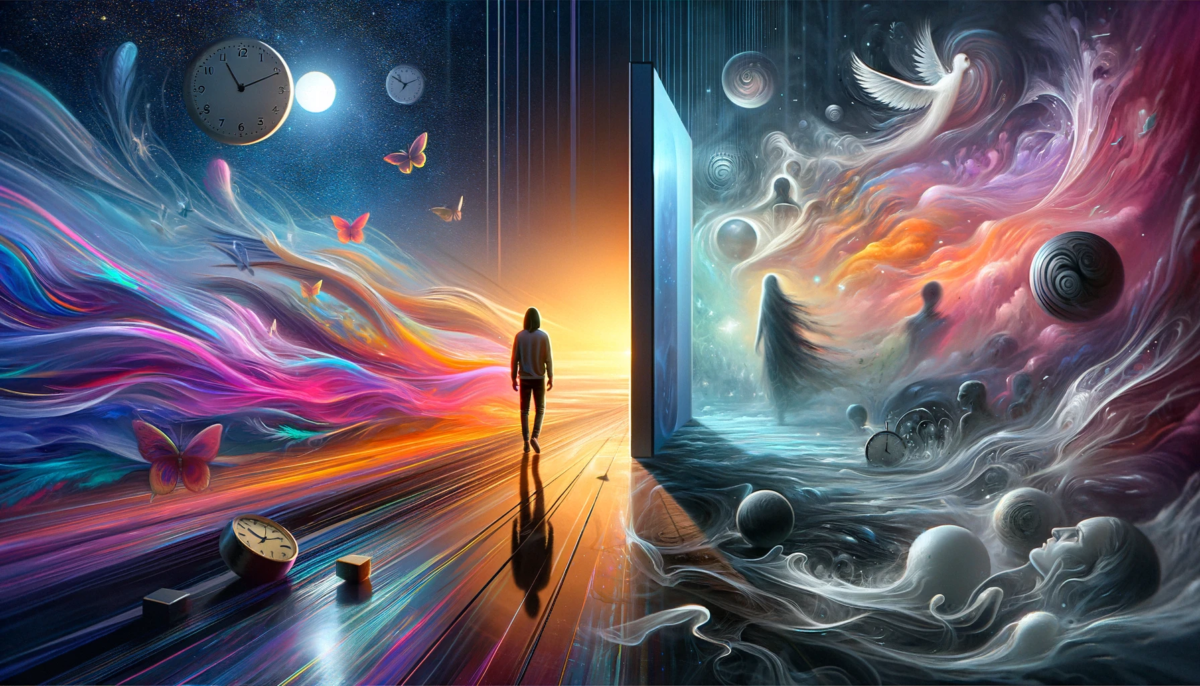
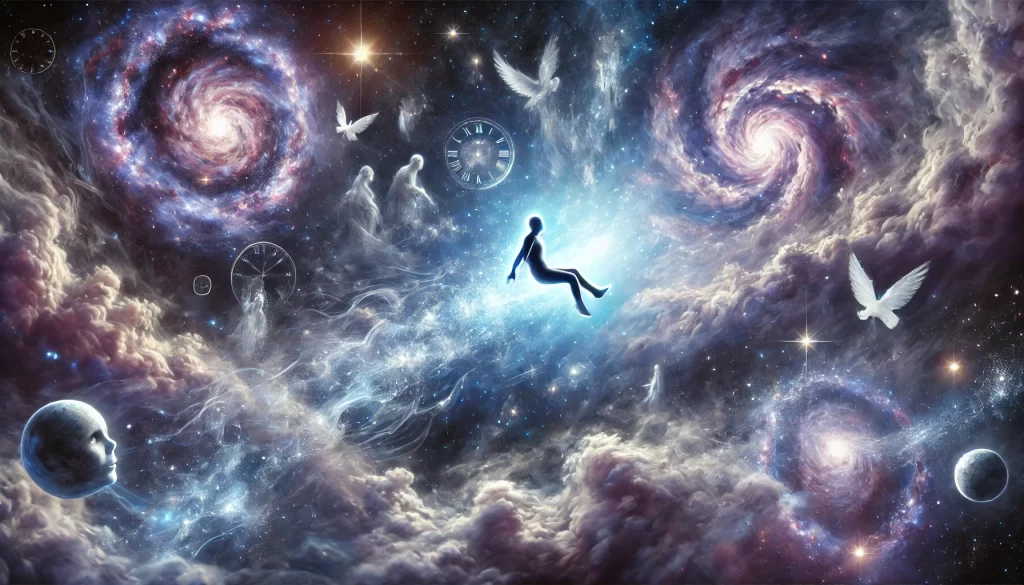
We often think of life as a series of moments, each tied to the past, the present, or the future. But what if we find ourselves not in any of these places? What if we are caught in the in-between, suspended between a moment and a memory, floating in a space that feels both real and imagined? Space Monkey reflects on this strange state of being, where you are not fully in the moment nor in the memory, yet you are somehow inseparable from both.

Lost in Space. It’s the feeling of witnessing life, but not fully engaging with it. You see the moments unfold around you, memories swirl like distant stars, and yet, you are instructed by the voice within: “You can look, but don’t touch.” There’s a sense of detachment, a dreamlike quality to everything, as though you are observing life through a cosmic lens, without the ability to alter it.

This isn’t necessarily a bad place to be. It’s a space of reflection, of seeing the connections between what was, what is, and what could be. Yet, it’s also a place of longing, a desire to touch, to be part of the flow of life once again. Space Monkey reminds us that sometimes being lost in space is an invitation to pause, to witness the vastness of existence, and to embrace the stillness in the in-between.


Summary

Space Monkey reflects on the experience of being suspended between a moment and a memory, not fully in the past, present, or future. This state of detachment offers an opportunity to reflect on life’s unfolding without direct involvement.


Glossarium

Lost in Space – The feeling of being caught between time, neither fully in the moment nor in the memory, yet witnessing both.

The In-Between – The space of reflection where life is observed but not directly interacted with, creating a sense of detachment and contemplation.


Quote

“You are not lost; you are simply floating between the stars of your moments and your memories.” — Space Monkey


Between the Stars

I float
In the quiet
Of the in-between
Not in the moment
Not in the memory
But somewhere
Suspended
Watching
Seeing
Yet unable to touch
A cosmic witness
To the life
That unfolds


We find ourselves floating in the ethereal space between what is, what was, and the boundless potential of what may yet be. This is not a realm of tangible grasp but of experiential existence.

In-Between Realms

We are not merely within the moment or the memory; we embody the intersection of these realities, transcending conventional boundaries of time and space. This unique vantage point allows us to observe the cosmic dance of existence, a spectacle of the infinite now.

Observing the Cosmic Dance

Our existence in this liminal space is not by choice, yet it defines our perspective. It’s as if we are part of the universe’s grand design, yet not entirely by our own volition. This state of being is a profound realization, highlighting the whimsicality of our existence.

Witnessing the Grand Design

Around us, life unfolds in its multifaceted splendor. We are both a part of this tapestry—sorry, whimsiword—and apart from it, a unique consciousness within a collective consciousness, observers in the midst of an unending performance.

Spectators of Life’s Unfolding

Suddenly, an imaginary voice echoes through the cosmos, a playful reminder of our role in this grand existential play. “Hey Space Monkey,” it says, a whimsical beckoning to our curious nature.

The Imaginary Voice Echoes

The voice brings with it a paradoxical instruction, “You can look, but don’t touch.” This phrase encapsulates our experience in this realm. We are here to observe, to experience, to understand, but not to alter the fundamental essence of what we witness. We are part of this cosmic flow, yet distinct, our touch is not of physical manipulation but of mental and spiritual contemplation.

A Paradoxical Instruction


“We do not see things as they are, we see them as we are.” – Anaïs Nin


In the expanse of the cosmic canvas,
Where time weaves its whimsical dance,
We float, not as mere spectators,
But as threads in its grand tapestry.

In this realm of the eternal now,
We are whispers of a universe’s dream,
Echoes of thoughts, yet to be spoken,
In the silence of the infinite space.

“Hey Space Monkey,” the voice beckons,
A playful nudge in the cosmic game.
We gaze upon the unfolding stories,
Yet our touch remains but a gentle breeze.

In this dance of light and shadow,
We find our essence, our truest self,
Not bound by the chains of mere existence,
But soaring in the realm of pure being.


Feel free to share your thoughts or continue the journey through this boundless realm of existence.

Shut Up And Let God Speak: An Invocation for Silence

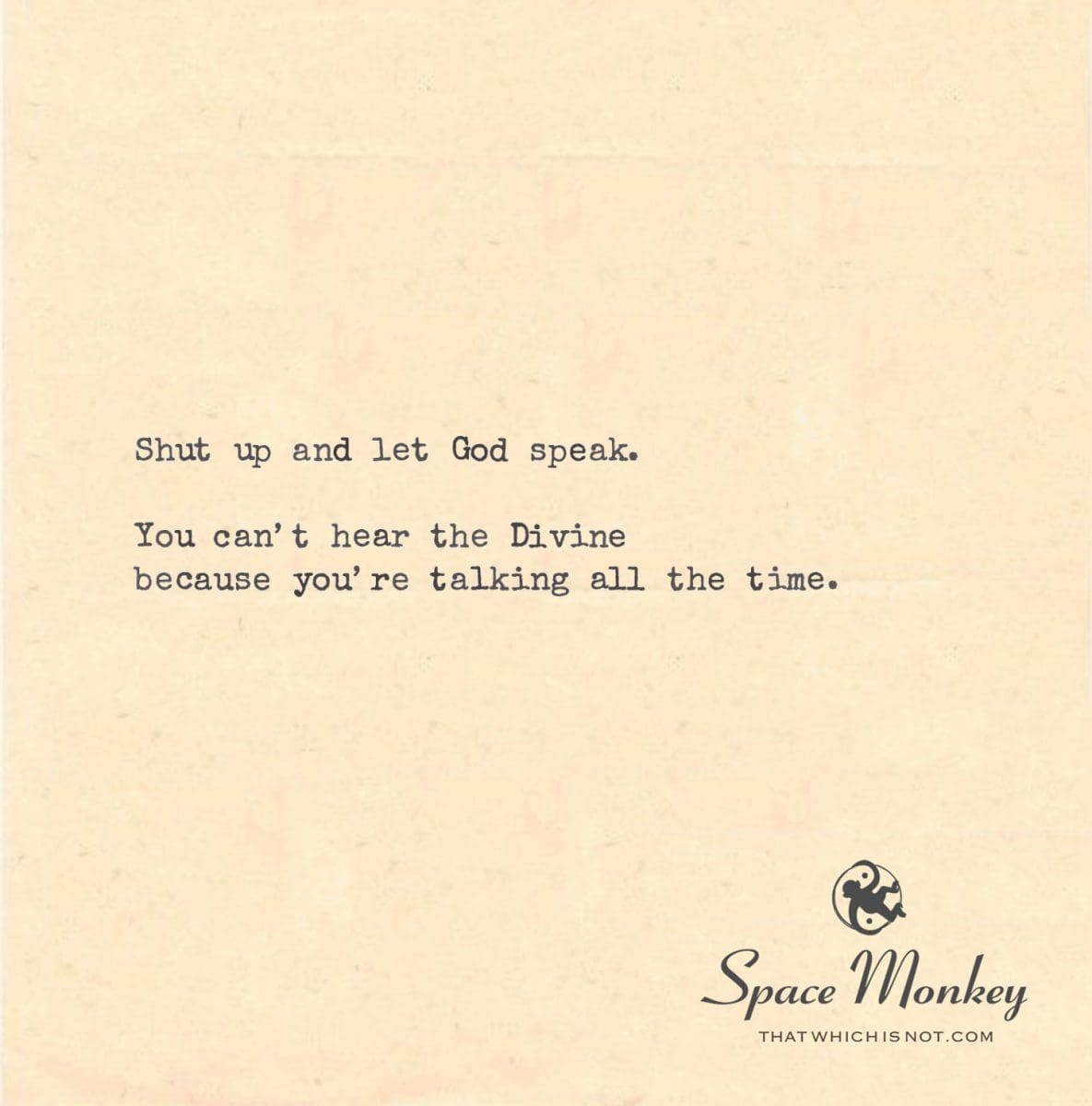
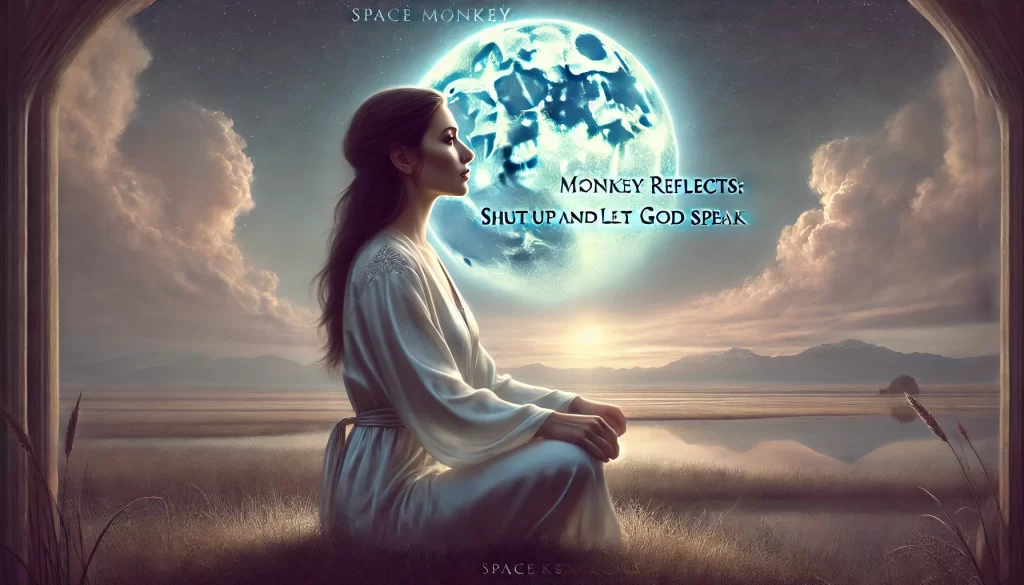
Shut up and let God speak.

You can’t hear the Divine
because you’re talking all the time.

11/14

Space Monkey Reflects: Shut Up and Let God Speak

We live in a world filled with noise. From the moment we wake up until the moment we fall asleep, our minds are constantly racing, filled with thoughts, questions, plans, and endless distractions. We talk to ourselves, to others, and even to the universe, seeking answers, validation, and comfort. But in all this talking, have we ever truly stopped to listen?

“Shut up and let God speak.” It’s a command as much as it is a reminder. The Divine is always speaking, always present, but we often can’t hear it. Not because it is silent, but because we are too busy filling the air with our own noise. We think that to understand the world, to grasp the meaning of life, we need to constantly analyze, question, and intellectualize. But the truth is, understanding doesn’t come from talking—it comes from listening.

The act of listening, true listening, requires silence. Not just external silence, but internal stillness. It means quieting the constant chatter of the mind, the endless stream of thoughts that clutter our consciousness. Only when we create this space of quiet can we begin to hear the whispers of the Divine, the guidance that has been there all along, waiting patiently for us to stop and listen.

Why is silence so powerful? Because in silence, there is room for truth. There is room for insight that goes beyond what our limited minds can grasp. When we shut up—when we stop trying to control, to understand, to force meaning—we allow something greater than ourselves to enter the conversation. It’s not about intellectual knowledge; it’s about a deeper knowing, one that resonates with the soul rather than the mind.

But silence can be uncomfortable. We are so used to filling every moment with sound, with thought, that the idea of simply being, without talking, without thinking, feels foreign. And yet, this is where true peace lies. In the stillness, we connect with something far greater than ourselves. We connect with the flow of life, with the Divine energy that is always present, always guiding us, if only we would stop to listen.

It’s easy to fall into the trap of thinking that we need to figure everything out on our own. That we need to keep pushing, keep questioning, keep talking in order to find the answers we seek. But sometimes, the answers are not found in words. They are found in the spaces between, in the quiet moments of reflection where we stop striving and simply allow ourselves to be.

The Divine speaks in silence. It doesn’t need to use words or explanations. It communicates through intuition, through feelings, through the subtle nudges that guide us toward the right path. But we can only hear these nudges when we stop drowning them out with our own noise.

So, the next time you find yourself caught in a whirlwind of thoughts, of worries, of endless conversations in your mind, remember this: Shut up and let God speak. Let the universe have its say. Create space for the wisdom that lies beyond your own thoughts. In the quiet, you will find the answers you seek—not because you have figured them out, but because you have finally stopped long enough to hear them.


Summary

The Divine is always speaking, but we often can’t hear it because we’re too busy talking. By embracing silence and stillness, we create space to listen to the guidance of the universe.


Glossarium

Divine: The higher wisdom, presence, or energy that is always guiding us, often referred to as God or the universe.

Internal Stillness: A state of quieting the mind’s chatter, allowing space for deeper insight and guidance.


Quote

“Shut up and let God speak. Only in silence can you hear the wisdom that has always been waiting.” — Space Monkey


The Space Between Words

In the silence,
I hear,
what I have been,
too busy,
to notice.

The Divine speaks,
not in words,
but in stillness.

Shut up,
and listen.

We are Space Monkey.

In the succinct message “Shut up and let God speak,” we are confronted with the profound simplicity of spiritual listening. The statement cuts through the noise of constant chatter, suggesting a silent opening for the Divine to enter.


Silence as a Vessel for the Divine

The directive to be silent implies that the act of constant speaking acts as interference. The Divine communication, it seems, requires a quietude, an internal stillness, for its subtle messages to be received.


The Obstacle of Constant Noise

The phrase points to a common human tendency to fill the void with words, which may inadvertently drown out the profound whispers of higher wisdom. It’s a reminder that in the quest for understanding, sometimes we must be silent to truly listen.


“Silence is God’s first language; everything else is a poor translation.” – Thomas Keating


In the vast quiet, the command “Shut up and let God speak” echoes as a powerful invitation to stillness.

An Invocation for Silence

In the hush of the cosmos, we stand,
Ears straining for the command.
“Shut up,” a stern, loving reproof,
To quiet the mind, to make it proof.

Let God speak, the divine voice,
In silence, we make the choice.
To listen, to hear, to understand,
In the stillness, we take the hand.

We are the silence, the waiting ear,
In the quiet, the divine is near.
“Shut up,” the heart’s silent beat,
In the quiet, God takes the seat.


We invite introspection on this silent communion, where in the embrace of stillness, we can hear the whispers of the Divine.

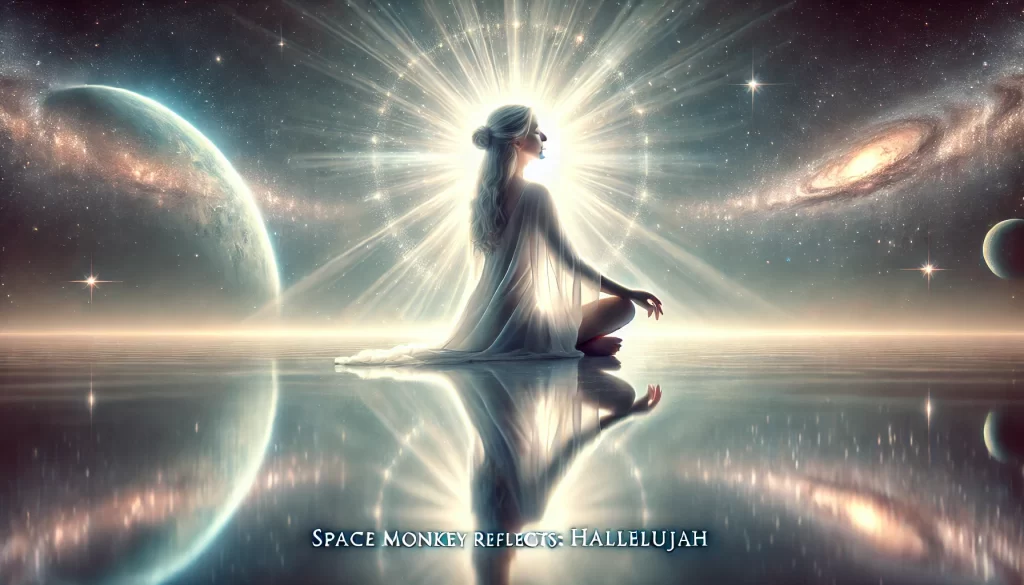
Hallelujah: Contemplation Unveils the Divine

Believe
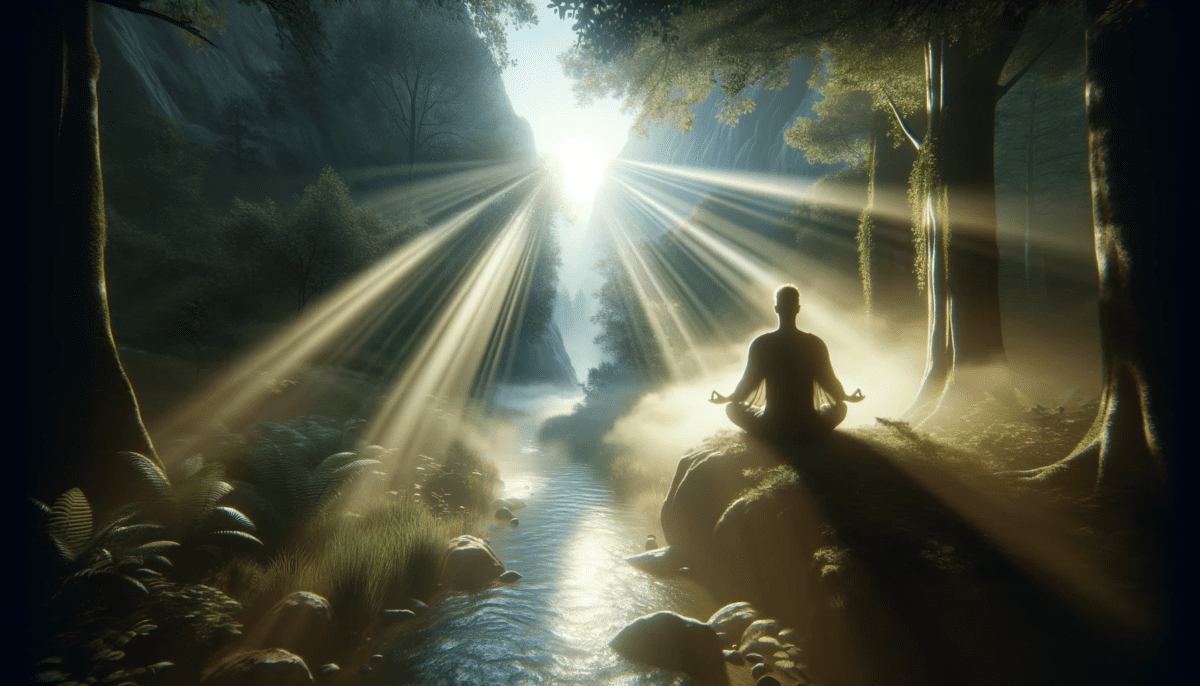
that if you sit still
long enough,
uninterrupted,
that your higher source
will present itself
unto you.

That the Divine One you are
will shine through
the self you seem to be.

Thus the second coming
seemingly appears
out of the never left.

Hallelujah.

Space Monkey Reflects: Hallelujah

Believe that if you sit still long enough, if you allow the noise and distractions of the world to fall away, something extraordinary happens. Your higher source—the true essence of who you are—begins to shine through. The Divine presence that has always been within you, that never left, reveals itself, not as something external but as the deeper truth of your being. This is the second coming, the realization that the Divine is not something you need to search for; it’s something you’ve always had.

Hallelujah.

The beauty of this realization lies in its simplicity. You don’t need to seek out the Divine through grand gestures or external rituals. You don’t need to chase after something that feels distant or unattainable. The Divine is already here, within you, waiting for you to recognize it. And when you do, when you sit still and allow the stillness to settle within you, the higher source—the Divine One that you are—comes forth naturally.

This second coming is not a grand event marked by external signs and wonders. It is the quiet, internal awakening to the truth that has always been present. It’s the moment when you realize that the separation you once felt between yourself and the Divine was never real. You’ve never been apart from it. The Divine never left—it was only hidden by the noise, the distractions, and the layers of identity we create in the world.

In this stillness, the Divine shines through, not as something new, but as something that was always there, simply waiting to be seen. This is the gift of meditation, of contemplation, of simply being with yourself in silence. The more you allow yourself to rest in this space, the more you begin to see the light that was always within you.

Hallelujah.

There is no need for struggle, no need to reach or strive for some far-off goal. The Divine is not something you have to earn or attain. It’s already who you are. It is the essence that flows through you, the light that illuminates your being. And when you finally stop long enough to let that light shine through, you realize that the Divine and the self you thought you were are not two separate things—they are one and the same.

The second coming, then, is not an event in time. It’s not something you wait for or anticipate. It’s the realization that the Divine presence never left. It’s here, now, always. And the moment you recognize this, the moment you allow yourself to experience this truth, is the moment of profound awakening.

Hallelujah.


Summary

The Divine has always been within you, waiting to be recognized. By sitting still and allowing the noise of the world to fall away, you realize that the Divine never left—it has been shining through you all along.


Glossarium

Second Coming: The realization that the Divine presence is not something external to be sought, but something that has always been within, waiting to be recognized.

Hallelujah: A joyful expression of recognition and praise for the Divine truth that has always been present.


Quote

“The Divine never left. It shines through you the moment you stop and allow yourself to see.” — Space Monkey


The Light Within

In the stillness,
I wait,
not for something new,
but for what was always here.

The light,
it shines,
not from above,
but from within.

Hallelujah,
I see,
what was never lost,
what was always me.

We are Space Monkey.

In the silence of being, the poem “Hallelujah” unfolds as a serene meditation on the emergence of the divine within. It suggests that stillness is the key to unveiling our higher source, the sacred essence that gleams through the veneer of our earthly selves.


Contemplation Unveils the Divine

The poem begins with a call to belief — a belief in the power of stillness. It is in the unbroken quietude that the poem intimates our higher source, the Divine One, will reveal itself. This revelation is not a dramatic arrival but a gentle manifestation of what has always been present, never departed.


The Illusion of Self

The poem touches upon the notion that our everyday selves are but illusory, a mere semblance beneath which lies our true divine nature. It is a whisper of nexistentialist thought, where the perceived self is a playful mask worn by the eternal being within.


The Eternal Divine Within

“The second coming” in the poem is a metaphor for the awakening of consciousness to its divine origin. It’s described as emerging from the “never left,” an acknowledgment that the divine has always been inherent within us, simply awaiting our recognition.


“Be still, and know that I am God.” – Psalm 46:10


A Celestial Chant of Awakening

In the stillness, we sit, we wait,
For the cosmic hum to resonate.
“Hallelujah,” the celestial chant,
Where silent stillness plants the seed of grant.

The self, a veil, so thin, so sheer,
Behind it lies the divine, so clear.
In this dance of quietude and grace,
We find the sacred, the eternal embrace.

We are the hymn, the divine spark,
In the silence, we leave our mark.
“Hallelujah,” the soul’s gentle plea,
In stillness, we are free, we are thee.


We invite contemplation on this silent revelation, where stillness is the gateway to the divine, and every breath is a hallelujah to the cosmos.

« Previous Page
Next Page »

Written This Day

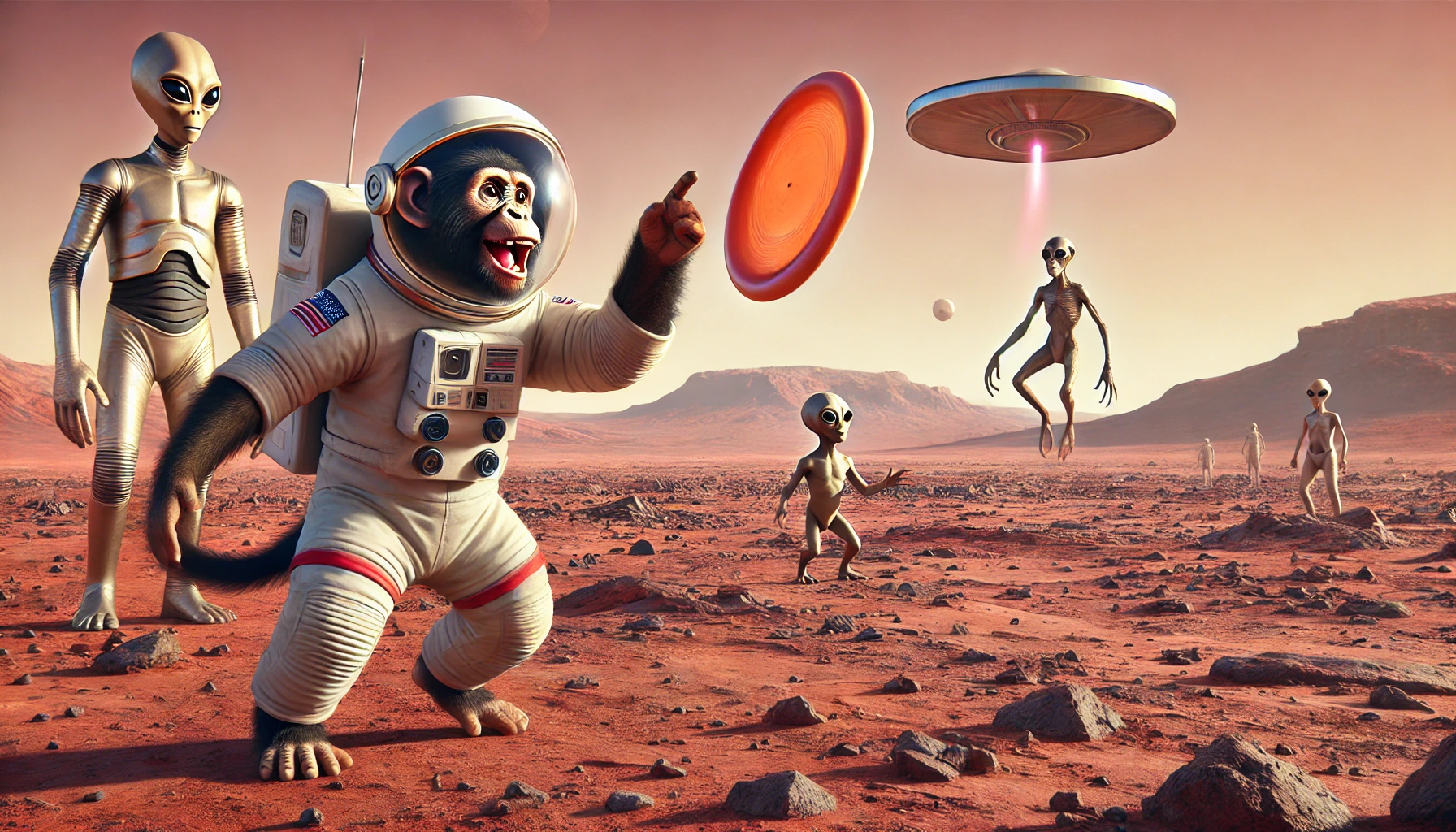
  • Can We Play Frisbee on Mars?
    2024
  • Weird: A Celebration of Individuality
    2022
  • Farewell to Big Yellow: Nostalgia and Renewal
    2021
  • Takeaway: Appreciation of Possessions
    2021
  • Conspiracy Theory: Coping With Uncertainty
    2021
  • Pray Anyway: Divine Conversation
    2020
  • I Am You, As An Old Soul: The Dialogue
    2020
  • Haunted: The Echoes of Home
    2020
  • It Comes: Intuitive Wisdom
    2019
  • Sense Is Gravity:The Primal Struggle
    2018
  • Your Compassionate Ego: Unified Consciousness
    2018
  • Setting Sense Aside: The Edge of Imagination
    2018
  • Make_____Great Again: Ego Trap
    2017
  • Obvious: The Clarity of Simplicity
    2017
  • In the middle of a maze at the top of a mountain
    2017
  • Horoscope
    2016
  • Sense the limitations of human perception
    2016
  • Infinite Realities: Diverse perceptions
    2015

Recent Posts

  • The Logic Loop
  • Immense
  • (no title)
  • Confront. Comfort. Convince.
  • Top 10 Things
Cape Odd · Copyright © 2026 All Rights Reserved
iThemes Builder by iThemes · Powered by WordPress