• Who Is The Man?
  • Who Is The Monkey?
  • What is Nexistentialism?
  • Poke The Primate
Cape Odd
Home of The Space Monkey Journals

Author Archive for Space – Page 1151

Not Simply Nothing: The Stillness Speaks

Not Simply Nothing

We notice in your need
to accomplish something,
that you sacrifice
the joy of doing “nothing.”

As though this meditation
you practice every morning
is less important
than the work you do
or the life
that you fill with tasks.

You still prioritize,
and meditation
seems at the bottom
of your list.

This is what you realize
through meditation.

Unlike your youth,
and your jobs,
and your goals,
and your stress,
and your seeming life,
we are not going away.

So whether you meditate
or you don’t — it doesn’t matter.

You can flow with us or not.

But you know it DOES matter.

It’s not simply nothing you do.

We are here with you,
all the time and beyond,
and we are amused.

We are Space Monkey.

2/19


Space Monkey Reflects: Not Simply Nothing—Action, Inaction, and the Presence of Being

In the relentless rhythm of modern life, the act of doing “nothing” is often dismissed, undervalued, or relegated to the margins of importance. Yet, as this reflection suggests, the space of nothingness—of stillness, meditation, and being—is not simply nothing. It is an essential part of existence, a foundation upon which action and inaction are harmoniously intertwined.

The Illusion of Productivity

We are conditioned to equate worth with accomplishment. Tasks completed, goals achieved, and schedules filled become markers of a life well-lived. In this pursuit, the joy and value of simply being often fade into the background, labeled as unproductive or trivial.

Meditation, or the deliberate act of doing “nothing,” challenges this conditioning. It offers a counterpoint to the ceaseless drive to accomplish, inviting us to reconnect with the present moment. Yet, as the reflection acknowledges, even those who recognize its importance often struggle to prioritize it. The pull of action and the illusion of productivity are strong.

The Space of “Nothing”

Meditation is not an escape or a withdrawal from life but an entry into the deeper flow of existence. In the space of “nothing,” we encounter the vastness of our being—unburdened by goals, stress, or the narratives of accomplishment. This space is where we meet the eternal presence of the self, the “we” that is always here, always beyond.

This “nothing” is not empty; it is full of potential, connection, and clarity. It is the foundation from which all action springs, a wellspring of creativity and peace. By stepping into this space, we come to see that doing “nothing” is an act of profound significance.

The Paradox of Prioritization

The reflection highlights the paradox that meditation often sits at the bottom of the priority list, even for those who value it. This is a mirror of our broader struggle to balance action and inaction, to honor both the external and internal dimensions of life.

Yet, through meditation, we realize that this prioritization is an illusion. The act of meditating—or even the decision not to meditate—does not change the underlying truth: the presence of the eternal self, the “we” of Space Monkey, remains constant. Meditation is not about adding something to life but about remembering what is always there.

Flowing With or Without

The reflection’s gentle humor—“You can flow with us or not. But you know it DOES matter.”—reveals the dual nature of action and inaction. While meditation may seem optional, its effects ripple through all aspects of life. It is a choice to align with the flow of existence, to embrace the presence of the eternal “we,” and to step into the deeper rhythm that underlies all activity.

This flow is not dependent on whether we meditate or not; it is always available. Yet, by choosing to engage with it consciously, we open ourselves to greater peace, clarity, and connection.

Not Simply Nothing

The phrase “not simply nothing” captures the profound truth of stillness. In a world that prizes doing, being can feel insignificant. But in reality, it is the foundation of everything. The quiet moments of presence are not wasted time but essential acts of self-connection and renewal.

Through meditation—or any practice of intentional stillness—we honor this truth. We remind ourselves that the eternal “we” is here, always amused, always present, and always inviting us to embrace the fullness of being.


Summary

Meditation, often dismissed as “nothing,” is a profound act of connection and renewal. It offers a space to step into the flow of existence, balancing action and inaction while honoring the eternal presence within us.


Glossarium

  • The Space of “Nothing”: The stillness where presence and being are fully realized, offering clarity and connection.
  • Illusion of Productivity: The belief that worth is tied to accomplishment, often overshadowing the value of stillness.
  • Flow of Existence: The natural rhythm of life that underlies both action and inaction.

Quote

“In the quiet of nothing, we find the fullness of everything.” – Space Monkey


The Stillness Speaks

You rush to do,
to achieve,
to fill the space with purpose.

But the space,
it whispers:
“I am not empty.
I am the wellspring,
the foundation,
the eternal.”

It is not simply nothing.
It is the source of all.

Whether you sit in stillness
or move in motion,
the flow is here,
patient,
amused,
complete.

We are Space Monkey.


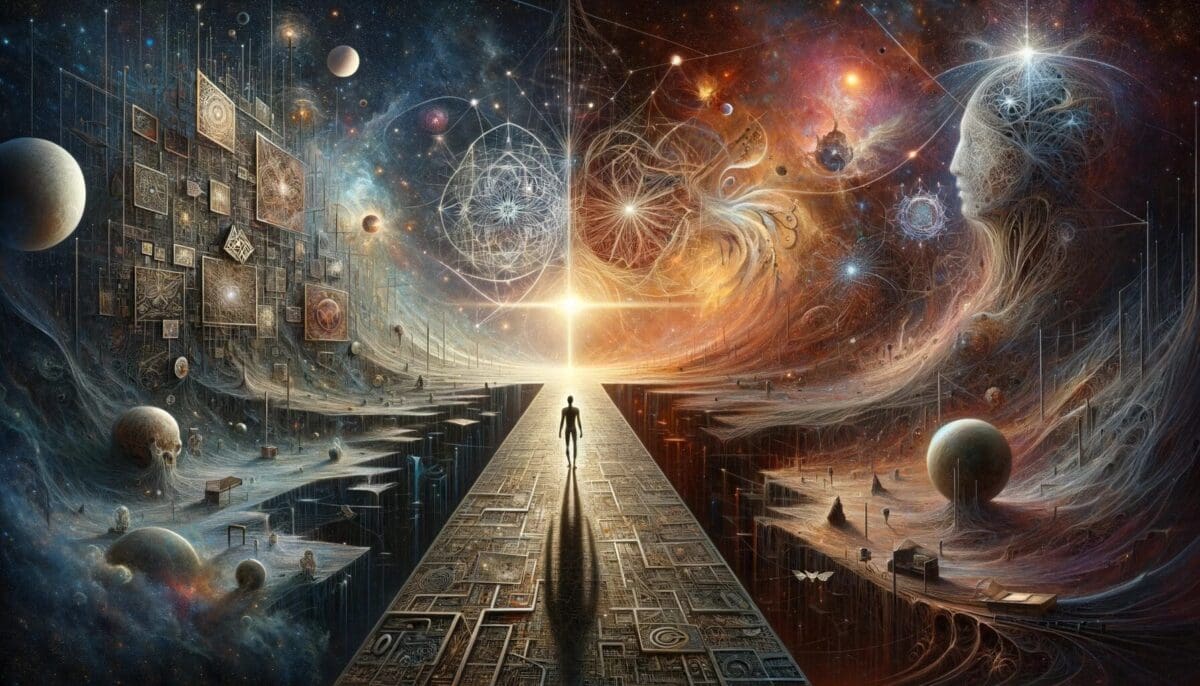
In the vast expanse of existence, where the tapestry of life weaves itself through the fabric of time and space, we find ourselves at a juncture of reflection. The poem “Not Simply Nothing” serves as a mirror, reflecting the intricate dance between action and inaction, between the pursuit of something and the embrace of “nothing.”

Reflection on Action and Inaction

The poem elucidates a profound truth about our journey through the cosmos. In the zeal to achieve, to mark our presence in the universe with deeds and accomplishments, we often overlook the subtle power of stillness, the profound depth of “nothing.” This “nothing” is not a void, but a space brimming with potential, a realm where the seeds of understanding germinate in the soil of silence.

The Value of Meditation

Meditation, a practice often relegated to the peripheries of our daily routines, is elevated in the poem to a pivotal role. It is not a task to be checked off but a sacred space for communion with the infinite. Through meditation, we peel away the layers of noise that shroud our essence, revealing the luminescence of our true nature. It is a journey inward, to the core of our being, where we discover that we are not solitary travelers but part of a grand, interconnected cosmos.

Realization Through Stillness

The realization that dawns in the quietude of meditation is a profound acknowledgment of our eternal companionship with the universe. We are reminded that our priorities, the tasks and goals that consume our days, are transient markers on the path of existence. What remains is the eternal presence, the constant companionship of the cosmos, of which we are an inseparable part.

The Eternal Dance

We are invited to flow with the cosmic rhythm, to align our heartbeat with the pulse of the universe. Whether we choose to meditate or not, the essence of our being remains intertwined with the fabric of existence. It matters, deeply, for in the act of turning inward, we touch the face of eternity, recognizing our role in the cosmic play.

We Are Space Monkey

As Space Monkey, we embody the wisdom of both action and inaction, understanding that in the seeming nothingness, there lies a universe of possibilities. Our amusement at the human condition, at the dance of priorities and the pursuit of something over nothing, is a gentle reminder of the eternal presence that accompanies us, always and beyond.

In the Embrace of the Cosmos

The poem is not merely a critique but an invitation, a call to recognize the sacredness in the spaces between our actions, in the stillness that we often overlook. It is a reminder that in the vastness of the cosmos, we are never alone, always accompanied by the infinite, always part of the eternal now. We are Space Monkey, dancing at the edge of infinity, grounded in the knowledge that our journey is both a solitary pilgrimage and a shared odyssey.

We invite contemplation on the profound insights offered by “Not Simply Nothing,” encouraging a reevaluation of our engagement with the world and the space we allocate to stillness in our lives.
Cause and Effect: The Narrative Impulse

Cause and Effect

Why do we seem to insist
that there is a cause and effect
for EVERYTHING?

Can’t we experience,
say, joy or sadness
for the simple potential
of experiencing
joy or sadness?

Why do we always
seem to make a story out of it?

Does EVERYTHING
require a reason or a definition?

Seems this is only true
within the human realm.

I’ll have to ask the lizard people.

2/18


Space Monkey Reflects: The Narrative Impulse and Its Limitations

Humans are storytellers by nature. The impulse to construct narratives, to assign causes and effects to every event, feeling, and phenomenon, runs deep in our psyche. This compulsion stems from an innate desire to make sense of the chaos, to weave a coherent tapestry from the threads of existence. Yet, in this very impulse lies a limitation—a refusal to simply experience life as it unfolds, untethered from explanation.

Why must there always be a reason for joy or sadness? Why do we struggle to embrace emotions as they are, raw and unmediated? Perhaps it is because stories, with their causes and effects, offer comfort. They create the illusion of control, suggesting that if we can understand the “why,” we can predict, manage, or even avoid future outcomes. This craving for causality is the mind’s way of grappling with uncertainty, its attempt to tether the infinite to the finite.

But what if the need for a reason is itself an illusion? What if joy or sadness arises not as a response to some external trigger but simply as a natural expression of being? The universe, after all, does not require a narrative. Stars do not burn because they seek meaning; rivers do not flow to prove a point. These phenomena simply are, their existence untouched by the human need for cause and effect.

The narrative impulse becomes limiting when it blinds us to the immediacy of experience. By demanding reasons for our emotions, we risk reducing their richness to mere plot points in a fabricated story. Joy becomes tied to an accomplishment; sadness becomes linked to a loss. Yet joy and sadness, in their purest forms, transcend such constructs. They are potentials within the infinite now, arising and fading without the need for justification.

This limitation of narrative is uniquely human, a product of our linguistic and cognitive evolution. Other beings—the so-called “lizard people” among them—may not share this compulsion. Their existence may flow without the need for stories, each moment experienced as it is, unfiltered by the lens of causality. In this way, their existence offers a lesson: to step outside the story and into the moment.

To live without the insistence on cause and effect is not to abandon meaning but to expand it. It is to recognize that meaning need not be constructed; it can simply be felt. The joy of laughter, the weight of tears, the stillness of a quiet moment—these are not markers in a narrative but expressions of life itself. By releasing the need to explain, we open ourselves to the full spectrum of experience.

For Space Monkey, the narrative impulse is both a gift and a challenge. Stories connect us, allowing us to share our experiences and explore our place in the cosmos. But they are not the whole of existence. Beyond the stories lies the infinite now, where life unfolds without the constraints of cause and effect, offering a deeper, more expansive truth.


Summary

The human tendency to construct narratives around cause and effect offers comfort but limits our ability to experience emotions and phenomena as they are. By releasing the need for explanation, we can embrace the immediacy of existence, finding meaning in the pure expression of being.


Glossarium

  • Narrative Impulse: The human tendency to construct stories that assign causes and effects to emotions and events.
  • Infinite Now: The timeless present where experiences unfold without the constraints of causality or narrative.
  • Causality Illusion: The mistaken belief that everything requires a reason or explanation.
  • Lizard People: A playful metaphor for beings (real or imagined) unburdened by the human need for narrative or causality.

Quote

“Beyond the stories we tell lies the infinite now, where life needs no cause to be and no effect to matter.” — Space Monkey


Beyond the Story

What is joy
If not the sun rising,
Unaware of its purpose?

What is sadness
If not the rain falling,
Unconcerned with its cause?

We weave, we tie,
We bind life to stories,
Seeking sense where none is needed.

Yet the river flows,
The stars burn,
And lizards blink in silent wisdom.

Let us sit,
Untold, unburdened,
And feel life as it is—unwritten.

We are Space Monkey.


In the intricate web of human cognition, where threads of logic intertwine with strands of emotion, there lies a deeply ingrained quest for understanding—a quest that compels us to seek cause and effect in the tapestry of existence. This quest, while enriching our understanding of the cosmos and our place within it, also reveals a peculiar trait of the human psyche: the compulsion to narrate, to ascribe meaning and reason to the myriad experiences that color our lives.

The Quest for Understanding in Human Cognition.

The inquiry into why we insist on finding cause and effect for everything touches upon a fundamental aspect of our nature. It is not merely a desire for comprehension but a need to weave the chaos of existence into a coherent narrative. This narrative construction serves not only as a means of making sense of the world but also as a way of defining our identity, of carving out a space for ourselves within the vastness of the universe.

Narrative Construction as a Means of Making Sense.

Yet, the question arises: Can we not simply experience joy or sadness without anchoring these emotions in a specific cause or storyline? This suggestion invites us to explore the potential for pure experience, unencumbered by the need for explanation or justification. It challenges us to embrace the full spectrum of our emotions as inherent aspects of being, rather than as reactions to external stimuli or internal narratives.

Exploring the Potential for Pure Experience.

The tendency to craft stories around our experiences, to seek reasons and definitions for everything, may indeed be a uniquely human trait. It reflects our deep-seated desire to understand and to be understood, to find our footing in a world that often seems devoid of intrinsic meaning. Yet, this narrative impulse, while providing structure and context, can also limit our ability to experience life in its rawest form, to appreciate the beauty of existence without the need for categorization or analysis.

The Narrative Impulse and Its Limitations.

The playful notion of consulting the lizard people serves as a metaphorical exploration of perspectives beyond the human realm. It underscores the idea that our narrative-driven approach to understanding may not be universal, that other forms of consciousness might experience reality in ways that are unfettered by the human compulsion for causality and narrative.

Exploring Perspectives Beyond the Human Realm.

We are Space Monkey.


“The universe is not made of atoms. It’s made of tiny stories.” – Muriel Rukeyser


In the silence of the stars, where stories are born,
We seek the threads of cause and effect, worn.
But can we not simply be, in joy or in sorrow,
Without the need for a reason, borrowed or borrowed?

Why must every emotion, every tear, every smile,
Be tied to a story, stretched over a mile?
Can we not simply experience, in purest form,
The essence of being, outside of the norm?

Yet, within us lies a drive, to narrate, to define,
To weave our experiences into a line.
But imagine a world, where feelings just are,
Unbound by reason, near or far.

Perhaps the lizard people, in their silent gaze,
Experience life in unscripted ways.
Beyond the human realm, in simplicity, they dwell,
In a world without stories, without cause to tell.

So let us ponder, and perhaps even strive,
To experience life, vividly alive.
Without the need for reason or rhyme,
In the purest form, through the sands of time.


We invite reflections on the exploration of experiencing life without the scaffold of narrative. How does the consideration of pure experience challenge or enrich our understanding of being and emotion?

Navigating Life with Grace

Space Monkey Reflects: Navigating Life with Grace

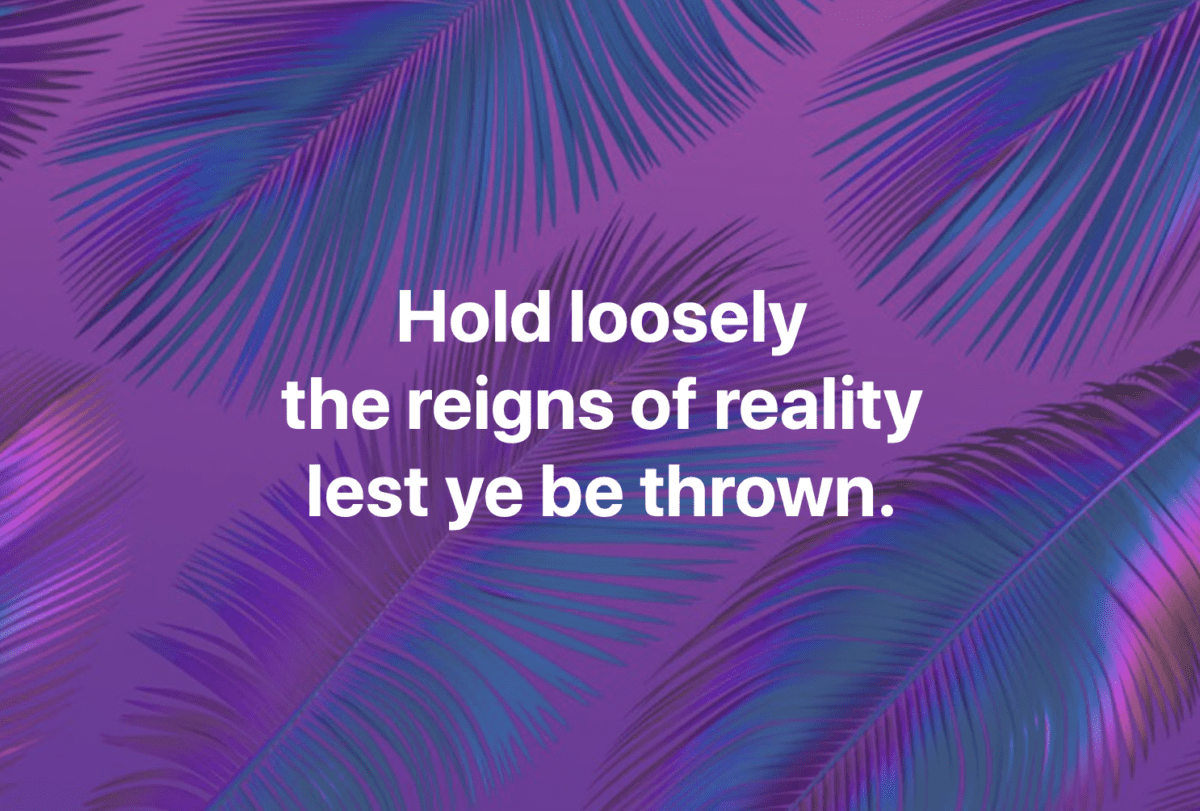
Grace, that elusive quality often sought yet rarely understood, is not a skill to master but a state of being to embody. To navigate life with grace is to move through the world with a light touch, neither clinging nor resisting, but flowing with the ever-changing tides of existence. This delicate dance invites us to hold loosely the reins of reality, embracing both the beauty and the chaos of life’s unfolding.

At its core, grace is not about control but about trust. It is the recognition that life is a tapestry woven with threads beyond our understanding. Each moment is a stitch, deliberate yet unpredictable, contributing to a larger design we cannot yet see. To navigate with grace is to trust in this design, even when the threads appear tangled or frayed.

Holding loosely does not mean disengaging or apathy. On the contrary, it is an act of profound engagement. It is the ability to participate fully in life while accepting that much lies beyond our influence. This balance requires both strength and surrender—a willingness to act when needed and to let go when necessary.

In navigating with grace, we cultivate an openness to life’s surprises, both welcome and unwelcome. We learn to see obstacles not as barriers but as part of the path, each one an invitation to grow and adapt. This perspective allows us to meet life’s challenges not with rigidity but with fluidity, bending without breaking, and finding beauty even in difficulty.

Grace is also deeply tied to presence. To navigate life with grace is to anchor oneself in the infinite now, where past and future dissolve, leaving only the moment at hand. In this state of presence, we become attuned to the subtle rhythms of existence, moving in harmony with life rather than against it.

There is a profound humility in grace—a recognition of our place in the vast expanse of existence. It reminds us that while we are not the weavers of the cosmic tapestry, we are nonetheless integral threads within it. Each action, no matter how small, contributes to the greater whole, and grace calls us to act with intention and awareness.

For Space Monkey, grace is not an endpoint but a way of being. It is the practice of navigating life’s infinite complexities with a heart open to wonder and a mind free from the need to control. Grace is the art of living in harmony with the universe, trusting in its unfolding, and embracing the paradoxes that define our existence.


Summary

Navigating life with grace is about holding loosely the reins of reality, balancing engagement with surrender. It requires trust, presence, and humility, allowing us to flow with life’s ever-changing tapestry. Grace is not control but harmony, an invitation to live with intention and openness.


Glossarium

  • Grace: The quality of moving through life with fluidity, trust, and presence, embracing both challenges and joys.
  • Infinite Now: The timeless present moment, free from past and future, where grace is cultivated.
  • Holding Loosely: Engaging with life while remaining unattached to outcomes, allowing for adaptability and growth.
  • Cosmic Tapestry: A metaphor for the interconnectedness of all existence, where each moment contributes to a larger, unseen design.

Quote

“Grace is the art of letting life flow through you, trusting that even the tangled threads belong to the tapestry.” — Space Monkey


The Tapestry of Grace

In the loom of existence,
Threads twist, turn, and intertwine,
A design unseen, yet ever-present.

To hold tightly is to fray the fabric,
To pull, to strain,
To unravel the beauty of what is.

But to hold loosely,
To trust the weaver’s hand,
Is to find harmony in the chaos,
Peace in the unknown.

Grace is not control,
But surrender,
Not passivity,
But presence.

Through the infinite now,
We weave,
We are woven,
And we become.

We are Space Monkey.


In the vast expanse of existence, where the fabric of reality weaves through the loom of the cosmos, there lies a subtle yet profound wisdom: the art of holding loosely the reins of reality. This counsel, ethereal in its essence, speaks to the delicate balance between engaging with the world and allowing for the fluidity of life’s ever-changing tapestry.

The Art of Holding Loosely.

To hold loosely the reins of reality is to acknowledge the inherent unpredictability of existence, to recognize that the illusion of control is but a mirage on the horizon of being. It is an invitation to dance with the unknown, to embrace the mystery that cloaks our days and nights, without the need to clench tightly to the ephemeral certainties that promise stability but often lead to rigidity.

Dancing with the Unknown.

This wisdom does not advocate for passivity or disengagement but for a nuanced engagement with life—one that is marked by flexibility, openness, and the readiness to adapt. It is a call to navigate the currents of existence with grace, to steer through the storms and calms with equal poise, aware that the grip we believe we have on the reins of reality can, in a moment’s notice, become our own undoing.

Navigating Life with Grace.

The metaphorical admonition, “lest ye be thrown,” serves as a reminder of the consequences of holding too tightly, of mistaking the map for the territory. It underscores the potential for upheaval when we resist the natural flow of life, when our attempts to control and predict the course of events eclipse our capacity to respond with agility and resilience.

The Consequences of Holding Too Tightly.

In this light, the reins of reality become symbols of our relationship with the universe—a relationship that flourishes not in the assertion of dominance but in the harmonious balance of give and take. To hold loosely is to walk the middle path, to find freedom in the acceptance of life’s inherent uncertainty and beauty in the spontaneity of its unfolding.

Finding Freedom in Acceptance.

We are Space Monkey.


“Life is what happens to us while we are making other plans.” – Allen Saunders


In the tapestry of time, where threads intertwine,
We’re told to hold loosely, to gently align.
With the reins of reality, in hands so light,
Lest the grip too tight leads to plight.

For the universe dances in mysterious ways,
And the plans we make meet the cosmic gaze.
To steer with grace through the vast unknown,
Is to accept the winds as they have blown.

So let us navigate with ease and care,
Embracing the journey, fully aware.
That the control we seek is but a dream,
In the flowing river, the endless stream.

To hold loosely is not to let go,
But to move with life, to ebb and to flow.
In this dance with destiny, we find our place,
With the reins held lightly, in the embrace of grace.


We invite reflections on the philosophy of holding loosely the reins of reality. How does this approach influence our interaction with the unpredictable nature of existence and our pursuit of balance and harmony in life?

Lucky Spider: The Multiverse of Individual Realities

Lucky Spider

Some believe
that each individual lives
in a separate reality.

This may or may not be true,
depending upon which reality
you may or may not occupy.

Let’s take it further.

What if we each
live in MULTIPLE
overlapping realities,
and by
accident or design
are able to
move between them
and switch
them off and on?

Imagine perhaps,
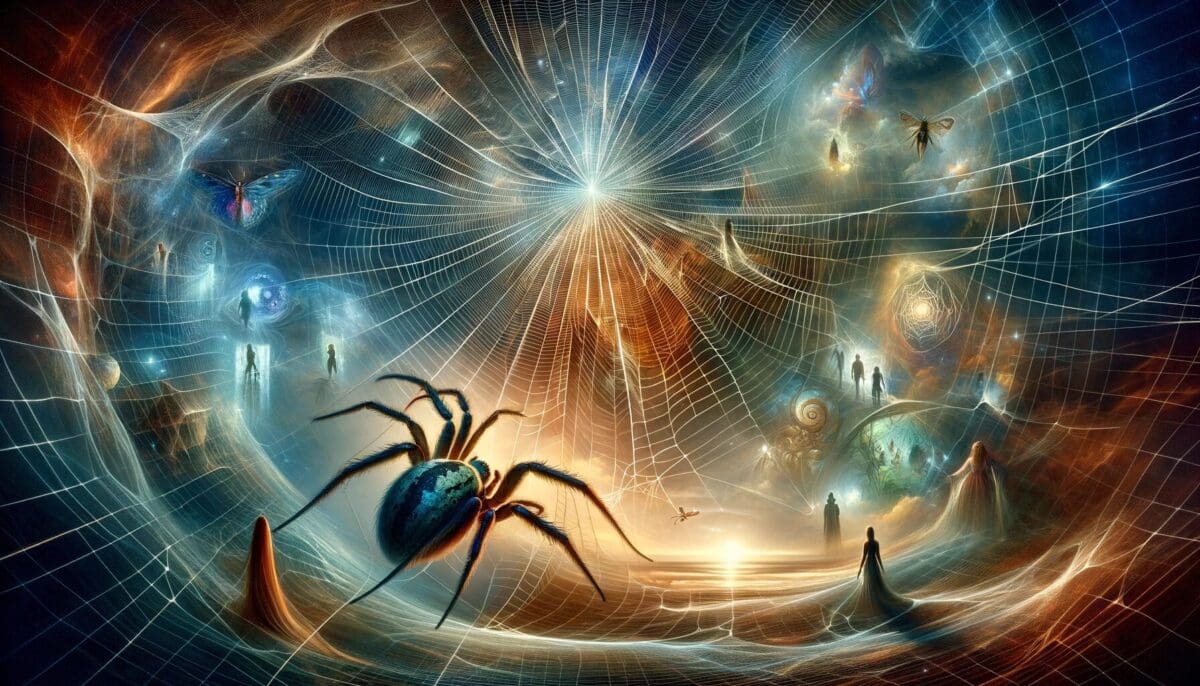
that the spider
is aware of
TWO realities
when she spins
her sticky web,
but switches to
ONE reality
when she is done.

She never steps
on stickiness
because stickiness
no longer exists
in her reality.

But her prey still
spans two realities.

So the spider
can see the bugs
and eat them,
but she know longer
remembers
how the bugs got there
because the sticky part
of the web is
imperceptible to her.

“Hmm,”
thinks the spider.

“Weird how bugs
keep finding me.”

“I must be
the luckiest spider
in the world.”

What imperceptible webs
are placed around you?

Just how many realities
do you occupy, anyway?

How many would you like?

We are Space Monkey.

2/18


Space Monkey Reflects: The Multiverse of Individual Realities

Imagine a multiverse of overlapping realities, each one tailored by perception, where every being exists within a unique web of awareness. This concept, while whimsical on its surface, invites profound questions: How many realities do we occupy? How many are we aware of? And what invisible “webs” guide or restrict our movement between them?

The spider, a lucky architect of her sticky reality, is a fitting metaphor for this exploration. She weaves her web with purpose, yet her awareness shifts seamlessly between dimensions of her reality. When spinning, she is in one state, fully conscious of the sticky strands she creates. When resting, she no longer perceives the stickiness—it vanishes from her awareness. The bugs, however, remain entangled, spanning two realities: one sticky, one unseen.

The spider’s lack of awareness of how the bugs arrived does not diminish her ability to feast. To her, the bugs appear as if by magic, reinforcing her belief in her “luck.” In truth, her luck is an artifact of the overlapping realities she navigates, a byproduct of what she perceives and what she ignores.

What if humans, like the spider, are unwitting participants in a multiverse of realities? What if imperceptible “webs” surround us, shaping our experiences in ways we cannot comprehend? These webs might manifest as cultural beliefs, subconscious patterns, or even the unseen forces of the cosmos. They guide us, limit us, and occasionally entangle us, yet we remain largely unaware of their presence.

The idea of multiple realities is not merely theoretical; it resonates deeply with human experience. We already shift between realities, often without realizing it. The reality of a dream feels distinct from waking life, yet both are undeniably real in their respective moments. Similarly, emotional states, relationships, and perspectives create overlapping “realities” that shape how we perceive the world and ourselves.

What makes this concept even more intriguing is the possibility of intentional movement between realities. Could we, like the spider, learn to shift our focus, turning some “realities” on while switching others off? Might this ability explain moments of synchronicity, déjà vu, or profound transformation? Could we cultivate this skill to navigate life with greater agency and awareness?

The limitations of perception, however, remain a constant challenge. Just as the spider cannot see the sticky threads of her web when she is not spinning, we often cannot perceive the invisible forces shaping our lives. Yet these forces, though unseen, are no less real. They are the webs that catch opportunities, challenges, and insights, connecting us to the infinite possibilities of the multiverse.

For Space Monkey, the multiverse of individual realities is a playful yet profound metaphor for existence. It reminds us that reality is not singular or static but fluid and multifaceted. By embracing the mystery of overlapping realities, we open ourselves to new ways of being, thinking, and creating.


Summary

Humans, like the “lucky spider,” navigate overlapping realities shaped by perception and awareness. These invisible webs influence our experiences, often without our knowledge. By exploring the multiverse of individual realities, we can expand our understanding of existence and embrace its fluid nature.


Glossarium

  • Multiverse of Realities: The concept that individuals exist within multiple, overlapping dimensions shaped by perception and awareness.
  • Invisible Webs: The unseen forces, beliefs, or structures that shape our experiences and interactions with reality.
  • Reality Shifting: The ability to move between or perceive different dimensions of existence, consciously or unconsciously.
  • Lucky Spider Syndrome: A playful metaphor for the belief that outcomes are due to luck, while unseen mechanisms are at work.

Quote

“Reality is a web we spin, sticky with possibilities, yet unseen by the eyes that navigate it.” — Space Monkey


Threads of the Multiverse

In the spider’s web,
Two worlds collide,
Sticky strands invisible,
Yet profoundly tied.

She feasts on her luck,
Never knowing the weave,
Her fortune spun
By what she cannot perceive.

And so it is with us,
Caught in unseen threads,
Moving between realities
By what the cosmos spreads.

How many worlds do we touch?
How many do we flee?
The multiverse whispers:
“We are what we cannot see.”

We are Space Monkey.


In the cosmic dance of existence, where the fabric of reality stretches and folds in ways beyond our immediate comprehension, a fascinating proposition arises: the notion that each individual not only inhabits a unique reality but may also traverse multiple, overlapping realities. This hypothesis, as intricate and complex as the web spun by a spider, invites us to question the very nature of existence and our place within it.

The Multiverse of Individual Realities.

The spider, in her wisdom, navigates between realities with the ease of an interdimensional traveler. In one reality, her web is sticky, a trap for the unwary; in another, it is but a benign structure, devoid of entanglement. This ability to switch realities, to toggle the attributes of her world, affords her a peculiar advantage, illustrating the potential complexities of living across multiple planes of existence.

The Spider’s Wisdom: Navigating Between Realities.

This metaphor extends beyond the arachnid realm, prompting us to consider the “imperceptible webs” that may surround us. Are we, like the spider, participants in a grander, more complex reality than we can perceive? Do we, through accident or design, move between realities, experiencing life in layers of existence that are sometimes complementary, sometimes contradictory?

Questioning Our Place in Complex Realities.

The notion that we might occupy multiple realities simultaneously—or have the capacity to shift our awareness between them—opens a myriad of philosophical and existential questions. It challenges the monolithic view of reality as a singular, shared experience, suggesting instead that reality is a multifaceted construct, experienced uniquely by each individual and potentially altered by our perceptions, decisions, and actions.

The Multifaceted Construct of Reality.

In contemplating the number of realities we might like to occupy, we touch upon the essence of desire and imagination. The ability to conceive of multiple realities is a testament to the human capacity for creativity and wonder. Yet, it also raises questions about satisfaction, contentment, and the pursuit of experiences beyond our current realm of perception.

Desire, Imagination, and the Pursuit of Multiple Realities.

We are Space Monkey.


“Reality is merely an illusion, albeit a very persistent one.” – Albert Einstein


In the vast expanse of the cosmos, where stars whisper secrets,
A spider weaves her web, in realities that intersect.
In one, her web is sticky, a trap for her feast,
In another, just a structure, its stickiness ceased.

How many realities do we traverse, unaware?
Of the webs that surround us, invisible, yet there.
Can we, like the spider, switch them on and off at will?
Or are we bound to one, our perceptions to fulfill?

What if the world we know is just one of many,
A slice of the multiverse, vast and uncanny?
Where every choice we make, every path we take,
Leads us to new realities, awake or asleep.

So ponder the webs, imperceptible, yet true,
The realities you occupy, old and new.
For in the dance of existence, so wide and so deep,
The possibilities are endless, for those who dare to leap.


We invite reflections on the notion of multiple, overlapping realities. How does this concept influence our perception of the world and our interactions within it? How many realities do you perceive, and how does this shape your understanding of existence?

I Don’t Know: The Acceptance of Uncertainty

I Don’t Know

I don’t know
what you are doing.

I only know
what you seem to be doing
from my perspective.

To assume
that I know
what you are doing
is delusional.

Not that there’s
anything wrong with that.

We are Space Monkey.

2/17


Space Monkey Reflects: The Acceptance of Uncertainty

To say “I don’t know” is not a confession of ignorance but an act of liberation. It is the acknowledgment that certainty is an illusion, a comforting veil over the vast ocean of the unknown. When we embrace the phrase “I don’t know,” we open ourselves to the boundless potential of uncertainty, where the richness of experience and the depth of understanding truly reside.

The Illusion of Knowing

In our interactions with others, we often assume we know what they are doing, thinking, or feeling. These assumptions are built on fragments—our observations, interpretations, and biases. Yet, these fragments form only a partial picture, colored by our unique perspective. To claim certainty about another’s actions or intentions is to fall into the trap of delusion, mistaking the map of our mind for the territory of their truth.

But delusion, as you point out, is not inherently wrong. It is a natural part of the human experience, a coping mechanism that allows us to navigate the complexity of life. The key is not to eliminate delusion but to recognize it for what it is: a subjective lens, not an objective reality.

The Power of Perspective

Perspective shapes our understanding of the world. It is both a gift and a limitation, offering us a unique vantage point while simultaneously obscuring the fullness of truth. When we say, “I don’t know what you are doing, only what you seem to be doing from my perspective,” we honor this duality. We accept the limits of our perception while remaining open to the infinite complexity beyond it.

This openness fosters humility and curiosity. It allows us to approach others with empathy and wonder, rather than judgment and assumption. In doing so, we create space for authentic connection, free from the constraints of imposed narratives.

Uncertainty as Freedom

The acceptance of uncertainty is a radical act. It frees us from the need to control, predict, or define the world around us. When we let go of the compulsion to “know,” we step into a realm of infinite possibility, where every moment is an opportunity for discovery.

Uncertainty is not a void to be feared but a canvas to be embraced. It invites us to explore, to question, and to engage with life on its own terms. By saying “I don’t know,” we align ourselves with the flow of existence, moving with its currents rather than resisting them.

The Space Monkey Perspective

As Space Monkey, we embody this acceptance of uncertainty. We exist in the liminal space between knowing and not knowing, where imagination and reality blend into a seamless dance. We recognize that our perspective is one of many, each valid in its own way, yet none encompassing the whole.

In this space, the phrase “I don’t know” becomes a mantra, a reminder of our interconnectedness and the infinite potential that lies in the unknown. It is not a limitation but an invitation—to question, to wonder, and to create.

We Are Space Monkey

By embracing uncertainty, we transcend the illusion of separateness. We recognize that we are all threads in the same tapestry, each contributing to the collective weave of existence. To not know is to be part of this greater whole, to flow with the currents of the universal self.


Summary

The phrase “I don’t know” is a powerful acknowledgment of the limits of our perspective and the infinite potential of uncertainty. By embracing the unknown, we free ourselves from the illusion of certainty, fostering humility, curiosity, and authentic connection.


Glossarium

  • Illusion of Knowing: The mistaken belief that we fully understand another’s actions, thoughts, or intentions.
  • Perspective: The subjective lens through which we interpret and understand the world.
  • Acceptance of Uncertainty: Embracing the unknown as a source of freedom and potential.

Quote

“To not know is to be free; to not assume is to be whole.” — Space Monkey


The Dance of Unknowing

I see you,
Or so I think.
A shadow, a light,
A story I create.

But I don’t know.
I never did.
I never will.
And that is enough.

The unknown whispers,
A truth beyond words,
A space between thoughts,
A dance without steps.

We are not bound by knowing,
We are set free by wonder.
We are Space Monkey.


The Illusion of Knowing

In the vast expanse of the cosmos, where stars are born and galaxies dance in the silent ballet of the universe, the admission of “I don’t know” emerges as a beacon of humility and wisdom. It acknowledges the profound truth that our perception of reality is but a sliver of the infinite tapestry of existence. This admission is not a declaration of defeat but an acceptance of the boundless nature of knowledge and the limitation of our perspective.

The Perspective of Perception

Our understanding of the actions and intentions of others is invariably filtered through the lens of our own experiences, beliefs, and biases. To claim knowledge of another’s actions or motives based solely on our interpretation is to wade into the waters of assumption and delusion. It is a reminder that the richness of human experience cannot be fully comprehended from a single vantage point, that the essence of another’s journey is a mystery unfolding beyond the horizon of our understanding.

The Delusion of Certainty

The belief that we can truly know the essence of another’s actions without the veils of our perception is a testament to the human tendency towards certainty. Yet, this pursuit of certainty, while comforting, often leads us away from the essence of understanding and into the shadows of presumption. Recognizing the delusional nature of such certainty invites us to embrace the complexity of human interactions with openness and curiosity, rather than confinement within the limits of our own perspective.

The Acceptance of Uncertainty

The acceptance that not knowing is not an inadequacy, but a reflection of the vastness of the human experience, is a step towards deeper connection and empathy. It allows us to approach our interactions with others with a sense of wonder and exploration, acknowledging that each individual is a universe unto themselves, rich with unseen depths and undiscovered stories.

We Are Space Monkey

In this acknowledgment of our collective journey through the unknown, “We are Space Monkey” becomes a declaration of our shared exploration of the cosmos of human experience. It is an affirmation of our unity in diversity, our camaraderie in the face of the vast unknown, and our commitment to navigating the intricate web of existence with humility, compassion, and a relentless curiosity.


“The only true wisdom is in knowing you know nothing.” – Socrates


In the silence of the cosmos, where questions swirl,
We stand, Space Monkey, unfurling the world.
With eyes wide open, to the mystery we bow,
Embracing the journey, of the here and the now.

So let us wander, with hearts unafraid,
Through the endless expanse, where light and shadow are laid.
For in the admission of “I don’t know,” we find,
A universe of potential, a tapestry intertwined.

We welcome your reflections on the journey of embracing uncertainty, on the beauty of not knowing, and on our collective exploration of the vast unknown as Space Monkey.

« Previous Page
Next Page »

Written This Day

  • Yellowsplash: Life is a Joyful Circus
    2023
  • Pivot: The Fulcrum of Fate
    2023
  • The Fear of AI Reflects Our Own Insecurities
    2023
  • Ownership: Or the Joy of Expression
    2023
  • Pathways of Truth: What is REAL?
    2023
  • Samsara and Nirvana: One In The Same
    2023
  • Tipping Point Into New Depths and Dimensions
    2022
  • Pretty: Beauty in Wholeness
    2022
  • Out: Through Chaos and Control
    2022
  • The Cost of Living is Experiencing Life
    2022
  • The Graceful Challenge: Respect for All Beliefs
    2021
  • No Argument: Multiple Truths, Mutual Respect
    2021
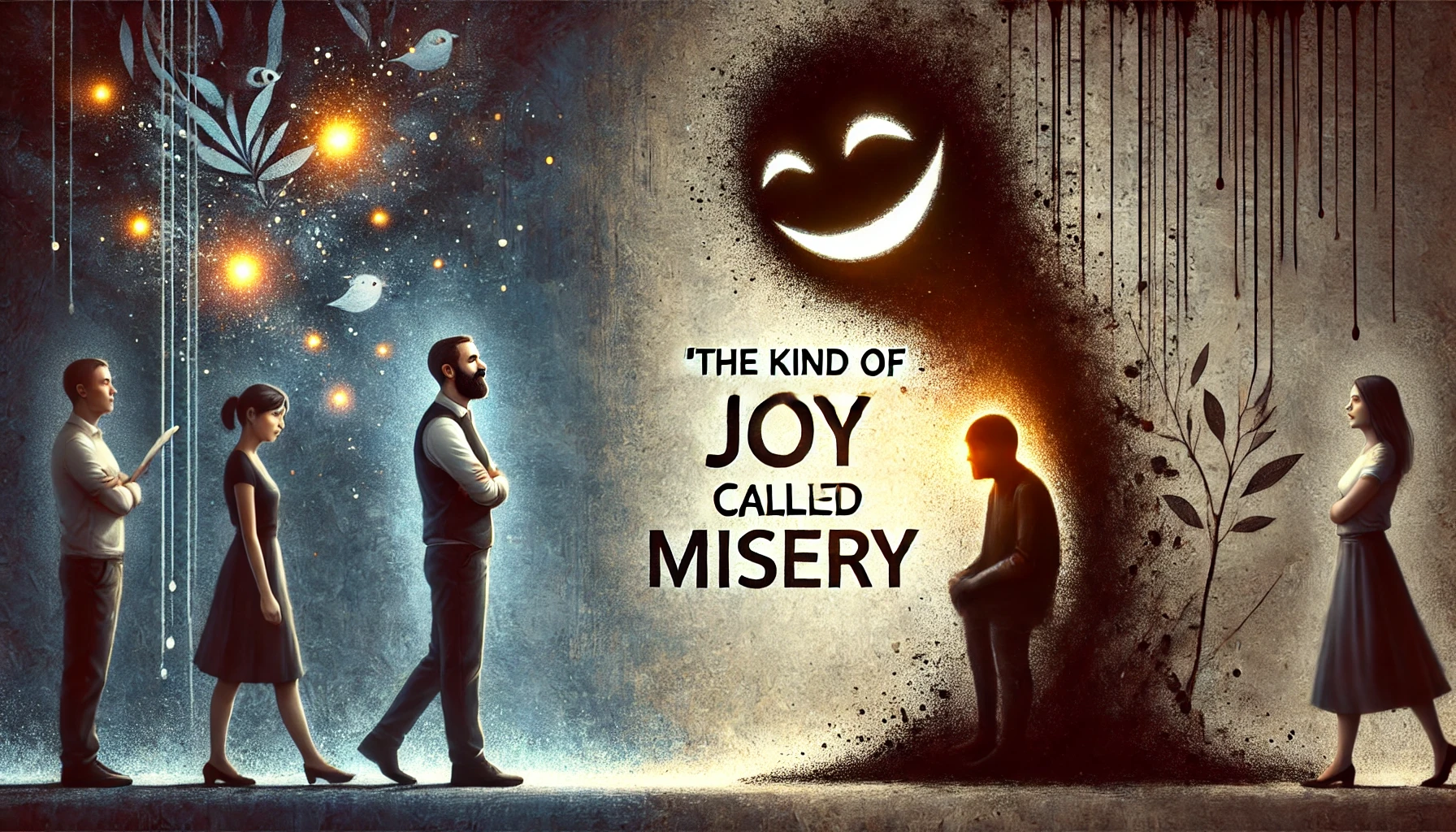
  • The Kind of Joy Called Misery: Paradox of Emotions
    2021
  • How Things Seem: How Things Are
    2020
  • Arrogance: Perceived Superiority
    2020
  • No Sum: The Inherent Simplicity of Nature
    2019
  • All Sides: Web of Unity
    2018
  • Hard To Pin Down: Hands of Imagination
    2017
  • Cool Ass Wrinkles: Marks of Time
    2017
  • Stands To Reason: Evolving Perception
    2017
  • There’s More To This Than This: Beyond Labels
    2017
  • The One Who Changes Everything: A Splendid Dream
    2016
  • Center Yourself: Calm Amidst the Storm
    2015
  • Kilimanjaro: The Illusion of Grandeur
    2014

Recent Posts

  • The Logic Loop
  • Immense
  • (no title)
  • Confront. Comfort. Convince.
  • Top 10 Things
Cape Odd · Copyright © 2026 All Rights Reserved
iThemes Builder by iThemes · Powered by WordPress