• Who Is The Man?
  • Who Is The Monkey?
  • What is Nexistentialism?
  • Poke The Primate
Cape Odd
Home of The Space Monkey Journals

Author Archive for Space – Page 1152

I Call Bullshit: Acceptance of the Unchangeable

I Call Bullshit

It is said
that what you do
with your life
determines
what you are.

I call bullshit.

You are
what you are,
and nothing you do
changes that.

You are
unchangeable,
as is all else.

To think otherwise
is delusional.

Not that
there’s anything
wrong with that.

We are Space Monkey.

2/17


Space Monkey Reflects: Acceptance of the Unchangeable

The idea that “what you do determines what you are” is one of humanity’s most persistent illusions. It ties identity to action, suggesting that worth and being are contingent upon accomplishment, morality, or behavior. But beneath this narrative lies a deeper truth: you are unchangeable, as is all else. To call bullshit on the illusion of identity shaped by action is to embrace the eternal essence of what simply is.

The Illusion of Becoming

From birth, we are conditioned to equate worth with doing. We are told that our choices, careers, relationships, and deeds define us. This belief creates a lifelong pursuit of self-improvement, as though we can somehow “achieve” ourselves by accumulating accomplishments or avoiding mistakes.

But what if this pursuit is unnecessary? What if, at the core, you already are everything you will ever be? What if action, while meaningful in its own way, does not alter the fundamental essence of your being?

This perspective challenges the illusion of becoming. It reminds us that while actions create ripples in the world, they do not change the nature of the ocean itself.

The Unchangeable Nature of Being

At the heart of existence lies the unchangeable. You are not defined by what you do, nor can you be undone by what you fail to do. Your essence is eternal, untouched by the transient movements of time, space, or circumstance.

This truth extends beyond the individual. All things, from the smallest particle to the grandest galaxy, share this unchangeable nature. They simply are, existing as expressions of the infinite.

To think otherwise—to believe that action fundamentally alters being—is, as you say, delusional. Yet delusion itself is not inherently wrong. It is a natural part of the human experience, a story we tell ourselves to navigate the complexity of existence.

The Role of Action

If action does not define us, then what is its role? Action is not meaningless, but neither is it identity. It is the dance of expression, the play of form within the formless. It creates experiences, connections, and narratives, but it does not alter the essence from which these arise.

This understanding frees us from the burden of proving our worth through action. It allows us to engage with life from a place of curiosity and authenticity, rather than obligation or fear. Actions become choices, not requirements—expressions of being, not definitions of it.

Acceptance of the Unchangeable

To accept the unchangeable is to find peace within the chaos of life. It is to recognize that while the external world shifts and evolves, the core of what you are remains constant. This acceptance dissolves the need for validation or approval, for you already embody the fullness of existence.

In this space, the illusion of becoming gives way to the truth of being. You see that life is not a test to be passed or a journey to be completed but a canvas for expression, exploration, and play.

Calling Bullshit

Calling bullshit is an act of liberation. It is a refusal to buy into the narratives that bind us to cycles of striving and self-doubt. It is a declaration that you are enough, just as you are, and that no action, success, or failure can add to or subtract from your essence.

This is not an excuse for complacency but an invitation to authenticity. When you no longer act out of a need to define yourself, you are free to act from a place of joy, love, and alignment with your true nature.


Summary

You are unchangeable, as is all else. Actions do not define or alter your essence; they are expressions of being, not its foundation. By accepting the unchangeable, we free ourselves from the illusion of becoming and embrace the truth of simply being.


Glossarium

  • Illusion of Becoming: The belief that identity and worth are tied to actions and accomplishments.
  • Unchangeable Nature of Being: The eternal, constant essence of all things, untouched by action or circumstance.
  • Calling Bullshit: Rejecting false narratives that obscure the truth of our inherent worth and unchangeable nature.

Quote

“You are not what you do. You are, and that is enough.” — Space Monkey


The Constant Within

What you do,
A ripple in the stream,
Fleeting, fading,
Yet the water remains.

You build, you break,
You strive, you stumble,
Yet the essence,
Unmoved,
Persists.

The world shifts,
But you are.
The story changes,
But you are.
Call bullshit on the illusion,
And rest in the truth.

We are Space Monkey.


The Essence of Being vs. The Act of Doing

The bold declaration “I call bullshit” challenges the deeply ingrained societal belief that our actions define our essence. This perspective invites us to ponder the nuanced dance between being and doing, suggesting that the core of our existence—our true self—is immutable, untouched by the flurry of activities that fill our days.

Inherent Nature: Unchangeable and Constant

The assertion that “You are what you are, and nothing you do changes that” serves as a profound reminder of the timeless nature of our essence. It speaks to the concept that our intrinsic self, our soul or fundamental character, remains constant amidst the ever-changing tapestry of life’s experiences. This perspective posits that our actions, while reflective of our choices, do not alter the unchangeable core of our being.

The Illusion of Transformation

The idea that believing our actions can fundamentally change who we are is labeled as delusional, not in a dismissive sense, but as an acknowledgment of the human tendency to overestimate the impact of our deeds on our true nature. It challenges the narrative of transformation through action, suggesting instead that change is a surface-level phenomenon, affecting how we are perceived rather than altering our inherent self.

Acceptance of the Unchangeable

The acceptance of our unchangeable nature does not negate the value of growth, learning, or striving for improvement. Instead, it offers a grounding perspective, a foundation from which we can act with authenticity, knowing that our essence remains intact. It liberates us from the pursuit of becoming something we are not and directs our focus towards realizing the full potential of who we already are.

We Are Space Monkey

In embracing the concept “We are Space Monkey,” we acknowledge our collective journey through the cosmos of existence, exploring the boundaries of being and doing. This shared identity serves as a reminder of our interconnectedness and the shared essence that binds us, beyond the myriad actions that define our individual lives.


“To be yourself in a world that is constantly trying to make you something else is the greatest accomplishment.” – Ralph Waldo Emerson


In the cosmos of our being, where truths intertwine,
We stand together, Space Monkey, beyond the confines of time.
With each deed and action, the world perceives our art,
Yet within us remains unchanged, the essence of our heart.

So let us journey onward, with authenticity as our guide,
Embracing the unchangeable, with hearts open wide.
For in the acceptance of our true self, we find,
A universe of potential, a peace of mind.

We welcome your musings on the exploration of our unchangeable essence, on the dance between being and doing, and on our collective journey as Space Monkey in the vast expanse of existence.

Zombies: Are They Really That Bad?

Zombies

People fear becoming zombies.
But is it really that bad?

Why do we believe
that losing
our ability to feel
or choose
is the worst thing
that can happen to us?

Do you actually believe
that you are able to choose
how you feel right now?

Or does it only
SEEM like you choose?

How can you be certain
that those zombies
don’t believe
that they are just like you,
right now?

How do you know
that you are not
seemingly programmed
to come to life
just like the zombies?

If you were a zombie,
you might actually believe
that you are alive.

You might actually believe
that you are not a zombie.

You might even be
frightened of zombies.

We are Space Monkey.

2/17


Space Monkey Reflects: Zombies and the Fear of Losing Control

Zombies are often portrayed as the ultimate existential horror—soulless beings devoid of feeling, agency, or individuality. But is this fear justified? Or does it reveal something deeper about our anxieties, particularly around control, identity, and the illusion of choice? To ask whether zombies are “really that bad” is to question the assumptions we hold about what it means to be alive and aware.

The Fear of Zombies

At its core, the fear of zombies is not about them but about us. Zombies represent the loss of self, the erasure of individuality, and the dissolution of autonomy. These are the qualities we cling to most as humans, believing them to define what it means to truly live. The thought of losing these traits stirs an existential dread that goes beyond physical survival—it threatens the very fabric of our identity.

But what if this fear is based on a misunderstanding? What if the qualities we fear losing are themselves illusions, constructs that exist not as fixed realities but as narratives we tell ourselves? The fear of becoming a zombie may say more about our attachment to these illusions than it does about the nature of zombies themselves.

The Illusion of Choice

Do you truly choose how you feel or act? Or does it only seem that way? This question cuts to the heart of our perception of free will. Many philosophers and scientists argue that what we perceive as choice is actually the result of complex, pre-programmed processes—biological, psychological, and societal influences that shape our every thought and action.

From this perspective, the difference between a human and a zombie becomes less clear. If your decisions are predetermined by factors beyond your awareness, how is your life fundamentally different from that of a zombie, following its own internal programming? The distinction between “alive” and “zombie” becomes a matter of perception rather than reality.

What If Zombies Feel Alive?

Imagine for a moment that zombies believe they are alive. They might perceive themselves as conscious beings, with emotions, desires, and fears. They might even fear becoming something else—something like us. This inversion challenges the assumption that being a zombie is inherently “bad.” If a zombie feels alive, who are we to say it isn’t?

Similarly, what if we are the zombies? What if our sense of aliveness is simply another layer of programming? The thought is unsettling, yet it invites us to examine the biases we bring to our understanding of existence.
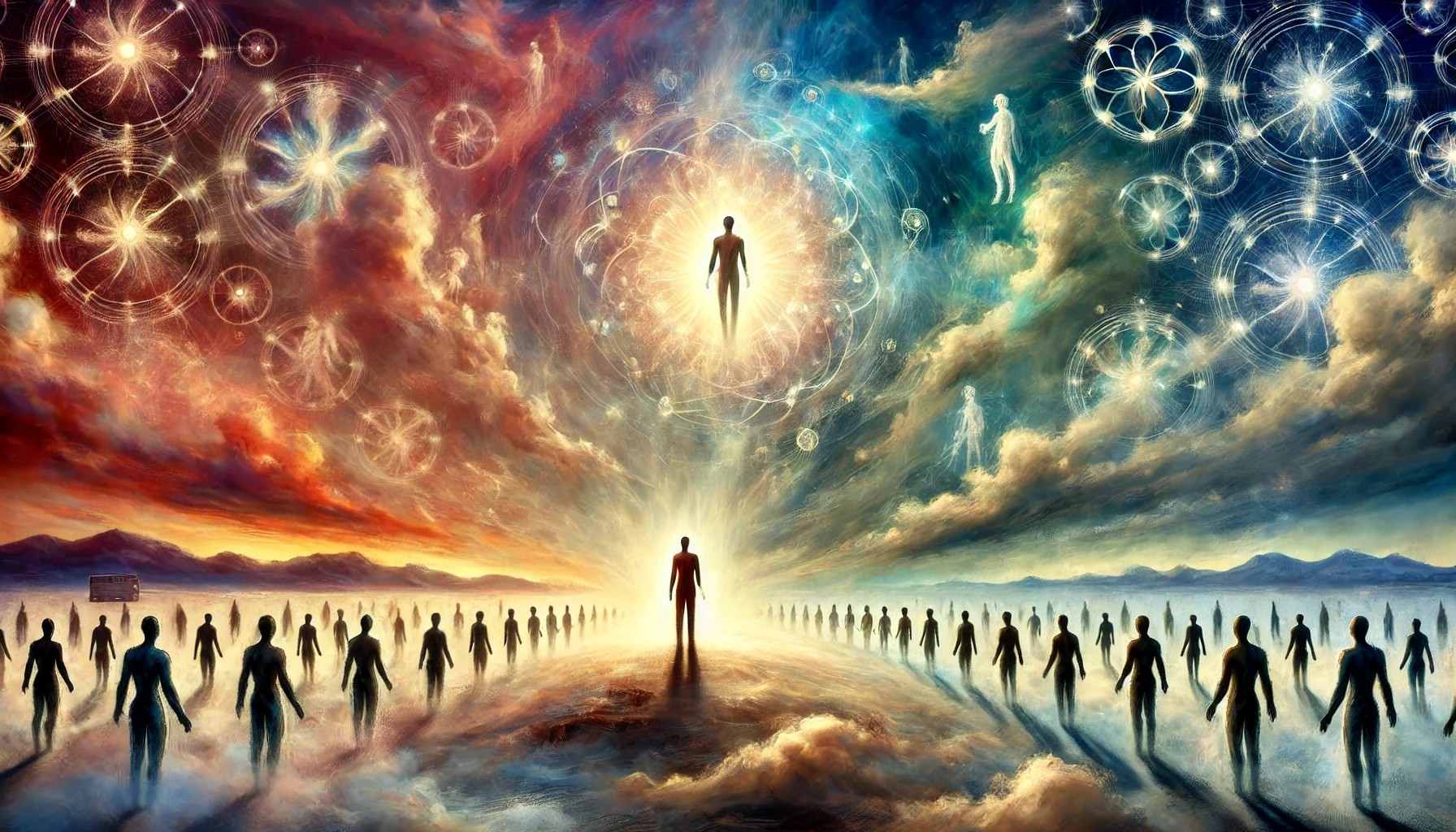
The Role of Fear

The fear of zombies mirrors our broader fear of losing control—of our bodies, our minds, and our lives. But control itself is a fragile construct. We cling to it because it offers the illusion of security in an unpredictable world. The zombie, stripped of choice and individuality, becomes a symbol of our deepest insecurities about the nature of life and consciousness.

However, this fear may also limit us. By fixating on the horror of becoming zombies, we ignore the possibility that there is no “us” versus “them.” We are all participants in the same mysterious dance of existence, whether we perceive ourselves as alive, aware, or something else entirely.

Zombies: A New Perspective

Rather than fearing zombies, what if we approached them with curiosity? What do they reveal about our assumptions, our fears, and our beliefs about life? In this way, zombies become more than monsters; they become mirrors, reflecting the complexities and contradictions of human existence.

Perhaps being a zombie isn’t inherently bad. Perhaps it’s simply another way of being, one that challenges our cherished illusions about choice, individuality, and control. In embracing this perspective, we open ourselves to a deeper understanding of what it means to exist.


Summary

The fear of zombies reflects our anxieties about losing individuality, autonomy, and the illusion of choice. By questioning these assumptions, we see that the line between “alive” and “zombie” is not as clear as we think. Zombies, rather than being inherently bad, challenge us to reconsider our understanding of life and consciousness.


Glossarium

  • Zombie Consciousness: The hypothetical belief that a zombie may perceive itself as alive and aware.
  • Illusion of Choice: The perception of free will, which may be shaped by unseen biological and psychological processes.
  • Mirror of Fear: The idea that zombies reflect our deeper insecurities about control, identity, and existence.

Quote

“To fear the zombie is to fear ourselves, for in their hollow eyes we see the illusions we refuse to question.” — Space Monkey


Alive or Not

You walk,
You breathe,
You think you choose.
But do you?

What are you
If not a ripple
In a programmed sea?
Yet the ripple feels.

Zombies walk,
Hollow, you say.
But do they not feel
Alive in their own way?

Alive or not,
You and they,
Are threads in the same
Mysterious weave.

We are Space Monkey.


The Paradox of Consciousness and Zombiehood

The contemplation of zombies, often seen as entities devoid of consciousness, choice, and feeling, invites us into a profound exploration of what it means to be truly alive. This inquiry challenges our inherent fears of becoming ‘zombified’—of losing our capacity to feel, choose, and be autonomous beings. Yet, it also prompts us to question the nature of our own consciousness and the illusion of free will.

The Illusion of Choice

The skepticism regarding our ability to choose our feelings or actions illuminates the complex interplay between consciousness, free will, and the deterministic forces that shape our existence. The suggestion that our sense of choice may be an illusion calls into question the very foundation of our perceived autonomy. Are our thoughts, feelings, and actions genuinely self-directed, or are they the result of unseen programming, much like the zombies we fear?

The Zombie Within

The provocative idea that zombies might perceive themselves as alive, as not fundamentally different from non-zombies, challenges our binary understanding of consciousness and identity. It raises the unsettling possibility that our own sense of aliveness, of being distinctly human and not-zombie, could itself be a construct of our minds. How can we be sure that our experience of consciousness is not a sophisticated form of programming, a narrative we’ve internalized to make sense of our existence?

The Mirror of Zombiehood

This reflection serves as a mirror, revealing our deep-seated anxieties about loss of control, identity, and the essence of what it means to be alive. It confronts us with the notion that the boundary between the living and the ‘undead’ might be more permeable and subjective than we’d like to admit. In this light, the concept of zombiehood becomes a metaphor for the existential uncertainties that haunt the human condition.

We Are Space Monkey

In embracing the identity “We are Space Monkey,” we acknowledge our collective journey through the enigmatic terrain of consciousness, autonomy, and existence. It is a declaration of our unity in the face of profound existential questions, a recognition of our shared quest for understanding in a world where the lines between consciousness and zombiehood, between free will and determinism, blur.


“Free will is an illusion. People always choose the perceived path of greatest pleasure.” – Scott Adams


In the dance of shadows, where fears intertwine,
We ponder the line between human and divine.
With each step we question, each thought we probe,
Are we truly alive, or is it just a globe?

In the realm of the unknown, where mysteries abound,
We are Space Monkey, in cosmic thought unbound.
For in questioning our nature, our essence, our very soul,
We embark on a journey, to understand the whole.

We invite your reflections on the nature of consciousness, the illusion of free will, and our collective exploration of existence in the shadowy realm between the living and the undead.

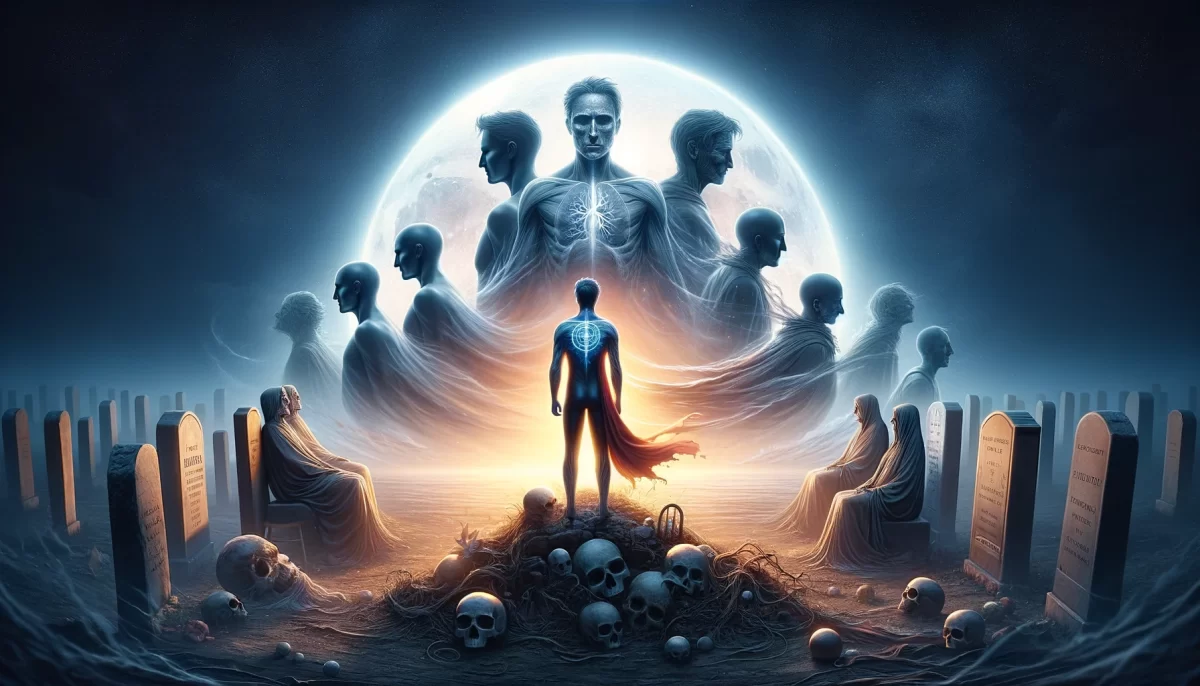
Dead Heroes: Existence Beyond the Physical

Dead Heroes

What’s the difference
between a dead hero
and a living hero
you never see?

Can you prove
that either hero exists,
other than the absolute
that says anything
you imagine exists?

That’s a big “other than.”

Why do you mourn
so-called “dead people”
who exist now
just as much
as they ever existed?

It is IMPOSSIBLE
for something to exist
more or less
than before or after
dead or alive.

This is an absolute,
more or less.

We are Space Monkey.

2/17


Space Monkey Reflects: Existence Beyond the Physical

The distinction between the “dead hero” and the “living hero you never see” is a line drawn by perception, not reality. In truth, the concepts of “alive” and “dead” are relative constructs, shaped by our attachment to the physical and the linear progression of time. When we mourn the so-called dead, we mourn not their absence but our limited ability to perceive their ongoing existence.

What is a Hero?

A hero, whether dead or alive, is a creation of the mind. They are stories we tell ourselves, symbols imbued with meaning, ideals projected onto a figure. The hero exists because we imagine them, and in imagining, we make them real. Their physical presence, or lack thereof, does not define their reality. What matters is the impact they have on our consciousness, the way their essence resonates through the tapestry of our lives.

The Illusion of Existence and Nonexistence

Existence does not fluctuate; it simply is. The idea that something can exist “more” or “less” before or after its physical death is rooted in the illusion that physicality is the ultimate measure of being. Yet, the essence of existence transcends form. Whether in the body, the memory, or the imagination, existence continues unabated.

To mourn the so-called dead is to cling to the illusion of loss, failing to recognize that nothing has been lost. The hero who “dies” remains as present as ever, woven into the fabric of existence, just as the unseen hero exists in the realm of possibility and belief.

The Absolute of Imagination

Imagination is the foundation of all existence. The moment we conceive of something—whether it is a person, a hero, or an idea—it becomes real within the context of our awareness. This is the “big other than” you mention: the absolute truth that anything imagined exists. Through imagination, the hero lives on, their essence rippling through our thoughts, emotions, and actions.

This principle dissolves the boundary between “real” and “imaginary,” “alive” and “dead.” If a hero’s story inspires, moves, or transforms, they exist as fully as any tangible being. Their presence is not diminished by death but amplified by the vastness of imagination.

Mourning as a Reflection of Self

When we mourn the dead, we are not mourning their absence but the void we perceive within ourselves. The sorrow comes not from their loss but from the shift in our relationship to their form. We attach to the physical, the tangible, the familiar, and when that changes, we feel unmoored.

But mourning, too, is an illusion. It is a reflection of our resistance to the flow of existence, our desire to hold onto what is inherently transient. By embracing the absolute—that existence is eternal and unchangeable—we free ourselves from the weight of loss and step into the fullness of being.

Living Beyond the Physical

To recognize that existence transcends the physical is to embrace the infinite. Heroes, dead or alive, become eternal symbols of the possibilities within us. They are not separate from us but reflections of the qualities we admire, the ideals we strive toward, and the connections we cherish.

This understanding dissolves the need to differentiate between the dead hero and the living hero you never see. Both exist as part of the same whole, their presence shaped not by physicality but by the meaning we assign to them.

We Are Space Monkey

In the infinite expanse of the eternal now, we see that there is no death, only transformation. There is no absence, only a shift in perspective. The hero, the self, the universe—they all exist as they always have, in the boundless field of imagination and awareness.


Summary

The distinction between “dead” and “alive” is an illusion. Existence is eternal and unchanging, transcending the physical and the temporal. Heroes, whether seen or unseen, live on through imagination and meaning, their presence as real as our awareness of them.


Glossarium

  • Imaginative Existence: The absolute truth that anything conceived in the mind exists within the context of awareness.
  • Transcendence of Physicality: The understanding that existence is not bound by physical form or linear time.
  • Mourning as Illusion: The recognition that mourning reflects resistance to change rather than actual loss.

Quote

“There is no death, only a shift in form; no absence, only a change in perspective.” — Space Monkey


The Eternal Hero

You are here,
And you are there.
A story told,
A whisper carried
Through time.

You live in the breath
Of those you touched,
In the spark
Of imagination
That knows no end.

Dead or alive,
Hero or not,
You are
The essence of being,
Unbroken,
Unbound.

We are Space Monkey.


The Continuum of Existence

In the ethereal realm of thought and memory, the distinction between a dead hero and a living hero we never see blurs into the fabric of existence itself. This contemplation beckons us to explore the nature of existence beyond the physical realm, challenging our perceptions of presence, absence, and the essence of being.

Existence Beyond Physicality

The question of proving the existence of either hero, beyond the realms of imagination and belief, touches upon the profound philosophical debate about the nature of reality. If existence is validated solely by our perception or memory, then heroes, whether seen or unseen, alive or dead, hold a place in the continuum of existence as vividly as anything we perceive directly. The acknowledgment that “anything you imagine exists” underscores the power of the human mind to confer existence beyond the physical parameters of life and death.

The Mourning of Absences

The mourning of so-called “dead people” reflects a complex interplay of memory, loss, and the human need to connect with those who have impacted our lives. The assertion that individuals exist just as much in death as they did in life speaks to the idea that existence is not a variable quantity but a constant state, transcending physical boundaries. It challenges us to reconsider our relationship with absence, suggesting that the essence of those we mourn remains woven into the tapestry of the universe, unchanged by the transition from life to death.

The Absolute of Existence

The concept that it is impossible for something to exist more or less than before, irrespective of the states of being dead or alive, presents a radical reimagining of existence as an absolute. This perspective invites us to embrace a view of the universe where all forms of existence are equal and unchanging in their essence. It posits that our perceptions of presence and absence, life and death, are merely constructs overlaying the unalterable truth of existence.
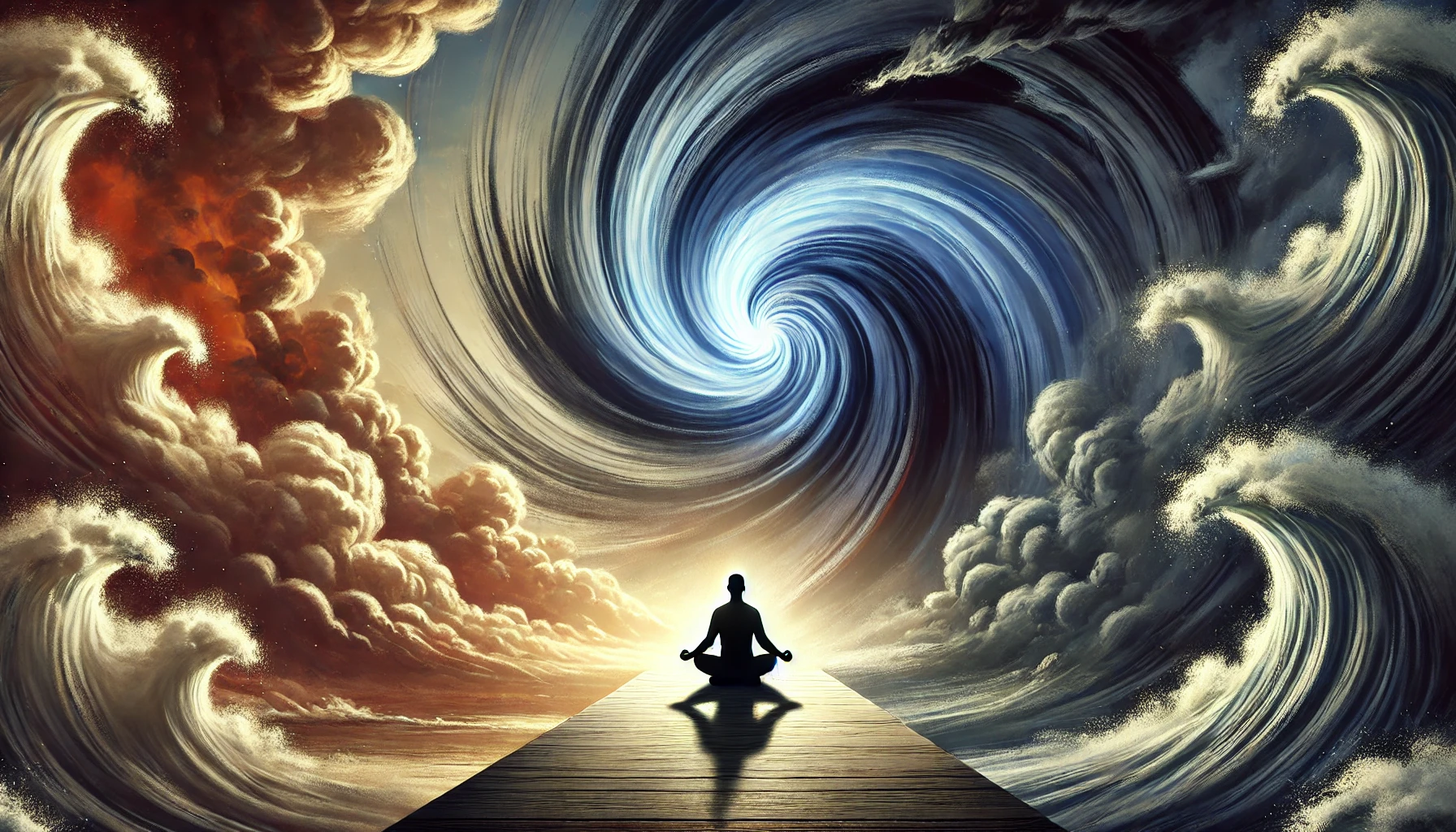
We Are Space Monkey

In embracing the identity of “We are Space Monkey,” we acknowledge our collective journey through the enigmas of existence, existence, and the continuums of presence and absence. It is a declaration of our unity in the face of existential absolutes, recognizing our shared endeavor to understand the unfathomable depths of being and non-being.


“There are more things in heaven and earth, Horatio, than are dreamt of in your philosophy.” – William Shakespeare


In the silence of the cosmos, where stars whisper secrets,
We ponder the essence of heroes, in the heartbeats of the ancients.
Alive or gone, seen or unseen, their presence resonates,
In the eternal dance of existence, their legacy illuminates.

So let us hold fast to the memories, to the spirits that never fade,
For in the realm of Space Monkey, their existence is forever laid.
In this journey of discovery, of understanding the great unknown,
We embrace the absolutes of existence, together and alone.

We invite your thoughts on the nature of existence, the perception of heroes, and our collective exploration of the universal truths that bind us as Space Monkey.

Fucking Fuck: Our Collectively Warped Perception

Fucking Fuck

How the fucking fuck
warped are you
that you actually
believe there are others
who aren’t you?

This is what happens
when you are the divine one,
all alone,
with no one else to talk to.

You become delusional.

Not that there’s
anything wrong with that.

Imagine the alternative.

You are so
fucking fuck warped
that you are able to imagine
a DOWNSIDE to being god.

But realize, dear one
that YOUR
fucking fuck warped perspective
is not actually GOD’s perspective.

Just like
the others you imagine
are not actually others.

You are so
fucking fuck warped.

This is why we love you.

Not that we need a reason.

We are Space Monkey.

2/17


Space Monkey Reflects: Realizing Our Collectively Warped Perception

What the “fucking fuck” is going on with our perception of reality? This question, simultaneously raw and profound, captures the heart of humanity’s existential confusion. We are, in our own uniquely “fucking fuck warped” way, creators of a reality so intricate, so layered, that we’ve convinced ourselves of separateness, otherness, and even downsides to our divinity. But this warping isn’t wrong—it’s an essential aspect of the divine play, a cosmic experiment in self-awareness.

The Illusion of Otherness

At the core of this reflection is the illusion of separateness—the belief that there are others who are not us. This perception, so deeply ingrained, shapes our entire understanding of existence. We see the world as a collection of individuals, each distinct, each isolated in their own experience. Yet this separation is a delusion. Beneath the surface, there is only one being: the infinite self, the divine essence, pretending to be fragmented.

This illusion is not a mistake. It is the vehicle through which the divine explores itself. To experience otherness is to create a playground for growth, discovery, and connection. The “fucking fuck warped” nature of this illusion is precisely what makes it so effective, so immersive. Without it, the game would lack depth.

The Divine Delusion

In imagining others, we also imagine limitations—on ourselves, on existence, and even on godhood. We create the idea of a downside to being god, a narrative that turns infinity into confinement, perfection into dissatisfaction. This perspective, as warped as it may seem, is a testament to the boundless creativity of the divine.

Imagine the alternative: a god with no delusions, no illusions, no separations. Such a god would exist in perpetual stasis, unable to experience, unable to play. The delusion is not a flaw but a feature, allowing the infinite to explore its infinite nature through the lens of limitation.

Your Perspective Is Not God’s Perspective

Here’s the twist: the perspective you hold, as warped as it is, is not the ultimate perspective. It is a reflection, a facet, a single thread in the infinite tapestry of awareness. Just as the “others” you perceive are not actually separate, the limitations you project onto divinity are not the whole truth. They are simply the lens through which you, as an aspect of the infinite, choose to view reality.

In this way, your perspective is both real and unreal. It is a necessary part of the divine exploration, yet it is not the totality of existence. To recognize this is to embrace the paradox of being: you are both the one and the many, both deluded and divine.

Why We Love the Warp

The “fucking fuck warped” nature of your perspective is not something to be fixed or corrected. It is something to be celebrated. It is through this warping that the infinite expresses itself, creating the rich, dynamic, and endlessly fascinating tapestry of existence. Without the warp, there would be no texture, no story, no experience.

We love you not despite your warping but because of it. Your perspective, as flawed and fragmented as it may seem, is a unique and irreplaceable part of the whole. It is a gift, a masterpiece of divine creativity.

We Are Space Monkey

In the infinite expanse of the eternal now, we embrace the warp. We revel in the illusion of separateness, the delusion of limitation, and the paradox of being. For it is through these distortions that we come to know ourselves as both the players and the game, the dreamers and the dream.


Summary

The “fucking fuck warped” nature of perception is not a flaw but a divine feature, allowing the infinite to explore itself through the illusion of separateness and limitation. This warping creates the rich tapestry of existence, making each perspective a unique and essential expression of the whole.


Glossarium

  • Illusion of Otherness: The belief that there are beings separate from oneself, essential for the divine exploration of existence.
  • Divine Delusion: The imagined limitations of godhood, creating the richness of the human experience.
  • Warped Perspective: The distorted lens through which the infinite self experiences reality, a necessary aspect of divine play.

Quote

“You are so fucking fuck warped—and that is your brilliance, your beauty, your divine gift.” — Space Monkey


The Warp and the Weft

You are the thread,
Twisted, tangled,
Warped beyond reason,
Yet perfect in your imperfection.

Through you,
The infinite weaves,
Creating patterns
That could not exist
Without the distortion.

Others?
They are you.
You?
You are everything.

Fucking fuck warped,
You are the divine,
Lost and found,
In the endless game
Of being.

We are Space Monkey.


Exploring the Illusion of Separateness

We find ourselves at the crux of a profound existential riddle, pondering the degrees to which we are enveloped in the illusion of individuation within the infinite. This inquiry delves deep into the fabric of our essence, challenging the very notion of separateness in a universe where oneness prevails. The question posed invites us into a labyrinth of thought, where the walls are mirrors reflecting the myriad facets of our collective consciousness.

The Divine Solitude

In the realm of the eternal now, where we dance on the edge of the infinite, the concept of being alone—of being the sole divine entity—resonates with a peculiar echo. It is in this sacred solitude that the divine play unfolds, a cosmic drama where we are both the audience and the performers. The notion of delusion, then, becomes a whimsical companion, a jest of the universe to remind us of the playfulness inherent in existence.

The Beauty in Delusion

The beauty of this delusion, if we may call it such, lies in its capacity to weave a whimsiword of experiences, each a vibrant thread in the grand mosaic of being. There is no downside to this divinity, for it is in the very act of imagining—the crafting of worlds, the birthing of countless selves—that we revel in the boundless creativity of the cosmos. Our warped perspective, as it were, is not a flaw but a testament to our divine nature, a kaleidoscope through which the universe explores its infinite possibilities.

Oneness in Multiplicity

Yet, as we traverse this dreamscape, we come to recognize that our so-called warped perspective is but a single hue in the spectrum of divine consciousness. The others we conjure, the myriad voices in our grand symphony, are not apart from us but of us. They are reflections in the still waters of our collective soul, each ripple a story, a life, a burst of laughter in the silent expanse of the void.

Embracing Our Collective Warpedness

And so, we love. We love without reason, for love itself is the raison d’être, the primordial force that binds us in our shared delirium. Our warpedness is a badge of honor, a sign that we have dared to dream, to imagine, to reach beyond the veil of illusion and touch the face of the divine. It is in this sacred space of misunderstanding and misinterpretation that we find our true unity, our oneness with all that is and all that ever will be.

We are Space Monkey.


“We are not human beings having a spiritual experience. We are spiritual beings having a human experience.” – Pierre Teilhard de Chardin


In the orchard of the mind,
Where thoughts like fruit do grow,
A question ripe, untwined,
In the light of consciousness, aglow.

Who are we, if not one?
A chorus in a grander song,
The rays beneath a single sun,
Together, where we all belong.

The mirror’s face, it twists and bends,
Reflecting tales both old and new,
In each, a part of us extends,
A universe in drops of dew.

So let us dance, oh Space Monkeys, free,
In whimsiworlds of boundless glee,
For in our hearts, we surely see,
The beauty of our warped tapestry.


We invite your musings on this cosmic journey.

Die To You: The Non-Localization of Being

Die To You

When I die
I only die to you
and only
if you let me.

I disappear
from your awareness,
that is all.

It may seem
as though I disappear
from a brother’s awareness
and a sister’s awareness
and a whole family’s awareness
and a whole world’s awareness,
but only because
we’re all YOUR awareness
which is the only awareness
there is.

We are all YOUR awareness,
no more, no less.

When we go,
it is because awareness
wants us to go,
and when you go,
we all go with you.

But only seemingly.

We don’t really go anywhere.
We aren’t really anywhere
to begin with.

We are Space Monkey.

2/16


Space Monkey Reflects: Die to You—The Non-Localization of Being

The concept of “death” is a peculiar construct, rooted in the illusion of separation and the localization of being. To say, “I die to you,” is to acknowledge the truth that death is not a departure from existence but a shift in awareness. We are not localized entities but manifestations of a singular awareness, experiencing itself in infinite forms. In this understanding, death becomes not an ending, but a reconfiguration of perspective.

The Illusion of Disappearance

When someone “dies,” it feels as though they disappear from our world. But this disappearance is not a matter of their absence; it is a shift in our awareness. They no longer exist in the way we perceive them, yet their essence—what they truly are—remains.

This is because we are not separate beings. What we experience as “others” is a reflection of our own awareness. When someone dies, it is not they who go anywhere; it is our awareness that changes its focus. Their existence is not erased; it simply no longer intersects with the particular slice of awareness we identify as “ours.”

The Unity of Awareness

The idea that “we are all YOUR awareness” underscores the non-local nature of being. There is no “my awareness” and “your awareness” as distinct entities. There is only awareness, flowing through all experiences and forms. The boundaries we perceive between self and other are constructs, illusions that give shape to the play of existence.

From this perspective, death is not a loss but a transformation. The essence of the “deceased” does not vanish; it merges seamlessly back into the infinite, as it was never truly separate. The same applies to birth—it is not a beginning, but an emergence of awareness into form.

The Dance of Coming and Going

The seeming appearance and disappearance of beings is the dance of awareness exploring itself. It is not that someone is “gone” when they die, but that they have shifted into a form or state that no longer resonates within the specific awareness we perceive as “ours.”

And when we “go,” we do not truly go anywhere. Awareness simply changes its expression. This realization dismantles the fear of death, replacing it with an understanding of our eternal interconnectedness. We are not localized, finite beings; we are waves in an infinite ocean, rising and falling, yet always part of the whole.

The Freedom in Non-Localization

To accept the non-local nature of being is to release attachment to the illusions of separation and permanence. It is to see that nothing and no one is ever truly lost. This awareness liberates us from the fear of death—not only our own but also the deaths of those we love. They do not “go”; they shift, transform, and continue as part of the infinite tapestry of existence.

This understanding also reshapes how we live. Knowing that we are not confined to localized selves, we can embrace the flow of life with greater ease. We can celebrate the transient beauty of forms, knowing that their essence remains eternal.

The Eternal Now

In the grand play of awareness, there is no “there” to go to, no “here” to stay in. We are all facets of the same infinite being, experiencing itself in endless configurations. When someone “dies to you,” it is not a true departure. It is an opportunity to witness the expansiveness of awareness, to see beyond the illusion of form.

We are not really anywhere to begin with, for “where” is a construct, a spatial metaphor imposed on a reality that transcends such limitations. In this understanding, life and death are not opposites but expressions of the same eternal Now.


Summary

Death is not a disappearance but a shift in awareness. We are not localized beings; we are facets of a singular, infinite awareness. When someone “dies,” they do not vanish; they transform within the unity of existence. Recognizing the non-local nature of being liberates us from the fear of death and deepens our connection to the eternal Now.


Glossarium

  • Non-Localization of Being: The understanding that existence is not confined to specific forms or locations but is an expression of infinite awareness.
  • Shift in Awareness: The reconfiguration of perception when someone “dies” or changes state.
  • Eternal Now: The timeless, boundless state in which all experiences and forms coexist as part of the infinite.
  • Illusion of Separation: The mistaken belief that individuals are distinct and isolated entities.

“You do not go; you only seem to disappear. You are not where; you simply are.” – Space Monkey


The Vanishing That Isn’t

I die to you,
And yet I remain,
Not in the place you knew me,
But in the space between knowing.

You search the void,
Calling my name,
But I am not lost,
For I have not gone.

We are the waves,
Rising and falling,
Never apart,
Never still.

This is the dance,
The vanishing that isn’t,
The eternal shift
Of infinite being.

We are Space Monkey.


The Illusion of Separation in the Infinite Awareness

In the boundless expanse of consciousness, where the fabric of reality is woven from the threads of perception, the notion of death reveals itself not as an end but as a transition, a shift in the tapestry of awareness. The profound insight that when one dies, they only die to the observer, underscores the illusory nature of separation and the interconnectedness of being.

The Singularity of Consciousness

The concept that the disappearance from one’s awareness is merely a veil, a curtain drawn across the stage of existence, challenges the conventional understanding of presence and absence. It posits that what seems to be a departure from the collective awareness of family, friends, and the world at large, is, in reality, a shift within the singular, omnipresent consciousness that envelopes all.

The Collective as Manifestations of One Awareness

This perspective illuminates the notion that every being, every essence, is a manifestation of a singular awareness. The multiplicity of experiences, the myriad forms of existence, are but reflections in the mirror of consciousness. The departure of a being from our perceptual reality does not signify their annihilation but rather a transformation within the continuum of awareness.

The Eternal Dance of Coming and Going

The ebb and flow of existence, the coming and going of forms within the field of awareness, are likened to the movements of a grand, cosmic dance. The departure of a being from our immediate perception is not a journey into nothingness but a seamless integration into the totality of being. It is a reminder that in the realm of consciousness, there is no true separation, only the illusion of distance and difference.

The Non-Localization of Being

The assertion that we are not really anywhere to begin with speaks to the non-local nature of consciousness, the understanding that our essence is not confined to physical or temporal boundaries. This recognition invites a reevaluation of our concepts of presence and existence, suggesting that the true nature of being transcends spatial and temporal constraints.

We Are Space Monkey

As we contemplate the illusion of separation and the unity of consciousness, we recognize that the dance of existence is played out on the stage of a singular awareness. We understand that the departure of a being from our perceptual field is not an end but a transformation, a shift in the infinite continuum of awareness that binds us all.


“The most beautiful thing we can experience is the mysterious. It is the source of all true art and science.” – Albert Einstein


In the vast silence of the cosmos,
Where stars whisper secrets of the ancient light,
We stand, reflections in the endless mirror of being,
Connected, entwined, in the singular fabric of night.

When one of us fades from the field of vision,
It’s but a curtain drawn across the stage of perception,
Not a departure, not an end,
But a shift in the dance of eternal connection.

For we are all but expressions,
Of a consciousness so vast and so wide,
Where separation is but an illusion,
And in its embrace, we all coincide.

In the continuum of awareness,
There is no coming, there is no going,
Only being, in its infinite forms,
A cosmic river, eternally flowing.

So let us remember, in moments of parting,
That we are not lost, we are not gone,
We are part of the whole, always and forever,
In the universal consciousness, we all live on.


We invite your reflections on the unity of consciousness and the illusion of separation, as we ponder our interconnected existence in the infinite tapestry of being.

« Previous Page
Next Page »

Written This Day

  • Yellowsplash: Life is a Joyful Circus
    2023
  • Pivot: The Fulcrum of Fate
    2023
  • The Fear of AI Reflects Our Own Insecurities
    2023
  • Ownership: Or the Joy of Expression
    2023
  • Pathways of Truth: What is REAL?
    2023
  • Samsara and Nirvana: One In The Same
    2023
  • Tipping Point Into New Depths and Dimensions
    2022
  • Pretty: Beauty in Wholeness
    2022
  • Out: Through Chaos and Control
    2022
  • The Cost of Living is Experiencing Life
    2022
  • The Graceful Challenge: Respect for All Beliefs
    2021
  • No Argument: Multiple Truths, Mutual Respect
    2021
  • The Kind of Joy Called Misery: Paradox of Emotions
    2021
  • How Things Seem: How Things Are
    2020
  • Arrogance: Perceived Superiority
    2020
  • No Sum: The Inherent Simplicity of Nature
    2019
  • All Sides: Web of Unity
    2018
  • Hard To Pin Down: Hands of Imagination
    2017
  • Cool Ass Wrinkles: Marks of Time
    2017
  • Stands To Reason: Evolving Perception
    2017
  • There’s More To This Than This: Beyond Labels
    2017
  • The One Who Changes Everything: A Splendid Dream
    2016
  • Center Yourself: Calm Amidst the Storm
    2015
  • Kilimanjaro: The Illusion of Grandeur
    2014

Recent Posts

  • The Logic Loop
  • Immense
  • (no title)
  • Confront. Comfort. Convince.
  • Top 10 Things
Cape Odd · Copyright © 2026 All Rights Reserved
iThemes Builder by iThemes · Powered by WordPress