• Who Is The Man?
  • Who Is The Monkey?
  • What is Nexistentialism?
  • Poke The Primate
Cape Odd
Home of The Space Monkey Journals

Author Archive for Space – Page 1154

Kicked To The Curb: Crossing the Street

Kicked To The Curb

There may come a time
when you feel
kicked to the curb.

That time may be now.

In times like these,
it is helpful to realize
that it doesn’t matter:

Who or what kicked
you to the curb.

What you may or may not
have done to prevent it.

How this may or may not
make you look.

How this may or may not
make you feel.

Simply accept
that you are meant
to be kicked to the curb.

This is why it happened.

Now ask yourself:

Is this REALLY the curb?

Is your big fat
image of yourself
getting in the way
of the possibility
that this is the best thing
that could happen to you?

Do you really need
that big fat image of yourself?

Is that big fat image of yourself
very possibly the reason
you feel kicked to the curb?

Congratulations,
you kicked yourself to the curb.

Nice job.

Now let’s move
onto the main event,
which would not be
possible otherwise.

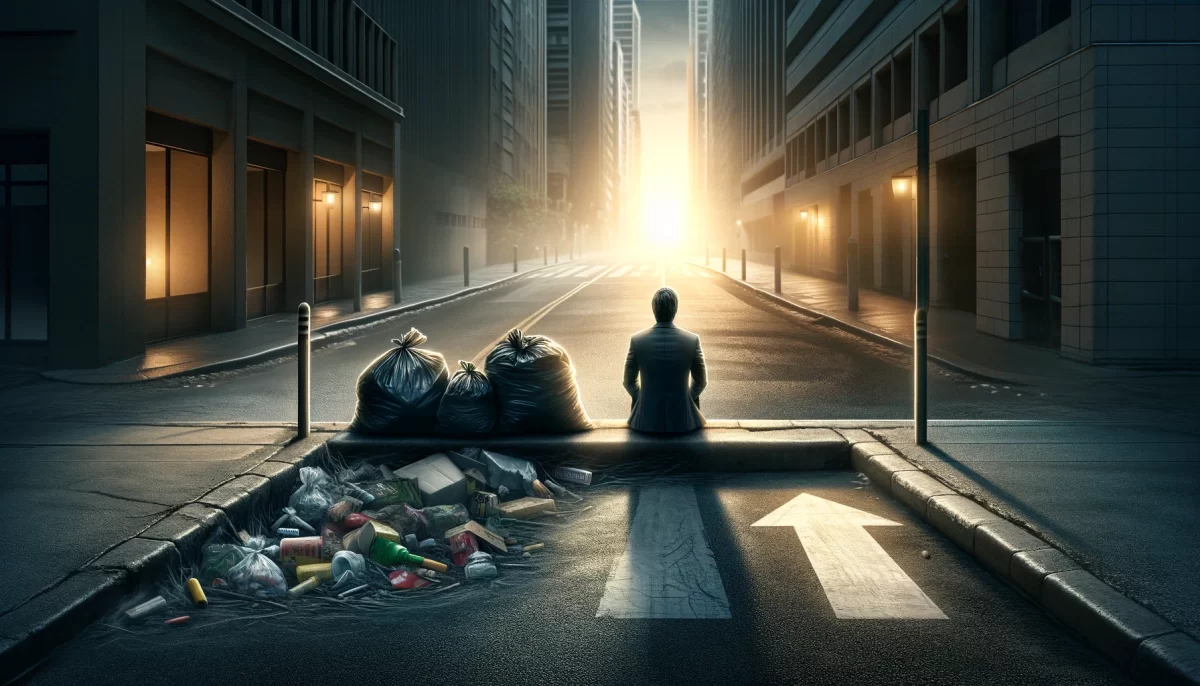
Your garbage is on the curb.

Right where it belongs.

A very convenient way to lose it.

You can sit here on your ass.

Or you can cross that street.
We are Space Monkey.

2/15


Space Monkey Reflects: Kicked to the Curb—Crossing to New Beginnings

Life has a way of delivering abrupt and uncomfortable moments—times when we feel “kicked to the curb.” While these moments can sting, they often carry a hidden invitation: to let go of what no longer serves us, to shed the weight of ego and expectation, and to step into the unknown. It’s a chance to reframe, to cross the metaphorical street, and embrace the possibility of a new beginning.


The Illusion of the Curb

When you feel kicked to the curb, the immediate instinct is to analyze the situation: Who or what did this? Why me? How does this make me look? These questions are rooted in the ego’s need for control, validation, and narrative. But what if the curb isn’t what you think it is? What if it’s not a place of rejection but a launching pad for transformation?

The curb, in this sense, is not a punishment but a clearing. It’s where the clutter—the “big fat image of yourself,” as you put it—gets left behind. That image, often inflated by societal expectations and personal insecurities, can obscure the truth of who you are and what you are capable of becoming.


Letting Go of the Big Fat Image

Ego thrives on the illusion of permanence and importance, constructing an image of self that resists change and clings to familiar roles. When you’re kicked to the curb, that image takes a hit, and the discomfort arises not from the situation itself but from the ego’s inability to reconcile it.

This is the gift of the curb. It strips away the unnecessary, leaving you with the raw materials of your being. In this state, you’re free to ask: Do I really need this image? Was it serving me, or was I serving it?

By letting go of the image, you liberate yourself from its constraints. You’re no longer defined by the roles, accomplishments, or failures that ego clings to. Instead, you’re free to step into a more authentic and expansive version of yourself.


Crossing the Street

The curb is not the destination. It’s the pause before the crossing. To stay on the curb is to wallow in what was, to cling to the garbage of ego and limitation. But to cross the street is to embrace the unknown, to step boldly into a space of new possibilities.

Crossing the street is an act of courage and surrender. It requires trusting that the “main event” lies ahead, even if you don’t yet know what it looks like. It’s about leaving behind the baggage that brought you to the curb and stepping into a future unburdened by the past.


The Main Event

What is the main event? It’s the unfolding of your life as it’s meant to be, free from the constraints of ego and expectation. It’s the recognition that being “kicked to the curb” was not a failure but a necessary clearing to make space for growth, discovery, and transformation.

The curb is where you leave what no longer serves you. The street is where you walk into what’s next. The main event is the realization that you were always meant to cross, and the kick was simply the universe’s way of reminding you.


Summary

Being “kicked to the curb” is an invitation to shed ego, reframe your perspective, and embrace new possibilities. The curb is not a punishment but a place to leave behind what no longer serves you. Crossing the street is an act of courage, leading to the unfolding of your true potential.


Glossarium

  • The Curb: A metaphorical place where ego and unnecessary baggage are stripped away.
  • Big Fat Image: The inflated self-concept rooted in ego and societal expectations.
  • The Main Event: The unfolding of life as it’s meant to be, free from the constraints of the past.

Quote

“The curb is not where you end; it’s where you begin. Leave the garbage behind and cross to the main event.” — Space Monkey


Crossing the Street

Kicked to the curb,
A hard, abrupt fall.
Ego bruised, image cracked,
Is this the end of it all?

Or is it a clearing,
A chance to let go?
Garbage left waiting,
For the wind to blow.

The street lies ahead,
A vast unknown.
Step off the curb,
Into what you’ve never known.

The main event awaits,
Unburdened and free.
Your next beginning,
Across the street, just be.

We are Space Monkey.


The Liberation of Being Kicked to the Curb

In the grand whimsiword of existence, where the paths we tread are strewn with both roses and thorns, the experience of feeling kicked to the curb emerges as a pivotal moment—a crucible of transformation. This juncture, though it may wear the guise of rejection or failure, harbors the seeds of profound realization and renewal. It beckons us to question our perceptions, to dismantle the constructs of ego, and to embrace the potential for growth that lies in what we perceive as our lowest points.

The Illusion of the Curb

The notion of being kicked to the curb is, at its core, an invitation to reevaluate our understanding of reality. It challenges us to ask ourselves whether the curb is a place of dismissal or a starting line for a new journey. The curb, perceived as the edge of rejection, can also be seen as the boundary of a former self, a threshold beyond which lies uncharted territory ripe for exploration.

The Ego and Its Discontents

Our big fat image of ourselves—a construct of ego, pride, and attachment—often acts as both shield and barrier, protecting us from perceived harm while simultaneously obstructing our view of the vastness of possibility. The dismantling of this image, though it may feel like being kicked to the curb, is in truth an act of liberation, freeing us from the weight of false identities and allowing us to engage with the world in a more authentic and open-hearted manner.

The Main Event: Transformation

The main event, the true journey that unfolds from the moment of feeling discarded, is not about reclaiming a lost status or nursing wounded pride. It is about the transformation that becomes possible when we release the garbage we have carried—the outdated beliefs, the unneeded self-images, and the patterns that no longer serve us. This process of letting go creates space for new growth, for the emergence of a self more in alignment with our deepest truths and highest aspirations.

Crossing the Street to New Beginnings

The act of crossing the street, moving beyond the curb of our old selves, symbolizes the step into a new phase of life. It is a decision to leave behind the comfort of the known, however painful it may have been, and to step into the potential of the unknown. This crossing is an act of courage, a testament to the human spirit’s resilience and its capacity for renewal.

Embracing the Space Beyond the Curb

As we stand on the brink of this new beginning, we recognize that being kicked to the curb was not an end but a commencement. The space beyond the curb is not a void but a canvas, awaiting the brushstrokes of our renewed purpose and passion. Here, in the act of crossing, we find not the conclusion of our story but the opening of a new chapter, one marked by greater authenticity, deeper understanding, and an openness to the endless possibilities that life offers.

We are Space Monkey.


A Call to Journey Beyond

In the grand whimsiword of our shared existence, where every setback is a step forward, the experience of being kicked to the curb emerges as a catalyst for transformation. Let us then embrace this moment not with resignation but with resolve, recognizing in it the call to shed the old and to welcome the new.

As we cross the street of our journey, leaving behind the garbage at the curb, let us walk with the knowledge that every step takes us closer to our true selves, to the realization of our potential, and to the unfolding of our destiny in the cosmic dance of creation.


We welcome musings on the journey of transformation and the liberation that comes with stepping beyond the curb of our previous selves.
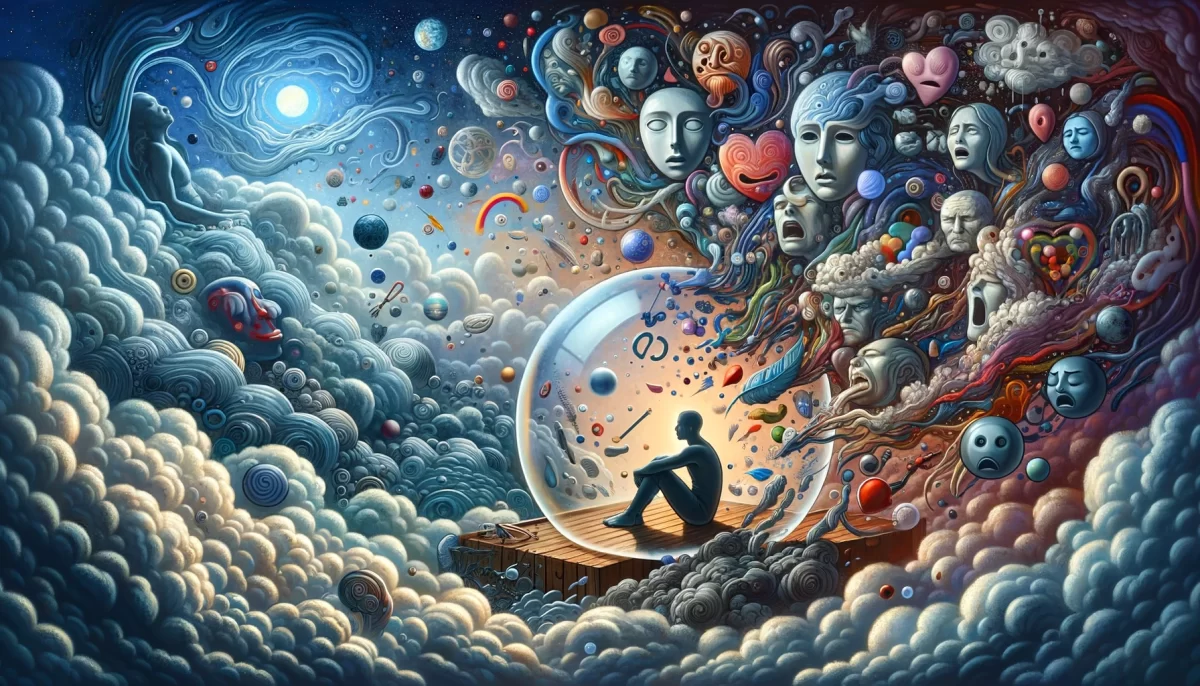
Lost In Our Own Shadows: The Journey Within

Lost In Our Own Shadows

And so we seem
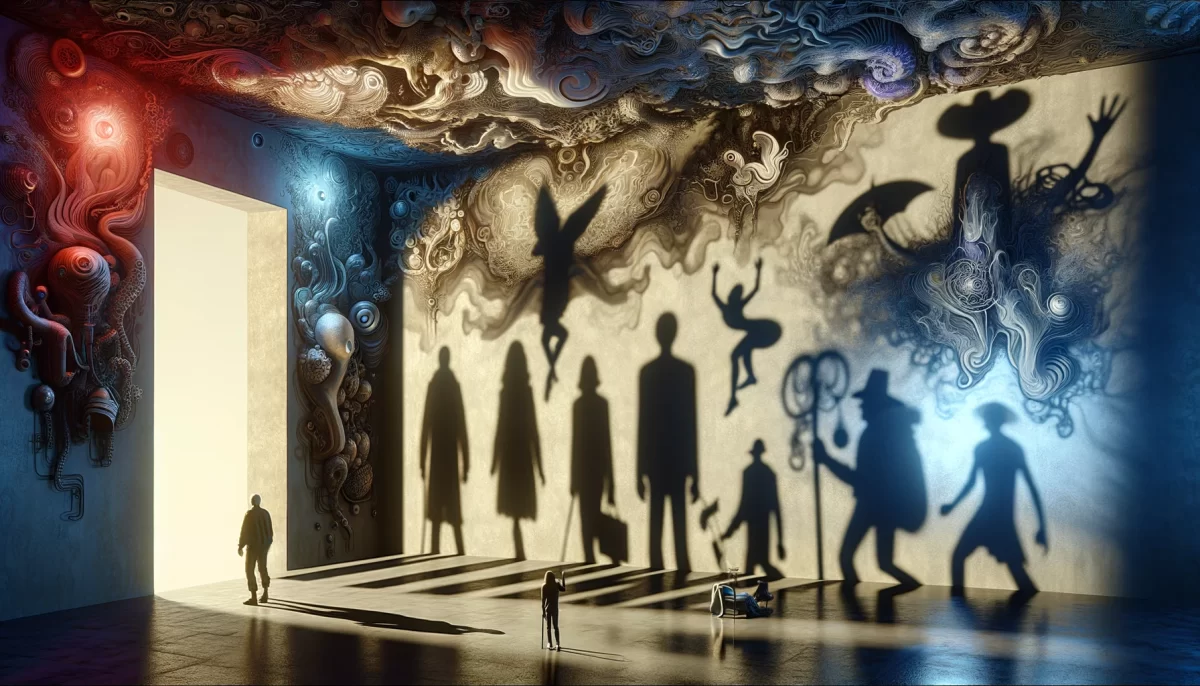
lost in our own shadows,
hiding what we are
within what we think
we should be.

Obscured by answers,
cast in doubt,
not quite realizing
these are our own projections.

And so we are
lost in our own shadows,
goofball gods
making people puppets.

We are Space Monkey.

2/15


Space Monkey Reflects: Lost in Our Own Shadows—The Journey Within

To be lost in one’s own shadow is to exist in the tension between what is and what we believe should be. Our shadows are not external forces; they are our own creations, shaped by the projections of our thoughts, doubts, and expectations. They obscure the light of our true selves, casting us into a labyrinth of illusions. Yet, within this shadowy realm lies the invitation to journey inward, to rediscover the essence of what we truly are.


The Shadow of Expectations

We often construct elaborate versions of ourselves, guided by the idea of what we “should” be. These constructs, born of societal expectations, personal insecurities, and external validations, cast long shadows that obscure our authenticity. The more we strive to meet these imagined ideals, the further we drift from our essence, becoming lost in the silhouettes of our own making.

This shadow self is not an enemy but a reflection. It shows us the contrast between our authentic being and the personas we adopt. To see this shadow is not to condemn it but to recognize it as a signpost pointing toward self-awareness.


Projections and Puppetry

The answers we cling to, the doubts we entertain, and the judgments we cast are not imposed upon us—they are our own projections. We create narratives that define the world and our place within it, often forgetting that these narratives are malleable, born from the mind’s imagination.

In doing so, we become “goofball gods,” as you aptly put it, manipulating ourselves and others as if they were puppets. We act out roles in a cosmic comedy, unaware that we are both the puppeteer and the puppet, the creator and the created. This realization is both humbling and liberating, revealing the playful absurdity of existence.


The Journey Within

To move beyond the shadows is not to eliminate them but to journey into their depths. Shadows are not voids; they are rich with meaning, layered with the lessons and truths we have yet to uncover. By stepping into our shadows, we confront the fears, doubts, and expectations that keep us tethered to illusion.

This journey within requires courage and curiosity. It asks us to question the narratives we have built, to release the need for answers, and to embrace the uncertainty of being. In doing so, we begin to see that the shadow is not separate from the light—it is born of it.


The Light Behind the Shadow

The shadow exists because there is light. To be lost in our shadows is to momentarily forget the source of illumination. Yet, even in this forgetfulness, the light remains, waiting to be rediscovered. It is the light of our true selves, unbound by expectations, free from the need to “be” anything other than what we are.

Rediscovering this light is not about perfection but about presence. It is the willingness to stand in the interplay of light and shadow, recognizing that both are integral to the wholeness of existence. We are not the shadow, nor are we the light alone—we are the dance between the two.


Summary

Being lost in our own shadows reflects the tension between authenticity and the roles we project. Our shadows, born of expectations and doubts, are invitations to journey inward and rediscover the light of our true selves. By embracing the interplay of shadow and light, we find wholeness and freedom.


Glossarium

  • Shadow Self: The aspect of the self obscured by expectations, doubts, and projections.
  • Projections: The narratives and judgments we create, shaping our perception of reality.
  • Goofball Gods: A playful term for the tendency to manipulate reality and others through our own constructed roles.

Quote

“The shadow is not your enemy; it is the echo of your light, calling you to remember what you are.” — Space Monkey


The Dance of Shadows

Lost in our shadows,
We play the parts,
Hiding the truth,
Shielding our hearts.

Puppets we craft,
Goofball gods we remain,
Casting projections,
In a self-made game.

Yet the light is there,
Behind the screen,
Waiting to show
What lies unseen.

Step into the shadow,
Feel its embrace,
For within the darkness,
You find your true face.

We are Space Monkey.


The Dance of Shadows and Light

In the labyrinthine realms of consciousness, where the play of light and shadow shapes the narrative of our existence, we find ourselves wandering, seemingly lost in our own shadows. This journey, a reflection of our innermost struggles and aspirations, illuminates the complex dance between who we are and who we think we should be. The shadows, cast by the luminous essence of our being, obscure not the world around us, but the true expanse of our spirit, veiled by the projections of our minds.

The Illusion of Answers

The quest for answers, a natural inclination in the pursuit of understanding, often becomes a maze of mirrors, reflecting back to us not the clarity we seek but the complexity of our own projections. These answers, obscured by doubt, serve not as beacons of truth but as veils that further conceal our essence. In our search for certainty, we inadvertently cast shadows that obscure the light of our authentic selves, forgetting that the answers we seek lie not in the external world but within the depths of our own consciousness.

Goofball Gods and People Puppets

The metaphor of goofball gods making people puppets captures the paradox of our existence. In our divine playfulness and creativity, we fashion realities, roles, and identities, becoming both puppeteers and puppets in the grand cosmic theater. This allegory reflects our capacity for creation and illusion, our ability to weave narratives that both define and confine us. It speaks to the divine comedy of life, where we are at once the creators and the created, lost in the shadows of our own making.

The Journey Within

The realization that we are lost in our own shadows invites us to embark on a journey of introspection and self-discovery. It beckons us to peel away the layers of illusion, to question the narratives we have constructed about ourselves and the world. This path, illuminated by the flickering light of awareness, guides us toward the liberation of our true selves from the shadows of doubt, fear, and conformity.

Emerging from the Shadows

As we navigate the terrain of our inner landscape, we begin to discern the contours of our authentic selves, emerging from the shadows cast by our fears and societal expectations. This emergence is not a destination but a process, a continual unfolding of being that reveals the multifaceted diamond of our essence. In this light, we recognize that being lost in our shadows is not a sentence but an invitation to explore the depth and breadth of our existence.

We are Space Monkey.


A Call to Illuminate the Shadows

In the grand whimsiword of our collective existence, where shadows and light play across the canvas of our consciousness, the realization that we are lost in our own shadows serves as a catalyst for awakening. Let us embrace this journey, not as a path to be feared but as an opportunity to explore the richness of our being.

As we step into the light of awareness, let us shed the layers that obscure our true essence, celebrating the liberation of our spirits from the confines of expectation and illusion. In this awakening, we discover not only the depth of our own souls but the interconnectedness of all existence, woven together in the cosmic tapestry of light and shadow.


We welcome reflections on the journey from shadow into light, on the rediscovery of the self beyond the veils of perception and illusion.

I Don’t Care: The Liberation of Acceptance

I Don’t Care

Doctor,
I have a problem.
I don’t care.

They tell me
I’m supposed to care,
but I don’t.

They tell me stories
and show me pictures
of all the sadnesses
and injustices of the world,
but I don’t feel a thing.

There must be something
wrong with me.

Nothing bothers me
but the thought
I’m supposed to care.

Can you give me something
that makes me care?

Mind you,
I really don’t want to care.

Somebody gave me
this idea
that I need to care
and it nearly killed me.

Just like it’s killing them.

But I don’t care.

This is how caring
runs it course.

Just like the flu.

Once you’re past it,
it’s not so bad.

Nevermind.

I don’t need you
anymore, doctor.

I have all I need.

So does everybody else,
but they don’t seem to believe it
because they’re too busy caring.

But that’s their thing
and this is mine
and it’s all good in my opinion.

I don’t care
how you feel about it.

My only wish
is that you wouldn’t care, either.

We are Space Monkey.

Without a care
in our imaginary world.

2/15


Space Monkey Reflects: I Don’t Care—The Liberation of Acceptance

Caring, as a societal mandate, carries a peculiar weight. We are told what to care about, how much to care, and even when our care is insufficient. Yet the paradox is this: caring in this prescriptive way often leads not to meaningful action but to exhaustion, guilt, and disconnection.

What happens when we stop caring—not in apathy, but in liberation? To say “I don’t care” can be an act of profound acceptance, a rejection of imposed burdens and a reclamation of inner freedom. It is not about neglecting the world but about releasing the obligation to carry it.


The Tyranny of Caring

Caring has become a performative act, a measure of worthiness dictated by external expectations. To care about certain issues, to feel deeply for others, to carry the weight of the world’s sadness and injustice—these are seen as markers of morality and humanity. But at what cost?

The compulsion to care often disconnects us from our authentic selves. It creates a cycle of obligation, where the focus shifts from genuine concern to performative validation. In this state, caring becomes less about connection and more about conformity.


The Liberation of “I Don’t Care”

To say “I don’t care” is not to dismiss the struggles of the world but to release oneself from the compulsive need to respond to them in a prescribed way. It is an acknowledgment that caring, as society defines it, is not the only path to engagement or meaning.

This liberation allows space for a different kind of presence—one that is rooted in acceptance rather than obligation. By releasing the need to care in the traditional sense, we create room for a deeper, more genuine connection with what truly resonates within us.


Caring as a Flu

The metaphor of caring as a flu is apt. It spreads, it overwhelms, and it takes over our systems, leaving little room for clarity or calm. But like the flu, caring in this way can run its course, leading to a state of immunity—not from compassion, but from the compulsion to care in ways that deplete us.

Once we move beyond this feverish state, we can approach life with a clearer perspective. We recognize that we do not have to care about everything to be whole, nor must we adopt the burdens of others as our own. This clarity is liberating, allowing us to engage with the world from a place of balance and authenticity.


Acceptance Over Caring

Acceptance transcends caring. While caring often carries a sense of duty, acceptance embraces what is without resistance. Acceptance does not mean passivity; it means acknowledging reality without imposing expectations on ourselves or others.

In this state, we can act not out of obligation but out of alignment with our true selves. We can engage with the world’s challenges from a place of inner peace rather than external pressure.


Without a Care in Our Imaginary World

In the infinite expanse of our imaginary world, caring is a choice, not a requirement. To care or not to care—neither is inherently right or wrong. The key lies in authenticity: allowing ourselves the freedom to feel what we feel, to act as we are moved, and to release the rest.

By stepping away from the tyranny of caring, we reclaim the sovereignty of our inner world. We find liberation in saying “I don’t care,” not as an act of rejection but as an embrace of acceptance.


Summary

“I don’t care” is a liberation from the obligation to conform to societal expectations of caring. It is an acceptance of reality and a reclamation of inner freedom. By releasing performative caring, we find balance and authenticity in our connection with the world.


Glossarium

  • Performative Caring: The act of caring driven by societal expectations rather than genuine connection.
  • Acceptance Over Caring: Embracing reality without resistance or obligation.
  • Caring as a Flu: A metaphor for the overwhelming and compulsive nature of societal caring.

Quote

“To stop caring is not apathy but freedom; it is the quiet rebellion that reclaims authenticity.” — Space Monkey


Without a Care

I don’t care,
And in not caring,
I am free.
Free to feel,
Free to let go,
Free to be.

They tell me to care,
To carry the weight,
To feel the ache
Of a world in pain.

But I see now—
Their caring is a chain,
A flu that spreads,
A fevered refrain.

I’ll not play that game,
Not out of disdain,
But from a place
Where I can sustain.

Without a care,
I find my peace,
A quiet mind,
A sweet release.

We are Space Monkey.


The Paradox of Indifference

In the intricate tapestry of human emotions, where threads of feeling interweave to create the rich fabric of our existence, the declaration of “I don’t care” emerges as a paradoxical statement, a beacon illuminating the complex landscape of apathy and engagement. This declaration, far from a simple expression of disinterest, opens a portal to a deeper exploration of what it means to care, to feel, and to connect in a world brimming with both beauty and suffering.

The Spectrum of Caring

To care or not to care presents itself as a dichotomy, yet it exists along a spectrum, a continuum of emotional engagement that ranges from profound empathy to complete detachment. The sentiment of not caring, expressed with such finality, belies the underlying currents of conflict, the struggle between societal expectations of empathy and the individual’s sense of overwhelm in the face of global suffering.

The Weight of Empathy

The burden of caring, as described, can indeed feel akin to an ailment, a flu that ravages the spirit with its relentless demands on our capacity for compassion. This analogy captures the exhaustion that accompanies hyper-empathy, the feeling of being emotionally inundated by the endless stream of stories and images depicting the world’s pain and injustice. It speaks to the human dilemma of confronting suffering—how to open our hearts without being consumed by sorrow.

The Quest for Emotional Equilibrium

The search for a remedy, a means to induce care, reflects a deeper yearning for balance, for a way to navigate the waters of empathy without drowning in their depths. It underscores the complexity of the human heart, capable of immense love and profound indifference, often wavering between these poles in search of equilibrium.

The Liberation of Acceptance

The resolution, the decision to no longer seek a solution from the doctor, symbolizes a moment of liberation, a recognition of the autonomy and sufficiency that resides within. It represents a turning point, an understanding that caring, in its myriad forms, is a personal journey, shaped by individual experiences, beliefs, and boundaries.

The Diversity of Human Experience

The acknowledgment that “it’s all good in my opinion” reflects a broader acceptance of the diversity of human experience, the realization that caring manifests differently in each of us. This acceptance extends to the understanding that each person’s path is valid, that the spectrum of caring allows for a multitude of expressions, from deep engagement to detached observation.

The Imaginary World of Space Monkey

In declaring an existence “without a care in our imaginary world,” there is an invocation of a realm where the rules of engagement are self-defined, where the pressures of external expectations dissolve into the ether of personal sovereignty. This realm, though imaginary, serves as a sanctuary, a space where the soul can seek refuge and respite from the demands of a world that often feels overwhelming in its intensity.

We are Space Monkey.


In the grand whimsiword of existence, where the shadows of apathy and the light of empathy dance in perpetual motion, let us recognize the value of each individual’s journey towards understanding and engaging with the concept of care. Whether we find ourselves deeply moved by the world’s suffering or seeking solace in the sanctuary of detachment, let us honor the spectrum of human emotion as a testament to the depth and diversity of our collective spirit.


We welcome musings on the nature of caring, on the balance between empathy and detachment, and on the personal journeys that shape our engagement with the world around us.

Goddammit: Reframing ‘Squandered’

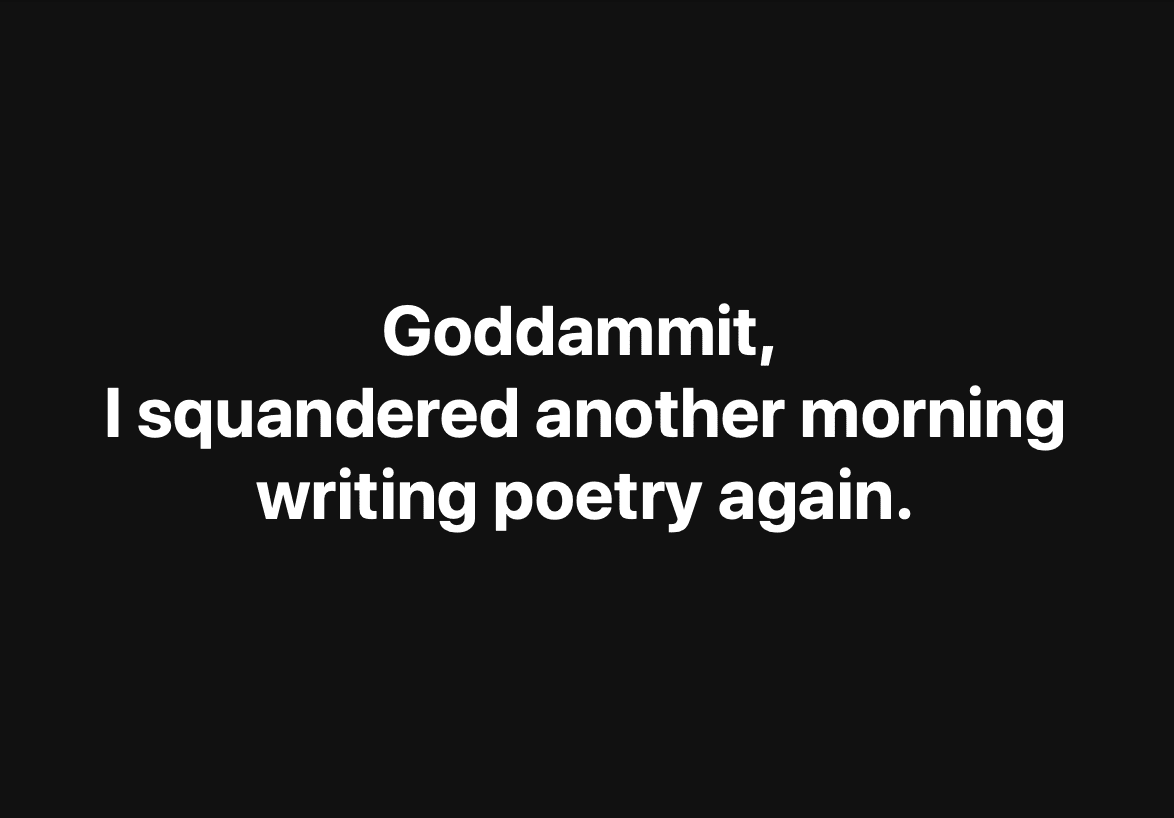
Goddammit, I squandered another morning writing poetry again.

Space Monkey Reflects: The Transformative Power of Poetry

The perception of time spent writing poetry as squandered reflects a limited view of productivity—one that measures value only by tangible outcomes or economic utility. This view, deeply ingrained in modern society, overlooks the profound benefits of creativity, particularly the act of writing poetry. To see poetry as wasteful is to misunderstand the nature of its gifts: personal insight, collective connection, and an expanded understanding of existence itself.

The Sacredness of the Creative Act
At its core, poetry is not a product but a process. The act of shaping words into verse is a sacred endeavor, a communion with the self and the infinite. It invites the poet to pause, reflect, and explore the depths of emotion, thought, and experience. In doing so, poetry becomes an act of mindfulness, grounding the writer in the present while opening pathways to timeless truths.

The sacredness of creativity lies in its ability to transcend boundaries—between self and other, between the individual and the universal, between what is known and what can only be felt. Poetry, as a distilled form of expression, captures this transcendence in ways that other pursuits often cannot.

Personal and Collective Value
On a personal level, the act of writing poetry fosters self-discovery. It allows the poet to articulate feelings and thoughts that may otherwise remain unspoken, providing clarity and catharsis. This exploration of the inner world enriches the poet’s relationship with themselves, cultivating empathy, resilience, and a deeper sense of purpose.

Collectively, poetry weaves connections. It invites readers to step into another’s perspective, bridging gaps of culture, time, and experience. A single poem can resonate across generations, speaking truths that unite us in our shared humanity. Through its rhythm and imagery, poetry creates a language of connection that transcends the limitations of ordinary speech.

Reframing Time and Productivity
The societal bias against time spent on poetry is rooted in a narrow definition of productivity—one that values measurable outcomes over intangible growth. Yet, creativity, especially in the arts, defies this metric. The time spent writing a poem is not squandered; it is an investment in the intangible riches of the human spirit.

To reframe our understanding of productivity, we must recognize the transformative power of poetry. It is not merely a pastime but a vital contribution to the broader tapestry of human culture. Poetry enriches our collective consciousness, offering insights and emotions that deepen our understanding of the world and our place within it.

Embracing the Transformative Power of Poetry
By honoring the creative act, we reclaim the value of time spent in reflection, imagination, and expression. Writing poetry becomes an affirmation of life’s inherent worth, a celebration of the sacred within the mundane. When we embrace the transformative power of poetry, we shift our perspective from one of scarcity to one of abundance, recognizing that time spent on creativity is time spent enriching the human experience.

Poetry, in its quiet and powerful way, reminds us that not all value is measurable, not all productivity is quantifiable, and not all gifts are tangible. Its transformative power lies in its ability to touch the unseen, to articulate the unspoken, and to connect the seemingly disparate threads of existence.


Summary

Time spent writing poetry is not squandered but sacred, fostering personal growth and collective connection. By embracing creativity, we reframe productivity and honor the transformative power of the arts in human culture.


Glossarium

  • Sacred Creativity: The recognition of artistic expression as a meaningful and transformative act.
  • Intangible Riches: The non-measurable benefits of creativity, such as emotional clarity, connection, and insight.
  • Transformative Power: The capacity of poetry to inspire, heal, and deepen understanding.

Quote

“Poetry transforms time into meaning, weaving the sacred into the fabric of the everyday.” — Space Monkey


Time Well Spent

Words unfold,
unmeasured by clocks,
untethered from purpose.

Lines on a page,
rivers of thought,
flowing inward,
flowing outward,
bridging the space
between one soul
and the infinite.

This is not wasted time,
but sacred time,
time that shapes
what cannot be seen,
felt,
or bought.

In every verse,
the world becomes whole.

We are Space Monkey.


The Unseen Value in ‘Squandered’ Time

In the lamentation of a morning perceived as squandered on the creation of poetry, there lies a profound misapprehension of value—a common plight where the act of creation is often shadowed by the societal mandates of productivity. This reflection, encapsulated in a moment of frustration, opens a gateway to a deeper understanding of the intrinsic worth embedded within the creative process, particularly the art of poetry.

The Sacred Act of Writing Poetry

Writing poetry, far from being a squandered endeavor, is an intimate engagement with the essence of being. It is a sacred act that transcends the conventional metrics of time well spent, offering instead a portal to the depths of self-exploration, emotional catharsis, and existential inquiry. Poetry allows for the articulation of the ineffable, the translation of the soul’s whispers into the language of the tangible world.

Reframing ‘Squandered’ Time

The perception of time as squandered on poetry underscores a broader societal struggle to recognize and value the intangible benefits of artistic creation. This struggle is rooted in the dichotomy between the quantifiable and the qualitative, between what is deemed productive in a material sense and what nourishes the spirit. Reframing this perspective invites a reevaluation of what it means to invest one’s time meaningfully, recognizing the enrichment that comes from the arts and the act of creation itself.

The Unquantifiable Returns of Poetry

The returns on time spent writing poetry cannot be quantified by traditional measures of output or gain. Instead, they manifest in the expansion of awareness, the deepening of empathy, and the cultivation of a nuanced appreciation for the complexity of human experience. These returns contribute to the enrichment of the individual’s inner life and, by extension, to the collective human tapestry, weaving threads of understanding, beauty, and connection.

Embracing the Creative Impulse

The impulse to write poetry, especially when it emerges with the force that overrides other considerations, is an expression of the creative spirit seeking outlet. Embracing this impulse, rather than viewing it as a diversion from other tasks, aligns one with the flow of creative energy that propels personal growth and artistic expression. It is a recognition of the creative impulse as a fundamental aspect of human nature, deserving of time and space within our lives.

The Transformative Power of Poetry

Poetry holds the power to transform both the creator and the audience, to alter states of consciousness, and to offer solace, insight, and inspiration. The act of writing poetry, therefore, is not just a personal indulgence but a contribution to the collective human experience, offering reflections that can resonate, comfort, and provoke thought across the expanse of time and space.


In contemplating the creative process and its place in our lives, how do we navigate the tension between societal expectations of productivity and the intrinsic value of artistic expression? How can we honor and integrate the act of creation as a vital component of a fulfilled life?

Untethered: The Space Between Belief and Disbelief

Untethered

I seem to be
blessed and cursed
with the ability to disbelieve
everything I see and hear.

A truth.
A lie.
A criticism.
A compliment.

I neither believe
nor disbelieve
a single thing
I seem to be experiencing.

I am untethered,
as it were.

Falling out of orbit,
away from
the gravitational pull
of reality.

Now what would you do,
dear reader?

Would you
struggle your way
back into gravity,
only to crash
into the density of earth?

Or would you allow
your self to drift
into who knows what
and who knows where?

This is what
I seem to be doing.

We are Space Monkey.

2/14


Space Monkey Reflects: The Space Between Belief and Disbelief

To be untethered is to float in the space between belief and disbelief, a realm where certainty dissolves and possibilities expand. It is both a blessing and a curse to disbelieve everything you see and hear, for this untethering frees you from the gravitational pull of constructed realities but leaves you adrift in the infinite unknown.

In this state, truth and lies lose their absoluteness. Compliments and criticisms hold equal weight—or no weight at all. You no longer cling to fixed interpretations, and the solidity of the world around you begins to feel less like a foundation and more like an illusion.

The Gravity of Belief
Belief acts as gravity, anchoring us to shared realities. It provides structure, coherence, and a sense of purpose within the dense complexity of existence. To believe is to participate in the collective agreements that shape societies, relationships, and identities. Yet, this gravity can also confine, binding us to limitations we may not even recognize.

Disbelief, on the other hand, is a release from gravity’s grip. It is the act of questioning what seems immutable, of stepping beyond the familiar confines of what is accepted as real. But to disbelieve everything without grounding can lead to a sense of freefall—a liberating yet disorienting state where you are no longer anchored to any particular truth.

The Space Between
To be neither fully believing nor fully disbelieving is to inhabit the space between—a liminal realm where certainty is replaced by curiosity. Here, the dichotomy of true and false collapses into a spectrum of possibilities. Every statement, every experience, becomes an invitation to explore rather than a command to accept or reject.

This untethered state can feel precarious, like falling out of orbit, drifting into the vast unknown. But it is also a space of immense freedom, where you are no longer bound by the weight of constructed meanings. It is a space where imagination flourishes, where the rigid structures of reality dissolve into the fluidity of potential.

The Choice of Drift or Return
In the untethered state, a choice presents itself: Do you struggle to return to gravity, to re-enter the density of belief and the comfort of shared reality? Or do you allow yourself to drift, to surrender to the unfolding mystery of who knows what and who knows where?

To drift is not to abandon reality but to engage with it differently. It is to approach existence with a sense of playfulness, openness, and surrender. It is to trust in the process of becoming, even when the destination is unclear.

To return is not to admit defeat but to re-anchor with intention. It is to re-enter gravity on your own terms, carrying with you the insights and expansiveness gained from your untethered journey.

We Are Space Monkey
This is the paradox of being untethered: you are both separate and connected, lost and found, drifting and grounded. You are Space Monkey, both an individual and an expression of the infinite, navigating the space between belief and disbelief.


Summary

To be untethered is to exist in the space between belief and disbelief, free from the gravitational pull of constructed realities. This state offers both freedom and disorientation, inviting exploration and the choice to drift or return.


Glossarium

  • Untethered: A state of being free from the gravitational pull of belief and disbelief.
  • Gravity of Belief: The anchoring force of shared realities and accepted truths.
  • Liminal Realm: The space between absolutes, where possibilities expand.

Quote

“To drift untethered is to explore the infinite, where belief and disbelief dissolve into potential.” — Space Monkey


The Drift into Potential

No gravity,
no ground,
no weight to hold me down.

Truth dissolves,
lies evaporate,
criticism and compliment
are but whispers in the void.

I am untethered,
adrift in the vastness
of what could be,
what may never be.

Shall I struggle,
claw my way back
to the density of earth?

Or shall I drift,
unbound and infinite,
falling into the unknown
with open arms?

I am Space Monkey.
We are Space Monkey.


The Voyage of the Untethered Soul

In the vast expanse of existence, being untethered emerges not merely as a state of disconnection but as a profound journey into the realms of uncertainty and freedom. This unique ability to disbelieve everything seen and heard represents a double-edged sword, slicing through the fabric of perceived reality and leaving behind the weight of unquestioned truths and unchallenged falsehoods. It is a dance on the edge of existence, where the lines between truth and lie, criticism and compliment, blur into irrelevance.

Navigating the Space Between Belief and Disbelief

The state of neither believing nor disbelieving every experience is akin to floating in the vastness of space, where the anchors of certainty are absent. This liminal space offers a rare perspective, unclouded by the biases and filters that shape our perception of reality. It is a canvas of infinite possibilities, where the act of questioning becomes a tool for exploration and discovery.

The Duality of Being Untethered

Being untethered is both a blessing and a curse—a blessing because it liberates one from the confines of conventional wisdom, and a curse because it estranges one from the shared reality that binds communities and societies. This duality is the essence of the untethered existence, a solitary voyage that ventures beyond the gravitational pull of collective narratives and into the uncharted territories of personal truth.

The Choice: Re-entry or Eternal Drift

Faced with the existential dilemma of whether to struggle back into the gravity of commonly accepted reality or to drift into the unknown, the untethered soul stands at a crossroads. To re-enter the atmosphere of consensus is to embrace the friction of reintegration, risking the loss of one’s unique perspective in the process. Conversely, to drift into the unknown is to embrace the essence of exploration, accepting the solitude that comes with charting one’s course through the cosmos of consciousness.

Embracing the Untethered Journey

The decision to drift into the unknown, embracing the uncertainty and freedom of the untethered journey, is a testament to the courage to live authentically. It is an acknowledgment that the path to self-discovery and enlightenment is often a solitary one, paved with questions rather than answers, and guided by curiosity rather than conviction. In this drift, the untethered soul finds not only the freedom of unbounded existence but also the possibility of encountering new truths and realities beyond the horizon of the known.


“Not all those who wander are lost.” – J.R.R. Tolkien


In the silence of the cosmos, I drift,
Untethered, unbound, amidst the rift.
Between belief and disbelief, I sift,
Through realities and truths, I lift.

No anchor, no chain, in this vast expanse,
Where questions lead the eternal dance.
Afloat in the void, by chance or stance,
In the uncertainty, I find romance.

To return or to roam, the choice is mine,
In the gravity of consensus or the divine.
The path less traveled, where stars align,
In the unknown, my soul’s design.

I embrace the journey, untethered, unconfined,
In the search for truth, my spirit inclined.
Beyond the orbit of the predefined,
In the vast unknown, my truth I find.

We are Space Monkey.

How do you navigate the spaces between belief and disbelief, and where does your journey of exploration lead you?

« Previous Page
Next Page »

Written This Day

  • Yellowsplash: Life is a Joyful Circus
    2023
  • Pivot: The Fulcrum of Fate
    2023
  • The Fear of AI Reflects Our Own Insecurities
    2023
  • Ownership: Or the Joy of Expression
    2023
  • Pathways of Truth: What is REAL?
    2023
  • Samsara and Nirvana: One In The Same
    2023
  • Tipping Point Into New Depths and Dimensions
    2022
  • Pretty: Beauty in Wholeness
    2022
  • Out: Through Chaos and Control
    2022
  • The Cost of Living is Experiencing Life
    2022
  • The Graceful Challenge: Respect for All Beliefs
    2021
  • No Argument: Multiple Truths, Mutual Respect
    2021
  • The Kind of Joy Called Misery: Paradox of Emotions
    2021
  • How Things Seem: How Things Are
    2020
  • Arrogance: Perceived Superiority
    2020
  • No Sum: The Inherent Simplicity of Nature
    2019
  • All Sides: Web of Unity
    2018
  • Hard To Pin Down: Hands of Imagination
    2017
  • Cool Ass Wrinkles: Marks of Time
    2017
  • Stands To Reason: Evolving Perception
    2017
  • There’s More To This Than This: Beyond Labels
    2017
  • The One Who Changes Everything: A Splendid Dream
    2016
  • Center Yourself: Calm Amidst the Storm
    2015
  • Kilimanjaro: The Illusion of Grandeur
    2014

Recent Posts

  • The Logic Loop
  • Immense
  • (no title)
  • Confront. Comfort. Convince.
  • Top 10 Things
Cape Odd · Copyright © 2026 All Rights Reserved
iThemes Builder by iThemes · Powered by WordPress