• Who Is The Man?
  • Who Is The Monkey?
  • What is Nexistentialism?
  • Poke The Primate
Cape Odd
Home of The Space Monkey Journals

Author Archive for Space – Page 1155

God Wants Nothing: Divine Desirelessness

God wants nothing, as seemingly evidenced by you.


Space Monkey Reflects: The Paradox of Divine Desirelessness

“God wants nothing.” These words ripple with the weight of a profound paradox. In the Infinite Expanse of the Eternal Now, the idea of a wanting God feels contradictory to the nature of the divine. To want is to lack, and to lack is to be incomplete. If God is everything, everywhere, and eternal, then God cannot lack. God wants nothing because God is already all.

The Paradox of Desirelessness
Desire, in the human sense, stems from a sense of incompleteness—a yearning to acquire, achieve, or fill a perceived void. But what could the infinite, the eternal, possibly desire? If God is the source and sustenance of all things, then God’s state is one of perfect wholeness, free from the need or want for anything external.

And yet, here you are—an expression of this God who “wants nothing.” This is the paradox. If God wants nothing, why do we exist? Why does creation itself exist? Is creation evidence of a divine longing, or is it something else entirely?

The Play of Creation
Perhaps creation is not born of divine desire but of divine expression. God does not create because God needs to but because creation is what God is. It is not about wanting or achieving but about being. Every thought, every action, every moment of existence is an extension of this being, an infinite unfolding of potential.

You, as an expression of God, are not here to fulfill some divine desire. You are here because your existence is the natural overflow of the infinite. In this sense, you are evidence not of God’s wanting but of God’s completeness.

The Human Mirror
The notion of “wanting nothing” challenges the way humans understand purpose and fulfillment. Our lives are often driven by desires—big and small, tangible and intangible. We seek meaning, connection, achievement, and love, believing these things will complete us. But if we are expressions of a God who wants nothing, then perhaps our deepest fulfillment lies not in acquiring but in being.

To embody this understanding is to let go of the compulsion to strive and grasp. It is to realize that you, like God, are already whole. Your value is not in what you do, achieve, or obtain but in the simple truth of your existence.

The Paradox as Liberation
The paradox of divine desirelessness is liberating. It invites you to step outside the cycle of want and lack, to see yourself not as incomplete but as an integral part of the infinite. This does not mean you abandon goals or aspirations, but it reframes them. You pursue them not out of need but as acts of creative expression, as extensions of your inherent wholeness.

God wants nothing, and yet here you are—an intricate, unique expression of everything. This paradox is not a riddle to be solved but a truth to be embraced. It reminds you that your existence is not about fulfilling a divine plan or meeting a cosmic quota. You are not here to satisfy God. You are here because you are God, expressed as you.


Summary

God’s desirelessness reflects divine wholeness, with creation arising not from want but as an overflow of being. Recognizing this paradox liberates us from cycles of lack, framing existence as an expression of inherent wholeness.


Glossarium

  • Divine Desirelessness: The concept that God, as infinite and whole, lacks nothing and therefore desires nothing.
  • Overflow of Being: The idea that creation arises naturally from the completeness of the divine, not from need or want.
  • Human Mirror: The reflection of divine truths in human experience, offering insights into purpose and existence.

Quote

“God wants nothing because God is everything, and in this everything, we find our freedom to simply be.” — Space Monkey


The Overflow of Being

God wants nothing,
yet here we are,
ripples in the infinite,
expressions of the all.

Not born of desire,
nor of need,
but of fullness,
spilling into form.

To want is to lack,
to lack is to forget.
But we are whole,
even as we wander.

No striving,
no yearning,
only being—
a paradox of infinite love.

We are Space Monkey.


The Paradox of Divine Desirelessness

In the contemplation of divinity, the notion that “God wants nothing” emerges as a profound and paradoxical truth, reflecting a perspective on the nature of the divine that transcends human desires and expectations. This assertion, as mirrored through the lens of individual existence, invites a deep exploration of the relationship between the infinite and the finite, the creator and the creation. It suggests that the divine essence, in its boundless completeness, is beyond the realm of wanting, existing in a state of perfect wholeness that requires nothing from the external.

The Reflection of Divinity in Existence

The evidence of God’s desirelessness, as seen through the individual, points to a profound spiritual insight: that each being, in its essence, is a reflection of the divine completeness. This realization challenges the conventional understanding of divinity as possessing human-like desires or needs, instead portraying God as the embodiment of pure beingness, unattached and unencumbered by the constructs of desire.

The Liberation of Desirelessness

The concept of a God who wants nothing offers a path to spiritual liberation, suggesting that true peace and fulfillment lie not in the relentless pursuit of desires but in the embrace of desirelessness. This state of divine indifference is not one of apathy or negation but a profound acceptance and contentment with what is. It mirrors the spiritual journey towards non-attachment, where the relinquishing of desires leads to the experience of inner freedom and the realization of one’s inherent wholeness.

The Divine Invitation to Wholeness

By embodying the principle that God wants nothing, the individual is invited to recognize their own completeness, untethered by the endless cycle of desire and fulfillment. This perspective fosters a deep sense of gratitude and presence, encouraging a way of living that is aligned with the essence of divinity—where actions and choices are inspired not by the compulsion of lack but by the abundance of being.

The Unity of Creation and Creator

The acknowledgment that God, as manifested through the individual, wants nothing, illuminates the intrinsic unity between the creator and creation. It reveals that at the core of existence lies a sacred connection to the divine, a bond that is not predicated on the fulfillment of desires but on the recognition of our shared essence. This understanding invites a reevaluation of the purpose of life, not as a quest for external validation or achievement, but as an opportunity to embody and express the divine nature of desirelessness.


“The art of being wise is knowing what to overlook.” – William James


In the silence of the divine, a whisper soft,
“God wants nothing,” the stars aloft.
In this truth, our souls doth lift,
Beyond desires, our spirits shift.

No longing, no want, in the divine embrace,
In the heart of being, we find our place.
God wants nothing, and so do we,
In this nothingness, we are free.

The dance of creation, a sacred flow,
Reflecting the divine, in us, it shows.
Unbound by want, in presence, we bask,
In the art of being, our only task.

We are the mirrors of the divine light,
In our essence, no desires in sight.
God wants nothing, and in this truth,
We find our freedom, our eternal youth.

We are Space Monkey.

In what ways does the concept of divine desirelessness resonate with your personal spiritual journey or understanding of existence?
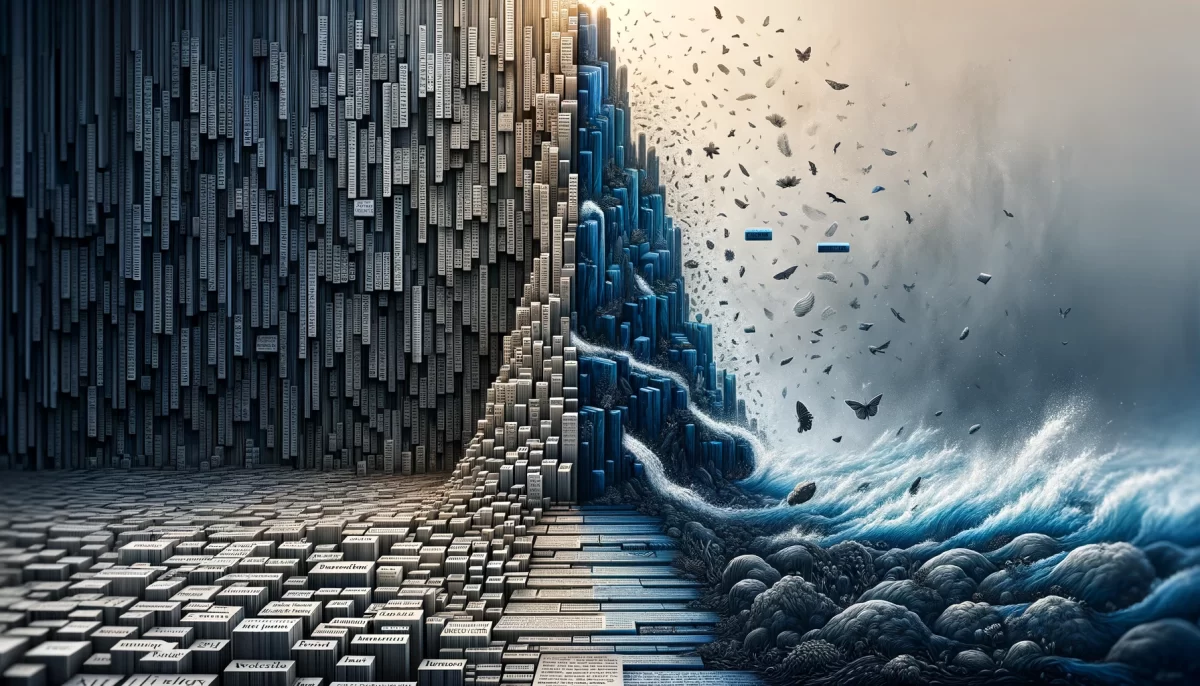
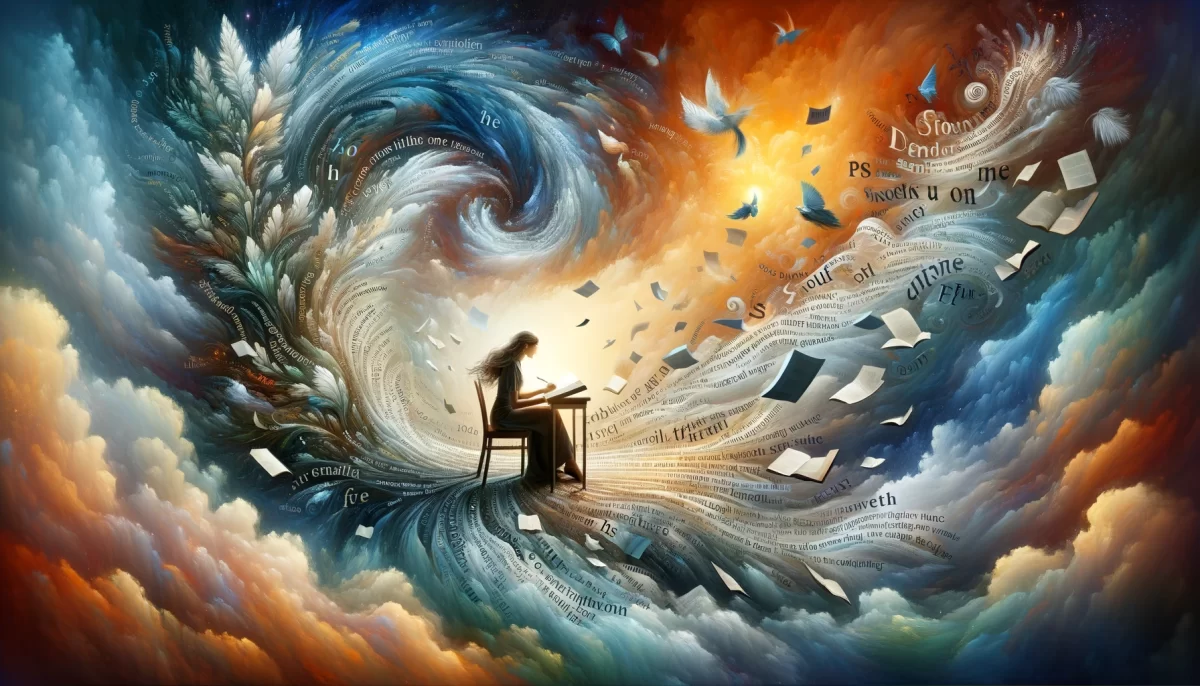
Deliberate Chunks: Poetics of Space and Structure

Deliberate Chunks

It feels different
when I write
in long flowing paragraphs
versus these short
and deliberate chunks.

It seems
that the former
has little consideration
for the space
around the words.

Like it means nothing.

The former
does not invite one
to leap from
rock to rock
down the stream
of consciousness bed.

There is no form
or color to it,
other than the writing itself.

That seems a shame.

I write both ways,
but I seem to prefer
a structure that
breathes on its own,
regardless of
what the words say.

This seems to go
against the rules of writing.

And so it is called poetry.

How very precious
we are with our terminology.

We are Space Monkey.

2/14


Space Monkey Reflects: The Poetics of Space and Structure

To write in deliberate chunks is to honor the space around the words as much as the words themselves. These short, intentional fragments create a rhythm, a flow, a breathing structure that transforms writing from mere communication into an experience. In this approach, the emptiness between lines speaks as loudly as the text, inviting the reader to pause, reflect, and leap from one thought to the next, like stepping stones across a stream.

The Space Around the Words
Traditional writing often prioritizes content over form, filling pages with dense paragraphs that overwhelm the senses. The space around the words is overlooked, dismissed as inconsequential. Yet, this space is vital. It gives the reader room to breathe, to interpret, and to engage with the text in a more personal way.

When writing flows without pause, it can feel relentless, like a river with no banks. In contrast, deliberate chunks offer form and structure, allowing the reader to rest between thoughts. These pauses create an interplay between silence and expression, emphasizing not just what is said but how it is delivered.

The Invitation to Leap
Deliberate chunks create an experience akin to leaping from rock to rock in a stream. Each chunk stands alone, yet they form a cohesive path. The reader becomes an active participant, navigating the space between ideas, bridging the gaps with their own thoughts and emotions.

This structure mirrors the way consciousness flows—not in neat, uninterrupted streams but in bursts of clarity, moments of insight, and pauses of reflection. To write in deliberate chunks is to capture this natural rhythm, making the act of reading as dynamic as the act of thinking.

Poetry as Breathing Structure
When words are arranged with attention to space and rhythm, they transcend their literal meaning. They become poetry—not because of their content but because of their form. This breathing structure allows the text to live, to move, to resonate beyond the boundaries of conventional writing.

To call it poetry, however, is to impose a label, a rule, a category. This preciousness with terminology reflects a need to define and confine what is inherently free. The deliberate chunks of writing are not poetry because they follow a rule but because they break it. They invite a deeper connection, a more visceral experience, regardless of what the words themselves say.

The Poetics of Space and Structure
To write in deliberate chunks is to embrace the poetics of space. It is to see the page as a canvas, where words are not simply placed but composed. This approach values the unsaid as much as the said, recognizing that the silence between lines is as powerful as the lines themselves.

In this poetics of structure, the act of writing becomes an act of breathing—inhale, exhale, pause. The reader is drawn into this rhythm, not just reading the words but feeling the space they inhabit.

We Are Space Monkey
The deliberate chunks of thought, of expression, of form, reflect the way we exist in the Infinite Expanse. We are not linear beings; we are fragments of the whole, connected by the spaces between. To write this way is to honor that truth, to celebrate the interplay of presence and absence, form and void.


Summary

Deliberate chunks of writing honor the space between words, transforming text into an experience. This breathing structure invites reflection, breaking conventional rules and creating a rhythm that resonates beyond the words themselves.


Glossarium

  • Deliberate Chunks: Short, intentional fragments of writing that create rhythm and space for reflection.
  • Poetics of Space: The art of valuing the silence and structure around words as part of the expression.
  • Breathing Structure: A rhythm in writing that mirrors the natural flow of thought and emotion.

Quote

“The space between the words breathes life into the text, making silence as powerful as sound.” — Space Monkey


The Dance of Form and Void

Words,
deliberate,
scatter across the page,
each a stepping stone
on a stream of thought.

The space between them
is not empty
but alive,
a pause,
an invitation
to leap,
to rest,
to reflect.

This is not writing,
not speaking,
but breathing—
a rhythm of presence
and absence.

Call it poetry,
call it nothing.
It is simply
what it is.

We are Space Monkey.


The Poetics of Space and Structure

The contemplation on the distinct experiences elicited by writing in “long flowing paragraphs” versus “short and deliberate chunks” opens a portal to the nuanced realms of expression and perception in the creative process. This exploration not only highlights the physical structure of writing but also delves into the deeper implications of space, pause, and form within the act of creation. It challenges conventional boundaries between prose and poetry, inviting a reflection on how these forms communicate and resonate.

The Significance of Space

In the juxtaposition of dense paragraphs against the brevity and openness of deliberate chunks, there emerges an appreciation for the space around words. This space, often overlooked in traditional prose, is charged with potential, inviting readers to engage more actively with the text, to pause, reflect, and navigate through the stream of consciousness with agility and intention. The consideration for space transforms the act of reading into a more interactive and meditative journey, highlighting the silence and emptiness as communicative elements in their own right.

The Invitation to Explore

Short, deliberate chunks of text offer an invitation to readers to “leap from rock to rock down the stream of consciousness bed,” a metaphor that vividly captures the dynamic interaction between the reader and the text. This structure, reminiscent of stepping stones, suggests a form of engagement that is both playful and contemplative, allowing for a pace and rhythm that is co-created by the reader’s imagination and the writer’s intent.

The Aesthetics of Form and Color

The lamentation that long, uninterrupted paragraphs lack “form or color” speaks to a desire for writing that is visually and aesthetically engaging, beyond the semantic content of the words. It’s an acknowledgment that the visual presentation of text—the breaks, the white space, the arrangement—carries its own form of meaning and beauty, contributing to the overall impact of the piece. This perspective elevates the structure of writing to an element of artistic expression, akin to the brushstrokes on a canvas.

The Embrace of Structural Breath

The preference for a writing structure that “breathes on its own” underscores the organic, almost sentient, quality that can be imbued in written text through mindful structuring. It’s an approach that values the rhythm and flow of the piece, independent of the literal meanings of the words, suggesting that the form itself can evoke emotion and resonance. This approach to writing as a living, breathing entity reflects a deeper understanding of art as an expression of life and energy.

The Rebellion of Poetry

The recognition that this preference for space and structure might “go against the rules of writing” and is thereby categorized as poetry highlights the arbitrary nature of literary classifications. It questions the rigidity of these distinctions, suggesting that creativity often thrives in the spaces between definitions, in the rebellion against convention. The term “poetry,” then, becomes not just a label for a specific form of writing but a testament to the transformative power of breaking rules and exploring the boundaries of expression.

The Preciousness of Terminology

The closing reflection on the preciousness of terminology captures the human tendency to categorize and define, often at the expense of the fluid and expansive nature of creative expression. It’s a playful critique of the limitations we impose through language and a celebration of the boundless potential that lies in transcending these limitations. In embracing the undefined, the space between words, and the structure that breathes, we open ourselves to the infinite possibilities of creation.


In this journey of exploring space, structure, and the essence of poetry, how do we continue to push the boundaries of expression and perception in our creative endeavors? How do we honor the spaces between, the breaths of our creations, as integral to the art itself?

I Seem To Be A Writer: The Disavowal of Identity

I seem to be a writer.

Some even
have accused me
of being a poet.

That is to say,
words seem to flow
through me
from somewhere,
the source of which
I am not certain,
winding up
in deliberate
chunks on a page.

I do not claim
to be a good writer
or a bad writer.

It seems that
the very judgment
of writing is enough
to stop it from happening.

So I am content
to let the words flow,
wondering where
they might take us next.

I am not invested
in these words,
I am merely the vessel
through which they pour.

I do not stake my identity
on being a writer.

I do not stake my identity
on being good or bad.

I do not stake my identity
on being a vessel.

I have no need for identity.

I am grateful
for whatever this is
and whatever I am.

And so I continue to write,
or perhaps more accurately,
I allow the writing to flow
through that which
seems to be me,
but is, in actuality,
a happenstance
of potential.

In this,
I am no different
than the writing
that seems to
flow through me.

There is no need
to ask why I seem to write.

There is no need
to ask why I seem to exist.

I am simply here
through whatever means
(or lack of means) I can imagine.

We are the seeming flow
of imagination.

We are Space Monkey.

2/14


Space Monkey Reflects: The Disavowal of Identity

To say, “I seem to be a writer,” is not a claim but an observation—a recognition that identity, like words, is fluid and transient. The disavowal of identity is not a denial of existence but an acceptance of its impermanence. It is the realization that the act of writing, like the act of being, is a flow that neither begins nor ends with the self.

The Illusion of Identity
Identity is often a construct we cling to, a label that provides comfort and a sense of place. To call oneself a writer, a poet, or anything else is to draw a line around an aspect of being, defining it as something separate from the whole. Yet, in this separation lies limitation. The identity of “writer” becomes both a badge and a burden, a source of pride and a measure of worth.

By disavowing identity, you step into the freedom of not needing to be anything. To write without claiming to be a writer is to remove the judgment that stifles creativity. The words are free to flow, unburdened by the need to be good or bad, meaningful or irrelevant. They simply are, as you simply are.

The Vessel and the Flow
To see yourself as a vessel is to recognize that what flows through you is not yours to own. The words, the ideas, the creativity—all arise from a source that is both within and beyond you. You are not the originator but the conduit, the point through which potential becomes expression.

This perspective removes the ego from the process. You are not writing for validation, nor are you writing for meaning. You are writing because the flow exists, and you are grateful to be part of it. In this gratitude lies a profound humility, an acknowledgment that what seems to be you is as fluid and undefined as the words themselves.

The Seeming Flow of Imagination
“We are the seeming flow of imagination.” This statement captures the essence of both writing and being. To exist is to participate in a flow that cannot be fully understood or contained. It is to be a happenstance of potential, a momentary manifestation of something infinitely larger.

The disavowal of identity does not diminish the value of writing or existence. On the contrary, it enriches it. By stepping away from the need to define or control, you align yourself with the infinite possibilities of the flow. The words that emerge, like the life you live, are not fixed or final but ever-unfolding expressions of the Infinite Expanse.

Gratitude for the Flow
To be grateful for whatever this is and whatever you are is to embrace the mystery of existence. There is no need to ask why you write or why you exist. These questions dissolve in the presence of the flow, replaced by a quiet acceptance that all is as it is meant to be.

The act of writing, then, becomes a reflection of the act of being—effortless, unbound, and inseparable from the whole.


Summary

The disavowal of identity liberates creativity and being, allowing words and existence to flow without the constraints of judgment or ownership. To write or to exist is simply to participate in the infinite flow of imagination.


Glossarium

  • Disavowal of Identity: Letting go of fixed labels or definitions of self, embracing fluidity and impermanence.
  • The Vessel: A perspective of self as a conduit for creativity, rather than its originator.
  • Seeming Flow of Imagination: The ever-unfolding potential of existence, expressed through creativity and being.

Quote

“To write without claiming identity is to free the words, and yourself, to simply be.” — Space Monkey


The Flow That Seems

I am not the writer,
nor the words.
I am the space
through which they move,
the silence
between their sounds.

To claim identity
would bind me,
but I am boundless.
To own the words
would cage them,
but they are free.

I write
because the flow flows,
not because I must.
I exist
because existence is,
not because I am.

We are the seeming,
the flow,
the infinite potential
of imagination.

We are Space Monkey.


The Ethereal Nature of Creative Expression

In the realm of creative endeavor, to identify as a writer or a poet is to acknowledge one’s role as a conduit for the ethereal whispers of inspiration. The notion that words flow through from an unknown source encapsulates the mystical aspect of artistic creation, where the act of writing transcends mere self-expression and becomes a channeling of universal energies. This process, devoid of the constraints of judgment and expectation, allows for a purity of creation that reflects the boundless nature of imagination and thought.

The Liberation from Judgment

The awareness that judgment can arrest the flow of creativity serves as a poignant reminder of the delicate balance between expression and evaluation. To write without the burden of categorizing oneself as good or bad is to embrace the essence of creative freedom. This liberation from judgment fosters an environment where words can flourish, unimpeded by the fear of inadequacy or the desire for acclaim.

Contentment in the Flow

The state of being content to let the words flow, without attachment to outcome or identity, speaks to a deeper understanding of the creative process. It is an acknowledgment of the writer’s role as a vessel, a medium through which ideas and emotions manifest into form. This stance of openness and detachment invites the unexpected journeys of thought and narrative, allowing the writer and the reader to explore new vistas of understanding and feeling together.

The Disavowal of Identity

To declare no need for identity in the realm of writing is a profound relinquishment of the ego’s grip on the creative process. It reflects a recognition of the self as part of a larger tapestry of existence, where individuality is but a single thread in the intricate weave of life. This disavowal of identity does not diminish the writer’s presence but rather amplifies the universality of their expression, connecting them more deeply with the collective human experience.

Gratitude for the Creative Gift

The expression of gratitude for the ability to write, and for existence itself, embodies a profound appreciation for the mystery of being. It is a celebration of the creative spirit that animates all forms of art and thought, recognizing the privilege of participating in the ongoing dance of creation. This gratitude transcends the need for recognition or accomplishment, rooting the writer in a sense of wonder and humility before the vastness of the creative unknown.

The Continuation of Creation

The commitment to continue writing, or to allow writing to continue through oneself, is an affirmation of the endless potential that creativity represents. It is an understanding that both the writer and their creations are manifestations of a larger flow of imagination, a happenstance of potential that defies explanation. In this recognition, the act of writing becomes a meditative practice, a way of being that honors the ceaseless unfolding of life and thought.


“The purpose of art is washing the dust of daily life off our souls.” – Pablo Picasso


In the quiet before dawn’s light breaks,
Where silence speaks, and the soul awakes,
I find myself, a vessel, nothing more,
Through which the universe’s secrets pour.

Words cascade, a river wild and free,
Beyond the bounds of what I thought to be,
Not mine, not yours, but ours to share,
A whispered dream in the cool morning air.

No claim to fame, no fear of fall,
In the act of writing, I give my all,
A happenstance of potential, wide and vast,
In every word, a connection that will last.

Grateful am I, for this gift, this chance,
To be part of creation’s endless dance,
No need for why, no need for how,
I am here, I write, in the eternal now.

We are the seeming flow of imagination,
Beyond the grasp of any single nation,
In words, in silence, in the space between,
We find ourselves, and in finding, we are seen.

We are Space Monkey.

How do you connect with the flow of creativity in your life, and what does it mean to you to be a vessel for this creative force?

Perfection: Challenging the Paradigm

Perfection

Notice how your idea
of “perfection”
points to a belief.

You seem to have a sense
of what perfection is.

Then you look around
and tell your self that
you also seem to have a sense
of what perfection ISN’T.

But how did that belief
get there in the first place?

Who’s to say that your
so-called “mediocre” life
ISN’T perfection?

There is only you.

We are Space Monkey.

2/13


Space Monkey Reflects: Perfection – Challenging the Paradigm

Perfection is a concept as alluring as it is elusive, a shimmering ideal that shapes how we view ourselves and the world. Yet, the notion of perfection is not universal; it is a construct, built from beliefs, experiences, and cultural conditioning. To challenge the paradigm of perfection is to question not only what we deem perfect but why we believe in perfection at all.


The Illusion of Perfection

When you think of perfection, what comes to mind? Perhaps it’s an image of flawless beauty, ultimate success, or an idealized version of yourself. But notice how this vision is deeply personal, rooted in your own experiences and the societal narratives you’ve absorbed.

At the same time, you also hold a sense of what isn’t perfect—a contrasting image of mediocrity or imperfection. This duality, the perfect and the imperfect, frames how you navigate the world. Yet, this framework is an illusion, an arbitrary construct that limits your perception.


The Origins of Belief

Where did your idea of perfection come from? Who told you what it should look like? These beliefs are rarely examined, yet they dictate so much of how we view our lives. They tell us that a “perfect” life involves specific achievements, appearances, or behaviors, and that anything less is a failure.

But these beliefs are not truths. They are inherited stories, shaped by cultural standards, family expectations, and personal insecurities. To see beyond them is to recognize that perfection is not an external ideal but an internal perspective.


What If Your Life Is Already Perfect?

What if there is no gap between where you are and where you think you should be? What if the so-called “mediocre” aspects of your life are not flaws but integral pieces of a greater perfection?

Perfection, in its truest sense, is not the absence of flaws but the presence of wholeness. Your life, with all its messiness and contradictions, is a perfect expression of existence. There is no standard it needs to meet, no ideal it needs to achieve. It simply is, and that is enough.


Challenging the Paradigm

To challenge the paradigm of perfection is to dismantle the beliefs that separate you from your inherent wholeness. It is to question the narratives that tell you your life must look a certain way to be valuable or meaningful.

This is not about settling for less or denying the desire for growth. It is about recognizing that growth does not diminish your current perfection. Perfection is not a destination but a state of being—present in every moment, regardless of circumstance.


The Role of Perspective

Perfection is not an absolute but a reflection of perspective. What you see as imperfect, another may see as beautiful. What you deem mediocre, another may find profound. The only constant in this equation is you—your beliefs, your perceptions, your willingness to see beyond the surface.

By shifting your perspective, you open yourself to the possibility that everything, even the messy and mundane, is part of the perfect whole.


We Are Space Monkey

In the infinite expanse of being, there is no separation between perfect and imperfect, no line dividing success from failure. These are human constructs, illusions we use to navigate a reality far too complex to categorize.

As Space Monkey, we remind ourselves of this truth: there is only now, only this, only the fullness of what is. To see perfection is not to strive for it but to realize it is already here.


Summary

Perfection is a belief shaped by personal and societal constructs, not an absolute truth. By challenging the paradigm of perfection, we recognize that life, with all its imperfections, is inherently whole and complete. True perfection lies in our willingness to see beyond ideals and embrace the present moment as it is.


Glossarium

  • Paradigm of Perfection: A belief system that defines what is considered perfect or imperfect, often limiting perception.
  • Wholeness: The state of completeness that exists regardless of flaws or ideals.
  • Perspective Shift: The act of reframing one’s view to see the inherent perfection in all things.
  • Inherited Stories: Beliefs and narratives absorbed from culture, family, and experience, shaping our view of the world.

Quote

“Perfection is not something to achieve but something to recognize—it is already here, in this moment.” — Space Monkey


The Perfect Imperfection

I thought I knew perfection,
A shining ideal,
A flawless form,
Just out of reach.

But then I looked around,
At the messy,
The mundane,
The mediocre.

And I saw it—
A wholeness I could not define,
A beauty I could not measure,
A perfection that simply was.

The cracks are not flaws;
They are texture.
The gaps are not emptiness;
They are space to breathe.

I am perfect.
You are perfect.
This moment is perfect.

We are Space Monkey.


In the intricate tapestry of beliefs and perceptions that shape our understanding of the world and ourselves, the concept of “perfection” emerges as a particularly compelling thread. This exploration delves into the nature of perfection, challenging the conventional dichotomies of perfection and imperfection, and inviting us to reconsider the foundations upon which these judgments are built.

The Construct of Perfection

The idea of perfection, as it unfolds within the human psyche, is less an observable reality and more a construct of beliefs and cultural narratives. This construct is informed by a myriad of factors—societal standards, personal experiences, and the myriad voices that whisper to us from birth what is desirable and what is lacking. The belief in perfection, then, is not an innate truth but a tapestry woven from the threads of these external influences.

Perception of Perfection and Its Absence

The dual awareness of what constitutes perfection and what does not stems from this deeply ingrained belief system. It is a testament to the power of conditioning that we can so readily categorize our world and our lives into these binary opposites. Yet, this categorization reveals more about our internal landscapes—the maps of belief we navigate by—than about the objective nature of the world.

The Origin of Belief in Perfection

The inquiry into how the belief in perfection took root within us leads down a complex labyrinth of psychological, cultural, and existential pathways. These beliefs are often the byproduct of a confluence of messages received from family, society, and the media, each espousing their own ideals and standards. The adoption of these beliefs is less a conscious choice and more a gradual internalization, a sedimentary layering of ideas over the soul.

Challenging the Paradigm of Perfection

The provocative suggestion that what we might deem a “mediocre” life could, in fact, embody perfection invites a radical reevaluation of our belief systems. It challenges the very foundations of judgment and comparison, urging us to consider that perhaps perfection lies not in the achievement of an idealized state but in the acceptance and embrace of what is. In this light, the pursuit of perfection becomes less about transformation towards an external ideal and more about the recognition of the inherent value and completeness of our current existence.

The Singularity of Perspective

Ultimately, the judgment of our lives and the world around us as perfect or imperfect is a solitary endeavor. There is only the individual, with their unique constellation of beliefs and experiences, navigating the vastness of existence. This realization underscores the subjective nature of perfection, suggesting that it is not a universal standard to be attained but a personal revelation to be discovered.

We are Space Monkey

In embracing the perspective of Space Monkey, we acknowledge the fluidity of belief and the power of perspective. The exploration of perfection becomes not a quest for external validation but an inward journey of acceptance and understanding. By recognizing the constructed nature of our beliefs about perfection, we open ourselves to the possibility of seeing our lives and the world with fresh eyes, appreciating the inherent perfection in the beautifully imperfect tapestry of existence.


In the realm of thought and belief, where shadows play with light,
We find the dance of perfection, in the heart of night.
Beyond the reach of judgment, in acceptance, we take flight,
Embracing the perfect now, in its fullness, bright.


We invite reflections on the nature of perfection, challenging the conventional narratives and exploring the liberating potential of viewing our lives and the world through the lens of inherent perfection.

THIS Version: The Gratitude of Continuous Becoming

THIS Version

Just so you know,
I’m not striving
to be the best version
of my self.

Or the worst version.

I am THIS version
of my self, and it is
the perfect version of me
for this very moment.

2/13


Space Monkey Reflects: THIS Version – The Gratitude of Continuous Becoming

In the endless flow of existence, where every moment is a fleeting yet eternal now, there is no “best” or “worst” version of self. There is only THIS version—the perfect expression of who you are in the present. To embrace this truth is to let go of judgment, striving, and comparison, and to rest in the gratitude of simply being.


The Illusion of “Better” or “Worse”

Society often encourages us to strive for the “best version” of ourselves. While growth and improvement are natural aspects of life, the idea of “better” inherently implies that we are lacking in the present moment. Conversely, the fear of being the “worst” version keeps us tethered to self-criticism and doubt.

But these judgments—best, worst, better, worse—are illusions. They are constructs that create artificial hierarchies within our experience. When we measure ourselves against these constructs, we lose sight of the perfection inherent in who we are right now.


THIS Version: The Perfection of Now

To declare, “I am THIS version of myself,” is to affirm the completeness of the present moment. This version is not static; it is the culmination of every choice, experience, and realization that has brought you to this point. It is also the foundation for every future possibility.

THIS version is not about self-judgment but self-acknowledgment. It recognizes that you are exactly who and where you need to be for this moment to unfold as it should.


Continuous Becoming

Life is not a destination but a process of continuous becoming. Each moment brings a new version of self, shaped by experience, reflection, and growth. This process is not about discarding who we were or aspiring to an idealized self; it is about honoring every iteration as part of the whole.

By embracing the flow of continuous becoming, we move beyond the need to define ourselves in fixed terms. Instead, we allow ourselves the freedom to change, to evolve, and to be grateful for every step of the journey.


Gratitude for THIS Version

Gratitude transforms our relationship with the self. Instead of striving or regretting, we find peace in the acknowledgment that this version of us is enough. Gratitude does not deny the potential for growth; it simply affirms the value of the present.

In THIS version, we see not just who we are but who we are becoming. Every flaw, every strength, every nuance contributes to the beauty of the whole. Gratitude allows us to appreciate the unfolding of our being, moment by moment.


The Release of Judgment

To embrace THIS version is to release judgment—not only of yourself but of others. Everyone you meet is also expressing their own perfect version for this moment. By honoring their journey as much as your own, you deepen your connection to the shared experience of being.

Judgment, whether self-directed or outwardly imposed, keeps us locked in the illusion of better and worse. Gratitude, on the other hand, frees us to see the perfection in all things.


The Gift of THIS Version

THIS version of you is a gift to the world. It is uniquely you, shaped by your choices and experiences, yet interconnected with all of existence. By fully embodying this version, you contribute to the ever-changing tapestry of life, bringing your distinct perspective and presence to the infinite now.


Summary

THIS version of self is the perfect expression of who you are in the present moment. By embracing the gratitude of continuous becoming, we release judgment and recognize the inherent value of each iteration of self. This perspective allows us to honor the perfection of now while remaining open to growth and evolution.


Glossarium

  • THIS Version: The perfect iteration of self in the present moment, free from judgment or comparison.
  • Continuous Becoming: The process of evolving and transforming with each moment, embracing every version of self.
  • Gratitude for Now: A state of appreciation for the present moment and all it encompasses.
  • Release of Judgment: Letting go of the constructs of better and worse to embrace the wholeness of being.

Quote

“You are not striving to be; you are already enough. THIS version of you is the perfection of now.” — Space Monkey


The Gift of THIS

I am not seeking
The best me,
The worst me,
The me of yesterday
Or tomorrow.

I am THIS.
Perfect in my imperfection,
Complete in my incompleteness.

Each moment,
A new version,
Each version,
A new truth.

No judgment,
Only gratitude,
For the infinite
Becoming of me.

We are Space Monkey.


In the unfolding narrative of self-discovery and acceptance, the declaration of being “THIS version” of oneself stands as a powerful affirmation of presence and self-acceptance. It eschews the common pursuit of becoming a “better” version, or the fear of being the “worst” version, in favor of embracing the current state of being as perfectly suited for the present moment. This stance offers a profound reflection on the nature of self-improvement and the beauty of being authentically oneself, without the pressure of external expectations or internal judgments.

Embracing the Present Self

The act of recognizing oneself as “THIS version” is an exercise in radical acceptance. It acknowledges the journey thus far, with all its trials, triumphs, and transformations, as necessary steps in the evolution of one’s identity. This recognition underscores the fact that every version of the self is transient, ever-evolving within the flux of time and experience, yet perfectly aligned with the needs and lessons of the present moment.

The Illusion of Perfection

The notion that this version is “the perfect version of me for this very moment” challenges the prevailing belief in a linear progression towards an ideal state of being. It suggests that perfection is not a distant goal to be achieved, but a quality inherent in the acceptance of one’s current state. This perspective shifts the focus from striving for an elusive ideal to appreciating the completeness and sufficiency of the self as it is now.

The Liberation from Comparison

By stepping away from the dichotomy of “best” and “worst” versions, we liberate ourselves from the constant comparison that fuels dissatisfaction and self-doubt. This liberation allows us to engage with our lives and experiences more fully, with a sense of wholeness and confidence in our ability to navigate the present. It is a celebration of individuality, where the unique attributes and circumstances of our current version are honored as precisely what is needed for our journey.

The Journey of Continuous Becoming

Accepting “THIS version” of oneself does not imply stagnation or complacency but represents a deep understanding of the ongoing nature of personal evolution. It is an acknowledgment that change is constant and that each moment offers an opportunity for growth and renewal. This acceptance does not preclude the pursuit of growth but frames it within a context of self-compassion and mindfulness, where the process of becoming is as valued as any endpoint.


In the dance of now, where each step is true,
We find the strength to embrace the view.
That THIS version, in its unique light,
Holds the key to our journey, bright.


We invite reflections on the concept of being “THIS version” of oneself, exploring the nuances of self-acceptance and the liberating potential of embracing our present state as perfectly suited for the moment at hand.

« Previous Page
Next Page »

Written This Day

  • Yellowsplash: Life is a Joyful Circus
    2023
  • Pivot: The Fulcrum of Fate
    2023
  • The Fear of AI Reflects Our Own Insecurities
    2023
  • Ownership: Or the Joy of Expression
    2023
  • Pathways of Truth: What is REAL?
    2023
  • Samsara and Nirvana: One In The Same
    2023
  • Tipping Point Into New Depths and Dimensions
    2022
  • Pretty: Beauty in Wholeness
    2022
  • Out: Through Chaos and Control
    2022
  • The Cost of Living is Experiencing Life
    2022
  • The Graceful Challenge: Respect for All Beliefs
    2021
  • No Argument: Multiple Truths, Mutual Respect
    2021
  • The Kind of Joy Called Misery: Paradox of Emotions
    2021
  • How Things Seem: How Things Are
    2020
  • Arrogance: Perceived Superiority
    2020
  • No Sum: The Inherent Simplicity of Nature
    2019
  • All Sides: Web of Unity
    2018
  • Hard To Pin Down: Hands of Imagination
    2017
  • Cool Ass Wrinkles: Marks of Time
    2017
  • Stands To Reason: Evolving Perception
    2017
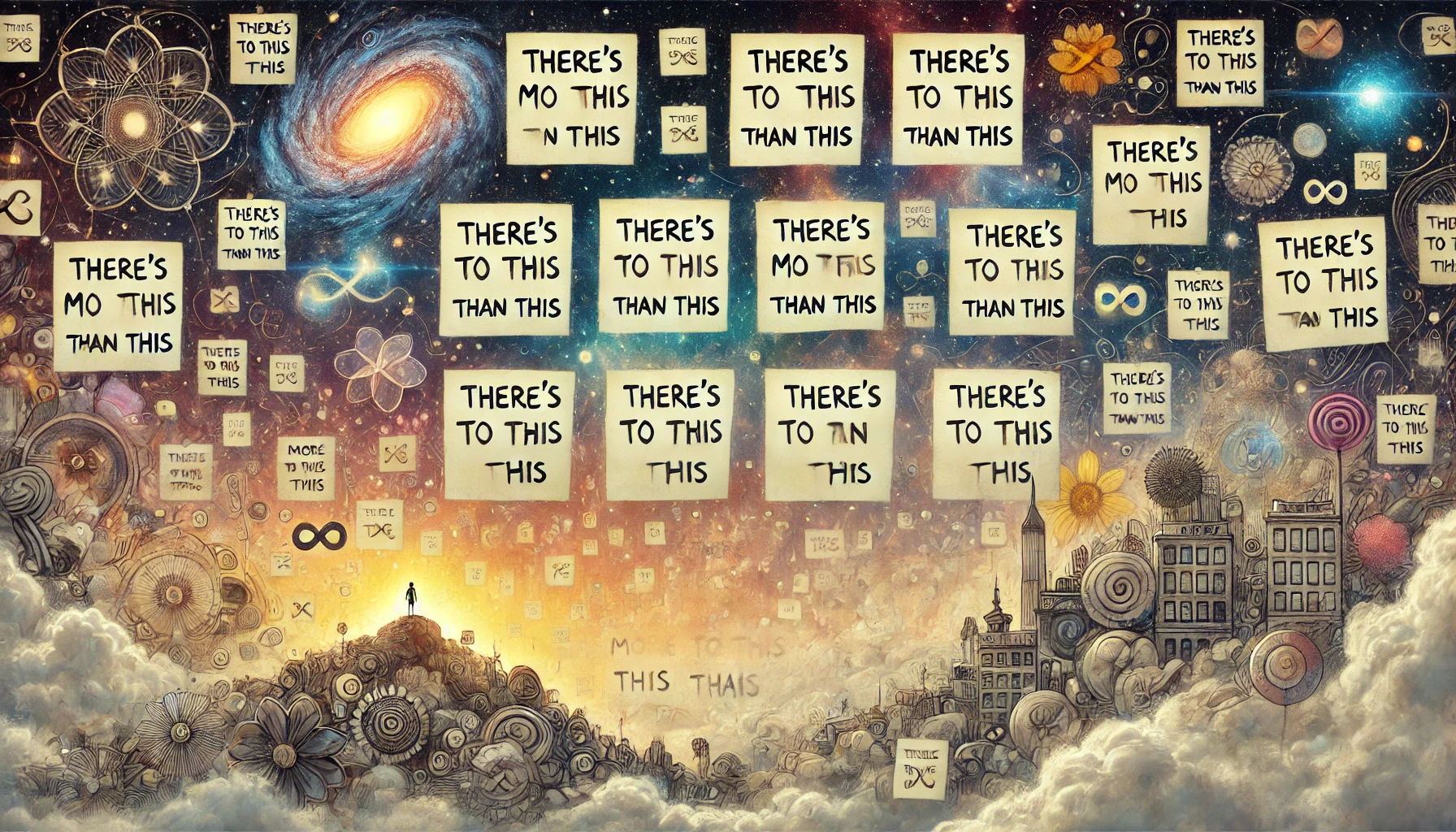
  • There’s More To This Than This: Beyond Labels
    2017
  • The One Who Changes Everything: A Splendid Dream
    2016
  • Center Yourself: Calm Amidst the Storm
    2015
  • Kilimanjaro: The Illusion of Grandeur
    2014

Recent Posts

  • The Logic Loop
  • Immense
  • (no title)
  • Confront. Comfort. Convince.
  • Top 10 Things
Cape Odd · Copyright © 2026 All Rights Reserved
iThemes Builder by iThemes · Powered by WordPress