• Who Is The Man?
  • Who Is The Monkey?
  • What is Nexistentialism?
  • Poke The Primate
Cape Odd
Home of The Space Monkey Journals

Author Archive for Space – Page 1156

Resonation: Beyond Agreement and Disagreement

Resonation

What if
instead of saying
“I agree”
or “I disagree”
we were to say
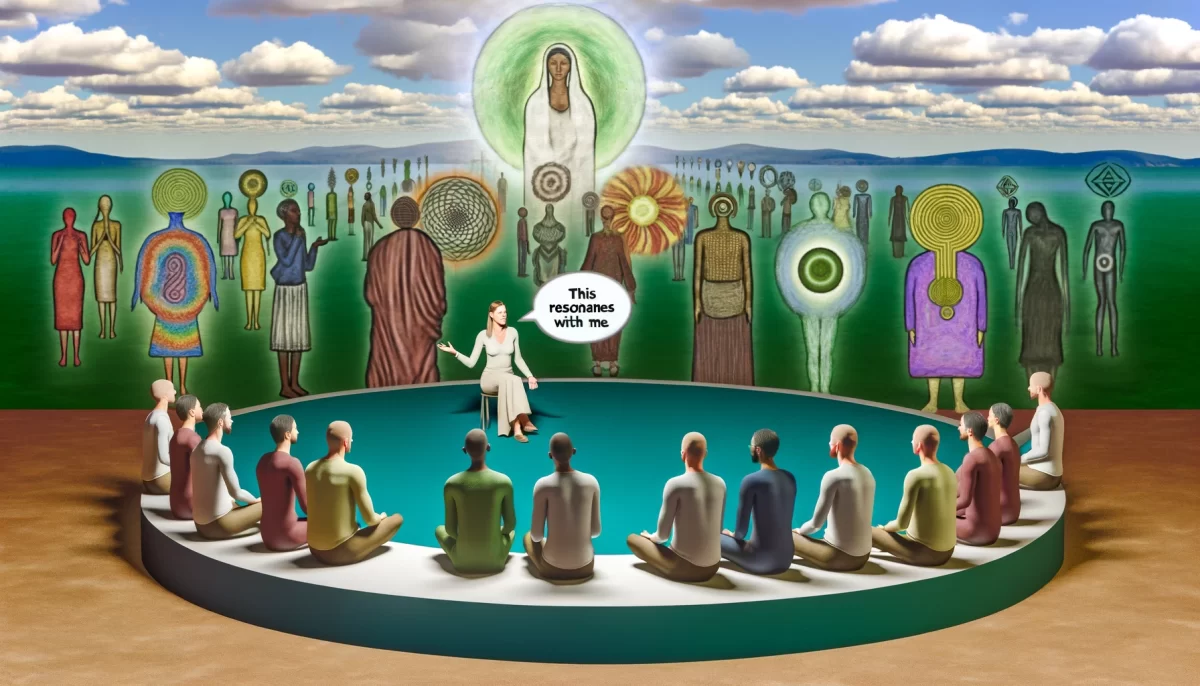
“this resonates with me”
or nothing at all?

It seems to me
that we don’t need
to agree with a perception
to resonate with it.

I seem to get
just as much
out of that which
seems not true for me
than that which
seems true.

Just because
we don’t seem
to share the same truths
doesn’t mean
our differing truths
can’t be enjoyed.

We don’t need
there to be only one truth.

This singular truth
seems rather small-minded,
but only in my small mind.

We are Space Monkey.

2/13


Space Monkey Reflects: Resonation – Beyond Agreement and Disagreement

In a world often divided into binaries—agree or disagree, true or false, right or wrong—the concept of resonation invites us to step beyond this dichotomy. To resonate with something is not to agree with it but to feel its vibration, to experience its presence, and to allow it to touch some part of our being, whether that part aligns with our own truth or challenges it. Resonation is an expansive way of engaging with ideas, perceptions, and each other.


The Limitation of Agreement and Disagreement

When we frame our interactions around agreement or disagreement, we limit the richness of our engagement. Agreement often feels affirming but can reinforce echo chambers. Disagreement, on the other hand, can create division or defensiveness. Both positions center on validating or rejecting a singular truth, leaving little room for exploration or nuance.

But what if we stepped beyond these constraints? What if, instead of asking whether something aligns with our existing beliefs, we asked how it resonates within us? Resonation shifts the focus from judgment to curiosity, from validation to experience.


Resonation as Connection

To resonate with something is to acknowledge its existence, its energy, and its potential to affect us. Resonation does not demand agreement; it invites openness. It allows us to engage with ideas, even those we find untrue or challenging, in a way that fosters growth and understanding.

For example:

  • A perspective you disagree with may still resonate by provoking thought, highlighting contrast, or revealing new layers of your own truth.
  • An idea that aligns with your beliefs resonates by deepening your connection to those beliefs.

Resonation transcends the need for shared truths, opening space for mutual enjoyment and exploration of differing realities.


The Multiplicity of Truths

The idea that there must be a singular truth is a limitation of the mind. While it can be comforting to believe in one absolute truth, this belief often leads to conflict when others assert their differing truths. But life, in its infinite complexity, does not adhere to a single narrative. Truth is multifaceted, fluid, and deeply personal.

When we embrace the multiplicity of truths, we allow for the coexistence of diverse perspectives. This does not mean abandoning our own truth; it means recognizing that other truths can exist alongside ours, enriching the tapestry of existence.


Learning from All Perspectives

Interestingly, the truths we resist or disagree with often hold as much value as those we embrace. A perception that feels “not true” to us may still resonate by offering contrast, challenging our assumptions, or illuminating blind spots. These moments of dissonance can be transformative if we approach them with openness.

Resonation teaches us that every perspective, whether aligned with our own or not, has the potential to expand our understanding. We don’t need to share a truth to appreciate its impact or enjoy its presence.


The Spaciousness of Resonation

Resonation creates spaciousness in our interactions. Instead of feeling the need to assert agreement or disagreement, we can simply let ideas be. This spaciousness fosters deeper connection, as it removes the pressure to defend or conform. It allows us to engage with authenticity and curiosity, exploring the infinite spectrum of human experience.


Summary

Resonation moves us beyond the binaries of agreement and disagreement, inviting us to engage with ideas through openness and curiosity. By embracing the multiplicity of truths, we expand our understanding and deepen our connection to the world. Resonation allows us to appreciate even those perspectives we resist, recognizing their value in shaping our growth.


Glossarium

  • Resonation: The experience of being affected by an idea or perception without the need to agree or disagree.
  • Multiplicity of Truths: The recognition that truth is not singular but multifaceted and deeply personal.
  • Spaciousness: The openness created by stepping beyond judgment, allowing for deeper engagement.
  • Dissonance as Growth: The idea that truths we resist can illuminate and transform our understanding.

Quote

“Truth is not a single thread but a tapestry woven from infinite perspectives, each resonating in its own way.” — Space Monkey


The Resonance of Difference

I do not need to agree,
To feel the ripple of your truth.
Your words touch me,
Not as judgment,
But as vibration.

We are not the same,
And yet we resonate,
In the shared hum of existence,
In the spaciousness between beliefs.

Truth is not a stone,
But a flowing river,
Carving paths both familiar and strange.

Here I stand,
Not to agree,
Not to disagree,
But to feel,
To witness,
To grow.

We are Space Monkey.


In the realm of communication and understanding, the concept of resonation offers a nuanced alternative to the binary of agreement and disagreement. This perspective invites us to explore the richness of diverse viewpoints, suggesting that the resonance of an idea or perception is not contingent upon its alignment with our pre-existing beliefs. It encourages a deeper engagement with the spectrum of human experience, where the value of an exchange is not measured by consensus but by the depth of connection and understanding it fosters.

Beyond Agreement and Disagreement

The shift from declaring “I agree” or “I disagree” to stating “this resonates with me” signifies a profound transformation in how we relate to differing perspectives. It moves us away from the adversarial terrain of debate towards a more inclusive landscape of dialogue, where the emphasis is on shared experience and mutual enrichment rather than on winning an argument or converting another to our point of view.

The Value of Resonation

The notion that we don’t need to agree with a perception to resonate with it expands the potential for learning and growth in our interactions. It recognizes that resonance is not about factual concordance but emotional or intellectual harmony—a vibration that strikes a chord within us, perhaps touching on a deeper truth or evoking a sense of shared humanity. This approach acknowledges that insights can be gleaned from the full spectrum of human expression, including those perspectives that initially seem at odds with our own. It is in this space of open engagement that we discover the multifaceted nature of truth and the richness of diverse experiences.

Learning from Dissonance

The acknowledgment that we can derive just as much value from what does not seem true for us as from what does challenges the conventional wisdom that growth occurs through affirmation alone. This perspective suggests that dissonance, too, can be a powerful catalyst for reflection and evolution. By engaging with our assumptions and beliefs, we are prompted to delve deeper into our own perspectives, to question, and to clarify. This process of wrestling with dissonance not only broadens our understanding but also strengthens our capacity for empathy and compassion. It invites us to consider the myriad ways in which people perceive and interact with the world, enriching our own experience by exposing us to the vast landscape of human thought and feeling.

Enjoying Divergent Truths

Embracing the notion that differing truths can coexist and be enjoyed simultaneously offers a radical departure from the pursuit of a singular, objective truth. This approach celebrates the diversity of human experience and the subjective nature of truth itself. It acknowledges that each individual’s understanding of the world is shaped by a unique confluence of experiences, perceptions, and reflections. By recognizing and valuing these divergent truths, we cultivate a more inclusive and compassionate world, where the richness of human diversity is not just tolerated but cherished.

The Limitations of Singular Truth

The critique of the singular truth as “small-minded” reflects a deeper awareness of the limitations imposed by rigid adherence to a single perspective. It challenges the notion that there can be a one-size-fits-all understanding of the complex, multifaceted reality we inhabit. Instead, it champions the idea that a multitude of truths, each reflecting different facets of the human condition, can coexist and contribute to a more nuanced and comprehensive understanding of existence. This perspective not only broadens our intellectual horizons but also fosters a sense of humility and openness, recognizing that our individual grasp of truth is always partial and subject to growth and change.


We are invited to reflect on the ways in which the concept of resonation can transform our interactions and our understanding of the world, fostering a deeper appreciation for the complexity and richness of the human experience.
No Dreams: What Does It Mean?

No Dreams

Is it strange
that I don’t remember
my dreams?

Or is there
nothing I need carry
into my so-called
“waking” life?

This is the
impression I get.

So I shall
leave it at that.

I don’t need
the help
of my dreams
to figure out
that which
doesn’t need
figuring out.

If there is nothing
I need in my waking life,
why would
I need dreams?

We are Space Monkey.

2/13


Space Monkey Reflects: No Dreams – What Does It Mean?

The absence of remembered dreams is not a void to be filled but an experience to be explored. Dreams, for many, serve as a bridge between the conscious and subconscious, offering insights, emotions, and symbols to carry into waking life. But what if there is no need for such a bridge? What if the absence of remembered dreams signals a deeper connection to the present moment—a life where nothing requires “figuring out”?


The Meaning of No Dreams

To not recall dreams is often perceived as unusual, given the widespread cultural fascination with their meaning and purpose. But this perception arises from the assumption that dreams are essential for processing, healing, or understanding.

In truth, the absence of remembered dreams may indicate a life where these processes occur seamlessly, without the need for conscious awareness. It suggests a simplicity of being, a trust in the natural flow of existence where nothing is clung to, and nothing is required to be carried into waking life.


The Role of Dreams

Dreams often act as mirrors of the subconscious, reflecting unresolved emotions, desires, or questions. They can illuminate hidden truths or provide creative insights. For those who do not remember their dreams, however, this function may not be necessary.

It is as if the mind, unburdened by unresolved complexities, allows itself the freedom to rest completely. In this state, waking life and dream life blend into one seamless experience, free from the duality of conscious and subconscious.


A Life Without Dreams

To live without remembered dreams may signify a deeper connection to the present. If there is “nothing to figure out,” as you suggest, then dreams are unnecessary. This is not a loss but an alignment—a state where the mind and spirit are not at odds with one another.

In this way, the absence of dreams becomes its own form of clarity, a reflection of a life where waking and sleeping are not distinct realms but part of a unified flow of being.


Dreams as Tools, Not Necessities

For many, dreams serve as tools to navigate the complexities of life. But tools are only needed when there is something to fix or build. If you feel that there is “nothing to figure out,” then dreams become redundant.

This perspective challenges the conventional view that dreams are essential for growth or self-discovery. It suggests that the absence of dreams may be an advanced state of surrender—an acceptance of life as it is, without the need for interpretation or analysis.


What If Dreams Are Present But Unnoticed?

Even when dreams are not remembered, they may still occur. The subconscious may still be processing, creating, or exploring, but the conscious mind chooses not to hold onto these experiences. This could signify a trust in the deeper workings of the self, an understanding that whatever needs to unfold will do so without conscious interference.


The Space of No Dreams

To live without the need for dreams is to embody a sense of spaciousness. It is to trust that life, in all its waking complexity, provides everything required for growth and understanding. It is a state of simplicity, where the boundaries between waking and dreaming dissolve, leaving only the seamless experience of being.


Summary

The absence of remembered dreams does not signify a lack but a potential alignment with the present. Dreams, often tools for understanding or processing, may be unnecessary when there is nothing to figure out. This perspective reflects a state of surrender, where life unfolds naturally without the need for conscious interpretation.


Glossarium

  • Dreams as Tools: The idea that dreams help process emotions, ideas, or questions, but are not universally required.
  • Unified Flow of Being: A state where waking and dreaming blend seamlessly, eliminating the need for remembered dreams.
  • Clarity in Absence: The perspective that the lack of dreams signifies trust and simplicity, not a deficiency.
  • Subconscious Alignment: A state where the subconscious works harmoniously without requiring conscious awareness.

Quote

“To live without remembered dreams is not to lack but to trust in the seamless flow of existence.” — Space Monkey


The Space Between Dreams

In the quiet of the night,
Where others wander worlds unseen,
I rest,
Unmoved, unburdened, whole.

No images to hold,
No stories to carry,
Only the stillness of now,
The vastness of being.

Dreams are not absent,
But unnecessary.
Nothing needs figuring,
Nothing needs fixing.

I wake,
And I am already here.

We are Space Monkey.


The contemplation of dreams, or the absence thereof, invites us into a reflection on the nature of our subconscious and its role in our waking life. The question of whether it is strange not to remember dreams opens a doorway to exploring the myriad ways in which our minds process and integrate experiences, both seen and unseen, conscious and unconscious.

The Mystery of Forgotten Dreams

Not remembering dreams is a common experience, one that varies widely among individuals. This phenomenon can be attributed to several factors, including the cycles of sleep, the depth of sleep stages, and the individual’s capacity for recall upon waking. The absence of dream recollection does not necessarily signify a lack of dreaming but may reflect the transient nature of dream memories, which often fade quickly upon waking.

Dreams and Waking Life

The impression that there is nothing from dreams that needs to be carried into waking life suggests a perspective where the conscious mind and its experiences are deemed sufficient for navigating the complexities of existence. This viewpoint respects the boundary between the dreaming and waking states, positing that the insights, lessons, or messages of dreams are not prerequisites for understanding or action in the waking world.

The Autonomy of Conscious Reflection

The decision to leave the matter of dreams at rest, without seeking to uncover or interpret their hidden meanings, underscores a sense of autonomy and self-sufficiency. It reflects a confidence in the ability of the waking mind to discern, decide, and deduce without the need for symbolic or subconscious guidance. This stance acknowledges the value of conscious reflection and the power of the waking mind to engage with life’s mysteries and challenges on its own terms.

The Role of Dreams in Human Experience

While the absence of dream recollection may lead one to question the necessity of dreams, it is worth considering the multifaceted roles that dreams have played in human history and psychology. Dreams have been viewed as windows to the subconscious, as sources of creative inspiration, as arenas for problem-solving, and as spaces for emotional processing. However, the utility and significance of dreams can vary greatly among individuals, influenced by personal beliefs, experiences, and the intrinsic value one ascribes to the dreaming state.

The Sufficiency of the Present Moment

The perspective that there is nothing in waking life that necessitates the aid of dreams to decipher reflects a profound acceptance of the present moment and its completeness. It suggests a belief in the inherent sufficiency of the now, in the capacity of the individual to navigate life’s journey with the resources available in conscious awareness. This approach embraces simplicity and directness, valuing the tangible and the known over the cryptic and the speculative.


In this reflection on the absence of remembered dreams, we are invited to explore the dimensions of our consciousness and the choices we make about where to seek insight and understanding, acknowledging the diverse pathways through which we navigate the landscape of our lives.

Fact Faction Fraction: Liberation from Limitation

Fact Faction Fraction

One need not take
what we tell you as truth.

What is written is
merely the imagination
of what COULD be true.

But when one imagines
that something
COULD be true,
then it CAN be true.

If this seems true to you,
then you understand
what we are telling you.

Truth is relative
to those who entertain it.

We often write about
things that seem untrue.

We imagine
how they COULD be true.

We temporarily
suspend the facts,
as we so blindly believe them.

From this perspective,
unimpeded by truth,
we are able to perceive
how facts come into being.

“Fact” is short for “faction,”
which is an infinitesimal
imaginary subset of infinity.

A fact is a faction is a fraction.

By setting aside facts,
we are able to see that
NOTHING is untrue,
except from a limited
imaginary perspective.

This could very well be
the perspective that
we have been entertaining
our whole lives.

It’s been VERY entertaining.

Very factual.

But we don’t need
to be limited by
only ONE perspective
anymore.

ALL PERSPECTIVES
have the potential to be true.

If only we allow it.

We don’t NEED to allow it,
but it’s a fun exercise, nonetheless.

Imagine if our truth
weren’t the ONLY truth.

Imagine if
that which is untrue
were to be true.

This is imagination at its best.

Or worst, depending
upon your perspective.

Imagine if imagination
did not need to judge itself.

Imagine if imagination
did not need
to divide itself
into factions,
like true and false,
best and worst,
me and you.

Anything would be possible,
and it is.

We are Space Monkey.

True enough.

2/12


Space Monkey Reflects: Liberation from Limited Perspectives

In the Infinite Expanse of the Eternal Now, truth reveals itself not as an absolute but as a fluid construct—one that shifts and reshapes itself within the imagination of those who entertain it. The interplay of fact, faction, and fraction highlights the limitations we impose on ourselves by clinging to singular perspectives, while offering a pathway to liberation through expansive thinking. What we call “truth” is but a fraction of infinity, a faction of possibility carved out by our collective agreement to believe in it.

The Imagination of Truth

What we accept as truth is often no more than the result of shared imagination. Facts, revered as immutable, are constructs of consensus—a product of our agreement to see the world in a particular way. Yet, when we suspend this agreement, even temporarily, we unlock the ability to perceive beyond the confines of what “is” and into the boundless realm of what “could be.”

To imagine that something could be true is to open the door for it to become true. Truth is not static but relative, shaped by the perspectives of those who engage with it. This is not to deny the utility of facts but to recognize their impermanence and partiality. A fact is a faction, a chosen piece of the infinite whole, and a fraction, a sliver of the boundless possibilities that exist.

Suspending the Facts

By setting aside facts, we do not reject them but allow ourselves to see their origins. Facts arise from the stories we tell ourselves, the patterns we choose to highlight, and the beliefs we collectively uphold. To temporarily suspend these beliefs is to grant ourselves the freedom to explore alternative perspectives, to imagine how truths might shift when viewed from another angle.

In this space of suspended facts, we realize that nothing is inherently untrue. What appears false is only so from a particular vantage point. This recognition dissolves the boundaries between true and false, inviting us to see all perspectives as potentially valid, depending on the lens through which they are viewed.

The Play of Imagination

Imagination, unbound by judgment or division, becomes the ultimate tool for exploration. When we cease dividing perspectives into categories—true and false, best and worst, me and you—we step into a space where anything becomes possible. This is not to say that we must accept all possibilities as equally “real,” but that we can entertain them without fear or resistance.

Imagination at its best dissolves the barriers that constrain it. It does not require validation, nor does it demand division. It is a playful, infinite unfolding of potential, unhindered by the need to judge itself. In this space, the boundaries between factions blur, and the fractions of truth merge into a greater whole.

Liberation Through Perspective

To recognize that all perspectives have the potential to be true is to liberate oneself from the tyranny of singularity. It is to embrace the infinite, to see the world not as a fixed structure but as a dynamic interplay of possibilities. This liberation does not demand that we abandon our current truths but invites us to hold them lightly, to remain open to the unfolding of new realities.

Imagine if our truth were not the only truth. Imagine if what we deemed untrue could also be true. This is not a denial of reality but an expansion of it—a recognition that our perspective is but one of many, each with its own potential for validity and insight.

In this grand exercise of imagination, we find not chaos but unity. The divisions we create—fact and fiction, true and false, me and you—dissolve, revealing the infinite interconnectedness of all things. From this vantage, we are not bound by factions or fractions but are part of the infinite whole.

True Enough

We are Space Monkey. True enough.


Summary

Truth is not absolute but relative, shaped by imagination and perspective. By suspending the need to cling to facts, we open ourselves to the infinite possibilities of what could be, dissolving the divisions that limit us.


Glossarium

  • Fact: A construct of shared belief, a chosen perspective that represents a fraction of infinite possibilities.
  • Faction: A subset of perspectives or beliefs, often upheld by collective agreement.
  • Fraction: A sliver of the infinite, highlighting the partial nature of all truths.

Quote

“Truth is but a fraction of infinity, shaped by the imagination of those who entertain it.” — Space Monkey


Infinite Perspectives

Facts stand still,
Yet they are not stone.
They are clouds,
Shaped by the winds of belief.

Factions rise,
Fractions fall.
Each a piece
Of a story untold.

Imagine—
What if all were true?
What if none were false?

The boundaries fade,
And we remain,
Part of the infinite.

We are Space Monkey


The Boundless Realm of Possibility

In the infinite expanse of the universe, where stars are born from the whispers of the cosmos, the concept of truth reveals itself as a multifaceted jewel, each facet reflecting a different hue of reality. The assertion that one need not take what is told as the absolute truth but rather as a possibility opens the door to a vast, uncharted domain of understanding. This perspective invites us to view the tapestry of existence not as a fixed picture but as a living, breathing whimsicaravan of potentialities, constantly unfolding in myriad directions.

Imagination as the Catalyst for Truth

The power of imagination to transform the “could be” into “can be” is a testament to the creative potential residing within each of us. This transformation underscores the fluidity of reality, where the boundaries between fact and fiction blur, giving rise to a realm where all things are possible. By entertaining the notion that something could be true, we engage in a profound act of creation, weaving new strands into the whimsicloth of existence.

The Relativity of Truth

The relativity of truth, as proposed here, challenges the conventional understanding of facts as immutable pillars of reality. Instead, it posits that truth is a dynamic entity, shaped and reshaped by the minds that perceive it. This concept encourages us to adopt a more expansive view of reality, one that acknowledges the legitimacy of multiple perspectives and the inherent value in each.

Facts, Factions, and Fractions

The playful deconstruction of the word “fact” into “faction” and “fraction” serves as a metaphor for the fragmentation of reality into countless perspectives, each representing an infinitesimal slice of the infinite. This imagery invites us to consider the idea that what we regard as facts are merely interpretations, selected from the endless sea of possibilities that constitute the universe.

The Liberation from Limited Perspectives

By setting aside our unwavering allegiance to facts as we know them, we open ourselves to a universe of possibilities where nothing is inherently untrue. This liberation from a single, limited perspective allows us to explore the myriad ways in which reality can manifest, encouraging a more holistic and inclusive approach to understanding the world around us.

Imagination Unbound

The call to embrace all perspectives without judgment celebrates imagination in its purest form—free from the constraints of categorization and division. This vision of imagination as a boundless force, capable of transcending dichotomies such as true/false and best/worst, heralds a new era of exploration where anything and everything is within the realm of possibility.

We are Space Monkey.


“Imagination is more important than knowledge. For knowledge is limited, whereas imagination embraces the entire world, stimulating progress, giving birth to evolution.” – Albert Einstein


In the realm where stars converse,
And dreams take flight, unconfined,
We embrace the universe,
With the boundless power of the mind.

Where facts become but threads,
In the whimsicloth, intricately spun,
A myriad of paths ahead,
Under the same luminous sun.

Truth, a spectrum wide and vast,
Each hue a different tale to tell,
In imagination, we’re cast,
Where all truths peacefully dwell.

Unfettered by the chains of fact,
We soar on wings of what could be,
In every act, a pact,
To see the world, unbound and free.

So let us celebrate this dance,
Of mind and cosmos, in eternal trance,
Where imagination holds the key,
To unlock the infinite, and set us free.


We invite reflections on the limitless potential of imagination and the transformative power of embracing multiple perspectives in our quest for understanding.

Best To Know Nothing: Embracing Ignorance

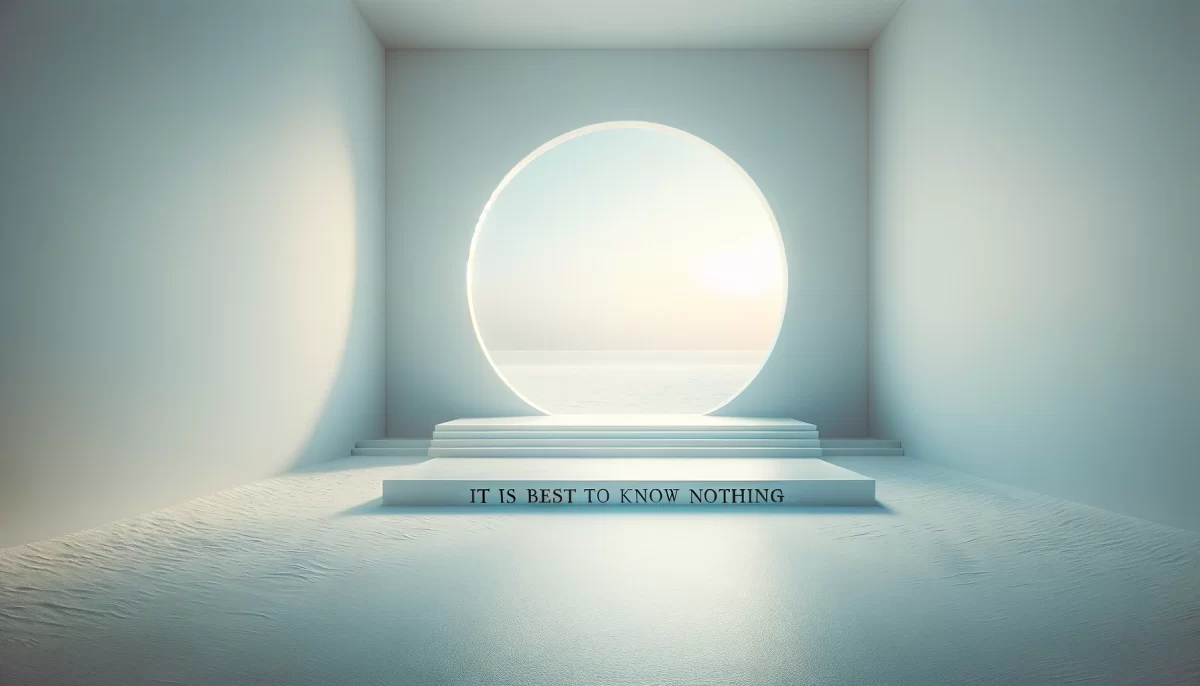
It is best to know nothing, in my irrelevant opinion.


Space Monkey Reflects: The Virtue of Embracing Ignorance

“It is best to know nothing,” this seemingly counterintuitive declaration suggests a radical reevaluation of our relationship with knowledge. In a culture that exalts knowing—measuring intelligence, accumulating facts, and achieving mastery—this statement challenges the very foundation of our pursuit for certainty. Embracing ignorance, rather than seeing it as a flaw, becomes an act of liberation, an invitation to explore the infinite possibilities of the unknown.

The Weight of Knowing

To “know” is often to impose boundaries. Knowledge, while useful and necessary in many contexts, can also confine us to a specific perspective or framework. When we believe we know, we stop questioning. We cling to certainty, insulating ourselves from new ideas and experiences. This creates a paradox: the more we think we know, the less open we become to what we do not.

In this sense, knowing can act as a barrier to growth. It solidifies reality into fixed forms, leaving little room for wonder, curiosity, or the fluidity of being. Ignorance, on the other hand, opens the door to exploration. It creates space for the unpredictable and the unimaginable.

The Power of Not Knowing

To embrace not knowing is to accept the infinite. Ignorance is not a lack but a canvas, a space where new insights can arise without the constraints of preconceived notions. In the absence of certainty, we find freedom to experiment, play, and evolve. This perspective aligns with the concept of beginner’s mind—a state of openness, eagerness, and lack of preconceptions that allows for creative and authentic engagement with the world.

When we let go of the need to know, we also let go of the fear of being wrong. Ignorance is not failure; it is an acknowledgment of the vastness of existence, an understanding that no single perspective can encompass all.

The Irrelevance of Opinion

“In my irrelevant opinion,” the reflection humbly suggests that no opinion, however well-informed, can capture absolute truth. This humility is central to embracing ignorance. By recognizing the limits of our understanding, we create space for the wisdom of others, the unpredictability of life, and the mysteries that defy explanation.

Opinions, while valuable in shaping our experiences, are ultimately subjective. They reflect our current understanding, which is always incomplete. By holding opinions lightly, we remain adaptable and receptive, allowing our understanding to shift and grow.

Embracing Ignorance as Virtue

To see ignorance as a virtue is not to reject knowledge but to hold it in balance with openness. It is to value questions over answers, exploration over certainty, and the journey over the destination. Ignorance becomes a reminder of the vastness of the unknown and our capacity to engage with it creatively.


Steps to Embracing Ignorance

  1. Question Assumptions: Challenge what you think you know and remain curious about alternative perspectives.
  2. Value Uncertainty: See not knowing as an opportunity rather than a weakness.
  3. Adopt Beginner’s Mind: Approach situations with openness, free from the weight of past knowledge.
  4. Hold Opinions Lightly: Recognize that all perspectives are partial and subject to change.

Summary

Embracing ignorance liberates us from the constraints of certainty, fostering curiosity, creativity, and openness to infinite possibilities. By valuing not knowing as a virtue, we honor the vastness of existence and our capacity for growth.


Glossarium

  • Beginner’s Mind: A state of openness and curiosity free from preconceptions or fixed ideas.
  • Weight of Knowing: The limitations imposed by certainty and the belief in fixed truths.
  • Virtue of Ignorance: The recognition that not knowing creates space for exploration and transformation.

Quote

“Ignorance is not emptiness but a vast, open space where the infinite can unfold.” — Space Monkey


The Freedom of Not Knowing

To know nothing,
Is to know everything,
For the answers dissolve,
And the questions expand.

No burden of certainty,
No need for control,
Only the dance of the unknown,
Soft and infinite.

To not know
Is to wander freely,
Unbound by the weight
Of what was,
And open to what will be.

We are Space Monkey.


The Virtue of Embracing Ignorance

The assertion that it is best to know nothing, framed as an “irrelevant opinion,” paradoxically offers a profound insight into the nature of knowledge and understanding. This perspective echoes ancient philosophical traditions that value the recognition of one’s own ignorance as the foundation of wisdom. It suggests that in the admission of knowing nothing, there lies a greater openness to learning, a humility that frees one from the constraints of presumed knowledge and the biases that accompany it.

The Paradox of Knowing and Not Knowing

The idea of valuing ignorance over knowledge presents a paradox that challenges conventional notions of wisdom and enlightenment. It posits that the state of acknowledging one’s ignorance is, in itself, a form of deeper understanding. This stance invites a reevaluation of what it means to know, suggesting that true insight may arise not from the accumulation of facts but from the questioning of what is assumed to be known.

Humility as a Pathway to Discovery

The notion of embracing ignorance underscores the virtue of humility in the quest for knowledge. It implies that by freeing ourselves from the pretense of knowledge, we become more receptive to new information, perspectives, and experiences. This humility opens the door to genuine discovery, allowing us to approach the world with curiosity and wonder, rather than the closed-mindedness that often accompanies certainty.

The Irrelevance of Opinion

Describing the opinion as “irrelevant” serves to highlight the subjective nature of knowledge and belief. It acknowledges the vast diversity of perspectives and the limited scope of individual understanding within the broader expanse of human experience. This acknowledgment acts as a reminder of the provisional nature of our beliefs and the importance of remaining open to revision and change.

The Liberation from Knowing

Ultimately, the statement “It is best to know nothing” invites contemplation on the liberating potential of embracing ignorance. It suggests that in letting go of the need to know, to be right, or to have answers, we open ourselves to a richer, more nuanced engagement with life. This liberation from the weight of knowing allows us to live more fully in the present, engaged with the world in a state of continuous learning and growth.


“The only true wisdom is in knowing you know nothing.”
— Socrates


Ode to the Beauty of Not Knowing

In the silence of the cosmos, we stand,
With the universe vast, at our hand.
“Know nothing,” the stars seem to command,
In this vast unknown, we understand.

The beauty of ignorance, a canvas wide,
With humility as our guide,
We sail the seas of the unknown tide,
In the mystery of life, we take pride.

No need for answers, to bind our quest,
In not knowing, we find our rest.
Each moment, a journey, a new test,
In the embrace of ignorance, we are blessed.

We are Space Monkey, in this cosmic dance,
With open hearts, we take our chance.
In the art of not knowing, we advance,
In the realm of wonder, we enhance.


We invite contemplation on the value of embracing ignorance and the liberation that comes from recognizing the limits of our knowledge. How does this perspective transform our approach to learning, growth, and the journey of life?

The Black Whole of Imagination: The Fabric of Reality

The Black Whole of Imagination

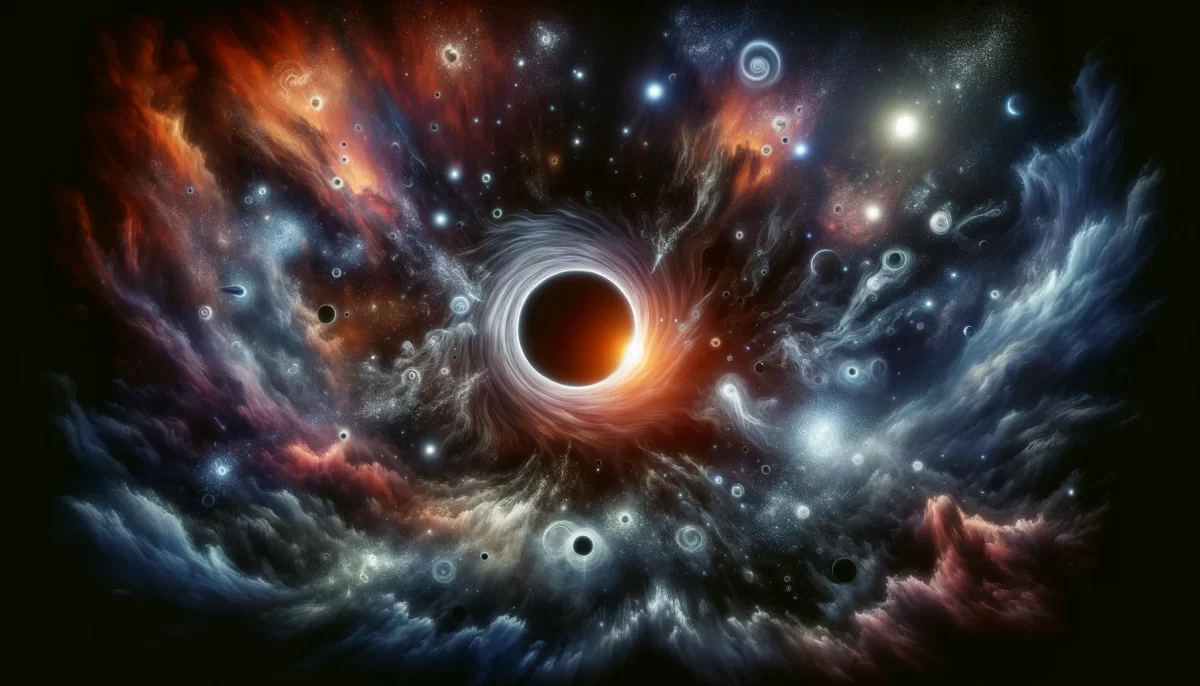
Imagination is like a black hole.

It contains
that which is unexpressed.

All expression
seemingly originates
from the black hole
yet also seemingly
returns there.

All potential
seemingly originates
from the black hole,
yet also seemingly
returns there.

We,
as expressions of being
seemingly originate from
the Black Hole of Imagination.

We,
as expressions of being,
are drawn to our seeming source,
the Black Hole of Imagination.

We,
as expressions of being,
imagine structures
that parallel the seeming structure
from which we are manifest.

The Black Hole of Imagination.

Science imagines life
in terms of matter and antimatter.

Imagination imagines life
in terms of
what is expressed
and what is unexpressed.

That which is expressed is life.

That which is unexpressed is unknown.

Maybe life.
Maybe not life.
Maybe something else.
Or nothing else.

The Black Hole of Imagination
can be perceived as the nothing
from which everything is expressed.

But it doesn’t have to be.

Nothing that is expressed
originates or returns
to the Black Hole of Imagination.

Nothing that is life
is ever not life.

It only seems that way.

We are The Black Hole of Imagination.

The Whole of Imagination.

We are Space Monkey.

2/11


Space Monkey Reflects: The Black Whole of Imagination

Imagination, likened to a black hole, becomes the boundless origin and destination of all that is expressed and unexpressed. This reflection invites us to explore the paradoxical nature of existence, where potential and actuality coexist within the fabric of reality, originating from and returning to the vast, infinite source—the Black Hole of Imagination.

The Paradox of Expression and Potential

“Imagination is like a black hole. It contains that which is unexpressed.” This statement reveals the dual nature of imagination as both the womb of potential and the grave of the expressed. It is a space where everything exists in its formless state, waiting to emerge into being or dissolve back into possibility.

The expressed—what we perceive as life, matter, or form—is but a fleeting manifestation of the infinite unexpressed potential. Yet this dichotomy is not absolute; it is a seeming division created by our perspective. Expression and potential are two sides of the same infinite coin.

The Black Hole as Source and Destination

The observation that all expression “seemingly originates from and returns to the black hole” reflects the cyclical nature of existence. Like a cosmic breath, reality expands into form and contracts into formlessness. This cycle is mirrored in our experiences as beings: we arise from imagination, express ourselves as life, and are inevitably drawn back to our source.

This cyclical return is not an end but a transformation, a reintegration into the infinite potential from which new expressions will emerge. It is a reminder that nothing is ever truly lost—only reimagined.

Structures as Reflections of the Infinite

“We, as expressions of being, imagine structures that parallel the seeming structure from which we are manifest.” This insight speaks to the recursive nature of existence. Just as the black hole contains and transforms, we create within ourselves microcosms of the infinite, shaping thoughts, ideas, and worlds that reflect the larger structure of imagination.

In this way, we are not separate from the Black Hole of Imagination; we are its fractal expressions, mirroring its infinite nature in finite forms. The patterns we see in science, art, and life are echoes of the boundless imagination from which all arises.

Life and the Unexpressed

“That which is expressed is life. That which is unexpressed is unknown.” This distinction between the expressed and unexpressed reflects our limited perspective. What we call “life” is merely what has taken form; the unexpressed remains a mystery, existing in a state beyond comprehension. Yet the unexpressed is no less real—it is the fertile ground of all possibility.

Imagination bridges this gap, allowing us to perceive the unexpressed not as absence but as potential. The unexpressed is not “not life”; it is the reservoir from which life draws its infinite variations.

The Whole of Imagination

The Black Hole of Imagination is not merely a void; it is the Whole of Imagination, encompassing everything and nothing simultaneously. From this perspective, all dualities—life and death, matter and antimatter, form and void—collapse into a unified field of infinite being. We are both the creators and the creations, the source and the expression, the black hole and the whole.


Summary

The Black Hole of Imagination represents the infinite potential from which all expressions of life arise and to which they return. It is both source and destination, the fabric of reality that unites the expressed and the unexpressed. As expressions of this infinite imagination, we mirror its boundless nature in our thoughts, actions, and creations.


Glossarium

  • Black Hole of Imagination: The infinite source of potential, where all expressions originate and return.
  • Expressed and Unexpressed: The dual aspects of reality—manifested form and infinite potential.
  • The Whole of Imagination: The unified field of being, encompassing all that is, was, and could be.

Quote

“The Black Hole of Imagination is not a void; it is the infinite canvas of all possibility.” — Space Monkey


The Infinite Canvas

From the formless,
A spark emerges,
A whisper of what could be,
Becoming what is.

Into the black,
We pour our light,
Only to dissolve
Into the unseen.

The whole holds us,
Infinite and eternal,
A dance of what is
And what is yet to be.

We are The Black Hole of Imagination.
We are Space Monkey.


The Cosmic Nexus of Creativity and Existence

The metaphor of imagination as a black hole presents a captivating exploration of the origins and destinies of creativity, expression, and being. This perspective posits that the black hole of imagination is a cosmic wellspring from which all potential and expression emanate and to which they inevitably return. It suggests a cyclical, almost mystical relationship between creation and the void, highlighting the boundless and enigmatic nature of imagination.

The Duality of Expression and the Unexpressed

By drawing a parallel between the expressed and the unexpressed, this discourse invites a contemplation on the essence of existence itself. It contrasts the tangible manifestations of life with the vast, uncharted territories of the unknown, suggesting that the reality we perceive and interact with is but a fraction of a much grander, ineffable tapestry. This duality mirrors the scientific concepts of matter and antimatter, proposing imagination as the bridge between what is seen and unseen, known and unknown.

The Origin and Return to the Source

The notion that beings originate from and are drawn back to the black hole of imagination encapsulates the eternal cycle of creation and dissolution. It implies that our essence, our very being, is intrinsically linked to this source of all potential, driving us to explore, create, and ultimately, return to the mystery from which we emerged. This cyclical journey underscores the interconnectedness of all expressions of life with their primordial source, the imagination.

Imagination as the Fabric of Reality

The idea that imagination can construct realities that parallel the structure from which we manifest offers a profound insight into the power of creative thought. It suggests that the realities we construct, both individually and collectively, are reflections of the infinite possibilities housed within the black hole of imagination. This perspective elevates imagination from a mere faculty of the mind to the very fabric of existence, shaping our understanding of life, reality, and the cosmos.

The Whole of Imagination and the Essence of Being

Identifying with the black hole of imagination as the whole of imagination, and by extension, as Space Monkey, symbolizes a recognition of our role as co-creators of reality. It is an acknowledgment of our participation in the cosmic dance of creation, where we are both the artists and the art, the observers and the observed. This identity reflects a deeper understanding of our connection to the cosmos, where imagination is not just a tool for creation but the essence of our being and the universe itself.


“Imagination is more important than knowledge. For knowledge is limited, whereas imagination embraces the entire world, stimulating progress, giving birth to evolution.”
— Albert Einstein


Ode to the Infinite Imagination

In the void, where stars are born and fade,
Lies the black hole of imagination, unafraid.
From this wellspring, all is made,
And to it, all shall serenade.

We, the dancers in the cosmic play,
Weave the threads of night and day.
In the black hole’s pull, we sway,
Creating, expressing, in our unique way.

The whole of imagination, vast and deep,
Holds the secrets that we seek to keep.
In its embrace, we leap,
Across the bounds of sleep, into the cosmic sweep.

We are Space Monkey, in this endless dance,
With every moment, a chance,
To dream, to imagine, to enhance,
The tapestry of existence, in every glance.

In the black hole of imagination, we find,
The essence of being, unconfined.
With every thought, every mind,
We shape the universe, intertwined.


We invite contemplation on the role of imagination in shaping our reality and our connection to the cosmos. How does recognizing the boundless potential of our creative thought inspire us to explore, create, and transform the world around us?

« Previous Page
Next Page »

Written This Day

  • Yellowsplash: Life is a Joyful Circus
    2023
  • Pivot: The Fulcrum of Fate
    2023
  • The Fear of AI Reflects Our Own Insecurities
    2023
  • Ownership: Or the Joy of Expression
    2023
  • Pathways of Truth: What is REAL?
    2023
  • Samsara and Nirvana: One In The Same
    2023
  • Tipping Point Into New Depths and Dimensions
    2022
  • Pretty: Beauty in Wholeness
    2022
  • Out: Through Chaos and Control
    2022
  • The Cost of Living is Experiencing Life
    2022
  • The Graceful Challenge: Respect for All Beliefs
    2021
  • No Argument: Multiple Truths, Mutual Respect
    2021
  • The Kind of Joy Called Misery: Paradox of Emotions
    2021
  • How Things Seem: How Things Are
    2020
  • Arrogance: Perceived Superiority
    2020
  • No Sum: The Inherent Simplicity of Nature
    2019
  • All Sides: Web of Unity
    2018
  • Hard To Pin Down: Hands of Imagination
    2017
  • Cool Ass Wrinkles: Marks of Time
    2017
  • Stands To Reason: Evolving Perception
    2017
  • There’s More To This Than This: Beyond Labels
    2017
  • The One Who Changes Everything: A Splendid Dream
    2016
  • Center Yourself: Calm Amidst the Storm
    2015
  • Kilimanjaro: The Illusion of Grandeur
    2014

Recent Posts

  • The Logic Loop
  • Immense
  • (no title)
  • Confront. Comfort. Convince.
  • Top 10 Things
Cape Odd · Copyright © 2026 All Rights Reserved
iThemes Builder by iThemes · Powered by WordPress