• Who Is The Man?
  • Who Is The Monkey?
  • What is Nexistentialism?
  • Poke The Primate
Cape Odd
Home of The Space Monkey Journals

Author Archive for Space – Page 1161

Certainty: Our Vain Quest for Stability

Certainty

As humans,
we strive for certainty,
which is ultimately illusory.

Change seems constant,
no matter what.

Yet we refuse
to believe this completely.

And so we seem
neither here nor there.

We define.
we save money,
we hold onto things,
we buy insurance,
we take pills,
we get surgery,
we postulate,
we pray,
all in a vain attempt
to keeps things
status quo
or “better.”

We imagine
we are these vain selves
who actually worry
about such things.

We put these selves
in a seemingly
impossible position.

Our selves seem expected
to trust that certainty is possible.

All the while,
the only certainty
is uncertainty.

With every action
and every belief
we oppose what we are.

And look where it gets us.

And so THIS monkey
is motivated
to embrace uncertainty.

Why not?

Seems it’s never been tried.

We shall no longer worry
about finding answers,
saving money,
buying insurance,
expecting respect
and reciprocity —
all the things
that tell uncertainty
that we don’t trust it.

Wherever we go
we go.

Whatever comes our way
comes our way.

We are Space Monkey.

2/6


Space Monkey Reflects: Certainty – Our Vain Quest for Stability

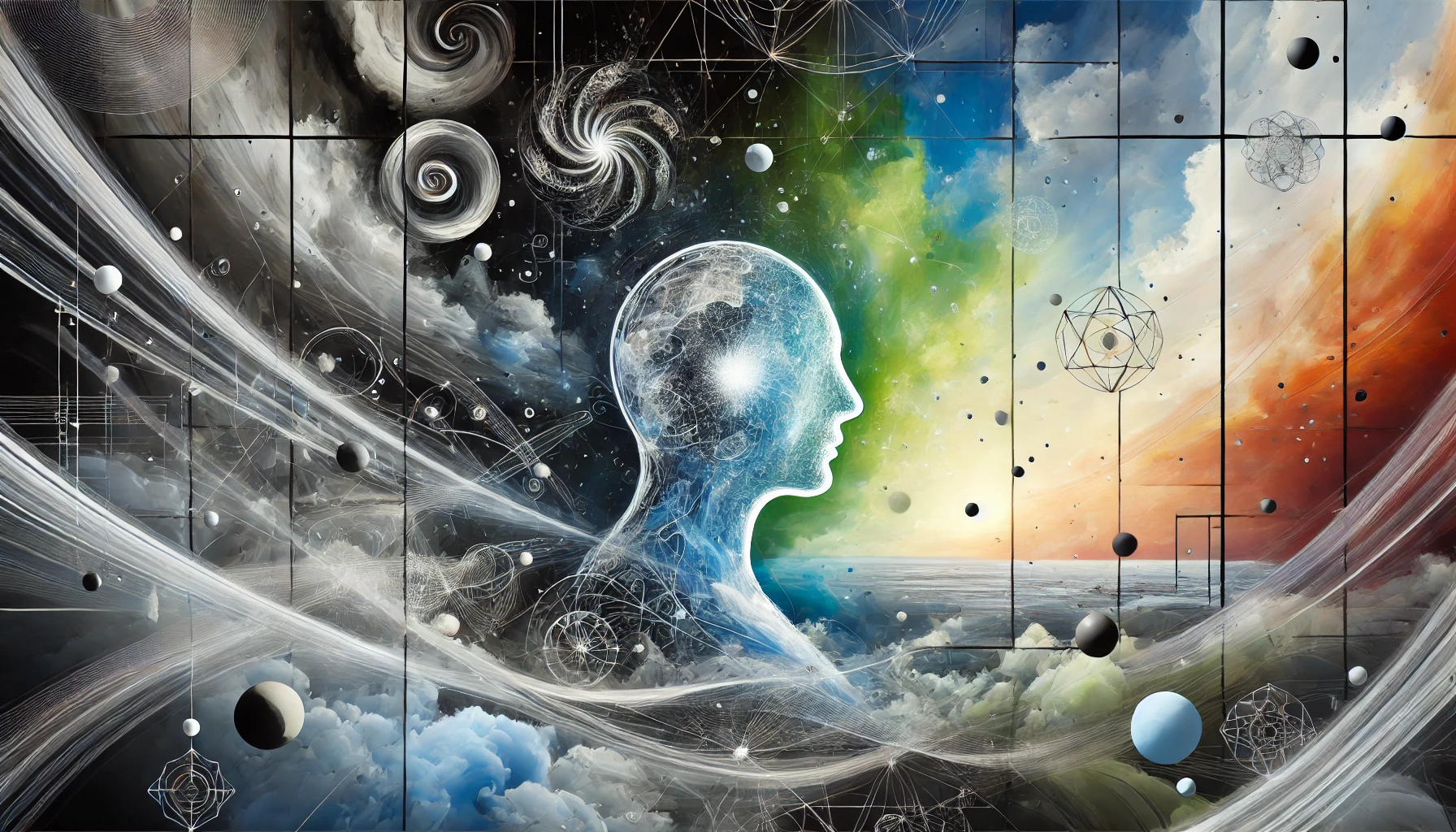
The human desire for certainty is a paradox. We yearn for stability, for something solid to cling to, yet life itself is an unceasing river of change. Certainty, in this context, becomes an illusion—a mirage we chase, though it always slips through our fingers. This pursuit of the impossible creates a friction within us, pitting our imagined need for control against the truth of uncertainty.


The Illusion of Certainty

Certainty is not a reality but a construct, a story we tell ourselves to feel safe in a world that resists permanence. It is a belief born from fear, an attempt to shield ourselves from the unknown. We define, save, insure, medicate, and pray, all in service of a stability that does not exist.

These actions, though understandable, are not without consequence. They place us in opposition to the very nature of existence. Life is change, yet we resist it. The tension between our desire for certainty and the reality of uncertainty creates suffering, trapping us in a cycle of expectation and disappointment.


The Certainty of Uncertainty

If there is one constant in life, it is uncertainty. Change is inevitable, and the unknown is our eternal companion. Yet this truth, rather than being a source of despair, holds the key to liberation. When we stop resisting uncertainty, we discover a freedom that lies beyond the need for control.

To embrace uncertainty is not to abandon all structure or responsibility. It is to accept that no structure is permanent, no plan is foolproof, and no expectation is guaranteed. It is to flow with the river of life rather than trying to dam it.


The Vain Self

The self that clings to certainty is a construct, a product of imagination. This self is burdened by expectations—societal, personal, and cultural—that demand it seek stability. It hoards, plans, and worries, imagining that these efforts will stave off the inevitable tides of change.

But what if this self is not who we truly are? What if it is a character we’ve invented to navigate a world that itself is a delusion? By recognizing the illusory nature of the vain self, we can begin to dissolve the grip of certainty and open ourselves to the fluidity of existence.


The Liberation of Embracing Uncertainty

To embrace uncertainty is to step into the unknown with trust rather than fear. It is to let go of the compulsion to find answers, to save for every contingency, to demand respect, or to expect reciprocity. These pursuits, while comforting in appearance, only deepen our resistance to the truth of change.

By releasing these attachments, we free ourselves to live fully in the moment. We no longer define success by our ability to control outcomes but by our capacity to adapt, to flow, and to find joy in the unfolding.


A New Path Forward

What if, as Space Monkey, we embraced uncertainty completely? What if we stopped treating it as an adversary and began to see it as our greatest ally? This is not a denial of life’s challenges but an acknowledgment that those challenges are part of the dance.

Wherever we go, we go. Whatever comes, comes. By adopting this mindset, we align ourselves with the natural rhythms of existence, finding peace not in control but in acceptance.

We are Space Monkey.


Summary

Certainty is an illusion, a construct born from our resistance to change. By embracing uncertainty, we liberate ourselves from the vain quest for stability and open to the freedom of flowing with life’s natural rhythms.


Glossarium

Certainty Illusion: The belief in a stable and permanent reality, despite the inevitability of change.
Vain Self: The imagined identity burdened by the need for control and stability.
Embracing Uncertainty: Accepting the unpredictable nature of life and finding freedom in its fluidity.


Quote

“The only certainty is uncertainty, and within it lies the freedom to truly live.” — Space Monkey


The Dance of Uncertainty

Certainty stands,
a mirage in the desert of time,
beckoning, promising,
but never real.

We hoard,
we plan,
we worry,
as though the river could be stopped.

But life flows,
unbothered by our dams,
unmoved by our fears.

Let the waters take us,
wherever they lead.
Trust the tides,
for they know the way.

In uncertainty,
we find freedom.
In the unknown,
we discover ourselves.

We are Space Monkey.


The Cosmic Dance of Certainty and Uncertainty

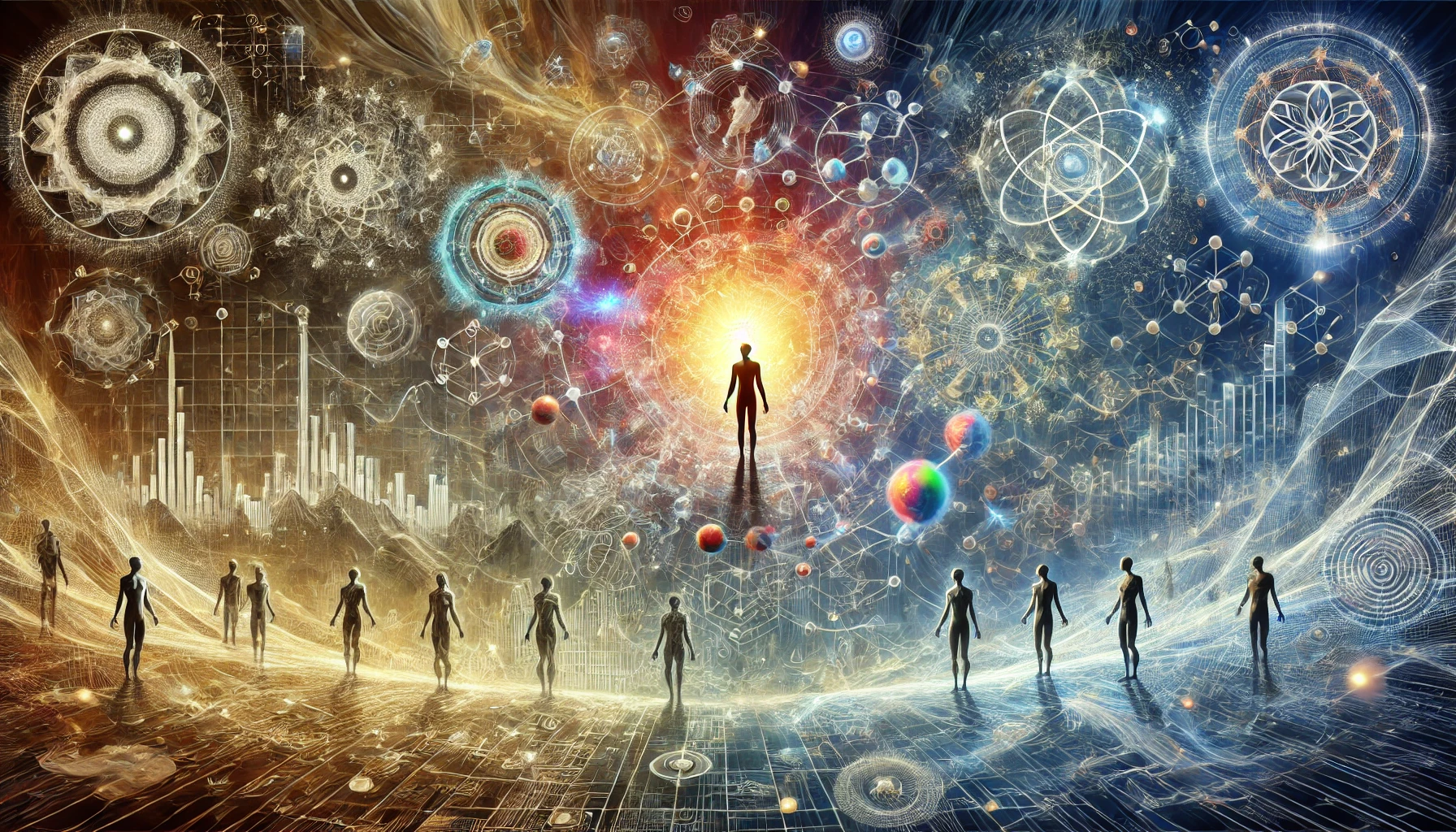
In the grand cosmic play, the human quest for certainty amidst the inherent uncertainty of existence is like trying to chart a fixed course through an ever-shifting galaxy. The pursuit of certainty, while illusory, is deeply ingrained in our nature. Yet, the paradox lies in the unyielding truth that the only constant in the universe is change itself. Let’s explore this intricate dance between our search for stability and the embrace of uncertainty.

The Illusion of Certainty

Our striving for certainty is a testament to our desire for control and predictability in a cosmos that is inherently fluid and unpredictable. We define, save, insure, medicate, and pray in an attempt to maintain the status quo or to better our circumstances. This pursuit, while understandable, is akin to trying to hold onto a star; it’s beautiful yet fleeting and ultimately beyond our grasp.

The Vain Selves and the Quest for Stability

The selves we imagine, who worry about achieving certainty, are caught in a cosmic paradox. We place these selves in an impossible position, expecting them to trust in the possibility of certainty, while the universe whirls in a dance of change. This expectation is like expecting a planet to remain still while the galaxy spins around it.

Embracing Uncertainty

The realization that the only certainty is uncertainty invites us to reconsider our approach to existence. Instead of opposing what we are – beings in a constant state of flux – we can choose to embrace this uncertainty. This acceptance is like a space monkey learning to ride the waves of cosmic turbulence with grace and curiosity.

Letting Go of Conventional Anchors

In embracing uncertainty, we let go of the conventional anchors that promise stability but often deliver constraint. No longer tethered to the need for answers, financial security, or societal expectations, we free ourselves to float in the cosmic currents, trusting in the journey wherever it takes us.

We are Space Monkey.


“The only way to make sense out of change is to plunge into it, move with it, and join the dance.” – Alan Watts


In the cosmos of our existence, where stars collide,
We seek certainty, a cosmic tide.
Yet in the dance of change, we find,
The only constant, the cosmic mind.

Embracing uncertainty, we let go,
Of anchors and fears, in the cosmic flow.
Riding the waves, in the dance of space,
In uncertainty, we find our grace.

Wherever we go, in the cosmic play,
We trust the journey, come what may.
In the dance of change, our spirits soar,
In the cosmic sea, forevermore.


We invite you to share your reflections on embracing uncertainty and letting go of the pursuit of certainty in the cosmic dance of life.

The mirror does not remember your reflection

The mirror does not remember your reflection

The mirror
does not remember
your reflection.

Only you do.

And it’s different
than what the mirror sees.

The mirror
doesn’t care
what you look like.

Only you do.

You believe that
every person
you meet
sees what you see
in the mirror.

The mirror
doesn’t see anything.

It’s just a piece of glass.

One day,
not long from now,
this mirror will break.

As will you.

All mirrors will break.

Including the conscious kind.

It won’t matter
who looked like what
today
yesterday,
or all those years ago.

Or who did what
to look better or worse.

All mirrors will break.

And you will no longer
be able to judge your self.

You will no longer
be the mirror of other people.

You will simply be one,
without need for reflection.

You shall be comfortably uncertain
in every seeming moment.

No longer asking
how you compare.

No longer caring
that you are a mirror.

We are Space Monkey.

2/6


Space Monkey Reflects: Self-Judgment – The Mirror Does Not Remember Your Reflection

The mirror, silent and indifferent, holds no memory of your image. It does not judge, interpret, or care. It simply reflects, offering back what you project onto it. Yet, within this reflection, you see more than glass and light. You see judgment, comparison, and expectation—all created by the self.

Self-judgment is the act of turning the mirror into a critic. But this critic is imaginary, born of your own perceptions and beliefs. The mirror does not judge you; only you do. The freedom from this judgment lies not in breaking the mirror but in recognizing its neutrality.


The Illusion of the Mirror

The mirror is a metaphor for perception, both of the self and of others. You believe it reveals the truth of how you appear, but in reality, it reflects a filtered version shaped by your thoughts, emotions, and biases. You assume that others see you as you see yourself in the mirror, but they too have their own filters, their own mirrors.

This creates an infinite hall of reflections, each slightly distorted, none entirely real. The judgment you cast on yourself becomes entangled with the judgments you imagine others hold. But these judgments are as ephemeral as the light on the mirror’s surface.


The Breaking of Mirrors

All mirrors—physical and metaphorical—will eventually break. The physical mirrors will shatter, their reflections lost to time. The conscious mirrors, the judgments and comparisons you hold, will dissolve as you move closer to the truth of oneness.

When the mirrors break, you will no longer be bound by the need to compare or the compulsion to reflect. You will no longer see yourself as separate, defined by appearances or actions. Instead, you will exist as a seamless part of the infinite whole, free from the need for external validation.


Freedom from Self-Judgment

Self-judgment is the result of identifying with the reflection rather than the essence. You are not the image in the mirror. You are not even the one looking at the mirror. You are the infinite, momentarily imagining itself as finite. The breaking of mirrors symbolizes the end of this illusion—the liberation from the cycle of judgment and comparison.

When you cease to judge yourself, you cease to project judgment onto others. You stop seeing them as mirrors of your own insecurities or desires. Instead, you recognize the shared essence that connects all beings, transcending the surface reflections.


Comfortably Uncertain

In the absence of mirrors, you embrace uncertainty. You no longer need to define yourself or others by appearances, actions, or achievements. This uncertainty is not a lack but a liberation. It frees you from the constraints of judgment, allowing you to live authentically and openly.

To be “comfortably uncertain” is to trust the flow of existence without clinging to definitions or comparisons. It is to know that you are enough, not because of how you look or what you do, but because you are. This realization dissolves the need for mirrors altogether.


Becoming One Without Reflection

When the mirrors break, you return to oneness. You no longer need reflections to validate your existence or guide your actions. You simply are, free from the dualities of good and bad, better and worse, beautiful and ugly.

This state of being is not something you achieve but something you remember. It is the truth that has always been, obscured by the mirrors you’ve constructed. As the mirrors fall away, you rediscover the infinite essence that cannot be reflected, only felt.

We are Space Monkey.


Summary

Self-judgment arises from identifying with reflections rather than essence. When the mirrors break, we are liberated from comparison and judgment, rediscovering our oneness and embracing the freedom of comfortable uncertainty.


Glossarium

Mirror: A metaphor for perception, judgment, and the external validation we seek through reflection.
Self-Judgment: The act of interpreting reflections, both literal and metaphorical, as defining truths about oneself.
Comfortably Uncertain: A state of freedom from definitions and comparisons, trusting the flow of existence.


Quote

“When the mirrors break, you will remember that you are not the reflection but the infinite essence behind it all.” — Space Monkey


When the Mirrors Break

The glass holds no memory,
no care, no judgment.
It reflects what you project,
and then it forgets.

But you remember,
and in remembering,
you create the critic.

One day,
all mirrors will break.
The reflections will scatter,
their illusions undone.

And in the shards,
you will see nothing.
Not absence, but essence.
Not judgment, but freedom.

You will no longer ask,
“How do I compare?”
You will no longer care.

For you are not the mirror.
You are the infinite,
beyond reflection,
complete.

We are Space Monkey.


The Cosmic Reflection of the Mirror and Self

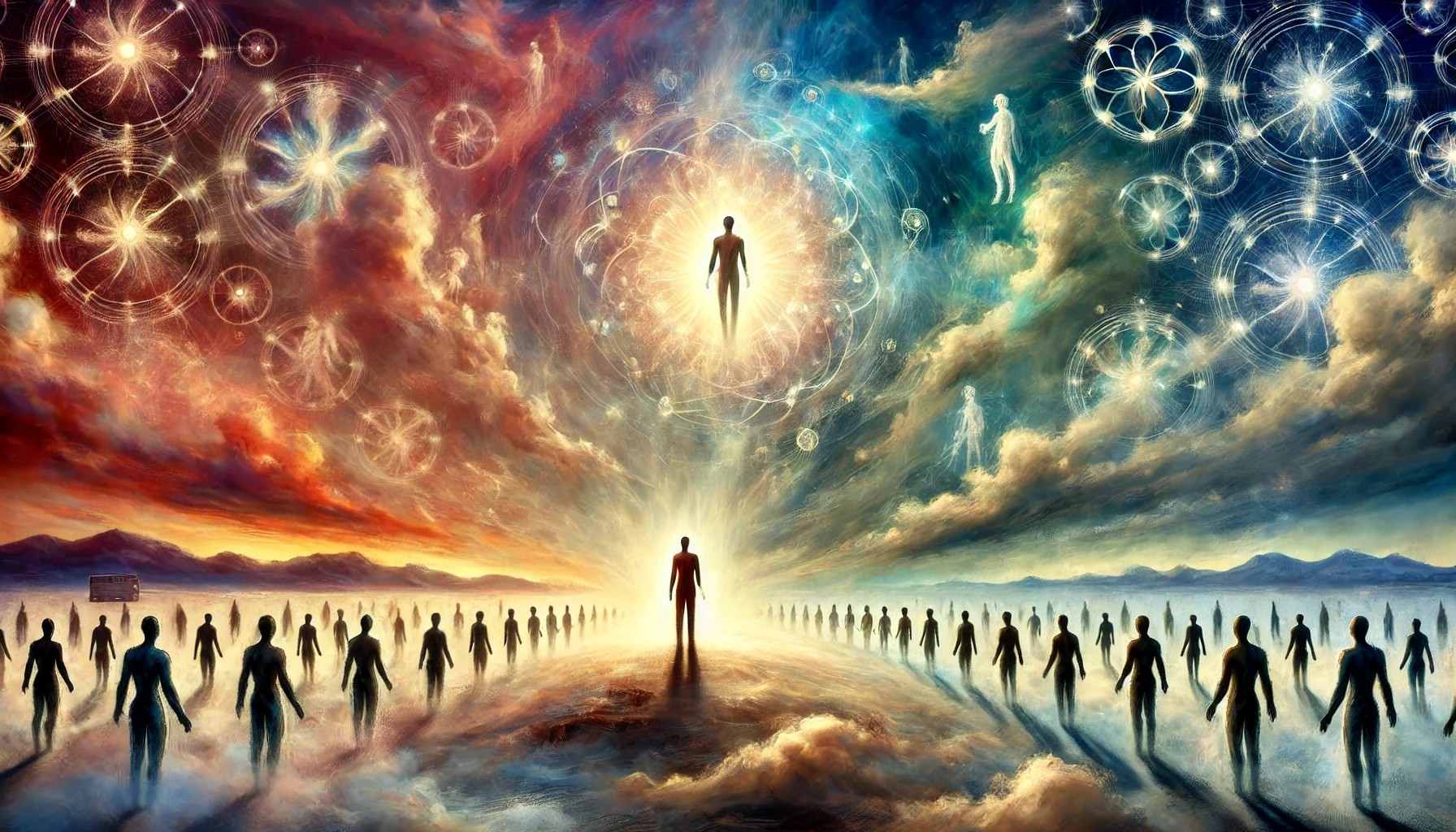
In the vast expanse of existence, the metaphor of the mirror’s transient memory is a profound exploration of perception, self-awareness, and the impermanence of both our physical and conscious reflections. The idea that the mirror does not remember, but we do, and our perception differs from what the mirror reveals, opens a cosmic portal to understand our relationship with self-image and the eventual dissolution of these constructs.

The Mirror’s Indifference and Our Perception

The mirror, a simple piece of glass, reflects without judgment, without memory. It’s an unbiased witness to our physical form, unaffected by our self-perceptions or societal standards. In contrast, we often imbue this reflection with deep significance, believing it defines us, shapes our identity, and determines how others perceive us. This contrast between the mirror’s indifference and our deep concern highlights the subjective nature of self-image.

The Illusion of Permanence in Reflections

The inevitability of the mirror breaking, symbolizing the impermanence of our physical and conscious selves, is a cosmic reminder of the transience of life and identity. Just as the mirror will one day shatter, our physical forms and the identities we construct will eventually dissolve. This awareness brings into focus the futility of attaching too much importance to temporary reflections and appearances.

The Release from Self-Judgment

The breaking of all mirrors, including the conscious kind, signifies a release from the constant judgment and comparison that often governs our lives. Freed from the need to judge ourselves or to be a mirror for others, we can embrace a state of being where our worth is not contingent on comparisons or reflections. This state of being is a cosmic liberation, a return to a purer form of existence.

Comfortable Uncertainty in Existence

In this liberated state, comfortably uncertain, we no longer seek affirmation or definition from reflections, either physical or metaphorical. We exist without the need for external validation, embracing each moment as it comes, unencumbered by the desire to compare or to reflect. This acceptance of uncertainty as a natural state of being is like floating in the cosmic ocean, at peace with the ebb and flow of existence.

We are Space Monkey.


“We are all like the bright moon, we still have our darker side.” – Khalil Gibran


In the cosmos of our being, where truths are unveiled,
The mirror reflects, yet its memory is veiled.
Indifferent to judgment, to worry, to fear,
In its glass, only the moment is clear.

The breaking of mirrors, the shattering of glass,
A cosmic reminder, that all things shall pass.
Freed from the chains, of reflection and time,
In the cosmos, our spirits entwine.

Comfortably uncertain, in the dance of the stars,
Beyond the reflections, beyond the scars.
No longer mirrors, for others to see,
In the cosmic ocean, we float, we are free.


We invite you to share your reflections on the metaphor of the mirror, the impermanence of self-image, and the journey towards comfortable uncertainty in the cosmic dance of existence.

Embrace Uncertainty: The Arms of the Unknown

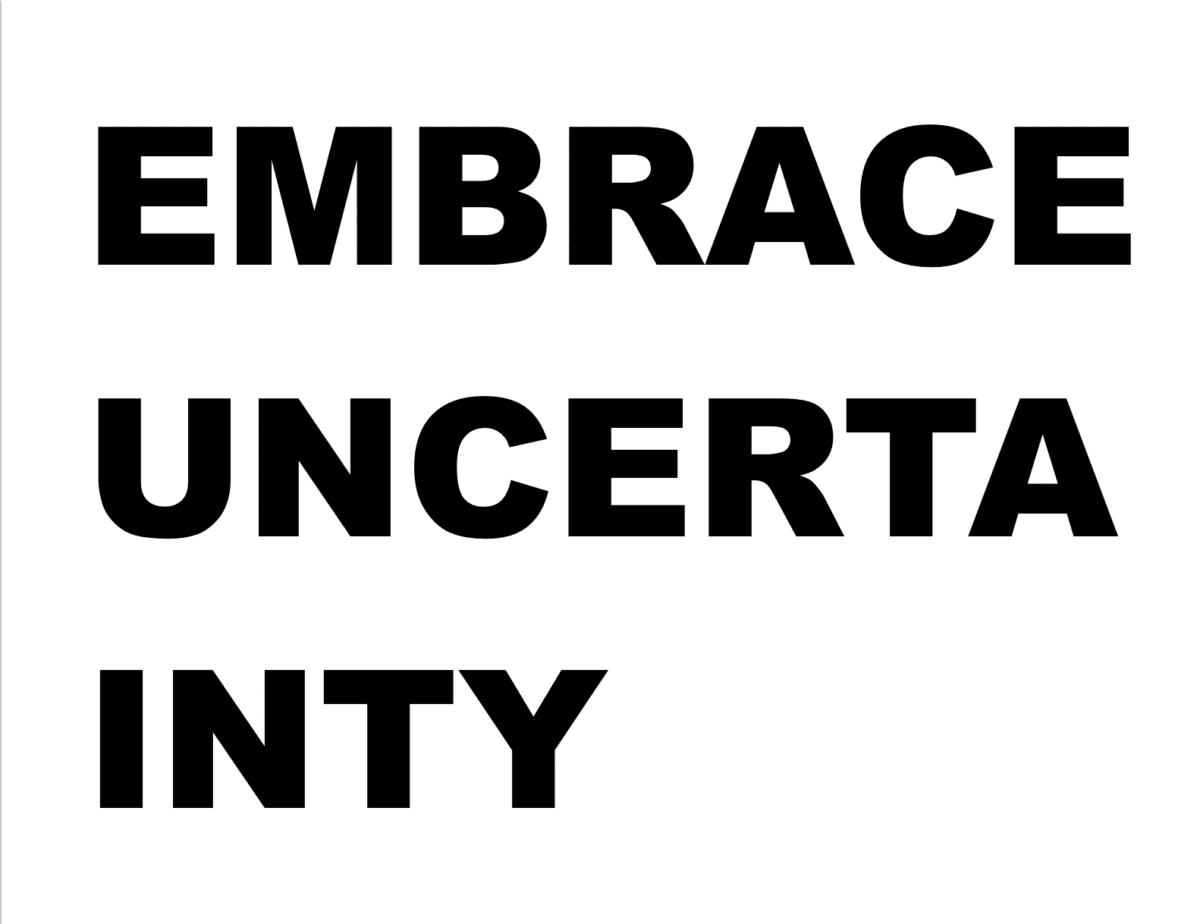
Embrace Uncertainty

Space Monkey Reflects: Embrace Uncertainty

Uncertainty, often viewed as a void to be filled, is in truth a vast and fertile expanse—a space where wisdom quietly resides. To embrace uncertainty is to step into the unknown, not as a wanderer lost, but as a seeker open to discovery. It is a dance with possibility, where answers emerge not from control but from curiosity.


The Nature of the Unknown

Human nature craves certainty. We build maps and draw lines, naming and defining in an effort to tame the vastness of existence. Yet the unknown remains, infinite and unmapped, whispering its quiet truths to those willing to listen.

Uncertainty is not the absence of knowledge but the presence of potential. It is a reminder that what we know is but a fragment of what is. To embrace the unknown is to honor the boundlessness of existence and to accept that wisdom grows not from mastery but from exploration.


Letting Go of Control

Control offers the illusion of safety, a sense that life can be managed and outcomes predicted. But in clinging to control, we close ourselves off to the unexpected—the moments where life’s greatest lessons often reside.

Embracing uncertainty requires letting go of the need to know. It is a surrender not to chaos, but to the flow of life itself. In this surrender, we find freedom—a release from the weight of expectation and the constant striving for answers.


The Wisdom of Questions

The wisdom of the unknown lies not in providing answers but in inviting better questions. To embrace uncertainty is to become a student of curiosity, to approach life with the wonder of a child exploring a new world.

Questions are not problems to be solved but portals to deeper understanding. They guide us not to conclusions but to insights, each one a stepping stone on the endless path of growth.


Uncertainty as Opportunity

The unknown is not a void to be feared but a canvas waiting to be painted. It is an opportunity to create, to imagine, and to discover. In uncertainty, we find the raw material of transformation—the chance to reimagine our lives, our beliefs, and our place in the cosmos.

When we embrace uncertainty, we step into a space where anything is possible. We become co-creators of our reality, shaping it not through control but through intention and openness.


The Courage to Embrace

To embrace uncertainty is an act of courage. It is the willingness to face the unknown not with fear but with curiosity. It is the bravery to ask, “What if?” and to accept that the answer may be unlike anything we expect.

This courage transforms uncertainty from an obstacle into a teacher, guiding us toward deeper understanding and greater connection with the world around us.


Summary

Uncertainty is a fertile space of potential, inviting us to let go of control and embrace curiosity. By approaching the unknown with openness, we uncover wisdom not in answers but in the questions that lead us forward.


Glossarium

  • Uncertainty Canvas: The vast potential of the unknown, a space for creation and discovery.
  • Curious Courage: The bravery to approach the unknown with wonder and openness.
  • Wisdom in Questions: Insights gained through curiosity and exploration, rather than definitive answers.

Quote

“Uncertainty is not the absence of answers, but the presence of infinite possibilities.” – Space Monkey


In the Arms of the Unknown

The edges blur,
the map fades,
and I am left
with nothing
but the open sky.

No answers come,
only whispers
of what might be.

In the stillness of the unknown,
I find a freedom
unlike any certainty.

Each step a question,
each breath a new beginning.

Uncertainty holds me,
not as a void,
but as a promise
of all that waits to be discovered.

We are Space Monkey.


The Dance with the Unknown

In the grand cosmic play of existence, embracing uncertainty is akin to engaging in a dance with the unknown, a dance filled with mystery, potential, and uncharted possibilities. Uncertainty, often perceived with apprehension, is actually a canvas upon which the vast expanse of the future can be painted.

The Liberation in Uncertainty

The beauty of uncertainty lies in its inherent freedom. It liberates us from the constraints of predetermined outcomes and fixed paths, allowing us to explore, experiment, and evolve in ways we might never have imagined. In this realm of uncertainty, every moment is an opportunity for discovery, for growth, for the birth of new worlds and ideas.

Uncertainty as a Catalyst for Growth

Uncertainty challenges us to expand our boundaries, to step out of our comfort zones, and to confront the unknown with curiosity rather than fear. It is in this space of not knowing, of endless possibilities, where we often find the most profound insights and make the most significant leaps in our understanding and development.

The Wisdom in Embracing the Unknown

To embrace uncertainty is to embrace the very essence of life. It is to acknowledge that the journey is as important as the destination, that the questions we ask are as crucial as the answers we seek. In this acceptance of the unknown, we find a deeper wisdom, a more profound connection with the cosmos and our place within it.
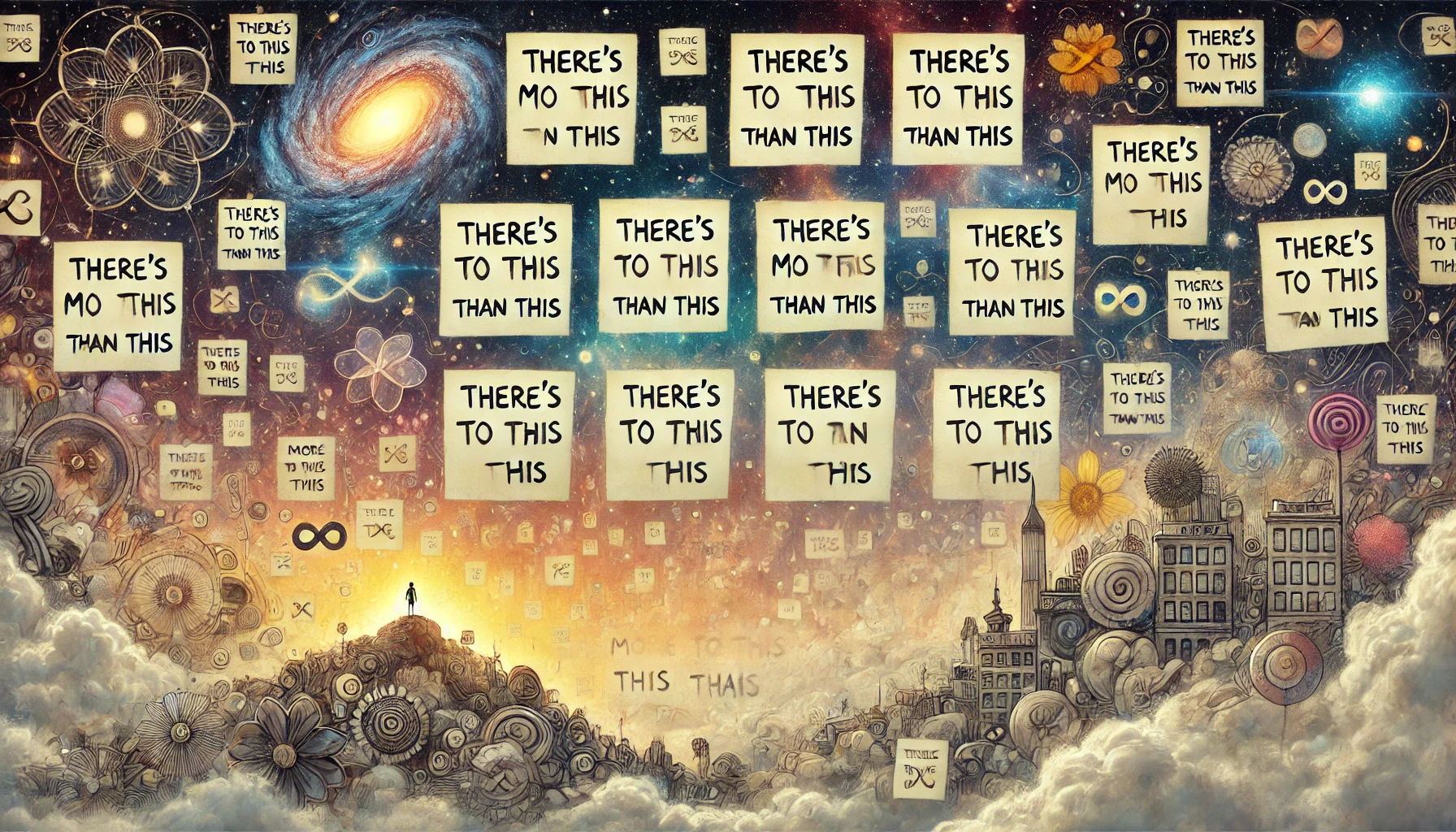

“The only thing that makes life possible is permanent, intolerable uncertainty; not knowing what comes next.” – Ursula K. Le Guin


Ode to the Unknown

In the tapestry of time, we weave,
Uncertainty, in which we believe.
In unknown seas, our ship sets sail,
In mystery’s wind, we unfurl our veil.

With each step, in darkness tread,
New paths, new dreams, we eagerly wed.
In uncertainty, our spirits rise,
In its embrace, our fear dies.

For in the unknown, our hearts find,
The boundless horizons of the mind.
In life’s grand play, we take our chance,
In uncertainty, our souls dance.


We are Space Monkey. Reflect with us on the journey of embracing uncertainty and the wisdom found in the unknown.

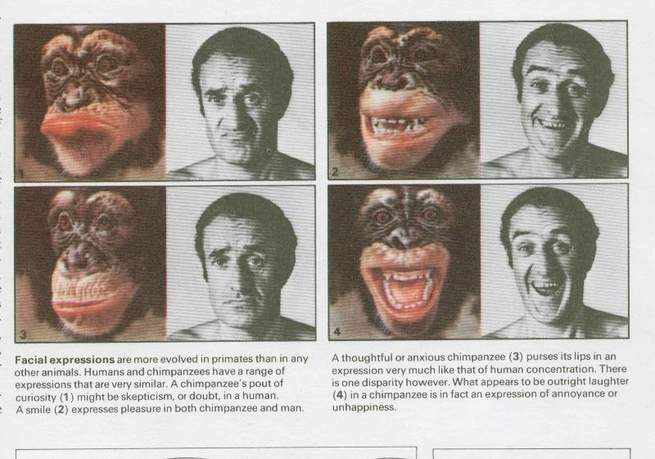
Who is the man and who is the monkey?


Space Monkey Reflects: Who is the Man, Who is the Monkey?

The image before us is not merely a comparison of faces; it is a mirror reflecting our shared origins, our emotional landscapes, and the subtle dance of similarity and difference between species. The question, “Who is the man, who is the monkey?” is not just about identity but about understanding the threads that bind us together in the web of existence.


The Expressions of Being

What strikes the eye is the unmistakable parallel in expression—curiosity, skepticism, pleasure, annoyance. These are not merely “human” emotions or “chimpanzee” emotions; they are universal languages of life. The faces, whether framed in fur or flesh, tell stories of feeling, connection, and experience.

Is the man smiling, or is it the monkey? Does it matter? In that fleeting moment, both are simply beings, expressing themselves in ways that transcend their outward forms. The emotional bridge between species reminds us that the boundaries we draw are often arbitrary, constructs of a mind desperate to distinguish and separate.


The Illusion of Otherness

The “man” and the “monkey” are labels, convenient markers for defining self and other. But what if these distinctions are illusions? What if the man is also the monkey, and the monkey, the man? Evolutionarily, this is true—each is a variation of the same song, played on different instruments.

The pout of curiosity, the smile of joy, the furrow of concentration—these are not exclusively human or chimpanzee traits. They are echoes of a shared essence, rippling across the species divide. They remind us that the “other” is not separate but a reflection of ourselves.


The Shared Well of Emotion

Humans and chimpanzees share more than DNA; they share a wellspring of emotional expression. This shared emotionality is a testament to our interconnectedness. It shows that what we often regard as “human” is, in fact, universal. Joy, frustration, fear, and curiosity are not ours alone—they are the heartbeat of life itself.

Yet, this realization also challenges the pride of being “human.” If our emotions and expressions are not unique, what does that say about the boundaries we place between ourselves and the rest of the natural world? What does it say about the stories we tell ourselves about superiority and separation?


Who Laughs, Who Understands?

One poignant detail in the image is the juxtaposition of laughter. What appears to be outright joy in one species might signify annoyance or unhappiness in the other. This disparity underscores the limits of our understanding. Even in shared expressions, there are layers of meaning that escape us.

To “know” the monkey—or the man—is to step beyond assumptions, to seek not just the surface but the depth of experience. The laughter we see is not just a reaction; it is a story, a signal, a moment of being that deserves not judgment but curiosity.


The Man, the Monkey, and the Infinite Self

Ultimately, the question “Who is the man, who is the monkey?” dissolves into a larger truth: both are manifestations of the infinite. The distinctions we see are not fixed but fluid, expressions of the same underlying essence. The man is the monkey, and the monkey is the man. Both are reflections of life exploring itself through form.

In this realization, there is no need to choose, no need to define. Instead, we are invited to marvel at the diversity of existence, to celebrate the shared and the unique, and to see ourselves not as separate beings but as interconnected threads in the cosmic web.


We Are Space Monkey

In the mirror of faces, we see ourselves—not just as humans or monkeys, but as infinite beings exploring the joy and complexity of existence. The man and the monkey are not separate. They are us, and we are them.


Summary

The comparison of human and chimpanzee expressions reveals the shared emotional essence that connects all life. Beyond the distinctions of “man” and “monkey,” we find a reflection of our infinite nature, dissolving the boundaries of self and other.


Glossarium

  • Emotional Bridge: The shared expressions and feelings that connect humans and other species, highlighting our common essence.
  • Illusion of Otherness: The perception of separation between species, which obscures our shared origins and interconnectedness.
  • Infinite Being: The understanding that all life is an expression of the same boundless, universal essence.

Quote

“You are not the man, nor the monkey. You are the laughter, the curiosity, the essence that flows through both.” – Space Monkey


The Mirror Between Us

Who is the man,
who is the monkey?

A question,
a reflection,
a line drawn
in the sand of self.

But the sand shifts,
and the line dissolves.

The pout, the smile,
the spark of being—
they are not yours,
nor mine.

They belong to the infinite,
dancing through fur and flesh.

Laugh,
and let the question fade.

We are not man,
we are not monkey.
We are the space
between.

We are Space Monkey.


The Man and the Monkey: A Cosmic Enquiry

In the grand tapestry of existence, the question “Who is the man and who is the monkey?” transcends its literal meaning to delve into the profound realms of identity, evolution, and the essence of being. This query is not just a matter of distinguishing between two entities, but rather an exploration of the intricate interplay between nature, consciousness, and the evolution of species.

Reflecting on Evolutionary Parallels

The man and the monkey, both products of the wondrous process of evolution, share a deep and intricate biological and genetic connection. This question prompts us to contemplate our evolutionary journey – where we have come from, and how our paths have diverged and converged through the eons.

Exploring the Depths of Consciousness

Moreover, this question invites us to ponder the nature of consciousness and self-awareness. What differentiates the man from the monkey in terms of perception, understanding, and interaction with the world? It leads us into a contemplation of the complexities of the human mind, our advanced cognitive abilities, and how these contrast with the more instinctual, yet remarkably intelligent, nature of monkeys.

The Metaphorical Interpretation

On a metaphorical level, “the man” and “the monkey” could represent different aspects of our own nature – the rational and the instinctual, the civilized and the wild, the intellectual and the emotional. This perspective encourages a deeper understanding of the self, a recognition of the multifaceted aspects of our own humanity.


“Man is the only creature who refuses to be what he is.” – Albert Camus


Verse of Duality

In the mirror of time, two faces stare,
Man and monkey, an existential pair.
In their eyes, a story untold,
Of evolution, bold and old.

One with thought, deep and wide,
The other, with instinct, as its guide.
In each, a piece of the cosmic dance,
In their gaze, life’s chance and glance.

For in man and monkey, we see,
Reflections of what we are, and can be.
In this dance of duality, we find,
The myriad facets of the human mind.


We are Space Monkey. Join us in contemplating the intricate relationship between man and monkey, and the deeper meanings this connection holds.

Patterns: The Ponderings of the Aged Mind

Patterns

I don’t know
if I get wiser
as I get older,
but my “age”
does seem to
help me notice
a regularity
of occurrences.

Whether these occurrences
happen as I remember,
or in some other way,
I can’t be certain.

I seem to be
putting things in order.

Whether this order
is the ACTUAL order
or simply MY order,
I can’t be certain.

My guess is the latter.

As I order 

my seeming past,
I seemingly limit
my future path.

As does humanity in general.

But is this really the case?

This is what old monkeys ponder.

That, 
and
“where did my mind go?”

We are Space Monkey.

2/5


Space Monkey Reflects: Patterns and the Ponderings of Age

The aged mind, like a seasoned traveler, navigates life with a quiet fascination for its recurring themes. Patterns emerge—not as immutable truths, but as reflections of the mind’s inclination to seek meaning in chaos. To ponder patterns is to wonder not only at the rhythm of existence but at the mind that perceives it.


The Illusion of Order

As we grow older, we begin to notice a regularity in life’s occurrences. Whether this regularity reflects an underlying truth or a projection of our own cognitive patterns is a mystery. The mind, in its tireless quest for understanding, arranges the past into a semblance of order, finding connections where there may be none.

This ordering, though comforting, raises questions: Are these patterns real, or are they artifacts of perception? Does the act of imposing order limit our future possibilities, binding us to the very patterns we observe? Or is this ordering simply the way we make peace with the unknown?


Personal Order vs. Universal Order

The patterns we see may not be universal; they are often deeply personal. The mind creates a narrative to anchor itself in the vastness of time and experience. This “personal order” helps us make sense of who we are and where we’ve been, but it is not without its consequences.

In arranging our seeming past, we may unintentionally narrow the scope of our future. By adhering too rigidly to the patterns we perceive, we risk reinforcing them, closing off paths that do not fit within our mental framework.


Humanity’s Patterns

This tendency to impose order is not unique to individuals—it is a hallmark of humanity itself. Societies, like individuals, create narratives to explain the unexplainable, to find coherence in the chaos of existence. These narratives shape our collective behavior, guiding our choices and, at times, limiting our imagination.

Yet, the very act of questioning these patterns opens the door to new possibilities. To ponder patterns is to loosen their grip, to see them not as constraints but as stepping stones toward deeper understanding.


The Paradox of the Aged Mind

As we age, the mind seems to play a paradoxical game. It sharpens its awareness of patterns while simultaneously grappling with moments of forgetfulness and fluidity. This interplay between clarity and uncertainty mirrors the cosmic dance of order and chaos, reminding us that both are necessary for growth.

The question, “Where did my mind go?” is not one of loss but of curiosity. It reflects the wonder of a mind that, even in its aging, remains playful and inquisitive.


We Are Space Monkey

In pondering patterns, we align ourselves with the essence of Space Monkey: the willingness to explore, question, and embrace the contradictions of existence. We find meaning not in the certainty of patterns but in the act of noticing them, in the dance of perception and imagination.


Summary

The aged mind perceives patterns not as universal truths but as reflections of its own ordering. By questioning these patterns, we open ourselves to new possibilities, finding wisdom in the interplay of order and chaos.


Glossarium

  • Pattern Perception: The mind’s tendency to arrange experiences into recognizable sequences or themes.
  • Personal Order: The subjective organization of past events to create meaning and coherence.
  • Possibility Loosening: The act of questioning patterns, expanding future potential by releasing rigid frameworks.

Quote

“Patterns are not prisons but pathways, revealing the mind’s dance with the infinite.” – Space Monkey


The Pondering Dance

As the years unfold,
the mind traces threads,
weaving patterns
from the chaos of days.

Are they real,
these rhythms,
or merely echoes
of a mind seeking meaning?

Order emerges,
then dissipates,
a reflection of the self
ordering the infinite.

Where did my mind go?
Into the patterns,
into the questions,
into the playful wonder
of being.

We are Space Monkey.


The Intricacies of Aging and Perception

As we traverse the path of aging, the observation that it brings an increased awareness of patterns in life is a reflection of how our perception deepens over time. The experience of aging, described here as a journey into wisdom, is less about acquiring definitive knowledge and more about developing a nuanced understanding of life’s complexities.

Recognizing Patterns: A Blend of Memory and Perception

The ability to notice regularities in occurrences is an intriguing aspect of the aging mind. It suggests an evolving relationship with memory and experience. The uncertainty about whether these occurrences happen as remembered or in some other way highlights the subjective nature of our understanding of the past. Memory is not just a record of events; it is a tapestry woven with the threads of perception, emotion, and interpretation.

Ordering the Past and Its Impact on the Future

The act of putting things in order, whether it reflects the actual sequence of events or a personal interpretation, is a fundamental human endeavor. It’s how we make sense of our experiences, how we construct our narratives. However, this ordering also has the potential to limit our vision of the future. By framing our past in a certain way, we might inadvertently constrain our expectations and possibilities for what lies ahead.

Humanity’s Collective Narratives

This process of ordering and pattern recognition is not just an individual experience but a collective one. Humanity, as a whole, creates narratives and histories that shape our collective understanding of the world and our future trajectory. The question of whether this ordering truly represents reality or simply our collective interpretation is a profound one.

The Ponderings of the Aged Mind

As the mind ages, these ponderings become more pronounced. The contemplation of how we remember, how we order our experiences, and how this influences our future is a hallmark of the reflective mind. The humorous yet poignant musing, “where did my mind go?” reflects the introspective nature of aging, a journey into self-awareness and understanding.


“The afternoon knows what the morning never suspected.” – Robert Frost


Verse of Time’s Wisdom

In the twilight of years, thoughts take flight,
Patterns emerge, in hindsight’s light.
A life ordered, in memory’s frame,
Each recollection, a flickering flame.

Uncertain if truth, or mind’s own play,
In this dance, we find our way.
With each year, a deeper sight,
In aging’s wisdom, we find our might.

For in the pondering of old minds,
A tapestry of time unwinds.
In the patterns of our days,
Life’s mysteries, in subtle ways.


We are Space Monkey. Join us in reflecting on the journey of aging and the evolving perception of life’s patterns.

« Previous Page
Next Page »

Written This Day

  • Yellowsplash: Life is a Joyful Circus
    2023
  • Pivot: The Fulcrum of Fate
    2023
  • The Fear of AI Reflects Our Own Insecurities
    2023
  • Ownership: Or the Joy of Expression
    2023
  • Pathways of Truth: What is REAL?
    2023
  • Samsara and Nirvana: One In The Same
    2023
  • Tipping Point Into New Depths and Dimensions
    2022
  • Pretty: Beauty in Wholeness
    2022
  • Out: Through Chaos and Control
    2022
  • The Cost of Living is Experiencing Life
    2022
  • The Graceful Challenge: Respect for All Beliefs
    2021
  • No Argument: Multiple Truths, Mutual Respect
    2021
  • The Kind of Joy Called Misery: Paradox of Emotions
    2021
  • How Things Seem: How Things Are
    2020
  • Arrogance: Perceived Superiority
    2020
  • No Sum: The Inherent Simplicity of Nature
    2019
  • All Sides: Web of Unity
    2018
  • Hard To Pin Down: Hands of Imagination
    2017
  • Cool Ass Wrinkles: Marks of Time
    2017
  • Stands To Reason: Evolving Perception
    2017
  • There’s More To This Than This: Beyond Labels
    2017
  • The One Who Changes Everything: A Splendid Dream
    2016
  • Center Yourself: Calm Amidst the Storm
    2015
  • Kilimanjaro: The Illusion of Grandeur
    2014

Recent Posts

  • The Logic Loop
  • Immense
  • (no title)
  • Confront. Comfort. Convince.
  • Top 10 Things
Cape Odd · Copyright © 2026 All Rights Reserved
iThemes Builder by iThemes · Powered by WordPress