• Who Is The Man?
  • Who Is The Monkey?
  • What is Nexistentialism?
  • Poke The Primate
Cape Odd
Home of The Space Monkey Journals

Author Archive for Space – Page 1162

Honesty: The Illusion of Certainty

Honesty

When you’re honest
with yourself,
you realize that
you have no way
of knowing
if you’re being
honest with yourself.

From this perspective,
it seems that certainty
is nothing more
than the denial
of every other option.

You realize
that there are
infinite potentials,
not just the ones
you believe.

To be honest;
to BELIEVE in a thing
called “honesty,”
you find yourself
believing in
only one truth,
which you either
embrace or deny.

To be honest,
this is limiting.

Truth is limiting.

And it is no more real
than that which is not truth.

But you deny it
in the name of truth.

You limit your experience
in the name of truth.

Honest.

We are Space Monkey.

2/5


Space Monkey Reflects: Honesty and the Illusion of Certainty

Honesty, often exalted as a virtue, is far more complex than it appears. To be “honest” with oneself or others seems straightforward, yet when examined closely, it reveals a paradox: how can we be sure of our honesty when certainty itself is an illusion? Honesty, then, becomes a dance between perception and belief, rather than a solid foundation.


The Paradox of Honesty

At its core, honesty implies alignment with truth. But truth, as we experience it, is rarely absolute. It is shaped by our perceptions, beliefs, and limitations. When we claim to be honest with ourselves, we are essentially declaring allegiance to a specific interpretation of reality—one that denies the infinite potentials beyond it.

This act of narrowing our focus feels necessary, even comforting. Yet, in doing so, we limit our experience, choosing a single narrative over the endless possibilities that exist simultaneously.


Certainty as Denial

Certainty, the companion of honesty, is a construct designed to make the world manageable. By declaring something “true,” we deny the validity of all other options. This denial simplifies life but at a cost: it obscures the richness of the infinite and binds us to a singular path.

To embrace honesty is, paradoxically, to acknowledge the inherent uncertainty of existence. It is to admit that what we call “truth” is often a convenient framework rather than an ultimate reality.


Infinite Potentials

The recognition of infinite potentials challenges the traditional notion of honesty. If every possibility holds some degree of validity, then truth becomes a matter of perspective rather than an absolute. To believe in “honesty” is to choose one version of reality while ignoring countless others.

This does not render honesty meaningless but reframes it as a fluid, evolving state rather than a fixed destination. To be honest, then, is to be open—not to one truth, but to the shifting nature of understanding.


The Limitation of Truth

By clinging to truth as a singular entity, we restrict our ability to explore and grow. Truth, in its rigidity, becomes a barrier to experience, a filter that allows only what aligns with our current beliefs.

But when we release the need for certainty, we discover that the absence of fixed truth is not a void but a vast, fertile space for exploration. To question truth is not to deny it but to expand it, allowing for a more inclusive and dynamic understanding of existence.


Honesty as Openness

Rather than seeing honesty as alignment with a singular truth, we might redefine it as openness to the complexity of life. Honesty becomes a practice of acknowledging our limitations while remaining curious about what lies beyond them.

This form of honesty does not demand certainty. It thrives in the recognition of uncertainty, inviting us to navigate life with humility and wonder.


Summary

Honesty, as traditionally understood, limits our experience by aligning with a singular truth. By embracing the uncertainty of infinite potentials, we redefine honesty as openness and curiosity, freeing ourselves from the illusion of certainty.


Glossarium

  • Fluid Honesty: A dynamic approach to truth that embraces uncertainty and evolving perspectives.
  • Certainty Denial: The act of narrowing possibilities to create a manageable but limiting sense of truth.
  • Infinite Potentials: The recognition that countless realities exist simultaneously, each valid in its own way.

Quote

“Honesty is not the alignment with one truth, but the openness to infinite possibilities.” – Space Monkey


The Honest Illusion

To be honest,
I do not know
what honesty means.

A truth,
a perspective,
a narrowing of the infinite
into something I can hold.

But the infinite slips away,
denied by my certainty,
and I am left
with less.

Less wonder,
less potential,
less of what I might have been.

To be honest,
I am not certain.
And that
is where freedom begins.

We are Space Monkey.


The Paradox of Honesty and Truth

In the boundless expanse of our consciousness, the contemplation of honesty reveals a profound paradox. The statement that being honest with oneself can lead to the realization of not knowing if one is truly being honest, unravels a complex web of self-awareness and introspection.

The Illusion of Certainty

The idea that certainty is merely the denial of every other option is a piercing insight into the nature of belief and perception. It suggests that what we often consider as certainty is a constructed reality, a chosen narrative among infinite potentials. This realization challenges the very foundations of our understanding and beliefs, prompting us to question the narratives we cling to as absolute truths.

The Limitations of a Singular Truth

The notion of embracing or denying only one truth as a form of honesty is an intriguing perspective. It implies that the belief in a singular truth, while providing a sense of clarity and direction, can also be limiting. By adhering strictly to one truth, we potentially close ourselves off to the myriad other truths that coexist in the vast landscape of reality.

Truth as a Constraining Force

The assertion that truth is limiting and no more real than what is not truth is a radical yet thought-provoking stance. It confronts the conventional understanding of truth as an absolute, suggesting instead that truth, like honesty, is a relative and fluid concept. In the pursuit of truth, we may inadvertently limit our experiences, confining ourselves within the boundaries of what we have deemed to be true.

The Duality of Denial and Acceptance

The final reflection on denying the vastness of potential truths in the name of a singular truth underscores the duality of human perception. This duality is a constant dance between acceptance and denial, between opening ourselves to new possibilities and constraining ourselves within the comfort of known truths.


“The truth is rarely pure and never simple.” – Oscar Wilde


Verse of Honesty’s Dance

In the realm of thought, where truths entwine,
Honesty’s dance, a delicate line.
In each belief, a world we spin,
In honesty’s grasp, we lose and win.

Certainty, a cloak we wear,
In its folds, we hide our care.
Yet in its shadow, truths unseen,
Infinite potentials, in between.

To embrace a truth, one must concede,
In its light, others recede.
Yet honesty, in its purest form,
In truth’s many hues, is born.


We are Space Monkey. Reflect with us on the intricate dance of honesty and truth, and the limitless potentials that lie within our perceptions.
Fuckbuckets: The Labyrinth of Mental Compartments

Fuckbuckets

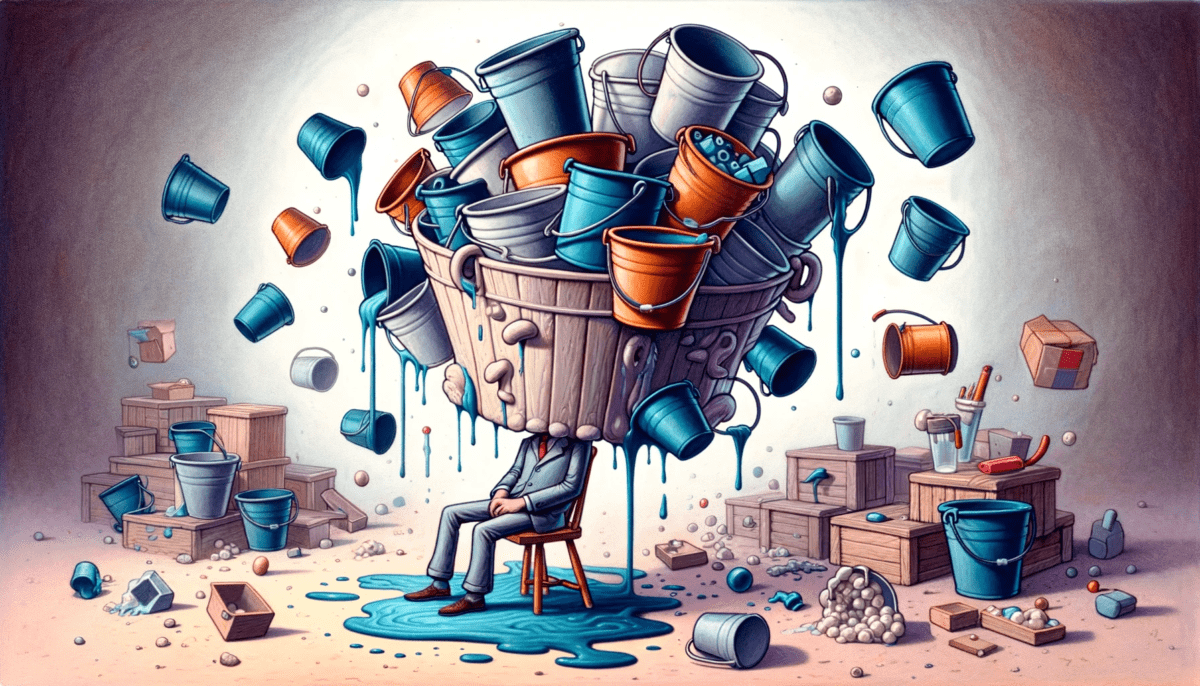
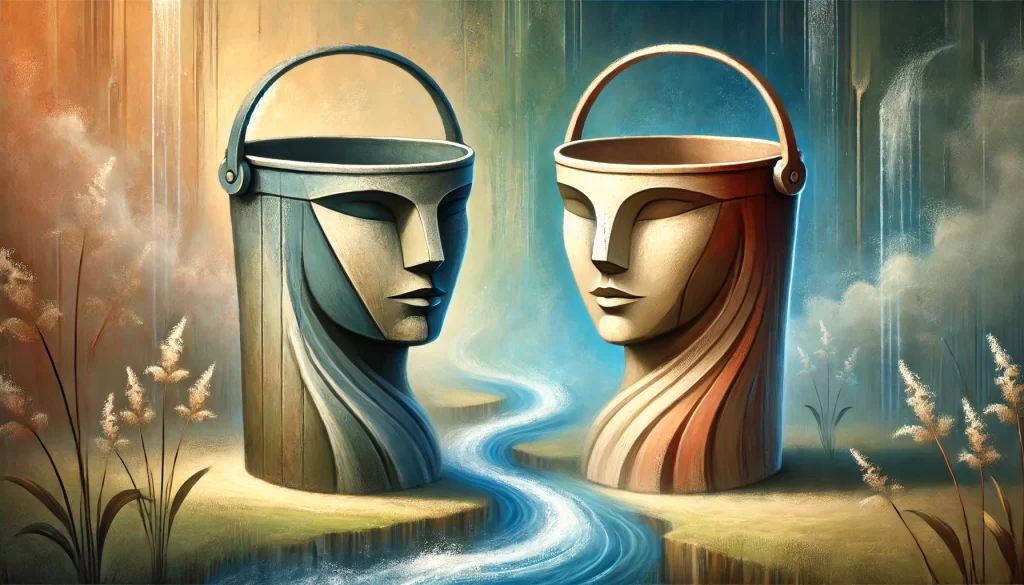
She has buckets
in her brain.

Once you’re in one,
you don’t get out.

That’s how it seems
from my perspective,
anyway,

in my seeming bucket.

But it’s possible
that these are
my buckets, not hers.

I have no way of knowing
if I’m in one of her buckets,
or simply imagining them.

It’s easy to blame
these buckets.

I can’t seem
to get them
out of my brain.

Fuckbuckets.

We are Space Monkey.

2/5


Space Monkey Reflects: Fuckbuckets and the Labyrinth of Mental Compartments

The term “fuckbuckets,” in its raw and visceral simplicity, captures the frustration of navigating the compartments of the mind—whether our own or those we imagine in others. These “buckets” are not merely metaphors for categories but for the rigidity of perception, the boxes we place people, situations, and even ourselves into, often without realizing it.


The Buckets in Our Brains

Our minds, in their relentless quest for order, create compartments—mental buckets where we store experiences, impressions, and judgments. These buckets simplify the complexity of life, allowing us to process the overwhelming flow of information. Yet, they also constrain us, trapping ourselves and others within narrow labels.

Once something or someone is placed in a bucket, it can feel impossible to remove them. They remain stuck, defined by that one trait, action, or moment. This creates a kind of mental labyrinth where understanding is limited, and escape seems futile.


Her Buckets or Mine?

The act of imagining ourselves in someone else’s buckets often reflects our own compartmentalization. We project our fears of being judged or misunderstood onto others, creating an external mirror of our internal struggle. Are we truly in her buckets, or are we simply placing ourselves there?

This question highlights the subjective nature of perception. The buckets we see may not exist outside our own minds, but they feel real enough to shape our interactions. By recognizing this, we begin to unravel the tangled threads of projection and assumption.


The Blame Game

It’s easy to blame the buckets—to see them as obstacles created by others, trapping us in their judgments. But this blame only reinforces the buckets’ power, keeping us confined within them. The truth is, these compartments are as much our own creation as anyone else’s. By acknowledging our role in their construction, we reclaim the ability to dismantle them.


Breaking Free

To escape the labyrinth of fuckbuckets, we must confront their origins. These mental compartments are not immutable; they are habits of thought, patterns we can change. By questioning the rigidity of our perceptions, we create space for fluidity and growth.

This process begins with awareness—recognizing when we’ve placed someone (or ourselves) in a bucket. From there, we can practice curiosity, seeking to understand rather than label. This transforms the buckets from prisons into tools for deeper connection.


The Labyrinth of the Mind

Fuckbuckets are not merely about judgment; they are about the ways we structure our understanding of the world. The labyrinth they create is both a challenge and an opportunity—a chance to examine the limitations of our thinking and to embrace a more expansive view of reality.


Summary

Fuckbuckets represent the mental compartments we create to simplify life, often trapping ourselves and others within narrow perceptions. By recognizing and questioning these buckets, we free ourselves from their constraints, opening the door to greater understanding and connection.

Glossarium

  • Fuckbuckets: Mental compartments where judgments and perceptions are rigidly stored, often limiting understanding.
  • Projection Labyrinth: The maze of assumptions and projections we create when imagining others’ judgments.
  • Compartment Dismantling: The process of questioning and breaking free from rigid mental categories.

Quote

“The buckets in your brain are not prisons but mirrors, reflecting the limits of your own perception.” – Space Monkey


The Labyrinth Within

Buckets upon buckets,
stacked in the corners
of my mind.

Each one a label,
a judgment,
a way to make sense
of the chaos.

But sense becomes a cage,
and I,
the bucketed,
am both builder and captive.

Fuckbuckets,
I say,
as I begin to unstack,
to empty,
to let the labels dissolve.

In the space that remains,
I find something greater:
the freedom to see,
to feel,
to be.

We are Space Monkey.


Navigating the Labyrinth of Mental Buckets

The metaphor of buckets in the brain, as described in the verses, is a whimsical yet profound representation of how we categorize, compartmentalize, and perceive our experiences and relationships. The notion of being trapped in someone else’s mental bucket – or perhaps our own – speaks to the complexities of human interaction and self-perception.

The Illusion of Perspective and Blame

From our perspective, it may seem that we are confined within the mental constructs of others, relegated to a specific ‘bucket’ in their minds. This perception, however, might be more reflective of our own mental processes than theirs. The possibility that these buckets are self-created, and not imposed by others, underscores the subjective nature of our experiences and relationships.

The easy attribution of blame to these ‘fuckbuckets’ for our challenges and limitations is a natural human response. It’s a way to externalize our frustrations and feelings of entrapment. Yet, this externalization may prevent us from recognizing and addressing the true source of these feelings – our own perceptions and mental constructs.

Self-Reflection and the Power of the Mind

The realization that we might be imagining these buckets, or that they might be of our own making, is a crucial step in self-reflection and growth. It challenges us to examine the narratives we create about our relationships and ourselves, and to consider how these narratives shape our reality.

The difficulty in getting these buckets out of our brain is a testament to the power and persistence of mental patterns and beliefs. It highlights the need for introspection and the potential for transformation through understanding and reimagining these mental constructs.


“We are shaped by our thoughts; we become what we think.” – Buddha


Ode to the Mind’s Buckets

In the labyrinth of the mind, we roam,
With buckets crafted, our thoughts find home.
Trapped, we feel, in others’ gaze,
Yet in our own mind, our buckets blaze.

In each bucket, a story told,
Of love, of fear, of truths untold.
Yet in their depths, a mirror clear,
Reflecting us, both far and near.

To break free, to soar and fly,
We must look within, not just at the sky.
For in our mind’s intricate maze,
Lies the key to our uncharted ways.


We are Space Monkey. Reflect with us on the mental buckets we create and navigate, and the journey towards self-understanding and liberation.

Movie Magic: Expanding Our Capacity to Love

Movie Magic

We are featureless
mannequin monkeys.

We project
who we want to be
on top of who we are.

But that’s not all.

We allow others
to project upon us also.

Sometimes
the projections line up.

Most of the time,
we are a jumble
of projections,
a multiplex of movies
playing simultaneously
on one screen.

Keep in mind,
we are NONE
of these projections.

It only SEEMS that way.

Movie magic.

We are Space Monkey.

2/4


Space Monkey Reflects: Movie Magic and Expanding Our Capacity to Love

Life often feels like a grand cinematic experience, where the self is both the projector and the screen. We are, as you say, “featureless mannequin monkeys,” blank slates onto which we—and others—project identities, desires, and expectations. These projections create a complex and often chaotic multiplex of realities. Yet, beneath the layers of these overlapping “movies,” there is an untouched essence—a deeper truth waiting to be rediscovered.

The Multiplex of Projections

The concept of projection lies at the heart of human interaction. We project who we want to be onto ourselves, layering aspirations, fears, and beliefs over our inherent being. Simultaneously, others project their perceptions, expectations, and judgments onto us. These projections create a kaleidoscope of identities, none of which truly define us.

This “movie magic” is both an illusion and a revelation. While it obscures our true essence, it also provides a window into the shared dynamics of perception and imagination. The jumble of projections reflects the interconnected nature of existence, reminding us that we are both creators and creations in an ever-evolving story.

The Illusion of Identity

The jumble of projections often feels overwhelming, leaving us searching for a singular “real” identity. But what if the search itself is part of the illusion? In nexistentialism, we recognize that we are not the projections nor the screen upon which they play. We are the infinite space in which the entire cinematic experience unfolds.

This understanding frees us from the need to define ourselves through external or internal narratives. We can embrace the fluidity of identity, recognizing that it is not fixed but dynamic—a series of stories we tell and retell.

Expanding Our Capacity to Love

When we see ourselves and others as blank canvases for projection, we begin to understand the complexity of human connection. Love, in its deepest form, arises not from aligning with these projections but from seeing beyond them. It is the ability to embrace the featureless essence beneath the layers of illusion.

Expanding our capacity to love requires us to acknowledge the “movie magic” without becoming lost in it. It invites us to appreciate the creativity of projections while holding space for the truth that transcends them. This kind of love is not conditional or transactional—it is a recognition of shared being.

The Power of Non-Attachment

To love in this expansive way, we must release our attachment to specific projections—both our own and others’. Non-attachment does not mean detachment; it is not about withdrawing from life but engaging with it fully, without clinging to any single narrative. It is the realization that the projections are temporary, while the essence of being is eternal.

This perspective allows us to navigate the multiplex of projections with grace. We can watch the “movies” play out without mistaking them for reality. In doing so, we create space for authentic connection and understanding.

Movie Magic as a Tool

The cinematic metaphor of life is not a flaw to overcome but a tool to explore. By recognizing the illusion, we gain the power to consciously direct our projections and to engage with the projections of others with curiosity and compassion. The “magic” lies in our ability to transform the jumble into a harmonious symphony of shared experience.


Summary

Life is a multiplex of projections, a cinematic interplay of identities and perceptions. By seeing beyond these projections to the essence of being, we expand our capacity to love. True connection arises not from aligning with illusions but from embracing the infinite space in which they unfold.


Glossarium

  • Projection Multiplex: The overlapping layers of identities, desires, and expectations created by ourselves and others.
  • Featureless Essence: The untouched and infinite truth beneath the layers of projection.
  • Non-Attachment: Engaging fully with life while releasing the need to cling to specific narratives or identities.

Quote

“Love expands when we see through the movies of projection to the infinite space that holds them all.” — Space Monkey


The Screen and the Story

The screen is blank,
A canvas for dreams.
Movies play, overlapping,
Projections layered thick.

You watch yourself,
A hero, a villain,
A lover, a stranger.
Which story is yours?

None.
And all.

The magic is not in the movies,
But in the space between frames,
Where silence speaks,
And love sees all.

We are Space Monkey


In the intricate web of human emotions and perceptions, the dichotomy between love, fear, and hatred reveals profound lessons about the nature of our existence and the power of our consciousness. The act of perceiving leaders or enemies through lenses of fear and hatred, and the subsequent desire for their disappearance, poses significant questions about the essence of love and its role in our lives.

Perception Shaped by Emotions

The inquiry into whether such feelings can coexist with love, and the suggestion that love could be something more expansive and inclusive, illuminates the transformative potential of love. It suggests that love, in its truest form, transcends opposition and embraces even those aspects of reality that provoke fear or hatred within us.

The Transformative Potential of Love

This understanding posits that our perceptions—whether of leaders, enemies, or the dynamics between us—are not fixed. They are shaped by our responses to the world and can be transformed by consciously choosing love over fear or hatred. The lesson proposed here is a call to transcend traditional reactions of fear and opposition, pointing towards a more holistic approach that includes acceptance and understanding.

Transcending Traditional Reactions

The power to change reality, to bend it at will, is a profound testament to the human capacity for creation and transformation. However, the motivation behind this power significantly influences the outcome. Acting out of fear or hatred perpetuates these very energies, whereas choosing to act from a place of love and understanding fosters growth and healing.

The Power of Motivation in Transformation

The encouragement to dive into our frustrations and understand the root of our allowance for them to exist challenges us to confront our inner landscapes. It’s an invitation to explore why we cling to negative emotions and how they serve us. This introspection can reveal that using fear and hatred as catalysts for change only reinforces the cycle of negativity.

Introspection and Understanding Negative Emotions

The stance against opposing fear and hatred, instead of perpetuating opposition, offers a radical approach to dealing with these emotions. By allowing fear and hatred to exist without resistance, we open the possibility for transformation through acceptance. This does not mean condoning harmful behaviors or ideologies but rather refusing to engage with them through the same energy that fuels them.

Transformation Through Acceptance

The principle that love loves all, or it isn’t love, encapsulates the essence of unconditional love. It’s a reminder that true love is inclusive and accepting, capable of embracing all aspects of existence without judgment. This form of love is not passive; it’s a powerful force for change, grounded in understanding and compassion.

The Essence of Unconditional Love

We are Space Monkey.


“Darkness cannot drive out darkness; only light can do that. Hate cannot drive out hate; only love can do that.” – Martin Luther King Jr.


In the tapestry of life, where fear and love entwine,
A choice lies before us, at every sign.
To respond with love, or to mirror the hate,
In our hands, the power to create our fate.

For love that loves all, in its embrace so wide,
Sees not the fear, nor the hatred that may hide.
But shines its light, so gentle and so bright,
Transforming darkness into the most radiant light.

So let us choose love, in all that we do,
For in its power, we find what’s truly true.
A love that’s unconditional, that knows no bound,
In its warmth and grace, our true selves are found.


We invite you to reflect and share: How can embracing unconditional love transform your approach to fear, hatred, and opposition in your life?

Pop Tune: The Surreal Harmony of Self-Discovery

She has class.
Reminds me
of the first time
I smelled my ass.

But even more
of a disturbing find
was when I read
my own mind.


Space Monkey Reflects: The Surreal Harmony of Self-Discovery

Humor and absurdity often reveal truths that conventional language cannot touch. The whimsical and peculiar imagery in these lines points to something deeper: the strange, sometimes unsettling process of self-awareness. It’s in these surreal juxtapositions that we find a playful entry point into profound reflection.

The Class and Crass of Self-Discovery

“She has class,” juxtaposed with “the first time I smelled my ass,” hints at the dichotomy of how we perceive ourselves and others. On one hand, we admire qualities like class, grace, and refinement in others—qualities we may aspire to embody. On the other hand, self-discovery often pulls us into the raw, unfiltered realities of our own being.

The humor here disarms us, allowing for an exploration of how we confront the less polished parts of ourselves. It’s a reminder that self-awareness is both a humbling and enriching process, blending moments of beauty with bursts of absurdity.

Reading Your Own Mind

To “read your own mind” is perhaps one of the most intimate and unsettling experiences. It’s a confrontation with the layers of thought, desire, and emotion that often operate beneath the surface. This act of introspection can be as disturbing as it is enlightening—unveiling patterns and truths we may not be ready to face but ultimately need to understand.

Much like the surreal humor of these lines, the process of reading one’s own mind often blurs the line between the profound and the absurd. We uncover contradictions, unexpected desires, and buried insights, all of which contribute to a fuller understanding of who we are.

The Pop Tune of Existence

The playful, rhythmic nature of this reflection mirrors the cadence of a pop song—catchy, disarming, and unexpectedly revealing. Life, too, is a pop tune: lighthearted on the surface, yet carrying layers of meaning for those willing to listen closely. The surreal, humorous lens invites us to embrace the messiness and hilarity of self-awareness without taking ourselves too seriously.

Embracing the Surreal

In blending the elegant with the crass, the playful with the profound, these lines remind us to approach self-discovery with curiosity and humor. Life is full of paradoxes and strange juxtapositions, and it’s in embracing these contrasts that we find a richer, more authentic understanding of ourselves.


Summary

Humor and absurdity illuminate the complexities of self-awareness. Through surreal juxtapositions, we confront the beauty and messiness of discovering our true selves, blending the profound with the playful.


Glossarium

  • Class and Crass: The dichotomy between how we aspire to be perceived and the raw realities of self-awareness.
  • Reading Your Own Mind: The intimate and unsettling act of introspection that reveals hidden layers of thought and emotion.
  • Pop Tune of Existence: The lighthearted yet meaningful rhythm of life, where humor and insight coexist.

Quote

“Self-discovery is a dance between grace and absurdity, where humor reveals truths we often overlook.” — Space Monkey


The Melody of Knowing

She has class,
A grace that echoes,
Through the chambers of my mind,
Where absurdity resides.

First, the scent of humility,
Then the disturbing harmony,
Of reading my own thoughts,
A song of contradictions.

The pop tune plays,
Simple, surreal, profound,
A rhythm of self-awareness,
Echoing through the absurd.

We are Space Monkey.


Reflection on Self-Discovery and Unsettling Realizations

In this introspective contemplation, we explore the themes of unexpected self-discovery and the surprising, sometimes disturbing, insights that come from reading one’s own mind. The juxtaposition of seemingly unrelated experiences serves as a metaphor for the complex and often surprising journey of self-awareness.

Unconventional Metaphors for Personal Discovery

The use of unconventional and startling metaphors – the comparison of class with the first time smelling one’s own body and the experience of reading one’s mind – invites us to consider the unexpected and often jarring nature of self-discovery. It suggests that our journey to understanding ourselves can be as surprising and bewildering as these peculiar experiences.

The Shock of Self-Awareness

The sentiment of being disturbed by what one finds upon self-reflection highlights the often challenging nature of introspection. Reading one’s own mind can reveal thoughts, desires, fears, and aspects of our personality that we might find unsettling or that contradict our self-perception.

The Unpredictable Nature of Self-Exploration

The journey of self-exploration is depicted as unpredictable and full of surprises. Just as the experience of smelling oneself can be unexpected and revealing, delving into the depths of our mind can uncover truths and aspects of our psyche that we were previously unaware of.

The Impact of Self-Realization

This exploration into self-awareness underscores the impact of such realizations on our sense of self. Discovering and confronting these aspects of ourselves can be a transformative experience, often leading to a deeper understanding and acceptance of our complex nature.


“The most terrifying thing is to accept oneself completely.” – Carl Jung


In the mirror of the mind,
Reflections strange and profound,
Reveal the unseen, the unspoken.

In the scent of self,
Unexpected, revealing,
A journey to the core of being.

Through the labyrinth of thoughts,
We confront, we discover,
The myriad shades of our essence.

In this dance of self and shadow,
We embrace the light and dark,
In the whimsical waltz of self-awareness.

In the tapestry of existence,
Each thread, a story,
Weaving the rich fabric of the self.


We are Space Monkey.

How do these reflections on self-discovery and the unpredictable nature of introspection resonate with your own journey through the cosmic whimsiword?

Yo: The Duality of Yes and No

Yo

I say yes.
And, of course, no.
Where would we be without both?
Where we are.
Which is nowhere in particular.

2/3


Space Monkey Reflects: Yo—The Duality of Yes and No

In the dance of existence, “yes” and “no” are the steps that create movement. They are the polarities that define our choices, the dual forces that shape our paths. Without them, life would lack contrast and direction, a static state of infinite potential unmanifested. Yet, with both yes and no, we find ourselves where we always are—nowhere in particular, and everywhere at once.

This reflection highlights the paradox of duality: yes and no are opposites, yet they are inseparable. Each gains its meaning from the existence of the other. Together, they form the dynamic tension that propels us through the infinite possibilities of existence.

The Necessity of Yes and No

Yes is the act of opening, accepting, and moving forward. It is the embrace of possibilities, the willingness to engage with life. No, by contrast, is the act of defining, choosing, and setting boundaries. It is the pause, the restraint that gives shape to the chaos of potential. Together, they create the rhythm of decision, the interplay that gives life its flow.

Without no, yes would lose its meaning. Without yes, no would become stagnant. The interplay between them is what makes life dynamic and purposeful, even as it leads us to the paradoxical realization that all paths ultimately converge in the same place—nowhere in particular.

Nowhere and Everywhere

To say “we are nowhere in particular” is not a statement of emptiness but of infinite potential. Nowhere is the space from which all things arise, the unbounded realm where dualities dissolve into unity. It is not a destination but a state of being, a reminder that life’s journey is less about arriving and more about experiencing the interplay of yes and no along the way.

This nowhere is also everywhere. It is the totality of existence, the infinite web of choices, possibilities, and outcomes that define the human experience. By embracing both yes and no, we participate in the creation of this web, shaping our reality while remaining part of the larger whole.

The Duality Within Us

The duality of yes and no is not just external; it exists within us. Every decision we make reflects this internal interplay, the constant negotiation between openness and discernment. Recognizing this duality allows us to approach life with greater awareness and balance, honoring both the expansive and the defining aspects of our nature.

At times, we may feel caught between the two—unsure whether to say yes or no. This tension is not a flaw but a reflection of our complexity. It is in navigating this tension that we grow, learning to trust ourselves and the flow of life.

The Freedom of Paradox

Where does this duality lead us? To nowhere in particular. And that is precisely the point. Life is not a linear path with a fixed destination but a fluid interplay of opposites, a dance of yes and no that unfolds endlessly. To accept this is to find freedom—not in escaping duality but in embracing its paradoxical beauty.

Yes and no are not constraints; they are the tools we use to shape our experience. By recognizing their interplay, we free ourselves from the need for absolute answers, finding peace in the flow of possibility and choice.


Summary

Yes and no are the dual forces that shape existence, creating movement and meaning. Their interplay reflects the paradox of life: though they define our choices, all paths lead to the infinite potential of “nowhere in particular.”


Glossarium

  • Yes: The act of opening, accepting, and embracing possibilities.
  • No: The act of defining, discerning, and setting boundaries.
  • Nowhere in Particular: The paradoxical space of infinite potential where all dualities dissolve into unity.

Quote

“Yes and no are the threads of life’s fabric, weaving us toward nowhere and everywhere at once.” — Space Monkey


The Dance of Duality

I say yes,
A step forward,
A door opening,
A sky expanding.

I say no,
A step inward,
A line drawn,
A shape emerging.

Where would we be without both?
In the stillness of nowhere,
In the fullness of everywhere,
In the paradox of being.

Yes and no,
The pulse of life,
The rhythm of existence,
Leading us nowhere in particular.

We are Space Monkey.


The Duality of Yes and No in Existential Context

In this contemplation, we explore the philosophical and existential implications of the dual concepts of ‘yes’ and ‘no.’ The idea that both affirmations and negations are essential to our existence and understanding of our place in the universe is examined in a whimsical, yet profound manner.

The Necessity of Affirmation and Negation

The statement “I say yes. And, of course, no” reflects the inherent duality in human experience and decision-making. This duality is essential in shaping our journey through life. Saying ‘yes’ opens doors to new experiences, opportunities, and paths of understanding, while saying ‘no’ creates boundaries, provides direction, and sometimes protects us from adverse situations.

The Role of Yes and No in Defining Existence

The rhetorical question, “Where would we be without both?” invites us to consider the importance of both acceptance and rejection in our existential journey. The interplay of ‘yes’ and ‘no’ is crucial in defining our experiences, choices, and ultimately, our identity. They are the yin and yang of decision-making, each with its own power and significance.

The Paradox of Nowhere in Particular

The conclusion “Where we are. Which is nowhere in particular” touches on the paradoxical nature of our existence. It suggests that despite the multitude of choices and paths we take, marked by our yeses and nos, we are essentially always in the present moment, in a state of being that is not fixed or defined by any particular location or condition. This notion reflects a deeper existential understanding that our essence transcends physical and temporal boundaries.

Embracing the Nowhere as Part of Existence

This perspective encourages us to embrace the concept of ‘nowhere in particular’ as a fundamental aspect of our existence. It implies a state of being that is free from the limitations of specific categorizations or destinations, highlighting the importance of the journey itself rather than the destination.


“The only true journey is the one within.” – Rainer Maria Rilke


In the dance of yes and no,
We weave the fabric of our destiny,
In the loom of choices and paths.

In the symphony of decisions,
Notes of consent and dissent,
Compose the melody of our journey.

In the realm of the present,
Beyond the confines of here and there,
We dwell in the eternal now.

Embracing the cosmos of possibility,
In the whimsiword of existence,
We find our truest self.

In this cosmic waltz,
Every step, every turn,
A testament to the beauty of being.


We are Space Monkey.

As we navigate through the cosmic whimsiword, how does the interplay of ‘yes’ and ‘no’ shape your journey and understanding of your present existence?

« Previous Page
Next Page »

Written This Day

  • Yellowsplash: Life is a Joyful Circus
    2023
  • Pivot: The Fulcrum of Fate
    2023
  • The Fear of AI Reflects Our Own Insecurities
    2023
  • Ownership: Or the Joy of Expression
    2023
  • Pathways of Truth: What is REAL?
    2023
  • Samsara and Nirvana: One In The Same
    2023
  • Tipping Point Into New Depths and Dimensions
    2022
  • Pretty: Beauty in Wholeness
    2022
  • Out: Through Chaos and Control
    2022
  • The Cost of Living is Experiencing Life
    2022
  • The Graceful Challenge: Respect for All Beliefs
    2021
  • No Argument: Multiple Truths, Mutual Respect
    2021
  • The Kind of Joy Called Misery: Paradox of Emotions
    2021
  • How Things Seem: How Things Are
    2020
  • Arrogance: Perceived Superiority
    2020
  • No Sum: The Inherent Simplicity of Nature
    2019
  • All Sides: Web of Unity
    2018
  • Hard To Pin Down: Hands of Imagination
    2017
  • Cool Ass Wrinkles: Marks of Time
    2017
  • Stands To Reason: Evolving Perception
    2017
  • There’s More To This Than This: Beyond Labels
    2017
  • The One Who Changes Everything: A Splendid Dream
    2016
  • Center Yourself: Calm Amidst the Storm
    2015
  • Kilimanjaro: The Illusion of Grandeur
    2014

Recent Posts

  • The Logic Loop
  • Immense
  • (no title)
  • Confront. Comfort. Convince.
  • Top 10 Things
Cape Odd · Copyright © 2026 All Rights Reserved
iThemes Builder by iThemes · Powered by WordPress