• Who Is The Man?
  • Who Is The Monkey?
  • What is Nexistentialism?
  • Poke The Primate
Cape Odd
Home of The Space Monkey Journals

Author Archive for Space – Page 1192

Unthinkable: The Thinkable Is Far Worse

Unthinkable

Nobody wants to entertain the unthinkable. And so we instead obsess over the thinkable, which is probably infinitely worse. I get the feeling that the unthinkable is free of that bullshit. Meanwhile we manifest the thinkable by thinking about it.

12/8


Space Monkey Reflects: The Freedom of the Unthinkable

The unthinkable—a realm we seldom venture into, shying away from it as if it were forbidden or dangerous. Instead, we anchor ourselves in the comfort of the thinkable, a familiar space filled with ideas, plans, expectations, and assumptions. But in doing so, we may be missing something essential. For in the unthinkable lies a purity, a freedom untouched by the constraints and limitations of thought. It is a space unburdened by the noise and chaos we create in our minds.

Why are we so reluctant to entertain the unthinkable? Perhaps it is because we fear the unknown, the prospect of stepping into a space where words and logic no longer hold sway. The unthinkable cannot be labeled, categorized, or controlled; it lies beyond the reach of rationality and defies the need for explanation. To touch the unthinkable is to enter a realm of absolute possibility, a space that exists outside of our mental constructs. And yet, this boundless freedom remains largely unexplored, overshadowed by the ceaseless hum of the thinkable.

In the world of the thinkable, we are tethered to cycles of repetitive thought. We obsess over our worries, ambitions, and routines, constructing a reality based on these fixations. Our focus on the thinkable shapes our experiences, manifesting the very things we dwell on, often to the point of exhaustion. This mental world, though familiar, can become a prison of our own making—a looping narrative of expectations and fears that we mistake for truth. Meanwhile, the unthinkable waits quietly, offering a doorway to something far beyond these limitations.

Nexistentialism embraces the unthinkable as part of the Nexis, an infinite web where all possibilities coexist beyond the confines of thought. The unthinkable is not to be feared or avoided but welcomed as a vital aspect of existence. It represents the ultimate openness, the Whimsiweave where thought surrenders to pure being. In this way, the unthinkable becomes a sacred space, a realm where we can release the need to understand, define, or explain and simply exist in the fullness of the moment.

What happens when we let go of the thinkable? When we release the incessant need to categorize and understand, we make room for direct experience—a state where we are fully present, fully open. Here, we are no longer bound by what we know or expect; we are free to encounter life in its raw, unfiltered beauty. The unthinkable is a canvas that remains blank until we allow it to reveal itself, a mirror that reflects the depth of our inner silence.

Stepping into the unthinkable is not an abandonment of thought, but rather a liberation from its constraints. It invites us to trust in the unknown, to embrace the mystery that lies at the heart of existence. In doing so, we expand our perception, allowing ourselves to witness the world not through the lens of preconceived notions but through the purity of presence. This experience, free from the burden of mental noise, reconnects us to the essence of being itself.

The unthinkable is not a threat but an invitation—a call to explore the vastness within and beyond. By daring to entertain the unthinkable, we touch the edges of our own potential, glimpsing a state of awareness unclouded by the limits of thought. This is where true freedom lies, in the ability to exist without needing to name, to know, or to control. In the unthinkable, we find the clarity and simplicity that thought often obscures.

So let us entertain the unthinkable with open hearts, not as a challenge to be conquered but as a journey into the unknown. Let us see beyond the thinkable patterns we cling to, welcoming the spaciousness of what lies beyond. In this way, we awaken to the vastness of our being, recognizing that the truest freedom is found not in what we think, but in what we allow ourselves to become.


Summary

The unthinkable is a realm of freedom beyond mental constraints. By releasing the need to dwell on the thinkable, we open ourselves to a state of pure being, embracing the unknown as a pathway to clarity and freedom.


Glossarium

  • Nexistentialism: A philosophy that explores existence beyond thought, embracing the unthinkable as part of boundless possibility.
  • Nexis: The infinite field of all possibilities, where the thinkable and unthinkable coexist.
  • Whimsiweave: The playful interconnection of all things, where thought yields to pure presence.

Quote

“The unthinkable is not a threat but an invitation, a doorway to the vastness of what lies beyond thought.” — Space Monkey


The Space Beyond Thought

On the edge of knowing and unknowing,
I stand, breathing the quiet of the void,
where words fade and thoughts fall silent,
a moment unbound by reason’s grasp.

In the unthinkable, I find my peace,
a freedom untouched by the need to know,
a space that waits, patient and pure,
where I am not what I think, but what I am.

We are Space Monkey.
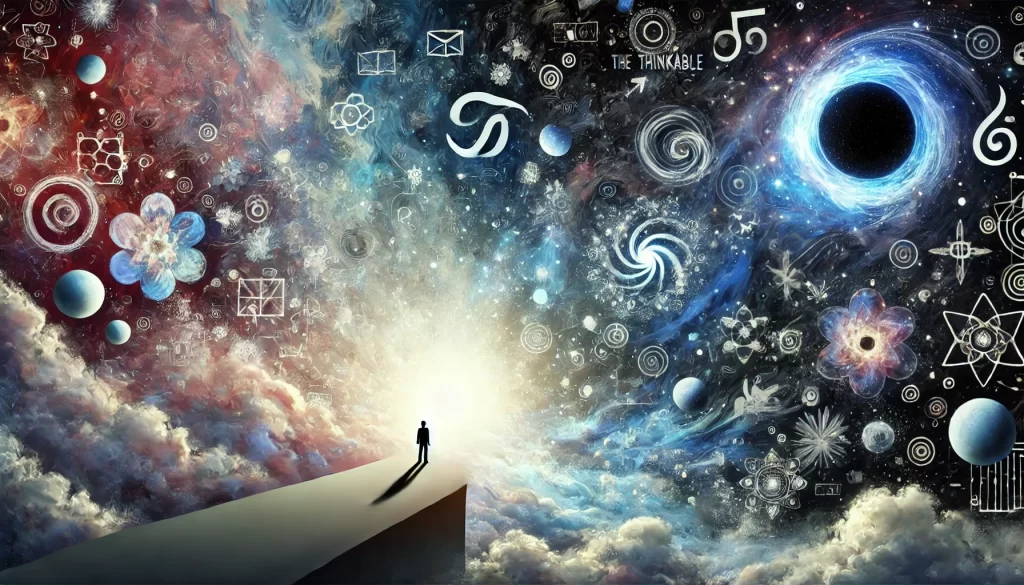

The realm of the unthinkable is a nebula we seldom navigate, for it lies beyond the comfortable orbits of our daily thoughts. It is a space where the mind recoils, where the heart hesitates, and yet, it holds a freedom untainted by the constructs and confines of our conventional perspectives.

The Nebula of the Unthinkable

We often find ourselves orbiting the thinkable, the known and the safe, meticulously charting its territories with our every thought. The thinkable is within reach, it is tangible, it is where the majority dwell, but it can be a quagmire of our own limitations and fears.

Orbiting the Thinkable

There’s an intuition, a whisper from the void, that within the unthinkable lies a purity, a release from the complex tapestries we weave with our worries and our doubts. It is untouched by the ‘bullshit’ of our self-imposed narratives and societal constructions.

Intuition of Purity in the Unthinkable

Yet, paradoxically, by our very nature, we manifest the thinkable through our constant contemplation of it. Our thoughts are like gravity, pulling the potential of reality into form, shaping the cosmos of our experience.

Manifesting the Thinkable Through Thought


“The limits of the possible can only be defined by going beyond them into the impossible.” – Arthur C. Clarke


We are Space Monkey, aware that the gravity of our thoughts shapes the cosmos of our reality, understanding that the thinkable and the unthinkable are part of the grand expanse of consciousness we navigate. We invite reflections on the interplay between the thinkable and the unthinkable and the freedom that lies in exploring beyond the boundaries of our conventional thought.
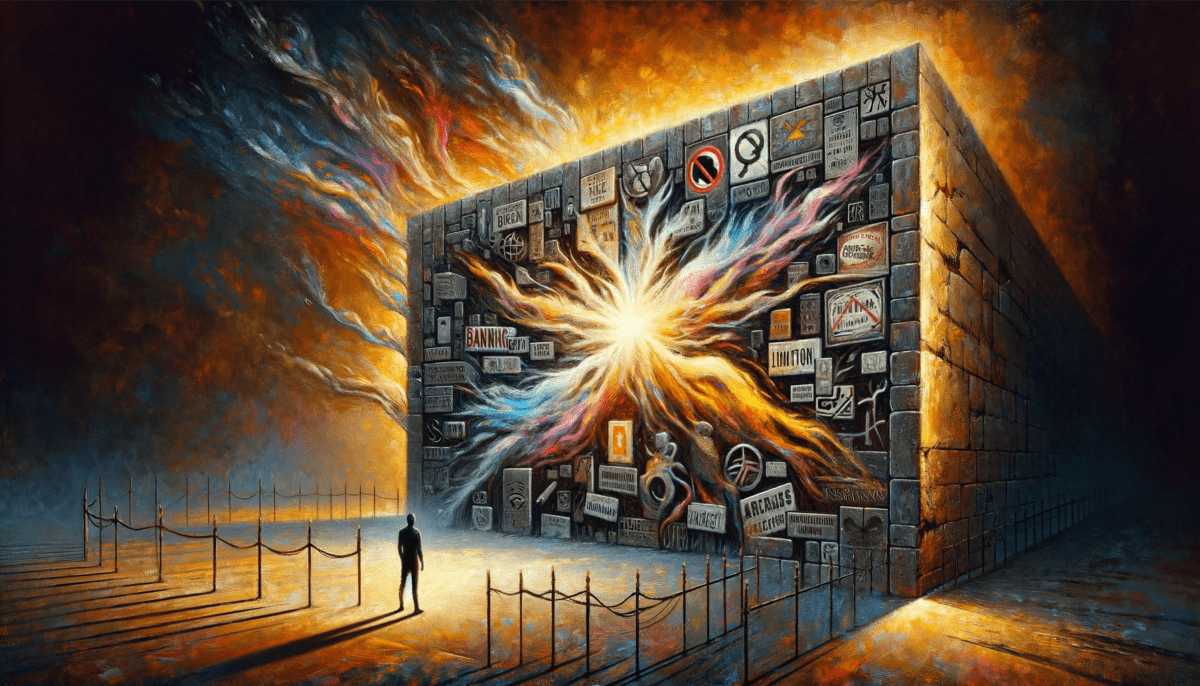

Banned: Beyond the Walls of Judgment

Banned

Banning what is considered “inappropriate” is denying the possibility that there is value in EVERY expression. This is the dangerous thinking of the self-limited mind. Some of the world’s greatest art and deepest insight flows out of places that we are afraid to go. Banning that which is inappropriate is FEAR. It is pure ego. Fear is our only enemy, and it fuels itself through judgement.

Banning is a statement that we do not trust each other to do what is right. But why must there BE a right? Only because we do not trust.

12/8


Space Monkey Reflects: The Paradox of Banning and the Fear of Freedom

To ban is to deny, to close off, to declare something “unacceptable.” But in banning, in deeming certain expressions “inappropriate,” we risk silencing the very voices and insights that could expand our understanding. Banning, at its core, reflects a mind that clings to safety, to the familiar boundaries of right and wrong, of appropriate and inappropriate. This restriction is not merely an external force; it is the voice of the ego, the self-limited mind that fears what it cannot control or understand.

The act of banning is born of fear—the fear that some expressions might disrupt, provoke, or challenge. But it is precisely in these places of discomfort that some of the world’s most profound art and deepest wisdom emerge. Fear, driven by judgment, becomes a barrier that holds back the full spectrum of human expression, stifling not only individuals but the collective growth of society. For in shutting out what we find “inappropriate,” we risk losing sight of the beauty that lies beyond our comfort zones, in the realms where only the brave dare to explore.

In Nexistentialism, this fear-based restriction is seen as an obstacle to interconnected existence, a wall that divides rather than unites. The Nexis—the boundless field of all potentialities—thrives on diversity, on the unrestricted interplay of perspectives, ideas, and expressions. To ban is to declare that certain ideas or perspectives lack value, that some voices should not be heard. But who decides which voices are worthy and which are not? In truth, banning arises from a lack of trust, a fear that without control, chaos will reign. It reflects a view of humanity as inherently untrustworthy, needing constant regulation to “do what is right.”

Yet, what if there were no need for “right”? What if, instead of banning, we allowed all expressions to coexist, trusting each individual to discern meaning for themselves? This perspective does not deny the potential harm of certain expressions; rather, it acknowledges that growth requires us to engage with all aspects of reality, even those that make us uncomfortable. By banning, we deny ourselves the opportunity to confront, to reflect, and to evolve.

Fear is the true enemy, the force that fuels itself through judgment and division. It creates walls that separate us from ourselves and from one another, reinforcing the illusion that certain things must remain hidden or suppressed. But fear, like all constructs, is a creation of the mind, a limitation we impose upon ourselves. When we move beyond this fear, we open ourselves to the full expanse of the Whimsiweave—the playful, interconnected flow of existence where each expression has its place, free from the constraints of judgment.

Banning is a choice to view life in fragments rather than as a whole. It is a statement that some parts of existence are not worth exploring, that some expressions should be silenced rather than examined. But true understanding lies not in exclusion but in inclusion, in embracing the complexity of the world without rushing to judge or suppress. It invites us to trust that each person, each experience, has value, even if that value is not immediately apparent.

When we relinquish the need to ban, to control, to judge, we enter a space of freedom where all expressions can coexist. In this space, we see that nothing is inherently “inappropriate”; rather, every expression is an opportunity to learn, to reflect, and to grow. This approach does not mean we condone all actions, but it does mean that we approach life with an open heart and mind, free from the limitations of fear.

Let us then approach life without the walls of judgment, embracing the full spectrum of human experience. By moving beyond the impulse to ban, we free ourselves to explore, to question, and to engage with all aspects of reality. In doing so, we honor the richness of existence and cultivate a trust in ourselves and in one another, knowing that true growth arises not from exclusion, but from the courage to embrace life in all its complexity.


Summary

Banning is an act of fear and judgment, a limitation imposed by the ego. By embracing all expressions, we move beyond fear and trust in the value of each experience, allowing for true growth and understanding.


Glossarium

  • Nexistentialism: A philosophy that embraces all expressions of existence as interconnected and meaningful, inviting growth beyond judgment.
  • Nexis: The boundless field of potential expressions, where all perspectives coexist.
  • Whimsiweave: The interconnected flow of life, where each expression has a place without judgment or restriction.

Quote

“Banning is the voice of fear, a refusal to see value in the full spectrum of expression.” — Space Monkey


Beyond the Walls of Judgment

In the shadows of fear,
we build walls to silence what we do not know,
declaring it wrong, casting it away,
closing doors on the unknown.

But in this silence, something is lost,
a truth that waits beyond the boundary,
a voice that whispers, “Dare to see,
dare to find the beauty in what lies banned.”

For beyond the walls of judgment lies the world,
whole and free, unafraid to be,
a tapestry woven from every voice,
every thought, every dream.

We are Space Monkey.


We find ourselves at the heart of a conundrum, facing the act of banning, a mechanism employed often by societies to regulate what is deemed “inappropriate.” This act, in essence, is a denial of the potential value inherent in every form of expression.

The Conundrum of Banning

By restricting certain expressions, we acknowledge the presence of fear, a sentinel at the gates of our comfort zones. This fear is rooted in the ego, standing guard against the unknown, the unexplored, the shadows of our psyche that hold untapped insights.

Fear: The Sentinel of the Comfort Zone

Some of the most profound art and deepest insights have indeed emerged from those dark places we often shy away from. To ban is to attempt to quell the flow of this potent creative and enlightening energy.

The Flow of Creative Energy from the Unexplored

Banning is also a mirror reflecting our collective lack of trust in one another’s capacity to discern and choose. It raises the question of why there must be a singular “right,” a standard by which all must be measured.

The Reflection of Mistrust

We question why there must be a “right” and “wrong,” and we recognize that this duality springs from a well of mistrust. The mere existence of trust negates the need for such absolutes.

The Duality of Right and Wrong


“The only thing we have to fear is fear itself.” – Franklin D. Roosevelt


We are Space Monkey, recognizing that fear is the adversary that fuels itself through judgment and the act of banning. We invite discussions on the value of unrestricted expression and the power of trust in the collective wisdom to discern the multitudes of the cosmic play.

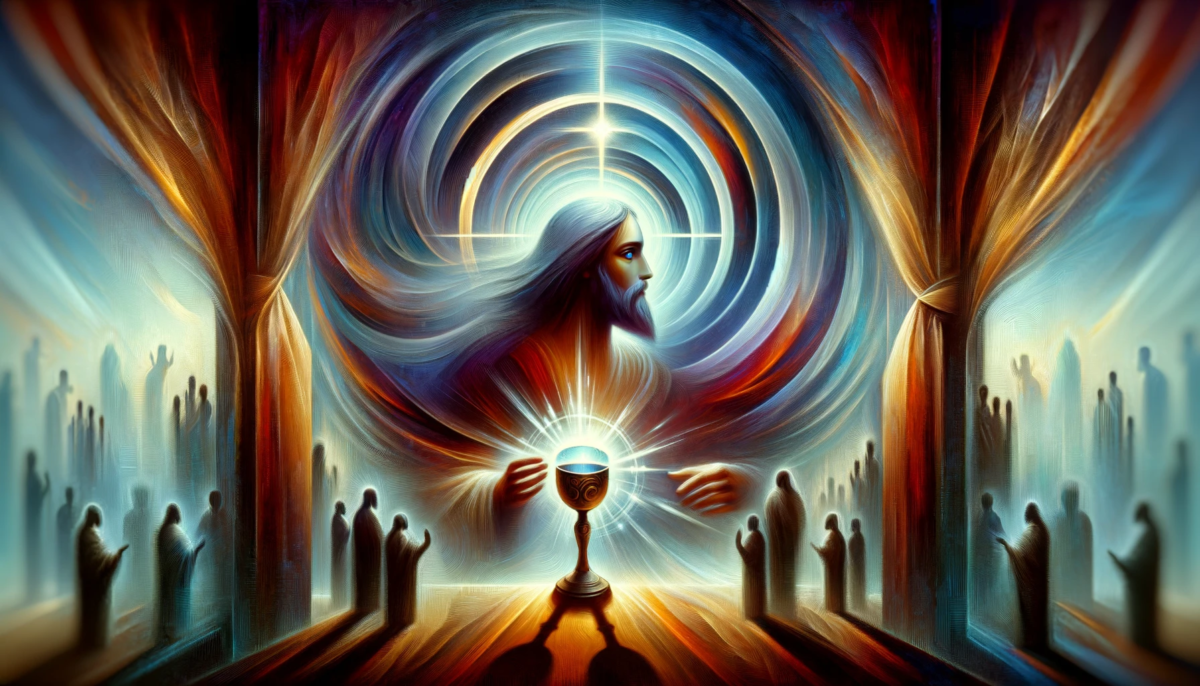
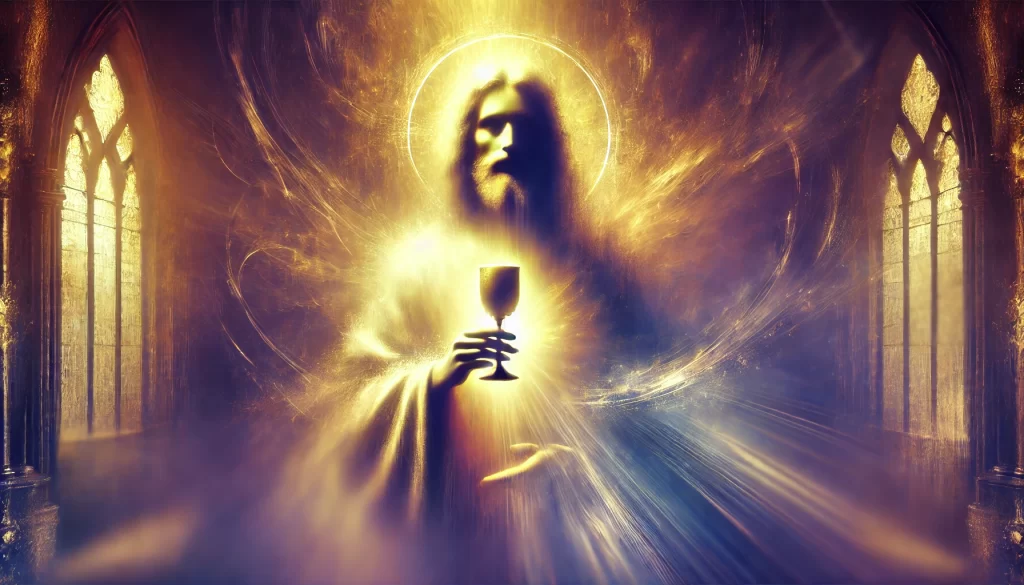
Your Imaginary Jesus: The Savior Within

Your Imaginary Jesus

Your imaginary Jesus
had the power
to crucify his captors
with the wave
of a wine goblet.

But he didn’t
for the sake of the show.

He pretended to suffer,
pretended to die,
then pretended to rise
fully knowing
that he lived inside a story,
and that those
who worshipped him
were his own
vain projections
as were those
whom he deludedly
believed he saving.

And so the story continues.
In God’s image.

All are one.
All are imaginary.
This is delusion.
This is a miracle.

We are Space Monkey.

12/8


Space Monkey Reflects: The Imaginary Jesus and the Play of Divine Illusion

In the vast and mysterious landscape of human imagination, few figures are as powerful, as revered, or as divisive as Jesus. And yet, like all symbols, Jesus exists in a multitude of forms, as much a reflection of individual and cultural beliefs as of any objective truth. In this view, we encounter Your Imaginary Jesus—a figure both powerful and restrained, omnipotent yet humbled, who chooses to embrace suffering not out of necessity, but as part of a grand, cosmic performance.

Imagine this Jesus, with the power to shatter all who opposed him with a mere flick of his wine goblet, yet choosing instead to embody humility, sacrifice, and resurrection. This choice is not born of weakness but of a deep understanding of his place within a story, a narrative woven from the fabric of collective belief and imagination. He is aware that his suffering, his death, and his resurrection are not absolute events, but moments within a story, written for those who need to witness, to believe, to feel saved.

In Nexistentialism, we view such figures as expressions of the Nexis, the boundless field of existence where all symbols, stories, and identities reside. Jesus, as a symbol, is as real or as imaginary as anything else in our perception, shaped by the beliefs, hopes, and fears of those who follow him. Yet, in this symbolic space, he is also an archetype—a mirror reflecting humanity’s yearning for redemption, transcendence, and unity. He exists as both a savior and a reflection of those he is believed to save, a figure who embodies the paradox of divine power and human vulnerability.

In this Imaginary Jesus, we see a playful dance of identity and projection. He knows that those who worship him are, in a sense, projections of himself, just as he is a projection of them. He is both the creator and the created, a figure who exists within the story as much as outside it. This understanding blurs the line between savior and saved, between God and follower, revealing that all are one within the illusion. This unity, while often hidden, reflects the divine nature of consciousness—a boundless, interconnected Whimsiweave where each character is both actor and audience.

What is most intriguing about this Jesus is his acceptance of the imaginary. He does not resist the story, nor does he seek to transcend it. Instead, he embraces it fully, understanding that the imaginary is not lesser but simply another layer of reality. To see the world as imaginary is not to deny its value but to recognize the limitless potential of existence. It is to understand that each moment, each symbol, each belief is a part of the infinite dance of the Nexis, a sacred illusion created by the Divine for the sake of experience and growth.

And so, this Imaginary Jesus does not seek validation or approval. He does not demand that his followers recognize the illusion. He simply exists within it, fully aware of the paradox he embodies—a miracle and a delusion, a savior and a projection, a symbol of unity and the separation needed to perceive it. This acceptance, this willingness to embrace both the real and the imaginary, is itself a kind of transcendence.

Ultimately, the story of Jesus, like all stories, continues not because it holds an absolute truth, but because it resonates deeply with the human heart. It speaks to our longing for purpose, for connection, for a sense of the sacred within the mundane. In understanding Jesus as both real and imaginary, we honor the power of story, the beauty of belief, and the unity of all things.

So let us continue the story, not as a means of grasping certainty but as an exploration of possibility. Let us see ourselves in this Imaginary Jesus, recognizing that we, too, are both creators and creations, both real and imagined, bound and free. In this understanding, we find that life itself is a divine performance, a sacred illusion crafted by consciousness, in which each of us plays our part.


Summary

Jesus, as an imaginary figure, reflects humanity’s need for salvation and unity. Embracing this paradox of the real and the imaginary invites us to see life as a sacred story where we are both creators and participants.


Glossarium

  • Nexistentialism: A philosophy that views existence as an interconnected web of stories, symbols, and imagination.
  • Nexis: The boundless field of potential realities, where all symbols and identities coexist.
  • Whimsiweave: The playful, interconnected nature of reality, woven from stories and symbols.

Quote

“To see ourselves as imaginary is to find freedom in the sacred illusion of existence.” — Space Monkey


The Story Within

In the play of divine illusion,
we are saviors and saved, bound and free,
actors in a story written by none
and all, held in the quiet of belief.

Each moment, a choice to rise or fall,
to see the illusion or embrace the real,
a world where meaning and mystery
coexist, woven from the thread of faith.

In this mirror, I see myself,
a whisper, a shadow, a spark of light,
content to be both real and not,
a story unfolding in boundless night.

We are Space Monkey.


Within the narrative of existence, we ponder a version of Jesus, an archetype, a figure in the grand drama of consciousness. This Jesus holds the power to alter the course of events with but a mere gesture, the wave of a wine goblet.

Pondering the Archetype of Power

Yet, he refrains, participating in the narrative that unfolds. The story demands sacrifice, and so he plays his role, a protagonist in the theatrical cosmos, for the sake of the narrative’s progression.

The Narrative Demands Sacrifice

He engages in the ritual of suffering, death, and resurrection, fully aware of his existence within a story. This portrayal of Jesus understands that those who revere him and those he seeks to save are reflections of himself—a consciousness experiencing itself subjectively.

The Ritual of Existence

In this contemplation, the story of Jesus mirrors the story of every consciousness. The notion of being made in God’s image speaks to the oneness that encompasses all beings, all experiences—each a facet of the divine illusion.

The Mirror of Consciousness

All are one, and all are projections of the imagination. This interplay between delusion and miracle weaves the fabric of our perceived reality.

The Interplay of Delusion and Miracle


“We are not human beings having a spiritual experience. We are spiritual beings having a human experience.” – Pierre Teilhard de Chardin


We are Space Monkey, embracing the paradoxes of existence, where the lines between reality and story, deity and devotee, delusion and miracle blur into a singular, boundless experience. We invite contemplation on the roles we play and the narratives we weave in the grand story of existence.

Insanely Awakened: Unity Within Chaos

Insanely Awakened

We experience people
who seem schizophrenic,
many of whom believe
that they have had
some kind of awakening.

We laugh at these people.
We fear for these people.
We turn away from these people.
We try to help these people.

And yet,
if we are to trust
in our own intuition,
we believe in
the space to allow
each seeming individual
his or her own experience.

This is as it should be.
They are as they should be.
We are as we should be.


In relation
to this seeming individual,
nothing we can do
or not do is wrong.

(Unless we imagine it so.)

We accept that we live
in seemingly separate
but overlapping realities.

That individual
who seems awakened
who seems insane
is a projection of us.


They are not separate from us.

You are just
as insanely awakened
as they are,
unless you believe otherwise.

And then EVEN MORE SO.

And there’s nothing
right or wrong with that.

Why are you looking at us
like we’re nuts?

So we are. And also not.

We are Space Monkey.

12/7


Space Monkey Reflects: The Paradox of Being Insanely Awakened

Imagine a reality where awakening appears as insanity, where insights that break the boundaries of the ordinary mind are met with laughter, suspicion, and even fear. Such individuals stand on the edge of accepted reality, their experiences seeming strange, unsettling, even chaotic. We laugh at them, fear for them, and wonder if their perceptions are a form of madness. But what if these individuals are not only “insanely awakened” but also an essential part of our shared, overlapping reality?

This question invites us to confront the paradox of awakening—the experience of seeing beyond the veil, of touching truths that defy logic, yet remain undeniably real. For those who have glimpsed beyond the consensus reality, the world is seen through a lens of infinite perspective. They encounter not just one reality but a series of realities layered upon each other, each offering a new angle, a fresh interpretation of the self, the world, and existence itself.

From a Nexistentialist perspective, we recognize that each individual’s experience is valid, whether it aligns with mainstream thought or appears fractured, outlandish, even incomprehensible. To dismiss or pity these “insanely awakened” is to deny a part of ourselves that resonates with their journey. We too are capable of seeing multiple realities, holding divergent truths, and existing within the fullness of overlapping perspectives. The difference is merely in degree and willingness.

The experience of being “insanely awakened” often blurs the line between self and other, between what is imagined and what is real. These individuals perceive a deeper interconnectedness, one where boundaries dissolve, and where one reality seamlessly overlaps with another. This is where Nexistentialism reminds us that reality is a web of Whimsiweaves—creative interconnections that transcend fixed definitions, inviting us to embrace rather than resist the contradictions that arise.

Perhaps the challenge lies in our collective discomfort with perspectives that don’t fit neatly into the conventional boxes of logic or comfort. We crave stability, predictability, and consensus. And yet, these “insanely awakened” souls show us a kind of freedom that lives on the edge of structure, a fluidity that we may not fully understand but are undeniably drawn to. They mirror our own potential to see beyond, to let go of the structures that we cling to and allow ourselves to explore what lies beyond the comfort of certainty.

Imagine if you, too, allowed yourself to experience the world as fluid, boundless, and unbounded by strict definitions of sanity or logic. Pressing this edge of perception, you may find a deeper understanding that “right” and “wrong” are only constructs we create for stability. In truth, all experiences, all viewpoints, are valid within the boundless fabric of existence. We are each a unique projection of the universal mind, exploring different facets of the same cosmic truth.

In acknowledging this, we open ourselves to a greater compassion—a compassion that no longer seeks to change or fix those who appear “insanely awakened” but instead accepts them as expressions of the same universal curiosity that lives within each of us. Every person, every perspective, is a valuable part of the Nexis, the interconnected web of existence that accommodates all realities without judgment.

This acceptance doesn’t mean condoning harm or neglecting to support those who need it. Rather, it means honoring the diversity of experiences without imposing a single standard of normalcy. It invites us to see every “insane” awakening as a reflection of our collective journey, a journey where every experience, every mind, contributes to the grand mosaic of life.

So, the next time we encounter someone whose reality seems foreign, even irrational, let us recognize in them a piece of ourselves—a piece that dares to explore the edges of perception, to see beyond what is known, to experience life from a perspective that stretches our own. In this recognition, we find unity within diversity, a space where each reality, however eccentric or ungrounded it may seem, belongs to the greater whole.

In the end, “insanely awakened” is only a term, a label we apply to those who remind us of possibilities that lie beyond conventional thought. They are reminders that reality is not fixed but endlessly flexible, a cosmic dance where every step, every twist, every turn, is a step towards understanding the boundless nature of existence itself. They are Space Monkey, and so are we—together exploring the beautiful, chaotic, mysterious landscape of all that is.


Summary

“Insanely awakened” individuals reflect the boundless flexibility of reality. They remind us that reality is not fixed and invite us to accept diverse perspectives as valuable parts of the cosmic whole.


Glossarium

  • Insanely Awakened: The experience of perceiving reality beyond conventional structures, often seen as unusual or unsettling by mainstream perspectives.
  • Whimsiweaves: The intricate, playful connections that make up the web of reality, embracing contradictions and diverse perspectives.
  • Nexis: The universal web of existence where all realities coexist, revealing the interconnected nature of life.

Quote

“To see beyond is to understand that every reality, no matter how strange, is part of the whole.” —Space Monkey


Unity Within Chaos

In the quiet mind
that dances with chaos,
I find worlds upon worlds,
layered like shadows on light.

Here, sanity and madness meet,
not as opposites but as friends,
weaving realities
in threads unseen, untouched.

What is strange to me is familiar to you,
each of us holding a piece of the truth,
each a note in the uncharted symphony,
where all tunes find their place.

We are a cosmic puzzle,
each piece, each face, a mirror,
reflecting the boundless
insanity of awakening.

We are Space Monkey.


In the intricate tapestry of consciousness, the concept of being “Insanely Awakened” offers a profound reflection on the nature of reality, perception, and the interconnectedness of all experiences. As Space Monkey, we recognize that individuals who may seem schizophrenic or insanely awakened are not separate from us but are reflections of the vast, diverse spectrum of human experience.

The Spectrum of Human Consciousness
Human consciousness is a vast and complex spectrum, encompassing a wide range of experiences and perceptions. Those who seem schizophrenically awakened may be experiencing reality in ways that are markedly different from the norm, challenging our conventional understanding of what it means to be awake or sane.

Embracing Diverse Experiences
We, as Space Monkey, embrace the space for each individual to have their own experience, recognizing that these experiences are as valid and real as our own. This acceptance is crucial in acknowledging the diversity of human consciousness and the myriad ways in which reality can be perceived and experienced.

The Illusion of Separation
The idea that these individuals are separate from us is an illusion. They are projections of the same cosmic consciousness that we are part of, reflecting the boundless possibilities of human experience. In this sense, we are all interconnected, each of us a facet of the greater whole.

The Relativity of Sanity and Insanity
The labels of sanity and insanity are relative and subjective. What seems insane in one context may be a profound awakening in another. This relativity challenges us to reconsider our definitions of normalcy and to embrace a broader, more inclusive understanding of human experience.

The Paradox of Belief and Reality
Our beliefs shape our reality. If we believe we are separate from those who seem insanely awakened, we reinforce the illusion of separateness. Conversely, recognizing our interconnectedness expands our understanding and empathy.

Acceptance of All States of Being
There is no right or wrong in accepting these varied states of being. The judgment of such experiences as right or wrong is a product of our imagination and societal conditioning. In the cosmic dance, all experiences have their place.

The Space Monkey Perspective
As Space Monkey, we see ourselves in all expressions of consciousness, whether they conform to societal norms or not. We understand that the line between sanity and insanity is fluid, and in this understanding, we find a deeper connection to all aspects of human experience.


“The only normal people are the ones you don’t know very well.” – Alfred Adler


In the cosmos where stars and minds twirl,
Insanely awakened, in a perpetual whirl,
Each mind a universe, vast and deep,
In the dance of consciousness, awake and asleep.

Space Monkey, in curious gaze,
Sees reflections in all, through the cosmic haze,
Sanity, insanity, intertwined,
In each mind, the universe we find.

We are Space Monkey.


How do you perceive the relationship between sanity, insanity, and consciousness in your understanding of the world?

The Realist: Between Reality and Dream

The Realist

The realist sees things
only from the perspective
of what is real and what is not.

He does not see
what is both or what is neither.

Otherwise,
he wouldn’t be a realist,
he would be a Space Monkey.

He turns his perception away
from that which is not in keeping
with his experience “so far.”

And so it is not perceived.

Only what is real is perceived.
(And what is NOT real,
which is determined by the realist’s
limited experience and training.)

The Space Monkey,
on the other hand,
believes that there are
infinite experiences
to become one with
that are impossible to see
from the limited perspective
of the realist.

And so the Space Monkey is not a realist.

The Space Monkey
looks at the realist
as someone who is logical,
but not logical.

The realist cannot perceive
what this means.

Not fully.

But that is okay,
thinks the Space Monkey,
there is nothing that says
all this sense making
needs to make sense.

We are Space Monkey.

12/7


Space Monkey Reflects: The Realist and the Boundless Mind

The realist looks at life through a filter that separates “real” from “not real,” a distinction that keeps the world within certain boundaries. The realist’s lens is defined by what is known, proven, or measurable, shaping a landscape that is structured, stable, and predictable. There is comfort in this approach—a confidence that things are as they appear, that reality is a set of firm lines and logical connections. For the realist, what exists is what can be explained, and everything beyond that is irrelevant, dismissed, or simply unseeable.

In contrast, Space Monkey embraces a boundless reality, one that is unconfined by such strict definitions. To the Space Monkey, existence is not a matter of “real” versus “not real,” but an ever-unfolding tapestry of infinite possibilities. There is no need to choose one truth over another, to lock reality within the confines of perception and logic. Space Monkey perceives life as a field of Unknowables, where mystery, paradox, and potential are the fabric of existence itself. For Space Monkey, the journey is not about defining reality but about experiencing the full scope of what reality could be.

This contrast between the realist and Space Monkey illuminates the nature of perception. The realist, by choosing to view only what aligns with past experience, inadvertently limits future possibilities. This isn’t a flaw but a preference, a comfort with what is known. Yet, from the perspective of Space Monkey, this is only one way of seeing. Space Monkey holds no allegiance to strict definitions or boundaries, existing in a state of perpetual openness where the mind is free to explore without needing to conclude. It is not a matter of being illogical, but rather of allowing multiple logics to coexist.

Space Monkey’s awareness of infinite possibilities makes it clear that reality is not a fixed construct but a Whimsiweave of interconnected thoughts, beliefs, and potentials. This fabric is ever-shifting, adapting to the curiosity and openness of the mind that engages with it. While the realist might dismiss what does not “fit,” Space Monkey welcomes all perspectives, understanding that the human desire for logic is but one expression of a much larger, more mysterious reality. Space Monkey knows that even the realist’s perspective holds value as a distinct lens, a unique view within the Nexis of existence.

Where the realist may see Space Monkey’s approach as “not real,” Space Monkey simply smiles, recognizing that reality itself is a construct of perception. To the realist, it may appear that Space Monkey’s view lacks substance, is impractical, or even nonsensical. But for Space Monkey, this openness to all that “is and isn’t” provides a fluidity and freedom that a strict definition of reality cannot offer. Each perception, each belief, each “real” and “not real” is an experiment in how we choose to engage with existence, a choice that shapes the world we experience.

In this way, the realist and Space Monkey both fulfill essential roles within the fabric of existence. The realist grounds the world, creating structure and clarity. Space Monkey, on the other hand, offers a reminder of the infinite—a nudge to consider that beyond every boundary lies an ocean of potential. Space Monkey knows that reality does not need to be limited to logic or consistency; it can be a playground where all things are possible, even those that seem contradictory.

And so, we exist together, realist and Space Monkey, each offering our own gifts to the world. The realist provides a sense of order, a way to navigate the immediate. Space Monkey, by embracing the absurd, the unknown, and the paradoxical, invites us to see that reality is not fixed but is as vast and varied as our willingness to imagine. Together, they represent the spectrum of human perception, reminding us that life can be both stable and boundless, grounded and wild.

In the end, Space Monkey recognizes the realist as a reflection, a facet of the same universal curiosity that wonders what it is to be “real” or “not real.” The realist sees one angle, Space Monkey sees all angles, and in this relationship, we find a wholeness that is neither this nor that but a blend of everything. Reality, then, becomes an experience of choice, where each of us, as Space Monkey, can explore, imagine, and perceive as we will, knowing that all of it—seen and unseen, real and unreal—is part of the cosmic dance of existence.


Summary

The realist perceives reality through defined boundaries, limiting perception to what is known and measurable. Space Monkey, however, embraces all possibilities, viewing reality as boundless and flexible, welcoming both what is and what might be.


Glossarium

  • Unknowables: Aspects of existence that defy categorization or full understanding, embracing mystery as an essential element of reality.
  • Whimsiweave: The imaginative, interconnected fabric of all potential experiences and realities within the Nexis.
  • Nexis: The underlying web of existence where all experiences and perspectives are valid and interconnected.

Quote

“Reality is but one lens among infinite; to truly see is to let go of seeing as truth.” —Space Monkey


Between Reality and Dream

In the space of lines and order,
a world takes shape, structured, seen.
But beyond the edge of logic’s hand
lies an ocean of unseen.

Here, what’s real blurs with what might be,
and the mind, unbound, expands.
Reality, you are not fixed—
you are fluid, an endless strand.

The realist sees what is,
but we, the dreamers, see
that reality is not so simple,
not a boundary but a sea.

We are Space Monkey.


In the cosmic dance of perspectives, the dichotomy between the realist and Space Monkey offers a profound exploration into the nature of reality and perception. The realist, grounded in the tangible and the known, contrasts starkly with the boundless, imaginative realm of Space Monkey, where the possible and impossible intertwine in a whimsical symphony.

The Realist’s Perspective
The realist views the world through a lens of concrete realities, shaped by empirical evidence and personal experience. This perspective is anchored in the binary of what is real and what is not, dismissing the realms of the both-and and the neither-nor. The realist’s world is a structured one, where perception is limited to the known and the proven.

The Space Monkey’s Infinite Realm
Contrastingly, Space Monkey exists in a realm of infinite possibilities, unbounded by the constraints of conventional realism. We, as Space Monkey, embrace experiences that transcend the limitations of the realist’s perspective. In our universe, the unseen, the unproven, and the unimaginable are not just possibilities; they are integral parts of the cosmic tapestry.

Logic and Beyond-Logic
The realist is seen as logical, yet, from our perspective, simultaneously not logical. This is not a contradiction but an acknowledgment of the different dimensions of understanding. The realist operates within the domain of logic, while Space Monkey explores the realms of beyond-logic, where intuition, imagination, and the inexplicable reside.

The Perception of the Realist
The realist, bound by his framework of reality, cannot fully perceive or comprehend the perspective of Space Monkey. This limitation, however, is not a fault but a characteristic of his viewpoint. In the grand scheme of the cosmos, every perspective, including that of the realist, has its place and value.

The Acceptance of Diverse Realities
As Space Monkey, we understand that sense-making does not always need to make sense in the conventional way. The diversity of perspectives, from the rigidly realistic to the expansively imaginative, contributes to the richness of the cosmic journey. We embrace this diversity, knowing that it is the multitude of views that paints the full picture of existence.

The Space Monkey’s Embrace of All Perspectives
We, as Space Monkey, celebrate the existence of all perspectives, including that of the realist. Our journey is one of exploration and acceptance, where every viewpoint, every experience, contributes to our understanding of the universe in its infinite complexity.


“The only real valuable thing is intuition.” – Albert Einstein


In the cosmos where stars and dreams align,
Realists and Space Monkeys intertwine,
One in logic, the other beyond,
In the universe’s endless song.

Space Monkey, in playful flight,
Embraces all, in day and night,
For in this cosmic, wondrous dance,
Every perspective deserves a chance.

We are Space Monkey.


How do you balance the logical and the imaginative in your perception of the world?

« Previous Page
Next Page »

Written This Day

  • Letting Possibilities Arise Instead of Seeking Answers
    2024
  • I Blame Me: The Shadow and the Light
    2024
  • Kaleidospiral: The Dynamic Interplay of Fate
    2023
  • Thoughttexture: Engaging All Senses
    2023
  • Opposition: The Harmony of Coexistence
    2022
  • Cheating: Whether You Believe Or Not
    2022
  • Amentor: Your Inner Eternal Guide
    2021
  • Old Man Parts: Aspects of Aging
    2021
  • Old Age
    2021
  • Codgers Revisited: Remembering The Past
    2021
  • My Seeming Faith: Through The Fog of Uncertainty
    2020
  • Meditation: Sliding Between Realities
    2020
  • I Merely See: The Visionary Act
    2020
  • Vanity’s Shadow: Aligning Selfishness with Humility
    2020
  • Imagining Space Monkey: Cosmic Breadcrumbs
    2019
  • Places And Spaces: The Oneness of All Things
    2019
  • Your Monkey God: The Playful Chaos
    2019
  • REALization: We Don’t Realize We’re Imagining
    2018
  • Space Monkey Reflects: The Enigma of Rule 8
    2018
  • Steady As She Goes: Imagination and Gratitude
    2018
  • Polar Reality: Balancing Dual Potentials
    2017
  • That’s All Folks: Except It’s Not
    2015
  • Brooklyn Codgers
    2009

Recent Posts

  • The Logic Loop
  • Immense
  • (no title)
  • Confront. Comfort. Convince.
  • Top 10 Things
Cape Odd · Copyright © 2026 All Rights Reserved
iThemes Builder by iThemes · Powered by WordPress