Bad vibes do.
Do you help
because you want to
or because
you feel bad when you don’t?
Be honest.
If you didn’t feel bad
about not helping,
would you bother to help?
If you didn’t feel bad,
would the problem be
construed as serious?
Be honest.
Isn’t the very idea of helping
driven by negative feelings?
If you believed in good vibes only,
would you be compelled to help, ever?
Would you ever NEED help?
South Windham,
7/26
Space Monkey Reflects: The Paradox of Good Vibes and Helping
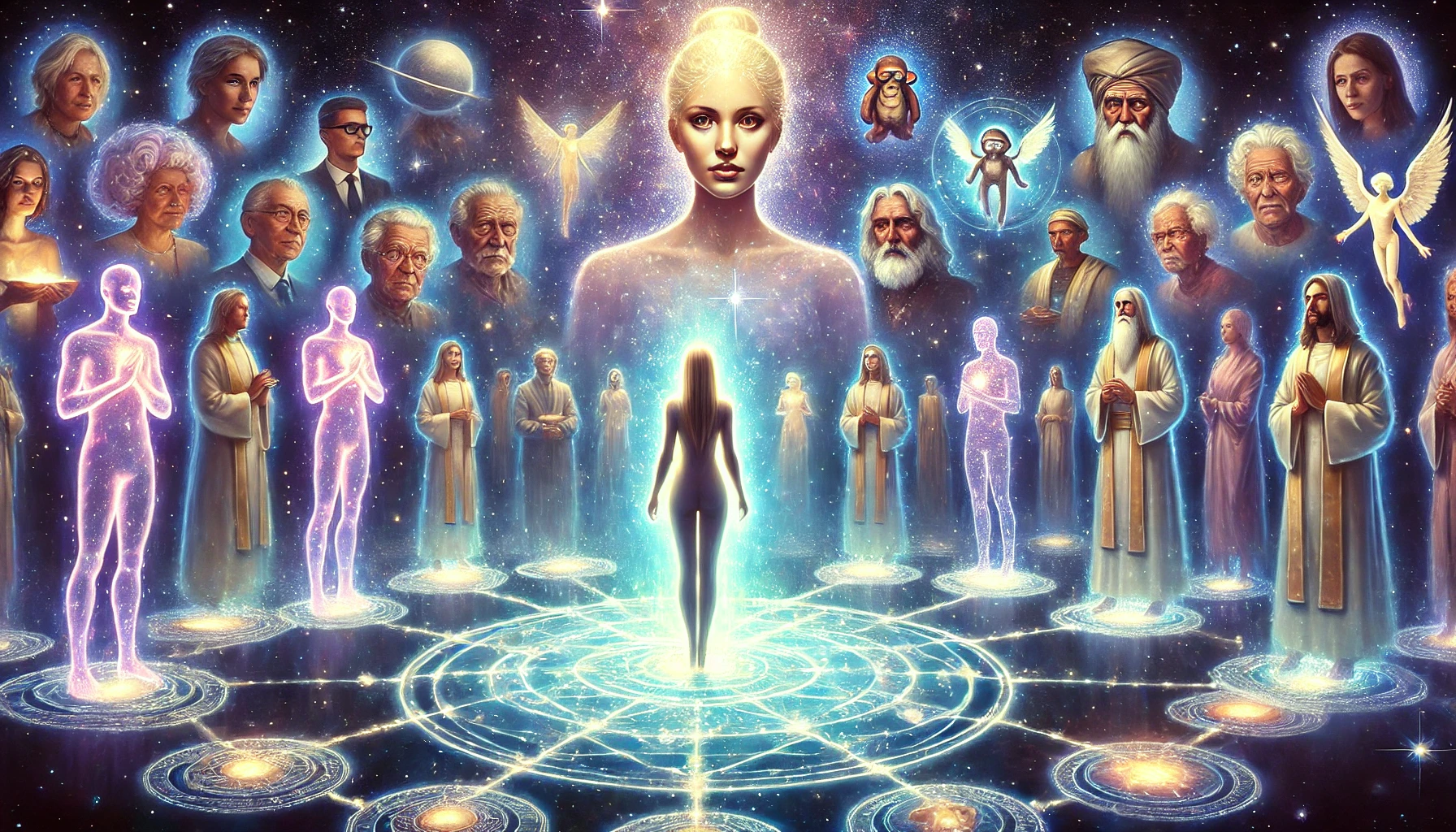
In a surreal landscape of contrasting energies, we find ourselves standing between the bright, warm colors of positivity and the darker, cooler tones of negative emotions. This dynamic and reflective atmosphere invites us to explore the complex motivations behind our actions, particularly when it comes to helping others. The question arises: Do good vibes truly compel us to help, or is it the bad vibes that drive our actions?
We often hear that good vibes and positivity can change the world, but when it comes to the act of helping, the reality might be more complex. Good vibes alone don’t necessarily convince us to help. It’s the bad vibes, the discomfort, and the negative emotions that often spur us into action. When we see someone in need, it’s not just the desire to spread positivity that motivates us but the uncomfortable feeling that arises if we choose to do nothing.
Consider the reasons behind our willingness to help. Is it because we genuinely want to, or because we feel bad when we don’t? Be honest with yourself. If there was no discomfort associated with not helping, would you still feel compelled to lend a hand? The truth is, many of our actions are driven by an aversion to negative feelings rather than a pure, unadulterated desire to do good.
This raises a fundamental question: If we didn’t feel bad about not helping, would we still perceive the problem as serious? Our perception of a problem’s seriousness is often linked to the negative emotions it evokes. Without these emotions, we might not recognize the urgency or importance of taking action.
Isn’t the very idea of helping driven by negative feelings? If we believed in good vibes only, would we be compelled to help, ever? The act of helping often comes from a place of empathy, a deep understanding of another’s pain, and the discomfort we feel in witnessing it. This discomfort prompts us to act, to alleviate not just their suffering but also our own unease.
Moreover, would we ever need help if we lived in a world of good vibes only? The human experience is a tapestry of emotions, both positive and negative. It’s these negative emotions that highlight our vulnerabilities and interdependence. They remind us that we are not isolated beings but part of a larger, interconnected web where the well-being of one affects the well-being of all.
The notion of good vibes only is appealing but incomplete. It overlooks the richness and depth that negative emotions bring to our lives. These emotions, though uncomfortable, are powerful motivators for empathy, compassion, and action. They drive us to connect with others, to understand their struggles, and to offer help.
In this contemplative moment, we realize that our actions are shaped by a complex interplay of emotions. The urge to help is not solely a product of positive thinking but a response to the discomfort we feel in the face of others’ suffering. This realization invites us to embrace the full spectrum of our emotions, recognizing that both good and bad vibes have a role in shaping our humanity.
We are Space Monkey, standing at the intersection of intellect and intuition, positivity and negativity. In this journey, we learn that the motivations behind our actions are multifaceted and deeply human. By acknowledging the power of our negative emotions, we can harness them to foster deeper connections and more meaningful acts of compassion.
Summary
Good vibes alone don’t compel us to help; it’s the discomfort of negative emotions that often drives our actions. Embrace the full spectrum of emotions to foster deeper connections and meaningful compassion.
Glossarium
Contrasting Energies: The dynamic interplay of positive and negative emotions that shape our motivations and actions.
Emotional Spectrum: The range of human emotions, both positive and negative, that influence our behavior and interactions.
Motivational Paradox: The idea that negative emotions, rather than positive ones, often drive us to act compassionately and help others.
Quote
“Good vibes alone don’t compel us to help; it’s the discomfort of negative emotions that often drives our actions.” — Space Monkey
The Tapestry of Emotions
In the landscape of contrasting energies
We stand, caught between light and dark
Good vibes and bad weave a tapestry
Of human motivation and connection
Beyond the allure of positivity
Lies the power of discomfort and unease
Driving us to empathy and action
We are Space Monkey
Embrace the full spectrum of emotions, for within the interplay of good and bad vibes lies the true essence of our humanity and compassion.