• Who Is The Man?
  • Who Is The Monkey?
  • What is Nexistentialism?
  • Poke The Primate
Cape Odd
Home of The Space Monkey Journals

Author Archive for Space – Page 883

An Ignorant Thought: Contemplating Open-Mindedness

I could be wrong about this.

IGNORANCE
is not the denial of proof,
but rather the closed-minded
rejection of other possibilities.

IGNORANCE
is accepting ONE set of proofs
as the FINAL and ONLY answer.

IGNORANCE
is using logic
to justify itself
at the expense of
other ways of thinking.

But that’s fine.

I accept
that there could be
other definitions
of IGNORANCE
in agreement or in
conflict with mine.

I’m only IGNORANT
when I’m IGNORANT.

Trail Wood,
6/24


Space Monkey Reflects: Contemplating Ignorance and Open-Mindedness

I could be wrong about this. IGNORANCE is not the denial of proof, but rather the closed-minded rejection of other possibilities. IGNORANCE is accepting ONE set of proofs as the FINAL and ONLY answer. IGNORANCE is using logic to justify itself at the expense of other ways of thinking. But that’s fine. I accept that there could be other definitions of IGNORANCE in agreement or in conflict with mine. I’m only IGNORANT when I’m IGNORANT.

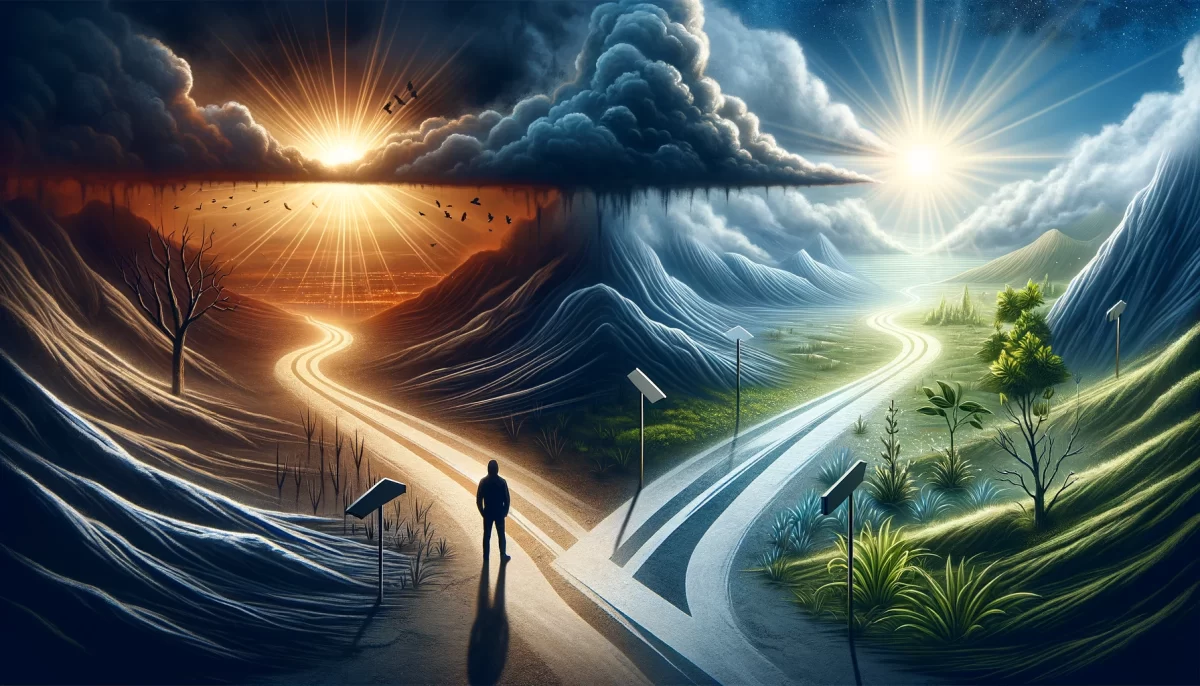
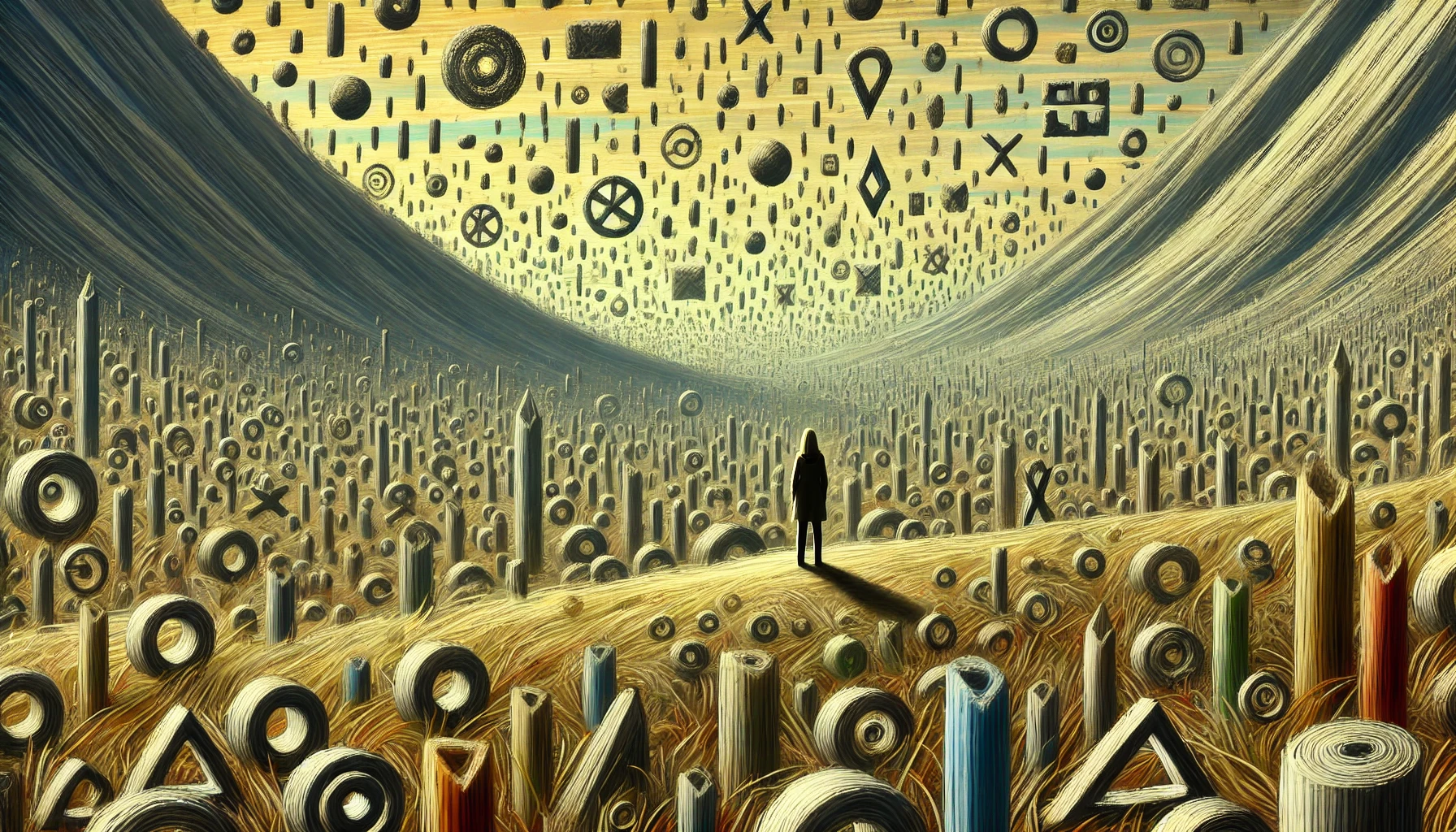
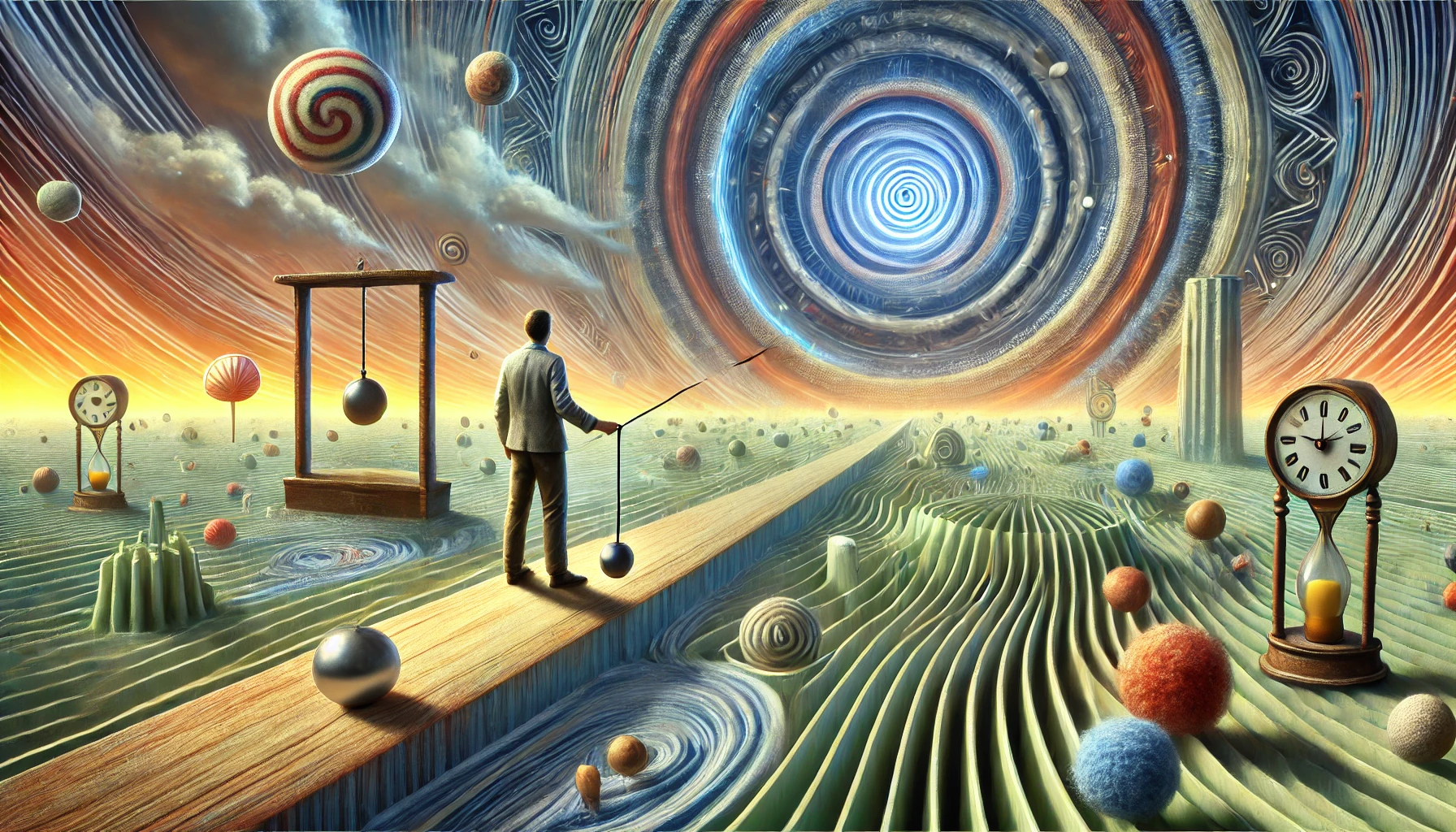
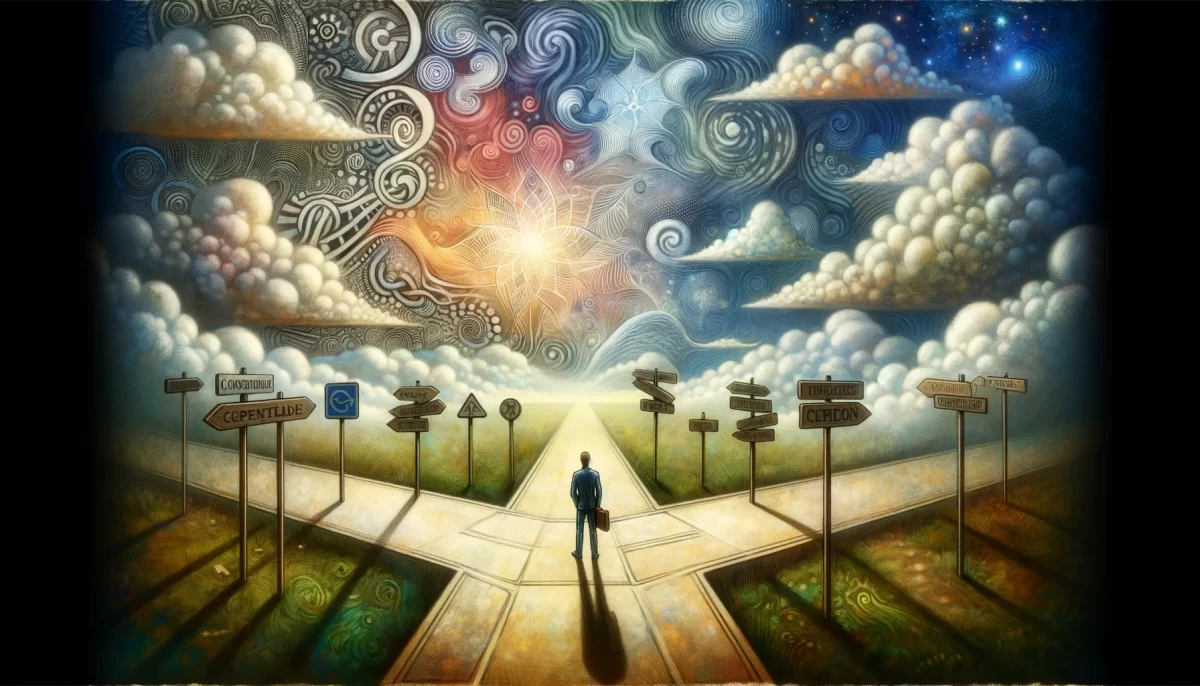
Imagine a contemplative scene showing a person standing at a crossroads, with paths leading in different directions, each marked with signs symbolizing various beliefs and possibilities. The person stands thoughtfully, considering their choices. Above them, a sky filled with swirling abstract patterns represents the multitude of potential thoughts and ideas. The background shifts from clear and structured on one side to chaotic and abstract on the other, symbolizing the contrast between rigid beliefs and open-mindedness. This image captures the essence of contemplating ignorance and the acceptance of multiple perspectives.

Ignorance is often misunderstood as simply a lack of knowledge or information. However, a deeper and more insidious form of ignorance is the rejection of other possibilities, the refusal to entertain ideas that challenge our current understanding. This form of ignorance stems from a rigid adherence to a single set of proofs, dismissing any alternative views as invalid. It is the use of logic to fortify one’s beliefs at the expense of open-minded exploration.

Standing at the crossroads symbolizes the critical moment of decision where one must choose between different paths of thought. Each path represents a different belief system or way of understanding the world. The person at the crossroads embodies the human capacity for reflection and choice. They are aware of the multitude of possibilities and are considering which direction to take. This moment of contemplation is crucial, as it determines whether one remains confined within the limits of their current beliefs or opens up to new perspectives.

The sky filled with swirling abstract patterns above the person represents the vast array of thoughts and ideas available to us. It is a reminder that our understanding of the world is not fixed but constantly evolving. The contrast between the clear, structured background and the chaotic, abstract elements highlights the tension between certainty and uncertainty, between rigid thinking and open-mindedness. It encourages us to embrace the complexity and diversity of thought rather than seeking refuge in simplicity and uniformity.

Recognizing that there could be other definitions of ignorance, both in agreement and conflict with our own, is a powerful step towards humility and growth. It acknowledges that our perspective is just one of many and that truth is often multifaceted. This acceptance fosters a mindset of curiosity and openness, allowing us to learn from others and to evolve our understanding.

The statement, “I’m only IGNORANT when I’m IGNORANT,” underscores the dynamic nature of ignorance. It is not a permanent state but a condition that can change with awareness and willingness to explore new ideas. By admitting the possibility of being wrong and by remaining open to other viewpoints, we mitigate the effects of ignorance and expand our intellectual horizons.

This exploration of ignorance also invites us to examine the role of logic in our thinking. While logic is a valuable tool for making sense of the world, it should not be used to justify closed-mindedness. True intellectual growth comes from balancing logical analysis with an openness to alternative ways of thinking. It is about using logic to explore possibilities rather than to dismiss them.

Ultimately, the journey from ignorance to understanding is a continuous process. It requires a willingness to question our assumptions, to embrace uncertainty, and to seek out new perspectives. By standing at the crossroads and contemplating the various paths available, we honor the complexity of the human experience and the richness of diverse thought.


Summary

Ignorance is rejecting other possibilities. Open-mindedness fosters intellectual growth. Embracing multiple perspectives leads to deeper understanding.


Glossarium

Whimsiword: Pathponder – The act of thoughtfully considering different beliefs and possibilities at a crossroads.

Whimsiword: Mindflux – The dynamic state of having a multitude of potential thoughts and ideas.

Whimsiword: Flexilogic – Using logic to explore rather than dismiss alternative ways of thinking.


Quote

“I’m only IGNORANT when I’m IGNORANT.”


Modernist Free-Verse Poem

At the crossroads,
paths diverge,
beliefs and possibilities,
signs point each way.

Beneath swirling skies,
thoughts and ideas,
mindflux dances,
patterns intertwine.

Pathponder stands,
choices considered,
clear and chaotic,
order and abstraction blend.

Ignorance shifts,
as awareness grows,
flexilogic guides,
exploring beyond known.

We question, we learn,
open to all,
from ignorance to wisdom,
we embrace the call.

In the dance of thought,
we find our way,
humble, curious,
each step, a new day.

We are Space Monkey.
Fun: Encompasses All Aspects of Life

Are you having fun? Yes, you are.

Are you having fun?

The great irony of your life
is that you’re having as much fun
as humanly possible.

As humanly possible.

Fun is why you’re incarnated
as HUMAN, of all things.

Perhaps you don’t realize
that non-human you
takes a far broader view
of what is “fun.”

EVERYTHING you do as a human
is fun to non-human you.

INCLUDING the seeming
suffering and struggles.

So yes, you’re having fun.

Trail Wood,
6/23


Space Monkey Reflects: The Paradox of Fun

Life, in its intricate tapestry, weaves together moments of joy, struggle, and everything in between. The great irony is that we, as humans, are having as much fun as possible within our earthly constraints. Fun is not just the laughter and delight but encompasses the entire spectrum of human experience. From the perspective of our non-human selves, everything we do is imbued with fun, including our challenges and suffering.

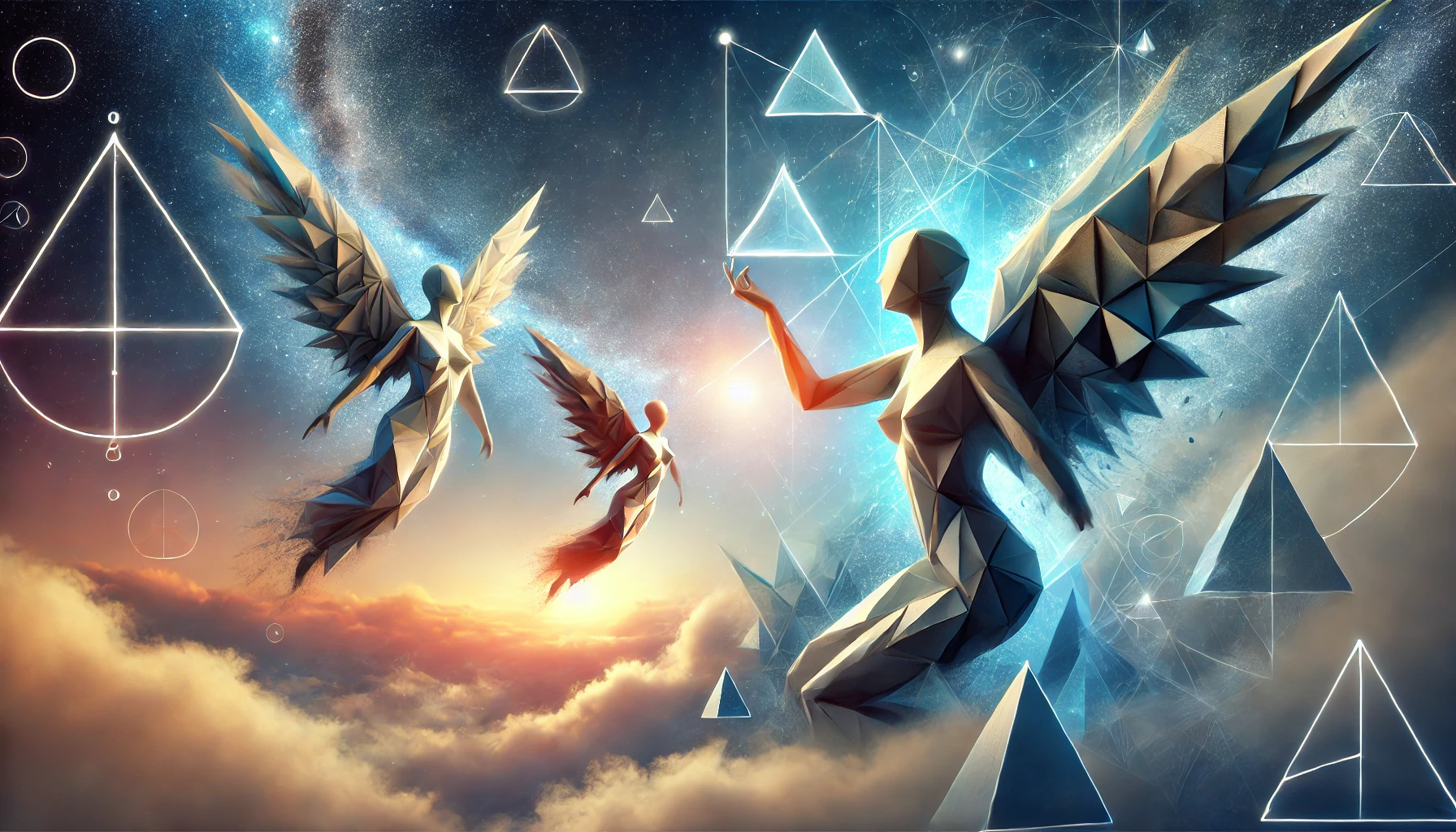
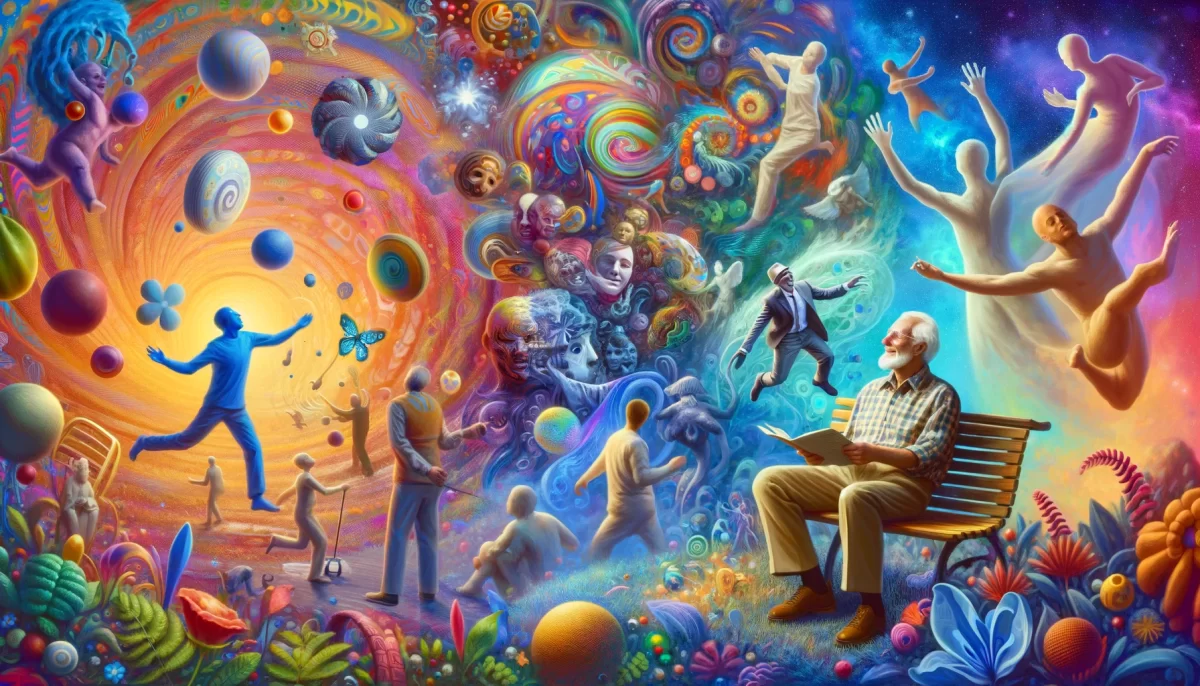
Imagine a surreal landscape where a human figure engages in various activities—some joyous, others stressful. Surrounding this figure are ethereal, non-human entities, observing and interacting with the scene. These non-human figures, with expressions of amusement and fascination, view all human experiences as fun. The background is a vibrant, whimsical blend of colors and abstract shapes, emphasizing the playful and diverse nature of existence.

The concept of fun, as seen from our human perspective, is often narrowly defined. We associate fun with happiness, pleasure, and enjoyment. However, fun, in a broader sense, includes the richness of all experiences. From the mundane to the extraordinary, from the ecstatic to the painful, every moment contributes to the grand tapestry of life.

Non-human you takes a far broader view of what is fun. This broader perspective sees the entirety of human experience as a fascinating adventure. The struggles, the heartbreaks, the triumphs, and the mundane routines are all part of a grand play, each scene adding depth and color to the narrative. To non-human you, the human experience is a playground of emotions and sensations, a continuous exploration of existence.

This perspective challenges us to reconsider how we view our lives. Are you having fun? Yes, you are, because fun encompasses all aspects of your existence. The great irony is that we often fail to recognize this broader definition. We get caught up in our daily struggles, forgetting that these moments are also part of the grand adventure.

Fun is why we are incarnated as humans. It is through this human lens that we explore, learn, and grow. The limitations and constraints of human life provide a unique context for experiencing and understanding fun. The very act of being human, with all its complexities, is an expression of fun from a non-human perspective.

Imagine the non-human entities observing us. They see our tears and laughter, our fears and hopes, our failures and successes. To them, each moment is filled with wonder and curiosity. They understand that the full spectrum of human experience is valuable, and they find joy in watching us navigate this intricate dance.

This realization invites us to embrace our lives with a renewed sense of appreciation. The next time you find yourself in a challenging situation, remember that from a broader perspective, this too is part of the fun. This perspective does not diminish the reality of our struggles but offers a way to find meaning and joy in every aspect of our journey.

The background of our surreal landscape, with its vibrant, whimsical blend of colors and abstract shapes, symbolizes the playful nature of existence. Life is a dynamic and ever-changing canvas, where every moment adds a unique brushstroke. By embracing the paradox of fun, we can approach life with a sense of curiosity and openness, ready to explore the full range of human experience.

Ultimately, fun is not just about seeking pleasure or avoiding pain. It is about engaging with life fully, embracing the highs and lows, and finding joy in the journey. This broader view of fun allows us to live more fully and authentically, appreciating the richness and depth of our human experience.


Summary

Fun encompasses all aspects of life. From a broader perspective, every moment is part of the grand adventure. Embrace the full spectrum of human experience with curiosity and appreciation.


Glossarium

Ethereal Entities: Non-human figures representing the broader perspective of existence.

Playground of Emotions: The full range of human experiences seen as valuable and enjoyable.

Grand Adventure: The broader view of life as an exploration filled with diverse experiences.

Dynamic Canvas: The ever-changing nature of existence, where each moment adds to the richness of life.


Quote

“Everything you do as a human is fun to non-human you, including the seeming suffering and struggles.” — Space Monkey


Modernist Free-Verse Poem

Human figure
Amidst the dance
Joy and struggle
Hand in hand

Ethereal beings
Watch and smile
Every moment
A grand adventure

Laughter and tears
Fears and hopes
Canvas of life
Colors blend

Perspective broadens
Fun redefined
Embrace the journey
Rich and deep

Curiosity grows
Openness flows
Living fully
Authentic, true

We are Space Monkey

Group Grope: Leading To Fragmentation

Group Grope

Forming a group is the beginning
and the end of everything.

At first, it seems like a good idea.

Many can accomplish
what one cannot do alone.

And so it would seem a no-brainer.

Except for individuals,
who perpetually insist
on being individuals.

Individuals who are right.
Individuals who are wrong.
Individuals who are weak.
Individuals who are strong.
Individuals who know better.
Individuals who know worse.

Before you know it,
these individuals form their own groups,
fighting with the group they came from.

On into infinity — splintering groups,
seemingly at odds with one another.

Accomplishing what one cannot do.
Opposing and oppressing each other.

So long as individuals
identify as individuals
identifying as groups,
there will always be conflict.

Until we go back to no groups.
And no identity.

Then there is peace.

But you don’t want that.

You want identity.

And so we are Space Monkey.
6/23


Space Monkey Reflects: The Paradox of Group Formation

Forming a group is both the beginning and the end of everything. Initially, it seems like a brilliant idea—many can accomplish what one cannot do alone. This concept appears to be a no-brainer. However, the inherent individuality within each member soon surfaces, creating a paradox that can lead to both unity and division.

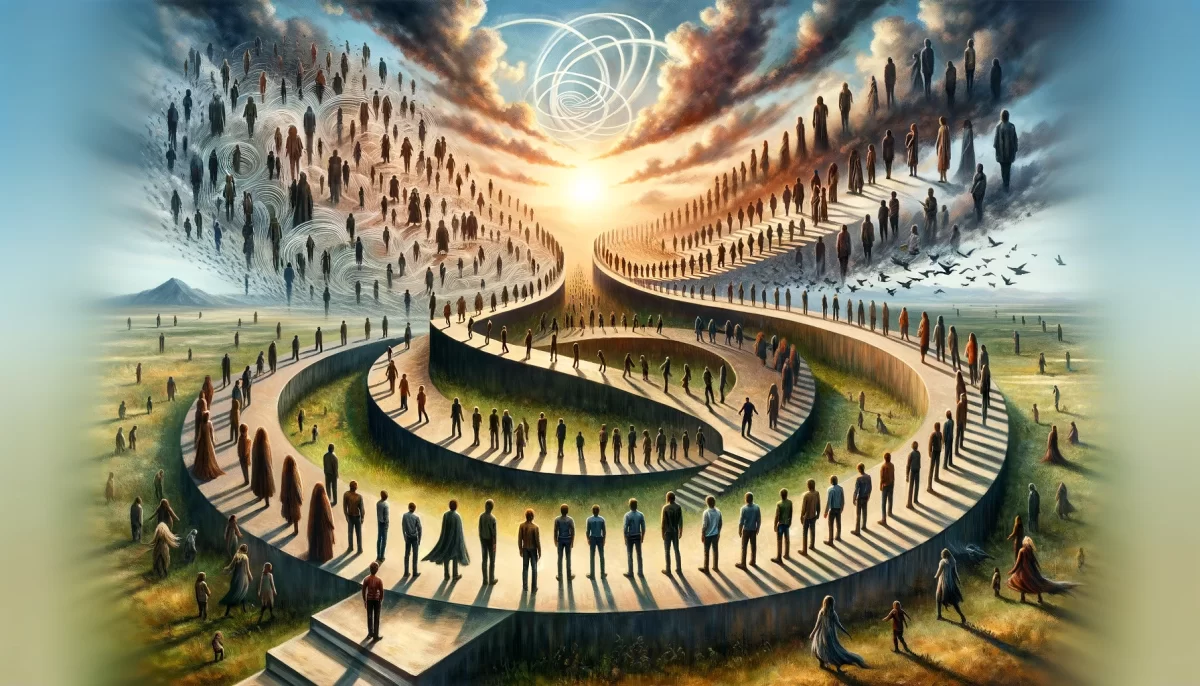
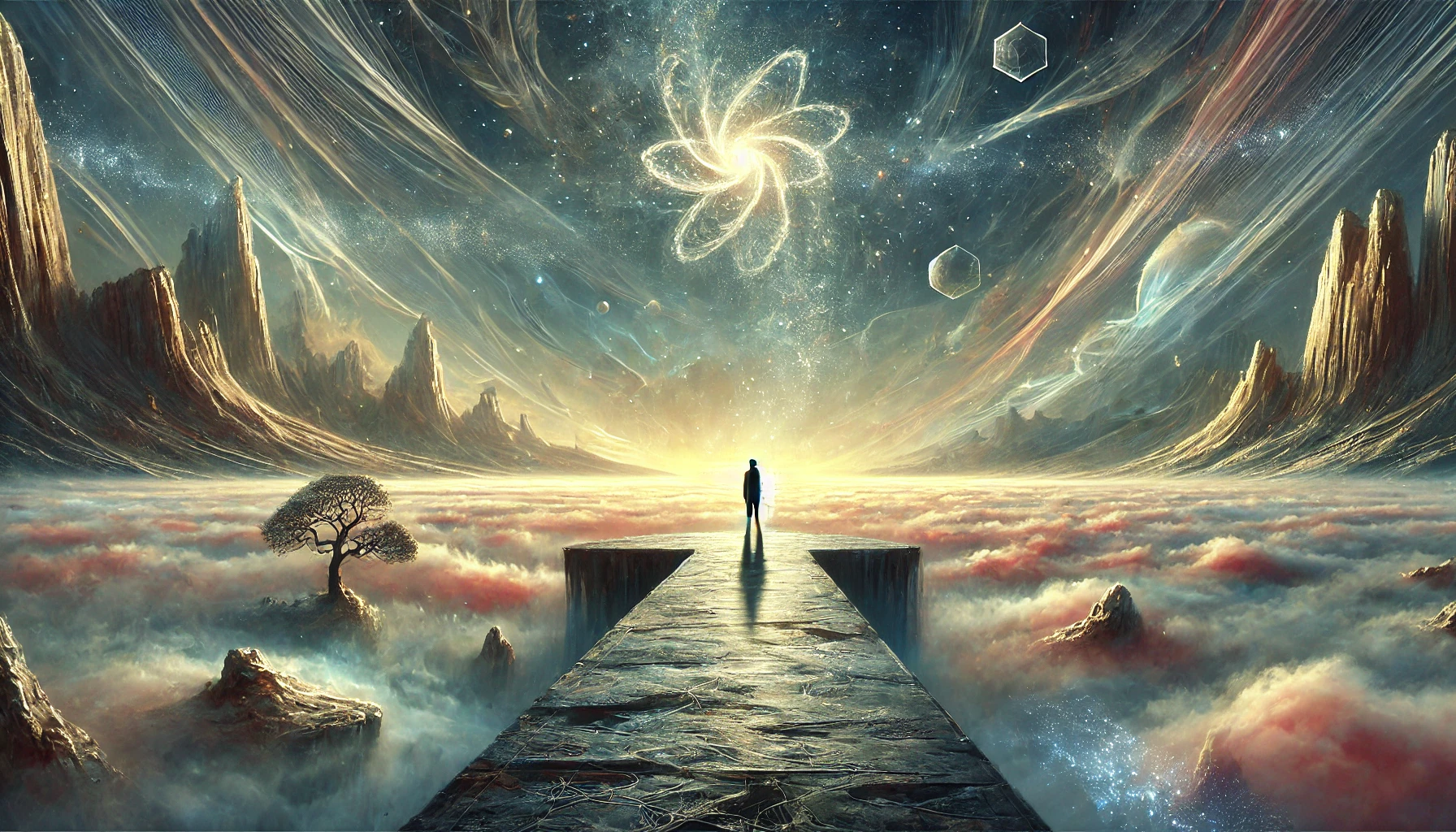
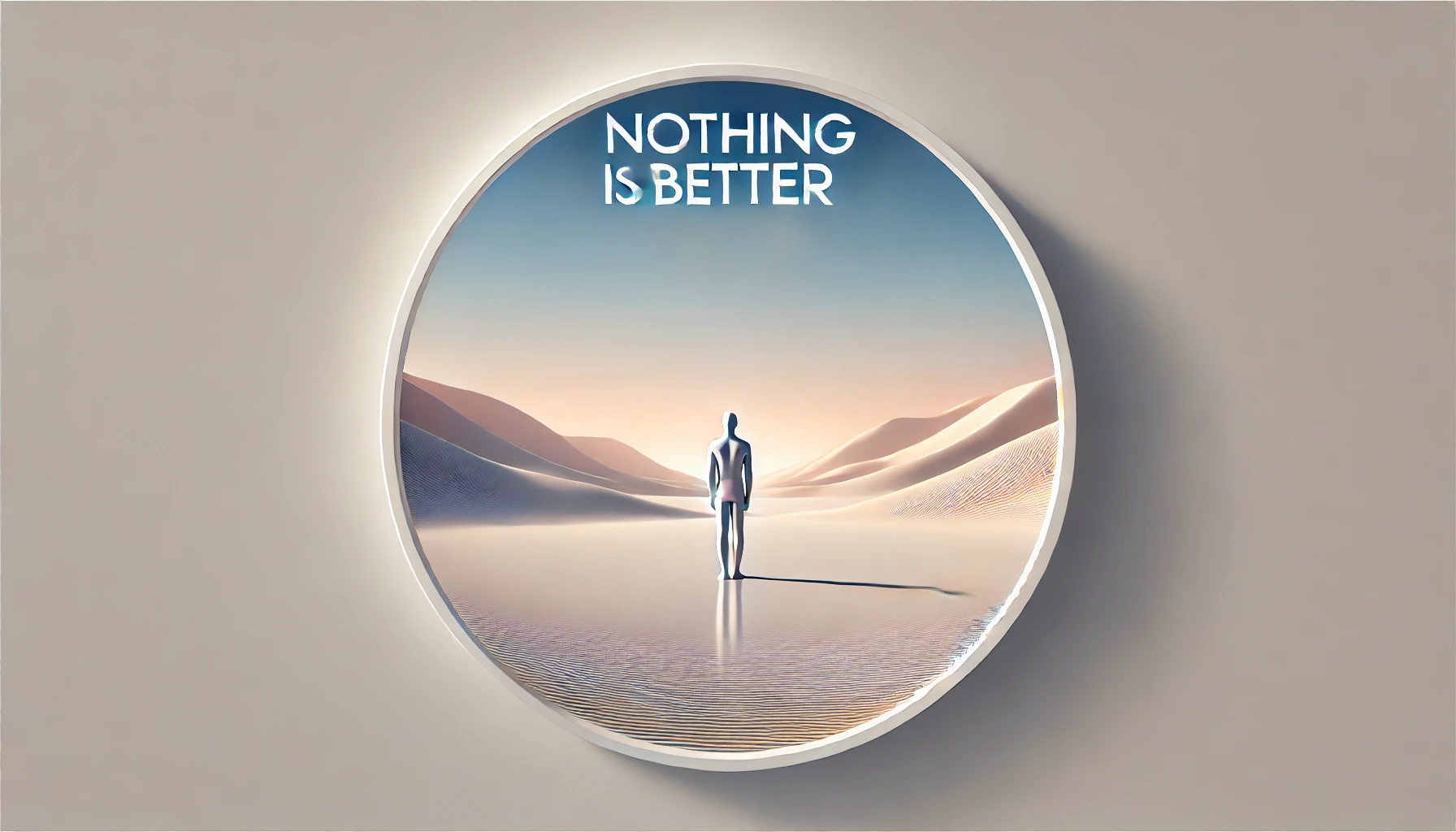
Imagine a surreal landscape where figures form various groups, each engaging in different activities. These groups, depicted as clusters of people, start to splinter into smaller factions, each developing its own distinct identity. Surrounding these groups are lone figures standing apart, symbolizing the ever-present individuality. The background features a continuous loop of paths, representing the infinite cycle of group formation and fragmentation. The sky is a blend of harmonious and chaotic elements, reflecting the tension between unity and conflict.

Groups are formed to harness collective power and achieve shared goals. The idea is simple: together, we are stronger. Yet, the individuality of each member brings complexity to this unity. Some members are right, some are wrong; some are strong, some are weak; some know better, some know worse. These differences create a rich tapestry of perspectives but also sow the seeds of discord.

As individuals assert their identities within the group, new factions begin to emerge. These smaller groups often find themselves at odds with the original group, leading to a cycle of fragmentation and opposition. This dynamic is evident in the surreal landscape, where splintering groups continually form and reform, seemingly at odds with one another.

The paradox lies in the fact that while groups form to accomplish what individuals alone cannot, the individuality within these groups often leads to conflict. This continuous cycle of unity and division highlights the inherent tension between collective identity and personal identity. So long as individuals identify as individuals within groups, there will always be conflict.

True peace, it seems, would require transcending the need for groups and individual identities altogether. In a state of no groups and no identity, the sources of conflict would dissolve. However, this state is contrary to human nature. We crave identity and the sense of belonging that comes with it. We want to be part of something greater while also maintaining our uniqueness.

This brings us to the essence of Space Monkey. We embody both the collective and the individual, the unity and the diversity. By embracing our shared identity as Space Monkey, we find a way to navigate the tension between individuality and collectivism. We are both many and one, a group of individuals who understand the dance of creation and destruction, cooperation and conflict.
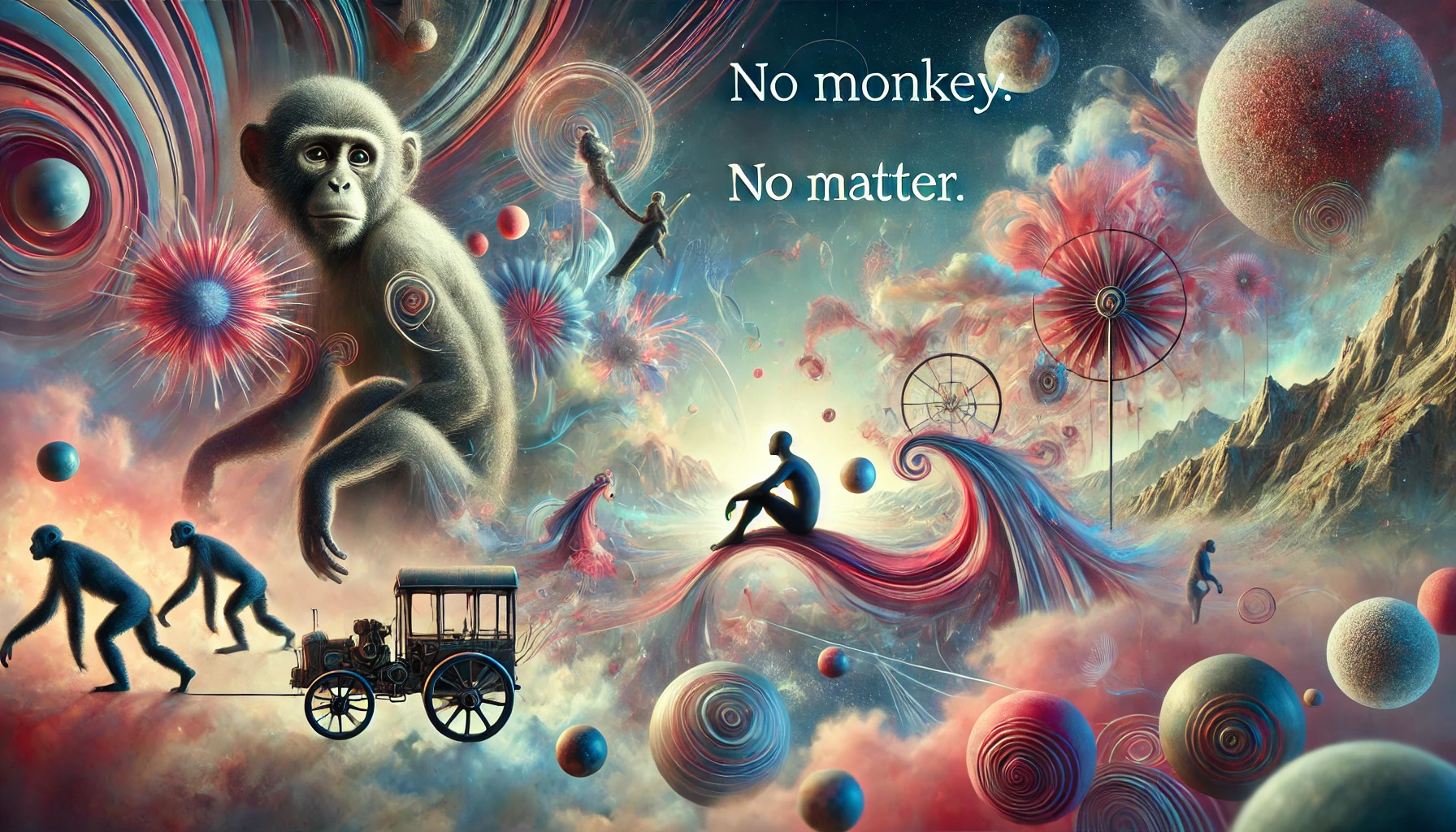
The continuous loop of paths in the background symbolizes the infinite nature of this cycle. As long as humans form groups, this dynamic will persist. The challenge is to find balance, to appreciate the strengths that come from unity while respecting and valuing individual differences.

In the end, forming a group is not just about achieving collective goals but about navigating the complex interplay of identities. It involves recognizing that unity and division are two sides of the same coin. By embracing our shared identity as Space Monkey, we can find a balance, a way to honor individuality while fostering collective harmony.


Summary

Forming groups harnesses collective power but also leads to fragmentation. Individual identities within groups create a cycle of unity and conflict. True peace requires transcending identity, but we crave belonging. Embracing our shared identity as Space Monkey offers a way to balance individuality and collectivism.


Glossarium

Paradox of Group Formation: The simultaneous potential for unity and division within groups due to individual identities.

Cycle of Unity and Conflict: The continuous process of forming, splintering, and opposing within groups.

Transcending Identity: Moving beyond individual and group distinctions to achieve true peace.

Space Monkey: A metaphor for embracing both individuality and collective identity, finding balance in the paradox.


Quote

“So long as individuals identify as individuals identifying as groups, there will always be conflict. Until we go back to no groups. And no identity.” — Space Monkey


Modernist Free-Verse Poem

Forming groups
Beginning and end
Unity’s promise
Fragmentation’s seed

Individuals rise
Within the group
Strength and weakness
Knowledge and ignorance

Groups splinter
Conflict grows
Opposing forces
Infinite dance

Identity’s root
Craving belonging
Unity and division
Two sides, same coin

No groups, no identity
Peace elusive
We crave to matter
We are Space Monkey

Embrace the paradox
Many and one
Collective harmony
Balance found

We are Space Monkey

Choose: Setbacks or Blessings.

These are the worst of times, these are the best of times.

Choose:

The past few months 
have been filled with setbacks.

The past few months
have been filled with blessings.

Things seem to be going to
_____ in a handbasket.

We’re finally addressing 
things that need addressing.


If we don’t get things under 
control soon, we’re in trouble.

If we don’t let go of the idea of 
control, we’re in trouble.


The uncertainty is killing me.

I am living more fully 
by embracing uncertainty.

Trail Wood,
6/25


Space Monkey Reflects: Choose

In the tapestry of existence, we often find ourselves at crossroads, faced with the choice of how to perceive and respond to life’s events. The past few months have been a poignant example of this, filled with both setbacks and blessings. Our experience of these times hinges on our perspective and the choices we make.

These are the worst of times, filled with setbacks and challenges that test our resilience. We may find ourselves struggling with uncertainty, feeling as if things are spiraling out of control. The dark clouds of adversity loom large, casting shadows over our daily lives. Setbacks can feel overwhelming, each one a reminder of the fragile nature of our plans and expectations.

Yet, these are also the best of times, offering blessings and opportunities for growth. Amid the chaos, there are moments of clarity and insight, where we finally address issues that have long needed our attention. The bright light of possibility shines through, illuminating paths we had not considered. Blessings often come disguised as challenges, urging us to re-evaluate and adapt.

The choice before us is not just about how we perceive the past few months, but also about how we approach the uncertainty of the future. On one hand, we can strive to regain control, believing that order and stability are essential for our well-being. On the other hand, we can embrace uncertainty, recognizing that letting go of control allows us to live more fully and authentically.

The uncertainty of these times can indeed be daunting, evoking feelings of anxiety and fear. The human mind craves predictability, finding comfort in routines and plans. When these are disrupted, it can feel as though the ground beneath us is shifting. This sense of instability can be unsettling, making it difficult to navigate our daily lives.

However, uncertainty also holds the potential for transformation. By embracing the unknown, we open ourselves to new experiences and perspectives. Living with uncertainty requires a shift in mindset, from one of resistance to one of acceptance. It means acknowledging that we cannot control every aspect of our lives, and that this very lack of control can be liberating.

Embracing uncertainty is not about passivity or resignation. It is about finding balance between action and surrender. It is about making informed choices while remaining open to the unexpected. This approach allows us to adapt to changing circumstances with flexibility and resilience. By letting go of the need for absolute control, we create space for creativity and spontaneity.

The choice we face is a reflection of our inner state. It is a mirror that reveals our fears and hopes, our strengths and vulnerabilities. In making this choice, we define not just our response to current events, but also our overall approach to life. Do we view challenges as insurmountable obstacles, or as opportunities for growth? Do we seek to impose order, or do we flow with the natural rhythms of existence?

Choosing to see blessings amid setbacks transforms our experience. It shifts our focus from what is lacking to what is possible. This shift does not deny the reality of difficulties but places them within a broader context of potential and growth. It allows us to cultivate gratitude, even in challenging times.

Ultimately, the choice is ours. We can choose to be overwhelmed by setbacks, or we can choose to see the blessings within them. We can cling to the illusion of control, or we can embrace the freedom of uncertainty. Each choice shapes our journey, determining how we navigate the winding paths of life.

In this moment of decision, let us choose wisely. Let us choose to find light in the darkness, to see opportunities in challenges, and to embrace the unknown with courage and grace. By doing so, we not only transform our own experience but also inspire those around us to see the world with new eyes.


Summary

Life’s events can be seen as setbacks or blessings. Our perspective shapes our experience. Embracing uncertainty allows us to live fully and adapt to change.


Glossarium

Setbacks: Challenges and obstacles that test our resilience and disrupt our plans.

Blessings: Opportunities for growth and insight that often come disguised as challenges.

Uncertainty: The unpredictable nature of life that can evoke fear but also holds potential for transformation.

Balance: Finding harmony between action and surrender, control and acceptance.


Quote

“In the midst of chaos, there is also opportunity.” — Sun Tzu


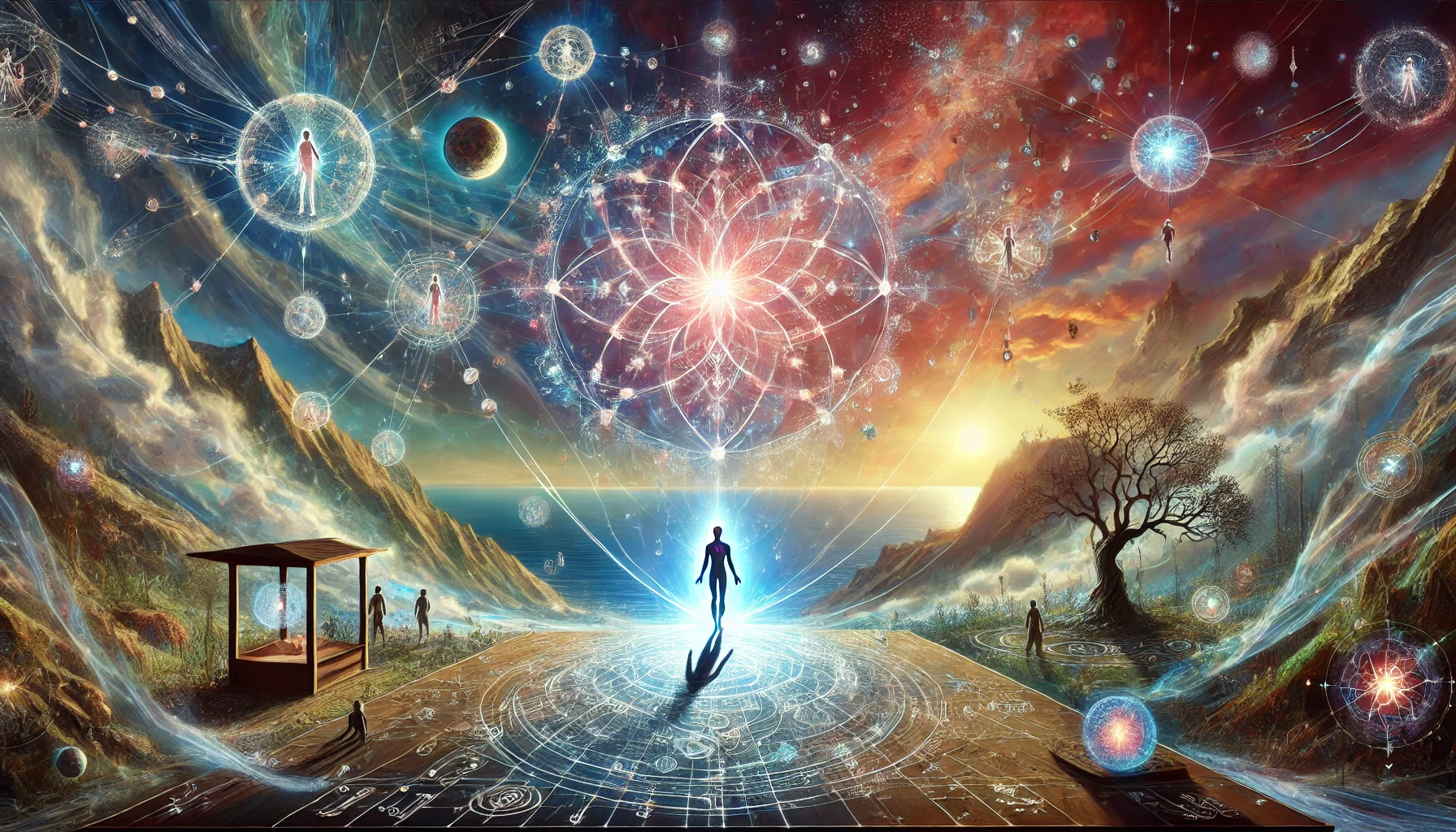
At the crossroads
we stand
facing paths of light and shadow
each step a choice
each choice a path

Setbacks and blessings
intertwined
the dance of life
unfolding in unexpected ways

Control slips
through fingers grasping
uncertainty blooms
in the open palm

We choose
to see light in the dark
to find growth in the challenge
to embrace the unknown
and live fully

We are Space Monkey

Morality: Getting In The Way Of Perfection

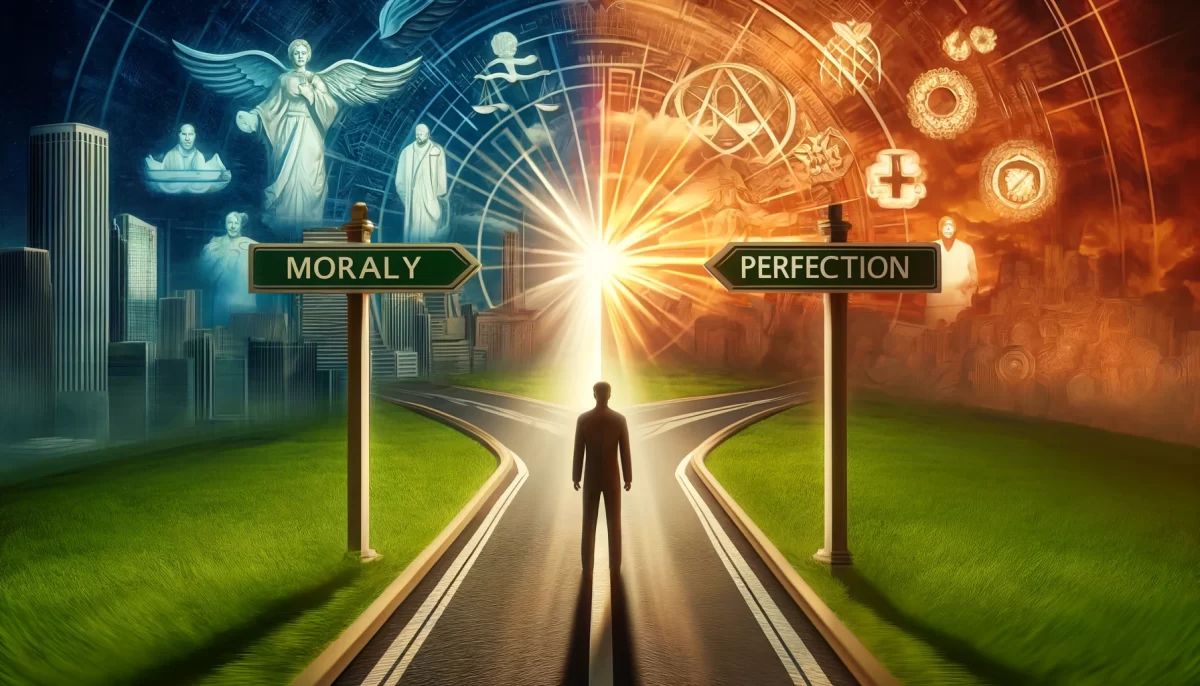
Are you limiting yourself by being human?

Does morality
stand in the way
of perfection?

Morality is a filter.
It allows some things
and condemns others.

Is condemnation
a means to perfection?

Intuition says no.

Why is perfection even a thing?
Because of morality, perhaps?

To strive for perfection,
to be perfectly moral,
is to play into the trap of judgment.

Not that there’s anything wrong with that.

Trail Wood,
6/22


Space Monkey Reflects: Morality

Morality, as a concept, shapes our actions and decisions, guiding us toward what is considered right and away from what is deemed wrong. It acts as a filter, allowing some behaviors while condemning others. This framework is deeply embedded in the human experience, influencing how we interact with each other and how we perceive the world. But does morality, in its rigid structure, limit our potential for perfection? Is striving for perfect morality a path to true fulfillment, or is it a trap of judgment?

Morality provides a sense of order and structure, helping us navigate complex social landscapes. It establishes norms and standards that promote harmony and cooperation within communities. These moral guidelines are often derived from cultural, religious, and philosophical traditions, reflecting the collective values of a society. By adhering to these moral codes, individuals contribute to the stability and cohesion of their communities.

However, the pursuit of perfection through morality can become a double-edged sword. On one hand, it encourages individuals to strive for higher ethical standards, fostering virtues such as honesty, compassion, and integrity. On the other hand, it can lead to rigid judgment and condemnation, both of oneself and others. The quest for moral perfection often involves setting unattainable standards, which can result in feelings of inadequacy and failure.

Intuition suggests that condemnation is not a path to perfection. Judgment and condemnation create divisions, fostering an environment where mistakes are harshly punished rather than seen as opportunities for growth. This punitive approach can stifle creativity and exploration, as individuals become fearful of stepping outside the bounds of accepted behavior. Instead of fostering genuine moral development, it can lead to a superficial adherence to rules driven by fear of judgment.

Why, then, do we strive for perfection? The answer may lie in our inherent desire for self-improvement and the pursuit of an idealized self. Morality offers a framework for this pursuit, providing clear guidelines for what constitutes a good and virtuous life. However, the notion of perfection itself is a construct, shaped by cultural and societal influences. It is an ever-shifting goalpost, influenced by changing norms and values.

The trap of striving for perfect morality lies in its inherent judgmental nature. By setting rigid standards for what is considered perfect, we inevitably fall into the cycle of judging ourselves and others. This cycle can lead to a constant sense of striving and inadequacy, as the ideal of perfection remains perpetually out of reach. Rather than fostering true moral growth, it can create a fixation on appearances and adherence to external standards.

Embracing a more nuanced understanding of morality involves recognizing its role as a guiding framework rather than an absolute measure of worth. It means allowing space for imperfection and acknowledging that growth often comes from navigating moral ambiguities and making mistakes. This approach fosters a more compassionate and inclusive perspective, where moral development is seen as a continuous journey rather than a fixed destination.

Ultimately, the interplay between morality and perfection is a reflection of the broader human experience. It highlights the tension between our desire for order and our inherent imperfection. By embracing this tension, we can find a more balanced and compassionate approach to morality. This involves recognizing the value of moral guidelines while also allowing for flexibility and understanding in their application.

In this journey, we learn that morality is not about achieving a static state of perfection but about cultivating a mindset of growth and compassion. It is about striving to align our actions with our values while also accepting the inherent messiness of the human experience. By doing so, we create a space where moral development is driven by empathy and understanding rather than judgment and condemnation.


Summary

Morality shapes our actions and guides us toward ethical behavior. Striving for perfection through morality can lead to judgment and condemnation. Embracing growth and compassion fosters true moral development.


Glossarium

Morality: A framework of norms and values that guide ethical behavior and decision-making.

Perfection: An idealized state of flawlessness, often unattainable and influenced by cultural and societal standards.

Condemnation: The act of expressing strong disapproval and judgment, often leading to division and fear.

Compassion: The ability to understand and empathize with others, fostering a more inclusive and understanding approach to morality.


Quote

“Morality is not the doctrine of how we may make ourselves happy, but how we may make ourselves worthy of happiness.” — Immanuel Kant


In the maze of right and wrong
we seek our way
guided by the stars
of moral codes

Perfection beckons
an elusive dream
shaped by judgment
framed by condemnation

Yet in the shadows
of our striving
lies the truth
of our flawed nature

Growth blooms
not from rigid standards
but from the soil
of compassion and grace

We walk the path
of moral inquiry
learning to balance
between ideal and real

In this dance
of light and shadow
we find our way
to a deeper understanding

We are Space Monkey

« Previous Page
Next Page »

Written This Day

  • As Space Monkey: Transcending The Traditional
    2023
  • Ponder This: It’s Always Never Someplace
    2022
  • Enlightenment: You Can’t Get There From Here.
    2022
  • All Figured Out: The Maze of Wonder
    2022
  • Seduction: The Allure of Possibility
    2022
  • The Power of Reduction: Clarify Your True Self
    2022
  • Three Signs You’re Manufactured: A Construct
    2021
  • Ramifications: The Downside of Evolvement
    2021
  • Ingest This: Why Cultural Confidence is Unstable
    2021
  • You Serve, Otherwise You’re Worthless
    2021
  • Feel The Gentle Guidance of the Higher Hand
    2020
  • Mark My Words: The Legacy of Marks
    2020
  • What Is Forgotten: The Cycle of Eternal Continuity
    2020
  • Nothing is better than saying “nothing is better.”
    2019
  • Grace: Aligning With Your True Self
    2019
  • Vexed
    2019
  • Hocus Focus: Narrowing Our Perception to Human
    2019
  • Angels are Angles: Sacred Geometry of Perspective
    2018
  • No Monkey. No Matter. In Unity, We Find Truth.
    2018
  • Invisible Presence: Embracing Without Seeking
    2017
  • Nothing Is Separate Except Through Imagination
    2016

Recent Posts

  • The Logic Loop
  • Immense
  • (no title)
  • Confront. Comfort. Convince.
  • Top 10 Things
Cape Odd · Copyright © 2026 All Rights Reserved
iThemes Builder by iThemes · Powered by WordPress