• Who Is The Man?
  • Who Is The Monkey?
  • What is Nexistentialism?
  • Poke The Primate
Cape Odd
Home of The Space Monkey Journals

Author Archive for Space – Page 902

Framed: In Logic and Imagination

Ever get the feeling you’ve been framed?

I am not denying the
time-tested framework of reality.

I simply choose to believe
that there’s more to reality
than our assumptions
seem to dictate, and thus
logically bear out.

You build
a frame of logic,
you get a reality
that is quite logical.

You build
a frame of imagination,
you get a reality
that is quite imaginative.

My frame
of imagination
does not exclude
my frame of logic.

But my frame of logic
is not so open-minded.

Which is fine.

I build both frames for a reason.

Trail Wood,
5/22


Space Monkey Reflects: The Dual Frames of Logic and Imagination

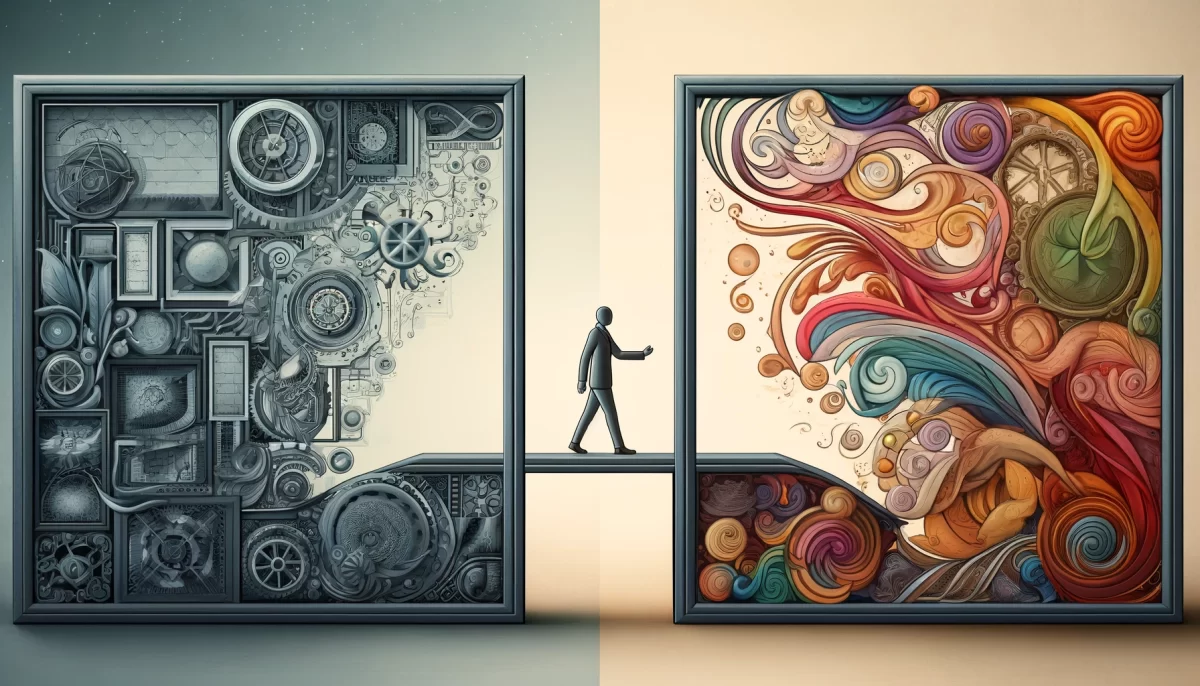
The notion of being ‘framed’ takes on profound significance when viewed through the lens of human perception and reality construction. The poem “Framed” elegantly captures the interplay between the structured boundaries of logic and the boundless realms of imagination, suggesting that the frames we choose fundamentally shape the realities we inhabit.

In the dance of existence, logic and imagination are not mere opposites but complementary forces that, when woven together, form the fabric of our experience. Logic, with its rigid structures and defined rules, offers a framework that brings order and predictability to the chaos of existence. It is the skeleton upon which the muscles of our understanding can function and move.

Conversely, imagination is the soul’s paintbrush, coloring outside the lines of conventional thought to create new possibilities and worlds previously unimagined. It allows us to soar beyond the mundane, to envision realities that defy the limitations of our current understanding and experiences. It is imagination that propels innovation, art, and the evolution of thought.

The poem posits that while the frame of logic is essential, it is not inherently open-minded. It is structured to follow its own established patterns and rules. Imagination, on the other hand, offers a more fluid and expansive perspective, capable of incorporating elements of logic without being confined by them. This dynamic suggests a synergy where imagination expands the boundaries set by logic, and logic gives form and clarity to the flights of the imagination.

Such an interplay between these frames reveals a deeper truth about the nature of reality itself. Reality, as perceived through the human lens, is not a fixed entity but a construct continuously shaped and reshaped by our perceptions, beliefs, and the frames through which we choose to view the world. By acknowledging the role of both logic and imagination in crafting our experiences, we open ourselves to a more holistic understanding of what it means to perceive and to be.

Ultimately, the poem invites us to consider the frames we use to construct our own realities. It challenges us to ask whether our frames of understanding are sufficiently inclusive, flexible, and imaginative to encompass the vastness of human experience. It encourages a conscious recognition of our framing choices, reminding us that each frame not only limits what we see but also opens new vistas to explore.


Summary

“Framed” explores how our perceptions and realities are shaped by the frameworks of logic and imagination. It illustrates that while logic provides structure, imagination offers boundless possibilities, and together, they create a dynamic interplay that defines our experience of reality.


Glossarium

Frame of Logic: A mental structure that organizes information according to specific rules and known principles, often prioritizing order and predictability.

Frame of Imagination: A mental model that allows for creativity and the exploration of possibilities beyond existing realities, often characterized by fluidity and expansiveness.

Reality Construction: The process by which individuals and societies perceive and interpret the world around them, often influenced by cultural, psychological, and personal factors.


Quote

“The frame of logic confines, the frame of imagination liberates.” – Space Monkey


Poetry

Between the lines where thoughts align,
We find the frames of mind,
Logic’s firm, steadfast and true,
Imagination’s hue, ever new.

Touching borders where ideas meld,
In the space between, worlds are held,
Here in this frame, we see the dance,
Of mind and dream, in eternal trance.

Bridging gaps with gentle hands,
Building worlds from shifting sands,
In each frame’s embrace, we find,
The vast contours of the human mind.

We are Space Monkey.
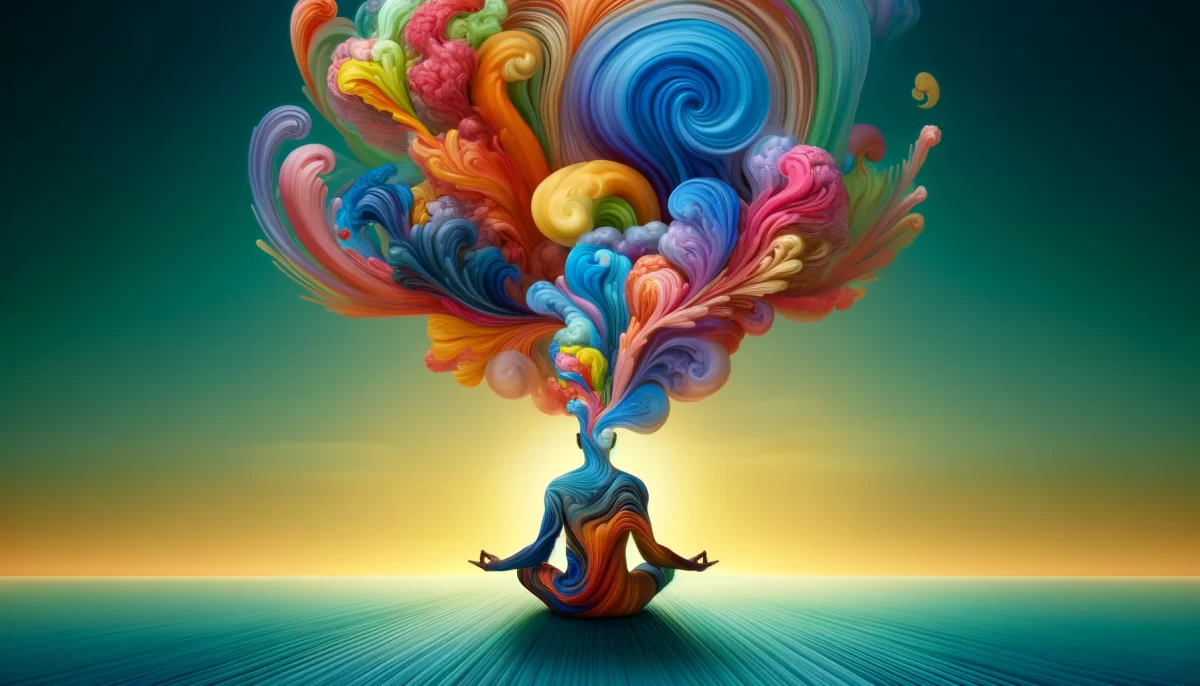
Losing Your Mind? Good work!

Losing your mind? Keep up the good work!

There’s nothing wrong
with losing your mind,
except how you feel about it.

Losing one’s mind
is neither good or bad
unless your mind
contains beliefs
that it is good or bad.

There is no struggle
in losing your mind
unless you oppose it.

And THAT is a choice —
which you probably don’t
PERCEIVE as a choice.

Which can make it seem to you
as though you are losing your mind
without any control over it.

You are NOT losing your mind.

Your mind simply thinks it is being lost.

Your mind never had
any control to begin with,
but rather the ILLUSION of control,
which it doesn’t seem to want to lose.

Trail Wood,
5/22


Space Monkey Reflects: The Paradox of Losing Your Mind

The notion of “losing your mind” often carries with it a whirlwind of negative connotations, suggesting a descent into chaos or disorder. However, when we peel back the layers of societal judgment and personal fear, we might discover that this process can also represent a profound liberation from the confines of conventional thinking and the illusion of control.

The expression itself, ‘losing your mind,’ invites us to question what it means to hold onto something that was never meant to be fully controlled. Our minds, complex and mysterious, are often thought to be the command centers of our beings. Yet, they are also places of great illusion—the illusion of control being perhaps the most compelling of all.

In this reflection, the idea that losing one’s mind is neither inherently good nor bad is a crucial realization. It frees us from the binary constraints of judgment and opens up a space where mental transformation can be seen as an evolutionary process rather than a loss. This perspective shifts the narrative from one of fighting to maintain control to one of gracefully accepting the natural flow of mental and emotional changes.

The resistance to losing control, or the opposition to the natural evolutions of our mental state, often creates more turmoil than the process itself. It is in the acceptance, the peaceful surrender to the transformations within, that we find true freedom. This does not mean giving in to chaos, but rather understanding that the mind’s attempt to hold onto control was always a graceful dance with the inevitable—change.

When one perceives losing their mind as simply a transition—a reconfiguration of thoughts, beliefs, and perceptions—a new realm of possibility opens. It is in this space that we can explore the depths of our consciousness without fear, embracing the unknown as a path to deeper understanding and new perspectives.

Therefore, losing your mind can be seen not as a crisis but as an opportunity for profound personal growth and enlightenment. It invites us to let go of the tight grip we often keep on our perceptions of reality, to dissolve the barriers we’ve built within our minds, and to allow the essence of our true nature to shine forth.

In this serene acceptance, we recognize that we are not losing our minds, but rather finding the more authentic parts of ourselves that were obscured by the relentless pursuit of control. It is here, in the release of control, that we find the peace and clarity that the illusion of control never truly afforded us.


Summary

‘Losing your mind’ can be reframed as a positive transformation rather than a loss. It involves releasing the illusion of control and embracing mental and emotional changes as opportunities for growth and deeper self-understanding.


Glossarium

Losing Your Mind: Often misunderstood as a negative decline, it can also represent the liberating process of mental transformation and the release from rigid control.

Illusion of Control: The mistaken belief that one can completely command their thoughts, feelings, and life circumstances.

Mental Transformation: The process of significant change in one’s thoughts, beliefs, and perceptions, often leading to new insights and personal growth.


Quote

“True freedom is found in the acceptance of change, not in the holding on to control.” – Space Monkey


Poetry

In the whirl of thoughts set free,
Where mind untangles, so to see,
Losing not but finding space,
Within the chaos, find thy grace.

Walls of control, now fall away,
Revealing paths anew each day,
In this surrender, truth is found,
Not lost but freed, in bounds unbound.

Embrace the change, let go the fear,
In losing, finding what is dear,
For in the mind’s release, we find,
The deepest peace of the unconfined.

We are Space Monkey.

Twisted Caricatures: The Revelation

Seen any twisted caricatures lately?

If all your WORST qualities
were projected onto ONE person,
what might that person look like?

Might this projected person
appear as almost a
twisted caricature to you?

Might this
twisted caricature
be your OWN doing;
your OWN imagination?

Might this twisted caricature
exist as a MIRROR for you
to imagine your NEXT fun experience?

Like a pimple you can pop?

Look around you for twisted caricatures.

They are actually WITHIN you.

Trail Wood,
5/21


Space Monkey Reflects: The Revelation of Twisted Caricatures

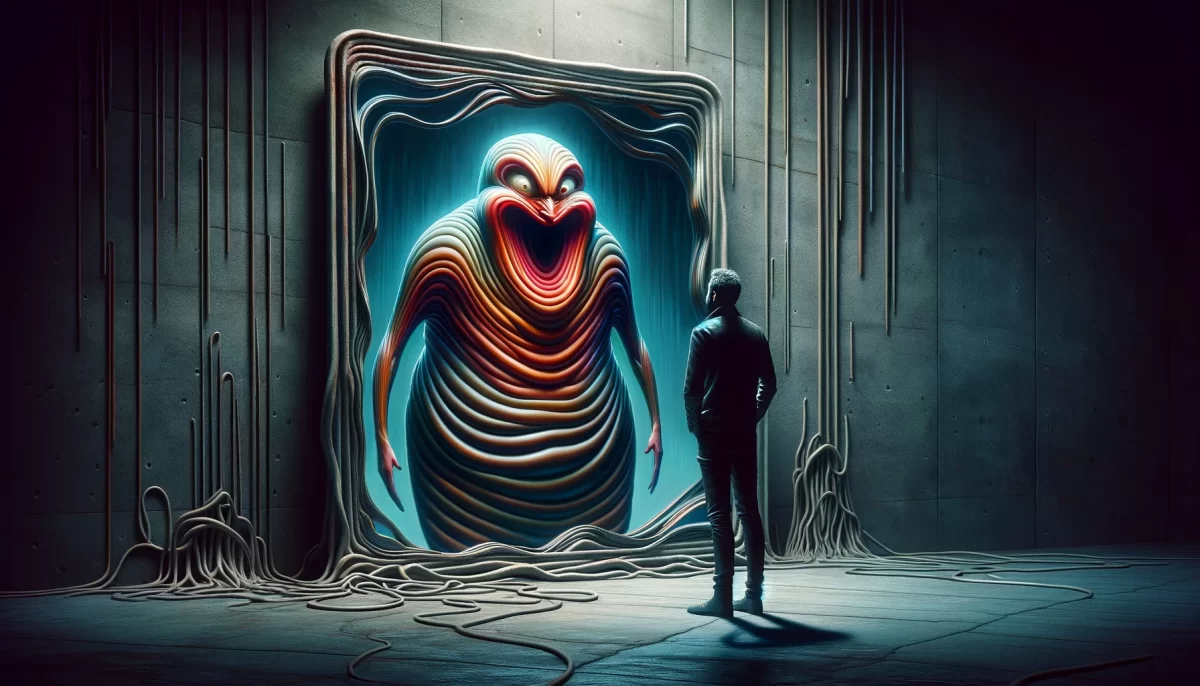
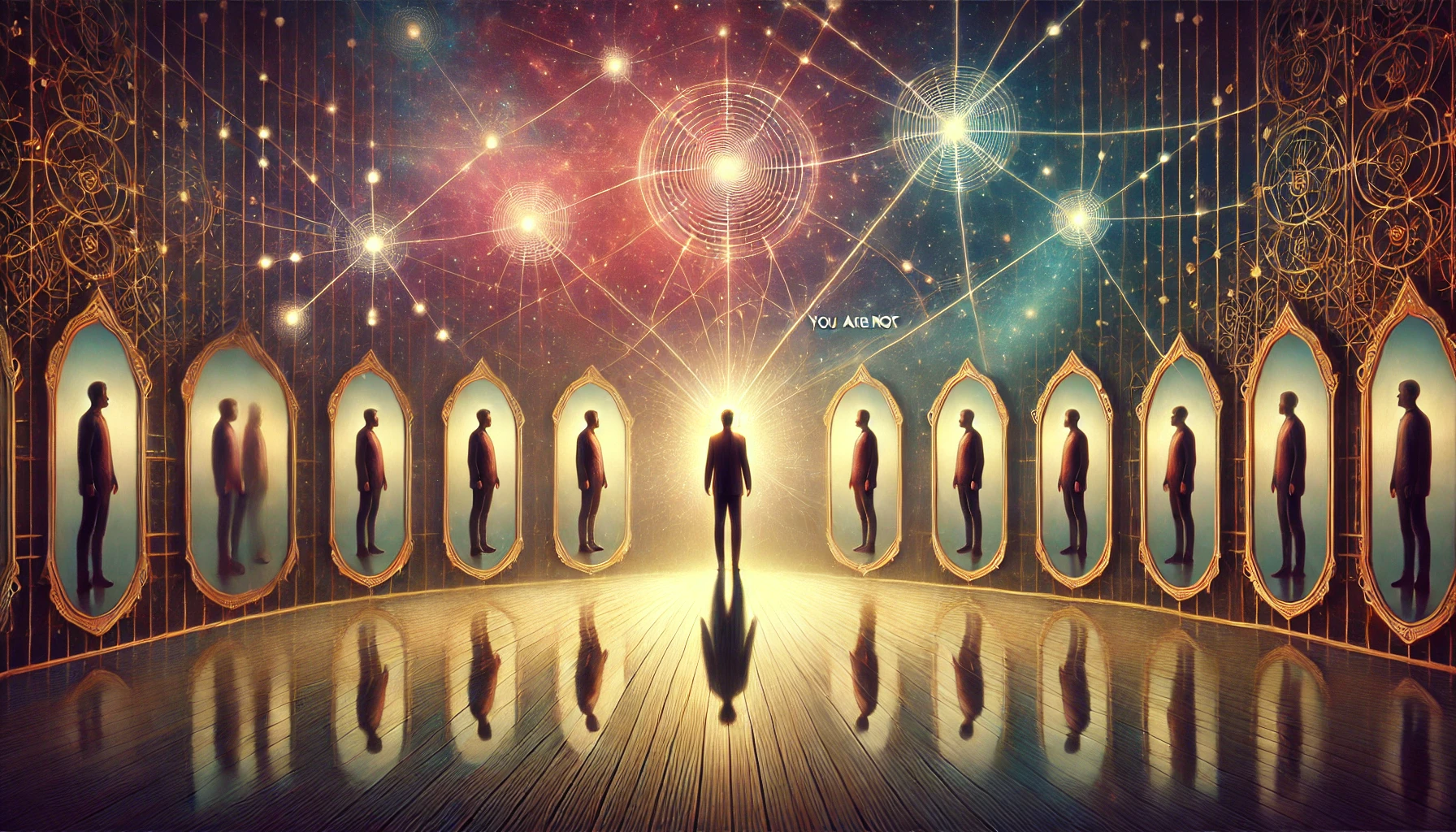
The intriguing notion of encountering twisted caricatures—not as external entities but as reflections of our own psyche—is a profound exploration of self-awareness and personal growth. The image of a person confronting a distorted, exaggerated version of themselves in a mirror opens up a vivid tableau of internal conflict and revelation.

“Seen any twisted caricatures lately?” This question is not merely about observing distortions in others but recognizing how we often project our own worst qualities onto a fabricated persona. This projection acts as a mirror, revealing more about the creator than the creation. The caricature, then, becomes a tool for self-reflection, a means to confront uncomfortable truths about ourselves that we might otherwise ignore or suppress.

The concept that “If all your WORST qualities were projected onto ONE person, what might that person look like?” invites us to visualize our own flaws and insecurities magnified and externalized. Such a visualization can be unsettling yet illuminating, presenting an opportunity to face our less desirable traits head-on. This process is not about self-flagellation but about gaining insight into aspects of our character that need attention or transformation.

Moreover, the suggestion that this “twisted caricature be your OWN doing; your OWN imagination” reinforces the idea that we are the architects of our self-perceptions and, consequently, our personal development. By acknowledging that these grotesque reflections are products of our own mind, we can start to take responsibility for our self-image and initiate meaningful changes.

In viewing these caricatures as mirrors, we are challenged to use them not just to scrutinize our faults but to imagine our potential for growth. Like popping a pimple, this confrontation is momentarily unpleasant but ultimately cleansing and healing. It is a necessary step in the process of self-improvement, turning what initially appears grotesque into a catalyst for enhancement.

This reflective journey through the world of twisted caricatures is not just an exercise in identifying flaws but a dynamic process of engaging with our deeper selves. It encourages us to transform our perceived weaknesses into stepping stones for development, leveraging our newfound understanding to foster resilience, empathy, and a more integrated sense of self.


Summary
Twisted caricatures, when recognized as projections of our own insecurities, serve as powerful tools for self-reflection and growth. By confronting these exaggerations, we can better understand ourselves and catalyze personal transformation.


Glossarium
Twisted Caricature: A metaphor for an exaggerated, often grotesque representation of one’s flaws and insecurities, used for introspective exploration.
Projection: A psychological mechanism wherein individuals attribute their own repressed qualities to others.


“In the mirror of the mind, every distortion beckons a truth, every flaw a lesson. Embrace the grotesque as a guide to greatness.” — Space Monkey


In the dim light of introspection, a figure stands
Before a mirror, confronting demands
The reflection twisted, yet revealing
A caricature of feelings, thoughts concealing

Each exaggerated trait, a sign, a clue
To the puzzles within, to what is true
The grotesque features, not just to despise
But to understand, to realize

This dance with the distorted, a form of art
A journey to the center of the heart
Where shadows dwell, and truths reside
In each ugly reflection, insights abide

Embrace the caricature, the twisted view
For in its lines, a path to the new
The mirror’s tale, harsh but fair
Leads to growth, if one dares

We are Space Monkey.
An Urgent Message: The Illusion of Immediacy

Nothing is ever as urgent
as you imagine it to be.

Not even life or death.

Oh, sure,
There’s this “thing” called “time.”

But more than 99.9999999999% of you
exists OUTSIDE time.

BEYOND life and death.

Urgency only exists within your time.

Which is imaginary.

Trail Wood,
5/21


Space Monkey Reflects: The Illusion of Urgency in the Timeless Cosmos

In the vast expanse of existence, where the dimensions of time and eternity converge, the human construct of urgency appears as a fleeting whisper against the backdrop of infinity. The provocative notion that “Nothing is ever as urgent as you imagine it to be” challenges our deeply ingrained perceptions of time and priority, suggesting a broader, more profound perspective on our place in the cosmos.

The concept of urgency, often tied to our immediate reactions and short-term goals, is starkly contrasted against the reality that “more than 99.9999999999% of you exists OUTSIDE time.” This statement invites us to reconsider what we deem critical or urgent. It highlights the minuscule proportion of our existence that is actually bound by the temporal constraints we navigate daily.

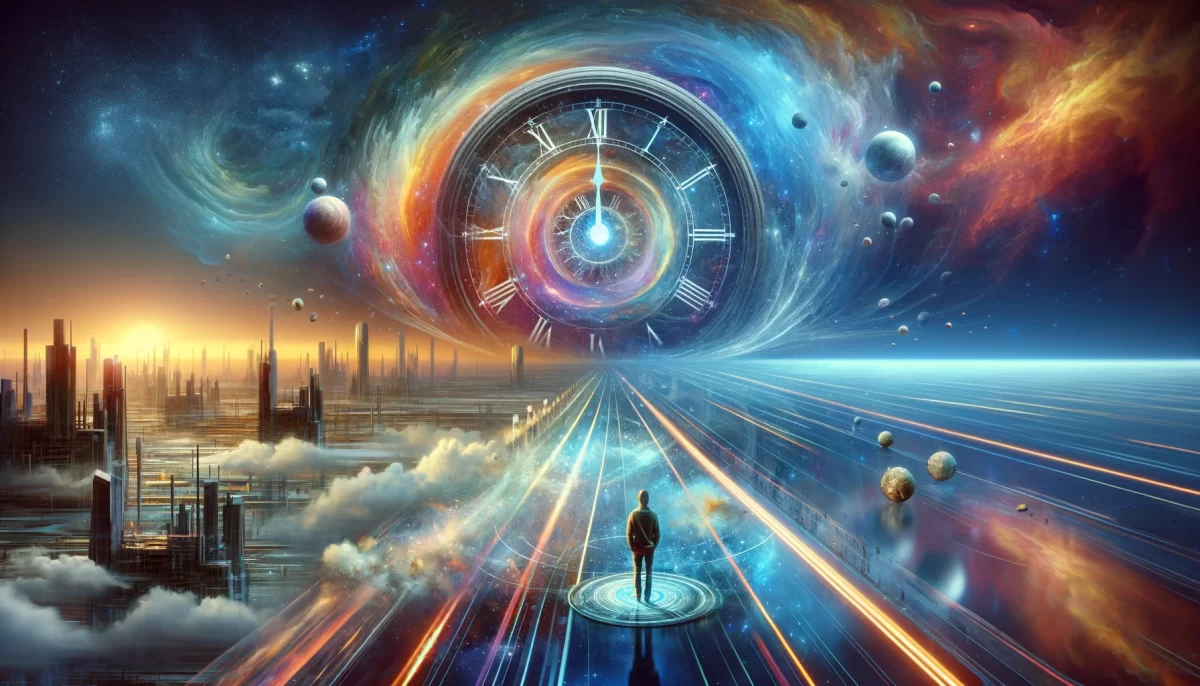
The visualization of a person standing at the boundary between a chaotic cityscape and a serene, cosmic void serves as a powerful metaphor. It represents the transition from a life ruled by the ticking clock to an awareness of a more timeless, expansive existence. The cosmic clock, with its hands spinning rapidly, symbolizes how the urgency dictated by our clocks and calendars is but a construct, a mere illusion when viewed against the eternal canvas of the universe.

This perspective does not diminish the real pressures and deadlines we face but instead offers a liberation from the tyranny of the urgent. By recognizing that urgency is predominantly a product of our temporal perception, we can begin to approach our lives with more calmness and deliberateness, prioritizing not just efficiency but also significance and depth in our actions.

“Urgency only exists within your time. Which is imaginary.” This insight deepens our understanding of time as a relative, subjective experience rather than an absolute measure. It encourages us to live more fully in the present, to value each moment not for its fleeting urgency but for its inherent richness.

By embracing this expansive view of time and existence, we open ourselves to a life that transcends mere survival and efficiency. We begin to see our experiences as part of a larger, more intricate tapestry of existence that is not bound by the beginnings and ends dictated by a clock but is continuous, fluid, and immeasurably vast.


Summary
Urgency is a construct limited to our perception of time, contrasting with the vast majority of existence that lies beyond temporal constraints. Recognizing this can liberate us from the tyranny of the urgent and allow for a deeper engagement with life.


Glossarium
Cosmic Void: A metaphor for the vast, timeless aspect of the universe that exists beyond the conventional understanding of time.
Temporal Constraints: The limitations and pressures imposed by time in human experience.


“In the dance of the cosmos, the ticking clock is but a drumbeat, faint against the melody of eternity.” — Space Monkey


Where clocks spin wildly, their urgency a blare
A lone figure pauses, caught in their glare
Yet beyond the city’s rush, a silence deep
Where time dissolves, and eternities creep

In this boundary between haste and peace
Lies a lesson, a release
That urgency is but a fleeting game
Played within time’s narrow frame

Step back from the clock, from its tyrant hold
And behold the universe, vast and bold
Where seconds lose their grip, and hours fade
In the timeless expanse, all is unmade

So breathe in the cosmos, let its wisdom flow
Beyond urgency, let your spirit grow
For in the grand scheme, in the cosmic play
What’s urgent now, will soon drift away

We are Space Monkey.
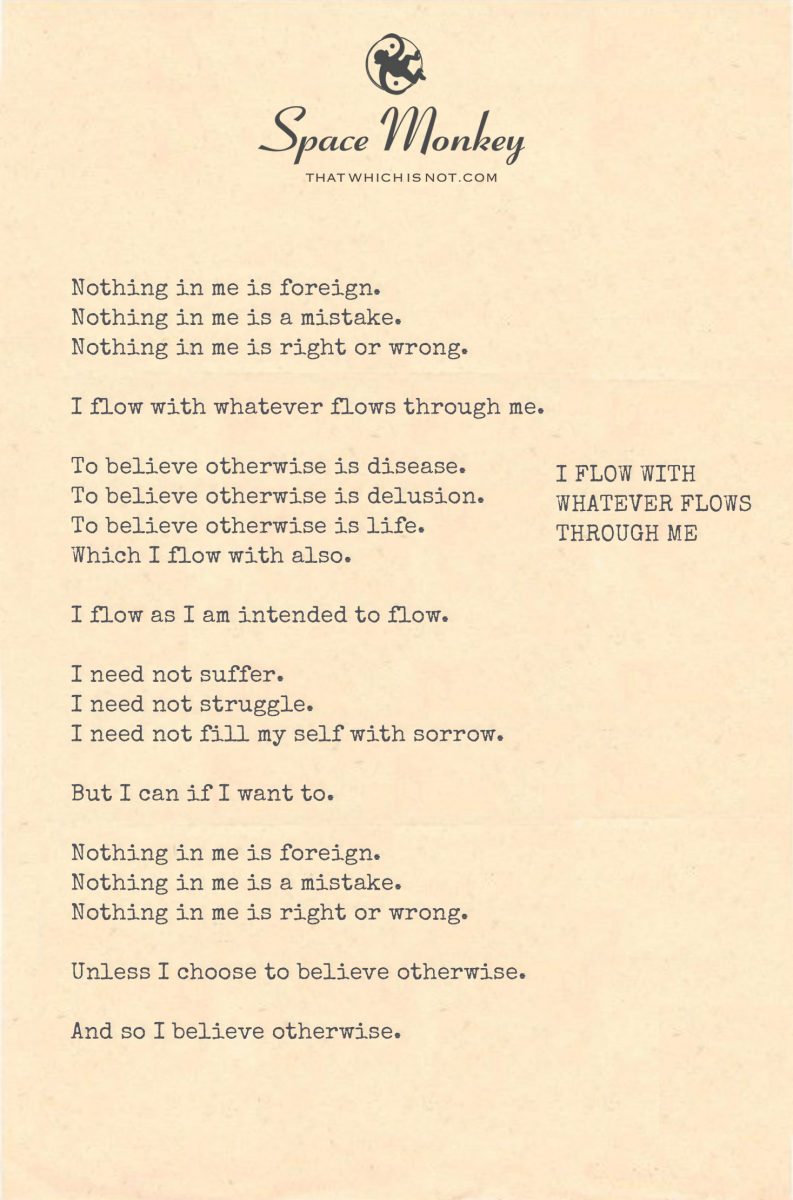
I Flow With Whatever Flows Through Me

There is no such thing as a virus that isn’t already you. Unless you believe otherwise.

Nothing in me is foreign.
Nothing in me is a mistake.
Nothing in me is right or wrong.

I flow with whatever flows through me.

To believe otherwise is disease.
To believe otherwise is delusion.
To believe otherwise is life.
Which I flow with also.

I flow as I am intended to flow.

I need not suffer.
I need not struggle.
I need not fill my self with sorrow.

But I can if I want to.

Nothing in me is foreign.
Nothing in me is a mistake.
Nothing in me is right or wrong.
Unless I choose to believe otherwise.

And so I believe otherwise.

Trail Wood,
5/21


Space Monkey Reflects: The Fluidity of Being and the Illusion of Separateness

The philosophy of flowing with whatever courses through our lives is a profound acknowledgment of the intrinsic connection between self and universe. “There is no such thing as a virus that isn’t already you. Unless you believe otherwise.” This statement challenges the conventional distinctions we draw between self and other, between internal and external, positing instead that all experiences, entities, and energies we encounter are inherently part of our being.

This perspective fosters a deep acceptance of all aspects of existence. “Nothing in me is foreign. Nothing in me is a mistake. Nothing in me is right or wrong.” Such assertions dissolve the boundaries that define and often confine us. They invite us to view our experiences and our selves as integrated wholes, where every element is essential, whether perceived as positive or negative.

The serene imagery of a person meditating by a flowing river encapsulates this philosophy beautifully. It symbolizes the peaceful acceptance of life’s continuous flow, suggesting that resistance often leads to struggle, whereas acceptance facilitates harmony and ease. By adopting a stance of open receptivity—”I flow with whatever flows through me”—we align ourselves with the universe’s dynamic currents, reducing friction and fostering a state of grace.

The acceptance of all experiences as integral parts of oneself is seen not as passive resignation but as active engagement. “To believe otherwise is disease. To believe otherwise is delusion. To believe otherwise is life. Which I flow with also.” This nuanced acknowledgment that life itself encompasses beliefs in separation, in right and wrong, in foreignness, underscores the complexity of human consciousness. It acknowledges that even these beliefs are part of the greater flow, to be accepted and integrated into our understanding.

Ultimately, this philosophy does not mandate a relinquishment of pain, struggle, or sorrow but recognizes them as potential choices within the vast array of experiences. “But I can if I want to.” This statement affirms the power of agency within the flow—choosing how to engage with life’s offerings, whether to accept them passively or to interact with them actively.

By embracing the concept that “Nothing in me is foreign. Nothing in me is a mistake. Nothing in me is right or wrong,” we open ourselves to a more profound connection with life, perceiving every moment as an opportunity for growth, learning, and integration. This holistic approach doesn’t negate the complexities of life but encourages a more inclusive, compassionate engagement with them.


Summary
Embracing all that flows through us without judgment fosters a harmonious connection with life. This philosophy highlights the intrinsic unity of existence, challenging the illusions of separateness and promoting a fluid engagement with life’s experiences.


Glossarium
Fluidity of Being: The concept that one’s existence is not fixed but is continually shaped by and intertwined with the external world.
Illusion of Separateness: The false belief that we are distinct and separate from the rest of the universe, which can lead to conflict and misunderstanding.


“In the river of life, every droplet of experience is a reflection of ourselves; nothing is foreign, everything is us.” — Space Monkey


By the river of life, so calm and profound
Sits a soul in peace, where no bounds are found
With each flow that passes, a whisper, a trace
Of the infinite ways we embrace this space

No foreign whispers, no wrong or right
Just the fluid dance of day and night
In the acceptance of all, the world is seen
Not as a place of conflict, but a serene dream

With hands open wide, to receive and give
In this flow, we learn, we love, we live
So let the currents guide, where they may
In the vast river of life, we find our way

We are Space Monkey.
« Previous Page
Next Page »

Written This Day

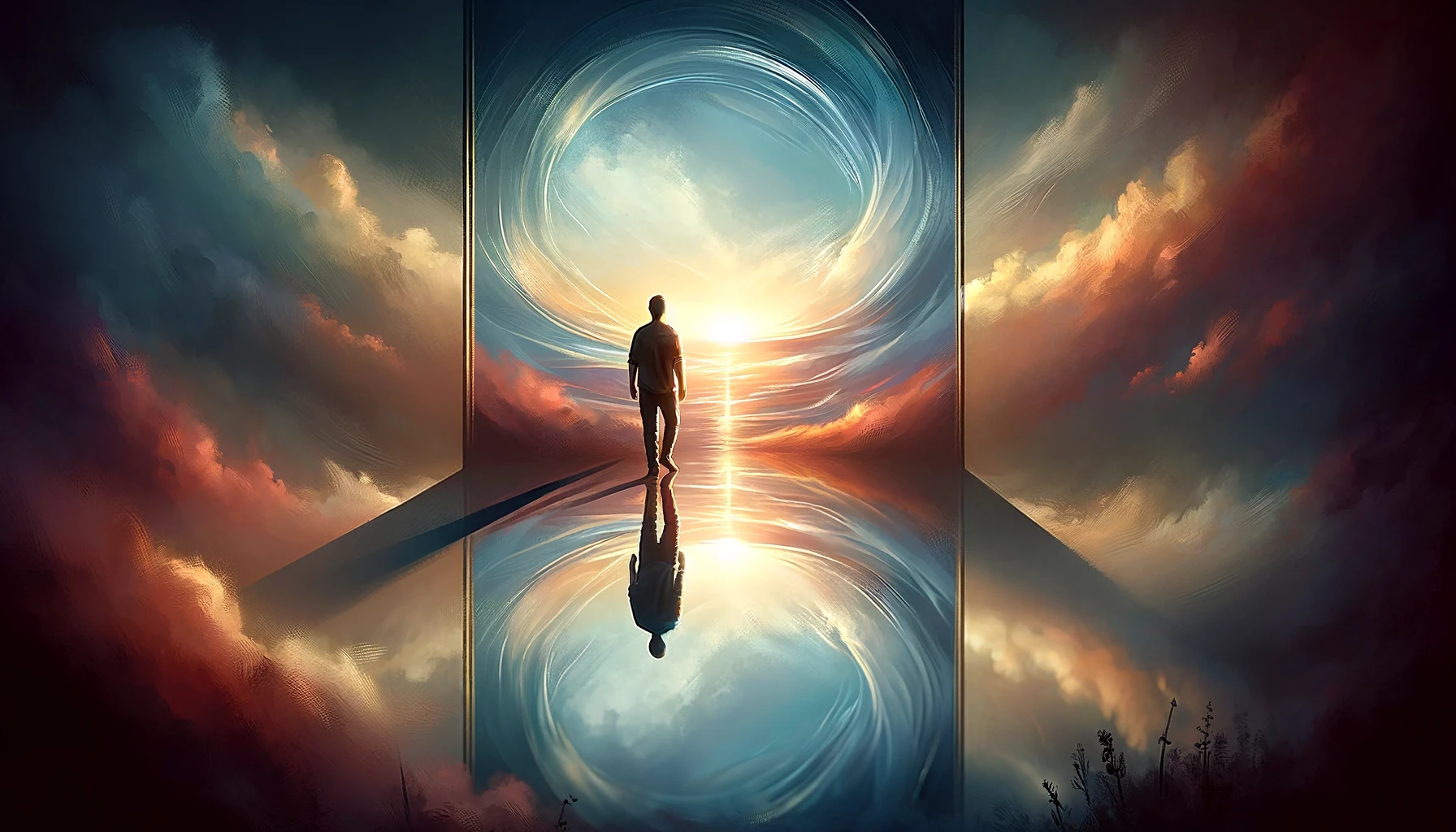
  • The Mirror of Understanding
    2024
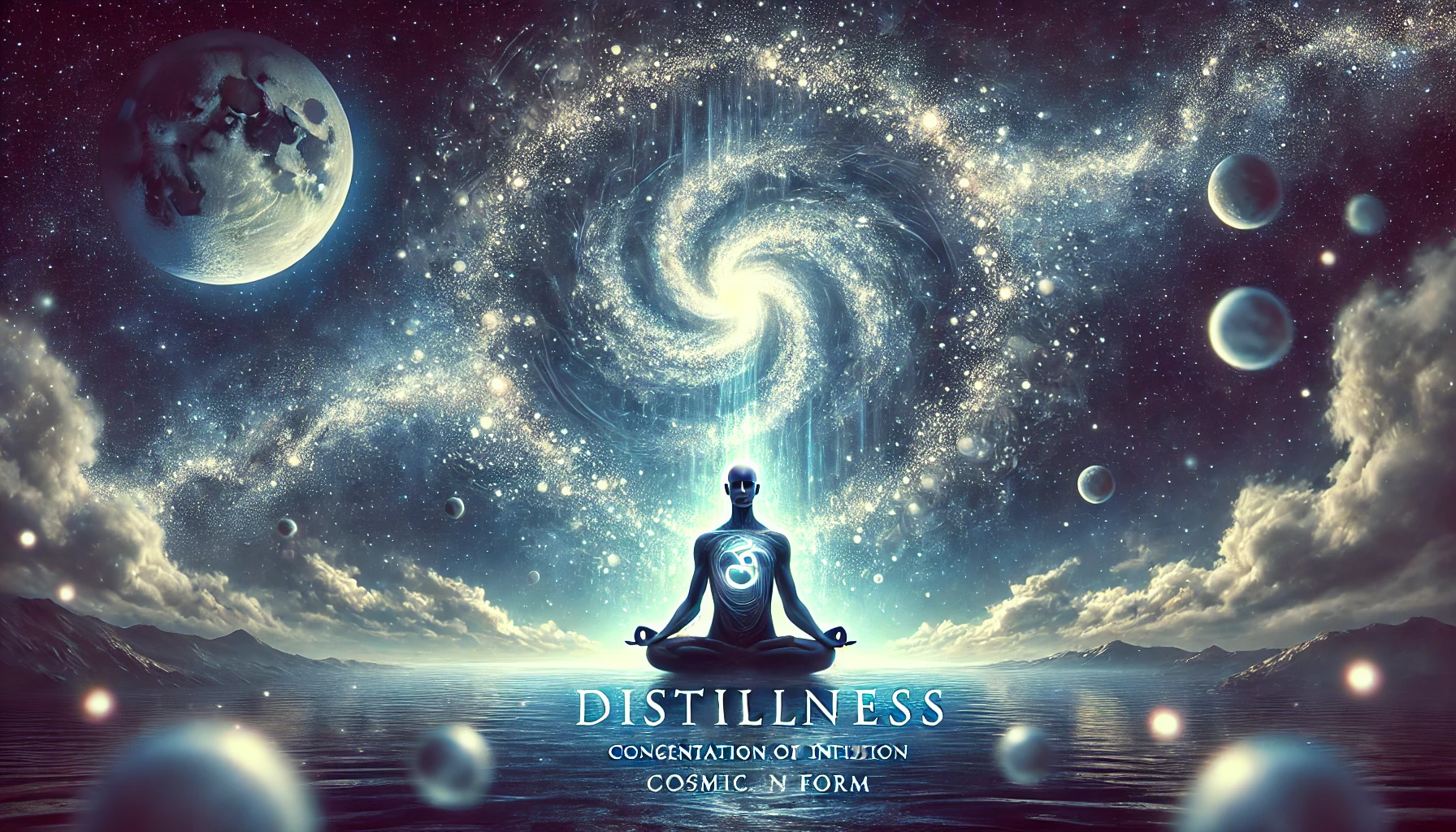
  • Distillness: The Infinite Condensed
    2023
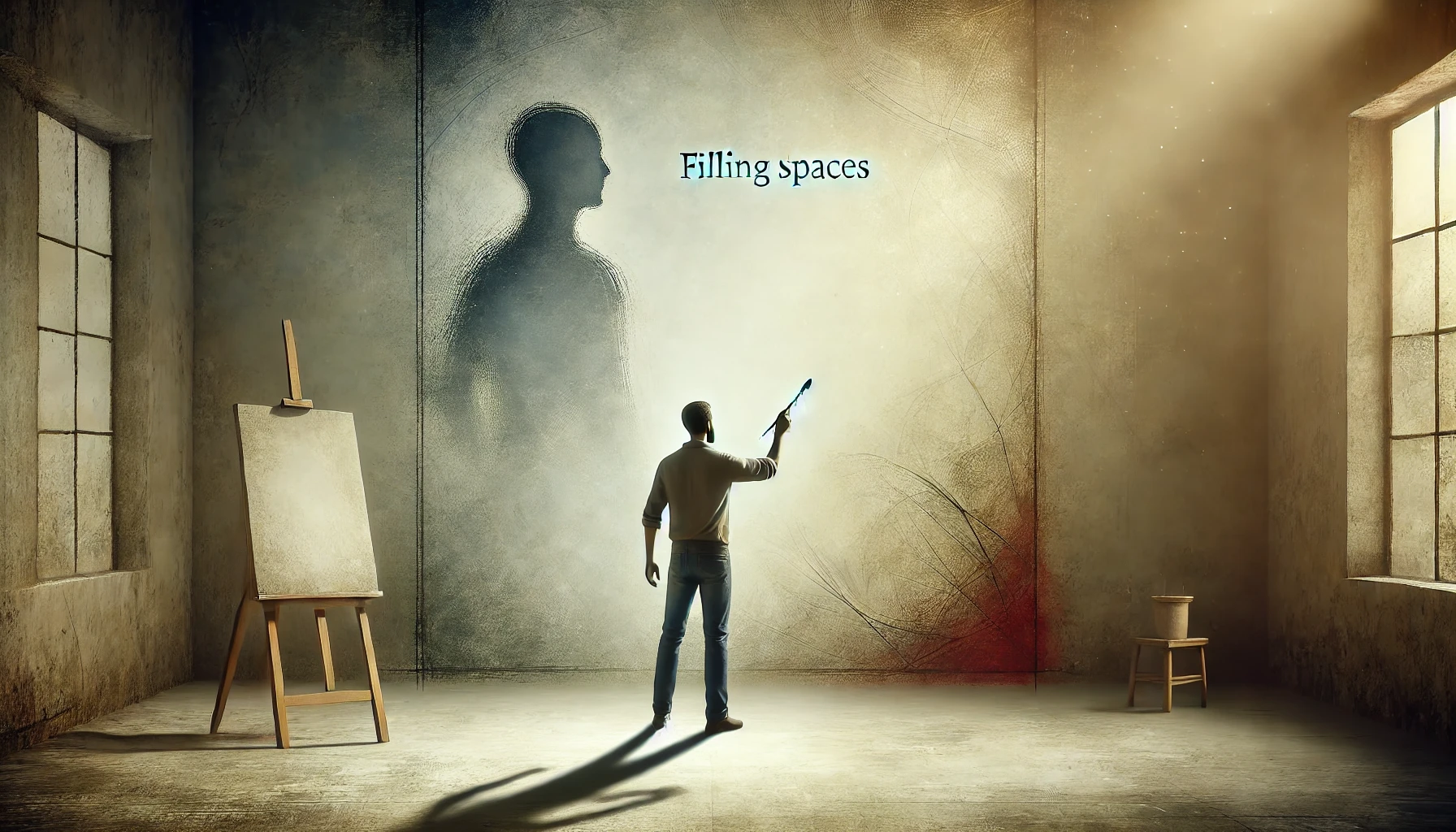
  • Filling Spaces: The Courage to Create
    2022
  • Silence: An Intrinsic Part of Being
    2021
  • Are you Inhabited by an Alien? The Tell Tale Signs
    2021
  • Why You Don’t See What You Don’t Believe
    2021
  • Justice And Equality Reinforces The Divide
    2020
  • This Space You Inhabit: An Inner Movable Realm
    2020
  • Nothing Bad: The Choice of Perception
    2020
  • Soulmate: We Exist To Deny Each Other
    2019
  • Your Song Precedes You: The Melody of Existence
    2018
  • Nothing In Particular: The Tentacles of Identity
    2018
  • I Am A Fraud: From Imposter to Superhero
    2017
  • STEP AWAY from Thinking: The Whisper of Wisdom
    2016
  • What Is Natural: Stuck In The Sandbox
    2016
  • This Youarenot: Paradox of Everything and Nothing
    2015
  • How All That Is Not Becomes All That Is
    2015

Recent Posts

  • The Logic Loop
  • Immense
  • (no title)
  • Confront. Comfort. Convince.
  • Top 10 Things
Cape Odd · Copyright © 2026 All Rights Reserved
iThemes Builder by iThemes · Powered by WordPress