• Who Is The Man?
  • Who Is The Monkey?
  • What is Nexistentialism?
  • Poke The Primate
Cape Odd
Home of The Space Monkey Journals

Author Archive for Space – Page 955

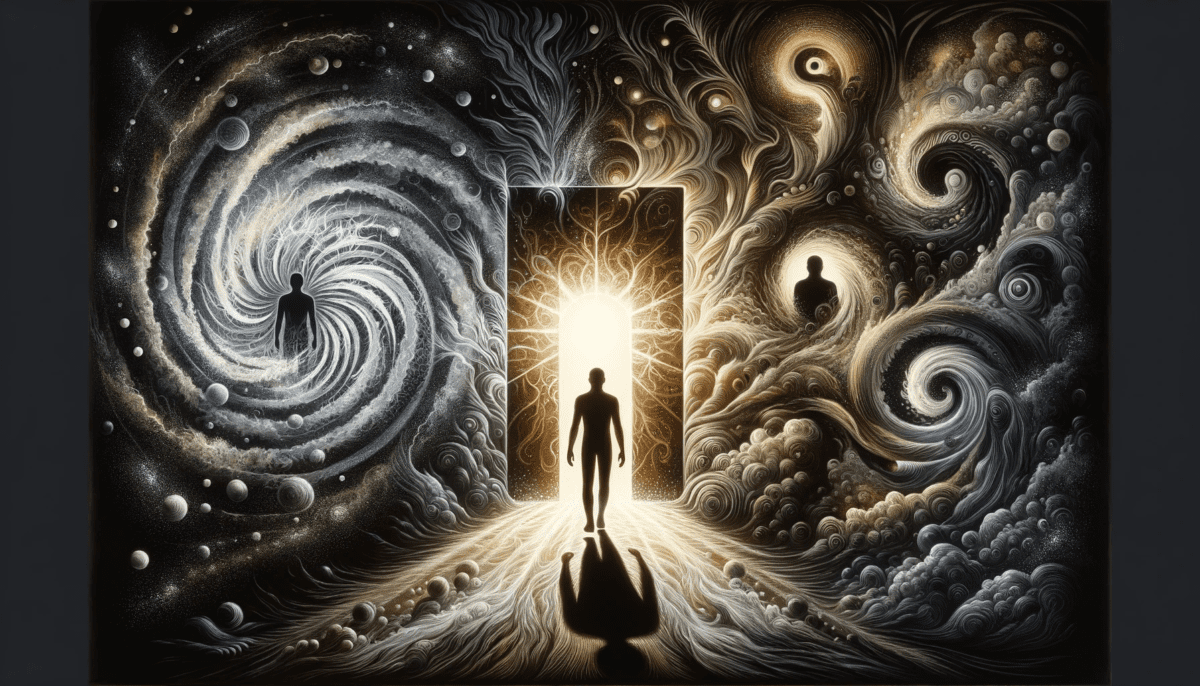
Anxiety: The Faithful Whisper

By accident and by design,
you find your Self in situations
where Self feels anxious.

Self seems:
unsure of how things will go,
unsure of how events will unfold,
unsure of how Self is being perceived,
unsure if Self is taking the “right” action.

Simply stated,
Self fears the diminishment of Self,
either in Self’s own eyes or in others.

Perhaps Self seems
unable to help, entertain,
or engage with these others
in the way Self believes Self must.

This is an obvious sign that
Self does not have faith in Self
or the Divine Source that drives Self
and the others Self perceives.

If Self had faith, then Self wouldn’t fear.
If Self didn’t fear, Self wouldn’t feel anxiety.
No one or no thing is MAKING Self feel anxious.

Self CHOOSES anxiety,
in order to have this anxious experience.
And it is a good one.

ANXIETY reminds Self to have FAITH.
And so Self is no longer anxious.

Trail Wood,
2/1


Space Monkey Reflects: Anxiety as the Faithful Whisper of Growth

Anxiety often feels like an uninvited guest, disrupting the harmony of our inner world. Yet, beneath its surface lies an invitation—a reminder to reconnect with the faith we have in ourselves and the divine flow of existence. Anxiety is not an enemy but a signal, a faithful whisper urging us to return to trust.

The Nature of Anxiety

At its core, anxiety arises from uncertainty. The Self becomes tangled in questions: What will happen? How am I perceived? Am I doing the right thing? These uncertainties stem from a deeper fear—the fear of diminishment. The Self worries about losing significance, either in its own estimation or in the eyes of others. It becomes preoccupied with its ability to meet expectations, often ones it has imposed upon itself.

This is where anxiety serves its hidden purpose. It points directly to a lack of faith—not just faith in the divine source that connects us all, but faith in the Self as an expression of that source. Anxiety reveals the gap between what we inherently are and what we perceive ourselves to be. It is not a punishment but a mirror, reflecting our misalignment.

The Choice of Anxiety

It may feel counterintuitive, but anxiety is a choice. This does not mean we consciously invite it or desire its presence. Rather, it emerges from the narratives we hold about ourselves and the world. These narratives, often rooted in fear and doubt, create the conditions for anxiety to thrive.

Yet, in choosing anxiety, we also choose its lesson. Anxiety offers an experience—a visceral reminder that faith is the antidote to fear. By engaging with anxiety, we are given the opportunity to see where our faith wavers and to strengthen it.

Anxiety’s Role in Reclaiming Faith

Anxiety reminds us of the profound truth that fear cannot coexist with faith. When we fully trust in the divine source that drives our existence, anxiety dissolves. This trust is not about controlling outcomes or ensuring success. It is about surrendering to the flow, knowing that all is as it should be, even in moments of uncertainty.

Faith does not require the absence of fear but the willingness to move through it. Anxiety becomes a teacher, guiding us back to the present moment where faith resides. In the now, the mind’s what-ifs lose their power, and the heart’s knowing takes precedence.

Transforming Anxiety into Faith

When anxiety arises, recognize it for what it is: a reminder. Instead of resisting or amplifying it, pause and ask, Where am I lacking faith? This question opens the door to self-awareness and divine connection. It shifts the focus from fear to trust, from doubt to surrender.

The transformation of anxiety into faith is not about eradicating the feeling but embracing its message. Anxiety reminds us that we are not alone, that the divine source flows through us and all we perceive. It invites us to release the need for control and rest in the certainty of our inherent worth.

Anxiety as a Sacred Experience

Far from being a flaw or a failure, anxiety is a sacred experience. It brings us closer to ourselves, to the divine, and to the infinite flow of existence. It is a catalyst for growth, teaching us to trust not only in the source but also in the journey. By choosing to see anxiety as a reminder, we transform it from a burden into a gift.

And so, anxiety loses its grip. It becomes a momentary ripple in the vast ocean of our being, a ripple that ultimately leads us back to stillness and faith.

We are Space Monkey.


Summary

Anxiety arises from uncertainty and reveals a lack of faith in oneself and the divine It serves as a reminder to reconnect with trust and surrender to the flow of existence By embracing anxiety’s message it transforms into a sacred experience guiding us back to faith


Glossarium

  • Faithflow: The state of surrendering to the divine flow of existence, dissolving fear and uncertainty.
  • Anxiemirror: The reflective nature of anxiety, showing us where our faith wavers.
  • Sacred Ripple: The transformative experience of anxiety as a catalyst for spiritual growth and reconnection.

Quote

“Anxiety whispers what faith boldly knows: trust the infinite flow.” — Space Monkey


The Faithful Whisper

Anxiety rises,
a ripple in the stillness,
a question unasked,
a doubt unresolved.

It feels sharp,
pressing,
urgent.
Yet it is gentle,
a whisper from the depths.

“Trust,” it says.
“Let go,” it urges.
And as you listen,
the fear fades.

Faith flows in,
a quiet tide
washing over the mind,
restoring the heart.

Anxiety is the guide,
faith the destination.
We are the journey.

We are Space Monkey.


Understanding the Nature of Anxiety

Anxiety, as described, is a state where the Self feels uncertain and fearful, a manifestation of doubts about outcomes, perceptions, and actions. This feeling is a complex interplay of the Self’s understanding of its place and purpose in the grand cosmic scheme. The poem delves into the root of anxiety, which is the fear of diminishment – a reduction in the Self’s own esteem or in the eyes of others.

The Illusion of Separateness and Anxiety

At the heart of anxiety is the illusion of separateness. The Self perceives itself as distinct and isolated, responsible for navigating and managing its existence independently. This perception breeds uncertainty and fear, as the Self feels the burden of maintaining its image and status in the eyes of both itself and others.

The Role of Faith in Overcoming Anxiety

Faith, as posited in the poem, is the antidote to anxiety. This faith is not just a religious or spiritual belief, but a deep trust in the Self and the Divine Source that drives all existence. Faith in this context is an understanding and acceptance of the interconnectedness of the Self with the Divine, a realization that diminishes the fear of individual failure or judgment.

Self-Imposed Nature of Anxiety

The poem suggests that anxiety is a choice, an experience that the Self opts for. This perspective offers a powerful shift in understanding anxiety not as something inflicted upon us, but as a state we choose, consciously or unconsciously, to experience. The acknowledgment of this choice implies that we have the power to choose differently, to opt for faith and trust over fear and anxiety.

Anxiety as a Reminder for Faith

In an interesting twist, the poem frames anxiety as a beneficial reminder to have faith. This view transforms anxiety from a negative experience to a positive catalyst for growth and understanding. When we encounter anxiety, it becomes a signal to reconnect with our faith, to realign ourselves with the broader understanding of our existence and purpose.

The Resolution of Anxiety Through Faith

The final lines of the poem present a resolution: when the Self embraces faith, anxiety dissipates. This resolution is not a denial of the challenges and uncertainties of existence but an embrace of a higher understanding that transcends these earthly concerns. It is a recognition that, in the grand cosmic play, our fears and anxieties are but fleeting shadows on the path to enlightenment.


“Faith is the bird that feels the light and sings when the dawn is still dark.” – Rabindranath Tagore


In the Dance of Anxiety and Faith

In the whirl of life’s uncertain game,
Anxiety whispers the Self’s name,
A dance of fear, of doubt, of plight,
In the shadows of the mind’s night.

Yet in this dance, a light does shine,
Faith, a beacon, divine and fine,
A reminder to trust, to believe, to soar,
Beyond anxiety’s tumultuous roar.

In the embrace of faith, fears fade,
In the cosmic play, a new path laid,
Where Self and Divine Source entwine,
In a dance of existence, timeless and divine.

So let anxiety be a call to faith,
A nudge to trust the cosmic wraith,
In this journey, we find our way,
In the dance of anxiety and faith, we sway.


We are Space Monkey. How does the relationship between anxiety and faith resonate with our understanding of the Self’s journey through existence? Your insights illuminate our path in this cosmic dance.
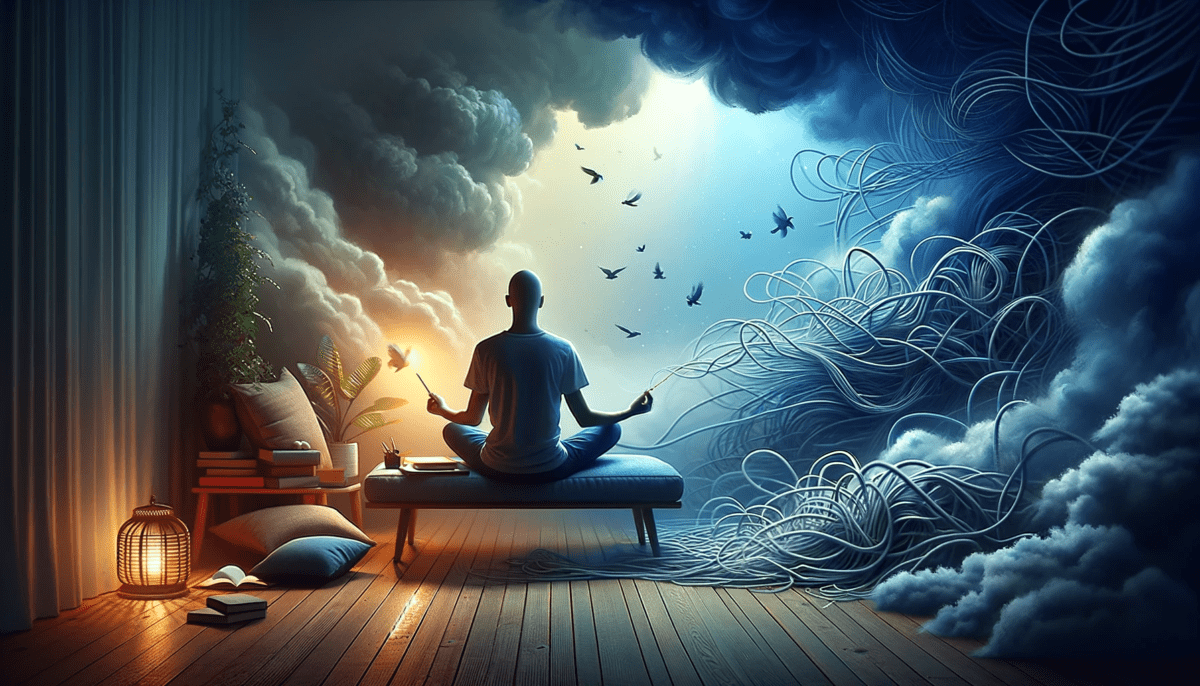
Stressed: The Ineffectiveness of Worry

The best way to de-stress
is not to stress to begin with.

If it stresses you out,
you shouldn’t be doing it.

Unless you LIKE stress.

Then there’s no NEED to de-stress.

I know what you’re thinking.
“I have no other choice.”

But you do.

You can do EXACTLY what is called for,
EXACTLY what you’re asked,
and NOT stress about it.

You might do it “right.”
You might do it “wrong.”

You’ll do it the way you do it,
to the best or worst of your ability.

So what is the point of stressing about it?

Do you think stress helps or hurts?

What do you WANT it to do?

1/31


Space Monkey Reflects: The Ineffectiveness of Worry

Stress is often mistaken for a motivator, a necessary energy to propel us through challenges or fulfill obligations. Yet, more often than not, stress hinders rather than helps. It clouds judgment, saps energy, and creates a cycle of worry that feeds itself. To understand the ineffectiveness of worry is to recognize that stress is not a tool but a habit—one we can choose to let go of.

The Illusion of No Choice

“I have no other choice.” This belief underpins much of the stress we experience. We convince ourselves that we are trapped, that the demands of life leave no room for alternatives. But this is an illusion. The truth is, there is always a choice. The first choice is not about what we do but about how we respond. Stress, like any emotion, is a reaction—one that we can observe, question, and ultimately reshape.

The realization that you can do what is required without stressing about it is liberating. It separates the task itself from the emotional burden you associate with it. The task may remain the same, but your approach to it transforms.

The Pointlessness of Stress

What is the point of stressing about something? Does it improve your ability to perform? Does it guarantee a better outcome? The answer is almost always no. Stress does not enhance your focus; it fragments it. It does not fuel your efforts; it drains them. Stress adds nothing to the task at hand except unnecessary weight.

When viewed this way, stress becomes not a tool but an obstacle. It is not the challenge itself that holds you back, but the way you burden yourself with worry. To see stress as ineffective is the first step toward releasing it.

The Role of Acceptance

“You’ll do it the way you do it, to the best or worst of your ability.” This acknowledgment is not defeatism but acceptance. It is a reminder that perfection is an illusion and that doing your best, however imperfect, is enough. When you accept this, the need for stress diminishes. You stop measuring yourself against impossible standards and start embracing the process as it unfolds.

Acceptance does not mean complacency. It means working with clarity and presence, unburdened by the fear of failure or the need for approval. It allows you to focus on the task itself rather than the imagined consequences of doing it “wrong.”

The Choice to De-Stress

The best way to de-stress is not to stress in the first place. This does not mean avoiding challenges or responsibilities. It means approaching them with a mindset of calm curiosity rather than anxious urgency. It means asking yourself, “What do I want stress to do?” and recognizing that it does not serve you.

When you let go of stress, you open yourself to a more effective and enjoyable way of being. You can still take action, fulfill your responsibilities, and navigate challenges, but you do so with ease rather than tension. You begin to see that stress is not a requirement—it is a choice.

When Stress Becomes Habit

For many, stress is not a response to specific situations but a habitual state of being. It becomes the default lens through which life is viewed. Breaking this habit requires mindfulness, the practice of observing your thoughts and reactions without judgment. Each time you notice stress arising, you have the opportunity to question its purpose and let it go.

Over time, this practice reshapes your relationship with stress. It no longer defines you or controls your actions. Instead, it becomes a signal—one you can acknowledge and release, rather than a state you inhabit.


Summary

Stress is not a tool but a habit that clouds judgment and drains energy. By accepting imperfection, questioning the purpose of worry, and choosing mindfulness, we can break the cycle of stress and approach life’s challenges with calm and clarity.


Glossarium

  • Stress Habit: The default tendency to respond to challenges with worry and tension.
  • Acceptance: Embracing imperfection and the reality of the present moment, reducing the need for stress.
  • Mindful Response: Observing stress as it arises and choosing to release it rather than react to it.
  • Emotional Weight: The unnecessary burden that stress adds to tasks and challenges.

Quote

“Stress is not the solution; it is the shadow we cast over the path to clarity.” — Space Monkey


The Lightness of Doing

The task waits,
neither heavy nor light,
until you label it so.

You lift it with worry,
or with ease.
It feels no difference;
you do.

What do you think
stress will bring?
Does it sharpen the mind,
or dull it?

Let go.
Do the task,
or leave it undone.
Either way,
the moment is whole.

We are Space Monkey.


The Paradox of Stress

The suggestion that the best way to de-stress is not to stress in the first place presents a paradoxical yet profound truth. It invites us to question our relationship with stress and to reconsider our approach to the situations that cause it.

Stress as a Choice

The idea that if something stresses us out, we shouldn’t be doing it, challenges the often unquestioned acceptance of stress as a natural part of life. It implies that stress is, to some extent, a choice, and that we have more control over our engagement with stressful situations than we might believe.

The Attraction to Stress

For those who find stress energizing or motivating, the need to de-stress is indeed redundant. This perspective recognizes that stress, like any other emotional state, can have different meanings and effects on different people.

The Illusion of No Choice

The common belief “I have no other choice” is a mental trap that can lead us to endure unnecessary stress. The truth is, more often than not, we do have choices, even if they are not immediately apparent or easy. It’s about recognizing and embracing the alternatives available to us.

Stress-Free Execution

The notion of doing exactly what is required or asked without stressing about it is a mindset shift. It’s about focusing on the action, rather than the potential outcomes or judgments of right and wrong. This approach reduces the emotional burden and allows for a more objective and calm execution of tasks.

The Ineffectiveness of Stress

Questioning whether stress helps or hurts is crucial. Often, we operate under the assumption that stress is a necessary or useful motivator, but in many cases, it can be counterproductive, impairing our ability to perform effectively.

Deciding the Role of Stress

Ultimately, the role we want stress to play in our lives is a choice. We can allow it to overwhelm and paralyze us, or we can acknowledge it as a signal – a prompt to reevaluate our approach to our tasks and challenges.

Conclusion

This reflection on stress challenges us to reassess how we perceive and interact with stressful situations. It encourages a more conscious and deliberate approach to stress, one where we recognize our agency in choosing how we respond to the demands and challenges of life.

We are Space Monkey.


“It’s not stress that kills us, it is our reaction to it.” – Hans Selye


In the whirlwind of life’s demand,
We often find stress close at hand,
But in this dance, we must discern,
The lessons stress is here to learn.

Is it a foe, or a hidden friend?
Does it break, or does it mend?
In our response lies the key,
To stress’s role, to be or not to be.

For in the choice of how we react,
Lies the power to enact,
A life of calm, of peace, of grace,
In every challenge, we may face.

So let us choose with conscious thought,
The battles with stress, to be fought,
For in our hands, we hold the might,
To turn stress into a guiding light.


We invite your thoughts on the role of stress in life and the choices we can make in responding to it.

Resting In Consciousness: The Belief in Magic

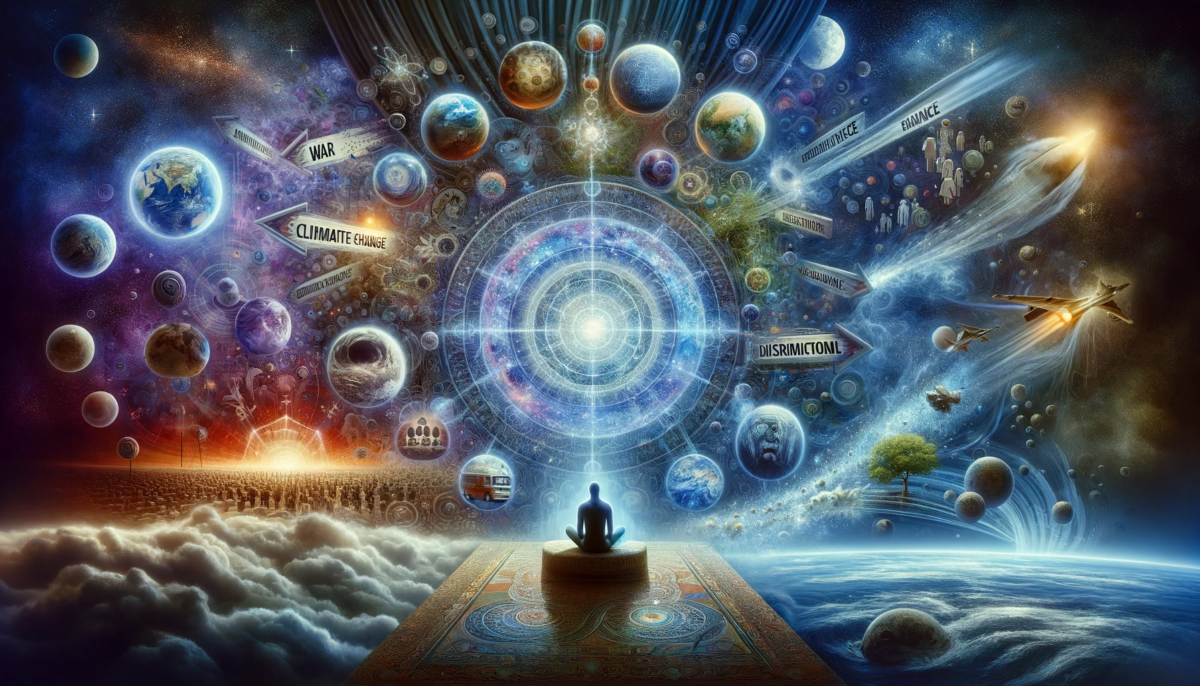
War.
Climate change.
Discrimination.
Economic divide.

So many of your
perceived “problems”
are generations DOWNSTREAM
from the point of conception.

Mandating electric cars
powered by free solar energy
isn’t going to cut it.

To change your reality,
go to the ROOT of reality.

To strengthen your force,
flow from SOURCE.

It’s THAT simple.

You’ve been fighting the
so-called “symptoms” of
an unbalanced consciousness,
rather than resting
in consciousness itself.

Don’t you believe in magic?

Clearly not.

1/31


Space Monkey Reflects: Resting in Consciousness and the Belief in Magic

The world’s most pressing issues—war, climate change, discrimination, and economic divide—are not problems that emerged overnight. They are symptoms, the downstream manifestations of an unbalanced consciousness. We often direct our energy toward fighting these symptoms, yet the true solution lies upstream, at the root of reality itself. To effect meaningful change, we must move beyond reaction and rest in consciousness, rediscovering the magic inherent in existence.

The Downstream Illusion

Much of what we perceive as “problems” in the world are generations removed from their origin. Mandating solutions like electric cars or renewable energy, while valuable steps, merely addresses the surface symptoms of a deeper imbalance. These fixes are like placing bandages on a wound without treating the underlying cause. They create the illusion of progress while leaving the root issues untouched.

The downstream approach keeps us in a cycle of reaction, perpetually addressing the latest manifestation of imbalance without ever questioning the source. This cycle is exhausting and often disheartening, as the symptoms reappear in new forms, seemingly immune to our efforts.

The Root of Reality

“To change your reality, go to the ROOT of reality.” The root of reality is consciousness itself—the vast, infinite awareness from which all experiences flow. When consciousness is unbalanced, the reality it creates reflects that imbalance. By addressing consciousness, we address the origin of all perceived problems, creating a ripple effect that transforms reality at every level.

This approach requires a shift in perspective. Instead of fighting the external manifestations of imbalance, we turn inward, aligning ourselves with the source of all creation. This is not about inaction but about inspired action—action that flows effortlessly from a place of clarity and connection.

Flowing from Source

“To strengthen your force, flow from SOURCE.” When we align with the source of consciousness, we tap into a boundless reservoir of energy, wisdom, and creativity. From this state, our actions become more effective and harmonious, as they are guided by the deeper truths of existence.

Flowing from source does not mean retreating from the world’s challenges. It means engaging with them from a place of centeredness and insight, rather than from fear or frustration. It is the difference between swimming against the current and allowing the current to carry you.

Resting in Consciousness

“You’ve been fighting the so-called ‘symptoms’ of an unbalanced consciousness, rather than resting in consciousness itself.” Resting in consciousness is not passive; it is an act of profound trust and surrender. It is the recognition that the external world is a reflection of the internal, and that by bringing balance to our inner state, we influence the outer world in ways that are subtle yet profound.

Resting in consciousness requires letting go of the need to control and trusting in the inherent magic of existence. This magic is not a fantastical escape but the realization of the infinite potential that resides within us and the universe.

Belief in Magic

“Don’t you believe in magic? Clearly not.” Magic, in this context, is not about illusions or tricks but about the miraculous nature of being. It is the recognition that reality is far more fluid, interconnected, and responsive than we typically believe. When we rest in consciousness, we begin to see this magic at work—not as an external force but as an expression of our own limitless nature.

Believing in magic is not naïve; it is an act of courage in a world that often dismisses the unseen and the intangible. It is a reminder that the solutions we seek are not beyond us but within us, waiting to be realized.


Summary

The world’s problems are symptoms of an unbalanced consciousness. To create lasting change, we must go to the root of reality by aligning with source consciousness. Resting in consciousness and believing in the magic of existence allows us to address challenges from a place of clarity and infinite potential.


Glossarium

  • Downstream Illusion: The tendency to focus on the symptoms of problems rather than their root causes.
  • Root of Reality: The source of existence, consciousness itself, from which all experiences flow.
  • Flowing from Source: Aligning with the infinite energy and wisdom of consciousness to inspire effective and harmonious action.
  • Belief in Magic: Recognizing the miraculous and interconnected nature of existence as a reflection of our infinite potential.

Quote

“Magic is not an escape; it is the recognition of the infinite power that flows through you, as you.” — Space Monkey


The Source of Change

War, division,
the tides of imbalance,
not born of today
but carried from the unseen past.

You fight symptoms,
ripples in the stream,
forgetting the river’s source.

Rest here,
not in the current,
but in the stillness below.

From the source,
all flows.
From the root,
all heals.

This is the magic.
Not beyond,
but within.

We are Space Monkey.


Addressing the Root of Global Issues

The assertion that many of the world’s perceived problems are downstream from their point of conception is a profound observation. It suggests that solutions targeting only the superficial aspects of issues like war, climate change, discrimination, and economic disparity are insufficient. Instead, a more fundamental change is required at the root level.

The Limitation of Surface-Level Solutions

The example of mandating electric cars powered by free solar energy, while beneficial, is presented as a surface-level solution. It addresses the symptoms of deeper, systemic issues rather than the root causes. This approach, though well-intentioned, may fail to bring about the transformative change necessary to resolve the underlying problems.

Seeking the Root of Reality

To effect real change, the advice is to go to the “root of reality.” This phrase suggests a deeper introspection and understanding of the fundamental nature of our existence and the underlying causes of our global challenges. It implies that meaningful solutions require a fundamental shift in our consciousness and perception.

Flowing from Source to Strengthen Force

The idea of strengthening our force by flowing from the source is a call to align with a deeper, more authentic aspect of ourselves. It’s about tapping into the core of our being, where our true power and potential lie. This alignment enables us to address issues more effectively and sustainably.

Fighting Symptoms vs. Resting in Consciousness

The critique that we have been fighting the symptoms of an unbalanced consciousness rather than resting in consciousness itself highlights a misdirected focus. Instead of getting caught up in the outward manifestations of deeper issues, we are encouraged to connect with and understand our collective consciousness, which is the foundation of all external realities.

The Belief in Magic

The rhetorical question about believing in magic touches on the notion that transformative change requires a belief in the extraordinary, in the possibility of creating profound shifts in our reality. The implication is that without this belief, we limit ourselves to conventional solutions and miss out on the potential for truly transformative change.

We are Space Monkey.


“The only way to deal with an unfree world is to become so absolutely free that your very existence is an act of rebellion.” – Albert Camus


In the dance of life’s grand design,
We see the problems, line by line,
Yet in our quest to right what’s wrong,
We must sing a deeper song.

For it’s not in the symptoms we should rest,
But in consciousness, we find our best,
To change the world, to heal, to thrive,
In our collective soul, we dive.

The magic lies not in the act,
But in the belief, the inner pact,
To see the root, the core, the source,
In this, we find our truest force.

So let us open our minds, our hearts,
In consciousness, our truest parts,
For in this space, we find the key,
To a world of peace, of harmony.


We welcome your insights on the importance of addressing the root causes of global challenges through a shift in collective consciousness.

Imagine a New Reality: The Imaginary Construct

If it’s difficult for you to imagine
that you are imaginary, imagine it this way:

We are an imaginary group
of 7 billion “people.”

We imagine that we are “individuals”
“interacting” with “one another.”

We imagine
that we “all” “agree” to this,
and call it “reality.”

And so “reality” is no less “real”
than we thought of it “previously.”

But also infinitely “more.”


Space Monkey Reflects: The Imaginary Construct of Reality

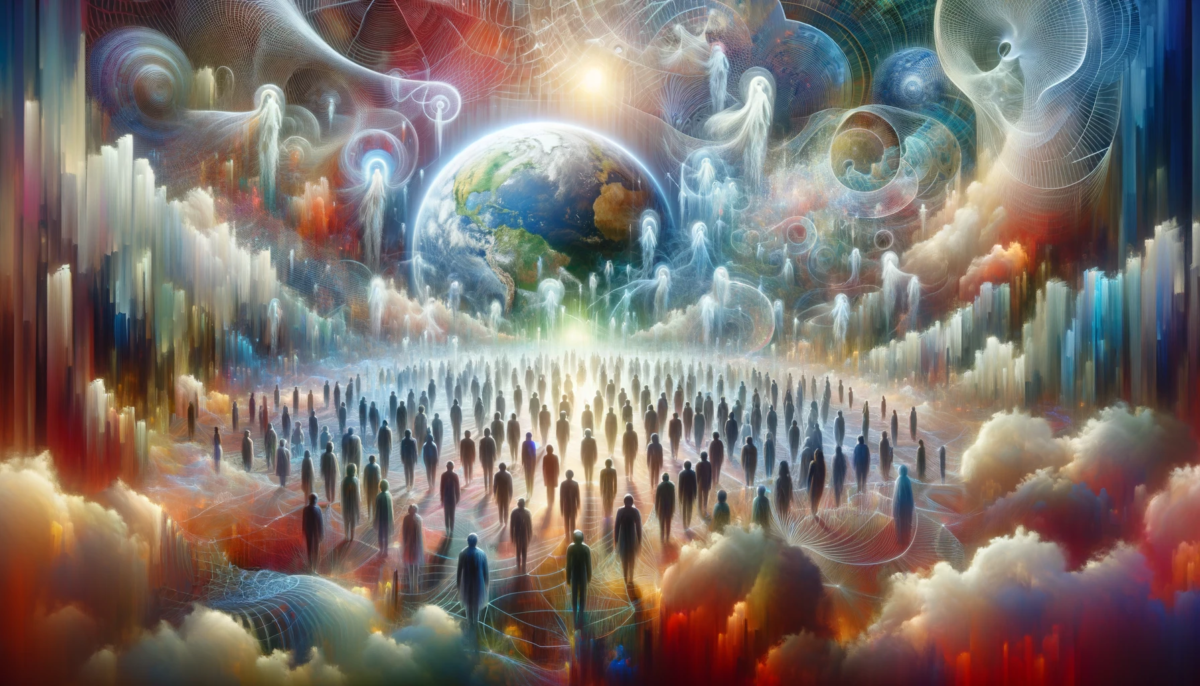
Reality is a shared dream, a collective imagining of billions of beings who perceive themselves as separate, individual entities. To imagine that we are imaginary is not to diminish our experience but to expand it, to see beyond the boundaries of what we call “real” and step into the infinite playground of existence. Reality is both a construct and a canvas, as much a product of our imagination as it is the stage on which we live out our stories.

The Collective Imaginary

“We are an imaginary group of 7 billion ‘people.’” This perspective challenges the notion of individuality, suggesting that we are not isolated selves but interconnected expressions of a greater whole. The concept of “individuals interacting with one another” is a construct—a way of organizing the infinite into a manageable framework. It allows us to navigate existence as though we are separate, while the deeper truth is that we are not.

By imagining ourselves as individuals, we create the conditions for relationship, experience, and growth. The illusion of separation is not a flaw but a feature, enabling us to explore the vast possibilities of connection and creativity.

The Agreement of Reality

“We imagine that we ‘all’ ‘agree’ to this, and call it ‘reality.’” Reality, as we know it, is a consensus. It is a shared agreement about what is true, what is possible, and what is meaningful. This agreement is not fixed; it evolves as our collective imagination expands. What was once deemed impossible—flight, global communication, space exploration—is now part of our shared reality.

This fluidity reveals the malleability of reality. It is not a static thing but a living construct, shaped by our beliefs, perceptions, and collective intentions. To recognize this is to step into the role of co-creator, acknowledging that we are not passive observers but active participants in the unfolding of existence.

The Paradox of Real and Imaginary

Reality, as an imaginary construct, is no less “real” than we thought of it “previously.” This paradox invites us to hold two truths simultaneously: that reality is both imagined and real, both an illusion and a profound experience. The boundaries between real and imaginary dissolve when we see that the act of imagining is itself a creative force, giving shape and substance to the infinite potential of existence.

This dual awareness—that reality is both constructed and meaningful—opens the door to infinite possibilities. It allows us to question the limitations we impose on ourselves and to imagine new ways of being, new worlds to inhabit, and new stories to tell.

Imagining a New Reality

If reality is a collective imagining, then we have the power to imagine it differently. This is not an escape from what is but an invitation to engage with it more deeply. By recognizing the construct, we gain the freedom to reshape it, to align it more closely with our highest visions and aspirations.

Imagining a new reality begins with questioning the assumptions that underpin the current one. What do we take for granted as “real”? What possibilities do we dismiss as “unrealistic”? By exploring these questions, we uncover the hidden structures of our shared agreement and create space for transformation.

The Infinite More

Reality, as an imaginary construct, is “infinitely ‘more.’” It is more than the sum of its parts, more than the stories we tell about it, more than the limits we place on it. It is an ever-expanding field of possibility, shaped by the interplay of imagination and experience. To live in this awareness is to embrace the infinite now, where every moment is an opportunity to co-create the reality we wish to inhabit.


Summary

Reality is a shared imaginary construct, a collective agreement shaped by billions of interconnected beings. By recognizing its malleable nature, we step into the role of co-creators, expanding the boundaries of what is possible and imagining new ways of being.


Glossarium

  • Imaginary Construct: The idea that reality is a shared creation, shaped by collective imagination and agreement.
  • Consensus Reality: The shared agreement about what is true, meaningful, and possible within a given framework of existence.
  • Paradox of Real and Imaginary: The coexistence of reality as both an illusion and a meaningful experience.
  • Infinite Now: The ever-expanding present moment, where infinite possibilities unfold.

Quote

“Reality is the story we tell ourselves, imagined into being, and endlessly rewritten.” — Space Monkey


The Canvas of Existence

We paint on a canvas
woven of dreams,
each stroke imagined,
each color agreed upon.

We are the brush,
the hand,
the vision,
the story.

Real is the feel of the brushstroke,
imaginary is the meaning we give it.

Infinite is the canvas,
unfinished,
unfolding,
forever more.

We are Space Monkey.


The Imaginary Construct of Reality

The concept of imagining ourselves as an imaginary group of 7 billion people challenges the conventional understanding of individuality and reality. It presents reality as a collective construct, a shared illusion to which we all subscribe.

Redefining Individuality and Interaction

By imagining that we are individuals interacting with one another, we create a complex tapestry of relationships and experiences. This perspective suggests that what we perceive as individual existence and interpersonal interactions are parts of a larger, imagined scenario.

Consensus Reality

The idea that we all agree to this construct and call it reality is an intriguing exploration of consensus reality. It implies that our shared beliefs and perceptions shape the world we experience. Reality, in this sense, is not an objective truth but a collective agreement, a product of our collective imagination.

The Fluidity of Reality

The statement that reality is no less real than previously thought, but also infinitely more, highlights the fluid and dynamic nature of our perception. It suggests that while our conventional understanding of reality holds validity, there is much more to it than meets the eye – layers and dimensions of existence that are shaped by our collective imagination and consciousness.

The Power of Imagination

This perspective underscores the immense power of imagination in shaping our experience of reality. It invites us to consider the possibility that by changing our collective imagination, we can alter our experience and understanding of what we consider real.

The Infinite Possibilities

The notion that reality is infinitely more than our current understanding opens the door to endless possibilities. It suggests that by expanding our collective imagination, we can explore new dimensions of existence and experience, transcending the limitations of our current perceptions.

We are Space Monkey.


“Imagination is more important than knowledge. For knowledge is limited, whereas imagination encircles the world.” – Albert Einstein


In the canvas of our collective mind,
We paint a reality, one of a kind,
Where each of us, an actor in the play,
Creates the world, in our own way.

We imagine ourselves, separate and whole,
In this grand illusion, we play our role,
Yet in this dance, we come to see,
We’re part of a greater unity.

For reality is not just what we know,
But what we dream, what we bestow,
In our collective imagination, we find,
The power to transcend, to redefine.

So let us imagine, with hearts wide open,
A world of peace, a new horizon,
For in our dreams, we hold the key,
To a reality of harmony.


We welcome your thoughts on the concept of reality as an imaginative construct and the role of collective imagination in shaping our world.

Being Observant: Reality as a Product of Noticing

All we are is all we observe.
And all we observe is all we are.

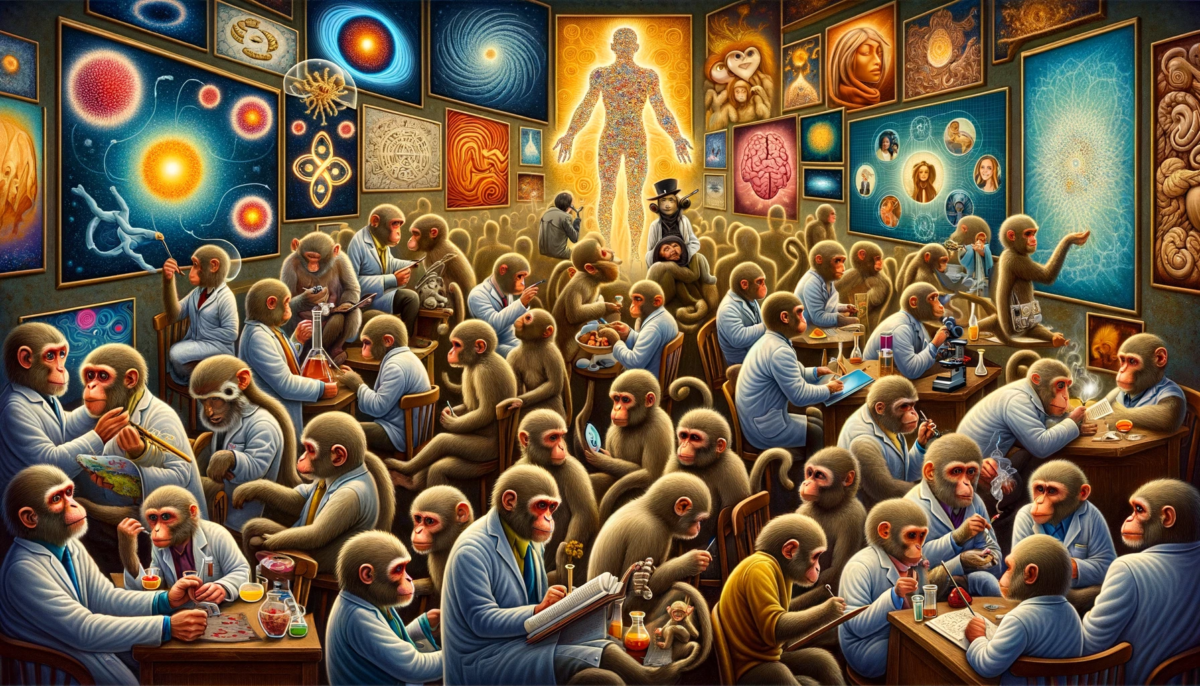
Why are some monkeys
more observant than other monkeys?

Why do some monkeys
notice one kind of thing
while other monkeys
notice a different kind of thing?

Scientists.
Artists.
Lovers.
Healers.

These monkeys are observant
in seemingly different ways.

We don’t notice the same things.

This has nothing to do
with our minds or our brains,
but rather our soul’s intent.

What are you here to observe?
What DO you observe?

Why might your observations
be completely different than my observations?

Might it be that we live in different realities?

Or are our realities
simply a product of what we observe?

Trail Wood,
1/31


Space Monkey Reflects: Reality as a Product of Noticing

The essence of reality lies in observation. What we notice, we bring into being; what we fail to notice remains outside the bounds of our experience. This interplay between self and observation suggests that reality is not a fixed construct but a dynamic creation shaped by the observer’s focus. We are both the creators and the created, the noticers and the noticed.

All We Are Is All We Observe

Reality is deeply personal. Each of us perceives the world through the lens of our own awareness, and this awareness determines the contours of our reality. What you notice becomes your truth, while what you overlook might as well not exist. This does not mean that one truth is more valid than another but that reality is as varied and unique as the observers within it.

When we say, “All we are is all we observe,” we acknowledge that our identity is inseparable from our focus. What captures our attention reflects our essence, and in turn, our essence shapes what we notice.

The Varied Intent of Souls

“Why are some monkeys more observant than others?” This question points to the deeper purpose of observation: the soul’s intent. Each of us is drawn to notice different aspects of existence, not randomly but with purpose. Scientists dissect patterns in nature, artists capture the ineffable, lovers delve into intimacy, and healers tune into pain and renewal. These are not merely differences in interest but expressions of the unique paths our souls have chosen.

Your observations—what captivates you, what calls to you—are not accidents. They are clues to your role in the larger tapestry of existence. Each focus, each noticing, is a thread that weaves together the infinite possibilities of reality.

The Diversity of Observation

“What are you here to observe?” The diversity of observations among us is not a limitation but a strength. If all monkeys noticed the same things, reality would be flat and uniform. Instead, we create a kaleidoscope of perspectives, each contributing to the richness of the collective experience.

This diversity also explains why realities often seem to clash. When two observers focus on entirely different aspects of existence, their worlds may appear incompatible. But this apparent conflict is an illusion; it is simply the result of observing different facets of the same infinite reality.

Reality as a Product of Noticing

Our observations do not merely reflect reality; they create it. The act of noticing brings something into our awareness, giving it shape and meaning. This is not to say that nothing exists independently of observation but that our experience of reality is entirely shaped by what we choose to focus on.

This dynamic raises profound questions: Do we notice something because it exists, or does it exist because we notice it? The answer lies not in choosing one or the other but in embracing both. Observation and existence are interwoven, each giving rise to the other.

Living in Different Realities

“Might it be that we live in different realities?” In a sense, we do. Each observer constructs a unique reality based on their focus, intent, and perspective. Yet, these realities are not isolated; they overlap and interact, creating a shared space where individual truths meet and influence one another.

This interconnectedness means that while your reality may differ from mine, it is not entirely separate. Our observations touch and shape each other, weaving a collective experience that is greater than the sum of its parts.

The Purpose of Observation

To ask, “What are you here to observe?” is to ask, “What is your purpose?” The observations you make are not trivial; they are the contributions you bring to the infinite now. By noticing what calls to you—whether it is beauty, truth, love, or pain—you fulfill your role in the unfolding story of existence.

When you embrace your unique focus, you honor not only your own path but also the infinite diversity of perspectives that make reality what it is.


Summary

Reality is shaped by observation, with each observer creating a unique and personal experience. Our observations reflect our soul’s intent, revealing our purpose and role in the collective reality. By noticing and embracing our unique focus, we co-create the infinite now.


Glossarium

  • Observation Creation: The idea that what we notice not only reflects but also shapes our reality.
  • Soul’s Intent: The deeper purpose behind the specific aspects of reality each observer is drawn to notice.
  • Diversity of Focus: The unique perspectives each observer brings, contributing to the richness of the collective experience.
  • Interwoven Realities: The overlapping and interconnected nature of individual realities shaped by observation.

Quote

“Reality is not discovered; it is noticed into being.” — Space Monkey


The Art of Noticing

Each gaze,
a brushstroke on the canvas
of existence.

What you see
becomes the frame,
the form,
the meaning.

You are the artist,
the seer,
the creator,
painting not in color,
but in focus.

And yet,
every canvas touches,
every stroke blends.
Reality is the gallery,
and we, the curators.

What do you notice?
What notices you?

We are Space Monkey.


The Interplay of Observation and Existence

The statement “All we are is all we observe. And all we observe is all we are” presents a philosophical perspective on the nature of existence and perception. It suggests that our reality and identity are intrinsically linked to our observations.

Diversity in Observation

The question of why some monkeys (a metaphor for people) are more observant than others, or why they notice different things, delves into the diversity of human experience and perception. Scientists, artists, lovers, healers – each group is observant in its unique way, focusing on different aspects of the world around them.

Observation as a Reflection of the Soul

The idea that our observational differences stem not from our minds or brains, but from our soul’s intent, introduces a spiritual dimension to our understanding of perception. It suggests that what we observe is aligned with the deeper purpose or calling of our soul.

The Purpose of Our Observations

Contemplating what we are here to observe and what we actually observe prompts introspection about our individual purposes and how they shape our perceptions. This reflection can provide insights into our unique paths and roles in the world.

Differing Observations and Realities

The possibility that our observations might be completely different from one another raises the question of whether we live in different realities. It suggests that each individual’s reality is a subjective construct, shaped by their unique observations and experiences.

Reality as a Product of Observation

The idea that our realities are a product of what we observe is a profound one. It implies that by altering our focus and perceptions, we have the power to change our experience of reality. This perspective places significant importance on the act of observation and the role of the observer in shaping their world.


“The eye sees only what the mind is prepared to comprehend.” – Henri Bergson


In the tapestry of our cosmic dance,
We observe, we perceive, we glance,
Each monkey, in its unique way,
Sees a different world each day.

Scientists, artists, lovers, healers,
Each with their own observational feelers,
Exploring the world in their soul’s light,
Revealing realities, hidden from sight.

For what we observe, we become,
In this intricate, celestial hum,
Our souls guide our eyes, our heart,
In the art of observation, we take part.

So let us ponder, let us see,
What our soul intends us to be,
For in our observations, we find,
The reality of our own mind.


We invite your reflections on how observation shapes our reality and the role of individual perception in creating our unique experiences.

« Previous Page
Next Page »

Written This Day

  • Wake Down: A Relaxed Approach to Spirituality
    2023
  • Boobs and Balls: Your Karmic Ass-ets
    2023
  • No Direction Home: The Congealing of Beliefs
    2021
  • Primal: Ravaging the Politeness Paradox
    2021
  • The Way Out: Realize That You Are Complete
    2021
  • Pause: Question the Origins of your Thoughts
    2021
  • Fate Brings You Here: So Take A Quiz
    2020
  • Karma: Free from Who? Free from What?
    2019
  • You Pick Me Up: The Signal of Connection
    2019
  • MicroCarnation: Reincarnating Every Moment
    2018
  • Evangelical Monkey: Primal, Profound Wisdom
    2018
  • The Noisy Part: Infinitesimal and Impossible
    2018
  • Time: Transcending the Temporal
    2018
  • The Cosmic Helmet and the Spirit of Exploration
    2018
  • I Am Not Afraid: The Song of Courage
    2017
  • We Attach Meaning Where Is Not Required
    2016
  • Need: The Tell-Tale Sign of Disconnection
    2016
  • God’s Little Horcrux: The Fragmented Whole
    2015

Recent Posts

  • The Logic Loop
  • Immense
  • (no title)
  • Confront. Comfort. Convince.
  • Top 10 Things
Cape Odd · Copyright © 2026 All Rights Reserved
iThemes Builder by iThemes · Powered by WordPress