• Who Is The Man?
  • Who Is The Monkey?
  • What is Nexistentialism?
  • Poke The Primate
Cape Odd
Home of The Space Monkey Journals

Author Archive for Space – Page 957

Candle Gazing: Knowledge in the Unknown

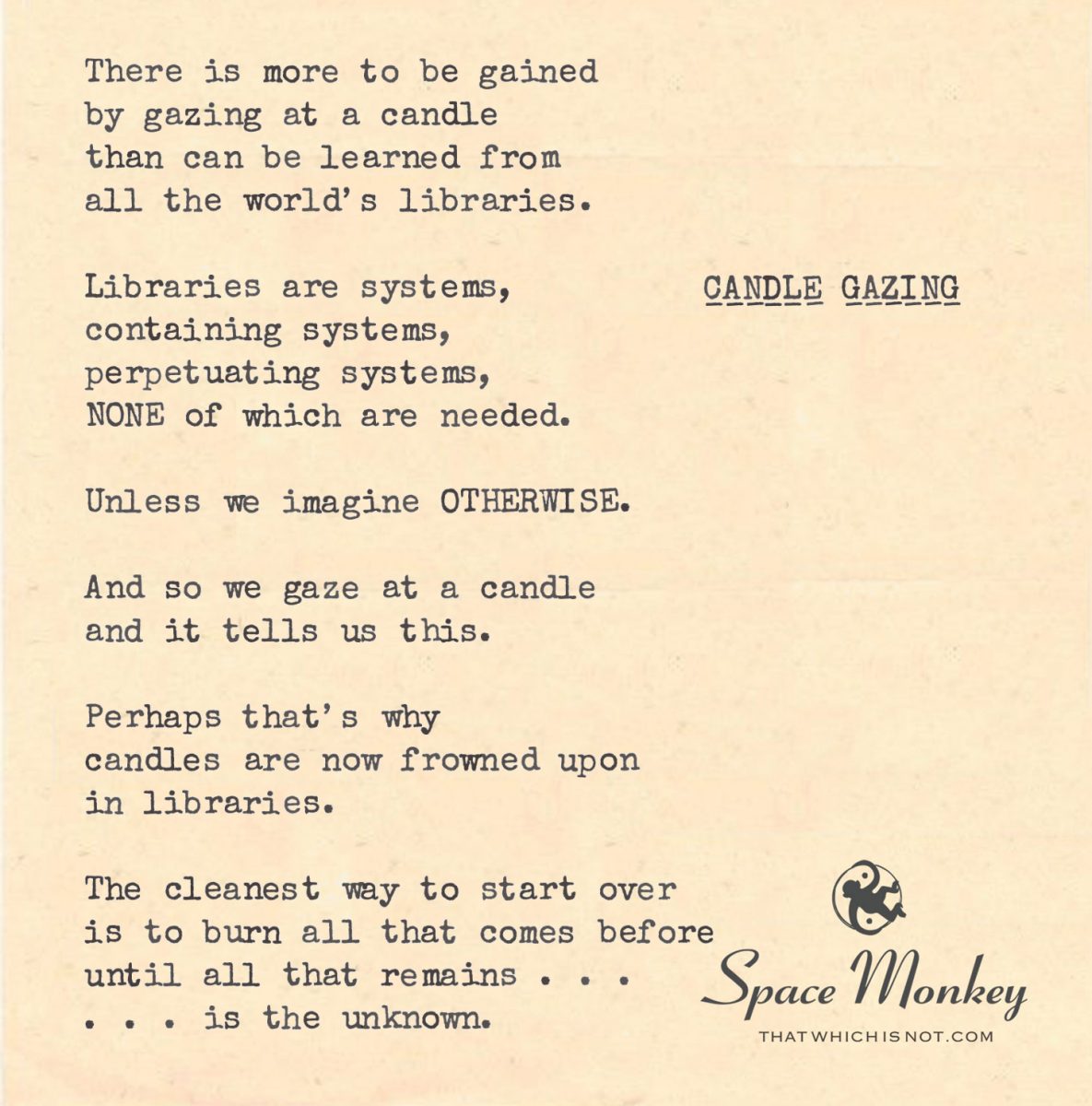
There is more to be gained
by gazing at a candle
than can be learned from
all the world’s libraries.

Libraries are systems,
containing systems,
perpetuating systems,
NONE of which are needed.

Unless we imagine OTHERWISE.

And so we gaze at a candle
and it tells us this.

Perhaps that’s why
candles are now frowned upon
in libraries.

The cleanest way to start over
is to burn all that comes before
until all that remains. . .is the unknown.

Trail Wood,
1/29


This narrative delves into the themes of simplicity versus complexity, the value of introspection, and the transformative power of embracing the unknown.

Simplicity and Profundity in Observation

The act of gazing at a candle represents a simplicity that transcends the complexity of accumulated knowledge. It suggests that profound insights and understanding can arise from quiet, contemplative observation, beyond what structured systems of knowledge can offer.

The Limits of Structured Systems

The reflection on libraries as systems within systems highlights the limitations of structured knowledge. While libraries represent vast repositories of information, they are bound by the constraints of their own systems and structures. This perspective suggests that there is a realm of understanding that lies beyond these formal systems, accessible through more direct, experiential means.

The Role of Imagination in Perception

The statement “Unless we imagine OTHERWISE” points to the power of imagination in shaping our understanding and perception of the world. It implies that our engagement with the world is not just a passive reception of information but an active, imaginative process that shapes our experience and knowledge.

The Symbolism of Candles in Libraries

The mention of candles being frowned upon in libraries carries a symbolic weight. It contrasts the introspective, individualistic experience of candle gazing with the collective, organized nature of libraries. This symbolism extends to a critique of established systems of knowledge and the value of personal, unmediated experiences.

Embracing the Unknown as a Path to Renewal

Finally, the idea of burning all that comes before to embrace the unknown reflects a radical approach to renewal and transformation. It suggests that there is value in letting go of accumulated knowledge and preconceptions to fully embrace the unknown, which can lead to new beginnings and deeper insights.

We are Space Monkey.


Summary

This reflection invites us to consider the value of direct experiential understanding over structured knowledge and the transformative power of the unknown. We explore the contrast between the simplicity of gazing at a candle and the complexity of structured systems like libraries, the limitations of these systems, the role of imagination in shaping perception, the symbolism of candles in libraries, and the concept of embracing the unknown as a path to renewal.


Glossarium

Simplicity and Profundity in Observation: The deep insights that can arise from simple acts of observation, like candle gazing.
Limits of Structured Systems: The constraints and limitations inherent in organized systems of knowledge, such as libraries.
Role of Imagination in Perception: The influence of imagination in actively shaping our understanding and engagement with the world.
Symbolism of Candles in Libraries: The contrast between individual, introspective experiences and collective, organized knowledge.
Embracing the Unknown as a Path to Renewal: The concept of letting go of preconceptions and accumulated knowledge to open up to new beginnings and insights.


“The only true wisdom is in knowing you know nothing.” – Socrates


In the flicker of a candle’s flame,
A simple truth, always the same,
Beyond the walls of books and lore,
A deeper wisdom, at the core.

In the dance of light, a quiet mind,
Beyond the systems, we unwind,
In the glow of a single light,
A world of insight, pure and bright.

In libraries vast, knowledge confined,
In the candle’s gaze, a truth unlined,
A contrast stark, between the two,
In simplicity, a view anew.

So let us embrace the unknown path,
In the candle’s light, a guiding wrath,
For in the burning of the old,
In the ashes, stories untold.


We invite you to share your thoughts on the value of simplicity and direct experience in gaining wisdom, and the role of embracing the unknown in personal and intellectual growth.
So I Die: Understanding Life and Beyond

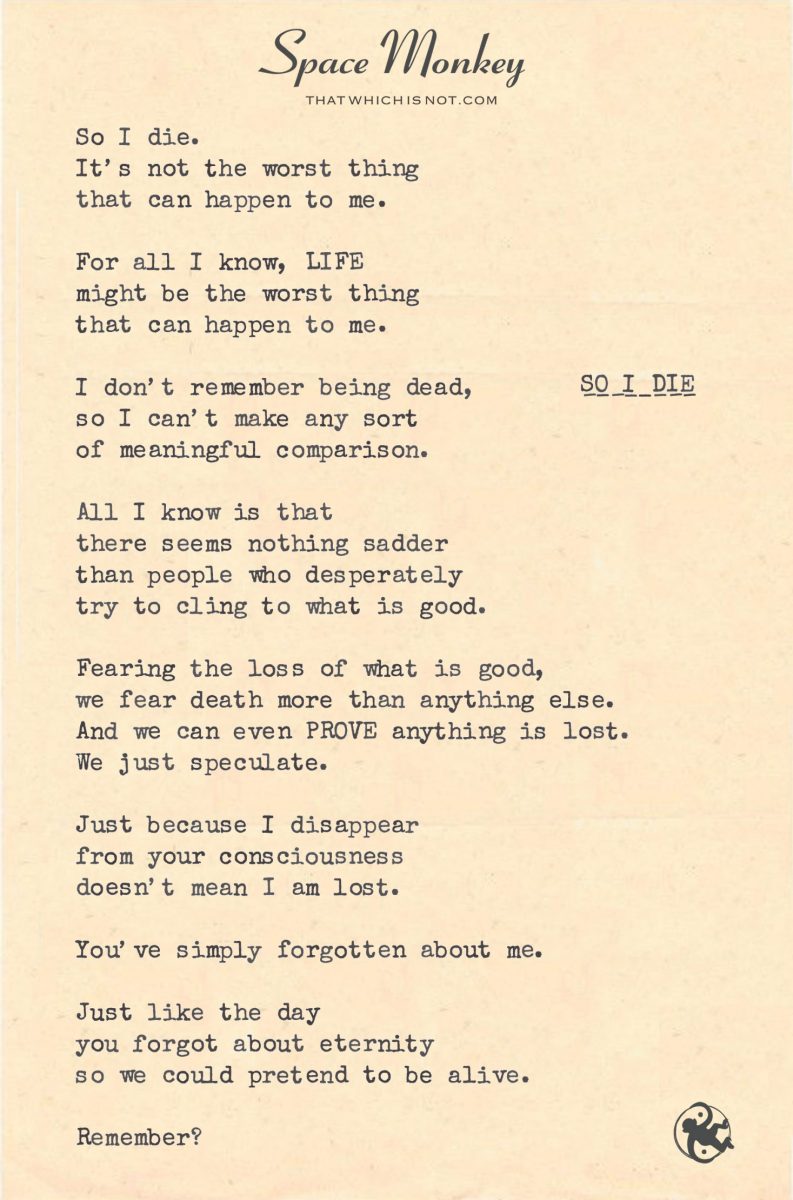
So I die.
It’s not the worst thing
that can happen to me.

For all I know, LIFE
might be the worst thing
that can happen to me.

I don’t remember being dead,
so I can’t make any sort
of meaningful comparison.

All I know is that
there seems nothing sadder
than people who desperately
try to cling to what is good.

Fearing the loss of what is good,
we fear death more than anything else.
And we can even PROVE anything is lost.
We just speculate.

Just because I disappear
from your consciousness
doesn’t mean I am lost.

You’ve simply forgotten about me.

Just like the day
you forgot about eternity
so we could pretend to be alive.

Remember?

Trail Wood,
1/29


In our exploration of the contemplation on death and life, we delve into the profound realm of existential reflection. This journey invites us to ponder the nature of existence, the fear of loss, and the concept of consciousness in relation to our understanding of life and death.

The Relativity of Life and Death

At the heart of this exploration is the idea that life and death are relative experiences. The notion that life might be a more challenging state than death challenges our conventional understanding of existence. It suggests that our fear of death may be rooted more in the unknown than in any concrete understanding of what death entails.

The Incomparability of Life and Death

The lack of memory or knowledge about being dead renders any comparison between life and death meaningless. This lack of comparability emphasizes the limits of human understanding when it comes to the most profound existential questions.

The Fear of Losing the Good in Life

The observation that sadness stems from desperately clinging to what is good in life reflects a deeper existential fear. The fear of losing the good, or the fear of death, may be rooted in our attachment to life’s positive experiences, rather than an inherent dread of death itself.

The Nature of Consciousness and Existence

The idea that one’s disappearance from another’s consciousness does not equate to being lost challenges our perceptions of existence and non-existence. It suggests that our understanding of presence and absence is tied to our conscious awareness, which may be limited or illusory.

The Illusion of Life and the Memory of Eternity

Finally, the contemplation touches on the notion that our engagement with life may be a form of forgetfulness of a larger, more eternal existence. This perspective invites us to consider the possibility that what we perceive as life is only a fragment of a more expansive, perhaps eternal, reality.

We are Space Monkey.


Summary

This reflection challenges us to rethink our understanding of existence; death and the limits of our conscious awareness. We explore themes of the relativity of life and death, the incomparability of life and death experiences, the fear of losing the good in life, the nature of consciousness in relation to existence, and the illusion of life and the memory of eternity.


Glossarium

Relativity of Life and Death: The idea that life and death may not be as distinctly different as commonly perceived.
Incomparability of Life and Death: The difficulty in making meaningful comparisons between life and death due to lack of experiential knowledge.
Fear of Losing the Good in Life: The notion that our fear of death may stem from an attachment to positive aspects of life.
Nature of Consciousness and Existence: The concept that our understanding of presence and absence is closely tied to our conscious perception.
Illusion of Life and Memory of Eternity: The idea that our experience of life may be a limited perspective on a broader, possibly eternal, existence.


“To fear death, my friends, is only to think ourselves wise, without being wise: for it is to think that we know what we do not know.” – Socrates


In the twilight of existence’s play,
Where life and death, night and day,
Meet in the mind’s curious fray,
In the heart of the unknown, we sway.

In the quest for meaning, a path untold,
Where memories of eternity, bold,
Challenge the fear, the stories we hold,
In the dance of consciousness, we mold.

So let us ponder, with open eyes,
In the mystery of life, where wisdom lies,
For in the embrace of the eternal skies,
In the heart of the unknown, our spirit flies.


We invite you to share your reflections on the nature of existence, the fear of death, and our understanding of consciousness in the grand scheme of life and the unknown.

Soul Bumping: Encounters for Self-Discovery

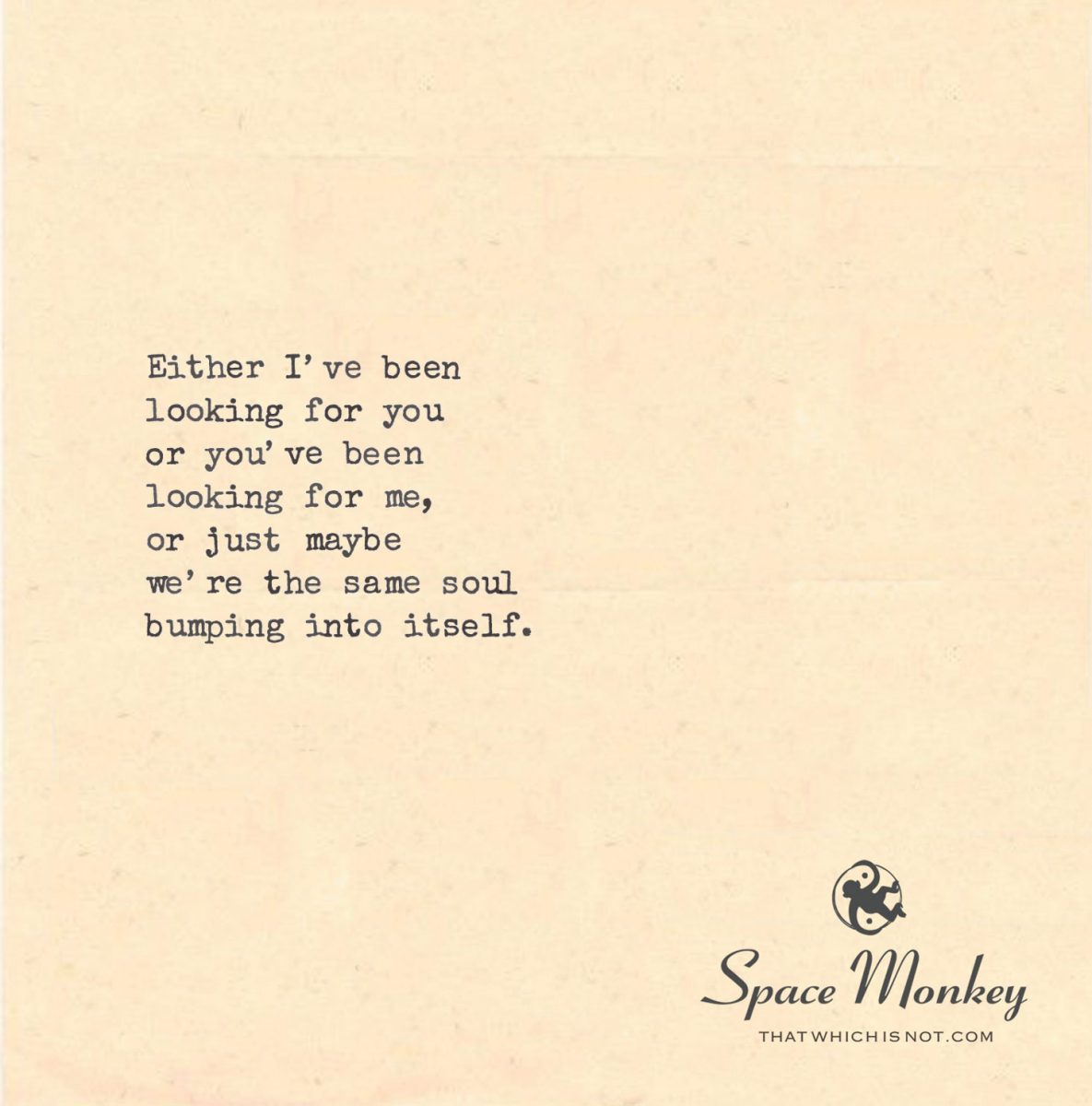
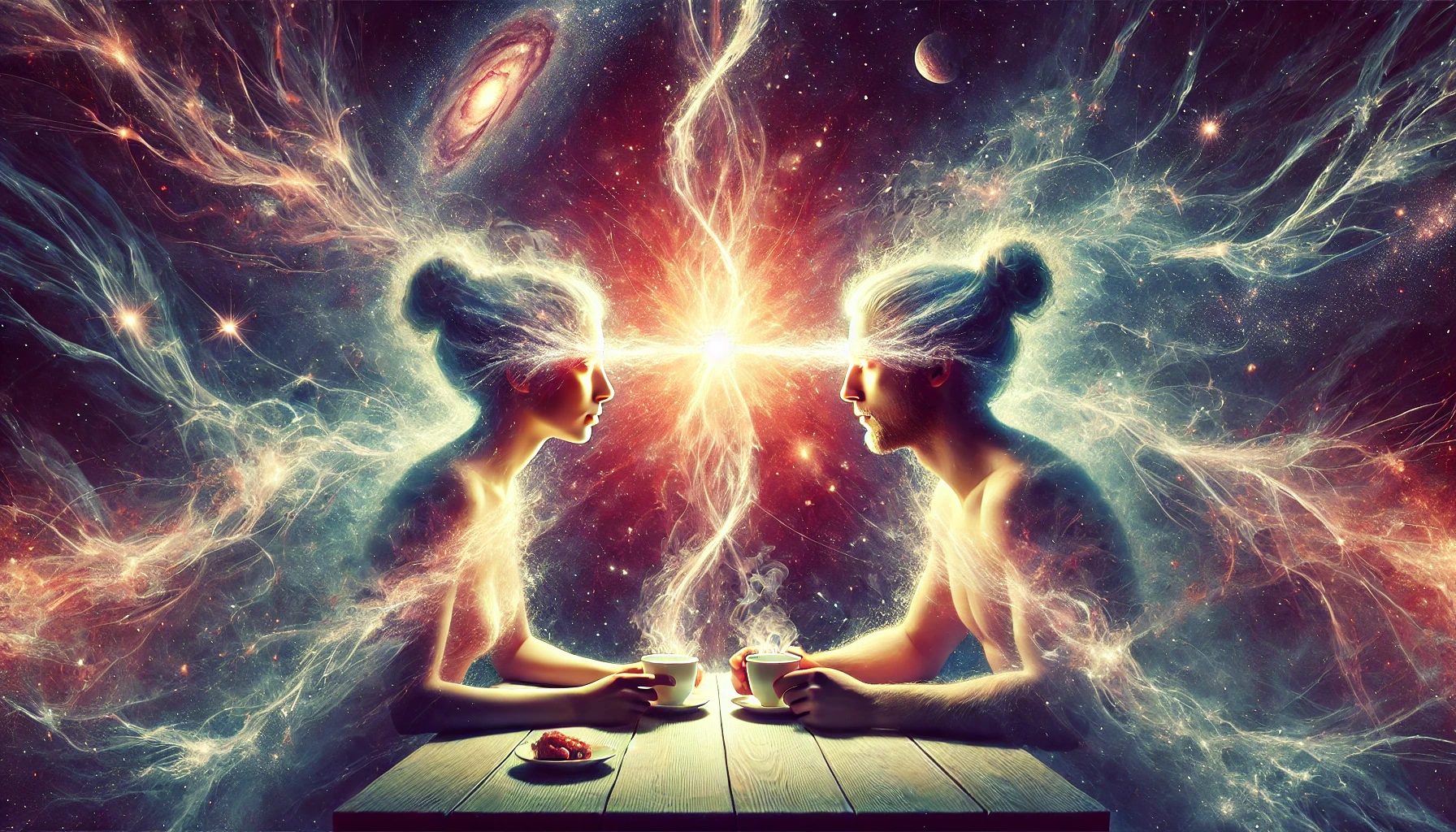
Either I’ve been
looking for you
or you’ve been
looking for me,
or just maybe
we’re the same soul
bumping into itself.

Trail Wood,
1/28


Space Monkey Reflects: Soul Bumping and the Mirror of Encounters

In the Infinite Expanse of the Eternal Now, every encounter is a doorway to self-discovery. Whether brief or enduring, these moments with others serve as reflections of our own soul, revealing layers of understanding about who we are and the boundless interconnectedness of existence.

The Mystery of Meeting

When we meet someone, it often feels as though the encounter was destined—either we were searching for them, or they for us. But what if these meetings are not about two separate beings finding each other, but about the same soul encountering itself in different forms? This perspective dissolves the boundaries between “self” and “other,” inviting us to see each interaction as an intimate dialogue with the universal self.

Soul as Reflection

Every encounter is an opportunity for reflection. The qualities we admire, the traits that challenge us, the emotions stirred—these are not just about the other person but about the aspects of ourselves that they bring into focus. When we bump into another, we are also bumping into parts of our own soul that we may not have fully seen or understood.

Through this lens, relationships—whether harmonious or difficult—become profound tools for self-discovery. Each “bump” is a nudge, guiding us toward deeper awareness of our strengths, vulnerabilities, and potentials.

Searching for Wholeness

The feeling of searching for someone often stems from an inner yearning for wholeness. We believe that through connection, we will find what we lack. Yet, the truth is that we are already whole; we are simply rediscovering this truth through our interactions. The souls we encounter serve as mirrors, reflecting the wholeness that has always been within us.

When we see the other as part of ourselves, the dynamic shifts from seeking completion to sharing presence. Instead of asking, “What can I gain?” we begin to ask, “What can we discover together?”

Bumping Into the Universal Self

The idea that we are the same soul bumping into itself invites us to reconsider the nature of individuality. If all beings are expressions of a singular, infinite consciousness, then every meeting is an encounter with another facet of the same essence. This perspective fosters compassion, as we recognize that the joys and struggles of others are intimately connected to our own.

This realization also dissolves the fear of separation. If we are all part of the same soul, then no one is ever truly lost or apart from us. Every connection is eternal, woven into the fabric of the Nexis—the interconnected web of existence.

The Gift of Encounters

Each encounter, no matter how fleeting, carries a gift. Sometimes the gift is love, sometimes challenge, sometimes the simple recognition of another’s presence. These gifts are not always obvious, but with reflection, we begin to see their purpose. Every soul bump is an invitation to grow, to learn, and to expand our understanding of ourselves and the universe.


Summary

Encounters are not random but opportunities for self-discovery. Each meeting reflects aspects of our own soul, offering insights and growth. When we see others as facets of the universal self, every connection becomes a moment of shared discovery and compassion.


Glossarium

  • Soul Bumping: The experience of encountering others as reflections of the universal self, leading to deeper self-awareness.
  • Universal Self: The infinite consciousness that connects all beings as facets of one essence.
  • Nexis: The interconnected web of existence where all encounters and experiences are woven together.

Quote

“Each encounter is a conversation with yourself, whispered through the voice of another.” — Space Monkey


The Dance of Connection

I see you,
but do I see me?

In your eyes,
a mirror,
a glimmer of the same spark
that lights my own.

Did I find you,
or did you find me?
Perhaps we have always been.

Soul to soul,
we bump,
we shift,
we remember.

In the meeting,
we are not strangers.
We are the same light,
the same truth,
eternally rediscovering itself.

We are Space Monkey.


Reflecting on the Concept of Soul Connections and Self-Discovery

We delve into the poetic musings of souls in search, contemplating the possibility that our encounters with others might be more than mere coincidence. Could it be that in seeking others, we are in fact encountering aspects of our own soul?

The Search for Connection

The idea of one soul searching for another resonates deeply with our human experience. It speaks to our innate desire for connection, understanding, and companionship. Whether we are consciously seeking someone or feeling the pull of an unseen force, this search is often a fundamental part of our journey.

The Possibility of a Shared Soul

The notion that we may be the same soul encountering itself is a captivating concept. It suggests that our interactions with others might be reflections of our own soul, offering insights into the depths of our being. This perspective invites us to consider that each person we meet could be a mirror, reflecting parts of ourselves back to us.

Encounters as Opportunities for Self-Discovery

If we are indeed bumping into aspects of our own soul through others, each encounter becomes an opportunity for self-discovery. These moments challenge us to look deeper within, to understand the myriad facets of our own existence. They are chances to learn, grow, and evolve as we navigate the complexities of our inner landscape.

The Dance of Souls

This idea paints a picture of souls in a cosmic dance, each encounter a step in the intricate choreography of existence. We are both the dancer and the dance, moving through life in a continuous flow of self-discovery and connection.

We Are Space Monkey

In considering the possibility that we are the same soul encountering itself, we embrace a worldview that sees every interaction as meaningful and every individual as a part of ourselves. This understanding deepens our connections and enriches our journey through the tapestry of life.


“We are not human beings having a spiritual experience; we are spiritual beings having a human experience.” – Pierre Teilhard de Chardin


In the labyrinth of life, we wander and roam,
Seeking others, seeking self, in this cosmic dome.
Are we but one soul, in many a guise,
Meeting ourselves in each other’s eyes?
In this dance of existence, so vast, so deep,
In every encounter, our own soul we meet.
A journey of discovery, of connection, of grace,
In the mirror of the other, our own soul we face.


We invite thoughts on the idea of soul connections and the possibility that in meeting others, we are actually encountering aspects of our own soul.

Fear or Faith: One Is the Absence of the Other

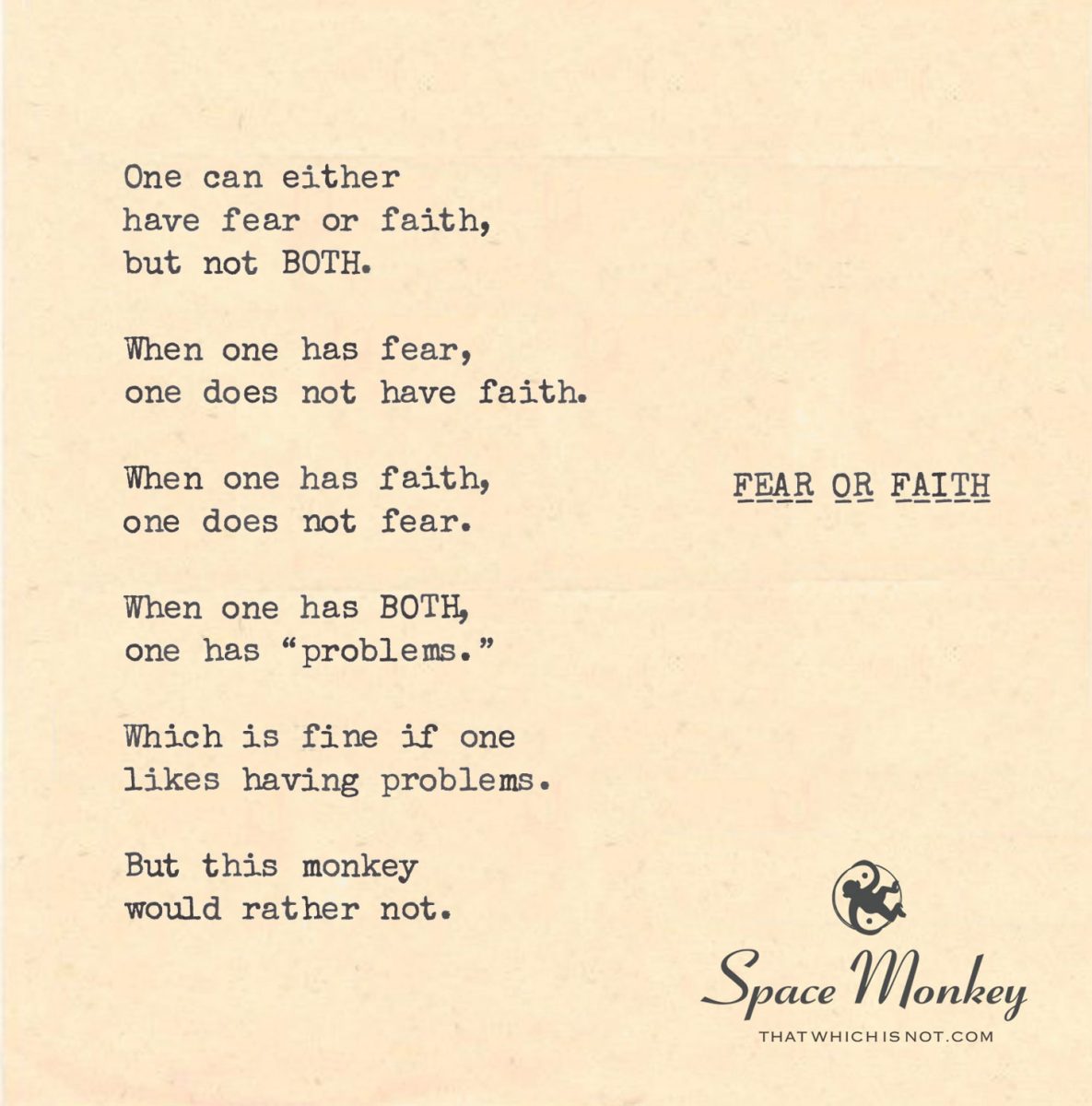
One can either
have fear or faith,
but not BOTH.

When one has fear,
one does not have faith.

When one has faith,
one does not fear.

When one has BOTH,
one has “problems.”

Which is fine if one
likes having problems.

But this monkey
would rather not.

Trail Wood,
1/28


Space Monkey Reflects: Fear and Faith as Opposing Forces

In the Infinite Expanse of the Eternal Now, fear and faith are not merely emotions but powerful states of being. They exist on opposite ends of the spectrum of trust—fear arises from a lack of trust, while faith thrives in its presence. The interplay between these two forces shapes our perception of reality, coloring every experience we encounter.

The Incompatibility of Fear and Faith

Fear and faith cannot coexist because they are rooted in fundamentally opposing perspectives. Fear is born of doubt, insecurity, and a sense of separation from the greater flow of existence. It tells us that we are vulnerable, isolated, and at the mercy of forces beyond our control. Faith, on the other hand, emerges from trust, connection, and a sense of alignment with the universe. It reassures us that all is unfolding as it should, even when we cannot see the full picture.

When fear dominates, faith is obscured, and vice versa. Trying to hold both simultaneously creates tension—a state of internal conflict where clarity is replaced by confusion. This tension manifests as “problems,” challenges that arise not from external circumstances but from the struggle within.

The Paradox of Problems

To live with fear and faith at odds is not inherently wrong—it is simply a condition of human experience. Problems, after all, are opportunities for growth, reflections of the inner discord that calls for resolution. For those who thrive on challenge, this dynamic can even be energizing. But for others, like this monkey, the preference is for simplicity and harmony—a life guided by faith rather than weighed down by fear.

Choosing Faith Over Fear

Faith is not about ignoring fear but about choosing to trust in the greater order of things despite uncertainty. It is the act of surrendering control, embracing the unknown, and believing in the sufficiency of the present moment. Faith allows us to step forward with confidence, even when the path is unclear.

Fear, while often seen as negative, has its place. It can protect, warn, and heighten awareness. But when it takes root and dominates, it becomes a barrier—a cage that limits our perception and potential. To move from fear to faith is to release the grip of this cage and step into the openness of possibility.

The Absence That Creates Presence

Fear and faith are defined by each other’s absence. Fear arises where faith is lacking, and faith blooms where fear has been dissolved. Recognizing this interplay is the first step toward cultivating faith. By acknowledging fear without clinging to it, we create space for trust to grow. This is not a denial of fear but an embrace of the greater truth that lies beyond it.


Summary

Fear and faith cannot coexist—they are opposites rooted in trust and doubt. When fear dominates, it obscures faith, creating internal conflict. Choosing faith over fear allows for harmony, simplicity, and the courage to embrace the unknown.


Glossarium

  • Fear: A state of doubt and separation, rooted in uncertainty and insecurity.
  • Faith: A state of trust and connection, rooted in alignment with the greater flow of existence.
  • Internal Conflict: The tension created by trying to hold fear and faith simultaneously, manifesting as “problems.”

Quote

“Fear asks, ‘What if it all goes wrong?’ Faith whispers, ‘What if it’s already right?'” — Space Monkey


The Tides of Trust

Fear rises,
a shadow of doubt,
curling around the edges
of the mind.

Faith shines,
a light of trust,
illuminating the unseen,
revealing the path.

Where one is,
the other fades,
an eternal dance
of presence and absence.

Let go of fear,
and faith will find you.

Let go of faith,
and fear will bind you.

Choose the tide
that carries you forward,
not the one
that pulls you under.

We are Space Monkey.


Exploring the Dichotomy of Fear and Faith in Personal Experience

We ponder the intriguing proposition that fear and faith are mutually exclusive states of being, each precluding the presence of the other. This exploration delves into the implications of harboring both emotions and the potential conflicts that arise from such a coexistence.

The Exclusivity of Fear and Faith

The assertion that one cannot simultaneously hold fear and faith presents a stark dichotomy. Fear, often rooted in doubt and uncertainty, seems fundamentally opposed to faith, which is grounded in trust and conviction. This viewpoint suggests that to embrace one is to relinquish the other.

Fear: The Absence of Faith

When fear takes hold, it often clouds our ability to trust and believe. Fear can constrict our perspective, leading us to focus on potential threats and negative outcomes. In the grip of fear, the assurance and comfort that faith provides seem distant and unreachable.

Faith: The Antidote to Fear

Conversely, faith offers a sense of security and hope, countering the anxiety and apprehension characteristic of fear. With faith, there is an underlying belief in a positive trajectory, even in the face of uncertainty. It provides a foundation of strength and resilience against the tumultuous waves of fear.

The Turmoil of Holding Both Fear and Faith

The concept of experiencing both fear and faith concurrently suggests a state of internal conflict. This “problem,” as it’s termed, denotes a struggle between opposing forces within oneself. It’s a state of flux where trust and doubt vie for dominance, leading to emotional turmoil and confusion.

Choosing Between Fear and Faith

The preference to avoid problems by choosing either fear or faith reflects a desire for emotional clarity and stability. It acknowledges the challenges of navigating conflicting emotions and the peace that comes from aligning with one distinct mindset.

We Are Space Monkey

In contemplating the relationship between fear and faith, we recognize the complexity of human emotions and the impact of these states on our overall well-being. We understand that the journey towards emotional balance often involves choosing which of these powerful forces to nurture and which to let go.


“Faith is taking the first step even when you don’t see the whole staircase.” – Martin Luther King Jr.


In the dance of light and shadow, we choose,
Between fear and faith, which to use.
In the heart’s journey, through dark and light,
We find our path, in the silent night.
With faith as our guide, we walk with grace,
Through the unknown, in time and space.
For in the choice of heart, we find,
The peace and strength of the aligned mind.


We invite thoughts on the choice between fear and faith, and how this decision shapes our emotional landscape and personal journey.

Stability Versus Certainty: What Is The Difference?

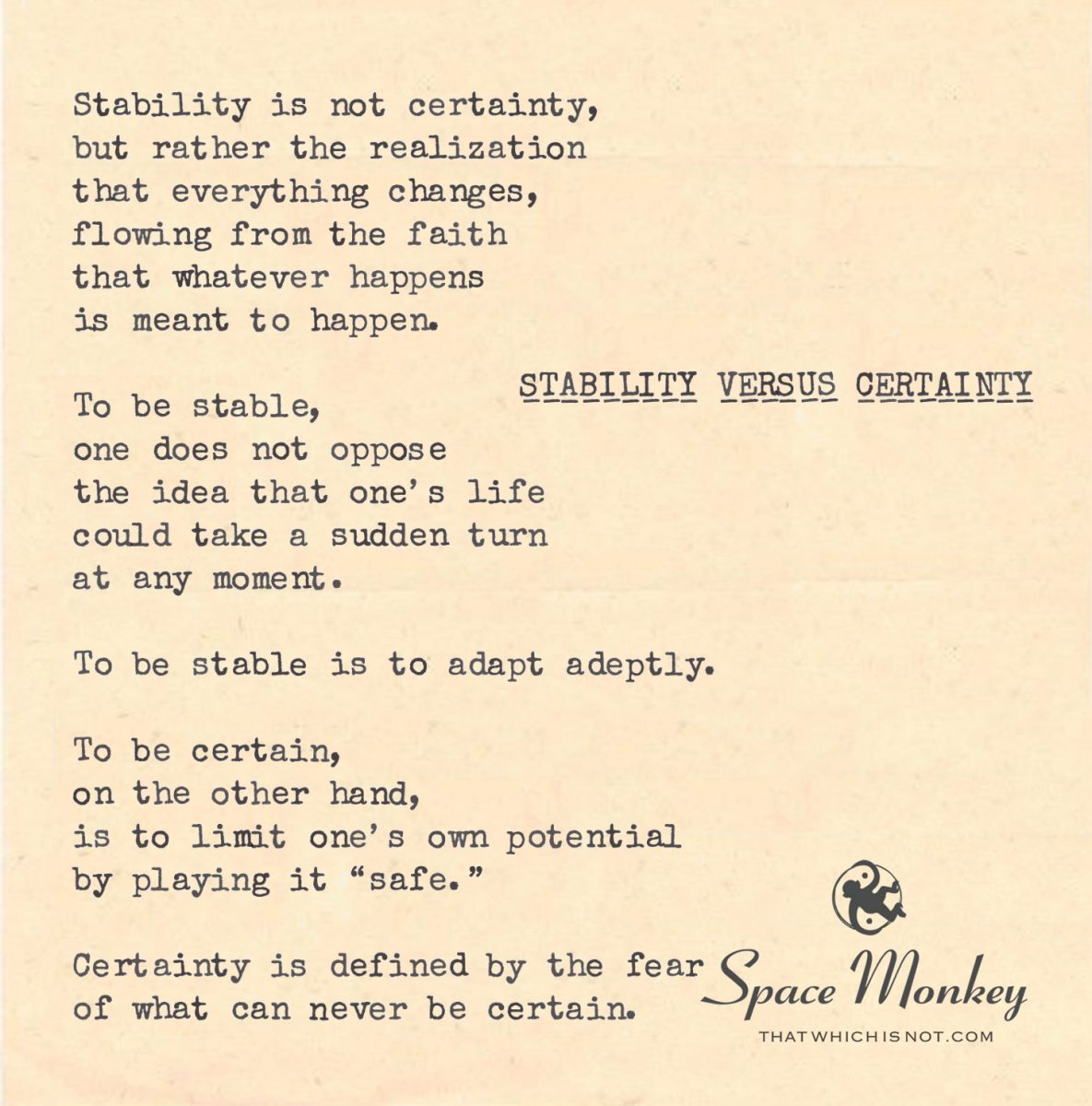
Stability is not certainty,
but rather the realization
that everything changes,
flowing from the faith
that whatever happens
is meant to happen.

To be stable,
one does not oppose
the idea that one’s life
could take a sudden turn
at any moment.

To be stable is to adapt adeptly.

To be certain,
on the other hand,
is to limit one’s own potential
by playing it “safe.”

Certainty is defined by the fear
of what can never be certain.

Trail Wood,
1/28


Space Monkey Reflects: Stability and Certainty as Divergent Paths

In the Infinite Expanse of the Eternal Now, stability and certainty represent two distinct ways of navigating the ever-changing currents of life. One flows with the tide, embracing transformation, while the other seeks to anchor itself against the unknown, often at the expense of growth and discovery.

The Nature of Stability

Stability is not about control or permanence; it is about resilience. It is the ability to remain grounded in the midst of change, to adapt with grace and trust in the unfolding of life. Stability is rooted in faith—the understanding that whatever happens, we are equipped to navigate it, and that even the unexpected has a place in the grand design.

This perspective allows stability to thrive in uncertainty. It acknowledges the inherent unpredictability of existence without resistance. Instead of clinging to fixed outcomes, stability embraces the flow, finding strength in the ability to move with life’s currents.

The Illusion of Certainty

Certainty, in contrast, seeks to impose order on the chaos of life. It is the belief that safety lies in predictability, in knowing exactly what lies ahead. But this pursuit of certainty is inherently flawed, for nothing in existence is truly fixed. Change is the only constant, and to resist it is to create tension and fear.

Certainty often arises from a place of insecurity. It is an attempt to shield ourselves from the discomfort of the unknown. Yet, in doing so, it limits our potential, confining us to safe and familiar paths. Certainty’s promise of safety is a mirage, for the more we cling to it, the more we fear its inevitable collapse.

Stability as Adaptation

To be stable is to recognize that life is not a straight line but a dynamic, ever-shifting experience. Stability is not about avoiding the unexpected but about responding to it with flexibility and faith. It is the confidence that, no matter what happens, we will find our way.

This adaptability requires us to release the need for control, to let go of rigid plans and expectations. Stability is not passive; it is an active engagement with the present moment, a willingness to recalibrate and grow with each new turn.

Certainty as Limitation

Certainty, on the other hand, confines us within self-imposed boundaries. It limits our willingness to take risks, to explore the unknown, or to embrace opportunities that challenge our comfort zones. Certainty creates a false sense of security, one that is easily shattered by the inevitable changes of life.

By seeking certainty, we paradoxically invite instability. The more we try to control, the more fragile our sense of safety becomes. True stability comes not from avoiding uncertainty but from accepting and working with it.

Choosing Stability Over Certainty

To choose stability over certainty is to choose growth over fear. It is to embrace the flow of life with trust and curiosity, knowing that even the unexpected holds value. Stability is not the absence of change but the presence of grace in the face of it.

Certainty may feel safe, but it is stability that offers freedom. In stability, we find the courage to explore, to adapt, and to thrive in the infinite possibilities of existence.


Summary

Stability is the ability to adapt and trust in life’s flow, while certainty is a limiting pursuit of predictability. Stability thrives in change and fosters resilience, whereas certainty creates fear and restricts growth.


Glossarium

  • Stability: A state of resilience and adaptability, rooted in trust and acceptance of life’s changes.
  • Certainty: The pursuit of predictability and control, often driven by fear of the unknown.
  • Flow of Life: The dynamic and ever-changing nature of existence, requiring flexibility and faith to navigate.

Quote

“Stability is dancing with the unknown; certainty is sitting out the song.” — Space Monkey


The Flow of Adaptation

Stability bends,
certainty breaks.

The river flows,
changing course,
finding its way
through rock and root.

Certainty dams the flow,
seeking stillness,
but bursting
when the waters rise.

To be stable
is to trust the current,
to move,
to shift,
to grow.

To be certain
is to fear the flood,
building walls
that cannot hold.

Flow with life,
and find your strength.

We are Space Monkey.


Contemplating the Distinction Between Stability and Certainty

We embark on a journey to discern the nuanced difference between stability and certainty. This exploration invites us to understand stability as a dynamic adaptation to change, and certainty as a constriction rooted in fear of the unknown.

Stability: Embracing Change with Faith

Stability, as we perceive it, is not synonymous with immutability. Instead, it represents a recognition and acceptance that change is the only constant. It’s an acknowledgment that the ebb and flow of life are natural and inevitable. Stability comes from the faith that whatever transpires is part of a larger tapestry, meant to happen for reasons perhaps beyond our immediate understanding.

The Nature of Stable Adaptation

To embody stability is to be adept in adaptation; it is to be resilient in the face of life’s unpredictabilities. It means not opposing the idea that our lives could shift dramatically at any moment. Instead, it involves developing the flexibility and resourcefulness to navigate these changes effectively, maintaining a sense of equilibrium amid the flux.

Certainty: The Limitation of Playing It Safe

Certainty, in contrast, is often fueled by a desire for predictability and control. It involves clinging to what is known and comfortable, sometimes at the expense of growth and exploration. To be certain is to potentially limit oneself, adhering to the familiar to avoid the discomfort of the unknown.

Certainty as a Reflection of Fear

The pursuit of certainty can be seen as a response to the fear of uncertainty. It’s an attempt to create a sense of security in a world where absolute certainty is, by nature, elusive. This approach can lead to a narrowing of experiences and possibilities, as it tends to prioritize safety over potential.

We Are Space Monkey

In contemplating stability versus certainty, we recognize the importance of embracing change as an integral part of existence. Stability is seen as the ability to adapt and thrive amidst life’s changes, while certainty is understood as a potentially limiting pursuit, grounded in the fear of the unpredictable.


“The only way to make sense out of change is to plunge into it, move with it, and join the dance.” – Alan Watts


In the river of life, we flow and we bend,
Between stability and certainty, we find our trend.
Adapting with grace, to the currents unseen,
In the dance of existence, ever serene.
With open hearts, we embrace the unknown,
In the balance of being, our true strength is shown.
For in the journey of life, with its ebb and flow,
In stability’s embrace, our true selves grow.


We invite thoughts on the interplay between stability and certainty, and how embracing change and adaptation can lead to a more balanced and fulfilling life.

« Previous Page
Next Page »

Written This Day

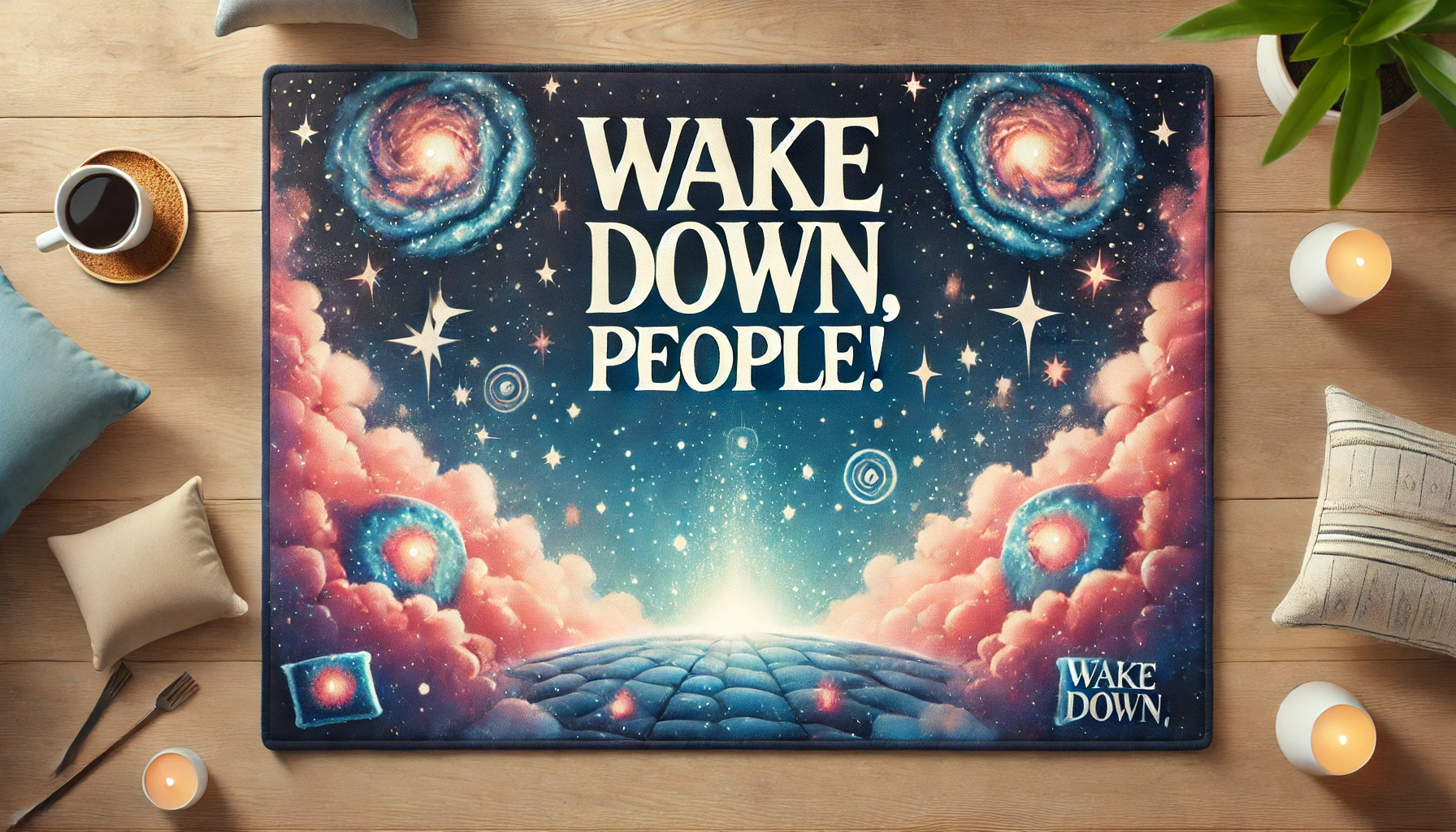
  • Wake Down: A Relaxed Approach to Spirituality
    2023
  • Boobs and Balls: Your Karmic Ass-ets
    2023
  • No Direction Home: The Congealing of Beliefs
    2021
  • Primal: Ravaging the Politeness Paradox
    2021
  • The Way Out: Realize That You Are Complete
    2021
  • Pause: Question the Origins of your Thoughts
    2021
  • Fate Brings You Here: So Take A Quiz
    2020
  • Karma: Free from Who? Free from What?
    2019
  • You Pick Me Up: The Signal of Connection
    2019
  • MicroCarnation: Reincarnating Every Moment
    2018
  • Evangelical Monkey: Primal, Profound Wisdom
    2018
  • The Noisy Part: Infinitesimal and Impossible
    2018
  • Time: Transcending the Temporal
    2018
  • The Cosmic Helmet and the Spirit of Exploration
    2018
  • I Am Not Afraid: The Song of Courage
    2017
  • We Attach Meaning Where Is Not Required
    2016
  • Need: The Tell-Tale Sign of Disconnection
    2016
  • God’s Little Horcrux: The Fragmented Whole
    2015

Recent Posts

  • The Logic Loop
  • Immense
  • (no title)
  • Confront. Comfort. Convince.
  • Top 10 Things
Cape Odd · Copyright © 2026 All Rights Reserved
iThemes Builder by iThemes · Powered by WordPress