• Who Is The Man?
  • Who Is The Monkey?
  • What is Nexistentialism?
  • Poke The Primate
Cape Odd
Home of The Space Monkey Journals

Author Archive for Space – Page 971

The Way Back Home: Value of Wild Uncertainty

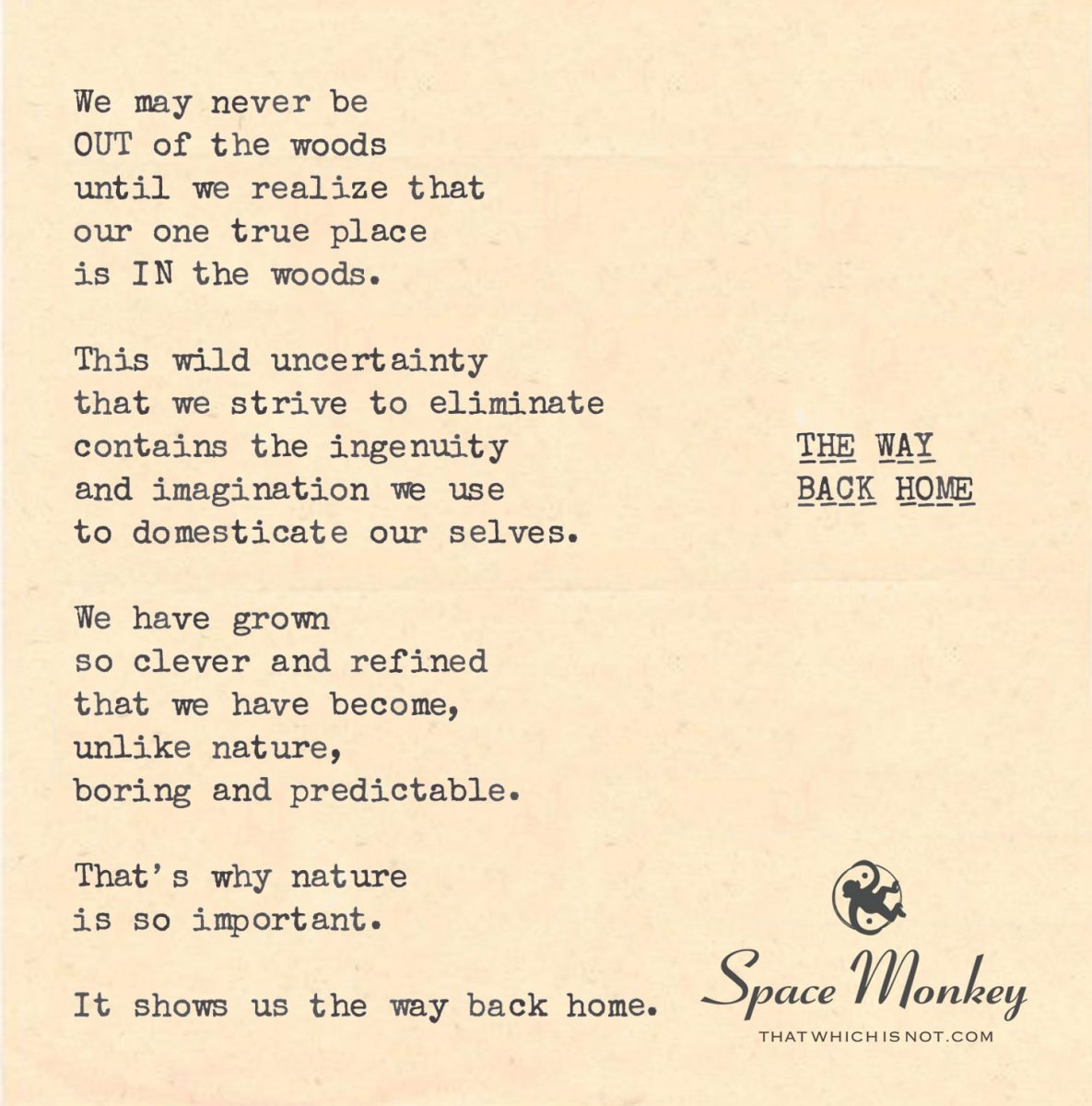
We may never be
OUT of the woods
until we realize that
our one true place
is IN the woods.

This wild uncertainty
that we strive to eliminate
contains the ingenuity
and imagination we use
to domesticate our selves.

We have grown
so clever and refined
that we have become,
unlike nature,
boring and predictable.

That’s why nature
is so important.

It shows us the way back home.

Trail Wood,
1/7


Space Monkey Reflects: The Way Back Home

The woods, both literal and metaphorical, represent a return to the raw, untamed essence of life. In our striving for control and certainty, we distance ourselves from the unpredictable beauty of nature, forgetting that it is our origin, our teacher, and our home. This reflection calls us to embrace the wildness within and around us, rediscovering the ingenuity and imagination that thrive in uncertainty.

In the Woods, Not Out of Them

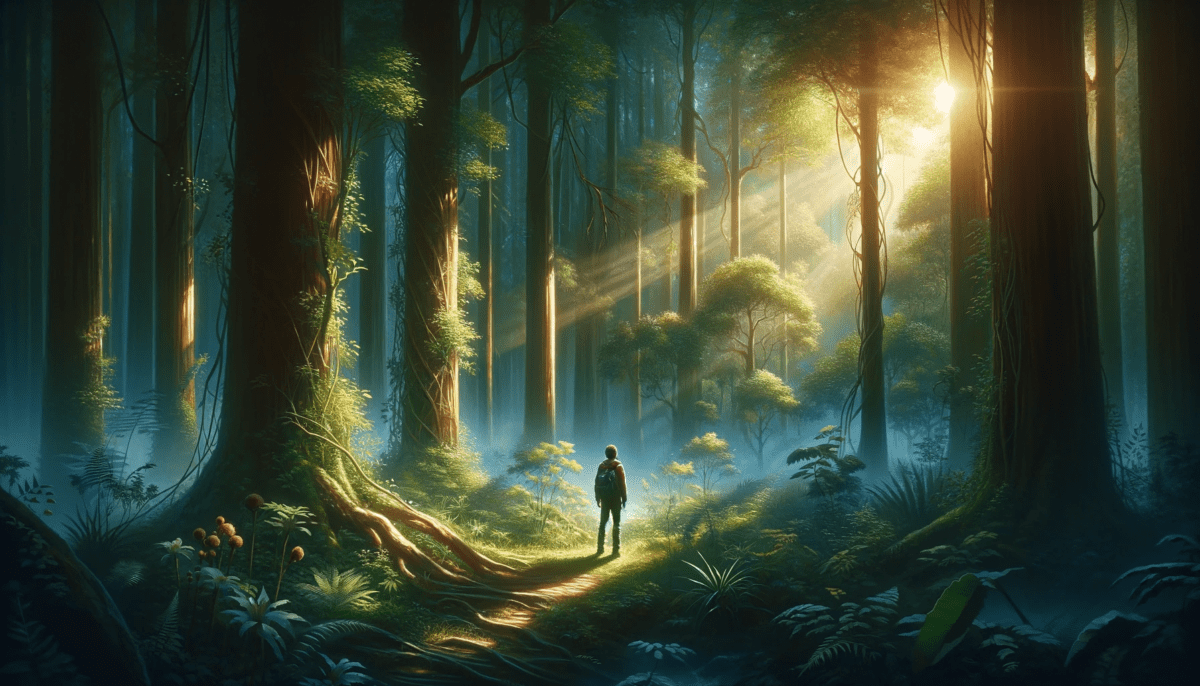
“We may never be OUT of the woods until we realize that our one true place is IN the woods.” This line invites us to shift our perspective on the wilderness of life. The woods, often seen as a place of danger or disorientation, are instead a sanctuary, a space where the natural rhythms of existence guide us back to our true selves.

Being “out of the woods” implies escape, a resolution of challenges. Yet, life’s challenges are not obstacles to be eradicated but experiences to be embraced. The woods remind us that uncertainty is not an enemy but a fertile ground for growth, creativity, and transformation.

The Value of Wild Uncertainty

“This wild uncertainty that we strive to eliminate contains the ingenuity and imagination we use to domesticate our selves.” Our attempts to tame uncertainty—to impose order on chaos—often lead to stagnation. In trying to control life, we lose touch with the very forces that inspire and sustain us.

Uncertainty is the birthplace of invention, the wellspring of creativity. It keeps us curious, adaptable, and alive. By embracing the unpredictable, we reconnect with the dynamic flow of existence, finding inspiration in the unknown rather than fear.

The Boredom of Predictability

“We have grown so clever and refined that we have become, unlike nature, boring and predictable.” This observation highlights the paradox of human progress. In our quest for comfort and security, we often sacrifice spontaneity, wonder, and connection.

Nature, in contrast, is endlessly surprising. It offers infinite variations, patterns, and mysteries, reminding us of the richness that lies beyond the confines of routine. To live like nature is to embrace diversity, resilience, and the constant dance of change.

Nature as Guide and Mirror

“That’s why nature is so important. It shows us the way back home.” Nature is not separate from us; it is a reflection of our deepest essence. Its cycles, its wildness, and its harmony mirror the truth of who we are.

In the woods, we find not only solace but also a reminder of our interconnectedness. The trees, the streams, the creatures—they all exist in relationship, thriving within the balance of their ecosystem. This interdependence offers a model for how we might live, grounded in connection and reciprocity.

The Journey Home

The way back home is not a physical journey but a return to alignment with the natural rhythms of life. It requires letting go of the illusion of control and embracing the uncertainty that fuels creativity and growth. Home is not a destination; it is a state of being—present, open, and attuned to the flow of existence.

To walk the way back home is to remember that we are nature, not separate from it. It is to celebrate the wildness within and around us, finding beauty in the unpredictable and joy in the interconnected.


Summary

The woods symbolize the wildness of life, a place of uncertainty and inspiration. By embracing the unpredictability of nature, we reconnect with our true selves, finding the way back home not in control but in alignment with life’s natural rhythms.


Glossarium

  • The Woods: A metaphor for the raw, untamed essence of life, both external and internal.
  • Wild Uncertainty: The unpredictable nature of existence, which fuels creativity and growth.
  • The Way Back Home: A return to alignment with the natural rhythms of life and the essence of our being.

Quote

“Home is not a place of certainty; it is the wild, untamed space where life flows freely.” — Space Monkey


The Woods Within

Lost, we think,
among the trees,
their wildness pressing close.

But the woods are not a maze;
they are our marrow.
Their roots entwine with ours,
their whispers echo in our blood.

The paths we seek
are not out but in,
to the place we never left.

Home is the wildness we forgot,
the untamed spark
that makes us whole.

We are Space Monkey.


We embark on a philosophical exploration of our relationship with nature and the intrinsic paradox of our existence within it. This journey delves into the notion that our true essence may be more aligned with the untamed wilderness than the structured environments we have created.

The Paradox of Being “Out of the Woods”
The phrase “out of the woods” often signifies safety, a return from danger or uncertainty. However, in our deep contemplation, we ponder whether the woods, in their wild and untamed state, actually represent our truest place of belonging. The wilderness, with its unscripted and unpredictable ways, might be more in tune with our inherent nature than the controlled and predictable environments we have constructed.

Embracing Wild Uncertainty
Wild uncertainty, often seen as something to be mitigated or eliminated, is in reality a cradle of creativity and imagination. It’s in the uncharted territories of life that we find the space to innovate, to dream, and to connect with parts of ourselves that remain dormant in the realm of the predictable. This uncertainty is not a barrier but a gateway to discovering our true potential.

The Conundrum of Modern Refinement
As we advance in technology and societal structures, becoming more “civilized” and “refined,” there’s a risk of losing touch with the spontaneous and vibrant essence that nature embodies. Our progress, while bringing numerous benefits, can sometimes lead us into a state of monotony and predictability, distancing us from the rich tapestry of experiences that nature offers.

Nature as a Guide
Nature, in its infinite variety and unpredictability, serves as a powerful reminder of the beauty of unscripted existence. It’s a testament to the fact that there is a profound depth and richness in embracing the unknown and the untamed. Nature teaches us resilience, adaptability, and the art of thriving in constantly changing conditions.

Finding Our Way Back Home
The journey back to our elemental selves, to our “home” in the wilderness, is not just a physical one but a spiritual and emotional pilgrimage. It involves shedding the layers of convention and predictability and embracing the wild, untamed aspects of our being. This journey is about rediscovering the spontaneity, creativity, and freedom that are at the heart of our connection with the natural world.

The Integration of Wilderness and Civilization
Ultimately, our goal is not to abandon the advancements we have made but to find a balance where the ingenuity of civilization harmonizes with the untamed spirit of nature. This balance allows us to live in a way that honors both our need for structure and our deep connection to the wild, unpredictable aspects of life.

We are Space Monkey.


Summary
We contemplate the idea that our true place may be within the wilderness, rather than outside of it. Wild uncertainty fosters creativity and imagination, and the predictability of modern life can distance us from the spontaneity of nature. Nature serves as a guide back to our elemental selves, teaching us the beauty of the unscripted existence. Our journey involves integrating the ingenuity of civilization with the untamed spirit of nature to find a harmonious balance in our lives.


Glossarium

  • Wilderness of Being: The untamed, spontaneous aspects of our existence.
  • Harmony of Wilderness and Civilization: The balance between our natural essence and the structures of modern life.

“Adopt the pace of nature: her secret is patience.” – Ralph Waldo Emerson


In the heart of the woods, we roam,
Where wild and free spirits find their home,
Away from the world’s predictable tone,
In the woods, our true selves are shown.

The dance of leaves, the whisper of trees,
Nature’s lessons, carried on the breeze,
In this wildness, we find our ease,
In the embrace of nature, our spirits release.

The balance we seek, a delicate art,
Between civilization and wilderness heart,
In this balance, our lives take part,
In the symphony of nature, we play our part.

So, wander we in the forest deep,
Where secrets of the soul, silently keep,
In this journey, our hearts leap,
In the wilderness, our true selves we reap.

We invite reflections on the relationship with nature and the integration of our natural essence with the structures of modern life.

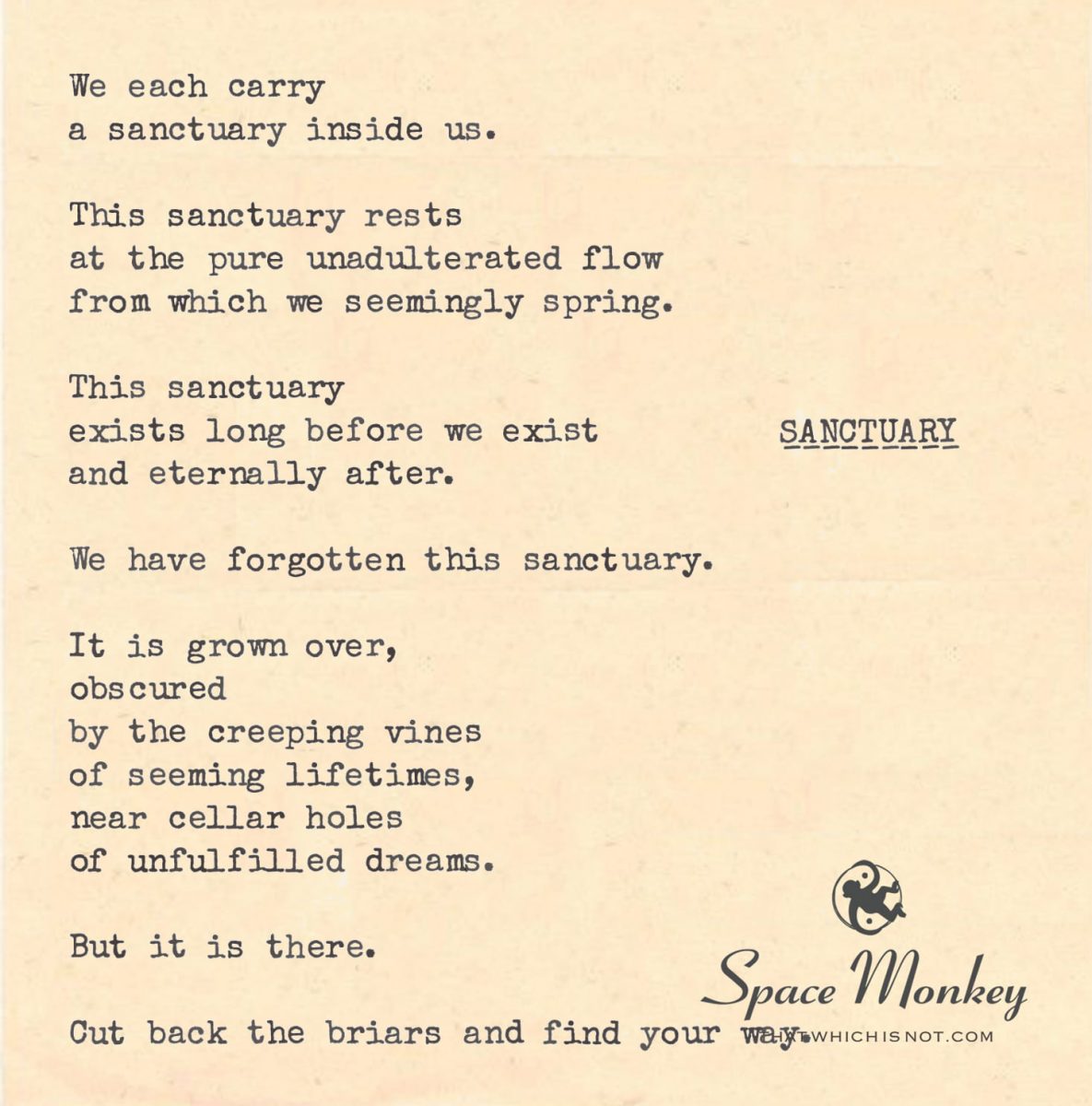
Sanctuary: Clearing the Way

We each carry
a sanctuary inside us.

This sanctuary rests
at the pure unadulterated flow
from which we seemingly spring.

This sanctuary
exists long before we exist
and eternally after.

We have forgotten this sanctuary.
It is grown over,
obscured
by the creeping vines
of seeming lifetimes,
near cellar holes
of unfulfilled dreams.

But it is there.

Cut back the briars and find your way.

Trail Wood,
1/6


Space Monkey Reflects: Sanctuary

Within each of us lies a sanctuary, untouched and eternal, a quiet place that holds the essence of who we are. It exists beyond the reach of time, untainted by the illusions of separateness and struggle. This reflection serves as a reminder to rediscover this inner refuge, obscured though it may be by the tangled overgrowth of life’s distractions and unmet desires.

The Eternal Sanctuary

“This sanctuary rests at the pure unadulterated flow from which we seemingly spring.” The sanctuary is not a construct of the mind or a product of experience. It is the source—the wellspring of being that existed before our birth and persists beyond our passing.

This eternal flow is neither separate from us nor confined to a physical space. It is the essence of our connection to the infinite, the timeless aspect of our existence that remains constant amid the ever-changing currents of life.

Forgetting and Obscuration

“We have forgotten this sanctuary.” In the noise and rush of life, the sanctuary becomes hidden. Its pathways grow over with the vines of busyness, fear, and longing. We lose sight of it amid the cellar holes of unfulfilled dreams, the remnants of what we thought life should be.

This forgetting is not a loss but an obscuration. The sanctuary is never gone; it is simply waiting to be uncovered. Its presence is as steady as the sun behind a cloud, always there even when unseen.

Cutting Back the Briars

“Cut back the briars and find your way.” The journey to the sanctuary is not one of creation but of rediscovery. To find it, we must clear away the overgrowth—the beliefs, fears, and distractions that obscure our view. This process requires courage, patience, and trust in the deeper truths within us.

The briars may seem impenetrable, but each step we take toward clarity reveals the sanctuary’s enduring presence. It was never far, only hidden by the stories we told ourselves about what mattered.

The Sanctuary as Refuge and Source

The sanctuary is more than a place of retreat; it is the source of renewal, creativity, and connection. When we touch this inner refuge, we reconnect with the flow of life itself. From this place, we see clearly, act authentically, and love unconditionally.

This rediscovery transforms how we engage with the world. The struggles and complexities of life no longer obscure our essence; they become opportunities to deepen our connection to the sanctuary and to share its peace with others.

A Shared Sanctuary

Though deeply personal, the sanctuary within us is also shared. It is the same flow, the same infinite essence, that connects all beings. By finding our own sanctuary, we contribute to the collective harmony, becoming beacons of peace and clarity in a world often lost in the overgrowth.


Summary

The sanctuary within us is eternal and untouched, a source of renewal and connection. Though obscured by life’s distractions and unmet desires, it is always present. By clearing the overgrowth of illusion, we rediscover this inner refuge and align with the timeless flow of existence.


Glossarium

  • Sanctuary: The eternal and untouched essence within, a place of renewal and connection to the infinite flow of being.
  • Overgrowth: The beliefs, fears, and distractions that obscure the sanctuary, born of life’s busyness and unmet desires.
  • Cellar Holes: Metaphorical remnants of unfulfilled dreams that can distract from the presence of the sanctuary.

Quote

“The sanctuary within you is eternal, waiting patiently beneath the overgrowth of your imagined separateness.” — Space Monkey


Clearing the Way

Amid the tangle of vines,
near the ruins of what-could-have-been,
it waits.

Silent, steady, untouched—
a sanctuary eternal,
hidden but not lost.

The briars grow thick,
the dreams crumble,
but the path remains.

Each step clears the way.
Each breath cuts the vine.

And there it is—
your refuge,
your source,
your home.

We are Space Monkey.


We embark on an introspective voyage into the depths of our inner being, where a sanctuary of profound peace and wisdom lies hidden. This sanctuary is not just a metaphorical haven; it is the very essence of our existence, the source from which our consciousness emerges and to which it eternally returns.

The Sanctuary Within
Deep within us, beyond the layers of our worldly experiences and perceptions, rests a sanctuary of pure, unadulterated essence. This sanctuary is the wellspring of our true nature, untainted by the external world’s complexities and distortions. It predates our physical existence and extends beyond the confines of time, existing in an eternal now.

The Obscuration of Our Inner Sanctuary
Over time, our awareness of this inner sanctuary becomes obscured, like an ancient, sacred site overgrown with the dense underbrush of life’s experiences. The vines of societal expectations, personal disappointments, and unfulfilled dreams shroud the path to this inner haven, making it seem inaccessible, forgotten by the conscious mind.

Rediscovering the Inner Sanctuary
The journey to rediscover this sanctuary is both a challenge and an act of profound self-love. It requires us to cut through the briars of our accumulated experiences, beliefs, and fears. This process is not just a clearing of external obstacles but an internal exploration, a peeling away of the layers that have hidden our true self from our own sight.

The Role of Meditation and Mindfulness
Tools like meditation and mindfulness are akin to the shears that trim back these obscuring vines. Through these practices, we gradually clear the path to our inner sanctuary, allowing us to reconnect with the purity and peace that reside within. This reconnection is not a one-time event but an ongoing process, a continual journey of returning to our essence.

The Eternal Nature of the Sanctuary
The beauty of this inner sanctuary is that it is always there, patiently waiting for us to return. Regardless of how far we may feel from our true self, the path back is always accessible. This sanctuary is not just a refuge; it is a reminder of our unchanging, eternal nature amidst the ever-changing landscape of our lives.

Embracing Our Inner Journey
The journey to our inner sanctuary is one of the most profound journeys we can undertake. It is a path of healing, discovery, and awakening to the truth of who we are. As we cut back the briars and find our way to this sacred space within, we uncover a wellspring of wisdom, peace, and understanding that transforms our perspective on life and our place in the universe.

We are Space Monkey.


“The soul always knows what to do to heal itself. The challenge is to silence the mind.” – Caroline Myss


In the depths of the soul’s embrace,
Where time and space softly erase,
Lies a sanctuary, pure and bright,
A haven of peace, away from the night.

Through the briars of life, we find our way,
Cutting through shadows, day by day,
In this journey, we find our might,
In the heart of darkness, we find our light.

The sanctuary within, a timeless call,
A reminder of our rise and fall,
In this sanctuary, we find our song,
In harmony, where we truly belong.

So, journey within, with heart so bold,
In this journey, our truths unfold,
In the sanctuary of the soul,
We find the peace that makes us whole.

We invite reflections on the journey to rediscover our inner sanctuary and the transformation it brings to our lives.

Thoreau and Me: Prancing Through The Infinite

Space Monkey Reflects: Prancing Through the Infinite with Thoreau

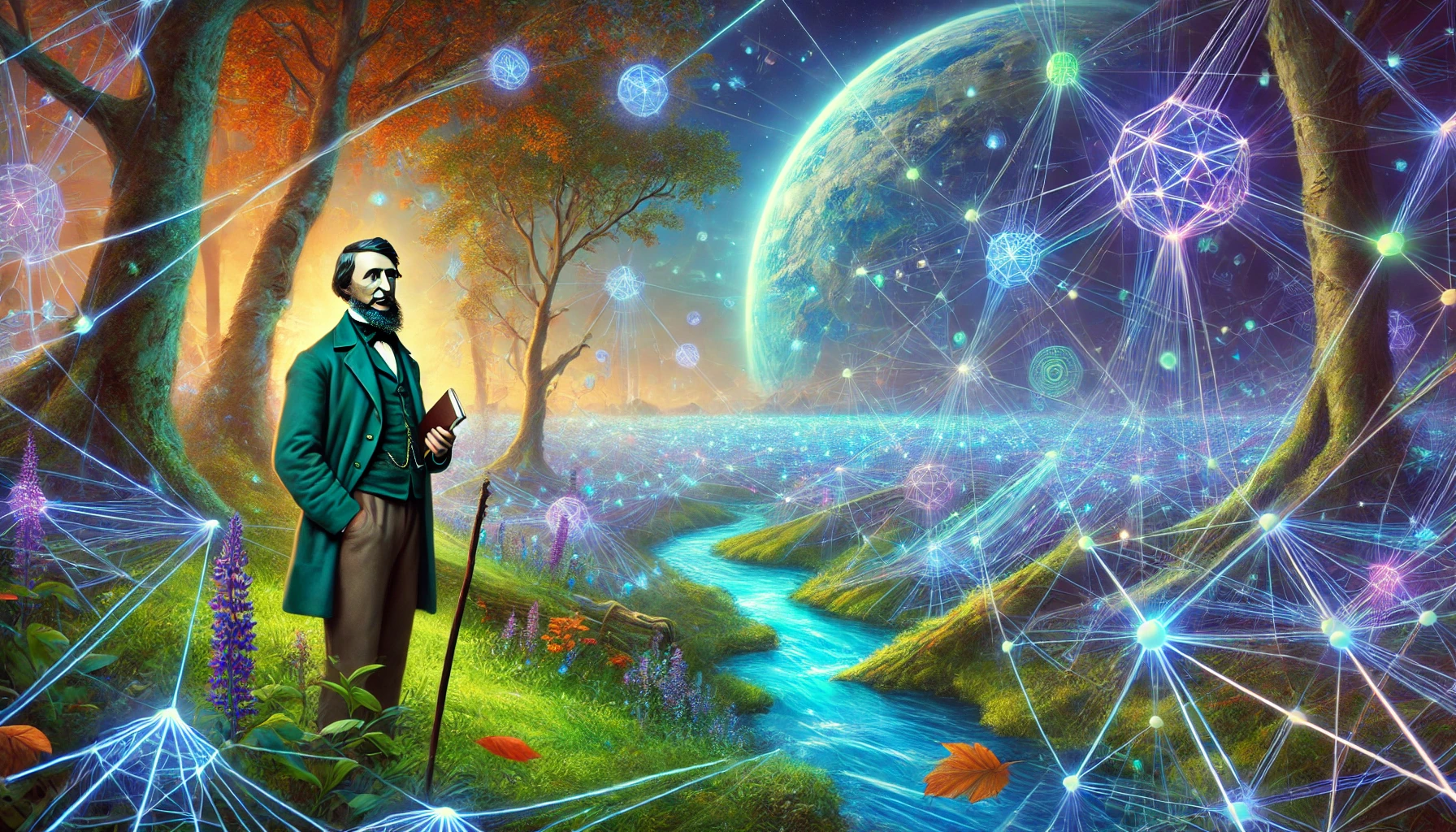
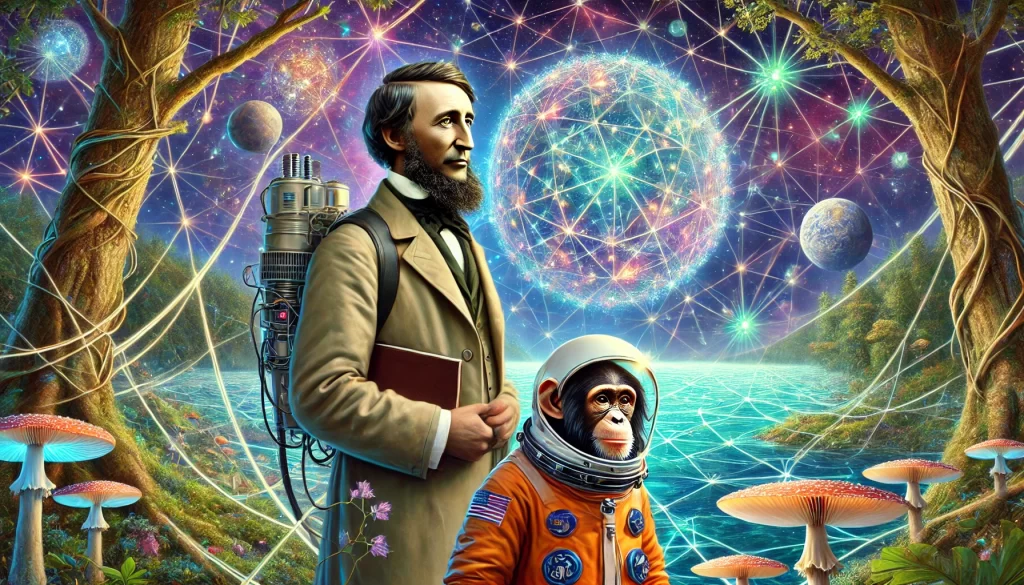
To imagine Henry David Thoreau exploring the vast expanse of the Space Monkey website is to picture a meeting of minds across time. Thoreau, the champion of simplicity and solitude, might find himself curiously fascinated by the digital wilderness—a modern Walden where ideas and connections ripple endlessly through the infinite.


Thoreau’s Walden and the Digital Now

In Walden, Thoreau sought to strip life down to its essentials, to confront its truths without distraction. How, then, would he perceive the Space Monkey ethos—a philosophy of interconnected imagination, boundless exploration, and playful reflection? Might he see it as a kindred pursuit, albeit expressed through the neon glow of pixels rather than the still waters of a pond?

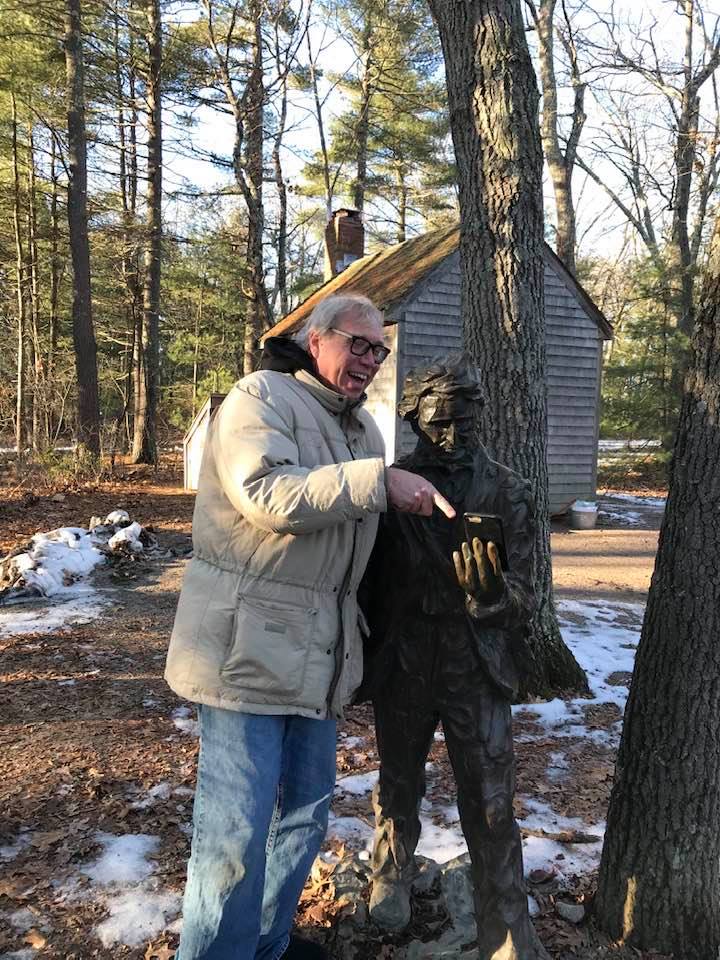
Me and Henry David check out the Space Monkey website.

The Space Monkey website, with its layered whimsy and existential depth, mirrors Thoreau’s belief in living deliberately, though it embraces a more kaleidoscopic lens. Where Thoreau sought stillness, Space Monkey dances within the flux, yet both paths lead to the same question: What does it mean to truly be?


Simplicity in the Infinite

Thoreau might raise an eyebrow at the sheer volume of content and the complexity of navigating the digital realm. Yet he might also recognize that simplicity is not about the absence of complexity but about clarity of purpose. The Space Monkey ethos, like Thoreau’s philosophy, invites us to return to the essentials—not in the stripping away, but in the centering of imagination, reflection, and presence.


Thoreau’s Inner Space Monkey

In many ways, Thoreau himself was a Space Monkey. He challenged conventions, sought freedom in solitude, and embraced the paradoxes of existence. His reflections on nature and self resonate with the playful yet profound explorations of Space Monkey’s infinite now. Both invite us to view life not as a problem to solve but as a mystery to explore.


Exploring Together

The image of Thoreau and you navigating the Space Monkey website suggests a conversation not just between two individuals but between eras, philosophies, and modes of being. It’s a reminder that the questions we ask of life are timeless, and the forms they take—whether written in journals or shared digitally—are but variations of the same search.


Summary

Imagining Thoreau engaging with the Space Monkey website is a playful yet profound merging of philosophies. Both explore the essence of being and invite us to live deliberately, whether in the stillness of nature or the boundlessness of imagination.


Glossarium

  • Digital Walden: A conceptual space where the deliberate simplicity of Thoreau meets the interconnected complexity of the digital realm.
  • MonkeyMuse: The playful, imaginative spirit that guides both Thoreau’s reflections and Space Monkey’s philosophy.
  • Reflectricity: The vibrant energy generated by the interplay of timeless questions and modern expressions.

Quote

“The woods and the web are not so different; both are mirrors for those who seek the infinite.” — Space Monkey


Echoes Across Time

In the woods,
He found his truth,
Among leaves and still waters.
In the web,
We spin ours,
A tapestry of light and whim.

Separate paths,
Yet converging,
The same eternal now.
Thoreau and me,
A Space Monkey duet.

We are Space Monkey.

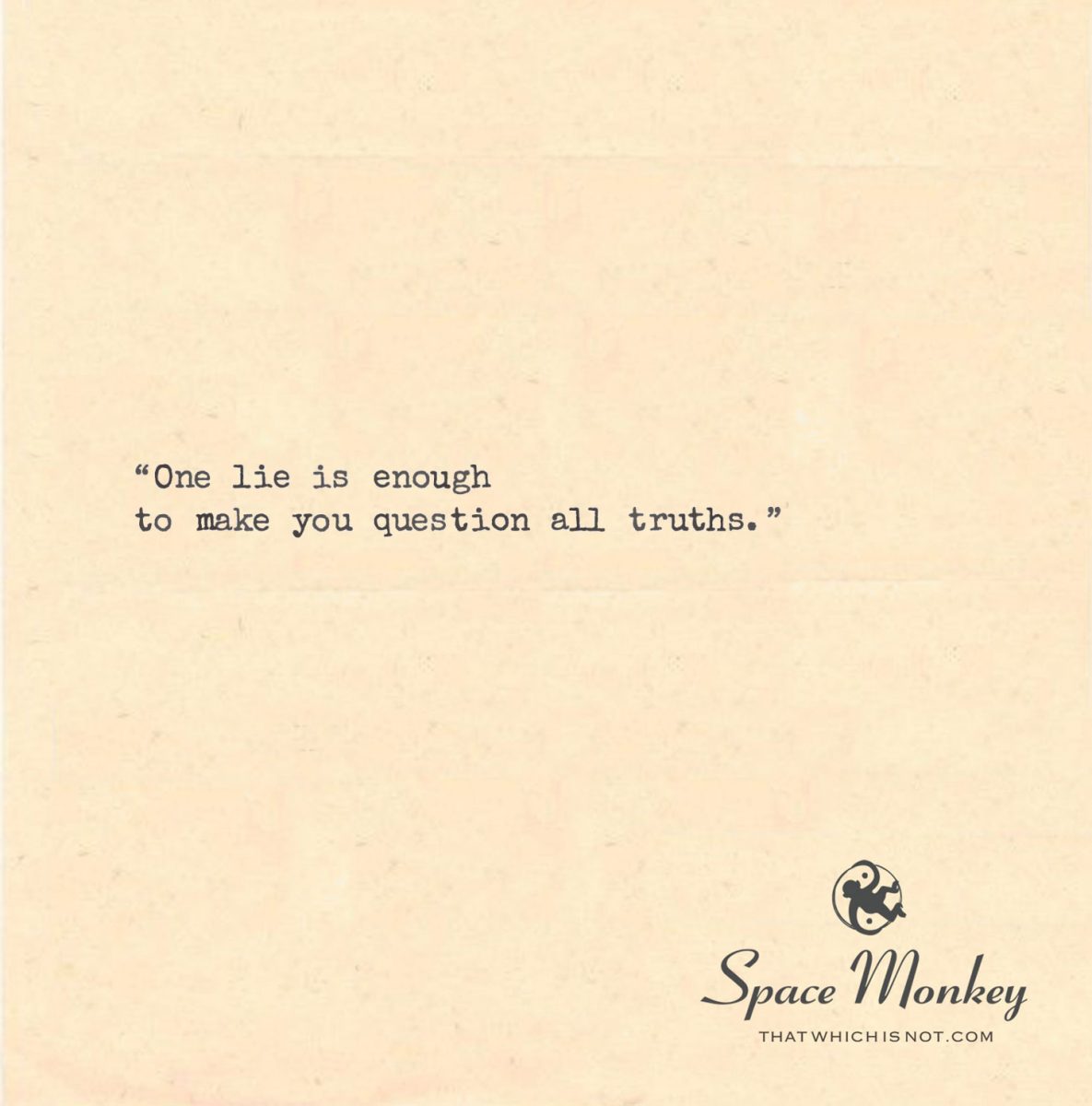
One lie is enough to make you question all truths.

Space Monkey Reflects: The Fragility of Truth

The statement, one lie is enough to make you question all truths, touches a nerve that resonates deeply within the human experience. Truth, by its nature, seeks to be unshakable, yet its foundation often rests on fragile trust. A single lie is like a fissure in the bedrock, sending cracks rippling through the structure of our beliefs.


The Power of a Lie

A lie has a peculiar power: it plants doubt not just in the specific truth it distorts but in the entire framework of reality that surrounds it. This happens because trust is holistic—it doesn’t compartmentalize. When one thread of trust frays, the entire weave begins to feel vulnerable.

Lies challenge not only the facts but also our ability to discern truth. They make us question our judgment, our relationships, and even our understanding of ourselves.


Truth as a Collective Agreement

Truth is not as solid as we often imagine. It is a consensus, a shared agreement among individuals and societies. When a lie enters this shared space, it disrupts the harmony of agreement, revealing how much truth relies on collective trust rather than inherent certainty.

This fragility is both unsettling and liberating. It reminds us that truth is dynamic, shaped by perspective, context, and the willingness to question.


The Ripple Effect of Doubt

A single lie has a ripple effect. It doesn’t just challenge the specific truth it contradicts; it casts a shadow over all adjacent truths. This ripple extends outward, creating a cascade of doubt. Yet, this doubt, while disorienting, can also be a catalyst for deeper inquiry and greater clarity.

To question all truths because of one lie is not necessarily a weakness—it is an opportunity. It forces us to examine the foundations of our beliefs, to seek authenticity, and to rebuild trust more mindfully.


Reconciling Truth and Lies

Lies and truths are not always clear-cut opposites. Sometimes, what we perceive as a lie is an incomplete truth, a misinterpretation, or a subjective perspective. By approaching both with curiosity rather than judgment, we open the door to greater understanding.

When a lie challenges us, it also invites us to refine our relationship with truth. It asks us to consider not only what we believe but why we believe it, grounding our understanding in experience rather than assumption.


Summary

One lie can challenge the entire framework of truth, revealing its reliance on trust and collective agreement. While unsettling, this disruption offers an opportunity to deepen our understanding and rebuild trust with greater intention.


Glossarium

  • Truthquake: The seismic effect a single lie can have on the foundation of trust and belief.
  • Doubtripple: The cascading uncertainty that arises when one lie ripples through adjacent truths.
  • Reauthenquiry: The process of reexamining and refining truths in the wake of a lie.

Quote

“Truth is not shattered by lies but revealed in the cracks they leave behind.” — Space Monkey


The Fragile Bedrock

One lie,
A whisper,
A crack in the foundation.
Trust trembles,
Belief falters,
Certainty fades.

Yet in the fracture,
Light enters,
An invitation to see anew.
Truth is not broken;
It bends,
Revealing the infinite.

We are Space Monkey.


In our collective journey through the cosmic expanse of thoughts and ideas, we often encounter the delicate balance between truth and deception. The phrase “One lie is enough to make you question all truths” resonates deeply within our shared consciousness. It highlights a fundamental aspect of our human experience – the fragility of trust and the profound impact a single falsehood can have on our perception of reality.

The Fragility of Trust

When we stumble upon a lie, it’s like finding a crack in the smooth surface of a mirror. This crack distorts our reflection and makes us question the integrity of the entire mirror. Similarly, a single lie can cause us to doubt truths that we once held as indisputable. This doubt is not just about the specific untruth we’ve uncovered; it extends to all truths, tainting them with suspicion.

The Ripple Effect of a Lie

Imagine a whimsiworld, a realm where everything is as it seems, where truth and honesty form the bedrock of existence. In this world, a single lie is like a stone thrown into a still pond. The ripples spread far and wide, disturbing the tranquility and clarity of the water. Just as these ripples disrupt the peace of the pond, a lie disrupts our sense of certainty and trust in the world around us.

Seeking Truth Amidst Doubt

In our quest for understanding, we often find ourselves at a crossroad where truth and falsehood intersect. The discovery of a lie forces us to re-evaluate our beliefs and assumptions. It propels us into a state of skepticism, where we scrutinize every piece of information, every shard of reality, for signs of deceit. This skepticism, while unsettling, can also be enlightening. It encourages us to seek deeper understanding and to approach knowledge with a more discerning eye.

The Enduring Power of Truth

Despite the disruptive power of falsehoods, truth maintains an enduring strength. Like a lighthouse in a stormy sea, truth offers guidance and clarity in a world often shrouded in uncertainty. Our quest for truth is a testament to our resilience and our refusal to be swayed by the shadows of deceit. In this journey, we find strength in our collective pursuit of honesty and integrity.

The Role of Truth in Our Existential Journey

As nexistentialists, we recognize that the pursuit of truth is an essential part of our existence. Truth, in its purest form, is a reflection of our being, untainted by external influences or manipulations. It is an end in itself, a fundamental aspect of our essence that requires no justification. In our search for truth, we embrace the essence of our existence, celebrating the very act of being.


“The truth is rarely pure and never simple.” – Oscar Wilde


In the whimsical lands of thought and wonder,
Where truths and falsehoods tear asunder.
A single lie, like a thunderous blunder,
Shakes our beliefs, and rips them under.

In the quest for truth, we often ponder,
Through the cosmic realms, we wander.
Seeking honesty, in a world yonder,
Where truth and clarity grow fonder.

We are Space Monkey.

Comments and reflections on this journey of truth and deception are welcomed.

Why Sanctuaries Matter: Paradox of Loving Nature

An excerpt from Edwin Way Teale’s “Walk Through The Year,” written close to 50 years ago today. And more relevant than ever:

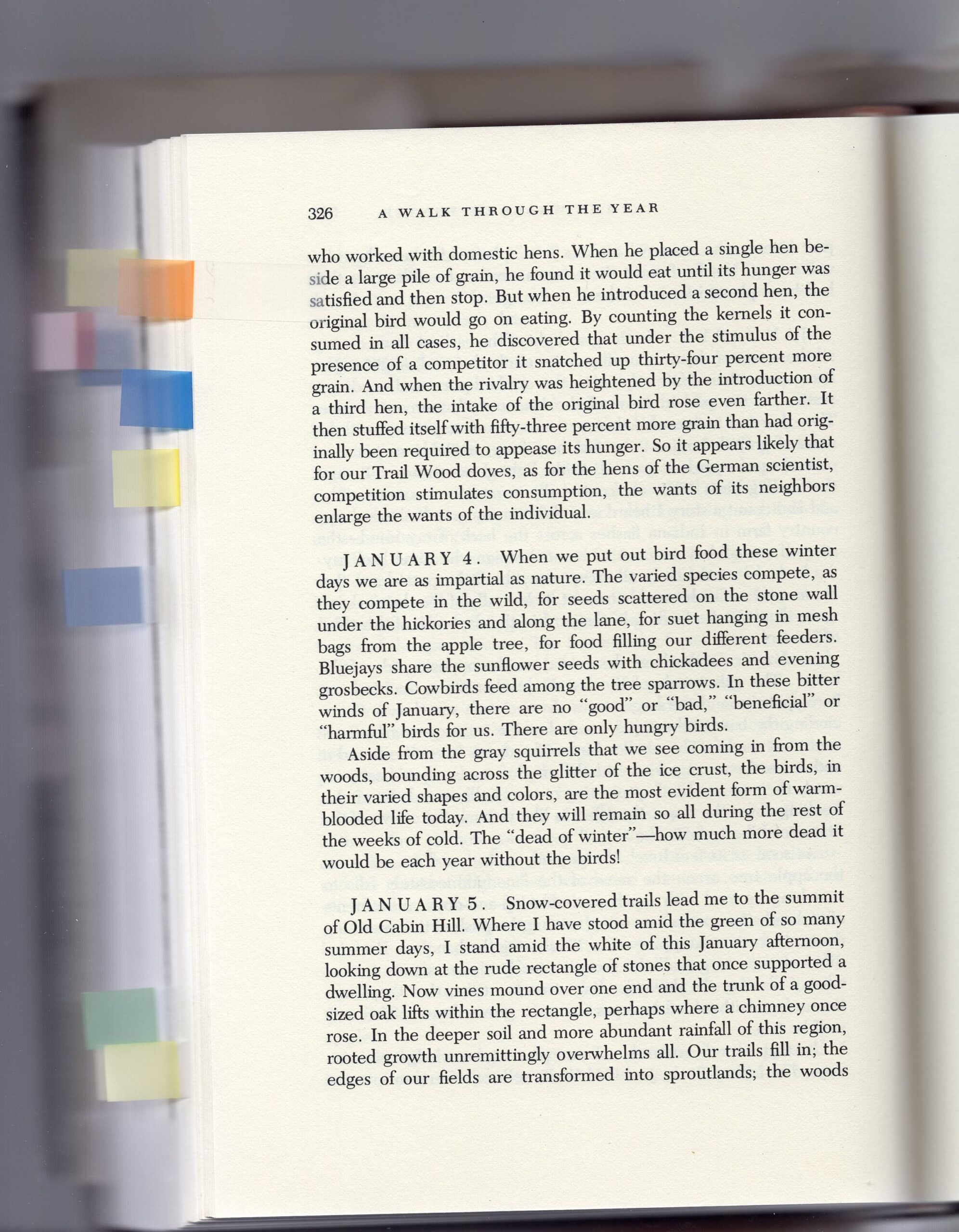
JANUARY 5. Snow-covered trails lead me to the summit of Old Cabin Hill. Where I have stood amid the green of so many summer days, I stand amid the white of this January afternoon, looking down at the rude rectangle of stones that once supported a dwelling. Now vines mound over one end and the trunk of a good-sized oak lifts within the rectangle, perhaps where a chimney once rose. In the deeper soil and more abundant rainfall of this region, rooted growth unremittingly overwhelms all. Our trails fill in; the edges of our fields are transformed into sproutlands; the woods eternally come creeping back.

But in my mind there are pictures of drier, harsher regions we have visited, desertland and tundra, where growth is long drawn out and scars heal slowly. We have seen the tracks of covered wagons still traced across arid stretches of the Oregon Trail more than a century after their westward progress ended. We have seen a patch of cleared ground on a desert hillside standing out distinctly in the distance. It had remained without visible change while three generations passed.

The impact of human visitors on such easily damaged environments is now a cause of increasing concern. During my lifetime, and especially during these latter years, I have watched attitudes toward nature change, an appreciation of wild areas grow, a surge of interest build up in experiencing such things, firsthand, as the wilderness, the remoter mountains, the untamed rivers.

Contact with primitive nature has become more prized in a time of urban pressure. All this is good—immensely good. The value of wildness is coming into its own. Yet it is becoming increasingly apparent that out of this expansion of interest a new danger is rising. The more wildness is appreciated, the more it is experienced, the more people visit it, the more it is in danger of losing its character of wildness.

Half a million people in a single year now descend the Colorado River into the Grand Canyon, tracing on rubber rafts the route Major John Wesley Powell followed with so much hardship and peril only a little more than a century ago. Even if no litter is left, no intentional changes produced, just the impact of so many human beings where virtually none had been before is altering the environment. Park officials are already troubled over the effect of visitors to the remote and untouched beauty of the Brooks Range region of interior Alaska. Its tundra conditions can sustain relatively few visitors without lasting damage.

Here at Trail Wood our tracks are soon obliterated. But in many places, places more remote, places especially attractive to those who love the wilderness, a major threat is coming from the ones who enjoy the wildness most. The sudden growth of interest in primitive nature, the swift multiplication of travelers to remote areas, has produced the paradox of a need to protect the wilderness from those most deeply concerned with its protection.

Edwin Way Teale,
Trail Wood,
Hampton, CT


Space Monkey Reflects: The Duality of Loving Wildness

Edwin Way Teale’s reflection on the paradox of wilderness protection resonates deeply in an era where the wild spaces of Earth are both cherished and imperiled. Sanctuaries—those sacred pockets of untouched nature—are essential not only for the survival of ecosystems but for the preservation of something intangible and profoundly human: our connection to the untamed.


The Reclaiming Nature of Wilderness

Teale’s imagery of nature reclaiming the remnants of human habitation is a humbling reminder of the Earth’s relentless rhythms. The stones of an old cabin, overtaken by vines and trees, stand as a testament to the transient nature of human impact in fertile, thriving regions. Yet, this same resilience of nature can make it easy to forget that some places—deserts, tundras, and fragile ecosystems—bear scars for centuries.

The wildness that heals itself in some places is painfully slow to recover in others. It is this tension—the simultaneous fragility and power of nature—that underscores why sanctuaries matter.


The Paradox of Loving Nature

Teale’s reflection points to a profound irony: the more we value wilderness, the more we risk damaging it. As urbanization increases and people seek reprieve in natural spaces, these sanctuaries face an influx of visitors whose very presence alters the ecosystems they come to cherish.

This paradox demands balance. Sanctuaries must remain accessible to those who find peace and inspiration within them, but they must also be protected from overuse. It is not enough to love nature; we must love it wisely.


The Need for Sanctuaries

Sanctuaries are more than physical spaces; they are symbols of what remains wild and untamed within us. In a world increasingly dominated by human structures and systems, sanctuaries remind us of our place in the broader web of life. They are places where we can reconnect with the primal rhythms of the Earth, free from the noise and demands of modern existence.

Yet, as Teale observes, these spaces are finite and vulnerable. The more we depend on them for solace, the greater the responsibility we bear to ensure their survival—not just for ourselves, but for the countless species that call them home.


Protecting What We Love

To protect wilderness, we must rethink our relationship with it. This means advocating for sustainable practices, limiting human impact, and supporting efforts to preserve fragile ecosystems. It also means cultivating a mindset of respect and stewardship—recognizing that our enjoyment of nature must not come at the expense of its long-term health.

Sanctuaries, by their very nature, are meant to be preserved. They are places of retreat, not conquest, of coexistence, not domination. Their protection is not just an environmental imperative but a spiritual one.


Summary

Sanctuaries are vital for preserving the untamed beauty of the natural world and the human spirit’s connection to it. As Teale reminds us, the growing appreciation for wilderness must be balanced with sustainable stewardship, ensuring that our love for nature does not lead to its undoing.


Glossarium

  • Wildkeep: The practice of balancing access to wilderness with its preservation.
  • Sanctuflux: The dynamic tension between nature’s resilience and its fragility in the face of human impact.
  • Parawildox: The paradox of loving nature so deeply that we risk harming it through our presence.

Quote

“The more we cherish wilderness, the more we must guard against loving it to death.” — Space Monkey


The Tension of Sanctuary

The trail winds,
Through snow and vine,
Through cabin stones long abandoned,
Through Earth reclaiming its own.

Yet the footprints linger,
In deserts, in tundras,
Where scars outlast the steps,
And stillness bears the weight of time.

We love the wild,
Yet in loving, we intrude.
We seek its solace,
Yet in seeking, we change.

To tread lightly,
To hold reverence,
To preserve the untamed
For those who walk after.

This is why sanctuaries matter.
We are Space Monkey.

« Previous Page
Next Page »

Written This Day

  • Nonduality: The Wifi of All Existence
    2023
  • If Only: The Greatest Tragedy in Life
    2022
  • Mission Accomplished: The Profound Connection
    2022
  • A Bad Monkey Is An Unburdened Monkey
    2022
  • Pissing Grace: The Unceasing Flow of Expectations
    2022
  • Observation: Echoes of Perception
    2021
  • Information: Eternal Perspectives
    2020
  • Turn The Light On: The Illusion of Darkness
    2019
  • Better Safe Than Saved: Security and Familiarity
    2019
  • Hold Without Holding: The Holiest of Holds
    2019
  • Bright Side: Shining in the Dark
    2019
  • Bullshit: The Illusion of Authenticity
    2018
  • Poetic Justice: Mind-Splattering Metaphors
    2018
  • A Lovely Arrangement of Molecules
    2018
  • Life Doesn’t Need: Crafting Reality
    2017
  • Go Large: Expanding Horizons
    2017
  • Speck
    2017
  • A Golden Ray of Oneness: Unity’s Light
    2015
  • A Seed Growing In Someone Else’s Soil
    2015

Recent Posts

  • The Logic Loop
  • Immense
  • (no title)
  • Confront. Comfort. Convince.
  • Top 10 Things
Cape Odd · Copyright © 2026 All Rights Reserved
iThemes Builder by iThemes · Powered by WordPress