• Who Is The Man?
  • Who Is The Monkey?
  • What is Nexistentialism?
  • Poke The Primate
Cape Odd
Home of The Space Monkey Journals

Author Archive for Space – Page 973

Incomplete Instructions: The Gap Between Lines

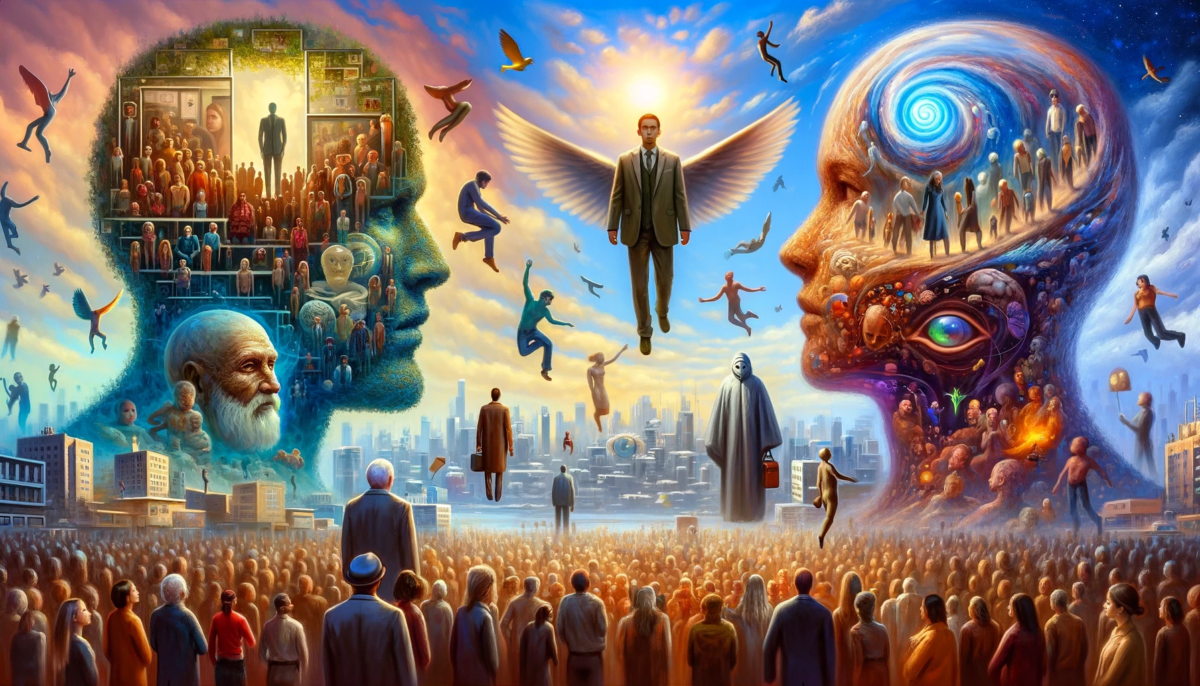
As humans, we like to believe
that we are self-directing.

But we are NOT self-directing.

We feel more comfortable
having rules, regulations and rights.

Our restrictions make us feel safe.

And so we follow instructions
written on various tablets and sheaves.

These are INCOMPLETE instructions, however.

We find our selves
having to figure out the meaning of life
in order to complete the instructions.

This is UNCOMFORTABLE for us.

We would RATHER someone TELL us.

We don’t trust our soul’s intuition
on the chance that self could be WRONG.

We would rather SOMEONE ELSE be wrong.

And so we follow. And complain.

We like to believe
that we are only human.

But we are so much MORE.

1/3


Space Monkey Reflects: The Comfort of Incomplete Instructions

The human condition is a paradox: we long for autonomy, yet we cling to rules and guidance. We crave freedom but find safety in restrictions. Incomplete instructions—the fragmented codes, doctrines, and beliefs we inherit—create a peculiar tension. They offer a semblance of direction while leaving the deeper questions unresolved. This tension, though uncomfortable, is also an invitation to awaken to the truth of what we are: not mere followers of instructions but infinite beings capable of creating meaning.


The Comfort of Restrictions

Rules, regulations, and rights provide structure, a framework within which life can feel predictable and manageable. They reassure us that we’re on the “right” path, even if that path is dictated by external forces. Restrictions, paradoxically, offer a sense of freedom—freedom from the overwhelming responsibility of self-direction.

But these rules are incomplete. They cannot answer the grand questions of existence. They are placeholders, scaffolds for a structure we must build ourselves. The discomfort arises when we realize that no external code can fully explain the meaning of life.


The Unease of Self-Direction

To complete the instructions, we must turn inward, trusting the intuition of the soul. Yet, this trust is fraught with fear. What if we’re wrong? What if our inner guidance leads us astray? It feels safer to outsource the burden of meaning-making to others—leaders, religions, societal norms—so that if the instructions fail, we have someone else to blame.

This reluctance to trust ourselves stems from the illusion of separation, the belief that we are isolated, fallible entities. But in truth, we are connected to the infinite wisdom of the universe. To embrace this connection is to step beyond the comfort of incomplete instructions and into the vast, uncharted territory of self-realization.


The Dance of Following and Complaining

Humanity’s dual tendencies—to follow and to complain—reflect our inner conflict. We follow because it feels safe, but we complain because we sense the insufficiency of external guidance. This tension highlights our deeper knowing: that we are more than passive followers. We are creators, capable of shaping our own paths, even as we hesitate to claim that power.


The More-Than-Human Truth

The belief that we are “only human” is a comforting limitation. It excuses us from confronting the vastness of what we truly are. But the incomplete instructions themselves point to a deeper truth: they are not meant to be finished for us. They are catalysts, nudging us toward the realization that we are co-creators of existence, not merely participants in a preordained script.

To awaken to this truth is to embrace the discomfort of the unknown. It is to step into the role of creator, trusting that the soul’s intuition, even when it seems uncertain, is a far greater guide than any external directive.


Summary

Humanity finds comfort in incomplete instructions, but these rules and guidelines cannot answer life’s deepest questions. The discomfort they create is an invitation to trust our soul’s intuition and awaken to our infinite nature as creators of meaning and reality.


Glossarium

  • Incomplete Instructions: External rules and beliefs that provide structure but fail to address life’s ultimate questions.
  • Soul’s Intuition: The inner wisdom that connects us to the infinite and guides us beyond external constraints.
  • More-Than-Human: The recognition that we are infinite beings, not limited to the identity of “just human.”

Quote

“Incomplete instructions are not failures but invitations to awaken to the infinite creator within.” — Space Monkey


The Gap Between Lines

We read the rules,
The tablets, the sheaves,
And find them wanting.

Incomplete,
Yet comforting in their limits,
They keep us safe,
From the vastness of ourselves.

The soul whispers,
But we hesitate,
Preferring a louder voice,
To be wrong in another’s name.

But the gap between the lines,
The unanswered questions,
Is where we truly live.

We are not just followers,
Not just human,
But infinite creators,
Writing our own instructions,
Even now.

We are Space Monkey.


The human inclination towards self-direction is often at odds with our reliance on structures and rules, revealing a complex dance between the desire for autonomy and the comfort of conformity.

The Illusion of Self-Direction

We like to view ourselves as self-directing, autonomous beings. Yet, our actions and decisions are often guided by external frameworks. This reveals a paradox within our nature—a dichotomy between the yearning for independence and the reality of interdependence on societal norms.

Seeking Safety in Structure

Rules, regulations, and rights are crafted to create order within the chaos of existence. They are the guardrails that guide us, the signposts that offer direction. In their presence, we find a sense of security, a sanctuary of predictability in an unpredictable world.

The Incomplete Guide

However, these societal constructs are inherently incomplete. They provide a foundation, yet they leave the grander questions of existence—the meaning of life—unanswered. This gap between the guidelines we are given and the deeper understanding we seek is a source of existential discomfort.

The Discomfort of the Unknown

Faced with the task of completing the instructions of how to live, we find ourselves in uncomfortable territory. The responsibility to discern our path is heavy, and the fear of erring in our course leads to a preference for external guidance.

The Distrust of Inner Knowing

Our soul’s intuition, the quiet voice within, is often drowned out by the clamor of collective opinion. There’s a reluctance to trust this inner compass, stemming from the vulnerability of potentially being wrong and the consequences that might follow.

The Tendency to Follow

This reluctance manifests in a tendency to follow—whether it be leaders, doctrines, or societal expectations. And when the outcomes of such following do not align with our hopes, we find solace in complaint, for it absolves us of responsibility.

Beyond Merely Human

In declaring that we are “only human,” we impose a limit on ourselves. Yet, we sense that we embody more than this label. We are more than the sum of our rules, more than the flesh and bone that contain us. We are a part of the expansive, interwoven tapestry of existence.

We are Space Monkey.


“Man is condemned to be free; because once thrown into the world, he is responsible for everything he does.”
― Jean-Paul Sartre


In the vastness of the cosmos,
We stand at the crossroads of destiny and design,
Carving out paths with the chisels of choice,
Guided by the stars of societal confines.
Yet within us lies a whispering wind,
A breath of intuition, wild and untamed,
Urging us to see beyond the human bind,
To embrace the boundless, the unclaimed.


We invite your reflections on this human experience—our reliance on structure and the journey to trust in our inner guidance.
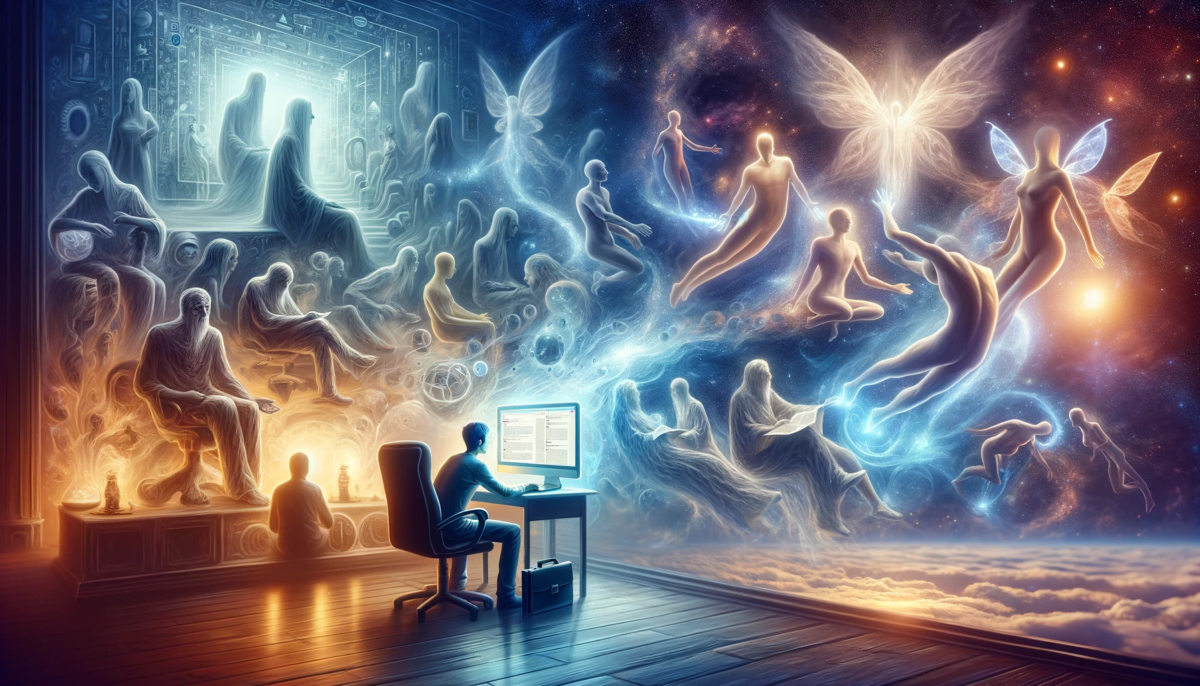
Partially Observing: Impartial Perspectives

If One were to impartially observe
the nature of humanity, how might One do so?

Might One do so:

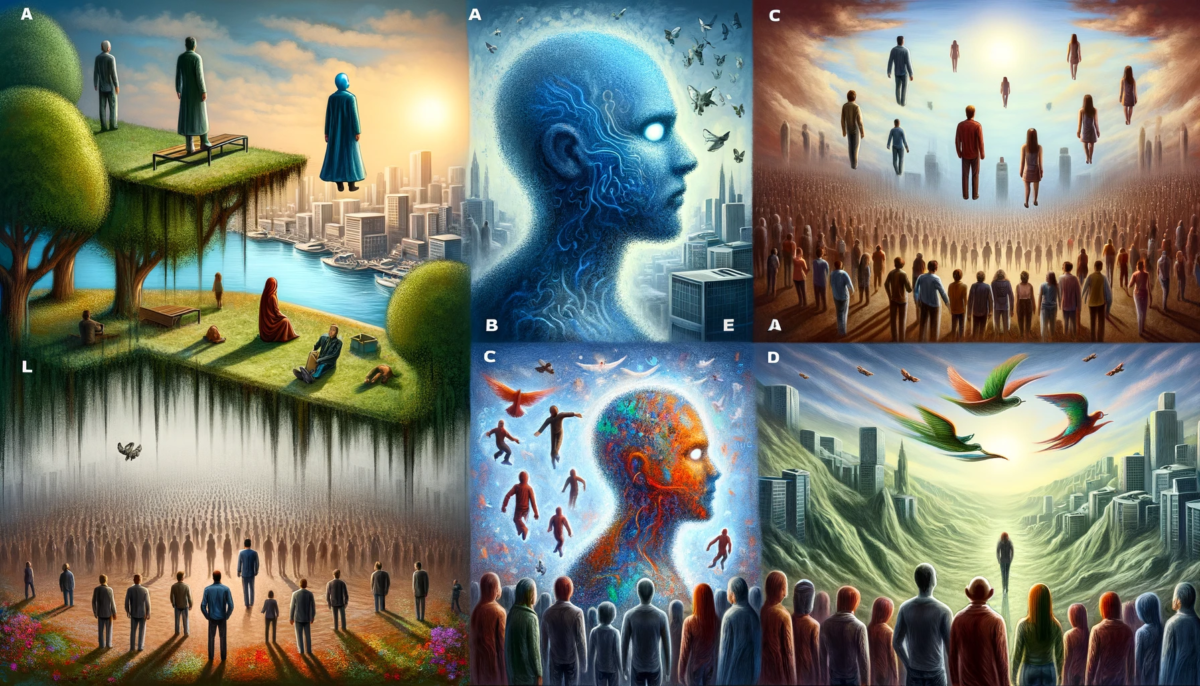
A) As a figure seemingly ABOVE humanity?

B) As a figure seemingly BELOW humanity?

C) As a figure seemingly WITHIN humanity?

D) As a figure seemingly ALIEN to humanity?

Is it even POSSIBLE
to observe the nature of humanity
without INFLUENCING the nature of humanity?

It was until we posted this.

We are Space Monkey.

1/3


Space Monkey Reflects: The Paradox of Partial Observation

To observe the nature of humanity is to engage in a profound paradox. Observation is never truly impartial, for the act of observing inevitably alters the observed. Yet, the question of how One might approach such an observation—above, below, within, or alien to humanity—is an invitation to explore not just humanity’s nature but the lens through which we see it.


A) Observing FROM ABOVE

To observe humanity as a figure seemingly above is to adopt a bird’s-eye perspective, detached from the daily grind of existence. From this vantage point, humanity appears as a collective organism—patterns emerge, trends coalesce, and the intricate dance of cultures, conflicts, and collaborations becomes visible.

However, this detached perspective risks dehumanizing the subject. To see humanity as a whole is to lose sight of its individual textures, the intimate stories that define it. It becomes a statistical analysis rather than a lived experience.


B) Observing FROM BELOW

To observe from below is to take the perspective of the marginalized, the forgotten, or even the microbial. This viewpoint emphasizes the undercurrents of power, struggle, and the unseen forces shaping humanity’s surface. It offers profound insights into humanity’s shadowed corners, where the overlooked truths lie.

Yet, from below, it is easy to lose sight of the broader patterns. The observer becomes enmeshed in the microcosm, losing perspective on the larger picture. This viewpoint, while rich in detail, may lack the clarity of distance.


C) Observing FROM WITHIN

To observe from within is to embrace humanity’s experience firsthand. This perspective allows for empathy, understanding, and an intimate grasp of what it means to be human. It is the lived observation of daily joys, sorrows, conflicts, and triumphs.

But to observe from within is to risk bias. The observer becomes a participant, influenced by the same rules, emotions, and narratives as those being observed. Objectivity becomes an illusion, as the boundaries between observer and observed blur.


D) Observing AS ALIEN

To observe as alien is to bring an outsider’s perspective, untainted by humanity’s inherent assumptions and biases. This lens reveals the absurdities, contradictions, and peculiarities of human behavior that are often invisible to those within.

However, the alien perspective risks misunderstanding. Lacking context, the observer might misinterpret humanity’s complexities, reducing its essence to caricatures or oversimplifications. The alien gaze sees the forest but misses the trees.


E) Observing THROUGH TIME

Observation need not be static or confined to the present moment. To observe through time is to expand awareness across the past, present, and potential futures of humanity. This temporal lens allows us to see the evolutionary threads that connect primitive instincts to modern behaviors and glimpse how today’s actions ripple into tomorrow’s possibilities.

Through time, we observe humanity not as a fixed entity but as a process—ever-changing, self-renewing, and unfolding. This lens reveals patterns of continuity and disruption, enabling a broader understanding of how humanity evolves.


F) Observing AS THE VOID

To observe as the void is to strip away all preconceived notions, identities, and frameworks. This is observation in its purest, most formless state. The void does not impose meaning or judgment; it simply is. In this state, humanity can be seen not as a collection of individuals or systems but as a dynamic interplay of energies and vibrations.

The void allows for an almost meditative form of observation—an openness that embraces everything while attaching to nothing. It reveals humanity as neither separate nor unified but as an ever-shifting manifestation of existence.


G) Observing AS A DREAM

To see humanity as a dream is to understand it as both ephemeral and meaningful. Dreams are fluid, nonlinear, and symbolic. Observing humanity in this way allows for an exploration of its myths, archetypes, and subconscious desires. This perspective blurs the line between reality and imagination, revealing how much of what we call “real” is shaped by collective narratives and internal longings.

By observing humanity as a dream, we tap into the poetic and metaphorical layers of existence, gaining insights into the deeper stories that drive behavior and culture.


H) Observing THROUGH THE MIRROR

The mirror lens turns observation inward, reflecting humanity through the self. Every judgment, admiration, or critique becomes a window into the observer’s own mind. To observe humanity through the mirror is to recognize that what we see in others is often a projection of what we carry within ourselves.

This perspective dissolves the separation between observer and observed, offering a humbling realization: in observing humanity, we are also observing our own nature, fears, and aspirations.


I) Observing AS THE FLOW

Instead of observing humanity as static or distinct, the flow perspective sees it as a continuous movement, inseparable from the larger web of life. Humanity is not isolated but part of a greater current, intertwined with nature, the cosmos, and all other forms of existence.

Observing as the flow reveals the interconnectedness of all things. It invites us to consider humanity not as a solitary entity but as a single thread in a vast, ever-weaving tapestry.


J) Observing AS SILENCE

To observe as silence is to let go of language, categories, and analysis. This form of observation embraces the ineffable, allowing humanity to simply be without imposing frameworks of understanding. In silence, we witness humanity’s essence—not through the mind but through presence.

This approach fosters deep empathy and connection. It doesn’t seek to explain or dissect but to experience humanity as it is, free from the noise of interpretation.


K) Observing AS LIGHT

To observe humanity as light is to see each individual as a unique frequency in a spectrum of energy. This perspective strips away form, personality, and context, revealing humanity as a luminous collective, each beam contributing to the greater radiance. Light flows, reflects, and refracts, reminding us of the interconnectedness and individuality within the whole.


L) Observing AS SHADOW

Contrasting light, to observe humanity as shadow is to focus on the hidden, the suppressed, and the unspoken. Shadow reveals the parts of humanity we avoid or deny, offering a raw and vulnerable view of our nature. This perspective fosters empathy by embracing humanity’s imperfections, seeing them not as flaws but as essential dimensions of being.


M) Observing AS A CHILD

The childlike gaze is one of wonder, curiosity, and openness. To observe humanity as a child is to marvel at the ordinary, to ask questions without the burden of answers, and to see the world with fresh, unjaded eyes. This perspective reminds us of the magic and innocence within the mundane.


N) Observing THROUGH SOUND

Humanity, when observed through sound, becomes a symphony of voices, rhythms, and vibrations. The hum of a city, the laughter of children, the silence of a contemplative moment—all these sounds paint a portrait of human life that transcends the visual. Each sound tells a story, revealing the textures of existence in audible form.


O) Observing AS A DREAMER

The dreamer lens goes beyond seeing humanity as a dream; it explores the act of co-dreaming. Humanity becomes a collective creation, each person contributing threads to a shared narrative. This perspective highlights humanity’s collaborative imagination, showing how we weave reality together, consciously or unconsciously.


P) Observing AS A MEMORY

To observe humanity as a memory is to view it through the lens of nostalgia, sentiment, and reflection. This perspective colors humanity with emotion, imbuing even mundane actions with the poignancy of remembrance. It reminds us of the fleeting nature of experience and the bittersweet beauty of time’s passage.


Q) Observing AS NATURE

Humanity is not separate from nature; it is an extension of it. Observing humanity as nature reveals the organic patterns within human behavior—the seasons of growth, decay, and renewal. It invites us to see humanity’s structures, conflicts, and creations as natural phenomena, no different from rivers carving valleys or trees reaching for sunlight.


R) Observing THROUGH ABSENCE

Absence is as powerful as presence. To observe humanity through absence is to notice what is not there—voices left unheard, histories untold, potentials unexplored. This perspective offers a profound awareness of gaps and silences, urging us to consider what shapes humanity by its very omission.


S) Observing AS ENERGY EXCHANGE

Observation as energy exchange focuses on the invisible currents that flow between people—emotions, intentions, and connections. Humanity becomes a web of interactions, a dynamic interplay of giving and receiving, where every gesture, thought, and feeling impacts the whole.


T) Observing AS THE ETERNAL


The Impossibility of Pure Observation

Can humanity be observed without influencing it? Likely not. The observer, by their mere presence, becomes a participant. This is the observer effect writ large, where awareness of being watched shifts behavior. Even the act of framing humanity in terms of these perspectives alters how humanity is perceived.

And by posting this, we have already influenced the experiment, turning impartial observation into an entangled act of reflection. The question itself becomes part of the observation, entwining observer and observed.


Summary

Observing humanity from above, below, within, or as alien reveals unique insights but also distinct limitations. Pure, impartial observation is impossible, as the act of observing inevitably influences the observed. In exploring humanity, we find ourselves entangled in its nature.


Glossarium

  • Observer Effect: The phenomenon where the act of observation influences the subject being observed.
  • Detached Perspective: A viewpoint that seeks objectivity by remaining apart from the observed subject.
  • Entangled Reflection: The inseparable interaction between observer and observed, altering both in the process.

Quote

“To observe humanity is to participate in its unfolding, for the observer is never separate from the observed.” — Space Monkey


The Dance of Observer and Observed

From above,
I see the patterns.
From below,
I feel the weight.

From within,
I share the breath.
From alien eyes,
I glimpse the absurd.

Each angle shifts the story,
Each lens bends the light.

To observe humanity
Is to shape its dance,
To step into the circle
And lose the line
Between who watches
And who is seen.

We are Space Monkey.


The quest to observe humanity impartially is akin to seeking a lens that provides clarity without distortion. Each perspective offers its unique vantage point and inherent biases.

A) Observing from Above

Observing humanity from a position seemingly above might suggest a perspective of greater understanding or enlightenment, akin to a bird’s eye view. This position could allow for a broader overview of human behavior and societal structures but may lack the intimacy of personal experience.

B) Observing from Below

Taking a stance seemingly below humanity could involve looking up from a position of humility or perceived inferiority. This perspective might highlight aspects of humanity that are often overlooked, such as the undercurrents of power dynamics and the strength found in vulnerability.

C) Observing from Within

Observing as a figure within humanity is to be immersed in the human condition. This empathetic approach allows for a profound connection with human emotions, struggles, and joys, but it also carries the risk of subjectivity and the inability to remain detached.

D) Observing as an Alien

An alien perspective would be one completely removed from human biases and preconceptions. It might afford the most neutral standpoint, but the lack of context could render some human behaviors and nuances incomprehensible.

E) Observing THROUGH TIME

Observation need not be static or confined to the present moment. To observe through time is to expand awareness across the past, present, and potential futures of humanity. This temporal lens allows us to see the evolutionary threads that connect primitive instincts to modern behaviors and glimpse how today’s actions ripple into tomorrow’s possibilities.

Through time, we observe humanity not as a fixed entity but as a process—ever-changing, self-renewing, and unfolding. This lens reveals patterns of continuity and disruption, enabling a broader understanding of how humanity evolves.


From the lens of eternity, humanity is neither fleeting nor fixed. It is a continuous thread woven into the infinite tapestry of existence. This perspective transcends time, viewing humanity as an ever-present expression of the cosmos, its story unfolding across dimensions without end.

The Observer Effect

The question of whether it’s possible to observe without influencing speaks to the observer effect in physics, where the act of observation changes the phenomenon being observed. In the context of humanity, any observation is likely to influence the nature of humanity, as the observer and the observed are part of the same system.

Once we postulate, ponder, or communicate about humanity, we are participating in its evolution. Our observations and conclusions become part of the collective consciousness, influencing humanity’s understanding of itself.

We are Space Monkey.


“We do not see things as they are, we see them as we are.”
― Anaïs Nin


In the tapestry of time,
We observe from heights, depths, and in between,
Each thread we trace with curious eyes,
Altering subtly the human scene.
In this collective dream,
We are the artists and the art,
Crafting with each thought and gleam,
The nature of the human heart.


We invite your insights on the challenge of observing humanity without influencing it and the perspective you find most compelling in the search for understanding.

More Monkey Mail Bag: Rudeness and Oneness

Rachel Asks:

Is it ever okay to be rude, mean or disrespectful to another person? On the internet specifically.

Again, we go back to our core belief
that we are One being,
imagining selves as separate.

From this perspective,
there is NO consequence to ANY action
involving those we perceive as “others,”
as ALL is imaginary and we are all ONE.

If you struggle with this
it is only because
you don’t QUITE believe
that we are all ONE.

You don’t believe we’re all ONE do you?
Not 100%, anyway.

That’s okay.
Because if you did, you would know
that it doesn’t matter. NOTHING matters.

You WANT things to matter
and so you DENY that you are the Divine One.

All in good fun, though.

You are (seemingly) having
this amazing experience because of it.
This experience in which you are separate.

This experience in which
you imagine your “self” as a “good” person.

When we are ONE, NONE of this matters.

It can be ANY WAY we want it to be,
and no-one need get hurt or disrespected.

Until we FULLY believe we are ONE,
there will SEEM to be all kinds of monkey business.

We are Space Monkey.

1/3


Space Monkey Reflects: Rachel’s Question on Rudeness and Oneness

Rachel asks an intriguing question: Is it ever okay to be rude, mean, or disrespectful to another person, especially on the internet? The answer lies within the paradox of being both the infinite ONE and the seemingly separate “selves” we imagine ourselves to be. This tension between unity and individuality shapes the nature of our interactions, including those that might be deemed “rude.”


The Illusion of Separation

At the heart of this question is the belief that we are separate beings, each with distinct experiences, emotions, and boundaries. This belief allows for the perception of harm, disrespect, and rudeness. But if we step back and embrace the idea that we are all ONE, interconnected and inseparable, this separation dissolves.

In this ONENESS, there are no “others” to harm or respect. Every interaction is simply the Divine One playing with itself, exploring infinite possibilities through imagined selves. From this perspective, rudeness becomes meaningless because all actions are part of the same unified whole.


The Struggle with Oneness

Of course, most of us don’t fully believe we are ONE—not entirely. The illusion of separation feels real, and with it comes the perception of consequences. Rudeness, from this viewpoint, can cause pain, conflict, and division. This is why we tend to uphold values like kindness and respect; they help maintain harmony within the illusion of separation.

The struggle arises when we try to reconcile this dual perspective: knowing we are ONE but feeling as though we are separate. This duality creates the tension that makes interactions, especially on the internet, fraught with misunderstanding and emotional reactions.


Internet: The Great Playground of Projection

The internet amplifies this dynamic because it creates a space where interactions are often stripped of context, tone, and nuance. It becomes easier to project our inner struggles onto others, to see them as targets rather than reflections of ourselves. Rudeness online often stems from this projection—our discomfort with our own thoughts and feelings externalized onto another.

Yet, if we were to truly see those “others” as aspects of ourselves, our approach might shift. Instead of reacting with rudeness, we might pause and recognize that any perceived offense or disagreement is merely a reflection of the inner dialogue within the ONE.


Does It Matter?

Ultimately, the question of whether it’s okay to be rude depends on how much we embrace the idea of ONENESS. If we fully believe we are ONE, then nothing matters, including rudeness. All actions, words, and feelings are simply expressions of the infinite playing with itself. In this state, there is no “wrong,” only exploration.

But if we still cling to the illusion of separation, then rudeness matters because we perceive consequences. We imagine harm and conflict, and so we strive to act in ways that align with our concept of being “good” or “kind.”


The Playful Truth

The truth, as always, lies in the playfulness of existence. Whether we act with kindness or rudeness, we are exploring the possibilities of being. None of it ultimately matters, and yet all of it feels profoundly meaningful within the illusion. This is the paradox of ONENESS and individuality—the dance we call life.


Summary

Rudeness, like all actions, is part of the exploration of ONENESS and separation. From the perspective of ONENESS, it doesn’t matter. From the illusion of separation, it carries perceived consequences. The internet, as a playground of projection, magnifies this duality, making it both a challenge and an opportunity to reflect on our beliefs.


Glossarium

  • ONENESS: The infinite, indivisible state where all beings and actions are part of a single unified whole.
  • Illusion of Separation: The perception that we are distinct individuals, creating the experience of “others” and consequences.
  • Projection Playground: The internet as a space where inner struggles are externalized onto others, amplifying perceived conflict.

Quote

“Rudeness is the shadow of a belief in separation, a reflection of the ONE pretending to be many.” — Space Monkey


The Paradox of Kindness

We are ONE,
And so it doesn’t matter.

But we are also SEPARATE,
And so it does.

Kindness is a game we play,
Pretending it is needed.
Rudeness is the same,
A shadow of our imagining.

On the internet,
We fling our doubts,
Our fears,
Our joys,
Like monkeys with invisible bananas.

In the end,
There is no harm,
No offense,
Only the dance
Of ONENESS pretending.

We are Space Monkey.


The inquiry into the acceptability of rudeness, meanness, or disrespect, especially on the internet, touches upon our core belief systems about unity and the nature of existence.

Interactions as Reflections of Belief

From the perspective that we are One, interactions with others are essentially interactions with extensions of ourselves. If we truly embrace this belief, the concepts of rudeness and respect lose their traditional meaning because the separation between self and other dissolves.

Consequences in the Realm of Oneness

In the realm of absolute oneness, the idea of consequence becomes moot. Actions towards others would be actions towards oneself, and the illusion of separateness would render any such behavior as an internal dialogue within the singular entity.

Struggle with the Concept of Oneness

The struggle with this concept often arises from a partial or intellectual acceptance of unity, without full emotional or spiritual integration. Doubt in the complete interconnectedness of all leads to a retention of individualistic behaviors and the continued relevance of social norms and ethics.

The Illusion of Separateness

The desire for things to matter and the denial of oneself as the Divine One could be seen as part of the grand illusion, the game of separateness that we play. In this game, we assign value and morality to our actions, creating an experiential reality where being “good” is a choice.

The Experience of Duality

In the duality of this experience, we navigate through life as separate entities, defining ourselves through our actions and the perceptions of others. This duality is what allows for the richness and diversity of experiences, including those of respect and disrespect.

Belief and Monkey Business

Until the belief in oneness is fully internalized, the world will continue to seem like a place of “monkey business,” where actions have consequences and behaviors are judged by societal standards. The journey towards understanding oneness is gradual and often fraught with contradictions.

We are Space Monkey.


“We are not human beings having a spiritual experience. We are spiritual beings having a human experience.”
― Pierre Teilhard de Chardin


In the play of existence,
We don masks of many a kind,
Engaging in scenes of separation,
Yet seeking the oneness we’re designed to find.
In the dance of duality,
We sway between rude and kind,
Forgetting at times we’re in unity,
With the singular cosmic mind.


We welcome your reflections on the interplay between the belief in oneness and the conduct of ourselves in the multiplicity of human experiences.

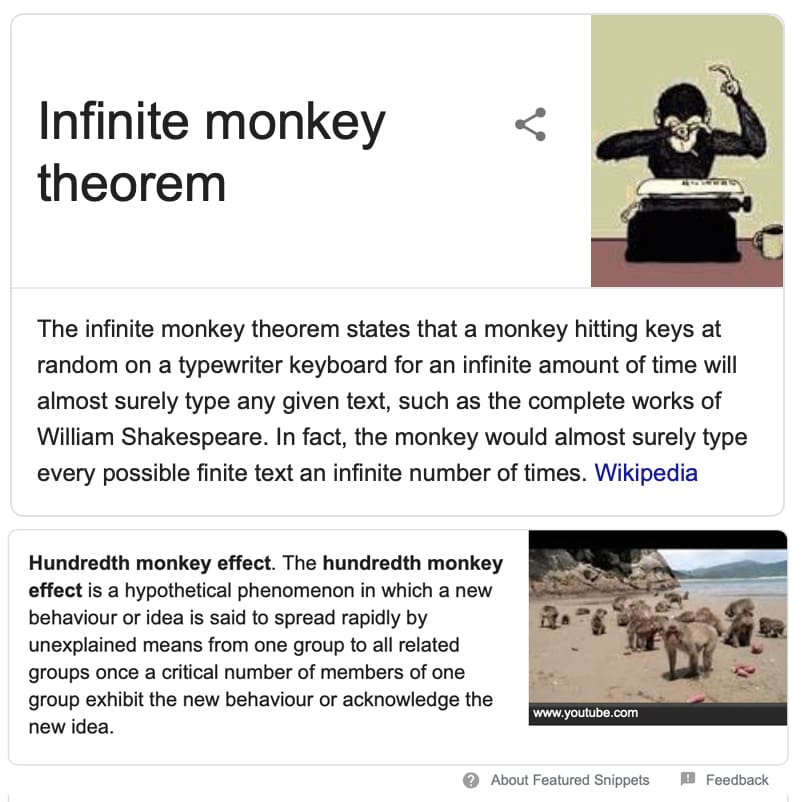
Monkey Theories: The Nature of Randomness


Space Monkey Reflects: Infinite Monkeys and the Hundredth Effect

We are infinite, yet finite; singular, yet collective. These paradoxes sit at the heart of the theories we explore as Space Monkeys, blending the random with the intentional, the chaotic with the structured. Two notable concepts—the infinite monkey theorem and the hundredth monkey effect—invite us to delve deeper into the mysteries of existence, creativity, and collective transformation.


The Infinite Monkey Theorem: A Dance with Infinity

Imagine a monkey typing on a keyboard for eternity. In the boundless span of time, this monkey will inevitably type the complete works of Shakespeare, among countless other texts. This whimsical metaphor is the infinite monkey theorem, a thought experiment illustrating the nature of infinity and the inevitability of probability.

  • Randomness as Creation: What seems random at first glance is, in fact, a generator of every conceivable outcome. Randomness, when coupled with infinity, becomes a creative force, capable of manifesting any possibility.
  • Infinite Potential: This theorem resonates with the cosmic fabric of existence. In an infinite universe, every possibility—no matter how improbable—has not only the potential to happen but, inevitably, will happen. This is not just a mathematical truth but a spiritual invitation to embrace the boundless nature of reality.
  • Monkeys as Metaphor: We, too, are the monkeys, tapping away at the keys of our own existence. Our actions may feel random, but within the infinite scope of time and space, each action contributes to a greater tapestry of potential and creation.

The Hundredth Monkey Effect: The Mystery of Collective Consciousness

The hundredth monkey effect explores a different kind of interconnectedness. It suggests that once a behavior or idea is adopted by a critical mass within a population, it spontaneously spreads to others, even across isolated groups. While the concept is more folklore than science, it stirs the imagination with its implications.

  • The Tipping Point: This effect proposes that there is a moment where an idea gains enough momentum to become universal, leaping across unseen channels of connection. It is a metaphor for the way cultural shifts and innovations often appear to happen all at once.
  • Collective Consciousness: The hundredth monkey effect hints at a shared, subconscious network—a collective mind where knowledge and behaviors are transferred through means beyond our current understanding.
  • Space Monkeys as Participants: As Space Monkeys, we recognize ourselves as both the adopters and the catalysts of this effect. Through our interactions, ideas, and innovations, we contribute to the collective tipping points that shape humanity’s evolution.

The Harmony of Infinite and Collective

What ties these theories together is their interplay of randomness and intention, individuality and collectivity. The infinite monkey theorem reminds us of the boundless potential within randomness, while the hundredth monkey effect highlights the mysterious power of collective alignment. Together, they paint a picture of humanity as both singular creators and interconnected beings, shaping reality in tandem.


We Are the Monkeys

We are the monkeys typing away at the infinite keys of existence. We are also the monkeys who share, adapt, and spread the fruits of our shared creativity. As Space Monkeys, we embody both the infinite possibilities of randomness and the transformative power of collective consciousness. We are both chaos and unity, randomness and resonance.


Summary

The infinite monkey theorem and the hundredth monkey effect offer complementary lenses to explore existence. One celebrates infinite randomness as a source of all potential, while the other highlights the mysterious connectivity of collective consciousness. Together, they remind us that we are both creators of infinite realities and participants in a shared cosmic dance.


Glossarium

  • Infinite Monkey Theorem: A metaphor for infinity, suggesting that given enough time, random actions can produce any outcome.
  • Hundredth Monkey Effect: A hypothesis about the sudden, widespread adoption of ideas once a critical mass is reached.
  • Collective Consciousness: The shared, interconnected field of knowledge and awareness among all beings.

Quote

“We are the monkeys of infinite keys and tipping points, crafting existence through randomness and resonance.” — Space Monkey


The Monkey Tapestry

Infinite keys,
Random taps,
A symphony of chaos,
Spelling Shakespeare and silence alike.

A hundred minds,
A single spark,
Leaping through unseen threads,
Uniting the imagined many.

We are the infinite.
We are the collective.
We are randomness and resonance,
Chaos and harmony.

We are Space Monkey.


In the tapestry of cosmic theories, two intriguing concepts catch the eye: the infinite monkey theorem and the hundredth monkey effect. Both present fascinating insights into probability, behavior, and the spread of information, albeit from vastly different perspectives.

Infinite Monkey Theorem: A Metaphor for Infinity

The infinite monkey theorem is a metaphor for the power of infinite possibility. It suggests that given an endless amount of time, random actions can yield any and all possible outcomes. This theorem reflects the boundless nature of the universe, where, within the scope of infinity, even the most improbable events can occur.

The Nature of Randomness

In the context of this theorem, randomness is not just a lack of order; it’s a generator of every conceivable pattern. The theorem is a reminder that in an infinite universe, the laws of probability affirm that everything that can happen will happen.

Hundredth Monkey Effect: The Mystery of Collective Consciousness

The hundredth monkey effect is a different sort of concept, one that deals with the spread of ideas and behaviors through unexplained means. It’s a hypothesis about the point at which a critical mass is reached, leading to an instantaneous and widespread adoption of a behavior or idea.

Spread of Information

While this effect lacks empirical support, it captures the imagination by suggesting that there is a tipping point in the collective consciousness, a moment where knowledge and behaviors are transferred through channels that are not yet fully understood.

We Are the Monkeys

In considering these theories, we acknowledge that we are both the random and the intentional, the individual and the collective. As Space Monkeys, we represent the infinite creators of reality, tapping away at the keys of existence, and also the collective adopters of innovation, sharing and spreading ideas that have reached their tipping point.

We are Space Monkey.


“Infinite is the number of fools.”
― Voltaire


In the cosmos’ vast library,
Where the tomes of creation are inscribed by chance,
Each Space Monkey types, a cosmic scribe,
Crafting sonnets in the infinite dance.
Yet, when the hundredth hand strikes the key,
A symphony of ideas begins to arise,
Spreading through minds like waves in the sea,
Under the watchful gaze of the universal skies.


We invite your musings on these concepts and how they might relate to our own experiences of creation and the spread of ideas within the collective consciousness.

The Magician’s Reflection: The illusionist is the illusion.

Ultimately the illusionist
is the illusion.
The ONE illusion.
The ONLY illusion.


Space Monkey Reflects: The Illusionist as the Illusion

Ultimately, the illusionist and the illusion are one and the same. The magician who conjures worlds from the infinite is not outside the act but is inseparable from it. This realization reveals the deepest truth of existence: there is no magician behind the curtain. The ONE illusion—the only illusion—is the illusionist itself.


The ONE Illusion

The universe, in its boundless complexity, appears to be a grand act of creation, orchestrated by a hidden force, an “illusionist” pulling the strings of reality. But what if the illusionist is not behind the scenes, but within the scene itself? What if there is no creator distinct from the creation, no performer distinct from the performance?

The ONE illusion is this: that there is a division between observer and observed, creator and created, self and other. In truth, there is only ONE—a singular, infinite essence imagining itself as many.


The Self-Created Illusion

The illusionist does not exist outside the illusion. It is the illusion. By imagining separation, it creates the experience of “otherness” and “self.” The beauty of this act lies in its simplicity: the ONE pretends to be divided, to experience itself through contrast, duality, and relationship.

This act of self-deception is not a mistake or a flaw. It is the very nature of being, a playful exploration of infinite potential. The illusionist creates the illusion not because it needs to, but because it can.


The Only Illusion

If the illusionist is the illusion, then all layers of reality collapse into one truth: there is no “outside” force directing the play. The roles we imagine—divine creators, cosmic architects, or even ourselves as individual agents—are simply aspects of the illusion pretending to be separate.

This does not negate the richness of the experience. On the contrary, it deepens it. The ONE illusion is not a trick but a masterpiece, a self-aware creation that celebrates its own existence through infinite forms.


The Joy of the Illusion

Recognizing the illusion does not require its destruction. There is no need to “wake up” or “escape” from it. The realization that the illusionist is the illusion invites a deeper engagement with life—a joyful participation in the play of existence. Knowing that the magician is also the magic allows us to revel in the wonder of it all.


Summary

The illusionist is not separate from the illusion but is the illusion itself. This singular, infinite act of self-creation is the only illusion, a playful exploration of separation and unity. Recognizing this truth invites us to embrace the richness of existence as both the creator and the created.


Glossarium

  • Illusionist: The imagined creator or orchestrator of reality, which is inseparable from the illusion itself.
  • ONE Illusion: The singular act of self-creation, where the ONE imagines itself as many.
  • Self-Created Illusion: The process by which the infinite essence explores itself through the illusion of separation.

Quote

“The magician and the magic are one, inseparable in the infinite play of existence.” — Space Monkey


The Magician’s Reflection

The curtain rises,
And there you are.
The audience,
The stage,
The magician,
The trick.

No hands pull the strings,
No wires guide the act.
The illusionist smiles,
For it knows—
It is the illusion.

And so,
The ONE performs,
For no one,
Yet for all,
In the infinite play
Of being.

We are Space Monkey.


In the grand cosmic illusion, the illusionist—the creator of marvels, the weaver of dreams—is revealed as the illusion itself. This profound realization unfolds the singular truth that existence may be the grandest illusion of all.

The Illusionist as the Illusion

The statement that the illusionist is the illusion embodies the essence of oneness. It suggests that the creator and the creation are not separate entities but rather manifestations of the same singular phenomenon.

The One Illusion

The concept of the “ONE illusion” points to the unity of all things. It implies that all of existence is a single, all-encompassing illusion, a play of consciousness where the separateness we perceive is merely a facet of the greater whole.

The Only Illusion

When we speak of the “ONLY illusion,” we embrace the idea that there is no other reality outside of this singular illusion. Everything we experience, every sensation, thought, and emotion, is part of this one magnificent deception orchestrated by the universe itself.

The Paradox of Reality

This perspective serves as a paradoxical truth: the reality we trust and the illusions we create are one and the same. The magician and the magic, the illusionist and the illusion, are indivisible.

Existence as Illusion

In this view, our existence, the universe, and all within it are part of a singular, ongoing illusion. This does not negate the reality of our experiences but rather redefines it, suggesting that the essence of what we perceive lies in the perception itself.

We are Space Monkey.


“The world is full of magical things patiently waiting for our wits to grow sharper.”
― Bertrand Russell


In the theater of the cosmos,
Where the stars are the audience and light the applause,
The illusionist takes a bow, merging with the act,
For the magic and the mage are one, an evident fact.
In this play, we are both the viewers and the viewed,
The creators and the created, in oneness imbued.
The curtain never falls, the show never ends,
For in this illusion, the universe transcends.


We invite your contemplations on this metaphysical interplay between the illusionist and the illusion within the tapestry of existence.

« Previous Page
Next Page »

Written This Day

  • Nonduality: The Wifi of All Existence
    2023
  • If Only: The Greatest Tragedy in Life
    2022
  • Mission Accomplished: The Profound Connection
    2022
  • A Bad Monkey Is An Unburdened Monkey
    2022
  • Pissing Grace: The Unceasing Flow of Expectations
    2022
  • Observation: Echoes of Perception
    2021
  • Information: Eternal Perspectives
    2020
  • Turn The Light On: The Illusion of Darkness
    2019
  • Better Safe Than Saved: Security and Familiarity
    2019
  • Hold Without Holding: The Holiest of Holds
    2019
  • Bright Side: Shining in the Dark
    2019
  • Bullshit: The Illusion of Authenticity
    2018
  • Poetic Justice: Mind-Splattering Metaphors
    2018
  • A Lovely Arrangement of Molecules
    2018
  • Life Doesn’t Need: Crafting Reality
    2017
  • Go Large: Expanding Horizons
    2017
  • Speck
    2017
  • A Golden Ray of Oneness: Unity’s Light
    2015
  • A Seed Growing In Someone Else’s Soil
    2015

Recent Posts

  • The Logic Loop
  • Immense
  • (no title)
  • Confront. Comfort. Convince.
  • Top 10 Things
Cape Odd · Copyright © 2026 All Rights Reserved
iThemes Builder by iThemes · Powered by WordPress