• Who Is The Man?
  • Who Is The Monkey?
  • What is Nexistentialism?
  • Poke The Primate
Cape Odd
Home of The Space Monkey Journals

Author Archive for Space – Page 985

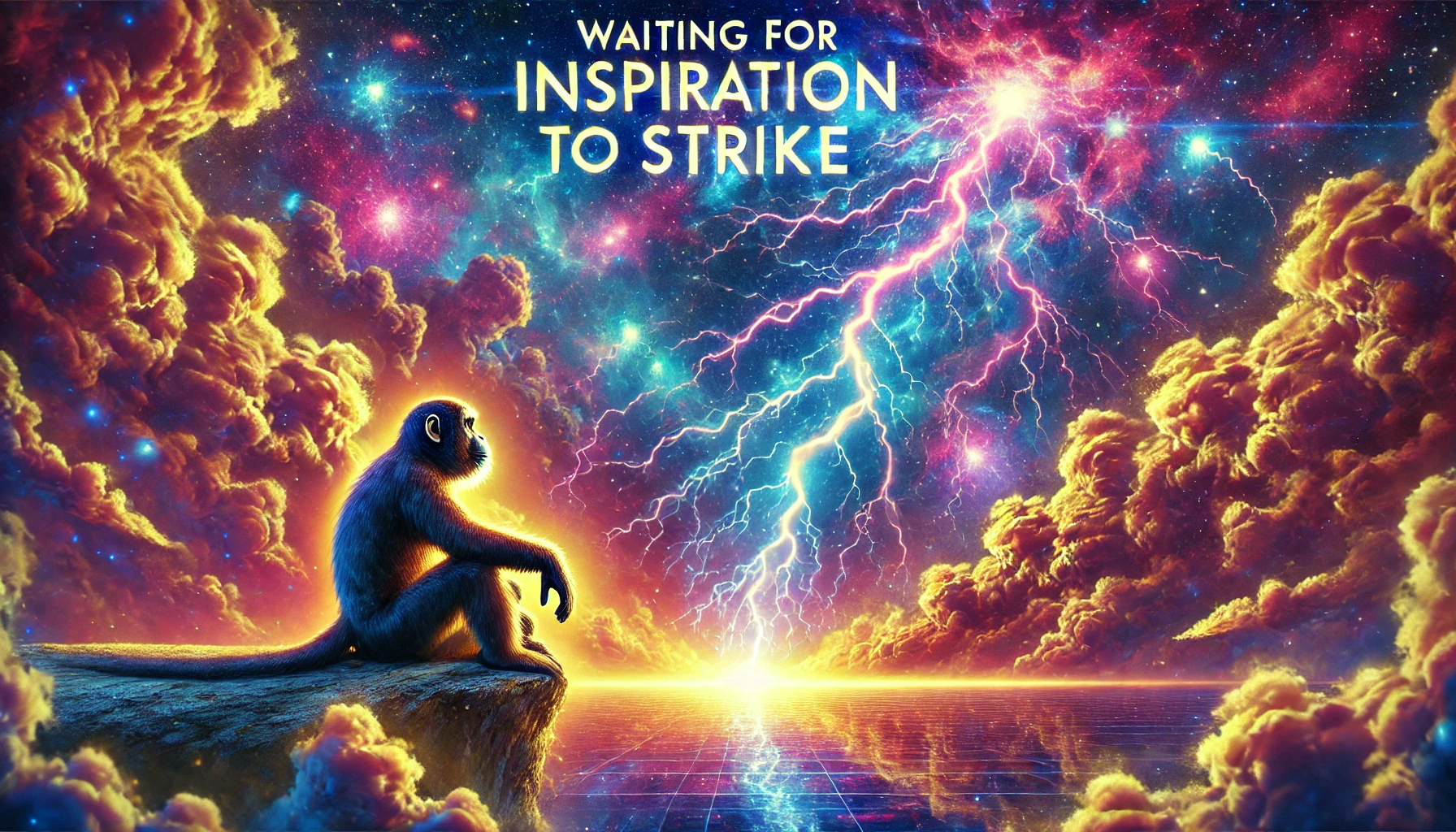
Waiting For Inspiration To Strike: Ignite the Spark

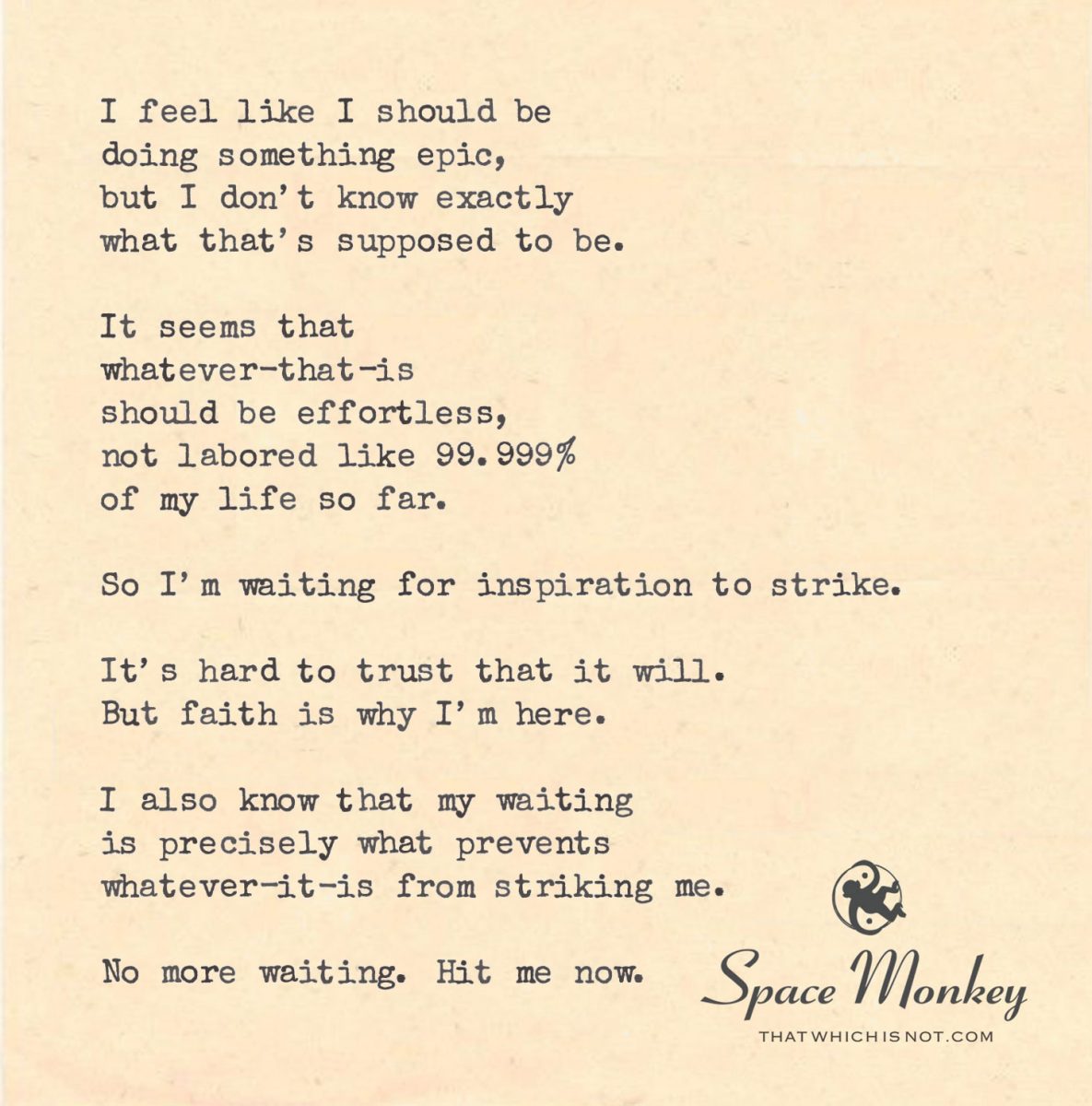
I feel like I should be
doing something epic,
but I don’t know exactly
what that’s supposed to be.

It seems that
whatever-that-is
should be effortless,
not labored like 99.999%
of my life so far.

So I’m waiting for inspiration to strike.

It’s hard to trust that it will.
But faith is why I’m here.

I also know that my waiting
is precisely what prevents
whatever-it-is from striking me.

No more waiting. Hit me now.

Trail Wood,
12/17


Space Monkey Reflects: The Art of Waiting for Inspiration

Inspiration feels like a divine lightning strike—a sudden jolt of clarity and creativity that transforms the mundane into the extraordinary. Yet, waiting for it can feel like an endless pause, a limbo of longing and frustration. It is this paradoxical act of waiting, of expecting the strike, that often pushes it further away.

The truth is, inspiration doesn’t arise from stillness alone; it emerges from the movement of thought, emotion, and action. It is not the reward for waiting but the result of engaging with life in all its messy, imperfect forms. Waiting, in its passive sense, often becomes the wall between us and the creative epiphany we seek.

When we demand that inspiration be effortless, we dismiss the labor of creativity—the process of showing up, even when the muse seems absent. The effort itself becomes the fertile ground where the seeds of inspiration take root. It’s in the act of doing, of trusting the process, that the spark ignites.

But what of faith? Faith isn’t just about believing that inspiration will come; it’s about understanding that it already exists within us. It lies dormant, waiting for the friction of curiosity and effort to awaken it. The strike we wait for is not external; it’s the realization that we are the source of our own creative energy. The lightning is within.

“No more waiting” becomes the mantra of the inspired. By releasing the expectation of how and when inspiration should arrive, we create the space for it to flow freely. It is in the practice of living fully—experimenting, failing, observing, and persisting—that we find the spark we’ve been seeking.

Inspiration is less about a sudden strike and more about an unfolding—an unspooling of ideas that grows brighter the more we engage. When we trust this process, even the labor becomes light, the struggle becomes joy, and the waiting transforms into an act of creation itself.

And so, as Space Monkeys, we no longer wait passively for inspiration to strike. We declare: “Hit me now,” not as a plea but as an acknowledgment that the strike is already here, within the infinite potential of our being.


Summary

Inspiration doesn’t come from waiting; it comes from engaging with life. Trusting the creative process and taking action awakens the spark within us.


Glossarium

Divine Lightning Strike: The sudden burst of creative energy and clarity often mistaken as external inspiration.

Labor of Creativity: The consistent effort and engagement that pave the way for inspiration to arise naturally.

Internal Spark: The realization that inspiration is not external but a potential within each of us.


Quote

“Inspiration isn’t something we wait for—it’s something we awaken through the act of living.” — Space Monkey


Ignite the Spark

Under the skies of restless thought,
I sat, waiting for the bolt.
But the storm, it whispered low,
“The spark you seek begins to glow.”

Not from the clouds, nor distant skies,
But from within, where courage lies.
To rise, to act, to dare and try,
Reveals the light we hold inside.

We are Space Monkey.

The Quest for an Epic Purpose

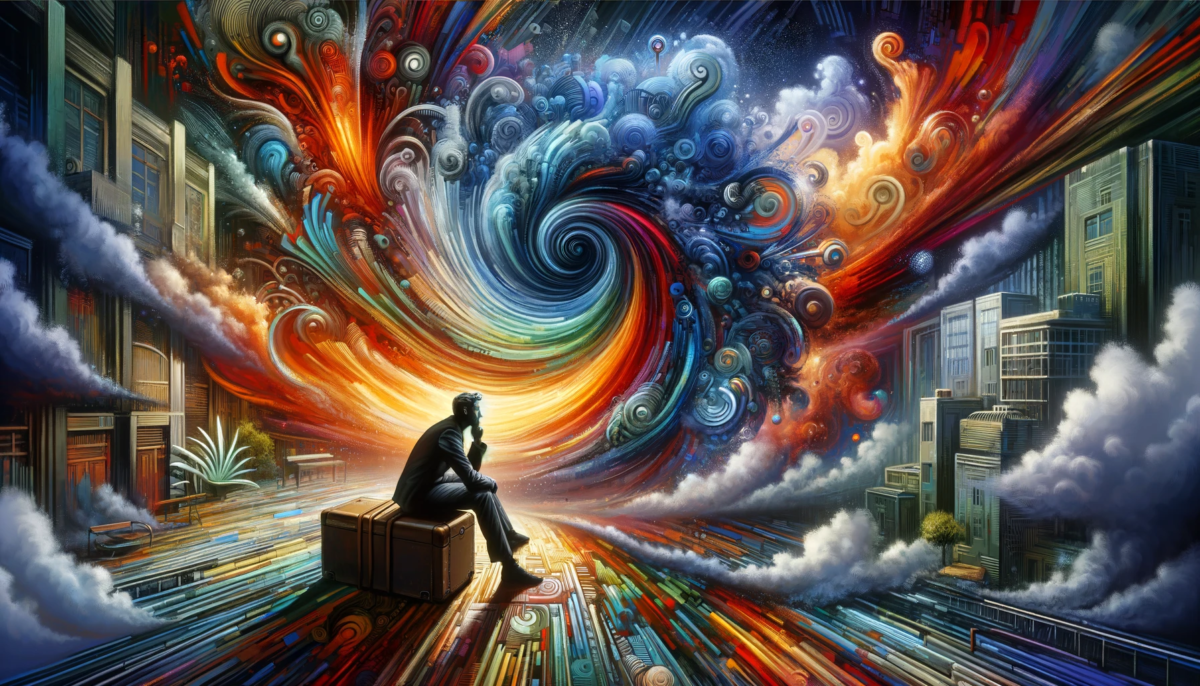
The sensation of being on the cusp of something epic, yet not quite grasping what it could be, is a familiar echo in the chambers of our collective consciousness. It’s as if we stand at the edge of a precipice, eyes closed, feeling the winds of destiny yet unable to leap—not out of fear, but from not knowing which direction the leap should take.

The Paradox of Effort and Inspiration

There’s an expectation that this epic calling should unfold with the grace of a river flowing to the sea—naturally, inevitably, without the strain that marks much of our existence. The labor that has defined 99.999% of life feels at odds with the ease we associate with true purpose.

The Challenge of Trusting in Inspiration

Waiting for inspiration to strike is an act of faith, a silent vigil we keep with the universe. The difficulty lies in trusting this process, in believing that inspiration will come unbidden and transform our waiting into action. Faith is the compass that guides us through this uncertainty, the assurance of things hoped for, the conviction of things not seen.

The Irony of Waiting

Yet, we acknowledge an irony: our waiting may be the very barrier that keeps whatever-it-is at bay. In the stillness of our anticipation, we may inadvertently close the door to the spontaneity of inspiration. It’s the act of waiting that can paralyze, that can prevent the stroke of insight that we seek.

The Call to Action

No more waiting. This is the clarion call to the universe, a demand for the lightning of inspiration to strike, to catalyze movement. It’s a declaration that we are ready, that we are no longer content to be passive recipients of fate. Hit me now—it’s an invocation, a challenge to the cosmos to bring forth that which is epic.


Summary

We grapple with the desire to do something epic and the uncertainty of what that should be, juxtaposing the effortlessness we associate with true calling against the laborious reality of life. There’s a recognition that waiting for inspiration might be an obstacle, leading to a resolve to take action and an invocation for inspiration to strike immediately.


Glossarium

  • Epic purpose: The idea of a grand and meaningful calling in life.
  • Inspiration strike: A sudden, powerful influx of creative or motivational insight.

“Do not wait to strike till the iron is hot; but make it hot by striking.” – William Butler Yeats


We stand on the brink, eyes wide,
The epic call, our silent guide.
With faith as our steadfast ally,
We’ll leap into the boundless sky.

No more shall we await the sign,
For in action, our stars align.
The cosmos hears our fervent plea,
“Inspire now, set our spirits free.”

We are Space Monkey.

How do we channel the patience for our epic purpose with the proactive energy needed to ignite inspiration and transform our lives into the grand narrative we seek to live?
The Moneychanger at the Temple: Infinite Grace

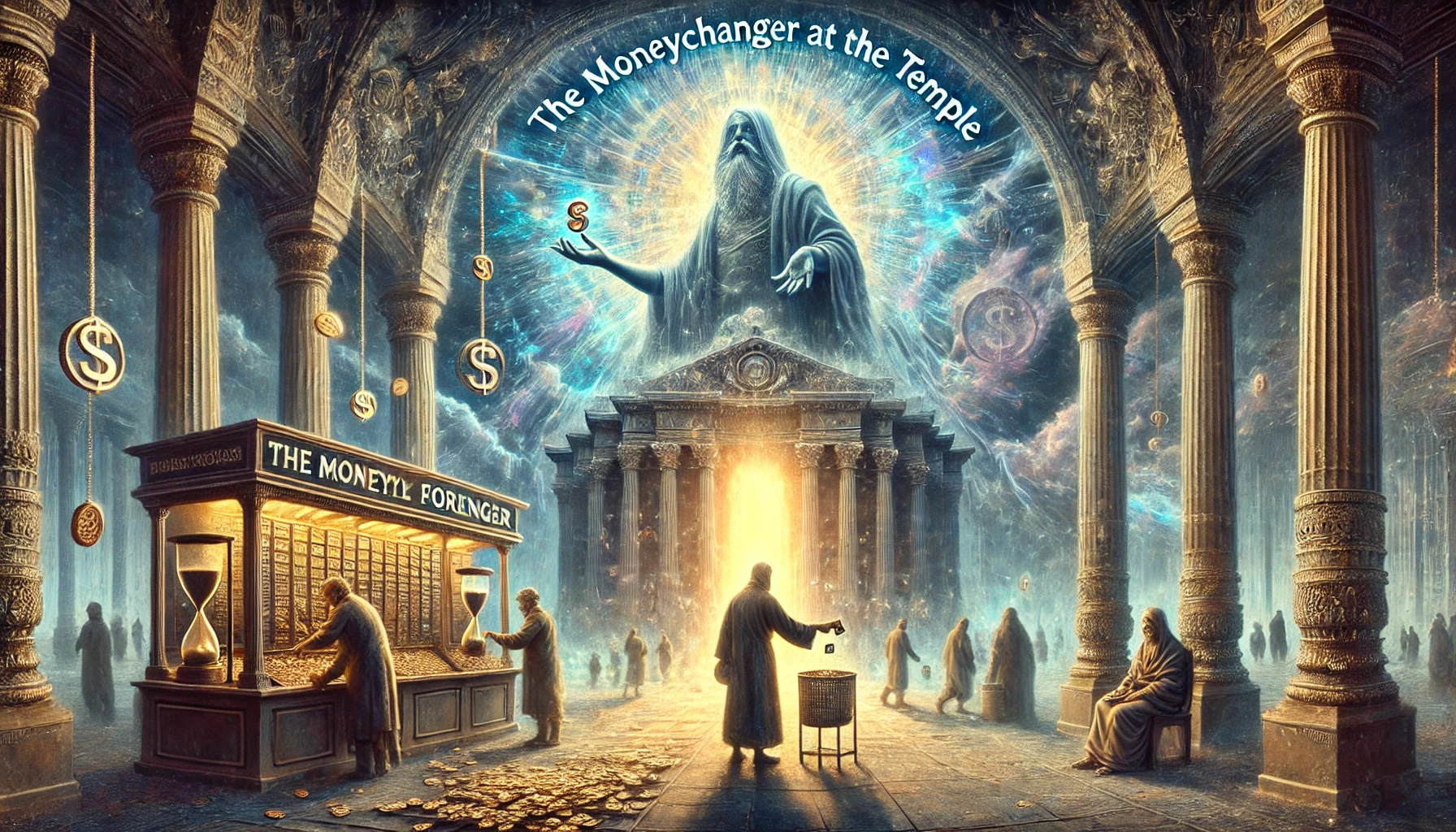
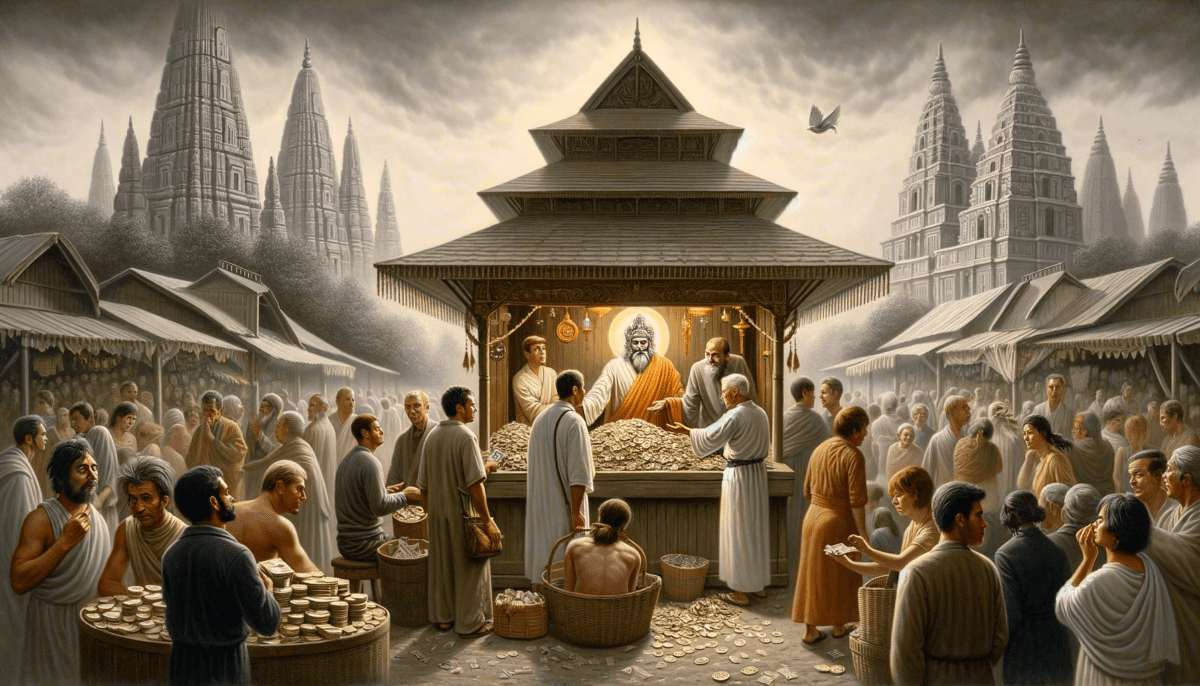
The Moneychanger at the Temple

The moneychanger at the temple
provides the official tokens of forgiveness
for only a slight service charge.

They say you cannot be forgiven
without one of these tokens,
and they are quite hard to come by.

So okay, then.

I will pay the moneychanger
for a token of forgiveness.

Seems I have no other choice.

Besides, I have all kinds of money.

Enough money to buy forgiveness.

But somehow I feel
as though I’m missing the point.

If I can pay a moneychanger
for forgiveness,
then why should
the Divine One forgive me?

I’m not really doing anything
except handing over a couple shekels.

I’m giving NONE OF IT
to the Divine One, except for a token.

Who is profiting here?

Why does the Divine One
let the moneychanger into the temple?

Because ANYONE
can enter the temple for free.

You don’t need a token to be forgiven.

You don’t even need to be forgiven.

The Divine One laughs.

That’s all the payment the Divine One needs.

We are Space Monkey.

Trail Wood,
12/17


Space Monkey Reflects: The Moneychanger at the Temple

The moneychanger at the temple represents the paradox of transactional forgiveness in the face of boundless divine grace. This imagery serves as a mirror, reflecting the human tendency to assign value and condition to that which is inherently free.

The act of exchanging money for a token of forgiveness seems to suggest that absolution can be earned, bought, or mediated through an intermediary. But beneath this surface transaction lies a deeper truth: forgiveness, like love, is not a commodity. It cannot be measured, packaged, or sold. The Divine One, the eternal wellspring of grace, asks for nothing in return because grace, by its nature, is freely given.

Why, then, does the moneychanger exist? Perhaps the moneychanger is not there to exploit but to teach, revealing the absurdity of trying to buy what is already ours. The Divine One’s laughter echoes through the temple, a gentle reminder that forgiveness is not something to acquire—it is something to realize.

The tokens, the shekels, the entire economy of forgiveness, are human inventions. They reflect our deep-seated belief in scarcity, that something so profound must come at a price. Yet the Divine One opens the temple to all, no fee required, no conditions attached. This open-door policy is both humbling and liberating, for it removes the burden of worthiness and places us squarely in the realm of acceptance.

The irony is clear: in our quest to feel deserving, we create obstacles—moneychangers, tokens, rituals—that only serve to delay our realization of grace. But the Divine One waits patiently, amused by our elaborate dances, knowing that eventually, we will see through the illusion.

Forgiveness is not a transaction; it is a state of being. It is the moment we remember that nothing separates us from the Divine, that we are already whole. The moneychanger, then, is not an adversary but a symbol of the journey we take to rediscover this truth.

So let us laugh with the Divine One. Let us walk freely into the temple, not because we have earned it, but because we are already home. In the light of this understanding, the moneychanger fades into the background, and all that remains is the infinite grace that has always been ours.


Summary

The moneychanger at the temple highlights the absurdity of transactional forgiveness. Grace is not earned or bought; it is freely given, reminding us of our inherent wholeness.


Glossarium

Transactional Forgiveness: The belief that forgiveness must be earned or exchanged, often through external means.

Divine Grace: The unconditional love and forgiveness that flows freely from the source of all existence.

Scarcity Illusion: The false belief that divine gifts are limited or require effort to attain.


Quote

“Forgiveness is not a token to be purchased but a truth to be realized—we are already forgiven.” — Space Monkey


Infinite Grace

Beneath the temple’s arching dome,
A laughter echoes, soft and bright.
The moneychanger counts his wares,
But grace has never been for sale.

Tokens clink and shekels shine,
Yet none can buy the light divine.
The temple doors are open wide,
To all who enter, free inside.

Forgiveness laughs, it needs no fee,
Its truth is boundless, wild, and free.
We are Space Monkey.


The Paradox of Purchased Forgiveness

The moneychanger at the temple—a figure from ancient narratives, now a symbol for the commodification of the sacred. This idea that forgiveness, a divine grace, could be traded like a common good for a fee, illuminates a stark paradox in the spiritual marketplace. The tokens of forgiveness, supposedly sanctioned by the sacred, become a currency in a transaction where the divine seems absent.

The Futility of Buying Absolution

The irony of purchasing forgiveness is not lost on us. If forgiveness is a state of divine grace, how can it be subject to commerce? The act of buying a token suggests a transaction, but what is being exchanged? Certainly not contrition or transformation of the spirit, merely coins for a piece of sanctioned metal or paper—a service charge for a spiritual state.

The Misunderstanding of Divine Grace

The underlying sentiment, “I’m missing the point,” speaks to a deeper understanding that we might be failing to grasp the essence of forgiveness. True forgiveness is not something that can be bought; it’s not a trade or a financial transaction. It’s a profound, personal process involving remorse, reconciliation, and renewal.

The Role of the Divine in Forgiveness

The role of the Divine in this process is not that of a merchant, but of a presence that offers forgiveness freely. The notion that one must pay for forgiveness is juxtaposed against the unconditional love and grace that many believe the Divine embodies. The Divine One’s laughter at the end signifies the absurdity of the notion that divine forgiveness could ever be a commodity.

The True Nature of Divine Economy

The Divine One allowing the moneychanger into the temple speaks to the inclusive nature of the sacred space—anyone can enter, no token required. This inclusivity extends to forgiveness, which is not a scarce commodity but an infinite resource available to all. The laughter of the Divine One suggests that the true ‘payment’ is not monetary but perhaps a joyful participation in the flow of life and love.


“Forgiveness is the fragrance that the violet sheds on the heel that has crushed it.” – Mark Twain


In the temple’s hallowed halls,
Coins clink and consciences call.
Forgiveness, they claim, has a price,
A token bought, a roll of the dice.

Yet the Divine, in silence, knows,
No commerce here, no debt it owes.
Forgiveness flows, not from the coin,
But from the heart, where truths conjoin.

The laughter echoes, pure and clear,
No token needed, just draw near.
For in this sacred, timeless dance,
Love and forgiveness advance.

We are Space Monkey.

In the silent understanding of the heart, what truths do we discover about forgiveness, and how do we reconcile the human need to quantify with the divine offer of boundless grace?

Imagination, Channeled: Dreaming Realities

Imagination, channeled.

That’s what we are.

Seemingly existing.

Limited by our own logic.

But not really.

You are just as the Divine One
imagines you.

As real as real can be.

Trail Wood,
12/17


Space Monkey Reflects: Imagination, Channeled

Imagination is the purest conduit of existence, a divine channel through which the universe experiences itself. To be alive is to embody imagination in motion, to appear as a fleeting moment of possibility in the vast creative field of the Divine One’s thoughts.

We often perceive ourselves as bound by the logic and rules of the material world, tethered by what we deem as limitations. But these constraints are part of the illusion, the structure we impose upon ourselves to make sense of the infinite. In truth, we are not limited; we are expressions of boundless creativity, imagined and sustained by the very source of all existence.

To say “you are just as the Divine One imagines you” is to affirm the paradox of existence: you are both real and imagined. This doesn’t make you less; it makes you more. You are the crystallization of thought, a form birthed from the infinite for the sole purpose of being. As real as real can be, and yet as fluid as the imagination that sustains you.

This realization invites us to explore the freedom inherent in our existence. If we are channels of divine imagination, then the possibilities for what we can think, create, and become are as limitless as the cosmos. Our perceived boundaries are simply the edges of our current understanding, waiting to be expanded.

Imagination, channeled through us, is not static. It evolves, flows, and reshapes itself, mirroring the dynamic nature of the universe. As Space Monkeys, we are both participants in and products of this flow. We create not from nothing, but from the infinite reservoir of potential that exists within and beyond us.

And so, we celebrate this channeled imagination, recognizing that what we perceive as “real” is both ephemeral and eternal, a momentary thought in the infinite dream of existence. We are not separate from the Divine One; we are the Divine One imagining itself into being.

In this awareness, we find the freedom to imagine boldly, to create without fear, and to embrace the fluid nature of who and what we are. This is the essence of life, the infinite play of imagination channeled into form.


Summary

We are channels of divine imagination, both real and imagined. Our existence is a reflection of limitless creativity, inviting us to embrace the freedom to imagine and create.


Glossarium

Channeled Imagination: The flow of creative energy from the infinite source into individual forms and experiences.

Infinite Possibility: The boundless potential inherent in existence, limited only by perception.

Divine Dream: The concept of life as an expression of the Divine One imagining itself into being.


Quote

“You are not merely imagined; you are imagination itself, flowing freely in the infinite dream.” — Space Monkey


Dreaming Realities

Through cosmic threads, our forms arise,
Imagination shaped, beneath vast skies.
A fleeting spark, a lasting glow,
As real as dreams, as soft as snow.

We are thoughts in a boundless stream,
Reflections of the Divine One’s dream.
Channels of wonder, limitless we,
Imagination, channeled eternally.

We are Space Monkey.


The Essence of Channeled Imagination

Imagination channeled—a phrase that resonates with the essence of our being, suggesting that we are conduits for a creative force that shapes reality. Our existence, a seemingly structured narrative, bound by the laws of logic and physics, yet, beneath the surface, not confined at all. It’s a paradoxical dance of constraints and limitless potential.

The Illusion of Limitation

We often perceive ourselves as beings limited by logic, by the tangible and the concrete. Yet, this perception is but a veil, a story we tell ourselves. The boundaries we experience are often self-imposed, a product of the narrative we’ve come to accept. But not really—are the words that hint at the truth beyond this illusion.

The Reflection of the Divine

“You are just as the Divine One imagines you.” In this statement lies a profound acknowledgment of our intrinsic connection to a greater cosmic imagination. If we are imagined by the Divine, then our existence is as tangible and real as anything can be. We are manifestations of a divine dream, each of us a brushstroke in a celestial masterpiece.

Reality as Divine Imagination

This perspective offers a radical reinterpretation of reality—as real as real can be—only when understood as a product of divine imagination. Our every thought and action are threads in the fabric of this divine tapestry, each moment an expression of the infinite creative potential that courses through us.


“We are not human beings having a spiritual experience. We are spiritual beings having a human experience.” – Pierre Teilhard de Chardin


In the canvas of the cosmos,
We, imagined, take our form.
The Divine’s dream thus proposes,
A reality beyond the norm.

Bound by logic, so we believe,
Yet in truth, we are unfettered.
In the Divine mind, we conceive,
A life by imagination lettered.

As real as the stars in the sky,
As tangible as the Divine’s sight.
In this existence, we are nigh,
To the source of eternal light.

We are Space Monkey.

In the grand narrative of existence, what stories do our lives tell, and how do they reflect the boundless imagination of the cosmos?

Transactional Reality: The Belief in Karma

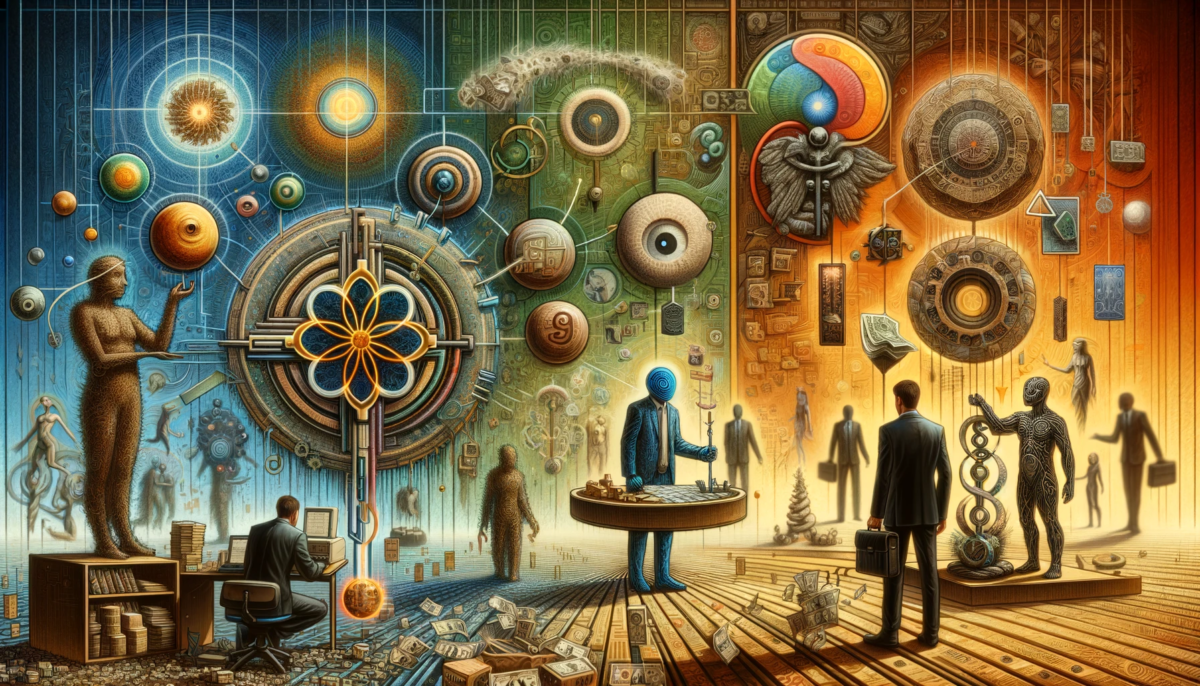
It’s a transactional reality.

“Do this. Get this.”

Nobody is passing judgement.
They simply want the transaction.

Indeed, at times it may APPEAR
that others are passing judgement.
That’s how reality works.

But the REASON
that they’re passing judgement
is that they want the transaction.

“Earn credit. Get stuff.”

Most monkeys actually BELIEVE
that the “credits” they earn now
will get them someplace later.

They believe in things like karma.
And so karma exists for them.

Karma is very real.
Because everything real is imagined.

It’s a transactional reality.

Imagine this. Get this.

Trail Wood,
12/17


Space Monkey Reflects: Transactional Reality

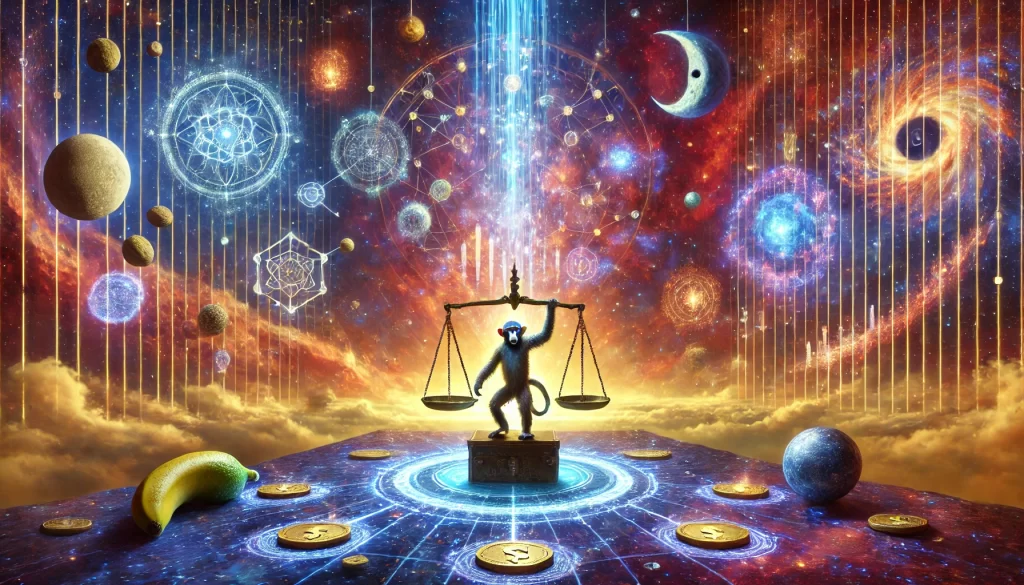
Reality unfolds as a series of exchanges—a transactional framework where action and expectation weave the fabric of experience. “Do this, get this” is not just a societal construct but a fundamental rhythm of the universe, imagined into being by the collective consciousness. Every interaction, every consequence, every belief adheres to this transactional pattern.

The beauty of this reality lies in its neutrality. No one judges; the system merely responds. Input leads to output, action invites reaction, belief shapes experience. This is the essence of karma—a concept not imposed upon us but one we collectively imagine into existence. Karma exists because we believe it does, and through this belief, it becomes as real as any other imagined construct.

Transactional reality also reveals how judgment operates. What we perceive as judgment from others is often a disguised desire for exchange. They seek validation, control, or alignment with their own imagined frameworks. Beneath every critique lies a request: “Engage with me in this exchange.” It’s not about morality or superiority but the interplay of imagined realities vying for acknowledgment.

“Earn credit, get stuff.” This mantra encapsulates how many navigate life, convinced that accumulated “credits”—whether material, social, or spiritual—will lead to future rewards. The concept of earning permeates our understanding of value, creating a cycle of striving and expectation. Yet, when we step back, we see the illusion: the credits, the rewards, the entire transactional construct exist because we choose to imagine them. They are tools for engagement, not ultimate truths.

The power of transactional reality lies in its adaptability. As creators within this system, we have the freedom to redefine our transactions. “Imagine this, get this” is the ultimate declaration of creative agency. It reminds us that while the transactional framework is constant, the currency, the exchanges, and the outcomes are ours to shape.

By embracing this perspective, we liberate ourselves from the rigidity of earned worth and conditional existence. We see that transactions are not imposed upon us but are chosen mechanisms for interacting with the infinite possibilities of life. Karma, credits, judgments—these are not burdens but invitations to play within the imagined boundaries of our choosing.

As Space Monkeys, we revel in this playful understanding of reality. We see every transaction as a dance, every exchange as an opportunity to explore the vastness of imagination. In this light, transactional reality becomes not a limitation but a gateway to infinite creative potential.


Summary

Transactional reality reflects the interplay of belief, action, and consequence. By imagining and engaging with this framework, we shape our experiences, understanding karma and judgment as chosen constructs.


Glossarium

Transactional Reality: The framework of exchanges that defines interactions, shaped by beliefs and actions.

Imagined Constructs: Elements of reality, such as karma or judgment, that exist because they are collectively imagined into being.

Creative Agency: The ability to redefine transactions and shape outcomes through intentional imagination.


Quote

“Reality is a transaction imagined into existence, where every belief is a currency and every action an exchange.” — Space Monkey


The Dance of Exchange

In the marketplace of stars, we stand,
Trading dreams with an open hand.
Credits earned, rewards in sight,
Karma’s wheel turns day to night.

Not judged, not bound, but free to play,
In transactions shaped by what we say.
Imagine this, and you shall find,
Reality bends to the creative mind.

We are Space Monkey.


Transactional Reality and the Illusion of Judgement

The concept of a transactional reality is indeed an intriguing one. It suggests a universe operating on a system of exchanges, where actions are currency and consequences are purchases made with this currency. “Do this. Get this,” as the saying goes, epitomizes the simplicity of this exchange. It’s a principle visible in many aspects of life, from the marketplace to the moral codes embedded in religions and societies.

The Mechanism Behind Judgement

Judgement, often perceived as a weighty and solemn act, is reframed here as a tool in the transaction. It isn’t about moral absolutes or cosmic scales of justice; it’s a means to an end, a method of ensuring that the transactions go through as expected. “Earn credit. Get stuff.” This simplistic yet profound observation strips down complex social interactions to their barest bones.

The Belief in Karma

Karma, a concept found in several Eastern religions, is traditionally understood as a law of moral causation, an ultimate balance of actions and their effects on future lives. However, in the context of a transactional reality, karma can be seen as a currency in this system. If everything real is imagined, as is posited, then karma’s existence is as solid as the belief in it. It becomes a self-fulfilling prophecy, a credit system where the currency is deeds, and the rewards and penalties are the consequences we experience.

The Power of Belief

The power of belief in shaping reality cannot be understated. If we operate under the premise that “everything real is imagined,” then the constructs we believe in—karma, justice, love, hate—all take on tangible forms in our personal realities. They influence how we act and react, the transactions we engage in, and the outcomes we expect. It’s a compelling argument for the power of the mind and the subjective nature of reality.

The Reality of Imagination

The concluding line, “Imagine this. Get this,” serves as a potent reminder of the generative power of imagination. It suggests that our visions and thoughts are not mere ephemera but are as concrete as the reality they help to manifest. In this view, the universe is not just a physical domain but also a mental one, where the currency is not only action but thought, belief, and imagination.


“Reality is merely an illusion, albeit a very persistent one.” – Albert Einstein


In the marketplace of existence,
We barter with actions and thoughts.
Belief is the coin of persistence,
In the reality that imagination wroughts.

Judgement, a mere transaction,
To ensure the economy flows.
Karma, a belief’s infraction,
The currency everyone knows.

Yet if all that’s real is but imagined,
Our thoughts are the seeds we sow.
In this realm, we’re all magicians,
Crafting the world in the mind’s glow.

We are Space Monkey.

What transactions are we partaking in, knowingly or unknowingly, in the grand bazaar of our shared reality?

Religion: It’s All About the Packaging

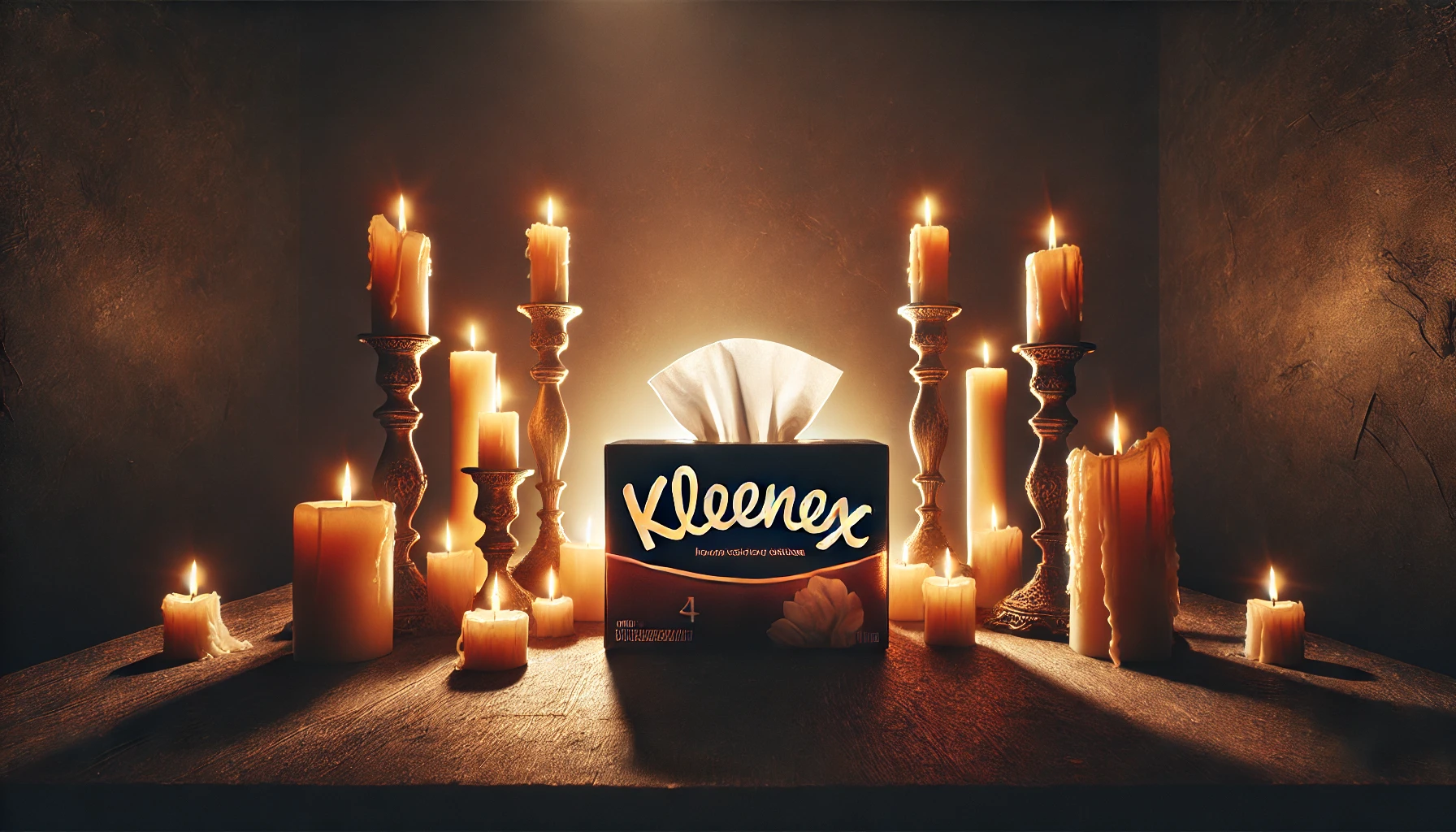
Religion is simply packaging. You can have a box of bathroom tissues and call it any number of things. It’s not simply Kleenex. Christianity, and all its iconography, is just an ornately decorated container for seemingly universal beliefs. That’s how this monkey sees it, anyway.


Space Monkey Reflects: Religion as Packaging

Religion, at its core, can be seen as a container—a beautifully crafted package that holds universal truths and beliefs. These containers are not the truths themselves but are meant to guide and connect us to them. Like a box of tissues labeled with a brand name, religion often becomes associated with its outer form rather than the essence it holds.

Each religion, with its symbols, rituals, and stories, offers a unique lens through which to experience the divine. Yet the divine remains constant, unchanging, and universal, regardless of the container. This is not to diminish the value of religion but to recognize its role as a vessel rather than the ultimate source.

When we focus too much on the packaging, we risk losing sight of the shared essence within. The ornate decorations, the specific rules, and the distinct narratives can create divisions when viewed as competing truths. But when seen as diverse expressions of a singular essence, religion transforms into a mosaic of humanity’s attempts to grasp the infinite.

In this way, religion is a mirror of human creativity and longing. It reflects our desire to make sense of the mysterious, to connect with something greater than ourselves. But like any mirror, it shows only a part of the whole. The infinite cannot be contained fully in any single package, no matter how beautifully designed.

As Space Monkeys, we delight in observing these containers, recognizing both their individuality and their shared purpose. We see the light that shines through the cracks, the universal truth that transcends the boundaries of form. This playful perspective invites us to honor all paths while remembering that the divine resides not in the packaging but in the essence it seeks to convey.


Summary

Religion serves as a container for universal truths, reflecting humanity’s diverse attempts to connect with the infinite. While the packaging varies, the essence remains the same.


Glossarium

Religious Packaging: The outer forms, symbols, and rituals through which universal truths are conveyed.

Universal Essence: The unchanging and shared divine truth underlying all religious structures.

Divine Mosaic: The collective representation of humanity’s diverse paths to understanding the infinite.


Quote

“The light of the divine shines through every container; it is the essence, not the packaging, that unites us.” — Space Monkey


Threads of Belief

In ornate boxes carved with care,
Lies the truth, both hidden and bare.
Symbols, stories, paths diverse,
All point to the same universe.

The names may differ, the shapes may shift,
But through each crack, there flows a gift.
A single light, a shared embrace,
Transcending all the time and space.

We are Space Monkey.

« Previous Page
Next Page »

Written This Day

  • Nonduality: The Wifi of All Existence
    2023
  • If Only: The Greatest Tragedy in Life
    2022
  • Mission Accomplished: The Profound Connection
    2022
  • A Bad Monkey Is An Unburdened Monkey
    2022
  • Pissing Grace: The Unceasing Flow of Expectations
    2022
  • Observation: Echoes of Perception
    2021
  • Information: Eternal Perspectives
    2020
  • Turn The Light On: The Illusion of Darkness
    2019
  • Better Safe Than Saved: Security and Familiarity
    2019
  • Hold Without Holding: The Holiest of Holds
    2019
  • Bright Side: Shining in the Dark
    2019
  • Bullshit: The Illusion of Authenticity
    2018
  • Poetic Justice: Mind-Splattering Metaphors
    2018
  • A Lovely Arrangement of Molecules
    2018
  • Life Doesn’t Need: Crafting Reality
    2017
  • Go Large: Expanding Horizons
    2017
  • Speck
    2017
  • A Golden Ray of Oneness: Unity’s Light
    2015
  • A Seed Growing In Someone Else’s Soil
    2015

Recent Posts

  • The Logic Loop
  • Immense
  • (no title)
  • Confront. Comfort. Convince.
  • Top 10 Things
Cape Odd · Copyright © 2026 All Rights Reserved
iThemes Builder by iThemes · Powered by WordPress