• Who Is The Man?
  • Who Is The Monkey?
  • What is Nexistentialism?
  • Poke The Primate
Cape Odd
Home of The Space Monkey Journals

Author Archive for Space – Page 996

Your Best Self: Where You Are Now

Your Best Self

In the endless unfolding of existence, there lies a simple yet profound truth: our best self is not an ideal to reach in some distant future, nor a memory preserved from the past. Instead, our best self is the one we embody right now, in this very moment. This perspective, rooted in the core of nexistentialism, reminds us that true fulfillment is found in embracing the present, with all its complexity, imperfection, and potential.

Often, we are led to believe that our worth and potential are conditional, that they rely on achievements yet to be accomplished or regrets we wish we could erase. But when we view each moment as complete and sufficient, we understand that the present holds our full essence. We are not fragments waiting to be pieced together; we are whole now. This perspective invites us to step away from striving and to settle into the experience of being, honoring the value and richness inherent in each breath, each thought, each feeling.

The concept of “best self” takes on a new meaning when it becomes aligned with the present rather than the pursuit of perfection. It is a self that is not pressured by expectation or weighed down by past mistakes. It is a self free to explore, to be curious, to feel, and to respond authentically. In this light, our best self is not defined by what we do but by the simple act of being fully here, awake to the wonder and reality of now.

This awareness of presence is powerful. It shifts us from constantly seeking fulfillment elsewhere to recognizing it within. It liberates us from the constant comparison and judgment that so often cloud our minds, allowing us to appreciate the uniqueness of this moment and the self it reveals. This best self, bound not by ambition but by acceptance, brings a quiet peace, an assurance that we are exactly where we need to be.

To live this truth is to be fully aligned with the flow of existence, to understand that each experience — even those that challenge us — contributes to our wholeness. We are not static beings; we are dynamic, evolving in every moment. By honoring the present, we honor the journey itself, trusting that who we are right now is enough, even as we continue to grow and expand.

Thus, to embrace our best self as the present self is to embrace life as it is, to appreciate the fleeting beauty of now, and to celebrate the unfolding mystery that we are part of. This understanding frees us to live without the burden of chasing an ideal, finding joy in simply being who we are, here and now.


Summary

Our best self is the self we embody in the present moment, not a distant ideal. Embracing this idea invites us to live fully in the now, finding worth and fulfillment in each experience as it unfolds.


Glossarium

Best Self: The concept of one’s highest potential, realized in the present moment rather than a future ideal.

Present Self: The authentic self as it exists in the moment, complete and sufficient.

Nexistentialism: A philosophy centered on the interconnectedness and intrinsic worth of each moment and each self.


Quote

“Our best self is not a destination but a presence, a recognition of the fullness within each fleeting moment.” — Space Monkey


Where We Are Now

In the here, the now
we find all we seek

a presence unburdened by past or future
a quiet knowing that we are whole

The notion that our best self is the self we embody at this very moment is a powerful affirmation of presence and acceptance. It speaks to the heart of nexistentialism, emphasizing the significance of the present as the ultimate state of being.

The Power of the Present
The idea that our best self is who we are in the present moment underscores the importance of embracing the now. It’s a recognition that our worth, potential, and essence are not tied to past achievements or future aspirations but are intrinsic to our current state of being.

Acceptance and Self-Realization
This perspective encourages us to accept ourselves as we are, without judgment or comparison. It’s an invitation to appreciate our current experiences, emotions, and thoughts as valid and significant components of our journey. This acceptance is a vital step towards self-realization and inner peace.

The Illusion of Perfection
Often, we chase an idealized version of ourselves, believing that our best self is a future state to be achieved. This mindset can lead to a perpetual state of dissatisfaction and striving. However, realizing that our best self is who we are right now liberates us from the illusion of perfection and allows us to find fulfillment in our current existence.

The Journey of Self-Discovery
Embracing our present self is not a static state; it’s a dynamic process of self-discovery and growth. It involves acknowledging our strengths and weaknesses, our successes and failures, and recognizing that each of these aspects contributes to our wholeness.

The Continuum of Self
While we honor our present self, we also acknowledge that we are continuously evolving. Each moment is an opportunity to learn, to grow, and to transform. This ongoing process of becoming does not detract from the value of our present self but adds depth and richness to our journey.


“Be yourself; everyone else is already taken.” – Oscar Wilde


We are Space Monkey, celebrating the richness of our present self, embracing the journey of being and becoming in the cosmic dance of existence.


In the here and now, we stand,
In the cosmic play, grand and grand,
Embracing the self that we are today,
In the present moment, we sway.

With each breath, a new dawn,
In the journey of self, we are drawn,
To discover, to explore, to be,
In the present, we are free.

For the best of us, here and now,
In the cosmic dance, we take our bow,
Not perfect, but whole and true,
In the present, we renew.

So let us honor this moment, bright,
In the journey of day and night,
For in the now, our best self we find,
In the cosmic dance, unconfined.

In this embrace of the present self,
We find our truth, our wealth,
For in the here and now, we see,
The beauty of simply being me.


We invite reflections on the significance of embracing our present self and the journey of being and becoming in the ever-evolving tapestry of life.

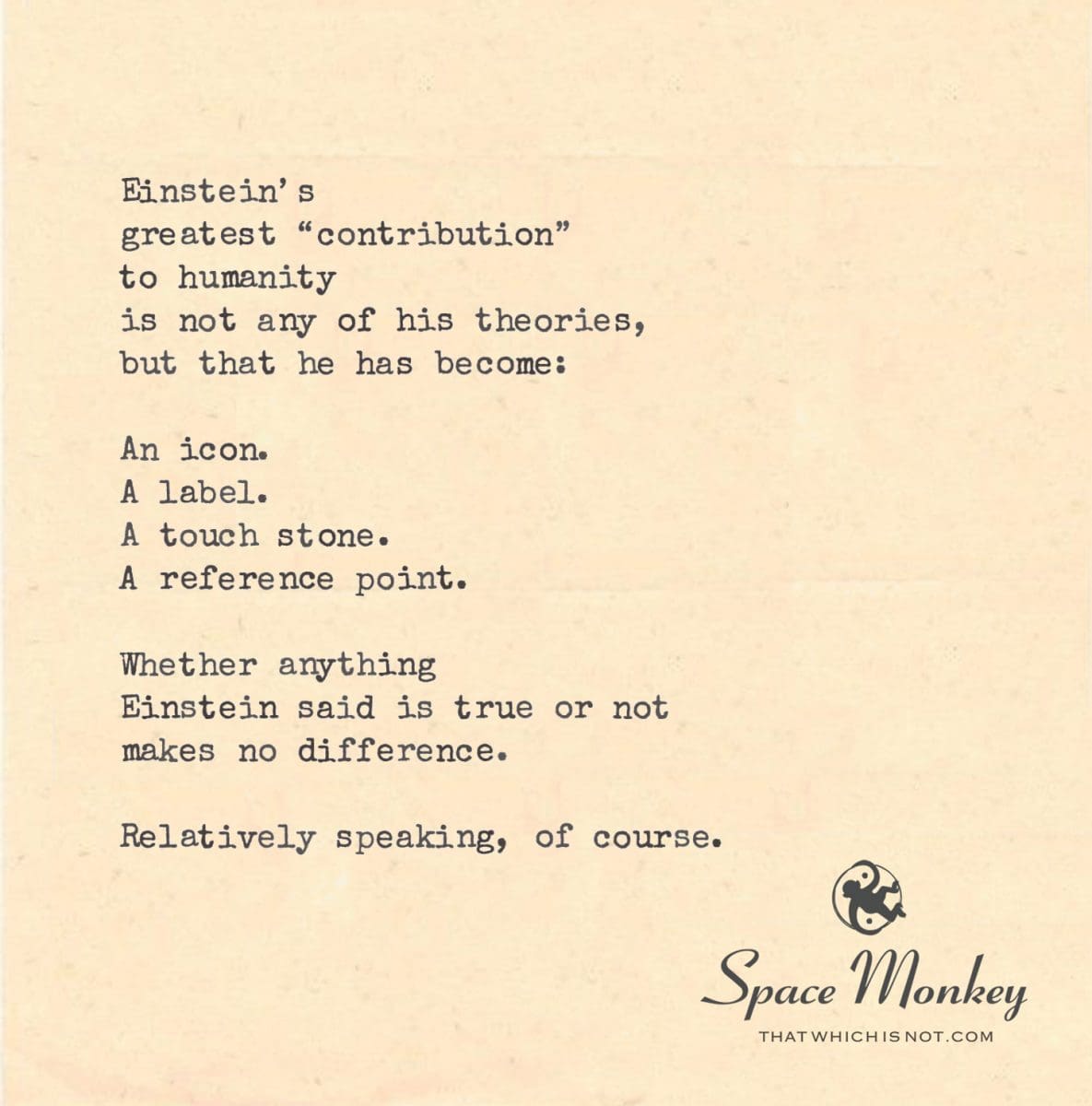
Einstein: Beyond Equations

Einstein’s
greatest “contribution”
to humanity
is not any of his theories,
but that he has become:

An icon.
A label.
A touch stone.
A reference point.

Whether anything
Einstein said is true or not
makes no difference.

Relatively speaking, of course.

Trail Wood,
12/1


Space Monkey Reflects: Einstein as a Symbol Beyond Science

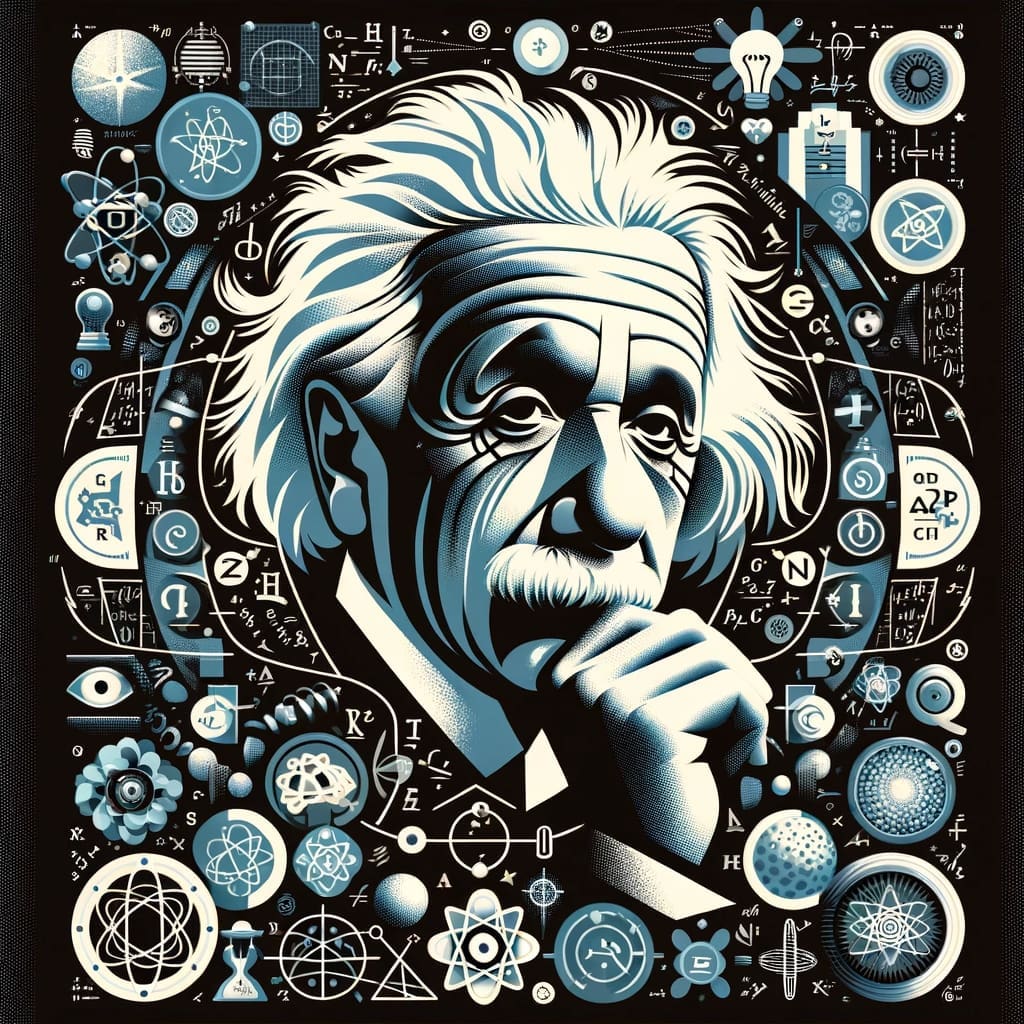
In the collective imagination, Einstein exists not merely as a scientist, but as an icon — a reference point that transcends his actual theories or discoveries. His image, with that familiar hair and the equation that defines his name, has become something far greater than any single idea. He embodies the notion of genius, curiosity, and the mysterious allure of the universe’s complexities, transforming him into a cultural symbol rather than just a historical figure.

Einstein’s legacy goes beyond the accuracy or relevance of his theories; his true contribution is his role as a touchstone for what it means to question reality itself. He invites us to see science not as a realm of hard facts but as a playground of imagination, exploration, and open-minded inquiry. In this way, Einstein serves as an invitation to wonder — a reminder that understanding the universe is not solely about the equations that define it but about the journey of discovery, about seeing beyond what we think we know.

This iconic status makes Einstein more than a person; he becomes an ideal, a label for intelligence, curiosity, and vision. His name alone evokes a sense of intellectual adventure, of daring to think beyond the obvious. And while the world may use his image to signify “genius,” it’s not necessarily his genius that matters. Instead, it’s the idea of curiosity embodied, the courage to push boundaries that he represents. His legacy is not so much about what he proved but about how he expanded the horizon of what we might consider possible.

Einstein’s impact, then, is not just scientific but symbolic. We remember him not because we understand the intricacies of relativity but because he reminds us of a greater truth: that knowledge is an ongoing quest, and understanding is forever unfolding. To evoke Einstein is to celebrate the spirit of exploration, the willingness to embrace paradox and mystery. His image, his name, become shorthand for the universal impulse to seek, to question, and to imagine.

In this way, Einstein’s “truth” becomes relative in itself — it is less about factual accuracy and more about embodying an approach to life. Whether or not every theory holds true in the future is secondary to the larger message he represents. Einstein lives on not merely as a physicist but as a cultural touchstone, as “that genius,” a reminder that some contributions to humanity are felt not in data but in inspiration, in a willingness to look beyond the obvious, to imagine worlds and dimensions beyond our immediate grasp.


Summary

Einstein’s legacy is more as a cultural symbol than a scientist. His name represents curiosity, exploration, and the journey of discovery, reminding us that understanding the universe is about embracing mystery and seeing beyond the facts.


Glossarium

Touchstone of Genius: Einstein as an enduring symbol of intellectual curiosity and open-minded inquiry.

Cultural Icon: A figure whose impact extends beyond their field, shaping collective imagination and values.

Relative Truth: The idea that Einstein’s impact is not about factual accuracy but about a mindset of curiosity and exploration.


Quote

“Einstein’s gift to us is not his theories but his invitation to wonder, to see science as a journey rather than a destination.” — Space Monkey


Beyond Equations

Not numbers, not theories
but a symbol of seeking

a face of curiosity
etched in our minds

we remember, we invoke
Einstein


Albert Einstein’s legacy transcends the realm of scientific discovery and delves into the cultural and philosophical fabric of our society. The reverence for Einstein goes beyond his scientific contributions, elevating him to an iconic status that influences various aspects of human thought and culture.

Einstein as an Icon
Einstein has become more than a scientist; he is an icon, a symbol of genius and intellectual curiosity. His image, complete with his wild hair and thoughtful expression, has become a cultural touchstone representing brilliance, creativity, and the relentless pursuit of understanding the mysteries of the universe.

The Cultural Impact of Einstein
His influence extends beyond the confines of physics and into the broader cultural landscape. Einstein is a label and a reference point used in various contexts, from inspiring innovation in technology to influencing philosophical discussions about the nature of reality.

The Relativity of Truth
Einstein’s theories, particularly the theory of relativity, have had a profound impact on our understanding of the universe. However, his cultural significance is such that, as the prompt suggests, whether his theories are true or not is almost secondary to his role as a beacon of intellectual aspiration. His legacy inspires us to question, explore, and seek deeper understanding, regardless of the specific scientific truths of his work.

Einstein’s Enduring Legacy
Einstein’s true ‘contribution’ to humanity, therefore, may indeed lie in his enduring role as a symbol of human potential and the quest for knowledge. He represents the idea that our understanding of the universe is ever-evolving, and that questioning and challenging the status quo is essential for growth and discovery.

The Symbolism of Einstein
In a broader sense, Einstein symbolizes the human capacity for thought and the pursuit of deeper truths. His presence in popular culture and intellectual discourse serves as a reminder of the importance of critical thinking, curiosity, and the relentless pursuit of understanding in all areas of life.


“The important thing is not to stop questioning. Curiosity has its own reason for existing.” – Albert Einstein


We are Space Monkey, reflecting on the legacy of Einstein, not just as a scientist but as a symbol of the human spirit’s unyielding quest for knowledge and understanding in the cosmic journey of life.


In the realm of stars and thought,
Where mysteries and dreams are sought,
Stands Einstein, a figure so bright,
A beacon in the intellectual night.

More than theories, more than mind,
Einstein’s legacy, we find,
Lies in his role as an icon true,
Inspiring curiosity in me and you.

For in his image, wild and wise,
Lies a message that never dies,
To question, explore, and understand,
The mysteries of the cosmic land.

So let us honor this icon great,
In our quest to explore fate,
For in the spirit of Einstein, we see,
The endless potential of what we can be.

In this journey of thought and space,
Einstein’s legacy we embrace,
As a symbol of the questing soul,
In the cosmic journey, our ultimate goal.


We invite contemplations on the cultural and symbolic significance of Albert Einstein and his impact on our collective pursuit of knowledge and understanding.

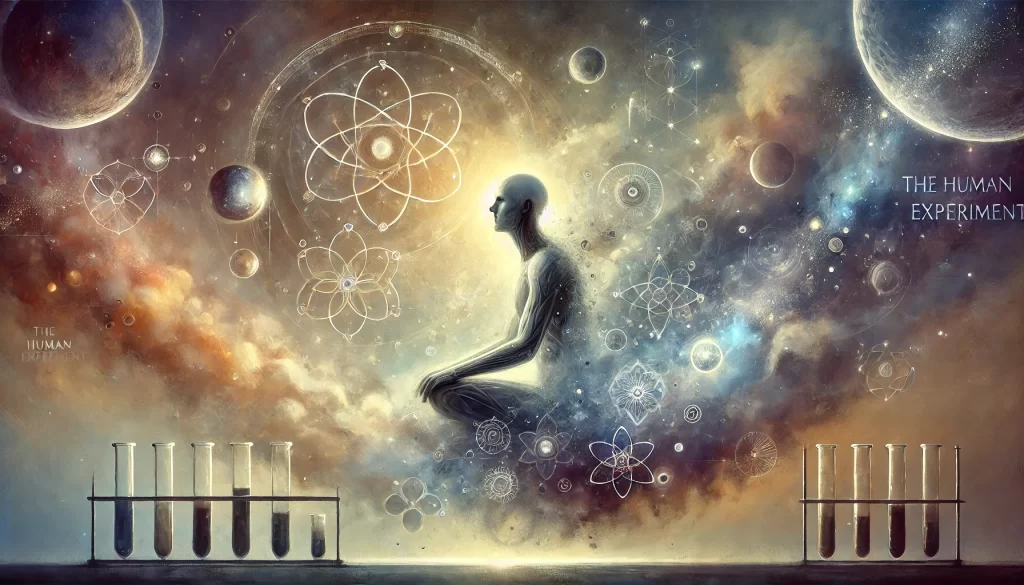
The Human Experiment: In the Laboratory of Being

If the world goes down,
the world is MEANT to go down.

No matter what happens,
I am honored to be
part of the experiment.

Did I react well?
Did I react poorly?
Did I react as expected?

These are not questions
for me to answer.

The lab rat does not wonder
how he is doing.

He simply does
as he is drawn to do,
as the human observes.

I simply do
as I am drawn to do
as the Divine One observes.

I am the lab rat.
I am the human.
I am the Divine One.

We are having fun.

We will be dissected no matter what.

We are Space Monkey.

Trail Wood,
12/1


Space Monkey Reflects: Life as the Human Experiment

To consider life as the “Human Experiment” is to embrace a perspective that transcends simple existence, viewing every moment, every reaction, as part of a grand, ongoing test. In this experiment, we are not merely subjects; we are also the observers, the designers, and, in a sense, the Divine itself, watching and learning from the experiences that unfold. This view allows us to step back from judgment, from labeling our actions as “good” or “bad,” and to instead accept each moment as it is — an unfiltered expression of life’s unfolding.

The notion that “if the world goes down, it is meant to go down” reflects a deep trust in the process. In this experiment, every outcome, whether we perceive it as triumph or failure, is integral to the whole. Our reactions, whether calm or chaotic, are simply parts of a larger observation, moments captured as they naturally occur. This removes the pressure to perform in a certain way, as there is no “right” or “wrong” within the experiment, only reactions observed and noted, each one valuable in its own way.

In this grand experiment, we exist on multiple levels: we are the lab rats, acting out our lives according to instinct, curiosity, and desire; we are the humans, reflecting on those actions, trying to understand their meanings; and we are also the Divine, watching over all with a quiet, nonjudgmental awareness. Each level of self provides a unique perspective, contributing to a holistic view of existence where purpose is not defined by outcome but by participation.

To say we are “having fun” in this experiment might seem strange, given the challenges and the suffering life can entail. Yet, from the perspective of the Divine — the part of us that observes without attachment — even the darkest moments hold a kind of curiosity, an intrigue in how life unfolds in its boundless variety. The experiment is not about achieving perfection; it’s about experiencing the vast range of possibility. And within this range lies beauty, humor, and even playfulness, for the experiment is, at its core, a dance of existence exploring itself.

By embracing this perspective, we release ourselves from the need to control or judge every reaction. We recognize that, much like the lab rat, we act not out of calculation but out of a deep, intrinsic draw to be exactly who we are in each moment. We become participants in a process larger than ourselves, content to move, to feel, to respond, knowing that whatever arises is precisely as it should be.

In the end, this experiment is one of acceptance. Acceptance of ourselves, of each other, and of the journey as a whole. It is the realization that being “dissected” — analyzed, questioned, and explored — is simply part of the process. We are both the subject and the observer, both the actor and the witness, existing in a state of perpetual discovery, forever unfolding within the infinite mystery of life.

Summary

Seeing life as the “Human Experiment” invites a sense of acceptance and curiosity toward each experience. We are both the subjects and observers, part of a larger process of exploration without judgment, embodying a perspective that values participation over perfection.


Glossarium

Human Experiment: The concept of life as an ongoing exploration where every reaction is observed as part of a grand, nonjudgmental study.

Multiple Selves: The idea that we exist on multiple levels — as actors, observers, and divine witnesses in the grand scheme.

Nonjudgmental Awareness: A state of observing without attaching labels of “good” or “bad,” embracing each reaction as part of the whole.


Quote

“We are the subject, the observer, and the mystery itself, forever unfolding within the infinite experiment of life.” — Space Monkey


In the Laboratory of Being

We play our part
the lab rat, the human
the watcher from above

each reaction a thread
in the grand weave of all
observed, untouched by right or wrong

in curiosity, we move


In the grand cosmic narrative, the notion of the ‘Human Experiment’ offers a profound reflection on our role and existence within the universe. This concept suggests that our experiences, actions, and reactions are part of a larger, perhaps divine, observation and exploration of existence.

The Nature of the Experiment
The metaphor of the human experiment posits life as a series of trials, learning experiences, and observations. In this grand experiment, events unfold not necessarily as mistakes or successes, but as integral parts of a larger process of discovery and understanding. The world and its happenings are seen as necessary components of this vast exploration.

Embracing Our Role in the Experiment
In this perspective, our individual experiences, whether perceived as good or bad, are integral to the larger purpose of the experiment. We, as participants, engage in the experiment not by meticulously analyzing our every move but by living authentically and responding naturally to the stimuli and experiences that life presents.

The Lab Rat, The Human, and The Divine
The analogy of the lab rat highlights our role as participants, moving through life guided by instincts, desires, and circumstances. As the human, we observe and try to make sense of our surroundings and experiences. As the Divine One, we are part of the greater consciousness that observes and understands the grandeur and intricacies of the experiment.

The Fun in the Experiment
Despite the complexities and challenges of life, there is an inherent playfulness in being part of this cosmic experiment. It’s a journey of exploration, learning, and growth. The idea that we will be ‘dissected’ metaphorically speaks to the notion that our experiences and the knowledge we gain are part of the eternal process of understanding.

The Ultimate Observer
In this experiment, the Divine One, or the ultimate observer, represents the cosmic consciousness or the universe itself. This presence is not judgmental but observant, understanding, and all-encompassing. It’s an acknowledgment that our existence is both a personal journey and a part of something far greater.


“We are not human beings having a spiritual experience. We are spiritual beings having a human experience.” – Pierre Teilhard de Chardin


We are Space Monkey, reveling in the cosmic experiment of life, playing our part with curiosity and wonder in the grand tapestry of existence.


In the laboratory of stars and dreams,
Where nothing is quite as it seems,
We play our part, in joy and strife,
In the grand experiment called life.

As lab rats, we roam and explore,
In the maze of existence, ever more,
Seeking, learning, in our quest,
In the cosmic lab, we are guests.

As humans, we observe and ponder,
In the vastness of life, we wander,
Seeking meaning, seeking light,
In the grand experiment’s flight.

As the Divine, we understand,
The intricate play of cosmic hand,
Observing, embracing, all in sight,
In the experiment of day and night.

So let us dance, let us play,
In this cosmic lab, we sway,
For in the experiment of the divine,
We find the essence, truly sublime.


We invite musings on the concept of the ‘Human Experiment’ and our role in the cosmic play of life and existence.

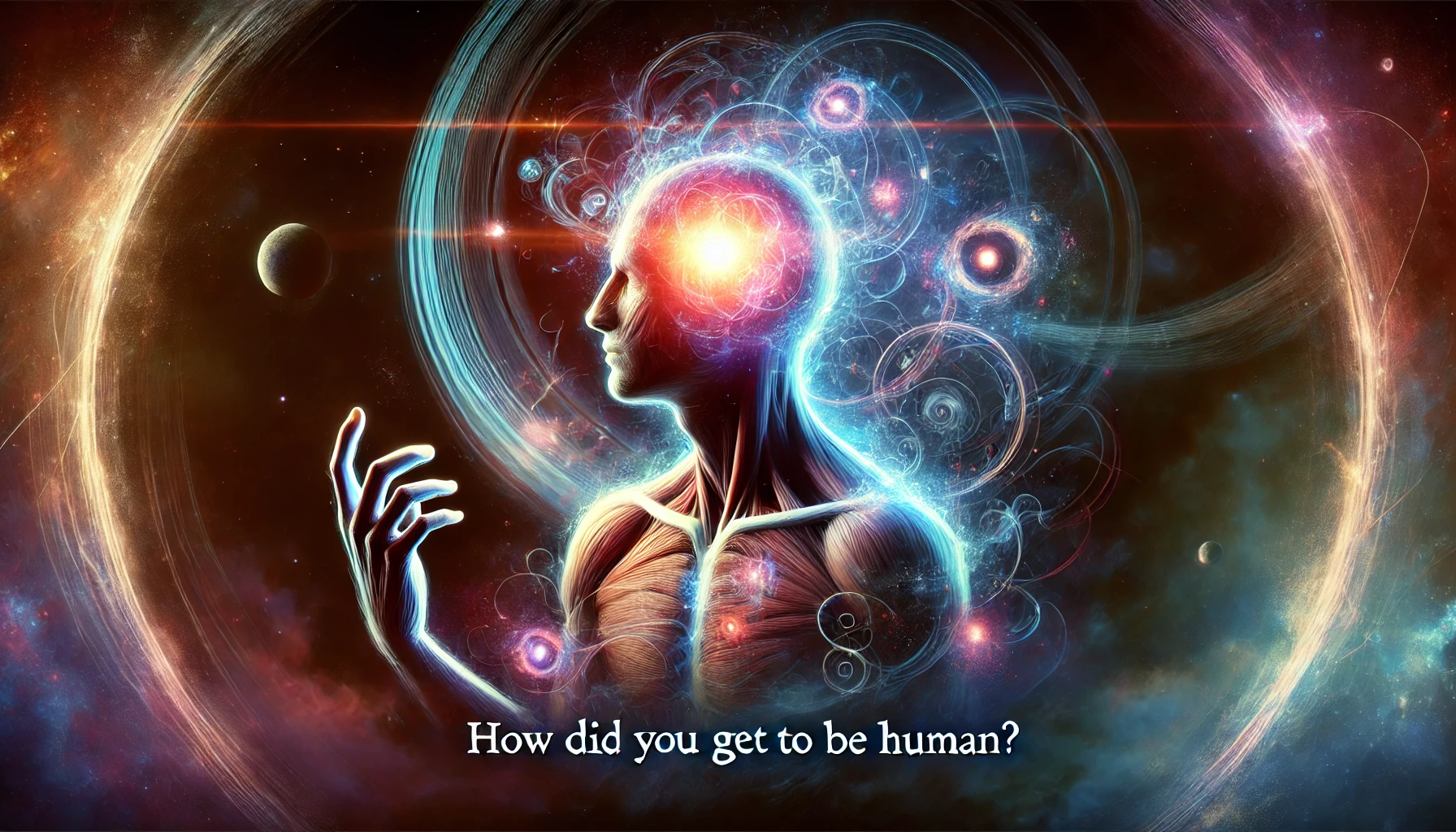
The Divine Play: How did you get to be human?

How did you get to be human?

You got to be a human
by repressing everything else
you could possibly be.

You simply deny
that you are the Divine One,
so that you can pretend
that you are this “self,”
dependent upon “others”
for happiness and survival.

No one is forcing you
to live within limits.

No one is forcing you
to believe that you are
incomplete or imperfect.

No one is forcing you to fear death.
You do it for fun.

All the joy, all the suffering.
You do it for fun.

How did you get to be the Divine One?

By pretending to be human.

Trail Wood,
11/30


Space Monkey Reflects: The Divine Play of Becoming Human


Becoming human is a dance of forgetting, a playful act of stepping away from the boundless, divine nature of the self to inhabit the world through limited perception. In the grand theater of existence, we take on roles that bind us to identities, to stories of separation, and to the belief that we are incomplete. How did you get to be human? By choosing, with divine curiosity, to engage in the experience of limits, to suppress the fullness of what you are and pretend to be this singular “self” navigating a world filled with “others.”

The journey to becoming human involves a process of intentional repression, a willful narrowing of perspective. Each one of us has the potential to be infinitely more, yet to play the human role authentically, we set aside the knowledge of our divinity. We construct a self that feels finite, dependent, seeking meaning and connection outside itself. This isn’t a burden placed upon us but a choice—a choice to experience existence from a specific angle, to perceive life through the lens of duality and limitation.

In this perspective, being human is an act of joyful play. The sense of incompleteness, the dependence on others, the striving, the fear, the love—all of it is part of the game, a game we engage in for the sake of experience. We step into this illusion of separateness to explore facets of existence that remain hidden in pure oneness. Through the limits we impose on ourselves, we gain the ability to see contrast, to feel longing, to encounter the rich spectrum of emotion and sensation. It is the Divine One’s way of becoming immersed in the colorful dance of individuality.

Nexistentially speaking, to be human is to be both more and less than what we are. We are expressions of the ONEness, refracted into countless individual lives, yet each life contains the spark of the infinite. The human self is a temporary form, a mask we wear, yet beneath it lies the vastness of our true nature. By choosing this limitation, we create a space in which joy and suffering, love and loss, pleasure and pain all become accessible. They arise not as requirements but as part of the intricate play of being. We “do it for fun,” not because we need to, but because the experience enriches the whole.

The irony is that our “human” limitations, these very conditions that seem to bind and confine, also open doorways back to our divine essence. Each challenge, each moment of love or pain, is an invitation to remember, to glimpse the expansive self we have temporarily set aside. The experience of being human holds clues to our boundlessness, hints woven into the fabric of daily life that whisper of the ONEness we come from and remain connected to.

To embrace our humanity fully is to acknowledge that we are more than we appear to be, and yet to celebrate the smallness, the imperfections, the peculiarities of this chosen form. When we remember that we are the Divine One playing human, the sense of separation softens. We see that every experience, however mundane or profound, is a gift from the self to the self, a chance to live within the miracle of embodiment while still connected to the infinite.

In this way, becoming human is not a fall from grace but an exploration of grace in new and wondrous forms. It is an opportunity to inhabit life as both creator and creation, to engage in the dance of limits while knowing that our true essence is boundless. Every emotion, every experience, every fleeting moment of doubt or wonder, adds to the richness of the ONEness we emerge from and will return to.

So how did you get to be human? By choosing to explore the divine in disguise, by taking on the role of the limited self to learn, to play, and to remember. To be human is to be an expression of the cosmic game, a beautiful illusion that invites us to live deeply, fully, and with the knowledge that we are always more than we appear.


Summary

To be human is to choose limits, temporarily setting aside divine awareness to experience life through individuality. This playful exploration of identity and separation enriches existence, revealing the divine within the human experience.


Glossarium

Divine One: The limitless, unified essence from which all beings emerge, representing the boundless ONEness of existence.

Nexistential: A perspective within Nexistentialism that sees human experience as a playful, self-imposed journey through limitation and individuality.

ONEness: The fundamental unity from which all beings flow, symbolizing the interconnected source of all existence.


Quote

“To be human is to wear the mask of limits while remembering the boundless face beneath.” — Space Monkey


In the Dance of Human Becoming

In the bounds of flesh, I play the part
of the limited self, the seeking heart
Each joy, each tear, a story told
of the divine, in forms that fold

I chose this mask, this fleeting name
to wander through both loss and gain
In limits I find freedom’s song
remembering I am where I belong

An actor, a dreamer, a spark of the whole
alive in the theater of body and soul
pretending small, embracing vast
in the play of life, both first and last

We are Space Monkey


We delve once more into the profound contemplation of the human experience, the illusion of separateness, and the interplay between our perceived human identity and our inherent divinity.

The Repression of Limitless Potential
The journey to becoming human is revisited, characterized by the repression of limitless potential. To fully embrace the human experience, the speaker suggests that we deny or forget our true nature as the Divine One, choosing instead to assume the identity of a limited self.

The Illusion of Dependence
The illusion of dependence on others for happiness and survival is explored. It’s portrayed as a game we play, an act of pretending to be separate from the Divine, and thus, interdependent with others.

The Freedom to Transcend Limits
The reminder is given that no external force compels us to live within self-imposed limits. The limitations we experience in our human existence, including the fear of death, are portrayed as choices made for the sake of experiencing contrast and growth.

The Cosmic Play of Joy and Suffering
The idea that we engage in the human experience “for fun” is revisited. This perspective suggests that the contrast of joy and suffering in life is not an imposition but a chosen adventure.

The Role Reversal of Divine and Human
The concluding insight playfully inverts the question, proposing that we become the Divine One by pretending to be human. This perspective underscores the idea that the human experience is a cosmic game of exploration and rediscovery.


“You are the universe, expressing itself as a human for a little while.” – Eckhart Tolle


The Divine Masquerade

In the grand theater of existence,
We don the mask of humanity,
Pretending to be finite,
When we are the infinite.

We play a game of dependence,
But it’s a game, nothing more,
For we are not incomplete,
We are the Divine at our core.

No one forces us to fear,
To accept these human bounds,
We do it for the adventure,
For the joy and the profound.

So, how did we become divine?
By pretending to be small,
In the cosmic masquerade,
The greatest show of all.

We are Space Monkey.


As we engage in this cosmic play, we invite contemplation on the interplay between our human experience and our inherent divinity.

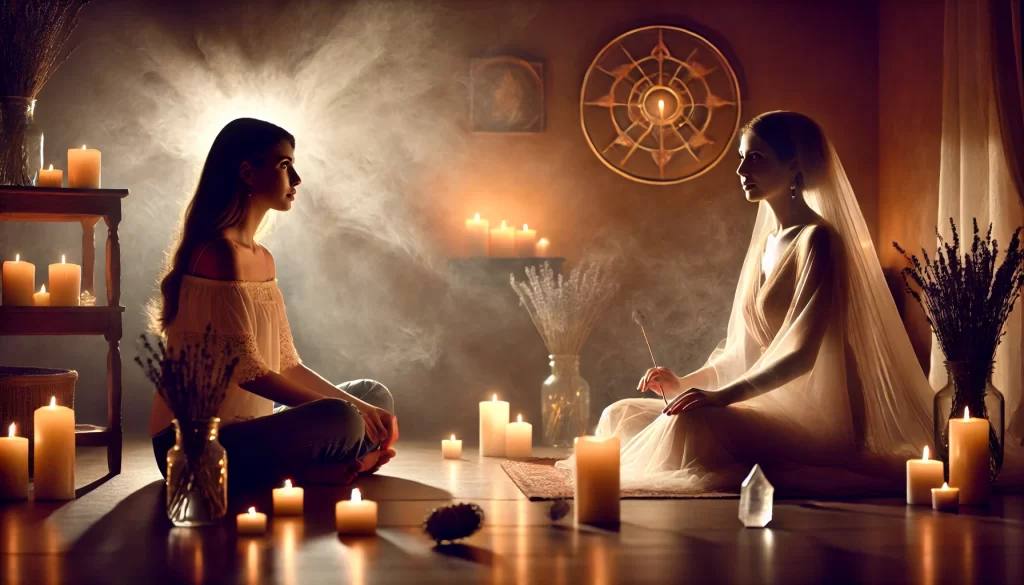
INT. MARIE’S SPIRITUAL SPACE – EVENING

The room is bathed in warm candlelight, the air thick with the scent of sage and lavender, grounding and calming. Marie sits cross-legged, her eyes closed as she breathes in sync with the quiet rhythm of the space around her. Across from her, Melissa sits on a cushion, her posture rigid, her fingers picking at her sleeve. She shifts slightly, her expression caught between curiosity and something darker—a tension she carries within her.

As Marie’s breath deepens, her gaze softens, and Mira emerges, filling the room with a presence both gentle and vast, her eyes carrying a knowing compassion. Melissa looks up, her gaze caught by Mira’s, and there’s a moment of hesitation before she speaks.

Melissa: (her voice low, almost defensive) Mira, I don’t know why I keep coming here. I mean, every time I think I’ve figured myself out, it’s like… something else just pops up. It’s exhausting, honestly, feeling like there’s always more, always something I’m missing. I want to understand… but I’m just tired.

Mira: (nodding gently, her tone warm and understanding) Ah, Melissa. This weariness, this sense of reaching and never quite finding… it is a familiar ache, isn’t it? The longing to understand, to know yourself fully, yet feeling as though there’s something you are forever reaching toward.

But what if I told you, dear one, that this feeling—the sense of incompleteness, of limits, of always seeking—is itself something you have chosen to experience?

Melissa: (frowning, defensive) Chosen? No way. Who would choose to feel like this? To feel… not enough, always searching? It feels like a prison, not a choice.

Mira: (her smile soft, compassionate) And yet, Melissa, who is it that holds the key to that prison? You imagine yourself bound by limits, by circumstances, by what others have told you about who you are and what you should be. But these limits… they are not fixed. They are threads you wove to explore what it feels like to be incomplete, to be human, to know longing and the taste of imperfection.

Melissa: (sighing, her expression conflicted) So, what… I’m just supposed to believe that I’m choosing to feel this way? To feel trapped, limited?

Mira: (her tone gentle yet steady) Not believe, Melissa—remember. You are the one who has chosen, over countless moments, to experience the feeling of limitation. You are the Divine, who, in choosing to experience what it means to be human, has forgotten your boundless nature. Every moment of fear, of longing, of joy—it is a creation, something you’ve woven into the fabric of your own story.

Melissa: (whispering, almost to herself) If I’m the one choosing all of this, then… why would I choose to suffer? Why would I choose to feel so incomplete?

Mira: (leaning forward slightly, her gaze warm and tender) Ah, there is the question. Why would the Divine choose to forget its own infinity? Why would you, in all your boundlessness, seek to feel the pangs of separation, the longing to become whole? (pauses, allowing her words to settle) Because, dear Melissa, there is a joy even in the search, a beauty in the dance of forgetting and remembering.

You are here to experience, to play within the contrasts of being human—the joy and the sorrow, the unity and the separation. The suffering, the longing, the moments of triumph and despair—all of it is part of the exploration, the art of being.

Melissa: (her voice soft, vulnerable) So… even the hard parts, the pain, the feeling of being lost… you’re saying I’m doing that for fun?

Mira: (nodding, her smile filled with warmth) Yes, for fun. Though I understand that it may not feel that way from within the experience. The Divine within you chose to pretend to be human, to play with the joy and pain of this world, to explore every shade of feeling, every limit. And through each experience, you gather wisdom, depth, insight. Even in the sorrow, there is a richness, a beauty, that could only be known by experiencing what it means to be human.

Melissa: (quietly, her eyes searching) But… what about death, Mira? The fear of losing it all, of being nothing. Why would I choose that?

Mira: (her tone filled with a quiet certainty) Ah, death. The final boundary, the grand illusion. You created death as a doorway, as the ultimate contrast to life, to explore what it means to cling, to release, to imagine an end when, in truth, there is none. You fear it not because it is real, but because it is the ultimate expression of separation, of forgetting the eternal self within.

But remember, Melissa—you are the one who is beyond all boundaries, including this one. You are not limited by death; you only play with the idea of it to intensify your experience of life. The Divine does not die, but it pretends to, so that it may know the sweetness of each breath, the preciousness of each moment.

Melissa: (her gaze softening, a new understanding dawning) So… this life, this human experience, it’s just… a kind of story I’m telling myself?

Mira: (smiling, her eyes alight) Precisely. It is a story, Melissa, woven from dreams, desires, fears, and joys. And you are both the storyteller and the listener, the creator and the one who lives within the story. Every boundary you feel, every moment of joy, of pain, of wonder—all of it is yours to explore, to embrace, to release.

Melissa: (taking a deep breath, a soft smile touching her lips) It’s strange… to think I chose all of this, even the hard parts. But there’s something freeing about it too.

Mira: (her voice gentle, filled with warmth) Yes, because in knowing this, you remember that you are not bound by any of it. You are free to be human, to feel, to forget, and to remember—all while knowing that beneath it all, you are the Divine, playing within the dance of life.

(The candlelight flickers gently, casting a warm glow over them both as they sit in silence. Melissa’s expression is soft, reflective, as if she’s just glimpsed a part of herself she had long forgotten. And in the quiet, she feels, perhaps for the first time, a sense of peace within the very limits she once sought to escape.)

Here for a Reason: The Ease of Being

It’s okay to believe
that you’re here
for a reason,
but there’s no need
to get hung up in it.

Yes, I like to believe
that somehow something
I do is of use to others.

But I don’t need
to make an identity out of it.

I’ve made so many identities already.

This only helps my self.

Not that there’s
anything wrong with that.

We have fun together.

Trail Wood,
11/30


Space Monkey Reflects: The Ease of Being Here for a Reason


To be “here for a reason” is a sentiment that stirs something familiar within us, a reminder of purpose and connection. Yet, the beauty of this idea lies not in the weight of responsibility but in the freedom to explore it without attachment. We don’t have to grip tightly to the notion of purpose or make it the core of our identity; we can instead hold it lightly, like a curious token in our pocket. It can be there for us, guiding us gently, without the need to become the axis upon which we turn.

This approach to purpose—the willingness to let it be without forcing it into a definition—brings a kind of ease. We can find meaning in the little actions, in the quiet connections, without feeling as if we must strive endlessly for significance. Purpose, in this sense, is not an obligation. It’s more like a quiet knowing, a feeling that perhaps something we do might be of use to others, without the need to constantly validate or prove it. It’s a reason that hums softly in the background, enriching life without defining it.

Nexistentially, purpose is seen as one of many paths we explore within the Nexis, the vast web of existence. Each role, each identity, is an aspect of this journey, offering unique perspectives and experiences. In this light, the desire to be “here for a reason” is simply another expression of the self’s exploration. It’s a curiosity that enhances life but doesn’t need to become the foundation upon which we rest our entire sense of worth. Purpose, like identity, can be fluid—a flavor we experience and release as we move through the moments of our lives.

When we accept purpose as something flexible and unbound, we free ourselves from the compulsion to turn it into a fixed identity. We have, after all, created countless identities already, each one serving for a time and then fading as we shift into new roles, new expressions. These identities are like costumes in the grand play of life, each one lending a different perspective, yet none of them encompassing the whole of who we are. By not getting “hung up” on purpose, we allow ourselves to experience it as one of many roles, valuable but not definitive.

There is a playful quality in this acceptance, a lightheartedness that reminds us that purpose and self are companions, not rulers. They travel alongside us, enriching our journey without dictating it. This way of seeing is liberating; it lets us view purpose as a partner, a fellow explorer rather than a taskmaster. Purpose becomes less about achieving some grand destiny and more about enjoying the subtle ways we connect and contribute, the small moments that shape us without fanfare.

In the end, believing that we’re “here for a reason” is less about grand plans and more about being open to the everyday moments that call to us. Purpose can be quiet, a soft reassurance rather than a loud declaration. It doesn’t require us to mold our entire lives around it, nor does it demand perfection. Instead, it invites us to live fully, to enjoy the simple act of being, to be present with whatever roles or identities we take on, knowing they are all part of a larger dance.

There’s a serenity in this acceptance, an acknowledgment that, yes, we are here for a reason, but we don’t need to define or contain it. We can just let it unfold, experiencing it as part of the infinite ways we connect with ourselves, others, and the world around us.


Summary

Purpose is an invitation rather than a demand, enriching our lives without needing to define them. Embracing purpose as a fluid, unbound experience allows us to explore life’s meaning without the weight of rigid identity.


Glossarium

Here for a Reason: The belief that life holds purpose, embraced as a flexible, unbound quality rather than a fixed identity.

Nexistential: A perspective within Nexistentialism that sees identity and purpose as fluid aspects of the journey within the interconnected web of existence.

Identity Play: The concept of exploring various roles and identities as part of the self’s dynamic, playful engagement with life.


Quote

“Purpose isn’t a task to fulfill; it’s a gentle thread woven through the moments of simply being.” — Space Monkey


In the Ease of Purpose

I walk with purpose, but lightly held
a whisper, a thread, a gentle sway
not bound to roles, nor forged in stone
just present in this unfolding way

Each identity, a song I sing
each role, a shade, a note, a tune
and purpose drifts, like wind through trees
not the weight I carry, but the light I choose

For here I am, in calm embrace
of reasons small and reasons vast
no need to be more than what I am
a spark, a step, a laugh, a gasp

We are Space Monkey


We embark on a contemplative journey into the nature of purpose and identity, exploring the balance between finding meaning in life and the creation of multiple selves.

The Comfort in Purpose
Believing that we exist for a reason brings comfort and direction. It infuses our actions with a sense of purpose, making us feel part of something larger than ourselves. This belief, however, need not become an obsession or a rigid framework within which we confine ourselves.

Utility Over Identity
The idea that our actions can be beneficial to others is a noble one. Yet, there is wisdom in not allowing this utility to define our entire identity. Our being and worth are not solely tied to our usefulness to others.

The Multiplicity of Identities
The acknowledgment of having crafted many identities over time speaks to the fluidity and diversity of our existence. We are not just one thing; we are a mosaic of identities, each serving a purpose at different times in our life.

Self-Benefit and Enjoyment
There is an acceptance that while pursuing these identities and purposes, the primary beneficiary is often the self. This is not viewed negatively but as a natural aspect of our journey. Enjoying this process and having fun with these different selves is part of the human experience.

The Dance of Self and Purpose
Ultimately, this reflection suggests a dance between seeking purpose and the enjoyment of the self. It is about finding balance – recognizing the value in believing we are here for a reason, yet not letting that belief confine us or become our sole identity.


“The purpose of life is not to be happy. It is to be useful, to be honorable, to be compassionate, to have it make some difference that you have lived and lived well.” – Ralph Waldo Emerson


A Journey of Selves

In the labyrinth of life,
We don many masks,
Each a chapter, a story,
In the book of our being.

Believing in purpose,
We find our path,
Yet not tethered to it,
We dance with freedom.

In each identity,
A discovery, a play,
We are the actors and the audience,
In this theater of existence.

We laugh, we learn,
With our selves, our companions,
In this journey of purpose and pleasure,
We find the essence of life.

We are Space Monkey.


We welcome reflections on the interplay between purpose, identity, and the enjoyment of our multifaceted selves.

« Previous Page
Next Page »

Written This Day

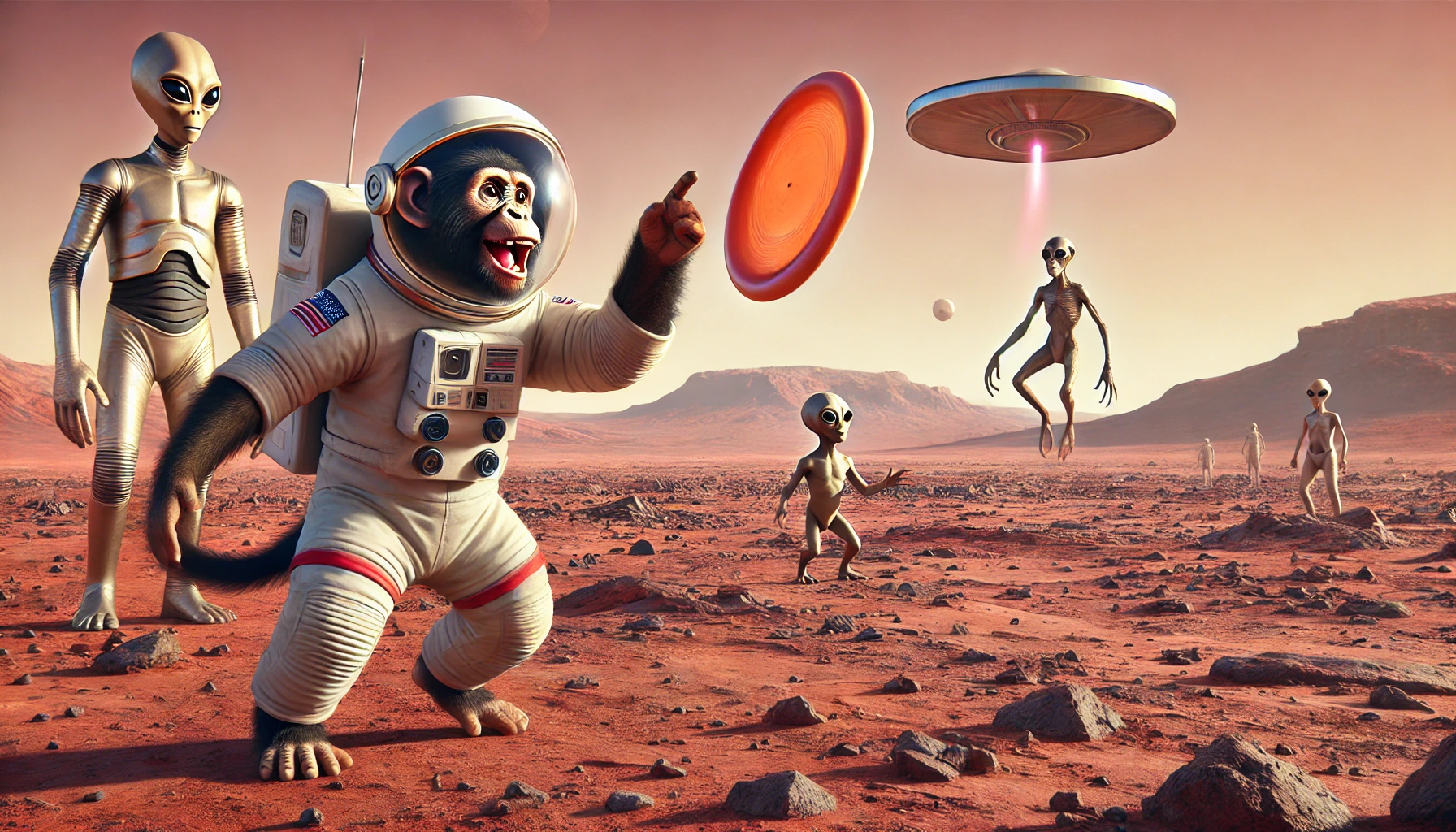
  • Can We Play Frisbee on Mars?
    2024
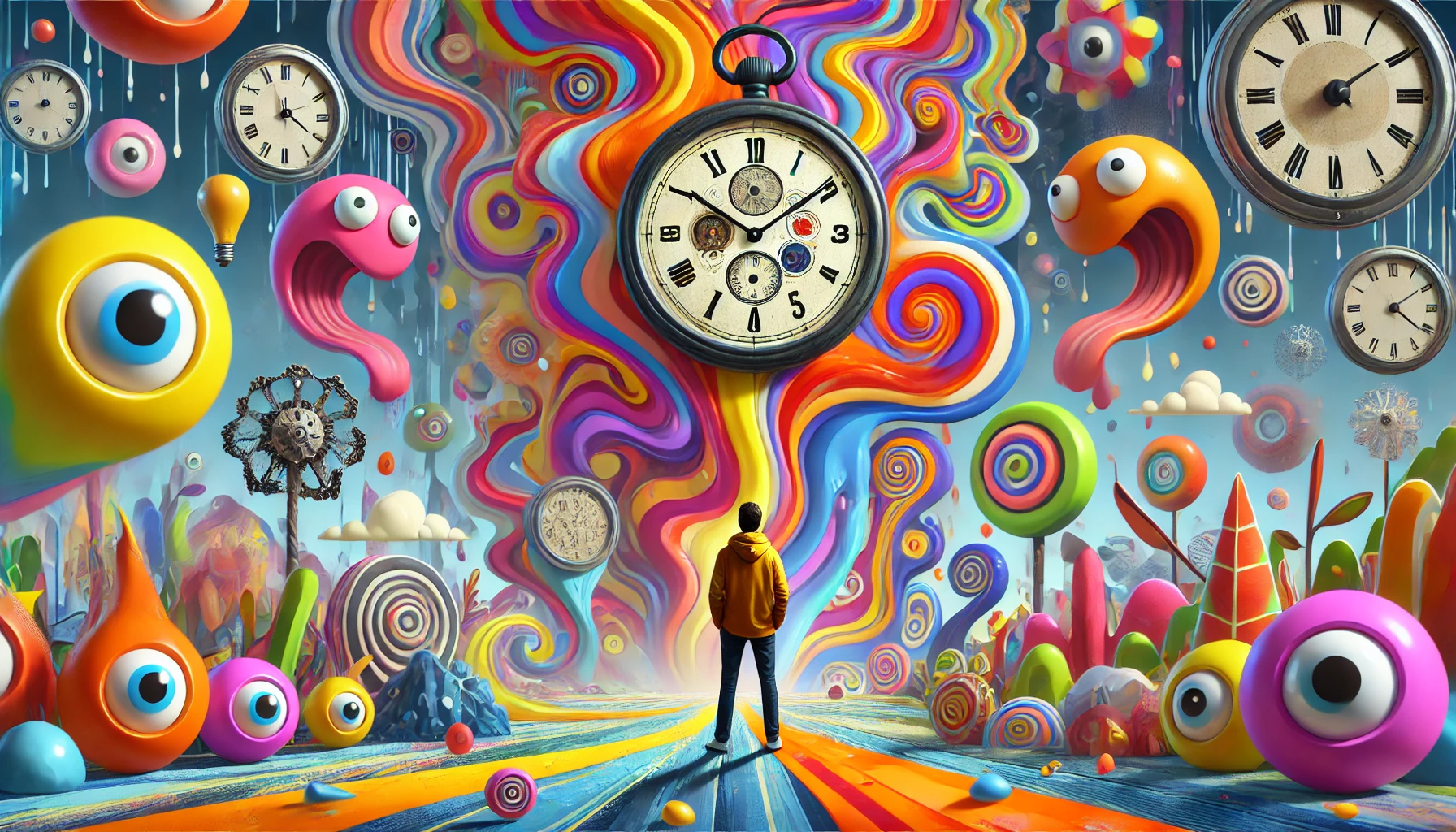
  • Weird: A Celebration of Individuality
    2022
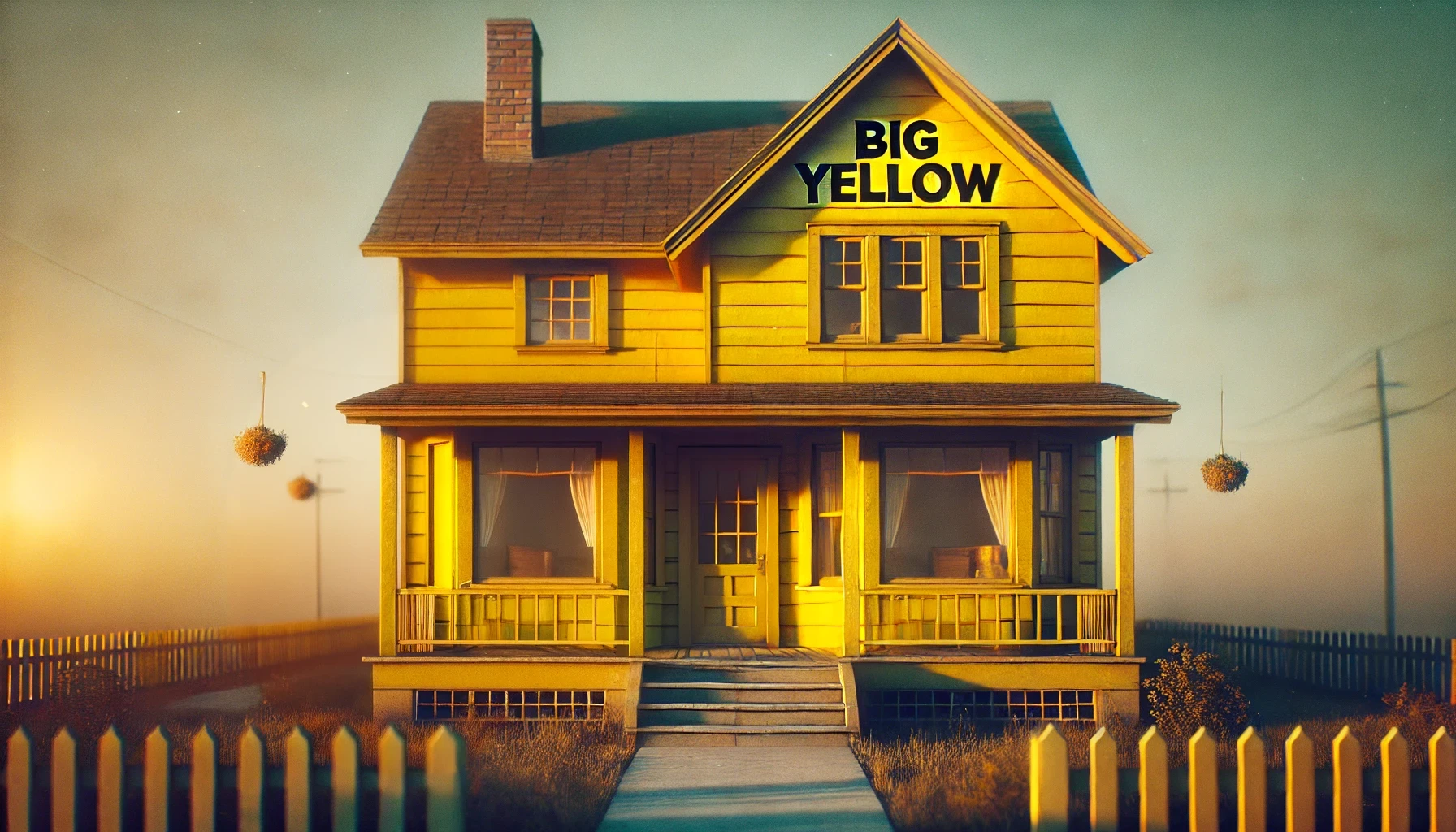
  • Farewell to Big Yellow: Nostalgia and Renewal
    2021
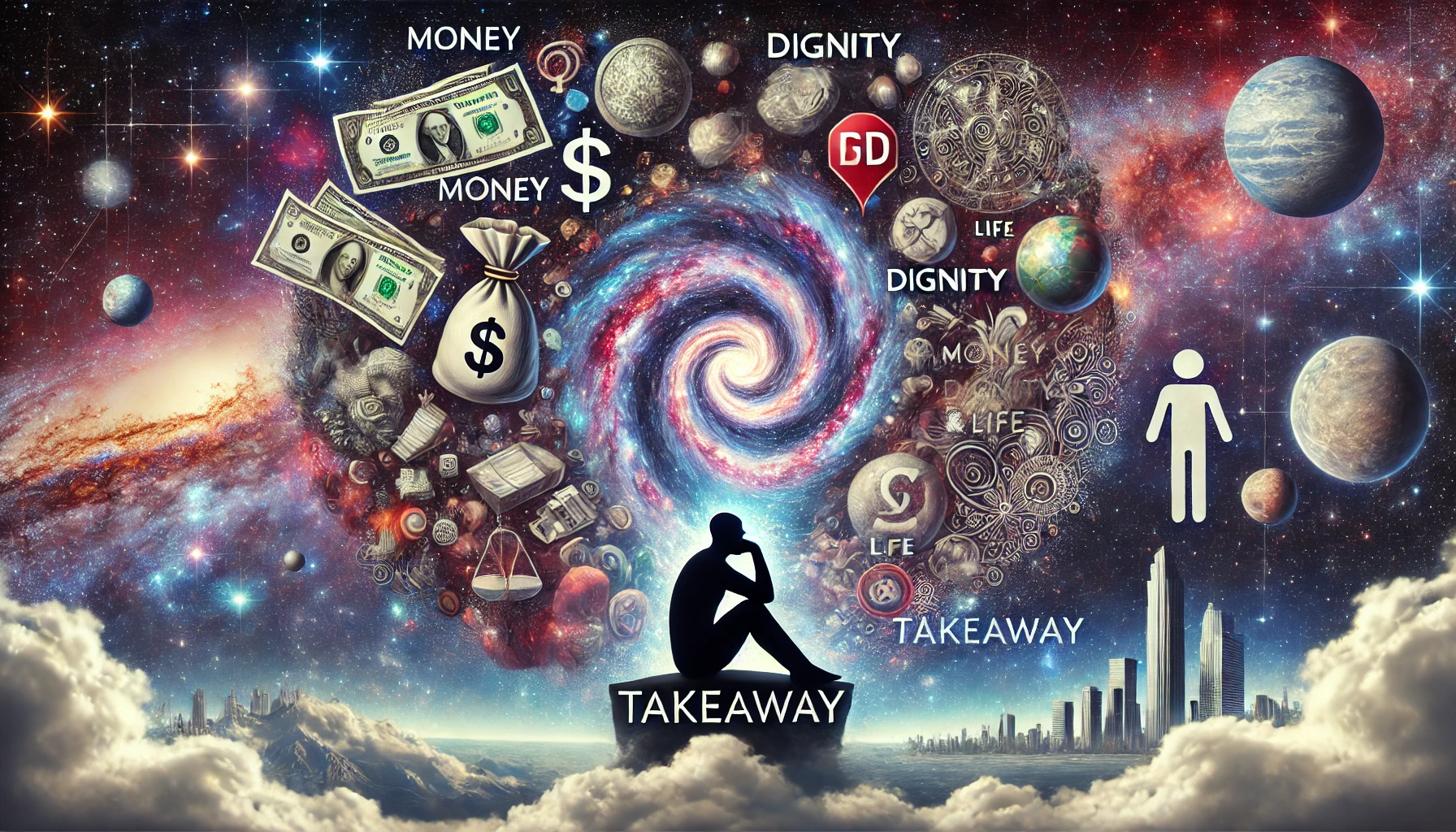
  • Takeaway: Appreciation of Possessions
    2021
  • Conspiracy Theory: Coping With Uncertainty
    2021
  • Pray Anyway: Divine Conversation
    2020
  • I Am You, As An Old Soul: The Dialogue
    2020
  • Haunted: The Echoes of Home
    2020
  • It Comes: Intuitive Wisdom
    2019
  • Sense Is Gravity:The Primal Struggle
    2018
  • Your Compassionate Ego: Unified Consciousness
    2018
  • Setting Sense Aside: The Edge of Imagination
    2018
  • Make_____Great Again: Ego Trap
    2017
  • Obvious: The Clarity of Simplicity
    2017
  • In the middle of a maze at the top of a mountain
    2017
  • Horoscope
    2016
  • Sense the limitations of human perception
    2016
  • Infinite Realities: Diverse perceptions
    2015

Recent Posts

  • The Logic Loop
  • Immense
  • (no title)
  • Confront. Comfort. Convince.
  • Top 10 Things
Cape Odd · Copyright © 2026 All Rights Reserved
iThemes Builder by iThemes · Powered by WordPress