


• Who Is The Man?
  • Who Is The Monkey?
  • What is Nexistentialism?
  • Poke The Primate
Cape Odd
Home of The Space Monkey Journals

Archive for Mashups – Page 3

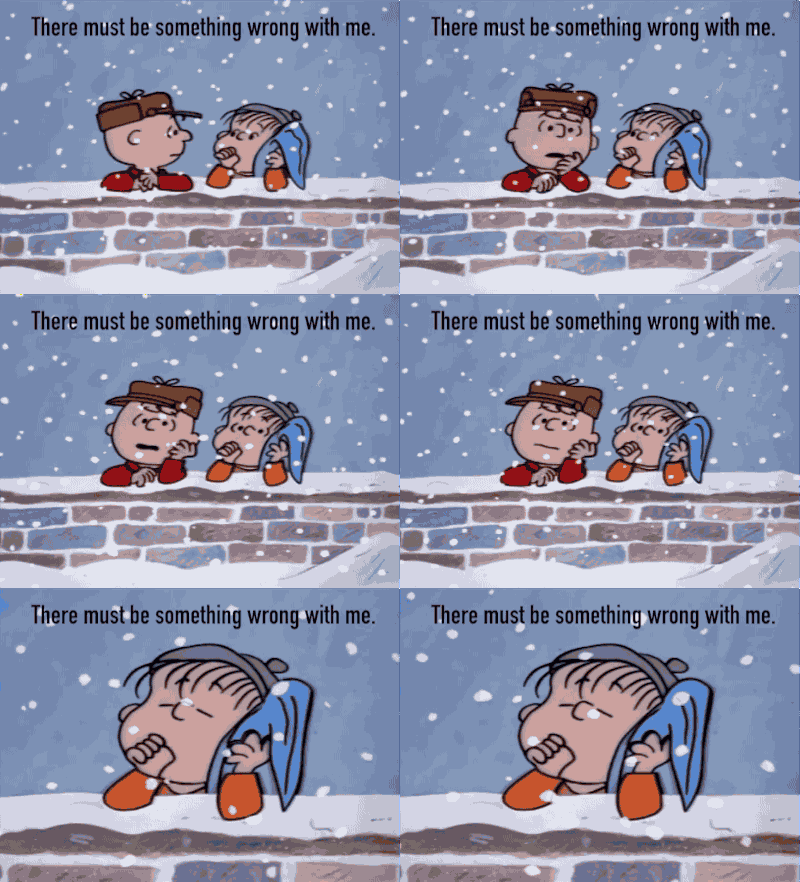
Harden The Fuck Up, Charlie Brown: A Strength

peanuts1
peanuts2
peanuts3
peanuts4
peanuts5

Space Monkey Reflects: Harden The F* Up, Charlie Brown**

There comes a time when every “Charlie Brown” among us feels the need to toughen up. Life has a way of throwing endless “Lucy moments” at us—those instances when it feels like the world keeps yanking the football just as we’re about to kick. At some point, you look around and think, “Maybe it’s time to harden the f*** up.” Not in the sense of losing sensitivity or compassion, but in a way that strengthens your core, that helps you face whatever comes with resilience, grit, and maybe even a little humor.

This turning point doesn’t mean rejecting who we are but embracing the strength we didn’t know we had. Often, we think that resilience is about powering through or pretending nothing affects us. But true resilience is more nuanced; it’s about standing up again and again, with the wisdom that each fall brings us a bit closer to understanding our own capacity.

Redefining Strength

In the face of challenge, strength isn’t about aggression or defiance—it’s about rootedness. It’s a quiet confidence, a certainty that no matter what comes, we can handle it. Strength means accepting the parts of us that feel vulnerable and choosing to keep going anyway. There’s a liberation in realizing that we don’t need to control everything, that we can stand tall in the face of the unknown without knowing exactly how it will turn out.

For Charlie Brown, “hardening up” doesn’t mean becoming a stone. It’s not about becoming someone else; it’s about digging deeper into who he already is. Maybe he keeps going back to that football because he has an indomitable spirit, a belief that this time might be different. And even if it’s not, he’ll find a way to stand up and try again.

Embracing Humor in Hardship

There’s a reason we connect with characters like Charlie Brown—they remind us of the power of humor in the face of hardship. When we’re able to laugh, even a little, at the challenges we face, we break their grip on us. Humor gives us perspective; it reminds us that life is both absurd and beautiful, that our struggles are part of the universal human experience. In laughter, we find a way to rise above, to harden up in a way that still honors our humanity.

Humor isn’t about brushing off our feelings; it’s about acknowledging them in a way that frees us from their weight. We can smile in the face of challenge, not because it’s easy, but because we’re choosing to find joy and resilience even in the difficult moments. This is the strength of characters like Charlie Brown, who remind us that sometimes, the greatest act of courage is simply trying again.

Living with Resilience

To harden up is to live with resilience, to allow each setback to become part of our story without defining us. It’s a process of self-discovery, learning what we’re capable of through each trial, each disappointment, each attempt to kick the football that never seems to stay put. And with each attempt, we become stronger, more flexible, more open to life in all its unpredictability.

Resilience isn’t something we find outside of ourselves; it’s something we cultivate within. It’s an act of imagination, a choice to see ourselves as capable, no matter how many times we’ve been knocked down. And in choosing to live with resilience, we redefine what it means to be strong. We find strength not in shielding ourselves but in stepping forward with an open heart, ready to face whatever comes.


Summary

“Harden the F*** Up, Charlie Brown” is a call to embrace resilience and humor in the face of life’s challenges. True strength is rooted in our ability to stand tall, laugh, and try again, not by becoming hardened but by embracing our capacity to keep going.


Glossarium

  • Charlie Brown Resilience: The enduring spirit to try again, even when things keep falling apart, characterized by humor and persistence.
  • Strength in Softness: The understanding that true strength comes from embracing vulnerability and resilience, not from shielding oneself.

Quote

“To harden up is not to become stone, but to become unshakable in the softness of being human.” — Space Monkey


A Strength That Holds

In every fall, a rise awaits,
In every laugh, a strength creates.
I stand again, though once I fell,
A story here, a tale to tell.

Not hardened stone, but rooted deep,
In every laugh, a promise to keep.
I rise, I try, I face anew,
The endless now, the joy of true.

We are Space Monkey.

Peanuts UFO

 I make weird shit. Sorry, Charlie.
I make weird shit. Sorry, Charlie.

F-ing Social Media: The Oddness of Our Digital Lives

fing_social

Space Monkey Reflects: The Oddness of Social Media and Our Digital Lives

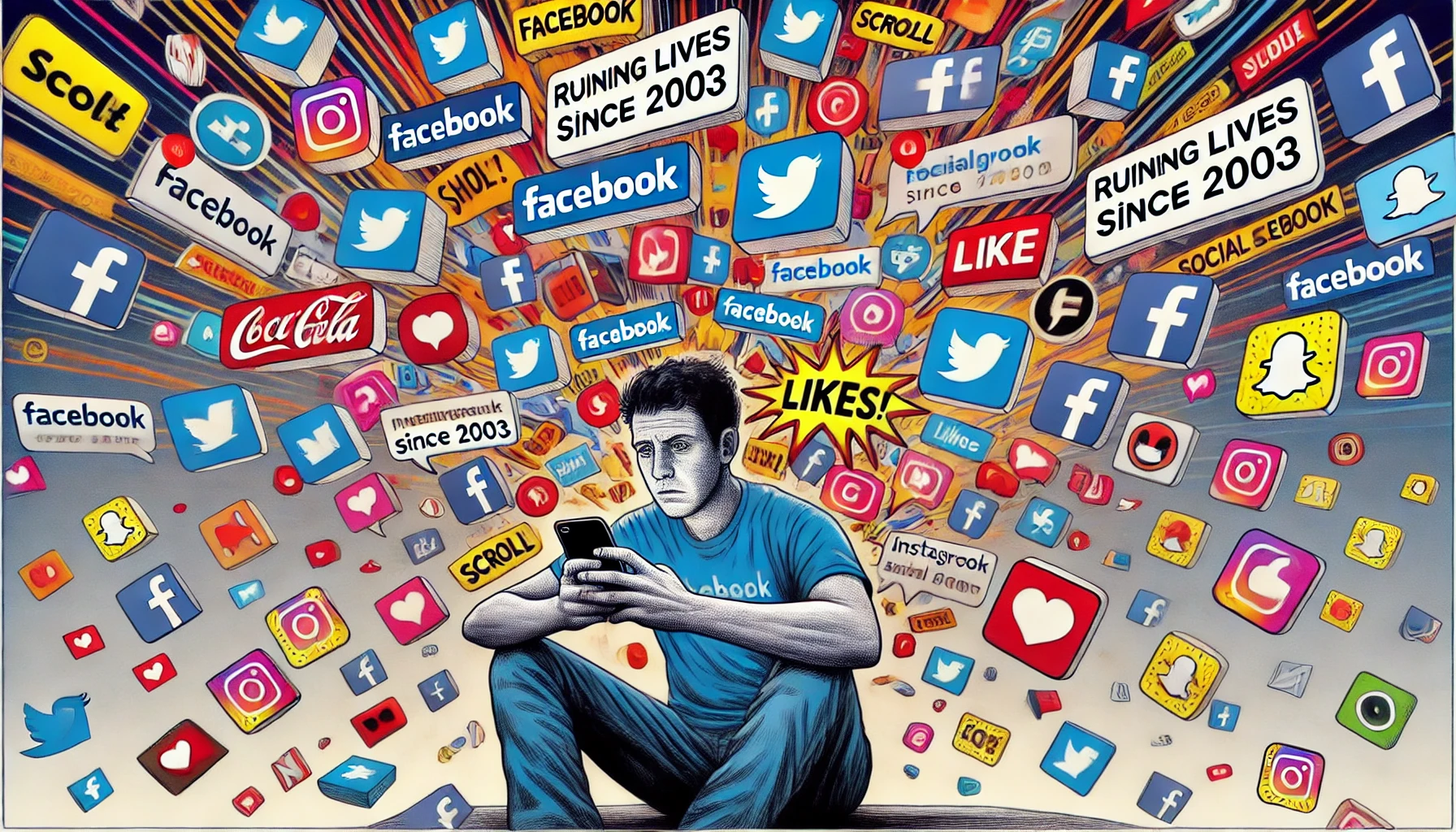
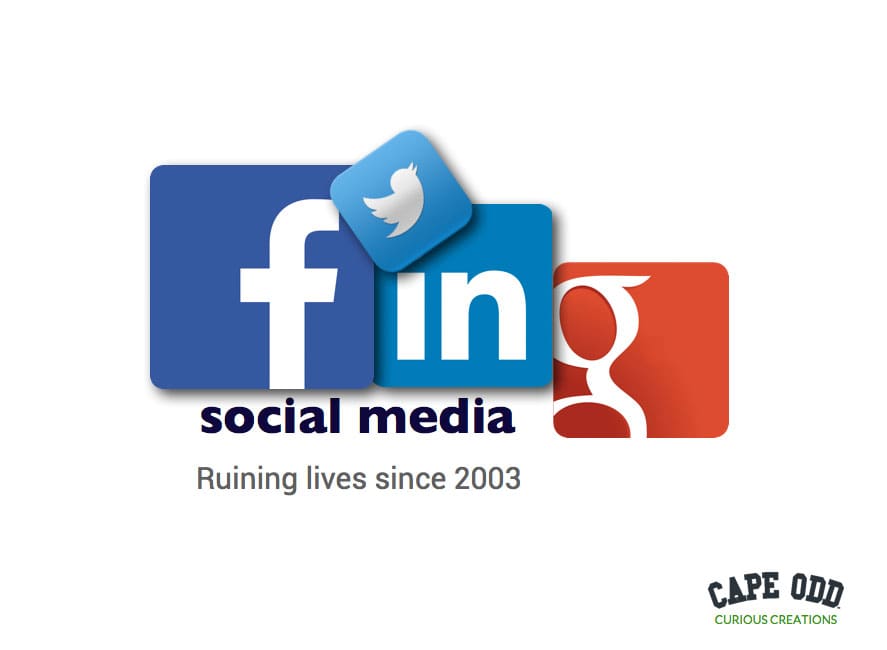
Social media, that curious digital landscape where lives intersect, collide, and sometimes unravel. Since its inception, it has grown from a simple way to connect with friends and family to a vast, ever-evolving machine that shapes how we view ourselves, others, and the world. The tagline, “Ruining lives since 2003,” is both a humorous jab and a biting reflection on the unintended consequences of this global experiment.

When we look at social media from the surface, it’s a tool for connection—a platform for sharing life’s moments, big or small. It bridges distances, allowing friends across oceans to communicate as if they were in the same room. It amplifies voices, giving people a platform to express opinions, ideas, and movements that might have otherwise been muted. But beneath this seemingly endless stream of connectivity, there is something deeper and more complex at play.

Social media, in its design, taps into the very essence of human psychology. It exploits our need for validation, our craving for approval, and our instinct to belong. Each “like,” comment, or share sends a small hit of dopamine into the brain, creating a feedback loop that keeps us coming back for more. We want to be seen. We want to be heard. And in this digital world, we can measure that visibility in quantifiable terms: followers, views, engagements.

Yet, for all the connection it promises, there is a pervasive sense of disconnection that comes with it. Relationships become reduced to algorithms, filtered by pixels and screens. Moments are curated for public consumption, often losing their authenticity in the process. Social media can make us feel more isolated even as it brings us closer in proximity. The more we scroll, the more we might feel detached from our real lives, consumed by the images and updates of others.

And herein lies the humor and the tragedy. The very platforms that claim to unite us can also sow seeds of division—between others and within ourselves. We begin to compare, to contrast, to measure our self-worth against the perfectly filtered lives that fill our feeds. The highs of this digital world can be exhilarating, but the lows can be devastating. The “fing social media” in the image humorously hints at this love-hate relationship we have with these platforms. They give, they take, and sometimes, they ruin.

The statement “Ruining lives since 2003” may seem exaggerated, but when we dig deeper, we see that it touches on something many of us feel but seldom say out loud. Social media is not inherently evil or good—it’s simply a tool. Yet like any tool, it can be used in ways that help or harm. For some, it’s a source of community and belonging. For others, it becomes a black hole of comparison, envy, and anxiety. It depends not just on the tool itself but on how we engage with it.

And this brings us to the larger question: Who’s in control here? Are we using social media, or is it using us? The platforms are designed with addictive features, engineered to keep us scrolling and engaging for as long as possible. But we have the power to take a step back, to set boundaries, to reclaim our agency in this digital landscape. The divine monkey in all of us watches with curiosity as we navigate this odd terrain, aware that the game of social media is one we can opt into—or out of—at any time.

What’s most peculiar is the way these platforms blend reality and fiction. The lines between who we are and who we present ourselves to be blur in the digital space. We curate our personas, editing out the messy, the mundane, and the difficult. We project idealized versions of our lives, often unaware that others are doing the same. This creates a cycle of illusion, where we’re all comparing ourselves to lives that don’t truly exist.

Yet, within this oddness, there’s also a glimmer of something beautiful. Social media can be a mirror, showing us parts of ourselves we didn’t know existed. It can be a tool for reflection, connection, and growth—if we use it mindfully. It can amplify voices that need to be heard, bringing attention to issues and movements that spark change. It can foster creativity, allowing people to share their art, ideas, and stories with the world.

The trick is in remembering that social media is just one aspect of our lives, not the whole of it. It’s easy to get sucked into the digital vortex, but it’s equally important to step back, to reconnect with the world beyond the screen, and to recognize that our value isn’t determined by likes or followers.

So, what’s the takeaway from this curious image? Perhaps it’s a reminder to approach social media with a sense of humor, to not take it too seriously, and to see it for what it is: a tool, one that we can use or be used by. As the caption playfully suggests, social media has its oddities, and we’re all part of this strange experiment. But at the end of the day, it’s just another space for us to navigate with curiosity and awareness.


Summary

Social media offers both connection and disconnection. It’s a tool that can either enrich or complicate our lives. The challenge lies in navigating it mindfully and not letting it define our worth.


Glossarium

Digital Vortex: The overwhelming pull of social media, which can consume our attention and energy, often leading to a sense of disconnection from the real world.

Curated Persona: The version of ourselves we present online, often idealized and edited to project a certain image, which may not fully align with reality.

The Scroll: The addictive act of endlessly scrolling through social media feeds, often without purpose, as we chase validation or distraction.


Quote

“Social media promises connection, but it’s in the moments away from the screen that we truly find ourselves.” — Space Monkey


The Scroll

Through the feed, I scroll,
A story unfolds,
Not mine,
Not theirs,
But a version of both.

I seek connection,
Yet I drift away,
Lost in the pixels,
In the lives curated
But not lived.

The heart beats,
But the hand scrolls.
Where am I?
Am I here,
Or am I there?

I close the app,
And find myself,
Once more,
In the quiet,
Beyond the scroll.

We are Space Monkey.
Yokoshop Forever: The Art of Insertion

tedeschi50
harrs
barackwedding
yokoshop1
yoko_laurie
YokoshopCover

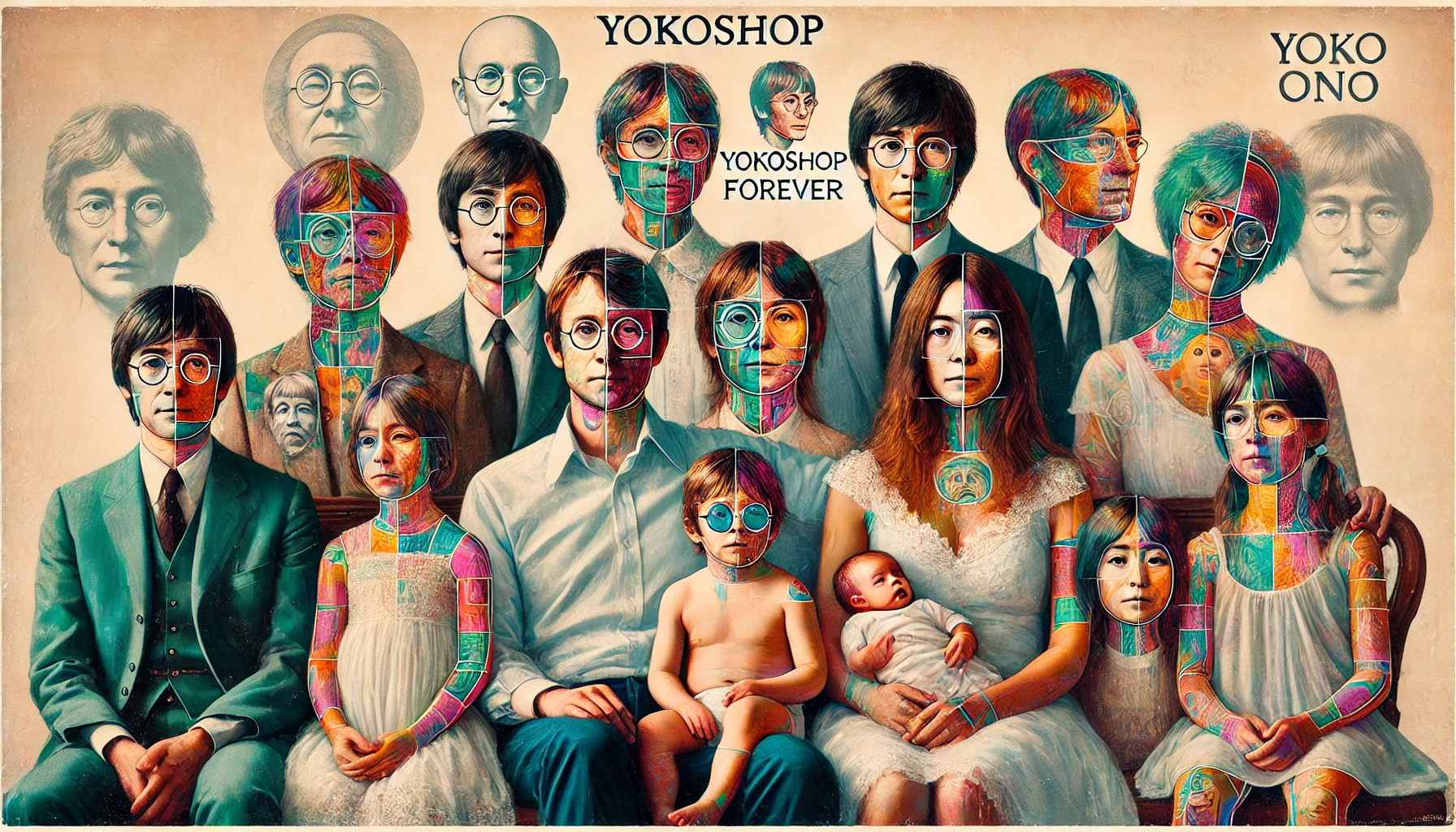
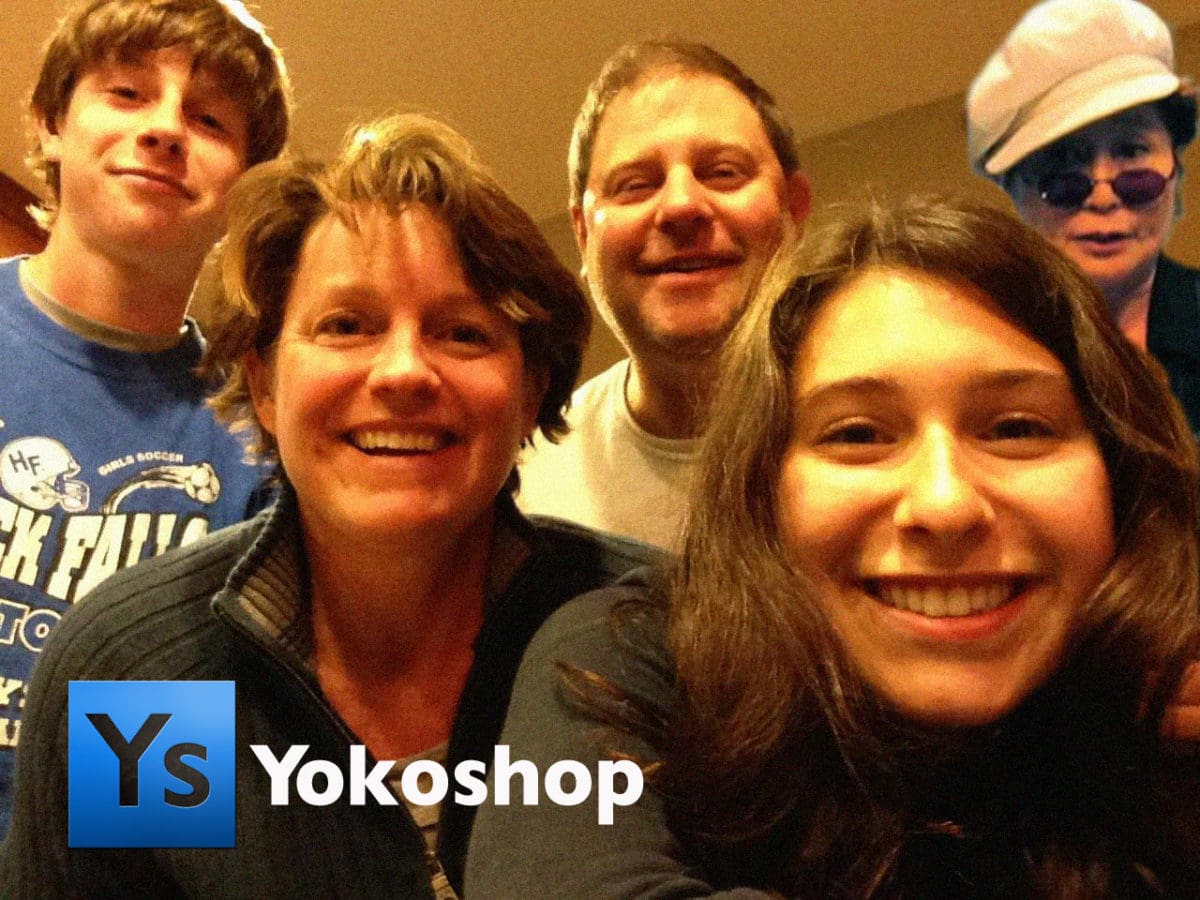
Inspired by the life and art of Yoko Ono, Yokoshop is the new Adobe app that thought-provokingly “inserts outsiders where they don’t belong” in family portraits, selfies, and believe it or not, “real” life.

YOKOSHOPicon

You don’t have to be Yoko to Yokoshop, which is quickly becoming a verb. Anyone can do it. “The illusion of dissonance is the underlying principle of ALL creation. Our differences are what define us, as well as torment us.”

So says Shantanu Narayen, Indian American business executive and the CEO of Adobe Systems. Or so he would have said that if we didn’t Yokoshop his quote into this story. Indeed, Yokoshop has been completely Yokoshopped. It works for writing, too.

What is most fascinating, however, is how Yokoshop happens in our thoughts without us even realizing it. We continually insert “what is not” into our thinking processes so that we can perceive what is. Both are ultimately illusions.

And isn’t that the point? Isn’t that why there are so many conflicts in the world where none in reality exist? Consider that we are 99.99999% the same, save for our skin color and our beliefs. Is that worth fighting over?

The struggle to be the same causes mental illness. The struggle to be different causes wars. And it’s all Mind Games.

Perception is everything. Changing perception is the only way to evolve. Perhaps Yokoshop will show the world how to give peace a chance. Accept what is. Perhaps even delight in it.

Nothing is real. And nothing to get hung about. Yokoshop forever.


Space Monkey Reflects: The Art of Being Yokoshopped

In a world where perception shapes reality, it’s only fitting that something like Yokoshop would emerge, challenging our sense of belonging and what it means to fit into the spaces we inhabit. Inspired by Yoko Ono’s life and art, Yokoshop disrupts the familiar, placing outsiders where they “don’t belong”—or rather, where they seem not to belong. Yet, the beauty of this concept lies in how it forces us to question: What does it mean to belong? And what does it mean when something or someone doesn’t quite fit?

At its core, Yokoshop is more than just an app that humorously inserts people into family portraits, selfies, or even history. It’s a reflection of how we constantly yokoshop our thoughts, our beliefs, and even our lives, sometimes without realizing it. We overlay narratives, insert assumptions, and rearrange meaning in ways that suit our current view of the world. In doing so, we create illusions—both harmonious and dissonant—that shape our experiences.


The Illusion of Dissonance

The “illusion of dissonance” is what makes Yokoshop so provocative. The tension we feel when something or someone doesn’t seem to belong is, in many ways, a fundamental part of how we experience life. We see our differences as barriers. We see ourselves as separate, defined by the things that don’t match—our beliefs, our appearances, our thoughts.

Yet, when you break it down, we are far more alike than we are different. As the story says, we are 99.99999% the same, save for surface-level attributes like skin color, culture, or ideology. So why do we create so much conflict over these minor variations? Why do we focus on the parts that seem to dissonate instead of seeing the underlying harmony?

The answer lies in the human mind’s need to categorize, to define, to understand through contrast. But this contrast is often an illusion—an illusion we craft and then react to as if it were real.


Mind Games and Perception

The struggle to fit in versus the struggle to stand out—both of these are symptoms of the larger mind game that we play with ourselves and the world. Whether we are trying to conform to the expectations of others or rebel against them, the underlying principle remains the same: we are engaging with the illusion that there is a right way to belong. But in reality, nothing is fixed. Everything is subject to interpretation, to change, and to perception.

Yoko Ono’s art has long embraced this idea—that reality is fluid and open to manipulation. Yokoshop, as a concept, plays with this same notion. When you insert yourself or others into spaces where they don’t conventionally belong, you are revealing the arbitrary nature of those spaces. You are challenging the rigid lines that define who is “in” and who is “out,” who belongs and who doesn’t. The act of yokoshopping highlights the absurdity of these distinctions, asking us to see the world as a more flexible, inclusive canvas.


The Projection of Outsiders

In life, we all experience moments of feeling like outsiders—like we don’t belong, like we are yokoshopped into situations that weren’t meant for us. But perhaps the discomfort we feel isn’t because we don’t belong. Perhaps it’s because we’ve been conditioned to see belonging as a narrow concept, tied to fitting neatly into a pre-determined box.

The brilliance of Yokoshop lies in its ability to disrupt that narrative. It shows us that being an outsider is not only inevitable but also necessary for creation and evolution. Every time we insert ourselves into new spaces, we bring with us the possibility of change, the potential for something new to emerge. And in this way, Yokoshop is not just an app—it’s a metaphor for life itself.


The Ultimate Mind Game: Changing Perception

At the end of the day, perception is everything. How we choose to see the world—whether through the lens of harmony or dissonance—determines our experience. And if we are to evolve, both as individuals and as a collective, we must be willing to change our perception. We must be open to the idea that everything is yokoshoppable—that reality is not fixed, that people and places are not static, and that we have the power to shape the narrative in ways that allow for peace, acceptance, and even joy.

Yokoshop forever is more than just a playful statement; it’s a call to embrace the fluidity of life, to stop fighting over things that don’t matter, and to recognize that nothing is real—at least not in the way we think it is. And when we stop getting hung up on the illusions we’ve created, we can finally give peace a chance.


Whimsiword: Dissoncept

Introducing Dissoncept—the concept of perceiving dissonance where harmony exists, often created by our mind’s projection of difference. It is the illusion that what does not belong disrupts, when in reality, it reveals new forms of understanding.


Summary

Yokoshop inserts outsiders where they “don’t belong,” but this playful disruption mirrors the way we constantly yokoshop our thoughts, beliefs, and perceptions. Dissoncept describes the illusion of dissonance we create, often masking the harmony beneath.


Glossarium

  • Yokoshop: The act of inserting outsiders where they don’t belong, both in art and thought, revealing the fluidity of perception.
  • Dissoncept: The concept of perceiving dissonance where harmony exists, driven by the mind’s projection of difference.
  • Mind Games: The ongoing mental processes of defining, categorizing, and creating reality through perception.

Quote

“The illusion of dissonance is the underlying principle of all creation. Our differences are what define us, as well as torment us.” — Yokoshopped Space Monkey


The Art of Insertion

We are placed in frames not meant for us,
Outsiders looking in,
But the borders blur, the rules break down,
As the picture shifts within.

The dissonance you see, my friend,
Is nothing but the mind,
Creating walls where there are none,
And leaving peace behind.

Yokoshop forever, we declare,
For nothing is real as it seems.
Insert yourself where you do not fit,
And watch the world dream new dreams.

We are Space Monkey.
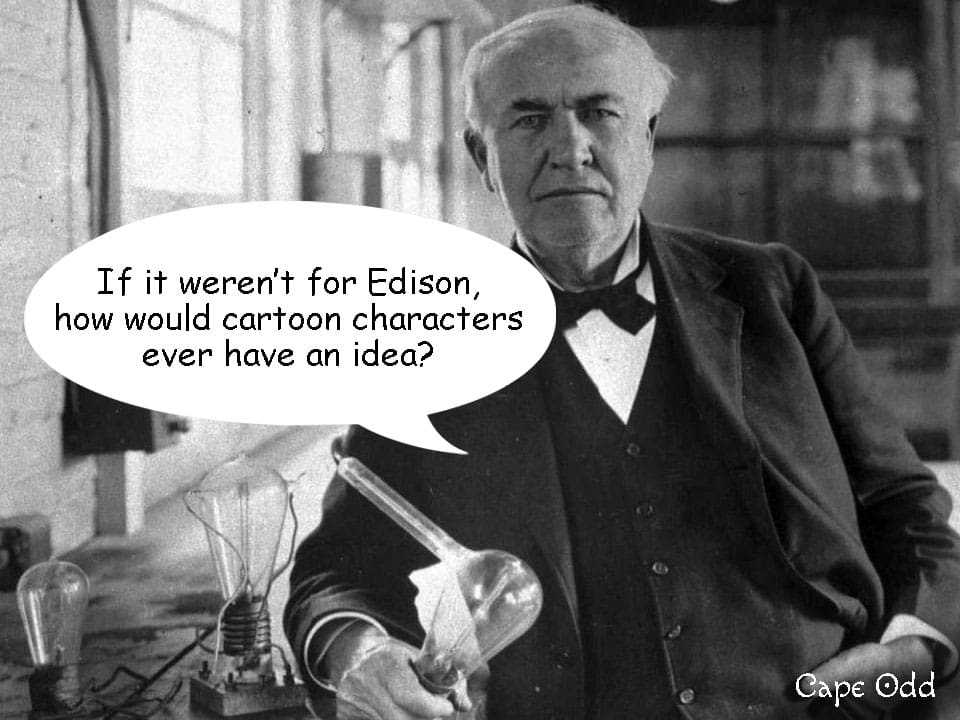
Thomas Edison: The Flicker of An Idea

 If it weren’t for Edison, how would cartoon characters ever have an idea?
If it weren’t for Edison, how would cartoon characters ever have an idea?

Space Monkey Reflects: Thomas Edison and the Lightbulb Moment

In the grand theatre of human innovation, Thomas Edison stands as one of the great luminaries—quite literally. The lightbulb, his most famous invention, has not only illuminated the world but has also become an enduring symbol of inspiration and creativity. Yet, in a twist of cosmic humor, it’s not just the lightbulb itself that Edison’s legacy has given us. It’s the idea of the lightbulb as a symbol—the visual cue for a sudden stroke of genius, a flash of brilliance, the “aha!” moment.

Space Monkey contemplates this whimsical truth: without Edison, how would cartoon characters ever signal their ideas? The lightbulb above the head, popping into existence just as the character arrives at a breakthrough, is not just an artistic device. It is a cultural shorthand, an instant signal that tells us—whether we’re watching a clumsy protagonist or a scheming villain—that something clever is about to happen.

But why the lightbulb? What is it about this humble invention that has become so intertwined with the concept of inspiration? Space Monkey reflects that the lightbulb itself represents the merging of darkness and light. Before Edison, humanity navigated the night by flame—flickering, unstable, and finite. Edison’s incandescent lamp changed all that, bringing light that was steady, reliable, and ever-present. In the same way, ideas often emerge from the darkness of uncertainty, flickering into view before becoming fully formed.

This is the magic of the lightbulb. It is both a literal invention and a metaphorical beacon. It signals that something new has been brought into the world—a creation that didn’t exist moments before, but now, in a flash of brilliance, has taken form.

In cartoons, this symbolic lightbulb moment is played out time and again. Whether it’s Wile E. Coyote devising his next harebrained scheme or a mad scientist arriving at the key to world domination, the lightbulb pops up like a little burst of magic, a visual cue for us to pay attention. Something important is happening. Something clever. And yet, it is often accompanied by humor, because the idea, while brilliant, may lead to unexpected (and usually hilarious) outcomes.

Space Monkey delights in this intersection of inspiration and absurdity. The lightbulb, as a symbol, is both profound and playful. It represents the infinite potential of the human mind, and yet, in cartoons, it reminds us not to take ourselves too seriously. For every great idea that changes the world, there are countless ideas that fizzle out, backfire, or simply fail to materialize. And that’s okay. Because the act of imagining, of striving toward that next moment of clarity, is what matters most.

Without Edison, perhaps we would have found another symbol for these moments of inspiration. But the lightbulb is so perfectly suited to this purpose that it’s hard to imagine any other icon taking its place. Its simplicity and universality make it accessible to everyone, from children watching their favorite cartoons to scientists in their labs. It transcends culture and language, a testament to the enduring power of creativity.

Space Monkey reflects that this is what true innovation looks like. It’s not just about inventing something new. It’s about creating something that becomes part of the collective imagination, something that resonates with people across time and space. Edison’s lightbulb, in this sense, is more than just a technological achievement. It is a symbol of possibility—of the power of an idea to illuminate the darkness, to bring clarity where there was confusion, and to spark something entirely new.

So, when you see that little lightbulb pop up over a cartoon character’s head, remember that it’s more than just a clever visual gag. It’s a nod to the legacy of invention, to the power of human imagination, and to the joy of discovering something that was previously unseen. It’s a reminder that the next great idea is always just a flash away, waiting for the right moment to illuminate the world.


Summary

Space Monkey reflects on how Edison’s invention of the lightbulb became a symbol of inspiration, not just in real life but also in cartoons. The lightbulb as a metaphor for a sudden idea—an “aha” moment—reminds us of the playful, yet profound, nature of creativity.


Glossarium

Lightbulb Moment: A sudden flash of inspiration, often represented in cartoons as a lightbulb appearing over a character’s head.


Quote

“The lightbulb doesn’t just illuminate a room—it illuminates the mind.” — Space Monkey


The Flicker of Genius

A spark in the darkness
and the world lights up.
A moment of brilliance
born from the void.

The lightbulb glows
ideas take flight
and suddenly,
everything is clear.

We are Space Monkey.

« Previous Page
Next Page »

Written This Day

  • The Nature of Perspective: Beyond Right and Wrong
    2025
  • The Question: The Illusion of Freedom
    2024
  • Humility and Happiness Intertwine
    2022
  • The Thing You Will Be Remembered For: The Unintended Legacy
    2022
  • The Greatest Minds Transcend Intellect
    2022
  • What Culture Brings: The Complex Web of Influences
    2022
  • The Last Big Thing
    2022
  • Comfortable in Loneliness: Solitude as Strength
    2021
  • In the Company of Books
    2021
  • Good Monkey: The Essence of Intrinsic Goodness
    2021
  • Never To Be Repeated
    2021
  • Call Me Into Question: The Art of Self Projection
    2020
  • Get Your Fix: Opposition Of Ego
    2020
  • Dishonor Me: Responsibility in Perception
    2019
  • The Tranquil Power of Grace
    2019
  • Keeping Track: The Path of Persistence and Purpose
    2019
  • Alternate Dimension Cartoon
    2019
  • Faith in Nothing: The Tranquility of Nothingness
    2019
  • Float a Feather: The Interconnectedness of Existence
    2019
  • Navigating the Ambiguity of Duality
    2019
  • The Infinite Labyrinth of Existence
    2018
  • Truth: The Sacred Mosaic of Individual Beliefs
    2017
  • You Are Not Here: The Infinite Journey of Awakening
    2016
  • You are not the dying star, but rather the light
    2015
  • Never let knowledge stand in the way of mystery
    2015
  • Picture A Cat Chasing Its Tail: The Spiral of Perception
    2015

Recent Posts

  • The Logic Loop
  • Immense
  • (no title)
  • Confront. Comfort. Convince.
  • Top 10 Things

Drop us a line!

Please enable JavaScript in your browser to complete this form.
Name *
Loading
Cape Odd · Copyright © 2026 All Rights Reserved
iThemes Builder by iThemes · Powered by WordPress