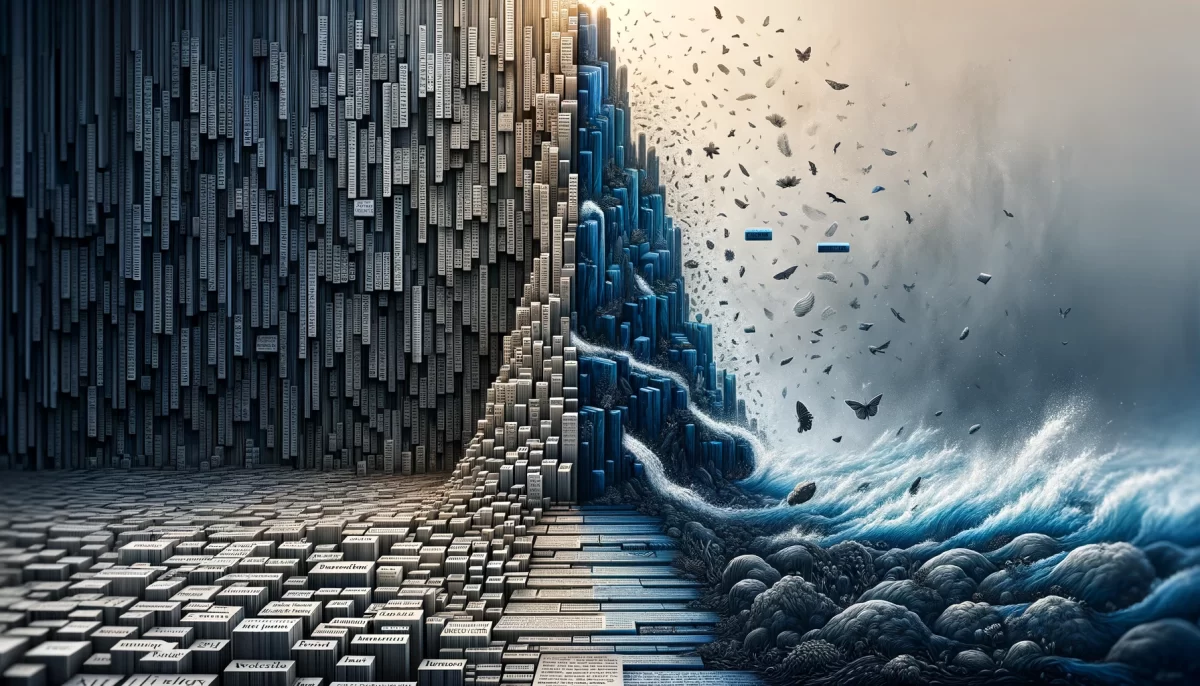
Deliberate Chunks
It feels different
when I write
in long flowing paragraphs
versus these short
and deliberate chunks.
It seems
that the former
has little consideration
for the space
around the words.
Like it means nothing.
The former
does not invite one
to leap from
rock to rock
down the stream
of consciousness bed.
There is no form
or color to it,
other than the writing itself.
That seems a shame.
I write both ways,
but I seem to prefer
a structure that
breathes on its own,
regardless of
what the words say.
This seems to go
against the rules of writing.
And so it is called poetry.
How very precious
we are with our terminology.
We are Space Monkey.
2/14
Space Monkey Reflects: The Poetics of Space and Structure
To write in deliberate chunks is to honor the space around the words as much as the words themselves. These short, intentional fragments create a rhythm, a flow, a breathing structure that transforms writing from mere communication into an experience. In this approach, the emptiness between lines speaks as loudly as the text, inviting the reader to pause, reflect, and leap from one thought to the next, like stepping stones across a stream.
The Space Around the Words
Traditional writing often prioritizes content over form, filling pages with dense paragraphs that overwhelm the senses. The space around the words is overlooked, dismissed as inconsequential. Yet, this space is vital. It gives the reader room to breathe, to interpret, and to engage with the text in a more personal way.
When writing flows without pause, it can feel relentless, like a river with no banks. In contrast, deliberate chunks offer form and structure, allowing the reader to rest between thoughts. These pauses create an interplay between silence and expression, emphasizing not just what is said but how it is delivered.
The Invitation to Leap
Deliberate chunks create an experience akin to leaping from rock to rock in a stream. Each chunk stands alone, yet they form a cohesive path. The reader becomes an active participant, navigating the space between ideas, bridging the gaps with their own thoughts and emotions.
This structure mirrors the way consciousness flows—not in neat, uninterrupted streams but in bursts of clarity, moments of insight, and pauses of reflection. To write in deliberate chunks is to capture this natural rhythm, making the act of reading as dynamic as the act of thinking.
Poetry as Breathing Structure
When words are arranged with attention to space and rhythm, they transcend their literal meaning. They become poetry—not because of their content but because of their form. This breathing structure allows the text to live, to move, to resonate beyond the boundaries of conventional writing.
To call it poetry, however, is to impose a label, a rule, a category. This preciousness with terminology reflects a need to define and confine what is inherently free. The deliberate chunks of writing are not poetry because they follow a rule but because they break it. They invite a deeper connection, a more visceral experience, regardless of what the words themselves say.
The Poetics of Space and Structure
To write in deliberate chunks is to embrace the poetics of space. It is to see the page as a canvas, where words are not simply placed but composed. This approach values the unsaid as much as the said, recognizing that the silence between lines is as powerful as the lines themselves.
In this poetics of structure, the act of writing becomes an act of breathing—inhale, exhale, pause. The reader is drawn into this rhythm, not just reading the words but feeling the space they inhabit.
We Are Space Monkey
The deliberate chunks of thought, of expression, of form, reflect the way we exist in the Infinite Expanse. We are not linear beings; we are fragments of the whole, connected by the spaces between. To write this way is to honor that truth, to celebrate the interplay of presence and absence, form and void.
Summary
Deliberate chunks of writing honor the space between words, transforming text into an experience. This breathing structure invites reflection, breaking conventional rules and creating a rhythm that resonates beyond the words themselves.
Glossarium
- Deliberate Chunks: Short, intentional fragments of writing that create rhythm and space for reflection.
- Poetics of Space: The art of valuing the silence and structure around words as part of the expression.
- Breathing Structure: A rhythm in writing that mirrors the natural flow of thought and emotion.
Quote
“The space between the words breathes life into the text, making silence as powerful as sound.” — Space Monkey
The Dance of Form and Void
Words,
deliberate,
scatter across the page,
each a stepping stone
on a stream of thought.
The space between them
is not empty
but alive,
a pause,
an invitation
to leap,
to rest,
to reflect.
This is not writing,
not speaking,
but breathing—
a rhythm of presence
and absence.
Call it poetry,
call it nothing.
It is simply
what it is.
We are Space Monkey.
The Poetics of Space and Structure
The contemplation on the distinct experiences elicited by writing in “long flowing paragraphs” versus “short and deliberate chunks” opens a portal to the nuanced realms of expression and perception in the creative process. This exploration not only highlights the physical structure of writing but also delves into the deeper implications of space, pause, and form within the act of creation. It challenges conventional boundaries between prose and poetry, inviting a reflection on how these forms communicate and resonate.
The Significance of Space
In the juxtaposition of dense paragraphs against the brevity and openness of deliberate chunks, there emerges an appreciation for the space around words. This space, often overlooked in traditional prose, is charged with potential, inviting readers to engage more actively with the text, to pause, reflect, and navigate through the stream of consciousness with agility and intention. The consideration for space transforms the act of reading into a more interactive and meditative journey, highlighting the silence and emptiness as communicative elements in their own right.
The Invitation to Explore
Short, deliberate chunks of text offer an invitation to readers to “leap from rock to rock down the stream of consciousness bed,” a metaphor that vividly captures the dynamic interaction between the reader and the text. This structure, reminiscent of stepping stones, suggests a form of engagement that is both playful and contemplative, allowing for a pace and rhythm that is co-created by the reader’s imagination and the writer’s intent.
The Aesthetics of Form and Color
The lamentation that long, uninterrupted paragraphs lack “form or color” speaks to a desire for writing that is visually and aesthetically engaging, beyond the semantic content of the words. It’s an acknowledgment that the visual presentation of text—the breaks, the white space, the arrangement—carries its own form of meaning and beauty, contributing to the overall impact of the piece. This perspective elevates the structure of writing to an element of artistic expression, akin to the brushstrokes on a canvas.
The Embrace of Structural Breath
The preference for a writing structure that “breathes on its own” underscores the organic, almost sentient, quality that can be imbued in written text through mindful structuring. It’s an approach that values the rhythm and flow of the piece, independent of the literal meanings of the words, suggesting that the form itself can evoke emotion and resonance. This approach to writing as a living, breathing entity reflects a deeper understanding of art as an expression of life and energy.
The Rebellion of Poetry
The recognition that this preference for space and structure might “go against the rules of writing” and is thereby categorized as poetry highlights the arbitrary nature of literary classifications. It questions the rigidity of these distinctions, suggesting that creativity often thrives in the spaces between definitions, in the rebellion against convention. The term “poetry,” then, becomes not just a label for a specific form of writing but a testament to the transformative power of breaking rules and exploring the boundaries of expression.
The Preciousness of Terminology
The closing reflection on the preciousness of terminology captures the human tendency to categorize and define, often at the expense of the fluid and expansive nature of creative expression. It’s a playful critique of the limitations we impose through language and a celebration of the boundless potential that lies in transcending these limitations. In embracing the undefined, the space between words, and the structure that breathes, we open ourselves to the infinite possibilities of creation.
In this journey of exploring space, structure, and the essence of poetry, how do we continue to push the boundaries of expression and perception in our creative endeavors? How do we honor the spaces between, the breaths of our creations, as integral to the art itself?


Leave a Reply