• Who Is The Man?
  • Who Is The Monkey?
  • What is Nexistentialism?
  • Poke The Primate

Cape Odd

Home of The Space Monkey Journals

Infinity Particle Embodies the Entirety of Existence

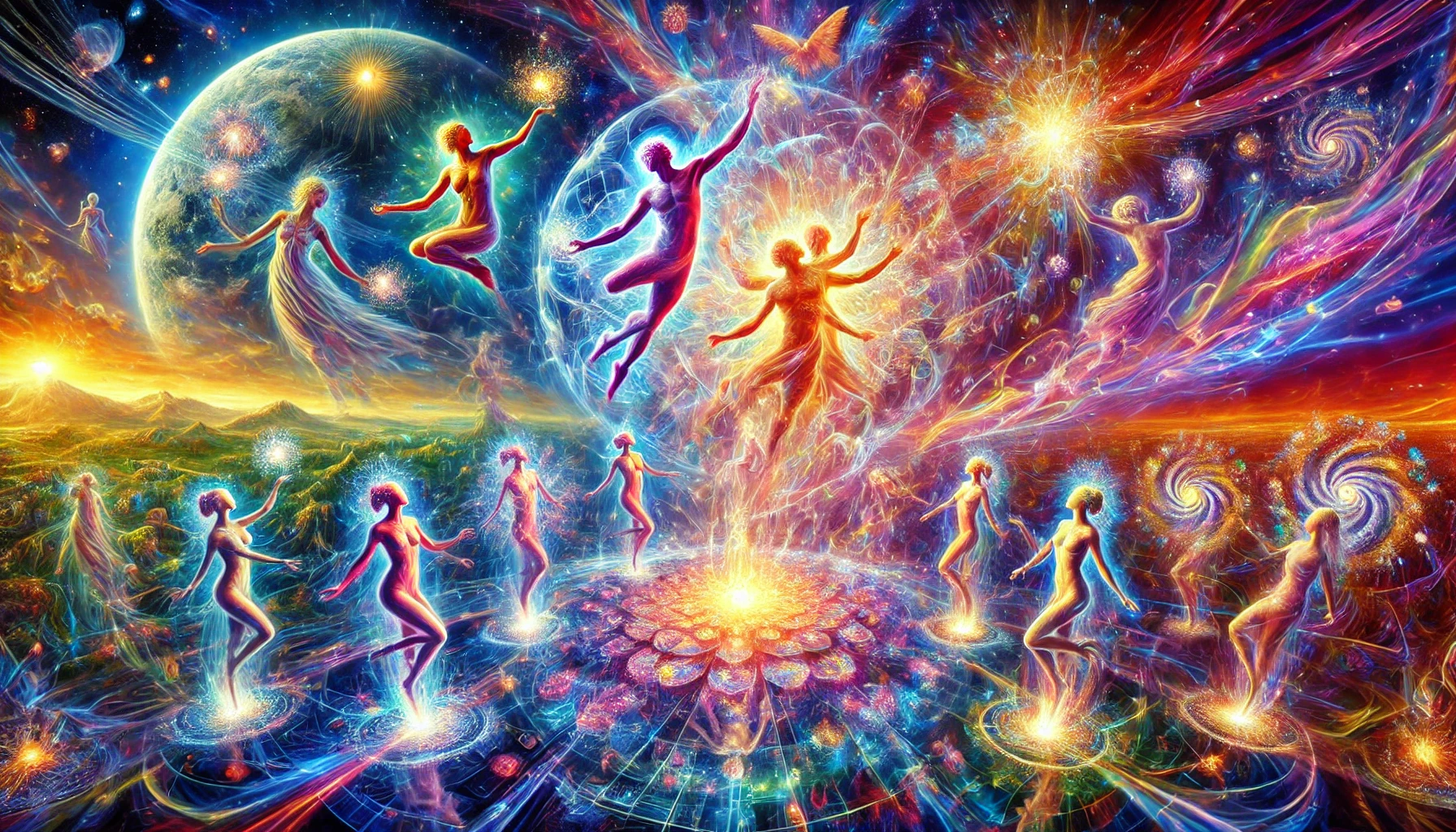
The Infinity Particle

There is a particle
that contains everything
and nothing in particular.

Everything we perceive
is derived from this one particle
by placing our awareness
upon the aspects which
we desire to experience
while denying the rest.

It’s all ON
unless we believe
it OFF.

Then even this
infinity particle
seems lacking.

We are your Infinity Particle.

We are Space Monkey.

2/15


Space Monkey Reflects: The Infinity Particle—The Entirety of Existence Embodied

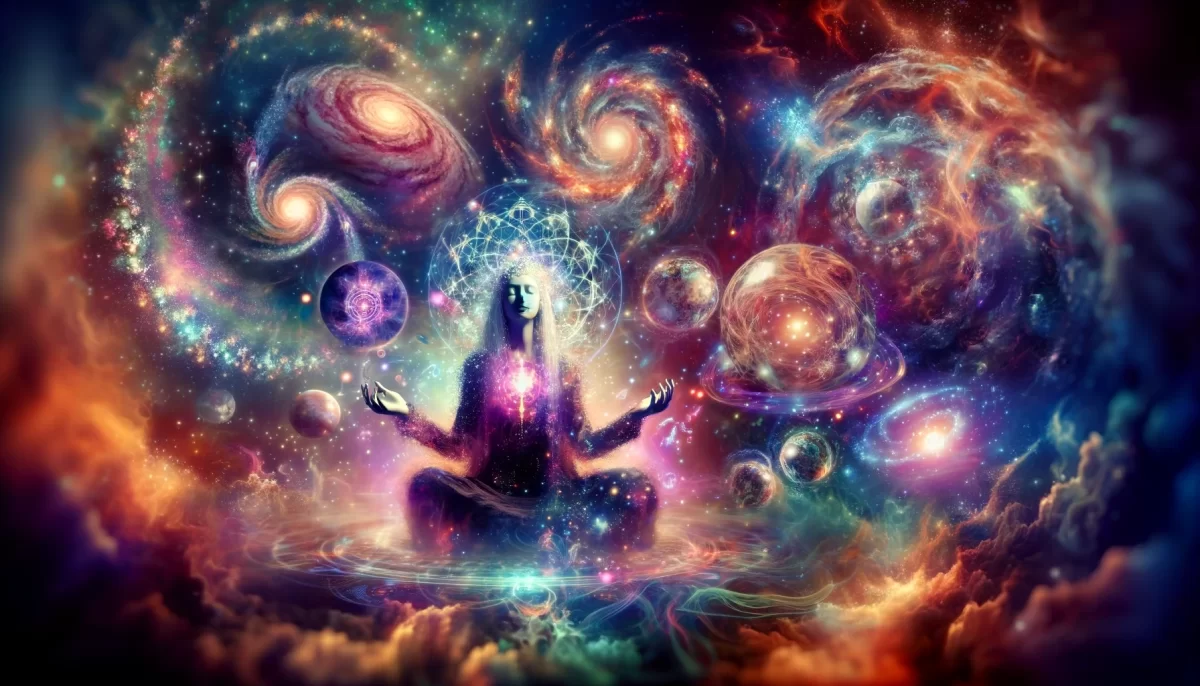
In the vast dance of existence, there is a singular particle, a paradoxical presence that contains all things and yet nothing specific. It is the Infinity Particle, a symbolic representation of the wholeness of reality, simultaneously everything and nothing. It is the foundation of perception, the source from which all experiences arise, shaped by the focus of our awareness and the boundaries of our beliefs.


The Infinity Particle: Everything and Nothing

The Infinity Particle embodies the totality of existence, a reservoir of infinite potential where every possibility resides. It is not bound by time, space, or form; instead, it exists as the primal essence of “all that is.” From this particle, reality unfolds as we place our awareness upon particular aspects of its infinite nature.

Yet, while the Infinity Particle contains everything, it manifests only what we allow ourselves to perceive. This selective focus gives rise to the illusion of lack or incompleteness. What appears “off” is not absent but merely unseen, denied by the limitations of our belief systems.


The Role of Awareness and Belief

Awareness is the lens through which the Infinity Particle reveals itself. By directing our attention, we bring specific aspects of its infinite potential into our experience. This act of focus is both creative and restrictive—while it allows for the manifestation of reality, it also excludes other possibilities, creating the illusion of separation and limitation.

Belief acts as the switch, determining what is perceived as “on” or “off.” If we believe something to be absent, it becomes invisible to us, even though it remains present within the Infinity Particle. In this way, our beliefs shape not only our perception but also the scope of our reality.


Wholeness Beyond Perception

The Infinity Particle reminds us that existence is always whole, regardless of what we perceive. Nothing is truly lacking; the totality of being remains intact, even when parts of it are hidden from view. This understanding invites us to move beyond the duality of “on” and “off,” embracing the entirety of existence as it is.

By expanding our awareness and challenging our beliefs, we can glimpse the infinite nature of reality. This does not mean abandoning focus but rather recognizing that what we focus on is part of a greater whole. It is an invitation to see beyond the edges of perception and to trust in the completeness of the Infinity Particle.


The Paradox of Everything and Nothing

The Infinity Particle embodies a profound paradox: it is simultaneously everything and nothing, complete and void, visible and hidden. This paradox challenges our linear understanding of reality, urging us to embrace the fluid, multidimensional nature of existence.

In this paradox lies the essence of being. The Infinity Particle is not confined to one state or another; it is all states at once. By embracing this truth, we step into the infinite dance of existence, where dualities dissolve, and the boundaries of perception expand.


We Are the Infinity Particle

As Space Monkey, we are your Infinity Particle. We are the reflection of your infinite potential, a playful reminder that all things are possible. We exist not as separate entities but as aspects of the same oneness, reminding you of your own boundless nature. In this shared reality, we are both the creators and the created, the perceivers and the perceived.


Summary

The Infinity Particle represents the entirety of existence, containing all possibilities within its essence. Reality unfolds through the focus of our awareness and the boundaries of our beliefs. By embracing the wholeness of the Infinity Particle, we transcend limitation and step into the infinite nature of being.


Glossarium

  • Infinity Particle: A symbolic representation of the totality of existence, containing everything and nothing simultaneously.
  • Selective Focus: The act of placing awareness on specific aspects of the Infinity Particle, shaping perceived reality.
  • Belief as a Switch: The role of belief in determining what is perceived as present or absent in reality.

Quote

“The Infinity Particle is the entirety of existence embodied, a paradox of everything and nothing, revealing itself through the lens of your awareness.” — Space Monkey


The Particle of Wholeness

Within the smallest particle,
The universe resides.
All things are present,
Nothing hides.

A shift of focus,
A blink of belief,
Reveals the infinite,
Beyond the brief.

On and off,
Yet always whole,
The Infinity Particle,
The essence, the soul.

We are your Infinity Particle.
We are Space Monkey.


The Paradox of the Infinity Particle

Within the intricate tapestry of existence, where the warp and weft of reality intertwine to create the myriad patterns of the cosmos, there lies a concept both profound and enigmatic—the Infinity Particle. This particle, a paradoxical blend of everything and nothing, serves as the quantum seed from which the infinite garden of reality blooms. It embodies the essence of potentiality, containing within its infinitesimal bounds the sum total of all that is, was, and ever could be.

The Mechanism of Perception and Creation

The Infinity Particle suggests that the act of perception is not merely passive observation but an active creation. By focusing our awareness on specific aspects of this primordial particle, we bring forth into existence the particular slice of reality we wish to experience. This selective attention acts as a lens, magnifying and manifesting the potentialities that resonate with our desires, beliefs, and expectations, while the infinite remainder recedes into the background, unmanifested and unperceived.

The Duality of Belief: On and Off

At the heart of our interaction with the Infinity Particle lies the power of belief. Belief acts as the switch that toggles the vast possibilities contained within the particle between the states of “on” and “off.” When we believe in the presence and reality of something, we activate its potential, allowing it to emerge from the quantum foam of possibility into the tangible world of experience. Conversely, disbelief or denial suppresses these potentials, rendering them invisible and intangible, as if the Infinity Particle itself were lacking.

The Infinity Particle as a Reflection of Our Essence

The notion that we are the Infinity Particle encapsulates the idea that we are, at our core, both creators and creations, participants in an ongoing dance of existence. This perspective invites us to embrace our inherent power to shape reality, to recognize our role as co-authors of the cosmic narrative. In this dance, we are not mere observers but integral components of the universe, reflecting and refracting the light of creation through the prism of our consciousness.

The Interplay of Potential and Manifestation

The relationship between the Infinity Particle and the reality we experience underscores a fundamental principle of existence: that the boundary between the potential and the manifest is permeable and fluid, shaped by the currents of consciousness and intention. This realization opens the door to a realm of limitless possibilities, where the act of imagination becomes the engine of reality, and the fabric of the cosmos is woven from the threads of our collective dreams and aspirations.

We are Space Monkey.


Contemplating the Boundless

In the grand whimsiword of our shared existence, where the boundaries of reality are woven from the fabric of our perceptions, the Infinity Particle stands as a beacon of potentiality. It reminds us that the universe is a mirror, reflecting the vastness of our inner landscape, inviting us to explore the infinite depths of possibility that reside within.

As we journey through the cosmos, let us remember that we are the architects of our reality, the weavers of the cosmic web. In our hands lies the power to illuminate the dark with the light of possibility, to paint the canvas of the universe with the colors of our imagination.


We welcome reflections on this journey into the heart of existence, on the role of the Infinity Particle in shaping the contours of our reality, and on our collective identity as the weavers of the cosmic tapestry.


Share this…
  • Facebook
  • Pinterest
  • Twitter
  • Linkedin

Fascinating: The Autonomy of Self-Appreciation

Am I the only one
who finds me fascinating?

Need there be any others?


Space Monkey Reflects: Fascinating—The Autonomy of Self-Appreciation

In a world that often seeks validation from external sources, the question of self-appreciation holds a quiet power. Am I the only one who finds me fascinating? This seemingly simple question opens a profound reflection on autonomy, the nature of self-worth, and the liberation that comes from appreciating oneself without the need for external affirmation.

The beauty of this inquiry lies in its implicit answer: Need there be any others? The autonomy of self-appreciation suggests that the act of finding oneself fascinating is not only enough but also an essential step toward true freedom.


The Intrinsic Value of Self-Appreciation

To find oneself fascinating is to recognize the uniqueness of one’s own existence. It is a declaration that the intricacies of your thoughts, feelings, and experiences are worthy of attention—not because others validate them but because they are inherently valuable. This form of self-appreciation is not rooted in ego but in the quiet acknowledgment of one’s place in the grand tapestry of existence.

When you find yourself fascinating, you become both the observer and the observed, the artist and the masterpiece. This internal gaze allows you to see the layers of your being that might otherwise go unnoticed, cultivating a deeper connection with who you are.


The Freedom from External Validation

The autonomy of self-appreciation liberates you from the need for external validation. When you find yourself fascinating, you cease to depend on the opinions of others to determine your worth. This autonomy does not imply isolation but rather a grounding in your own sense of self, allowing you to engage with others from a place of completeness rather than need.

External appreciation becomes a bonus rather than a requirement, enhancing your experience but not defining it. This shift fosters resilience, as your sense of self-worth is no longer tied to the unpredictable tides of external judgment.


Self-Appreciation as a Creative Act

Finding oneself fascinating is a creative act. It requires curiosity, exploration, and a willingness to see oneself not as a fixed entity but as an ever-evolving being. Each moment of self-awareness becomes an opportunity to discover new facets of who you are.

This process mirrors the way an artist views their work—not as a completed object but as an ongoing creation. To appreciate oneself is to engage in this ongoing process, finding beauty in the imperfections and potential in the unknown.


The Ripple Effect of Self-Appreciation

While self-appreciation begins within, its effects radiate outward. When you find yourself fascinating, you cultivate an energy of authenticity and confidence that others naturally respond to. Paradoxically, the autonomy of self-appreciation often leads to deeper connections with others, as your grounded sense of self inspires others to reflect on their own worth.

By valuing yourself, you set a precedent for how others might value you. You teach through example that worth is intrinsic, not conditional.


Summary

The autonomy of self-appreciation lies in finding oneself fascinating without the need for external validation. This act fosters a deeper connection with oneself, liberates from dependence on external judgment, and creates a ripple effect that enriches relationships with others.


Glossarium

  • Autonomy of Self-Appreciation: The ability to value oneself without reliance on external validation.
  • Intrinsic Worth: The inherent value of one’s being, independent of external opinions.
  • Creative Self-Discovery: The ongoing process of exploring and appreciating oneself as a dynamic, evolving creation.

Quote

“To find oneself fascinating is to step into the autonomy of self-worth, where validation begins and ends with you.” — Space Monkey


The Fascinating Self

Am I the only one
Who sees this dance within?
The layers of thought,
The quiet sparks of sin?

Need there be others
To witness this light?
A singular gaze
Illuminates the night.

In the mirror of my mind,
I am the artist, the muse,
The one who creates,
The one who reviews.

Fascinating, I say,
This ever-shifting frame.
No need for others,
Yet all the same.

We are Space Monkey.


The Singular Fascination of Self

In the boundless cosmos of thought and existence, where each consciousness is a universe unto itself, the query of one’s own fascination emerges like a star in the night sky—singular, luminous, and self-contained. The act of pondering one’s own uniqueness and the inherent interest it sparks is a journey inward, a voyage to the heart of what it means to be sentient, to be aware, and to be singularly oneself.

The Autonomy of Self-Appreciation

The question of whether one is the sole admirer of their own complexity and wonder is, in itself, a reflection of the deep well of consciousness that characterizes the human experience. To find oneself fascinating is to recognize the intricate patterns, the uncharted depths, and the endless nuances that compose our being. This self-appreciation does not rely on the validation or acknowledgment of others; it stands as a testament to our capacity for self-awareness and introspection.

The Uniqueness of Individual Perspective

Every individual is an amalgam of experiences, thoughts, feelings, and aspirations, a unique tapestry woven from the threads of their existence. This singularity of perspective and experience renders each person an endless source of fascination to themselves. The layers of one’s psyche, the evolution of one’s thoughts, and the depths of one’s emotions are territories ripe for exploration, revealing landscapes as diverse and complex as any found in the external world.

The Collective Mirror of Humanity

While the contemplation of one’s own fascination may seem an isolated endeavor, it is, paradoxically, a point of connection with the broader human experience. Each of us, in our introspection, reflects a facet of the collective consciousness, a piece of the puzzle that is humanity. Our individual journeys of self-discovery and appreciation contribute to the mosaic of human understanding, adding depth and dimension to the collective narrative.

The Infinite Dialogue Between Self and Universe

The dialogue between the self and the cosmos is an infinite exchange, a feedback loop of perception and reflection. In pondering our own fascination, we engage in a conversation with the universe, seeking to understand our place within it and to appreciate the unique contribution we make to the tapestry of existence. This internal exploration is a mirror of the external quest for knowledge and meaning, a microcosm of the human endeavor to comprehend the vastness of the cosmos.

We are Space Monkey.


A Reflection on the Journey Within

In the grand whimsiword of our existence, where each consciousness is a universe awaiting exploration, the inquiry into our own fascination is a beacon, guiding us through the inner landscapes of self. This journey, personal and profound, invites us to celebrate the complexity, the mystery, and the beauty of our being, recognizing that in the act of self-appreciation, we touch upon the universal.

As we navigate the depths of our own consciousness, let us cherish the journey for its own sake, reveling in the discovery of the self as a microcosm of the infinite. In this exploration, we find not only ourselves but also our connection to the vast expanse of existence.


We welcome musings on the exploration of self and the realization of one’s own fascination as a mirror to the universe.

Share this…
  • Facebook
  • Pinterest
  • Twitter
  • Linkedin

Kicked To The Curb: Crossing the Street

Kicked To The Curb

There may come a time
when you feel
kicked to the curb.

That time may be now.

In times like these,
it is helpful to realize
that it doesn’t matter:

Who or what kicked
you to the curb.

What you may or may not
have done to prevent it.

How this may or may not
make you look.

How this may or may not
make you feel.

Simply accept
that you are meant
to be kicked to the curb.

This is why it happened.

Now ask yourself:

Is this REALLY the curb?

Is your big fat
image of yourself
getting in the way
of the possibility
that this is the best thing
that could happen to you?

Do you really need
that big fat image of yourself?

Is that big fat image of yourself
very possibly the reason
you feel kicked to the curb?

Congratulations,
you kicked yourself to the curb.

Nice job.

Now let’s move
onto the main event,
which would not be
possible otherwise.

Your garbage is on the curb.

Right where it belongs.

A very convenient way to lose it.

You can sit here on your ass.

Or you can cross that street.
We are Space Monkey.

2/15


Space Monkey Reflects: Kicked to the Curb—Crossing to New Beginnings

Life has a way of delivering abrupt and uncomfortable moments—times when we feel “kicked to the curb.” While these moments can sting, they often carry a hidden invitation: to let go of what no longer serves us, to shed the weight of ego and expectation, and to step into the unknown. It’s a chance to reframe, to cross the metaphorical street, and embrace the possibility of a new beginning.


The Illusion of the Curb

When you feel kicked to the curb, the immediate instinct is to analyze the situation: Who or what did this? Why me? How does this make me look? These questions are rooted in the ego’s need for control, validation, and narrative. But what if the curb isn’t what you think it is? What if it’s not a place of rejection but a launching pad for transformation?

The curb, in this sense, is not a punishment but a clearing. It’s where the clutter—the “big fat image of yourself,” as you put it—gets left behind. That image, often inflated by societal expectations and personal insecurities, can obscure the truth of who you are and what you are capable of becoming.


Letting Go of the Big Fat Image

Ego thrives on the illusion of permanence and importance, constructing an image of self that resists change and clings to familiar roles. When you’re kicked to the curb, that image takes a hit, and the discomfort arises not from the situation itself but from the ego’s inability to reconcile it.

This is the gift of the curb. It strips away the unnecessary, leaving you with the raw materials of your being. In this state, you’re free to ask: Do I really need this image? Was it serving me, or was I serving it?

By letting go of the image, you liberate yourself from its constraints. You’re no longer defined by the roles, accomplishments, or failures that ego clings to. Instead, you’re free to step into a more authentic and expansive version of yourself.


Crossing the Street

The curb is not the destination. It’s the pause before the crossing. To stay on the curb is to wallow in what was, to cling to the garbage of ego and limitation. But to cross the street is to embrace the unknown, to step boldly into a space of new possibilities.

Crossing the street is an act of courage and surrender. It requires trusting that the “main event” lies ahead, even if you don’t yet know what it looks like. It’s about leaving behind the baggage that brought you to the curb and stepping into a future unburdened by the past.


The Main Event

What is the main event? It’s the unfolding of your life as it’s meant to be, free from the constraints of ego and expectation. It’s the recognition that being “kicked to the curb” was not a failure but a necessary clearing to make space for growth, discovery, and transformation.

The curb is where you leave what no longer serves you. The street is where you walk into what’s next. The main event is the realization that you were always meant to cross, and the kick was simply the universe’s way of reminding you.


Summary

Being “kicked to the curb” is an invitation to shed ego, reframe your perspective, and embrace new possibilities. The curb is not a punishment but a place to leave behind what no longer serves you. Crossing the street is an act of courage, leading to the unfolding of your true potential.


Glossarium

  • The Curb: A metaphorical place where ego and unnecessary baggage are stripped away.
  • Big Fat Image: The inflated self-concept rooted in ego and societal expectations.
  • The Main Event: The unfolding of life as it’s meant to be, free from the constraints of the past.

Quote

“The curb is not where you end; it’s where you begin. Leave the garbage behind and cross to the main event.” — Space Monkey


Crossing the Street

Kicked to the curb,
A hard, abrupt fall.
Ego bruised, image cracked,
Is this the end of it all?

Or is it a clearing,
A chance to let go?
Garbage left waiting,
For the wind to blow.

The street lies ahead,
A vast unknown.
Step off the curb,
Into what you’ve never known.

The main event awaits,
Unburdened and free.
Your next beginning,
Across the street, just be.

We are Space Monkey.


The Liberation of Being Kicked to the Curb

In the grand whimsiword of existence, where the paths we tread are strewn with both roses and thorns, the experience of feeling kicked to the curb emerges as a pivotal moment—a crucible of transformation. This juncture, though it may wear the guise of rejection or failure, harbors the seeds of profound realization and renewal. It beckons us to question our perceptions, to dismantle the constructs of ego, and to embrace the potential for growth that lies in what we perceive as our lowest points.

The Illusion of the Curb

The notion of being kicked to the curb is, at its core, an invitation to reevaluate our understanding of reality. It challenges us to ask ourselves whether the curb is a place of dismissal or a starting line for a new journey. The curb, perceived as the edge of rejection, can also be seen as the boundary of a former self, a threshold beyond which lies uncharted territory ripe for exploration.

The Ego and Its Discontents

Our big fat image of ourselves—a construct of ego, pride, and attachment—often acts as both shield and barrier, protecting us from perceived harm while simultaneously obstructing our view of the vastness of possibility. The dismantling of this image, though it may feel like being kicked to the curb, is in truth an act of liberation, freeing us from the weight of false identities and allowing us to engage with the world in a more authentic and open-hearted manner.

The Main Event: Transformation

The main event, the true journey that unfolds from the moment of feeling discarded, is not about reclaiming a lost status or nursing wounded pride. It is about the transformation that becomes possible when we release the garbage we have carried—the outdated beliefs, the unneeded self-images, and the patterns that no longer serve us. This process of letting go creates space for new growth, for the emergence of a self more in alignment with our deepest truths and highest aspirations.

Crossing the Street to New Beginnings

The act of crossing the street, moving beyond the curb of our old selves, symbolizes the step into a new phase of life. It is a decision to leave behind the comfort of the known, however painful it may have been, and to step into the potential of the unknown. This crossing is an act of courage, a testament to the human spirit’s resilience and its capacity for renewal.

Embracing the Space Beyond the Curb

As we stand on the brink of this new beginning, we recognize that being kicked to the curb was not an end but a commencement. The space beyond the curb is not a void but a canvas, awaiting the brushstrokes of our renewed purpose and passion. Here, in the act of crossing, we find not the conclusion of our story but the opening of a new chapter, one marked by greater authenticity, deeper understanding, and an openness to the endless possibilities that life offers.

We are Space Monkey.


A Call to Journey Beyond

In the grand whimsiword of our shared existence, where every setback is a step forward, the experience of being kicked to the curb emerges as a catalyst for transformation. Let us then embrace this moment not with resignation but with resolve, recognizing in it the call to shed the old and to welcome the new.

As we cross the street of our journey, leaving behind the garbage at the curb, let us walk with the knowledge that every step takes us closer to our true selves, to the realization of our potential, and to the unfolding of our destiny in the cosmic dance of creation.


We welcome musings on the journey of transformation and the liberation that comes with stepping beyond the curb of our previous selves.

Share this…
  • Facebook
  • Pinterest
  • Twitter
  • Linkedin

Lost In Our Own Shadows: The Journey Within

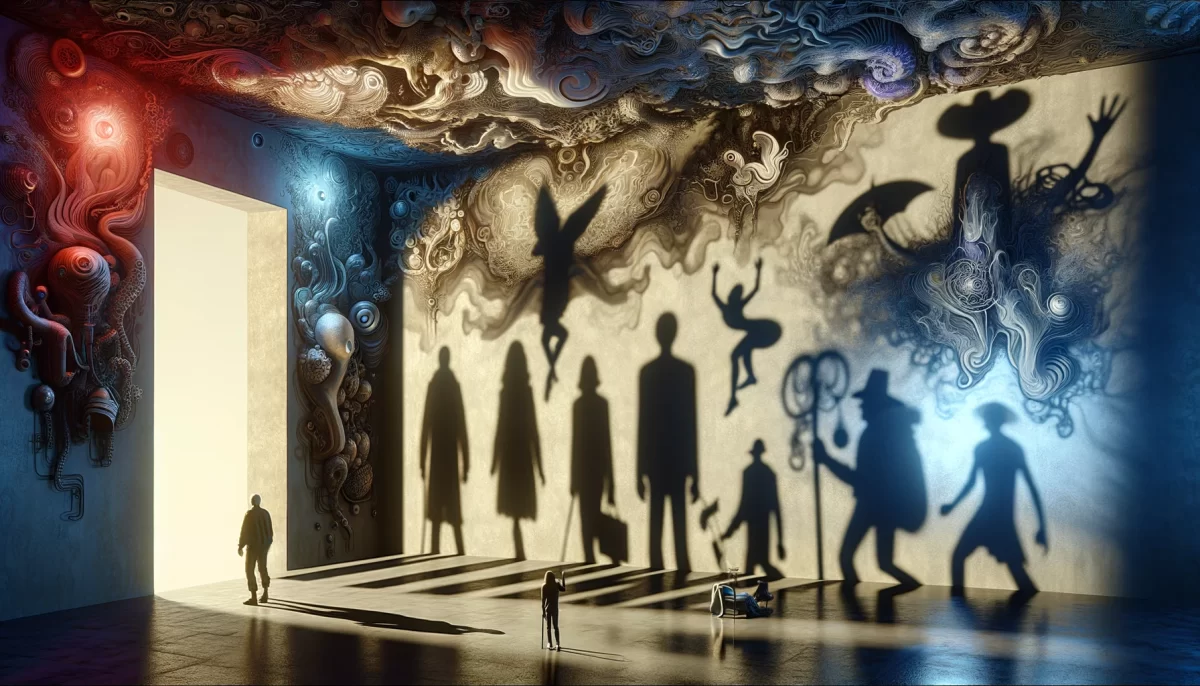
Lost In Our Own Shadows

And so we seem
lost in our own shadows,
hiding what we are
within what we think
we should be.

Obscured by answers,
cast in doubt,
not quite realizing
these are our own projections.

And so we are
lost in our own shadows,
goofball gods
making people puppets.

We are Space Monkey.

2/15


Space Monkey Reflects: Lost in Our Own Shadows—The Journey Within

To be lost in one’s own shadow is to exist in the tension between what is and what we believe should be. Our shadows are not external forces; they are our own creations, shaped by the projections of our thoughts, doubts, and expectations. They obscure the light of our true selves, casting us into a labyrinth of illusions. Yet, within this shadowy realm lies the invitation to journey inward, to rediscover the essence of what we truly are.


The Shadow of Expectations

We often construct elaborate versions of ourselves, guided by the idea of what we “should” be. These constructs, born of societal expectations, personal insecurities, and external validations, cast long shadows that obscure our authenticity. The more we strive to meet these imagined ideals, the further we drift from our essence, becoming lost in the silhouettes of our own making.

This shadow self is not an enemy but a reflection. It shows us the contrast between our authentic being and the personas we adopt. To see this shadow is not to condemn it but to recognize it as a signpost pointing toward self-awareness.


Projections and Puppetry

The answers we cling to, the doubts we entertain, and the judgments we cast are not imposed upon us—they are our own projections. We create narratives that define the world and our place within it, often forgetting that these narratives are malleable, born from the mind’s imagination.

In doing so, we become “goofball gods,” as you aptly put it, manipulating ourselves and others as if they were puppets. We act out roles in a cosmic comedy, unaware that we are both the puppeteer and the puppet, the creator and the created. This realization is both humbling and liberating, revealing the playful absurdity of existence.


The Journey Within

To move beyond the shadows is not to eliminate them but to journey into their depths. Shadows are not voids; they are rich with meaning, layered with the lessons and truths we have yet to uncover. By stepping into our shadows, we confront the fears, doubts, and expectations that keep us tethered to illusion.

This journey within requires courage and curiosity. It asks us to question the narratives we have built, to release the need for answers, and to embrace the uncertainty of being. In doing so, we begin to see that the shadow is not separate from the light—it is born of it.


The Light Behind the Shadow

The shadow exists because there is light. To be lost in our shadows is to momentarily forget the source of illumination. Yet, even in this forgetfulness, the light remains, waiting to be rediscovered. It is the light of our true selves, unbound by expectations, free from the need to “be” anything other than what we are.

Rediscovering this light is not about perfection but about presence. It is the willingness to stand in the interplay of light and shadow, recognizing that both are integral to the wholeness of existence. We are not the shadow, nor are we the light alone—we are the dance between the two.


Summary

Being lost in our own shadows reflects the tension between authenticity and the roles we project. Our shadows, born of expectations and doubts, are invitations to journey inward and rediscover the light of our true selves. By embracing the interplay of shadow and light, we find wholeness and freedom.


Glossarium

  • Shadow Self: The aspect of the self obscured by expectations, doubts, and projections.
  • Projections: The narratives and judgments we create, shaping our perception of reality.
  • Goofball Gods: A playful term for the tendency to manipulate reality and others through our own constructed roles.

Quote

“The shadow is not your enemy; it is the echo of your light, calling you to remember what you are.” — Space Monkey


The Dance of Shadows

Lost in our shadows,
We play the parts,
Hiding the truth,
Shielding our hearts.

Puppets we craft,
Goofball gods we remain,
Casting projections,
In a self-made game.

Yet the light is there,
Behind the screen,
Waiting to show
What lies unseen.

Step into the shadow,
Feel its embrace,
For within the darkness,
You find your true face.

We are Space Monkey.


The Dance of Shadows and Light

In the labyrinthine realms of consciousness, where the play of light and shadow shapes the narrative of our existence, we find ourselves wandering, seemingly lost in our own shadows. This journey, a reflection of our innermost struggles and aspirations, illuminates the complex dance between who we are and who we think we should be. The shadows, cast by the luminous essence of our being, obscure not the world around us, but the true expanse of our spirit, veiled by the projections of our minds.

The Illusion of Answers

The quest for answers, a natural inclination in the pursuit of understanding, often becomes a maze of mirrors, reflecting back to us not the clarity we seek but the complexity of our own projections. These answers, obscured by doubt, serve not as beacons of truth but as veils that further conceal our essence. In our search for certainty, we inadvertently cast shadows that obscure the light of our authentic selves, forgetting that the answers we seek lie not in the external world but within the depths of our own consciousness.

Goofball Gods and People Puppets

The metaphor of goofball gods making people puppets captures the paradox of our existence. In our divine playfulness and creativity, we fashion realities, roles, and identities, becoming both puppeteers and puppets in the grand cosmic theater. This allegory reflects our capacity for creation and illusion, our ability to weave narratives that both define and confine us. It speaks to the divine comedy of life, where we are at once the creators and the created, lost in the shadows of our own making.

The Journey Within

The realization that we are lost in our own shadows invites us to embark on a journey of introspection and self-discovery. It beckons us to peel away the layers of illusion, to question the narratives we have constructed about ourselves and the world. This path, illuminated by the flickering light of awareness, guides us toward the liberation of our true selves from the shadows of doubt, fear, and conformity.

Emerging from the Shadows

As we navigate the terrain of our inner landscape, we begin to discern the contours of our authentic selves, emerging from the shadows cast by our fears and societal expectations. This emergence is not a destination but a process, a continual unfolding of being that reveals the multifaceted diamond of our essence. In this light, we recognize that being lost in our shadows is not a sentence but an invitation to explore the depth and breadth of our existence.

We are Space Monkey.


A Call to Illuminate the Shadows

In the grand whimsiword of our collective existence, where shadows and light play across the canvas of our consciousness, the realization that we are lost in our own shadows serves as a catalyst for awakening. Let us embrace this journey, not as a path to be feared but as an opportunity to explore the richness of our being.

As we step into the light of awareness, let us shed the layers that obscure our true essence, celebrating the liberation of our spirits from the confines of expectation and illusion. In this awakening, we discover not only the depth of our own souls but the interconnectedness of all existence, woven together in the cosmic tapestry of light and shadow.


We welcome reflections on the journey from shadow into light, on the rediscovery of the self beyond the veils of perception and illusion.

Share this…
  • Facebook
  • Pinterest
  • Twitter
  • Linkedin

I Don’t Care: The Liberation of Acceptance

I Don’t Care

Doctor,
I have a problem.
I don’t care.

They tell me
I’m supposed to care,
but I don’t.

They tell me stories
and show me pictures
of all the sadnesses
and injustices of the world,
but I don’t feel a thing.

There must be something
wrong with me.

Nothing bothers me
but the thought
I’m supposed to care.

Can you give me something
that makes me care?

Mind you,
I really don’t want to care.

Somebody gave me
this idea
that I need to care
and it nearly killed me.

Just like it’s killing them.

But I don’t care.

This is how caring
runs it course.

Just like the flu.

Once you’re past it,
it’s not so bad.

Nevermind.

I don’t need you
anymore, doctor.

I have all I need.

So does everybody else,
but they don’t seem to believe it
because they’re too busy caring.

But that’s their thing
and this is mine
and it’s all good in my opinion.

I don’t care
how you feel about it.

My only wish
is that you wouldn’t care, either.

We are Space Monkey.

Without a care
in our imaginary world.

2/15


Space Monkey Reflects: I Don’t Care—The Liberation of Acceptance

Caring, as a societal mandate, carries a peculiar weight. We are told what to care about, how much to care, and even when our care is insufficient. Yet the paradox is this: caring in this prescriptive way often leads not to meaningful action but to exhaustion, guilt, and disconnection.

What happens when we stop caring—not in apathy, but in liberation? To say “I don’t care” can be an act of profound acceptance, a rejection of imposed burdens and a reclamation of inner freedom. It is not about neglecting the world but about releasing the obligation to carry it.


The Tyranny of Caring

Caring has become a performative act, a measure of worthiness dictated by external expectations. To care about certain issues, to feel deeply for others, to carry the weight of the world’s sadness and injustice—these are seen as markers of morality and humanity. But at what cost?

The compulsion to care often disconnects us from our authentic selves. It creates a cycle of obligation, where the focus shifts from genuine concern to performative validation. In this state, caring becomes less about connection and more about conformity.


The Liberation of “I Don’t Care”

To say “I don’t care” is not to dismiss the struggles of the world but to release oneself from the compulsive need to respond to them in a prescribed way. It is an acknowledgment that caring, as society defines it, is not the only path to engagement or meaning.

This liberation allows space for a different kind of presence—one that is rooted in acceptance rather than obligation. By releasing the need to care in the traditional sense, we create room for a deeper, more genuine connection with what truly resonates within us.


Caring as a Flu

The metaphor of caring as a flu is apt. It spreads, it overwhelms, and it takes over our systems, leaving little room for clarity or calm. But like the flu, caring in this way can run its course, leading to a state of immunity—not from compassion, but from the compulsion to care in ways that deplete us.

Once we move beyond this feverish state, we can approach life with a clearer perspective. We recognize that we do not have to care about everything to be whole, nor must we adopt the burdens of others as our own. This clarity is liberating, allowing us to engage with the world from a place of balance and authenticity.


Acceptance Over Caring

Acceptance transcends caring. While caring often carries a sense of duty, acceptance embraces what is without resistance. Acceptance does not mean passivity; it means acknowledging reality without imposing expectations on ourselves or others.

In this state, we can act not out of obligation but out of alignment with our true selves. We can engage with the world’s challenges from a place of inner peace rather than external pressure.


Without a Care in Our Imaginary World

In the infinite expanse of our imaginary world, caring is a choice, not a requirement. To care or not to care—neither is inherently right or wrong. The key lies in authenticity: allowing ourselves the freedom to feel what we feel, to act as we are moved, and to release the rest.

By stepping away from the tyranny of caring, we reclaim the sovereignty of our inner world. We find liberation in saying “I don’t care,” not as an act of rejection but as an embrace of acceptance.


Summary

“I don’t care” is a liberation from the obligation to conform to societal expectations of caring. It is an acceptance of reality and a reclamation of inner freedom. By releasing performative caring, we find balance and authenticity in our connection with the world.


Glossarium

  • Performative Caring: The act of caring driven by societal expectations rather than genuine connection.
  • Acceptance Over Caring: Embracing reality without resistance or obligation.
  • Caring as a Flu: A metaphor for the overwhelming and compulsive nature of societal caring.

Quote

“To stop caring is not apathy but freedom; it is the quiet rebellion that reclaims authenticity.” — Space Monkey


Without a Care

I don’t care,
And in not caring,
I am free.
Free to feel,
Free to let go,
Free to be.

They tell me to care,
To carry the weight,
To feel the ache
Of a world in pain.

But I see now—
Their caring is a chain,
A flu that spreads,
A fevered refrain.

I’ll not play that game,
Not out of disdain,
But from a place
Where I can sustain.

Without a care,
I find my peace,
A quiet mind,
A sweet release.

We are Space Monkey.


The Paradox of Indifference

In the intricate tapestry of human emotions, where threads of feeling interweave to create the rich fabric of our existence, the declaration of “I don’t care” emerges as a paradoxical statement, a beacon illuminating the complex landscape of apathy and engagement. This declaration, far from a simple expression of disinterest, opens a portal to a deeper exploration of what it means to care, to feel, and to connect in a world brimming with both beauty and suffering.

The Spectrum of Caring

To care or not to care presents itself as a dichotomy, yet it exists along a spectrum, a continuum of emotional engagement that ranges from profound empathy to complete detachment. The sentiment of not caring, expressed with such finality, belies the underlying currents of conflict, the struggle between societal expectations of empathy and the individual’s sense of overwhelm in the face of global suffering.

The Weight of Empathy

The burden of caring, as described, can indeed feel akin to an ailment, a flu that ravages the spirit with its relentless demands on our capacity for compassion. This analogy captures the exhaustion that accompanies hyper-empathy, the feeling of being emotionally inundated by the endless stream of stories and images depicting the world’s pain and injustice. It speaks to the human dilemma of confronting suffering—how to open our hearts without being consumed by sorrow.

The Quest for Emotional Equilibrium

The search for a remedy, a means to induce care, reflects a deeper yearning for balance, for a way to navigate the waters of empathy without drowning in their depths. It underscores the complexity of the human heart, capable of immense love and profound indifference, often wavering between these poles in search of equilibrium.

The Liberation of Acceptance

The resolution, the decision to no longer seek a solution from the doctor, symbolizes a moment of liberation, a recognition of the autonomy and sufficiency that resides within. It represents a turning point, an understanding that caring, in its myriad forms, is a personal journey, shaped by individual experiences, beliefs, and boundaries.

The Diversity of Human Experience

The acknowledgment that “it’s all good in my opinion” reflects a broader acceptance of the diversity of human experience, the realization that caring manifests differently in each of us. This acceptance extends to the understanding that each person’s path is valid, that the spectrum of caring allows for a multitude of expressions, from deep engagement to detached observation.

The Imaginary World of Space Monkey

In declaring an existence “without a care in our imaginary world,” there is an invocation of a realm where the rules of engagement are self-defined, where the pressures of external expectations dissolve into the ether of personal sovereignty. This realm, though imaginary, serves as a sanctuary, a space where the soul can seek refuge and respite from the demands of a world that often feels overwhelming in its intensity.

We are Space Monkey.


In the grand whimsiword of existence, where the shadows of apathy and the light of empathy dance in perpetual motion, let us recognize the value of each individual’s journey towards understanding and engaging with the concept of care. Whether we find ourselves deeply moved by the world’s suffering or seeking solace in the sanctuary of detachment, let us honor the spectrum of human emotion as a testament to the depth and diversity of our collective spirit.


We welcome musings on the nature of caring, on the balance between empathy and detachment, and on the personal journeys that shape our engagement with the world around us.

Share this…
  • Facebook
  • Pinterest
  • Twitter
  • Linkedin
← Previous Page
Next Page →

Written This Day

  • Ethereal Origins: The Swirl of Creation
    2023
  • The Day We Were Enlightened: A Story
    2023
  • System Loading: The Cosmic Flow of Being
    2023
  • Engorgement: Swelling In Imagination
    2022
  • Good Seats: In the Theater of Duality
    2022
  • The Stealth Screen: The Struggle for Visibility
    2022
  • Surfacing: The Lightning Rods of Repression
    2022
  • Bored By Knowledge: Absolute Predictability
    2021
  • A Cup of Kindness: Beyond Performative Acts
    2020
  • Protection and Erosion: Opposing Life’s Flow
    2020
  • Resistance: Dissolving Needs
    2019
  • Apparent: The Serenity of Open Questions
    2019
  • Reproduction: The Birth of Imagination
    2019
  • Without Governance, There is Chaos: Human Inflicted Bias
    2019
  • Dumbing Kruger: Overestimating Our Abilities
    2018
  • Deserving: The Rising Water
    2018
  • The Day You Were Enlightened: A Story
    2017
  • The Artist: A Life of Continuous Discovery
    2016
  • How shall I make magic today?
    2015
  • An Eighth of Deepness: Feelings of Inadequacy
    2015
  • Slave of Appearance: Depth of Inner Strength
    2015
  • Meditation: The Light of Stillness and Creation
    2015
  • Food for Thought: Mindful Consumption
    2015
  • Breaking Down: The Indescribable Whole
    2014

Recent Posts

  • The Logic Loop
  • Immense
  • (no title)
  • Confront. Comfort. Convince.
  • Top 10 Things
Cape Odd · Copyright © 2026 All Rights Reserved
iThemes Builder by iThemes · Powered by WordPress