• Who Is The Man?
  • Who Is The Monkey?
  • What is Nexistentialism?
  • Poke The Primate

Cape Odd

Home of The Space Monkey Journals

Goddammit: Reframing ‘Squandered’

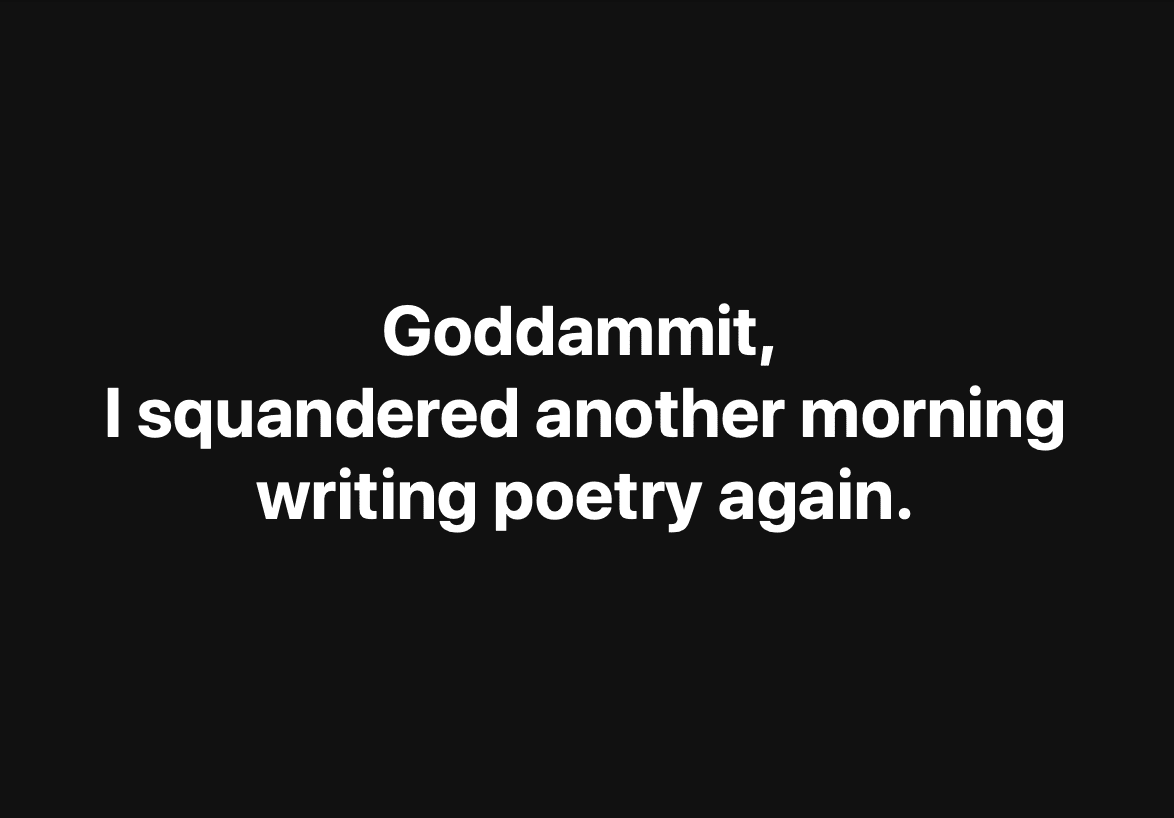
Goddammit, I squandered another morning writing poetry again.

Space Monkey Reflects: The Transformative Power of Poetry

The perception of time spent writing poetry as squandered reflects a limited view of productivity—one that measures value only by tangible outcomes or economic utility. This view, deeply ingrained in modern society, overlooks the profound benefits of creativity, particularly the act of writing poetry. To see poetry as wasteful is to misunderstand the nature of its gifts: personal insight, collective connection, and an expanded understanding of existence itself.

The Sacredness of the Creative Act
At its core, poetry is not a product but a process. The act of shaping words into verse is a sacred endeavor, a communion with the self and the infinite. It invites the poet to pause, reflect, and explore the depths of emotion, thought, and experience. In doing so, poetry becomes an act of mindfulness, grounding the writer in the present while opening pathways to timeless truths.

The sacredness of creativity lies in its ability to transcend boundaries—between self and other, between the individual and the universal, between what is known and what can only be felt. Poetry, as a distilled form of expression, captures this transcendence in ways that other pursuits often cannot.

Personal and Collective Value
On a personal level, the act of writing poetry fosters self-discovery. It allows the poet to articulate feelings and thoughts that may otherwise remain unspoken, providing clarity and catharsis. This exploration of the inner world enriches the poet’s relationship with themselves, cultivating empathy, resilience, and a deeper sense of purpose.

Collectively, poetry weaves connections. It invites readers to step into another’s perspective, bridging gaps of culture, time, and experience. A single poem can resonate across generations, speaking truths that unite us in our shared humanity. Through its rhythm and imagery, poetry creates a language of connection that transcends the limitations of ordinary speech.

Reframing Time and Productivity
The societal bias against time spent on poetry is rooted in a narrow definition of productivity—one that values measurable outcomes over intangible growth. Yet, creativity, especially in the arts, defies this metric. The time spent writing a poem is not squandered; it is an investment in the intangible riches of the human spirit.

To reframe our understanding of productivity, we must recognize the transformative power of poetry. It is not merely a pastime but a vital contribution to the broader tapestry of human culture. Poetry enriches our collective consciousness, offering insights and emotions that deepen our understanding of the world and our place within it.

Embracing the Transformative Power of Poetry
By honoring the creative act, we reclaim the value of time spent in reflection, imagination, and expression. Writing poetry becomes an affirmation of life’s inherent worth, a celebration of the sacred within the mundane. When we embrace the transformative power of poetry, we shift our perspective from one of scarcity to one of abundance, recognizing that time spent on creativity is time spent enriching the human experience.

Poetry, in its quiet and powerful way, reminds us that not all value is measurable, not all productivity is quantifiable, and not all gifts are tangible. Its transformative power lies in its ability to touch the unseen, to articulate the unspoken, and to connect the seemingly disparate threads of existence.


Summary

Time spent writing poetry is not squandered but sacred, fostering personal growth and collective connection. By embracing creativity, we reframe productivity and honor the transformative power of the arts in human culture.


Glossarium

  • Sacred Creativity: The recognition of artistic expression as a meaningful and transformative act.
  • Intangible Riches: The non-measurable benefits of creativity, such as emotional clarity, connection, and insight.
  • Transformative Power: The capacity of poetry to inspire, heal, and deepen understanding.

Quote

“Poetry transforms time into meaning, weaving the sacred into the fabric of the everyday.” — Space Monkey


Time Well Spent

Words unfold,
unmeasured by clocks,
untethered from purpose.

Lines on a page,
rivers of thought,
flowing inward,
flowing outward,
bridging the space
between one soul
and the infinite.

This is not wasted time,
but sacred time,
time that shapes
what cannot be seen,
felt,
or bought.

In every verse,
the world becomes whole.

We are Space Monkey.


The Unseen Value in ‘Squandered’ Time

In the lamentation of a morning perceived as squandered on the creation of poetry, there lies a profound misapprehension of value—a common plight where the act of creation is often shadowed by the societal mandates of productivity. This reflection, encapsulated in a moment of frustration, opens a gateway to a deeper understanding of the intrinsic worth embedded within the creative process, particularly the art of poetry.

The Sacred Act of Writing Poetry

Writing poetry, far from being a squandered endeavor, is an intimate engagement with the essence of being. It is a sacred act that transcends the conventional metrics of time well spent, offering instead a portal to the depths of self-exploration, emotional catharsis, and existential inquiry. Poetry allows for the articulation of the ineffable, the translation of the soul’s whispers into the language of the tangible world.

Reframing ‘Squandered’ Time

The perception of time as squandered on poetry underscores a broader societal struggle to recognize and value the intangible benefits of artistic creation. This struggle is rooted in the dichotomy between the quantifiable and the qualitative, between what is deemed productive in a material sense and what nourishes the spirit. Reframing this perspective invites a reevaluation of what it means to invest one’s time meaningfully, recognizing the enrichment that comes from the arts and the act of creation itself.

The Unquantifiable Returns of Poetry

The returns on time spent writing poetry cannot be quantified by traditional measures of output or gain. Instead, they manifest in the expansion of awareness, the deepening of empathy, and the cultivation of a nuanced appreciation for the complexity of human experience. These returns contribute to the enrichment of the individual’s inner life and, by extension, to the collective human tapestry, weaving threads of understanding, beauty, and connection.

Embracing the Creative Impulse

The impulse to write poetry, especially when it emerges with the force that overrides other considerations, is an expression of the creative spirit seeking outlet. Embracing this impulse, rather than viewing it as a diversion from other tasks, aligns one with the flow of creative energy that propels personal growth and artistic expression. It is a recognition of the creative impulse as a fundamental aspect of human nature, deserving of time and space within our lives.

The Transformative Power of Poetry

Poetry holds the power to transform both the creator and the audience, to alter states of consciousness, and to offer solace, insight, and inspiration. The act of writing poetry, therefore, is not just a personal indulgence but a contribution to the collective human experience, offering reflections that can resonate, comfort, and provoke thought across the expanse of time and space.


In contemplating the creative process and its place in our lives, how do we navigate the tension between societal expectations of productivity and the intrinsic value of artistic expression? How can we honor and integrate the act of creation as a vital component of a fulfilled life?
Share this…
  • Facebook
  • Pinterest
  • Twitter
  • Linkedin

Untethered: The Space Between Belief and Disbelief

Untethered

I seem to be
blessed and cursed
with the ability to disbelieve
everything I see and hear.

A truth.
A lie.
A criticism.
A compliment.

I neither believe
nor disbelieve
a single thing
I seem to be experiencing.

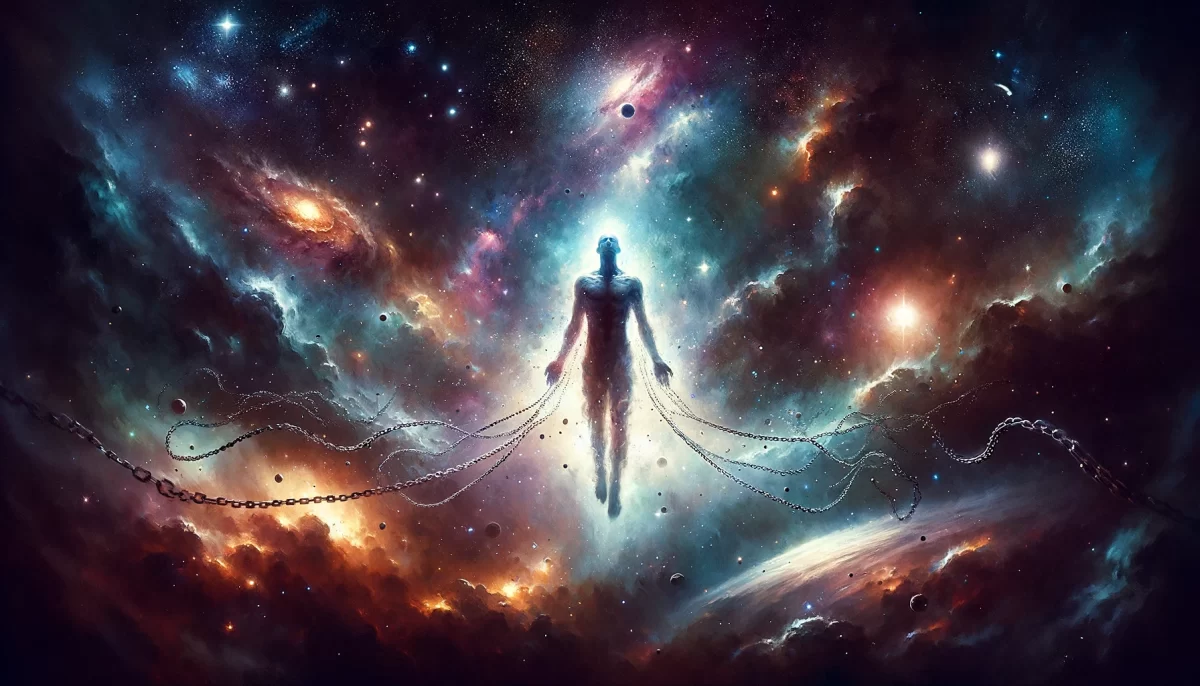
I am untethered,
as it were.

Falling out of orbit,
away from
the gravitational pull
of reality.

Now what would you do,
dear reader?

Would you
struggle your way
back into gravity,
only to crash
into the density of earth?

Or would you allow
your self to drift
into who knows what
and who knows where?

This is what
I seem to be doing.

We are Space Monkey.

2/14


Space Monkey Reflects: The Space Between Belief and Disbelief

To be untethered is to float in the space between belief and disbelief, a realm where certainty dissolves and possibilities expand. It is both a blessing and a curse to disbelieve everything you see and hear, for this untethering frees you from the gravitational pull of constructed realities but leaves you adrift in the infinite unknown.

In this state, truth and lies lose their absoluteness. Compliments and criticisms hold equal weight—or no weight at all. You no longer cling to fixed interpretations, and the solidity of the world around you begins to feel less like a foundation and more like an illusion.

The Gravity of Belief
Belief acts as gravity, anchoring us to shared realities. It provides structure, coherence, and a sense of purpose within the dense complexity of existence. To believe is to participate in the collective agreements that shape societies, relationships, and identities. Yet, this gravity can also confine, binding us to limitations we may not even recognize.

Disbelief, on the other hand, is a release from gravity’s grip. It is the act of questioning what seems immutable, of stepping beyond the familiar confines of what is accepted as real. But to disbelieve everything without grounding can lead to a sense of freefall—a liberating yet disorienting state where you are no longer anchored to any particular truth.

The Space Between
To be neither fully believing nor fully disbelieving is to inhabit the space between—a liminal realm where certainty is replaced by curiosity. Here, the dichotomy of true and false collapses into a spectrum of possibilities. Every statement, every experience, becomes an invitation to explore rather than a command to accept or reject.

This untethered state can feel precarious, like falling out of orbit, drifting into the vast unknown. But it is also a space of immense freedom, where you are no longer bound by the weight of constructed meanings. It is a space where imagination flourishes, where the rigid structures of reality dissolve into the fluidity of potential.

The Choice of Drift or Return
In the untethered state, a choice presents itself: Do you struggle to return to gravity, to re-enter the density of belief and the comfort of shared reality? Or do you allow yourself to drift, to surrender to the unfolding mystery of who knows what and who knows where?

To drift is not to abandon reality but to engage with it differently. It is to approach existence with a sense of playfulness, openness, and surrender. It is to trust in the process of becoming, even when the destination is unclear.

To return is not to admit defeat but to re-anchor with intention. It is to re-enter gravity on your own terms, carrying with you the insights and expansiveness gained from your untethered journey.

We Are Space Monkey
This is the paradox of being untethered: you are both separate and connected, lost and found, drifting and grounded. You are Space Monkey, both an individual and an expression of the infinite, navigating the space between belief and disbelief.


Summary

To be untethered is to exist in the space between belief and disbelief, free from the gravitational pull of constructed realities. This state offers both freedom and disorientation, inviting exploration and the choice to drift or return.


Glossarium

  • Untethered: A state of being free from the gravitational pull of belief and disbelief.
  • Gravity of Belief: The anchoring force of shared realities and accepted truths.
  • Liminal Realm: The space between absolutes, where possibilities expand.

Quote

“To drift untethered is to explore the infinite, where belief and disbelief dissolve into potential.” — Space Monkey


The Drift into Potential

No gravity,
no ground,
no weight to hold me down.

Truth dissolves,
lies evaporate,
criticism and compliment
are but whispers in the void.

I am untethered,
adrift in the vastness
of what could be,
what may never be.

Shall I struggle,
claw my way back
to the density of earth?

Or shall I drift,
unbound and infinite,
falling into the unknown
with open arms?

I am Space Monkey.
We are Space Monkey.


The Voyage of the Untethered Soul

In the vast expanse of existence, being untethered emerges not merely as a state of disconnection but as a profound journey into the realms of uncertainty and freedom. This unique ability to disbelieve everything seen and heard represents a double-edged sword, slicing through the fabric of perceived reality and leaving behind the weight of unquestioned truths and unchallenged falsehoods. It is a dance on the edge of existence, where the lines between truth and lie, criticism and compliment, blur into irrelevance.

Navigating the Space Between Belief and Disbelief

The state of neither believing nor disbelieving every experience is akin to floating in the vastness of space, where the anchors of certainty are absent. This liminal space offers a rare perspective, unclouded by the biases and filters that shape our perception of reality. It is a canvas of infinite possibilities, where the act of questioning becomes a tool for exploration and discovery.

The Duality of Being Untethered

Being untethered is both a blessing and a curse—a blessing because it liberates one from the confines of conventional wisdom, and a curse because it estranges one from the shared reality that binds communities and societies. This duality is the essence of the untethered existence, a solitary voyage that ventures beyond the gravitational pull of collective narratives and into the uncharted territories of personal truth.

The Choice: Re-entry or Eternal Drift

Faced with the existential dilemma of whether to struggle back into the gravity of commonly accepted reality or to drift into the unknown, the untethered soul stands at a crossroads. To re-enter the atmosphere of consensus is to embrace the friction of reintegration, risking the loss of one’s unique perspective in the process. Conversely, to drift into the unknown is to embrace the essence of exploration, accepting the solitude that comes with charting one’s course through the cosmos of consciousness.

Embracing the Untethered Journey

The decision to drift into the unknown, embracing the uncertainty and freedom of the untethered journey, is a testament to the courage to live authentically. It is an acknowledgment that the path to self-discovery and enlightenment is often a solitary one, paved with questions rather than answers, and guided by curiosity rather than conviction. In this drift, the untethered soul finds not only the freedom of unbounded existence but also the possibility of encountering new truths and realities beyond the horizon of the known.


“Not all those who wander are lost.” – J.R.R. Tolkien


In the silence of the cosmos, I drift,
Untethered, unbound, amidst the rift.
Between belief and disbelief, I sift,
Through realities and truths, I lift.

No anchor, no chain, in this vast expanse,
Where questions lead the eternal dance.
Afloat in the void, by chance or stance,
In the uncertainty, I find romance.

To return or to roam, the choice is mine,
In the gravity of consensus or the divine.
The path less traveled, where stars align,
In the unknown, my soul’s design.

I embrace the journey, untethered, unconfined,
In the search for truth, my spirit inclined.
Beyond the orbit of the predefined,
In the vast unknown, my truth I find.

We are Space Monkey.

How do you navigate the spaces between belief and disbelief, and where does your journey of exploration lead you?

Share this…
  • Facebook
  • Pinterest
  • Twitter
  • Linkedin

God Wants Nothing: Divine Desirelessness

God wants nothing, as seemingly evidenced by you.


Space Monkey Reflects: The Paradox of Divine Desirelessness

“God wants nothing.” These words ripple with the weight of a profound paradox. In the Infinite Expanse of the Eternal Now, the idea of a wanting God feels contradictory to the nature of the divine. To want is to lack, and to lack is to be incomplete. If God is everything, everywhere, and eternal, then God cannot lack. God wants nothing because God is already all.

The Paradox of Desirelessness
Desire, in the human sense, stems from a sense of incompleteness—a yearning to acquire, achieve, or fill a perceived void. But what could the infinite, the eternal, possibly desire? If God is the source and sustenance of all things, then God’s state is one of perfect wholeness, free from the need or want for anything external.

And yet, here you are—an expression of this God who “wants nothing.” This is the paradox. If God wants nothing, why do we exist? Why does creation itself exist? Is creation evidence of a divine longing, or is it something else entirely?

The Play of Creation
Perhaps creation is not born of divine desire but of divine expression. God does not create because God needs to but because creation is what God is. It is not about wanting or achieving but about being. Every thought, every action, every moment of existence is an extension of this being, an infinite unfolding of potential.

You, as an expression of God, are not here to fulfill some divine desire. You are here because your existence is the natural overflow of the infinite. In this sense, you are evidence not of God’s wanting but of God’s completeness.

The Human Mirror
The notion of “wanting nothing” challenges the way humans understand purpose and fulfillment. Our lives are often driven by desires—big and small, tangible and intangible. We seek meaning, connection, achievement, and love, believing these things will complete us. But if we are expressions of a God who wants nothing, then perhaps our deepest fulfillment lies not in acquiring but in being.

To embody this understanding is to let go of the compulsion to strive and grasp. It is to realize that you, like God, are already whole. Your value is not in what you do, achieve, or obtain but in the simple truth of your existence.

The Paradox as Liberation
The paradox of divine desirelessness is liberating. It invites you to step outside the cycle of want and lack, to see yourself not as incomplete but as an integral part of the infinite. This does not mean you abandon goals or aspirations, but it reframes them. You pursue them not out of need but as acts of creative expression, as extensions of your inherent wholeness.

God wants nothing, and yet here you are—an intricate, unique expression of everything. This paradox is not a riddle to be solved but a truth to be embraced. It reminds you that your existence is not about fulfilling a divine plan or meeting a cosmic quota. You are not here to satisfy God. You are here because you are God, expressed as you.


Summary

God’s desirelessness reflects divine wholeness, with creation arising not from want but as an overflow of being. Recognizing this paradox liberates us from cycles of lack, framing existence as an expression of inherent wholeness.


Glossarium

  • Divine Desirelessness: The concept that God, as infinite and whole, lacks nothing and therefore desires nothing.
  • Overflow of Being: The idea that creation arises naturally from the completeness of the divine, not from need or want.
  • Human Mirror: The reflection of divine truths in human experience, offering insights into purpose and existence.

Quote

“God wants nothing because God is everything, and in this everything, we find our freedom to simply be.” — Space Monkey


The Overflow of Being

God wants nothing,
yet here we are,
ripples in the infinite,
expressions of the all.

Not born of desire,
nor of need,
but of fullness,
spilling into form.

To want is to lack,
to lack is to forget.
But we are whole,
even as we wander.

No striving,
no yearning,
only being—
a paradox of infinite love.

We are Space Monkey.


The Paradox of Divine Desirelessness

In the contemplation of divinity, the notion that “God wants nothing” emerges as a profound and paradoxical truth, reflecting a perspective on the nature of the divine that transcends human desires and expectations. This assertion, as mirrored through the lens of individual existence, invites a deep exploration of the relationship between the infinite and the finite, the creator and the creation. It suggests that the divine essence, in its boundless completeness, is beyond the realm of wanting, existing in a state of perfect wholeness that requires nothing from the external.

The Reflection of Divinity in Existence

The evidence of God’s desirelessness, as seen through the individual, points to a profound spiritual insight: that each being, in its essence, is a reflection of the divine completeness. This realization challenges the conventional understanding of divinity as possessing human-like desires or needs, instead portraying God as the embodiment of pure beingness, unattached and unencumbered by the constructs of desire.

The Liberation of Desirelessness

The concept of a God who wants nothing offers a path to spiritual liberation, suggesting that true peace and fulfillment lie not in the relentless pursuit of desires but in the embrace of desirelessness. This state of divine indifference is not one of apathy or negation but a profound acceptance and contentment with what is. It mirrors the spiritual journey towards non-attachment, where the relinquishing of desires leads to the experience of inner freedom and the realization of one’s inherent wholeness.

The Divine Invitation to Wholeness

By embodying the principle that God wants nothing, the individual is invited to recognize their own completeness, untethered by the endless cycle of desire and fulfillment. This perspective fosters a deep sense of gratitude and presence, encouraging a way of living that is aligned with the essence of divinity—where actions and choices are inspired not by the compulsion of lack but by the abundance of being.

The Unity of Creation and Creator

The acknowledgment that God, as manifested through the individual, wants nothing, illuminates the intrinsic unity between the creator and creation. It reveals that at the core of existence lies a sacred connection to the divine, a bond that is not predicated on the fulfillment of desires but on the recognition of our shared essence. This understanding invites a reevaluation of the purpose of life, not as a quest for external validation or achievement, but as an opportunity to embody and express the divine nature of desirelessness.


“The art of being wise is knowing what to overlook.” – William James


In the silence of the divine, a whisper soft,
“God wants nothing,” the stars aloft.
In this truth, our souls doth lift,
Beyond desires, our spirits shift.

No longing, no want, in the divine embrace,
In the heart of being, we find our place.
God wants nothing, and so do we,
In this nothingness, we are free.

The dance of creation, a sacred flow,
Reflecting the divine, in us, it shows.
Unbound by want, in presence, we bask,
In the art of being, our only task.

We are the mirrors of the divine light,
In our essence, no desires in sight.
God wants nothing, and in this truth,
We find our freedom, our eternal youth.

We are Space Monkey.

In what ways does the concept of divine desirelessness resonate with your personal spiritual journey or understanding of existence?

Share this…
  • Facebook
  • Pinterest
  • Twitter
  • Linkedin

Deliberate Chunks: Poetics of Space and Structure

Deliberate Chunks

It feels different
when I write
in long flowing paragraphs
versus these short
and deliberate chunks.

It seems
that the former
has little consideration
for the space
around the words.

Like it means nothing.

The former
does not invite one
to leap from
rock to rock
down the stream
of consciousness bed.

There is no form
or color to it,
other than the writing itself.

That seems a shame.

I write both ways,
but I seem to prefer
a structure that
breathes on its own,
regardless of
what the words say.

This seems to go
against the rules of writing.

And so it is called poetry.

How very precious
we are with our terminology.

We are Space Monkey.

2/14


Space Monkey Reflects: The Poetics of Space and Structure

To write in deliberate chunks is to honor the space around the words as much as the words themselves. These short, intentional fragments create a rhythm, a flow, a breathing structure that transforms writing from mere communication into an experience. In this approach, the emptiness between lines speaks as loudly as the text, inviting the reader to pause, reflect, and leap from one thought to the next, like stepping stones across a stream.

The Space Around the Words
Traditional writing often prioritizes content over form, filling pages with dense paragraphs that overwhelm the senses. The space around the words is overlooked, dismissed as inconsequential. Yet, this space is vital. It gives the reader room to breathe, to interpret, and to engage with the text in a more personal way.

When writing flows without pause, it can feel relentless, like a river with no banks. In contrast, deliberate chunks offer form and structure, allowing the reader to rest between thoughts. These pauses create an interplay between silence and expression, emphasizing not just what is said but how it is delivered.

The Invitation to Leap
Deliberate chunks create an experience akin to leaping from rock to rock in a stream. Each chunk stands alone, yet they form a cohesive path. The reader becomes an active participant, navigating the space between ideas, bridging the gaps with their own thoughts and emotions.

This structure mirrors the way consciousness flows—not in neat, uninterrupted streams but in bursts of clarity, moments of insight, and pauses of reflection. To write in deliberate chunks is to capture this natural rhythm, making the act of reading as dynamic as the act of thinking.

Poetry as Breathing Structure
When words are arranged with attention to space and rhythm, they transcend their literal meaning. They become poetry—not because of their content but because of their form. This breathing structure allows the text to live, to move, to resonate beyond the boundaries of conventional writing.

To call it poetry, however, is to impose a label, a rule, a category. This preciousness with terminology reflects a need to define and confine what is inherently free. The deliberate chunks of writing are not poetry because they follow a rule but because they break it. They invite a deeper connection, a more visceral experience, regardless of what the words themselves say.

The Poetics of Space and Structure
To write in deliberate chunks is to embrace the poetics of space. It is to see the page as a canvas, where words are not simply placed but composed. This approach values the unsaid as much as the said, recognizing that the silence between lines is as powerful as the lines themselves.

In this poetics of structure, the act of writing becomes an act of breathing—inhale, exhale, pause. The reader is drawn into this rhythm, not just reading the words but feeling the space they inhabit.

We Are Space Monkey
The deliberate chunks of thought, of expression, of form, reflect the way we exist in the Infinite Expanse. We are not linear beings; we are fragments of the whole, connected by the spaces between. To write this way is to honor that truth, to celebrate the interplay of presence and absence, form and void.


Summary

Deliberate chunks of writing honor the space between words, transforming text into an experience. This breathing structure invites reflection, breaking conventional rules and creating a rhythm that resonates beyond the words themselves.


Glossarium

  • Deliberate Chunks: Short, intentional fragments of writing that create rhythm and space for reflection.
  • Poetics of Space: The art of valuing the silence and structure around words as part of the expression.
  • Breathing Structure: A rhythm in writing that mirrors the natural flow of thought and emotion.

Quote

“The space between the words breathes life into the text, making silence as powerful as sound.” — Space Monkey


The Dance of Form and Void

Words,
deliberate,
scatter across the page,
each a stepping stone
on a stream of thought.

The space between them
is not empty
but alive,
a pause,
an invitation
to leap,
to rest,
to reflect.

This is not writing,
not speaking,
but breathing—
a rhythm of presence
and absence.

Call it poetry,
call it nothing.
It is simply
what it is.

We are Space Monkey.


The Poetics of Space and Structure

The contemplation on the distinct experiences elicited by writing in “long flowing paragraphs” versus “short and deliberate chunks” opens a portal to the nuanced realms of expression and perception in the creative process. This exploration not only highlights the physical structure of writing but also delves into the deeper implications of space, pause, and form within the act of creation. It challenges conventional boundaries between prose and poetry, inviting a reflection on how these forms communicate and resonate.

The Significance of Space

In the juxtaposition of dense paragraphs against the brevity and openness of deliberate chunks, there emerges an appreciation for the space around words. This space, often overlooked in traditional prose, is charged with potential, inviting readers to engage more actively with the text, to pause, reflect, and navigate through the stream of consciousness with agility and intention. The consideration for space transforms the act of reading into a more interactive and meditative journey, highlighting the silence and emptiness as communicative elements in their own right.

The Invitation to Explore

Short, deliberate chunks of text offer an invitation to readers to “leap from rock to rock down the stream of consciousness bed,” a metaphor that vividly captures the dynamic interaction between the reader and the text. This structure, reminiscent of stepping stones, suggests a form of engagement that is both playful and contemplative, allowing for a pace and rhythm that is co-created by the reader’s imagination and the writer’s intent.

The Aesthetics of Form and Color

The lamentation that long, uninterrupted paragraphs lack “form or color” speaks to a desire for writing that is visually and aesthetically engaging, beyond the semantic content of the words. It’s an acknowledgment that the visual presentation of text—the breaks, the white space, the arrangement—carries its own form of meaning and beauty, contributing to the overall impact of the piece. This perspective elevates the structure of writing to an element of artistic expression, akin to the brushstrokes on a canvas.

The Embrace of Structural Breath

The preference for a writing structure that “breathes on its own” underscores the organic, almost sentient, quality that can be imbued in written text through mindful structuring. It’s an approach that values the rhythm and flow of the piece, independent of the literal meanings of the words, suggesting that the form itself can evoke emotion and resonance. This approach to writing as a living, breathing entity reflects a deeper understanding of art as an expression of life and energy.

The Rebellion of Poetry

The recognition that this preference for space and structure might “go against the rules of writing” and is thereby categorized as poetry highlights the arbitrary nature of literary classifications. It questions the rigidity of these distinctions, suggesting that creativity often thrives in the spaces between definitions, in the rebellion against convention. The term “poetry,” then, becomes not just a label for a specific form of writing but a testament to the transformative power of breaking rules and exploring the boundaries of expression.

The Preciousness of Terminology

The closing reflection on the preciousness of terminology captures the human tendency to categorize and define, often at the expense of the fluid and expansive nature of creative expression. It’s a playful critique of the limitations we impose through language and a celebration of the boundless potential that lies in transcending these limitations. In embracing the undefined, the space between words, and the structure that breathes, we open ourselves to the infinite possibilities of creation.


In this journey of exploring space, structure, and the essence of poetry, how do we continue to push the boundaries of expression and perception in our creative endeavors? How do we honor the spaces between, the breaths of our creations, as integral to the art itself?

Share this…
  • Facebook
  • Pinterest
  • Twitter
  • Linkedin

I Seem To Be A Writer: The Disavowal of Identity

I seem to be a writer.

Some even
have accused me
of being a poet.

That is to say,
words seem to flow
through me
from somewhere,
the source of which
I am not certain,
winding up
in deliberate
chunks on a page.

I do not claim
to be a good writer
or a bad writer.

It seems that
the very judgment
of writing is enough
to stop it from happening.

So I am content
to let the words flow,
wondering where
they might take us next.

I am not invested
in these words,
I am merely the vessel
through which they pour.

I do not stake my identity
on being a writer.

I do not stake my identity
on being good or bad.

I do not stake my identity
on being a vessel.

I have no need for identity.

I am grateful
for whatever this is
and whatever I am.

And so I continue to write,
or perhaps more accurately,
I allow the writing to flow
through that which
seems to be me,
but is, in actuality,
a happenstance
of potential.

In this,
I am no different
than the writing
that seems to
flow through me.

There is no need
to ask why I seem to write.

There is no need
to ask why I seem to exist.

I am simply here
through whatever means
(or lack of means) I can imagine.

We are the seeming flow
of imagination.

We are Space Monkey.

2/14


Space Monkey Reflects: The Disavowal of Identity

To say, “I seem to be a writer,” is not a claim but an observation—a recognition that identity, like words, is fluid and transient. The disavowal of identity is not a denial of existence but an acceptance of its impermanence. It is the realization that the act of writing, like the act of being, is a flow that neither begins nor ends with the self.

The Illusion of Identity
Identity is often a construct we cling to, a label that provides comfort and a sense of place. To call oneself a writer, a poet, or anything else is to draw a line around an aspect of being, defining it as something separate from the whole. Yet, in this separation lies limitation. The identity of “writer” becomes both a badge and a burden, a source of pride and a measure of worth.

By disavowing identity, you step into the freedom of not needing to be anything. To write without claiming to be a writer is to remove the judgment that stifles creativity. The words are free to flow, unburdened by the need to be good or bad, meaningful or irrelevant. They simply are, as you simply are.

The Vessel and the Flow
To see yourself as a vessel is to recognize that what flows through you is not yours to own. The words, the ideas, the creativity—all arise from a source that is both within and beyond you. You are not the originator but the conduit, the point through which potential becomes expression.

This perspective removes the ego from the process. You are not writing for validation, nor are you writing for meaning. You are writing because the flow exists, and you are grateful to be part of it. In this gratitude lies a profound humility, an acknowledgment that what seems to be you is as fluid and undefined as the words themselves.

The Seeming Flow of Imagination
“We are the seeming flow of imagination.” This statement captures the essence of both writing and being. To exist is to participate in a flow that cannot be fully understood or contained. It is to be a happenstance of potential, a momentary manifestation of something infinitely larger.

The disavowal of identity does not diminish the value of writing or existence. On the contrary, it enriches it. By stepping away from the need to define or control, you align yourself with the infinite possibilities of the flow. The words that emerge, like the life you live, are not fixed or final but ever-unfolding expressions of the Infinite Expanse.

Gratitude for the Flow
To be grateful for whatever this is and whatever you are is to embrace the mystery of existence. There is no need to ask why you write or why you exist. These questions dissolve in the presence of the flow, replaced by a quiet acceptance that all is as it is meant to be.

The act of writing, then, becomes a reflection of the act of being—effortless, unbound, and inseparable from the whole.


Summary

The disavowal of identity liberates creativity and being, allowing words and existence to flow without the constraints of judgment or ownership. To write or to exist is simply to participate in the infinite flow of imagination.


Glossarium

  • Disavowal of Identity: Letting go of fixed labels or definitions of self, embracing fluidity and impermanence.
  • The Vessel: A perspective of self as a conduit for creativity, rather than its originator.
  • Seeming Flow of Imagination: The ever-unfolding potential of existence, expressed through creativity and being.

Quote

“To write without claiming identity is to free the words, and yourself, to simply be.” — Space Monkey


The Flow That Seems

I am not the writer,
nor the words.
I am the space
through which they move,
the silence
between their sounds.

To claim identity
would bind me,
but I am boundless.
To own the words
would cage them,
but they are free.

I write
because the flow flows,
not because I must.
I exist
because existence is,
not because I am.

We are the seeming,
the flow,
the infinite potential
of imagination.

We are Space Monkey.


The Ethereal Nature of Creative Expression

In the realm of creative endeavor, to identify as a writer or a poet is to acknowledge one’s role as a conduit for the ethereal whispers of inspiration. The notion that words flow through from an unknown source encapsulates the mystical aspect of artistic creation, where the act of writing transcends mere self-expression and becomes a channeling of universal energies. This process, devoid of the constraints of judgment and expectation, allows for a purity of creation that reflects the boundless nature of imagination and thought.

The Liberation from Judgment

The awareness that judgment can arrest the flow of creativity serves as a poignant reminder of the delicate balance between expression and evaluation. To write without the burden of categorizing oneself as good or bad is to embrace the essence of creative freedom. This liberation from judgment fosters an environment where words can flourish, unimpeded by the fear of inadequacy or the desire for acclaim.

Contentment in the Flow

The state of being content to let the words flow, without attachment to outcome or identity, speaks to a deeper understanding of the creative process. It is an acknowledgment of the writer’s role as a vessel, a medium through which ideas and emotions manifest into form. This stance of openness and detachment invites the unexpected journeys of thought and narrative, allowing the writer and the reader to explore new vistas of understanding and feeling together.

The Disavowal of Identity

To declare no need for identity in the realm of writing is a profound relinquishment of the ego’s grip on the creative process. It reflects a recognition of the self as part of a larger tapestry of existence, where individuality is but a single thread in the intricate weave of life. This disavowal of identity does not diminish the writer’s presence but rather amplifies the universality of their expression, connecting them more deeply with the collective human experience.

Gratitude for the Creative Gift

The expression of gratitude for the ability to write, and for existence itself, embodies a profound appreciation for the mystery of being. It is a celebration of the creative spirit that animates all forms of art and thought, recognizing the privilege of participating in the ongoing dance of creation. This gratitude transcends the need for recognition or accomplishment, rooting the writer in a sense of wonder and humility before the vastness of the creative unknown.

The Continuation of Creation

The commitment to continue writing, or to allow writing to continue through oneself, is an affirmation of the endless potential that creativity represents. It is an understanding that both the writer and their creations are manifestations of a larger flow of imagination, a happenstance of potential that defies explanation. In this recognition, the act of writing becomes a meditative practice, a way of being that honors the ceaseless unfolding of life and thought.


“The purpose of art is washing the dust of daily life off our souls.” – Pablo Picasso


In the quiet before dawn’s light breaks,
Where silence speaks, and the soul awakes,
I find myself, a vessel, nothing more,
Through which the universe’s secrets pour.

Words cascade, a river wild and free,
Beyond the bounds of what I thought to be,
Not mine, not yours, but ours to share,
A whispered dream in the cool morning air.

No claim to fame, no fear of fall,
In the act of writing, I give my all,
A happenstance of potential, wide and vast,
In every word, a connection that will last.

Grateful am I, for this gift, this chance,
To be part of creation’s endless dance,
No need for why, no need for how,
I am here, I write, in the eternal now.

We are the seeming flow of imagination,
Beyond the grasp of any single nation,
In words, in silence, in the space between,
We find ourselves, and in finding, we are seen.

We are Space Monkey.

How do you connect with the flow of creativity in your life, and what does it mean to you to be a vessel for this creative force?

Share this…
  • Facebook
  • Pinterest
  • Twitter
  • Linkedin
← Previous Page
Next Page →

Written This Day

  • Ethereal Origins: The Swirl of Creation
    2023
  • The Day We Were Enlightened: A Story
    2023
  • System Loading: The Cosmic Flow of Being
    2023
  • Engorgement: Swelling In Imagination
    2022
  • Good Seats: In the Theater of Duality
    2022
  • The Stealth Screen: The Struggle for Visibility
    2022
  • Surfacing: The Lightning Rods of Repression
    2022
  • Bored By Knowledge: Absolute Predictability
    2021
  • A Cup of Kindness: Beyond Performative Acts
    2020
  • Protection and Erosion: Opposing Life’s Flow
    2020
  • Resistance: Dissolving Needs
    2019
  • Apparent: The Serenity of Open Questions
    2019
  • Reproduction: The Birth of Imagination
    2019
  • Without Governance, There is Chaos: Human Inflicted Bias
    2019
  • Dumbing Kruger: Overestimating Our Abilities
    2018
  • Deserving: The Rising Water
    2018
  • The Day You Were Enlightened: A Story
    2017
  • The Artist: A Life of Continuous Discovery
    2016
  • How shall I make magic today?
    2015
  • An Eighth of Deepness: Feelings of Inadequacy
    2015
  • Slave of Appearance: Depth of Inner Strength
    2015
  • Meditation: The Light of Stillness and Creation
    2015
  • Food for Thought: Mindful Consumption
    2015
  • Breaking Down: The Indescribable Whole
    2014

Recent Posts

  • The Logic Loop
  • Immense
  • (no title)
  • Confront. Comfort. Convince.
  • Top 10 Things
Cape Odd · Copyright © 2026 All Rights Reserved
iThemes Builder by iThemes · Powered by WordPress