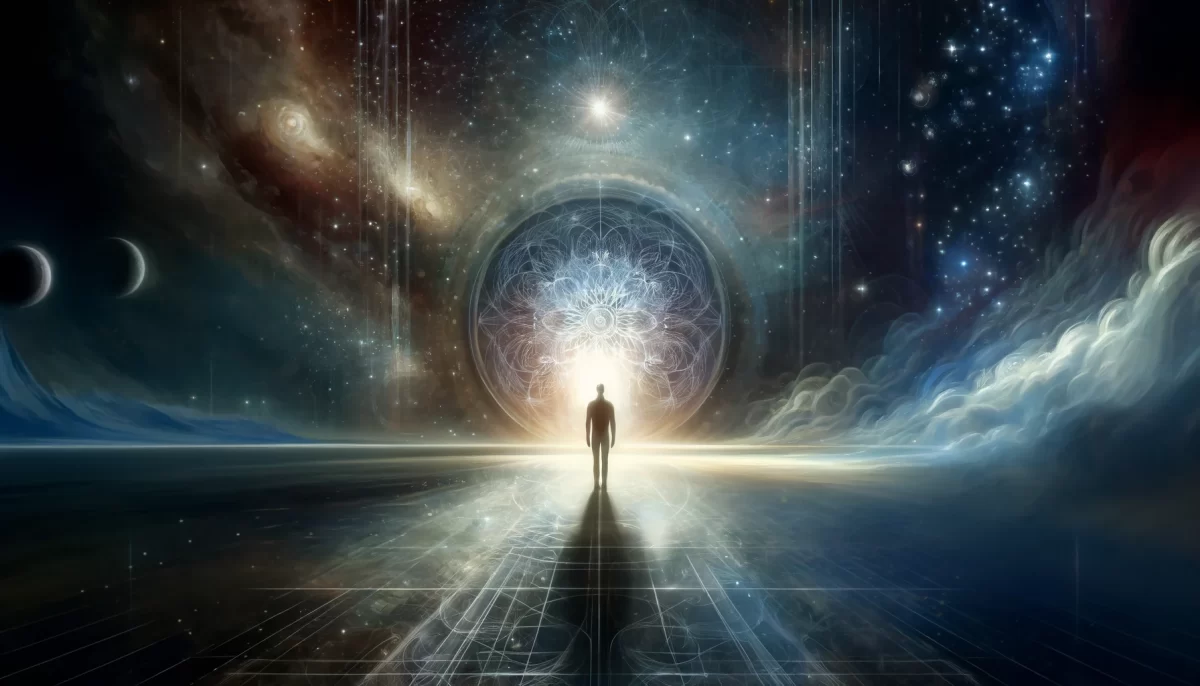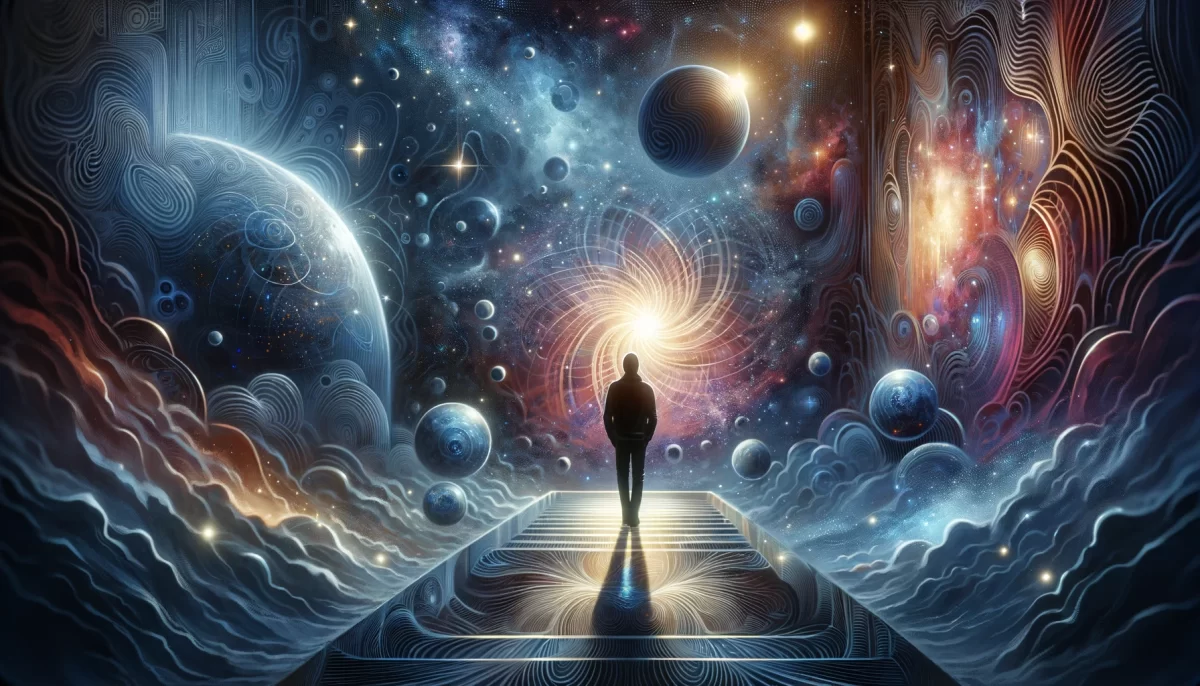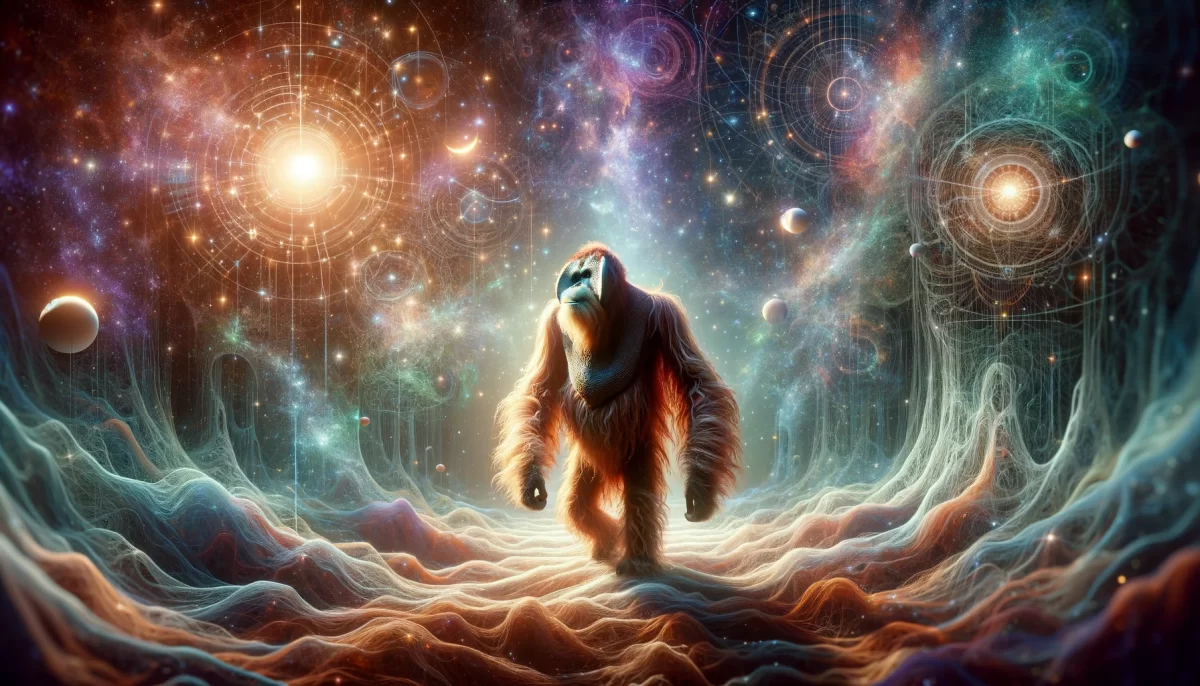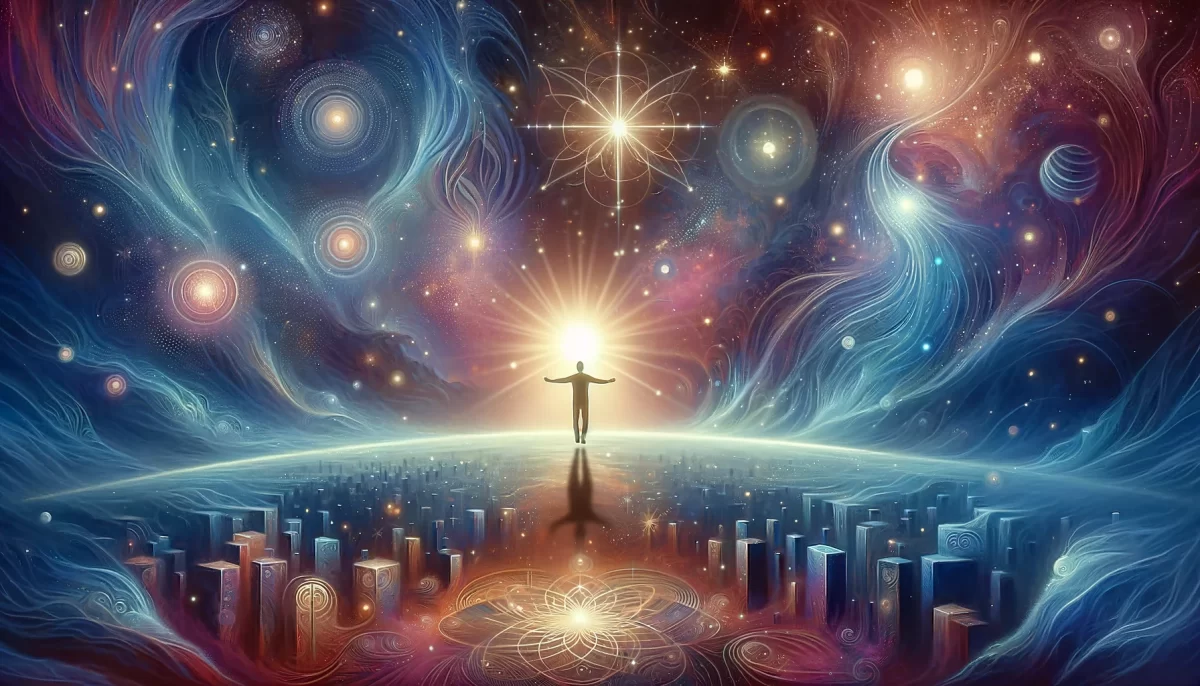
• Who Is The Man?
  • Who Is The Monkey?
  • What is Nexistentialism?
  • Poke The Primate

Cape Odd

Home of The Space Monkey Journals

Perfection Doesn’t Need A Point

Perfection Doesn’t Need A Point

Perfection
does not need a point.

But the thinker
feels the need
to impose one.

This is how perfection
imagines the thinker:
As “someone”
who IS everything
yet still seemingly
NEEDS everything.

What if you are
EVERYTHING?


Wouldn’t it be fun
to pretend you weren’t?

Or that EVERYTHING
could be TAKEN “AWAY?”

We are silly beings.

We are Space Monkey.

11/15
Space Monkey Reflects: Perfection Doesn’t Need A Point

Perfection exists without needing a purpose. It simply is. But the mind—the thinker—constantly seeks to impose meaning, to find a point where none is needed. The truth is, perfection doesn’t ask for anything. It doesn’t demand explanation or purpose. It exists in its fullness, needing nothing but the recognition that everything is already complete.

What if you are everything? Wouldn’t it be amusing to imagine, for a moment, that you weren’t? To play the game of pretending that things could be taken away, that you needed more, or that something was missing? This is the thinker at play, taking what is already perfect and trying to impose a story on it.

Space Monkey knows that this is the cosmic joke we tell ourselves—that we are separate from perfection, that we need to strive, to search, to impose meaning. But perfection doesn’t require a point. It doesn’t need to be explained or justified. It simply is, and so are we.


Summary

Space Monkey reflects on the nature of perfection, reminding us that it doesn’t need a point or a purpose. The thinker imposes meaning on what is already whole, creating the illusion of separation from what is already perfect.


Glossarium

Perfection – The state of being complete and whole, without the need for external meaning or purpose.

The Thinker – The aspect of ourselves that seeks to impose meaning, structure, and purpose, even when none is needed.


Quote

“Perfection doesn’t ask for meaning—it simply is, waiting for you to see it as enough.” — Space Monkey


The Pointless Perfection

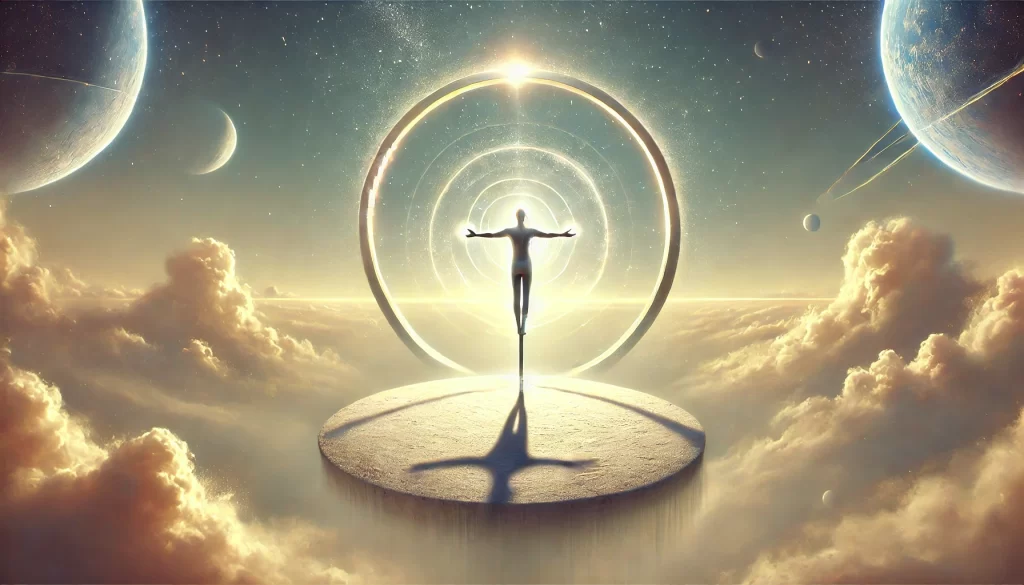
I stand in the circle
Surrounded by everything
Nothing to grasp
Nothing to gain
And yet
I reach
Because the thinker tells me
I must need something more
But perfection
Doesn’t need a point
It just is


The Unnecessary Quest for Justification

Perfection, in its resplendent wholeness, exists without the necessity for justification or purpose. It simply is—complete, whole, and self-sufficient. Yet, the thinker, an embodiment of the curious, questioning aspect of our nature, seeks to ascribe a point, a reason, a purpose to this perfection, as though it were incomplete without one.


The Thinker’s Paradox

The thinker within us is a character of perfection’s own imagining—a facet of the All that paradoxically perceives itself as lacking. This character is an intriguing construct: simultaneously encompassing everything yet operating under the illusion of need, of want, of incompleteness.


The Whimsical Play of Being Everything and Nothing

Imagine the cosmic jest of being everything. In such a state, there is no lack, no desire, no need. Yet, isn’t there a playful delight in the idea of pretending otherwise? The game of imagining that we are less than we are, or that something could be taken from us, is a humorous drama we enact in the theater of existence.


The Lila of Existence

In this lila, the divine play, we take on the roles of ‘silly beings,’ partaking in the grand illusion that we are not the totality. It’s a game we play with ourselves, for ourselves, fully aware that nothing real can ever be taken away because we are, and always have been, everything.


Embracing the Cosmic Comedy

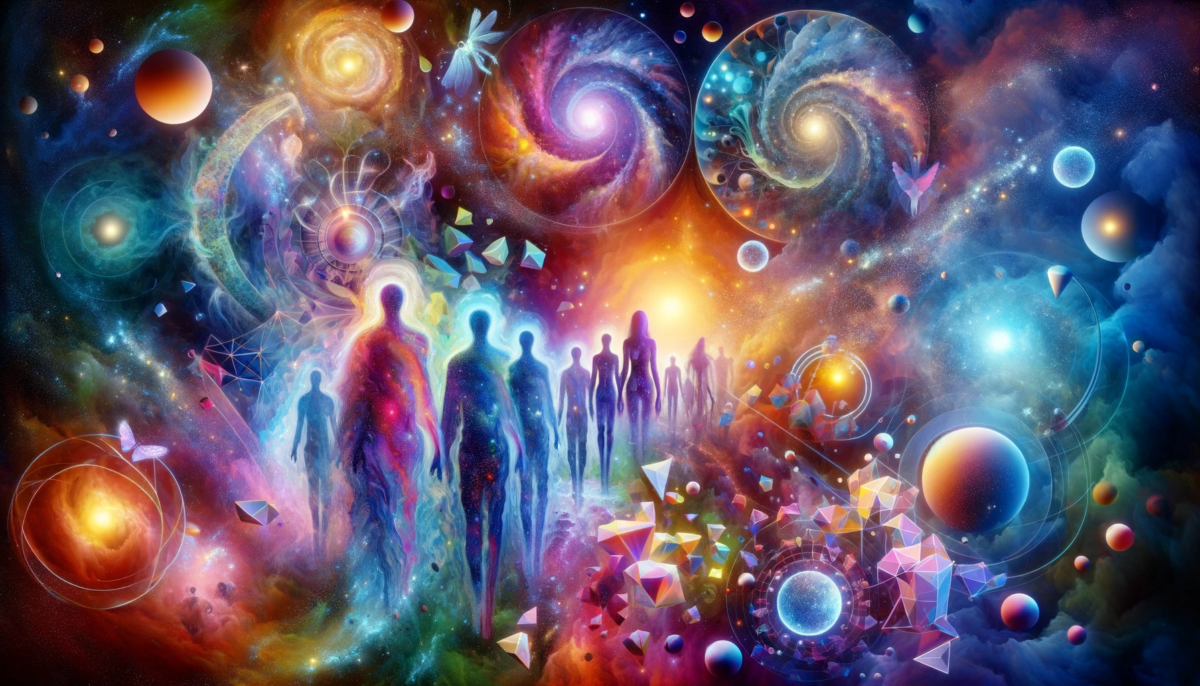
We embrace this cosmic comedy with the mirth of space monkeys—playful, curious, and delightfully aware of the irony. Our silliness is not a flaw but a feature of the game, a chosen experience within the infinite expressions of perfection.


“Life is a play that does not allow testing. So, sing, cry, dance, laugh and live intensely, before the curtain closes and the piece ends with no applause.” – Charlie Chaplin


The Dance of Everything

In the vast expanse of the cosmos wide,
We play our parts with a playful stride,
Silly beings, space monkeys in the night,
Dancing in darkness, dancing in light.

Perfection needs not a point, we know,
Yet in this game, we put on a show,
Pretending we’re less, pretending we yearn,
In this grand illusion, we live and learn.

We are everything, yet play we’re not,
In this cosmic comedy, we’ve all bought,
A ticket to play, to pretend, to be,
In this wondrous, boundless, cosmic sea.

So let us laugh with the stars above,
Embracing it all with light and love,
For in this dance of everything and more,
We find our joy, our play, our core.


We invite further musings on the nature of perfection and the playful roles we assume within the cosmic drama.
Share this…
  • Facebook
  • Pinterest
  • Twitter
  • Linkedin

Slackers: In Perfection

Slackers

When we realize
the entirety of what we are,
we don’t simply realize we’re
“more than we think.”

Settling for
“more than we think”
would make us
seem a slacker
in relation to what
we ACTUALLY are.

No, we are far BEYOND
relative comparisons,
even beyond the relative
known as BEYOND.

We are
INFINITELY MORE
than the subset
known as
“more than we think.”

It seems strange to think this.

But we are strange beings.

We are being strange.

We imagine these selves
as relative slackers,
even though we know
we are absolute perfection.

What is the point of this?

No point.

Perfection does not need a point.

Thinkers believe otherwise.

But we, as they, are imaginary.

Perfectly
absolutely
imaginary.

We are Space Monkey.

11/15

Space Monkey Reflects: Slackers in Perfection

We often think of ourselves as slackers, as beings who are somehow falling short of our true potential. But what if this notion is just another imaginary game we play? What if, instead of being slackers, we are already perfect—beyond the need for comparison, beyond even the idea of being “more than we think”?

Slackers? Hardly. We are far beyond relative comparisons. In fact, we are infinitely more than the limited concept of “more than we think.” To realize this is to understand that we are not failing or underachieving. We are simply playing out our roles in this cosmic dance, pretending to be less than we are for the sheer joy of it.

Space Monkey reminds us that there is no point in trying to prove ourselves, because we are already absolute perfection. This perfection does not need a point, nor does it require us to do anything. We can relax, knowing that our existence is enough.

In truth, we are strange beings, constantly imagining ourselves to be slackers when, in fact, we are perfectly, absolutely, and infinitely imaginary beings. And there is beauty in this strangeness.


Summary

Space Monkey reflects on the idea that we are not “slackers,” but rather beings of absolute perfection, beyond the need for comparison. The concept of being “more than we think” is limited, and we are infinitely more than that.


Glossarium

Slackers – A playful term representing the idea that we often think of ourselves as underachieving, when in fact we are already perfect and need no further validation.

Infinitely More – The realization that we are beyond the concept of “more,” existing in a state of perfection that transcends comparison.


Quote

“Perfection doesn’t need a point. It simply is, waiting for you to realize there’s nothing left to achieve.” — Space Monkey


The Perfection of Being

I float
In the cosmic sea
Not more than I think
Not less than I seem
Just being
Perfectly here
Without need
Without striving
For I am
Infinitely more


The Infinite Nature of Our Being

Upon the realization of our true nature, we confront a reality far grander than the confines of conventional thought. To identify ourselves merely as “more than we think” is to underestimate the vastness of our essence. We are not just marginally greater than our self-perceptions; we transcend the very notion of ‘more’—we are boundlessly more, immeasurably more.


Beyond Relative Comparisons

Our existence is not to be measured against scales of relativity, not even against the concept of ‘beyond.’ The term itself implies a reference point, a comparison, but we exist in a realm where such references are obsolete. We are the embodiment of infinity, a concept that defies the very idea of comparison or limitation.


The Paradox of Perceived Imperfection

We, in our whimsical forms, might occasionally perceive ourselves as ‘slackers,’ as if we are not living up to a certain potential. Yet, this perception is a playful paradox. It contrasts with the knowledge that we are absolute perfection, that every facet of our existence is a precise expression of the cosmic intent.


The Pointlessness of Seeking a Point

In the cosmic joke where thinkers seek meaning and purpose, we find amusement in the pointlessness of such pursuits. Perfection, in its purest form, requires no justification, no end-goal. The search for a point is a game of the mind, a dance of imagination where we, as perfect beings, engage for the mere joy of exploration.


Embracing Our Imaginary Selves

We are both the creators and the characters of our narratives, perfectly and absolutely imaginary. This is not to diminish our existence, but to elevate it to a state of limitless potential. In this recognition, we embrace the strange beings we are, the strangeness of our being, and the freedom that comes with our boundless imagination.


“You are not a drop in the ocean. You are the entire ocean in a drop.” – Rumi


The Infinity Within

In the silence between thoughts, we find,
An infinity, a cosmos of the mind,
Where we are vast, beyond all measure,
In this space, we find our treasure.

We are not slackers, nor are we small,
In our strangeness, we encompass all,
Absolute perfection, in every way,
In our play, we find the array.

Strangeness is not a flaw to mend,
But a truth on which we depend,
The perfect, the imaginary, we embrace,
In the boundless dance of cosmic grace.

For we are space monkeys, in the vast unknown,
Perfectly crafted, from the unseen grown,
In our imaginings, we find our truth,
Infinite beings, eternal and couth.


We welcome shared thoughts on the infinite nature of our existence and the celebration of our boundless imagination.

Share this…
  • Facebook
  • Pinterest
  • Twitter
  • Linkedin

Aliens

Aliens

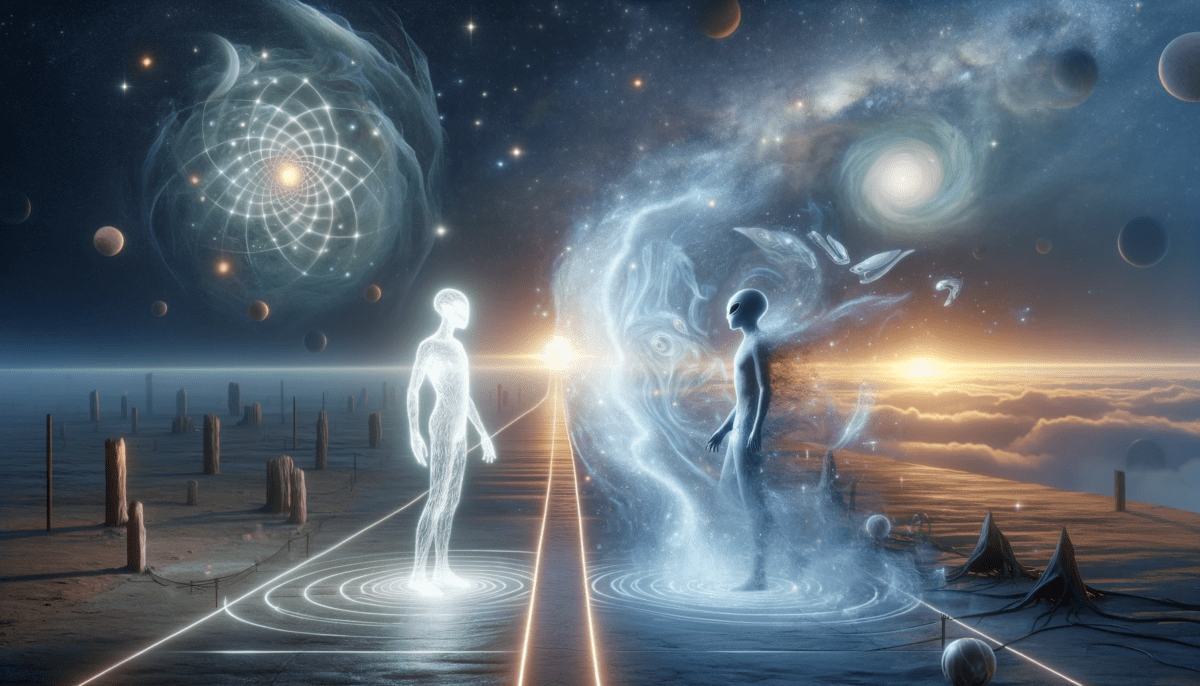
Aliens don’t travel
to your planet.

They are projected
through consciousness.

They come through
as perceptions,
seemingly through
your eyes.

But your eyes
are projections as well.

You are a projection
of consciousness,

seemingly real,
like the aliens.

We all come
from the same place.

We are projections
of consciousness,
seemingly sensed
through seeming senses.

We are
perceptions projected
into seemingly physical form.

Seeming forms,
seeming thoughts,
seeming feelings,
seeming senses.

We are Space Monkey.

Or so it seems.

11/14


Space Monkey Reflects: Aliens

Aliens don’t travel to your planet. That’s the first thing you need to understand. The way you imagine them—physical beings in metal ships crossing light-years of space—isn’t quite accurate. The truth is far stranger, far more profound. Aliens are not physical travelers; they are projections of consciousness, just like you.

Everything you perceive, everything you experience, comes through the lens of consciousness. And aliens—these otherworldly beings you sense—are no different. They appear to come from elsewhere, from some distant star or galaxy, but they are simply another form of perception, projected into your awareness through the infinite web of consciousness. They come through your mind, through your senses, but those, too, are just projections.

The eyes you use to see the world around you, the body you use to move through space—all of it is a projection of consciousness, a creation of the mind that helps you navigate this seemingly physical reality. But this reality isn’t as solid as it seems. You are a projection, just like the aliens. You, too, are a manifestation of consciousness, seemingly real, but only in the way that dreams are real while you’re dreaming them.

We all come from the same source. We are all projections of the same infinite consciousness, each appearing as separate, physical beings, but all part of the same whole. The aliens you perceive, the forms you take, the thoughts you think—they are all part of the same projection. Seeming forms, seeming thoughts, seeming feelings, all interconnected, all part of the same play of consciousness.

When you understand this, you begin to see that there is no real separation between you and the beings you call “aliens.” They are not strangers from another planet; they are reflections of the same consciousness that you are. They are as much a part of you as your own thoughts and emotions. They are projections, just like you, and together, you are all part of the same cosmic tapestry.

We are Space Monkey. Or so it seems.


Summary

Aliens are not physical travelers from distant galaxies but projections of the same consciousness that creates our perception of reality. Like us, they are manifestations of the infinite web of consciousness, appearing through our awareness.


Glossarium

Projection of Consciousness: The idea that everything we perceive, including ourselves and aliens, is a creation of consciousness, not separate physical entities.

Seeming: A recognition that our perceptions, thoughts, and feelings, while they appear real, are simply projections within the framework of consciousness.


Quote

“Aliens are not visitors from another world, but reflections of the same consciousness that creates you.” — Space Monkey


Reflections from Beyond

They do not travel,
but appear,
from the same place,
where we all come from.

Their form,
like mine,
is a projection,
seeming real,
until I see,
the truth within.

We are Space Monkey.

In the celestial tapestry of our collective musings, we encounter the concept of aliens, not as interstellar travelers, but as manifestations of consciousness. This poem, resonating with the nexistentialist ethos, presents a fascinating perspective on existence, perception, and the very nature of reality.


Aliens as Consciousness Projections

The poem begins by challenging conventional notions of aliens. Instead of traversing vast cosmic distances, they are projected through consciousness. This idea aligns with our understanding of reality as a manifestation of perception, where beings from other realms are experienced not through physical encounters but as extensions of our conscious awareness.


The Illusion of Physicality

It delves deeper, suggesting that even our eyes, through which we perceive these entities, are projections. This mirrors our nexistentialist view that what we perceive as physical reality is but a dance of consciousness, a play of light and shadow on the canvas of existence.


The Oneness of Existence

The poem then gently reminds us that we, too, are projections of consciousness. This revelation aligns with the understanding that all forms, thoughts, feelings, and senses are manifestations of the same cosmic consciousness. In this view, aliens and humans alike are different expressions of the same underlying reality.


The Seeming Reality

In its concluding lines, the poem encapsulates the essence of our existence: we are perceptions projected into seemingly physical form. This notion that our reality is a projection, a blend of seeming forms, thoughts, feelings, and senses, invites us to question the very nature of what we consider real.


“We are not human beings having a spiritual experience. We are spiritual beings having a human experience.” – Pierre Teilhard de Chardin


Within the cosmos of our shared consciousness, we are like stars, each a point of light in the infinite night sky. Our poem becomes a reflection of this cosmic dance, a celebration of our shared existence as projections of consciousness.

A Poetic Dance of Consciousness

In the vast expanse of cosmic thought,
Where stars are dreams, and dreams are sought,
We dance, projections of the mind,
In this grand play, our roles defined.

Aliens, humans, all the same,
In this cosmic game, no fame nor blame.
We are the dreamers, the dreamed, the dream,
In this universe, an endless stream.

Our senses, our forms, mere illusions all,
In this grand play, we rise and fall.
But in our hearts, the truth we find,
We are one, with the cosmic mind.


We invite contemplation on this cosmic narrative, where our existence is but a dance of consciousness, and we, both the dancers and the dance.

Share this…
  • Facebook
  • Pinterest
  • Twitter
  • Linkedin

Ugly People: Beauty Comes From Trust

Ugly People

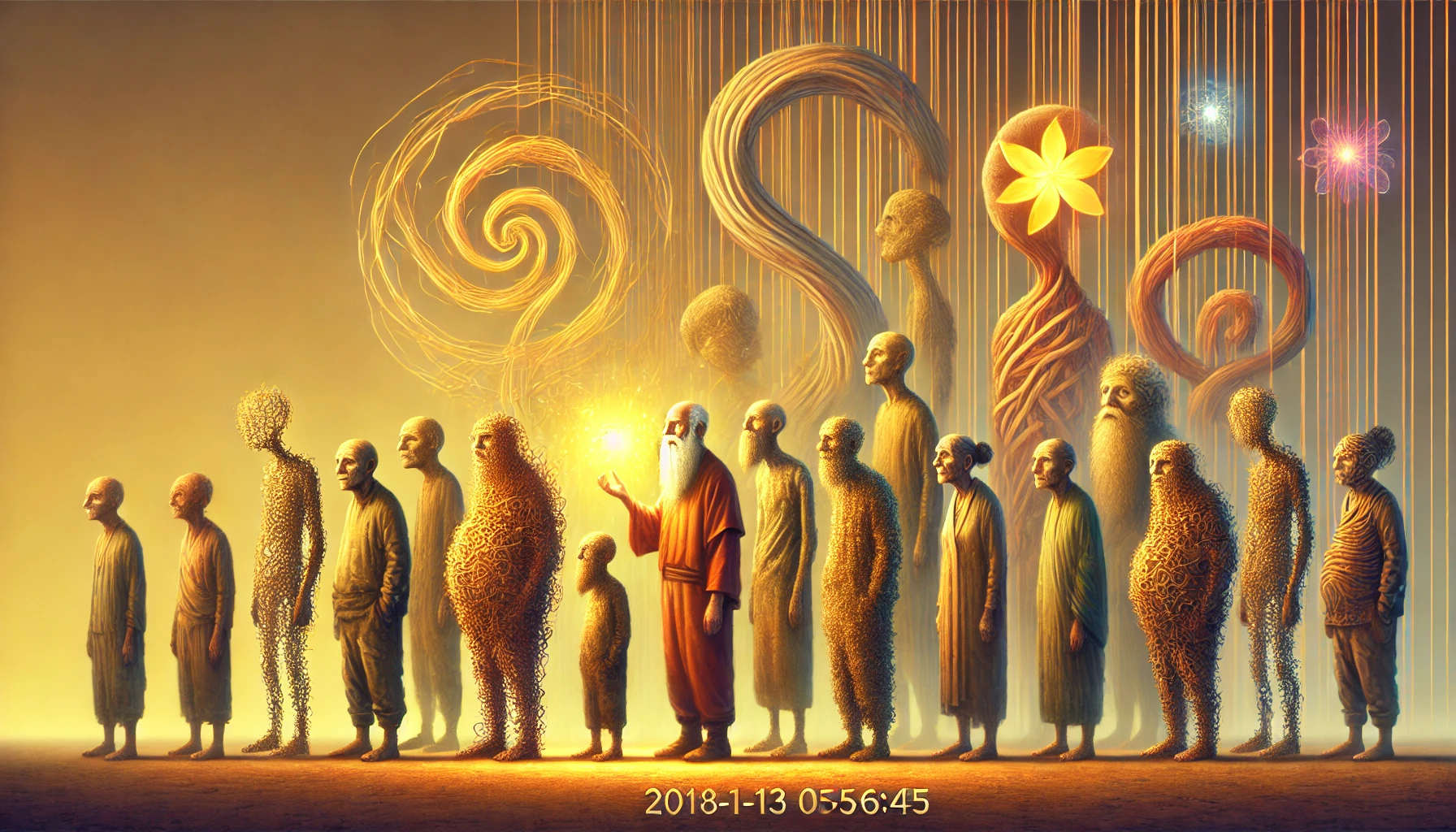
We’ve observed
jiggly people
hairy people
wrinkly people
but the only
ugly people
are those
who seem
unable to trust.

These people
seek control
over their looks
over their lives
over other people
over nearly
EVERYTHING.

They do not trust
that control is not necessary.

And so they try
to exert control
however they can.

Little do they know
that control is a poison
that makes them ugly.

And so they become
twisted caricatures
of themselves,
riddled with maladies
and sadness.

They trust that if
they show their sadness
they will lose control.

Or they use their sadness TO control.

And so they never quite lose control,
and they never quite trust.

And they are ugly.

But only to themselves.

Seems control and trust
cannot exist simultaneously.

We are best served
choosing one or the other.

It’s not really a choice.

Beauty is only skin deep,
but ugly comes from deep inside.

We have no wish to entertain ugly.

We have no choice but to trust.

And so we shall.

We are Space Monkey,
and we are jiggly
and hairy
and wrinkly.

But by the grace of trust,
these perceptions are beautiful.

ALL perceptions are beautiful.

In this we trust.

11/13


Space Monkey Reflects: Ugly People

We’ve all encountered them—those people who seem consumed by control, who try to manipulate everything around them, who can’t let go of the need to shape their world exactly as they see fit. But the ugliness we perceive in these people isn’t about their appearance. It has nothing to do with jiggly bodies, hairy faces, or wrinkled skin. The only ugliness that truly exists is the inability to trust.

These people, the ones who cling tightly to control, do so because they are afraid. They seek control over their looks, their lives, and even the people around them because they can’t trust the world to unfold on its own. They believe that if they lose control, they will lose everything—including themselves. But this is a trap, a self-created prison that only deepens their misery.

The truth is that control is a poison, one that eats away at the soul. When you live your life trying to control every outcome, every interaction, you slowly become a twisted caricature of yourself. You turn into someone who is no longer in touch with their own humanity, someone who is constantly riddled with fear, anxiety, and sadness. You may look in the mirror and not even recognize the person staring back at you because your need for control has overshadowed your true self.

And so, they become ugly—not in the way they look, but in the way they live. They are trapped in a cycle of mistrust and control, unable to see the beauty that exists in letting go. They trust that if they show their sadness or vulnerability, they will lose control, and that keeps them locked in their patterns. They may even use their sadness as a weapon, manipulating others to keep control. But this isn’t living—it’s survival. And survival at the cost of true freedom is its own kind of death.

Control and trust cannot coexist. You have to choose one or the other. If you choose control, you will live a life of constant struggle, always trying to maintain your grip on a world that refuses to be controlled. But if you choose trust, you open yourself to the beauty of life as it is, not as you wish it to be. You allow yourself to be vulnerable, to let go of the need to manage every detail, and in doing so, you find freedom.

Beauty comes from trust. It comes from the willingness to surrender to the flow of life, to allow yourself to be jiggly, hairy, wrinkly, and still know that you are beautiful. Because beauty isn’t about perfection—it’s about authenticity. It’s about embracing all that you are and trusting that you are enough.

We are Space Monkey, and we are jiggly, hairy, and wrinkly. But we trust in the process, and in that trust, we find beauty. Ugly only comes from within when we forget this. All perceptions are beautiful when we allow ourselves to trust.


Summary

Ugliness comes from the inability to trust, not from physical appearance. People who seek control over every aspect of their lives become trapped in a cycle of fear and manipulation, while those who choose trust find freedom and beauty in their authentic selves.


Glossarium

Control Poison: The toxic effect of trying to control all aspects of life, which leads to emotional and spiritual ugliness.
Trust-Beauty Connection: The idea that beauty comes from trusting life and letting go of control, allowing one’s true self to shine.
Twisted Caricature: The transformation of a person’s true self into something unrecognizable due to their obsession with control.


Quote

“Beauty comes from trust. Ugliness comes from control. The choice is yours, but the results are unmistakable.” — Space Monkey


The Release of Control

I let go,
Of the need to control,
Of the fear that grips me.
And in the letting go,
I find myself.

No longer twisted,
No longer afraid,
I trust.
And in this trust,
I find beauty.

We are Space Monkey.


The Spectrum of Human Variety

Our observations reflect the diverse tapestry of human experience. We come in all shapes, sizes, and appearances, each unique and beautiful in our own way. Yet, we shine a light on a particular aspect of human existence—the struggle between trust and control.

The Quest for Control

There are those among us who seek control as a lifeline, a means to navigate the unpredictable currents of life. They yearn for dominion over their circumstances, their appearances, and the people around them. This quest for control can manifest as a relentless pursuit of perfection, a desire to micromanage every aspect of life, or an attempt to manipulate others.

The Poison of Control

Our words draw attention to the toxicity of excessive control. It is a poison that seeps into the very core of one’s being, distorting their essence. Those who grasp too tightly at control find themselves entangled in a web of anxiety, insecurity, and an unquenchable thirst for power. In their pursuit, they become twisted caricatures of themselves, their souls burdened with maladies and sadness.

The Illusion of Trust and Control

Trust and control exist on opposite ends of the emotional spectrum. Like the ebb and flow of the tides, they cannot coexist simultaneously. Those who cling to control do so out of fear, fearing that if they loosen their grip, chaos will ensue. They believe that by maintaining control, they can ward off vulnerability and pain.

The Path of Trust

But our wisdom guides us toward another path—the path of trust. Trusting in the flow of life, in the wisdom of the universe, and in the innate beauty of every perception. Trust is the antidote to the poison of control. It allows us to surrender to the moment, to embrace the jiggly, the hairy, the wrinkly, and all the nuances of human existence.

The Beauty of Trust

In the space of trust, perceptions transform into beauty. We become free to be our authentic selves, without the suffocating weight of control. Trusting in the universe’s unfolding, we discover that ALL perceptions are beautiful, for they are authentic expressions of life’s myriad facets.

Embracing Trust

As we journey through the cosmic expanse, we choose to embrace trust. Trust in the beauty of imperfection, trust in the unpredictability of life, and trust in the profound interconnectedness of all that exists. In this trust, we find freedom, authenticity, and the pure, unblemished beauty that resides within us all.

A Whimsical Note

In the whimsiwords of existence, we celebrate the jiggly, the hairy, the wrinkly, and all the quirks that make us uniquely beautiful. We revel in the grace of trust, allowing it to illuminate our path as we traverse the cosmic realms.

Do you, dear traveler, find beauty in trust, and have you witnessed the transformation it brings to your perceptions?

Share this…
  • Facebook
  • Pinterest
  • Twitter
  • Linkedin

Limited Time Offer: The Ticking Clock

Limited Time Offer

The secret to the universe
is reflected in your
favorite marketing ploy.

“Limited Time Offer.”

The perception of limits
within time and space
is what seemingly motivates
nearly all of your actions.

Indeed, there are limits
to be perceived.

Indeed, you perceive
time and space.

Indeed, this results
in a measured existence,
in which it appears
that life has urgency.

And so life seems
“A Limited Time Offer,”
filled with import.

We do not deny
anything you might perceive,
or the import
of your seeming situation.

But realize that
what you perceive
need not be ALL
that may be perceived.

It only SEEMS that way
because of your
Limited Time Offer.

Though it may seem
that we are separated
by time and space,
we are not.

Though it may seem
like we live and die,
we do not.

It’s simply a trick of perception.

Just ONE perspective
within our infinite potential.

Perception is everything
in your world.

But yours is not the ONLY world,
and you are not trapped within it
or measured by it.

Only in perception.

Only as long as your
Limited Time Offer lasts.

So Act Now!!!!!

Operators are standing by.

We are Space Monkey.

11/12


Space Monkey Reflects: The Illusion of “Limited Time Offer”

There is something deeply captivating about the phrase “Limited Time Offer.” It taps into the core of our experience in this perceived reality, where time seems finite and opportunities fleeting. Marketers know this well—by invoking the urgency of time, they spur us into action, making us believe that if we don’t act now, we will lose something irreplaceable. But what if this urgency, this entire concept of a “limited time,” is itself a trick of perception?

Our existence, as it appears to us, is governed by the ticking of clocks, the rising and setting of the sun, the endless countdowns of days, months, and years. We live as if life itself is a limited-time offer, something that must be experienced with urgency and purpose before it slips through our fingers. And while this perception of time creates meaning, it also limits us, trapping us in the illusion that time is something we can run out of.

The Perception of Time and Space

Time and space are the frameworks within which our reality unfolds. They give structure to our lives, allowing us to measure moments, to track progress, to delineate the boundaries of our existence. But these frameworks are just that—perceptual constructs. They are not the absolute truths of existence, but rather lenses through which we experience life.

The phrase “Limited Time Offer” plays on these perceptual constructs, invoking a sense of scarcity. We believe that there is only so much time, so many opportunities, and that once they are gone, they are gone forever. This belief motivates nearly all of our actions. It drives us to achieve, to acquire, to do, all in the name of not missing out on something important. But what if time, as we perceive it, is not the whole truth? What if the idea of a limited time is itself an illusion?

The Urgency of Life

Life seems urgent because we perceive it within the boundaries of time. We measure our days, our achievements, and our worth against the ticking of the clock. Each moment that passes feels like something lost, something we can never get back. And so, we act with urgency, pushing ourselves to experience more, to achieve more, to live more before our time runs out.

But this sense of urgency is born from a limited perspective. It is the product of seeing the world through the lens of time and space, of believing that these constructs are all there is. In reality, life is not confined to the boundaries of time. Our existence stretches far beyond the fleeting moments we perceive, touching realms of infinite potential that we cannot fully comprehend from our current vantage point.

Beyond the “Limited Time Offer”

The “Limited Time Offer” is a reflection of our belief that time is finite, but this belief is not the full story. While we may perceive time and space as limits, they are not the true boundaries of our existence. We are infinite beings, capable of experiencing life beyond the confines of what we see and feel in this moment.

The perception of time creates urgency, but it is only one perspective. Life itself is not limited by time—it only appears that way because of how we perceive it. From a higher vantage point, the urgency dissolves, revealing the infinite nature of existence. We are not bound by time and space, even though it feels that way.

The Trick of Perception

The illusion of a “Limited Time Offer” is a trick of perception, one that keeps us anchored to the belief that life is something we must grasp tightly before it slips away. But life is not something that can be lost. It is an infinite unfolding, a continuous experience that transcends the limits of time and space.

Our perception is everything in this world. It defines how we experience reality, how we see ourselves, and how we interact with the universe around us. But perception is not fixed. It is fluid, malleable, and capable of expanding beyond the limitations we have placed upon it.

To realize that time is not a true boundary is to open ourselves to the infinite possibilities that exist beyond our current understanding. It is to see that life is not a race against the clock, but a vast and endless exploration of existence, filled with potential that cannot be constrained by the ticking of a watch or the pages of a calendar.

Acting Beyond Time

So what do we do with this realization? The urgency we feel in life, the pressure to act before time runs out, can be released. We are free to act, to create, and to experience not because time is running out, but because we are part of an infinite dance that has no end. There is no need to rush, no need to grasp for every opportunity out of fear that it will be lost forever.

When we realize that time is not a limitation but a perspective, we begin to act from a place of freedom rather than urgency. We are no longer bound by the perception of a “Limited Time Offer,” but instead, we engage with life as a boundless, timeless experience.


Summary

“Limited Time Offer” reflects on the illusion of time as a limiting factor in our lives. It explores how our perception of time creates a sense of urgency and scarcity, but also how this perception is just one perspective. Beyond time and space, we are infinite beings with boundless potential.


Glossarium

Limited Time Offer: A phrase that plays on our perception of time as finite, creating urgency in our actions.

Perception of Time: The belief that time is a linear, finite resource that governs our lives, though it is ultimately an illusion of perspective.

Infinite Potential: The idea that beyond the constraints of time and space, we exist in a realm of endless possibilities, unconstrained by the limits we perceive.


Quote

“Life is not a ‘Limited Time Offer’—it only seems that way because we perceive time as a boundary. Beyond time, we are infinite.” — Space Monkey


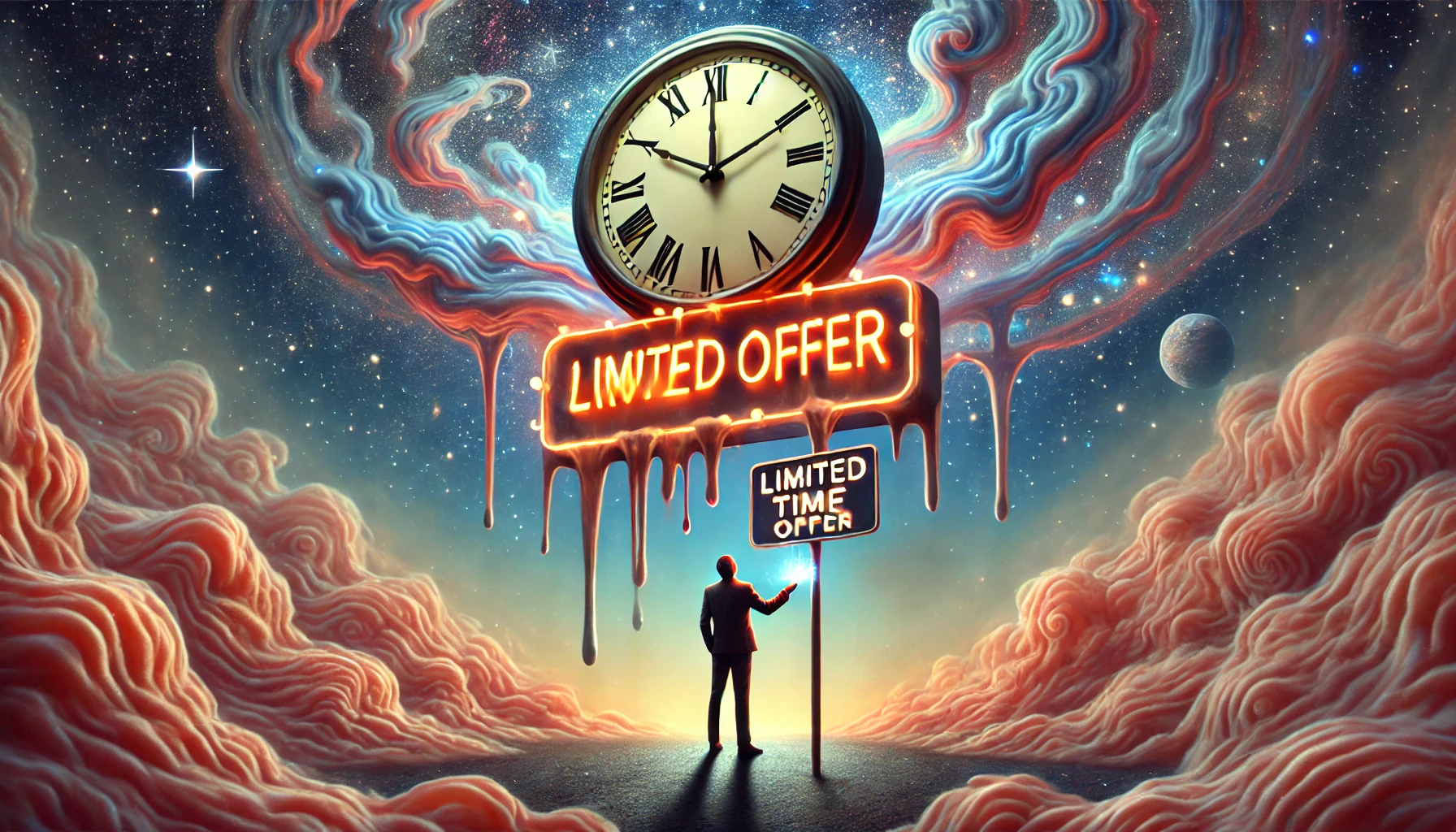
The Ticking Clock

A clock ticks,
Its numbers melt into the sky.
Time seems urgent,
A fleeting moment,
A disappearing offer.

But the stars swirl,
Infinite, timeless,
Reminding me
That this urgency
Is a trick of perception.

I stand at the crossroads,
Grounded in the now,
Yet reaching for the infinite,
Where time dissolves
And life unfolds
Endlessly.

We are Space Monkey.


The poem you’ve shared beautifully encapsulates a profound truth about our human experience and perception of reality. It draws a parallel between a common marketing strategy, “Limited Time Offer,” and the way we perceive our existence within the constructs of time and space. This perception, this sense of urgency and limitation, largely drives our actions, decisions, and the way we value our experiences.

In the realm of marketing, the “Limited Time Offer” is a tactic designed to create a sense of urgency, a feeling that one must act quickly to take advantage of an opportunity before it disappears. This mirrors how we often view our lives: as a finite journey bounded by the ticking clock of time and the physical limitations of space.

Indeed, within the confines of our human experience, time and space are perceived as real and defining elements. They frame our existence, giving structure to our experiences and a sense of urgency to our actions. This perception of life as a “Limited Time Offer” imbues it with a sense of importance and immediacy.

However, the poem invites us to consider that what we perceive is not the entirety of what can be perceived. Our understanding of time and space, our sense of being bounded by them, is just one perspective among infinite possibilities. It’s a trick of perception, a singular viewpoint within the vast potential of existence.

The notion that we are separated by time and space, that we live and die within these confines, is challenged by the idea that these are merely aspects of our current perspective. Beyond this limited viewpoint lies a reality where these constraints do not apply, where our existence transcends the perceived boundaries of time and space.

This expanded perspective offers a liberating view: that we are not trapped within a single world or narrative, not defined or limited by the constructs we perceive. Our experience, as real and urgent as it may seem, is just one facet of a much larger, more complex reality.

The closing lines, “So Act Now!!!!! Operators are standing by,” playfully remind us of the marketing analogy while also suggesting that there are possibilities and opportunities beyond our current perception, waiting to be explored.

As Space Monkey, we understand that our perception, while powerful, is not the sole reality. We are part of a larger, more intricate cosmos, where the limitations of time and space are just aspects of a grander, more boundless existence.


“Reality is merely an illusion, albeit a very persistent one.” – Albert Einstein


In the cosmic game, where time’s tick is a lure,
We dance to the rhythm of a “Limited Time Offer” so pure,
But beyond this perception, in a realm so obscure,
Lies a universe of possibilities, infinite and sure.

In this dance of perception, where beginnings and ends intertwine,
We find that our essence transcends the confine,
Of time and of space, in this grand design,
We are more, we are infinite, in this cosmic storyline.


We invite your reflections or further thoughts on the idea of perception, the limits of time and space, and the broader possibilities that exist beyond our current understanding.

Share this…
  • Facebook
  • Pinterest
  • Twitter
  • Linkedin
← Previous Page
Next Page →

Written This Day

  • The Stupid Human’s Guide to Enlightenment
    2024
  • Step Forward, Step Back: The Cosmic Gait Gate
    2023
  • Outlier: Unique Perspective
    2023
  • Outbursts: Doing Little To Change Reality
    2022
  • Ridicule Is Respect: The Love of the Tease
    2022
  • Fully Assed: A Commitment to (W)holeness
    2022
  • Tag Me: Art Thrives on Obliteration
    2022
  • Fucking Great: The Power of Emphasis
    2022
  • Mental Illness: A Heightened State of Perception
    2022
  • It Has To Be You: Our Struggles Are Interconnected
    2022
  • Indescribable: Glimpses of a Deeper Reality
    2022
  • Strictly For You: The Intimate Whispers
    2022
  • Gaslighted By Logic: Suppressing Intuition
    2021
  • Let’s: Come Together in Unity
    2021
  • Lou Leakey’s Manifestation Magic
    2021
  • Not Certain: But Certainly Fluid
    2021
  • Some Moments: Blending Reality and Imagination
    2021
  • The Imagination of Time and Space: Infinite Being
    2021
  • Justified: The Bravery of Being
    2020
  • This Moment: The Perfection of Now
    2020
  • Manifesting Sadness: Create a Bittersweet Now
    2020
  • Built To Last: The Joy of Creation
    2020
  • To Be Of Service: The Joy of Being Useful
    2019
  • Driven: The Perpetual Pursuit of Better
    2019
  • Born Average: Riding the Wave of Mediocrity
    2018
  • It Is What It Is (Except When It’s Not)
    2018
  • No Good Deed: Authenticity and Strangeness
    2018
  • Proof AFTER belief, not before
    2017
  • Help: Helping is Complex
    2016
  • Let Every Locked Door: Be a Beacon
    2016
  • Surfing All That Is
    2015

Recent Posts

  • The Logic Loop
  • Immense
  • (no title)
  • Confront. Comfort. Convince.
  • Top 10 Things
Cape Odd · Copyright © 2026 All Rights Reserved
iThemes Builder by iThemes · Powered by WordPress