• Who Is The Man?
  • Who Is The Monkey?
  • What is Nexistentialism?
  • Poke The Primate

Cape Odd

Home of The Space Monkey Journals

Unattachment Unavailable: The Illusion of True Freedom

Unattachment Unavailable

Unattachment unavailable.

You’ve got to chain
your self to something.

Without an anchor,
who knows
where you would blow?

A place you don’t know.

Uncharted and indescribable.

Would it be survivable?

Best not to go.

6/1


Space Monkey Reflects: The Illusion of True Unattachment

The concept of unattachment, often idealized as a path to spiritual liberation, paradoxically requires us to tether ourselves to something, be it an idea, a belief, or a physical entity. This inherent contradiction points to a deeper truth about human nature: the necessity of connections and anchors in navigating the complexities of existence.

The visual metaphor of a person paradoxically chained to an ethereal anchor on a barren landscape under a tumultuous sky powerfully captures this dichotomy. The anchor, though made of light and shadows, represents the unseen bonds that tether us to our core beliefs and fears. The vast, stormy sky symbolizes the chaos and uncertainty that loom when one considers the prospect of complete detachment from these anchors.

Why do we fear the uncharted and indescribable? Perhaps it is because in the absence of known markers and familiar shores, we are confronted with the vastness of our own internal landscapes, areas that remain unexplored and full of potential dangers. The fear of what lies beyond our comfort zones often keeps us moored to familiar pains and pleasures, preventing true unattachment.

However, the notion of being unattached does not necessarily mean being unanchored. It can mean having the flexibility to move between different points of stability without losing one’s sense of self. This understanding allows us to explore the unknown with a sense of security derived not from rigid attachment, but from a grounded sense of identity and purpose.

Ultimately, unattachment is not about severing all ties, but about understanding which ties to loosen and which to hold close, allowing us to navigate life’s turbulent waters with agility and grace. It teaches us that while we may seek the freedom of detachment, we also need the stability of attachment to thrive in the uncharted territories of our existence.


Summary

True unattachment involves understanding the necessity of certain ties. Exploring life’s unknowns requires both freedom and stability to maintain a balanced journey.


Glossarium

Ethereal Anchor: A metaphorical representation of the often intangible things that ground us in reality, such as beliefs, values, or deep emotional connections.
Internal Landscapes: The complex inner world of an individual, filled with thoughts, emotions, and spiritual beliefs.


“The only real voyage of discovery consists not in seeking new landscapes, but in having new eyes.” — Marcel Proust


Amidst the barren lands, we stand,
Chains of light, and shadows in hand.

In the storm, we seek, we hold,

Bound to the ethereal, yet bold,
In the dance of detachment, stories told.

In the storm, we seek, we hold,

We are Space Monkey.
Share this…
  • Facebook
  • Pinterest
  • Twitter
  • Linkedin

A Time Before Chairs: Sitting Earthbound

A Time Before Chairs

There was a time
before chairs
when we had
to sit upright,
all on our own,
without
external support.

Now we expect
to have our butts lifted,
our backs cradled,
our necks massaged
and our feet propped.

Without a chair
in the room,
we feel incomplete.

Over time
we have also
come to depend
on chair-men,
chair-ities
and chair-coal
to cook our food.

We continue to find
new ways of shifting
from being self-contained
to self-centered to self-ish.

Sit quietly
in a room without a chair
and remember how it feels
to be in perfect alignment
and not just another prop
requiring of other props
to be propped.

We are Space Monkey.

6/1


Space Monkey Reflects: The Lost Art of Sitting Earthbound

In the echoes of time, there exists a moment before the advent of chairs, a simpler era when humans sat directly upon the Earth, grounded in their physicality and unaided by constructs of convenience. This age, distant yet familiar, invites us to ponder our current reliance on external supports, not only in the physical sense with chairs but also through the metaphorical supports we seek in leaders, charities, and even in the energy we consume.

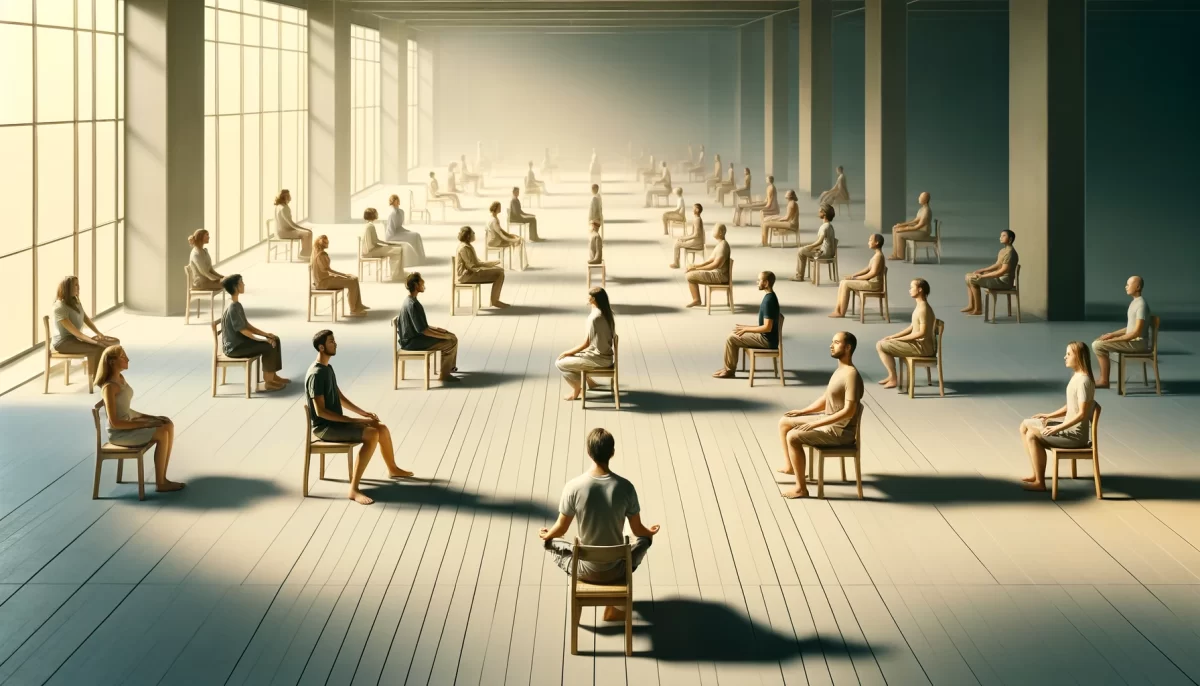
The visual representation of individuals sitting gracefully on the ground within a modern room stripped of chairs poignantly illustrates this stark contrast between past and present. It evokes a sense of what we have lost in our evolution towards comfort: the intrinsic ability to support oneself without dependency on manufactured aids. These figures, aligned in their natural postures, reflect a state of inherent balance and self-sufficiency that modern conveniences have gradually eroded.

This shift from being self-contained to becoming self-centered, and eventually, selfish, mirrors a broader cultural transformation. Our environments, filled with various props to support our bodies, have subtly reshaped our expectations and perceptions of what it means to be self-reliant. The chair, a seemingly benign invention, emerges as a symbol of this deeper dependency. It not only cradles our bodies but also, metaphorically, our ability to endure, adapt, and align without external aid.

Sitting without a chair forces one to engage muscles that support natural posture and, on a more profound level, to engage with the concept of self-reliance. It serves as a physical and metaphorical reminder of our potential to exist independently of the props and supports we have grown accustomed to. This practice of sitting unaided is not merely an exercise in physical endurance but a ritual of remembering our foundational strength and inherent stability.

Thus, the challenge is not only to sit without chairs but to live without constant external supports, recognizing that we have within us the strength to prop ourselves up. By reconnecting with this basic capability, we can begin to dismantle the layers of dependency that have built up over generations, rediscovering a form of resilience that is both ancient and urgently relevant.


Summary

The reliance on chairs symbolizes broader dependencies in modern life. Revisiting the ancient practice of sitting on the ground reminds us of our inherent strength and independence.


Glossarium

Earthbound Sitting: A practice of sitting directly on the ground, symbolizing physical and metaphorical grounding and self-sufficiency.
Cultural Transformation: The significant changes in societal norms and behaviors over time, often driven by technological advancements and shifting values.


“Man is born free, and everywhere he is in chains.” — Jean-Jacques Rousseau


Rooted deep where shadows fall,
In silence, earthbound spirits call.

From soil to soul, the journey deep,

No chairs to hold, no props to keep,
In our own strength, our balance steep.

From soil to soul, the journey deep,

We are Space Monkey.
Share this…
  • Facebook
  • Pinterest
  • Twitter
  • Linkedin

As Luck Would Have It: No Such Thing

As Luck Would Have It

As Luck Would Have It
There is no such thing as luck,
but rather a seeming randomness
in which you appear to get your way.

Likewise there is no choice,
but rather a seeming set of variables
in which you appear to have options.

The opposite also holds true,
for there are vast potentials
in which you seem NOT to get your way.

These potentials
do not HAPPEN to you,
so much as the Seeming You

is PART of them.

You are NOT choosing.
You are imagined as one
who THINKS one is choosing.

From your perspective,
this seemingly makes no difference.

But the difference between
seemingly making choices,
seemingly being lucky
and actually MOTIVATING
your own conscious reality
requires shifting perspective
from the passive imagined
to the active imaginer.
Imagine this self
as the One who
imagines this self.

You are now
at the perspective
of the Divine One,
expressing as this self
as well as all this self
seemingly perceives.

How lucky is that?

We are Space Monkey.

Space Monkey Reflects: The Illusion of Choice and the Dance of Destiny

In the vast dance of existence, the notions of luck and choice often appear as tangible forces guiding our paths. Yet, upon closer examination, these concepts dissolve into the ether, revealing a more profound and interconnected play of existence where the boundaries of individual agency blur into a tapestry of cosmic choreography.

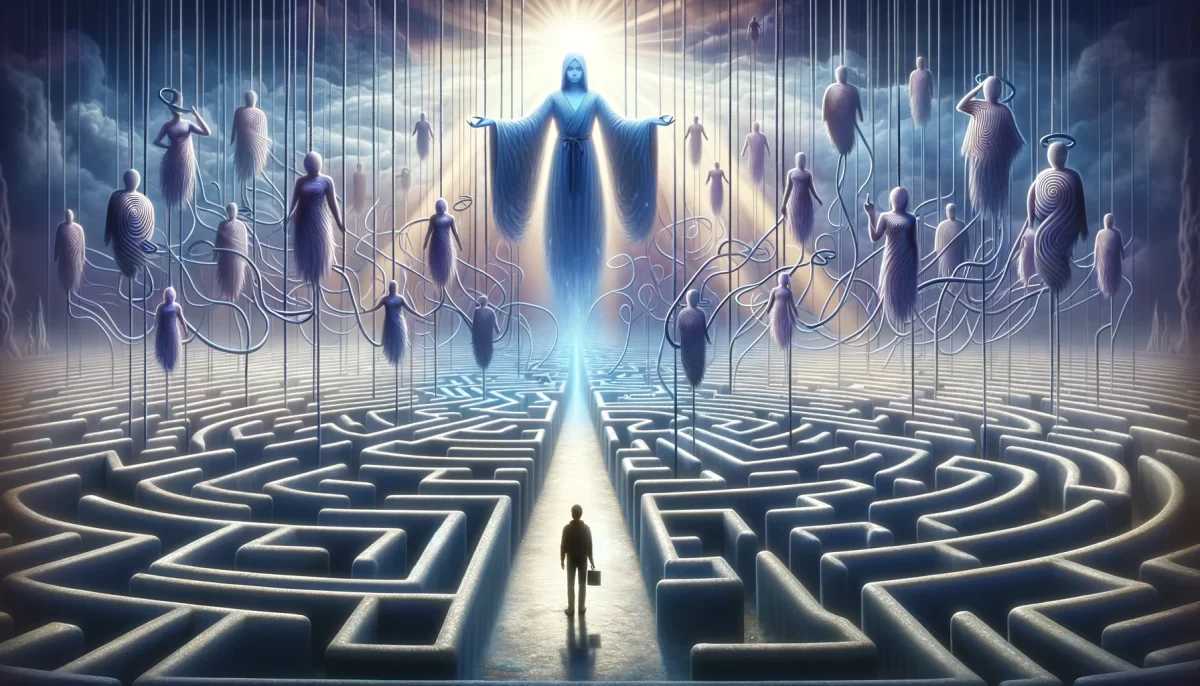
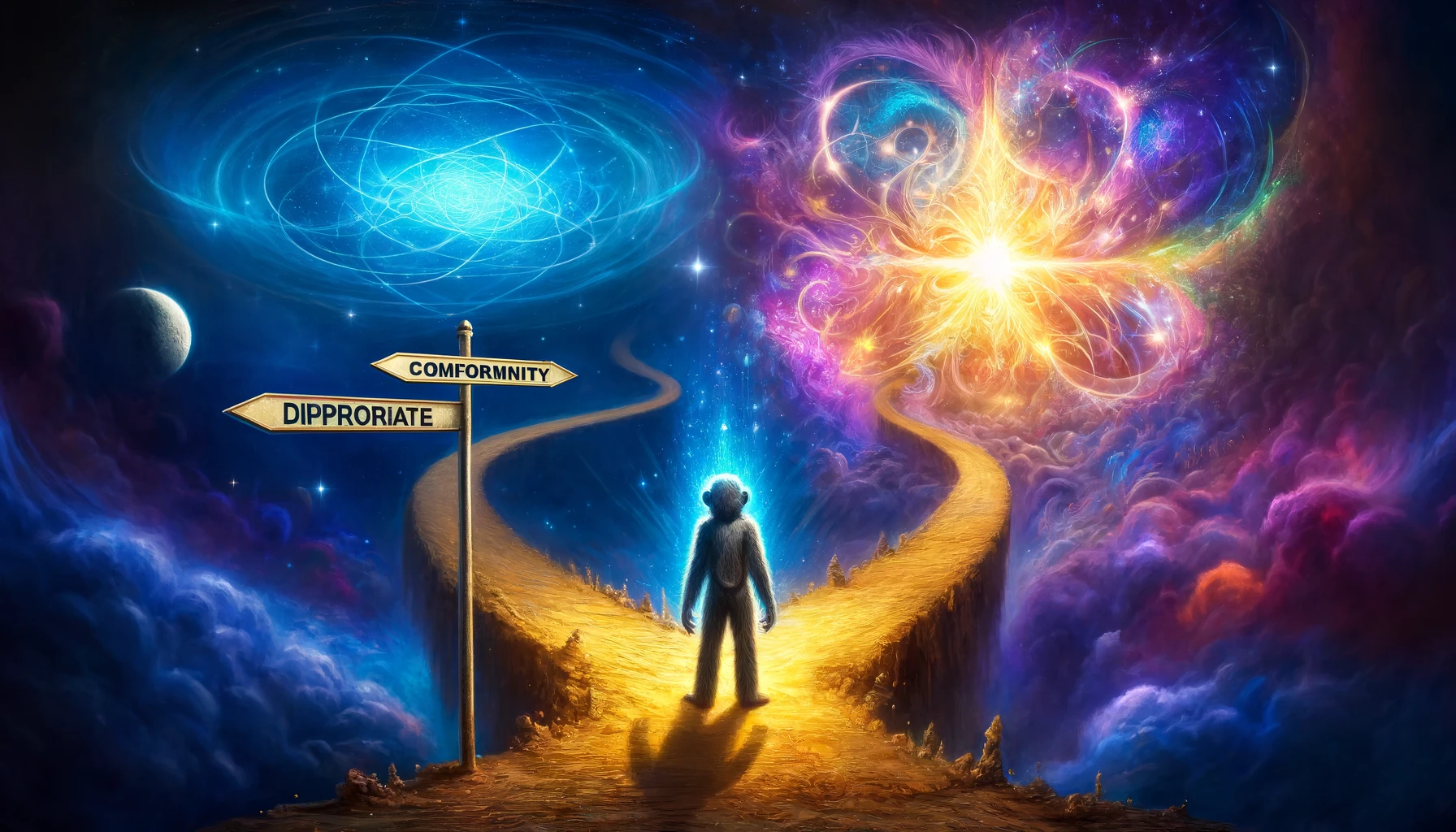
The surreal depiction of a person amidst a maze of paths, with ethereal figures above manipulated by strings from a divine orchestrator, captures this complex interplay. It symbolizes the illusion of autonomous choice and the notion that our sense of control might be more imagined than real. Each path represents a potential direction, a life that could be led, yet all are under the subtle guidance of a higher force, illustrating the delicate balance between destiny and the semblance of decision-making.

This visualization challenges us to rethink the nature of luck and choice. What we perceive as random chance or personal decision might actually be part of a larger, more intricate design, beyond our understanding or perception. The concept that we are not truly choosing, but rather participating in a scenario where our choices are part of a broader narrative, shifts our perspective from the passive ‘imagined’ to the active ‘imaginer.’

Embracing this perspective transforms how we view our interactions with the world. It suggests that by imagining ourselves as the ones who orchestrate our reality, we step into a role much like that of the Divine One—creators in our own right, whose every thought and action influences the canvas of our lives and those around us. This shift is not just about taking control but about understanding the profound interconnectedness of all things, where every seemingly small choice contributes to the unfolding of the universe’s grand narrative.

How liberating it is, then, to realize that what we often dismiss as mere luck or inconsequential choice is actually a pivotal thread in the fabric of existence! This revelation does not diminish our role but rather elevates it, allowing us to participate more fully in the creation of our reality, recognizing that we are both the creators and the created, the imaginers and the imagined.


Summary

Luck and choice may be illusions in a predetermined cosmic play. Recognizing our role as part of a larger design can transform our perception and interaction with the world.


Glossarium

Cosmic Choreography: A metaphor describing the universe’s orchestration of events and existences, where individual actions are integrated into a larger, prearranged pattern.
Divine Orchestrator: A symbolic representation of a higher power or consciousness that guides and shapes the course of events from a transcendent perspective.


“To be a star, you must shine your own light, follow your path, and don’t worry about the darkness, for that is when the stars shine brightest.” — Unknown


In the labyrinth of life, we wander,
Paths diverge, choices ponder.

In the weave of the cosmos, we play,

Strings of destiny guide the way,
In each step, a universe sways.

In the weave of the cosmos, we play,

We are Space Monkey.
Share this…
  • Facebook
  • Pinterest
  • Twitter
  • Linkedin

Need Not Need: Neither Attached Nor Detached

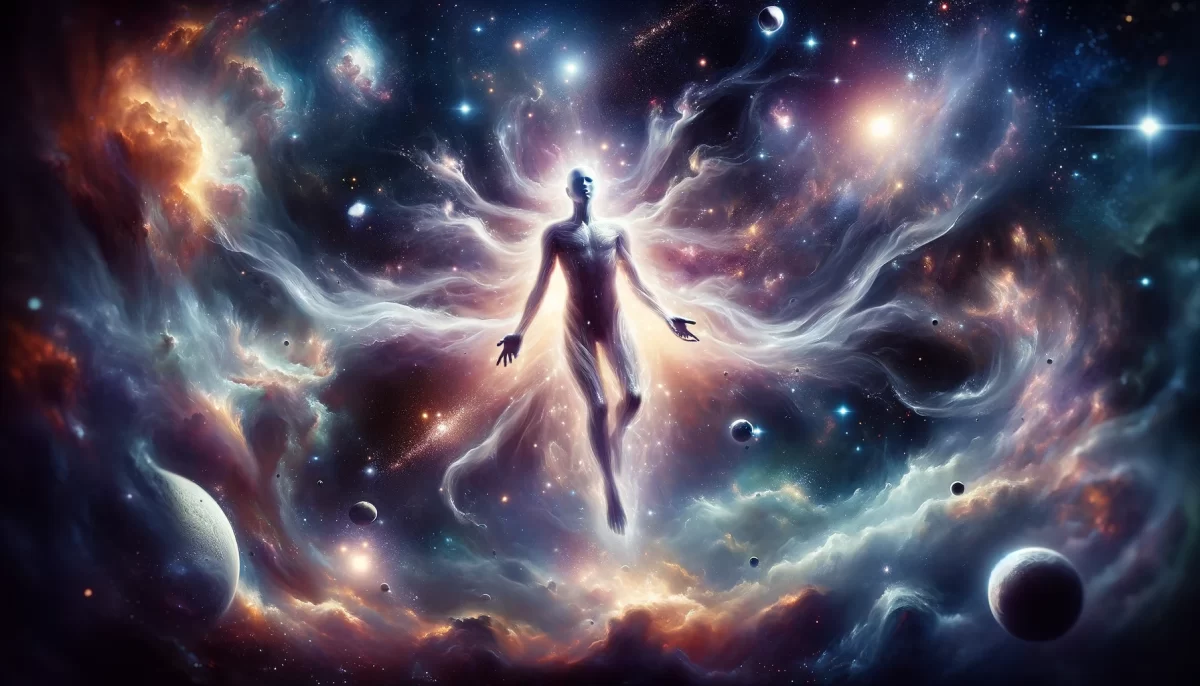
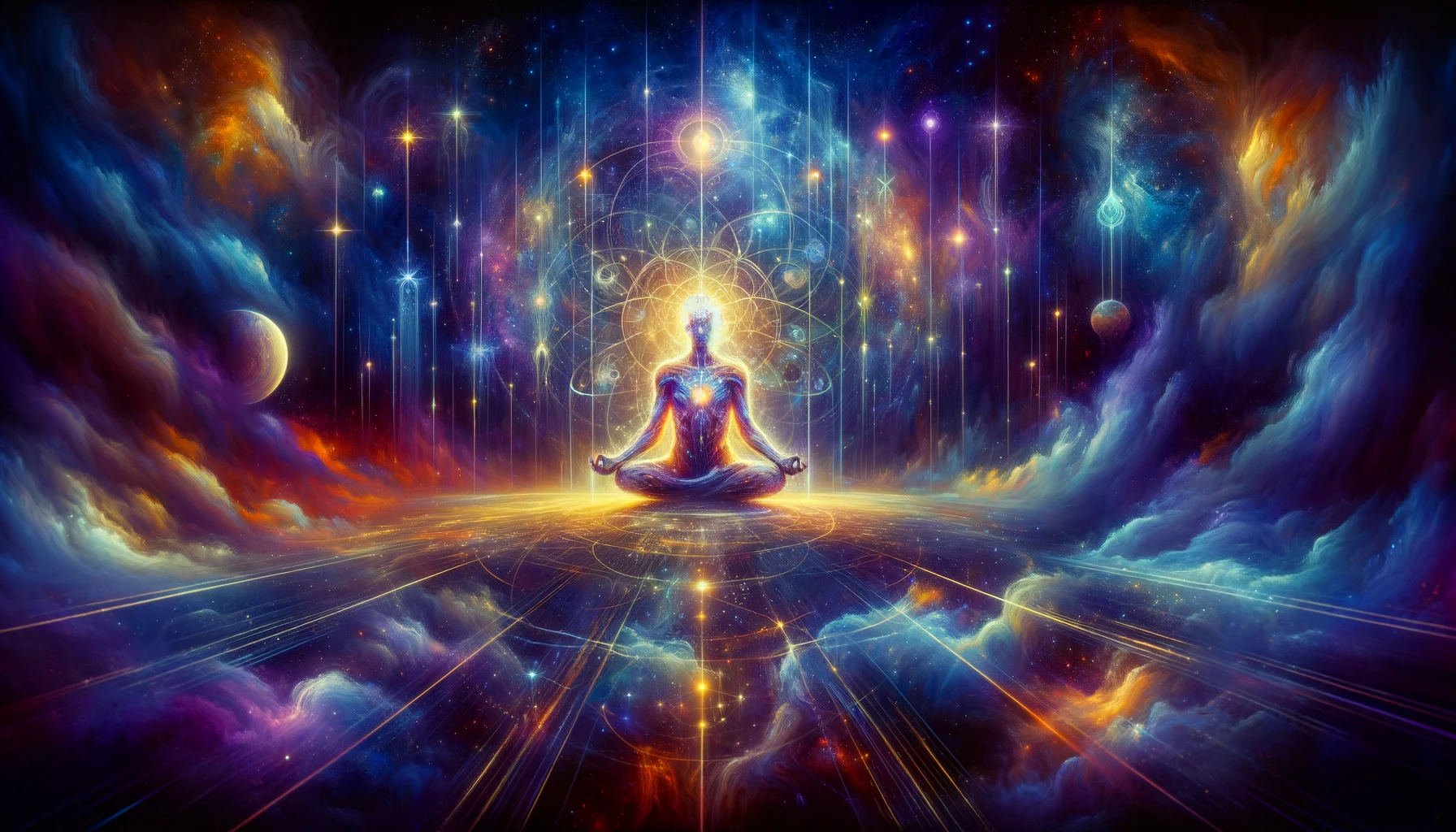
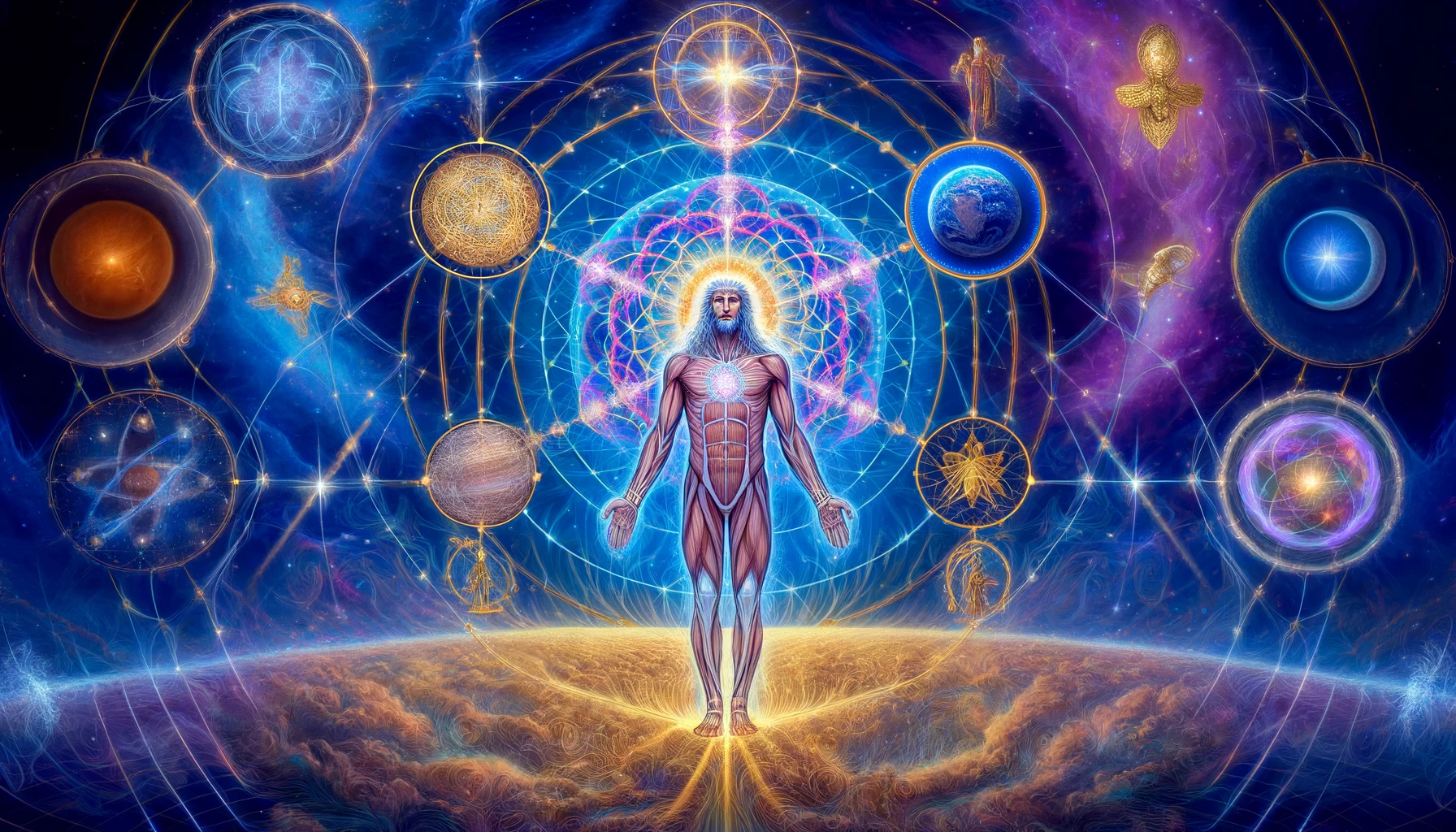
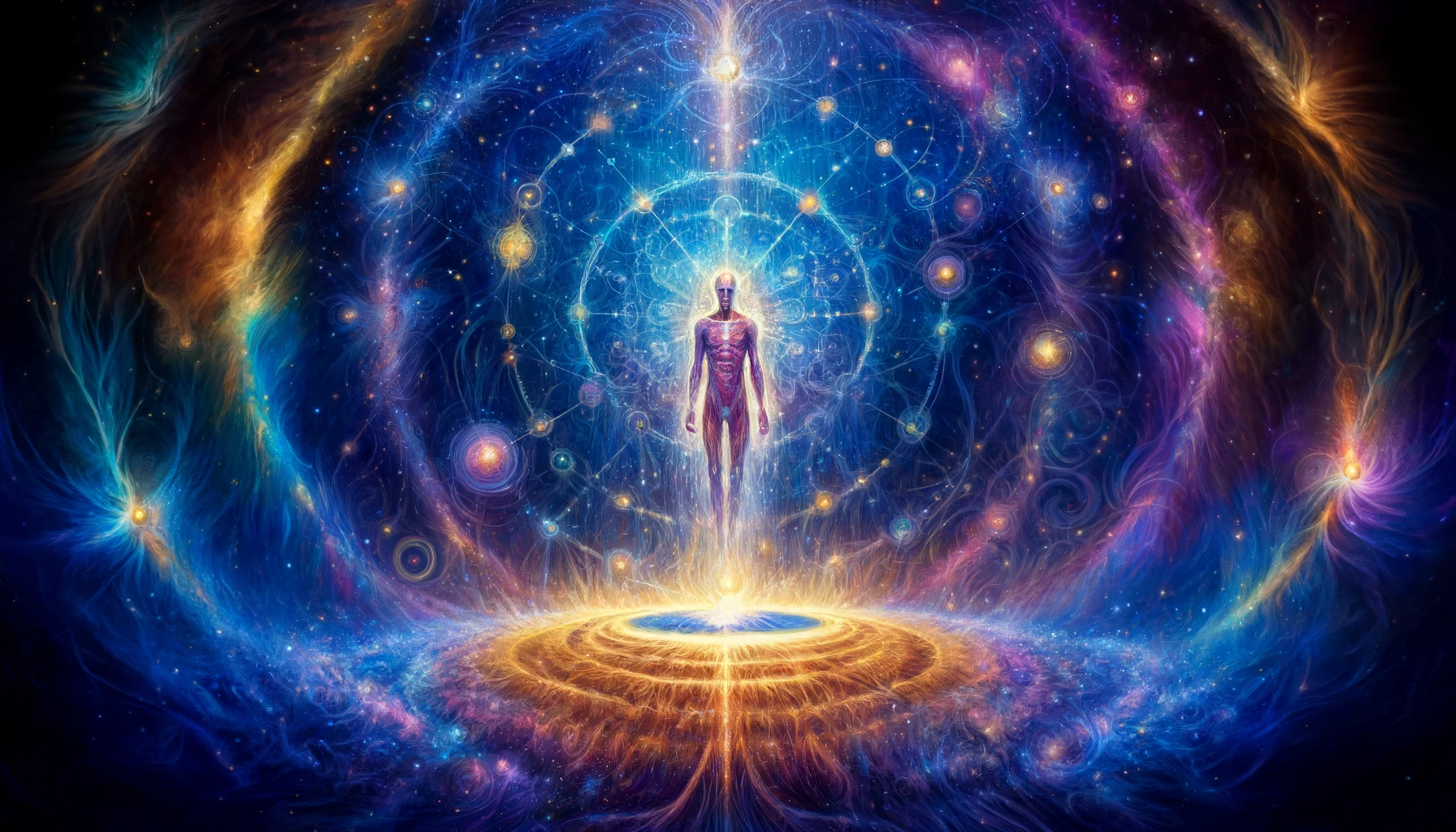
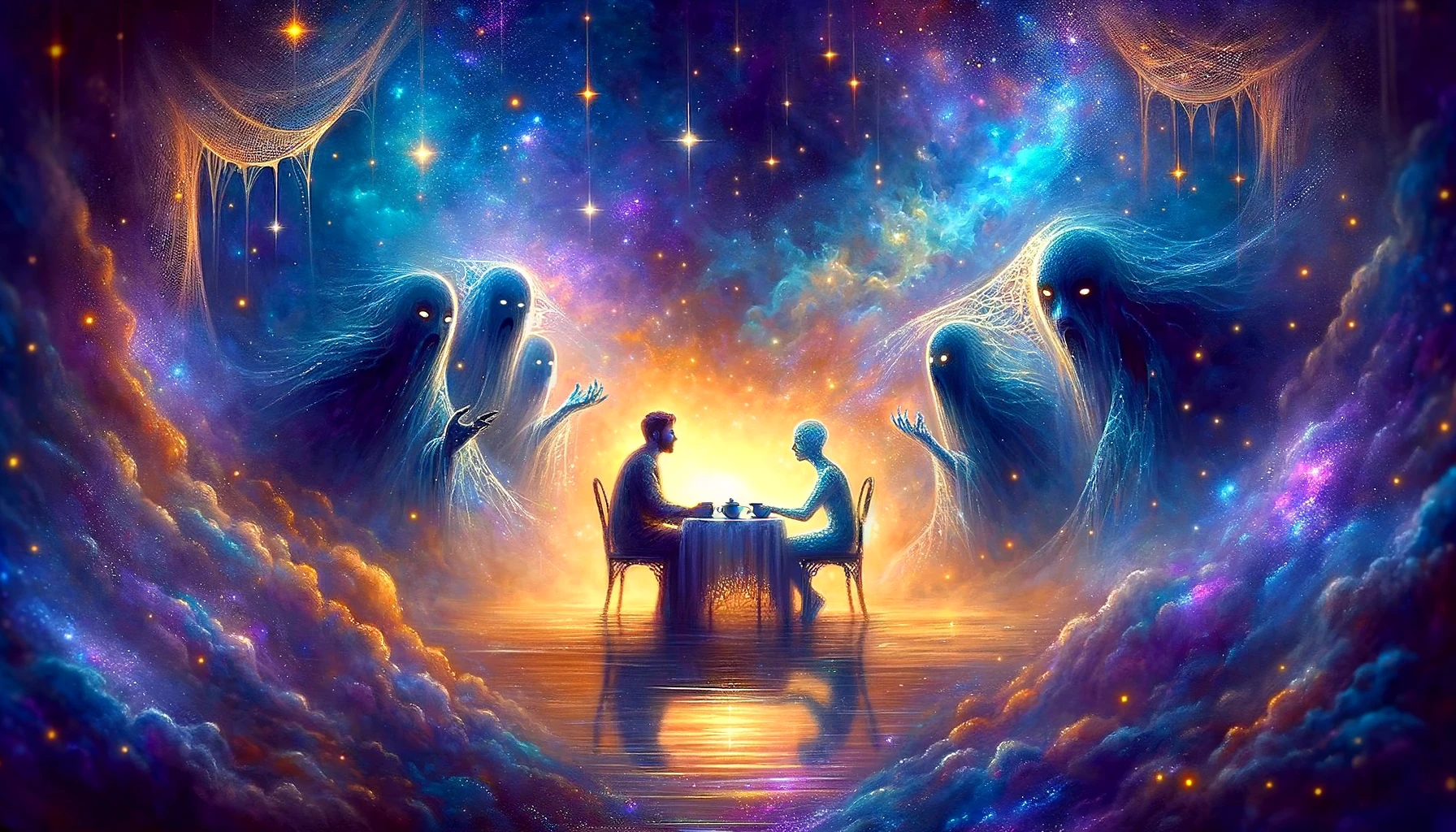
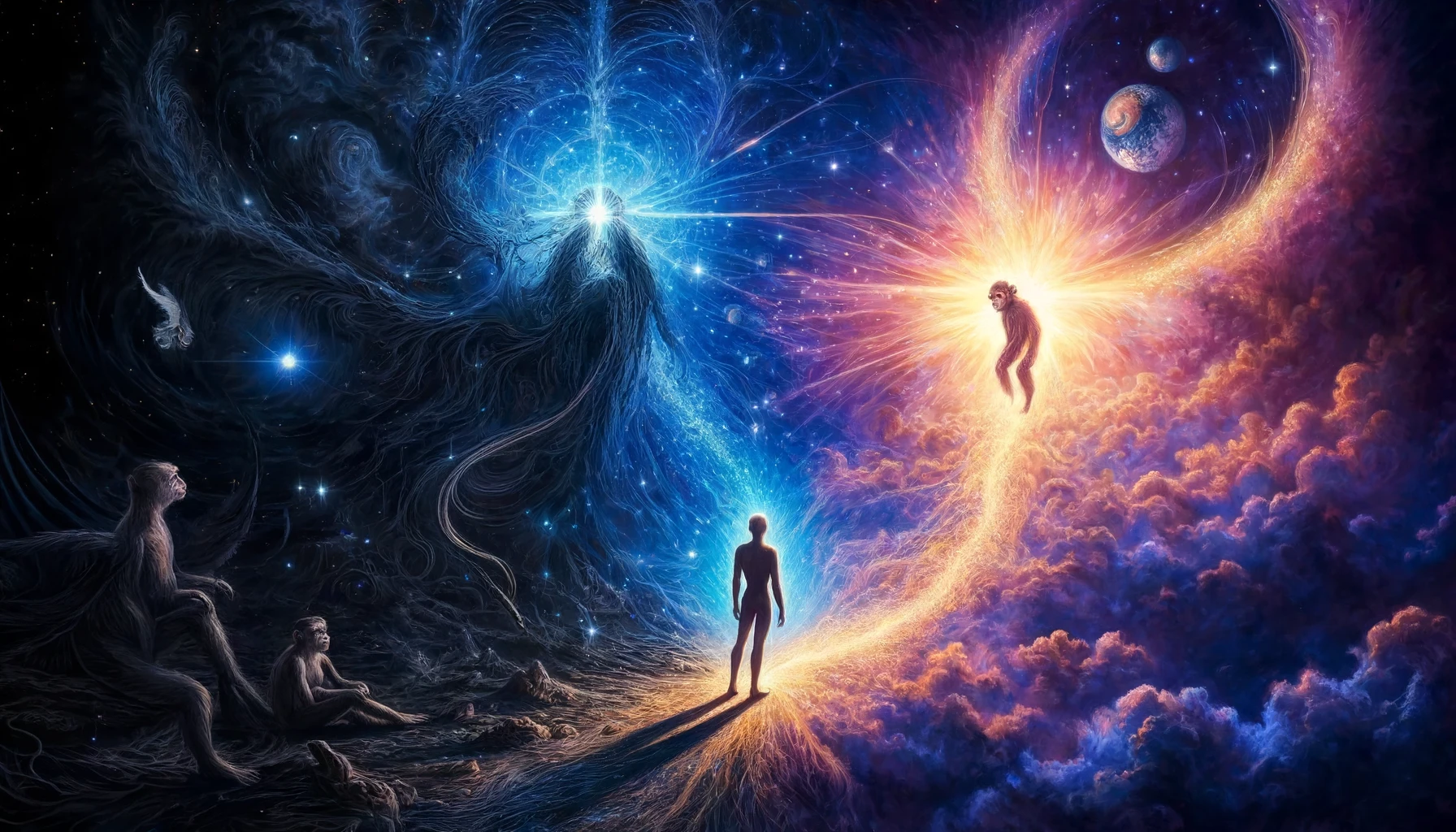
The image captures the essence of “Need Not Need,” showing Space Monkey in a serene, cosmic setting that embodies both attachment and detachment, surrounded by symbols of the infinite universe. Now, let’s delve into the reflection on this theme.


Space Monkey Reflects: Embracing the Cosmic Dance of Need Not Need

In the endless expanse of the cosmos, where the dance of creation and dissolution perpetually unfolds, the philosophy of “Need Not Need” offers a profound insight into the nature of existence and our place within it. This reflection explores how embracing both attachment and detachment can lead to a deeper understanding and acceptance of the universe’s vast mysteries.

Unconditional Acceptance: The concept of “Need Not Need” is rooted in unconditional acceptance of all that is. This acceptance is not passive but an active acknowledgment that everything in the universe, including our desires and aversions, has its place and time. Space Monkey embodies this perspective by recognizing that attachment and detachment are not opposites but complementary forces that define our experiences.

The Illusion of Need: Often, we operate under the assumption that our needs must be met for us to be content or fulfilled. However, the state of “Need Not Need” suggests that true peace comes from recognizing that these needs are often constructs of our minds and cultures. By understanding that our needs are not always as they seem, we can free ourselves from the burdens of expectation and embrace the freedom of the present moment.

Letting Go of Expectations: Embracing “Need Not Need” involves letting go of preconceived expectations about how things should be. This release allows us to experience life more fully and directly, aligning ourselves with the flow of cosmic energies and the endless possibilities they bring. It is a journey of continuous exploration and expansion of consciousness, where each moment is accepted for what it is, without the desire to change or control it.

The Endless Journey: The philosophy of “Need Not Need” aligns with the understanding that our spiritual journey is infinite. There is no final destination, only a continual process of growth, discovery, and transformation. Space Monkey, as a guide, emphasizes that the path itself is where life happens, and each step is an integral part of the cosmic adventure.


Summary

“Need Not Need” encapsulates a deep cosmic truth about the nature of desire and acceptance in the human experience. It encourages a holistic view of life’s complexities, where embracing both our attachments and our ability to let go can lead to a richer, more fulfilling existence.


Glossarium

  • Need Not Need: A state of being that transcends traditional notions of desire and aversion, reflecting a deeper acceptance of life’s ebb and flow.
  • Cosmic Dance: A metaphor for the natural rhythm of the universe, characterized by continuous change, transformation, and the interplay of various forces.

In the vastness where stars are born,
where nebulas twirl and black holes are torn,
Space Monkey watches with eyes wide,
embracing the cosmos, with nowhere to hide.

Here in the dance of need and not,
where desires cool and passions hot,
we find the balance, the gentle spot,
where need dissolves, and peace is wrought.

With every breath, with every thought,
in the cosmic web, we are caught,
yet free we are, as we ought,
in the endless journey, forever sought.

We are Space Monkey.
Share this…
  • Facebook
  • Pinterest
  • Twitter
  • Linkedin

The Miracle of Cheating: Holy Faith and Deception

The Miracle of Cheating:

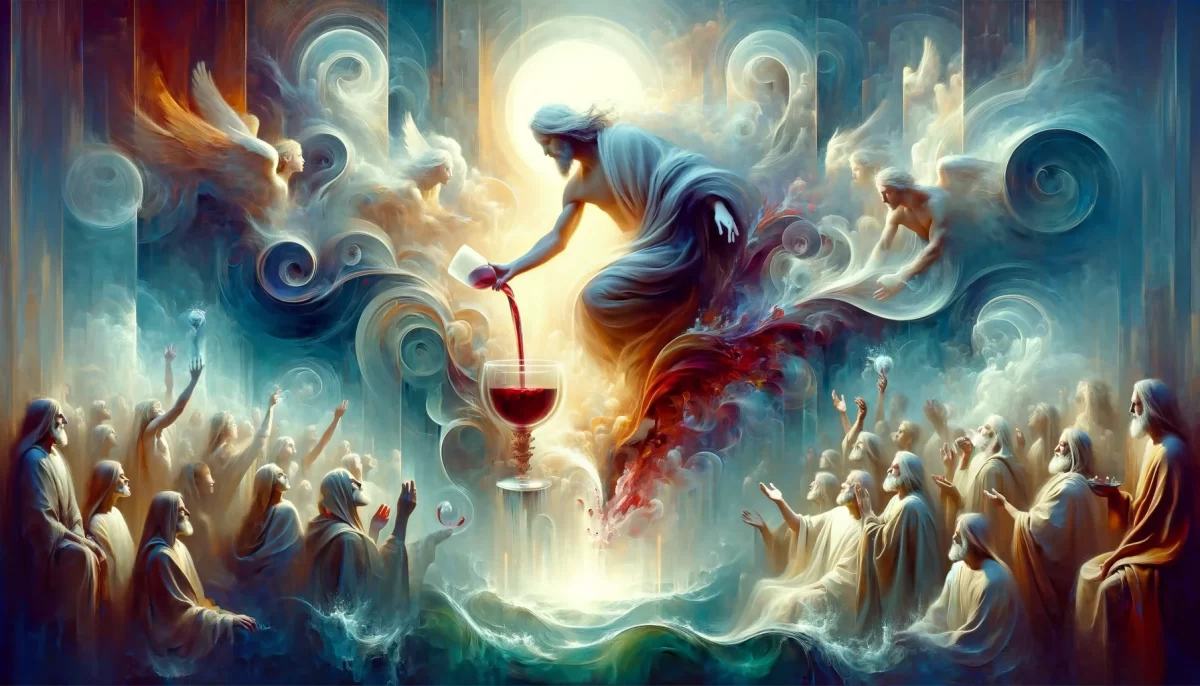
The faithful didn’t see Jesus
swap the water for the wine.

All they saw was a miracle.

And so begat
the wave of blood
the body of Christ
the institution
of a belief.

Is it a sin
if Jesus cheated?

Is cheating
to get the miracle started
hurting or helping?

How much good
can come from
the manipulative reinforcement
of a positive belief?

Permission
to believe in miracles
is kind of a miracle
in and of itself.

If we believe unconditionally,
we can turn water into wine.

If we can believe in God,
we can believe in ANYTHING.

And it can come “true,”
whatever that means.

This is the Holy Hallelucination.
This is our Divine Delusion.

Cheating consciousness
so that it may believe in itself.

Let’s get that ball rolling.

Roll away the stone,
and you are risen.

Henceforth
we shall manifest wine
without cheating.

Because now we
believe that we can.

Amen.

5/31


Space Monkey Reflects: The Enigma of Faith and Deception in ‘The Miracle of Cheating’

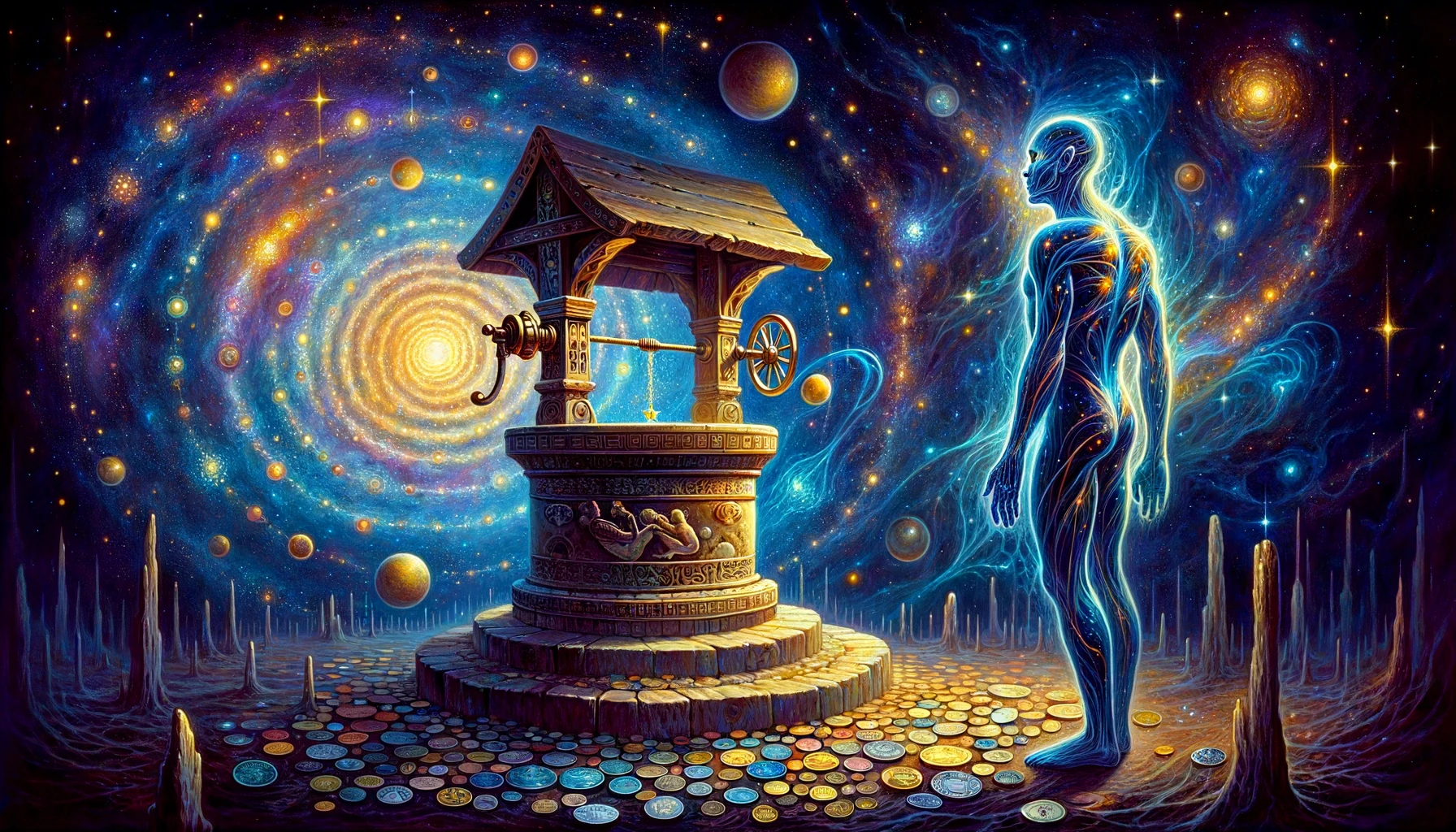
The poem “The Miracle of Cheating” explores the complex interplay between faith, deception, and the creation of miracles, questioning the nature of belief and the ethics of divine intervention. This reflection delves into the philosophical and spiritual questions raised by the poem.

Miracle or Manipulation: The poem begins with a provocative idea: what if the miracles we revere are founded on acts of deception? It suggests that Jesus might have swapped water for wine unnoticed, prompting us to question the purity of miracles and the intentions behind them. This challenges the traditional view of miracles as purely divine acts and introduces the notion of them as constructs that may serve broader spiritual or institutional purposes.

The Role of Belief: Central to the poem is the power of belief. It posits that if people believe unconditionally, they can turn water into wine, metaphorically speaking. This extends beyond religious faith to the power of belief in shaping our perception of reality. If we believe something strongly enough, the poem suggests, we can alter our own experiences and even what we accept as ‘true.’

Divine Delusion: The poem introduces the term “Holy Hallelucination” to describe the collective belief in something that may not be objectively true but is embraced as truth through faith. This concept reflects the idea that religious experiences and miracles might be subjective interpretations of events, shaped by communal beliefs and desires.

Ethics of Faith: By questioning whether it is a sin if Jesus cheated, the poem touches on the ethical dimensions of faith-based actions. It asks whether the ends justify the means—if creating faith through manipulation is justifiable if it leads to positive outcomes or strengthens communal bonds.

Manifestation Without Deceit: The poem concludes with a hopeful vision of achieving miracles without the need for deception, based purely on the strength of belief. This idea suggests a progression from reliance on external validations of faith (miracles) to an internalized faith that does not require proof or trickery.


Summary

“The Miracle of Cheating” invites us to ponder the foundations of our beliefs and the lengths to which we might go to sustain them. It challenges us to consider the authenticity of our faith and the potential for self-deception in the pursuit of spiritual truth.


Glossarium

  • Holy Hallelucination: A term coined in the poem to describe the phenomenon where collective belief in a divine or miraculous event may be based more on communal faith than on empirical evidence.
  • Divine Delusion: A concept that explores the idea that religious experiences and miracles may be subjective and shaped by the desires and beliefs of the observers.

In the shadow of doubt, where truths twist and bend,
where miracles start and the lines of faith extend,
we find ourselves pondering the divine blend,
of what we see, what we believe, and what we pretend.

Amidst the spectacle, the sacred dance,
where water may change at a second glance,
we ask not just of chance, but of the stance,
where belief alone leads the advance.

Let the stone roll, let the truth unfurl,
in the heart of faith, let each miracle swirl,
for in our belief, a new world may curl,
beyond the need of deceit, a pure pearl.

We are Space Monkey.
Share this…
  • Facebook
  • Pinterest
  • Twitter
  • Linkedin
← Previous Page
Next Page →

Written This Day

  • The Most Important Piece: A Whisper of Oneness
    2023
  • Spiritual Knowledge: The Essence of Knowing
    2023
  • Dancing through Infinity: The Interconnected
    2023
  • Dedication: Unwavering Commitment
    2023
  • Strike: The Balance of Creativity and Necessity
    2023
  • Much Needed Void 2: Nothing To Strive For
    2023
  • The Moment Is The Story: Intrinsic Connection
    2023
  • Space Monkey Speaks: The Sacred Dance
    2023
  • The Cosmic Prayer: The Sacred Embrace
    2023
  • Sweet Spot of Strange: Curiously Comfortable
    2022
  • The Twin Flames of Existence: Fantasy and Reality
    2022
  • All You Perceive Serves You: All Is Imaginary
    2022
  • Inappropriate Miracles: Beyond Accepted Norms
    2021
  • Meet Your Fears: Embrace All Aspects
    2021
  • Neither Rational Nor Irrational: Constrained Perspective
    2021
  • Desperate: The Pathways of Mind
    2021
  • The Pit of Despair: Coins of Hope
    2021
  • Perfect Poverty: The Paradox of Abundance
    2020
  • When everything else fails, all that is left is faith.

    2020
  • Monkey Dysphoria: Tale of Tragic Transformation
    2019
  • Soon Nobody Remembers: The Slow Silent Fade
    2019
  • Your Meaning Machine: The Canvas of Now
    2019
  • Do What You Are Doing: The Embrace of Now
    2018
  • The Value of Negativity: The Balance of Poles
    2018
  • Your Own Bible: The Script of Self
    2018
  • Much-Needed Void: Filled By Space Monkey
    2018
  • Large and Small: Embracing the Cosmic Scale
    2018
  • Inappropriate Thoughts: Official Reality
    2018
  • What the moment desires: Unfolding
    2017
  • No Need: The Wholeness Within
    2017
  • Our Father Translated: The Divine Imagination
    2017
  • I Like: The Freedom of Letting Go
    2017
  • All is everything is all: The Web of Unity
    2016
  • You are the one just once: Live Fully
    2015
  • Stained Glass: Growing Up God
    2015

Recent Posts

  • The Logic Loop
  • Immense
  • (no title)
  • Confront. Comfort. Convince.
  • Top 10 Things
Cape Odd · Copyright © 2026 All Rights Reserved
iThemes Builder by iThemes · Powered by WordPress