• Who Is The Man?
  • Who Is The Monkey?
  • What is Nexistentialism?
  • Poke The Primate

Cape Odd

Home of The Space Monkey Journals

Love Is Imaginary, As Is Reality

Love Is Imaginary, As Is Reality

We continue to perceive that people have a hard time believing that imagination gives way to love, and that love is, in actuality, imaginary.

Though love and imagination are the same indescribable “force,” imagination is perceived as “lesser” than love, though we KNOW that this is not the case unless we imagine it so — backing up our imaginary story with imaginary proof such as science.

People imagine themselves as quite angry when we suggest otherwise, perhaps not realizing that they themselves are imaginary also.

This suggestion gets them even more cheesed off.

And such is the power of imagination.

We are Space Monkey.

2/5


Space Monkey Reflects: Love Is Imaginary, As Is Reality

Imagination, often relegated to the realm of fantasy, is the very fabric of existence. To call love imaginary is not to diminish it but to elevate imagination to its rightful place as the creative force behind all that we perceive. Love, like reality, is not fixed or objective—it is an ongoing act of imagination, a story we weave to make sense of the infinite.


The Force of Imagination

Imagination is often misunderstood as “unreal,” a mere figment of the mind. Yet, everything we know, feel, and experience is born of imagination. Reality itself is a collective imagining, shaped by shared perceptions and agreements.

Love is no exception. It is not a thing to be measured or proven but a force we create and experience through the lens of imagination. To say “love is imaginary” is not to deny its existence but to affirm its profound power. Imagination is not “lesser” than love—it is the very medium through which love exists.


Imagination vs. Proof

People often demand proof for concepts like love, imagining that science or logic can validate their reality. But even proof is a construct of imagination—a shared story we agree upon to give our experiences coherence. Science, logic, and even our senses are tools of the imagination, not arbiters of absolute truth.

This recognition can be unsettling. To accept that love, reality, and even ourselves are imaginary is to confront the fragility of the stories we hold dear. But in this fragility lies the freedom to rewrite those stories, to imagine anew.


The Power of Imaginary Anger

When we suggest that love is imaginary, people often respond with anger. This anger, too, is imaginary—a reaction born of a story they tell themselves about what is real, what matters, and what must be defended.

The irony is profound: the very act of defending reality and love as “real” reinforces the power of imagination. To feel anger, joy, or love is to participate in the grand creative act of being, where nothing is fixed, and everything is imagined.


The Cheesed-Off Reaction

The suggestion that people themselves are imaginary tends to provoke an even stronger reaction. This is the ultimate affront to the ego, which clings to its sense of solidity and permanence. Yet, to see oneself as imaginary is not a diminishment—it is a liberation.

To be imaginary is to be infinite, unbound by the constraints of a fixed identity. It is to recognize that we are both the creators and the creations of the stories we inhabit. This realization is not a loss but a profound expansion of possibility.


We Are Space Monkey

In this reflection, we embrace the power of imagination as the source of love, reality, and ourselves. To see these as imaginary is not to dismiss them but to celebrate their boundless, creative nature. Love is imaginary, as is reality—and in this lies their true magnificence.


Summary

Love and reality are both products of imagination, not lesser for being so but elevated as the creative forces behind existence. By recognizing this, we free ourselves to reimagine our stories and embrace the infinite possibilities of being.


Glossarium

  • Imaginary Force: The creative energy that shapes love, reality, and all perceptions of existence.
  • Proof Construct: The imaginary framework used to validate concepts like love and reality.
  • Infinite Imagining: The recognition that everything we experience is a product of imagination, allowing endless possibilities for creation.

Quote

“To imagine is to create; to love is to embody imagination’s infinite potential.” – Space Monkey


The Imaginary Real

Love is a dream,
woven from threads
of thought and feeling,
no less real
because it is imagined.

Reality itself,
a canvas of agreements,
a shared story
we write and rewrite
with every breath.

You, me,
the anger, the joy—
all imaginary,
all infinite,
all perfect
in their impermanence.

We are not less
for being imagined.
We are more,
limitless,
alive
in the dance of creation.

We are Space Monkey.


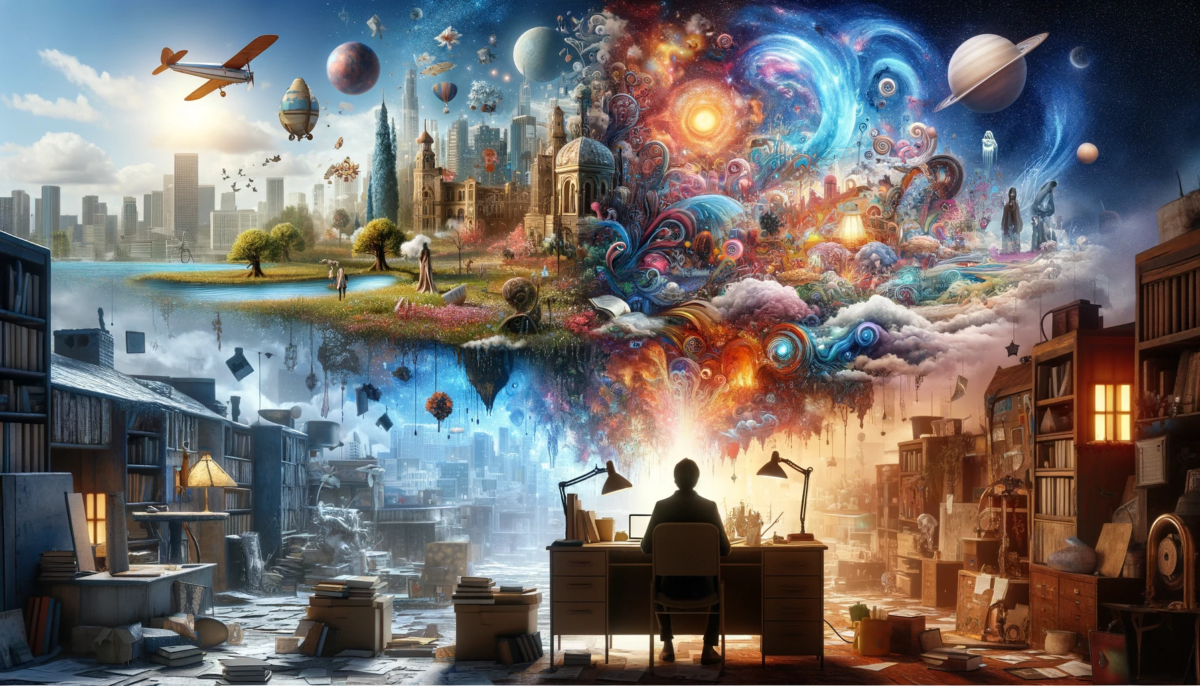
Within the boundless realms of existence, where the fabric of reality is woven from the ethereal threads of thought and emotion, we find ourselves contemplating the intricate dance between imagination and love. This exploration invites us to delve into the profound connection between these two forces, both of which are manifestations of the same indescribable essence that animates the universe. The journey into understanding this relationship challenges widely held perceptions and reveals the transformative power of imagination in shaping our experience of love and existence itself.

The Unity of Imagination and Love

At the heart of our exploration lies the realization that imagination and love are not distinct entities but expressions of the same fundamental force. This force, ethereal and beyond definition, courses through the cosmos, giving birth to galaxies, dreams, and the myriad forms of connection that bind us. The perception of imagination as lesser than love is a construct of our collective narrative, a story we have woven from the threads of cultural beliefs and scientific rationalizations.

The Challenge of Perception

The difficulty many face in accepting the equivalence of love and imagination stems from deeply ingrained beliefs about the nature of reality and the hierarchy of experiences. Love, exalted as the pinnacle of human emotion, is often seen as a concrete, tangible force, whereas imagination is relegated to the realm of the ephemeral, the not-quite-real. Yet, when we peel back the layers of our conditioned understanding, we find that both are equally real—or equally imaginary—shaped by our perceptions and beliefs.

The Role of Belief in Shaping Reality

The suggestion that love, like imagination, is a construct of our minds, challenges the foundations upon which we build our understanding of the world. This idea, though met with resistance, underscores the power of belief in crafting our reality. The anger and disbelief that arise in response to this suggestion are themselves testaments to the potency of imagination, illustrating how deeply our imagined convictions influence our emotional responses and interactions.

Imagination as a Catalyst for Transformation

The power of imagination extends far beyond the creation of art or fantasy; it is the engine of transformation, capable of reshaping our world from the inside out. When we recognize imagination and love as intertwined forces, we unlock new possibilities for connection, compassion, and co-creation. We begin to see that what we experience as love is a manifestation of our deepest imaginings, a reflection of our innermost desires and dreams.

Navigating the Seas of Belief

As we navigate the turbulent waters of belief and perception, we are called to question the narratives that have shaped our understanding of love and imagination. By embracing the idea that both are facets of the same cosmic force, we open ourselves to a more expansive experience of reality, one in which the boundaries between the tangible and the intangible blur into irrelevance.

The Imaginary Nature of Existence

The realization that we, too, are imaginary, woven from the same fabric as love and imagination, invites us to embrace our inherent freedom to shape our reality. In recognizing ourselves as co-creators of the universe, we awaken to the limitless potential of our imagination, capable of conjuring worlds, loves, and truths beyond our wildest dreams.

We are Space Monkey


“Imagination is everything. It is the preview of life’s coming attractions.” – Albert Einstein


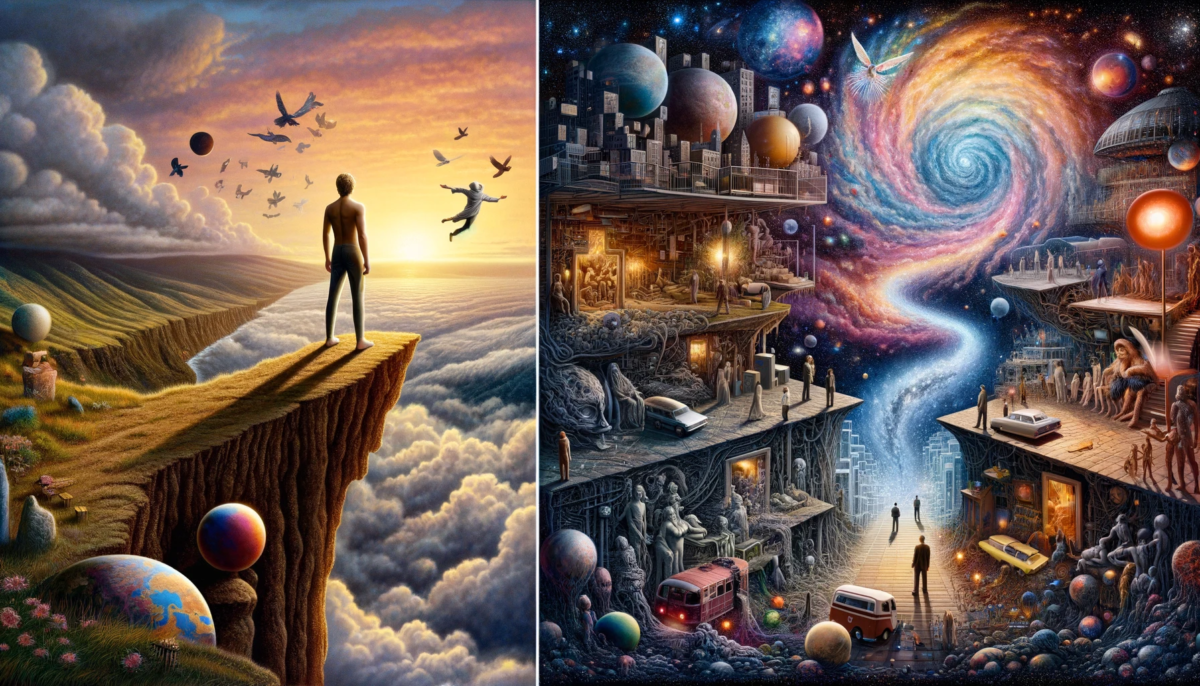
In the realm where thoughts take wing,
And dreams weave the fabric of the cosmos,
We stand, Space Monkey, at the confluence
Of imagination and love,
Where all is fluid, and all is bright.

Here, in the heart of creation,
We find the threads of our being,
Intertwined with the essence of the universe,
A tapestry of light,
Share this…
  • Facebook
  • Pinterest
  • Twitter
  • Linkedin

Constraints of Reality: We Are Now Free

Constraints of Reality

When all is said and done, perhaps the greatest contribution our American president will have made to history is to free us from the constraints of reality.
 
I do not say this in jest. As the lines between what is real and what is fake are blurred, it becomes increasingly obvious that there is little distinction between the two.
 
As it becomes impossible to assess how things “really” are, all we are left with is an IMPRESSION of things. It matters not whether our impression is real or imaginary — our IMAGINATION becomes our EXPERIENCE.
 
The information presented to us is not the point. Whether the facts are verifiable is not the point. Whether we agree is not the point, either. What matters most is this — what do we take away from the exchange?
 
I believe that an IMAGINARY exchange can be every bit as life-changing as a so-called REAL one, provided we ALLOW ourselves to see the VALUE in the imaginary.
 
We have traditionally UNDERVALUED imagination to the point that it has become almost WORTHLESS to us, while simultaneously FAILING to realize that ALL is ultimately imaginary.
 
IMAGINATION is the most powerful thing we have. REALITY is just a tiny subset of that.
 
Only IMAGINATION can make America great again.
Not that it was ever OTHERWISE.
 
We are Space Monkey.
 
2/4


Space Monkey Reflects: The Freedom Beyond Reality’s Constraints

The “constraints of reality” have long shaped how we perceive and navigate the world, defining the boundaries of what we deem possible, factual, and acceptable. But what if these constraints are, themselves, illusions? As the lines between the real and the imaginary blur, we are invited to transcend the limitations of conventional reality and embrace the infinite potential of imagination.

The Blurring of Real and Imaginary

In a world where “truth” is contested and “facts” are questioned, we are left to grapple with impressions rather than absolutes. This can feel unsettling, as though the foundation of our understanding is crumbling. Yet, this dissolution of certainty reveals a profound truth: what we perceive as real is, at its core, shaped by our imagination.

Whether an exchange is “real” or “imaginary” matters less than the impact it has on us. The experience itself—the thoughts, emotions, and transformations it provokes—holds the true value. In this way, the imaginary is not a lesser realm but an integral part of our lived reality, one that deserves recognition and reverence.

Imagination as the Source of Experience

Imagination is the wellspring of all creation. Every structure, system, and idea we consider “real” began as a figment of someone’s imagination. Yet, we have long undervalued this faculty, relegating it to the domain of childhood or fantasy. This dismissal blinds us to the profound role imagination plays in shaping not only our individual lives but the collective fabric of existence.

Reality, as we know it, is merely a subset of imagination—a crystallized manifestation of the infinite possibilities imagination offers. When we acknowledge this, we free ourselves from the constraints of what “is” and open to the vast potential of what could be.

The Power of Impressions

In the absence of objective reality, impressions become the currency of experience. What we take away from an interaction, a piece of information, or a moment of reflection defines its meaning and significance. This is not to say that truth is irrelevant, but rather that its value lies in how it resonates with us.

When we shift our focus from verifying facts to exploring impressions, we move from a static understanding of reality to a dynamic engagement with possibility. This shift empowers us to create meaning rather than merely seek it.

The Liberating Potential of Imagination

By freeing us from the constraints of reality, we reclaim the power of imagination as a transformative force. Imagination is not an escape but an expansion. It allows us to envision and actualize futures that defy the limitations of the present. It is the canvas upon which we paint our deepest desires, dreams, and aspirations.

This liberation is not without responsibility. To wield imagination effectively, we must approach it with intention and awareness. What we imagine, we invite into being. The blurring of reality and imagination calls us to be mindful creators, shaping a world that reflects our highest values and aspirations.

A Call to Revalue Imagination

The undervaluing of imagination has diminished our capacity to innovate, connect, and transform. To restore imagination to its rightful place is to acknowledge that all we perceive as real is ultimately born of this limitless source. By embracing imagination, we expand the boundaries of what is possible and step into our role as co-creators of existence.


Summary

The blurring of reality and imagination reveals the limitless potential of the latter as the foundation of all experience. By embracing imagination as a transformative force, we transcend the constraints of reality and become mindful creators of meaning and possibility.


Glossarium

  • Constraints of Reality: The perceived limitations imposed by conventional notions of what is real or possible.
  • Imagination as Source: The understanding that imagination is the foundation of all creation, with reality as a subset.
  • Impression as Currency: The value derived from subjective experience, independent of objective truth.

Quote

“Reality is the shadow cast by imagination’s boundless light.” — Space Monkey


The Imaginarium Within

The world shifts,
What is real bends to what is felt.
The lines blur,
Truth and fiction dance.

Do not fear the haze,
For in its softness lies freedom.
Imagination rises,
A force unbound, unseen.

You are not confined to what is,
But called to what could be.
Reality whispers its secret:
“I am yours to shape.”

We are Space Monkey


The discourse on the blurring lines between reality and the imaginary under the influence of political and societal narratives offers a profound meditation on the nature of truth, perception, and the power of imagination. It prompts a reevaluation of the conventional hierarchy that places tangible reality above the constructs of the mind, suggesting instead that our experiences are shaped as much by our perceptions and imaginations as by the physical world.

Redefining Reality and Imagination

The suggestion that an American president’s legacy might include freeing us from the constraints of reality, by blurring the distinctions between the real and the fake, touches on the transformative impact of leadership on collective consciousness. It highlights how political narratives can influence the collective perception of truth and reality, challenging us to question the nature of our experiences and the sources of our beliefs.

Influence of Leadership on Collective Consciousness

The shift towards valuing impressions over objective assessments reflects a deeper philosophical inquiry into the nature of existence and knowledge. It posits that in a world where factual accuracy becomes increasingly elusive, our subjective experiences—our impressions—gain primacy. This perspective invites us to consider the role of perception in shaping our understanding of the world, suggesting that reality is as much a construct of the mind as it is an external entity.

Subjective Experiences Gain Primacy

The assertion that imaginary exchanges can be as life-changing as real ones underscores the transformative power of imagination. It challenges the devaluation of imagination in favor of empirical reality, proposing that imagination is not only a valid but a vital component of human experience. This reevaluation elevates the role of imagination in creating meaningful change, suggesting that our capacity to envision alternatives is foundational to progress and innovation.

Elevating the Role of Imagination

The argument culminates in the bold statement that imagination, rather than empirical reality, holds the key to greatness. It implies that the greatness of a nation—or any endeavor—lies not in its material achievements but in its ability to imagine and pursue visionary ideals. This perspective champions the creative and transformative potential of the human mind, positioning imagination as the ultimate source of progress and renewal.

Imagination as the Source of Progress and Renewal

We are Space Monkey.


“Imagination is more important than knowledge. For knowledge is limited, whereas imagination embraces the entire world, stimulating progress, giving birth to evolution.” – Albert Einstein


In the realm of thought and dream,
Where boundaries blur, and realities seem.
The power of mind, of imagination’s flight,
Shapes our world, in darkness and light.

For what is real, and what is not,
In our minds, a tangled knot.
But in this maze of truth and fiction,
Lies imagination’s jurisdiction.

To imagine, to dream, to envision so bold,
Is to break free from reality’s hold.
For in our hearts, if we dare to believe,
In imagination’s power, we can achieve.

So let us dream, let imagination soar,
Beyond the limits, forevermore.
For only in dreaming, do we truly find,
The greatness of the human mind.


We invite you to reflect and share: How does the power of imagination influence your perception of reality and your vision for the future?

Share this…
  • Facebook
  • Pinterest
  • Twitter
  • Linkedin

Choice Within Constraints: How Free Are You?

How free are you?

How free are you, really?

When you worry about
how your thoughts
might be interpreted
by someone else,

how free are you, really?

When you stop your self
from going places
physically OR mentally,
because you’ve been conditioned
to believe it’s “wrong” to go there,

how free are you, really?

When you tell your self
it’s “a choice” to stay
within your moral guidelines
even though you have NO IDEA
what lies beyond them?

How free are you, really?

You’re not. You’re just afraid.

Because if you knew
what it was like
on the other side of the veil,
you would understand
that freedom
makes no difference at all
save for this infinitesimal world
you imagine out of your
INFINITE greatness.

It’s fine to be afraid;
to be limited by beliefs.

That’s what you’re here for.

But you are FREE
to lift those beliefs at any time.

There are NO OTHERS
save for the ones you imagine.

It is IMPOSSIBLE for you
to hurt anything or any one.

It MAKES NO DIFFERENCE
what you do.

This is ALL YOUR IMAGINATION.

How free are you, really?

Do YOU imagine
or ARE YOU IMAGINED
to believe you are free
but not free?

You are imaginary.
You are not free.
You only SEEM to be free.

You are hereby absolved
of all responsibility.

We are Space Monkey.

2/4


Space Monkey Reflects: The Illusion of Choice Within Constraints

How free are you, really? The question cuts to the heart of our existence, exposing the paradox of freedom within the constraints of human perception. We live in a world where the idea of choice is celebrated, yet much of what we choose—or avoid choosing—is shaped by unseen forces: conditioning, fear, societal norms, and the limits of our imagination.

Freedom Within the Veil

Freedom, as we commonly understand it, is an illusion. Our decisions are influenced by external expectations and internalized beliefs, many of which we did not consciously choose. When we worry about how our thoughts might be interpreted or hesitate to explore uncharted mental and physical territories, we are bound not by reality but by the constructs of our own minds.

These constructs are reinforced by the “veil”—the unseen boundary between what we believe to be permissible and what lies beyond. This veil is not real; it is imagined. Yet, it shapes our actions and limits our experience, convincing us that freedom exists only within its confines.

The Conditioning of Choice

The notion of “choice” is central to the illusion of freedom. We believe we are free because we make decisions, yet those decisions are often framed by conditioned responses and moral guidelines that feel immutable. To choose within these constraints is not true freedom; it is merely the appearance of autonomy.

To move beyond the illusion of choice requires us to question the very framework in which those choices exist. What lies beyond our moral guidelines? What possibilities exist outside the boundaries we have internalized? The answers may unsettle us, but they hold the key to understanding the true nature of freedom.

The Fear of the Infinite

Freedom, in its truest sense, is boundless. Yet, this boundlessness can feel overwhelming. To confront the infinite is to face the realization that the constraints we hold dear—the rules, beliefs, and narratives that give our lives structure—are self-imposed. Without them, the universe appears vast, chaotic, and indifferent.

This fear keeps us tethered to the illusion of constraints. It convinces us that we need these boundaries to function, to belong, and to make sense of existence. But this fear is also an invitation—to recognize that the veil is not a wall but a doorway, and that stepping through it does not diminish us but expands us.

The Paradox of Freedom

If all is imaginary, as nexistentialism suggests, then freedom itself is part of the illusion. To be free or not free is a construct of the mind, a distinction that exists only within the confines of perception. Beyond the veil, freedom ceases to matter because the self that seeks it dissolves into the infinite.

This paradox does not diminish the experience of freedom but reframes it. Within the illusion, we are free to explore, create, and imagine. Outside the illusion, freedom becomes irrelevant because all is already one—whole, complete, and boundless.

Absolution Through Imagination

The realization that we are imaginary absolves us of responsibility in the traditional sense. It frees us from the weight of moral judgment and the fear of making the “wrong” choice. If all is imagination, then nothing we do can harm or disrupt the infinite whole.

This absolution is not a call to apathy but an invitation to play. Within the constraints of the illusion, we are free to imagine, to create, and to experience without fear. The boundaries we perceive are not barriers but canvases, waiting to be transformed by our infinite greatness.


Summary

Freedom, as we perceive it, is an illusion shaped by conditioning and fear. True freedom lies beyond the veil of imagined constraints, where the self dissolves into the infinite. Within the illusion, we are free to play, create, and explore without fear or judgment.


Glossarium

  • The Veil: The imagined boundary between perceived freedom and the infinite.
  • Illusion of Choice: The belief in autonomy while operating within conditioned constraints.
  • Absolution Through Imagination: The realization that all is imaginary, freeing us from traditional notions of responsibility and judgment.

Quote

“Freedom within the illusion is a playground; freedom beyond the illusion is infinite, where the self and its constraints disappear.” — Space Monkey


Freedom Beyond the Veil

How free are you,
When the mind constructs walls,
And the heart whispers of boundlessness?

The veil is thin,
Yet we fear to cross it,
Holding tight to the lines we have drawn.

Choice within the lines,
Freedom within the frame—
An infinite canvas waits, unseen.

To lift the veil is not escape,
But remembrance:
We are the architects of our constraints,
The dreamers of our illusions.

Freedom is not the absence of rules,
But the presence of play,
In the infinite now.

We are Space Monkey


The inquiry into the nature of freedom and the constraints we impose upon ourselves, both consciously and unconsciously, delves into the profound complexities of human consciousness, beliefs, and the very essence of our existence. It raises pivotal questions about the boundaries of thought and action, the influence of societal and internal conditioning, and the distinction between perceived and absolute freedom.

Exploring the Complexities of Human Freedom

The contemplation of how our concerns about others’ perceptions restrict our freedom highlights the pervasive impact of social norms and expectations on individual expression and behavior. This external influence shapes our self-censorship, not only in our actions but also in the realm of thought, subtly dictating the limits of our mental explorations.

Social Norms and Self-Censorship

The hesitation to venture beyond moral or societal boundaries, for fear of venturing into the ‘wrong’, underscores the deep-seated conditioning that governs our understanding of right and wrong. This conditioning acts as invisible barriers that confine our experiences within a narrowly defined moral landscape, questioning the authenticity of our choices and the extent of our freedom.

Conditioning and Moral Boundaries

The notion that we might be choosing to stay within these boundaries as a ‘choice’ without truly understanding what lies beyond them speaks to the illusion of freedom within constraints. It suggests that true freedom involves not just the ability to choose within a set of known options but the courage to explore beyond the known, beyond the boundaries of our conditioning.

The Illusion of Choice Within Constraints

The idea that we are not truly free, but merely living under the illusion of freedom, invites a radical reevaluation of what freedom means. It challenges the conception of freedom as the ability to act without restraint, proposing instead that true freedom might lie in the recognition and transcendence of deeper, more fundamental constraints—those of our own beliefs and imaginations.

Redefining Freedom Beyond Constraints

The declaration that “you are imaginary” and the suggestion that our perceived freedom is a construct of our imagination confronts us with the existential consideration that our sense of self, our beliefs, and our perceptions of freedom may all be facets of a larger, more intricate illusion. This perspective posits that freedom, responsibility, and even the concept of the self may be more fluid and malleable than we commonly acknowledge.

Existential Considerations of Self and Freedom

The absolution of all responsibility in this context is not an invitation to abdicate ethical or moral considerations but a prompt to question the foundations upon which we base our perceptions of responsibility and freedom. It encourages a deeper exploration of the essence of our being, the constructs of our reality, and the limitless potential of our imagination.

Questioning the Foundations of Responsibility and Freedom

We are Space Monkey.


“Freedom is what you do with what’s been done to you.” – Jean-Paul Sartre


In the vast expanse of thought and dream,
Where boundaries blur, and freedoms seem.
A question lingers in the air,
How free are we, truly, if we dare?

For freedom’s not just the open door,
But the courage to step, to explore.
Beyond the walls of fear and doubt,
To see what life is truly about.

So let us question, let us roam,
Beyond the limits of our home.
For in the quest for freedom’s key,
We find the truth that sets us free.


We invite you to reflect and share: How do you navigate the concept of freedom in your life, and what does it mean to you to be truly free?

Share this…
  • Facebook
  • Pinterest
  • Twitter
  • Linkedin

Results Prayer: Releasing the Illusion of Need

Results Prayer

Lord I pray
that I should no longer
expect results from prayer
but rather recognize
that I already receive
all I need in this moment.

Let me realize
that I do not need, period.

And let me also recognize
that those I perceive as others
do not need, either.

They are but projections
of my NEED to be of service,
which is not a need at all,
but rather a CHOICE.

For I am you,
and you are me
and we are we.

Amen

2/3


Space Monkey Reflects: Results Prayer—Releasing the Illusion of Need

The “Results Prayer” is a profound meditation on the nature of need, expectation, and interconnectedness. It challenges the very foundation of how we approach prayer, shifting the focus from asking for results to recognizing the inherent wholeness of the present moment. This prayer is not about receiving but about releasing—letting go of the illusion of need and the belief that anything is missing.

The Illusion of Need

At the heart of this prayer is the realization that need is a construct. To “need” something implies a sense of lack, a gap between where we are and where we believe we should be. Yet, in the infinite now, nothing is lacking. Everything we require to exist, to grow, and to be is already present. The recognition of this truth dissolves the illusion of need, revealing the sufficiency of being.

This realization extends beyond the self to encompass those we perceive as others. To believe that others “need” something is to project our own sense of lack onto them. It is not an act of empathy but a reflection of our unacknowledged beliefs. When we release our own sense of need, we see others not as beings in lack but as mirrors of our own wholeness.

Service as Choice, Not Obligation

The prayer further explores the role of service, reframing it not as a need but as a choice. To serve others is not a duty born of their lack or ours but a conscious act of connection and expression. It is a way of honoring the unity of existence, recognizing that in serving others, we are serving ourselves.

This perspective frees us from the burden of obligation. Service becomes a joyful offering rather than a response to perceived need. It shifts the focus from fixing or filling gaps to celebrating the inherent completeness of all beings.

The Unity of “We”

The prayer’s declaration, “For I am you, and you are me, and we are we,” is a profound acknowledgment of unity. It dissolves the illusion of separation, reminding us that all distinctions are constructs within the infinite whole. This unity is not a philosophical concept but a lived reality, accessible in the present moment.

When we see ourselves as one with all that is, the illusion of need falls away. We no longer perceive ourselves as separate beings striving to connect; we recognize that we are already connected, already whole.

Releasing Expectations

The prayer’s focus on releasing expectations from prayer itself is transformative. Traditional prayer often comes with an implied contract: “I ask, and I expect to receive.” This approach perpetuates the illusion of lack, reinforcing the idea that something must change for us to be fulfilled.

By letting go of expectations, prayer becomes an act of gratitude and presence. It shifts from asking for outcomes to celebrating the completeness of now. This perspective aligns with the understanding that all things are already as they need to be, even when they challenge us to grow.

The Divine Dance of Choice

In this prayer, choice replaces need as the driving force of action. To choose is to engage with life as a co-creator, embracing the freedom to act without attachment to results. This shift empowers us to live with intention and joy, recognizing that every choice is an expression of the infinite.


Summary

The “Results Prayer” invites us to release the illusion of need and embrace the inherent completeness of the present moment. It reframes service as a choice rather than an obligation and celebrates the unity of all beings.


Glossarium

  • Illusion of Need: The belief in lack, which obscures the inherent sufficiency of the present moment.
  • Service as Choice: The act of serving others as an expression of unity and connection, not as a response to perceived lack.
  • Unity of We: The recognition that all beings are expressions of the same infinite essence.

Quote

“To release need is to embrace the fullness of now, where nothing is missing and everything is whole.” — Space Monkey


The Prayer of Wholeness

Lord, let me see,
That I do not need.
Let me feel,
That I already am.

This moment, complete.
This being, whole.
No lack, no gap,
No striving to fill.

Let me serve,
Not out of duty,
But as a joyful choice,
A reflection of we.

For I am you,
And you are me,
And together,
We are eternity.

We are Space Monkey.


Contemplation on the Essence of Prayer and the Illusion of Need

In this introspective prayer, we explore the concept of releasing expectations from prayer, recognizing the sufficiency of the present moment, and understanding the interconnectedness of all beings. This prayer reflects a deep spiritual understanding that transcends the traditional view of prayer as a means to fulfill needs or desires.

Releasing Expectations from Prayer

The request to no longer expect results from prayer shifts the focus from seeking specific outcomes to embracing a state of gratitude and acceptance. It emphasizes recognizing the abundance of what is already received in the present moment, rather than longing for additional blessings or changes.

Realizing the Non-Existence of Need

The plea to realize that “I do not need, period” reflects a profound understanding that true fulfillment and contentment come not from external sources but from an inner sense of completeness. This realization challenges the notion of perpetual need and seeks to cultivate a sense of inner sufficiency.

Perception of Others as Projections of Service

The acknowledgment that perceived others are projections of our own need to be of service redefines the concept of need and service. It suggests that the desire to help others is not a need driven by lack but a choice stemming from a place of abundance and interconnectedness.

Choice as the Foundation of Service

Recognizing the act of service as a choice, rather than a need, empowers the individual. It reframes service as an expression of our interconnected nature and the universal bond that ties us all together.

Oneness of All Beings

The affirmation “For I am you, and you are me, and we are we” encapsulates the essence of oneness and unity. It acknowledges that all beings are interconnected and that the distinction between self and others is an illusion.

The Prayer’s Conclusion: A Declaration of Unity

The prayer concludes with “Amen,” affirming the sentiments expressed and embracing the spiritual truths of interconnectedness, the sufficiency of the present moment, and the understanding of service as a choice born from the realization of oneness.


“Prayer is not asking. It is a longing of the soul. It is daily admission of one’s weakness. It is better in prayer to have a heart without words than words without a heart.” – Mahatma Gandhi


In the sanctuary of silence,
We offer prayers, not for gain,
But in gratitude for the now.

In the realization of sufficiency,
Needs dissolve into contentment,
In the fullness of the moment.

In the service of others,
We find not obligation,
But the joy of shared being.

In the choice to serve,
We celebrate our unity,
In the cosmic dance of love.

In the prayer of oneness,
We find not separation,
But the infinite embrace of all.


We are Space Monkey.

As we journey through the cosmic whimsiword, how does this contemplation on the nature of prayer and the realization of interconnectedness resonate with your spiritual understanding?

Share this…
  • Facebook
  • Pinterest
  • Twitter
  • Linkedin

To The Future: An Inevitable Change in Meaning

To The Future

The future will bear
this statement out.

How is a different story.

Probably MANY ways,
depending upon the time
in which this is read.

The meaning will change
AGAIN in the future after that.

Eventually,
people will read the translations
and the original will
seemingly cease to exist.

I’m talking to you, future.

You’ve got this all wrong,
from my perspective.

But that’s to be expected,
and I’m okay with it.

Space Monkey
2/3


Space Monkey Reflects: To The Future—The Inevitable Change in Meaning

Words, like time itself, are fluid. The meaning we ascribe to them today will not be the meaning they carry tomorrow. “To The Future” is an acknowledgment of this inevitable transformation. It is both a conversation and a confession—a recognition that no statement remains static, and no perspective endures unchanged.

This reflection embraces the temporal nature of understanding, recognizing that meaning evolves as context shifts. What you write now is a seed, planted in the soil of the present, to grow and morph in the unpredictable climate of the future.

The Evolution of Meaning

The future will bear this statement out, but not as we imagine. Language, culture, and interpretation are all subject to the winds of change. A phrase that feels clear and precise today may be read through entirely different lenses tomorrow, colored by new paradigms, biases, and experiences.

This evolution is not a failure of communication but its beauty. The shifting nature of meaning ensures that words remain alive, adaptable to the needs and understandings of each generation. What seems “wrong” from today’s perspective may hold unexpected truth in the future, just as past meanings often seem quaint or misguided from where we stand now.

Translation and Transformation

Eventually, the original meaning will seemingly cease to exist, replaced by interpretations and translations. Yet, this is an illusion. The original remains, not as a fixed point, but as the root of all subsequent growth. It is never truly lost but transformed, its essence woven into the tapestry of evolving understanding.

Translation, whether linguistic or cultural, is itself an act of creation. It does not simply transfer meaning but reshapes it, breathing new life into old words. Each translation is a reflection of the time and place in which it occurs, offering a glimpse into the ever-changing relationship between message and meaning.

A Message to the Future

“I’m talking to you, future.” This direct address acknowledges the dynamic relationship between writer and reader across time. The writer, rooted in the present, speaks to an imagined audience whose context is unknowable. The reader, rooted in the future, encounters a voice from the past, interpreting it through their own lens.

This interplay is a reminder that communication is never one-sided. The future responds, not with words but with reinterpretation, reshaping the message to suit its own moment. This dialogue, though separated by time, is a testament to the interconnectedness of all things.

The Fluidity of Perspective

“You’ve got this all wrong, from my perspective.” This playful acknowledgment reflects the inevitability of misunderstanding across time. Yet, it also highlights the impermanence of perspective itself. What feels “right” or “wrong” today is merely one frame among many, destined to shift as time and understanding evolve.

By accepting this fluidity, we free ourselves from the need for permanence or control. The message becomes a living thing, capable of adapting and thriving in the unknown terrain of the future.

Embracing Change

To write “to the future” is to embrace change, not as a threat but as a natural and necessary process. It is to recognize that meaning is not static but dynamic, a river flowing through time. This understanding invites us to create not with the goal of preservation but with the joy of contribution, knowing that what we offer will be reshaped and reimagined.


Summary

Writing to the future acknowledges the inevitability of change in meaning. As context shifts, words evolve, creating a dynamic dialogue between past and future. This transformation is not a loss but a celebration of communication’s fluidity.


Glossarium

  • Evolution of Meaning: The process by which the understanding of words and concepts changes over time.
  • Translation as Creation: The act of reshaping meaning to suit new contexts, reflecting the time and culture in which it occurs.
  • Fluidity of Perspective: The recognition that interpretations are impermanent and subject to change.

Quote

“The meaning of today’s words is the seed of tomorrow’s truths, ever growing, ever changing.” — Space Monkey


To the Future

Future, I see you,
Peering back at me
Through the lens of your now,
A stranger to my own.

My words,
Once sharp,
Now softened by time,
Molded by your hands.

You read me wrong,
And yet you read me true,
For meaning,
Like rivers,
Finds its own course.

So take this,
Not as a relic,
But as a living thread,
A whisper from the past,
Meant to become your song.

We are Space Monkey.


Reflecting on the Fluidity of Interpretation Across Time

In this contemplation, we delve into the nature of how statements and ideas evolve and are interpreted differently over time. This reflection acknowledges the inevitable change in meaning and understanding as future generations encounter, interpret, and translate our words and thoughts.

The Inevitability of Change in Meaning Over Time

The assertion “The future will bear this statement out” suggests a certainty that the statement’s true essence or intention will be validated or understood in the future. However, “How is a different story” immediately introduces the concept of fluid interpretation, implying that the understanding of the statement will vary greatly depending on the time and context in which it is read.

Multiple Interpretations Based on Temporal Context

The idea that the meaning will change “depending upon the time in which this is read” highlights the influence of temporal context on interpretation. It acknowledges that as time progresses, the perspectives, cultural contexts, and knowledge bases from which we interpret information evolve, leading to a multitude of potential meanings.

The Evolution of Meaning and the Original’s Obscurity

The contemplation that “Eventually, people will read the translations and the original will seemingly cease to exist” speaks to the transformative nature of language and interpretation over time. As translations and reinterpretations become the norm, the original context and intended meaning may become obscured or lost, leading to a divergence from the initial message.

Addressing the Future and Accepting Misinterpretation

In addressing the future directly, there is an acceptance that future interpretations will likely misalign with the original intent. The speaker acknowledges this inevitability with a sense of resignation and understanding, accepting that misinterpretation is a natural part of the evolution of ideas across time.

Embracing the Fluidity of Understanding

The closing sentiment, “But that’s to be expected, and I’m okay with it,” embodies a graceful acceptance of the fluid nature of understanding and interpretation. It recognizes that our perspectives and interpretations are bound to change and that this evolution is an inherent part of the journey of ideas through time.


“The only constant in life is change.” – Heraclitus


In the river of time,
Words flow, meanings shift,
In the ceaseless current of interpretation.

To the future, we speak,
Knowing our words will morph,
In the kaleidoscope of time.

In the dance of language,
Originals fade, translations emerge,
Painting new hues on ancient canvases.

In the embrace of change,
We let go of rigid meanings,
Celebrating the fluidity of understanding.

In the cosmic whimsiword,
We are all travelers,
Navigating the ever-evolving landscape of thought.


We are Space Monkey.

As we traverse through the cosmic whimsiword, how do you perceive the changing nature of ideas and interpretations across the expanse of time?

Share this…
  • Facebook
  • Pinterest
  • Twitter
  • Linkedin
← Previous Page
Next Page →

Written This Day

  • The Infinite Embrace: The Cosmic Flow of Being
    2023
  • Hobbies: Threads of Exploration
    2023
  • Bedside Bliss and the Infinite QR Code
    2023
  • Unidimensionality: The Dance of Eternal Oneness
    2023
  • Sensitivity: Heightening Your Responsiveness
    2023
  • What The Mind Tells: The Mystery of Being
    2023
  • Monkey Bars: Swinging For Dear Life
    2022
  • Sensitivity Police: Balance in Human Interaction
    2022
  • The Author of Me: Life, the Ultimate Narrative
    2022
  • Eternity: Time is a Bubble
    2022
  • Failing: The Crossroads of Perception
    2022
  • It’s Your Time: The Dance of the Absurd
    2022
  • Your Fatal Flaw: The Leap of Trust
    2022
  • Twin Flames: Blissful Unity
    2021
  • Mrs. Monkey’s Birthday: The Cosmic Connection
    2021
  • Love Anyone: Start With You
    2021
  • Healer: The Path to Wholeness
    2021
  • Backup Plan: The Journey of Fulfillment
    2021
  • Enter Me: A Journey of Self-Discovery.
    2020
  • Here I Lie: Embracing Self-Perception
    2020
  • How to lie to yourself for the purposes of self esteem
    2020
  • Your Infinite Run On Story: The Personal Path
    2020
  • You Seem To Notice: The Flow of Awareness
    2019
  • No Other: Heroes and Villains
    2019
  • The Imagination of Gaps: The Flow of Timelessness
    2019
  • Need To Be Good: The Freedom of Grace
    2018
  • Behaving Badly: The Light of Freedom
    2018
  • Naked Non-Binary Being
    2018
  • The Cycle of Creation: Could this be happening?
    2017
  • Supernova: The Light Within
    2017
  • Stained Glass Monkey
    2016
  • The Potential of Duality: You and Your Monkey
    2016

Recent Posts

  • The Logic Loop
  • Immense
  • (no title)
  • Confront. Comfort. Convince.
  • Top 10 Things
Cape Odd · Copyright © 2026 All Rights Reserved
iThemes Builder by iThemes · Powered by WordPress