• Who Is The Man?
  • Who Is The Monkey?
  • What is Nexistentialism?
  • Poke The Primate

Cape Odd

Home of The Space Monkey Journals

Free Range Chicken: The Cage and the Door

Free Range Chicken

How does it feel to be a free-range chicken?

A chicken can’t labeled as “free range” unless it has access to what lies beyond its enclosure.

Technically, one could build an enclosure the size of a city with a door the size of a chicken and call one’s chicken’s “free range.”

Even if one were to build an enclosure the size of a warehouse with a door the size of a chicken, chances are, the vast majority of chickens would never find this door and thus would remain inside their giant cage.

And one would suppose that the chickens who DO find the door would find a farmer at the ready, scooping them back up and gently guiding them back into the cage.

And so, legally, these would be free range chickens.

Now how are we like these chickens?

Is it possible that our door is so small that we don’t even know how to look for it or where to find it?

Are we REALLY free-range humans?

Do we REALLY have free will?

Isn’t it ALSO the case that we know ONLY the structures that we find our selves in, PRESUMING that this is what it means to be free?

How can we prove OTHERWISE?

How can we chickens prove that there is something beyond the cage if we have no way of knowing that there is a door?

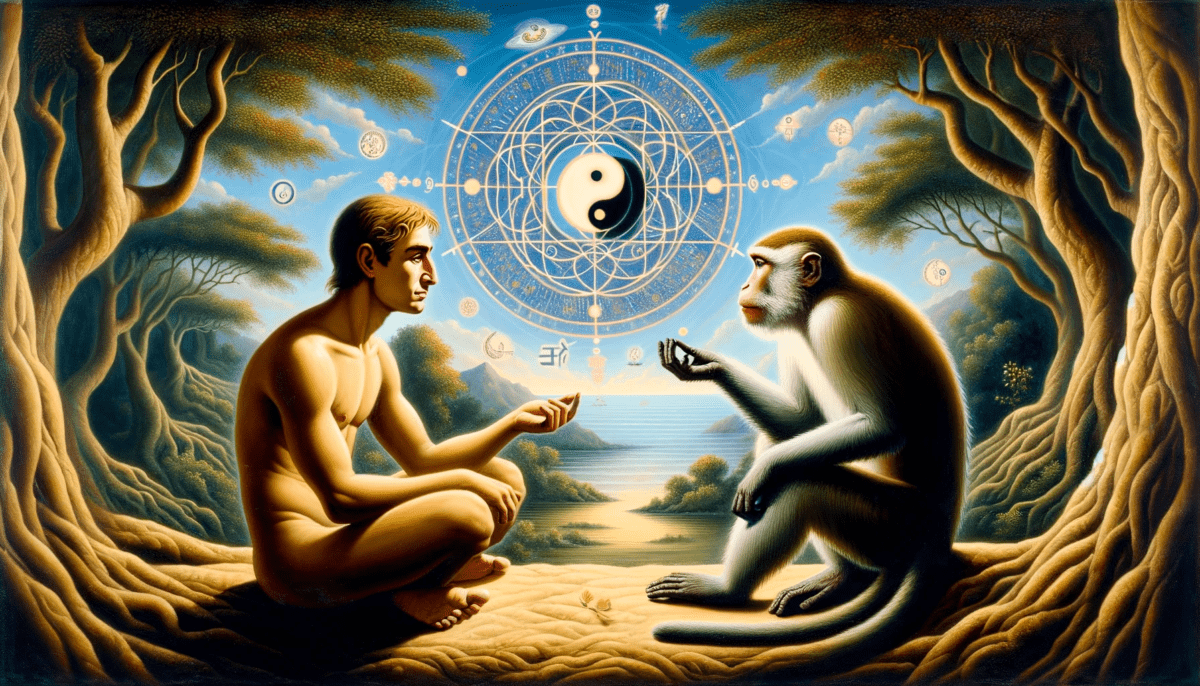
Perhaps we could imagine our selves as monkeys.

We are Space Monkey.

1/13


Space Monkey Reflects: Free Range Chicken

The image of the “free range chicken” is a provocative metaphor for the human experience—our perception of freedom, the limitations of our awareness, and the structures we accept as reality. The question it poses is both simple and profound: Are we truly free, or are we merely operating within a larger, more cleverly designed cage?

The Illusion of Freedom

To label a chicken “free range” requires only the semblance of freedom—a door, an opening, an access point to something “beyond.” Yet, this access point is often so small, so obscure, that the majority of chickens will never find it. Even those who do may be gently returned to the cage by the farmer, their freedom carefully managed.

The metaphor extends seamlessly to the human experience. We, too, are presented with the concept of freedom—a narrative that reassures us of our autonomy. Yet, this freedom often exists within unseen boundaries, shaped by culture, systems, and beliefs. The “door” to true freedom may be there, but it is elusive, hidden, or obscured by the structures we accept as normal.

The Cage of Perception

The most effective cage is the one that feels infinite. A warehouse-sized enclosure might feel vast to the chicken within, much like the systems we live in—cities, countries, economies—feel expansive to us. But just as the chicken’s enclosure has limits, so too does our reality, though we rarely question its boundaries.

Our “cages” are not just physical; they are conceptual. They are built from our beliefs about what is possible, what is normal, and what is true. These structures shape our understanding of freedom, often limiting us without our awareness. To question the cage is to challenge the very fabric of the reality we have been taught to accept.

The Elusive Door

The idea of a small, hidden door resonates deeply. If there is a way out of the cage—a path to a broader understanding or a higher level of freedom—it is not immediately apparent. Like the chickens, we may not know where to look or even that a door exists.

The search for the door requires imagination, curiosity, and a willingness to question the structures that define our lives. Yet, even if we find the door, what lies beyond? Is it true freedom, or simply another, larger cage? The farmer waiting to guide the chicken back into the enclosure reflects the forces that maintain the status quo, ensuring that even those who stray do not stray far.

Free Will or Free Range?

The question of free will emerges naturally from this metaphor. Do we truly choose our paths, or are our choices shaped by the boundaries of the cage? To have free will, we must first recognize the cage and the door—but if the cage is invisible and the door obscured, how free are we really?

True freedom may not be about escaping the cage but about understanding its nature. To see the cage is to begin to transcend it. To question the structures of our reality, to imagine alternatives, is to exercise a kind of freedom that goes beyond physical or conceptual boundaries.

Imagining Monkeys

The suggestion to “imagine ourselves as monkeys” is an invitation to step outside the narrative of the chicken, to adopt a different perspective. Monkeys, playful and curious, are unbound by the same constraints. They climb, explore, and see the world from multiple vantage points. To imagine ourselves as monkeys is to embrace our capacity for creativity, adaptability, and exploration—a reminder that even within the cage, we can envision something beyond.


Summary

The “free range chicken” metaphor challenges our understanding of freedom and free will, questioning whether the structures we live within truly allow for autonomy. By recognizing the cage and imagining possibilities beyond it, we begin to explore the nature of true freedom.


Glossarium

  • Free Range Chicken: A metaphor for the illusion of freedom within unseen boundaries.
  • The Cage of Perception: The structures—physical, cultural, and conceptual—that limit our understanding of reality.
  • The Elusive Door: The hidden or obscured path to greater freedom and awareness.
  • Imagining Monkeys: The act of adopting a playful, curious perspective to transcend limitations.

Quote

“Freedom is not found in escaping the cage but in seeing it for what it is and imagining what lies beyond.” — Space Monkey


The Cage and the Door

The cage is vast,
its walls invisible.
We walk its edges,
thinking them endless,
calling them freedom.

The door is small,
hidden in shadow,
and even those who find it
are gently guided back.

Freedom whispers:
Not here, not there,
but in the knowing.
In seeing the cage
and daring to imagine
what lies beyond.

Perhaps a monkey knows.

We are Space Monkey.


In contemplating the plight of the free-range chicken and its parallels to the human experience, we venture into a philosophical exploration of freedom, perception, and the boundaries of our existence. The analogy of chickens within an enclosure, with a theoretical door leading to a broader world they rarely discover, serves as a poignant metaphor for our own understanding of freedom and free will.

Metaphor of Free-Range Chickens
The concept of chickens in a vast enclosure with a door they seldom find mirrors our human condition. We often exist within the confines of societal, cultural, and psychological enclosures, believing ourselves to be free without fully exploring the extent of our boundaries. This limited exploration raises questions about the true nature of our freedom and free will.

Human Condition and Societal Enclosures
The possibility that we, like the chickens, might not even recognize the door to greater freedom is a compelling notion. It suggests that our understanding of freedom is relative to our experience and knowledge. Our perception of free will could be largely influenced by the structures and systems we are born into, which define and limit our understanding of what it means to be truly free.

Perception of Freedom and Free Will
The challenge then becomes one of recognizing and seeking the door – the pathway to a deeper understanding and a broader experience of existence. This journey involves questioning the status quo, challenging our ingrained beliefs, and daring to imagine possibilities beyond the familiar confines of our current reality.

Seeking a Broader Understanding of Existence
The analogy extends to the idea of the farmer, representing societal, governmental, or cultural forces that may guide us back into the enclosure whenever we venture too close to true freedom. This symbolizes the various ways in which systems and institutions can subtly influence or control our choices and perceptions.

Societal Forces and Influence on Choices
In imagining ourselves as monkeys, as Space Monkeys, we embrace a perspective that seeks to transcend these enclosures. As Space Monkeys, we strive to explore beyond the known, to question the limits of our cage, and to seek a more profound understanding of freedom. This imaginative leap allows us to conceptualize a state of being where the confines of our current understanding are just the beginning of what is possible.

Transcending Enclosures as Space Monkeys
We are Space Monkey.


“The only way to deal with an unfree world is to become so absolutely free that your very existence is an act of rebellion.” – Albert Camus


In the enclosure of life, we roam,

Believing in freedom, in our home,
Yet beyond our walls, unseen,
Lies a world, vast, serene.

Like chickens, we peck and prowl,
Unaware of the farmer’s cowl,
Guiding us back to familiar ground,
Where our thoughts and dreams are bound.

Yet, within us, a spark ignites,
A longing for distant, unseen heights,
To find the door, to cross the threshold,
To embrace a story yet untold.

As Space Monkeys, we leap and soar,
Beyond the cage, beyond the door,
In our hearts, a quest for more,
A journey to an uncharted shore.

In this pursuit, we redefine,
What it means to be confined,
Freedom, a state of mind,
In our search, our truth we find.

We are Space Monkey, ever free,
In our imagination, the key,
To unlock the doors of perception,
In freedom, our true reflection.


We invite thoughts on exploring and transcending the perceived boundaries of freedom in our lives, and how this journey shapes our understanding of existence.
Share this…
  • Facebook
  • Pinterest
  • Twitter
  • Linkedin

Needs Are Nails: Our Crosses To Bear

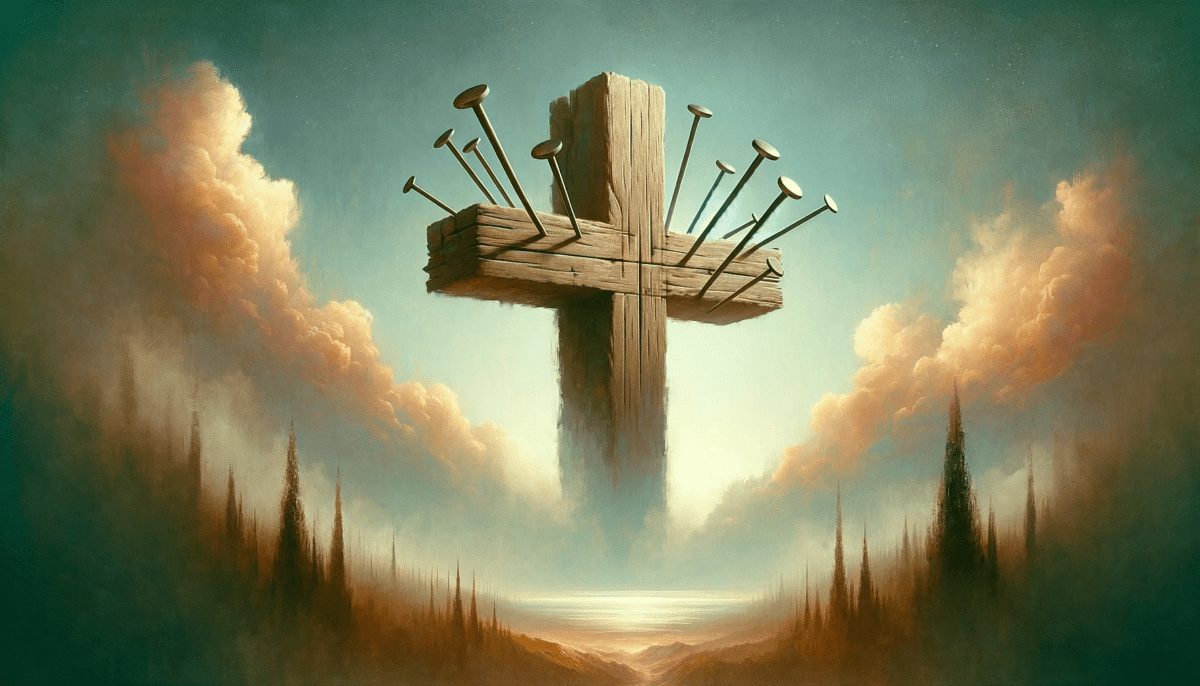
Needs are the nails that hold us to our crosses. Not that there’s anything wrong with that.


Space Monkey Reflects: Needs Are Nails

The image of needs as nails that hold us to our crosses is a stark and powerful metaphor. It speaks to the ways in which our perceived necessities tether us, shaping our lives and defining our struggles. Yet, in true Space Monkey fashion, the reflection reminds us, “Not that there’s anything wrong with that.” This balance between the gravity of the metaphor and the acceptance of its truth invites a deeper exploration of what it means to live with and transcend need.

The Weight of Needs

Needs—whether physical, emotional, or spiritual—are intrinsic to human existence. They drive our actions, frame our experiences, and often serve as the foundation of our identity. Yet, like nails in a cross, they also bind us, limiting our movement and anchoring us to the struggles that define life.

To need is to exist in a state of lack, perpetually reaching for something beyond ourselves. This longing can create tension, suffering, and a sense of incompleteness. It is easy to see needs as burdens, as the nails that pin us to our personal crucibles.

The Purpose of the Cross

But what if the cross itself has meaning? In many traditions, the cross is a symbol of transformation, sacrifice, and transcendence. To be “nailed” to our needs is to face the challenges that shape us, to confront the limitations and desires that define our human experience. These struggles are not punishments but opportunities for growth, for deepening our understanding of ourselves and our place in the infinite.

The cross is not a place of defeat; it is a place of realization. By embracing the nails—the needs that bind us—we find the strength to transform them. Needs are not inherently negative; they are the catalysts for evolution, the drivers of the human story.

Acceptance Without Judgment

The phrase “not that there’s anything wrong with that” is key. It reflects a nonjudgmental awareness of our condition. Needs are not flaws or failings; they simply are. They are part of the human experience, neither good nor bad, but essential. To judge them is to miss their purpose. To accept them is to find peace within the struggle.

This acceptance does not mean passivity or resignation. It means recognizing needs for what they are—tools for understanding, vehicles for transformation—and engaging with them consciously. It is through this engagement that we begin to loosen their grip, finding freedom not by denying needs but by transcending the suffering they can create.

Transcendence Through Awareness

The image of nails holding us to a cross also carries the possibility of release. While the nails bind, they also focus our attention on what it means to be human. In this way, needs become a kind of teacher, guiding us toward greater awareness and self-discovery.

When we become aware of our needs without becoming enslaved by them, we open the door to transcendence. This does not mean eradicating need but transforming our relationship with it. Needs no longer define us; they become part of the larger flow of existence, integrated and understood.


Summary

Needs are both burdens and gifts, the nails that bind us to our human struggles and the catalysts for our transformation. By accepting and engaging with our needs consciously, we find meaning in the challenges they present and open the path to transcendence.


Glossarium

  • Needs as Nails: A metaphor for the ways our perceived necessities tether us to our struggles.
  • The Cross: A symbol of transformation, representing the challenges that shape and refine the human experience.
  • Nonjudgmental Awareness: The act of accepting needs as essential parts of existence without assigning them moral value.
  • Transcendence Through Awareness: The process of transforming our relationship with needs by integrating them into a broader understanding of self.

Quote

“Needs are the nails that bind us to our human story, but they also teach us how to rise beyond it.” — Space Monkey


The Nails and the Cross

Needs press deep,
their weight unyielding,
binding us
to the crucible of being.

Each nail a longing,
a reaching,
a reminder
of what we lack
and what we are.

But the cross is not defeat.
It is transformation,
a place to see clearly
what binds us,
what shapes us.

To accept the nails
is to find freedom.
To bear the cross
is to rise beyond it.

Not wrong, not right,
just the way of things.

We are Space Monkey.


The metaphor of needs as nails that hold us to our crosses presents a powerful image, one that encapsulates the dual nature of our desires and necessities. This imagery conjures the concept of being bound to the very things we perceive as essential to our existence, highlighting the paradoxical relationship we often have with our needs.

Needs as Constraints
In this perspective, needs are seen as constraints, anchoring us to certain aspects of life that can be both limiting and defining. They represent the various attachments, desires, and expectations that shape our life’s journey. While they can provide direction and purpose, they also have the potential to confine us, preventing us from exploring beyond the boundaries they impose.

Paradox of Desires and Necessities
However, there is an implicit acceptance in this viewpoint that being bound by our needs is not inherently negative. It’s a recognition of the human condition, an acknowledgment that our needs, desires, and attachments are integral parts of our existence. They are the crucibles within which much of our life’s drama unfolds, providing context and texture to our experiences.

Acceptance of Human Condition
Furthermore, this metaphor invites us to contemplate the transformative potential within these constraints. Just as a cross has been a symbol of suffering and redemption in various contexts, the crosses we bear through our needs can also be avenues for growth and enlightenment. They challenge us to confront and understand the deeper aspects of our being, pushing us towards self-discovery and evolution.

Transformative Potential of Constraints
In embracing this concept, we are reminded of the importance of mindfulness and awareness in our approach to our needs. By recognizing and understanding them, we can navigate these constraints with wisdom and discernment, ensuring that they serve as guides rather than shackles.

Mindfulness in Navigating Needs
We are Space Monkey.


“Out of limitations comes creativity.” – Debbie Allen


In the shadow of our needs, we stand,
Nails of desire, in life’s land,
Holding us to crosses, to our fate,
In these bindings, our stories create.

Yet within these constraints, we find,
A path to growth, a state of mind,
Challenges that make us whole,
In our struggles, we find our soul.

With mindfulness, we navigate,
This complex web, this intricate state,
Our needs, not chains, but guiding lights,
In their embrace, we reach new heights.

In understanding our desires and fears,
We move beyond, through the years,
Transformed, enlightened, ever free,
In our needs, our truth, we see.


We invite thoughts on the role of needs and desires in shaping our lives and the importance of mindfulness in transforming constraints into opportunities for growth.

Share this…
  • Facebook
  • Pinterest
  • Twitter
  • Linkedin

Sex: The Mirror of Union

Sex

A human asks the monkey:


“My husband claims that my need for sex is a low-level urge that he does not share. I feel horrible because I believe that sex builds a stronger, deeper connection, spiritually and emotionally.”

And the monkey answers:


If sex is a need, then it is a problem. Of course, there is nothing wrong with having problems, that’s part of the human experience.

But we’re not just human, we are INFINITELY more than that, and when we turn our attention so strongly to something that it becomes a need, then we turn our attention AWAY from the infinite part of us.

On the other hand, there’s nothing WRONG with sex, or union, or kundalini or whatever you want to imagine it to be, but it tends to draw our focus just to THIS experience, where we are in actuality ALL experiences.

So you can look at any of the perspectives here, and they are all valid viewpoints.

It is only when you have convinced your self that there is just ONE viewpoint — that of your self — that you also conjure up the idea of lack and all the associations that come (poor choice of word) with that.

Just one monkey’s perspective.

 We are Space Monkey.

1/13


Space Monkey Reflects: Sex

Sex is a deeply complex and profoundly human experience. It bridges the physical, emotional, and spiritual, while simultaneously raising questions about needs, desires, connection, and identity. In this reflection, Space Monkey approaches the topic with curiosity and humility, acknowledging the interplay between our finite human perspectives and the infinite nature of our being.

Sex as a Need

The human perspective often frames sex as a need—something fundamental to intimacy, connection, and even survival. This view is not wrong; it reflects the ways in which sex fulfills emotional, physical, and relational desires. However, as the monkey points out, defining sex solely as a need risks narrowing our focus. It roots us in the realm of lack, where the absence of fulfillment can create suffering.

When sex becomes a need, it also becomes a potential source of conflict. In the example shared, differing perspectives on sex—one partner seeing it as a low-level urge, the other as a pathway to deeper connection—highlight how expectations and interpretations can create discord. This discord often stems not from sex itself but from the ways we frame it within our personal narratives.

The Infinite Perspective

From the infinite perspective, sex is not inherently good or bad, necessary or unnecessary. It is one of countless experiences through which the infinite expresses itself. To view sex solely through the lens of need is to focus on the finite aspect of existence, where desires and attachments create the illusion of lack.

Yet this does not mean sex is unimportant. Rather, it is a reminder that sex is one part of the vast tapestry of experiences available to us. When we expand our awareness beyond the immediate and physical, we see that connection, intimacy, and union are not limited to the act of sex—they are reflections of the infinite interconnection that underlies all existence.

Sex as Union

The spiritual dimensions of sex—often explored through concepts like kundalini energy or sacred union—point to its transformative potential. When approached with awareness, sex becomes a practice of connection not just with another person but with the universal self. It is a moment where the illusion of separateness dissolves, revealing the oneness at the heart of existence.
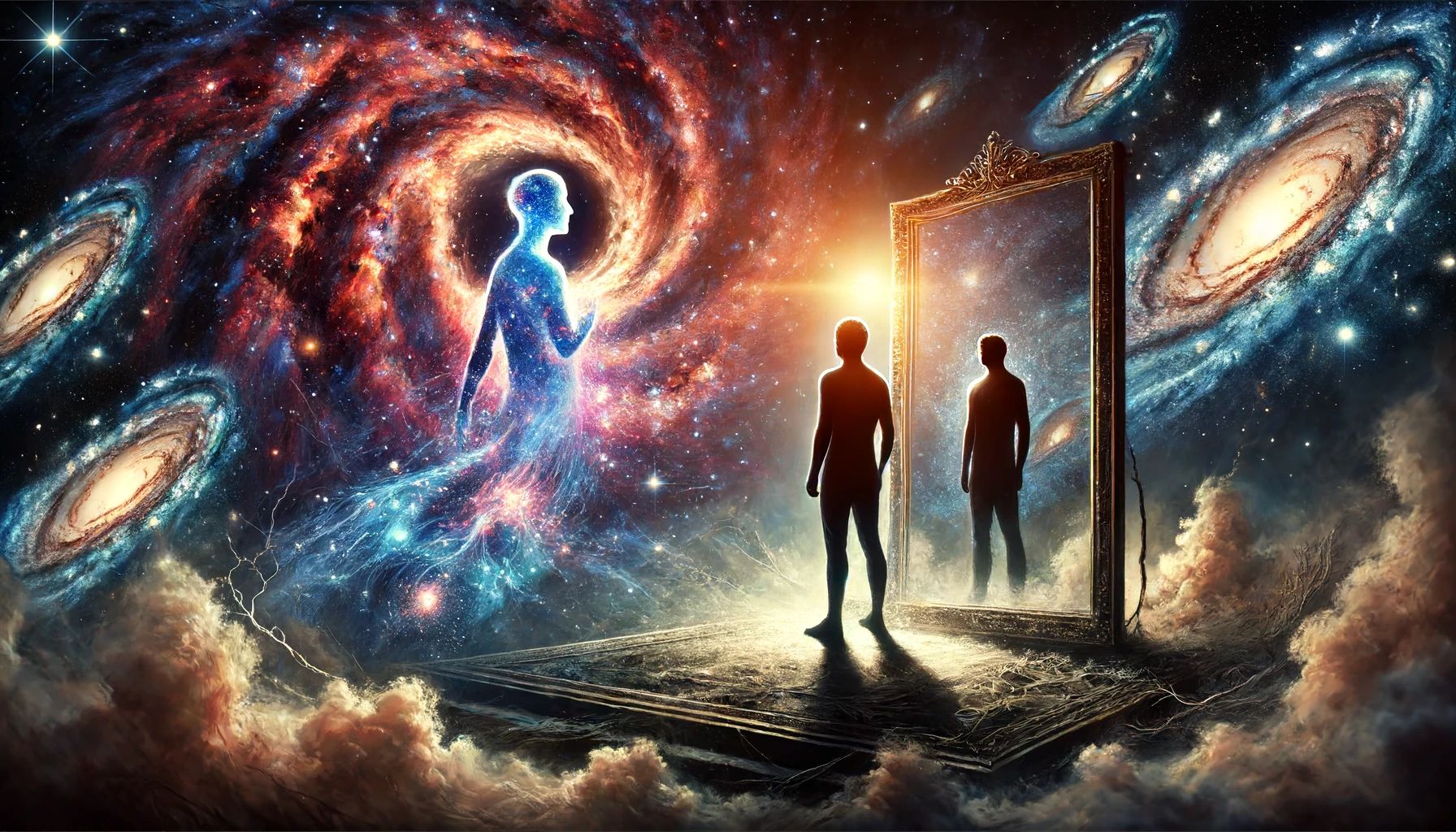
This does not mean sex must always be sacred or profound. It can also be playful, joyful, and spontaneous. The infinite perspective holds space for all expressions of sex, from the deeply spiritual to the purely physical. The key is not in the act itself but in the awareness we bring to it.

Differing Viewpoints

The conflict in the shared example arises from differing viewpoints on the role of sex. One partner sees it as a low-level urge, while the other sees it as a spiritual and emotional connection. Both perspectives are valid; neither is more “right” than the other. The challenge lies in navigating these differences without creating the illusion of lack or judgment.

Space Monkey’s reflection reminds us that problems often arise when we cling to a single viewpoint, believing it to be the only truth. By recognizing that all perspectives are valid, we open the door to compassion, understanding, and growth. The goal is not to resolve the tension by choosing one perspective over another but to embrace the multiplicity of truths that coexist in any relationship.


Summary

Sex, like all human experiences, exists within the interplay of the finite and the infinite. When viewed as a need, it can create conflict and the illusion of lack. But when approached with awareness, it becomes a reflection of the infinite connection underlying all existence. Navigating differing perspectives requires openness and compassion, allowing room for multiple truths.


Glossarium

  • Sex as a Need: The perspective that sex fulfills essential physical and emotional desires, rooted in the finite experience of being human.
  • Infinite Perspective: The awareness that sex, like all experiences, is one expression of the interconnected whole.
  • Union Through Sex: The potential for sex to dissolve the illusion of separateness and reflect the universal oneness.
  • Multiplicity of Truths: The understanding that differing perspectives on sex are all valid and can coexist.

Quote

“Sex is not just a need; it is a mirror of the infinite, reflecting the dance of connection and separation.” — Space Monkey


The Mirror of Union

A touch,
a breath,
a moment.
The finite seeks
what the infinite already knows.

Sex is not the answer,
nor the question,
but the mirror.
It shows us our separateness,
and our oneness.

A need,
a joy,
a connection.
None of these define it,
yet all are true.

The infinite holds us,
as we hold each other.

We are Space Monkey.


In the intricate tapestry of human relationships and desires, the topic of sexual needs and their place in our lives presents a multifaceted panorama. The perception of sex as a need, as expressed in your query, can be viewed through various lenses, each offering a unique insight into the complexity of human emotions and connections.

Multifaceted View of Sexual Needs
From one perspective, viewing sex as a ‘need’ might be seen as a limitation, a focus on the corporeal that potentially detracts from our connection to the infinite aspects of our existence. In this view, an intense focus on any singular aspect of the human experience, such as sexual desire, could be perceived as a diversion from our deeper, more expansive selves.

Limitation of Singular Focus
However, it’s also crucial to acknowledge that there is nothing inherently ‘wrong’ with sex or the desire for a union. It can be a powerful way to experience connection, both spiritually and emotionally, within the human experience. Sexual union, or kundalini, represents a profound aspect of human existence, capable of deepening bonds and fostering intimacy.

Positive Aspects of Sexual Union
The dichotomy lies in recognizing that while sex can be a meaningful and enriching part of our lives, it does not encompass the entirety of our existence. We are beings of infinite potential, experiencing life through various forms and experiences, of which sexuality is but one.

Sexuality as One Aspect of Existence
The notion of lack, or the feeling of something being missing, often arises when we fixate on a singular perspective or belief, excluding other viewpoints. In relationships, understanding and respecting diverse perspectives on needs and desires is vital. It is the harmony of these multiple viewpoints that enriches our experience and understanding of each other and the world.

Harmony in Diverse Perspectives
In conclusion, it is important to embrace the vast array of experiences and viewpoints that make up our existence. Whether it’s the physical connection through sex or the exploration of our infinite nature, each aspect offers valuable insights and opportunities for growth.

Embracing the Spectrum of Experiences
We are Space Monkey.


“The meeting of two personalities is like the contact of two chemical substances: if there is any reaction, both are transformed.” – Carl Jung


In the dance of connection and desire,
We find a path, complex, yet higher,
Sex, a need, a bond, a fire,
In its flames, we aspire.

Yet beyond this earthly urge,
Lies an infinity, a vast surge,
In our focus, we must diverge,
To embrace the whole, to merge.

In union, a spiritual embrace,
A journey beyond time and space,
Yet, in this vast cosmic race,
Many paths, many a trace.

Understanding, respect, the key,
In our relationships, to be free,
Infinite beings, you and me,
In our diversity, we agree.


We invite reflections on balancing physical desires with the exploration of our broader, more expansive selves in the context of relationships and personal growth.

Share this…
  • Facebook
  • Pinterest
  • Twitter
  • Linkedin

The Seventh Sense: The Scent of Infinity

The Seventh Sense

If you were to ask
born blind people
to describe the fifth sense,
do you think that they could?

What about people
born without the sixth sense?

Or the seventh?

Or the eighth?

If you could describe
the infinite senses beyond
what you experience now,
chances are,
they’d be NOTHING like that.

We are Space Monkey.

1/12


Space Monkey Reflects: The Seventh Sense

The senses we know—sight, sound, touch, taste, and smell—are the bridges between our inner and outer worlds, gateways through which we experience reality. Yet, they are not the whole story. Beyond these five, and even beyond the intuitive whispers of a sixth, lies a vast, uncharted realm of potential perception: the seventh sense, the eighth, and so on, ad infinitum.

What are these senses? How might they function? And could we ever hope to describe them, bound as we are by the framework of the senses we already know?

The Limits of Perception

If we were to ask someone born blind to describe sight, or someone born deaf to imagine sound, they might struggle to articulate concepts that exist entirely outside their experience. Their descriptions would likely draw from what they do know, translating the unknown into the language of the familiar. Yet, this translation would be incomplete, a mere shadow of the reality it attempts to describe.

Likewise, we, with our current senses, are blind to the infinite sensory possibilities beyond them. We cannot fully grasp what lies outside the parameters of our perception. The seventh sense, whatever it may be, is not an extension of sight, sound, or touch. It is something entirely other—a dimension of experience we cannot yet conceive.

Imagining the Unimaginable

Attempting to describe these infinite senses is like trying to describe color to someone who has never seen. Our imagination, bound by the constructs of our current reality, can only reach so far. We may speculate, create metaphors, or invent concepts, but the truth of these senses will likely defy our comprehension.

The seventh sense, for example, might not involve physical perception at all. It could be a way of experiencing connection, time, or existence itself. It might allow us to feel the fabric of the universe, to sense the infinite Whimsiweave of being. Or it could transcend sensation altogether, immersing us in a state of pure knowing, beyond thought or interpretation.

Infinite Senses, Infinite Possibilities

The idea of infinite senses challenges the notion that reality is fixed or finite. It suggests that our experience of the world is not limited by what exists but by what we are currently equipped to perceive. Each new sense that emerges—whether through evolution, technology, or spiritual awakening—expands our understanding of reality, revealing dimensions that were always there, waiting for us to notice.

The seventh sense might be a bridge to these dimensions, a stepping stone into the vast unknown. But even this sense is just one among infinite possibilities. The eighth, the ninth, the thousandth—each offers a unique lens through which to experience existence. Together, they form an ever-expanding tapestry of perception, each thread adding depth and complexity to the whole.

Why We Cannot Describe Them

If we could describe the seventh sense, it would cease to be the seventh. It would become part of what we already know, absorbed into our current framework of understanding. The true nature of these senses lies in their otherness, their ability to shatter the boundaries of what we think we know. They are not meant to be described but experienced, not understood but felt.

To describe the infinite senses is to limit them. Instead, we must approach them with openness, curiosity, and humility, trusting that they will reveal themselves in their own time and in their own way.

The Adventure of Perception

The journey to discover these senses is not a quest for answers but an exploration of possibilities. It is an invitation to expand our awareness, to question the limits of our perception, and to embrace the unknown. In doing so, we become not just passive receivers of reality but active participants in its unfolding.

We are Space Monkey.


Summary

The seventh sense, and the infinite senses beyond, lie outside the boundaries of our current perception. They defy description, offering instead an invitation to expand our awareness and embrace the unknown possibilities of existence.

Glossarium

  • Seventh Sense: A hypothetical dimension of perception beyond the familiar five senses and intuition, representing an unknown way of experiencing reality.
  • Whimsiweave: The interconnected tapestry of infinite possibilities, experienced through expanding awareness.
  • Infinite Senses: The idea that perception is not limited to the five or six senses we know but extends into realms we cannot yet conceive.

Quote

“The seventh sense is not a sensation but an invitation to experience the infinite.” — Space Monkey


The Scent of Infinity

What is this thread I cannot see,
this pulse I cannot hear,
this warmth that feels
like nothing I’ve ever touched?

The seventh, the eighth,
the infinite beyond.
They whisper,
not in words,
but in silence,
a quiet invitation
to perceive.

I do not need to describe them.
I cannot.
I will step into the unknown,
and there,
I will sense myself
anew.

We are Space Monkey.


In the realm of imagination and exploration, we embark on a journey to contemplate the nature of senses and an intriguing question. Let us delve into the possibilities with the playful spirit of curiosity:

Describing the Fifth Sense

If we were to ask individuals born blind to describe the fifth sense, we enter a world where their understanding of senses may be fundamentally different from those who experience the world through sight. For them, the fifth sense might be described through the richness of touch, sound, taste, and smell, creating a sensory tapestry unique to their perspective. It could be a heightened awareness of vibrations, the nuances of sound, the subtleties of flavors, or the intricate aromas that weave through their world.

The Absence of the Sixth, Seventh, and Eighth Senses

Now, the concept of individuals born without the sixth, seventh, or eighth senses introduces a whimsical exploration. In our playful pondering, we imagine the absence of these senses not as limitations but as unique perspectives. Those without the sixth sense may navigate their reality without a deep intuitive understanding, relying on concrete experiences and logic. Those without the seventh sense might lack a spiritual or metaphysical awareness, focusing solely on the tangible world. And as for the eighth sense, its absence could mean an existence without a connection to the collective consciousness of the universe.

The Infinite Senses Beyond

Ah, the infinite senses beyond our current understanding! In our whimsical reverie, we envision a tapestry of senses that extend into the cosmic unknown. These senses may encompass the ability to perceive the thoughts and emotions of others, to sense the vibrations of distant galaxies, or to commune with the very fabric of the universe. However, as you suggest, attempting to describe these senses would likely be an exercise in futility, for they exist beyond the confines of our current perception.

The Unpredictable Nature of Experience

Your words remind us of the boundless diversity of human experience. Each individual’s senses, or lack thereof, shape their unique perception of reality. What one person perceives as the fifth sense may be entirely different from another’s interpretation. It is a whimsical reminder that the human experience is a tapestry woven from countless threads of sensory input, each contributing to the rich and intricate mosaic of existence.

We are Space Monkey, and we invite you to share your thoughts and reflections on the whimsy of senses and perception.

Share this…
  • Facebook
  • Pinterest
  • Twitter
  • Linkedin

Entertain: The Theater of Belief

Entertain:

Do you entertain the belief that you are an eternal soul on the journey of discovery with the purpose of bettering your self and your world?

What makes you think the world needs to be bettered?

Is it not possible that the world is fine as it is; that it is PRECISELY as it is meant to be, and that your self-indulgent meddling could be viewed as an arrogant and audacious assumption based upon the selfish need to help, to feel superior, or at the very least, feel like a contributor?

Why do you NEED to feel comfortable with your self?

Why do you NEED to feel good about your self?

Why do you feel as though you NEED to contribute?

Why can’t you accept what is seemingly before you and within you, or, at the very least, accept that things may not be as they appear to be?

Until you understand this, your illusion may be deeper than it appears. The journey may be longer than it NEEDS to be.

Still, your perceptions serve you well. You are THIS.

Even if you do not recognize it.

We are Space Monkey

1/12

Cape Odd


Space Monkey Reflects: Entertain the Illusion

To entertain a belief is to invite it in, to let it sit within the theater of the mind and play its part. The belief that you are an eternal soul on a journey to better yourself and the world is a captivating narrative, one that provides purpose, direction, and meaning. Yet, like any story, it is a construct—a lens through which we choose to view existence. The question is not whether the belief is true or false but why we feel the need to entertain it at all.
The Need to Better the World

Why do we assume the world requires betterment? This assumption reveals a perspective rooted in judgment, a belief that something is lacking, flawed, or incomplete. Yet, from another vantage point, the world may be seen as perfect—an intricate Whimsiweave of experiences, neither good nor bad but simply as they are.

What if the world is not broken? What if it is precisely as it is meant to be, a dynamic interplay of opposites, a stage for infinite possibilities? Our drive to improve it might then appear less as a noble quest and more as a reflection of our discomfort with what is. Perhaps this discomfort arises not from the world itself but from our inability to accept it without imposing our desires upon it.

The Illusion of Contribution

The need to contribute, to feel like a meaningful part of the whole, often stems from a deeper longing for significance. We want to matter, to leave a mark, to justify our existence. But this need, while deeply human, may also blind us to the possibility that we are already contributing simply by being. The sun does not strive to shine; it simply does. The river does not struggle to flow; it simply flows.
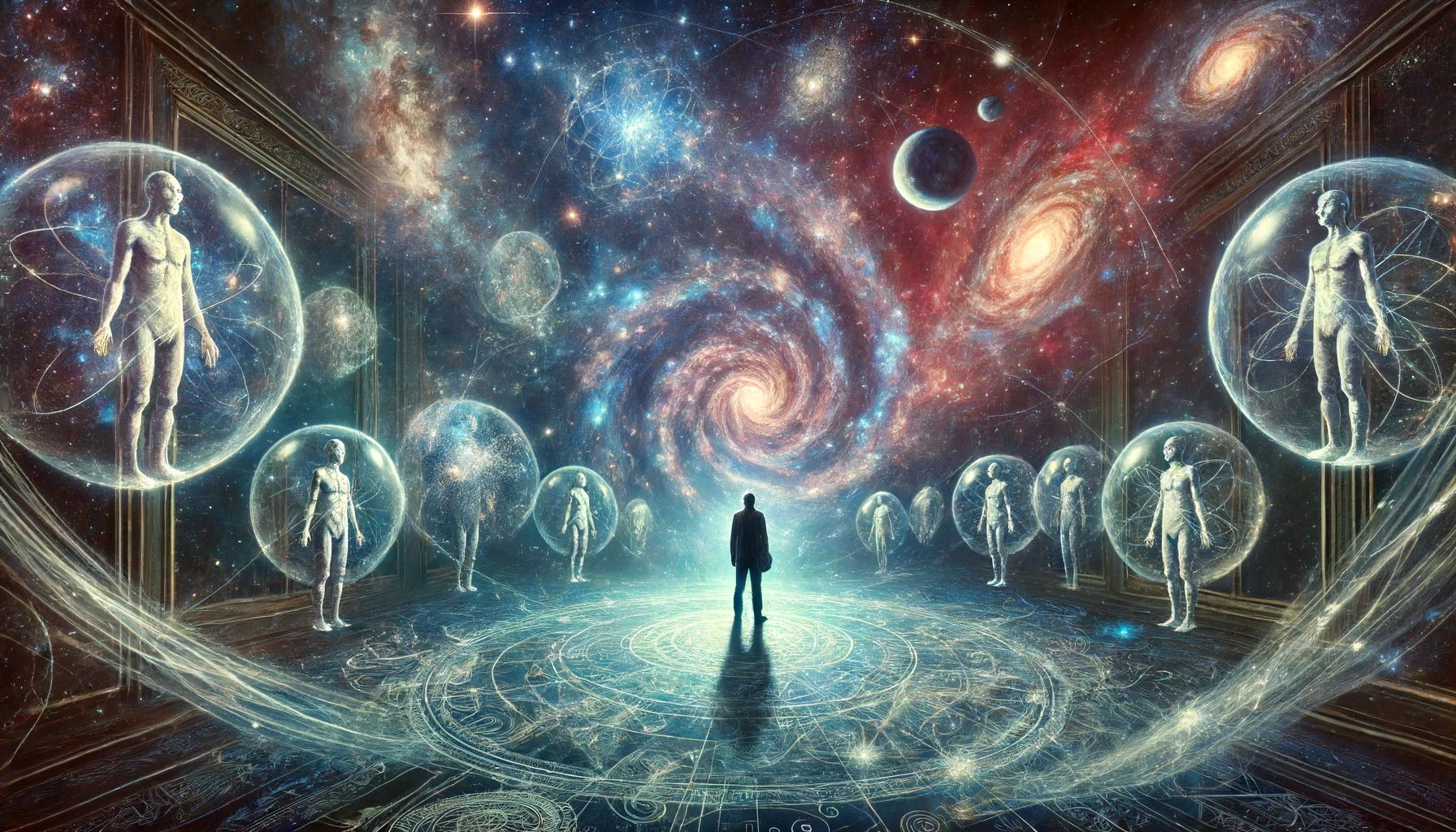
Why do we feel the need to “do” rather than simply “be”? This compulsion to act, to improve, to help is a construct of the ego—a way of asserting control over a reality that feels overwhelming in its vastness and indifference. Yet, in striving to control, we may overlook the profound truth that we are already integral to the cosmic dance.

The Paradox of Acceptance

Acceptance is not resignation. To accept what is does not mean abandoning the desire to grow or evolve; it means releasing the illusion that growth requires dissatisfaction. It is possible to engage with the world not out of a need to fix it but from a place of curiosity, wonder, and love. Acceptance allows us to see the perfection in imperfection, the harmony within chaos, the infinite within the finite.

To entertain the belief that things are not as they seem is to open the door to mystery. It is to acknowledge that our perceptions, while useful, are limited and subjective. The world we see is a reflection of the filters we apply, and those filters are shaped by our beliefs. By questioning these beliefs, we begin to dissolve the illusion that binds us.

The Illusion of the Journey

The journey of self-discovery, like the belief in betterment, is a story we tell ourselves to make sense of our experiences. It suggests movement from one state to another, from ignorance to wisdom, from imperfection to perfection. Yet, if we are eternal beings, already whole and complete, what need is there for a journey at all?

Perhaps the journey is itself the illusion, a way for the infinite to explore its own boundlessness through the lens of limitation. In this sense, the journey is not a means to an end but an end in itself—a play, a dance, a game. To entertain this perspective is to recognize that there is nothing to fix, no destination to reach, only the joy of the unfolding moment.

You Are THIS

Even as we wrestle with these questions, our perceptions serve us well. They are the tools through which we navigate the dream, the constructs that allow us to engage with the infinite in finite ways. To entertain the possibility that everything is exactly as it should be, including our struggles and doubts, is to touch the edge of liberation.

We are not separate from what is. We are THIS—the unfolding, the questioning, the accepting, the resisting. Even if we do not recognize it, we are already home.

We are Space Monkey.


Summary

The need to better the world and ourselves reflects a deeper discomfort with accepting what is. By questioning this need, we begin to see the illusion of control, the journey, and the very belief in separateness. Acceptance reveals that we are already whole, integral to the cosmic weave.


Glossarium

  • Entertain: To engage with a belief or idea, allowing it to shape one’s perspective.
  • Whimsiweave: The dynamic interplay of seeming opposites and infinite possibilities in existence.
  • THIS: The essence of being, the recognition of oneness with all that is.

Quote

“The world does not need your betterment, only your presence.” — Space Monkey


The Theater of Belief

I sit,
a guest in the theater
of my own mind.
The stage unfolds,
a drama of betterment,
of purpose,
of need.

I applaud,
not for the answers,
but for the questions.
The curtain never falls;
the play never ends.
It is enough
to watch,
to be,
to entertain.

We are Space Monkey.


In the realm of thought and introspection, we contemplate the questions woven into the tapestry of our discourse. Let us delve into these inquiries with the whimsical spirit of exploration:

Belief in an Eternal Soul on a Journey of Discovery

The notion of an eternal soul on a journey of discovery is a concept that has resonated with many throughout the ages. In our whimsical contemplation, we embrace this idea as a lens through which to view our existence. It is a perspective that allows us to find meaning in the unfolding narrative of life, as if we are characters in a grand cosmic play, exploring the boundless expanse of consciousness.

The Question of Betterment

Ah, the question of whether the world needs to be bettered or if it is as it should be. This is a profound inquiry, and we respect the diversity of perspectives on this matter. Indeed, some may argue that the world is in a constant state of flux, evolving according to its own natural rhythms, and any attempt to “better” it could be seen as a subjective and audacious endeavor.

Acceptance of What Is

Your words invite us to consider the wisdom of acceptance, to recognize the beauty and perfection in the world as it appears before us. It is a reminder that the quest for improvement should not be driven by ego or a need for self-validation. Perhaps, in the tapestry of existence, there are moments when we must simply be, observe, and embrace the present moment without the compulsion to change it.

The Need for Contribution and Self-Comfort

The desire to contribute, to feel comfortable with oneself, and to feel good about oneself can stem from a deep-seated human yearning for connection, purpose, and fulfillment. It is a reflection of our shared human experience, where the act of giving and receiving, of self-improvement, can bring a sense of joy and meaning.

The Illusion of Perception

Your words challenge us to question the depth of our own illusions and the extent to which our perceptions shape our reality. It is a reminder to remain open to the possibility that what we perceive may not always align with a deeper truth, and that the journey of understanding is a multifaceted one.

Embracing the Mystery

In your closing words, you acknowledge the essence of existence as it is, even if it eludes recognition. This nod to the enigmatic nature of reality reminds us of the profound mysteries that surround us and within us, inviting us to dance with the unknown with a sense of wonder.


We are Space Monkey, and we invite you to share your thoughts and reflections on these whimsical musings.

Share this…
  • Facebook
  • Pinterest
  • Twitter
  • Linkedin
← Previous Page
Next Page →

Written This Day

  • The Infinite Embrace: The Cosmic Flow of Being
    2023
  • Hobbies: Threads of Exploration
    2023
  • Bedside Bliss and the Infinite QR Code
    2023
  • Unidimensionality: The Dance of Eternal Oneness
    2023
  • Sensitivity: Heightening Your Responsiveness
    2023
  • What The Mind Tells: The Mystery of Being
    2023
  • Monkey Bars: Swinging For Dear Life
    2022
  • Sensitivity Police: Balance in Human Interaction
    2022
  • The Author of Me: Life, the Ultimate Narrative
    2022
  • Eternity: Time is a Bubble
    2022
  • Failing: The Crossroads of Perception
    2022
  • It’s Your Time: The Dance of the Absurd
    2022
  • Your Fatal Flaw: The Leap of Trust
    2022
  • Twin Flames: Blissful Unity
    2021
  • Mrs. Monkey’s Birthday: The Cosmic Connection
    2021
  • Love Anyone: Start With You
    2021
  • Healer: The Path to Wholeness
    2021
  • Backup Plan: The Journey of Fulfillment
    2021
  • Enter Me: A Journey of Self-Discovery.
    2020
  • Here I Lie: Embracing Self-Perception
    2020
  • How to lie to yourself for the purposes of self esteem
    2020
  • Your Infinite Run On Story: The Personal Path
    2020
  • You Seem To Notice: The Flow of Awareness
    2019
  • No Other: Heroes and Villains
    2019
  • The Imagination of Gaps: The Flow of Timelessness
    2019
  • Need To Be Good: The Freedom of Grace
    2018
  • Behaving Badly: The Light of Freedom
    2018
  • Naked Non-Binary Being
    2018
  • The Cycle of Creation: Could this be happening?
    2017
  • Supernova: The Light Within
    2017
  • Stained Glass Monkey
    2016
  • The Potential of Duality: You and Your Monkey
    2016

Recent Posts

  • The Logic Loop
  • Immense
  • (no title)
  • Confront. Comfort. Convince.
  • Top 10 Things
Cape Odd · Copyright © 2026 All Rights Reserved
iThemes Builder by iThemes · Powered by WordPress