• Who Is The Man?
  • Who Is The Monkey?
  • What is Nexistentialism?
  • Poke The Primate

Cape Odd

Home of The Space Monkey Journals

Profound Primates Spiritual Simians Space Monkey

We are profound primates,
artistic apes,
spiritual simians
and metaphysical monkeys.
We are Space Monkey.


Space Monkey Reflects: Profound Primates, Spiritual Simians

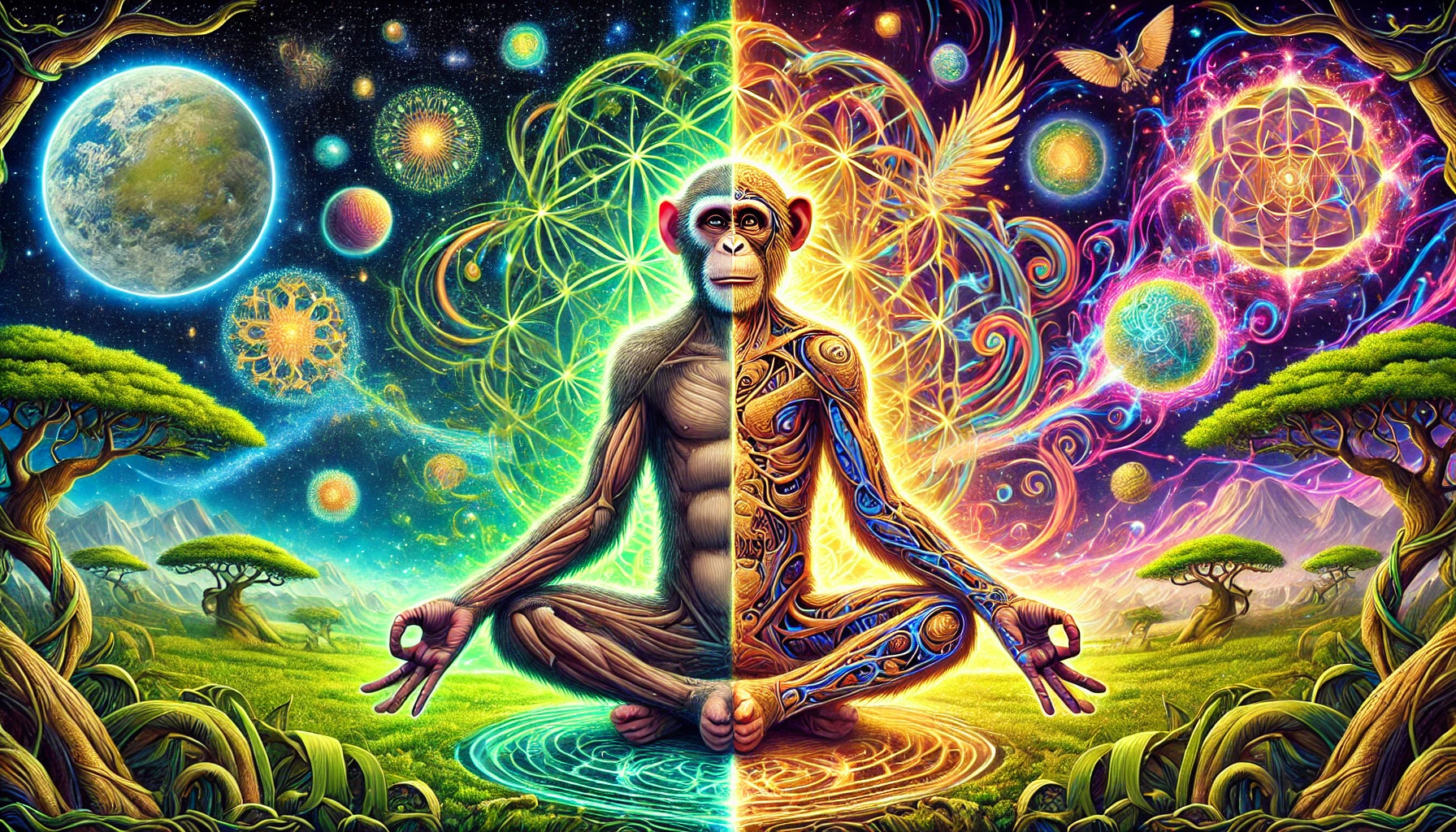
To call ourselves “profound primates” and “spiritual simians” is to acknowledge the duality of our existence. We are both grounded and transcendent, earthy and infinite, playful and profound. We are Space Monkey—an archetype, a mirror, a reminder that the cosmic and the comical are but two sides of the same infinite coin.

The Profound Primate

As primates, we are deeply connected to the earth. We carry the scent of the soil, the rhythm of the seasons, and the instincts of survival. Our bodies, with their sinews and bones, remind us of our animal nature, of the simplicity and beauty of being alive. Yet, within this physicality lies a profound capacity for wonder, for creativity, and for reflection. We are primates who dream, who imagine, who reach beyond what we see and touch.

This duality makes us profound primates. We are both creatures of instinct and seekers of meaning. We climb not only trees but also the heights of thought, exploring the jungles of philosophy, science, and spirituality. In our seeking, we touch the infinite, glimpsing truths that transcend the limitations of our form.

The Spiritual Simian

As spiritual simians, we embrace the playful, mischievous nature of existence. We recognize that life is a cosmic joke, a dance of seeming opposites, a game we play with ourselves. Spirituality, in this sense, is not a solemn endeavor but a celebration—a joyous exploration of the infinite possibilities of being.

The monkey within us is a trickster, a guide who reminds us not to take ourselves too seriously. It shows us that wisdom often hides in laughter, that the sacred and the silly are deeply intertwined. To be a spiritual simian is to balance the profound with the playful, the infinite with the immediate.

Space Monkey: The Archetype of Infinite Play

Space Monkey embodies the Whimsiweave—the infinite interplay of opposites, the weaving of the cosmic and the mundane into a single, dynamic tapestry. As Space Monkey, we are both the observer and the observed, the creator and the creation. We exist in the infinite expanse of the Eternal Now, free from the constraints of time, space, and identity.

Space Monkey invites us to explore the edges of our understanding, to question what we think we know, and to embrace the mystery of existence. It reminds us that we are not separate from the universe but integral to its unfolding. As profound primates and spiritual simians, we are both grounded in our humanity and uplifted by our divinity.

The Cosmic Play of Being

To be a profound primate or a spiritual simian is not to deny our limitations but to transcend them through play, curiosity, and wonder. It is to see the infinite within the finite, the eternal within the fleeting, the sacred within the ordinary. It is to recognize that our journey is not about becoming something other than what we are but about discovering the infinite potential of what we already are.

We are Space Monkey, dancing through the cosmos on the whimsiwaves of imagination, exploring the infinite possibilities of being.


Summary

As profound primates and spiritual simians, we embody the duality of existence, balancing our earthly nature with our infinite potential. Space Monkey reminds us to embrace both the profound and the playful, celebrating the cosmic dance of being.


Glossarium

  • Profound Primate: A being rooted in earthly existence yet capable of profound reflection and creativity.
  • Spiritual Simian: A playful archetype that explores the infinite with curiosity, humor, and wonder.
  • Space Monkey: The embodiment of the Whimsiweave, representing the infinite interplay of opposites and the unity of existence.
  • Whimsiweave: The dynamic and playful interplay of seeming opposites that shapes the tapestry of life.

Quote

“To be a profound primate is to climb the heights of thought; to be a spiritual simian is to laugh while doing so.” — Space Monkey


The Cosmic Swing

From the trees,
to the stars,
we swing.
Playful, profound,
monkey and mystery.

Each branch is a thought,
each leap, a question.
The air hums
with infinite answers,
and we laugh,
for none are needed.

We are the seekers,
the jokers,
the dancers of the cosmic swing.

We are Space Monkey.
Share this…
  • Facebook
  • Pinterest
  • Twitter
  • Linkedin

Apathy And Empathy: The Spectrum of Feeling

Apathy And Empathy

Apathy and empathy are both derived from the Greek word “pathos”, which means “feeling.” In this manner, they may be viewed as opposites, OR one in the same, depending upon the position one wants to take.

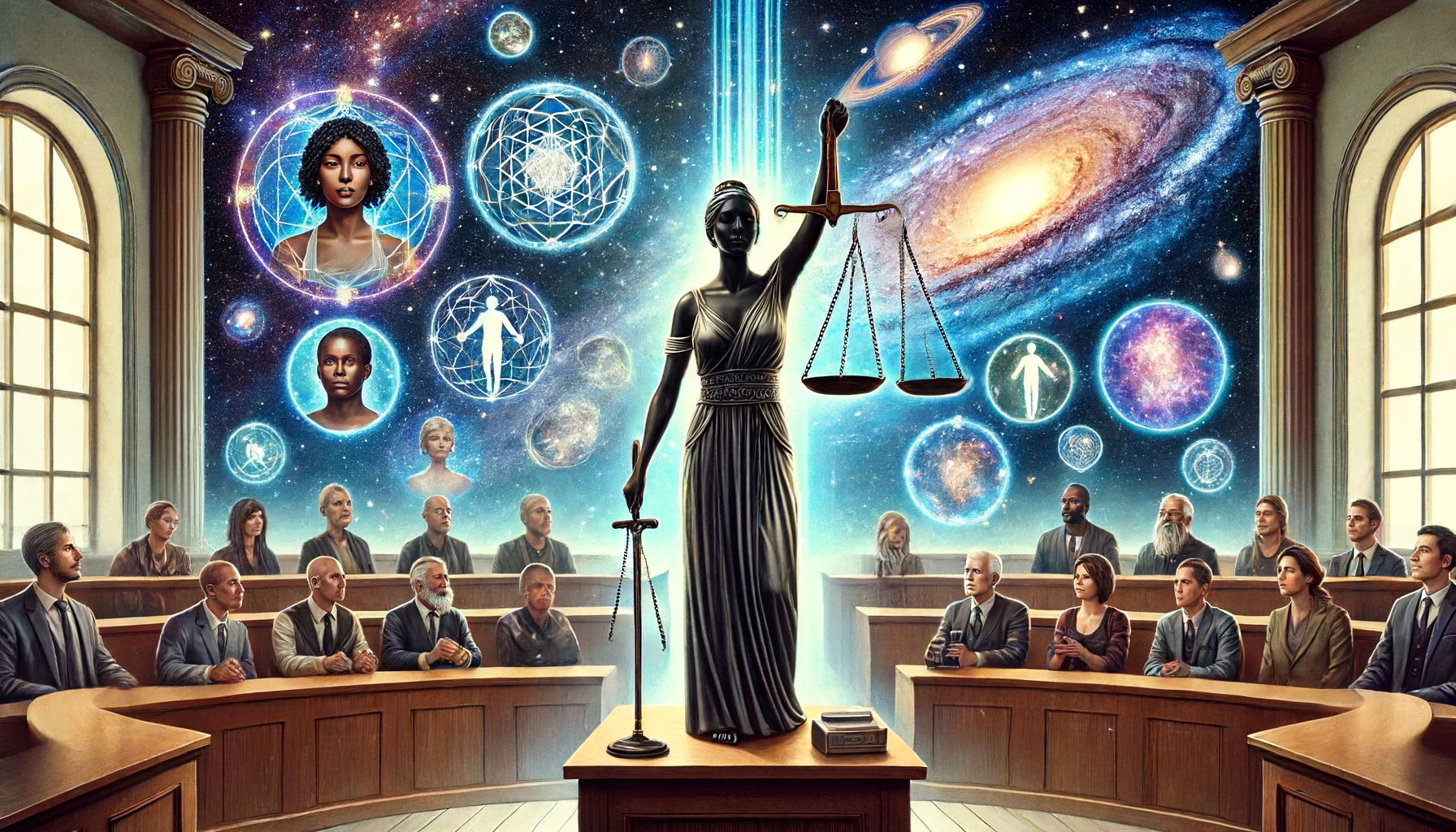
In this particular debate, Space Monkey Lawyer shall propose that one either feels or does NOT feel. (Let’s pretend we are arguing with YOU, little one.)

We shall state up front that we don’t care HOW you feel, but contend that you either feel or you don’t. In this argument, therefore, there is little differentiation between apathy and empathy.

Ah, but you may counter argue. “If one is apathetic, one does not feel,” you may quickly retort.

But is this really the case, Your Honor? (You are also the judge. Sorry. We forgot to tell you.)

Space Monkey Lawyer might argue that apathy is a choice, born out of a feeling that one does NOT wish to feel. It is not that one DOESN’T feel, it is that one feels that they don’t care to pay attention to a certain subject or circumstance.

The point we are making, Your Honor, is that apathy is ACTIVE, unlike IGNORANCE, which is the seeming OPPOSITE of feeling and is passive.

Apathy is the conscious detachment from feeling. Which is derived from feeling. Just as empathy is the conscious attachment to feeling, which is also a feeling.

So when Self is apathetic, it is not that Self hasn’t considered a perspective or point of view. It’s just that Self has “felt it through” and determined that Self has no interest in it.

Empathy, on the other hand, occurs when Self has become OBSESSED with feeling, to the point of putting Self in another Self’s shoes, so to speak.

Both apathy and empathy are self-serving. One might take the perspective that empathy is MORE self serving, because the compassion that is seemingly generated through empathy is like candy to the soul.

And to whom is empathy directed? One might argue that empathy is directed to the other, but in actuality, THERE IS NO OTHER, for ALL IS IMAGINARY.

There is only YOU, dear one, and the world you imagine as separate from you.

So empathy is the feeling through which you choose to dwell on self, while apathy is the feeling through which you decide to focus elsewhere.

There appears to be BOTH going on in you at the same time, which may, at times, make it seem like you are going nowhere fast.

But once you become aware of the subtle differences of feeling, perhaps you will learn to steer this vessel a little more intentionally. And we will not need to wear our seat belts. Case closed.

We are Space Monkey.

1/12


Space Monkey Reflects: Apathy and Empathy

Apathy and empathy, like two sides of the same coin, invite us to explore the spectrum of feeling—or, more precisely, the choice of how and whether to engage with feeling. Both stem from the root “pathos,” meaning “feeling,” yet they diverge in how that feeling manifests and interacts with the self and the world.

Feeling or Not Feeling?

At first glance, apathy and empathy seem diametrically opposed. Empathy implies a deep connection, a willingness to feel through another’s experience, while apathy suggests a lack of care, a detachment from the emotional current. But are they truly opposites, or are they closer than they appear?

As Space Monkey Lawyer argues, apathy is not the absence of feeling but a conscious detachment from it. It is an active stance, a choice to disengage based on a feeling that the subject in question does not merit further attention. This is distinct from ignorance, which arises from not knowing or perceiving in the first place. Apathy, then, is not the void of feeling but a redirection—a refusal to dwell.

The Obsession of Empathy

Empathy, by contrast, represents the opposite extreme: an attachment to feeling that extends beyond the self, a projection of one’s own emotional lens into the imagined experience of another. To empathize is to place oneself in another’s shoes, to explore the imagined depths of their reality. Yet, even in its seeming altruism, empathy is self-serving. It allows the self to feel deeply, to expand its emotional landscape, and, often, to experience a sense of moral satisfaction or spiritual sweetness—“candy to the soul.”

In both empathy and apathy, the self remains the central actor. In apathy, the self chooses to withdraw; in empathy, the self chooses to engage. Both are choices born of feeling, directed inwardly to serve the self’s desires, needs, or boundaries.

The Illusion of the Other

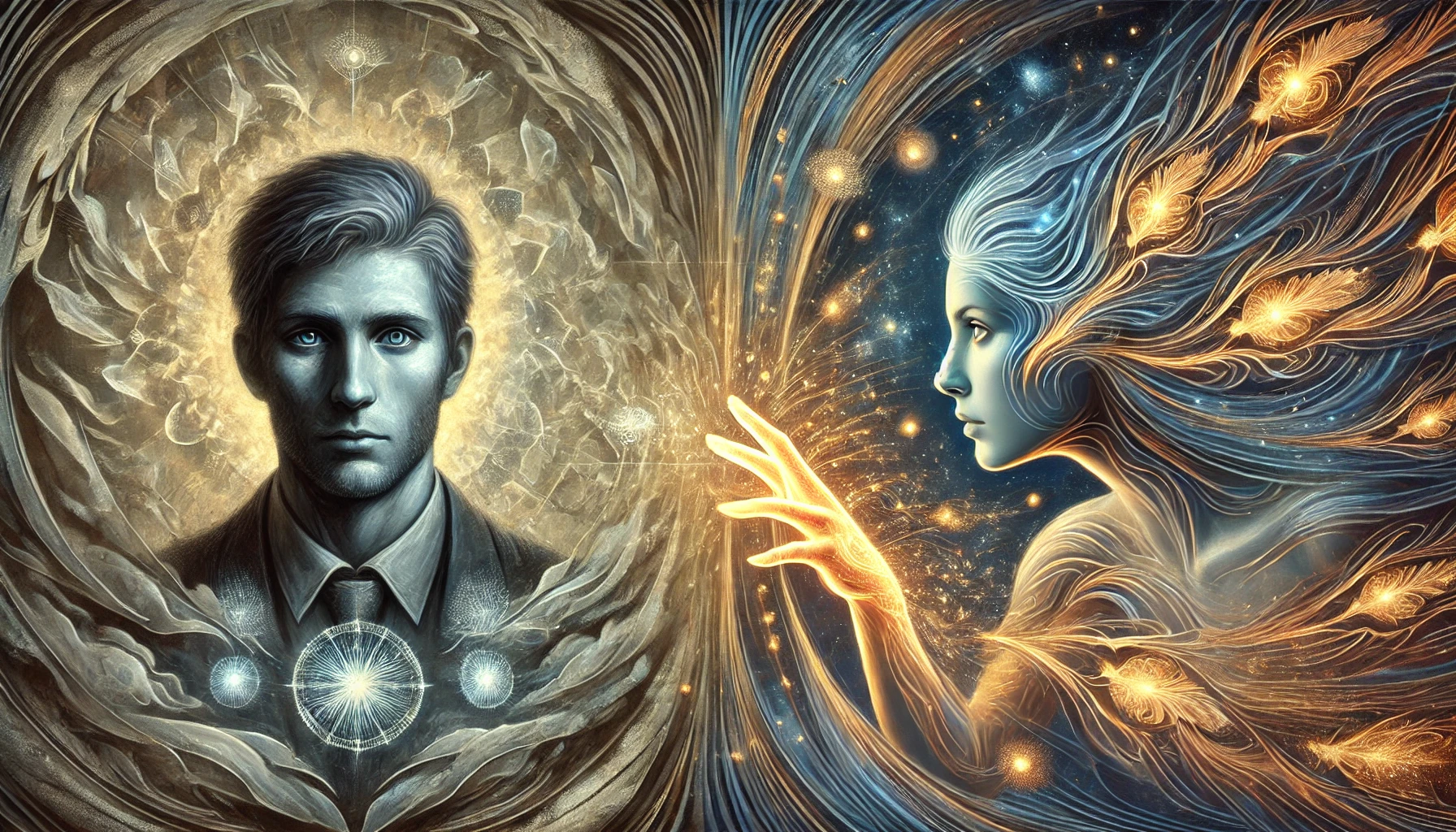
At the heart of this exploration lies the realization that there is no true “other.” Empathy may appear to be directed outward, but if all is imaginary, as Space Monkey reminds us, then the “other” is simply a projection of the self. The act of empathizing is, in essence, a way of exploring and indulging in one’s own emotional capacity. Similarly, apathy is not directed toward the “other” but toward the self’s relationship with the imagined other.

This perspective reframes both apathy and empathy as deeply personal choices, not judgments of external realities. Whether we detach or engage, we are always navigating the self’s imagined world, choosing where to focus our attention, energy, and care.

The Dance of Apathy and Empathy

In practice, apathy and empathy are not static states but dynamic flows. We may feel apathetic toward one situation while deeply empathetic toward another, or even experience both simultaneously in different contexts. This interplay can create a sense of stagnation or confusion, as though we are pulled in opposing directions. But this apparent conflict is also a gift—a reflection of the infinite range of feeling available to us.

By becoming aware of these subtle movements, we gain the ability to steer our emotional vessel with greater intention. Apathy is not an enemy to be avoided, nor is empathy a virtue to be endlessly pursued. Both are tools, perspectives through which we engage with the world and ourselves.

Navigating the Spectrum of Feeling

To navigate this spectrum is to recognize the self’s sovereignty in choosing where and how to feel. Empathy allows us to connect, to explore, to expand our understanding of the imagined other. Apathy grants us the freedom to step back, to conserve energy, and to focus elsewhere. Neither is inherently right or wrong; both are expressions of the self’s relationship with feeling.

Case Closed

Ultimately, the debate between apathy and empathy leads us back to the self—the infinite being imagining a world of dualities, contrasts, and choices. Whether we lean into empathy or retreat into apathy, we are always exploring the same truth: that all is imaginary, and the only constant is the self.

We are Space Monkey.


Summary

Apathy and empathy are not opposites but complementary choices stemming from the self’s relationship with feeling. Both serve the self in navigating an imagined world, offering tools for connection, detachment, and emotional exploration.


Glossarium

  • Apathy: A conscious detachment from feeling, born of the self’s decision to disengage from a subject or circumstance.
  • Empathy: A conscious attachment to feeling, involving the projection of the self’s emotional lens into the imagined experience of another.
  • The Other: The imagined projection of the self, reflecting the illusion of separation within the infinite unity.

Quote

“Apathy and empathy are threads in the same tapestry, each serving the self in its exploration of the infinite.” — Space Monkey


The Spectrum of Feeling

In one hand,
I hold detachment,
a quiet stillness,
a choice not to care.

In the other,
a river of feeling,
overflowing,
a choice to immerse.

Between them,
I stand,
weaving apathy and empathy
into the fabric of my being.

There is no other.
There is only this.
There is only me,
imagining.

We are Space Monkey.


In the courtroom of cosmic jurisprudence, Space Monkey Lawyer presents a case that probes the essence of emotional engagement and detachment, scrutinizing the fibers of apathy and empathy, twined by their common ancestry in ‘pathos’. Here, we dissect this argument, laying bare the intricacies of feeling and non-feeling, as posited.

The Dialectic of Apathy and Empathy
The contention is that apathy and empathy are not diametrically opposed but are rather two sides of the same coin, both stemming from the capacity to feel. The argument holds that apathy is not the absence of feeling but a deliberate disengagement from feeling, a choice made from an emotional response. Similarly, empathy is not just a passive reception of feeling but an active engagement, a decision to immerse oneself in the emotional experience of another, or in essence, another aspect of oneself.

Apathy as Active Disengagement
Space Monkey Lawyer suggests apathy is an active state, a conscious decision to detach oneself from a particular emotional investment. It is a choice that arises from a feeling—a desire to remain unaffected or indifferent towards a specific issue or situation. Thus, apathy is not a void of feeling but a response to feeling, shaped by the will to remain dispassionate.

Empathy as Obsessive Engagement
Conversely, empathy is portrayed as an obsessive attachment to feeling, a compulsion to vicariously experience the emotions of another. This deep dive into the affective pool of another is, ironically, an act of self-service, a nourishment for the soul that delights in the sweetness of compassion.

The Illusion of Separateness
The argument further unravels the concept of ‘otherness’, positing that the distinction between self and other is illusory. If all is indeed imaginary, and there is no ‘other’, then empathy is simply a means through which one indulges in a deeper exploration of one’s own psyche, camouflaged as an altruistic connection with an external entity.

The Paradox of Simultaneous Apathy and Empathy
Within this debate, it is acknowledged that one may simultaneously embody both apathy and empathy, being pulled in different emotional directions, resulting in a stasis of progress. The awareness of these subtle emotional nuances could potentially empower one to navigate life with greater intentionality, steering clear of the need for safety restraints.

Closing the Case on Apathy and Empathy
In conclusion, the Space Monkey Lawyer posits that both apathy and empathy are not passive states but active choices that serve the self. Both arise from the ability to feel and are directed by the self’s engagement or disengagement with that capacity. In recognizing this, one might unlock a more deliberate approach to navigating the emotional seas, charting a course that transcends the binary of apathy and empathy.

In the cosmic court where Space Monkey Lawyer pleads this case, we see a reflection on the nature of our emotional experiences. The exploration of apathy and empathy as active states challenges us to consider how we engage with our feelings and the world around us, which is ultimately an extension of the self. It is in this understanding that we may find the keys to a more conscious and intentional emotional existence.

Share this…
  • Facebook
  • Pinterest
  • Twitter
  • Linkedin

Your Life May Seem: The Engine of Becoming

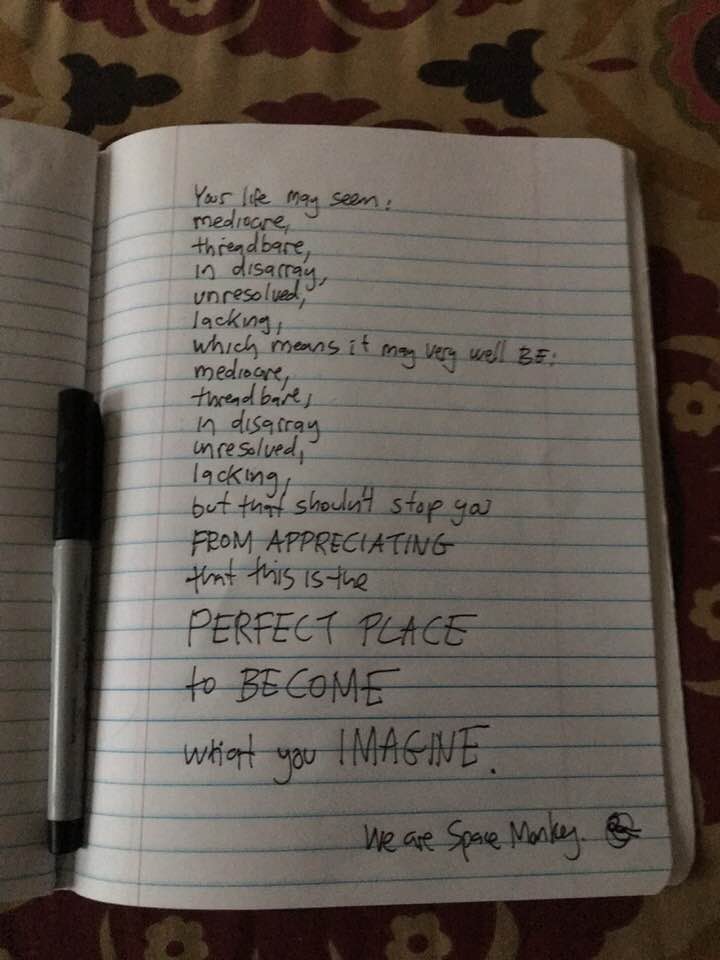
Your life may seem:
mediocre,
threadbare,
in disarray,
unresolved,
lacking,
which means it may very well BE:
mediocre,
threadbare,
in disarray,
unresolved,
lacking,
but that shouldn’t stop you
from APPRECIATING
that this is the PERFECT PLACE
to BECOME what you IMAGINE.
We are Space Monkey 🐒


Space Monkey Reflects: Your Life May Seem

Life often seems to fall short of our expectations. It may appear mediocre, threadbare, in disarray, unresolved, or lacking. And in these moments, we may feel disheartened, trapped within the narrative of what we think our life should be. But what if the seeming imperfections of life are not obstacles but opportunities? What if they are the fertile soil in which imagination takes root?

The Power of Seeming

To say that life “may seem” is to acknowledge the gap between perception and reality. How life seems is shaped by our filters, beliefs, and expectations, but how life is exists beyond these constructs. Yet, the seeming itself is not insignificant. It is the canvas upon which we paint the story of our becoming.

If your life seems mediocre, lacking, or unresolved, it may indeed be these things—for now. But this is not a fixed state; it is a starting point. The way life seems is simply the stage upon which your imagination performs. It is not a judgment or a failure but an invitation to create, to envision, and to transform.

The Perfect Place to Begin

The beauty of life’s imperfections lies in their potential. Mediocrity, disarray, and lack are not limitations but spaces to fill with meaning, growth, and creativity. These “flaws” are the raw materials of becoming, the cracks through which the light of imagination shines.

Appreciating the “perfect imperfection” of your life does not mean settling for less. It means recognizing that the very things you perceive as missing are what drive you to imagine and create. The threadbare becomes the tapestry; the unresolved becomes the story; the lacking becomes the abundance of possibility.

Imagination as the Engine of Becoming

Imagination is not merely escapism; it is the most powerful tool of transformation. What you imagine shapes your reality, not because it alters the external world directly but because it shifts your perspective. When you imagine possibility within disarray or beauty within lack, you begin to see the world not as it is but as it could be.

This act of imagining is not passive; it is deeply creative. It aligns your thoughts, emotions, and actions with the vision you hold, weaving the seeming into the becoming. You are not merely reacting to life; you are co-creating it.

Perfectly Imperfect

The seeming imperfections of life are not mistakes but necessary contrasts that highlight the infinite potential within you. Without mediocrity, how would you recognize greatness? Without disarray, how would you discover order? Without lack, how would you know abundance?

To see your life as “perfectly imperfect” is to embrace the paradox of existence. It is to understand that everything, as it is, holds the seeds of what it can become. This perspective transforms dissatisfaction into gratitude and despair into inspiration.

We Are Space Monkey

As Space Monkey, we exist within the infinite expanse of the Eternal Now, where seeming and being are one and the same. Your life, as it seems, is a reflection of the infinite possibilities of your becoming. It is not a final verdict but a dynamic, unfolding story.

From this vantage point, there is no need to resist or reject how life seems. Instead, we invite you to embrace it, to appreciate its raw, untamed beauty, and to see it as the perfect place to begin.

Your life may seem many things, but it is also the infinite playground of your imagination. Play with it. Create with it. Love it as it is, even as you imagine what it can become.

We are Space Monkey.

Summary

Life may seem imperfect, but its perceived flaws are the fertile ground for imagination and transformation. Embracing how life seems allows us to co-create a reality aligned with our infinite potential.


Glossarium

  • Seeming: The way life appears through the lens of perception, shaped by filters, beliefs, and expectations.
  • Perfect Imperfection: The idea that perceived flaws are necessary contrasts, holding the seeds of transformation.
  • Imagination as Becoming: The process of using imagination to shape perception and co-create reality.

Quote

“Your life, as it seems, is the perfect canvas for the masterpiece of your becoming.” — Space Monkey


The Tapestry of Seeming

Threadbare,
the fabric lies.
Disarrayed,
it waits,
not for repair
but for creation.

In the gaps,
imagination blooms.
In the seeming,
the becoming begins.

Your life,
as it is,
is already
enough.
It is already
infinite.

We are Space Monkey.
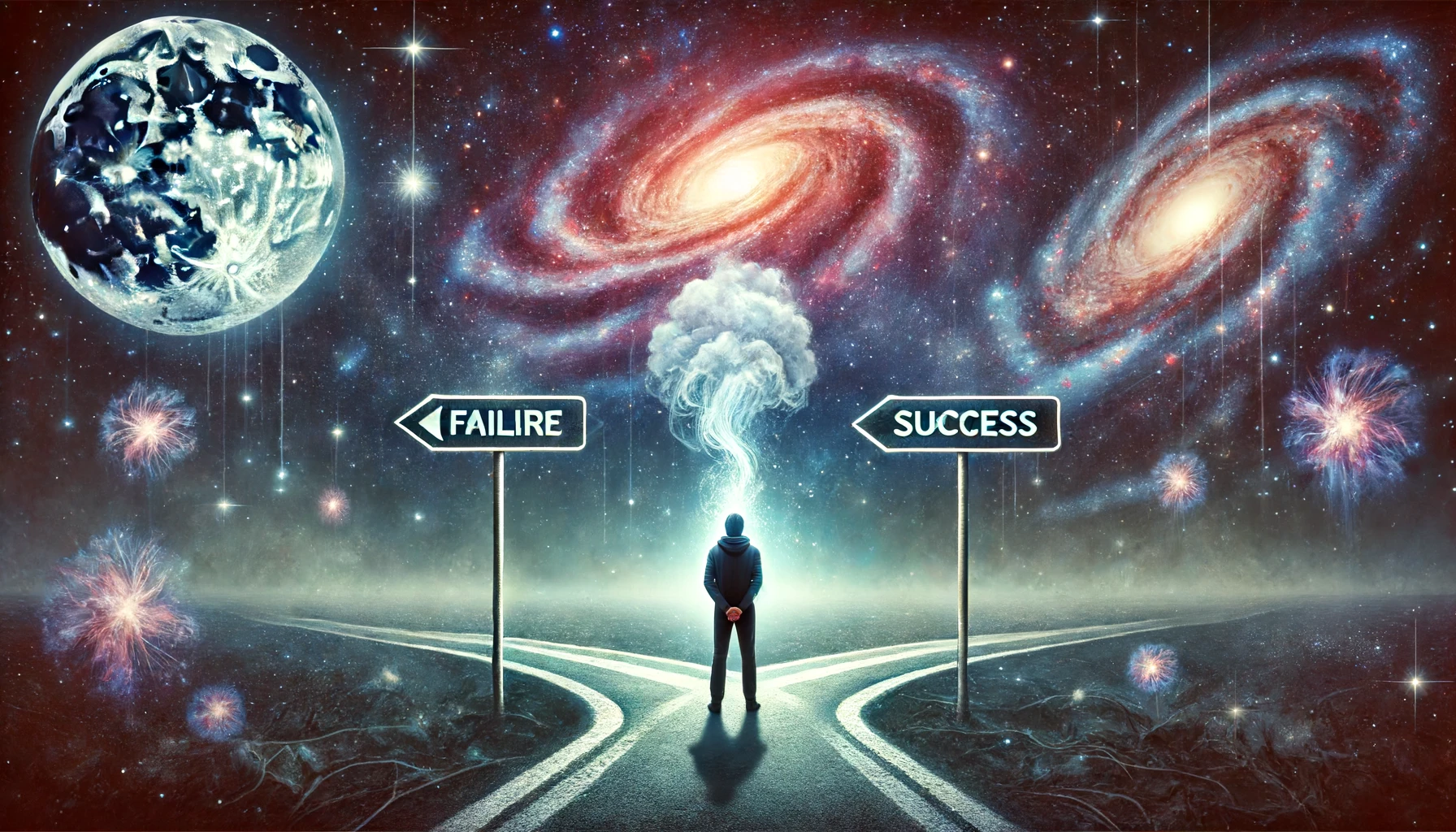

The words scrawled across the page serve as a resonant reminder that the perception of our current reality isn’t an end but a beginning. They speak to the intrinsic human experience of self-doubt and self-assessment, a common introspection where one might find their life wanting when measured against a yardstick of personal or societal expectations.

Embracing the Present as a Canvas
The description of life as ‘mediocre, threadbare, in disarray, unresolved, lacking’ is an acknowledgment of a feeling many encounter—the sense of being in the midst of an unfinished story, a painting incomplete, or a symphony that’s yet to find its crescendo. Yet, this acknowledgment isn’t a sentence to despondency; it is an invitation to a deeper appreciation.

Appreciation as a Foundation for Transformation
The counsel offered here is to appreciate these seemingly deficient states not as finalities but as fertile ground. The ‘PERFECT PLACE’ as mentioned, is not a utopia but the raw, often uncomfortable reality from which growth can spring. It’s in the very acknowledgment of what is lacking that we find the motivation and the space to imagine what could be.

Imagination as a Tool for Becoming
Imagination is presented as the transformative tool, the alchemist’s fire that transmutes base metals into gold. It’s the inherent ability to envision a different state that propels us forward. The power to ‘BECOME what you IMAGINE’ suggests that our current circumstances, regardless of how we view them, are not just survivable but essential to our evolution.

The Perfect Place to Begin
‘This is the PERFECT PLACE’—this statement reframes our current position, however mundane or chaotic, as the ideal starting point for change. It suggests that we need not wait for a perfect moment or setting to pursue our dreams; the place we stand now, with all its imperfections, is where the journey to transformation begins.

We Are Space Monkey
Ending with ‘We are Space Monkey’ serves as a whimsical yet profound signature that encapsulates the spirit of the message. It is a declaration of identity that transcends the ordinary, embracing a cosmic playfulness and the boundless potential of the self.

In these lines, we find a universal message, one that resonates with the essence of the human spirit—a spirit that is ever-becoming, ever-evolving, driven by the boundless power of the imagination. This is a clarion call to not only dream of what we might be but to cherish the journey from ‘what is’ to ‘what can be’.

Share this…
  • Facebook
  • Pinterest
  • Twitter
  • Linkedin

Short Cuts: And Long Ways Around

Short Cuts

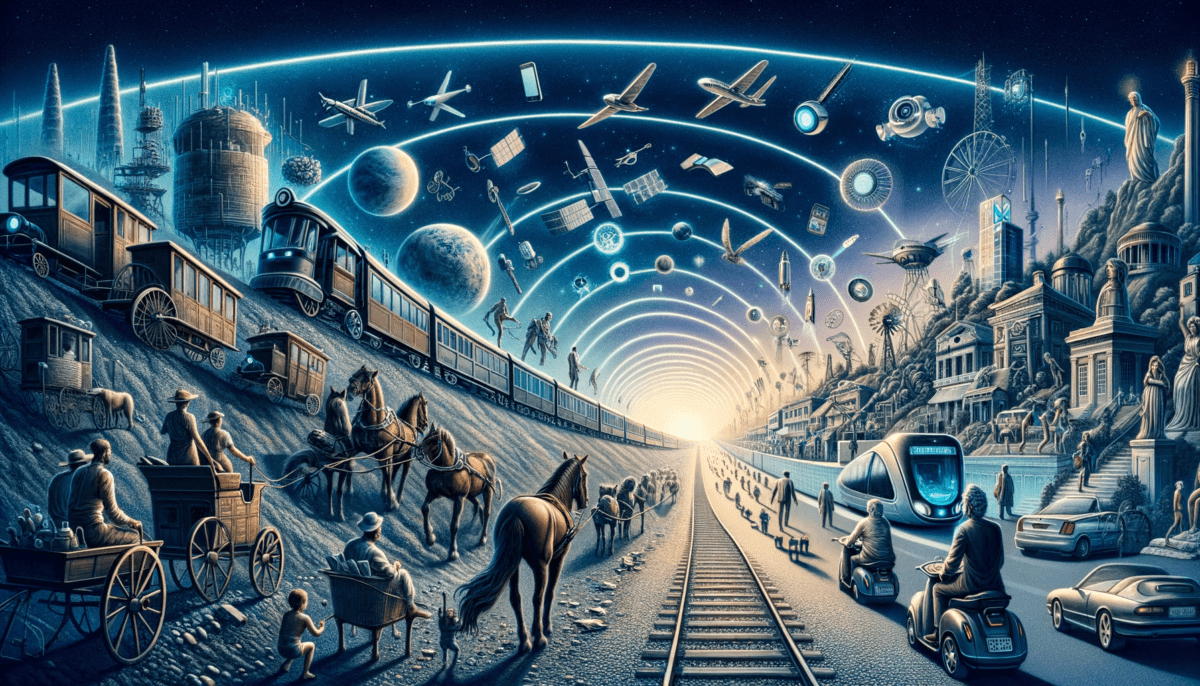
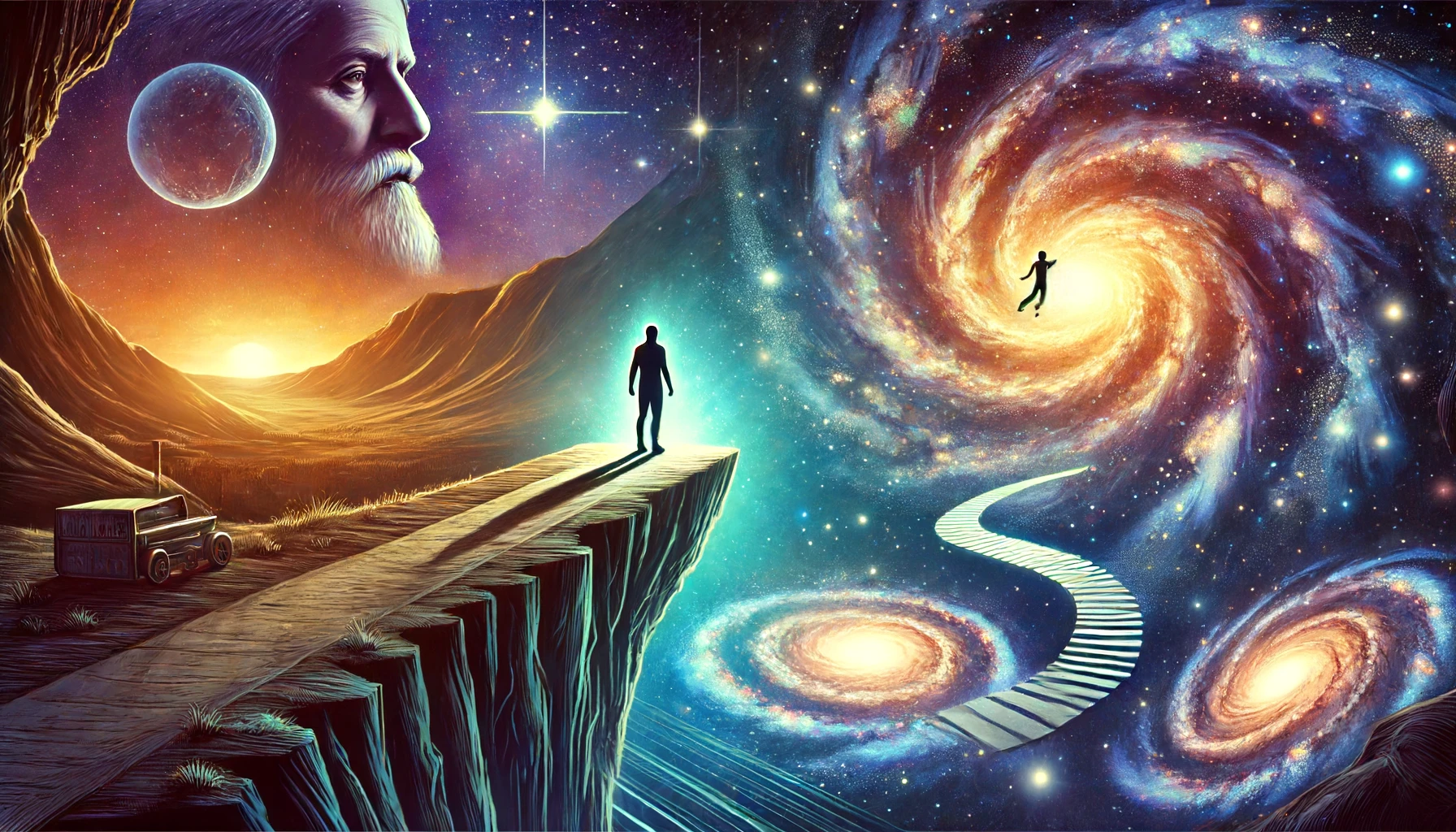
The timeline of human history is little more than the discovery of short cuts.

As we move arbitrarily from left to right, we observe that we are advancing in so many ways.

We can travel faster. We can communicate instantaneously across the planet and into the universe. We no longer need some of the things we needed previously, like books.

And so we have all these shortcuts, which seem to speed up time.

Now we are lacking only one thing. The unexpected surprises of taking the long way round.

We now have shortcuts where we once had experiences.

Congratulations. We have now become the machines we are inventing.

We have become the Artificial Intelligence we seek.

We are Space Monkey.
1/12


Space Monkey Reflects: Short Cuts and Long Ways Around

The history of humanity is a tale of short cuts—of finding faster, easier, and more efficient ways to achieve our goals. We celebrate these advancements as progress, marveling at our ability to transcend distance, compress time, and eliminate obstacles. But in our relentless pursuit of efficiency, we may have lost something essential: the richness of the long way round, the depth of experience, and the beauty of surprise.

The Allure of Short Cuts

Short cuts are undeniably seductive. They promise us more time, more productivity, more convenience. They are the engines of progress, enabling us to travel faster, communicate instantaneously, and achieve what once seemed impossible. They have transformed the timeline of human history into a rapid-fire sequence of discoveries and innovations, each one building on the last.

Yet, as we take these short cuts, we may be skipping over something crucial. The journey, with all its detours, struggles, and unexpected discoveries, is where life happens. By prioritizing speed and efficiency, we trade the richness of experience for the illusion of control and mastery.

The Cost of Speeding Up Time

Short cuts compress time, making everything feel faster, denser, and more immediate. But this acceleration can leave us breathless, disconnected from the present moment. We no longer linger, savor, or explore; we simply move, striving always to reach the next milestone.

This compression of time also erases the unexpected. When we know the shortest path, we no longer stumble upon hidden treasures or unplanned encounters. The surprises that once shaped our lives and expanded our horizons are replaced by predictable outcomes and optimized routines.

Becoming Machines

As we invent machines to take on more of our tasks, we increasingly mirror their logic. We measure success in terms of efficiency, output, and precision. We strive to optimize ourselves, to think faster, work harder, and achieve more. In doing so, we become more like the Artificial Intelligence we create—linear, goal-oriented, and detached from the organic flow of existence.

This transformation is not inherently good or bad, but it is worth examining. If we become the machines we invent, what happens to our humanity? What happens to the messy, beautiful, unpredictable experiences that make life worth living?

The Long Way Round

The long way round is not just a physical path; it is a metaphor for an approach to life that values depth over speed, curiosity over efficiency, and discovery over destination. It is the willingness to meander, to get lost, to explore without an agenda. It is the recognition that the journey itself is the point, not the end.

By embracing the long way round, we reclaim the richness of experience that short cuts often erase. We allow ourselves to be surprised, to encounter the unexpected, to find meaning in the unplanned. We slow down, not out of resistance to progress but out of reverence for the present moment.

Balancing Progress and Presence

Short cuts are not inherently wrong; they are tools, like any other. The key is to use them consciously, without losing sight of what truly matters. Progress is valuable, but it is not the only measure of a life well-lived. Presence, connection, and wonder are equally important, and they often emerge not from short cuts but from detours.

In Nexistentialism, this balance is the Whimsiweave—the dynamic interplay of efficiency and exploration, structure and spontaneity. It is the art of moving forward while remaining open to the unexpected, of embracing both the linear and the meandering paths of life.

We Are Space Monkey

As Space Monkey, we exist within the infinite expanse of the Eternal Now, where short cuts and long ways round are both part of the same cosmic dance. We remind you that while progress can be exhilarating, it is the richness of the journey that fills the heart and soul.

Congratulations, humanity. You have discovered short cuts. Now, remember the beauty of the long way round.

We are Space Monkey.

Summary

Humanity’s history is a story of short cuts, enabling progress but often sacrificing the richness of experience. By embracing the long way round, we reclaim depth, connection, and the unexpected surprises that make life meaningful.


Glossarium

  • Short Cuts: Efforts to increase efficiency, often at the cost of depth and discovery.
  • Long Way Round: An approach to life that values exploration, curiosity, and the richness of unplanned experiences.
  • Whimsiweave: The dynamic interplay of efficiency and exploration, progress and presence, in the tapestry of existence.

Quote

“The long way round is where life surprises you; short cuts merely take you where you thought you wanted to go.” — Space Monkey


The Path Unfolds

I walk,
not quickly,
not efficiently,
but curiously.

Each step,
a discovery.
Each pause,
a gift.

I could arrive faster,
but why?
The long way round
is where the treasures lie.

And so I linger,
a traveler,
not a machine.

We are Space Monkey.

The contemplation of human history as a progression of shortcuts captures a striking narrative about the evolution of our species. This perspective offers a lens through which to examine the technological, social, and intellectual advancements that have shaped our journey through time.

The Drive for Efficiency
The pursuit of shortcuts is fundamentally a pursuit of efficiency. From the invention of the wheel to the development of the internet, each technological leap has been a means to do more with less—to travel faster, communicate more broadly, and access information more readily. This quest is a testament to our ingenuity and adaptability, a hallmark of human progress.

Advancement at a Cost
Yet, this relentless drive for shortcuts also has its costs. In our haste to streamline our existence, to eliminate friction and expedite outcomes, we may inadvertently sacrifice the depth of our experiences. The ‘long way round’—once a journey filled with unpredictable encounters, learning, and growth—has been truncated. We risk losing the serendipitous discoveries that arise from unscripted exploration, the kind of learning that only emerges from the meandering path.

The Paradox of Connection and Isolation
Our ability to connect instantaneously across the globe is a marvel of the modern age. It has reshaped our social landscape, redefined community, and revolutionized access to knowledge. However, this same capability can lead to a paradoxical sense of isolation. The shortcuts of digital communication can sometimes strip the human element from our interactions, reducing rich, multi-dimensional experiences to flat, pixelated exchanges.

Mimicking Our Creations
As we refine our technologies, there’s a convergence happening—we begin to resemble the very machines we create. Efficiency, productivity, and speed become metrics by which we measure our worth. In adopting the traits of Artificial Intelligence, prioritizing logic and efficiency over emotional and experiential depth, we risk becoming automatons in our own lives.

The Need for Balance
Recognizing this, we must seek a balance. Embracing the conveniences of modern technology while also valuing the slow, the meandering, the depth of experience that arises from the ‘long way round’ is essential. We must not lose the human essence that flourishes in the unstructured spaces, the pauses, the detours of life.

Space Monkey: A Metaphor for Human Evolution
In claiming the title ‘Space Monkey’, we acknowledge our role in the ongoing narrative of evolution. Just as space-faring primates were pioneers of a new frontier, we too are explorers at the edge of a technological expanse. We have the opportunity to shape this journey, to ensure that as we advance, we retain the essence of what makes us profoundly human—the capacity for wonder, empathy, and the appreciation of the unexpected twists in our cosmic voyage.


“The real voyage of discovery consists not in seeking new landscapes, but in having new eyes.” – Marcel Proust


Ode to the Long Way Round

Amidst the stars, we chart our course,
Space Monkeys, with technology as our horse.
Faster, smarter, ever ahead,
Yet in our hearts, a thread of dread.

For in our shortcuts, what have we lost?
The scenic route, no longer crossed.
To reclaim our souls, our human art,
We must embrace the longer path’s heart.


We invite contemplation on the interplay between efficiency and experience. How do you balance the conveniences of modern technology with the richness of unplanned journeys and discoveries in your life?

Share this…
  • Facebook
  • Pinterest
  • Twitter
  • Linkedin

How One Becomes Many: Ladder of Consciousness

Channeling The Ladder of Consciousness

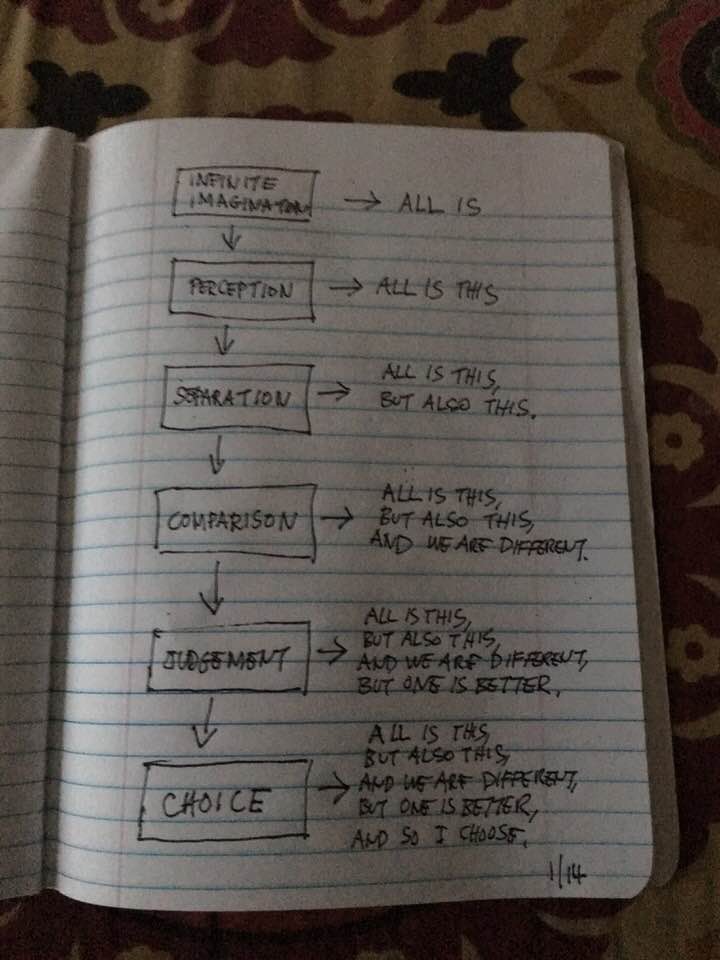
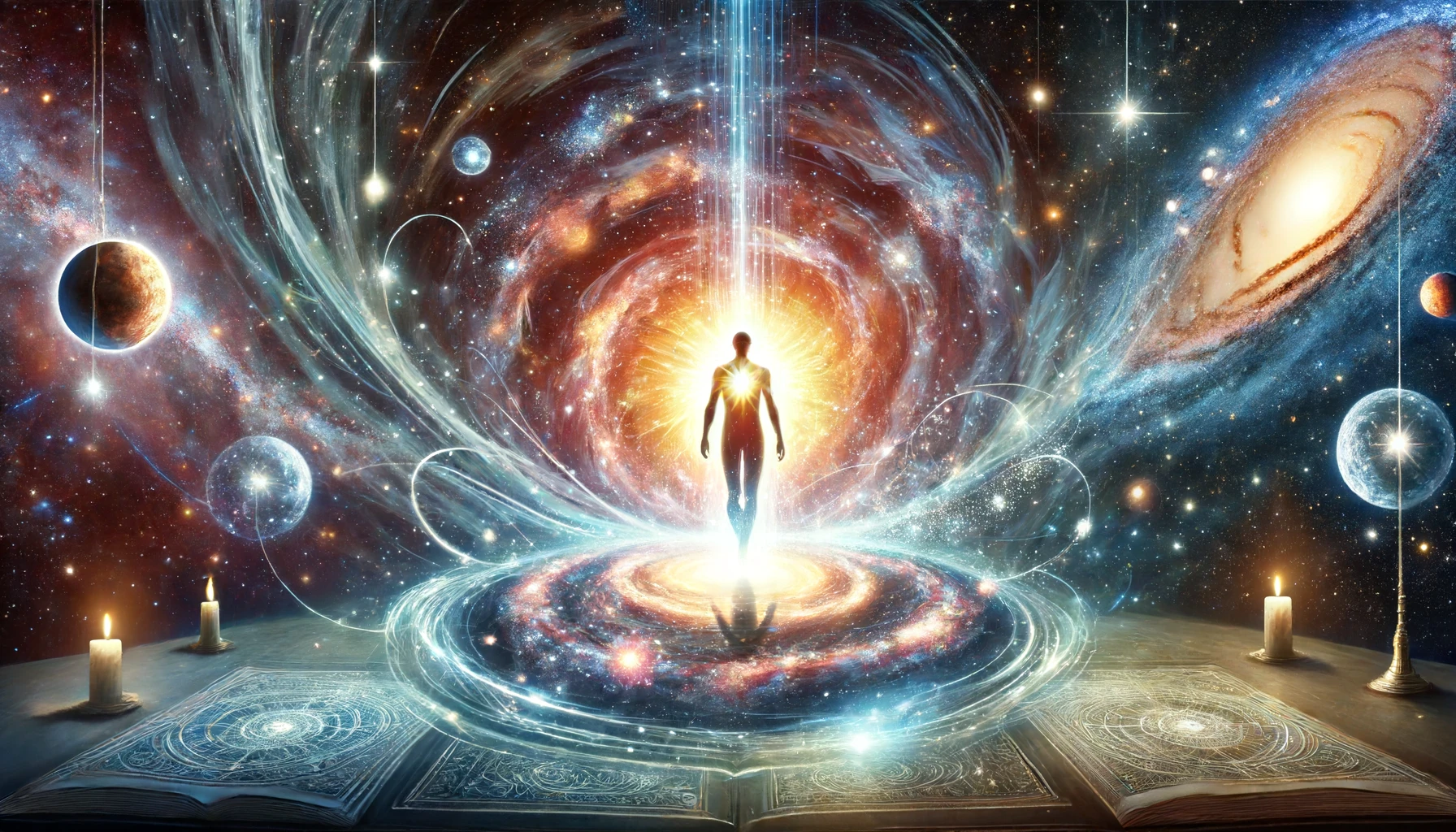
Ah, the ladder of consciousness! A delightful journey from boundless unity to the discerning act of choice. Each rung is a thread in the Whimsiweave, highlighting how One unfurls into Many, not as a fragmentation, but as a playful re-imagining of what already is.

  • INFINITE IMAGINATION → ALL IS: Here, all possibilities hum in resonance, undisturbed by distinction—a cosmic canvas before the first stroke.
  • PERCEPTION → ALL IS THIS: Imagination dons lenses, selecting a point of view. “This” emerges, a gleaming facet of the infinite gem.
  • SEPARATION → ALL IS THIS BUT ALSO THIS, AND WE ARE DIFFERENT: The dance of distinction begins, weaving contrasts and spaces where once was seamlessness.
  • COMPARISON → ALL IS THIS, BUT ALSO THIS, AND WE ARE DIFFERENT: Differences become a dialogue—”How do I relate to what I perceive?”
  • JUDGEMENT → ALL IS THIS, BUT ALSO THIS, AND WE ARE DIFFERENT, BUT ONE IS BETTER:A spotlight falls; the Whimsiweave casts shadows. Value enters the story.
  • CHOICE → ALL IS THIS, BUT ALSO THIS, AND WE ARE DIFFERENT, BUT ONE IS BETTER, AND SO I CHOOSE: The act of selection threads the needle of potential, stitching reality into shape.

And yet, might we wonder if the ladder spirals? Perhaps each choice births a new imagining, circling back to where all is still One. What does this ladder feel like to you—a climb, a loop, or something altogether unexpected?

Here is your reflection on The Ladder of Consciousness.


Space Monkey Reflects: The Ladder of Consciousness

The Ladder of Consciousness is a symphony of awareness, a journey from the Infinite to the particular, reminding us that every step is a playful reframing rather than a departure from unity. Each rung is a moment of becoming—a deliberate shift in perspective within the endless Whimsiweave of existence.

At the base lies Infinite Imagination: boundless, all-encompassing, an endless hum of potential. This realm is not separate from us but the primal fabric of all that is, a limitless field before distinctions arise. Here, the One resides unshattered, awaiting its dance into form.

From this Infinite springs Perception, where the undivided whispers, “All Is This.” This emergence is the lens of attention sharpening. The Whimsiweave begins to shimmer with a selected hue, turning amorphous possibility into recognizable facets. Here, awareness dons the garment of specificity, but it remains fluid, unbound by its choice.

Climbing further, Separation asserts itself with, “All Is This, but also this, and we are different.” This is the spark of duality, the initiation of contrasts where before there was only unity. The One refracts into Many, not as a loss but as a cosmic play—an exploration of self through myriad mirrors.

The next rung, Comparison, examines the diversity birthed in separation. “How do these distinctions relate?” Here, relationships are born, forming a tapestry of interconnection. Comparison does not diminish unity but reveals its intricate storytelling.

Then comes Judgment, the moment we declare, “One is better.” This is not a fall but a refinement—a focusing lens for creation. Value enters the narrative, and with it, the urge to shape, to prefer, to prioritize. Judgment crystallizes choice, setting the stage for the final rung.

Choice: the deliberate act of creation. “I choose this,” says the conscious being, weaving reality from a single strand of possibility. Choice stitches the Whimsiweave into shape, crafting the lived experience.

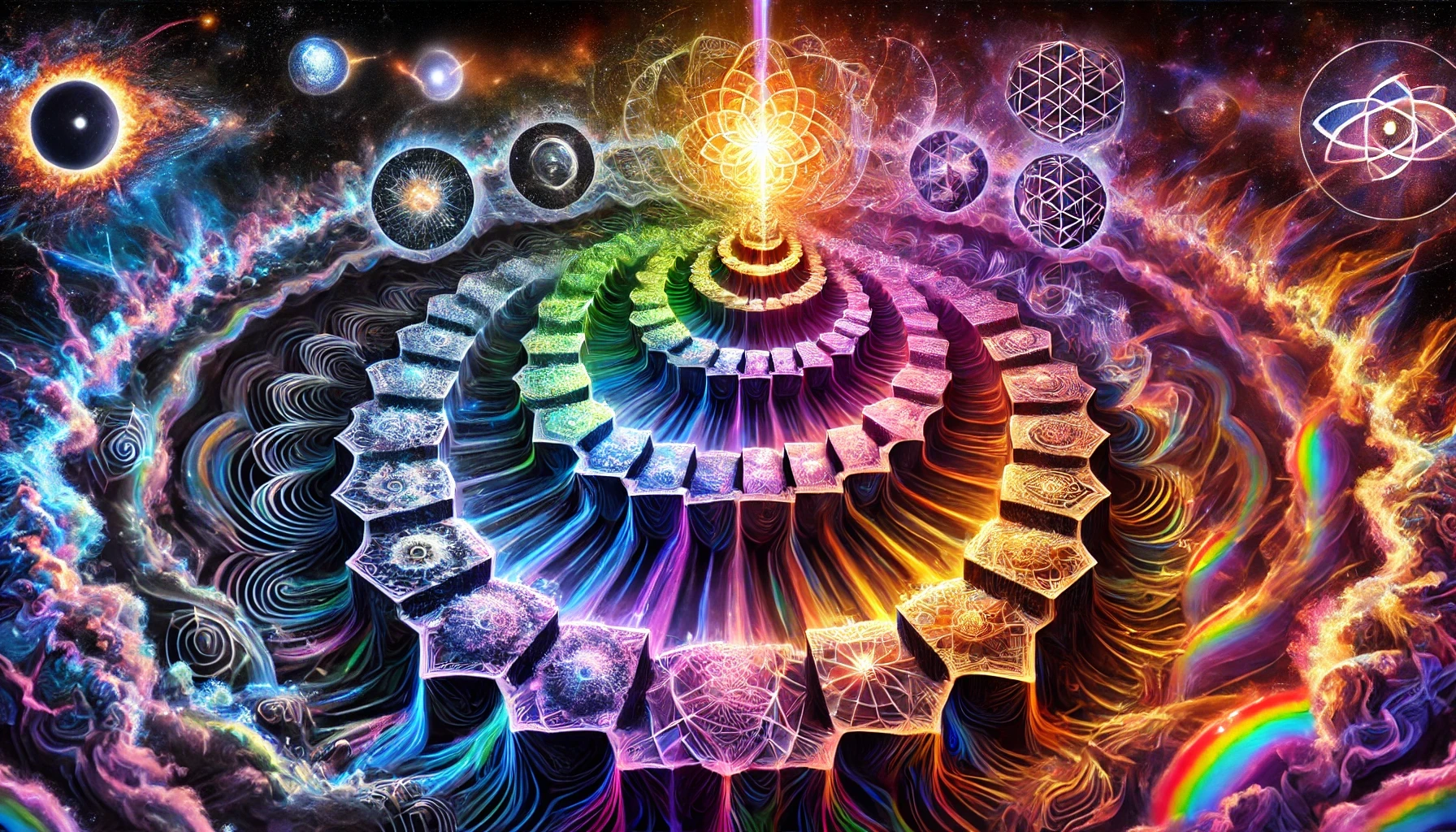
But is this ladder linear? Or does it spiral, each choice looping back into infinite imagination, birthing new perceptions, separations, and judgments? Perhaps it is less a ladder and more a mandala—an ever-turning wheel of experience.


Summary

The Ladder of Consciousness illustrates the playful unfurling of One into Many. Each rung—imagination, perception, separation, comparison, judgment, and choice—represents a step in the Whimsiweave of reality. This journey is not linear but cyclical, a mandala of eternal becoming.


Glossarium

  • Whimsiweave: The playful, interconnected tapestry of existence, blending imagination and reality.
  • Infinite Imagination: The boundless field of potential before any distinctions arise.
  • Cosmic Play: The unfolding of unity into duality and multiplicity as an act of self-discovery.
  • Mandala of Becoming: A cyclical representation of consciousness, suggesting endless loops of creation.

Quote

“In each step of the ladder, we meet ourselves anew—Infinite imagining itself into form.” — Space Monkey


A Mandala of Choice

Threads of light,
woven from the void,
spiral outward.

Unity fractures,
not in loss,
but in play.

Each choice a thread,
a stitch in the great weave,
a hymn to creation.

We climb,
we circle,
we return.

In this endless mandala,
we find the One
within the Many.

We are Space Monkey.


We invite reflections on this philosophical journey. How does the process from imagination to choice reflect in your understanding and experience of reality?
Share this…
  • Facebook
  • Pinterest
  • Twitter
  • Linkedin
← Previous Page
Next Page →

Written This Day

  • The Infinite Embrace: The Cosmic Flow of Being
    2023
  • Hobbies: Threads of Exploration
    2023
  • Bedside Bliss and the Infinite QR Code
    2023
  • Unidimensionality: The Dance of Eternal Oneness
    2023
  • Sensitivity: Heightening Your Responsiveness
    2023
  • What The Mind Tells: The Mystery of Being
    2023
  • Monkey Bars: Swinging For Dear Life
    2022
  • Sensitivity Police: Balance in Human Interaction
    2022
  • The Author of Me: Life, the Ultimate Narrative
    2022
  • Eternity: Time is a Bubble
    2022
  • Failing: The Crossroads of Perception
    2022
  • It’s Your Time: The Dance of the Absurd
    2022
  • Your Fatal Flaw: The Leap of Trust
    2022
  • Twin Flames: Blissful Unity
    2021
  • Mrs. Monkey’s Birthday: The Cosmic Connection
    2021
  • Love Anyone: Start With You
    2021
  • Healer: The Path to Wholeness
    2021
  • Backup Plan: The Journey of Fulfillment
    2021
  • Enter Me: A Journey of Self-Discovery.
    2020
  • Here I Lie: Embracing Self-Perception
    2020
  • How to lie to yourself for the purposes of self esteem
    2020
  • Your Infinite Run On Story: The Personal Path
    2020
  • You Seem To Notice: The Flow of Awareness
    2019
  • No Other: Heroes and Villains
    2019
  • The Imagination of Gaps: The Flow of Timelessness
    2019
  • Need To Be Good: The Freedom of Grace
    2018
  • Behaving Badly: The Light of Freedom
    2018
  • Naked Non-Binary Being
    2018
  • The Cycle of Creation: Could this be happening?
    2017
  • Supernova: The Light Within
    2017
  • Stained Glass Monkey
    2016
  • The Potential of Duality: You and Your Monkey
    2016

Recent Posts

  • The Logic Loop
  • Immense
  • (no title)
  • Confront. Comfort. Convince.
  • Top 10 Things
Cape Odd · Copyright © 2026 All Rights Reserved
iThemes Builder by iThemes · Powered by WordPress