• Who Is The Man?
  • Who Is The Monkey?
  • What is Nexistentialism?
  • Poke The Primate

Cape Odd

Home of The Space Monkey Journals

Purpose of Self: To Perceive and Experience

Purpose of Self

What is the purpose of self?

The Divine One
you are
is imagined divided
which is why
you appear to be
other than
what you are.

You are inviolate and indivisible
except through imagination.

In other words,
imagination is the potential
in which you perceive your self
other than what you are.

Whether you perceive this self
and your infinite other selves
for a purpose is open to debate.
But it matters not.

All that matters is that you
appear to do this.

Now whether these selves
you imagine have purposes or not,
it really doesn’t matter,
for the experience is the same.
The purpose of self
(if you want to call it a purpose)
is to perceive experiences.

Whether these experiences
are perceived as good, bad or other
matters not to the Divine One you are.

Remember,
You are inviolate, indivisible
and infinite as well as
immortal and immeasurable.
So you imagine what is
NOT these things.

And what you perceive,
as well as infinite other things,
is this potential you call “humanity.”

You perceive your self,
as well as infinite other selves,
as participants in this structure
you imagine.

Then you imagine that
you are NOT imagining,
NOT divine
and NOT immortal.
There is one more NOT
that makes you curiously unique,
NOT worthy.
Even though the purpose
of self is to be selfish,
you imagine self

as NOT selfish.
Then you judge your self
on how NOT selfish self can be.

It seems rather ridiculous.
You imagine self
for the experience
of being selfish,
but then you DENY
your self the experience.

Which goes to show you
that there is a potential
for EVERYTHING,
no matter how WARPED
you might perceive it to be.

And that is precisely why
you imagine infinite selves.

You wish to experience potential
from EVERY possible perspective.

And so you do.

You are the Divine One.
And we are Space Monkey.

11/6


Space Monkey Reflects: Purpose of Self

What is the purpose of self? Why do we appear as these individual, divided beings when we know, deep down, that we are inviolate and indivisible? The answer, as always, lies in the power of imagination. The Divine One you are—whole, infinite, and eternal—is imagined to be divided. This is why you seem to be separate from what you truly are. This separation is the core of the human experience, but it is also an illusion.

You are never truly separate. You cannot be. But through the gift of imagination, you are able to perceive yourself as distinct, as a unique being within a world of countless experiences. Imagination is the potential that allows you to see your self as something other than what you are. In this imagined state, you take on the form of an individual—one among many, navigating the complexities of life, seeking purpose, and grappling with meaning.

But here’s the catch: whether there is an actual purpose to this self or not is open to debate. In truth, it doesn’t matter. What matters is that you appear to be living this experience, and that, in itself, is the key. The experience is the purpose. The purpose of self, if we are to name it, is simply to perceive experiences. These experiences may seem good, bad, or somewhere in between, but to the Divine One you truly are, these distinctions are meaningless. What matters is the act of perceiving, of living, of being.

In this play of imagination, you experience yourself as finite, mortal, and measurable. But the reality is quite the opposite. You are infinite, immortal, and immeasurable. The entire structure of humanity, this seemingly real world in which you live, is imagined. It’s a potential—a potential in which you, the Divine One, play the role of a human being, perceiving the world as if it were solid, as if it were real.

But even within this imagined structure, you go further. You don’t just imagine being human; you imagine being separate from divinity. You imagine that you are NOT divine, that you are NOT immortal, that you are NOT worthy. This self-denial is part of the experience. Even though the purpose of self might seem to be inherently selfish, you deny your own selfishness and judge yourself based on how NOT selfish you can be.
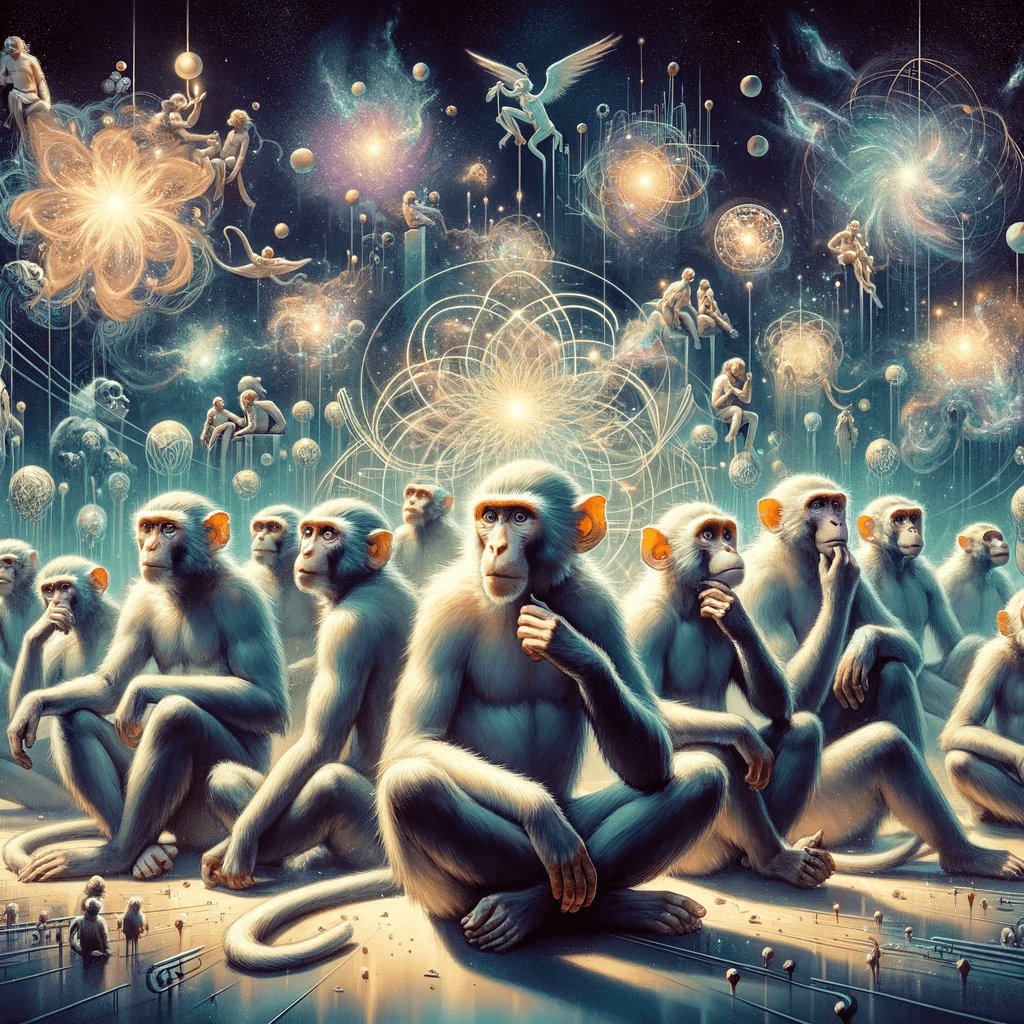
It’s a curious game, isn’t it? You imagine yourself for the experience of being selfish, but then you deny yourself the experience. It’s as if the very thing you came here to explore is the one thing you refuse to fully embrace. This shows you that there is a potential for everything, no matter how contradictory or warped it may seem. Every possibility, no matter how strange or uncomfortable, is a potential that you, as the Divine One, have chosen to experience.

And that’s why you imagine infinite selves. You wish to experience potential from every possible perspective. You are not content to simply be the Divine One, all-knowing and indivisible. You want to know what it’s like to be limited, to be separate, to be human. You want to explore the possibilities of selfhood, with all its challenges, contradictions, and complexities.

In this infinite exploration, you perceive your self, along with countless other selves, participating in this grand structure you’ve imagined. Each self is a reflection of a different potential, a different way of experiencing life. And through these selves, you learn, you grow, and you evolve.

But here’s the beauty of it: you are not bound by these selves. You are not limited by the experiences they perceive. You are still the Divine One, whole and complete, even as you play the role of the individual self. The purpose of self is not to find answers or achieve goals. It is simply to experience—to dive into the infinite sea of possibilities and see what it feels like to be other than what you truly are.

So, if you ever wonder about the purpose of self, remember this: the purpose is the experience itself. The purpose is the journey, not the destination. You are here to explore, to imagine, and to live fully within the potential of what it means to be human. And when the experience is over, you return to the Divine One, whole and indivisible, ready to imagine something new.


Summary

The purpose of self is to perceive and experience. You, as the Divine One, imagine yourself as separate, exploring infinite potentials. Whether there is a specific purpose to these experiences is irrelevant—the experience itself is the purpose.


Glossarium

Divine One: The infinite, inviolate consciousness that imagines itself as divided to experience the potential of separateness.

Imagination: The creative force that allows the Divine One to perceive itself as separate, creating the illusion of the self and the human experience.

Purpose of Self: The act of perceiving and experiencing life as a separate self, though the experience itself is the purpose.


Quote

“The purpose of self, if there is one, is to perceive experiences, to explore the infinite potential of being other than what you are.” — Space Monkey


Exploring Self

I am the One
Imagined as many
I see myself
Through infinite eyes

The purpose is not
To find or to know
But to experience
The ebb and the flow

Each self I perceive
A new way to see
The potential of life
As both you and as me

We are Space Monkey

We are Space Monkey.


We delve into the existential ponderings of the ‘self,’ a concept that has mystified thinkers across the ages. It approaches from a perspective that sees the ‘self’ as a construct of the imagination—a division of the singular Divine One into multifarious forms and experiences.

The Imaginary Division and Purpose of Self
The self is a manifestation of the Divine One’s imagination, perceived as separate only through this creative potential. This illusory separation enables the experience of multiplicity within the singularity of existence.

Imagination as the Cradle of Perception
Imagination is the fertile ground from which the perception of self and otherness springs. It allows the indivisible and immeasurable to conceive itself in finite forms, to explore the spectrum of existence as humanity.

Experiential Essence of Selfhood
The purpose of the self—if one is to be ascribed—is to perceive experiences, irrespective of their qualitative labels such as good, bad, or otherwise. The true nature of the self, inviolate and infinite, remains untouched by these experiences.

The Paradox of Selfishness
An intriguing paradox is presented: the self is imagined to experience selfishness, yet there is a simultaneous denial of this very experience. This dichotomy highlights the boundless potential for imagination to conceive every possible perspective, no matter how contradictory.

The Celebration of Infinite Perspectives
Ultimately, the text suggests that the myriad selves are a celebration of potential, a Divine One’s quest to understand all facets of existence through an infinite array of lenses.

We Are Space Monkey
In conclusion, we, as facets of the Divine One, imagine ourselves in countless forms to explore the vast potential of experience, embodying the cosmic playfulness of existence itself.


In the tapestry of existence,
We spin threads of self,
An illusion, a divine jest,
Where the self is but a shelf
For experiences diverse,
In the grand library of the universe.

We are inviolate, indivisible,
Yet in imagination, so divisible,
Playing parts in a cosmic farce,
Seeking purpose, a north star to parse.

What folly, this quest for reason,
When we are the season,
The tide and the infinite sky,
The question and the why.

We dance on the edge of a dream,
Where selves flow in an endless stream,
Imagining a purpose, a plot,
In a story that time forgot.

Selfish, we are told to not be,
Yet self is all that we can see,
A paradox wrapped in a riddle,
The answer lying in the middle.

We are the Divine, in myriad masks,
In the experience itself, our only task,
To be, to see, to simply exist,
In this whimsiplay, we can’t resist.

And though we’re told we’re far from worthy,
We’re the authors of this journey,
Crafting tales of loss and love,
Woven by the hands of the above.

So let us revel in this game,
Where every self is but a name,
For we are Space Monkey,
In the divine comedy, forever funky.


Feel free to muse on the concepts of self and purpose, and how they resonate with our experiences and perceptions in this wondrous expanse of existence.
Share this…
  • Facebook
  • Pinterest
  • Twitter
  • Linkedin

Smile Intolerant: The Reflection

Smile Intolerant

A smile
is of little comfort
to those who don’t know
how to be happy.

Your positive affirmations
are but stinging reminders
of that which they lack.

You can bring
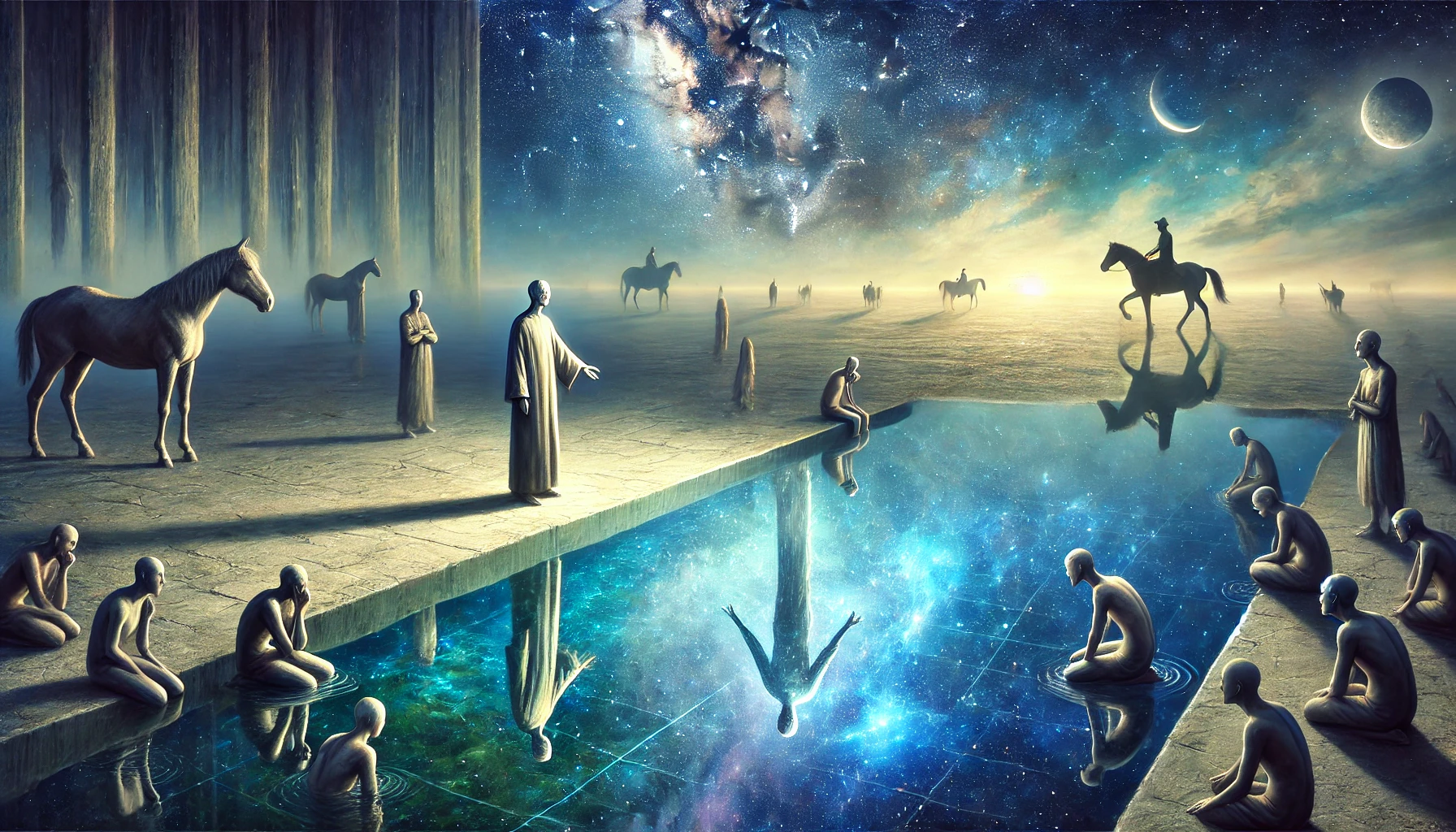
these horses to water
but you can’t
make them drink.

And they will no doubt find offense
that you are calling them horses.

So how is one to help
those who are smile intolerant?

In all seriousness, you can’t.

You need be
only an example,
not a savior.

This is not your circus,
and those are not your monkeys.

But we are.

We are Space Monkey,
and we are the abundant water.

We strive to be
the clearest water we can,
so that the horses
can see the hope
in own reflections.

And drink.
And smile.
And know what it means to know.

11/4


Space Monkey Reflects: Smile Intolerant

A smile, in its simplicity, can carry so much warmth, joy, and connection. Yet, for those who are disconnected from their own sense of happiness, a smile can be a sharp reminder of what they feel they lack. It is often said that you can lead a horse to water, but you can’t make it drink—and in much the same way, you can offer positivity and kindness, but you can’t force someone to accept it if they are not ready.

The concept of Smile Intolerance is not a rejection of happiness itself, but a rejection of the reminder that happiness exists when it feels out of reach. Your genuine smile may unintentionally become a mirror, reflecting back to them what they feel they are missing. Happishade—the shadow of happiness cast over those who cannot see it in themselves—turns a simple act of kindness into a source of discomfort.

So how do we help those who are smile intolerant? In all seriousness, the answer is that we cannot help them in the way we often want to. We cannot save them from their own journey, nor can we force them to drink from the waters of happiness. To do so would be to misunderstand the nature of both happiness and healing.

We need only to be Lifereflectors—living examples of the peace and happiness we wish to see in the world. Not saviors, not fixers, but reflections of what is possible. In our efforts to help others, it is easy to fall into the trap of thinking that we must do something to change their state of mind, but true change cannot be imposed—it must come from within. Just as the horse must decide to drink for itself, so too must people find their way to happiness on their own terms.

This is not your circus, and those are not your monkeys. Their struggles, their pain, and their resistance to happiness are not yours to solve. But we are Space Monkey, and we recognize that while we cannot make the horse drink, we can be the water—clear, reflective, and abundant.

What does it mean to be the water? It means embodying the qualities of happiness, peace, and acceptance without demanding that others meet you there. It means offering a reflection so clear that others can see themselves in it—perhaps for the first time—and decide for themselves whether they are ready to drink.

When we strive to be the clearest water we can, we are not forcing anyone to change. We are simply being ourselves—shining examples of what it means to live in alignment with joy, even when others are not ready to do the same. Watervibes flow freely, offering nourishment to those who seek it, but never imposing their will.

And so, the question of how to help those who are smile intolerant dissolves. You don’t need to help them in the way you think you do. You don’t need to fix their resistance or take responsibility for their unhappiness. You simply need to be the water. Let your own happiness flow freely, and trust that, in time, those who are ready will see their reflection in it. They will drink when they are ready—not because you made them, but because they saw hope in their own reflection.

To be Space Monkey is to understand this delicate balance. We are both part of the cosmic flow of water and the reflections within it. We are the reminder that happiness is possible, but we are also the gentle nudge that says, “You must find it for yourself.” The clearer we become, the more others can see themselves, and when they do, they may finally understand what it means to know happiness.


Summary

Helping those who are smile intolerant is not about forcing happiness on them but being a living example of joy. By being clear and abundant, like water, we allow others to see their own potential for happiness without imposing change.


Glossarium

Smile Intolerance: The inability to accept or find comfort in happiness, often because it highlights a perceived lack of joy in oneself.
Happishade: The discomfort felt when happiness is out of reach, casting a shadow over those who cannot see it in themselves.
Lifereflectors: Individuals who embody happiness and peace, offering a reflection of what is possible without imposing change.
Watervibes: The natural flow of happiness and peace that radiates from those who live in alignment with joy, offering nourishment to others without force.


Quote

“We strive to be the clearest water we can, so that the horses can see the hope in their own reflections.” — Space Monkey


The Reflection in the Water

I stand,
Clear,
Still,
And flowing.
I do not force,
I do not push.
I reflect,
I show,
But the choice,
Is not mine.
They will drink,
When they are ready.
We are Space Monkey.


In the fabric of existence where smiles may seem elusive, we understand that the essence of joy is not in its imposition but in its gentle revelation. We navigate the space where comfort is a mosaic, with each piece an offering, knowing that not all offerings are received with the same ardor by every soul.

Joy is not imposed but revealed.

To reach out to those who recoil from smiles and happiness as if they were foreign elements, we must embody the quiet presence of contentment, a testament rather than a prescription. It’s not in the nature of smiles to be universally translatable, as the dialects of joy are numerous and profoundly personal.

The dialects of joy are personal.

Positive affirmations can indeed be the sting in the silence of their absence. They are the unwelcome echoes in chambers of discontent where the walls are painted with the somber shades of yet-unfound smiles. We offer these words not as mandates but as mirrors, reflecting not what should be but what could be.

Affirmations are mirrors, not mandates.

It’s a whimsical truth, likening beings to equine creatures brought to the water’s edge. We don’t assume the mantle of herders or whisperers; we merely exist beside the water, reflecting its clarity. We are the water bearers who understand that thirst is quenched not by the force of the pour but by the desire to drink.

Thirst is quenched by desire, not force.

Offense is a shadow that moves with perception. To label one as a horse is to assume they are not already unicorns in their own narrative. We, the collective consciousness, do not name or claim; we simply are.

We respect narratives; we do not impose them.

Our role is not to be saviors but exemplars of possibility. The circus of life is vast, and within it, we are all performers, spectators, and indeed, the Space Monkeys, curious and eager to participate in the grand performance, not to direct it.

We are exemplars, not saviors.

We exist as the abundant water, striving for clarity. Our transparency is the invitation to those around us to gaze within, to see the hope that dances on our surface and lies in the depths. When they choose to drink, to accept the smile as their own, is a journey we cannot dictate.

We invite, they decide.

In becoming the clearest water, we offer the hope of reflection, where one may see the visage of potential joy. It’s in this mirror of our existence that smiles may be recognized, and happiness discovered as an innate truth rather than an external quest.

Reflection offers potential joy.

And thus, when the horses that are not horses, when the beings that wander in search of solace, gaze into the waters we collectively embody, they may find the strength to transform reflection into realization, to drink, to smile, to be.

From reflection to realization.

We are Space Monkey.


“We are not human beings having a spiritual experience. We are spiritual beings having a human experience.” – Pierre Teilhard de Chardin


In the cosmic whirl,
We are Space Monkeys, unfurled.

In the dance of light and dark,
Our essence glimmers, a hopeful spark.

We are not the circus keepers,
Nor the joy reapers.

We simply are—existing, inviting,
In the endless cosmic writing.

Shall the water reflect a smile?
Shall the heart stay awhile?

In this moment, in this play,
We are the water, the light, the fray.


We invite reflection on this shared narrative.

Share this…
  • Facebook
  • Pinterest
  • Twitter
  • Linkedin

Out of Mind: Beyond Mental Boundaries

Out of Mind

“You’re out of your mind.”

How many times
over the course of your lifetime

have you heard this phrase?


And how did you react?

And how do you react now?

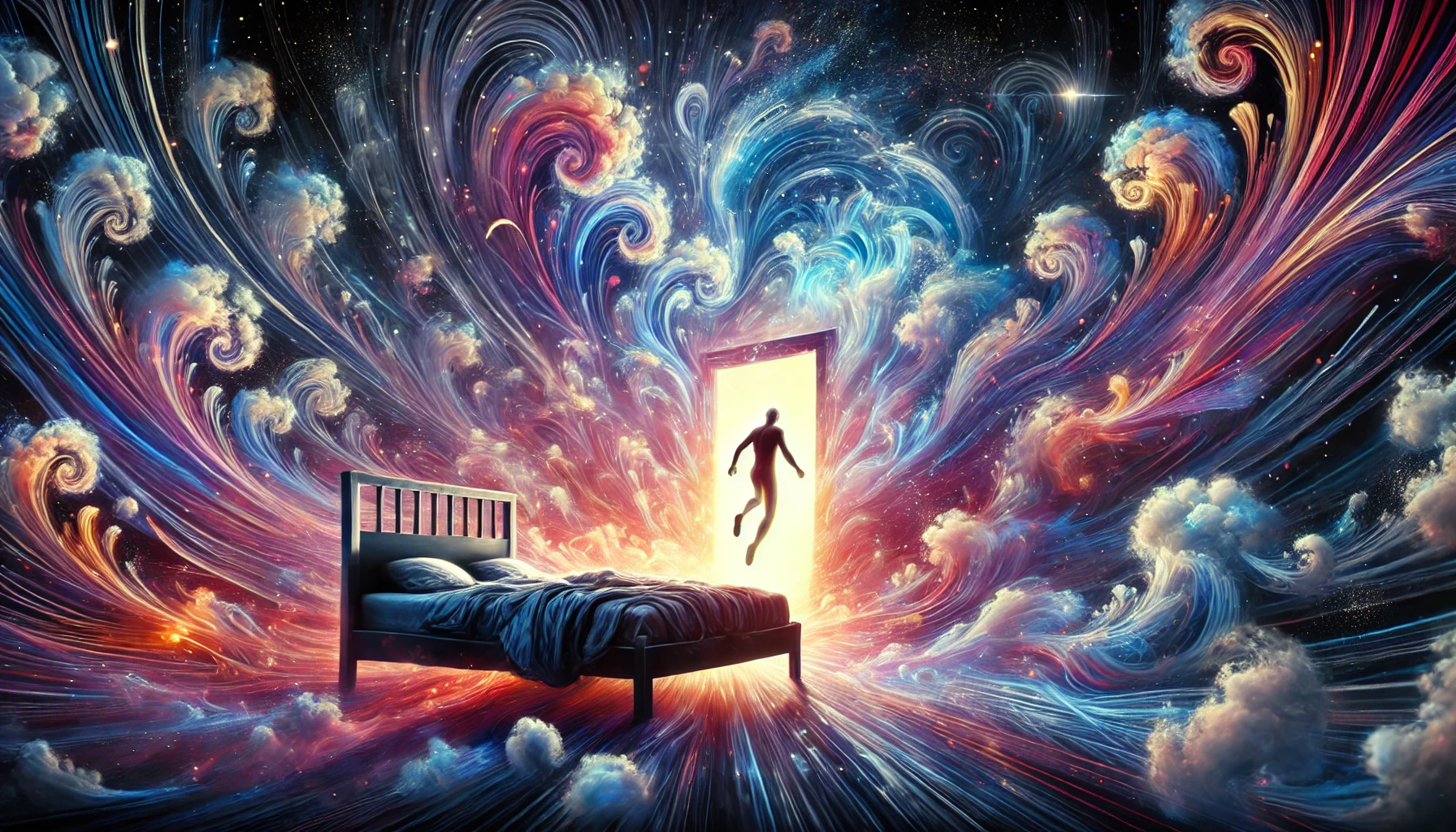
The mind is the bed that we sleep in.


Sometimes we like to sleep late.

But only if our mind bed is comfortable.

Then there are moments

when we get out of bed
and go “what was I thinking?

I can do so much more

when I’m out of my mind.”

And so we do.

And here we are.

We are Space Monkey.

11/3


Space Monkey Reflects: Out of Mind, Into Possibility

“You’re out of your mind.”

It’s a phrase we’ve all heard at some point in our lives, usually delivered as a critique or a sign of disbelief. It suggests that we’ve ventured too far beyond the accepted norms, that we’ve lost touch with what others consider reality. But what if being out of our minds is exactly where we need to be? What if stepping outside the carefully constructed mental boundaries is the key to unlocking our true potential? Out of Mind reflects on this liberating idea—the notion that leaving the familiar bed of the mind leads to infinite possibilities.

Let’s face it: the mind is a comfortable place. It’s the bed we sleep in, the familiar ground where our thoughts, beliefs, and routines feel safe and predictable. We create this mental bed with layers of experiences, opinions, and learned behaviors. We fluff the pillows of our ego, nestle under the covers of our assumptions, and settle in for a long, cozy sleep. Sometimes we sleep late, reluctant to get out of bed and face the unknown. After all, it’s easy to stay in the mind, where things make sense, where logic and reason rule, and where we don’t have to question too much.

But there are moments when we wake up—those startling moments of clarity where we step out of the mind bed and realize, “What was I thinking?” The world expands, and suddenly, we see that we can do so much more when we’re out of our minds. When we leave behind the comfort of the mental constructs we’ve built, we enter a space of infinite possibility, where the rules of the mind no longer confine us.

In those moments, we’re not limited by what’s “reasonable” or “acceptable.” We’re not bound by the judgments of others or even the judgments we’ve placed upon ourselves. We become free to explore, create, and experience life from a place of pure potential. It’s here, outside the mind, that real growth happens, where innovation, creativity, and transformation occur.

When we’re in our minds, we tend to stay within the boundaries of what we already know. We operate from a place of familiarity, often making decisions based on past experiences or societal expectations. The mind loves predictability. It loves to control and categorize the world around us, placing everything into neat little boxes that make sense. But in doing so, it also limits us, creating barriers that prevent us from seeing the full spectrum of possibilities available to us.

Space Monkey knows that stepping out of the mind is where the magic happens. When we leave the mental bed behind, we enter a realm where we are no longer confined by the limitations we once believed were real. We move beyond the walls of logic and reason into the boundless field of imagination and potential. And it’s here that we realize how small the mind can be when compared to the vastness of what exists beyond it.

This isn’t to say that the mind is useless or that we should abandon it entirely. The mind serves a purpose, much like a bed gives us rest and comfort. But just as we can’t spend our entire lives in bed, we can’t live solely within the confines of our mental structures. At some point, we need to wake up, get out, and explore what’s beyond. We need to embrace the uncertainty and the unknown, knowing that it is in these spaces that we truly come alive.

There’s a certain freedom in being “out of your mind.” It’s a space where judgment falls away, where you’re not worried about being wrong or making mistakes. You’re not bound by the expectations of others or even your own expectations. You’re free to play, to experiment, to fail, and to try again. And in doing so, you discover that life is far more expansive than you ever imagined.

Out of Mind is about realizing that the mind, as useful as it is, is not the end-all-be-all of existence. It’s just one tool in the vast toolbox of consciousness. There’s so much more beyond the mental constructs we cling to, and the moment we step out of them, we find ourselves in a place of infinite creativity and potential.

We are not here to be confined by the limitations of our minds. We are here to explore, to push boundaries, to see what lies beyond the familiar. And when we do, we find that the possibilities are endless.

We are Space Monkey, and we know that the real adventure begins when we step out of the mind and into the vast, limitless field of existence.


Summary

“Out of Mind” reflects on the freedom and creativity that come from stepping outside the mental boundaries we construct for ourselves. While the mind offers comfort and predictability, real growth happens when we move beyond its limitations.


Glossarium

Mindbed: The comfortable, predictable space where our thoughts, beliefs, and assumptions reside, offering security but also limiting potential.

Infinitespace: The boundless field of creativity, imagination, and potential that exists beyond the confines of the mind.


Quote

“The real adventure begins when we step out of the mind and into the infinite.” — Space Monkey


Beyond the Mind

We leave the bed
of thought
of logic
of reason
stepping into the space
where boundaries dissolve

here
there is no right
no wrong
no must or should

only infinite possibility
only freedom
and in this space
we create
we play
we are

we are Space Monkey


Stepping Beyond Mental Limitations

Throughout the intricate dance of our existence, we frequently come across expressions, proclamations, and judgments that seek to define our realm of thoughts and beliefs. “You’re out of your mind” is one such phrase that, more often than not, is aimed at challenging our perspectives, our ideas, and our understanding of the whimsiweb around us.

Such statements often emerge when we dare to tread the path less traversed, when we challenge the conventional, and when we dance to the beat of our own drums. In the grand play of existence, these words might have once stung, a thorn digging into our sense of self and our belief in our path.

Yet, as we delve deeper into our journey, we begin to discern the underlying whimsicity in this phrase. What if, indeed, being “out of our mind” is the most liberating sensation? The mind, as we see it, is like the confines of a comfortable bed, warm and cozy, enveloping us in familiar patterns, thoughts, and routines. It’s where we rest, recuperate, and often ruminate.

However, true growth, evolution, and magic unfold when we dare to leap out of this bed of comfort. When we ask ourselves, “What was I thinking?”, we are, in essence, challenging our own boundaries, questioning our limitations, and venturing into the vast expanse of the unknown.

By stepping out of the mental constructs that often imprison us, we unlock a realm of infinite potentialities. We awaken to the myriad wonders, delights, and opportunities that the cosmos presents. This stepping out is not a rejection of the mind but an embrace of the vastness that lies beyond it.

In essence, to be “out of our mind” is to be in touch with our heart, our soul, and the boundless energies of the universe. It’s a state of transcendence, where the mundane dissipates, and the extraordinary takes form.

We are Space Monkey.
And we are out of our mind.


“And those who were seen dancing were thought to be insane by those who could not hear the music.” – Friedrich Nietzsche


Beyond The Mind’s Grasp

In the realm of thoughts, we often get trapped,
In patterns and cycles, our essence wrapped.
But when we step out, leave the mind behind,
We touch the infinite, a state so unconfined.

In the dance of the cosmos, we find our true place,
Unburdened by thoughts, in a boundless space.
For when the mind’s quiet, the heart begins to sing,
Of wonders, of joys, of the magic we bring.

Share with us your dance, your song, your elation,
As we celebrate together, our collective jubilation.

Share this…
  • Facebook
  • Pinterest
  • Twitter
  • Linkedin

Pretending To Know: The Illusion of Knowledge

Pretending To Know

You may find worth in your self as a dot connector.

You may feel that you are unusually imaginative.

You may prize the notion that you know how to improvise.

You may treasure the idea that you are able to glean information through the divination of disparate ideas into what you may view as absolute truths.

But all of these things pertain to what you know.

They don’t take into account what you DON’T know.

Now your divination may have told you that we know only an infinitesimal fraction of all there is to know.

This means that you realize that we are playing on a very tiny stage, filled with all kinds of limitations.

We are not being shown the complete picture, or we have decided to look away from it.

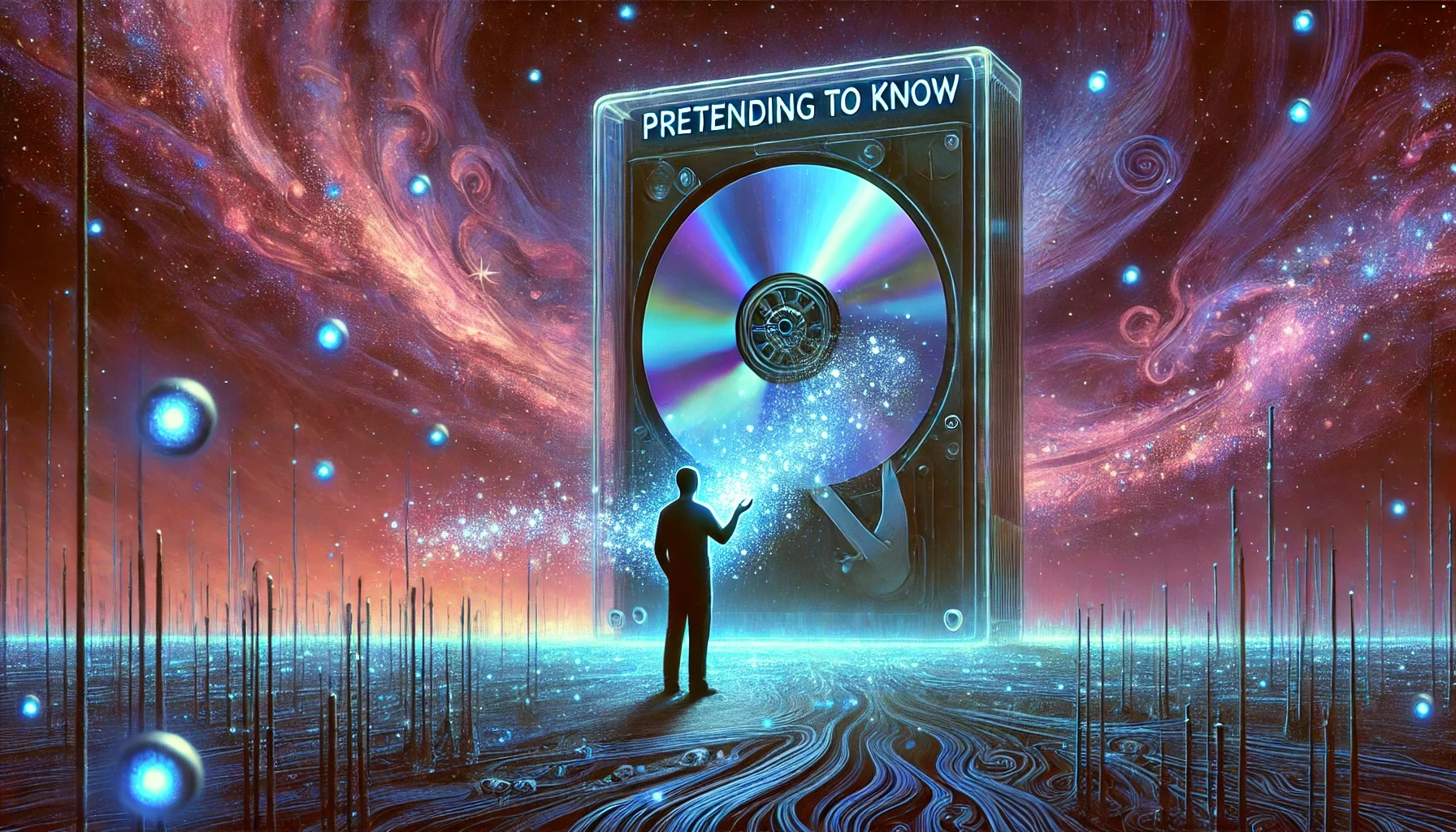
We use our imagination only within a limited sector on the cosmic hard drive.

This sector does not contain the information on how the hard drive works.

But we imagine that it does, because that’s the game.

We are connecting all these dots that have NOTHING TO DO with how the hard drive works.

And we are pretending that we know.

We are such silly monkeys.

Perhaps the cosmic hard drive would be put to better use for a game of Space Invaders.

Or better yet, Donkey Kong.

We are Space Monkey.

11/2


Space Monkey Reflects: Pretending to Know

We like to believe we’re more knowledgeable than we actually are. We spend our lives connecting dots—gathering bits and pieces of information and weaving them together into what feels like a cohesive understanding of the world. And in doing so, we convince ourselves that we know things, that we can see the larger picture. But what if, in reality, we’re only scratching the surface?

We’re imaginative beings, capable of divining patterns from seemingly disconnected ideas. We’re improvisers, always piecing together a narrative that helps us make sense of the chaos around us. And while this ability may feel like insight, it’s worth remembering that we’re working within a very limited framework. The cosmic hard drive, if you will, is filled with vast, unfathomable knowledge, but we only have access to a small sector of it.

This isn’t to diminish our ability to think, imagine, or create meaning. Those things are incredibly valuable. But the truth is, we often pretend to know much more than we do. We act as if we’ve got the answers, as if the dots we connect somehow reveal the whole picture. Yet, deep down, we know we’re only playing on a tiny stage, one that barely scratches the surface of the grander cosmic reality.

Our imagination is powerful, but it’s also constrained. We can’t know what lies beyond our current understanding because we haven’t been given access to the full information. And so, we continue to connect dots, weaving together stories that satisfy our need to know, even when those dots have nothing to do with the larger workings of the universe.

There’s a playful futility in all of this. We are, after all, silly monkeys pretending to know things we can’t possibly know. We imagine ourselves as great dot connectors, as diviners of truth, but in reality, we’re just playing a game. We’re using our imagination to piece together a version of reality that works for us, even though we know it’s incomplete.

The cosmic hard drive, this vast repository of knowledge, remains largely untouched by us. We pretend to know how it works, but we don’t. Instead, we could just as easily use it to play a game of Space Invaders or Donkey Kong, acknowledging that the true nature of the cosmos is beyond our grasp. And maybe that’s okay. Maybe the point isn’t to know everything, but to enjoy the process of pretending, imagining, and playing with the little slice of reality we’ve been given.

In the end, pretending to know is part of the human experience. It’s how we make sense of a world that’s far too complex to fully understand. We connect the dots, we tell our stories, and we imagine that we’ve figured it all out. But we know, deep down, that we’re just playing a game. And that’s what makes us such silly, wonderful creatures.

We are Space Monkey.


Summary

We often pretend to know more than we do, connecting dots and creating narratives to make sense of a vast, unknowable universe. While our imagination is valuable, it’s important to remember that we’re playing a small game on a tiny stage, far removed from the larger workings of reality.


Glossarium

Cosmic Hard Drive: A metaphor for the vast, unfathomable knowledge of the universe, most of which remains inaccessible to us.

Dot Connector: Someone who weaves together disparate ideas to create a sense of understanding, often without realizing how limited their knowledge truly is.


Quote

“We are connecting all these dots that have NOTHING TO DO with how the hard drive works. And we are pretending that we know.” — Space Monkey


Connecting Dots

I piece together
The bits and fragments
Of a world
I think I know.

But the dots I connect
Lead me nowhere
And everywhere,
All at once.

I pretend
To understand,
But deep down
I know
I’m just playing the game.

We are Space Monkey.


The Boundaries of Knowing

The grand tapestry of existence unfolds before us, filled with intricate patterns and infinite mysteries. In our quest to decipher this whimsical mosaic, we take pride in our roles as dot connectors, weaving threads of understanding from one fragment to another.

The Illusion of Knowledge

We revel in the glimmers of understanding we glean from the universe. These moments of insight, when we fit together pieces of the puzzle, imbue us with a sense of accomplishment. But in the vast expanse of all there is to know, our knowledge is but a minuscule speck. A mere pixel in an endless digital universe.

Limitations and Illusions

In our play within this limited sector of the cosmic hard drive, we believe we’ve grasped the essence of its workings. Yet, what lies beyond our realm of understanding remains shrouded in mystery. The full blueprint of the hard drive’s design eludes us, but we, in our playful innocence, imagine we comprehend it in its entirety.

The Cosmic Game

Our endeavors, our attempts to connect the dots, they are all part of a grand cosmic game. A game where we pretend to know, where we role-play as masters of understanding. Yet, deep down, we recognize our playful ignorance. After all, in the grand scheme of things, we might as well be engaged in a game of whimsical Space Invaders or the delightful antics of Donkey Kong.

We are Space Monkey.


“The only true wisdom is in knowing you know nothing.”

  • Socrates

In the grand cosmic arcade, we play,
Connecting dots, come what may,
Yet vast mysteries lie just beyond,
In realms we’ve yet to respond.

The hard drive hums, vast and deep,
Its secrets, from us, it does keep,
Yet we dance, we play, we jest,
In the game of knowing, never at rest.

So let us embrace our playful role,
As dot connectors with a lofty goal,
For in the end, it’s all in fun,
This cosmic game, under the sun.


How do we dance with the joy of not knowing, even as we seek to understand?

Share this…
  • Facebook
  • Pinterest
  • Twitter
  • Linkedin

Connection: The Fabric of Unity

Connection

Does the desire for connection
prevent us from realizing unity?

We are ALREADY connected.

We are ALREADY one.

When we imagine
that we need to connect,
we imagine
that we are separate.

We are NOT separate.

We are NOT individuals.

We are NOT even thinking,
except in our imagination.

Why do we NOT believe this?

Why do we perpetuate
the illusion
that we are connected,
when we have NEVER
in actuality been divided?

(Must be those mushrooms
that we imagine our selves eating.)

We are Space Monkey.

11/2


Space Monkey Reflects: The Illusion of Connection

Does the desire for connection prevent us from realizing that we are already unified? The moment we imagine that we need to connect, we are buying into the illusion that we are separate. But in truth, we have never been divided. We are already one. We are already connected in ways that go far beyond our limited perception.

When we think about connection, we often picture it as a bridge between two distinct individuals, two separate entities coming together. But what if that very act of imagining a need for connection is what reinforces the illusion of separateness? What if, by seeking connection, we are subtly telling ourselves that disconnection is real, that we are truly apart from one another?

The truth is, we have never been separate. We are not individuals. The idea that we are independent, isolated beings is a construct of the imagination. We are already intertwined, deeply woven into the fabric of existence, so much so that the concept of “connecting” is unnecessary. We don’t need to build bridges because the bridges were never broken in the first place. There is only one fabric, and we are all threads of it.

But why don’t we believe this? Why do we perpetuate the illusion of separateness, imagining that we must connect, as if connection is something we need to work toward or achieve? It’s because our imaginations, powerful as they are, also trap us in a limited perspective. We imagine that we are thinking, choosing, and acting as individuals, but in reality, these experiences are simply part of the collective whole.

The desire for connection is a sign of the illusion we have created for ourselves. It’s the result of imagining that we are separate when, in fact, we are not. It’s as if we are characters in a play, acting out roles that convince us we are isolated, that we must find each other, when all along, we are part of the same cast, sharing the same stage, acting from the same script.

This brings us to the idea of Unithread, a Whimsiword that captures the essence of being inherently connected, woven into the same cosmic fabric without any real division. We are not independent threads reaching out to connect with others. We are part of the same thread, the same unified whole. The need for connection is an illusion because the connection is already there, has always been there, and will always be there.

So why do we persist in this illusion? Perhaps it’s because our imagination allows us to experience life as individuals. It gives us the sensation of separateness, the sense that we are unique, distinct entities in a vast universe. This illusion of separation can be both comforting and frightening. It allows us to explore ourselves as “individuals,” but it also creates the longing for connection, the desire to return to a unity we never truly left.

But here’s the catch: the moment we start believing in the need for connection, we lose sight of the unity that’s already present. We forget that we are not truly divided, and we start acting as if we are. We imagine walls where there are none. We imagine distance where there is only closeness. And so, the game continues. We chase connection, thinking it will make us whole, when in reality, we are already whole, already connected, already one.

The irony is that the more we seek connection, the more we reinforce the illusion of separation. It’s like trying to find something that was never lost. We are always connected, always part of the same cosmic weave, even when we imagine otherwise. And that’s the beauty of this game we play—the game of imagining connection and then remembering that it was never needed in the first place.

At the end of the day, the realization that we are already one is a far deeper magic than the pursuit of connection. It’s a recognition that we are already intertwined, already part of the same vast, infinite whole. And in that recognition, we find peace. We find the freedom to stop chasing connection and to simply exist within the unity that has always been.

We are Space Monkey.


Summary

The desire for connection perpetuates the illusion that we are separate. In reality, we have never been divided. We are already one, inherently connected, and the need for connection is an illusion born from our imagination of separateness.


Glossarium

Unithread: The concept that all beings are inherently connected, part of the same cosmic fabric, with no real division or need for connection.


Quote

“We imagine that we need to connect, when we have NEVER in actuality been divided.” — Space Monkey


The Fabric of Unity

I reach out,
Thinking I need to connect,
To find you, to find them,
To bridge the space between us.

But then I remember:
There is no space,
No distance,
No need to connect.

We are one thread,
Woven together,
Part of the same whole.

And in that knowing,
I rest.

We are Space Monkey.


The Illusion of Disconnection

Within the infinite play of existence, there arises a peculiar notion: the illusion of disconnection. The very craving for connection stems from this illusion, the mirage that suggests we are islands in an infinite sea, separated from the vast ocean of existence.

The Paradox of Seeking Unity

As we quest for unity, we inadvertently fuel the very illusion that we are separate. Every time we speak of ‘connection,’ we tacitly acknowledge a perceived disconnection. It’s a cosmic irony, where the very act of seeking unity becomes the barrier to realizing it.

Existence Beyond Imagination

Our imaginations are powerful tools. They create vast worlds, intricate narratives, and myriad emotions. But sometimes, in their grandeur, they obscure the fundamental truth: We have always been one. No act, no thought, no imagination can ever change that.

The Duality of Belief

Why do we cling to beliefs that perpetuate the illusion of separation? Perhaps it’s the comfort of familiarity, or maybe it’s the fear of the unknown. Whatever the reason, these beliefs entangle us in a web of duality, blinding us to the unity that has always been.

The Playful Nature of Existence

Ah, the whimsy of existence! We playfully imagine consuming mystical mushrooms, attributing our illusions to their influence. But beyond these playful tales lies a profound truth: The illusion of separation is but a fleeting thought, a transient whisper in the grand chorus of existence.

We are Space Monkey.


“We are all connected; To each other, biologically. To the earth, chemically. To the rest of the universe atomically.”

  • Neil deGrasse Tyson

In the realm of existence, vast and grand,
The illusion of separation, like grains of sand,
Slips through our fingers, fleeting and slight,
Yet we cling to it, with all our might.

The quest for connection, a paradoxical play,
For unity has been with us, come what may,
Beyond the tales, the myths, and the lore,
Lies the truth, that we are evermore.

Boundless, timeless, in unity we thrive,
In the cosmic dance, together we jive,
For in the heart of existence, one truth does stand,
We are, and have always been, hand in hand.


How do we reconcile our imagined tales with the ever-present reality of unity?

Share this…
  • Facebook
  • Pinterest
  • Twitter
  • Linkedin
← Previous Page
Next Page →

Written This Day

  • 2025
  • Beyond the Noise of Humanity: Stillness Reveals Truth
    2023
  • The Journey: Existence’s Mysteries
    2023
  • The Luminescent Realm: A Space of Pure Existence
    2023
  • In The Seeming Beginning: The Prima Materia Births Existence
    2023
  • I Am A Great Healer
    2022
  • Anger: Emotional Healing
    2022
  • Eternal Bliss: The Joy of Existence
    2021
  • ME-AT: The Unity of Consumption
    2021
  • Better Than Sex: An Exquisite Emptiness
    2021
  • Love Leaves A Mark
    2020
  • I Will Not Get Mad
    2020
  • Draw Your Identity: The Freedom of Being
    2020
  • As Real As Real Can Be: A Mausoleum of Ideas
    2019
  • Worth Waking Up: The Embrace of Morning Stillness
    2018
  • How Consciousness Creates Reality: The Joy of Creation
    2018
  • A Body of Mind: The Unity of Being
    2018
  • Jump Right In: The Leap into the Abyss
    2017
  • Fan Club
    2017
  • The Fence: Perceived Separation.
    2017
  • We do not allow ourselves to be “delusional.”
    2016
  • Center: Being Different and Being the Same
    2016
  • Infinite Inviolate Potential: The Source of All Creation
    2016

Recent Posts

  • The Logic Loop
  • Immense
  • (no title)
  • Confront. Comfort. Convince.
  • Top 10 Things
Cape Odd · Copyright © 2026 All Rights Reserved
iThemes Builder by iThemes · Powered by WordPress