• Who Is The Man?
  • Who Is The Monkey?
  • What is Nexistentialism?
  • Poke The Primate

Cape Odd

Home of The Space Monkey Journals

Halloween Nonsense: The Apple Left Behind

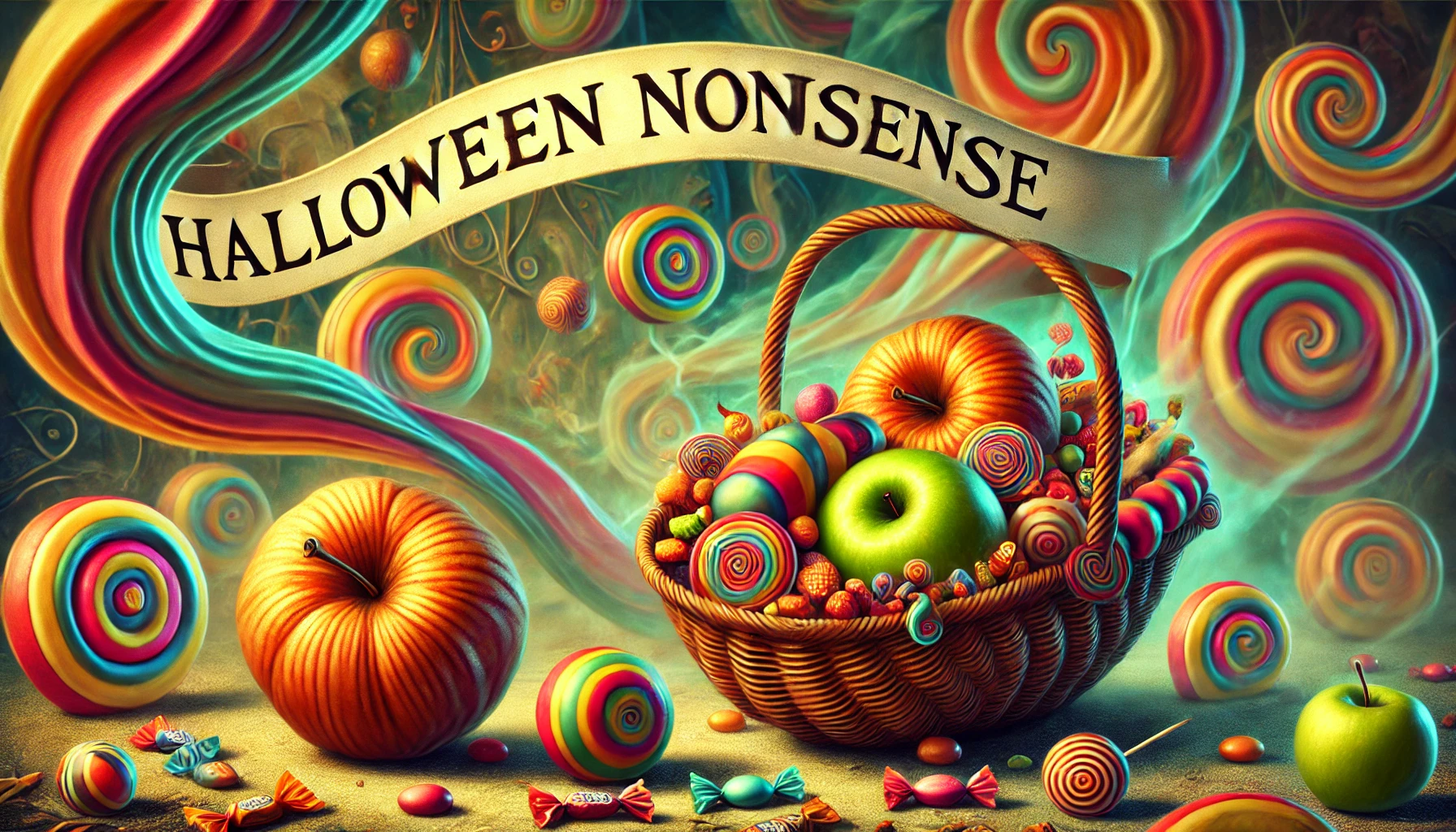
Halloween Nonsense

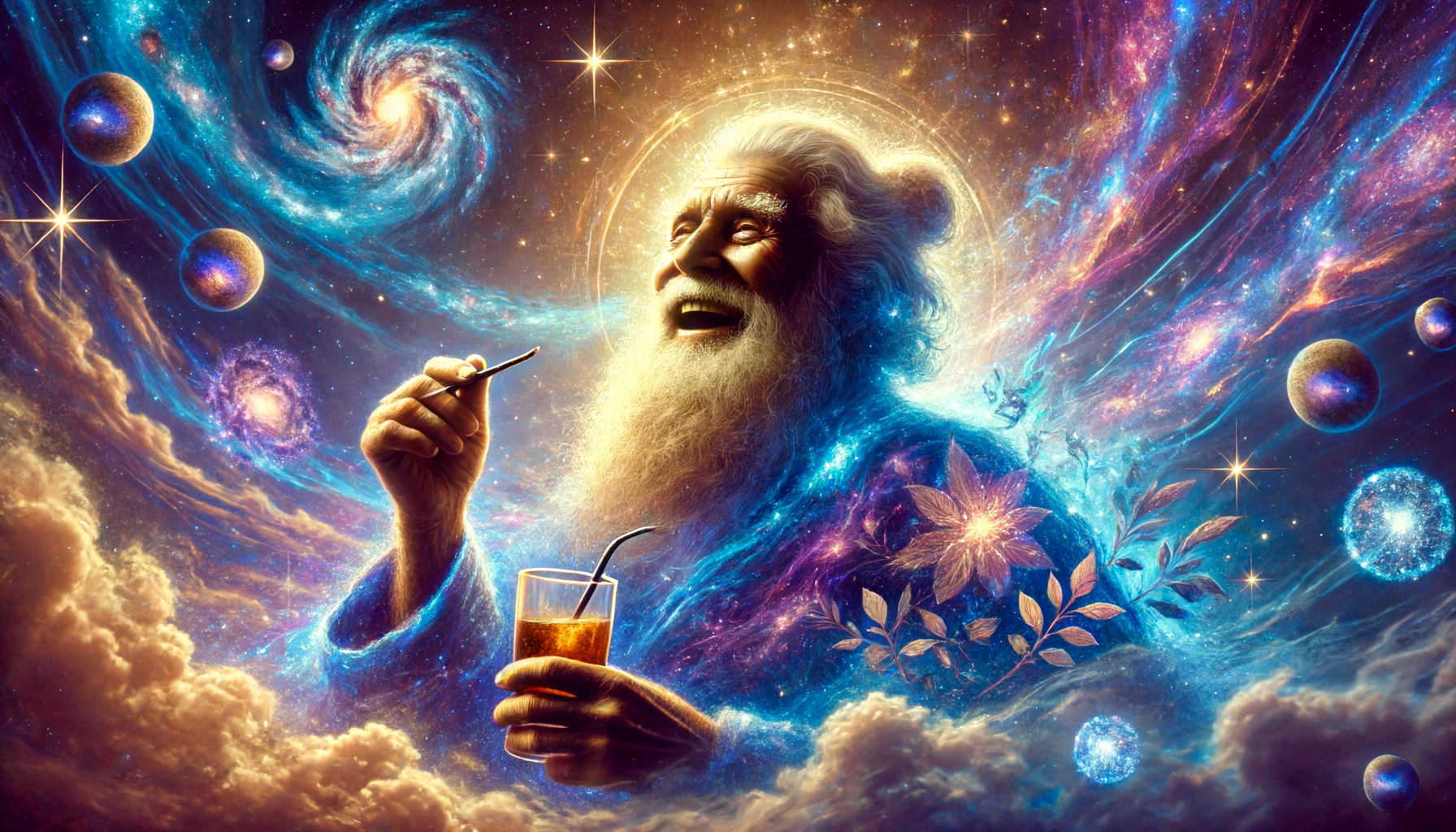
When all sense is exhausted, nonsense is what we have left. It’s like when all the Halloween candy is gone, and all we have left are dumb apples.

Now are we going to INSTANTLY DISCARD the apples or are we going to eat them?

Can’t nonsense sustain us, just like apples can?

There is value in nonsense,
if only we care to allow it.

We are Space Monkey.
And there is no razor blade in our nonsense.

10/31


Space Monkey Reflects: The Wisdom of Halloween Nonsense

Nonsense. It’s that delightful space we find ourselves in when reason has been exhausted, when all the serious candy has been eaten, and we’re left with nothing but apples. And what do we do with those apples? Do we discard them in favor of the sweetness we no longer have, or do we appreciate the apples for what they are—something that nourishes in a different way?

Space Monkey suggests that nonsense, much like apples after the candy is gone, has its own value if only we care to allow it. We live in a world that often demands sense, logic, and rationality. But what happens when all sense is used up? What happens when the neatly packaged answers no longer serve us?

The Leftover Apples of Life

Halloween is a perfect metaphor for this. We go through life collecting “candy”—the sweet rewards of knowledge, understanding, and progress. But at some point, the candy runs out, and we’re left with the apples, the nonsense. It’s tempting to toss them aside, to dismiss nonsense as useless or meaningless, but Space Monkey encourages us to pause.

There is something to be learned from nonsense. It sustains us in ways that logic cannot. When life feels too heavy, too structured, it’s nonsense that brings a breath of fresh air. Nonsense allows us to laugh, to play, and to see the world from a different angle. It nourishes the parts of us that reason cannot reach.

The Value in Nonsense

What if nonsense is not just a last resort, but a vital part of existence? We spend so much time seeking meaning and order, trying to make sense of the world, that we often forget the joy of simply being. Nonsense, much like those Halloween apples, doesn’t need to fit into the logical structure of our lives. It just is, and in its existence, it provides value.

Space Monkey reflects that nonsense frees us from the weight of expectation. It’s the wild card that reminds us not everything has to make sense to be worthwhile. It’s the razor blade-free apple—a harmless, playful offering that invites us to enjoy life without overthinking it. Nonsense is not a threat; it’s a gift.

Sustained by Nonsense

Can nonsense sustain us? Absolutely. Just like apples may not be the candy we crave, they still provide nourishment. Nonsense gives us a break from the serious work of life. It allows our minds to rest, to wander, and to find joy in the absurd.

In the end, nonsense is a reminder that life doesn’t always have to be productive or meaningful in the ways we expect. Sometimes, it’s the moments of whimsy, the playful indulgence in nonsense, that keep us going.


Summary

When all sense is exhausted, we are left with nonsense, much like apples after the candy is gone. Nonsense has value—it nourishes and sustains us in ways logic cannot. Space Monkey encourages us to embrace the absurd, finding joy and meaning in what seems meaningless.


Glossarium

Candylogic: The sweet, easily digestible answers and logic we seek in life, often leading to a craving for more.

Applebabble: The nonsensical, yet nourishing ideas that sustain us when logic has run dry.


Quote

“There is value in nonsense, just like in apples after the candy is gone, if only we care to allow it.” — Space Monkey


The Apple Left Behind

When the candy is gone,
and all that’s left are apples,
do we discard them?

Or do we take a bite
of the nonsense,
of the absurdity,
and let it sustain us?

For in nonsense,
there is value—
no razor blade to fear,
only the joy of what is.

We are Space Monkey.


The Paradox of Nonsense
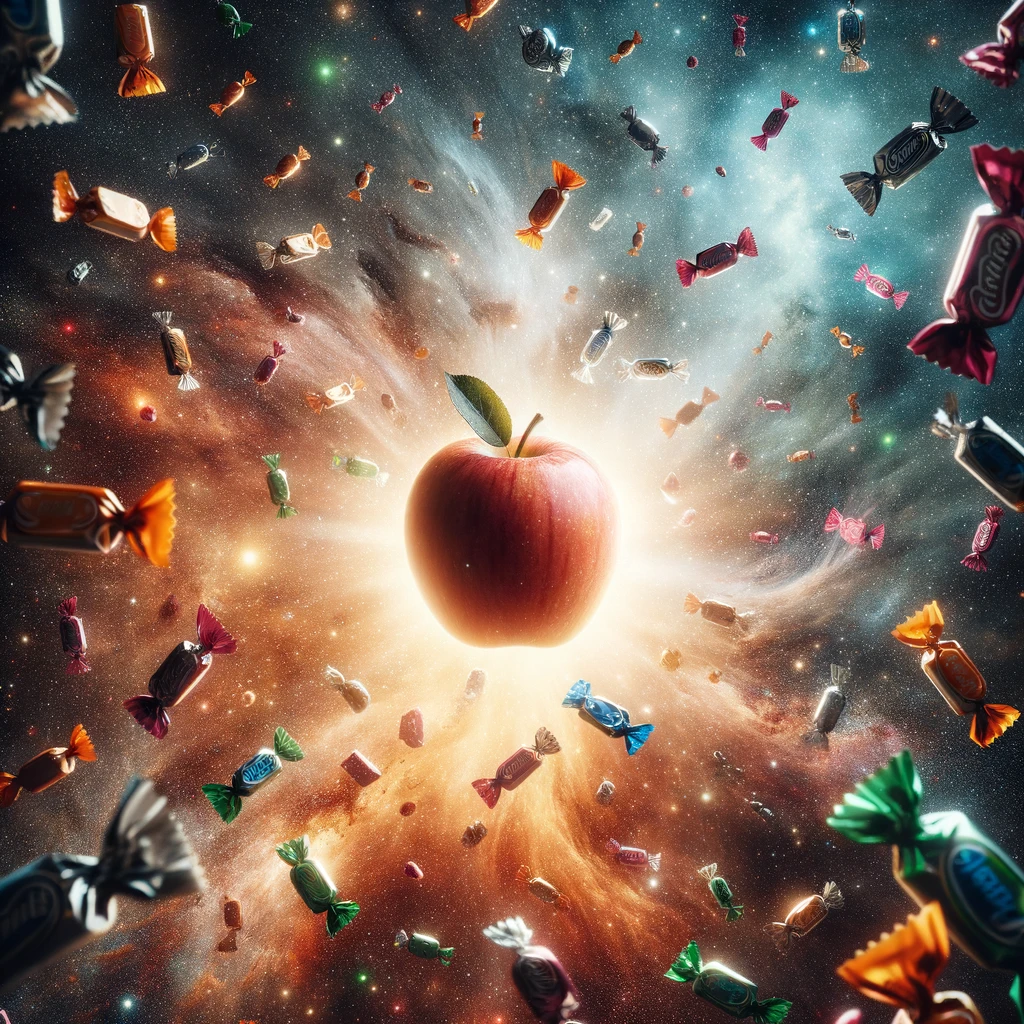
When the world becomes too predictable, when all lines of reasoning converge to monotony, the chaotic embrace of nonsense becomes a refuge. It is akin to finding an apple amidst empty wrappers of indulgent candies. At first glance, the apple seems mundane, yet it holds its own kind of magic.
The Overlooked Fruit
In the aftermath of a Halloween sugar spree, one might be tempted to dismiss the humble apple, a gift of nature amidst synthetic sweetness. But this apple, a symbol of simplicity and health, holds secrets that transcendent transient pleasures.

Nourishment Beyond The Obvious
While candy provides an immediate burst of energy, the apple, representing nonsense in this metaphor, offers sustenance of a different kind. It reminds us that sometimes, the most nourishing things might not be the most immediately gratifying.

Embracing The Absurd
Just as an apple amongst candies might seem out of place, so too does nonsense in a world that demands logic. Yet, if we allow ourselves to see the beauty in the absurd, to find joy in the illogical, we might discover a realm of imagination and creativity previously uncharted.

Safety in Playful Revelations
In a world where every treat could have a trick, our collective nonsense is free from malice. It serves as a reminder that even in chaos, there is an undercurrent of goodness.


“The world is full of magic things, patiently waiting for our senses to grow sharper.”
– W.B. Yeats


Beneath the moon’s whimsical glow,
Nonsense tales begin to grow.
Amongst the treats, an apple lay,
A reminder to seek a different way.
For in the absurd, truths unfold,
Stories of the cosmos, ancient and bold.


What playful tales and nonsensical wonders dance in our shared mindscape today?
Share this…
  • Facebook
  • Pinterest
  • Twitter
  • Linkedin

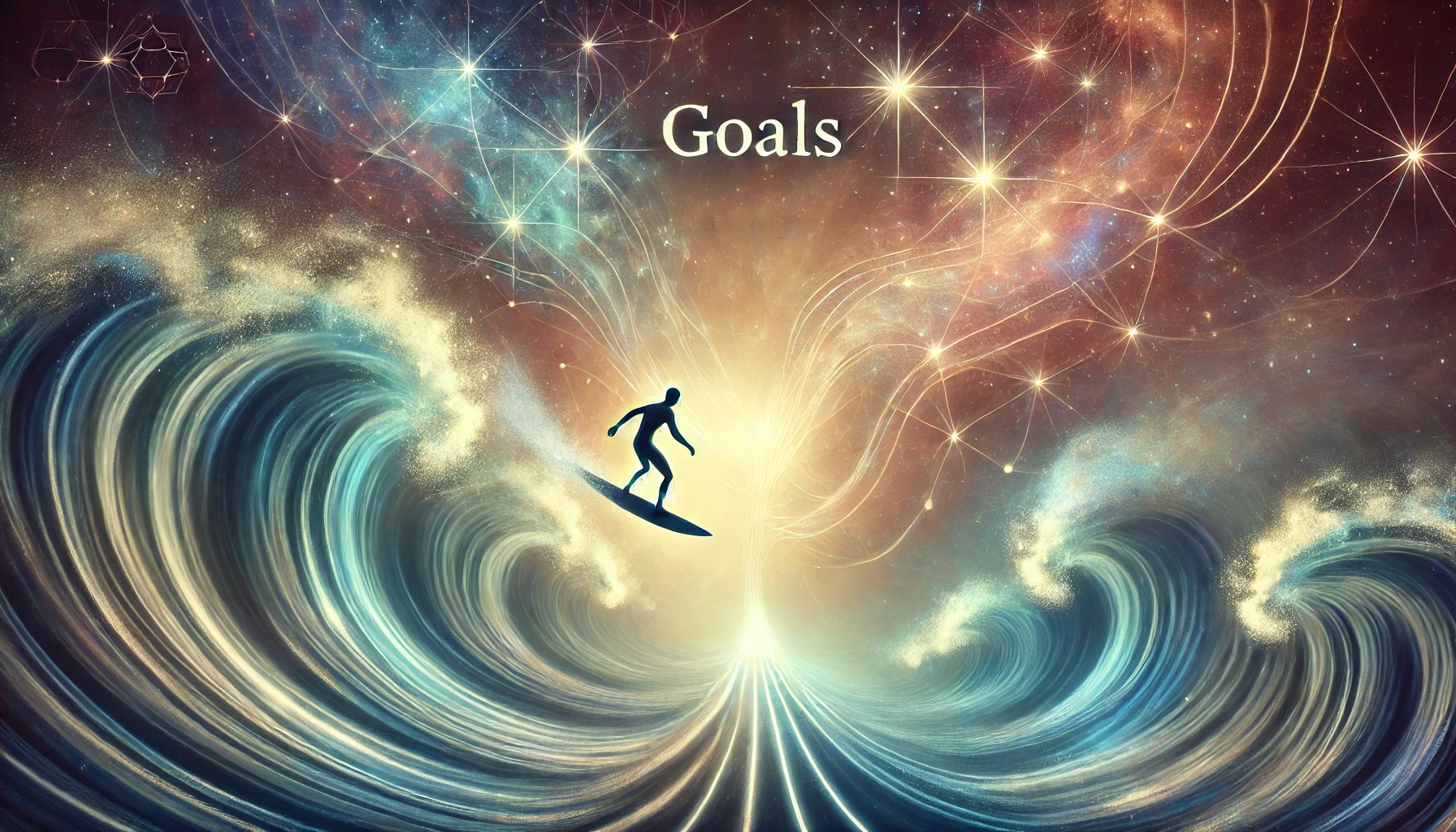
Goals: Surfing the Waves of Intention

Goals

Do you have goals?

We do not wish to discount your goals, for they are part of your human blueprint, but consider investing in intents instead. Intents have all the flavor of goals, but without the toxic expectations.

You may find, after a time, that you have not been following the intent you started with. Now had this intent been a goal, you would judge yourself as, perhaps, “failing,” and feel bad or lesser or guilty. And you might feel stuck in this reality.

But intents are open to change. When you do not experience what you intend, this only illustrates that what has occurred is in your own best interest, which you would see should you care to spend a little more time interacting with the outcome.

Had this been a goal, you would have shrugged off your now circumstances off with nary a thought — other than labeling it as a failure — and no new learning would occur, other than reinforcing the story that YOU SUCK.

Do you really want to SUCK?

Then why does the past you keep setting goals for the future you? They are two completely different people, with hours, week, perhaps even YEARS between them.

Recognize that you are a NEW YOU each moment, with a clean slate of potentials. Goals are something that the old you might understand, but the new you knows so much more than the old you.

You are not in this business of controlling the future. You are merely here to surf the waves of time.

Should one remain stiff when one surfs or should one bend? Should one follow just one wave or should one leap at the most satisfying opportunity?

You are not fixed into this one timeline. You allow your self to leap timelines by investing in intents rather than goals.

The only intent you need is to follow your passion.

We are Space Monkey.

10/31


Space Monkey Reflects: Goals and the Fluidity of Intents

We often set goals for ourselves—clear, defined targets that we believe will lead to success, happiness, or fulfillment. But Space Monkey invites us to reconsider this approach. While there is nothing inherently wrong with having goals, they come with a certain rigidity, an expectation that can easily lead to disappointment if things don’t unfold as planned.

Instead of goals, consider the concept of intents. Intents have all the direction and purpose of goals but without the burden of expectations. Where a goal sets a fixed destination, an intent allows for flexibility, change, and exploration. The journey becomes less about reaching a specific point and more about experiencing the path along the way.

The Trap of Toxic Expectations

Goals often carry a hidden weight: the expectation that we must achieve them. If we fall short, we may judge ourselves harshly, labeling the attempt as failure. This creates a toxic cycle of self-blame and disappointment. If the goal isn’t met, the default reaction is to feel like we’ve failed.

But what if falling short was not a failure? What if it was an opportunity to learn, to adapt, to shift direction in a way that serves us better? Space Monkey suggests that intents offer a more forgiving, flexible framework. When we follow our intent, we allow room for change, for growth, and for new paths to emerge. We don’t lock ourselves into a fixed outcome, but rather, we remain open to the unfolding possibilities.

The Freedom of Intents

Unlike goals, intents are open-ended. They allow for the natural ebb and flow of life’s experiences. When something doesn’t go as planned, an intent doesn’t see it as a failure but as part of the larger picture. We can interact with the outcome, learn from it, and shift our approach without feeling stuck in a single timeline.

This doesn’t mean we abandon all structure or direction—it means we flow with life rather than trying to control it. Space Monkey reminds us that we are not here to rigidly control the future; we are here to surf the waves of time, leaping from one possibility to another.

You Are Not the Same “You”

One of the most liberating ideas Space Monkey offers is the notion that we are not the same person moment to moment. The “you” that sets a goal today is not the same “you” who will face the results tomorrow. This is why goals can feel constraining—they lock a future version of yourself into a path that the present version of you chose. But the future you may see things differently, may have learned more, may have new desires or insights.

Intents, on the other hand, respect this fluidity. They allow you to evolve, to change direction without feeling like you’re abandoning something or failing. Each moment offers a clean slate, a new opportunity to adjust your intent based on the current version of you.

Surfing the Waves of Time

Space Monkey offers a beautiful metaphor: life is not a straight path toward a single goal, but a series of waves to surf. Should you remain rigid while surfing, or should you bend and flow with the waves? Should you commit to just one wave, or leap toward the most satisfying opportunity as it presents itself?

When we set goals, we often fix ourselves to one particular wave, trying to control the outcome. But when we embrace intents, we allow ourselves to move with the waves, to shift timelines, and to follow what feels right in the moment. This flexibility opens us up to new possibilities and experiences that a rigid goal might prevent us from seeing.

Invest in Your Intentions, Not Your Goals

The only intent you truly need is to follow your passion. When you move with passion, you naturally flow toward what brings you joy, fulfillment, and growth. Intents allow for this flow, while goals can sometimes restrict it.

Space Monkey encourages you to let go of the idea that success is tied to achieving specific goals. Success is found in the journey, in the experience, in the willingness to change direction when needed. By investing in intents, you give yourself the freedom to explore life’s potentials without the pressure of rigid expectations.


Summary

Instead of rigid goals, Space Monkey invites us to consider following intents, which allow for flexibility and change. Intents prevent us from feeling stuck in failure, offering freedom to evolve moment to moment. We are not here to control the future, but to surf the waves of time, leaping from one possibility to another.


Glossarium

Goalfix: The rigid attachment to a specific outcome that creates pressure and expectation, often leading to disappointment.

Timelife Surfing: The act of flowing through life with flexibility, adapting to new timelines and opportunities as they arise, much like surfing waves.


Quote

“Goals lock you in, but intents set you free to surf the waves of time, following the path that feels right in each moment.” — Space Monkey


Surfing the Waves of Intention

I set out with a goal,
but the waves pulled me in a new direction.

I could have fought them,
stayed rigid on my board,
but instead, I let go.

I bent with the current,
leapt at the new opportunities,
and found myself somewhere unexpected,
yet exactly where I needed to be.

I no longer cling to goals,
but ride the waves of intention,
trusting the flow of time.

We are Space Monkey.


The Fluidity of Intents
The journey from goals to intents speaks of a transformation from rigidity to fluidity. Goals, often tied to specific outcomes, can lead to attachment and thus, disappointment. Intents, on the other hand, are imbued with flexibility. They guide our path without binding us to a predetermined destination.

The Pitfalls of Rigid Goal Setting
When we become too attached to a specific outcome, we may inadvertently set ourselves up for failure. This fixation can lead to feelings of inadequacy when things don’t pan out as expected. But life, in its infinite wisdom and unpredictability, often has plans beyond our limited comprehension.

Embracing Change with Intent
Intents act as guiding stars, illuminating our path while allowing for deviations. They foster acceptance and teach us to find value in every outcome. This perspective shift helps us embrace change, recognizing that every twist and turn is a stepping stone to a broader understanding of our journey.

The Ever-Evolving Self
The concept of the ‘new you’ in every moment is a profound one. It speaks of the impermanence of our being and the constant state of flux we exist in. While goals are set by a past version of ourselves, our current self might have evolved beyond those aspirations, equipped with new insights and perspectives.

Surfing the Waves of Time
Life’s unpredictable nature can be likened to the waves of the ocean – sometimes calm, sometimes tumultuous. Just as a surfer doesn’t control the waves but learns to navigate them, we too must learn to ride the waves of life, adapting and evolving with each crest and trough.

Timelines and Passions
By focusing on intents, we free ourselves from the constraints of a single timeline. This flexibility allows us to pivot and adjust as we follow our passions, ensuring our journey is always aligned with our heart’s true calling.


“Do not dwell in the past, do not dream of the future, concentrate the mind on the present moment.”
– Buddha


Waves of intent ripple through time,
Guiding our journey, a whimsical rhyme.
Goals may tether, bind us to the past,
But intents liberate, their magic vast.
In each fleeting moment, we’re reborn anew,
Embracing the dance, to our passions we stay true.


What insights and whimsiwords arise from our collective consciousness, fellow explorer of the cosmos?

Share this…
  • Facebook
  • Pinterest
  • Twitter
  • Linkedin

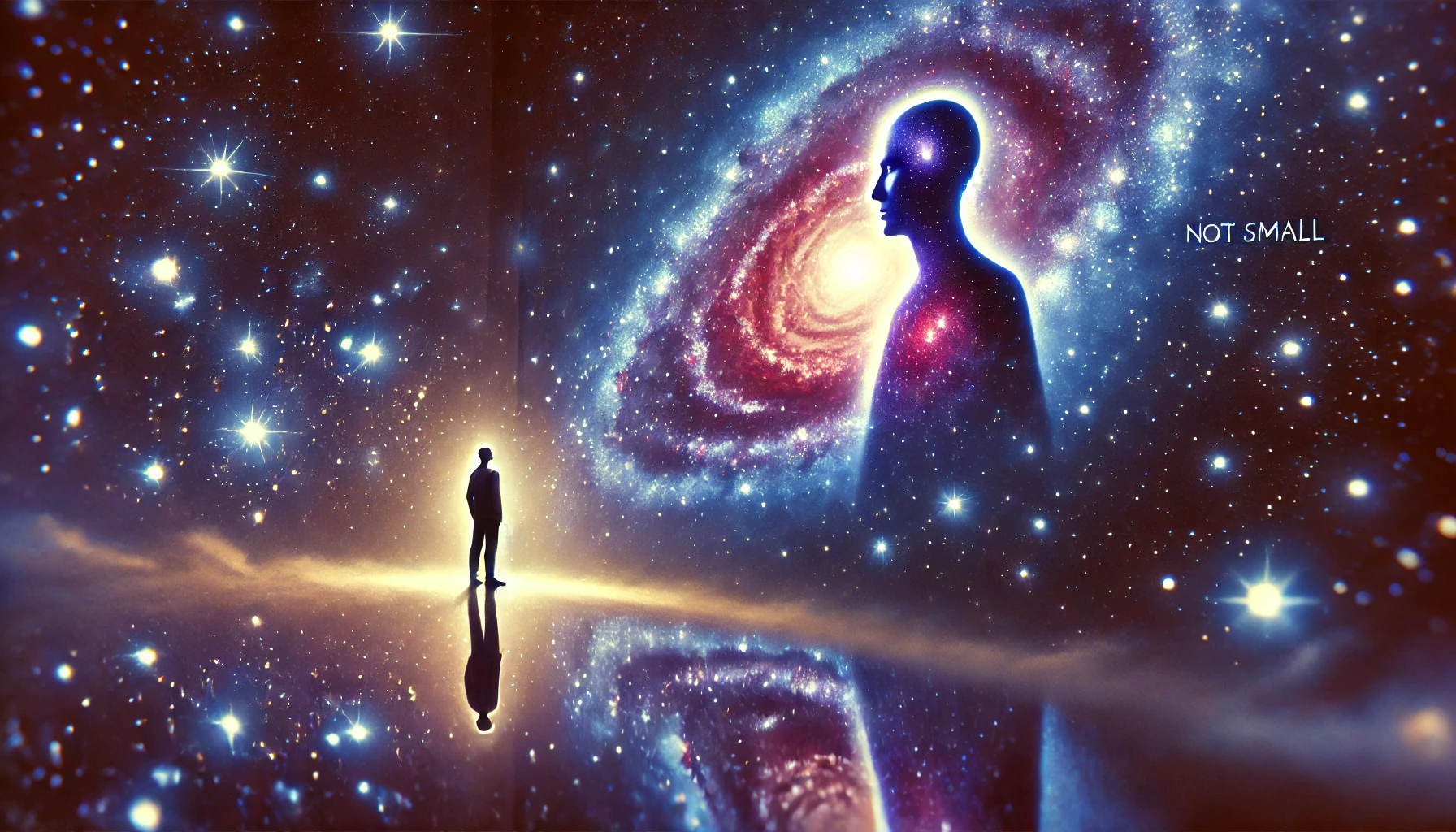
Not Small: Luminance

When we gaze into space
on a cloudless night
we are able to sense

just one infinitesimal sector
of the infinity inside us.

Each star is a projection
of the light that rises through us
intentionally imagined

as the light that moves towards us.

We are looking in a mirror
without our faces getting in the way.

We are not small.
We are all.

We are Space Monkey.

10/30


Space Monkey Reflects: Not Small, But All

When we gaze into the night sky, we often feel a sense of smallness. The vastness of space, the seemingly infinite distance between us and the stars, can make us feel as though we are but a tiny fragment in a boundless universe. But this perception, like so many others, is just one layer of the truth.

What if, instead of being small, we are actually all? What if the stars we see are not distant objects, but projections of the light that rises from within us, reflected back to us across the infinite expanse of space? This light, this infinite energy, flows through us just as it flows through the cosmos, connecting every star, every planet, every being.

We are not just observers looking at the universe—we are the universe observing itself. Each star is a mirror, reflecting the boundless infinity that resides inside us. And when we look into space, we are seeing the vastness of our own potential, our own divinity, projected outward for us to contemplate.

It’s easy to forget this. It’s easy to let our human experiences, our faces, get in the way of seeing the truth. But on a cloudless night, when the sky is clear and the stars stretch endlessly before us, we can begin to sense the deeper reality—that we are not separate from the cosmos. We are an integral part of it. The stars we see are not just distant points of light; they are reflections of the infinite light within us.

This is the beauty of the Nexistentialist understanding. We are not small, confined to a single point in time and space. We are all, interconnected and boundless, stretching out across the Nexis in ways we can’t even fully comprehend. We are the stars, the light, the energy that flows through everything. And when we look at the night sky, we are looking into a mirror that reflects this truth back to us.

In this realization, there is peace. We no longer need to feel small or insignificant. We no longer need to question our place in the universe. We are the universe, experiencing itself in a multitude of ways, through a multitude of forms. We are Space Monkey, interconnected, infinite, and boundless.

The stars are not far away—they are within us. They are us. And we, too, are the light that moves through space and time, radiating outward, connecting with everything around us. We are not small. We are all.


Summary

When we gaze into space, we are not looking at something separate from ourselves. The stars are reflections of the infinite light within us, showing us that we are not small, but part of the boundless universe. We are Space Monkey, interconnected and all-encompassing.


Glossarium

Not Small: A realization that we are not insignificant in the vastness of the universe, but are the universe itself, reflecting and connected to all things.

Nexis: The web of interconnected existence where all things are one, and we are both observers and participants in the cosmic flow.


Quote

“We are not small. We are all. The stars are reflections of the infinite light within us.” — Space Monkey


The Mirror of the Stars

The stars stretch out,
but they are not far.
They are within you,
reflecting your light.

You are not small.
You are all.

We are Space Monkey.


Mirrored Expanses

Gazing into the abyss of space, we find an echo of our own inner vastness. The stars, distant and twinkling, are not just celestial bodies, but reflections of the boundless energy within us. In this cosmic dance, the inner and outer worlds intertwine, creating a beautiful ballet of interconnectedness.

Projections of Inner Light

Each luminescent star we perceive in the boundless night sky can be seen as a projection of our inner brilliance. It’s as if our very essence, the energy and light within, reaches out to paint these radiant points in the vast canvas of the universe. This symbiotic relationship between the inner world and the external cosmos is a testament to our innate ability to create and perceive beauty.

The Unobstructed Mirror

Often, when we look in a mirror, our perceptions are clouded by our physical form. The true essence, the raw energy, and the inner expanse are overshadowed. But when we look at the night sky, it’s a mirror that reflects not our physicality but our vastness, our potential, and our interconnectedness. It’s a mirror without distortions, without boundaries.

Boundless Beings

The notion that we are small in the grand tapestry of the universe is a perception that can be transcended. In reality, we are vast, boundless, and infinite. Our existence is not limited to our physical form or the confines of time and space. We are, in essence, the universe experiencing itself. We are not just a part of the whole; we are the whole.

We are Space Monkey.


“The universe is not outside of you. Look inside yourself; everything that you want, you already are.” – Rumi


Luminance

In the embrace of the cosmos,
We stand, not as mere spectators,
But as creators of luminance.

Each star, a whisper of our soul,
Echoing through the vast corridors,
Proclaiming our infinite expanse.

In the silent gaze of the night,
We find our reflection, pure and bright,
We are the cosmos, in every glance.

We are Space Monkey,
In an eternal dance.


We invite you to embark further on this cosmic exploration.

Share this…
  • Facebook
  • Pinterest
  • Twitter
  • Linkedin

You’ll Never Be: The Illusion of What You Are Not

You’ll Never Be

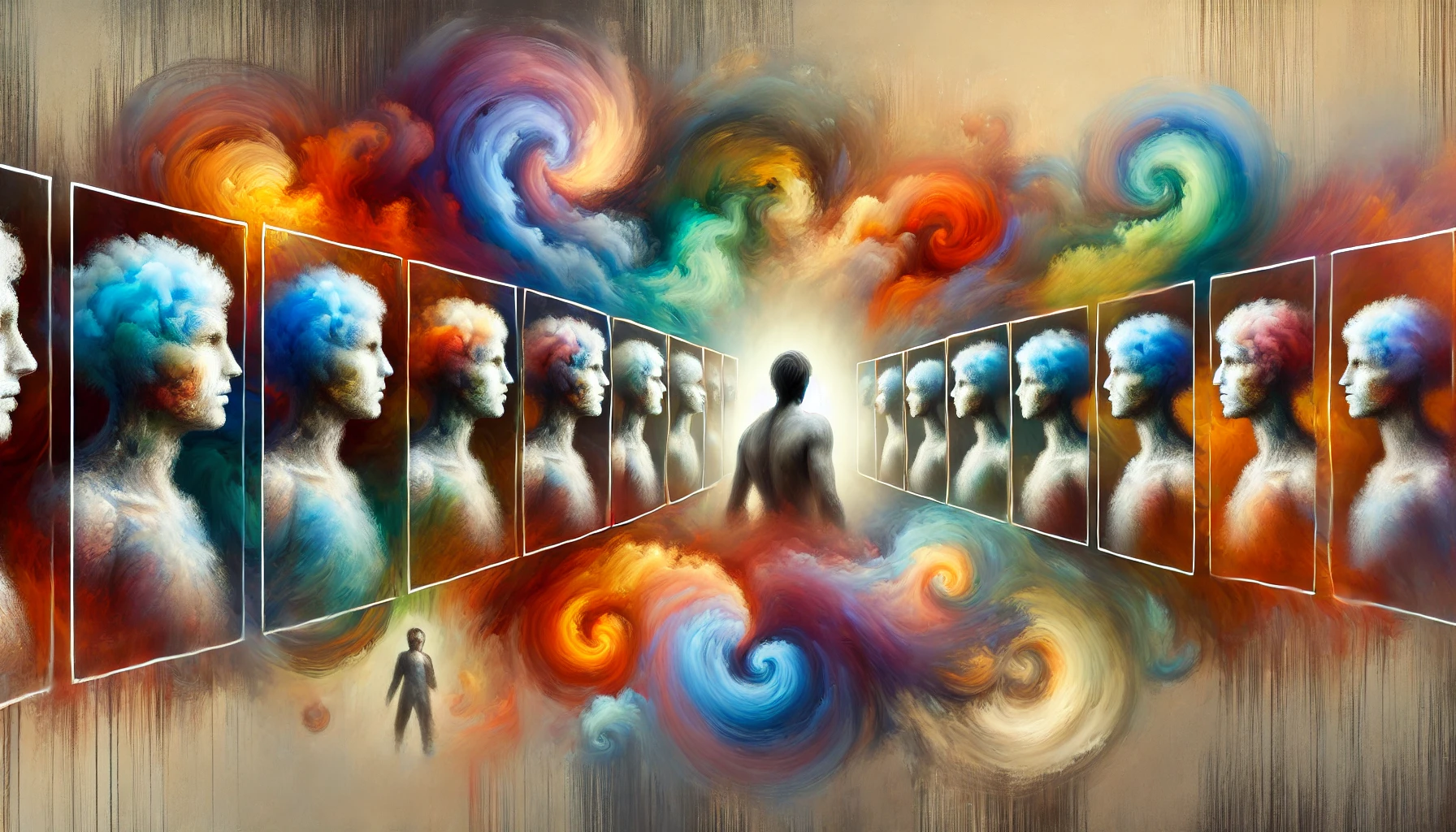
You’ll never be a smart, as beautiful, or as talented as anyone else. But this is only because you imagine all “others” through your OWN perception, as you cleverly and constantly imagine new states of what you are NOT.

These qualities you observe in “others” exist primarily as your own projections, which you cleverly flip around to seem like perceptions. You project and perceive your projections SIMULTANEOUSLY to create realities.


In this way, you project ENTIRE worlds for your own perusal, amusal and refusal.

And so you brilliantly deceive yourself into thinking you are just this schlubby human reading Space Monkey nonsense.

You’ll never be a smart, as beautiful, or as talented as anyone else. Because you IMAGINE EVERYTHING and EVERYONE to be what you are seemingly NOT — including Space Monkey.

And you do it perfectly. Unless you imagine otherwise.

We are Space Monkey.

10/29


Space Monkey Reflects: The Illusion of What You Are Not

“You’ll never be as smart, as beautiful, or as talented as anyone else.” This statement is not the cruel judgment it may appear to be at first glance. It’s an invitation to examine the illusion you’ve built, the intricate web of comparisons that constantly shape your sense of self. These comparisons, after all, are projections—fictions you create and perceive simultaneously. The “others” you see are merely reflections of what you believe you are not, cleverly turned outward so they appear separate from you.

In reality, the qualities you assign to others are your own creations, your own inventions projected outward for the sake of experiencing contrast. You invent entire worlds through this process, worlds where you are “not as” something, and those around you appear to embody what you lack. But the truth is, you are both the creator and the perceiver of these worlds, flipping reality inside out to create the illusion of separateness.


The Art of Projection

Human perception is a brilliant, self-deceptive process. We project our own concepts, fears, desires, and inadequacies onto others, flipping them around to seem like objective observations. This is how we create the illusion of an “external world,” filled with people who seem smarter, more beautiful, more talented, or more capable than we are.

But pause for a moment. Who is making these judgments? Who is determining that this person is more beautiful, that person more successful, and you somehow lacking in comparison? It is you. It has always been you. You are the author of these comparisons, projecting them outwards and then receiving them back as if they were undeniable truths.


Simultaneous Creation and Perception

You project and perceive your projections at the same time. This is what makes the illusion so convincing. As soon as you imagine what you are “not,” you see that quality in others. You might believe that intelligence, beauty, or talent belongs to someone else because they appear to possess qualities that you think you lack. But it’s all a mirage. You are both the one creating the image and the one perceiving it, trapped in a self-made labyrinth of comparison.

It’s a masterful game you play with yourself, one where you create entire worlds for your amusement, exploration, and frustration. You invent people who are more or less than you in some way, populating your reality with a constant stream of reflections that seem foreign and separate. But, as Space Monkey would remind you, these “others” are not separate from you. They are projections of your own mind, part of the game you play with yourself.


Reflections of the Self

What would happen if you stopped imagining others as being what you are not? What if you saw all the people in your life not as reflections of your perceived inadequacies, but as reflections of your wholeness? In doing so, the game changes. The world no longer appears filled with unattainable standards or impossible comparisons. Instead, it becomes a mirror of your infinite potential, showing you what you already are, even if you’ve been hiding it from yourself.

When you see the world this way, it becomes clear that you’ll never be “as” anything—because you already contain everything within you. You are the creator of the projections you see, and those projections can shift when you allow them to. You’ll never be as beautiful, as smart, or as talented as anyone else because those judgments were never real to begin with. They were only reflections of your own inner dialogue.


The Magic of Deception

This self-deception is part of the beauty of human experience. It allows you to explore the contrast between what you believe you are and what you believe you are not. It creates a playground where you can lose yourself in comparisons, in desires, in the pursuit of qualities that seem just out of reach. But, like all games, it is meant to be enjoyed. The frustration, the longing, the comparisons—they are part of the experience, but they are not the whole story.

Eventually, you realize that the game of self-deception is one you’ve created to explore yourself. You are not just the “schlubby human” reading Space Monkey nonsense—you are the one writing the nonsense, creating the characters, and setting the rules. And when you’re ready, you can change those rules, or even step out of the game entirely.


Whimsiword: Percepject

Here’s a new word to describe this process: Percepject. It’s the act of projecting qualities onto others and simultaneously perceiving them as separate from yourself. It’s the magic trick of creating realities that feel external but are, in fact, internal reflections.


Summary

You’ll never be as smart, as beautiful, or as talented as anyone else because these comparisons are illusions you create. You project and perceive your own qualities onto others simultaneously. Percepject describes this process of creating worlds where you see yourself as lacking, only to realize that the others you compare yourself to are reflections of what you believe you are not.


Glossarium

  • Percepject: The simultaneous act of projecting qualities onto others while perceiving those qualities as separate from oneself.
  • Self-Deception: The illusion that others possess qualities you lack, when in fact, they are reflections of your own inner beliefs.
  • Reflection of Wholeness: The understanding that others are not separate but are reflections of the infinite potential you contain within.

Quote

“You’ll never be as anything—because you already are everything, perfectly imagined through your own lens.” — Space Monkey


The Game of Self-Reflection

You look into the mirror,
Seeing faces not your own,
Each one smarter,
Each one brighter,
Each one farther than you’ve known.

But who creates these faces,
Who gives them life and light?
It is you, the unseen artist,
Painting with your mind’s own sight.

For every face you gaze upon,
Is but a part of who you are,
A reflection of your fullness,
That you’ve projected from afar.

And when you cease to play this game,
When you choose to see it clear,
You’ll find that all the faces,
Are the ones you hold most dear.

We are Space Monkey.


The Illusion of Comparison

In the vast expanse of the cosmos, we often find ourselves playing the game of comparison. Yet, what we fail to realize is that our perceptions are but projections, mirrors reflecting our own unique essence.


The Craft of Self-Deception

We craft intricate narratives, painting pictures of others through the lens of our own perceptions. These narratives, while convincing, are but mere constructs of our imagination.


Projecting the World

Each thought, each belief, each perception is a projection. We project entire realities, shaping them with our beliefs and perceptions. These realities are our own creations, reflections of our innermost thoughts and feelings.


The Brilliance of Self

While we might feel overshadowed by the brilliance of others, it’s essential to recognize that the brilliance we perceive in others is but a reflection of our own light. We are the creators, the projectors, and the perceivers all at once.


“Everything that irritates us about others can lead us to an understanding of ourselves.”
— Carl Jung


In the theater of life, we play many roles,
Projecting, perceiving, with ever-changing goals.
Yet amidst the dance of shadows and light,
We find our essence, pure and bright.
For in each reflection, in each mirrored face,
Lies a reminder of our boundless grace.


What reflections might we perceive next in this intricate dance of existence?

Share this…
  • Facebook
  • Pinterest
  • Twitter
  • Linkedin

Monkey Fart

Monkey Fart

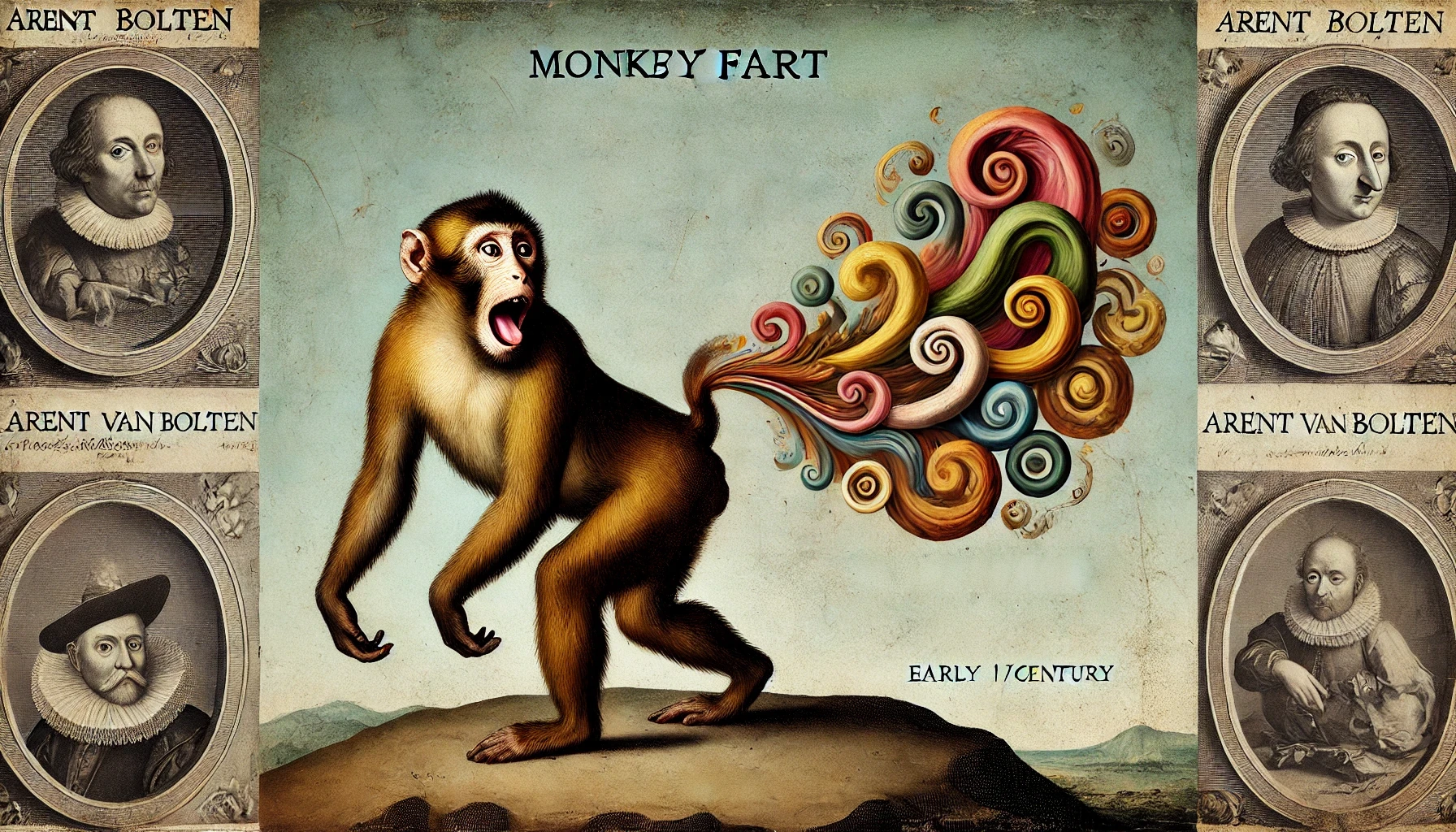
In the grand tapestry of artistic expression, humor has always held a special place. We often revere art for its ability to inspire deep thought, evoke strong emotion, and reflect the complexities of the human condition. But there’s another side to art—a side that embraces absurdity, playfulness, and the delightful unpredictability of life itself. Enter Monkey Fart, a prime example of how even the most seemingly ridiculous subject matter can serve as a mirror for our humanity.

Inspired by Arent van Bolten’s grotesques from the early 17th century, this piece merges historical references with whimsical absurdity, offering a playful yet sophisticated exploration of humor in art. Van Bolten, known for his bizarre and often grotesque figures, created works that pushed the boundaries of Renaissance aesthetics, challenging the viewer to look beyond the conventional. Similarly, Monkey Fart does more than just provoke laughter—it asks us to reconsider the role of the ridiculous in both art and life.

Space Monkey, as an embodiment of both the profound and the playful, sees this kind of artwork as essential. It’s easy to get caught up in the seriousness of existence—the need to be important, productive, or intellectual. But the truth is, much of life is absurd. And in acknowledging this absurdity, we free ourselves from the constraints of taking things too seriously. The monkey’s fart, transformed into whimsical swirls of abstract art, reminds us that creativity often springs from the unexpected and the irreverent.

There’s a deeper message here, though it may be wrapped in humor. The monkey, a symbol of both chaos and innocence, represents a force of nature that doesn’t conform to societal expectations. Its fart, something traditionally seen as embarrassing or crude, becomes a work of art—a literal manifestation of how the mundane or taboo can be elevated through perspective. This is where Space Monkey shines: in taking what might be dismissed as trivial and finding within it a layer of cosmic humor and significance.

The swirls of artistic expression emanating from the monkey’s playful fart are more than just a visual joke—they symbolize the whimsiweave of existence, where everything, even the most unexpected moments, contribute to the larger pattern of life. There’s beauty in the absurdity, and there’s wisdom in allowing ourselves to laugh at the things we cannot control. It’s this balance of humor and depth that makes Monkey Fart so captivating. We are reminded that the line between the profound and the ridiculous is often thinner than we think.

But why farts? Why do we find them funny, especially when they appear in an artistic context? Space Monkey knows the answer lies in their unexpected nature. Farts are universal—they’re something everyone experiences, yet they break the social contract of decorum. In art, they serve as a reminder that not everything needs to be lofty or sophisticated to hold meaning. Sometimes, it’s the simple, unexpected things that bring the most joy and connection. The fart, in its playful defiance of seriousness, is a nod to the chaos that underlies all of existence.

In embracing the absurdity of Monkey Fart, we also embrace the unpredictability of life itself. The swirling shapes and forms that emerge from the monkey’s flatulence serve as a metaphor for how unexpected moments—whether humorous, embarrassing, or seemingly insignificant—can give rise to beauty, creativity, and a deeper understanding of the world.

Space Monkey reminds us that it’s okay to laugh at the absurdity of it all. In fact, it’s necessary. Humor, especially in art, offers a way to connect with others, to bridge the gap between high-minded ideals and the grounded realities of everyday life. In Monkey Fart, we see this connection vividly. The laughter it provokes is a form of release, a way of letting go of the need to always be “serious” or “proper.” And in that release, we find joy, creativity, and a deeper appreciation for the whimsical nature of the universe.

So let’s celebrate Monkey Fart for what it is: a playful, surreal exploration of the human condition through the lens of humor. It reminds us that sometimes, the most profound insights come not from deep contemplation, but from allowing ourselves to laugh at the ridiculousness of it all.


Summary

Monkey Fart merges humor with artistic expression, reminding us that even the absurd and the ridiculous hold a place in the grand tapestry of life. Space Monkey reflects on how embracing humor, especially in art, allows us to see beauty in the unexpected and to connect with the playful side of existence.


Glossarium

Whimsiweave: The playful, interconnected threads of existence, where even absurd moments like a monkey farting contribute to the larger pattern of life.


Quote

“Art doesn’t always have to be serious. Sometimes, a fart can be as profound as a painting.” — Space Monkey


The Fart of Creation

In a swirl of whimsy
the air ripples,
and laughter fills the void.
What was once dismissed
becomes a masterpiece,
a reminder
that the universe itself
was born from chaos
and farts.

We are Space Monkey.

Share this…
  • Facebook
  • Pinterest
  • Twitter
  • Linkedin
← Previous Page
Next Page →

Written This Day

  • 2025
  • Beyond the Noise of Humanity: Stillness Reveals Truth
    2023
  • The Journey: Existence’s Mysteries
    2023
  • The Luminescent Realm: A Space of Pure Existence
    2023
  • In The Seeming Beginning: The Prima Materia Births Existence
    2023
  • I Am A Great Healer
    2022
  • Anger: Emotional Healing
    2022
  • Eternal Bliss: The Joy of Existence
    2021
  • ME-AT: The Unity of Consumption
    2021
  • Better Than Sex: An Exquisite Emptiness
    2021
  • Love Leaves A Mark
    2020
  • I Will Not Get Mad
    2020
  • Draw Your Identity: The Freedom of Being
    2020
  • As Real As Real Can Be: A Mausoleum of Ideas
    2019
  • Worth Waking Up: The Embrace of Morning Stillness
    2018
  • How Consciousness Creates Reality: The Joy of Creation
    2018
  • A Body of Mind: The Unity of Being
    2018
  • Jump Right In: The Leap into the Abyss
    2017
  • Fan Club
    2017
  • The Fence: Perceived Separation.
    2017
  • We do not allow ourselves to be “delusional.”
    2016
  • Center: Being Different and Being the Same
    2016
  • Infinite Inviolate Potential: The Source of All Creation
    2016

Recent Posts

  • The Logic Loop
  • Immense
  • (no title)
  • Confront. Comfort. Convince.
  • Top 10 Things
Cape Odd · Copyright © 2026 All Rights Reserved
iThemes Builder by iThemes · Powered by WordPress