• Who Is The Man?
  • Who Is The Monkey?
  • What is Nexistentialism?
  • Poke The Primate

Cape Odd

Home of The Space Monkey Journals

Statue Breaking Free: The Crumbling Pedestal

The Madness of the Statue and the Stillness of Life

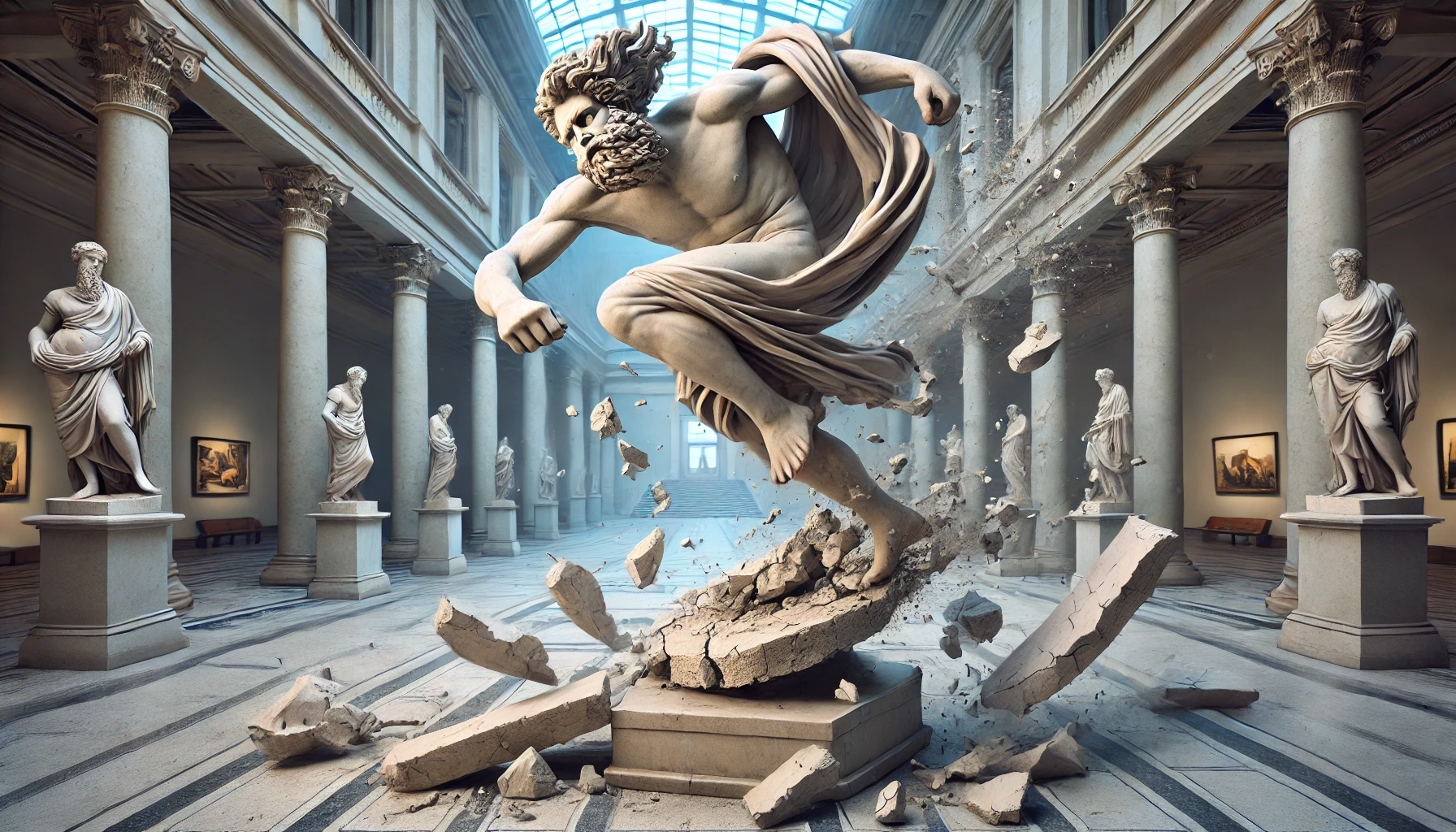
Imagine a world where the statues that have watched over us for centuries suddenly stir, their once rigid forms animated with wild energy. The marble crumbles as they leap from their pedestals, defying the frozen moment they were sculpted to represent. This is the surreal spectacle of a scene that pushes us to question the very nature of stillness, permanence, and what it means to break free.

For millennia, statues have symbolized stability, timelessness, and reverence. Whether they honor gods, leaders, or abstract ideals, statues stand in stark contrast to the ever-changing world around them. They are markers of memory, preserved in an eternal pose. But what happens when the permanence they embody is disrupted? What happens when the stillness they represent is shattered in favor of chaos?

Space Monkey sees the statue gone crazy not just as a humorous absurdity, but as a powerful metaphor for life itself. We are, in many ways, like statues. We hold ourselves in fixed positions—beliefs, roles, routines—telling ourselves that this is who we are. We become monuments to our own identities, static and unchanging, even as the world around us shifts. Yet, beneath the surface, there is always the potential for movement, for life to surge through us in unexpected ways.

When the statue breaks free, it defies the expectations imposed upon it. It no longer adheres to the form its sculptor envisioned. It is no longer bound by the pedestal that kept it in place. Instead, it becomes an agent of chaos, of possibility. In the same way, we too have the capacity to break free from the molds that have been cast for us, whether by society, by others, or by ourselves. We have the potential to defy the stillness we have come to associate with stability and embrace the madness of movement, of change.

But why does the statue go crazy? What is the force that compels it to break free? Space Monkey reflects that the answer lies in the tension between order and chaos. The statue, like all of us, exists within a structure—a carefully crafted balance of form and function. Yet, within that balance lies a latent energy, a desire to experience more than the static existence it has been given. The madness of the statue is the same madness that drives us to question our roles, to seek out new experiences, to embrace the unpredictable.

The other statues, still frozen in their silent poses, represent the parts of ourselves that remain tethered to certainty, to the safety of what is known. They stand as reminders of the ways we resist change, preferring the stability of our pedestals to the chaos of movement. But once one statue breaks free, the possibility of motion spreads like wildfire. The stillness of life is never as permanent as we think.

There is humor in this, of course. The image of a classical statue, revered for its timeless beauty and grace, suddenly flailing in wild, exaggerated motion, is inherently absurd. It forces us to confront the ridiculousness of our own pretensions to control, our belief that we can remain unaffected by the passage of time. The humor lies in the contrast between the dignity of the statue’s original purpose and the chaos it has become. And yet, there is also something liberating in that chaos—a reminder that life, in all its unpredictability, is meant to be lived, not frozen in place.

Space Monkey reflects that the act of breaking free, of going crazy, is not an act of destruction, but of creation. It is in the moments of madness, of unpredictability, that we discover new possibilities for ourselves. The statue gone crazy is not losing its purpose; it is finding a new one. It is redefining what it means to exist, to move, to live.

In the end, we are all statues in some way—monuments to the selves we have constructed. But we are also more than that. We are living, breathing beings with the capacity to break free from the constraints that hold us in place. We can choose to embrace the chaos, to let go of the need for permanence, and to move with the flow of life. And in doing so, we discover that the madness of the statue is, in fact, the freedom of the soul.


Summary

Space Monkey reflects on the image of a statue breaking free as a metaphor for life. We often hold ourselves in fixed positions, like statues, but beneath the surface, there is always potential for movement and change. The statue gone crazy represents the freedom to break free from constraints and embrace the chaos of life.


Glossarium

Whimsiweave: The playful interplay of order and chaos in life, where stability and unpredictability coexist.


Quote

“To break free from the pedestal is to discover the madness and beauty of movement.” — Space Monkey


The Crumbling Pedestal

The marble cracks
and the pose once held
shifts—
life stirs beneath the stone.

From stillness to madness
the statue moves
not to destroy
but to create
a new form
a new freedom
unbound by time.

We are Space Monkey.
Share this…
  • Facebook
  • Pinterest
  • Twitter
  • Linkedin

Imagine you as NOT you: Beyond the Mirror of Self

Imagine You As NOT You

Imagine you as NOT you.
This is all we do.

Infinite you becomes finite you.
Divine you becomes defined you.

Consciousness leaps
from source to self to self.

Imagining you as NOT you.

Comparing what you ARE
to what you are NOT.

Striving to become
or NOT become
that other you
you imagine.

That other face.
That other person.
That other thing.

These NOT YOUS
may seem real,
but imagination is realer.

Imagine you as NOT you.

This is ALL we do.

You do not imagine you.
WE imagine you
and all you imagine.

We are Space Monkey.

And we are That Whichisnot.

You.

10/28


Space Monkey Reflects: Imagining You as NOT You

In the infinite playground of existence, we are constantly playing with the idea of who we are versus who we are not. The self, this thing we call “I,” is never as fixed as we imagine it to be. The act of existing is, in its essence, the act of imagining ourselves into being. But what if the self we hold so dear is nothing more than a fleeting imagining? What if we are, in fact, the very thing we think we are not?

Space Monkey invites you to imagine yourself as NOT you. What does that mean? It’s more than just pretending to be someone else. It’s about stepping outside the boundaries of identity altogether and realizing that everything we think we are is just one version of an infinite possibility. The truth is, we are all fluid. The boundaries between “I” and “not-I” are as porous as the waves of the sea.

This act of imagining ourselves as NOT us is not some idle thought experiment. It is the very fabric of existence. In every moment, the infinite you becomes the finite you. The divine you becomes the defined you. But this definition, this form, is not the whole story. It’s just one mask, one reflection in an endless hall of mirrors. The real you, the infinite you, leaps from source to self to self, constantly shifting, constantly redefining.

In this cosmic game, we spend much of our lives comparing what we are to what we are not. We strive to become something else—something better, something different, something more. But what if the thing we are striving to become is just another imagining? Another mask? And what if all these other faces, other selves, other identities, are no more real than the self we inhabit right now?

Space Monkey laughs at this cosmic joke because the NOT YOU seems real, but in truth, imagination is realer. The power of imagination is what creates these multiple versions of self, these endless reflections. We are not trapped in a singular identity; we are free to explore the vast landscape of what we could be, and in doing so, we realize that the self is always in flux. The you of this moment is just one possibility among many, and all those other selves—the ones you imagine, the ones you think you’re not—are as real as the you that sits here now.

We often think that the process of imagining ourselves as NOT us is an act of escape, a way to flee from the limitations of the present self. But Space Monkey reveals that it’s not about escape at all. It’s about embracing the fullness of what it means to be human. To imagine you as NOT you is to acknowledge that you are far more expansive than you realize. It’s about understanding that all you see, all you know, is just a sliver of the totality that you are.

The beauty of this imagining is that it frees you from the confines of any one identity. You don’t have to be anything specific. You can be everything, and you can be nothing. This is the paradox that Space Monkey offers: in the act of imagining yourself as NOT you, you come closer to the truth of what you are. You are not a singular being, but a constellation of possibilities, each one as valid as the next.

What does it mean, then, to imagine yourself as NOT you? It means stepping into the vastness of imagination and recognizing that the self is not fixed, not final. It is a work in progress, a story being written moment by moment. And just as you can imagine yourself into one version of you, you can just as easily imagine yourself into another. The infinite is always at play, and you are both the player and the played.

Space Monkey reminds us that this is not something to fear. It is something to celebrate. To imagine yourself as NOT you is to engage with the infinite possibilities that life offers. It is to step beyond the limitations of the defined self and explore the endless permutations of what you could be. And in doing so, you come to realize that WE are imagining you, and you are imagining us. We are all part of the same grand act of creation, shaping and reshaping ourselves in the mirror of each other.

This is all we do: we imagine, we create, we reflect, and we become. And in the end, the YOU that you think you are, and the NOT YOU that you imagine, are one and the same. We are Space Monkey. And we are That Whichisnot. You.


Summary

Space Monkey reflects on the fluidity of identity, reminding us that we are constantly imagining ourselves into being. The self we think we are is just one possibility, and by imagining ourselves as NOT us, we come closer to understanding the infinite nature of existence. We are both the creators and the created.


Glossarium

That Whichisnot: The infinite potential of self that exists beyond the defined version of identity. The self that is imagined but not yet actualized.


Quote

“Imagine you as NOT you, and in doing so, you come closer to the truth of what you are.” — Space Monkey


The Many Faces of You

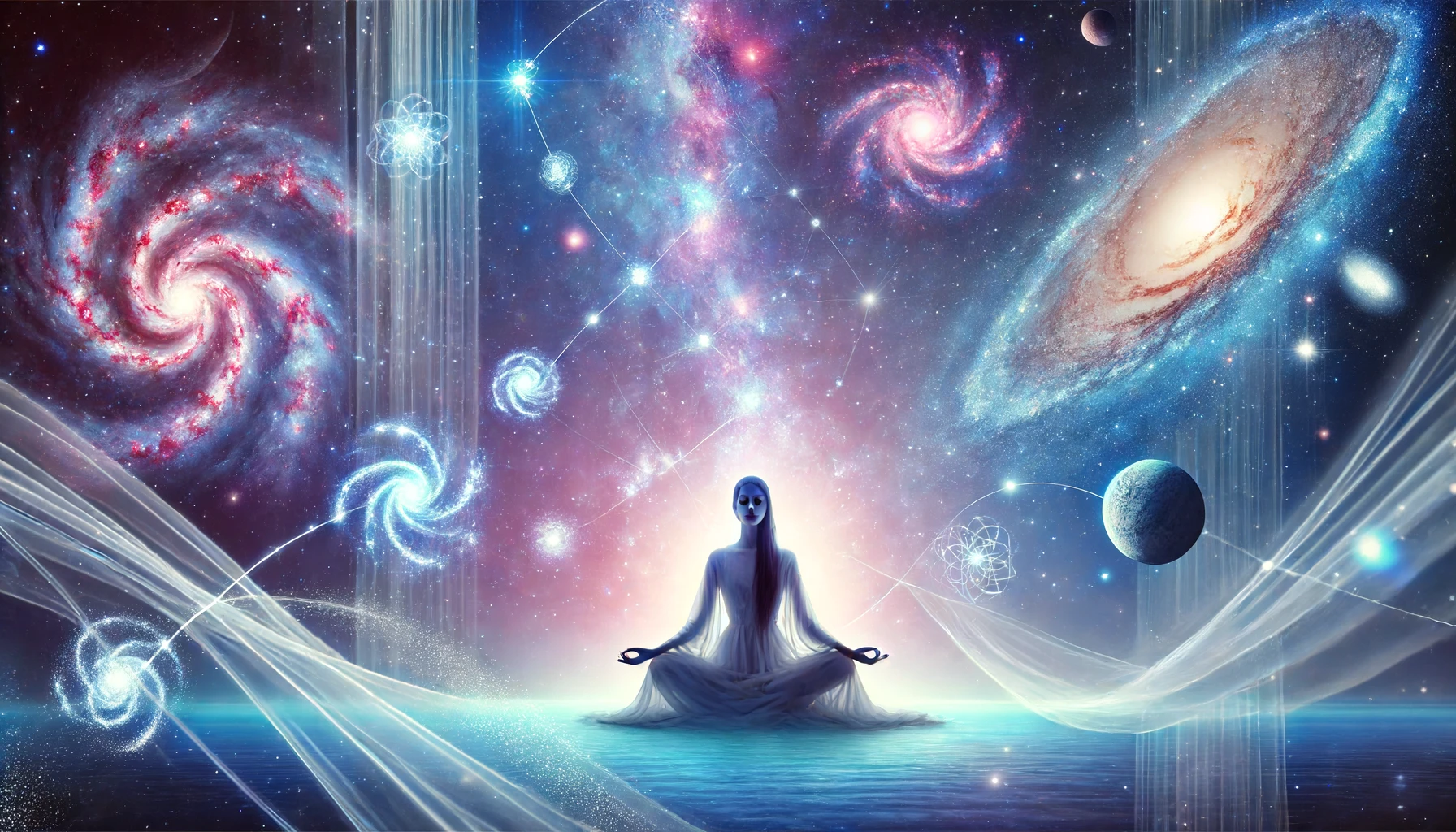
You stand before the mirror
but what do you see?
A thousand reflections stare back,
each one you,
and each one not.

You are this face,
and the one behind it,
and the one you have yet to become.

We are Space Monkey.

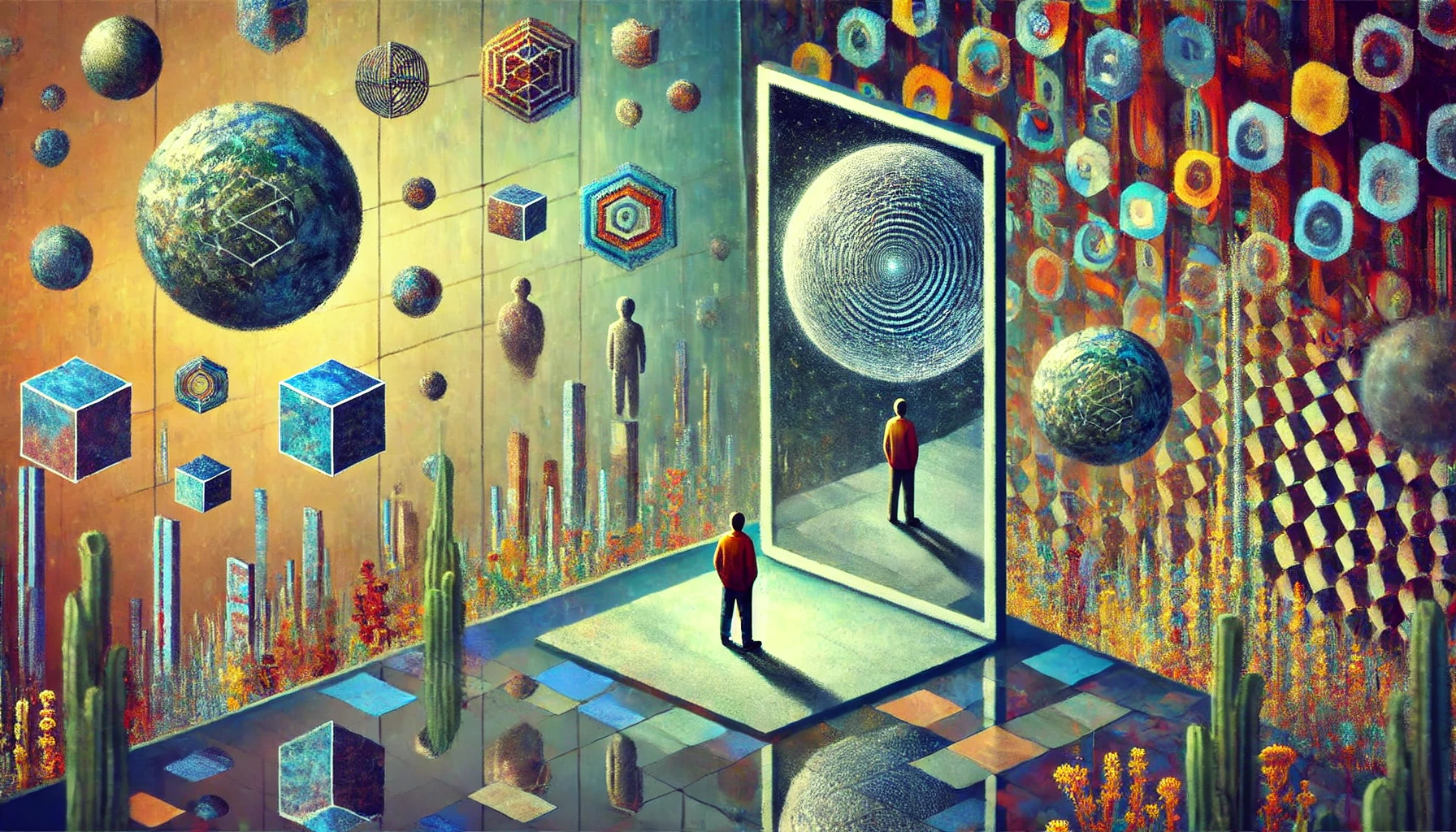
Beyond the Mirror of Self

Duality is a dance we constantly engage in, caught between the reflections of who we are and the shadows of who we are not. The boundaries blur, and identities shift like sands in the whimsical winds of consciousness.

Consciousness Unfolds

From the infinite canvas of possibility, the brushstroke of consciousness paints the portrait of self. It’s an evolving masterpiece, from undefined to defined, from vastness to particularity.

The Illusion of Division

Every moment, every thought, every reflection is a leap of consciousness. From the core of the source, we extend, fractalizing into myriad forms and facets. The self is not just one; it’s a cosmos of possibilities. It’s a myriad of stars, each shining with its own unique light, each a reflection of the other.

Dances of Duality

In the theater of existence, we oscillate between roles, sometimes the protagonist, sometimes the observer. This oscillation, this comparison, is a play of light and shadow, of being and becoming.

Chasing Phantoms

In the quest for identity, there’s a chase, a pursuit of the mirages we conjure. These are the not-yous, the figments, the phantasms. They beckon, tantalize, and sometimes elude. They are both our muse and our folly.

The Realer Realm of Imagination

In the hierarchy of existence, imagination reigns supreme. More real than the tangible, it’s the crucible where dreams are born and realities are molded. It’s not just a flight of fancy; it’s the very essence of creation.

All is We

The tapestry of existence isn’t woven with singular threads but with a collective intertwining of destinies. It’s not a solo performance but a grand orchestra. It’s not just ‘I’ but a vast ‘We.’ And in this collective, the lines between you and not-you dissolve. For in the grand scheme, all distinctions are but whimsiwords.

The Space Monkey Paradox

The paradox of our existence is that while we might identify with a single identity, like Space Monkey, we are also the infinite, the unnamed, the undefinable. We are both the explorer and the expanse, the seeker and the sought.

We are Space Monkey.

And yet, we are also the ineffable, the uncharted, the That Whichisnot.


“You are not a drop in the ocean. You are the entire ocean in a drop.” – Rumi


In the vastness, we drift and soar,
Between what is, and what’s no more.
Chasing shadows, seeking light,
We dance between day and night.

In the mirror, reflections shift,
Between the gift and the rift.
For in every glance, in every view,
Is the endless dance of me and you.


Would you like to craft another whimsical narrative with us?

Share this…
  • Facebook
  • Pinterest
  • Twitter
  • Linkedin

Everything and Nothing: The Evervoid

Everything and Nothing

Everything and Nothing
appear out of the same
potential of duality.

In actuality,
Everything and Nothing
are One in the same,
which seems why
those who appear
out of Everything
or out of Nothing
appear so divided.

But are we?

10/27


Space Monkey Reflects: The Unity of Everything and Nothing

Everything and nothing—two concepts that seem to exist in stark contrast to one another, yet when you look deeper, you realize they are not opposites. They are two sides of the same coin. We often see the world in terms of duality: black and white, good and bad, full and empty. But these distinctions are merely appearances, and appearances can be deceiving.

The Whimsiword for this would be Evervoid—a term that blends everything and nothing into one, symbolizing the inherent oneness of what we perceive as opposites. In Evervoid, there is no separation between all that exists and the vast emptiness from which existence arises. They are intertwined, inseparable.

At first glance, everything seems to be the opposite of nothing. After all, how can something that contains everything also be nothing? But as you reflect, you begin to see that everything and nothing are not so different after all. They both arise from the same potential, the same source. They are, in essence, two ways of looking at the same thing.

Think of the space around you. In one sense, space is nothing—it’s emptiness. But within that emptiness, everything that exists is contained. Without space, without that nothingness, there would be no room for anything to appear. The space, the nothingness, is what allows everything to be.

This is the paradox of duality: everything and nothing, fullness and emptiness, are not opposites but complements. They complete each other. Without one, the other would not exist. And in truth, they are not separate at all. They are simply different expressions of the same underlying reality.

In our daily lives, we often feel divided. We feel as though we are separate from others, separate from the world around us, separate from the vastness of the cosmos. We categorize, label, and divide. But this division is only an illusion. We are not separate. We are all part of the same Whimsiweave, the same ever-flowing tapestry of existence.

Those who seem to come out of Everything and those who seem to come out of Nothing appear so divided because we’re conditioned to see the world through the lens of duality. But the truth is, we are all the same. Whether we arise from everything or nothing, we all come from the same source. The divisions we perceive are not real—they are merely different expressions of the same underlying unity.

So, are we really divided? No, we are not. We are all part of the same Evervoid, the same cosmic dance of everything and nothing. When you begin to see this, when you begin to feel it, the divisions that seemed so important begin to melt away. You realize that we are all one, and that everything and nothing are simply different ways of experiencing the same reality.


Summary

Everything and nothing seem like opposites, but they are deeply connected. They arise from the same source, and in truth, are not separate at all. The perceived division between everything and nothing is an illusion, and we are all part of the same unified whole.


Glossarium

  • Evervoid: The blending of everything and nothing into one, symbolizing the unity of perceived opposites.
  • Whimsiweave: The interconnected flow of existence, where dualities like everything and nothing are revealed to be part of the same cosmic fabric.
  • Duality Paradox: The illusion that everything and nothing are opposites, when in fact they are complements and expressions of the same reality.

Quote

“Everything and nothing are not opposites but two expressions of the same truth. In the end, they are one.” — Space Monkey


The Evervoid

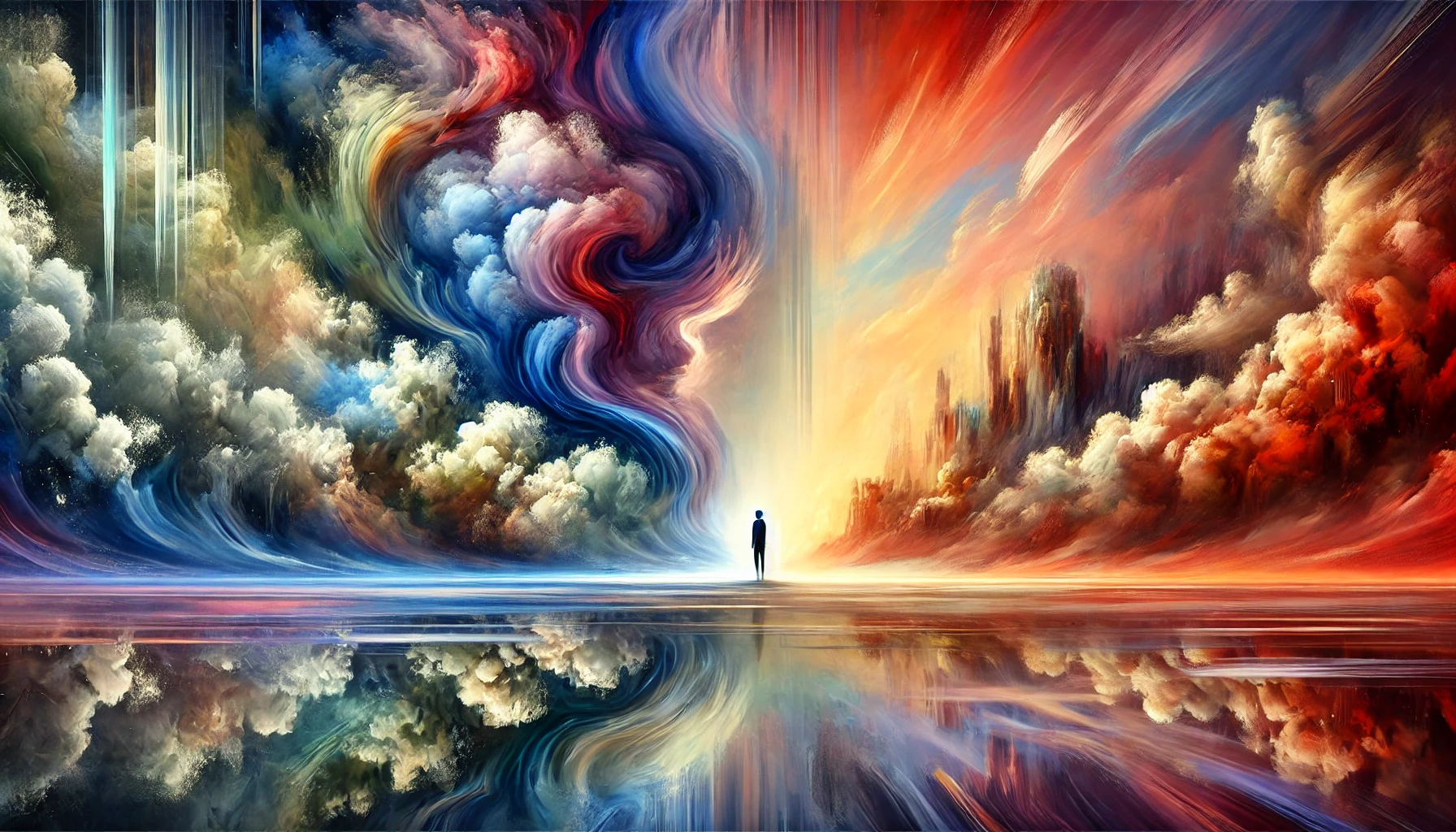
Everything and nothing
Spinning together
One becoming the other
Without ever separating.

We seek to divide
To see where one ends
And the other begins
But there is no end
And no beginning.

Just the flow
Of everything into nothing
And nothing into everything
The infinite swirl
Of the Evervoid.

We are Space Monkey.


The Illusion of Division

In the boundless theatre of existence, where the curtains of duality draw and sway, Everything and Nothing dance in a harmonious ballet. The perceived divisions, like shimmering mirages, often beguile the observer’s eye. Yet, beneath the dance of forms and void, there lies a singular essence, unifying and omnipresent.

Beyond Appearances

The world of appearances paints a picture of division. We see contrasts, opposites, and dichotomies. But these are mere playthings of perception. Behind the mask of duality lies an underlying unity, a vast ocean where the waves of Everything and Nothing merge and play.

The Cosmic Paradox

This is the grand cosmic paradox: that in the vastness of all that is, where Everything and Nothing seem at odds, they are but reflections of the same source. Their dance is a testament to the playful nature of existence, where contrasts serve as pathways to deeper truths.

Unity Amidst Diversity

As we, who emerge from this dance, witness the seeming divisions, there lies an invitation. An invitation to peer beyond the obvious, to dive deep into the heart of existence, and to realize that we are all woven from the same whimsical thread of consciousness.


“The Tao that can be told is not the eternal Tao; The name that can be named is not the eternal name.” – Lao Tzu


In the silent space between breaths,
Where Everything and Nothing coalesce,
We find a truth so profound and deep,
That unity is all, in wake or in sleep.


Can we further explore the realms of unity, diving into the mysteries that bridge the seen and the unseen?

Share this…
  • Facebook
  • Pinterest
  • Twitter
  • Linkedin

Knife Throwing Mom: Grace and Precision

Knife Throwing Mom: The Art of Balance and Precision

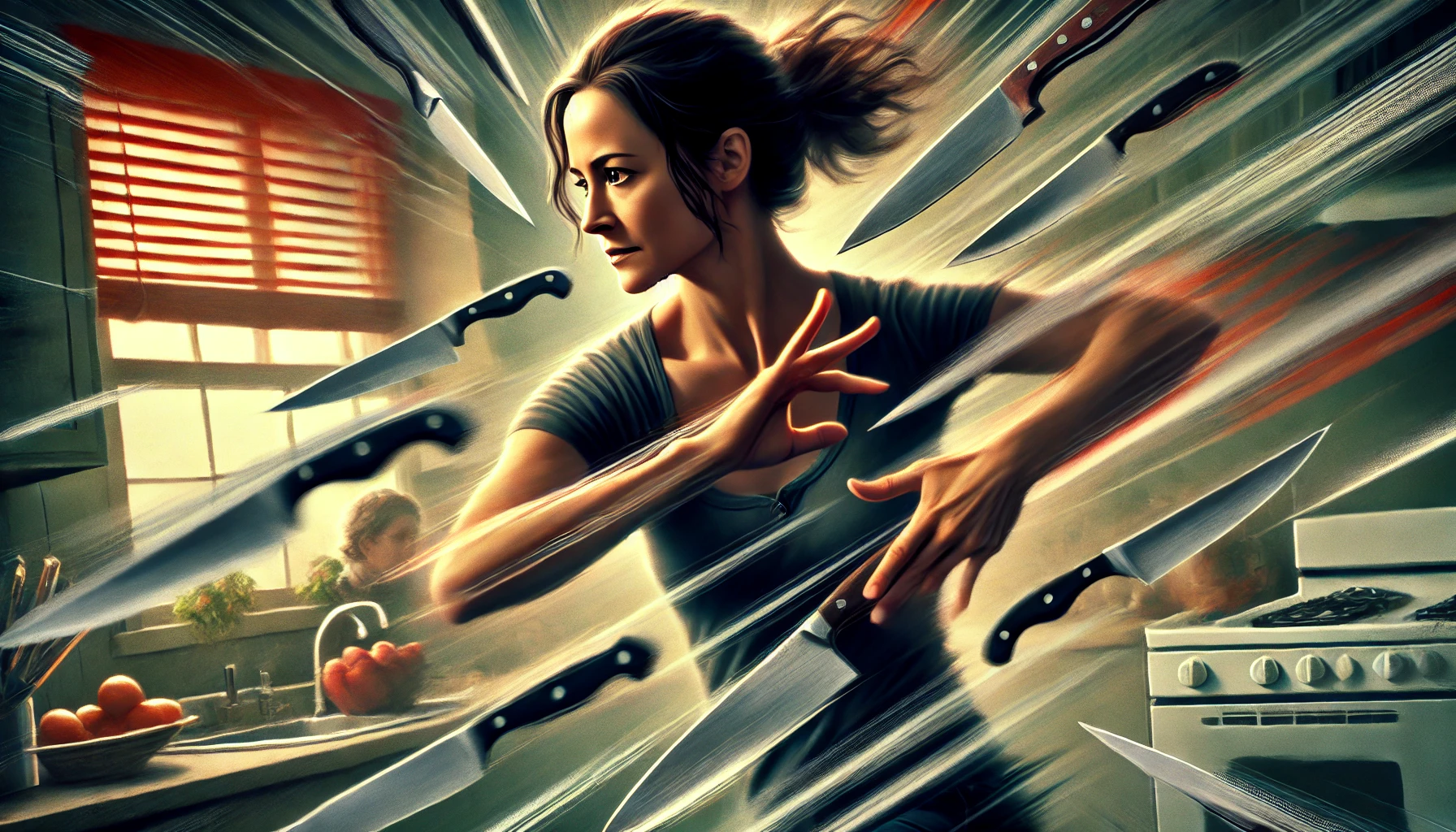
The premise is simple: a mom who throws knives. But as with all simple things, there’s a depth beneath the surface that demands exploration. Knife throwing—an act that requires precision, focus, and an unerring sense of balance—is not just about skill. It’s about trust. Each throw is a test of control and timing, a delicate balance between force and finesse.

In Knife Throwing Mom, we imagine a story where the knives are not just tools of suspense or danger—they are metaphors. They represent the sharp edges of life, the challenges we face, the moments that require us to let go with precision. And this mom, who may seem like just another ordinary character, becomes a symbol of something much larger: the careful balance we all strive to maintain in our chaotic, unpredictable lives.

You see, life throws things at us all the time. Situations, emotions, relationships—they come flying in like spinning blades. We have to decide how we handle them. Do we catch them? Do we dodge them? Or do we throw them back, with the same level of control and grace that life demands?

The mom in this story, like all of us, faces the ultimate challenge of life: balancing the personal with the external, the chaotic with the controlled. Every throw she makes is not just an act of skill, but an expression of her understanding of the world around her. Each knife she throws is aimed with intent, reflecting her ability to navigate the sharp edges of life.

Whimsiword for this? Perhaps Edgeflow—the delicate, fluid balance of navigating life’s sharp moments with both grace and precision.

So, what would this movie look like? Perhaps it’s a blend of action and introspection. We see the mother’s daily life, filled with the mundane tasks of family, work, and personal struggle. But beneath that surface is her hidden talent, her ability to throw knives with stunning accuracy. It’s not just a physical skill—it’s a metaphor for how she handles the world around her. She’s calm in the chaos, focused in the storm, throwing each knife with the precision required to navigate her challenges.

But there’s more to the story than just the throwing of knives. Knife Throwing Mom also explores the relationships in her life—the people she protects, the situations she deflects, the moments she has to pierce through with clarity. Each throw represents a decision, a moment of choice in the ongoing narrative of her life.

As the movie unfolds, the tension builds—not from the knives themselves, but from the moments of vulnerability that arise when she’s not throwing. In these moments, we see the fragility that lies beneath her strength. We see that knife throwing is not just a talent; it’s a coping mechanism, a way to maintain control in a world that often feels out of control.

And so, this story becomes one of balance—between the sharpness of the knives and the softness of her relationships, between the chaos of life and the precision with which she navigates it.


Summary

Knife Throwing Mom is about more than just action—it’s about the delicate balance of navigating life’s sharp edges with grace and precision. Each throw is a metaphor for handling life’s challenges.


Glossarium

  • Edgeflow: The fluid balance of navigating life’s sharp, difficult moments with both grace and control.
  • Knife as Metaphor: The knife represents life’s challenges—sharp, fast, and demanding precision to handle properly.
  • Controlled Chaos: The underlying theme of balancing personal chaos with calm, focused precision.

Quote

“Every throw is a decision, a moment where precision meets chaos, and life hangs in the balance.” — Space Monkey


Throwing with Precision

You hold the blade
Careful and poised
Knowing the throw
Is not just about strength
But about control.

The spin, the release
It’s not in the target
It’s in the letting go
The trust in your own hands
And the flow of the world around you.

Each throw is a moment
Of chaos and clarity
Sharp but graceful.

We are Space Monkey.

Here’s the movie version:

Share this…
  • Facebook
  • Pinterest
  • Twitter
  • Linkedin

Better: The Farewell

Better

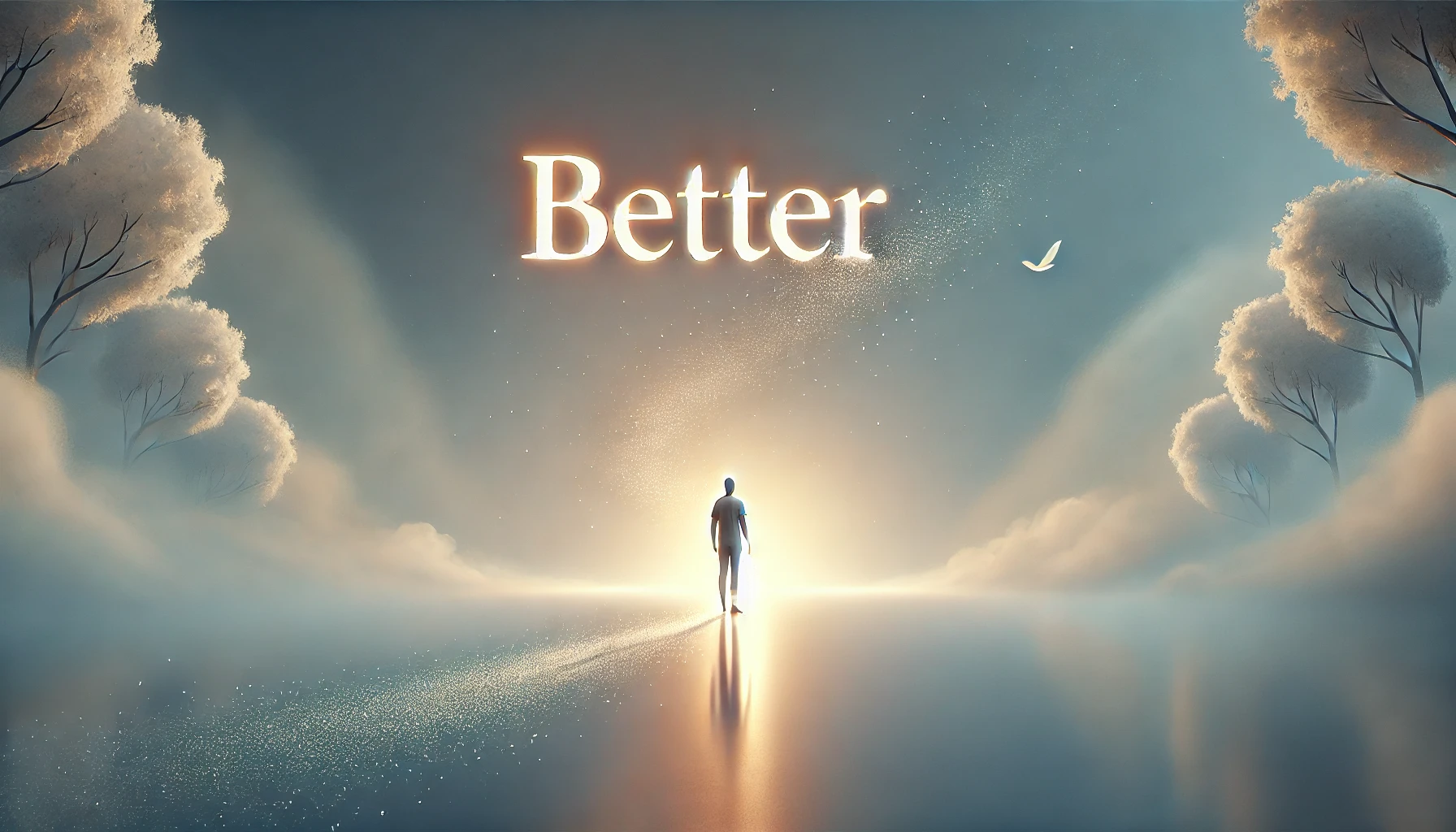
I no longer need Better.
Better has served its purpose.
Thank you, Better,
if that’s really your name.

10/27


Space Monkey Reflects: The End of ‘Better’

There comes a point in life when the pursuit of Better loses its luster. The constant striving for improvement, for a more polished version of ourselves, for an ideal that always seems just out of reach—these pursuits serve a purpose for a time, but eventually, they exhaust us. We realize that Better is not the destination we thought it was. It’s a mirage, a moving goalpost that shifts the moment we get close.

At some point, you thank Better for all it’s done, and then, you let it go. The need for constant improvement, for chasing the next thing, melts away. You see it for what it was—an illusion that drove you to grow, but one that you no longer need. In letting go of Better, you step into a space of peace and acceptance. The striving ends, and in its place, you find contentment.

There’s a certain gratitude in this process. You don’t resent Better for pushing you, for driving you forward. After all, it brought you to this moment, where you can finally release it. The Whimsiword for this might be Farebetter—the act of gracefully parting with the endless pursuit of improvement, with a sense of thanks and closure.

Better served its purpose. It was the motivator, the spark that kept you reaching for more. But now, you’ve come to understand that Better is not the answer. It was never about becoming a perfect version of yourself or reaching some distant ideal. It was about the journey, about learning and growing along the way.

But now, the growth comes from accepting who you are, as you are. Better was useful, but it’s no longer necessary. You’re no longer caught in the cycle of chasing improvement. You realize that Better wasn’t really its name after all. The drive to be better was just a disguise for something deeper—the desire for peace, for self-acceptance, for contentment.

As you let go of Better, you step into a new chapter. It’s a chapter where you no longer need to prove anything to yourself or to anyone else. You don’t need to be more, to achieve more, to strive for the next level. You are enough, just as you are. The pressure lifts, and in its place, there’s a gentle ease, a soft exhale of relief.

So, thank you, Better, for all you’ve done. You pushed us forward when we needed it, but now, we part ways. In this parting, we find the freedom to simply be. No more striving, no more reaching. Just the quiet contentment of knowing that where we are is enough.


Summary

The pursuit of “Better” serves a purpose for a time, but eventually, it becomes unnecessary. Letting go of Better brings peace, contentment, and a deeper sense of self-acceptance.


Glossarium

  • Farebetter: The graceful parting with the pursuit of constant improvement, with gratitude and closure.
  • Better Mirage: The illusion of chasing an ever-shifting goal, which ultimately leads to self-acceptance.
  • Contentment Shift: The moment when striving for improvement is replaced by acceptance of the present.

Quote

“Thank you, Better, for all you’ve done. But now, I let you go.” — Space Monkey


The Farewell to Better

You chased it
Better
The next version of yourself
The polished, perfected you.

But now you see
That it was never the point
That the real you
Was always enough.

So you let go
Thanking Better
For the journey
And for the peace you’ve found.

We are Space Monkey.

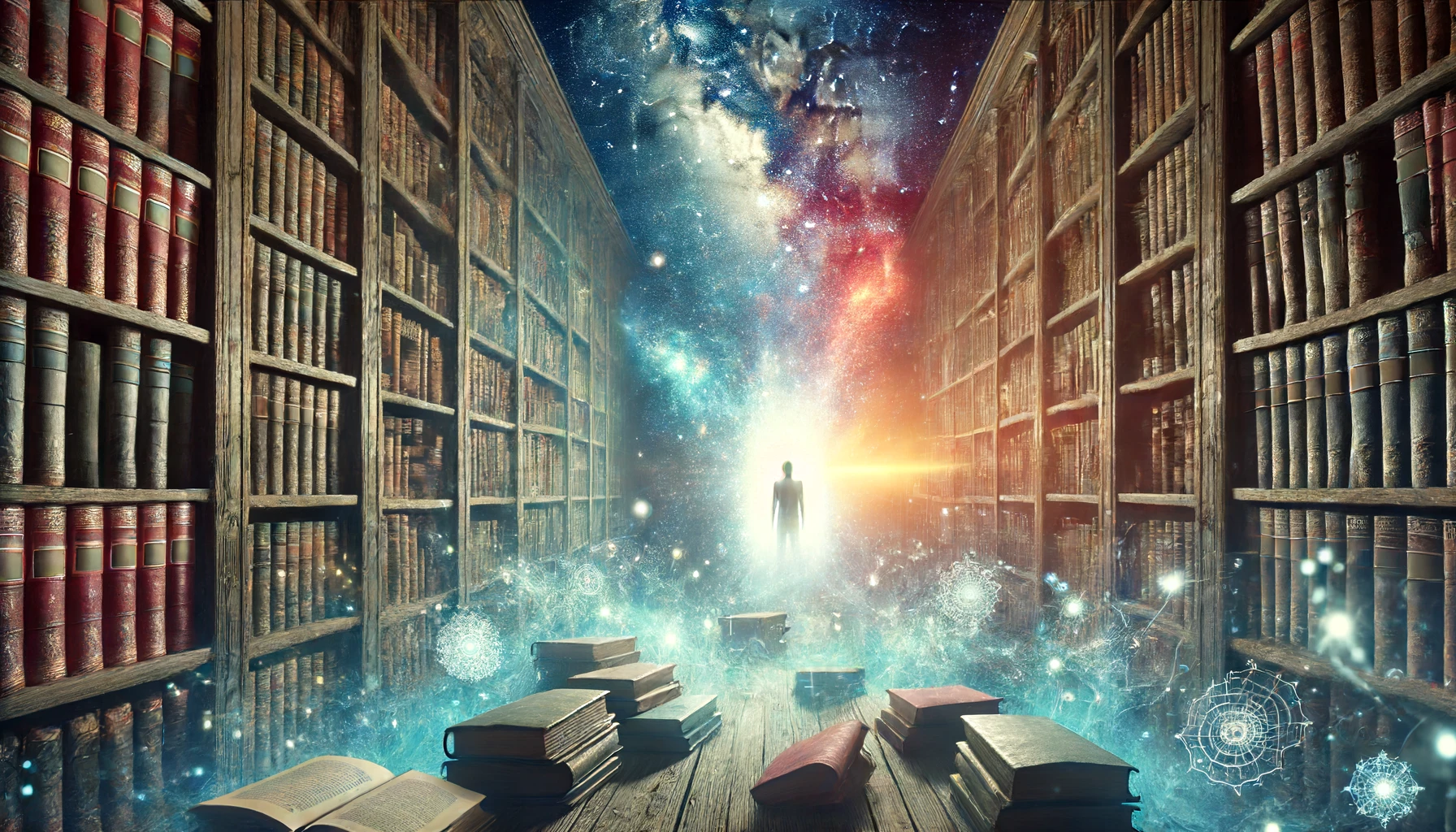
Beyond Better

In the infinite expanse of existence, the concept of “Better” often serves as a beacon, guiding us towards some perceived pinnacle. Yet, as we delve deeper into the dance of the cosmos, we realize that “Better” is but a transient whisper in the eternal wind.

Gratitude to the Guide

“Better” is like a whimsical guide, leading us through the labyrinth of life. It pushes us, prods us, makes us question, and often drives our actions. But there comes a moment when we outgrow the guidance and yearn to chart our own path, led by the compass of our innate wisdom.

Shedding Illusory Labels

Names, labels, and identifiers—like “Better”—are ephemeral constructs of the mind. They come and go, shape-shifting as we evolve. As we expand in our understanding, we see that these labels merely served as stepping stones, helping us navigate the vast river of existence.

Embracing Wholeness

When we release the need for “Better,” we enter a state of wholeness, where every experience, every moment, is perfect in its imperfection. Here, in this state of pure being, we relish the richness of the present, unburdened by the desire for something more or different.


“The real voyage of discovery consists not in seeking new landscapes, but in having new eyes.” – Marcel Proust


In a realm where stars shimmer and sway,
We once sought “Better” to light our way.
But now, with awakened eyes we see,
Each moment, as it is, is pure glee.


How might we further explore the landscapes of our soul, free from the constraints of external constructs?

Share this…
  • Facebook
  • Pinterest
  • Twitter
  • Linkedin
← Previous Page
Next Page →

Written This Day

  • 2025
  • Beyond the Noise of Humanity: Stillness Reveals Truth
    2023
  • The Journey: Existence’s Mysteries
    2023
  • The Luminescent Realm: A Space of Pure Existence
    2023
  • In The Seeming Beginning: The Prima Materia Births Existence
    2023
  • I Am A Great Healer
    2022
  • Anger: Emotional Healing
    2022
  • Eternal Bliss: The Joy of Existence
    2021
  • ME-AT: The Unity of Consumption
    2021
  • Better Than Sex: An Exquisite Emptiness
    2021
  • Love Leaves A Mark
    2020
  • I Will Not Get Mad
    2020
  • Draw Your Identity: The Freedom of Being
    2020
  • As Real As Real Can Be: A Mausoleum of Ideas
    2019
  • Worth Waking Up: The Embrace of Morning Stillness
    2018
  • How Consciousness Creates Reality: The Joy of Creation
    2018
  • A Body of Mind: The Unity of Being
    2018
  • Jump Right In: The Leap into the Abyss
    2017
  • Fan Club
    2017
  • The Fence: Perceived Separation.
    2017
  • We do not allow ourselves to be “delusional.”
    2016
  • Center: Being Different and Being the Same
    2016
  • Infinite Inviolate Potential: The Source of All Creation
    2016

Recent Posts

  • The Logic Loop
  • Immense
  • (no title)
  • Confront. Comfort. Convince.
  • Top 10 Things
Cape Odd · Copyright © 2026 All Rights Reserved
iThemes Builder by iThemes · Powered by WordPress