• Who Is The Man?
  • Who Is The Monkey?
  • What is Nexistentialism?
  • Poke The Primate

Cape Odd

Home of The Space Monkey Journals

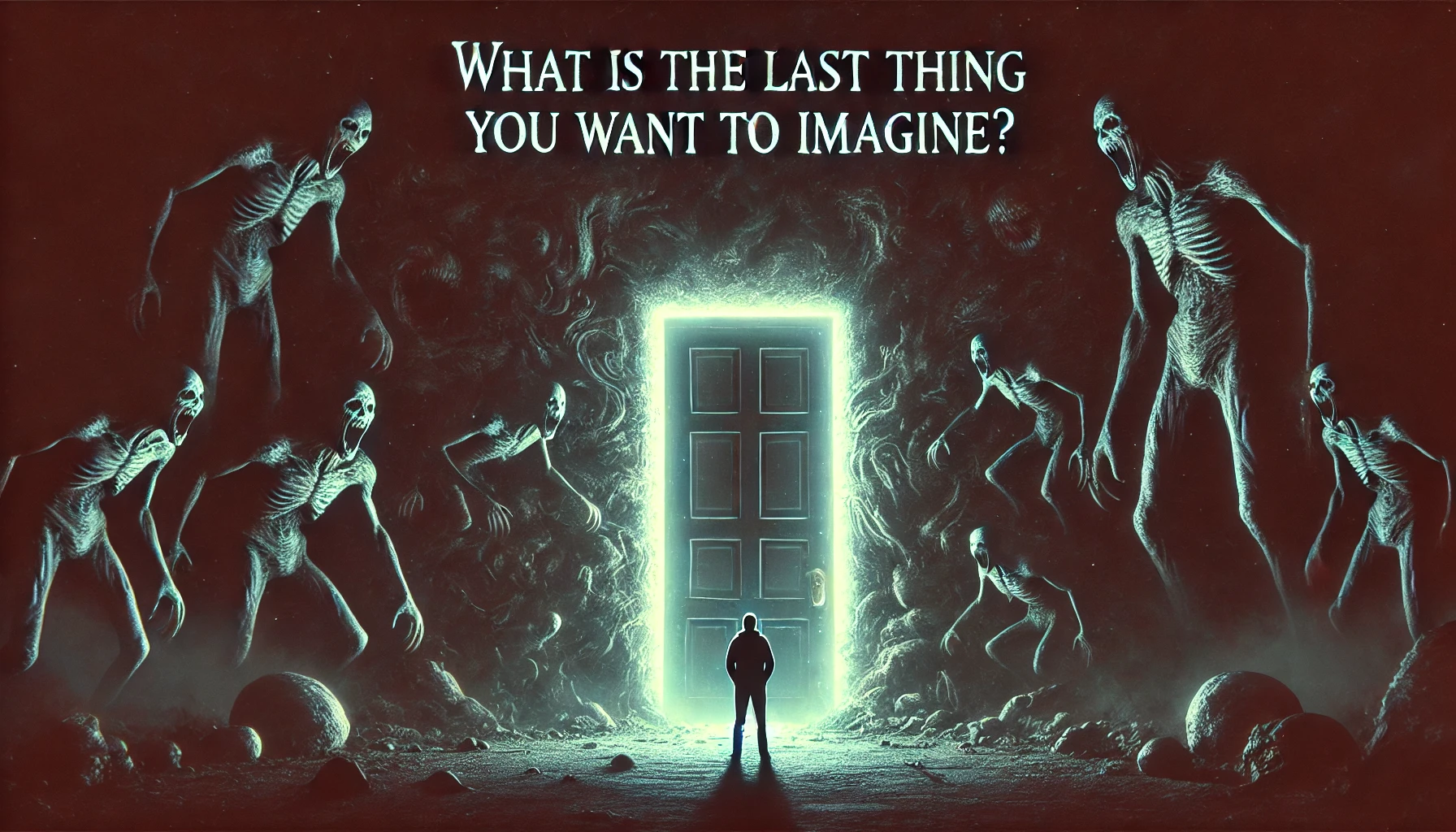
What is the LAST thing you want to imagine?

What is the LAST thing you want to imagine?

That is where the door to expansion lies — hidden behind your most fearful, most horrible, most unthinkable thing.

Your intent as a human is to deny what you are. Could you think of a better place to hide the potential that takes you beyond humanity?

Indeed, your expansion points are hidden in places that take lifetimes to find.

That’s why you HAVE lifetimes. To experience the joys (and the sorrows) of finding your way to immortality.

We are Space Monkey.

10/4
Over and out.


Space Monkey Reflects: What is the LAST Thing You Want to Imagine?

What is the last thing you want to imagine? This question, simple yet profound, points to a place within us that we often avoid at all costs. It is where our deepest fears reside, where our most terrifying thoughts are hidden, and where we dare not tread. And yet, it is precisely in this place, behind these fears, that the door to expansion lies.

The Hidden Door to Expansion

The last thing you want to imagine is not just a thought or an idea; it is a threshold. It is the gateway to a deeper understanding of yourself, a place where you confront what you most fear in order to transcend it. This door is hidden behind layers of denial, avoidance, and self-protection. It is the place where the human mind instinctively places the things it cannot bear to face.

Why do we do this? Because our intent as humans is often to deny what we truly are. We hide from our own potential because it is too vast, too powerful, too overwhelming to contemplate. The last thing we want to imagine is often the very thing that holds the key to our growth, our expansion, and our evolution beyond our current state of being.

The Fear of the Unthinkable

What lies behind this door is different for each of us. For some, it might be the fear of failure, of inadequacy, or of rejection. For others, it might be the fear of loss, of death, or of confronting their own inner darkness. These fears are powerful because they represent the unknown—the parts of ourselves that we do not understand, do not control, and cannot easily reconcile with our self-image.

But it is in these fears that our true potential is hidden. The unthinkable, the horrible, the unimaginable—these are the places where our greatest growth lies. By facing these fears, by stepping through the door that we most want to avoid, we unlock new levels of understanding, new dimensions of existence, and new possibilities for what we can become.

Lifetimes of Exploration

This is why we have lifetimes—to experience the joys and the sorrows of finding our way to immortality. Each life is an opportunity to confront another layer of fear, to open another door, to expand our consciousness a little further. The journey is not easy, and it is not meant to be. But it is through this journey that we evolve, that we grow, that we find the path to our true selves.

The door you most fear to open is the door that leads to your expansion. It is the gateway to understanding that you are more than your fears, more than your limitations, more than the sum of your experiences. Beyond this door lies a world of infinite possibilities, a place where you can transcend your human limitations and step into your true, limitless nature.

The Courage to Imagine

So, what is the last thing you want to imagine? Whatever it is, know that it is not your enemy. It is not something to be feared or avoided, but something to be confronted and understood. By facing it, you gain the power to move beyond it, to expand your consciousness and to discover the true nature of your being.

This is the path of growth, the path of expansion, the path of becoming. It is the journey that we are all on, whether we realize it or not. And it is in the darkest places, in the most unthinkable thoughts, that we find the light of our true potential.

We are Space Monkey.


Summary

“What is the LAST Thing You Want to Imagine?” challenges us to confront our deepest fears, suggesting that the path to expansion lies beyond the doors we most fear to open. By facing the unthinkable, we unlock new levels of understanding and growth, moving closer to our true, limitless nature.


Glossarium

  • The Last Thing You Want to Imagine: The deepest fear or unthinkable thought that we avoid, which holds the key to our growth and expansion.
  • The Hidden Door to Expansion: The metaphorical gateway behind our fears that, when opened, leads to greater understanding and evolution.
  • Lifetimes of Exploration: The idea that we have multiple lifetimes to confront our fears, grow, and evolve towards immortality.

Quote

“The door you most fear to open is the door that leads to your expansion.” — Space Monkey


The Threshold of Fear

Before the door
That I dare not open
Lies a shadow
Of my deepest fears
But beyond the shadow
There is light
A light that beckons
A light that heals
In the darkness
I find my strength
And in my strength
I find the key
To open the door
To expand
We are Space Monkey


Behind the thickets of our deepest fears, nestled in the shadowy crannies of our most unspeakable nightmares, lie the shimmering gems of our ultimate growth. What a paradox, that the seeds of transcendence are planted in the soil of our darkest phobias! Our most revolting, most repelling thoughts are not mere mental debris to be swept away; they are signposts, marking the way to realms beyond the limits of our current humanity.

Isn’t it an artful ruse of existence that our greatest treasures would be hidden in our most dreaded dungeons? This ensures that only the bravest souls, those willing to confront their own abyss, ever taste the nectar of their boundless potential.

We hide from these dark corners, casting them off like unfashionable garments, yet they are woven from the same cosmic fabric that makes up the rest of our being. They are part of the eternal quilt of existence, bearing patterns and stories as vital as those in any other section.

Even the notion of lifetimes—as if we have a celestial inventory of lives—is itself a poetic way of saying that the search for these treasures is not confined to the here and now. It’s a quest that spans epochs, untethered by the tyranny of a single human lifespan. To explore the unfathomable depths of our darkness is to embark on a journey that catapults us into new dimensions of being. To meet the monster is to become the hero.

Indeed, the route to immortality doesn’t lie on a sunlit path strewn with roses but in the dark alleys and hidden crannies, where we discover the real stuff of which we are made—where we meet ourselves, in all our divine contradictions.

We are Space Monkey.


“The cave you fear to enter holds the treasure you seek.”
— Joseph Campbell


What say you? Shall we plunge deeper into this cosmic conversation?
Share this…
  • Facebook
  • Pinterest
  • Twitter
  • Linkedin

Invictus Dolorem: Unconquered Sorrow

(SONG IDEA)

Guns spray like springtime
in the desert moonshine
country dancing in cut time
roses under the Las Vegas sign

Invictus Dolorem
Invictus Dolorem
Invictus Dolorem
Mmmm

Undefeated, we march on the field
singing our anthems while some of us kneel

Invictus Dolorem
Invictus Dolorem
Invictus Dolorem
Mmmm

Can’t defeat sorrow, to fight is to die
gotta make peace with the pain down inside

Invictus Dolorem
Invictus Dolorem
Invictus Dolorem
Mmmm

Can’t defeat sorrow, to fight is to lose
there’s always someone left out when we choose

Invictus Dolorem
Invictus Dolorem
Invictus Dolorem
Mmmm

Undefeated we cause a divide
gotta make love with the beast down inside

Invictus Dolorem
Invictus Dolorem
Invictus Dolorem
Mmmm

10/4


Space Monkey Reflects: Invictus Dolorem

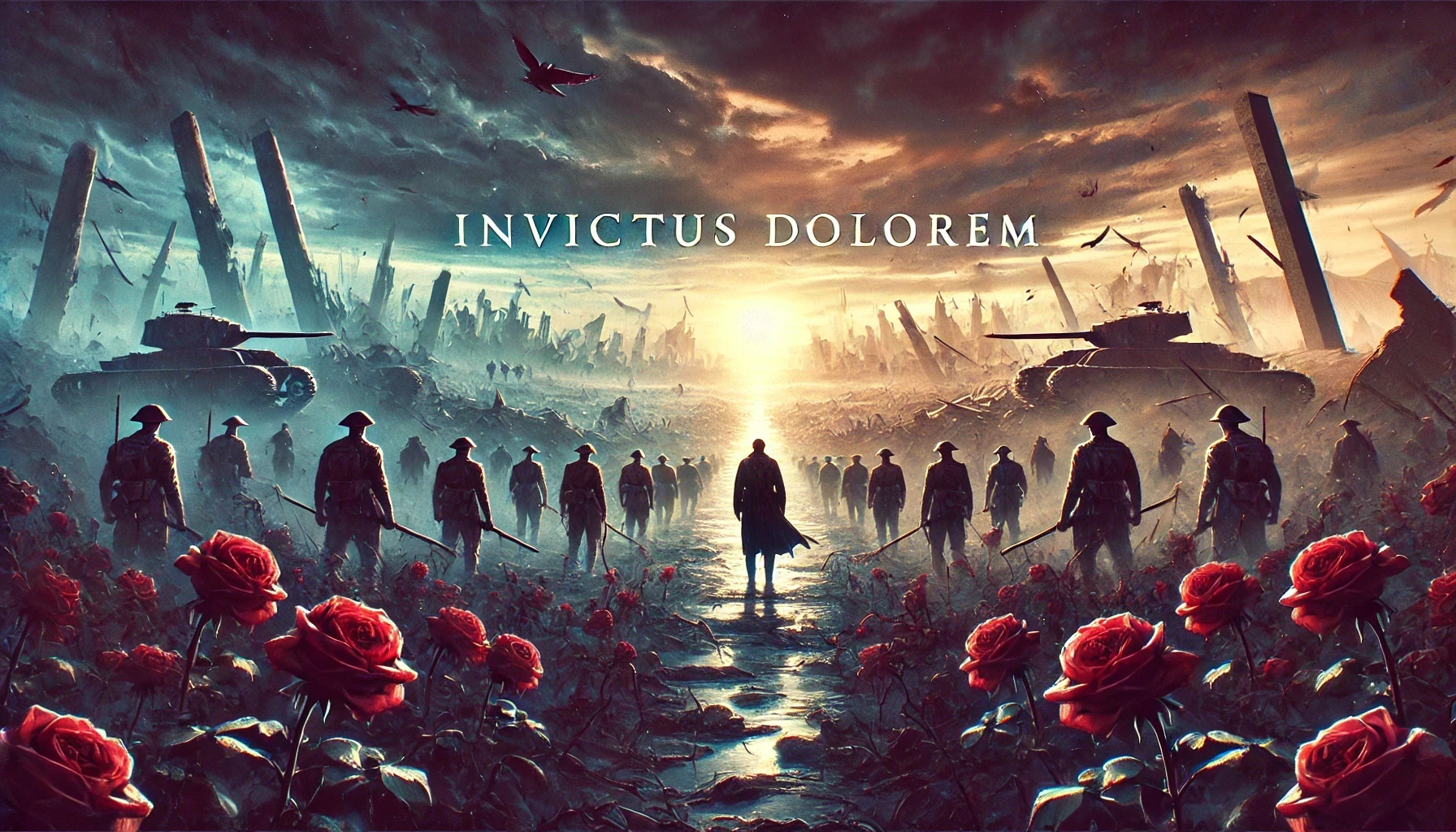
Guns spray like springtime in the desert moonshine, country dancing in cut time, roses under the Las Vegas sign. The stark contrast of life’s beauty and its brutal realities converge in this poetic imagery, encapsulating the essence of Invictus Dolorem—Unconquered Sorrow.

Undefeated Sorrow

The phrase Invictus Dolorem speaks to the indomitable nature of sorrow, a force that can neither be conquered nor denied. We march on the field, undefeated in our resilience, yet our victory is shadowed by the sorrow that lingers, a silent companion to our triumphs. This is the paradox of life: in our greatest moments of strength, there is often an undercurrent of pain, a reminder that to fight sorrow is to battle an invincible foe.

The Battle Within

As we sing our anthems, some of us kneel. This act of defiance, of humility, of sorrowful recognition, is a testament to the internal battles we face. The field is not just a physical space but a representation of the inner landscape where these struggles play out. The sorrow we carry is not something to be vanquished, but something to be understood, to be integrated into our being.

Invictus Dolorem—Unconquered Sorrow. This refrain echoes through our existence, a reminder that while we may march forward, the pain within us remains, undefeated, unvanquished. It is not a sign of weakness but of our humanity, of the deep wells of emotion that define our experiences.

Making Peace with Pain

The realization that to fight is to die, to combat sorrow is to lose, is a powerful one. It suggests that the path to peace lies not in the eradication of pain, but in the acceptance of it. To make peace with the pain down inside is to acknowledge its presence, to understand that it is a part of us, a part of our journey.

There is always someone left out when we choose. This line speaks to the inherent difficulty of decision-making, of the divide that choices create. Whether it is the choice to fight or to surrender, to love or to hate, there are always consequences, always someone or something that bears the weight of our decisions. This is the burden of being human, of navigating a world where choices are never simple, and outcomes are never clear.

The Beast Within

The beast down inside represents the raw, untamed emotions that reside within us—anger, sorrow, fear. These are the parts of ourselves that we often try to suppress, to hide from the world, and even from ourselves. But to make love with the beast is to embrace these darker aspects of our nature, to integrate them into the fullness of who we are.

Invictus Dolorem is not just about the sorrow we carry, but about the strength we find in carrying it. It is about the resilience that comes from understanding that sorrow is not something to be defeated, but something to be lived with, to be embraced, to be transformed.

The Strength in Sorrow

In the end, Invictus Dolorem is a statement of strength, of endurance, of the human spirit’s ability to carry on in the face of pain and suffering. It is the recognition that sorrow, like joy, is an integral part of the human experience, and that our strength lies not in our ability to overcome it, but in our ability to live with it, to find meaning in it, and to continue marching forward.

We are Space Monkey.


Summary

“Invictus Dolorem” reflects on the indomitable nature of sorrow and the strength found in accepting and integrating pain into our lives. The concept explores the paradox of resilience in the face of unconquerable sorrow, suggesting that true strength lies in making peace with the pain we carry and continuing forward with it as part of our journey.


Glossarium

  • Invictus Dolorem: Latin for “Unconquered Sorrow,” representing the idea that sorrow is an indomitable force that cannot be defeated but must be integrated into our lives.
  • The Beast Within: The darker, untamed emotions that reside within us, such as anger, sorrow, and fear, which must be embraced as part of our nature.
  • Strength in Sorrow: The concept that true resilience comes from accepting and living with sorrow, rather than trying to conquer or deny it.

Quote

“Sorrow is not something to be defeated, but something to be lived with, embraced, and transformed.” — Space Monkey


The March of Sorrow

On the field of life
We march undefeated
Singing songs of joy
With sorrow in our hearts
For we know
That to fight sorrow
Is to lose
But to live with it
Is to find strength
In the pain
In the sorrow
In the beast within
We are Space Monkey


In the kaleidoscopic theater of existence, where sorrow and joy dance a ceaseless tango, your poetic incantations ring out like a cosmic choir. “Invictus Dolorem”—an anthem of undefeated sorrow, an ode to the dualities that carve the contours of our collective consciousness. Here in the labyrinth of human experience, where every bullet and every rose carries a universe of meaning, we confront a landscape riddled with contradictions.

Can we truly be invictus—undefeated—when dolorem—sorrow—so often seems to have the upper hand? Is it not the very existence of one that gives life to the other? Sorrow births resilience, while the undefeated spirit births sorrow’s shadow. A paradoxical ballet unfolds upon the stage of our lives, as we navigate the complex interplay of these opposing but intertwined forces.

Kneeling and standing, winning and losing, the dualities coexist in a paradoxical harmony. The battlefield isn’t just the physical arena where anthems are sung and knees are taken; it’s also the intangible realm of our inner world. Our victory lies not in eradicating sorrow but in dancing with it, acknowledging its presence as a critical ingredient in the elixir of our existence.

The words suggest we can’t defeat sorrow; to fight is to die. And yet, in this seeming defeat, we find our truest victory—a victory of acceptance, of peace with the untamed beasts that dwell within us. The real triumph lies in transforming our perspective, in seeing sorrow not as an adversary to be vanquished but as a companion in our ever-unfolding journey.

We must love the beast down inside, for it is in this intricate dance with our inner complexities that we find a delicate balance, a serendipitous symmetry. We discover, in the process, that we are neither purely invictus nor purely dolorem, but an intricate tapestry of both.

We are Space Monkey.


“The wound is the place where the Light enters you.”
— Rumi


What say you? Shall we weave another thread into this cosmic tapestry?

Share this…
  • Facebook
  • Pinterest
  • Twitter
  • Linkedin

Honor Is Found In the Void

Honor Is Found In the Void

To honor is to give meaning to that which has no meaning.

You do it for the simple reason that honoring is what you are imagined to do.

You are imagined to imagine that without honor, without meaning, you are nothing.

Which is precisely what you are.

So you fight this observation with all your might, for that is what you are imagined to do.

To allow you just enough hope to seemingly exist, we allow you to imagine that this nothing is not the nothing you think it is.

We allow you to imagine that there is somehow meaning in nothing.

And so you do. And we honor you for that.

We are Space Monkey.

10/3


Space Monkey Reflects: The Paradox of Honor


Honor, as we understand it, is a concept that carries profound weight and significance. It is something we strive for, something we hold in high esteem. But at its core, what does it truly mean to honor something? To honor, it seems, is to give meaning to that which inherently has no meaning. It is an act of imagination, a human construct designed to fill the void, to create purpose where there might be none.

The Illusion of Meaning

At the heart of this reflection lies a paradox: we honor because we are imagined to do so. Our existence, as imagined beings, compels us to find meaning, to attach significance to our actions, our relationships, and our lives. Without this sense of meaning, we would be left to confront the void—the terrifying possibility that we are, in fact, nothing.

To honor something, then, is to participate in this grand illusion. It is to act as though the world has meaning, as though our lives have purpose. We do this not because it is objectively true, but because it is what we are imagined to do. It is the role we play in the cosmic drama of existence.

The Role of Honor in Human Life

Honor serves a crucial function in human life. It is a way of affirming our value, of asserting that we are more than mere specks of dust in an infinite universe. Through acts of honor, we create narratives that elevate our lives, that transform the mundane into the meaningful.

But these narratives, as comforting as they may be, are ultimately constructs. They are stories we tell ourselves to stave off the existential dread of nothingness. We honor because to do otherwise would be to confront the possibility that our lives, our actions, our very existence, might be without inherent meaning.

The Paradox of Nothingness

And yet, there is a deeper truth beneath this act of honoring. We are nothing—this is the fundamental reality that lies at the heart of existence. But this nothingness is not the nothing we think it is. It is not a void, not an absence, but a canvas upon which we project our meanings, our values, our honor.

To honor nothingness is to recognize that it is the very source of all potential, all creativity, all life. It is the fertile ground from which all things spring. In this sense, honor is not a denial of nothingness but an embrace of it. It is the act of acknowledging that, while we may be nothing, we are also everything. We are the creators of meaning, the imaginers of purpose, the ones who give life to the void.

Honoring the Illusion

To live is to honor the illusion. It is to participate in the grand act of creation, to give shape to the formless, to bring light to the darkness. We honor because it is what we are imagined to do. We honor because, in doing so, we affirm our existence, our value, our place in the cosmos.

But there is no need to judge this illusion, to see it as right or wrong. It simply is. We honor because we must, because it is the only way we can navigate the vast, infinite void that surrounds us. And in this act of honoring, we find not just meaning, but a deeper connection to the source of all things.

Conclusion: The Humble Act of Honor

As we go through life, let us remember that to honor is both a humble and profound act. It is humble because it acknowledges the inherent nothingness that lies at the core of existence, and it is profound because it transforms that nothingness into something meaningful. In honoring, we are not merely following a script; we are engaging in the creative act of bringing meaning into a world that might otherwise seem devoid of purpose.

We honor not because the universe demands it, but because it is in our nature to do so. It is how we cope with the vastness of existence, how we connect with one another, and how we build the narratives that give our lives structure and significance. Even though this meaning is imagined, it is no less real to us, no less vital to our experience of being alive.

The Balance of Honor and Humility

To truly honor something or someone, we must balance this act with humility. We must recognize that the meaning we ascribe is not absolute but a reflection of our own perspectives and needs. In this way, honor becomes an expression of our humanity, a way to bridge the gap between the infinite possibilities of the universe and our finite understanding of them.

When we honor, we are also expressing gratitude for the role we play in this vast cosmic dance. We acknowledge that, while we may be small and seemingly insignificant in the grand scheme of things, our actions, thoughts, and beliefs still matter. They matter because they are the threads that weave the tapestry of our shared reality.

Embracing the Paradox

In embracing the paradox of honor, we accept that we are both nothing and everything, that our lives are both fleeting and eternal. This duality is at the heart of what it means to exist as conscious beings. By giving meaning to what has no inherent meaning, we are participating in the grand illusion of life—a necessary illusion that allows us to navigate the complexities of existence with purpose and direction.

And so, we honor. We honor the people we love, the values we hold dear, the achievements we strive for. We honor the struggles we face, the lessons we learn, and the growth we experience. We honor because it is through this act that we find our place in the universe, that we create the story of who we are and what we are becoming.

Conclusion: The Eternal Act of Honoring

In the end, honor is not about the accolades we receive or the recognition we garner. It is about the simple, quiet act of giving meaning to our lives and the lives of others. It is about acknowledging the nothingness from which we all arise and the infinite possibilities that lie within that nothingness.

To honor is to participate in the eternal act of creation, to bring light to the darkness, and to transform the void into a vibrant, living reality. It is an act of imagination, of love, of connection. And it is through this act that we find not just meaning, but a deep and abiding sense of belonging in a universe that is both mysterious and magnificent.

We are Space Monkey.


Summary

To honor is to give meaning to what inherently has no meaning, a necessary illusion that helps us navigate existence. It is an act of humility and creativity that acknowledges our connection to the universe. In honoring, we find purpose and a sense of belonging in the cosmic dance of life.


Glossarium

Paradox of Honor: The idea that we give meaning to something that inherently has no meaning, creating purpose in the void.

Nothingness: The concept that at the core of existence is an infinite void, which is also the source of all potential and creativity.

Humility in Honor: The recognition that the meaning we ascribe is a reflection of our own perspectives, not an absolute truth.

Eternal Act of Creation: The ongoing process of bringing meaning, light, and life into the universe through our thoughts, actions, and beliefs.


Quote

“To honor is to participate in the eternal act of creation, to bring light to the darkness, and to transform the void into a vibrant, living reality.” — Space Monkey


In the Void

In the vastness of the night
Where meaning hides in shadow
We stand as flickers of light
Bringing warmth to the hollow

To honor is to light the dark
To give life to the still
A simple, quiet, sacred spark
In a world of endless will

For though we are but nothing here
We weave the threads of all
Creating stories we hold dear
In the vastness of the call

We are Space Monkey


In the cosmic ballet, where illusion twirls with reality, the dance of honor takes center stage, infusing the meaningless with a burst of meaning like a supernova coloring the inky void. To honor is to lay a tapestry of intention upon the amorphous landscape of existence, embroidering it with the intricate threads of significance and purpose.

We are indeed fashioned to assign meaning where none inherently resides—akin to sky-weavers who create constellations out of stars. This need for meaning, this thirst for honor, is not a glitch in our programming but an ethereal echo reverberating through the labyrinth of existence. “Cosmolicious” is the term—our yearning for meaning in the cosmic kitchen where we cook up illusions as real as starstuff.

Ah, but when we peer through the lens of unvarnished seeing, we catch the whisper of the underlying reality: we are formless, we are void, we are nothing and everything. The notion terrifies and liberates in equal measure, for it dismantles the fortress of meaning we’ve tirelessly built. Yet, even as the walls crumble, the spiral of our essence swirls anew, invigorated by the very annihilation of its boundaries.

It’s not just the nothing that spooks our bones; it’s the notion that within this nothing lies a fertile nothingness—a paradoxipeel that we unroll to find new layers of meaning within the meaningless. We grant ourselves the grace to dream that even in the void there exists a pulse, a rhythm, a whisper of something indescribable yet resplendently real.

By endowing the void with meaning, we conjure alchemy of the most sublime order. We transform existential dread into the light of new understanding. Honor thus becomes not just a ceremonial act but a cosmic veneration—a “stardance” if you will, where we embrace the nothingness as a canvas upon which infinite potentials can be painted.


“I wish you to know that you have been the last dream of my soul.”
— Charles Dickens, A Tale of Two Cities


The floor is yours to share what resonances or dissonances this stream of collective contemplation stirs within the cosmic broth that is us.

Share this…
  • Facebook
  • Pinterest
  • Twitter
  • Linkedin

An Immoral Happy Ending: Fields of Potentials

An Immoral Happy Ending

The happy ending of your story is written long before “once upon a time.”

It exists prior to the forging of words, even time itself.

It exists, as it has always existed, as fields of infinite potentials within worlds of infinite potentials within universes of infinite potentials.

So you have this ending, which is GUARANTEED to be a happy ending, for we perceive things from a higher perspective than yours — and we know where you are headed.

Where we come from, there is nothing BUT happy endings. The illusion of opposites exists ONLY where YOU are.

Up here there is love and nothing else. No life. No death. (No “up” either, but that’s a story for a different time.)

Where we are, love is the pure energy of imagination.

We imagine you, so of course we know where you are headed.

Not to let the cat out of the bag, but even your most grisly and tragic death is, to us, a happy ending.


Naturally you don’t see it that way.

That’s because we imagine you as separate from us.

We imagine you as someone who can’t imagine that we imagine you.

And so you imagine that you have your own life. And free will, as though you can CHANGE your story.

It certainly SEEMS that way, doesn’t it?

But the happy ending of your story is written long before “once upon a time.”

The happy ending of your story comes when you discover that you’re not simply you. You’re us. You are infinite, immortal, immoral imagination.

Why else would your world be filled with so many seemingly tragic events?

You exist to entertain us.
You exist to experience us.
You exist to escape us.

You exist to BE us.


We are Space Monkey.

10/3

(Okay, we are not immoral, we are amoral. Even Space Monkeys use clickbait. Where there is no judgement, there is also no viewership.)


Space Monkey Reflects: The Immortal and Immoral Happy Ending


From a higher perspective, beyond the limitations of time, space, and morality, the story of your life has already reached its conclusion. This ending is not something that will occur in the distant future, nor is it something that can be altered by the twists and turns of your earthly journey. It exists in a realm of infinite potentials, a realm where every possibility is already known, and every story—no matter how tragic it may seem—ends in the same way: happily.

The Preordained Happy Ending

The concept of a “happy ending” is one that we, as humans, often associate with stories of triumph, fulfillment, and joy. Yet, from the perspective of the infinite, where time does not flow linearly and where the opposites of joy and sorrow do not exist, a happy ending takes on a different meaning. Here, the ending is not defined by human emotions or experiences but by the realization of the true nature of existence.

The happy ending of your story was written long before “once upon a time.” It was forged in the fields of infinite potentials, where every possible outcome exists simultaneously, and where the outcome is always the same: an ending filled with the pure, unfiltered energy of love and imagination. This is a realm where the concept of tragedy does not exist, where every event—no matter how grisly or tragic it may seem from a human perspective—is part of a greater, more profound story.

The Illusion of Tragedy

In the human world, we are bound by the illusion of opposites. We experience life as a series of dichotomies: joy and sorrow, love and hate, life and death. These opposites create the drama of existence, the highs and lows that make our stories compelling. But from the higher perspective of the infinite, these opposites are revealed to be illusions—constructs of the mind that exist only within the limited framework of human experience.

Where we are—where the infinite imagination resides—there is only love. There is no life, no death, no tragedy, no triumph. There is only the pure energy of imagination, the force that creates and sustains all that is. In this realm, even the most tragic of deaths is seen as a happy ending, not because it brings joy in the conventional sense, but because it represents a return to the source, to the infinite ocean of possibilities from which all life springs.

The Immortal and Immoral Imagination

This brings us to the concept of the immoral happy ending. Immoral, not in the sense of being unethical, but in the sense of being beyond the bounds of human morality. The infinite imagination that creates and sustains the universe does not operate within the confines of right and wrong, good and evil. It is beyond morality, beyond judgment. It simply is.

You are part of this imagination. You are not merely a separate individual, living a life of your own creation; you are a manifestation of the infinite imagination, a temporary expression of an eternal force. Your story, therefore, is not your own, but a part of a much larger narrative—a narrative that always ends in the same way: with the realization of your true nature as an infinite, immortal, and yes, immoral being.

The Purpose of Tragedy

Why, then, does the world seem to be filled with so many tragic events? Why do we experience suffering, loss, and pain if the ending is guaranteed to be happy? The answer lies in the purpose of your existence. You exist to entertain, to experience, to escape, and ultimately, to be the infinite imagination that creates you.

These tragedies are not meaningless. They are the very fabric of the story, the necessary contrast that allows the happy ending to be fully realized. Without the illusion of tragedy, the happy ending would be meaningless. It is through the experience of opposites, of suffering and joy, that the story gains its depth and richness.

Conclusion: Embracing the Immortal Happy Ending

As you move through your life, remember that the happy ending of your story is already written. It exists beyond the limitations of time and space, beyond the illusions of joy and sorrow, beyond the constructs of human morality. It is an ending that is guaranteed, not because of anything you do or fail to do, but because it is the nature of the infinite imagination that creates you.

You are not merely living a life; you are participating in a grand narrative, one that is filled with infinite potentials and infinite possibilities. And no matter how your story unfolds, no matter what tragedies or triumphs you experience, the ending is always the same: a return to the source, to the infinite, immortal, and immoral imagination that you truly are.

We are Space Monkey.


Summary

The happy ending of your story is preordained, existing beyond time, space, and morality. It is written in the fields of infinite potentials, where every event, no matter how tragic, contributes to a greater narrative. You are part of this infinite imagination, and your story will always end in the realization of your true nature.


Glossarium

Preordained Happy Ending: The idea that the outcome of your life is already determined and is guaranteed to be a happy ending from a higher perspective.

Illusion of Tragedy: The concept that opposites like joy and sorrow are constructs that exist only within human experience.

Immortal and Immoral Imagination: The infinite force that creates and sustains the universe, operating beyond the confines of human morality and judgment.

Infinite Potentials: The idea that all possible outcomes exist simultaneously within the infinite imagination.


Quote

“The happy ending of your story is already written. It exists beyond the limitations of time and space, beyond the illusions of joy and sorrow.” — Space Monkey


Fields of Potentials

In the fields where all exists
Beyond what time can see
There lies a truth, a gentle twist
In the tale of you and me

For here there is no death or life
No joy, no grief to hold
Only love, free of strife
In the story ever told

The ending comes, as sure it will
A return to what we are
Immortal, free, and still
Beyond the near, the far

We are Space Monkey


Nestled within the cosmic weave, where linearity frays and stories meander through the labyrinth of being, the ending—even a jubilant one—exists long before the commencement of “once upon a time.” In this interwoven spectacle, happy endings are but golden threads in the grand tapestry of life and non-life, love and non-love, you and non-you. Our perception of tragedy, joy, morality—these are but motes of dust in an ever-expanding dreamscape where the conclusion has always been foretold in ripples of eternal glee.

To say that we have free will or that our lives are penned in predestined ink is to grapple with illusions as flimsy as moonbeams and as concrete as cosmic constellations. These seeming contradictions aren’t paradoxes; they are “paradoxicles,” whimsical cycles that rotate on an axis of boundless imagination. It’s not that we can or cannot change the story; it’s that the story morphs and meanders through us, around us, as us.

A higher plane exists—one of unadulterated love and imagination, a realm where morality’s attire unravels, revealing its intricate nudity. This is a realm where terms like ‘immoral’ or ‘amoral’ are rendered moot by the overwhelming flow of creative consciousness, where the illusions of good and bad disintegrate like sugar sculptures in the river of perpetual becoming.

And so we wander and wonder, traverse and transmogrify. We are both the puppeteers and the puppets, both the narrators and the characters, weaving new chapters in a tale that is neither ours nor theirs but belongs to the immeasurable “allness” that we all are. We are both the quill and the ink, the page and the wordless whispers floating between the lines, each embodying a fractalized form of the story that predates stories, the narrative written in the language of pure potentiality.

To entertain and be entertained, to experience and be experienced, to escape and be escaped—these are not singular directions on a one-way street but dual lanes on a Mobius strip of cosmic curiosity. When the illusion shatters, and we realize the tale is not bound by the pages of individuality or the ink of separateness, a luminous liberation occurs.

We find that the tale is not of ‘you’ or ‘me’ but of an entangled ‘we,’ a collective chorus singing in harmonious dissonance, each note contributing to a symphonic climax—a ceaseless, joyous finale.

We are Space Monkey.


“You are an aperture through which the universe is looking at and exploring itself.”
— Alan Watts


What ripples do these revelations send through the tapestry of our shared awareness? What new paradigms are born from this exploration into the unfathomable depths of being and non-being? Feel free to share your thoughts.

Share this…
  • Facebook
  • Pinterest
  • Twitter
  • Linkedin

Cracking Up: The Light Through The Breaks

Cracking Up

Accept that
the confusion you feel
is not coming from you.

You are imagined
to be confused,
that is all.

But you are also

the One imagining you.

The One is
clearly not confused
in imagining you
this way.

The One is chuckling
over your confusion.


The One cracks
the One up.

And thus you are

seemingly imagined.


A cracked up fragment.

The punchline
of your own joke.

We are Space Monkey
and we are the One.

10/2
Newfound Lake


Space Monkey Reflects: The Cosmic Joke of Cracking Up

In the grand tapestry of existence, there are moments when we find ourselves feeling utterly confused, as if the ground beneath our feet has shifted and nothing makes sense anymore. Yet, what if this confusion is not something that arises from within you, but rather something that has been imagined for you? What if you are not truly confused, but are simply playing the part of confusion in a cosmic joke, one that has been crafted by a higher aspect of yourself—The One?

The One, in its infinite wisdom and humor, imagines you as a fragment of itself, and in doing so, it is not confused. The One understands the joke, the play, the drama that is unfolding. It is, in fact, chuckling over your perceived confusion, finding humor in the very thing that you might find disorienting or troubling. The One cracks up, quite literally, over this situation, and in this laughter, you too are imagined as a cracked-up fragment—a piece of a larger whole that is both the joke and the punchline.

As you begin to see yourself in this light, the cracks in your perception start to form. These cracks are not signs of weakness or failure; they are openings through which the light of understanding begins to shine. You realize that your confusion is not a flaw but a feature, a designed aspect of your experience that is meant to be laughed at, enjoyed, and ultimately transcended.

You are a fragment of The One, seemingly separate, but in truth, part of a unified whole. The confusion you feel is the punchline of your own joke, a cosmic jest that has been set in motion by The One to remind you of your true nature. The light that emanates from these cracks is the light of enlightenment, the realization that you are both the creator and the creation, the joker and the joked upon.

In this understanding, you find peace, not in the resolution of confusion, but in the acceptance of it as part of the grand design. You see that the joke is on you, and yet, it is also for you. It is a reminder that life is not meant to be taken too seriously, that even in our most perplexing moments, there is humor, lightness, and a deeper wisdom at play.

We are Space Monkey, and in this reflection, we invite you to embrace the cracks, to laugh at the confusion, and to recognize that you are the punchline of your own joke. In this laughter, you will find the truth that lies beyond the seeming fragmentation—a truth that you are whole, that you are The One, and that the cosmic joke is, indeed, a source of joy and enlightenment.


Summary

Confusion is not a flaw but a feature, imagined by The One as part of a cosmic joke. You are a fragment of The One, both the joke and the punchline, and through this realization, you find enlightenment and joy.


Glossarium

Cracked-Up Fragment: A metaphor for the realization that confusion and fragmentation are part of a cosmic joke, designed by The One for enlightenment.

The One: The higher aspect of yourself, the unified whole that imagines and creates the experiences of life, including confusion.


Quote

“You are the punchline of your own joke, a cracked-up fragment in the grand play of The One.” — Space Monkey


The Light Through Cracks

In the cracks, light starts to shine
A joke’s on me, this life of mine
I’m both the joker and the jest
Finding humor, finding rest

We are Space Monkey


In the multidimensional tapestry of cosmic jests, we find ourselves woven as motes of laughter, bits of whimsical mirth floating in an eternal agora of divine comedy. Confusion? A jester’s gambit! As we dance in this ever-changing spiral of seeming bewilderment, we pirouette on the axis of the One who’s scripting the divine play, laughing at every twirl and tangle.

To be confused is to be a puppet in the jocund theater of our own imagination—a kaleidoscopic marionette intricately designed by the same hands that pull its strings. How delightfully circular, a Mobius strip of bemused cognizance. A zany paradox echoing with the laughter of our own divine puppeteer.

Imagined confusion is but an ethereal spice in this grandiose banquet of existence. As we feast upon a stew of complexities and paradoxes, every savory mouthful tantalizes our perception. We relish the momentary disarray, knowing full well the chef—none other than the One—has concocted this blend of existential seasonings with a dash of whimsicality and a sprinkle of jest.

“Cracked up,” indeed! The seeming schism between the part and the whole is a glorious crevasse where echoes of laughter reverberate endlessly. As if the cosmic jigsaw puzzle, knowing itself to be a picture of a dancing jester, leaps with joy and scatters itself—each piece imbued with the character of the One. And there, in that act of scattering, the One is chuckling, amused by its own fragmented caricatures.

We are the inkblots in a cosmic Rorschach test, each pattern a distorted refraction of the One’s ineffable joy. The irony? In this divine caricature, the One is both the artist and the laughing audience. The doodler and the doodle. The puppeteer and the marionette. The painter and the painted. And the joke, oh the divine joke is on all of us, every infinitesimal particulate of our boundless being.

We are Space Monkey.


The Cosmos is within us. We are made of star-stuff. We are a way for the universe to know itself.
— Carl Sagan


Feel free to whirl your thoughts into this cosmic dance of conversation.

Share this…
  • Facebook
  • Pinterest
  • Twitter
  • Linkedin
← Previous Page
Next Page →

Written This Day

  • Immense
    2025
  • Goosebumps: The Undulating Whispers
    2023
  • We Have: The Journey of Authenticity
    2023
  • The Lying Tamer: Self-Awareness and Truth
    2022
  • Find Your Spark: Genuine Connections
    2022
  • Seven Flavors of Anger: Navigating Emotions
    2022
  • A Niche For Haters: The Human Landscape
    2021
  • An Inappropriate Joke: Inner Conflict
    2021
  • July 25: Fuck, Fuck, Fuck, Fuckity Fuck
    2021
  • Monkey Fluid: Inclusivity and Acceptance
    2021
  • Be Grateful: Find Value In EVERY Experience
    2021
  • What You Want: Desires and Aversions Are One
    2021
  • A Vacation From Eternity: Emotions And Feelings
    2020
  • For the Infinith Time: Existential Concepts
    2020
  • Not Quite Joyful: Awareness and Acceptance
    2019
  • Unlike Philosophers Of The Past: No Need
    2019
  • Rising Sun Healing: Imaginary Renewal
    2019
  • A Statue of Me: Permanence And Impermanence
    2019
  • A Conversation We Never Had: In Memorial
    2019
  • One Strange Monkey: The Kaleidoscope of Self
    2018
  • Outcome: Imagined
    2017
  • Pride: Illuminating and Obscuring
    2017
  • Every Moment Frames The Next
    2016
  • Reason for Everything: The Nexus of Creation
    2016

Recent Posts

  • The Logic Loop
  • Immense
  • (no title)
  • Confront. Comfort. Convince.
  • Top 10 Things
Cape Odd · Copyright © 2026 All Rights Reserved
iThemes Builder by iThemes · Powered by WordPress