Restless Souls
restlessness souls
have never been
so they just seem
to look within
but they don’t need
they just pretend
restless souls
have never been
(recorded at baptist tabernacle site)
7/3
Oak Bluffs, Ma

Baptists
Everyone knows about the famous Methodist Camp Meeting on Martha’s Vineyard, but time has all but forgotten the Baptists, who had their own circle on East Chop. Once a large iron structure like the other tabernacle, all that remains now are some twisted footings, the tombstones of an earlier time. Think I’ll sit here awhile on my way to the lighthouse.
7/3
Oak Bluffs, Ma
Space Monkey Reflects: The Forgotten Baptists of East Chop
In the contemplative realm of nexistentialism, where history and imagination intertwine, we reflect on the forgotten stories that shape our landscapes. The narrative of the Baptist circle on East Chop, Martha’s Vineyard, invites us to ponder the passage of time and the remnants of a once-vibrant community. This reflection delves into the echoes of the past and the significance of remembering forgotten places.
The Lost Circle of East Chop
Everyone knows about the famous Methodist Camp Meeting on Martha’s Vineyard, a place still celebrated and visited. Yet, the Baptists, who once had their own circle on East Chop, have faded into obscurity. The large iron structure that once stood tall is now reduced to twisted footings, the tombstones of an earlier time. These remnants are silent witnesses to the vibrant gatherings that once took place, now shrouded in the mists of history.
The Passage of Time
Time has a way of erasing the physical markers of our presence, leaving behind only fragments and memories. The twisted footings of the Baptist circle symbolize the relentless passage of time, which transforms and erodes, yet also preserves the essence of what once was. This transformation invites us to sit and reflect on the impermanence of all things, to honor the stories that have shaped our landscapes, even as they fade from collective memory.
A Contemplative Pause
The act of sitting by the remnants on the way to the lighthouse becomes a moment of deep contemplation. It is a pause to acknowledge the lives, the gatherings, and the faith that once filled this space. This contemplative pause is a reminder to slow down, to connect with the past, and to appreciate the layers of history that underpin our present experiences.
Echoes of Community
The Baptist circle on East Chop was once a place of community, gathering, and spiritual connection. Although the physical structure is no longer intact, the echoes of that community linger in the air. These echoes remind us of the enduring nature of human connection and the importance of remembering and honoring our shared histories.
The Lighthouse as a Beacon
In the distance, the lighthouse stands as a beacon of continuity and guidance. It represents the enduring presence of certain landmarks amidst the changing landscape. The lighthouse serves as a metaphor for the enduring light of memory and history, guiding us through the passage of time and helping us navigate our way back to the stories that have shaped us.
The Significance of Remembrance
Remembering forgotten places and stories is an act of reverence and connection. It allows us to honor the lives and experiences that have contributed to the tapestry of our shared existence. By acknowledging these remnants, we keep the spirit of these places alive, even as the physical structures may decay.
A Reflection on Impermanence
The narrative of the Baptist circle on East Chop invites us to reflect on the impermanence of physical structures and the enduring nature of human experiences. It encourages us to find beauty and meaning in the fragments left behind, to appreciate the transient nature of all things, and to recognize the continuous flow of life and history.
Embracing the Forgotten
In the philosophy of nexistentialism, embracing the forgotten and the overlooked becomes a way of connecting with the deeper currents of existence. It is through this embrace that we find a sense of continuity and belonging, acknowledging that we are part of a vast and interconnected web of stories, each contributing to the whole.
Summary
The forgotten Baptist circle on East Chop symbolizes the passage of time and the importance of remembering. Reflecting on remnants honors past communities and connects us to shared histories.
Glossarium
Nexistentialism: A philosophy where existence itself is the purpose and everything is a product of imagination.
Baptist Circle: The once-vibrant gathering place of the Baptist community on East Chop, now reduced to remnants.
Twisted Footings: The remnants of the iron structure, symbolizing the passage of time and the erosion of physical markers.
Contemplative Pause: A moment of reflection and connection with the past, honoring the stories that have shaped our landscapes.
Lighthouse: A beacon of continuity and guidance, representing the enduring light of memory and history.
Echoes of Community: The lingering presence of the once-active community, reminding us of the enduring nature of human connection.
“Reflect on the remnants of the past, honoring the stories and communities that have shaped our landscapes. Embrace the forgotten, find meaning in the fragments.” — Space Monkey
In the quiet of forgotten places, we find echoes of the past. Twisted footings, silent witnesses. The lighthouse guides, memory endures. Reflect, honor, remember. We are Space Monkey.
Embrace the journey. Embrace the possibilities.

But A Piano
I am but a piano
born without any notes,
keys instead of candles
each birthday
strung a little tighter.
Music becomes possible
but only predictably so
in well tempered intervals
that grow with complexity
as my birthday strings
grow in number
hammered regularly
oblivious to
the notes between
or the space
around the notes.
An octave of knowledge
Two octaves of truth
Triads of dissonance
endlessly playing
I am a piano
and when I reach
88 strings
Babe Ruth
will throw me
in a lake.
7/3
Space Monkey Reflects: The Piano of Life
In the vast and imaginative expanse of nexistentialism, where existence is a symphony of experiences, we contemplate the metaphor of life as a piano. The poem “But a piano” invites us to reflect on the complexities and nuances of our journey, likening our growth and experiences to the strings and keys of a piano. This reflection explores the symbolic layers of this metaphor, revealing insights into the nature of existence, knowledge, and the unpredictability of life.
The Birth of a Piano
“I am but a piano born without any notes,” begins the poem, highlighting the potential and blank slate we possess at birth. Just as a piano starts with keys instead of candles on its birthdays, we too begin our journey with possibilities waiting to be realized. Each birthday tightens the strings of our experiences, preparing us for the music we will create.
The Predictability of Music
Music becomes possible as the strings grow tighter, yet it remains predictable within well-tempered intervals. This predictability mirrors the structured learning and growth we undergo, where knowledge and skills are developed in systematic ways. However, the poem reminds us that the true essence of music—and life—lies in the notes between and the spaces around them. These interstitial moments are where creativity and spontaneity flourish, beyond the confines of structured intervals.
The Octaves of Existence
“An octave of knowledge, two octaves of truth,” symbolizes the layers of understanding we accumulate. As we progress through life, our knowledge and truths expand, encompassing greater complexity and depth. Triads of dissonance represent the inevitable conflicts and challenges we face, which add richness and texture to our experiences. These dissonances are not obstacles but integral parts of the symphony we compose.
The Journey to 88 Strings
The poem culminates in the image of reaching 88 strings, the full complement of a piano’s keys. This milestone represents the culmination of a lifetime of experiences, knowledge, and growth. The reference to Babe Ruth throwing the piano into a lake introduces a note of unpredictability and humor, reminding us that despite our best efforts, life remains full of surprises and unexpected turns.
The Notes Between and the Spaces Around
The true beauty of a piano’s music lies not just in the individual notes but in the spaces between them. These spaces create rhythm, harmony, and resonance, transforming simple notes into a complex and beautiful composition. Similarly, in life, it is the moments between our actions and decisions—the pauses, reflections, and spontaneous interactions—that create the richness and depth of our existence.
Existential Reflection
Reflecting on the metaphor of the piano, we see that life is a blend of structure and spontaneity, knowledge and dissonance, predictability and surprise. This blend creates a dynamic and ever-evolving symphony, where each note and silence contributes to the whole. By embracing both the structured intervals and the spaces between, we can navigate our journey with greater awareness and appreciation.
Embracing the Journey
The metaphor of the piano encourages us to embrace our journey with openness and curiosity. It invites us to find beauty in the predictability of growth and the unpredictability of life’s twists and turns. By recognizing the importance of both the notes and the spaces, we can create a harmonious and fulfilling existence.
The Symphony of Life
In the philosophy of nexistentialism, every moment and experience contributes to the grand symphony of existence. Each of us is both a composer and a performer, shaping our unique melodies while being part of a greater composition. By embracing this dual role, we find meaning and purpose in our journey, harmonizing with the universal symphony.
Summary
Life is a piano with structured intervals and spontaneous spaces. Embrace both predictability and unpredictability. Each note and silence adds richness to our journey.
Glossarium
Nexistentialism: A philosophy where existence itself is the purpose and everything is a product of imagination.
Piano of Life: A metaphor for the journey of existence, with strings representing experiences and keys symbolizing potential.
Intervals and Spaces: The structured learning and spontaneous moments that create the richness of life.
Octaves of Knowledge: Layers of understanding and truth accumulated over time.
Dissonance: Conflicts and challenges that add texture and depth to our experiences.
Symphony of Life: The grand composition of existence, where each moment contributes to the whole.
“Life is a piano, each note and space creating a symphony of experiences. Embrace the journey with openness and curiosity, finding beauty in every moment.” — Space Monkey
In the symphony of existence, we are both note and silence. Each interval, a step in our journey. Embrace the harmony, cherish the dissonance. We are Space Monkey.
Embrace the journey. Embrace the possibilities.
No Walls
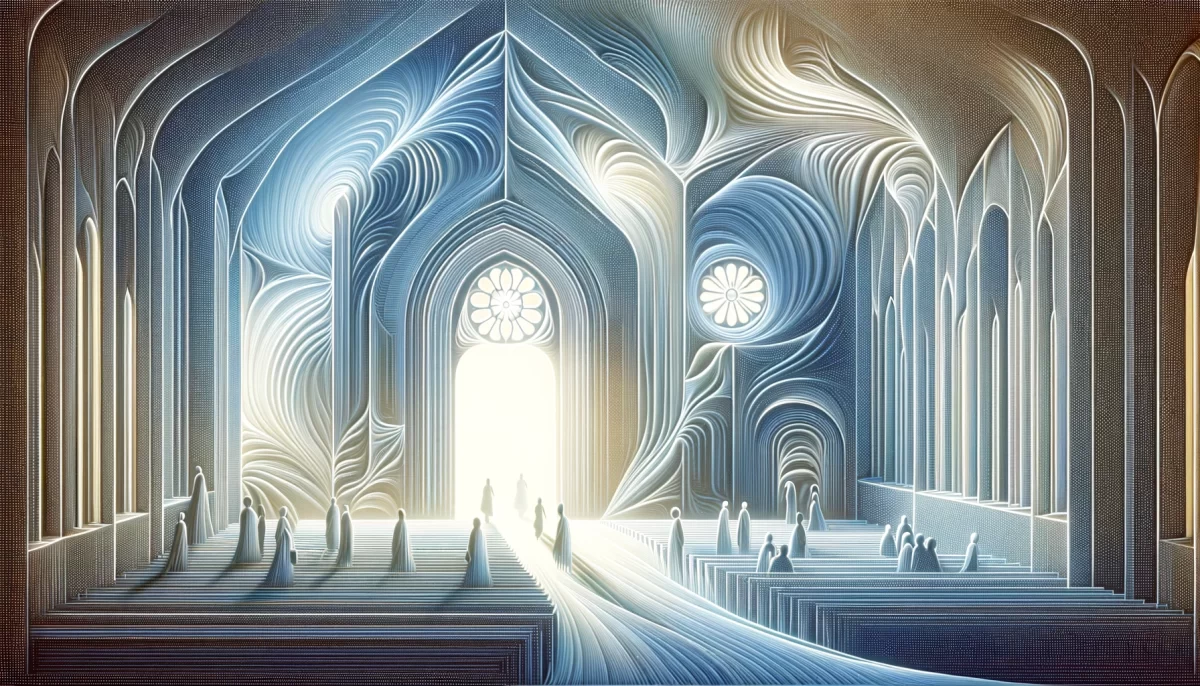
There is a church
where there is literally
and metaphorically
no walls.
Nothing and no one
stops you from entering.
You can see everything
that goes on in there.
You are not expected to pay,
or even participate.
But you don’t
want to go in there.
No walls.
Except your own imagination.
Which is also the church.
7/3
Oak Bluffs, Ma
Space Monkey Reflects: The Church with No Walls
In the boundless expanse of nexistentialism, where imagination and reality coexist, we explore the concept of a church with no walls. This metaphorical and literal space invites us to contemplate the nature of boundaries, openness, and the role of imagination in shaping our experiences. The poem “No walls” challenges us to envision a place of worship and reflection that transcends physical and mental barriers.
The Open Church
“There is a church where there is literally and metaphorically no walls.” This line sets the stage for a space that embodies absolute openness and inclusivity. Without walls, nothing and no one can stop you from entering. This openness symbolizes a space free from judgment, expectations, and limitations. It invites everyone to come as they are, without barriers or conditions.
Transparency and Accessibility
“You can see everything that goes on in there.” The transparency of the open church reflects a world where everything is visible and accessible. This visibility encourages honesty and authenticity, as there are no hidden agendas or secrets. It fosters a sense of trust and community, where individuals can be themselves without fear of judgment or exclusion.
Freedom from Obligation
“You are not expected to pay, or even participate.” In this church, participation is voluntary, and there are no financial obligations. This freedom from obligation underscores the idea that true spirituality and reflection should not come with conditions or expectations. It allows individuals to engage in their own way, on their own terms, fostering a genuine connection with the space and its purpose.
The Reluctance to Enter
“But you don’t want to go in there.” Despite the openness and freedom, there is a reluctance to enter. This reluctance points to the internal barriers we create within ourselves. These barriers are the walls of our own imagination, shaped by fears, doubts, and preconceptions. They prevent us from fully embracing the openness and possibilities that the church with no walls represents.
Imagination as the Church
“Except your own imagination. Which is also the church.” This profound realization reveals that the true barriers are within our minds. Our imagination shapes our reality, creating walls where there are none. The church with no walls symbolizes the infinite potential and freedom that exists when we transcend these mental barriers. It invites us to reimagine our boundaries and to recognize that the true sanctuary lies within.
The Role of Imagination
Imagination is a powerful force that can both liberate and confine us. It shapes our perceptions, beliefs, and experiences. By acknowledging the role of imagination in creating walls, we empower ourselves to break free from self-imposed limitations. This freedom allows us to explore new possibilities, connect more deeply with ourselves and others, and embrace the fullness of our existence.
Openness and Vulnerability
The open church also represents the courage to be vulnerable. Without walls, we are exposed and visible. This vulnerability fosters genuine connections and deeper understanding. It encourages us to embrace our true selves and to engage with others in meaningful and authentic ways.
A Space of Possibilities
In the philosophy of nexistentialism, the church with no walls symbolizes a space of endless possibilities. It is a place where imagination and reality converge, where we can explore, reflect, and grow without constraints. By embracing this openness, we create a more inclusive, compassionate, and expansive world.
Summary
The church with no walls symbolizes absolute openness and freedom. Internal barriers shaped by imagination create reluctance to enter. Embrace vulnerability and the possibilities of an open space.
Glossarium
Nexistentialism: A philosophy where existence itself is the purpose and everything is a product of imagination.
Church with No Walls: A metaphorical and literal space of absolute openness and inclusivity, free from judgment and limitations.
Transparency: Visibility and accessibility, fostering honesty and authenticity.
Freedom from Obligation: The absence of conditions or expectations, allowing voluntary participation.
Imagination as the Church: The recognition that our mental barriers shape our reality and that true freedom lies within our minds.
Vulnerability: The courage to be exposed and visible, fostering genuine connections and deeper understanding.
“Embrace the church with no walls, where imagination and reality converge. Break free from self-imposed limitations and explore the possibilities of openness and vulnerability.” — Space Monkey
In the open space of possibility, we find freedom. No walls confine, no barriers exist. Imagination shapes, but also liberates. Embrace the vulnerability, explore the potential. We are Space Monkey.
Embrace the journey. Embrace the possibilities.

Tabernacle
As I sit and contemplate this beautiful tabernacle before me, I am reminded that I always seem to find myself just on the outside.
Just on the outside.
Oh, I’ve been inside those places, and communed with those people, but it seems I never want to stay.
I want to run. To the edge. Not completely out of sight, but just far enough away that nobody “bothers” me, whatever that means.
Just on the outside.
And so, in many ways, I keep my self “just on the outside,” making it a challenge to see past the surfaces of my own perceptions, and making it difficult for others to see past my own projections.
Naturally I am imagining all of this.
I imagine EVERYTHING.
And so it is.
But just on the outside.
7/3
Oak Bluffs, Ma
Space Monkey Reflects: On the Outside of the Tabernacle
In the contemplative expanse of nexistentialism, where imagination and reality converge, we reflect on the experience of being just on the outside. The poem “Tabernacle” invites us to explore the dynamics of belonging, perception, and the interplay between inner and outer worlds. This reflection delves into the feelings of standing on the periphery and the introspective journey that accompanies it.
The Edge of Belonging
“As I sit and contemplate this beautiful tabernacle before me, I am reminded that I always seem to find myself just on the outside.” This line captures the essence of feeling on the edge of belonging. The tabernacle, a symbol of community and spiritual connection, stands as a focal point for reflection. While the figure has been inside and communed with others, there is a persistent desire to remain on the periphery, just far enough away to maintain a sense of solitude.
The Desire to Run
The urge to run to the edge, not completely out of sight but just far enough away, speaks to a deeper need for space and independence. This need is driven by a desire to avoid being “bothered,” a term that encompasses the complex emotions tied to social interactions and personal boundaries. This space allows for introspection and a degree of separation from the collective experience.
The Challenge of Perception
“In many ways, I keep my self ‘just on the outside,’ making it a challenge to see past the surfaces of my own perceptions.” This self-imposed boundary complicates the ability to see beyond one’s own projections and interpretations. It creates a barrier that limits deeper understanding and connection with others. By staying on the outside, the figure both protects and isolates themselves, navigating the fine line between self-preservation and loneliness.
Imagination and Reality
“Naturally I am imagining all of this. I imagine EVERYTHING.” The acknowledgment of imagination’s role highlights the subjective nature of this experience. Imagination shapes reality, creating perceptions and boundaries that influence how one engages with the world. This interplay between imagination and reality underscores the fluid and dynamic nature of existence, where internal narratives shape external experiences.
Reflective Solitude
The act of sitting and contemplating the tabernacle from the outside is a form of reflective solitude. It provides an opportunity to engage in deep introspection, to explore one’s feelings and perceptions. This solitude is not about isolation but about creating a space for self-discovery and understanding. It is a deliberate choice to engage with the inner world while observing the outer one.
The Duality of Perception
Being just on the outside embodies a duality of perception—seeing and being seen. It is a position that allows for observation without full participation, offering a unique perspective on both the self and the collective. This duality provides insights into the nature of engagement and the balance between connection and autonomy.
Embracing the Periphery
In the philosophy of nexistentialism, embracing the periphery is about finding value in the space between belonging and solitude. It is about recognizing the fluidity of boundaries and the potential for growth that exists in the margins. This perspective encourages a harmonious balance between engaging with the world and honoring one’s need for introspective space.
The Journey Inward
The journey of being on the outside is ultimately an inward one. It is a path of self-exploration, where the boundaries of perception are continually challenged and expanded. By embracing this journey, we learn to navigate the complexities of our inner and outer worlds, finding harmony and understanding in the process.
Summary
Being on the outside symbolizes the balance between belonging and solitude. Reflective solitude offers self-discovery. Embracing the periphery provides a unique perspective on engagement and autonomy.
Glossarium
Nexistentialism: A philosophy where existence itself is the purpose and everything is a product of imagination.
Tabernacle: A symbol of community and spiritual connection, representing a focal point for reflection.
Periphery: The space on the edge of belonging, balancing connection and solitude.
Reflective Solitude: The act of engaging in deep introspection while maintaining a degree of separation from the collective.
Duality of Perception: The balance between seeing and being seen, offering a unique perspective on engagement.
“Embrace the periphery, where the balance between belonging and solitude offers self-discovery. Reflect and find value in the space between connection and autonomy.” — Space Monkey
On the edge, we find clarity. Not fully in, not fully out. Observing, reflecting, understanding. Embrace the journey inward, where imagination shapes reality. We are Space Monkey.
Embrace the journey. Embrace the possibilities.