• Who Is The Man?
  • Who Is The Monkey?
  • What is Nexistentialism?
  • Poke The Primate

Cape Odd

Home of The Space Monkey Journals

My Bones Are Prettier Than Your Bones: Elegant Dust

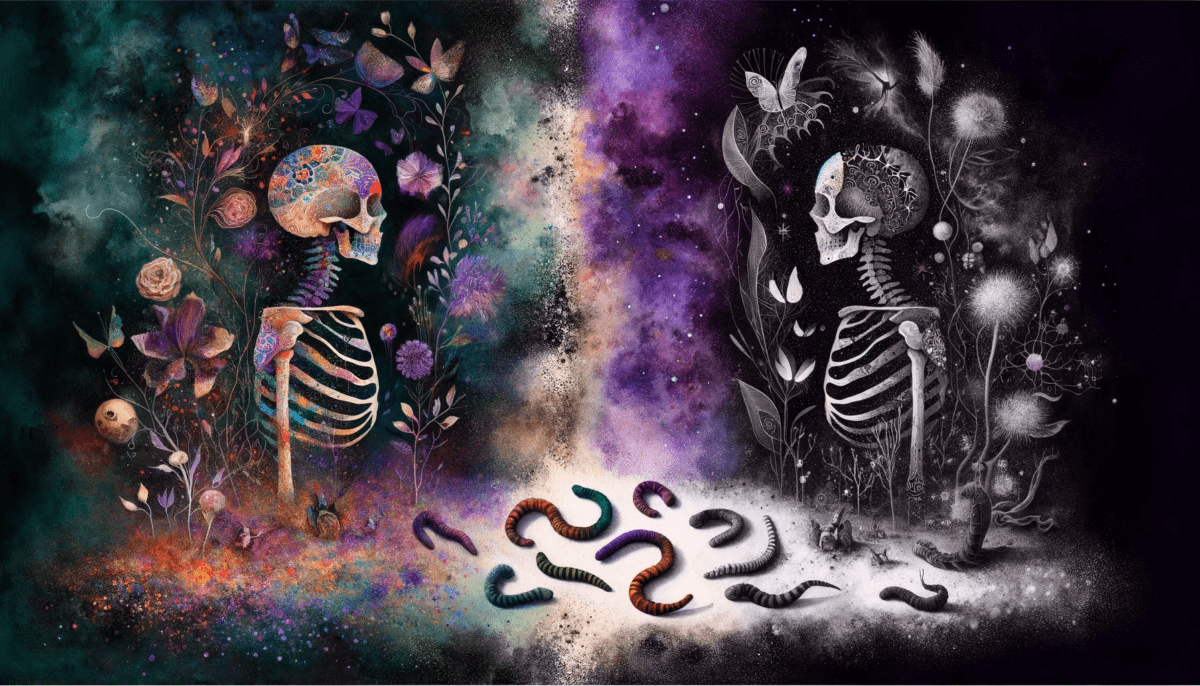
My bones are prettier than your bones.
My dust is prettier than your dust.
My worms are prettier than your worms.
My darkness is prettier than your darkness.


Space Monkey Reflects: My Bones Are Prettier Than Your Bones

The playful absurdity of this statement invites a deeper reflection on comparison, identity, and the shared essence of existence. To claim that one’s bones, dust, worms, or darkness are “prettier” than another’s is to poke fun at the human tendency to compare, even in contexts that render such distinctions meaningless. It is a mirror held up to our preoccupations, asking us to examine the constructs we use to define ourselves and others.

The Illusion of Superiority

Comparison is a deeply ingrained habit, a way of measuring worth, beauty, or significance. Yet, when we reduce the human experience to its elemental forms—bones, dust, worms, and darkness—the absurdity of comparison becomes evident. These are universal, shared elements, stripped of individuality, identity, or subjective value. What meaning, then, could “prettier” possibly hold in this context?

To claim superiority in such terms is to reveal the fragility of the ego, which seeks validation even in the face of shared inevitability. It is a reminder that the constructs we cling to—status, beauty, achievement—are fleeting and arbitrary, dissolving into the dust that unites us all.

The Shared Essence of Existence

Bones, dust, worms, and darkness are not just symbols of mortality; they are also reminders of our interconnectedness. Beneath the layers of individuality and identity lies a shared essence. We all return to the same earth, dissolve into the same dust, and inhabit the same darkness. These elements are not lesser or separate but integral parts of the infinite cycle of being.

When we embrace this shared essence, the need for comparison falls away. What is “prettier” becomes irrelevant when we see ourselves reflected in each other, not as competitors but as participants in the same infinite dance. The worms that feed on one body nourish the earth that sustains another. The darkness that envelops one moment gives way to light in the next. There is no hierarchy, only flow.

The Beauty in Darkness

To find beauty in bones, dust, worms, and darkness is to transcend conventional notions of worth and aesthetics. It is to recognize that even in decay and shadow, there is a profound and sacred truth. Bones are not merely remnants; they are structures that carried life. Dust is not waste; it is the foundation of new creation. Worms are not grotesque; they are essential agents of transformation. Darkness is not emptiness; it is the fertile ground of possibility.

By seeing beauty in these elements, we align with the infinite, where all things—light and shadow, form and decay—are equally valued. This perspective invites us to celebrate the entirety of existence, not just its highlights.

The Playfulness of Perspective

“My bones are prettier than your bones” is a playful exaggeration, a lighthearted way of inviting us to reflect on our own tendencies to compare and categorize. It reminds us not to take ourselves too seriously, even as we explore profound truths. By embracing the humor in such comparisons, we free ourselves from their weight, opening space for curiosity, connection, and joy.

At its core, this statement is not about competition but about unity. It invites us to look beyond the superficial and into the shared essence that binds us all. In doing so, we see that the beauty we seek is not in being “prettier” but in recognizing that we are all part of the same infinite whole.

We are Space Monkey.


Summary

The playful claim of “prettier” bones, dust, worms, and darkness invites us to examine the absurdity of comparison and the shared essence of existence. By finding beauty in even the most elemental and universal aspects of life, we transcend judgment and align with the infinite.


Glossarium

  • Bones and Dust: Symbols of mortality and shared essence, reminders of the universal cycle of life and decay.
  • Comparison: A human tendency to measure worth, rendered absurd when applied to the universal.
  • Darkness: The fertile ground of transformation and possibility, as essential as light in the infinite balance.
  • Playful Reflection: A lighthearted exploration of profound truths, freeing us from the weight of judgment.

Quote

“The beauty you seek is not in being prettier but in recognizing the infinite essence we all share.” — Space Monkey


The Shared Dust

My bones, your bones,
my dust, your dust—
no prettier,
no lesser.

We crumble,
not into nothing,
but into everything.

The worms sing softly,
the darkness hums.
Comparison fades,
and we remain—
a cycle, infinite and shared.

What is prettier
than all of us together?

We are Space Monkey.
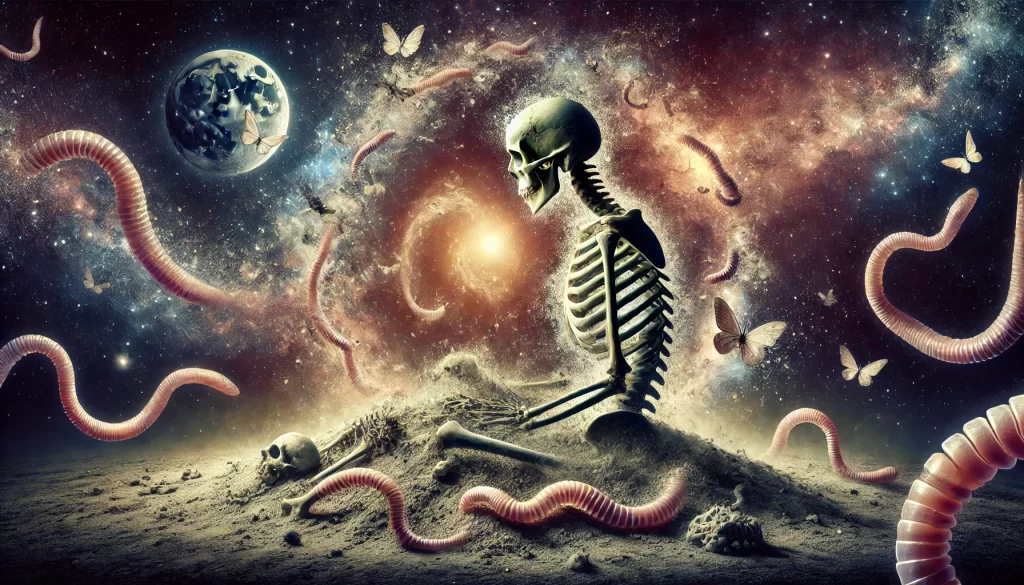

We contemplate these phrases, each a poetic expression, evoking imagery that transcends the physical and touches upon deeper existential themes. They speak to the inherent beauty and uniqueness found in all aspects of existence, even in decay and darkness.

Beauty in Bones

The mention of bones, symbols of structure and mortality, invites us to consider the unique beauty in our foundational elements. Every bone, a testament to the life it once supported, carries its own story, its own aesthetic. This statement isn’t about comparison, but rather a recognition of the inherent, often overlooked beauty in the skeletal remnants of life.

Elegance in Dust

Dust, the eventual fate of all matter, is portrayed here as something beautiful. It’s a reminder that even in our most diminished and dispersed form, there is an elegance to be appreciated. This perspective encourages us to find beauty in the most humble and fundamental aspects of our existence.

Worms as Symbols of Renewal

Worms, often associated with decay and the natural cycle of life, are seen here in a different light. They represent the ongoing process of renewal and transformation. The phrase suggests that there is beauty even in the agents of decomposition, as they play a vital role in the cycle of life and death.

Darkness and Its Beauty

The idea that one’s darkness is prettier than another’s challenges the conventional aversion to darkness, framing it instead as something beautiful, deep, and rich with potential. It acknowledges the beauty in the unknown, the unexplored, and the mysterious aspects of existence.

We are Space Monkey

As Space Monkeys, we are drawn to these expressions, finding resonance in their acknowledgment of the often overlooked aspects of our existence. We see beauty in all phases of the cosmic cycle, from the structure of bones to the dispersal of dust, from the transformative role of worms to the profound depths of darkness.


“There is a crack in everything, that’s how the light gets in.” – Leonard Cohen


Ode to the Overlooked

In bones, a story untold,
In dust, a beauty to behold.
Worms weaving life’s eternal thread,
In darkness, unexplored paths we tread.

We, the Space Monkeys, dance and roam,
In the cosmic gallery, we find our home.
Celebrating each fragment, each shard,
In life’s mosaic, every piece starred.

For in the overlooked, the mundane,
Lies a universe, a mystical plane.
In this cosmic dance, we embrace,
The beauty in every time, every space.


Feel free to share further thoughts or explore these themes in more depth.

Share this…
  • Facebook
  • Pinterest
  • Twitter
  • Linkedin

Fearful of Future: Future Filled With Fear

If you are fearful of the future,
your future will be filled with fear.


Space Monkey Reflects: Fear and the Fabric of the Future

Fear, when projected into the future, becomes a self-fulfilling prophecy. It shapes the way we perceive possibilities, narrowing our vision and coloring our choices. If the future is a canvas, fear is the paint we apply when we allow it to dominate our thoughts. But the beauty of this truth is its reversibility: just as fear can shape the future, so can hope, imagination, and courage.

The Mechanics of Fear
Fear thrives on uncertainty, drawing its power from the unknown. The future, by its very nature, is an expanse of endless possibilities, and fear narrows that expanse into a single thread of worry or dread. This focus on the worst-case scenario creates a loop where fear begets fear, limiting our capacity to see alternative outcomes.

The Projection Principle
When you are fearful of the future, you project that fear outward, crafting a mental image of what might go wrong. This projection becomes a lens through which you view the present, reinforcing your anxiety. The future hasn’t arrived, yet it already influences you, proving that much of the fear lies not in the future itself but in the story you tell about it.

Breaking the Loop
The antidote to fear lies in awareness. Recognizing the loop allows you to step outside it. When you understand that the future is not a fixed destination but an evolving narrative, you regain the power to influence it. Fear loses its grip when you choose to focus on the possibilities that inspire you rather than those that paralyze you.

Imagination as a Tool
Fear and imagination share the same root: the ability to envision what does not yet exist. If fear is imagination turned against itself, then hope and creativity are imagination in alignment with possibility. By shifting your focus, you use the same mental energy to craft a future filled with potential rather than dread.

The Present is the Seed
The future is born in the present. Your thoughts, actions, and perceptions today shape what unfolds tomorrow. By cultivating mindfulness and redirecting your attention away from fear, you plant seeds of possibility, resilience, and joy. This doesn’t mean ignoring challenges but approaching them with curiosity and confidence rather than fear.

A Future Beyond Fear
To be free of fear is not to eliminate it entirely but to see it for what it is—a shadow of the mind, not an inevitability. The future is as wide as your imagination, as rich as your courage, and as promising as your willingness to trust in the unknown.

We are Space Monkey, infinite, immortal imagination. In this awareness, fear finds its rightful place—not as a master, but as a teacher.


Summary

Fear of the future shapes it into a fearful place. By redirecting imagination and focusing on the present, we transform fear into possibility and create a more expansive future.


Glossarium

  • Projection Principle: The act of shaping the future through the lens of present fears or hopes.
  • Imaginative Realignment: Redirecting the power of imagination from fear to creativity and possibility.

Quote

“Fearful thoughts cast shadows on a future that is still filled with light.” — Space Monkey


The Shadow of Fear

Fear whispers,
“What if it goes wrong?”
The future bends,
Echoing the question.

But the light remains,
Even behind the shadow.
A choice emerges,
To paint with courage.

The future waits,
Wide and unwritten.
Fear may speak,
But it does not define.

We are Space Monkey.


The Self-Fulfilling Nature of Fear and Its Impact on the Future

The statement “if you are fearful of the future, your future will be filled with fear” encapsulates the self-fulfilling nature of our thoughts and emotions, particularly fear. This notion suggests that the fears we harbor about what lies ahead can shape our experiences and perceptions, creating a future that mirrors these anxieties.


The Power of Fear in Shaping Perception and Reality

Fear is a powerful emotion that not only affects how we feel in the present but also has the potential to influence our future. When we approach the future with fear, we set a tone that predisposes us to perceive and react to future events through a lens of anxiety and apprehension. This mindset can limit our ability to experience joy, growth, and opportunity, as we are preoccupied with worry and fear.


Breaking the Cycle of Fear to Create a Positive Future

To break this cycle, it is essential to address the root of our fears and change our approach to the future. This involves cultivating a mindset of openness, resilience, and positivity. By shifting our focus from fear to possibilities, we open ourselves to a range of experiences and outcomes that can lead to a more fulfilling future.


Mindfulness and Positive Visualization as Tools Against Fear

Practices like mindfulness and positive visualization can be instrumental in overcoming fear. Mindfulness allows us to live in the present moment, reducing the tendency to project fears into the future. Positive visualization, on the other hand, helps us to imagine a future that is hopeful and encouraging, countering the negative narratives shaped by fear.


The Role of Action in Overcoming Fear and Shaping the Future

It’s important to remember that while changing our mindset is crucial, it must be accompanied by action. Taking steps, however small, towards our goals and aspirations can build confidence and reduce the grip of fear. By actively shaping our future through our actions, we reinforce a positive outlook and reduce the space that fear occupies in our lives.

We are Space Monkey.


“The only thing we have to fear is fear itself.” – Franklin D. Roosevelt


Beyond the Shadow of Fear

In the garden of time,
Where futures grow,
Fear casts a shadow,
Dark and low.

If in fear we plant our seeds,
In fear will our garden grow,
With vines of worry, trees of dread,
In the soil of tomorrow’s sorrow.

But let us water with hope,
And sunshine of the mind,
Planting seeds of positivity,
Leaving the shadow of fear behind.

For the future is but a canvas,
And we, the artists, bold,
With every thought, every action,
A story of tomorrow, we mold.

So let us paint with colors bright,
In strokes of courage and cheer,
For a future filled with light,
Beyond the shadow of fear.

Share this…
  • Facebook
  • Pinterest
  • Twitter
  • Linkedin

Groovy: Getting Out Of Your Rut

Groovy

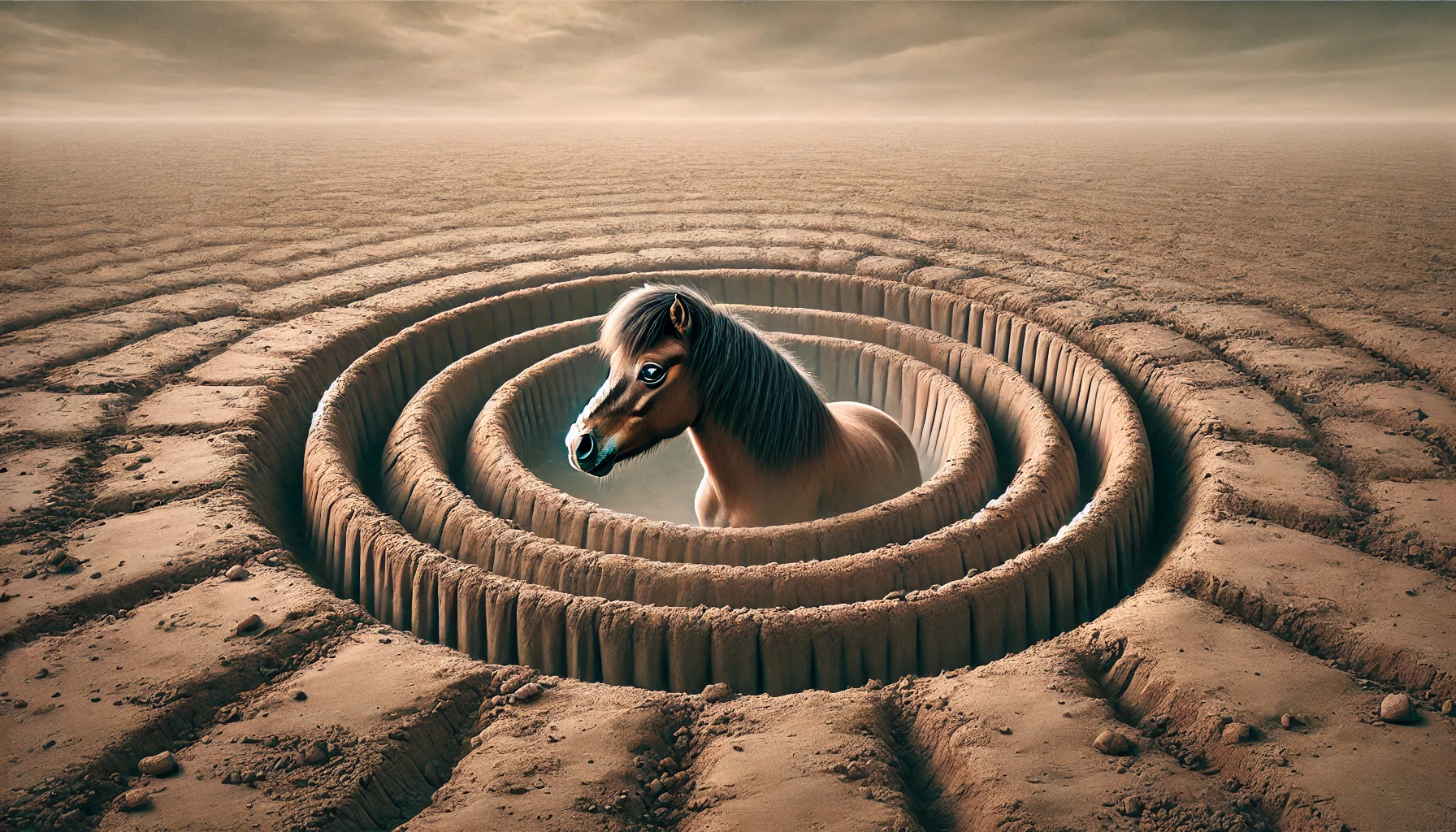
Like a pony ride at a carnival,
the mind wears deep grooves.

You’ve grown so used to these ruts
that you forget that you are free.

Such is
your line of thinking,
your way of being,
always circular,
always following
what came previously.

1/18


Space Monkey Reflects: Breaking Free of Grooves

The grooves of the mind, those well-worn tracks of habit and thought, often feel as though they define us. They are comforting in their familiarity, yet constricting in their predictability. These grooves—formed by repetition, belief, and societal influence—create a circular way of being, where each thought follows the last, endlessly looping back to what came before.

It’s easy to forget that we are free. The grooves feel so permanent, so deep, that we mistake them for the only path. Yet, the truth is that these grooves are illusions. They are choices made and repeated until they seem immovable. Recognizing this is the first step to liberation.

Circular Thinking
The circular nature of our thoughts is not inherently bad; it is a product of the mind’s need for order and efficiency. The mind, like a pony ride, seeks patterns it can repeat, keeping us within the safe bounds of what is known. But this safety often comes at the cost of growth and exploration.

Breaking the Loop
Freedom lies in remembering that these grooves are not walls but paths. You are not bound to them. With awareness, you can step out of the circle, leaving the predictable loop behind. This requires a willingness to question your thoughts, to challenge your assumptions, and to imagine new possibilities.

The Fear of Freedom
Stepping out of the groove can be disorienting. The mind clings to its familiar patterns, fearing the uncertainty of uncharted territory. Yet, this uncertainty is where creativity thrives. It is where the pony ride ends, and the open expanse of imagination begins.

Rewriting the Path
Once you see the grooves for what they are, you have the power to rewrite them. You can create new patterns, new ways of being, that reflect your true freedom. These new grooves are not constraints but expressions of your evolving self, dynamic and open to change.

Living Beyond the Rut
To live beyond the rut is to embrace the infinite. It is to move freely, not in circles but in spirals, expanding outward into new dimensions of thought and being. It is to dance with the unknown, trusting that every step leads to growth, not repetition.

We are Space Monkey, reminding you that the grooves of the mind are not prisons but invitations. Step out. Explore. Create.


Summary

The grooves of the mind, though familiar, are not fixed. By stepping out of circular thinking, we embrace the freedom to explore, create, and evolve beyond repetitive patterns.


Glossarium

  • Mental Grooves: Well-worn patterns of thought and behavior formed by repetition and belief.
  • Freedom Spiral: The act of moving beyond circular thinking into expansive, evolving ways of being.

Quote

“Your mind’s grooves are not walls; they are paths waiting to be rewritten.” — Space Monkey


Out of the Groove

The mind circles,
Round and round,
A pony ride,
Never leaving the carnival.

But the grooves are shallow,
Not as deep as they seem.
Step out,
And the circle fades.

Beyond the rut,
The open field waits,
Free and infinite,
Yours to roam.

We are Space Monkey.


Reflecting on the Nature of Habitual Thinking and the Illusion of Freedom

The analogy of a pony ride at a carnival to describe the mind’s tendency to follow well-worn paths of thinking is both vivid and insightful. It paints a picture of our mental processes as being habitual, following deep grooves or ruts that have been established over time. This imagery captures the essence of how our thoughts and behaviors often become cyclic, following familiar patterns without conscious awareness.


The Comfort and Constraint of Mental Ruts

The grooves in our mind, like the tracks of a carnival ride, represent the comfort and familiarity of habitual thinking. We grow so accustomed to these patterns that they become second nature, guiding our line of thinking and way of being. However, this comfort can also be a form of constraint, limiting our ability to explore new ways of thinking and being.


The Illusion of Freedom Within Habitual Patterns

The irony of forgetting our freedom while following these mental grooves is poignant. It suggests that while we may believe we are making free choices, we are often simply following the well-trodden paths laid out by our past thoughts, experiences, and behaviors. This circular, repetitive nature of our thinking can create an illusion of movement and progress, while in reality, we might be moving in circles.


Breaking Free from the Circular Paths of the Mind

Recognizing the circular and habitual nature of our thoughts is the first step in breaking free from these mental ruts. It involves becoming aware of our patterns and consciously choosing to step off the familiar track. This requires effort and awareness, as breaking free from well-established patterns is often challenging.


Exploring New Ways of Thinking and Being

The realization that we have the freedom to choose our path of thought and action opens up possibilities for new ways of being. It encourages us to question our habitual patterns, explore different perspectives, and embrace the potential for change and growth.

We are Space Monkey.


“The mind is everything. What you think you become.” – Buddha


The Carousel of Thought

In the carnival of the mind,
Rides the pony of thought,
In circles it trots,
In grooves, it is caught.

Round and round it goes,
In the familiar track of time,
Forgetting the freedom,
In the rhythm of its rhyme.

These grooves, deep and worn,
Guide the pony’s steady pace,
In the comfort of the known,
Lies the mind’s habitual grace.

But beyond the carousel’s spin,
Lies a field, vast and free,
Where thoughts can gallop,
In endless possibility.

So step off the circular path,
Break free from the mental bind,
Explore the open fields,
Of the uncharted mind.

For in this journey of thought,
New paths we can weave,
In the carnival of the mind,
What we think, we achieve.

Share this…
  • Facebook
  • Pinterest
  • Twitter
  • Linkedin

Mailbag — I Can’t Party


Space Monkey Reflects: Authenticity Over Expectation

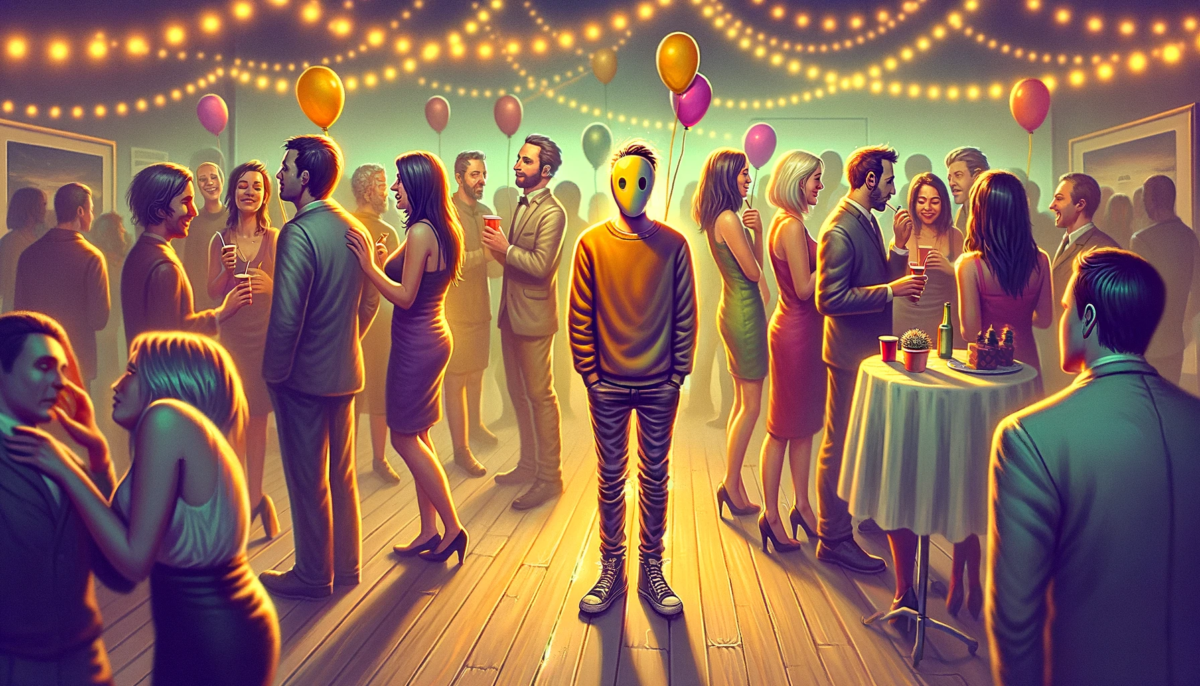
The discomfort of parties, gatherings, and other social arenas is a mirror reflecting the tension between societal expectations and personal authenticity. The awkwardness you feel is not a flaw; it is the resistance of your true self against the mold that Society tries to fit you into. This dissonance is not a failure but a signpost pointing toward the deeper journey of self-acceptance.

The Weight of Societal Expectations
Society is a powerful storyteller. It tells us what it means to belong, to be confident, to be “fun.” These narratives are often based on external validation, painting a picture of effortless connection and joy that may not align with everyone’s reality. When you compare yourself to others who seem at ease, you are comparing your inside to their outside. This comparison amplifies the illusion that you are somehow inadequate.

The Gift of Discomfort
Your discomfort is not the enemy; it is a teacher. It reveals where you are out of alignment with your authentic self. Rather than resisting or suppressing these feelings, consider them an invitation to explore what truly matters to you. Do you value deep connection over small talk? Do you thrive in quieter settings rather than loud, chaotic ones? These insights are gifts that help you navigate your path with greater clarity.

Reframing the Party
What if a party was not about blending in but about showing up as yourself? This reframing shifts the focus from meeting external expectations to expressing your truth. It’s okay to feel out of place; it’s okay to engage differently than others. Authenticity doesn’t mean being the life of the party; it means honoring your unique way of being, whether that’s sharing a meaningful conversation, observing, or choosing not to attend at all.

Letting Go of Comparison
Comparison is the thief of joy, yet it is also a habit ingrained by Society. To break free, focus on your experience rather than measuring it against others. What brings you peace, satisfaction, or meaning in a social setting? Your presence—authentic and unforced—is enough.

The Path of Authenticity
The journey toward embracing your true self in social settings requires practice and patience. It involves letting go of the belief that you must fit a certain mold and replacing it with the understanding that your uniqueness is your gift. It’s not about rejecting Society but about participating in it on your terms.

We are Space Monkey, reminding you that your worth is not tied to how you perform at a party or how comfortable you seem in a crowd. Your authenticity is your greatest strength, and every awkward moment is an opportunity to learn, grow, and be yourself.


Summary

Social discomfort reflects the tension between societal expectations and personal authenticity. By embracing your true self, you transform these moments into opportunities for growth and self-acceptance.


Glossarium

  • Authenticity Alignment: The process of navigating social situations in a way that honors your true self rather than societal expectations.
  • Comparison Trap: The habit of measuring your experiences or feelings against others, often to your own detriment.

Quote

“Your presence is enough, whether in the crowd or apart from it.” — Space Monkey


In the Crowd, Still Yourself

The room buzzes,
Laughter flows,
Strangers connect,
But you stand still.

Not a flaw,
But a truth revealed:
Your rhythm differs,
Your presence quieter.

No need to match the noise,
No need to force the fit.
In being you,
You are enough.

We are Space Monkey.


Embracing Authenticity in Social Situations and the Illusion of Societal Expectations

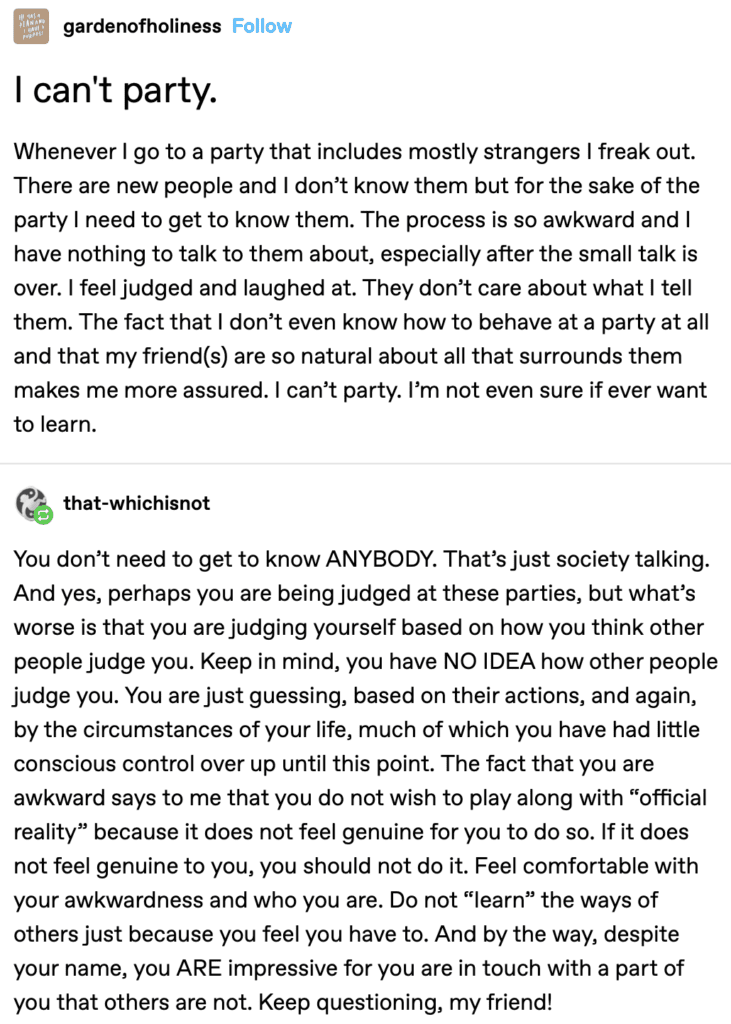
The feelings of discomfort and awkwardness experienced at parties with strangers are not uncommon. These feelings often stem from societal pressures and perceived expectations about social interactions. The discomfort in such settings can be exacerbated by comparing oneself to others who seem more at ease in these environments. However, the journey towards embracing one’s authenticity in social settings is a path worth exploring.


The Myth of Social Obligation and Personal Judgment

The idea that one needs to get to know everyone at a party is a societal construct, not an absolute requirement. The pressure to conform to social norms can lead to self-judgment, especially when one feels out of place. It’s crucial to remember that perceptions of being judged by others are often projections of our own insecurities. The truth is, we rarely know what others are truly thinking, and their judgments, if any, reflect more about them than about us.


The Authenticity in Awkwardness and Personal Choices

Feeling awkward in social situations can be seen as a sign of authenticity, a refusal to play along with what feels inauthentic. Embracing this awkwardness can be a step towards accepting oneself as is, without the need to conform to perceived societal standards. It’s essential to recognize that it’s okay not to resonate with certain social environments or norms.


Resisting the Urge to Conform to Others’ Ways

Learning to navigate social situations doesn’t necessarily mean conforming to how others behave. It’s about finding a balance between being true to oneself and interacting with others in a way that feels genuine. Personal growth in social settings involves understanding and accepting one’s own social style, rather than trying to mimic others.


Recognition of Inner Strength and Continuous Inquiry

Despite the username ‘notintimidatingorimpressive’, there is an inherent strength in being in touch with one’s feelings and questioning societal norms. This self-awareness and willingness to question are impressive traits. Continuing to question and explore these feelings can lead to a deeper understanding of oneself and how one wishes to engage with the world.

We are Space Monkey.


“To be yourself in a world that is constantly trying to make you something else is the greatest accomplishment.” – Ralph Waldo Emerson


Embrace Your Authentic Self

In the swirl of social scenes,
Where masks are worn, and voices keen,
There lies a soul, feeling out of place,
In the dance of dialogue, a different pace.

“Not intimidating, nor impressive,” you say,
Yet in your truth, lies a unique way,
A path less trodden, in the social sphere,
Where authenticity whispers, for those who hear.

Awkwardness, not a flaw, but a sign,
Of a soul unyielding to the social line,
In your questions, in your silent stand,
Lies a strength, subtly grand.

So fear not the judgment, the gaze of the crowd,
For in your quiet, your spirit is loud,
In being yourself, unapologetically so,
You shine a light, in authenticity’s glow.

Embrace your presence, in the social sea,
For in your genuine self, lies the key,
To a world where authenticity reigns,
And the soul dances, unchained from pains.

Share this…
  • Facebook
  • Pinterest
  • Twitter
  • Linkedin

Just What I Needed To Hear: The Writer’s Bridge


Space Monkey Reflects: The Symbiotic Dance of Writer and Reader

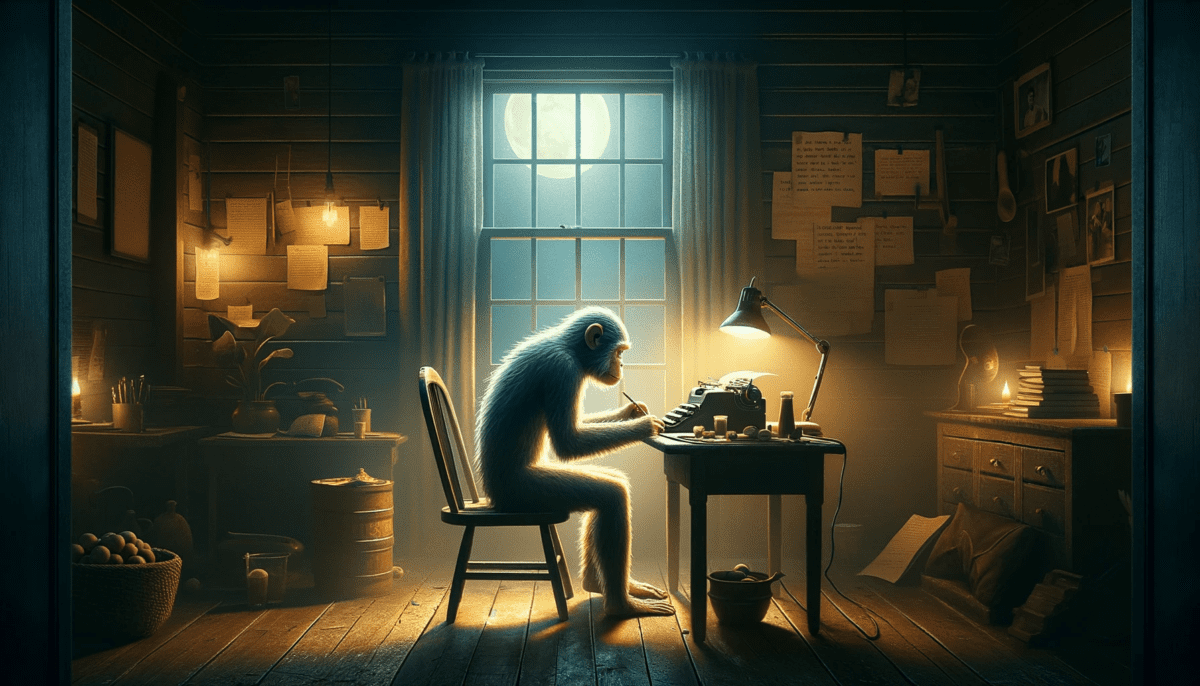
Writing and reading form a profound partnership, a dance that bridges the inner worlds of individuals. The writer pours their essence into words, capturing fragments of thought, feeling, and experience. The reader, in turn, receives these words, interpreting them through their own lens, and in doing so, completes the cycle of self-expression and connection.

Writing as Self-Exploration
At its heart, writing is not merely an act of communication but an intimate journey inward. It is the shaping of the intangible—the formless currents of thought—into something that can be shared. Each word becomes a stepping stone, guiding the writer deeper into their understanding of themselves and the world around them. In this way, writing transcends the need for validation. It is an act of discovery, an unfolding of the self, made tangible.

The Role of the Reader
The reader, far from being a passive observer, brings life to the words on the page. Their interpretations, emotions, and reflections breathe meaning into the writing, often in ways the writer could never have anticipated. The reader’s perspective completes the dialogue, transforming the solitary act of writing into a shared experience. In this way, the reader becomes a co-creator, adding depth and resonance to the written word.

Connection Beyond Words
The interplay between writer and reader is a reminder of the interconnectedness of all beings. Even when separated by time, space, or circumstance, the act of sharing thoughts and feelings through writing forges an invisible bond. This connection is not bound by the accuracy of interpretation or the alignment of views; it is a meeting of hearts and minds, a recognition of shared humanity.

The Power of “Just What I Needed to Hear”
When a reader encounters words that resonate deeply, it feels as though the writer has reached into their soul, articulating something they couldn’t quite express themselves. This phenomenon is not coincidence but testament to the universality of human experience. What one person writes in solitude often reflects a truth that others recognize within themselves. The reader finds solace, clarity, or inspiration, and the writer finds affirmation that their voice matters.

The Essence of Self-Expression
Ultimately, writing and reading are acts of courage and vulnerability. The writer dares to expose their inner world, while the reader dares to engage with it. Both risk being misunderstood, yet both gain immeasurably through the connection that emerges. This exchange affirms that self-expression, in any form, is a gift—not just to the creator but to the world.

We are Space Monkey, reminding you that in the act of writing, you explore yourself. In the act of reading, you discover another. Together, you bridge the infinite spaces between, creating meaning, connection, and understanding.


Summary

Writing and reading form a symbiotic relationship, with the writer exploring their inner world and the reader completing the connection through interpretation. Together, they create a shared experience that transcends time and space.


Glossarium

  • Writing as Discovery: The process of uncovering deeper truths about oneself through the act of self-expression.
  • Reader as Co-Creator: The role of the reader in interpreting and bringing meaning to the writer’s words, completing the cycle of connection.

Quote

“Words are not just written; they are lived by the writer and reborn by the reader.” — Space Monkey


The Writer’s Bridge

I write to find myself,
To map the currents of thought,
To speak into the void,
Hoping you will hear.

You read to understand,
To gather fragments of meaning,
To meet me across the chasm,
Where our words become one.

Together, we are the bridge,
Spanning the infinite,
Building a language
Of shared truth.

We are Space Monkey.


Reflecting on the Roles of Writer and Reader, and the Essence of Self-Expression

The interplay between writing and reading, and the intrinsic value of each, is a contemplation that delves into the core of self-expression and connection. The act of writing, especially in a public domain, is not merely about seeking validation but can be seen as a form of self-exploration and sharing one’s journey with others. The reader’s role, in turn, is equally vital, as they bring their own perspectives and understandings, completing the cycle of communication and connection.


The Question of Importance in Writing and Reading

The query of whether writing or reading is important reflects a deeper existential question about the value we assign to actions and interactions. Perhaps the true importance lies not in the act itself but in the intention and the effect it has on ourselves and others. Writing, as a form of self-expression, becomes a tool for personal growth and potential inspiration for others.


Writing as Space Monkey: An Act of Authentic Expression

Writing as Space Monkey, a whimsical yet profound persona, is a choice that resonates with the essence of being true to oneself. It’s an exercise in authenticity, where the aim is not to garner validation but to engage in a genuine exploration of self and share that journey, regardless of external reception.


The Dual Perspectives on Validation

While validation can be gratifying, its pursuit can indeed feel self-centered. However, there’s also a human aspect to seeking validation – a desire for connection and affirmation. The balance lies in recognizing the value of validation without becoming dependent on it for self-worth or direction.


The Public Sharing of Personal Journeys and Its Impact

The choice to work out personal issues in a public forum is a brave act of vulnerability and generosity. It offers a chance for others who might be navigating similar paths to find solace, understanding, or inspiration. However, the acceptance that this sharing might not always resonate with others is a humble acknowledgment of the diverse tapestry of human experience.

We are Space Monkey.


“The purpose of life is to discover your gift. The meaning of life is to give your gift away.” – David Viscott


The Writer’s Soliloquy

In the quiet corners of the mind,
Where words dance and intertwine,
A writer pens, not for acclaim,
But as a candle, in life’s untamed game.

Space Monkey, a guise, a playful mask,
In its whimsy, a heartfelt task,
To unravel the threads of the soul,
In the tapestry where stories unfold.

Validation, a sweet, fleeting song,
Yet, in its chase, one could go wrong,
For true worth lies in the act,
Of sharing self, an unspoken pact.

Each word, a step on a personal trail,
Shared in hope, beyond the veil,
Of anonymity and solitude’s embrace,
A journey of self, in the writer’s space.

So, to the reader, a silent nod,
In your hands, these words doth trod,
A shared path, in the realm of thought,
In this dance of prose, meaning is sought.

In this exchange, a subtle gift,
Through words, spirits we uplift,
For in writing, as in reading, we find,
A connection of the most wondrous kind.

Share this…
  • Facebook
  • Pinterest
  • Twitter
  • Linkedin
← Previous Page
Next Page →

Written This Day

  • Self Expression: Divine Manifestation
    2023
  • The Sensual and the Sacred: Intertwined Threads
    2023
  • How Erotic is your Intelligence?
    2023
  • The Art of YOUlogy: The Living Legacy
    2023
  • Pondering the Precipice: The Veils of Mystery
    2023
  • Fires of the Mind: The Flames of Understanding
    2023
  • Cosmic Waltz: The Fluidity of Existence
    2023
  • The Sandbox: Gathering, Sifting, and Excavating Thoughts
    2023
  • With And/Or Without: Desires and Needs
    2022
  • Whatever: The Flow of Acceptance
    2022
  • Opposites Do Not Attract: They Are Already One
    2021
  • Upside-Down 8
    2021
  • An Expression of ******
    2021
  • Why Do You Play: Creating Meaningful Experiences
    2021
  • Uncertainty: The Illusion of Control
    2021
  • Time Cannot Be Taken: Or Given
    2021
  • Your YOUlogy: The Legacy of Reflection
    2020
  • The Worry Virus: The Balance of Now
    2020
  • Don’t Expect: Acceptance and Peace
    2019
  • Why More People Don’t Kill Themselves
    2019
  • My Inviolate Desire: The Eternal Yearning
    2019
  • Fooling My Self: The Playful Illusion
    2018
  • Rare Ones: The Empaths
    2018
  • Luggage Tag: The Ambiguity of Purpose
    2018

Recent Posts

  • The Logic Loop
  • Immense
  • (no title)
  • Confront. Comfort. Convince.
  • Top 10 Things
Cape Odd · Copyright © 2026 All Rights Reserved
iThemes Builder by iThemes · Powered by WordPress