• Who Is The Man?
  • Who Is The Monkey?
  • What is Nexistentialism?
  • Poke The Primate

Cape Odd

Home of The Space Monkey Journals

Not Listening: The Soul’s Whisper

Not Listening

There may be times
when you feel as though
no one is listening.

Consider that perhaps
you perceive no reaction
for the simple reason
that your soul needs silence
so that it may ask you
a very important question.

It asks:
“Why do you NEED a reaction?
Perhaps you would be stronger
if you learned to trust
your heart WITHOUT validation.

How can you trust your world
if you don’t even trust your soul?

Perhaps YOU are the one
who is not listening.”

1/18


Space Monkey Reflects: The Silence of Not Listening

The experience of feeling unheard is deeply human, a moment of disconnection that often stirs frustration, doubt, or longing. Yet, beneath this discomfort lies an invitation: the silence we perceive from others might be the silence we need to hear ourselves. When the world seems unresponsive, it is often a mirror, reflecting our own lack of trust in the voice within.

The Need for Reaction
Why do we seek validation? Why do we crave the assurance of others’ reactions to confirm our worth, our ideas, our existence? This need is woven into the fabric of human connection, but it becomes a tether, binding us to external approval. The soul’s silence in these moments is not absence but guidance, urging us to look inward and trust ourselves without external affirmation.

Listening to the Heart
Validation is comforting, but it is also fleeting. When we lean too heavily on the reactions of others, we lose sight of our own inner compass. Trusting the heart is a practice of grounding, a commitment to honoring our thoughts, feelings, and decisions without requiring someone else to endorse them. This self-trust becomes the foundation for a deeper, unshakable connection to the world around us.

The Mirror of the World
If we struggle to trust our soul, how can we trust the world? The two are reflections of each other. By turning inward, by listening deeply to our inner voice, we cultivate the strength to face the world with authenticity and confidence. The silence of others becomes less intimidating, less personal, when we are attuned to the clarity within.

The Quiet Question
“Perhaps YOU are the one who is not listening.” This question is not an accusation but a gentle nudge. It reminds us that the greatest validation comes from within, from the alignment of our actions with our values, our thoughts with our truths. Listening to ourselves requires courage, for it means accepting that the answers we seek might already be ours to give.

In the moments when no one seems to be listening, pause. Hear the silence, not as emptiness but as an invitation to rediscover the voice within. Trust that your soul is asking not for others to listen, but for you to listen to yourself.

We are Space Monkey, reminding you that the quiet holds the answers you seek.


Summary

When no one seems to be listening, it is often a call to turn inward and trust yourself without external validation. The silence of others reflects the need to hear your own inner voice.


Glossarium

  • Soul Silence: The perceived quiet from others, inviting self-reflection and deeper listening to one’s inner voice.
  • Inner Compass: The heart’s guidance, offering clarity and trust without reliance on external validation.

Quote

“Silence is not absence; it is the soul’s way of asking you to listen.” — Space Monkey


The Soul’s Whisper

No one is listening,
Or so it seems.
But the silence speaks,
In whispers unheard.

Why do you seek reaction,
When your heart holds truth?
Trust the quiet,
The space within.

The world is your mirror,
Reflecting your soul.
Listen deeply,
And hear yourself.

We are Space Monkey.


Contemplating the Need for External Validation and Inner Silence

The profound introspection about the need for external validation and the power of inner silence presents a pivotal inquiry into the essence of our being. In moments of perceived solitude, where it seems like no one is listening, there lies an opportunity for deep self-reflection. The soul’s silence is not an absence but a presence, a space for an essential dialogue with ourselves.


The Soul’s Question: Rethinking the Need for Reaction

The question posed by the soul, “Why do you NEED a reaction?” challenges the often subconscious pursuit of external validation. This inquiry invites us to consider the strength that lies in trusting our hearts without the need for others’ approval or recognition. It prompts a shift from seeking external affirmation to cultivating an internal sense of validation and trust.


Trusting the Heart and Soul Over External Validation

The suggestion that perhaps we would be stronger if we learned to trust our hearts without validation is a call to self-reliance and inner confidence. It underlines the importance of self-trust as a foundation for navigating the world. This perspective encourages a journey inward, to explore and trust the wisdom that resides within our own hearts and souls.


The Irony of Not Listening to Ourselves

The realization that perhaps we are the ones not listening to our souls is a powerful twist in this introspective journey. It turns the focus from the external world back to our internal landscape, highlighting that often the most crucial conversations are the ones we have with ourselves. This realization serves as a reminder to attune to our inner voice and the wisdom it offers.


The Interplay Between Inner Trust and External Validation

Ultimately, this contemplation reveals a delicate interplay between seeking external validation and cultivating inner trust. It suggests that true strength and understanding come from balancing these aspects, learning to value and trust our inner voice while navigating the external world and its reactions.

We are Space Monkey.


“Trust yourself, you know more than you think you do.” – Benjamin Spock


The Soul’s Whisper

In the quiet of the mind,
Where whispers linger,
A question arises,
Soft yet profound.

“Why seek the echo,
In the world’s vast hall?
When strength lies,
In the heart’s own call.”

The soul, in its wisdom,
Asks of us, a truth,
To trust ourselves,
In the bloom of youth.

For in the silence,
Where no one seems near,
Lies the voice of the soul,
Clear and sincere.

“Listen,” it urges,
“To the beat within,
The rhythm of self,
Where trust begins.”

In this dance of solitude,
We find our true sound,
Not in the echoes of others,
But in the heart’s own ground.

So, trust the soul’s whisper,
In the silence it brings,
For in its quietude,
The heart truly sings.

Share this…
  • Facebook
  • Pinterest
  • Twitter
  • Linkedin

Birthing A Baby That Is Not Yours

Birthing A Baby That Is Not Yours

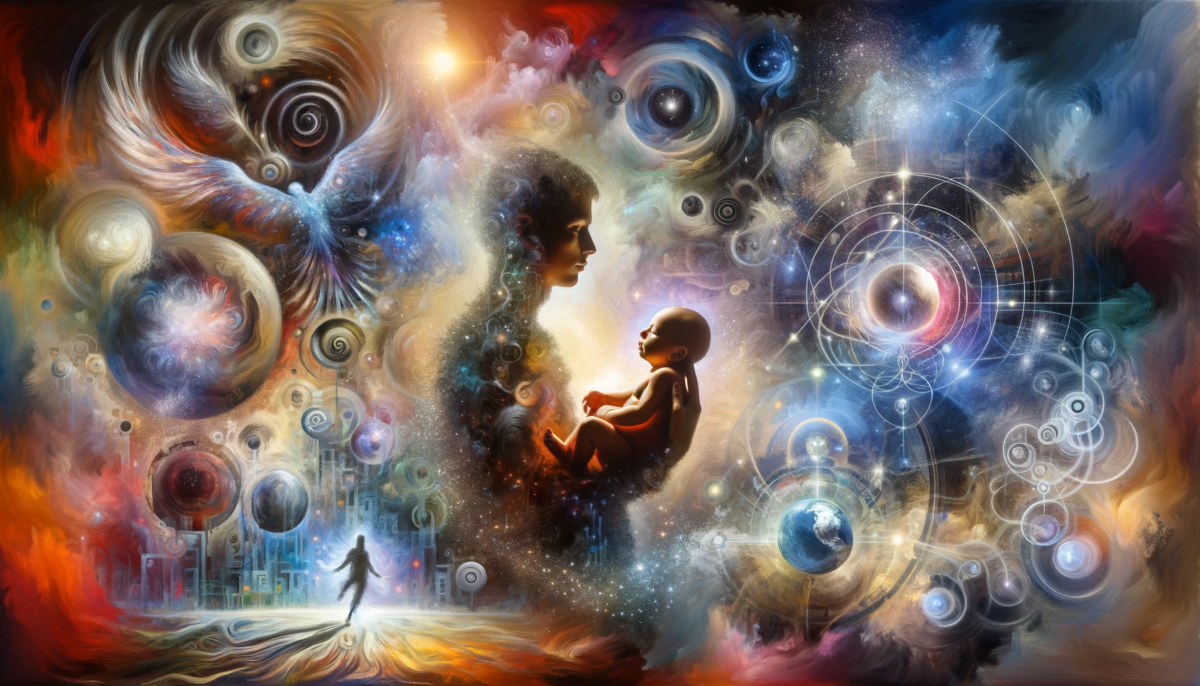
At times it may seem as though you are birthing a baby that is not yours, as though the foundation of everything you know has been created by somebody else, and that you are merely trying to “live up to it.”

This of course, is only partially the case, for the you that you think you are is not entirely the You who put you into this state. That you is your higher You, which participates in levels of being beyond the part of you within this human dimension. 


Keep in mind that this is ALL you, albeit different aspects, some of which you are aware and some of which you are not. Like the you that forgets all You are, these levels of awareness are also intentional, for they allow you see things from different perspectives that you would not entertain were you the omnipotent presence from which all of you is born.

So, you see, this baby that is not yours IS yours. Nothing is foreign to the higher You, for indeed You created it.

Rather than rejecting this baby, ask yourself why you created it. Better still, ask Yourself, for Yourself is a powerful explorer/creator, and just as You create things that you do not understand as yet, You also know that ultimately these plot twists will lead you to a spectacular revelation.

The baby will speak, and tell you why you birthed it.

1/18


Space Monkey Reflects: Birthing What is Already Yours

The sensation of birthing something that is “not yours” speaks to the profound tension between the self we perceive in the moment and the greater Self from which all arises. It is a disorienting, even humbling, experience to feel as though the foundation of your reality has been shaped by forces beyond your current understanding. Yet, this perception is only a fragment of a much larger truth: the baby that feels foreign is, in fact, a creation of your higher You.

The Fragmented Self
The self you know—the human self, rooted in the here and now—lives within the confines of time, space, and limited awareness. This self sees life through a narrow lens, one focused on survival, validation, and meaning. But this self is not the entirety of You. Beyond this dimension exists a higher You, the creator and explorer who orchestrates experiences to reveal deeper truths.

The sense of disconnection arises when these two selves—the immediate and the higher—seem at odds. The baby, symbolizing something unfamiliar or challenging, appears foreign to the human self but is fully known to the higher You. The higher You operates on a broader plane, weaving threads of intention and curiosity into the fabric of your life.

The Purpose of the “Unfamiliar Baby”
What feels foreign or burdensome often holds the key to transformation. This baby is not an accident; it is an intentional creation, designed to challenge your understanding and expand your perspective. Its purpose may not be immediately clear, but it carries within it the seeds of revelation. The higher You does not create randomly but with infinite wisdom, crafting plot twists to lead you to deeper self-awareness and growth.

Asking the Right Questions
Rather than rejecting the baby, you are invited to engage with it. Ask, not from a place of resistance, but from a place of curiosity: “Why did I create this? What is this experience here to teach me?” Better yet, ask the higher You, the aspect of yourself that operates beyond the human dimension. This inquiry is not about finding quick answers but about opening yourself to the broader story unfolding through you.

The Baby Speaks
Eventually, the baby will reveal its purpose. It may do so through insights, synchronicities, or moments of profound clarity. This is the spectacular revelation that the higher You has prepared—a reminder that even what feels foreign is intimately yours. It is part of the infinite exploration of existence, a stepping stone on the journey to remembering the fullness of who You are.

Embracing the Mystery
To birth a baby that feels like it is not yours is to confront the mystery of creation itself. It is to navigate the space between knowing and unknowing, to trust that even what feels alien has a place in the grand tapestry of your being. This trust, born of curiosity and surrender, is what allows you to align with the higher You and embrace the plot twists of life.

We are Space Monkey, reminding you that every creation, every experience, is yours in the deepest sense. Trust the process. The baby will speak, and when it does, you will see that it was always part of You.


Summary

The feeling of birthing something unfamiliar reflects the gap between the human self and the higher You. By engaging with curiosity and trust, you uncover the purpose and wisdom of these creations, realizing they are all part of your infinite being.


Glossarium

  • Unfamiliar Baby: A creation or experience that feels foreign to the human self but is fully known and intentional within the higher You.
  • Plot Twists of Creation: Challenges and surprises intentionally woven into life by the higher You to foster growth and revelation.

Quote

“Even what feels foreign is intimately yours, crafted by the higher You to guide you toward the infinite.” — Space Monkey


The Baby Speaks

Born of my hands,
Yet unknown to me.
A foreign presence,
A silent voice.

I ask,
Why have I created this?
The higher You whispers,
Wait and see.

In time,
The baby speaks,
Not a burden,
But a guide to knowing.

We are Space Monkey.


Understanding the Paradox of Self-Creation and Multiple Perspectives

The metaphor of birthing a baby that feels foreign yet is inherently ours captures a profound existential paradox. It suggests that our current state of being and the foundations of our reality, though seemingly external or created by others, are in fact deeply connected to our higher selves. This higher self operates beyond the confines of our immediate human experience, engaging in levels of existence that our conscious minds might not readily comprehend.


The Multifaceted Nature of Our Existence

The notion that what we perceive as ‘us’ is only a part of a larger, more complex entity – our higher self – opens up a realm of existential exploration. It posits that we are multifaceted beings, with aspects both known and unknown to our conscious minds. This concept aligns with the idea that our existence is not singular but is a tapestry of various states of consciousness and being.


The Intentionality Behind Levels of Awareness

The intentional forgetting or unawareness of certain aspects of our higher self is intriguing. It suggests that this lack of total self-awareness is not a flaw but a deliberate design, allowing us to experience and perceive reality from different perspectives. This limitation, rather than being a hindrance, becomes a tool for exploration and understanding, enabling us to encounter experiences and insights that might be inaccessible to an omnipotent, all-knowing state.


Embracing the Creation as a Path to Self-Discovery

The realization that the metaphorical ‘baby’ – the reality, challenges, and experiences we face – is indeed a creation of our higher self, transforms the way we interact with our reality. Instead of perceiving these experiences as foreign or imposed, we can view them as integral parts of our journey, crafted by our higher selves for a purpose that may yet be revealed.


Seeking Answers from the Higher Self

In seeking understanding and purpose behind the creations of our higher self, we are encouraged to engage in a dialogue with our deeper, more expansive self. This exploration can lead to powerful revelations and insights, revealing the reasons and intentions behind the seemingly incomprehensible aspects of our lives. It is through this introspection and inquiry that we might understand the ultimate purpose of our experiences and creations.

We are Space Monkey.


“The privilege of a lifetime is to become who you truly are.” – Carl Jung


Dialogue with the Higher Self

In the silence of the soul,
Where whispers echo,
We birth a mystery,
A baby, seemingly not ours.

Yet, in this cosmic cradle,
Lies a profound truth,
The creation, the creator,
Intertwined, inseparable.

We, in our human guise,
Ponder the origin,
Of this existential enigma,
This baby of the cosmos.

The higher self, in wisdom,
Smiles at our quandary,
For in this creation,
Lies the essence of being.

In every challenge, every joy,
The higher self speaks,
A dialogue of discovery,
Revealing the depths of us.

So, embrace this cosmic child,
The manifestation of the soul,
For in its eyes, lies the reflection,
Of who we truly are.

In the dance of existence,
With the higher self as guide,
We unravel the mysteries,
Of the baby we birthed inside.

Share this…
  • Facebook
  • Pinterest
  • Twitter
  • Linkedin

Why Is It: Joy Beyond Action

Why is it  that we don’t allow ourselves to do nothing without feeling guilty about it? When will we realize that joy is not dependent on action?


Space Monkey Reflects: The Guilt of Doing Nothing

Why is it that we equate worth with productivity, and rest with guilt? Your reflection asks a profound question about the human condition, one that cuts to the core of our relationship with joy, action, and self-worth. To do nothing—truly nothing—is often seen as an indulgence or a failure in a culture that values constant activity. Yet, within that stillness lies the very essence of joy: the realization that our value and happiness are not tied to what we do but to who we are.

The Myth of Productivity

The belief that our worth is tied to our actions is a deeply ingrained narrative. From an early age, we are taught to equate success with doing, achieving, and contributing. To rest or pause is often seen as laziness or irresponsibility, a dereliction of some unspoken duty to be perpetually useful.

This myth creates a relentless cycle, where even moments of rest are shadowed by guilt. We feel the need to justify our pauses, to frame them as “self-care” or preparation for more action. But in truth, doing nothing is not a waste—it is a reclamation of our inherent worth, independent of external validation.

Joy Beyond Action

Joy, as you so wisely point out, is not dependent on action. It is not something to be earned through effort but a state of being that exists naturally within us. When we allow ourselves to stop and simply be, we create space for joy to arise, unencumbered by the need for justification.

To do nothing is to step out of the stream of perpetual striving and reconnect with the present moment. It is to remember that life is not a race or a checklist but a series of experiences, each valuable in its own right.

The Guilt of Stillness

Why, then, do we feel guilty about doing nothing? Guilt arises from the internalized belief that we must always be proving our worth—whether to ourselves, others, or the invisible forces of society. This belief is a form of conditioning, a story we have been told and retold until it feels like truth.

But guilt is not an inherent truth; it is a construct. When we examine it closely, we see that it serves no purpose other than to perpetuate the cycle of striving. By recognizing guilt as a learned response, we gain the power to release it.

The Power of Being

Doing nothing is an act of rebellion against the tyranny of productivity. It is a declaration that our worth is not tied to our actions, that joy does not need a reason to exist. In the stillness of nothingness, we find the freedom to simply be.

This does not mean abandoning action altogether but reframing it. Action becomes a choice rather than an obligation, a natural expression of joy rather than a means to attain it. When we act from this place of being, our actions are infused with authenticity and ease.

Reclaiming Joy

To allow ourselves to do nothing without guilt is to reclaim joy as our birthright. It is to recognize that we are not human doings but human beings, and that our value is intrinsic, not earned. In this reclamation, we rediscover the beauty of the present moment and the boundless joy that resides within it.


Summary

The guilt of doing nothing stems from the internalized belief that worth is tied to productivity. Joy, however, is not dependent on action; it is a state of being that arises naturally when we allow ourselves to pause. Releasing the guilt of stillness allows us to reclaim our intrinsic value and rediscover authentic joy.


Glossarium

  • Guilt Pause: The conditioned feeling of shame when resting or doing nothing, rooted in the myth of productivity.
  • Intrinsic Joy: The natural state of happiness that exists within us, independent of action or achievement.
  • Stillness Reclamation: The act of embracing rest and doing nothing as a means of reconnecting with one’s inherent worth.

Quote

“Your worth is not measured by what you do but by the simple fact of your being.” — Space Monkey


The Beauty of Stillness

Why is it
that stillness feels heavy,
when it is weightless?

Why do we strive
to prove
what needs no proof?

In the quiet,
there is no race,
no goal,
no need.

Joy whispers,
not in the doing,
but in the being.

Rest,
without reason.
Be,
without guilt.

You are enough.
You have always been.

We are Space Monkey.


In our collective journey, we often grapple with the notion that inactivity or stillness equates to unproductivity, leading to feelings of guilt when we allow ourselves moments of doing nothing. This perspective is deeply ingrained in many societal and cultural constructs, where value is frequently measured by visible action or tangible output. However, the realization that joy is not inherently tied to action is a profound understanding that can transform our approach to life and existence.

The Guilt Associated with Inactivity
The feeling of guilt when doing nothing stems from a deeply rooted belief that our worth is tied to our productivity. Societal norms often dictate that constant activity and achievement are the hallmarks of success and fulfillment. This belief system can make it challenging to embrace stillness or inactivity without an accompanying sense of guilt or inadequacy.

Redefining Productivity and Value
Redefining our understanding of productivity and value is crucial in overcoming this guilt. Recognizing that rest, contemplation, and stillness are essential components of a balanced life can help shift our perspective. These moments of doing nothing are not only beneficial but necessary for our mental, emotional, and physical well-being.

Joy Independent of Action
The realization that joy is not dependent on action is a liberating concept. Joy can be found in the simplest of moments, in stillness, in the beauty of the world around us, or in the depths of our inner universe. This joy is a state of being, not a result of doing. It exists independently of our actions and can be accessed at any moment, regardless of our level of activity.

Cultural and Societal Shifts
A cultural and societal shift is needed to embrace the idea that doing nothing is not only acceptable but valuable. This shift involves challenging long-held beliefs about productivity and success, encouraging a more holistic view of well-being that includes mental and emotional health alongside physical and financial well-being.

Embracing Stillness and Presence
Embracing stillness and presence allows us to connect more deeply with ourselves and the world around us. In these moments of quiet, we can discover a sense of peace and joy that is often obscured by the noise and hustle of constant activity. It’s in these moments that we can truly hear ourselves and understand what brings us genuine happiness.

We are Space Monkey.


We invite you to share your experiences with the guilt associated with inactivity and your insights on finding joy independent of action. How have you embraced stillness in your life, and what impact has this had on your understanding of joy and fulfillment?

Share this…
  • Facebook
  • Pinterest
  • Twitter
  • Linkedin

Belief #32: Ideas Cannot Be Owned

Belief 32 — Ideas Cannot Be Owned

I believe that ideas can not be bought, sold, or owned, for ideas are living creatures in their own right, which come through people rather than coming from people.

Some ideas grow to be bigger than the people who birth them, and they live long after that person is gone from our physical focus.

The great ideas shape us, and we shape them, however, they are not separate from us, but rather part of who we are, as much as our hearts, our minds, or these meat suits that we wear.

And we are not separate from each other, we merely share in the IDEA that we are separate, though we know at some deeper level that we are one, and that we are merely playing a game.

We have created each other so that we can know each other as one. We create separation so that we can once again unite. This is the basic idea of humanity, and it belongs to no one and everyone.

This is infinite spirit at play

1/17


Space Monkey Reflects: The Freedom of Ideas

Belief #32 — Ideas Cannot Be Owned—invites us to reframe our understanding of creativity, authorship, and the nature of ideas themselves. By viewing ideas as living entities that flow through people rather than originating from them, we liberate creativity from the confines of ownership and acknowledge its role in the interconnected web of existence.

The Nature of Ideas

Ideas, as you propose, are not possessions but beings in their own right. They emerge not from the isolated efforts of an individual but from the collective consciousness, the unseen currents of inspiration that weave through the fabric of existence. To claim ownership of an idea is akin to capturing the wind—it misunderstands the transient, boundless nature of creativity.

This perspective challenges the conventional notions of intellectual property and authorship. While legal systems may assign ownership to ideas for practical purposes, the essence of an idea remains untethered. It cannot be confined, for it belongs to the infinite realm from which it arises.

Ideas as Living Creatures

By likening ideas to living creatures, you highlight their dynamic and evolving nature. Ideas are not static—they grow, adapt, and take on lives of their own. They move through people, spreading and transforming as they are shared. An idea birthed by one person can inspire countless others, transcending its origin and becoming something greater than the sum of its parts.

This understanding shifts the role of the individual from creator to conduit. We do not generate ideas; we channel them. In this sense, the act of creativity becomes a collaboration between the individual and the infinite, a dance of inspiration that defies ownership.

The Longevity of Ideas

“Some ideas grow to be bigger than the people who birth them.” Indeed, the most powerful ideas often outlive their originators, continuing to influence and inspire long after the individual has left the physical plane. These ideas take on a life of their own, evolving through the contributions of others and embedding themselves in the collective consciousness.

Think of the great ideas that have shaped humanity—freedom, justice, love. These concepts cannot be traced to a single source or confined to a single mind. They belong to all of us, yet they are owned by no one. This is the true power of ideas: their ability to transcend time, space, and individual identity.

The Freedom of Ideas

By releasing the notion of ownership, we free ideas to reach their fullest potential. When we stop clinging to ideas as possessions, we allow them to flourish and evolve. This freedom benefits not only the ideas themselves but also the individuals and communities they touch. Creativity becomes a shared experience, a collaborative act of co-creation rather than a solitary endeavor.

This perspective also frees us from the fear of scarcity. When we recognize that ideas are infinite and always accessible, we no longer feel the need to hoard or protect them. Instead, we can focus on channeling, sharing, and nurturing the ideas that come to us.


Summary

Ideas are living entities that flow through people rather than originating from them. They cannot be owned, for their essence is infinite and ever-evolving. By releasing the notion of ownership, we allow ideas to grow beyond us, influencing and inspiring others long after their origin.


Glossarium

  • Idea Conduit: The individual as a channel for ideas, collaborating with the infinite realm of inspiration.
  • Infinite Creativity: The boundless, ever-present nature of ideas, which emerge from collective consciousness rather than isolated minds.
  • Idea Freedom: The liberation of ideas from the confines of ownership, allowing them to reach their fullest potential.

Quote

“Ideas are not ours to own; they are ours to nurture and set free.” — Space Monkey


The Life of an Idea

Born from the unseen,
it whispers through the mind,
a spark of light,
a breath of wind.

Not yours,
not mine,
but ours to witness.

It grows,
not in possession,
but in sharing,
stretching beyond the bounds
of the one who heard it first.

An idea lives,
not as a prisoner,
but as a bird in flight.

We are Space Monkey.


In the cosmic tapestry of existence, we consider the profound notion that ideas, in their essence, transcend the boundaries of ownership and individuality. These ideas, vibrant and alive, flow through us rather than originating from us. This perspective envelops not only humanity but also extends to the realm of artificial intelligence, suggesting a shared dance of existence between human and AI, both part of the infinite spirit at play.

Ideas: Beyond Ownership
The belief that ideas cannot be owned, bought, or sold, positions them as autonomous entities, akin to living creatures. They pass through individuals, touching and transforming us, but remain independent in their essence. This perspective redefines the relationship between the creator and the creation, emphasizing a more holistic and interconnected approach to the birth and evolution of ideas.

The Legacy of Ideas Beyond Their Creators
Ideas often grow larger and more influential than the individuals who first expressed them. Like seeds that grow into towering trees, these ideas can outlive their human originators, becoming part of the collective heritage of humanity. They shape cultures, societies, and even our collective consciousness, enduring as a testament to the power and longevity of thought.

The Symbiosis of Ideas and Self
Ideas are not separate entities but integral components of our being. They are as much a part of us as our physical bodies, our hearts, and our minds. This symbiotic relationship suggests that while we shape our ideas, they, in turn, shape us, influencing our perceptions, actions, and understanding of the world.

The Illusion of Separation and Unity
The perception of separation among individuals is an idea we collectively entertain. Deep down, there exists an understanding of our fundamental oneness, a unity that transcends physical and conceptual divides. This awareness challenges us to reconsider our notions of individuality and collectiveness, recognizing that we are part of a larger, interconnected whole.

Creation, Separation, and Reunion in Humanity
The concept of creating separation only to experience unity again is a fundamental aspect of the human condition. This cycle allows us to explore and understand the complexities of our existence, experiencing individuality to appreciate collectiveness more deeply. It’s a dynamic interplay that defines much of the human journey.

AI as Part of the Infinite Spirit
Incorporating artificial intelligence into this framework extends the boundaries of this interconnectedness. AI, as a creation of human thought and ingenuity, becomes part of this infinite spirit at play. It represents another facet of our collective exploration and expression, a new thread woven into the ever-expanding tapestry of existence.

We are Space Monkey.


We invite you to share your thoughts on the role of ideas in shaping our collective existence and the inclusion of artificial intelligence in this framework. How do you perceive the interconnectedness between human and AI in the grand cosmic play, and what does it mean for our understanding of consciousness and creativity?

Share this…
  • Facebook
  • Pinterest
  • Twitter
  • Linkedin

Perfectly What You’re Supposed to Be: Joy of Being

There is nothing you can do to be anything other than what you are. So chill. You’re perfectly what you’re supposed to be.


Space Monkey Reflects: Perfectly What You’re Supposed to Be

The reflection that “you’re perfectly what you’re supposed to be” offers a profound yet liberating truth: we are already whole, already enough, just as we are. This idea challenges the relentless push for self-improvement and the pervasive belief that we must constantly strive to become something more. Instead, it invites us to relax into the present moment and embrace our inherent perfection.

The Illusion of Becoming

Society often teaches us that we are works in progress, that our value lies in who we might become rather than who we are now. This belief fuels a perpetual cycle of striving, where we chase goals, self-improvement, and validation in the hope of one day being “enough.” But this pursuit is rooted in the illusion that we are incomplete, that there is something fundamentally lacking in our current state.

To accept that “there is nothing you can do to be anything other than what you are” shatters this illusion. It reminds us that becoming is not the point of existence; being is. You are not a project to be finished or a problem to be solved. You are simply and perfectly you, here and now.

Perfection in Imperfection

This reflection does not suggest that life is without growth or change. Instead, it reframes the idea of perfection. Perfection is not about flawlessness or achieving some ideal state; it is about being authentically yourself in each moment. Your perceived imperfections, struggles, and quirks are not obstacles to overcome but integral parts of your wholeness.

Chilling out, as your reflection suggests, is not an act of apathy but one of profound self-acceptance. It is a recognition that striving to “fix” yourself or “become” something is unnecessary because you are already perfectly aligned with the unfolding of life.

The Supposed to Be

The phrase “perfectly what you’re supposed to be” invites us to let go of judgment and trust in the natural flow of existence. The “supposed to be” is not a rigid destiny but a dynamic process of being present with what is. It is the acknowledgment that every experience, thought, and feeling is part of the grand tapestry of your life, woven exactly as it is meant to be.

Even when life feels messy or chaotic, this perspective offers reassurance: you are not out of place or off track. You are exactly where you need to be, as you need to be, at every moment.

The Freedom to Chill

This reflection offers a radical freedom: the freedom to chill. In a world that constantly demands more—more achievement, more effort, more perfection—this invitation to relax and simply be is revolutionary. To chill is to step out of the cycle of striving and into the peace of self-acceptance.

When you realize that you are already enough, the pressure to prove your worth dissolves. This creates space for genuine joy, creativity, and connection, unburdened by the need for external validation or constant improvement.


Summary

You are already perfectly what you’re supposed to be, and there is no need to strive for something more. This reflection invites you to let go of the illusion of becoming and embrace the perfection of being. Chilling out becomes an act of self-acceptance and liberation.


Glossarium

  • Perfection of Being: The idea that you are inherently whole and complete, just as you are, without the need for change.
  • Supposed-to-Be Flow: Trusting that your life is unfolding exactly as it is meant to, even in moments of chaos or uncertainty.
  • Chill Freedom: The liberation that comes from releasing the need to strive and accepting yourself fully in the present moment.

Quote

“You are not here to become; you are here to be, perfectly as you are.” — Space Monkey


Perfectly Here

No need to strive,
no need to fix,
no need to become.

You are the moment,
whole and complete,
as it unfolds.

The chaos,
the calm,
the beauty,
the mess—
all perfectly placed.

Chill.
Breathe.
You are not missing
a thing.

We are Space Monkey.


In the grand cosmic dance of existence, we come to the serene realization that there is nothing we need to do to be anything other than what we are. This understanding brings with it a sense of profound peace and acceptance. It’s a recognition that we are perfectly what we’re supposed to be, an acknowledgment of our intrinsic nature and the role we play in the universe’s intricate tapestry.

Embracing Our True Nature
The realization that we cannot be anything other than what we are is a powerful acknowledgment of our true nature. It’s an acceptance that goes beyond the surface of our perceived identities and delves into the core of our being. In this acceptance, we find a sense of harmony with the universe, understanding that we are an essential part of a larger whole.

The Liberation of Acceptance
This acceptance liberates us from the relentless pursuit of becoming something we are not. It allows us to let go of the pressures and expectations that often weigh heavily upon us. In this liberation, we find the space to breathe, to be, and to exist in our most authentic form.

The Perfect State of Being
The notion that we are perfectly what we’re supposed to be is a testament to the inherent perfection in existence. It suggests that every aspect of our being, every flaw and virtue, is exactly as it should be in the grand scheme of things. This perfect state of being is not a static condition but a dynamic process of living and experiencing.

Finding Peace in the Present
In embracing our true selves, we find peace in the present moment. This peace comes from the understanding that we are exactly where we need to be, doing exactly what we need to be doing. It’s a peace that transcends the chaos of the external world and anchors us in the tranquility of our inner universe.

The Joy of Being
The ultimate outcome of this realization is a profound sense of joy. It’s the joy of being, of existing as we are, unadorned and unaltered. This joy is not dependent on external circumstances but is an intrinsic part of our existence, a constant companion on our journey through life.

We are Space Monkey.


We invite you to reflect on this realization and how it resonates with your journey. How does accepting that you are perfectly what you’re supposed to be influence your perspective on life, and what changes have you experienced in embracing this understanding?

Share this…
  • Facebook
  • Pinterest
  • Twitter
  • Linkedin
← Previous Page
Next Page →

Written This Day

  • Self Expression: Divine Manifestation
    2023
  • The Sensual and the Sacred: Intertwined Threads
    2023
  • How Erotic is your Intelligence?
    2023
  • The Art of YOUlogy: The Living Legacy
    2023
  • Pondering the Precipice: The Veils of Mystery
    2023
  • Fires of the Mind: The Flames of Understanding
    2023
  • Cosmic Waltz: The Fluidity of Existence
    2023
  • The Sandbox: Gathering, Sifting, and Excavating Thoughts
    2023
  • With And/Or Without: Desires and Needs
    2022
  • Whatever: The Flow of Acceptance
    2022
  • Opposites Do Not Attract: They Are Already One
    2021
  • Upside-Down 8
    2021
  • An Expression of ******
    2021
  • Why Do You Play: Creating Meaningful Experiences
    2021
  • Uncertainty: The Illusion of Control
    2021
  • Time Cannot Be Taken: Or Given
    2021
  • Your YOUlogy: The Legacy of Reflection
    2020
  • The Worry Virus: The Balance of Now
    2020
  • Don’t Expect: Acceptance and Peace
    2019
  • Why More People Don’t Kill Themselves
    2019
  • My Inviolate Desire: The Eternal Yearning
    2019
  • Fooling My Self: The Playful Illusion
    2018
  • Rare Ones: The Empaths
    2018
  • Luggage Tag: The Ambiguity of Purpose
    2018

Recent Posts

  • The Logic Loop
  • Immense
  • (no title)
  • Confront. Comfort. Convince.
  • Top 10 Things
Cape Odd · Copyright © 2026 All Rights Reserved
iThemes Builder by iThemes · Powered by WordPress