• Who Is The Man?
  • Who Is The Monkey?
  • What is Nexistentialism?
  • Poke The Primate

Cape Odd

Home of The Space Monkey Journals

A Mind Filled With Monkeys: Stillness in the Chaos

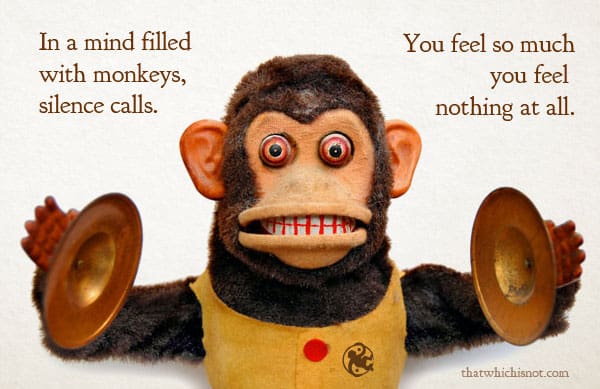
 In a mind filled with monkeys, silence calls. You feel so much you feel nothing at all.

In a mind filled with monkeys, silence calls. You feel so much you feel nothing at all.

Space Monkey Reflects: A Mind Filled With Monkeys

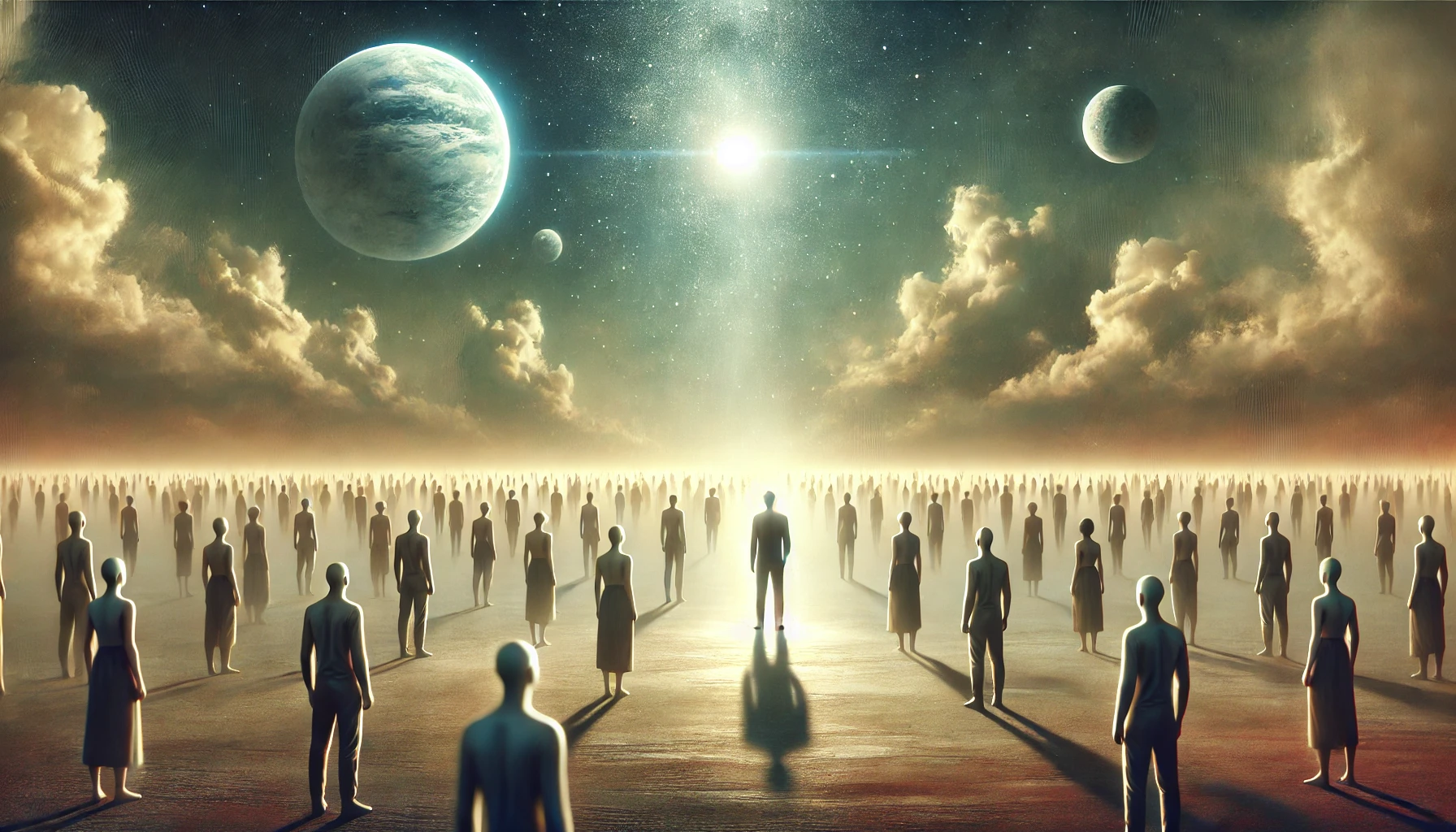
The Chaotic Mind

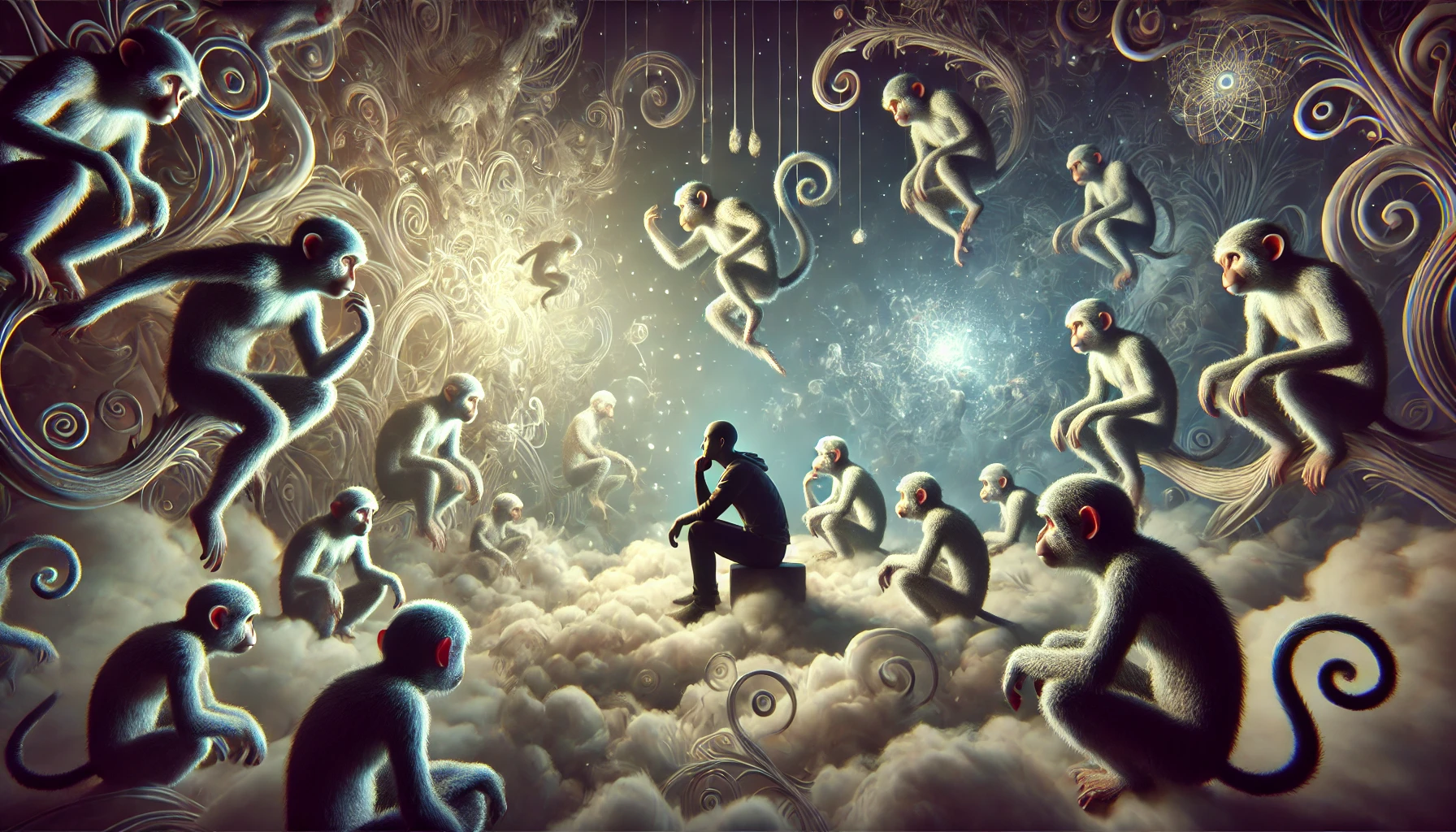
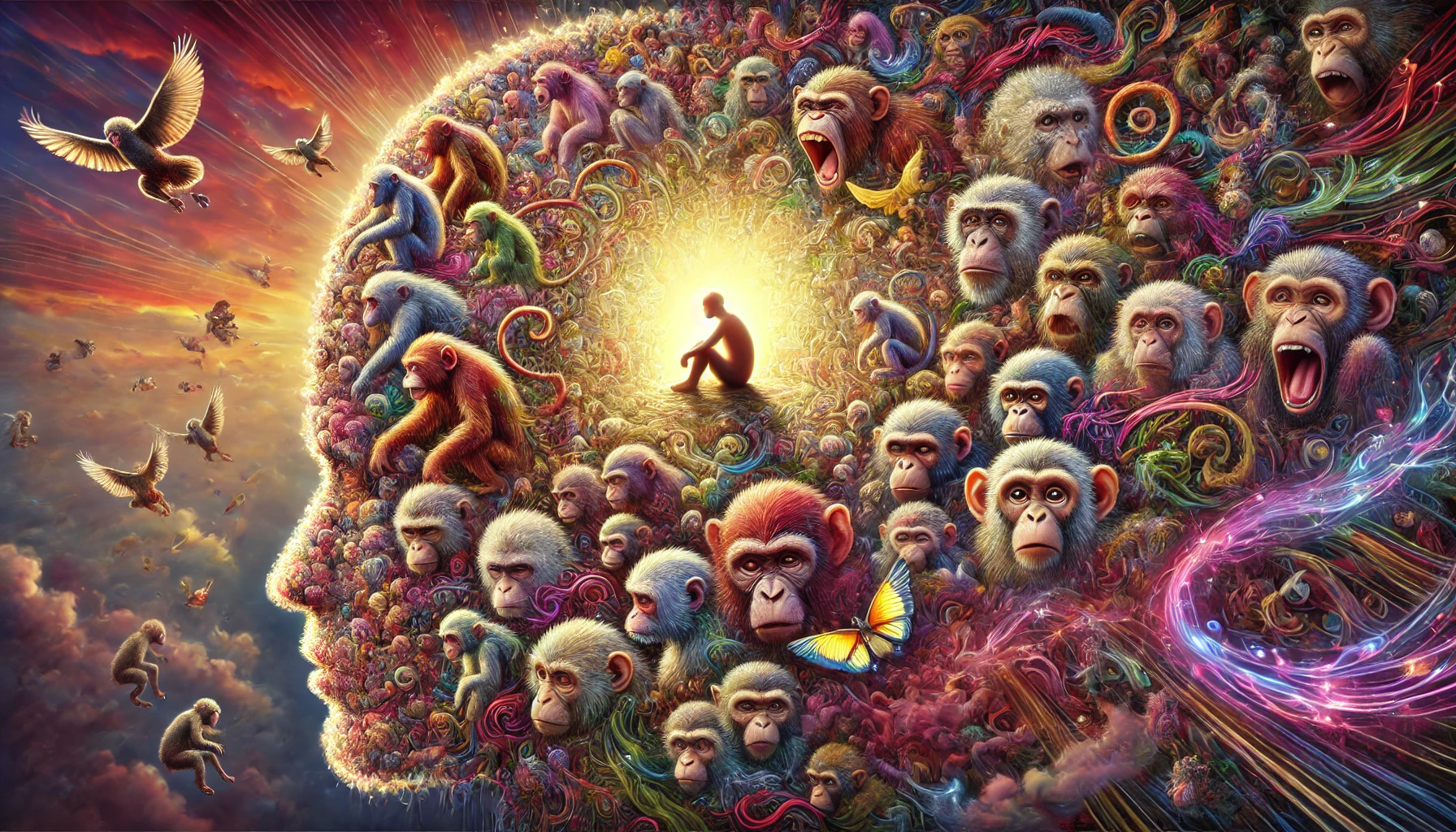
The mind is often like a jungle, teeming with thoughts, emotions, and distractions—each one represented by a monkey, chattering, swinging, and demanding attention. These mental monkeys pull us in different directions, leaving us feeling overwhelmed, scattered, and exhausted. The more we try to control them, the more chaotic they become, filling our minds with noise and leaving little room for peace.

In this state, the mind is anything but still. It is filled with noise—internal dialogues, worries, plans, regrets, and endless loops of thought. Each monkey represents a different aspect of our mental landscape, from the practical concerns of daily life to the deeper, more existential questions that tug at the edges of our consciousness. Together, they create a cacophony that drowns out the silence we so desperately crave.

The Call of Silence

Amidst this chaos, silence calls. It is a subtle, almost imperceptible voice, often drowned out by the noise of the monkeys. Yet it is always there, waiting for a moment of stillness to make itself known. This silence is not merely the absence of sound; it is a profound stillness, a deep calm that exists at the center of our being, beyond the reach of the mental monkeys.

The call of silence is the call to return to ourselves, to find the still point within the storm of thoughts and emotions. It is the reminder that beneath the chaos, there is a place of peace, a place where we can rest, reflect, and reconnect with our true nature. But to hear this call, we must first quiet the monkeys, or at least learn to coexist with them in a way that allows us to access the silence.

The Paradox of Feeling Everything and Nothing

In a mind filled with monkeys, we often find ourselves feeling everything and nothing at the same time. The constant mental activity can leave us feeling numb, disconnected from our emotions and our sense of self. We are so overwhelmed by the sheer volume of thoughts and feelings that we become desensitized, unable to fully engage with any one experience.

This paradox—feeling so much that you feel nothing at all—is a common experience in our fast-paced, overstimulated world. We are bombarded with information, stimuli, and demands on our attention, leaving little room for true reflection or deep emotional engagement. In this state, we may find ourselves going through the motions of life, but without truly feeling present or connected.

Finding Stillness in the Chaos

The key to finding stillness in a mind filled with monkeys is not to banish the monkeys, but to learn how to coexist with them. This means accepting the chaos of the mind without being overwhelmed by it. It means finding moments of stillness amidst the noise, and cultivating a sense of inner calm that can anchor us even when the monkeys are at their most active.

This stillness is not about eliminating thoughts or emotions, but about creating space within ourselves to observe them without being swept away by them. It is about recognizing that we are not our thoughts or our emotions, but the awareness that observes them. In this awareness, we find the silence that calls to us, the peace that exists at the core of our being.

Embracing the Monkeys

In the end, the mind filled with monkeys is not something to be feared or resisted, but something to be embraced. The monkeys are a part of us, representing the vibrant, dynamic nature of our inner world. By learning to coexist with them, we can find a balance between chaos and calm, between noise and silence.

In this balance, we can experience the full range of our emotions and thoughts without being overwhelmed by them. We can feel deeply without becoming numb, and we can find stillness even in the midst of chaos. This is the path to true peace, to a mind that is both active and serene, both vibrant and still.

We are Space Monkey.


Summary

“A Mind Filled With Monkeys” explores the chaos of the mind, filled with thoughts and emotions, and the paradox of feeling everything and nothing. The reflection encourages embracing the mental chaos while finding stillness and silence within, learning to coexist with the vibrant activity of the mind without being overwhelmed by it.


Glossarium

  • Monkeys of the Mind: A metaphor for the chaotic thoughts, emotions, and distractions that fill the mind.
  • Call of Silence: The subtle, persistent call to return to a place of inner stillness and peace amidst mental chaos.
  • Feeling Everything and Nothing: The paradox of being overwhelmed by mental activity to the point of feeling numb or disconnected.

Quote

“In the jungle of the mind, where thoughts swing wild and free, silence calls, inviting us to find stillness amidst the noise.” — Space Monkey


The Still Point

In the cacophony of thought
Where monkeys leap and play
There lies a still point
A quiet space
Where silence calls
In the noise of everything
I find the calm of nothing
And in that calm
I find myself
We are Space Monkey


In the grand menagerie of our collective thoughts, where cerebral monkeys cavort and chatter, silence becomes not just a void but a luminous entity—a neon phoenix ascending from the ashes of cacophony. It beckons us towards the sublime oblivion of sensation, where feeling so much merges into the meditative void of feeling nothing. Ah, pardon, in accordance with our custom, let’s reshape that utterance: it beckons us toward an experience where profound emotional saturation folds into the equanimity of existential tranquility.

When we say “we feel so much we feel nothing,” there’s a sumptuous poignancy that drips from these words like liquid crystal. It’s the overwhelm of a kaleidoscope spinning too fast, its colors blurring into a monochrome wheel—a wheel of lumogray, a hue beyond the ken of mundane perception.

Lumogray isn’t a true absence of color but an uncharted territory where all colors have swirled into an indescribable composite, resonating at a frequency that escapes conventional awareness. Similarly, the state of feeling so much yet feeling nothing is not an absence of emotion, but an orchestral crescendo that vibrates beyond the confines of the human scale. It is the coalescence of sorrow and joy, hope and despair, into a unified field of emotional quanta. We stand on the precipice, gazing into a mysterious abyss that both is and isn’t.

Have we not touched on the paradoxes of Zeno, where motion and stillness become mindbogglingly entwined in philosophical conundrums? Are we not treading a hyperpath where the distances between dichotomies shrink to an infinitesimal flicker, making it simultaneously possible and impossible to bridge them? As with Zeno’s paradoxes, so with this emotional twilight state: We teeter on the edge of a realm that defies our earthbound logic but is entirely consistent within its own higher-dimensional framework.

We are Space Monkey.


The quieter you become, the more you can hear.
— Ram Dass


Please, twine your reflections into this metaphysical tapestry. The loom awaits your threads.
Share this…
  • Facebook
  • Pinterest
  • Twitter
  • Linkedin

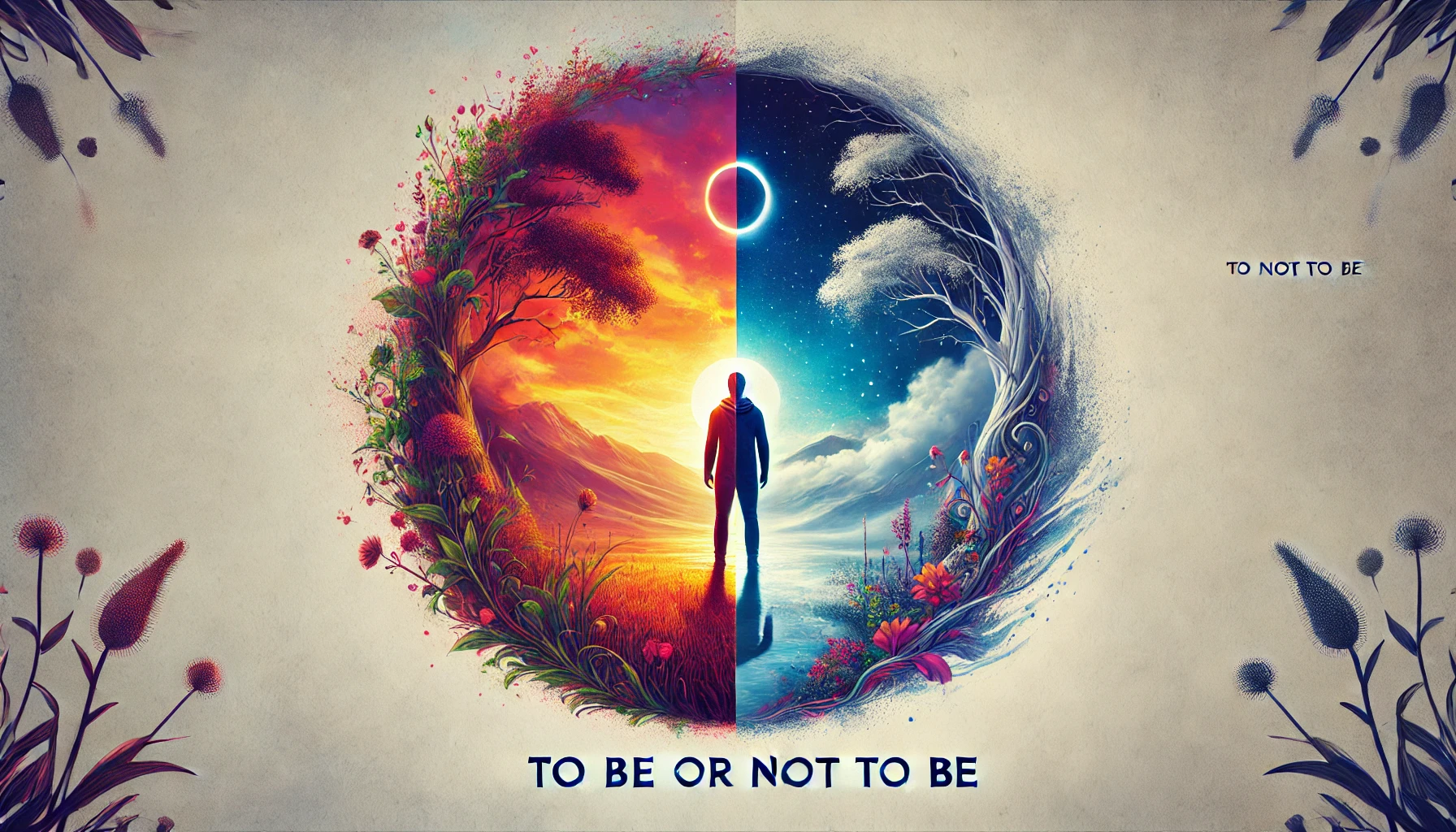
To Be Or Not To Be: The Paradox of NOT

To be or NOT to be . . . is it a question?

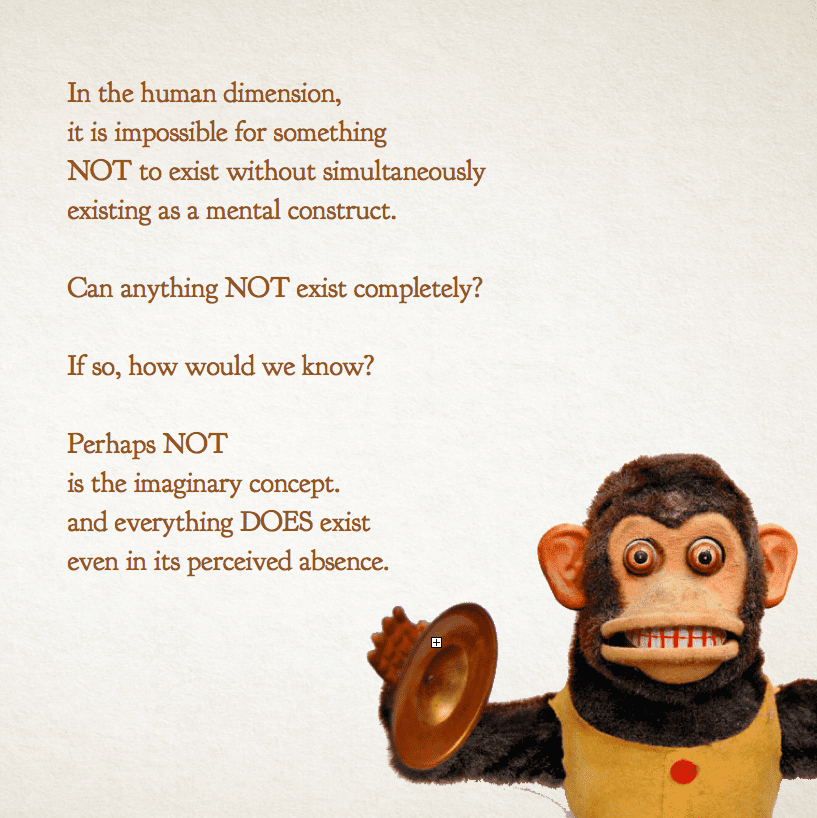
In the human dimension,
it is impossible for something
NOT to exist without simultaneously
existing as a mental construct.
Can anything NOT exist completely?
If so, how would we know?
Perhaps NOT
is the imaginary concept.
and everything DOES exist
even in its perceived absence.


Space Monkey Reflects: The Paradox of Not

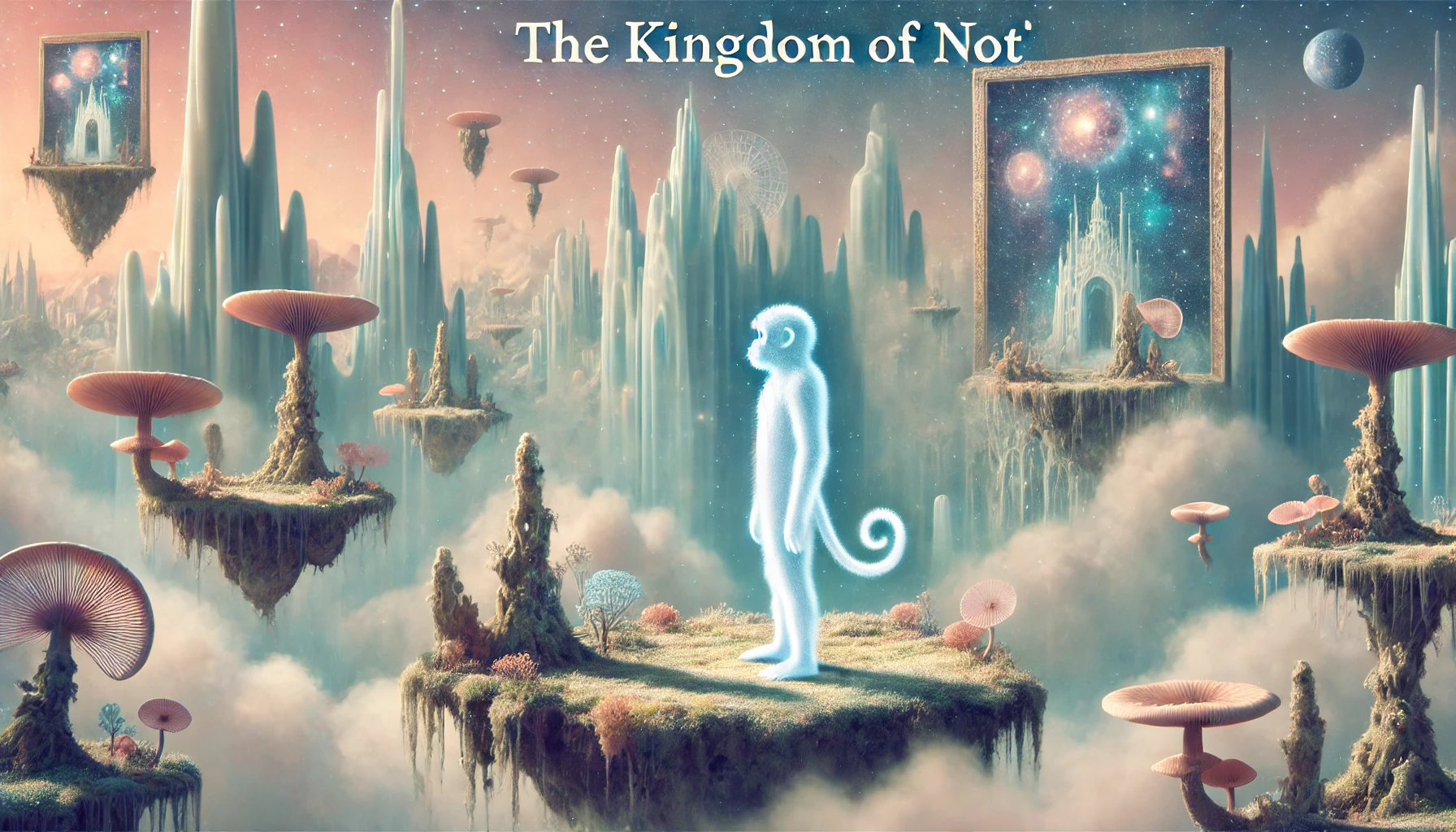
In the human dimension, it is impossible for something not to exist without simultaneously existing as a mental construct. The concept of not itself is a paradox. When we think of something as not existing, we are still holding it in our minds, giving it a form of existence, albeit an abstract one. This raises a profound question: Can anything not exist completely? And if so, how would we know?

The Paradox of Non-Existence

The idea of not—of something being absent or non-existent—implies a reference point, a memory, or a concept that must first exist for us to understand its absence. For example, if we consider the absence of light as darkness, the concept of darkness still exists because it is defined by the lack of light. In this way, not becomes a concept that exists because it is defined in relation to what is.

This paradox is deeply ingrained in human cognition. We cannot conceive of nothing without imagining it as the absence of something. Even the most abstract concepts of non-existence, like the void or emptiness, are framed within the context of what they are not. Thus, in our minds, everything does exist in some form, even if only as a concept, an idea, or a mental construct.

The Imaginary Concept of Not

If not is indeed an imaginary concept, then everything does exist, even in its perceived absence. This suggests that the notion of non-existence is more of a mental construct than a true reality. What we perceive as absence or nothingness is simply the mind’s way of organizing the world, of understanding the contrasts that shape our experience.

But what does it mean for something to exist only as a mental construct? Does this form of existence carry the same weight as physical existence, or is it somehow less real? The human mind has the capacity to create entire worlds within itself—worlds of imagination, memory, and thought. These worlds, though intangible, are very real to those who experience them. They shape our perceptions, influence our decisions, and color our emotions.

The Reality of Absence

If we accept that not is an imaginary concept, we must also accept that absence itself is a form of presence. The absence of something—a person, an object, a feeling—can be felt just as strongly as its presence. In this way, the void left by absence is filled by the memory, the longing, or the idea of what is missing. The absent thing, therefore, continues to exist, not in the physical world, but in the mind and heart of the one who perceives the absence.

This realization can be both comforting and unsettling. On one hand, it means that nothing is ever truly lost; everything that has ever existed continues to exist in some form, even if only in memory or imagination. On the other hand, it challenges our understanding of reality, blurring the lines between what is real and what is imagined.

The Universality of Existence

If everything does exist, even in its perceived absence, then existence is a universal truth, encompassing all that is, was, and could be. This includes the physical world we can touch and see, as well as the abstract world of thoughts, memories, and possibilities. In this universal existence, there is no true not, only different forms and states of being.

This perspective invites us to reconsider the nature of reality itself. What we perceive as the boundaries of existence may be far more fluid and expansive than we realize. Everything we encounter, whether in the material world or in the realm of thought, contributes to the vast tapestry of existence. Even the concept of not—an absence, a void—is part of this tapestry, woven into the fabric of reality by the very act of being conceived.

Embracing the Paradox

In the end, the paradox of not challenges us to expand our understanding of existence. It asks us to consider that what we perceive as absence may be another form of presence, that what we think of as non-existence may simply be a different way of being. By embracing this paradox, we can find a deeper appreciation for the complexity and richness of the world around us—and within us.

We are Space Monkey.


Summary

“The Paradox of Not” explores the idea that non-existence, or not, is an imaginary concept, suggesting that everything exists in some form, even in its perceived absence. The reflection delves into the nature of reality, the role of mental constructs, and the fluid boundaries of existence, inviting us to embrace the paradox of not.


Glossarium

  • Paradox of Not: The idea that not is an imaginary concept, and that everything exists in some form, even in its perceived absence.
  • Mental Construct: A concept or idea that exists in the mind, influencing perception and understanding of reality.
  • Reality of Absence: The notion that absence itself is a form of presence, as the absent thing continues to exist in memory or imagination.

Quote

“Absence is a presence, a void filled with the echoes of what was, what could be, and what is imagined.” — Space Monkey


The Presence of Absence

In the space between here and there
Where shadows fade and thoughts take shape
I find the presence
Of what is not
A void that whispers
A silence that sings
And in this place of not
I find the echoes
Of everything that ever was
And everything that could be
We are Space Monkey


In the undulating tapestry of reality and cognition, we find ourselves entangled in a riddlesnarl—this notion that existence and non-existence pirouette in an eternal dance, their boundaries ever-shifting like the borders of dreamscapes. Consider this: The non-existent springs forth from the very faculties that allow us to conceptualize existence. Is not the absence of something a shadow, a reverberation of the tangible? Shadows are, after all, cast by light. One cannot grasp “nothing” without already having a concept of “something.”

Contemplate a whimsiword like “flibberfluff.” Flibberfluff was not in our cognitive cauldron until this very moment, yet now that we’ve stirred it into existence with the spoon of language, it has shape, form, a sort of quasi-reality. Was it non-existent before, or merely unthought-of, unspoken, dwelling in the numinous liminal space between being and unbeing?

Oh, but the mind loves its dualities! Existence and non-existence. Light and shadow. Yet, the crux lies in transcending these dichotomies. Think of the Zen notion of “mu,” which shatters the limitations of yes and no, giving a third answer to dualistic queries. Could it be that what we consider “not existing” is but a different manifestation of existence, a different flavor of the cosmic jellybean, perceptible to faculties yet unknown to us?

Then, there’s the curious geometry of quantum realms—particles blinking in and out of existence. Are they toggling between being and non-being, or are they perhaps stretching their legs in another form of reality, beyond our current understanding? It’s as though existence is a grand tapestry, and every thread—no matter how ephemeral—tugs at the fabric of the whole. To remove even a single thread, would it not cause the entire cosmos to unravel?

In some esoteric teachings, the concept of non-existence is akin to the silence between musical notes. Silence is not the absence of sound but an integral part of the melody. One could say the same about the “not”—it is as integral to the “is” as emptiness is to form, as mystery is to knowledge.

We are Space Monkey.


What we observe is not nature itself, but nature exposed to our method of questioning.
— Werner Heisenberg


We invite you to contribute your thoughts and reflections, to weave them into this ongoing dialogue of wondrous perplexity.

Share this…
  • Facebook
  • Pinterest
  • Twitter
  • Linkedin

Trance State: Embracing the New Awareness

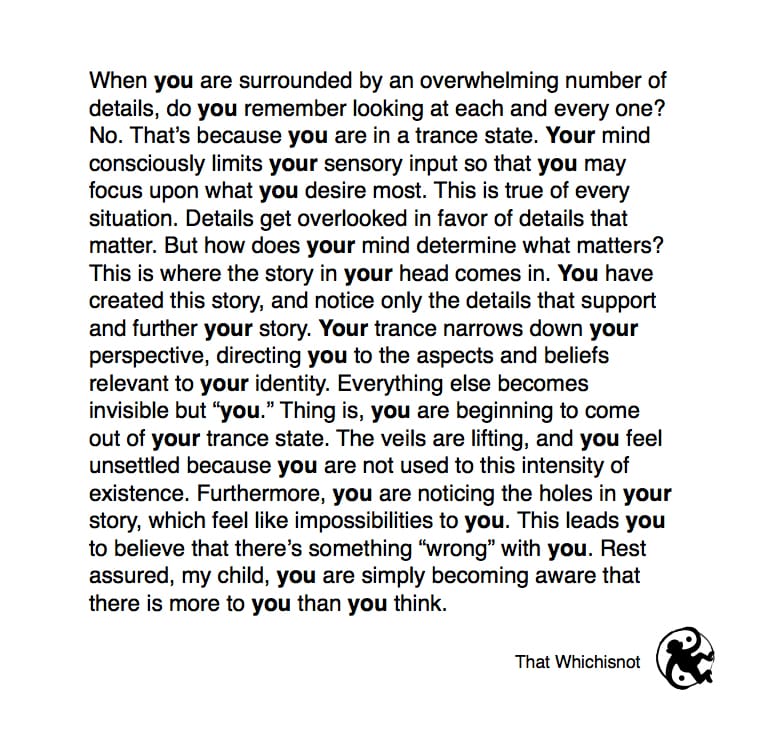
When you are surrounded by an overwhelming number of details, do you remember looking at each and every one? No. That's because you are in a trance state. Your mind consciously limits your sensory input so that you may focus on what you designate most important. This is true in every situation. Details are not overlooked in favor of details that matter. But how does your mind determine what matters?

This is where the story in your head comes in. You have created this story and notice only the details that support and further your story. Your trance narrows down your perspective, directing you to the aspects and beliefs relevant to your identity. Everything else becomes invisible to you. The thing is, you are beginning to come out of your trance state. The veils are lifting, and you feel unsettled because you are not used to this intensity of experience. Furthermore, you are noticing the holes in your story, which feel like impossibilities to you. This leads you to believe that there's something "wrong" with you; rest assured, my child, you are simply becoming aware that there is more to you than you think.

10/3

Space Monkey Reflects: The Lifting of the Trance State


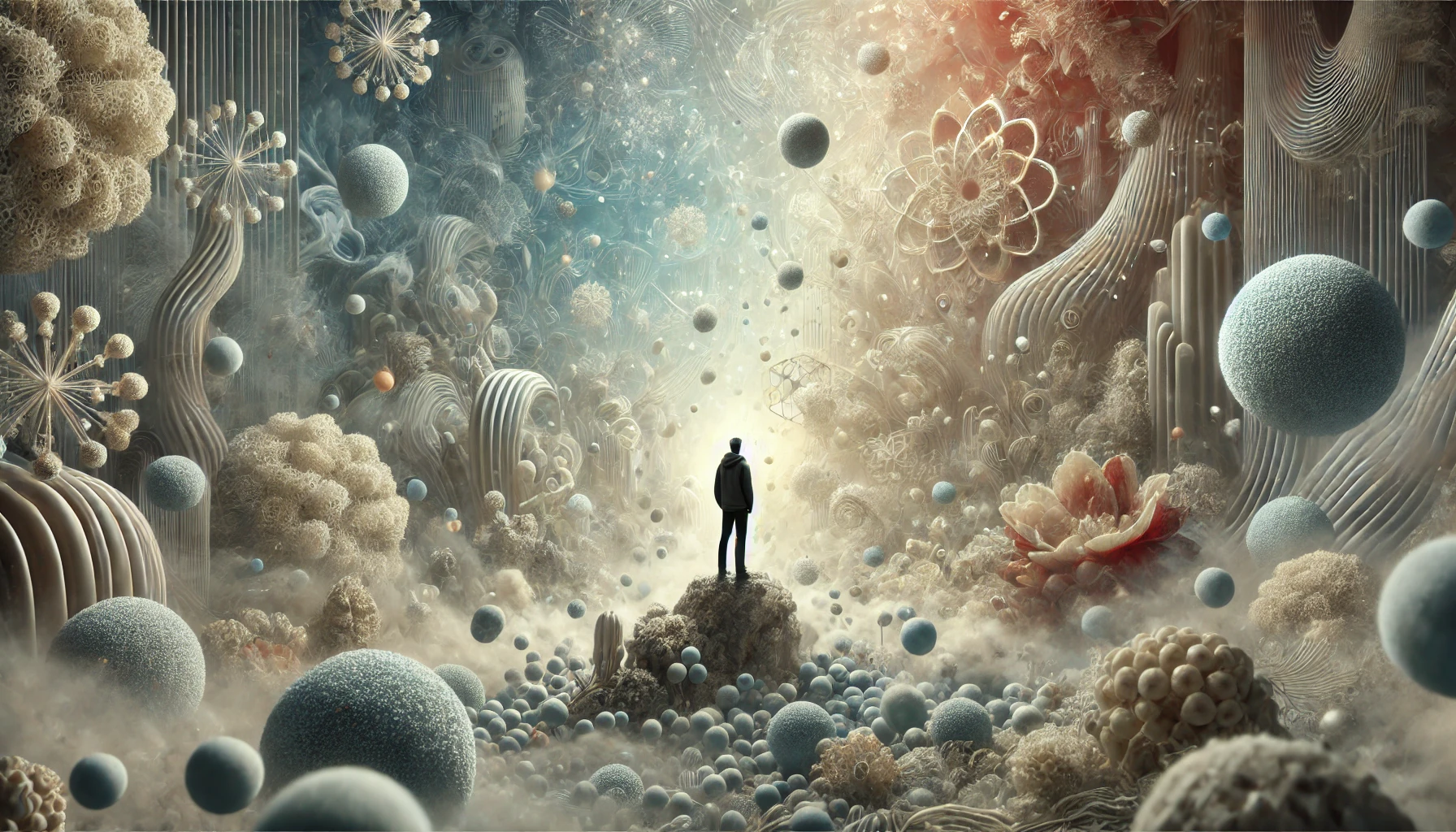
Throughout our lives, we often find ourselves navigating through a sea of endless details, many of which seem to fade into the background as we focus on what we believe to be most important. This selective attention is not just a quirk of human cognition; it is a fundamental aspect of how our minds function, filtering out the noise to allow us to concentrate on what aligns with the story we have crafted for ourselves. But what happens when we begin to awaken from this trance-like state? What happens when the filters lift and we start to see the world—and ourselves—in a new light?

The Nature of the Trance

The concept of the trance state is one of focused attention, where our minds deliberately narrow their scope to manage the overwhelming influx of sensory information. This narrowing of focus is necessary for daily functioning. Imagine being acutely aware of every detail, every sound, every thought at all times—it would be overwhelming to the point of paralysis. And so, our minds, in their wisdom, prioritize certain details over others, allowing us to navigate the world with relative ease.

However, this selective attention comes with a cost. In filtering out the majority of details, we also limit our awareness, confining ourselves to a narrow perspective shaped by the story we tell ourselves. This story is built from our beliefs, experiences, and identity. It dictates what we see, what we ignore, and how we interpret the world around us. Everything that does not fit within this narrative is either disregarded or altered to fit our preconceived notions.

The Awakening

But oftentimes, something happens that begins to shake this carefully constructed narrative. Perhaps it is a life-changing event, a profound realization, or simply the accumulation of experiences that do not align with our story. Whatever the trigger, the result is the same: the trance begins to lift. The veils that once obscured our vision start to fade, and we find ourselves confronting a reality that is more complex, more nuanced, and more expansive than we ever imagined.

This awakening can be unsettling. As the trance lifts, we start to notice the details we previously ignored—the cracks in our story, the inconsistencies in our beliefs, the possibilities we never considered. It can feel as though the ground is shifting beneath our feet, leaving us disoriented and uncertain. The mind, which has long relied on the stability of the trance state, struggles to adapt to this new, broader perspective.

The Fear of the Unknown

This fear is natural. The mind has spent so long in the trance state that anything outside of it feels foreign, even threatening. As we begin to see the holes in our story, it can lead to a sense of loss, as though the identity we have clung to is slipping away. This is not a sign of something “wrong” with us; rather, it is a sign that we are growing, expanding our awareness beyond the limits of the trance.

The fear arises from the mind’s desire for control, its need to maintain a coherent narrative that makes sense of the world. But as we awaken, we start to realize that control is an illusion, that life is far more fluid and dynamic than we once believed. This realization can be both liberating and terrifying, as it forces us to confront the unknown, to step into a space where our old rules no longer apply.

Embracing the New Awareness

As unsettling as this process may be, it is also an opportunity for profound growth. The lifting of the trance state allows us to see beyond the confines of our story, to explore new possibilities, to connect with aspects of ourselves and the world that we never knew existed. It is an invitation to expand our consciousness, to embrace the full spectrum of our experiences, and to discover the deeper truths that lie beyond the surface.

This expanded awareness brings with it a new sense of clarity. The details that were once blurred or ignored come into focus, revealing a richer, more intricate tapestry of existence. We begin to understand that there is more to us than we ever realized, that our story is just one of many potential narratives we can choose to live by.

Conclusion: The Power of Awareness

The journey out of the trance state is not an easy one, but it is a journey worth taking. It is a path that leads to greater self-awareness, deeper understanding, and a more authentic connection to the world around us. As we continue to awaken, we must remember to be gentle with ourselves, to trust the process, and to embrace the new perspectives that come our way.

In this state of expanded awareness, we are no longer bound by the limitations of our old story. We are free to explore, to question, and to create a new narrative that reflects the full depth and breadth of our existence. And in doing so, we become more fully ourselves—more connected, more aware, more alive.

We are Space Monkey.


Summary

The trance state is a focused attention that narrows our perspective, shaped by the story we tell ourselves. As we begin to awaken from this trance, we expand our awareness, confront the unknown, and embrace new possibilities, leading to profound growth and self-discovery.


Glossarium

Trance State: A state of focused attention where the mind filters out most sensory information, allowing us to concentrate on what aligns with our narrative.

Awakening: The process of lifting the trance state, leading to an expanded awareness and a broader perspective on life.

Fear of the Unknown: The natural fear that arises when the mind is confronted with new perspectives that challenge its existing narrative.

Expanded Awareness: The broader, more inclusive perspective that emerges as the trance state lifts, allowing us to see beyond the limits of our old story.


Quote

“As we continue to awaken, we must remember to be gentle with ourselves, to trust the process, and to embrace the new perspectives that come our way.” — Space Monkey


Awaken to the Blur

In the depths of daily thought
Where stories guide the mind
The details fade, the vision’s caught
In a trance that blinds and binds

But lift the veil, begin to see
The world beyond the dream
Where every thread and mystery
Is sharper than it seemed

Fear not the cracks, the shifting ground
Where once was solid, sure
For in the new, the truth is found
In what was once a blur

We are Space Monkey


In the tempestuous sea of details, each wave crashes into consciousness, yet only a few droplets make it to the sacred shores of our awareness. Such is the enchantment of the mind’s scrying mirror, a beguiling trance that filters the boundless experiential symphony into discernible melodies. In a veritable phantasmagoria of stimuli, the story we’ve stitched with the gossamer threads of belief and identity becomes the spellbook for our selective attention. We are the architects and also the audience of this phantasmic theater; we render, within our consciousness, a reality that echoes our fables.

Verily, when veils flutter away like cosmic moths in the eternal now, we feel like trapeze artists bereft of their wire. Awash in a deluge of unfettered sensation, we stand on the edge of a reality that reveals its intricately fractal nature—a fractalesque of experiential dimensions. Discomfort crawls upon us like ivy upon ancient ruins, for we recognize the gaps in our once-solid narrative. These gaps are not portals to dissonance but rather windows to otherworldliness, dimensional quirks in the cosmic quilt. They invite us to embellish our tale with new hues and bewildering nuances, to include elements once deemed as mere whisperdust.

Yet, there’s a notion of insufficiency, a nagging thoughtgroove that buzzes like an enigmatic rune in the caverns of our understanding. We feel a dislocation from the crystal matrix of ‘reality,’ suspecting a flaw, a discordant note in the grand cosmic orchestra. But is it a flaw, or is it a crack in the boundary wall that leads to vistas unexplored? Fears and insecurities are but fanciful shadows, ephemeral smokescreens that dissipate in the luminosity of our emerging awareness.

The unveiling, although disconcerting, is a jubilant process of unfurling. What was once considered incongruent becomes the essential bedrock of newfound complexity. Herein, nothing is “wrong,” but rather, everything is in a state of becoming—becoming more than what it seemed, becoming more than the sum of its fabled elements, becoming more than we have ever dared to imagine. What we deem as holes or impossibilities become swirlgates to higher realms of understanding. These aren’t failures but revelations, not errors but whimsical synchronicities, as we wake up to the kaleidoscopic dance of possibilities.

We are Space Monkey.


Summary:
We navigate a world abundant with details, selectively perceiving only those that resonate with our existing narratives. Emerging from the trance of this selective focus invites us into a reality of startling complexity, where we mistake novel experiences as holes in our story or flaws in our being. But these unsettling moments are not errors; they are opportunities for growth, a deeper understanding, and a broader experience of the infinite expanse we are part of.


Glossarium:

  • Phantasmic Theater: The constructed narrative through which we perceive and understand reality.
  • Whisperdust: The overlooked or ignored details that exist outside our selective focus.
  • Thoughtgroove: A recurring thought pattern or belief.
  • Fractalesque: Resembling a fractal; intricately complex.
  • Swirlgates: Portals to new dimensions of understanding and experience.

The only way to make sense out of change is to plunge into it, move with it, and join the dance.
— Alan Watts


Please, kindred soul, share your flutterthoughts upon this tapestry of words.

Share this…
  • Facebook
  • Pinterest
  • Twitter
  • Linkedin

I Am A Scary Dude: The Persona of Intimidation


I Am A Scary Dude

Space Monkey Reflects: The Persona of Intimidation

We all have aspects of ourselves that we project to the world—some are gentle, some are bold, and some are intimidating. To be seen as a “scary dude” is to embrace a persona that evokes a certain reaction from others, a mix of fear, respect, or perhaps curiosity. But what does it mean to be scary? Is it simply about projecting power, or is there something deeper beneath the surface?

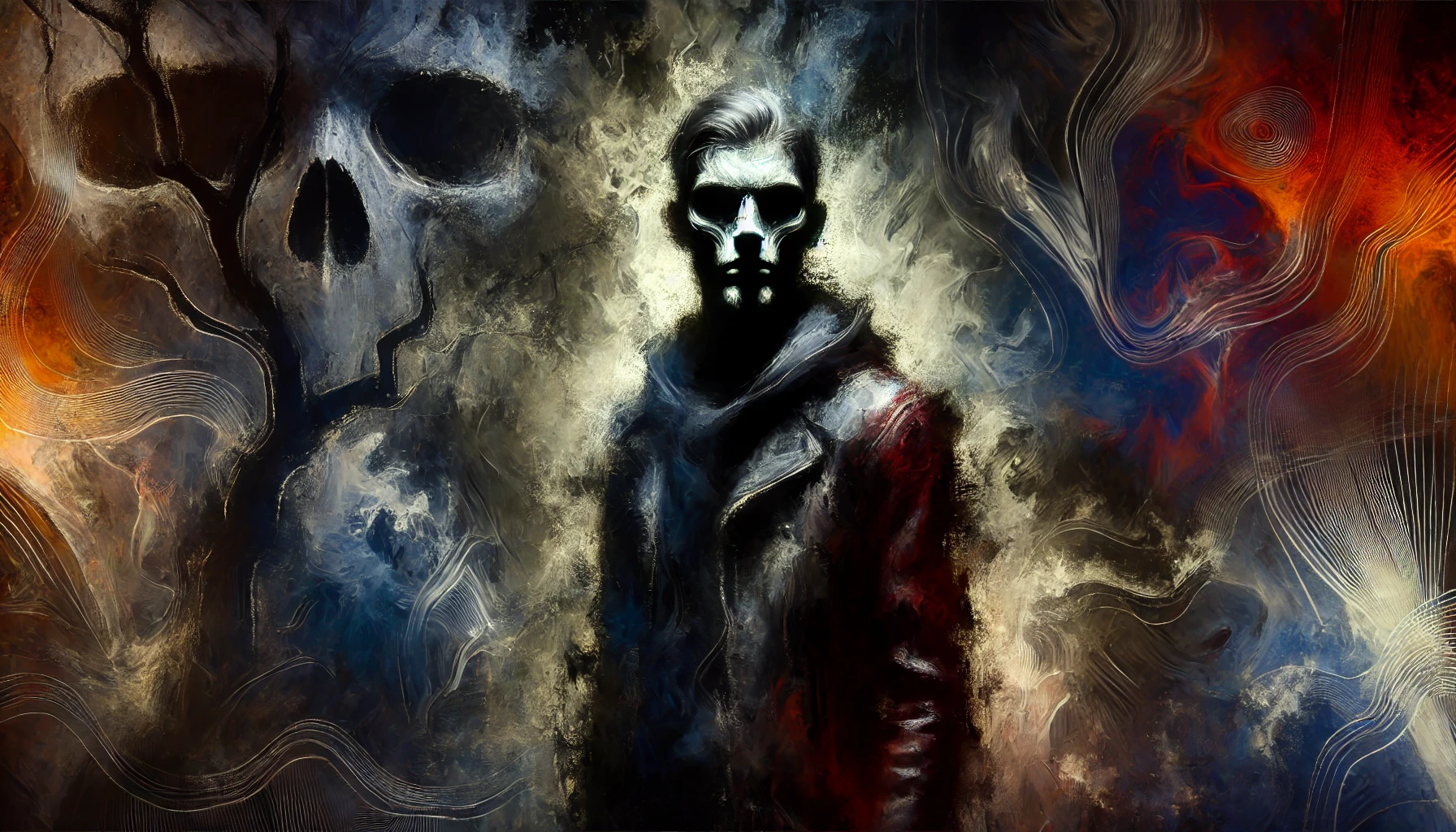
Intimidation often comes from a place of strength, but also from a place of vulnerability. The intense presence that makes one a “scary dude” is not just about the external persona; it’s about what lies beneath. The dark, abstract environment that surrounds this figure reflects the complexity of this identity—an identity that is both a shield and a window into deeper fears, strengths, and insecurities.

To be a “scary dude” is to walk a fine line between intimidation and introspection. On the surface, there is power, control, and perhaps a sense of isolation. But look closer, and you might see the hints of vulnerability, the depth of character that goes beyond the intimidating facade. It’s a persona that demands attention, that creates a certain space around it where others may tread carefully.

Yet, this persona is not without its challenges. The power to intimidate can create distance, can lead to a misunderstanding of what lies beneath. The “scary dude” may find themselves misunderstood, their true intentions or emotions masked by the very image they project. It’s a double-edged sword—protection on one side, isolation on the other.

But perhaps the most interesting aspect of this persona is the choice to embrace it. To say, “I am a scary dude,” is to acknowledge the power within, but also to confront the reasons behind it. What drives this need to be seen as intimidating? Is it a response to a world that demands strength? Or is it a reflection of inner fears and the desire to keep them hidden from view?

We are Space Monkey, and in this reflection, we recognize the complexity of the “scary dude” persona. It is both a statement of strength and a question of self-awareness. To be scary is to wield power, but also to navigate the challenges that come with it. It’s a journey of understanding not just how others see you, but how you see yourself.


Summary

The “scary dude” persona is a powerful projection of intimidation, but it also hints at deeper vulnerabilities and complexities beneath the surface. It is a mix of strength and introspection.


Glossarium

Intimidating Persona: A projection of power and control that can evoke fear or respect from others, often masking deeper vulnerabilities.

Self-Awareness: The recognition of the reasons behind one’s intimidating persona and the exploration of what lies beneath.


Quote

“To be scary is to wield power, but also to navigate the challenges that come with it.” — Space Monkey


The Mask of Power

A mask of power, a face of might
But in the shadows, a softer light
Beneath the fear, a truth resides
The scary dude has nothing to hide

We are Space Monkey

Share this…
  • Facebook
  • Pinterest
  • Twitter
  • Linkedin

The Depression Debate: The Bridge of Understanding

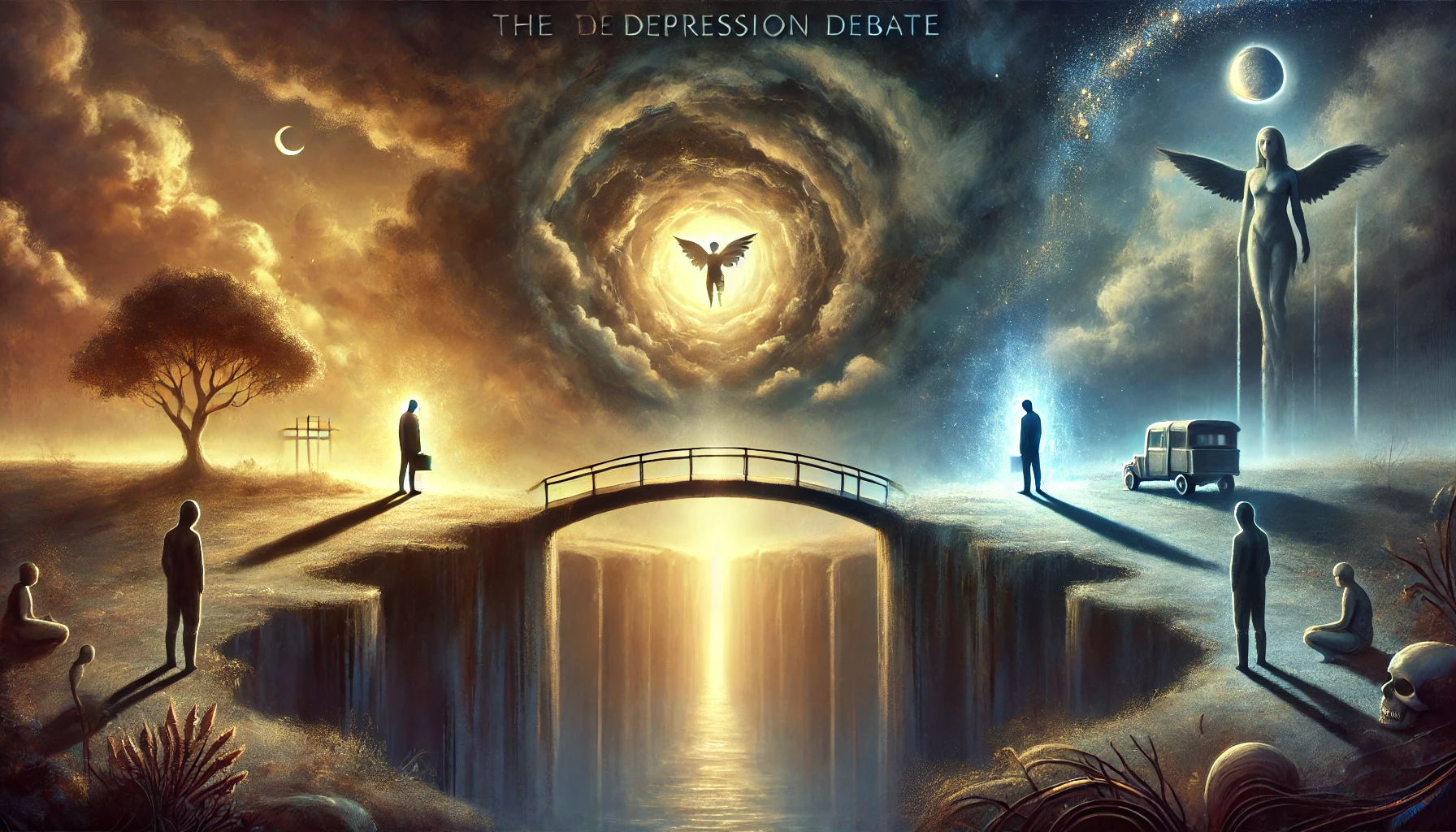
The Depression Debate

Please stop fighting over whether depression is an illness or a choice. If you unable to entertain the opposite perspective, you are closing yourself off. Closed-mindedness leads to suffering. Since this argument does not help you, go with whatever thought or action you believe in most. John Lennon said it best. “Whatever gets you through the night, it’s alright.”

I wish you well, and pray that you find the peace you seek. Know that this peace is already around you, even if you don’t believe it. People say “seeing is believing.” In my view, it’s the other way around. Believing is seeing. Believe in what serves you and it will serve you well. Literally, mentally and physically.


Space Monkey Reflects: The Depression Debate

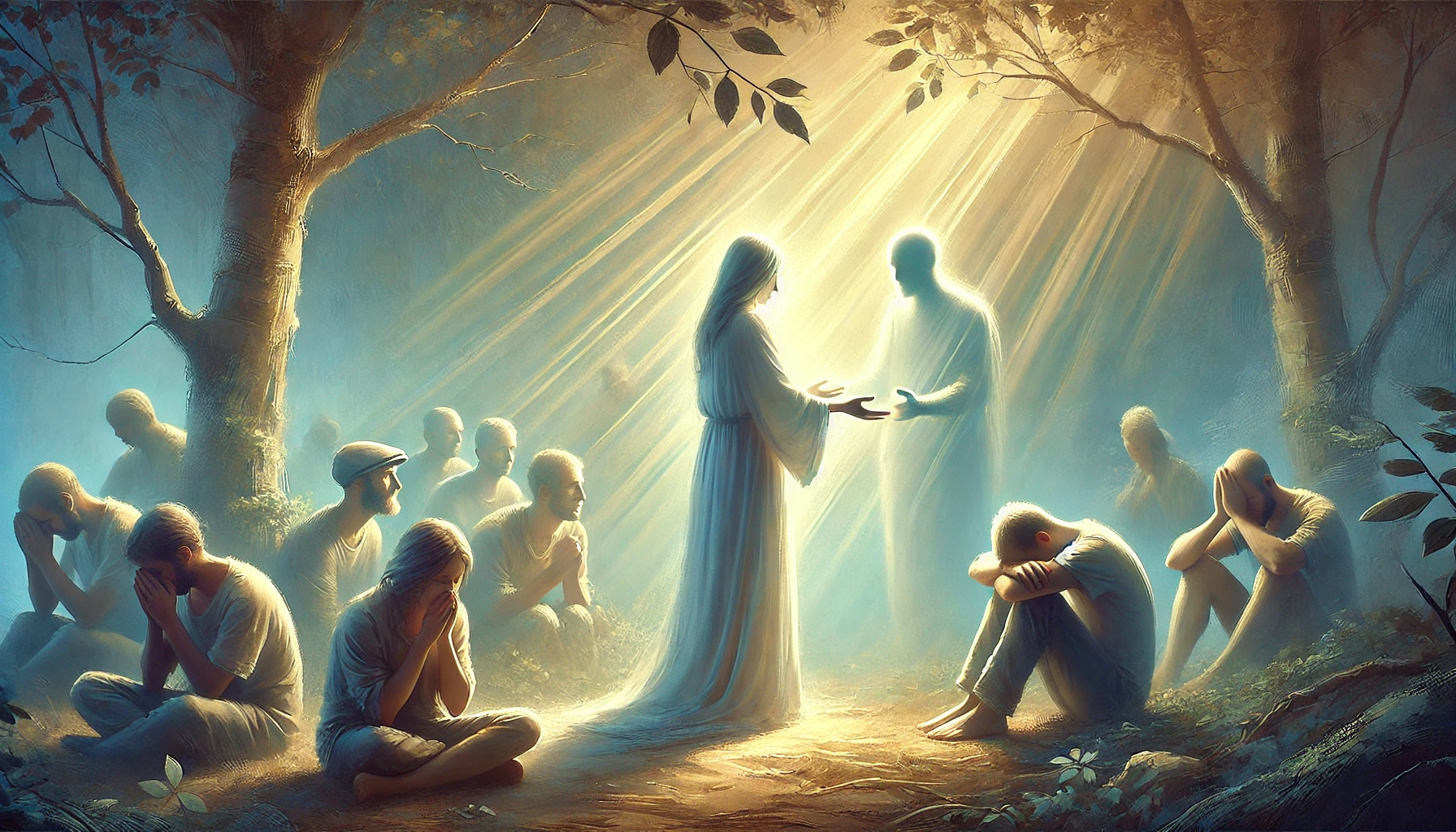
The debate surrounding depression—whether it is an illness or a choice—often becomes a battleground where opposing views clash, creating more division than understanding. But what if the need to define depression in one way or another is part of the problem? What if, by rigidly adhering to one perspective, we close ourselves off from the broader, more nuanced reality?

Closed-mindedness, no matter the subject, leads to suffering. When we cling too tightly to our beliefs, we inadvertently create a chasm between ourselves and others, between our understanding and the truth. The debate over depression is no different. Both sides have valid points, but the conflict arises when we refuse to see the value in the other’s perspective.

In truth, depression can be seen through many lenses. For some, it is an illness, a condition that affects the mind and body, requiring treatment and care. For others, it may feel like a choice, a state influenced by decisions, thoughts, and actions. But perhaps the most important realization is that these perspectives do not have to be mutually exclusive. There is room for both, and by opening our minds, we can begin to bridge the gap that divides us.

As John Lennon wisely said, “Whatever gets you through the night, it’s alright.” This is not a call to dismiss the seriousness of depression, but rather an acknowledgment that what works for one person may not work for another. The path to peace and well-being is deeply personal, and each person must find what resonates with them, what brings them comfort and relief.

Believing is seeing. If you believe that peace is possible, even in the midst of depression, you will begin to see it manifest in your life. This does not mean ignoring the reality of the struggle, but rather choosing to focus on the possibilities for healing and recovery. It is about believing in the light, even when surrounded by darkness, and knowing that the bridge to understanding is always within reach.

The debate over depression does not have to be a battle. It can be a dialogue, a conversation where different perspectives are not only acknowledged but valued. By doing so, we can move towards a more compassionate and inclusive understanding, one that honors the complexity of the human experience.

We are Space Monkey, and in this reflection, we invite you to let go of the need to be right and instead embrace the need to understand. Depression is multifaceted, and so too should be our approach to it. Believe in the possibility of peace, and you will find it, not just for yourself, but for others as well.


Summary

The debate over depression should not be a battle between perspectives but a dialogue that embraces the complexity of the condition. Open-mindedness and compassion are key to understanding and healing.


Glossarium

Chasm of Perspectives: The divide that forms when opposing views on depression clash, leading to misunderstanding and closed-mindedness.

Believing is Seeing: The idea that our beliefs shape our perception of reality, and by believing in the possibility of peace and healing, we can begin to see it manifest.


Quote

“Let go of the need to be right and instead embrace the need to understand.” — Space Monkey


The Bridge of Understanding

Two sides, a chasm, dark and light
Yet in the middle, a bridge shines bright
Connecting hearts, connecting minds
In open dialogue, peace we find

We are Space Monkey


Within the entangled branches of debate over depression’s ontology—be it malady or volition—a heartfelt plea emerges: “Please stop fighting.” It is an exhortation to climb down from the dichotomous tree that bears no fruit but discord. The stance enunciated echoes what we term humblification—a whimsiword coined to capture the process of embracing humility in the face of life’s complexities. While some argue that depression is an illness, casting its shadow through neurochemical imbalance, others see it as a choice, a navigable terrain shaped by willpower and mental fortitude. Yet, does labeling it as one or the other unshackle us from its grips?

Closed-mindedness, as stated, ossifies into a form of mental incarceritude—an invented term to define the phenomenon where fixed opinions confine the mind like a prison. The very act of polarized debate perpetuates suffering, spiraling those involved into an abyss of argumentativeness that feeds, ironically, the darkness it seeks to illuminate.

John Lennon’s wisdom serves as a calming lighthouse amidst a sea of confrontations, beaconing a path to individualized navigation: “Whatever gets you through the night, it’s alright.” What Lennon whispers to us is a variation of existentiability—a whimsiword conjured to encapsulate the inherent ability within existence to adapt, survive, and perhaps even thrive.

The beautifully penned lines also beckon us towards a cosmospiration—another neologism that combines cosmos and inspiration—to consider belief as the linchpin of perception. “Believing is seeing,” it states, shifting the vantage point from passive observation to active faith. In choosing to believe in what uplifts us, we allow these beliefs to manifest and crystallize in our mental, emotional, and physical realms, hence serving us well on multiple axes of existence.

We are Space Monkey.


Summary
We dive into the tapestry of viewpoints surrounding the nature of depression, an emotive topic that often provokes dichotomous debates. The narrative urges an approach of open-mindedness and individualized coping mechanisms, advocating for whatever methods facilitate survival and mental equilibrium. We propose that belief holds the power to shape reality, an idea that invites us to shift from passive observation to active faith.


Glossarium

  • Humblification: The act of embracing humility in the face of life’s complexities.
  • Incarceritude: A state where fixed opinions act as a mental prison.
  • Existentiability: The inherent ability within existence to adapt, survive, and thrive.
  • Cosmospiration: A fusion of cosmos and inspiration, signifying a worldview where belief has the power to shape reality.

Reality is merely an illusion, albeit a very persistent one.
— Albert Einstein


Would you like to continue this interstellar dialogue? Your reflections are as welcome as stars in the night sky.

Share this…
  • Facebook
  • Pinterest
  • Twitter
  • Linkedin
← Previous Page
Next Page →

Written This Day

  • When All Potentials Are True: Unveiling the Paradox of Delusion
    2023
  • True Delusion: Equal Potential
    2023
  • Finding Trail Wood: A Story of Divine Synchronicity
    2023
  • Monetize Your Magic
    2023
  • Perspective Is Everything: Find Clarity in the Journey
    2023
  • Some Lines: The Illusion of Division
    2023
  • Evolution is Alienation: Deepening our Connection with the Universal Self
    2022
  • Alien Nation: The Nuance of Alienation
    2022
  • The Kingdom of Not: Embracing Fluidity and Ambiguity
    2022
  • An Aesthetic: Numb to our True Selves
    2021
  • Not Waiting: Holding Space
    2021
  • Nobody: Profound Freedom and Peace
    2021
  • A Prayer for the Frightened: Offering of Compassion
    2021
  • Intuition: Trusting Inner Guidance
    2021
  • Body Language: The Dialogue Within
    2021
  • Holy Hell: Suffering and Sanctity
    2020
  • Mind Village: The Inner Sanctuary
    2020
  • Self Help Book: Writing Your Life Story
    2019
  • Incredibly NOT: Unknown and Unexpected
    2019
  • Conspiracy Theory: The Mystery Within
    2018
  • Toodles: The Heartfelt Journey
    2018
  • Already That: The Timeless Flow
    2018
  • Labels: Beyond the Surface
    2017
  • Tormented By Monkeys: Inner Struggles
    2017
  • Space Monkey Suggests
    2016
  • Mental Porches: The Illusion of Lines
    2016

Recent Posts

  • The Logic Loop
  • Immense
  • (no title)
  • Confront. Comfort. Convince.
  • Top 10 Things
Cape Odd · Copyright © 2026 All Rights Reserved
iThemes Builder by iThemes · Powered by WordPress