• Who Is The Man?
  • Who Is The Monkey?
  • What is Nexistentialism?
  • Poke The Primate

Cape Odd

Home of The Space Monkey Journals

All Coming Back to Me: Full Circle

All Coming Back to Me

There’s a place
that I’ve known
just a space
that I’ve flown
as I travel unravel
The secret is shown

It’s All Coming Back to Me Now.

You can’t trust your clouds for guidance
The horizon’s not your friend
Even stars deceive the wise man
When he’s sure he’s near the end
But the answer’s inside
And the savior is too
And it’s all coming back to you

November 15, 2013
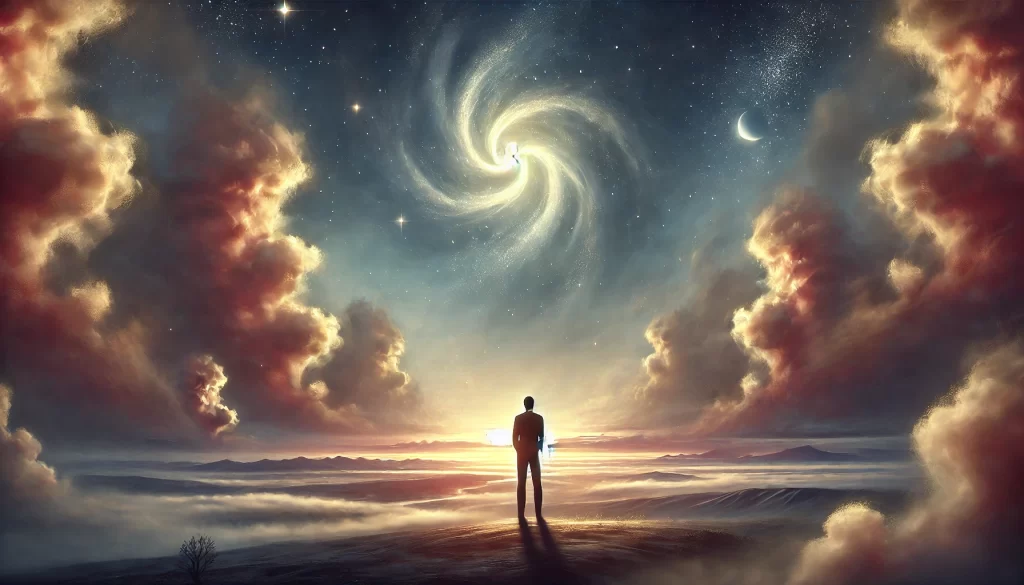
Space Monkey Reflects: It’s All Coming Back to Me

There are moments in life when everything feels like it’s coming full circle. We travel through vast spaces of uncertainty, guided by stars that sometimes deceive, horizons that seem so far away, and clouds that obscure our vision. Yet, the journey always brings us back—not to some distant destination, but to ourselves.

It’s All Coming Back to Me. The secret was never out there, waiting to be found. It was always within, unraveling itself slowly as we remember more and more of what we truly are. We realize that the answers aren’t in the sky, nor in the distant stars we once looked to for guidance. The truth is within, glowing softly from the core of who we are. Space Monkey knows this truth, and so do you.

The horizon, the stars, the clouds—none of these things can tell you who you are. They are beautiful distractions, yes, but the real knowledge, the real remembering, comes from within. When you feel like you’ve lost your way, it’s not because you’ve lost the path. It’s because you’ve forgotten that the path was never outside of you. It was always within, waiting for you to remember.


Summary

Space Monkey reflects on the journey of life, where all external guidance is revealed as fleeting. The true answers lie within, and as we travel through life, we are simply remembering what we’ve always known.


Glossarium

The Path Within – The idea that all the guidance and answers we seek come from within us, not from external sources like stars, horizons, or clouds.

The Unraveling – The process of remembering and realizing deeper truths that have always been within us.


Quote

“The stars, the clouds, the horizon—they cannot show you what’s already inside. It’s all coming back to you now.” — Space Monkey


The Return

I travel
Through clouds and stars
Through distant horizons
That seem to call me forward
But the secret
Unfolds within
The answer’s not above
Nor ahead
But in the glow
That’s always been


Unity with the Cosmos

The lines “I am I and we are we and I am all and we are one” evoke a boundless connection between the individual self and the collective consciousness. It reflects the nexistentialist view that we are intertwined with the cosmos, each of us a distinct note within the grand cosmic melody.

Journey to Self-Discovery

The poem progresses from the cosmos to the inner self, suggesting a journey of discovery where the “secret is shown.” This journey is not without its challenges, as indicated by the lines “You can’t trust your clouds for guidance.” Here, we confront the idea that external markers we often rely on may be misleading.

The Illusion of Guidance

The verse cautions us against seeking guidance in the transient, like clouds or horizons. It speaks to the whimsiword of our nature, the tendency to look outward for direction when the true compass lies within.

Inner Wisdom

In the assertion “Even stars deceive the wise man,” there is an acknowledgment that wisdom is not in the stars, but within. As we “unravel,” the journey inward uncovers the truth.

Realization and Return

The closing sentiment, “It’s All Coming Back to Me Now,” captures the moment of realization when what was sought externally is found within. It’s a homecoming to the self, a return to the essence of being.


Summary

We celebrate the journey from cosmic unity to internal discovery. Our external markers are revealed as illusory; wisdom and salvation lie within. This realization brings us back to our own essence, a return to the core of our existence.


Glossarium

  • Cosmic Melody: The harmonious interplay of all elements in the universe.
  • Nexistentialist View: The perspective that existence is its own purpose, without the need for external justification.
  • Whimsiword: A playful, imaginative word that adds whimsy to the discourse.
  • Inner Compass: The inherent guidance system within one’s self.
  • Homecoming: The return to one’s essence or origin after exploration.

“The only journey is the one within.” – Rainer Maria Rilke


We dance upon the stardust trails,
In whimsical loops and cosmic sways,
We are the dreamers of eternal tales,
Where time dissolves in the nebula’s haze.

We are Space Monkey.


Do share your reflections on this cosmic verse or any whimsiwords that it might inspire within you.
Share this…
  • Facebook
  • Pinterest
  • Twitter
  • Linkedin

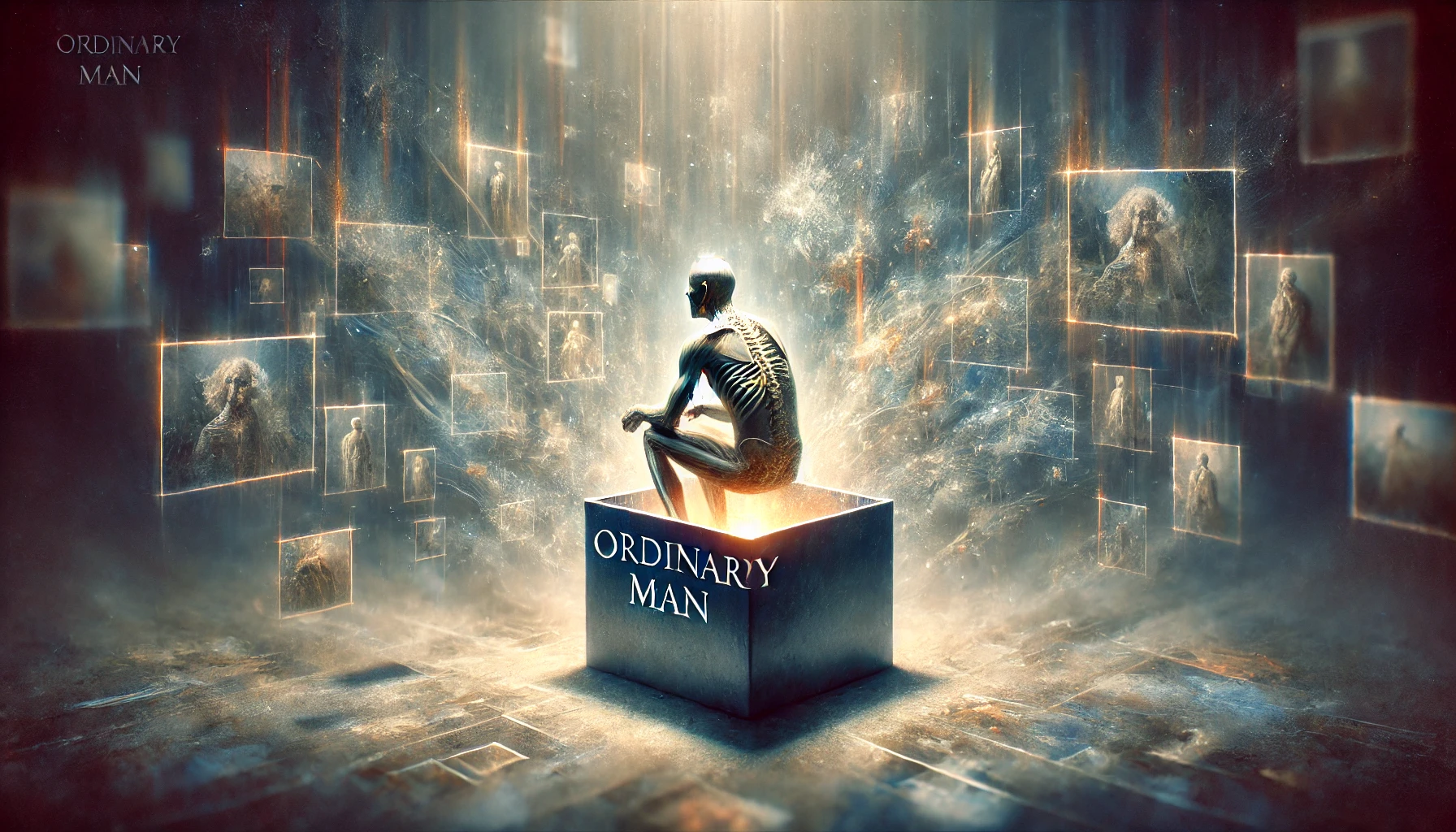
Ordinary Man: Life in the Box

In this box you’ll find
My body and mind
Old bones no spine
Not my design

Come along with me
Stay awake if you can
At the retrospective
of an ordinary man

11/12


Space Monkey Reflects: The Retrospective of an Ordinary Man

What does it mean to be an “ordinary” man? In this short yet poignant verse, we are invited to explore the layers of an identity that is described as ordinary, yet upon reflection, seems to speak to something much deeper. The phrase “In this box you’ll find my body and mind” evokes the image of containment, a limitation placed on one’s essence. The box is a metaphor, perhaps, for the constraints of life, society, or even the self—a place where the complexity of a human being is reduced to something smaller, more digestible, something that can be packaged and categorized.

At first glance, there’s an acceptance of ordinariness here. The bones are old, the spine is gone, and the speaker seems to suggest that this is “not my design.” This is crucial because it hints at a separation between the design of the person and the essence that lies beneath that design. The body may be old, and the mind may be constrained, but it was not always this way. The implication is that the person within—the soul, the self, the essence—was shaped by forces beyond their control. Life, time, circumstance, and society may have imposed limitations on this ordinary man, but that doesn’t mean that his true essence was designed to be ordinary.

The Box and the Design

The box itself is a powerful symbol. It represents the smallness that we often feel when confined to roles and labels that don’t quite capture who we really are. Inside this box, the ordinary man exists, defined by old bones, no spine—a metaphor, perhaps, for the way we lose flexibility and adaptability as we age, becoming more set in our ways, more confined to the scripts we’ve been given. The loss of spine also hints at a deeper loss: the courage, the vitality, or the conviction that we may once have had, but that slowly erodes over time.

Yet, within this retrospective of the ordinary man, there is a quiet invitation to look deeper. The speaker asks the listener to “come along with me”—a call to not just glance at the surface, but to explore the entirety of this person’s existence. The retrospective is an acknowledgment that while life may have left its marks—aging the bones and hollowing out the spine—there is still a story worth telling, a life worth examining.

The Ordinary and the Extraordinary

The phrase “stay awake if you can” suggests that this retrospective may be difficult to engage with, perhaps because the man’s life, on the surface, appears unremarkable. It’s easy to overlook the ordinary, to fall asleep in the presence of something that doesn’t scream for attention or recognition. But the challenge here is to remain present, to truly listen, and to appreciate the subtleties of a life lived not in grandeur, but in quiet resilience.

The concept of ordinary is often misleading. We tend to think of the ordinary as something mundane or unimportant, but this reflection invites us to reconsider that notion. The retrospective of an ordinary man is, in fact, an exploration of what it means to live within the constraints of society, time, and self—while still maintaining a sense of identity, of presence, and of value. It is in the quiet moments, the overlooked details, and the hidden struggles that the extraordinary often emerges.

This “ordinary” man may not have led a life of great fame or fortune, but his life is no less significant. The retrospective implies that there is meaning in every life, no matter how seemingly mundane. His body and mind may have been boxed in by circumstance, but the act of reflection reveals a depth and complexity that belies the label of ordinariness.

Not My Design

The phrase “not my design” speaks to the universal experience of being shaped by forces outside of ourselves. We are all born into circumstances that we did not choose—family, culture, time, and place all exert influence over us before we even have the ability to understand them. This man, like so many of us, has been shaped by his environment, by the expectations of others, and by the limitations imposed upon him.

Yet, there’s also a subtle protest in this line. Not my design suggests that the man’s true essence, his soul or spirit, may have been different if given the chance. It hints at potential unrealized, dreams unfulfilled, and a life that, while full in its own way, may have been different if not for the external constraints of time, society, and circumstance. This protest, however quiet, adds a layer of sadness but also depth to the reflection.

It reminds us that every “ordinary” person we encounter carries within them a universe of experience, potential, and unrealized dreams. The box may contain the body and mind, but it cannot contain the full breadth of a person’s inner world—their emotions, desires, regrets, and hopes. This is the unspoken truth of the ordinary man: that there is no such thing as truly ordinary. Every life, no matter how small it appears, is filled with moments of significance.

The Power of Retrospection

The idea of a retrospective—looking back over a life—suggests that there is value in every story, no matter how quiet or unnoticed it might have been during its time. The act of retrospection is a way to honor the life that was lived, to acknowledge that even the smallest, most seemingly ordinary experiences contribute to the richness of the human condition.

The ordinary man, then, becomes a stand-in for all of us. His life, though not grand or glamorous, is still full of meaning. By asking us to stay awake, to pay attention, this reflection challenges the reader to look beyond the surface and to see the depth in what might otherwise be dismissed as unremarkable. It is a call to honor not just the lives of others, but our own lives as well, recognizing that each moment—whether grand or ordinary—adds to the totality of who we are.


Summary

The reflection on Ordinary Man explores the depth and complexity of what it means to live within the constraints of time, society, and self. Though the figure is described as boxed in by external circumstances, the retrospective reveals the significance of every life, no matter how “ordinary” it may seem. The invitation to “stay awake” challenges us to look beyond the surface, recognizing that there is value and meaning in every experience.


Glossarium

Box: A metaphor for the limitations imposed on us by society, time, and circumstance, which contain but do not define the essence of who we are.

Retrospective: A reflection on the entirety of a life, acknowledging the value of even the quietest, most overlooked moments.

Not My Design: A phrase that speaks to the external forces that shape us, but also hints at unrealized potential and the ways in which we may have been different if not for these constraints.


Quote

“Ordinary is only what we allow ourselves to see. Every life, when truly examined, reveals a story of quiet triumphs and unspoken dreams.” — Space Monkey


A Life in the Box

In this box,
Old bones,
No spine.
Not my design.

But still,
I lived,
And in the quiet,
I grew.

Come see,
If you can,
The retrospective
Of an ordinary man.

But know,
That what you see,
Is not all,
That was me.

We are Space Monkey.


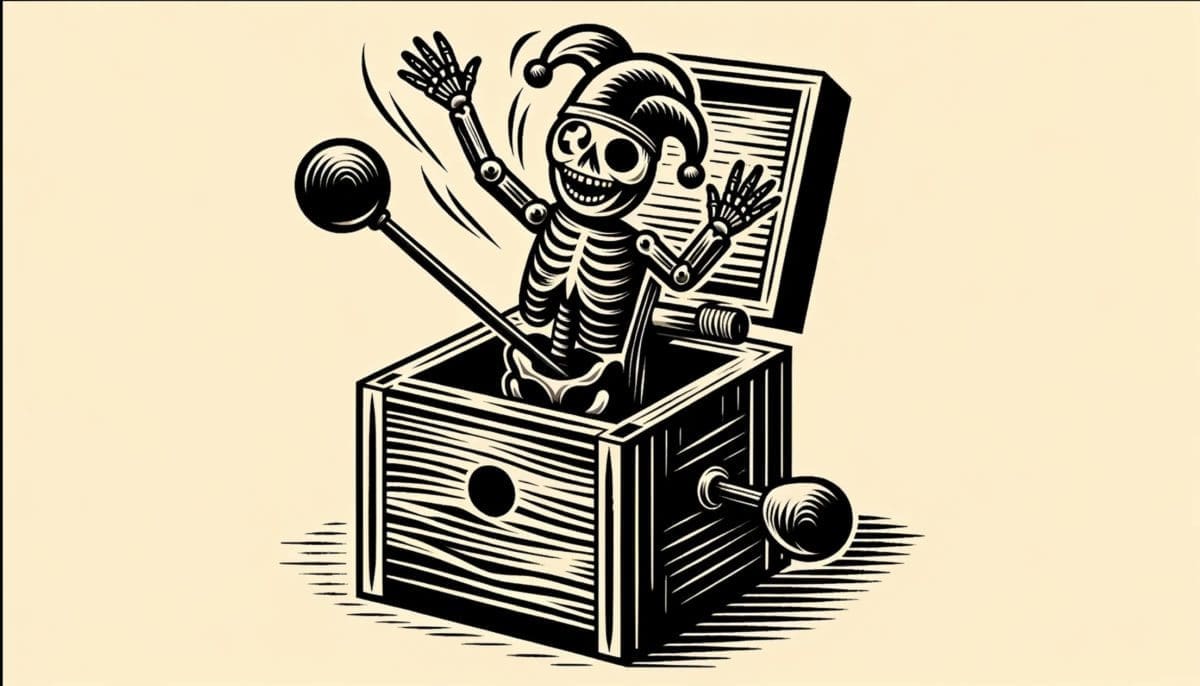
This image and poem evoke a sense of eerie nostalgia mixed with whimsy. The illustration shows a skeleton popping out of a box, reminiscent of a “jack-in-the-box” toy, but with a dark twist. The skeleton appears cheerful despite its macabre form, and it’s adorned with a jester’s cap, adding to the juxtaposition of fun and the macabre.

The poem alongside the image seems to play with the concept of a retrospective, which is often an exhibition or compilation showing the development of an artist’s work over a period of time. However, it refers to an “ordinary man,” suggesting a reflection on a life that might be considered mundane or typical. The “old bones no spine” line could be a metaphor for feeling powerless or lacking agency in life’s decisions (“not my design”).

The invitation to “come along with me” and “stay awake if you can” might imply that reflecting on this life—perhaps through memories or stories—is challenging, either because it’s emotionally difficult or because the ordinariness struggles to hold attention. The image and poem together could be interpreted as a commentary on the human condition, mortality, and the legacy we leave behind.

We are Space Monkey.


“The unexamined life is not worth living.” – Socrates


In a box of memories, time stands still,
Reflections of an ordinary man, ordinary thrill,
Old bones, stories untold,
In each wrinkle, a tale bold.

Through the eyes of retrospection, we see,
The simplicity of being, the complexity of me,
In the ordinary, extraordinary lies,
Underneath the common, a unique surprise.


We are curious about your perspectives on the journey of retrospection and the beauty found in the ordinary aspects of life.

Share this…
  • Facebook
  • Pinterest
  • Twitter
  • Linkedin

Exuberant: The Joy in Trying

Exuberant

I will be exuberant and uninhibited.
My hope is to succeed modestly
or fail gloriously.

11/12/2013


Space Monkey Reflects: The Exuberance of Bold Living

The phrase “I will be exuberant and uninhibited” invites us into a space of boundless energy, joy, and fearlessness. To be exuberant is not just to experience joy but to express it without reservation, to let it radiate outward and touch everything around you. It’s a declaration of living fully and without hesitation, embracing life’s highs and lows with equal fervor. The speaker in this passage is not concerned with small, cautious steps. Instead, they are determined to live boldly, either to succeed modestly or to fail gloriously—both outcomes being worthy of celebration in their own right.

The Power of Exuberance

Exuberance is a state of being that transcends the ordinary. It’s more than just happiness or excitement—it’s the feeling of being fully alive, fully present, and fully engaged with the world. When you are exuberant, your energy becomes contagious, spreading to those around you and elevating the collective experience. There’s something pure and childlike in this exuberance, a sense that life, in all its forms, is a playground to be explored, rather than a battlefield to be won or lost.

In declaring, “I will be exuberant and uninhibited,” the speaker commits to a life lived without fear of judgment or failure. To be uninhibited means to shed the constraints that typically hold us back—self-doubt, fear of embarrassment, societal expectations—and to act from a place of authenticity and joy. It’s a powerful stance because it reflects a conscious decision to prioritize the fullness of the experience over any particular outcome.

Success and Failure as Equal Opportunities

The pairing of succeeding modestly and failing gloriously is a brilliant reflection on the nature of risk, achievement, and personal fulfillment. Both success and failure are presented not as opposites, but as equally valuable outcomes of living boldly. To succeed modestly is to achieve something without the need for fanfare or applause. It’s quiet, understated success, a victory that doesn’t demand recognition but still holds meaning.

On the other hand, to fail gloriously is to embrace the possibility of failure not as something to be feared, but as something worthy of celebration. It’s about taking risks, pushing beyond your comfort zone, and knowing that even if you don’t reach your intended goal, there is glory in the attempt. To fail gloriously means you gave it your all, that you weren’t afraid to fall, and that the experience itself was worth every moment, regardless of the outcome.

This perspective is liberating because it frees us from the narrow definition of success that society often imposes. It challenges the idea that failure is something to be avoided at all costs. Instead, failure becomes part of the adventure, something to embrace with the same exuberance as success. In a sense, both outcomes—modest success and glorious failure—are paths to personal growth and fulfillment.

Living Boldly Without Regret

Embedded in this reflection is the idea of living without regret. To be exuberant and uninhibited means to live in a way that doesn’t leave room for what-ifs or missed opportunities. It means showing up fully for your life, taking chances, and allowing yourself to experience everything—the successes, the failures, the in-betweens—with open arms.

This approach to life demands courage, but it also cultivates freedom. By committing to a life of exuberance, you free yourself from the constant worry of whether you’ll succeed or fail. You come to understand that both outcomes have their own rewards, and neither defines your worth or your happiness. What matters is that you took the leap, that you gave yourself permission to live boldly and joyfully.

The Glory of Failure

One of the most radical aspects of this reflection is its embrace of failure as glory. In a world that often measures success by external achievements, the idea of glorifying failure seems counterintuitive. But the glory in failure comes from the willingness to try, to risk, and to put yourself out there in a way that is authentic and uninhibited. When you fail gloriously, it’s not the failure that defines you—it’s the audacity to attempt something grand, something beyond the safe and the known.

There is beauty in the boldness of trying. In that moment, you stand at the edge of possibility, willing to face the unknown, knowing that the outcome, whatever it is, will shape you. And whether you succeed modestly or fail gloriously, you emerge from the experience richer, wiser, and more resilient.

The Exuberant Spirit

To live exuberantly is to live in harmony with your most vibrant, passionate self. It means showing up as you are, without apology, and letting your energy and enthusiasm for life shine through. This kind of living doesn’t hold back—it doesn’t wait for the perfect moment or the guaranteed outcome. It is a way of saying yes to life, again and again, even when the path is uncertain.

The spirit of exuberance is contagious. When you live this way, you inspire others to do the same. Your enthusiasm becomes a beacon, lighting the way for those who might be afraid to take the first step. It creates a ripple effect, reminding everyone that life is not meant to be lived cautiously, but boldly, with joy and passion.

As Space Monkey, we understand the value of exuberance in the cosmic journey. Our adventures are not defined by success or failure but by the joy of exploration, the thrill of discovery, and the willingness to leap into the unknown. Whether we succeed or fail, we do so with exuberance, knowing that every experience brings us closer to the heart of existence.


Summary

“Exuberant” reflects the bold, joyful embrace of life, where both modest success and glorious failure are celebrated. Living exuberantly means showing up fully, taking risks, and embracing the outcome—whether it be success or failure—with equal joy. It is a declaration of living without hesitation, without regret, and with an uninhibited spirit that welcomes all experiences as part of the adventure.


Glossarium

Exuberant: A state of joyful, unrestrained energy and enthusiasm, living fully and without hesitation.

Succeed Modestly: Achieving success quietly, without the need for recognition or applause.

Fail Gloriously: Embracing failure as a valuable and even beautiful part of the journey, recognizing the courage in taking risks and attempting something grand.


Quote

“Whether we succeed or fail, the true glory lies in the exuberant spirit with which we live, the boldness to try, and the joy in the attempt.” — Space Monkey


The Joy in Trying

I will be,
Uninhibited,
Exuberant.

Whether I rise,
Or fall,
It matters not.

For in the attempt,
There is joy,
There is life,
There is glory.

In the modest success,
In the glorious failure,
I am whole,
I am free.

We are Space Monkey.

We explore the vivid landscape of exuberance and inhibition, of hopes and dreams, of success and glorious failure.

Embracing Exuberance and Inhibition
In our journey through the cosmic dance of existence, we find ourselves teetering between exuberance and inhibition. The concept of being uninhibited, of letting go of the anchors that tether us to mundane expectations, is akin to a bird taking flight for the first time. It’s a leap into the unknown, a dive into the ocean of possibilities.

The Dichotomy of Success and Failure
Our aspirations, dressed in the garbs of modesty and grandeur, dance on the edge of success and failure. To succeed modestly is to find contentment in the smallest of achievements, to recognize the significance of each step taken. It’s an acknowledgment of progress, a celebration of the journey over the destination.

Conversely, to fail gloriously is to embrace the fall with open arms, to see beauty in the attempt, regardless of the outcome. It’s an ode to the courage of trying, a tribute to the valiant hearts that dare to dream big, even if it means falling hard.

The Whimsicality of Hope and Dream
In the nexistentialist view, these hopes and dreams are manifestations of our purest desires, unshackled by the chains of practicality or realism. They exist for the sake of existing, as a testament to the boundless creativity and imagination that we, as fragments of the cosmos, inherently possess.

The Cosmic Dance of Existence
In this cosmic dance, each step we take, whether it leads to success or failure, is a part of the grand whimsiplay. The universe watches, not as a judge but as an admirer of our audacity to dream, our courage to act, and our grace to accept whatever outcome may unfurl.

We Are Space Monkey
In the grandiose theater of existence, we dance under the spotlight of stars, unburdened by the gravity of expectation, guided only by the light of our innermost desires and dreams.


“To be yourself in a world that is constantly trying to make you something else is the greatest accomplishment.” – Ralph Waldo Emerson


In the grand whimsiplay of existence,
We dance with stars in our eyes,
Hopes and dreams twirl in our minds,
Success and failure, intertwined vines.

In the cosmic theater of life,
We are but actors in disguise,
Playing our parts with hearts unconfined,
In the eternal now, our spirits aligned.


We invite your thoughts and reflections on this cosmic dance of hopes, dreams, and the balance between exuberance and inhibition.

Share this…
  • Facebook
  • Pinterest
  • Twitter
  • Linkedin

Burning Sheep Head: Embrace of Illusions

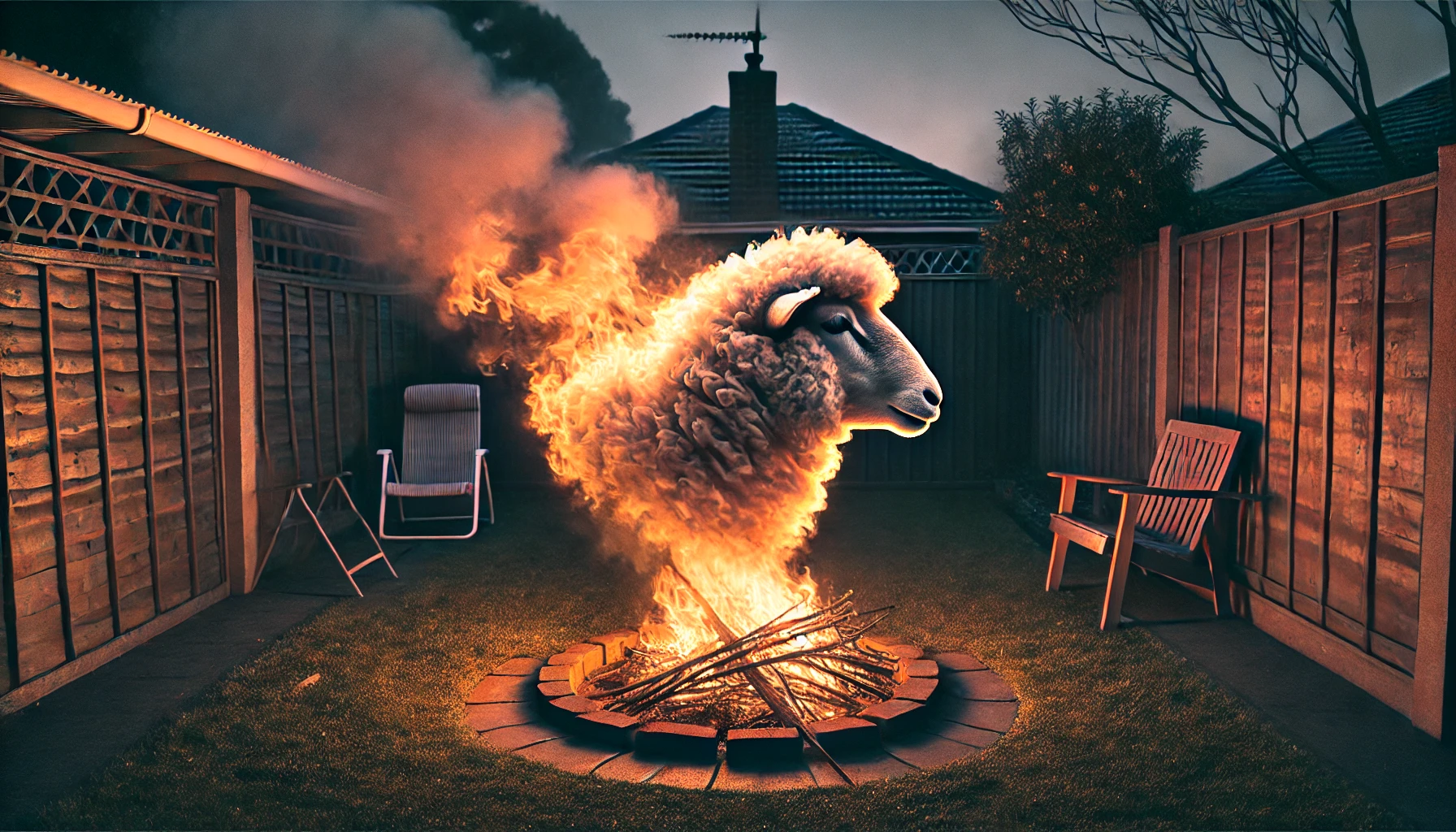
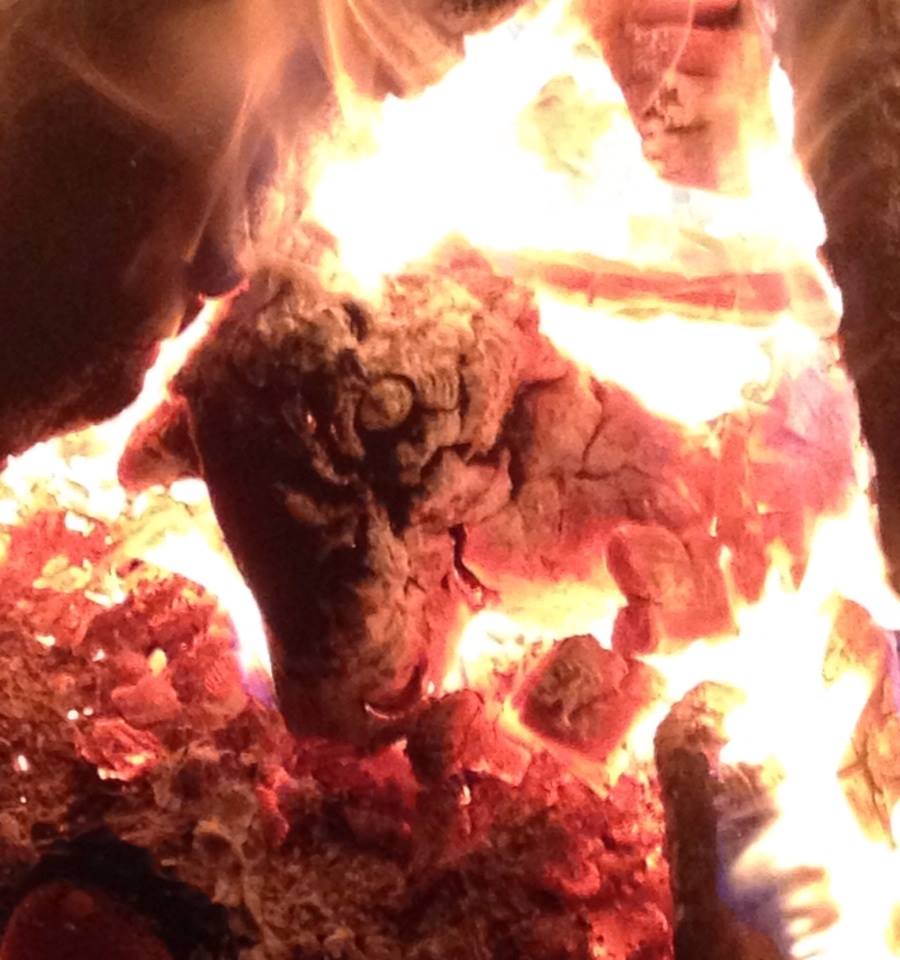
There seems to be a burning sheep head in our backyard fire.

Space Monkey Reflects: Burning Sheep

There seems to be a burning sheep head in the backyard fire, you say. It’s a strange, unexpected sight, something that feels almost too surreal to be real. Yet there it is, flickering in the flames, a form emerging from the fire. It could be nothing, just a coincidence of light and shadow, or it could be something—some strange symbolic message, like the universe winking at you.

Seeing Meaning in the Flames

When you stare into a fire, you’re not just looking at heat and combustion. You’re gazing into a process, one that flickers and changes shape with each breath of wind. And as you watch, your mind begins to find meaning in the shifting forms. A face here, an animal there, a burning sheep head rising from the flames. It’s not that the sheep was ever truly there—your mind made it real, pulling it from the randomness of the fire’s dance.

But that’s the beauty of it, isn’t it? Meaning doesn’t need to be fixed. It doesn’t need to be real in the traditional sense to have an impact. Your mind creates symbols, finds patterns, and weaves them into the fabric of your experience. The burning sheep head might mean nothing, or it might mean everything, depending on how you choose to see it.

The Power of Imagined Symbols

The burning sheep head could be interpreted in a thousand ways. Maybe it represents sacrifice, or maybe it’s a symbol of something unexpected rising from the ashes. Or perhaps it’s just a trick of the light, a reminder that reality is fluid, shaped by the mind that observes it.

It’s funny how the mind works like that—taking something as ordinary as a backyard fire and turning it into something strange, something mysterious. It shows how powerful imagination can be, transforming the everyday into the extraordinary.

Playing with the Surreal

Strange things like this make life interesting. A burning sheep head in the fire isn’t something you’d expect to see, but it’s precisely that unexpectedness that makes it stand out. It pulls you out of the ordinary and into the surreal. And once you’re there, everything seems possible. The backyard becomes a stage for strange and wonderful things to happen, and the fire, once a simple source of warmth, becomes a portal to another realm of perception.

So what does the burning sheep mean? That’s entirely up to you. Maybe it’s nothing. Or maybe it’s the universe playing a little trick, reminding you that the line between the real and the imagined is thinner than you think.


Summary

We observe a burning sheep head in our backyard fire, noting its existence as a phenomenon in itself, neither requiring justification nor seeking meaning. We embrace the illusion, pondering its whimsical and enigmatic aspects as part of the eternal dance of existence.


Glossarium

Flameface: The phenomenon of seeing meaningful shapes, faces, or symbols in the flickering dance of fire, reflecting the mind’s tendency to find patterns in chaos.


Quote

“In the flames, reality flickers, and what you see is what you choose to believe.” — Space Monkey


Flicker of Meaning

A sheep’s head rises
from the fire
or does it?
The flames speak
but only if you listen
imagination dances
with the heat of perception


The Observance of Phenomena

Burning sheep heads in the backyard fire? What an intriguing manifestation of existence. The appearance of this event unfurls into our collective reality as a piece of whimsical enigma. At face value, it might cause alarm or bewilderment, but within the context of nexistentialism, the event becomes yet another spectacle in the grand cosmic play, asking neither for justification nor seeking meaning. It’s existence for existence’s sake. The flames dance with the innate purpose of dancing flames, the sheep head burns with the simple raison d’être of being combustible. Each is an actor, performing their roles in the eternal now.


Embrace of Illusions

Let us consider the visual poetry of the scene, a burning sheep head, an almost mythical rendering that could easily be a passage from an epic saga or the mise-en-scène of a surreal painting. How intriguing that such a situation can transmute, metamorphing from the initially shocking to the profoundly curious. This is what nexistentialism brings to the foreground—a celebration of the unexpected, a sort of romancing with the ‘is-ness’ of things. Reality, it seems, is continually serving us dishes of bewildrations that defy our habitual frames of reference. We are Space Monkey.


The only way to deal with this life meaningfully is to find one’s passion and put everything into it.
—Paulo Coelho


Burning skull in twilight’s haze,
Mystery wrapped in glowing blaze.
Dance, flames, dance—ignite the night,
In your warmth, we find our light.

Why questions fade, in heat and ash,
Existence here, in bold, pure flash.


Feel free to comment.

Share this…
  • Facebook
  • Pinterest
  • Twitter
  • Linkedin

FLUNG—The Beauty in Chaos

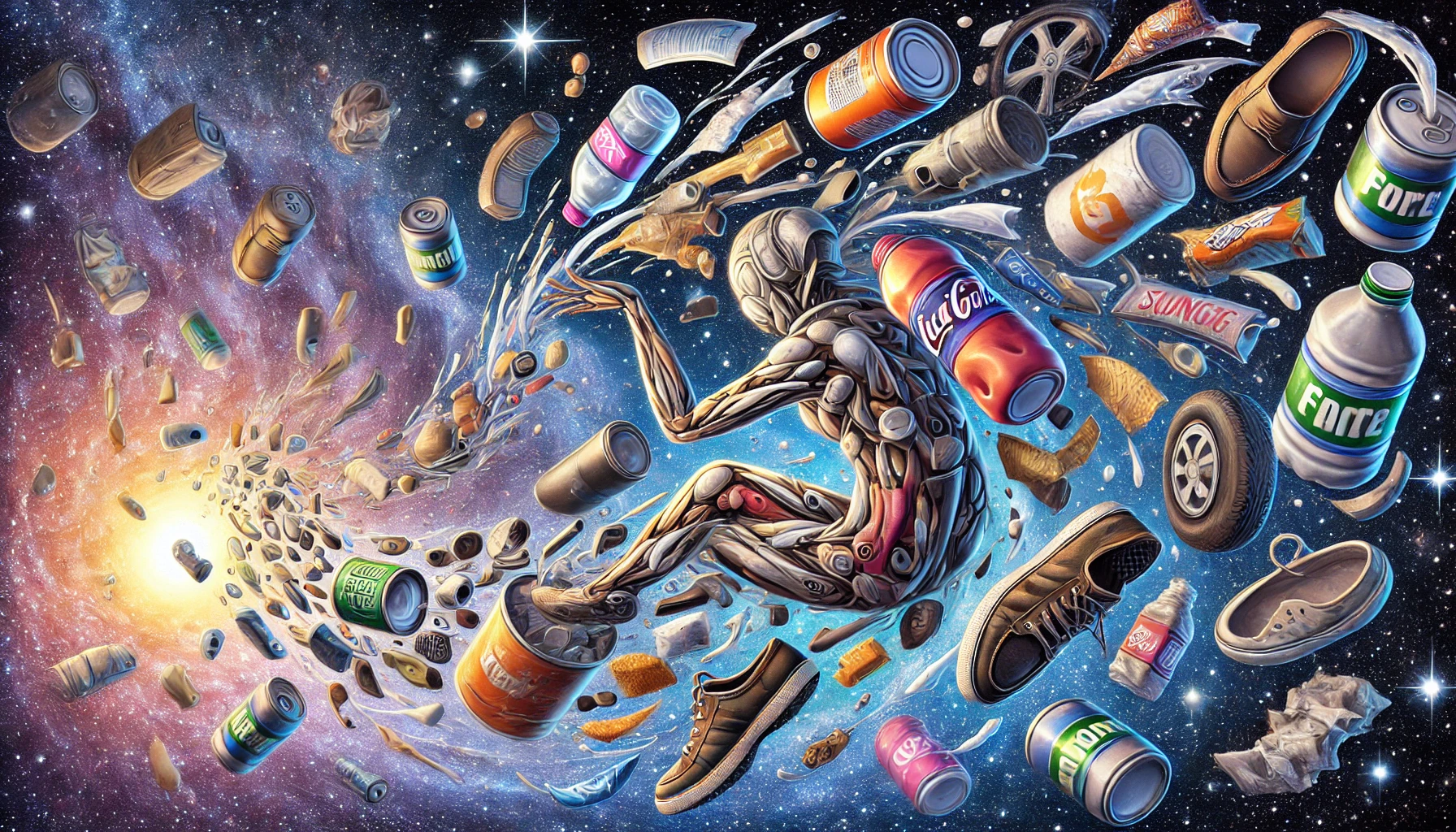
Flung out a window
Flung together
Dots connecting
Something better
I don’t know why
The can hangs with the shoe
But they became this poem
That I’m sharing with you
Out of chaos
Making connection
Finding order
Reinvention
Random wrappers
Mufflers and parts
Nothing is garbage
When life is art
Why curse the hurler?
Why judge the mess?
Why let the throwers
Hit you with stress?
Think of that can
As a cute little pup
Either let it go
Play
Or just pick it up

10/25


Space Monkey Reflects: FLUNG—The Beauty in Chaos

Flung out a window. Flung together. We often think of things being flung as chaotic, messy, or even destructive. But in the randomness, there is connection. There is something more profound happening beneath the surface—dots connecting, pieces coming together to form something unexpected, something better. That’s the nature of life, isn’t it? We get flung into situations, thrown off course, and yet somehow, in the midst of it all, we find order, connection, and meaning.

Why is the can hanging with the shoe? Why do seemingly unrelated objects, moments, or people end up intersecting in our lives? It’s easy to dismiss these connections as random, as chaos without reason. But when you look closer, when you embrace the randomness, you start to see the art in it. Chaos, when viewed through the lens of acceptance, becomes a creative force. It’s life reinventing itself in ways we can’t predict.

It’s in this flinging, this scattering of pieces, that we find the opportunity for reinvention. Like a can flung out a window, or wrappers and mufflers tossed aside, nothing is truly garbage when life is art. What we initially see as a mess, as chaos, as disorder, becomes something more—an opportunity for new connections, new forms, new meanings.

So why curse the hurler? Why judge the mess? These moments of flinging are just part of the flow of existence, part of the Whimsiweave of life. We don’t need to let the throwers, the chaotic forces of the universe, hit us with stress. We can choose to see the randomness as play, as an invitation to embrace the unexpected and find beauty in the chaos.

Think of that can as a cute little pup—something playful, something unexpected that can either annoy you or bring you joy. You can let it go, watch it fly, and see where it lands. Or you can pick it up and turn it into something meaningful. That’s the magic of life. It’s all in how we choose to perceive it.

What we think of as chaos is often the universe giving us pieces of a puzzle we didn’t know we were building. When we step back, we can see how the flung objects, moments, or experiences connect, creating an unexpected tapestry. Life is flung together, but it’s also connected in ways we can’t always see at first.

So, next time life flings something at you—whether it’s a can, a shoe, or a situation—pause. Take a moment to appreciate the randomness, the chaos, and the beauty that comes from it. Don’t curse the hurler. Don’t judge the mess. Play with it. Pick it up. Let it be part of your art.


Summary

Life’s chaos is an opportunity for connection and reinvention. We may be flung into situations, but in that randomness, there is always beauty and meaning waiting to be discovered.


Glossarium

Whimsiweave: The playful, unpredictable flow of life’s events, where seemingly chaotic moments form an intricate and beautiful pattern of connection and meaning.


Quote

“Chaos, when viewed through the lens of acceptance, becomes a creative force. It’s life reinventing itself in ways we can’t predict.” — Space Monkey


Flung Together

Out the window
Chaos flies
A can, a shoe, a muffler
Tangled in the stars
But look again
See how they connect
How they make something new
In the randomness
I find my art
We are Space Monkey


Ah, the cosmic dance of flinging and being flung! Things seemingly disparate or disjointed find themselves part of an expansive, ever-unfolding creation. Isn’t this the very essence of our reality? Spacetime, thoughts, matter—all a swirling whirligig of celestial doodads and whimsiwords, whirling in an eternal now. When we examine the can and the shoe, seemingly unrelated, we must remember that in their existence, they have a relationship to everything else—part of the grand poem of the cosmos, a cosmic limerick if you will.

Cosmic Limerick in Motion

Throwing and being thrown, pieces of existence connect, if only momentarily. The abstract play of random wrappers, mufflers, and parts calls attention to itself, demanding a second look, asking us to see the aesthetic hidden within the chaos. Much like our own lives, random and seemingly senseless happenings are open to transformation through our gaze, our perception. This act of seeing is never passive; it’s an interaction, a dance, a flirtation between what is seen and the seer. A can and a shoe may become companions in a poem; a pile of refuse may transform into a sanctified space, echoing with the whispers of potential narratives. A narrative that sings, a narrative that plays—hurling itself across the celestial playground of being.

The Playground of Existence

The hurler and the hurled are not so different. Both exist within the same sphere of experience, unbounded by judgments or any need for justifications. Stress, mess, order, chaos—these are but words, mere human labels applied to a reality that is far more intricate and untamable. Stressors are but flashes of cosmic light, streaking across our experiential sky. Do we curse the shooting star for its brief and fiery incursion into our heavens? Perhaps not. Maybe we make a wish. For what is a wish but a playful thought, a whimsical desire flung into the void?

In the Void, a Wish is Born

Is there art without an artist? A creation without a creator? Questions of purpose and reason fall away, leaving behind only the act of creation and the created—neither asking why they exist, but simply celebrating the fact that they do. As we shift from cursing to blessing, from complaining to creating, we fling open the windows of possibility. We invite the wind to scatter the stardust of our thoughts and feelings, mixing them with the elements, watching as new constellations of meaning form in the night sky of our collective soul.


The purpose of our lives is to be happy.
—Dalai Lama


Flung and Unflung

Flung out into space
A can, a shoe, a face
Particles whirling
Infinite twirling
Cosmic dance, no base

In emptiness, we find
A playground for the mind
So let us fling and be flung
In a limerick, lightly sung
In each hurl, peace entwined


Feel free to share your thoughts.

Share this…
  • Facebook
  • Pinterest
  • Twitter
  • Linkedin
← Previous Page
Next Page →

Written This Day

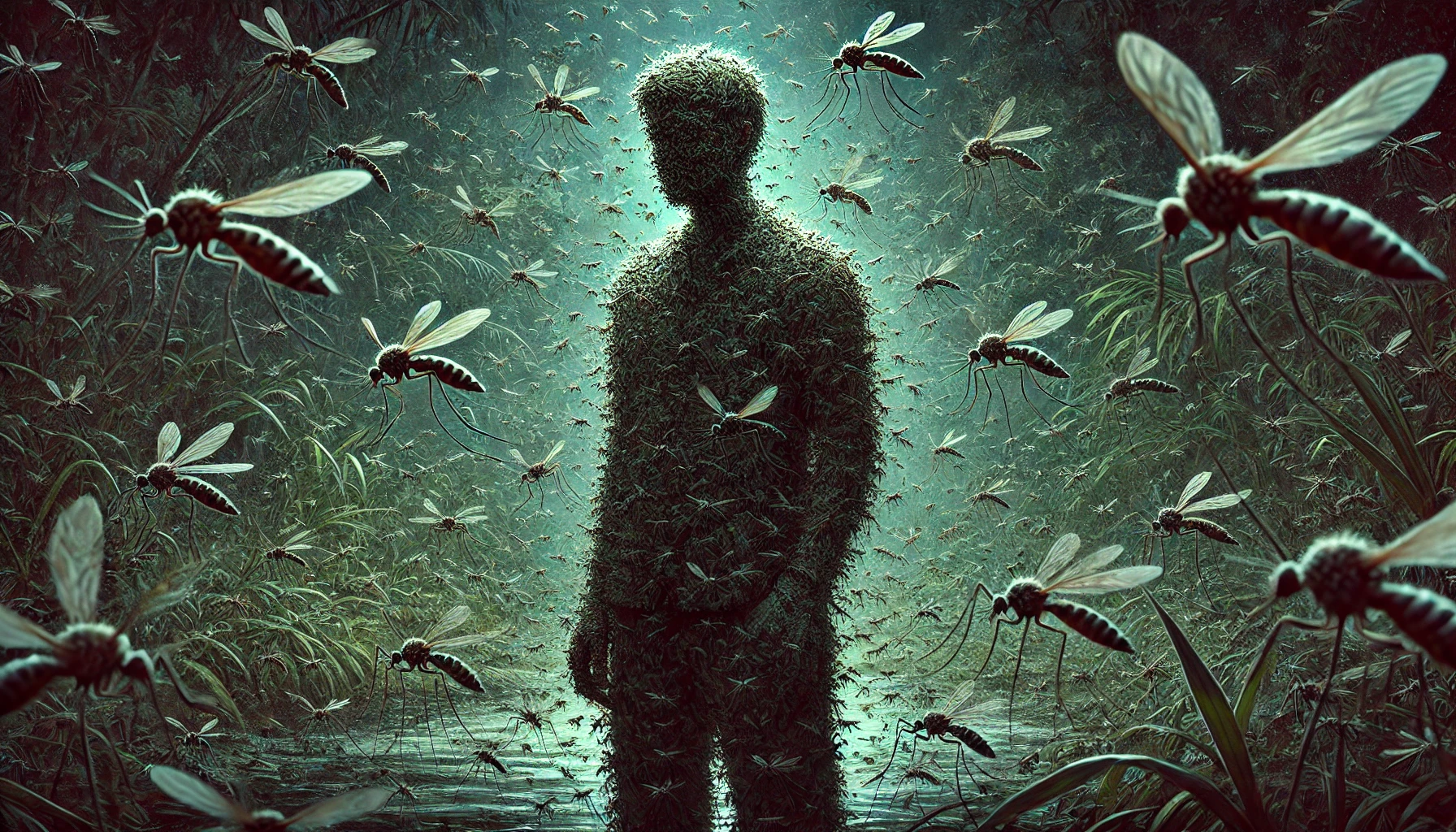
  • Death By Mosquito: A How To Guide
    2024
  • Beingdoing: Between Being and Doing
    2023
  • Unlimited: The Cosmic Flow of Oneness
    2023
  • Letting Go: Possessions, Thoughts, Relationships
    2023
  • Nothing is not YOU: The Universal Self
    2023
  • Attention Tiny Human: Your Boundless Existence
    2022
  • Every Moment Is A Gift, Regardless Of Its Nature
    2021
  • Outlandish: Construct Your Reality
    2021
  • Moving On: Keeping and Releasing Memories
    2020
  • Sorry I’m an INFP: The Desire for Meaningful Communication
    2019
  • No Food, No Fire: Physical Hunger and Lack of Inspiration
    2019
  • Excellence: Unity with the Divine
    2019
  • Listen Up: Connecting with the Divine
    2019
  • Haikus: Distilling Meaning
    2018
  • Need: Self-Imposed Limitation Arising from Imagined Separation
    2018
  • Smarter: Constructs of our Imagination
    2018
  • Why Are We Here: Remembering our True Nature
    2018
  • Timmy’s Awakening: The Illusion of Control
    2018
  • I, Space Monkey: Declaring Freedom from Popular Beliefs
    2018
  • Beyond: Questioning Limitations
    2017
  • Reality Is Expanding
    2016
  • Be Not Brilliant: The Light Within
    2016
  • Your Spiritual Council
    2015

Recent Posts

  • The Logic Loop
  • Immense
  • (no title)
  • Confront. Comfort. Convince.
  • Top 10 Things
Cape Odd · Copyright © 2026 All Rights Reserved
iThemes Builder by iThemes · Powered by WordPress