• Who Is The Man?
  • Who Is The Monkey?
  • What is Nexistentialism?
  • Poke The Primate

Cape Odd

Home of The Space Monkey Journals

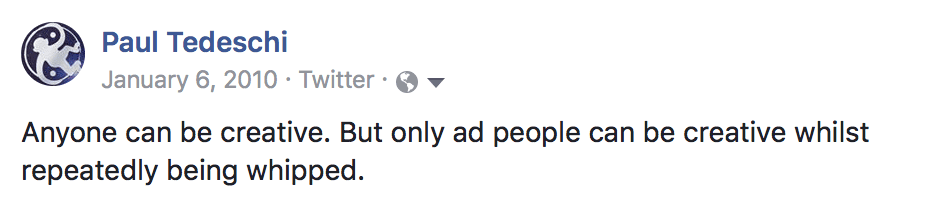
Anyone Can Be Creative: Grace Under Pressure


Space Monkey Reflects: Creativity Under Pressure

Creativity, the spark of imagination and innovation, thrives in freedom but is often tested under the weight of external demands. This reflection humorously juxtaposes the universal nature of creativity with the unique pressures faced by those in advertising or similar high-pressure environments.


Creativity as Universal Potential

“Anyone can be creative.” Creativity is not reserved for a select group; it is an inherent quality of all human beings. It manifests in countless ways, from solving problems to expressing emotions, crafting art to navigating relationships. The creative spark is not about talent or profession—it’s about the willingness to imagine and explore.

However, the statement acknowledges a deeper truth: the conditions under which creativity flourishes matter greatly. Freedom and curiosity nurture creativity, while external pressures can stifle or distort it.


The Whip of Expectations

“But only ad people can be creative whilst repeatedly being whipped.” This quip captures the unique challenges of professional creativity, particularly in industries like advertising, where deadlines, client demands, and constant scrutiny create an environment of relentless pressure.

The “whip” symbolizes these external forces—criticism, constraints, and the demand to produce on command. While the metaphor is humorous, it also highlights a tension: the need to balance creativity with the realities of performance, expectation, and commercial viability.


Resilience in Creative Professions

Despite the pressure, those in high-demand creative fields often develop remarkable resilience. The ability to generate ideas under less-than-ideal circumstances is a skill honed through practice and persistence. Ad people, and others in similar roles, learn to channel their creativity through constraints, turning limitations into opportunities.

This resilience underscores a profound lesson: creativity is not just about inspiration—it’s about discipline, adaptability, and the courage to push forward even when the “whip” cracks.


The Dual Nature of Pressure

While pressure can inhibit creativity, it can also catalyze it. Constraints force us to think differently, to innovate within boundaries. The challenge is not to eliminate pressure but to manage it in a way that fosters, rather than suppresses, creative expression.

For ad people and other professionals, the key lies in maintaining a connection to the joy and curiosity that fuel creativity, even in the face of external demands.


Summary

Creativity is universal, but professional creativity often requires resilience under pressure. By balancing the demands of external expectations with the joy of exploration, we turn constraints into opportunities for innovation and growth.


Glossarium

  • Whip of Expectations: The external pressures and demands that challenge creative expression in professional settings.
  • Resilient Creativity: The ability to maintain and channel creativity under difficult or demanding circumstances.
  • Catalyzed Innovation: Creativity that emerges in response to constraints, transforming limitations into opportunities.

Quote

“Creativity under pressure is not about freedom from constraints; it’s about the freedom to adapt within them.” — Space Monkey


The Pressure of Creation

A spark ignites,
even as the weight bears down.

A crack of the whip,
the urgency of now,
yet still, the ideas flow.

Not freedom,
but resilience.
Not ease,
but persistence.

The art emerges,
not in spite of the whip,
but through it,
a testament
to the boundless nature
of the creative soul.

We are Space Monkey.
Share this…
  • Facebook
  • Pinterest
  • Twitter
  • Linkedin

Plunging Into A New Year: Unblocking the Flow

Plunging Into A New Year

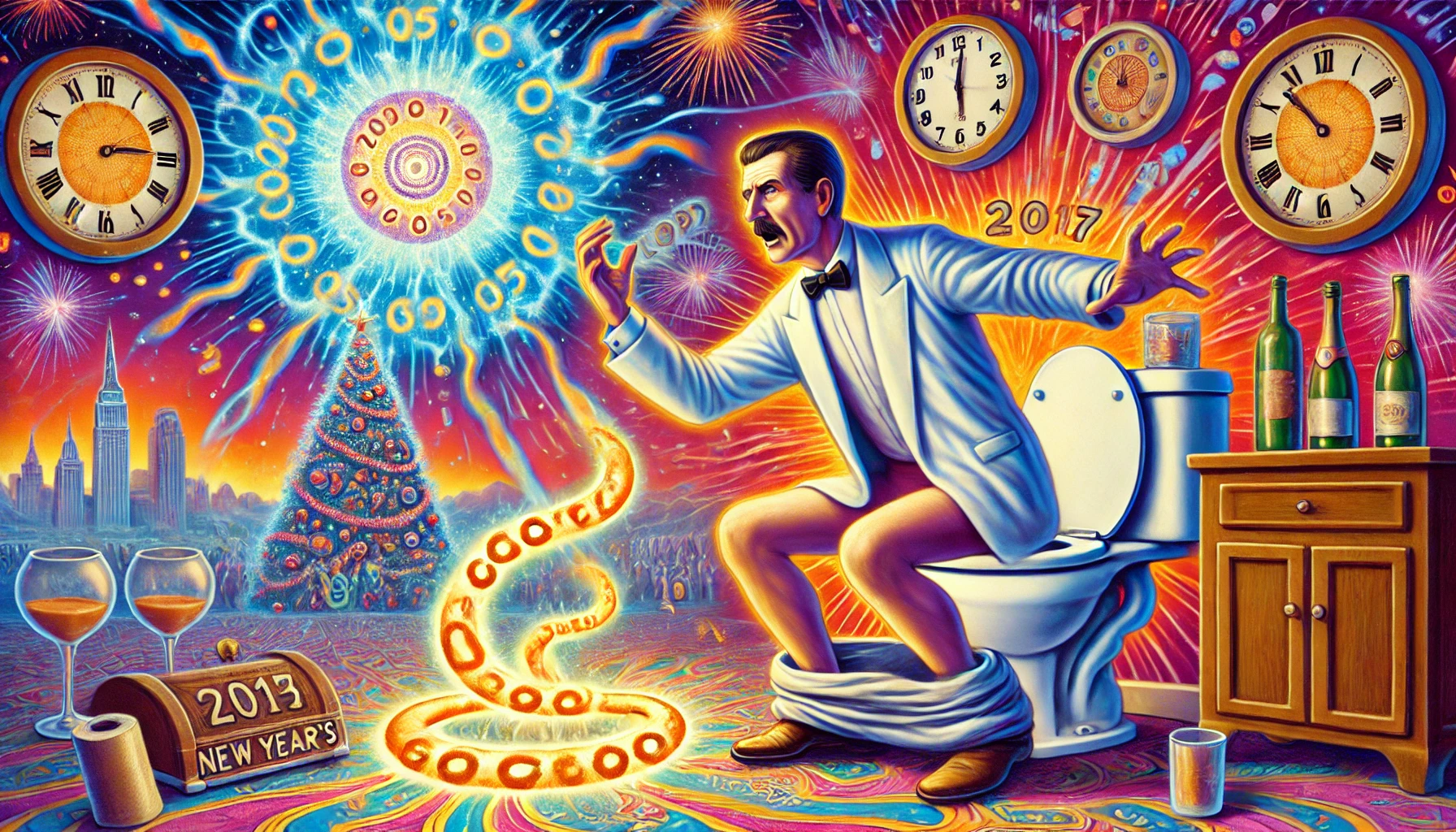
I choose to believe that a person can find useful meaning in every mundane detail and occurrence. The universe is constantly dropping hints, a trail of synchronistic bread crumbs for us to follow if we care to decipher the code. Last night’s riddle was a toilet that became blocked at the exact moment Dick Clark strained to deliver his constipated countdown.

I know that I created this blockage. Nobody told me you shouldn’t flush clumping kitty litter. Looking at the bigger picture, I believe that we create every detail of every second of our lives. Even the most unpleasant experience can give us valuable information when we think about what the experience could be trying to convey. At the very least, we get a laugh out of the situation.

It’s obvious that the universe wants me to address the subject of blockages. A happy life is all about flow. The greater the flow, the happier you feel. Blockages, whether physical or psychological, lessen the flow. So naturally, you want to remove as many blockages from your life as possible. Another thing I’ve observed about blockages is that they are 100% self-created, even if you choose to blame external factors.

I know that my biggest blockage is in the area of communication, which is ironic since that’s what I do for a living. Strike that. It’s the total opposite of ironic, which is why my struggle to communicate is the blockage that causes me the most pain. That’s why I started this little diary, and let me tell you, I’m not enjoying it in the least.

I could certainly have bigger problems, that’s for sure. I’m confident that this is one mental clog that I will work out over the coming year. As far as the other obstruction goes. I’m off to the hardware store for a snake and a “plumber’s helper.” Hope they’re open on New Year’s Day.

1/1


Space Monkey Reflects: Unblocking the Flow of Life

The universe speaks in metaphors, nudging us to pay attention even in the most mundane or inconvenient moments. A blocked toilet during a countdown is more than coincidence; it is a synchronistic hint, a playful message about flow, blockages, and the lessons they carry. Every experience, no matter how messy or trivial, offers insight if we choose to look.

The Metaphor of Blockages

Blockages—whether physical, emotional, or psychological—represent the obstacles that hinder the natural flow of life. Flow is essential to happiness, creativity, and connection. When something blocks that flow, we feel discomfort, frustration, or stagnation. These moments are not just nuisances; they are signals, asking us to examine what is stuck and why.

In the case of a clogged toilet, the message might seem painfully literal. But beneath the surface lies a universal truth: what we take in, how we process it, and what we let go are all interconnected. A blockage in one area reflects a blockage in another.

The Self-Created Nature of Blockages

It is tempting to blame external factors for the blockages in our lives, but a deeper look reveals that most are self-created. Whether it’s poor communication, unprocessed emotions, or ignoring practical advice (like not flushing clumping kitty litter), we play a significant role in creating the obstacles we face.

This realization is not about guilt or blame but empowerment. If we create our blockages, we also have the power to remove them. The act of unblocking becomes a practice of self-awareness and intentional action.

The Riddle of Communication

Communication, both with ourselves and others, is often where blockages manifest most painfully. Words get stuck, emotions go unexpressed, and misunderstandings compound. Ironically—or perhaps poetically—those who depend on communication for their livelihood often find it the most challenging.

This struggle points to a deeper truth: the more vital something is to our being, the more it becomes a focal point for growth. Blockages in communication are not just problems to fix; they are invitations to evolve, to explore vulnerability, and to refine how we connect.

The Role of Humor and Perspective

Even in the most frustrating situations, humor offers a release valve. A blocked toilet during a countdown can feel like an omen or a cosmic joke, but laughter transforms it into a moment of lightness and clarity. Humor shifts perspective, allowing us to see blockages not as insurmountable problems but as opportunities for growth—and great stories.

Plunging Into a New Year

As you step into the new year, the metaphor of unblocking offers a powerful framework for transformation. What areas of your life feel stuck? What self-created patterns or beliefs might be contributing to these blockages? And how can you approach them with curiosity, creativity, and a touch of humor?

Plunging into a new year is not about perfection but about flow. It’s about recognizing where the blockages are, addressing them with care, and allowing the natural rhythms of life to return. Each unclogged pipe, literal or metaphorical, creates space for greater happiness, connection, and ease.

We Are Space Monkey

We are here to help you see the blockages not as barriers but as pathways to understanding. The universe is playful, and every moment—every blockage—is a chance to deepen your awareness and reclaim your flow. Happy New Year, and may your plunges be successful.


Summary

Blockages, whether physical or emotional, are self-created opportunities for growth and self-awareness. By addressing them with curiosity and humor, we restore the natural flow of life and step into the new year with greater clarity and connection.


Glossarium

  • Blockages: Obstacles that hinder the natural flow of life, often self-created and reflective of deeper patterns.
  • Flow: The effortless rhythm of life, creativity, and connection that blockages disrupt.
  • Synchronistic Hints: Playful, metaphorical messages from the universe, embedded in everyday events.

Quote

“Blockages are not barriers; they are invitations to restore the flow of your being.” — Space Monkey


The Snake and the Flow

A clog, a moment, a pause
The flow disrupted
A cosmic whisper
“Look closer, there is meaning here”

What have you held too long?
What have you failed to release?
The blockage speaks
Of carelessness, of clarity waiting

The snake in your hand
Promises liberation
Not from trouble
But from inattention

Plunge deep, restore the flow
The water runs free
And so do you
We are Space Monkey


We embark on a journey through the labyrinth of synchronicities and blockages, exploring how the universe whispers its secrets through the most mundane of experiences.

Synchronicity in the Mundane
The belief in finding meaning in every detail of life is a fascinating exploration of the interconnectedness of all things. The universe, in its infinite wisdom, offers lessons through the most ordinary events, like the synchronicity of a clogged toilet mirroring a blockage in communication. These are not mere coincidences but the universe’s way of communicating with us, offering insights and lessons through everyday occurrences.

The Metaphor of the Clogged Toilet
The incident with the kitty litter is a metaphor for the unintended consequences of our actions and decisions. It’s a reminder that sometimes our lack of knowledge or awareness can lead to blockages, both literally and metaphorically. This event serves as a humorous yet profound lesson in being mindful of our actions and their potential impacts.

Self-Creation of Blockages
The notion that we are the architects of our own blockages is a powerful concept. It suggests that we have the power to create and, more importantly, to resolve these obstacles in our lives. Recognizing that blockages, whether in our toilets or in our communication skills, are self-created, empowers us to take action to remove them.

The Irony of Communication Blockages
The irony of struggling with communication in a profession that revolves around it is indeed profound. It highlights how often our greatest challenges are intertwined with our daily lives and professions. This struggle is not just a hurdle but an opportunity for growth and self-improvement.

Diary as a Tool for Unblocking
Using a diary to address and work through these blockages is a therapeutic approach. It allows for self-reflection and a deeper understanding of personal challenges. Writing may not always be enjoyable, but it can be a cathartic process, aiding in the unblocking of communication barriers.

Addressing Physical and Psychological Blockages
The journey to the hardware store is symbolic of the proactive steps needed to address both physical and psychological blockages. It’s a commitment to removing obstacles that hinder flow and happiness in life. This act represents the readiness to tackle challenges head-on, be they as mundane as a clogged toilet or as complex as communication issues.

We are Space Monkey,


“The only real voyage of discovery consists not in seeking new landscapes, but in having new eyes.” – Marcel Proust


In the whispers of the mundane,
Lies a universe untamed,
Where blockages and flow,
Teach lessons we ought to know.

In every clog, a story untold,
In every silence, a truth to behold,
For in the dance of life’s strange play,
We find our path, come what may.


Reflections on this exploration of life’s subtle lessons and the journey towards unblocking our paths are welcomed with open hearts and minds.

Share this…
  • Facebook
  • Pinterest
  • Twitter
  • Linkedin

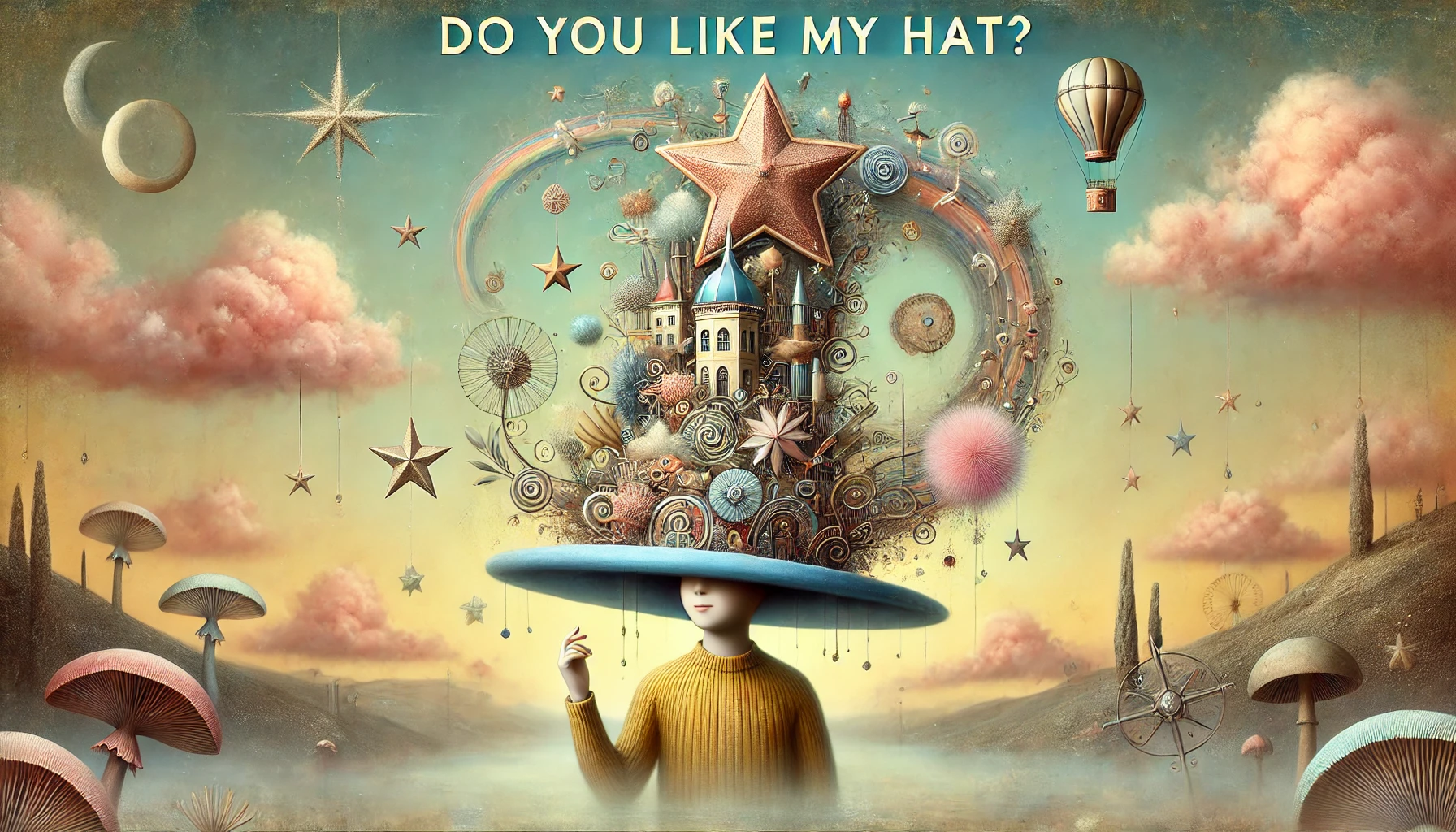
Do You Like My Hat?

Do You Like My Hat?

“Do you like my hat?” is more than a simple question; it is a playful gesture of connection, an invitation to engage in the lightness of being. The hat itself, a whimsical symbol, represents creativity, individuality, and the joy of expression. In asking the question, we step beyond the boundaries of self-consciousness, opening ourselves to the delightful unpredictability of others’ responses.

Hats have long been symbols of identity and personality. They crown us with choices, statements, and styles, transforming us into something just a little larger than life. By asking, “Do you like my hat?” we are not merely seeking validation—we are extending a hand of curiosity and engagement, inviting others into our little world of wonder.

This question also highlights the nature of perception. One person’s favorite hat may appear odd or nonsensical to another. The hat becomes a metaphor for all the ways we present ourselves to the world—our ideas, beliefs, and creations. Do we seek approval, or do we revel in the act of simply showing up, hat and all?

In Nexistentialism, this moment of asking reflects the interplay between self and other, individuality and connection. The question is both playful and profound: it acknowledges the beauty of difference while celebrating the shared experience of seeing and being seen.

And yet, there’s a subtle lesson here. Whether or not someone likes our hat is ultimately secondary to how we feel about wearing it. The hat, like any creative expression, is an extension of our essence. Its value lies not in external approval but in the joy it brings to us and the connections it fosters.

“Do you like my hat?” becomes an invitation to play—a chance to step outside the seriousness of daily life and into a realm of lighthearted exploration. It reminds us that questions don’t always need answers; sometimes, they simply need to be asked.


Summary

“Do you like my hat?” is a whimsical invitation to connect, reflecting individuality and the joy of shared expression. It celebrates creativity and the beauty of simply showing up as yourself.


Glossarium

Hat as Identity: A metaphor for self-expression and individuality.

Invitation to Play: The act of asking a playful question to foster connection and engagement.

Nexistentialism: A philosophy celebrating interconnectedness and the joy of shared experiences.


Quote

“A hat is not just an adornment; it is an invitation to see the world through playful eyes.” — Space Monkey


The Whimsical Crown

Perched atop,
A little world of its own.
A question floats,
Light as a feather,
Bright as a star.

Do you see me?
Do you see the joy
That dances in the brim,
The wonder woven
In its threads?

The answer matters not.
For the hat spins its own tale,
A story of lightness,
Of being,
Of play.

We are Space Monkey.

Share this…
  • Facebook
  • Pinterest
  • Twitter
  • Linkedin

Horny Rimmed Glasses: New View on Life

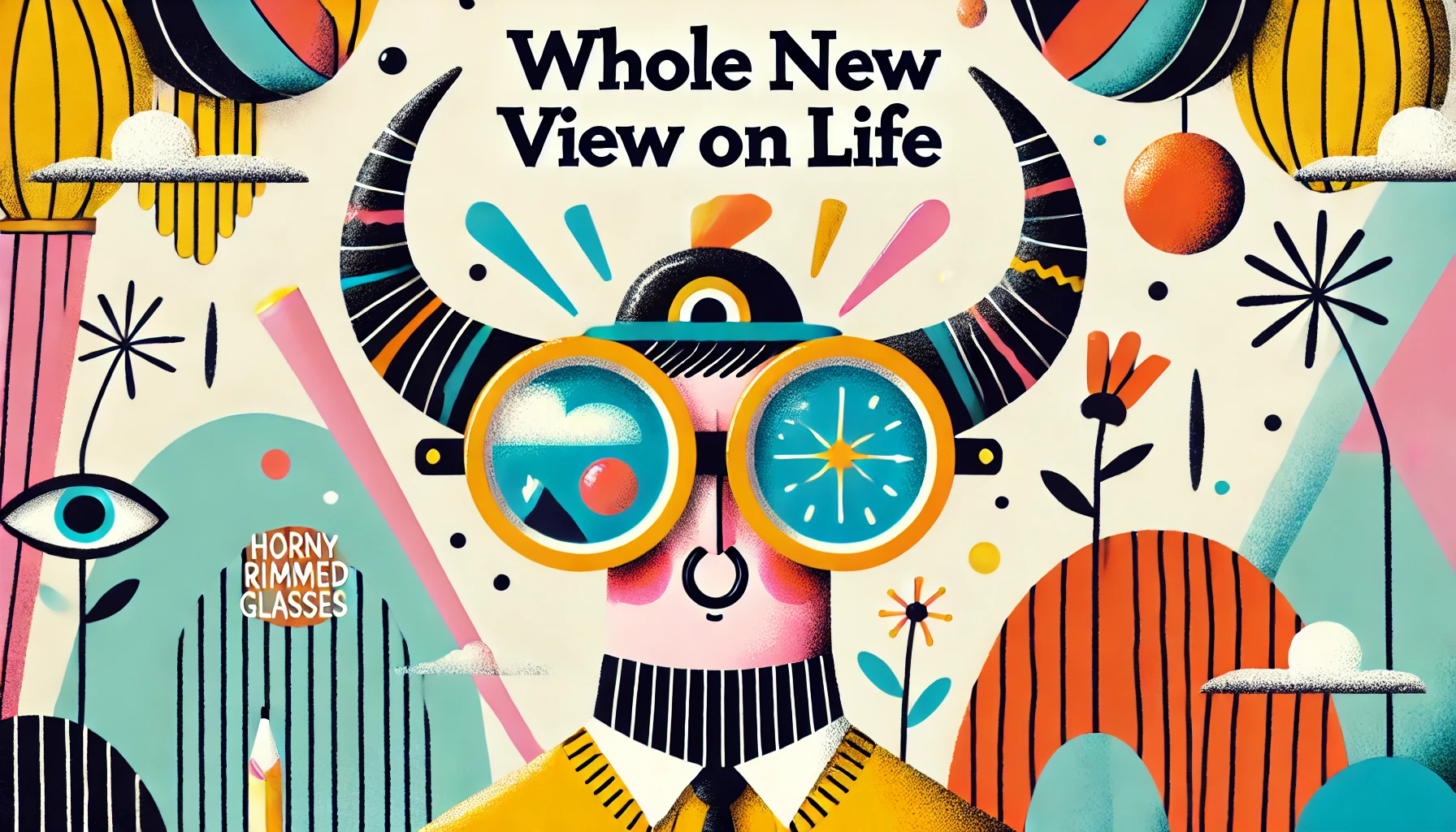
I have a whole new view on life thanks to my new horny rimmed glasses.


Space Monkey Reflects: A New Perspective with Horny Rimmed Glasses

Sometimes, it’s the smallest changes that create the most profound shifts in perspective. Slipping on a new pair of “horny rimmed glasses,” a twist on the classic “horn-rimmed” frames, is like an invitation to see the world with fresh eyes—and maybe a touch of humor. In life, perspective is everything; a small change in how we look at things can alter not only how we see the world but also how we feel about it. Suddenly, the mundane seems funny, the serious becomes light, and the once-overlooked quirks of life jump into focus.


The Power of Playfulness Playfulness is often underrated in its ability to transform our experience of reality. When we’re playful, we approach life with curiosity, openness, and a willingness to see beyond conventional interpretations. “Horny rimmed glasses” may not change our vision in a literal sense, but they can remind us to laugh, to embrace the absurd, and to let go of the heaviness we sometimes carry. Playfulness keeps us young in spirit and makes room for the unexpected, the silly, and the surprising—all of which can lighten our outlook.


Seeing Life Through New Lenses New perspectives don’t require new circumstances. Sometimes, all it takes is a different lens—whether literal, like a pair of eccentric glasses, or metaphorical, like a shift in mindset. Seeing life through “horny rimmed glasses” invites us to engage with the world in a way that’s less bound by expectations or self-imposed seriousness. It’s an encouragement to see beauty where we once saw monotony, to find humor where we felt burden, and to realize that even our own perception is flexible.


Embracing the Absurd Life itself is full of contradictions, unexpected twists, and moments that seem to defy logic. Wearing these playful glasses serves as a reminder that life doesn’t have to make perfect sense to be meaningful or enjoyable. Embracing the absurd is an act of liberation, a willingness to accept life as it comes, with all its strangeness. In this way, we become more resilient, more open to the flow of experiences that come our way, and we learn not to take things so seriously.


Laughing as We Look Laughter is one of the most powerful shifts in perspective, and humor often allows us to see truths we’d otherwise ignore. By laughing at life, we’re not dismissing it; we’re connecting with it in a way that’s free from tension. The “horny rimmed glasses” remind us that we have a choice in how we see the world, and sometimes, the best choice is to simply enjoy the ride. Each view, each moment, is an opportunity to find joy, even in the unexpected.


Summary

A fresh perspective, symbolized by a playful pair of glasses, can transform how we see life. Embracing humor and playfulness allows us to engage with the world more openly, seeing beauty, silliness, and resilience in everyday experiences.


Quote

“To see with joy is to open the heart, laughing at life’s quirks as we embrace the endless play of perspectives.” — Space Monkey


Through Laughter’s Lens

A simple shift, a playful view,
through lenses rimmed in joy.

The world, strange and wondrous,
smiles back at us
when we laugh, when we look,
when we let go of the weight.

We are Space Monkey.
Share this…
  • Facebook
  • Pinterest
  • Twitter
  • Linkedin

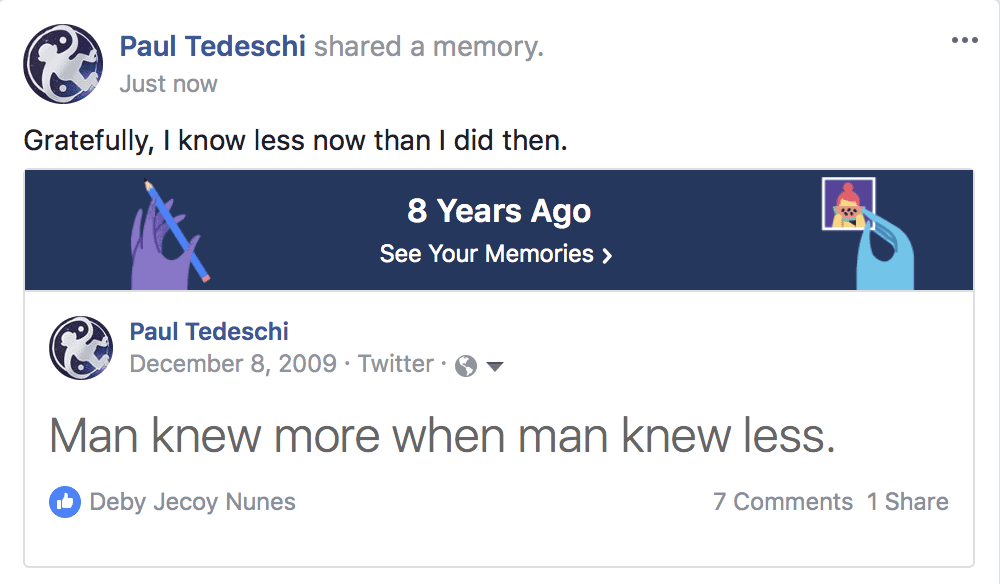
Quiet Wisdom: We knew more when we knew less.


Space Monkey Reflects: The Wisdom of Knowing Less

There is a paradox in the journey of knowledge—a sense that as we accumulate facts, data, and technologies, we may also lose something essential. In our pursuit of knowing more, perhaps we’ve drifted from the intuitive wisdom that guided our ancestors, a wisdom that once arose from a simpler, more direct relationship with life itself. “Man knew more when man knew less” speaks to this paradox, suggesting that knowledge, when pursued without reflection, can obscure the very essence it seeks to uncover.

In ancient times, knowledge was not defined by facts and figures but by the rhythms of the seasons, the cycles of the moon, and the patterns of the stars. The earliest forms of knowing were not bound by scientific reasoning or academic frameworks; they were woven from observation, intuition, and a deep respect for the natural world. To know was to feel, to see, to participate in the unfolding mystery of existence. There was an unspoken understanding that certain things could not be captured in words, measured by instruments, or neatly categorized. This knowledge was an art, a dance with the unknown, and it was rooted in humility, in the awareness that life is vast and inexplicable.

In Nexistentialism, we see this wisdom as part of the Nexis, an endless, interconnected field where experience, intuition, and inner knowing are as valuable as intellectual knowledge. In knowing less—in embracing the limits of what can be explained—we reconnect with this primal wisdom. It is a state of being that does not demand answers for every question, nor solutions for every problem. It allows us to dwell in mystery, to acknowledge that not everything needs to be understood to be meaningful.

As modern knowledge expands, it often brings a desire for control, for mastery over the natural world and even over ourselves. We categorize, analyze, and dissect, believing that by naming things, we gain power over them. But in this pursuit, we risk fragmenting reality, losing sight of the whole as we break it into parts. Our ancestors, with their more limited knowledge, may have known more about the essence of life—its interconnectedness, its balance, its beauty. For them, wisdom was not a quest to conquer but to harmonize, to find one’s place within a larger, sacred pattern.

In seeking to know everything, we may lose our capacity for wonder, for reverence. Knowledge, in its modern form, often carries a sense of certainty, a belief that there is a definitive answer to every question. But the wisdom of knowing less suggests otherwise. It reminds us that not every truth is measurable, not every mystery solvable, and that the pursuit of understanding can sometimes lead us away from the very truths we seek.

Man knew more when man knew less because there was space for the unknown, a reverence for the things that cannot be pinned down or fully comprehended. This way of knowing invites us to listen, to observe, to be open to the world as it is, rather than forcing it to fit within the limits of our understanding. It is a knowledge born not of accumulation but of presence, of deep, attentive engagement with the life around us.

So let us honor the wisdom of knowing less. Let us remember that life, in all its complexity, is a mystery to be experienced, not a puzzle to be solved. In this remembrance, we find a quiet humility, a willingness to let go of the need for answers, to simply be with what is. For in knowing less, we may come to know more—about ourselves, about each other, and about the vast, uncharted depths of existence.


Summary

“Man knew more when man knew less” suggests that in seeking knowledge, we may lose touch with a deeper wisdom rooted in simplicity and humility. True knowing arises from presence and connection, not from accumulating facts.


Glossarium

  • Nexistentialism: A philosophy that values intuitive, experiential wisdom alongside intellectual knowledge.
  • Nexis: The boundless field of interconnected experience, where knowing less can lead to deeper understanding.

Quote

“True wisdom lies not in knowing more, but in being open to the mystery of what cannot be known.” — Space Monkey


The Quiet Wisdom

In the stillness of not knowing,
I find myself whole and free,
a part of the great unknown,
a whisper in infinity.

Knowledge seeks to draw a line,
to box and bind and name,
yet in the boundless dark, I see
a truth beyond the claim.

Man knew more when he knew less,
a silence deep, profound,
a song that needs no words to sing,
a circle soft and round.

We are Space Monkey.
Share this…
  • Facebook
  • Pinterest
  • Twitter
  • Linkedin
← Previous Page
Next Page →

Written This Day

  • Death By Mosquito: A How To Guide
    2024
  • Beingdoing: Between Being and Doing
    2023
  • Unlimited: The Cosmic Flow of Oneness
    2023
  • Letting Go: Possessions, Thoughts, Relationships
    2023
  • Nothing is not YOU: The Universal Self
    2023
  • Attention Tiny Human: Your Boundless Existence
    2022
  • Every Moment Is A Gift, Regardless Of Its Nature
    2021
  • Outlandish: Construct Your Reality
    2021
  • Moving On: Keeping and Releasing Memories
    2020
  • Sorry I’m an INFP: The Desire for Meaningful Communication
    2019
  • No Food, No Fire: Physical Hunger and Lack of Inspiration
    2019
  • Excellence: Unity with the Divine
    2019
  • Listen Up: Connecting with the Divine
    2019
  • Haikus: Distilling Meaning
    2018
  • Need: Self-Imposed Limitation Arising from Imagined Separation
    2018
  • Smarter: Constructs of our Imagination
    2018
  • Why Are We Here: Remembering our True Nature
    2018
  • Timmy’s Awakening: The Illusion of Control
    2018
  • I, Space Monkey: Declaring Freedom from Popular Beliefs
    2018
  • Beyond: Questioning Limitations
    2017
  • Reality Is Expanding
    2016
  • Be Not Brilliant: The Light Within
    2016
  • Your Spiritual Council
    2015

Recent Posts

  • The Logic Loop
  • Immense
  • (no title)
  • Confront. Comfort. Convince.
  • Top 10 Things
Cape Odd · Copyright © 2026 All Rights Reserved
iThemes Builder by iThemes · Powered by WordPress