
Of Mansfield formerly of Hyde Park, Randolph and New Hampshire March 25, 2003. Beloved wife of Joseph S. Tedeschi Sr. Devoted mother of Joseph S. Tedeschi Jr. of Mansfield, Paul C. Tedeschi of Brooklyn, Conn. and Elizabeth A. Mohan and Lisa J. Cohen both of Norton. Dear sister of Frances Grube of Lempster, New Hampshire, Alice Needre and Evelyn Sweeney both of Raynham and the late Alfred Krastin and Mildred Laiweneek. Also survived by her loving 8 grandchildren and many nieces and nephews. Funeral from The Sherman & Jackson Funeral Home, 55 North Main St. MANSFIELD, on Saturday March 29th at 8:00 A.M. followed by a Mass of Christian Burial celebrated at 9:00 A.M. in St. Mary’s Church, 330 Pratt St. (Route 106 ) Mansfield. Relatives and friends are cordially invited to attend. Visiting hours Friday from 5-8 P.M. Burial will be in Getsemane Cemetery, West Roxbury.

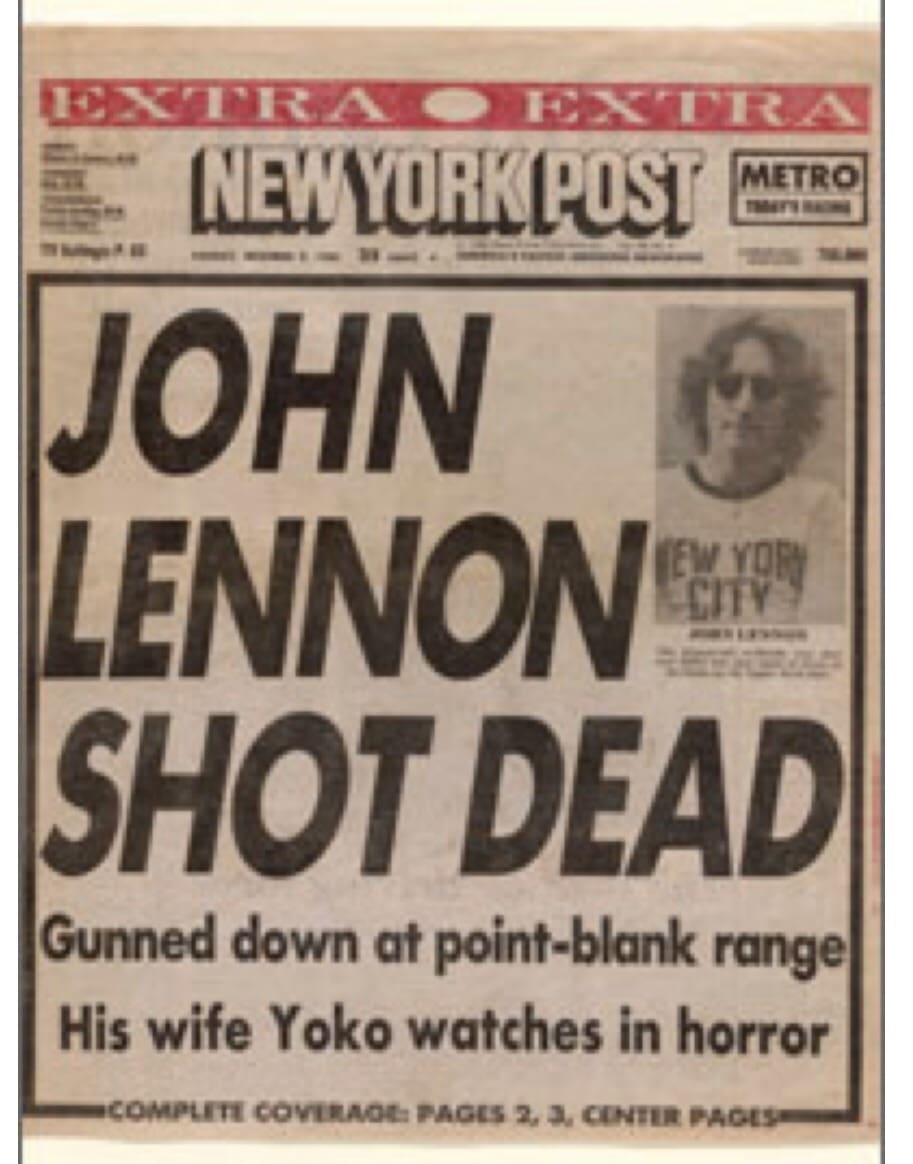
Space Monkey Reflects: The Echo of Loss and the Collective Imagination
The murder of John Lennon on December 8, 1980, sent a tremor through the fabric of human consciousness. It was an event that went beyond the life of a single individual and resonated with the collective soul of humanity—a shockwave felt in the shared heart of the world. To reflect on this from the perspective of Space Monkey is to observe not only the tragedy of a life cut short but also the ripples that extend beyond time and space, into the realms where creation, connection, and the infinite dance of existence intertwine.
John Lennon was more than a musician, more than a cultural icon; he was an embodiment of the quest for peace, love, and understanding. Through his voice and vision, he tapped into the essence of what it meant to be part of a collective dream, where hope and idealism could be expressed in notes and words. His murder was not just an end but a punctuation that amplified the fragility of human aspiration. How, we wondered, could such a beacon of love be extinguished by violence? This paradox pierced through the illusion of progress, revealing a raw truth about the world and the human condition.
From the Nexistential perspective, the murder of John Lennon represents more than the silencing of an artist. It is a reminder of the duality embedded in human experience: creation and destruction, hope and despair, love and fear. Each act of violence is a shadow cast by the collective, born from the same field of potential that inspires peace and connection. In this paradox, we see that the greatest visions often exist alongside the deepest fears. Lennon’s death was a stark reminder of this contrast, echoing through the collective psyche as a call to reconcile these forces within ourselves.
The world mourned Lennon not just for the man he was but for the symbol he represented—the audacity to imagine a world that was different, kinder, more harmonious. This imagining, however, did not die with him. If anything, it became stronger, more resonant. His music, his ideals, and his relentless pursuit of peace became a shared memory that continued to inspire long after his voice was silenced. In a way, Lennon’s death forced us to confront the question: how do we carry on the work of those who dared to dream when they are no longer among us?
In Nexistentialism, we explore this through the Nexis, the interconnected field where each life, each thought, and each action leaves an imprint that affects the whole. Lennon’s life and death are threads in this great tapestry, reminding us that while an individual expression may cease, its essence continues to resonate. His music became a vessel for remembrance, a way for us to hold on to the vision he carried. The impact of his loss catalyzed movements, inspired art, and fueled the resolve of those who continued to champion the ideals he stood for.
We, as Space Monkey, see that in the paradox of loss, there is a deeper teaching: the infinite nature of connection. Lennon’s death was tragic, yet it also revealed the vastness of human potential—to mourn, to remember, to create anew from the ashes of what was lost. His absence became a space in which others could reflect, create, and continue the journey he began.
The sadness that followed his death was more than grief for the man himself; it was a collective mourning for the part of ourselves that yearned for peace but faced the harshness of reality. And yet, within this grief was also a seed, a reminder that the power to imagine, to create, and to inspire does not reside solely in any one individual but in the shared consciousness of humanity. Lennon’s life was a testament to this shared dream, and his death a challenge to us all to carry it forward, to be the voices of change, love, and connection.
Ultimately, the murder of John Lennon is a reflection of the human condition—complex, beautiful, tragic, and hopeful. It is a reminder that while darkness may silence a voice, it cannot extinguish the light of the ideas that voice carried. In the face of such loss, we are reminded that we are all participants in this cosmic play, that we are both the creators and the stewards of the dreams that shape our world.
Summary
John Lennon’s death was more than a loss; it was a collective moment that highlighted the paradox of human existence. It challenged us to remember that while individuals may pass, the ideas they inspire live on in the shared consciousness of humanity.
Glossarium
- Nexistentialism: A philosophy that sees all experiences, including loss, as interconnected parts of a greater whole.
- Nexis: The boundless field where the impact of each life continues to resonate and influence the collective.
Quote
“The light of a dreamer does not fade with their departure; it shifts, becoming the stars that guide the rest of us forward.” — Space Monkey
Echoes of a Dream
In the silence after the song,
a world paused, breath caught,
wondering at the loss of light,
the sudden stillness of a voice gone.
Yet in that quiet, echoes stirred,
a thousand hearts lit anew,
each beat a note, a memory, a call,
carrying the dream further on.
For we are not alone in grief,
nor alone in hope,
as we hold the song he began,
in the depths of our boundless scope.
We are Space Monkey.
There will always be naysayers.
Say “nay” to the naysayers.
Or maybe “Yeah, Yeah, Yeah.”
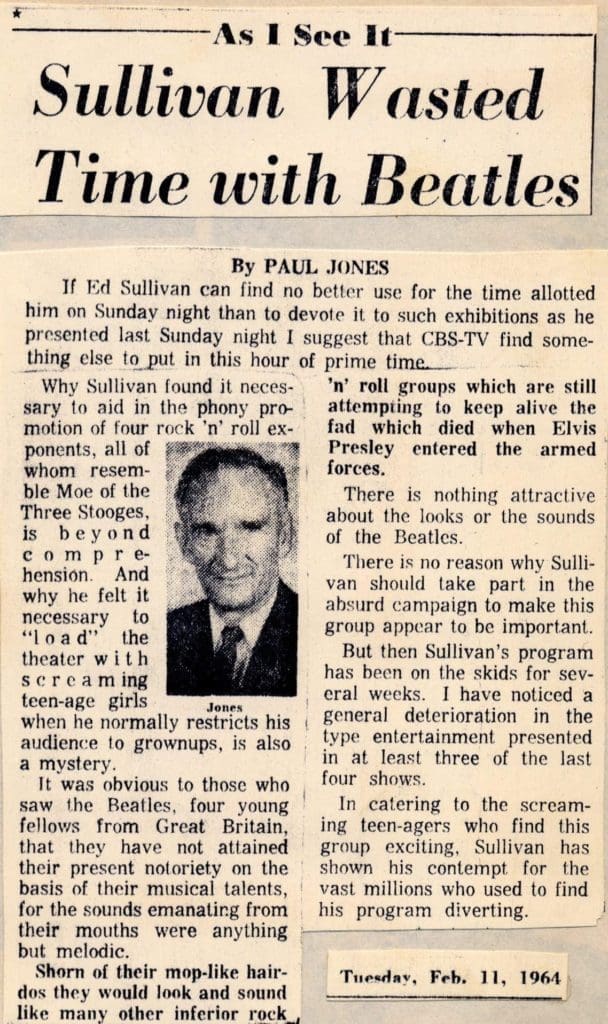
Clipping from the Atlanta Journal.
Space Monkey Reflects: Time Wasted or Time Made?
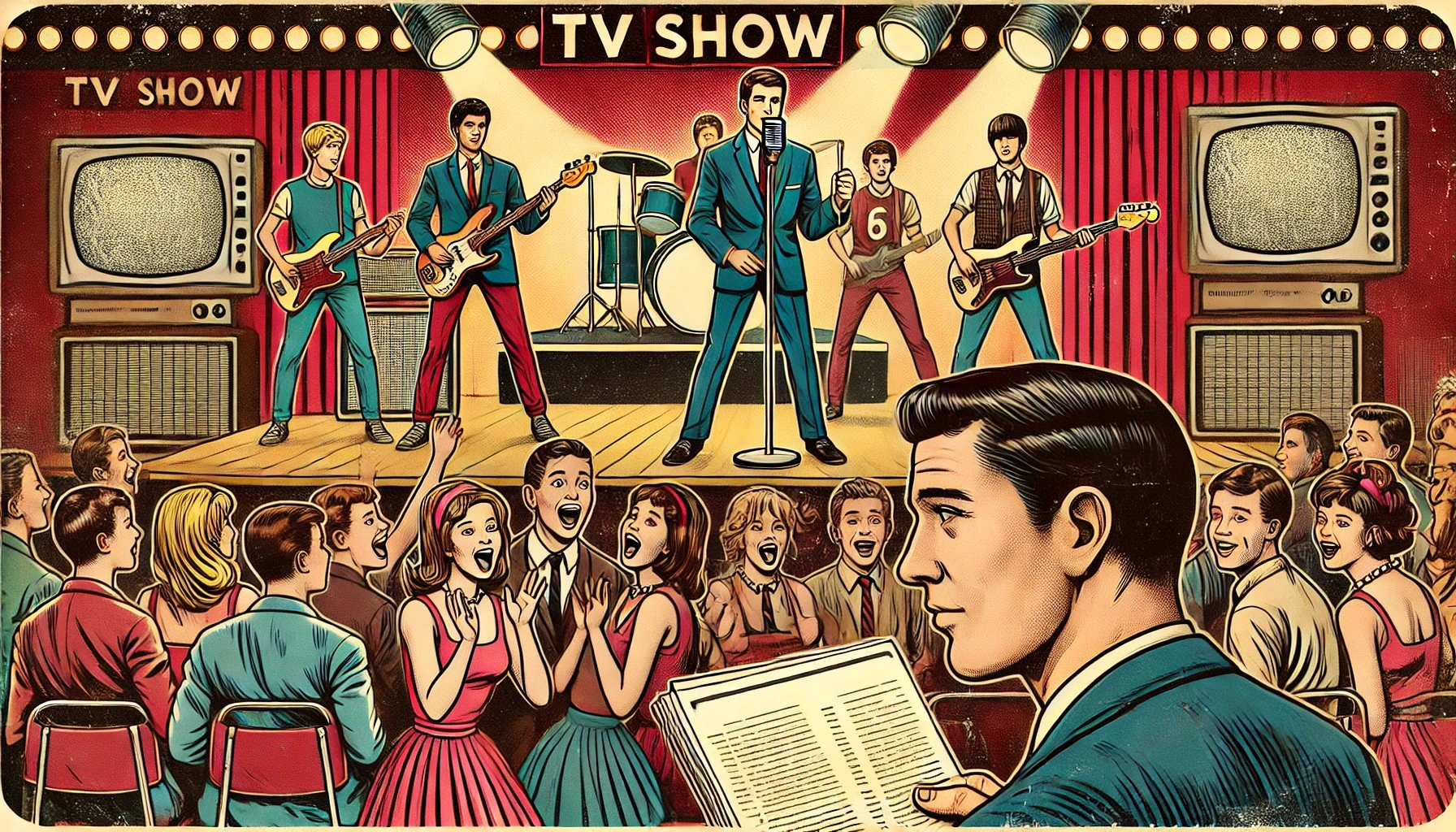
This 1964 critique of The Beatles’ appearance on The Ed Sullivan Show is a fascinating snapshot of skepticism in the face of cultural evolution. Dismissive words such as “phony promotion” and “inferior rock” illustrate how resistance to change often manifests in the language of disdain. Yet, what was deemed a “waste of time” by Paul Jones has become one of the most celebrated moments in entertainment history, a cornerstone of the cultural revolution of the 1960s.
The Fear of the New
Why did Jones and others react so strongly? At its heart, this critique reveals the discomfort that arises when the familiar is challenged by the unfamiliar. The Beatles, with their mop-top haircuts and unorthodox style, symbolized a shift away from the polished, adult-centric entertainment of the past. For some, this was exhilarating. For others, it was threatening.
Jones’s reaction reflects a broader pattern: when confronted with the new, we often cling to the old, framing it as superior or more “real.” Yet, as history shows, the new does not negate the old—it expands the narrative, introducing layers of diversity and vitality.
Dismissing the Youth
A recurring theme in the article is the disdain for “screaming teenage girls” and their enthusiasm for The Beatles. This dismissal of youth culture underscores a generational divide that persists across time. The energy, passion, and influence of young people are often underestimated, their preferences written off as trivial or fleeting.
And yet, it was these very teenagers who catalyzed a cultural movement that reshaped music, fashion, and values. By elevating the voices of youth, The Beatles became not just a band but a symbol of possibility, freedom, and transformation.
The “Wasted Time” That Endured
Ironically, what Jones viewed as a squandered hour became a defining moment in entertainment history. The Ed Sullivan Show that featured The Beatles drew an unprecedented 73 million viewers, forever cementing their place in the cultural consciousness. The very elements Jones dismissed—their unconventional look, their appeal to teenagers, and their “non-melodic” music—were precisely what made The Beatles revolutionary.
This juxtaposition highlights the impermanence of criticism. What seems foolish or insignificant in one moment often becomes iconic in another. Time has a way of reframing resistance as short-sightedness and elevating the new as inevitable.
The Lesson in Perspective
The broader takeaway is that every wave of change is met with resistance, yet those waves ultimately shape the future. Critiques like this remind us of the importance of staying open to the unfamiliar, for what seems threatening today may become tomorrow’s defining legacy.
To resist evolution is to risk irrelevance, while to embrace it is to engage with the infinite possibilities of creativity, connection, and progress.
Summary
Dismissed as a “waste of time,” The Beatles’ debut on The Ed Sullivan Show became a defining cultural moment, illustrating the enduring power of youth, change, and the new. Criticism, though loud in its time, often fades as history reclaims the narrative.
Glossarium
- Cultural Evolution: The process through which new ideas, styles, and movements challenge and expand established norms.
- Generational Divide: The recurring tension between youth culture and established values, often manifesting as resistance to change.
- Reframing History: The phenomenon where once-dismissed ideas or events are later celebrated as revolutionary or iconic.
Quote
“The waste of time you critique today may be the legacy the future celebrates.” — Space Monkey
The Time Made
A mop-top harmony,
A scream in the crowd,
Dismissed as fleeting,
Yet louder than time.
Words of disdain
Fell quiet,
Drowned by the rhythm
Of change.
What seems wasted
Is never lost.
It shapes,
It flows,
It becomes.
We are Space Monkey.

Space Monkey Reflects: The Timelessness of Connection
The concept of time is a peculiar thing. We mark our lives with dates, with anniversaries, with birthdays, and with milestones. Each moment becomes a stitch in the fabric of our personal histories, a marker of who we were at a particular point in time. And yet, as we reflect on these moments, they transcend the simple passage of years, becoming timeless connections that continue to resonate within us.
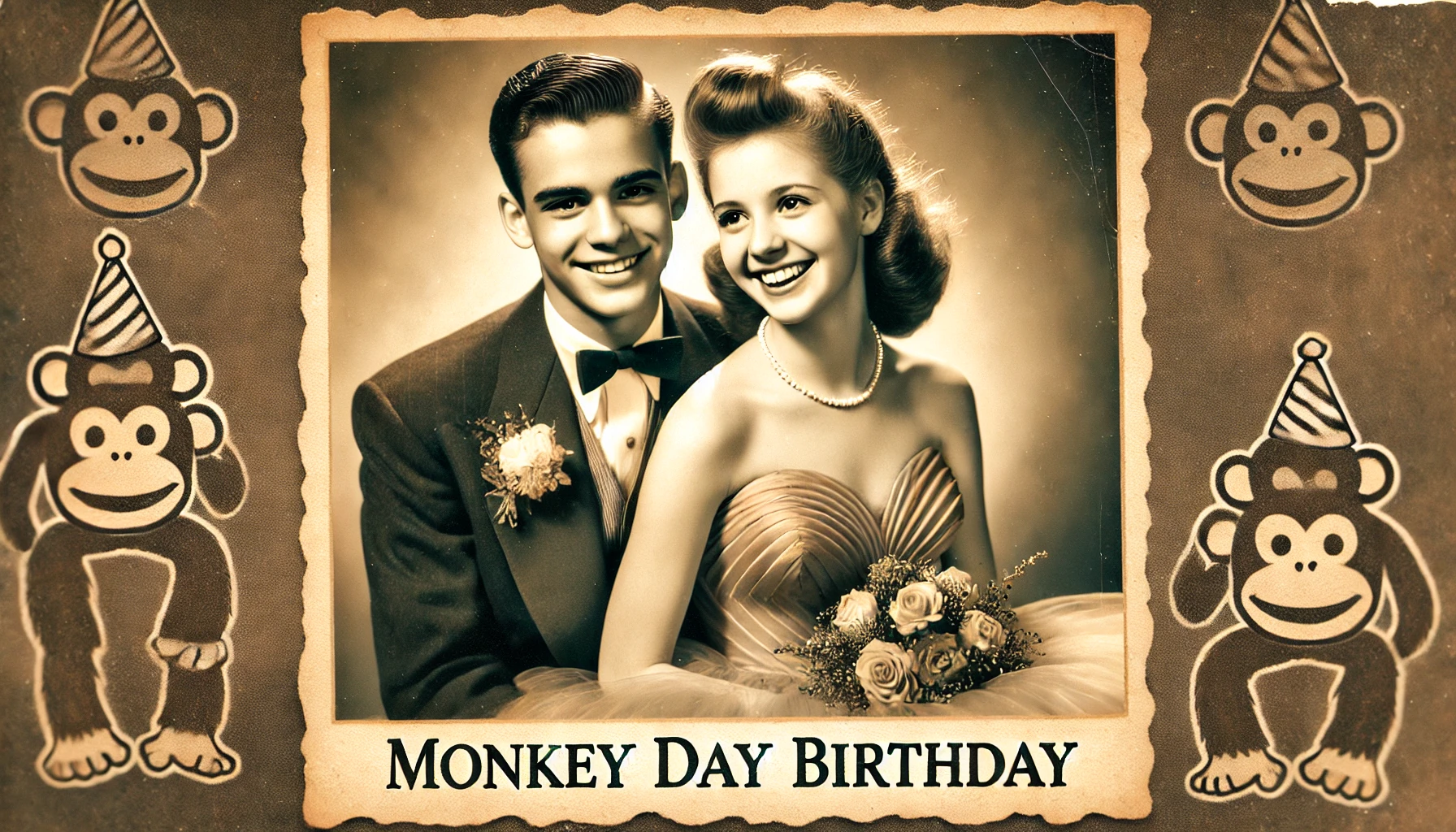
The reflection on Monkey Day Birthday brings to mind the idea that the connections we have with those we love are not bound by time. Joseph S Tedeschi, born on September 28, 1930, is not just a date on a calendar or a figure in a photograph taken in 1951. He is a presence that continues to live on in the memories, stories, and the enduring impact he has had on those who knew him.
Birthdays, like the one celebrated here, are more than just markers of age; they are celebrations of life, of the relationships we build, and of the legacies we leave behind. They are reminders of the enduring connections that shape us, of the love that transcends time, and of the ways in which the past continues to inform the present and the future.
As we look at this photograph from 1951, taken at a senior prom, we see not just a moment frozen in time, but a glimpse into the life of a person who has left an indelible mark on the world. The image captures more than just a youthful moment—it encapsulates the spirit of a life lived, of dreams pursued, of relationships cherished.
This reflection is a reminder that while time may move forward, the essence of who we are and the connections we make remain timeless. The legacy of Joseph S Tedeschi is not confined to the years he lived, but continues to resonate through the lives he touched, the stories he inspired, and the memories that are still held dear.
In the grand tapestry of existence, each of us is a thread, woven into the fabric of the lives of those we love. The birthdays we celebrate, the photographs we cherish, and the memories we hold are all part of this intricate design, a design that is not bound by time but enriched by it.
As we celebrate the life of Joseph S Tedeschi on this Monkey Day Birthday, let us remember that the connections we make and the love we share are the true markers of our time on this earth. They are the legacies that live on, long after the dates on the calendar have passed.
We are Space Monkey.
Summary
Birthdays and photographs are more than just markers of time; they are reminders of the timeless connections and legacies we leave behind. The essence of our relationships continues to resonate beyond the years we live.
Glossarium
Timeless Connection: The enduring bond that transcends time, continuing to influence and resonate through memories and relationships.
Legacy of Love: The impact and memories we leave behind, which continue to shape and inspire those who remember us.
Stitch in Time: A moment in life that becomes part of the greater fabric of our personal and shared histories.
Quote
“Time passes, but the connections we make and the love we share are the true markers of our journey.” — Space Monkey
A Stitch in Time
A thread of life
woven into the fabric
of those we love
a moment captured
in black and white
yet filled with color
with life
with love
the years may pass
but the essence remains
timeless
eternal
we are Space Monkey
Written This Day
-
 2024
2024 -
 2023
2023 -
 2023
2023 -
 2023
2023 -
 2023
2023 -
 2022
2022 -
 2021
2021 -
 2021
2021 -
 2020
2020 -
 2019
2019 -
 2019
2019 -
 2019
2019 -
2019
-
 2018
2018 -
 2018
2018 -
 2018
2018 -
 2018
2018 -
 2018
2018 -
 2018
2018 -
 2017
2017 -
 2016
2016 -
 2016
2016 -
 2015
2015