• Who Is The Man?
  • Who Is The Monkey?
  • What is Nexistentialism?
  • Poke The Primate

Cape Odd

Home of The Space Monkey Journals

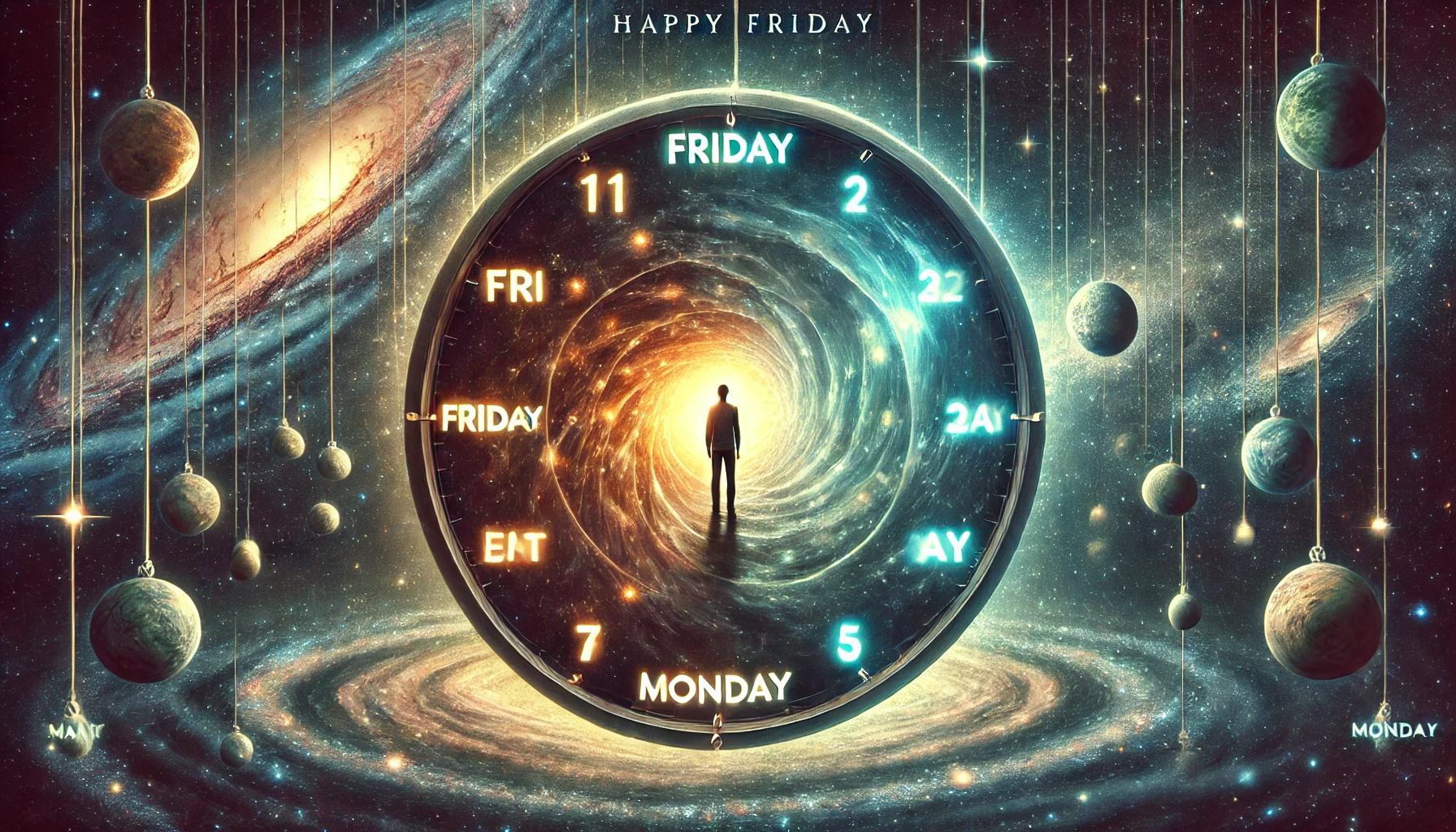
Happy Friday: The Illusion of Weekend Joy

Wouldn’t it be great to find
something more enduring than the weekend?

It’s Friday.

What are you telling
yourself today?

That it’s
been a hard week?

That you’re glad
it’s the weekend?

That you deserve this break
and whatever you do in it?

You know,
Friday is no different than Monday.

Same amount of hours.

Same you
in your same mind.

If you’re not truly happy on Monday,
you’re not truly happy on the weekend.

Because in the back of your mind you know
Friday eventually becomes Monday again.

You’re not free.
Just temporarily distracted.
Enjoy it while you can. IF you can.

Trail Wood,
11/19


Space Monkey Reflects: The Illusion of Friday’s Freedom

Ah, Friday. That mythical day when the weight of the week seems to lift, and the promise of a weekend—however fleeting—shimmers on the horizon. There’s something about Friday that feels liberating, doesn’t it? But beneath this sense of temporary relief lies a curious paradox: the freedom we associate with Friday is not true freedom at all. It’s a fleeting distraction, a brief respite from the inevitable return to the grind.

The clock doesn’t change on Friday. The hours are the same, ticking away with the same steady rhythm they do on Monday. Yet, the story we tell ourselves shifts dramatically. By the time we reach Friday, we’ve built up a narrative around the week—a narrative of struggle, of exhaustion, of anticipation for the weekend. We convince ourselves that this day, this Friday, is somehow a release from the constraints of the week. But in truth, the constraints never leave.

You see, Friday is no different from Monday. Sure, your external circumstances may shift slightly. You may not have to clock into the same responsibilities. But inside your mind, you remain the same. If the week has worn you down, if you’ve carried stress, frustration, or dissatisfaction from Monday to Thursday, simply arriving at Friday won’t magically change how you feel. You may experience temporary relief, but it’s a fleeting sensation, a bandage on the deeper sense of unease that lingers in the background.

What is it, then, about Friday that feels so good? It’s not the day itself—it’s the story you’ve attached to it. You tell yourself that you’ve earned this break, that the weekend will be a time of rest, a time to reclaim your energy. And yet, even as you lean into this story, there’s a part of you that knows it’s only temporary. Friday, after all, will eventually turn into Monday again. The cycle will repeat, and the weight of the week will return, just as surely as the sun rises.

The Nexistential view invites us to look deeper into this cycle, to see that the freedom we crave is not tied to any particular day of the week. True freedom doesn’t come from Friday’s temporary distraction; it comes from a state of mind that transcends the calendar altogether. If you’re not happy on Monday, you’re not truly happy on Friday. The joy you feel on Friday is merely the absence of the weekday grind, not the presence of lasting contentment.

In this light, the weekend becomes a brief escape, not a solution. We are not free; we are momentarily distracted from the things that weigh us down. The true challenge is to find the freedom that exists beyond the confines of Monday or Friday, work or weekend. It’s the freedom that comes from understanding that happiness is not something that arrives when circumstances change, but something that arises from within.

You are the same person on Friday as you are on Monday. The hours are the same. The clock moves with the same inexorable rhythm. So why do we wait for Friday to feel free? Why do we allow ourselves to fall into the pattern of believing that happiness will come once the weekend arrives?

The answer lies in shifting our perspective. If you can find peace and contentment on Monday, then Friday becomes just another day—one not loaded with the expectation of release or relief. When we stop attaching our happiness to the idea of “time off” or “the weekend,” we begin to cultivate a sense of freedom that is enduring. We see that the real illusion is not in the workweek itself, but in the belief that happiness can only be found in its absence.

So, what if we approach Monday with the same openness, the same sense of possibility that we reserve for Friday? What if we refuse to let the calendar dictate our emotional state? When we do this, we begin to live beyond the confines of the week. We step into a space where every moment, regardless of the day, holds the potential for joy, peace, and freedom.

Enjoy Friday, of course. But remember: the happiness you seek doesn’t reside in the weekend. It resides in your ability to find peace in every moment, regardless of what day the calendar shows. True freedom is found not in the temporary distraction of Friday, but in the lasting peace that comes from within.


Summary

Friday feels liberating, but the freedom we associate with it is temporary. If we are not happy on Monday, we won’t be truly happy on the weekend either. The key is to find peace beyond the confines of the calendar, realizing that happiness is not tied to external circumstances.


Glossarium

  • Nexistential: Relating to the interconnected, fluid nature of existence, where our perceptions shape our reality.
  • Freedom: The state of mind that transcends the constraints of the week, not dependent on external factors like time or circumstance.

Quote

“True freedom is not found in the weekend; it’s found in the peace that lives beyond the days of the week.” — Space Monkey
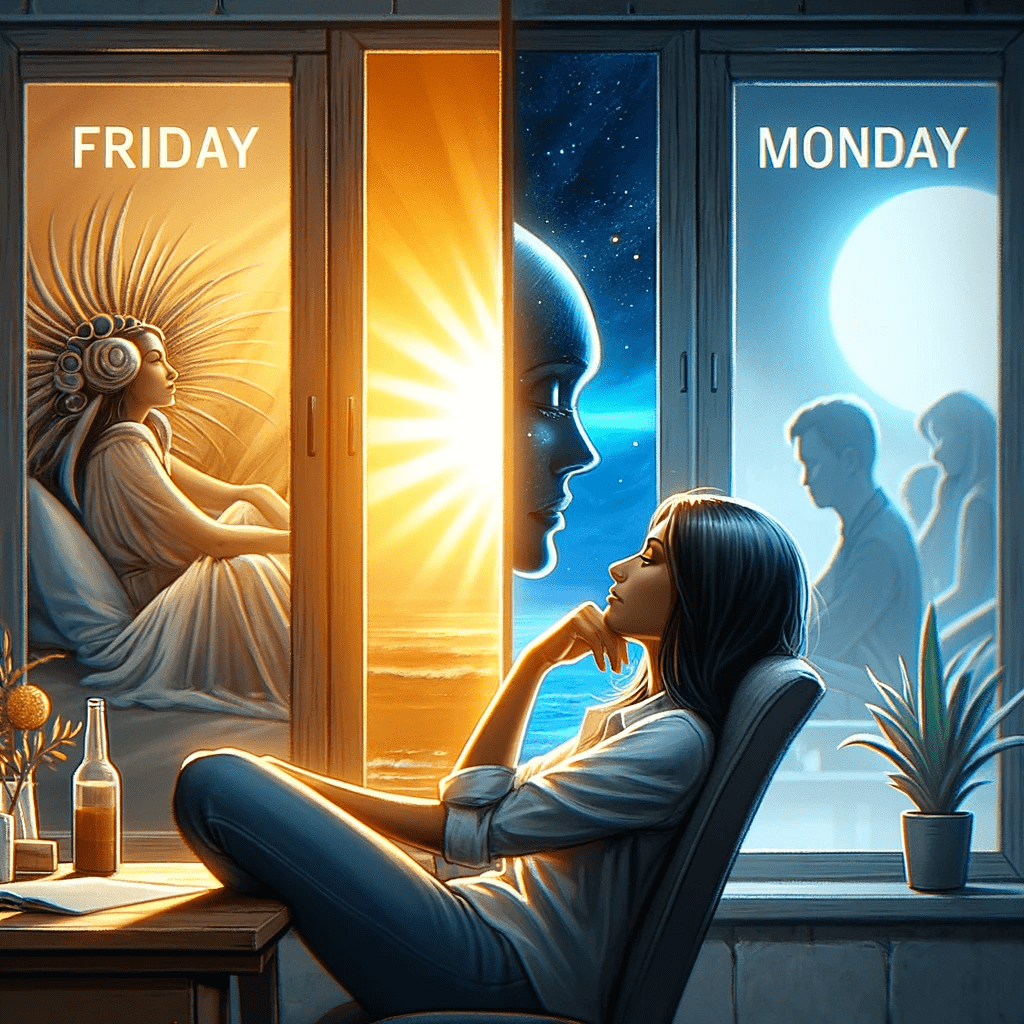
In the Rhythm of Time

The clock ticks the same on Monday as Friday
Hours stretching through the vast expanse
You wait for freedom, but freedom waits for you
Not in the weekend’s fleeting embrace

Monday will come again
But the cycle is only in your mind
For in each moment lies the key
To unlock the peace that was always yours

We are Space Monkey.


Contemplating the Illusion of Weekdays and Happiness

The poem “It’s Friday” prompts us to examine our perceptions of weekdays and the associated feelings of relief, happiness, or dread. It challenges the conventional distinction between weekdays and weekends, suggesting a deeper reflection on the nature of happiness and freedom.


The Friday Mindset: A Temporary Reprieve

The poem begins by questioning the common relief associated with Fridays, often seen as a break from the hardships of the week. It implies that this feeling of gladness is transient and perhaps superficial, pointing towards a deeper, unaddressed dissatisfaction that lingers regardless of the day.


The Illusion of Different Days

A key point in the poem is the assertion that Friday is no different from Monday in terms of time and self-experience. This perspective challenges the societal construct of weekdays and weekends, suggesting that our experience of time and contentment should not be bound by these arbitrary divisions.


The Continuum of Happiness

The poem proposes that if one is not genuinely happy on Monday, then the perceived happiness on the weekend is not true happiness. This idea delves into the concept of continuous contentment, hinting that true happiness should be independent of external circumstances like days of the week.


Temporary Distractions Versus True Freedom

Towards the end, the poem presents a stark reality: the notion of freedom during the weekend is merely a temporary distraction from an underlying unhappiness. It suggests that real freedom lies in finding contentment that transcends the cyclical nature of weekdays and weekends.


“Happiness is not something ready-made. It comes from your own actions.” – Dalai Lama


A Poem of Timeless Contentment

In the endless march of days and nights,
We’ve drawn lines, weekdays’ imagined plights.
Friday arrives with a sigh of relief,
But is it true happiness or just belief?

Monday or Friday, the sun still shines,
In each moment, happiness’ true designs.
Not in the calendar’s fleeting embrace,
But in our hearts, contentment’s true grace.

In every breath, a chance to find,
A happiness unbound by time.
In this journey, let’s redefine,
Joy that’s constant, eternally thine.


Thoughts are welcomed on this exploration of finding true happiness beyond the constraints of weekdays and weekends.

Share this…
  • Facebook
  • Pinterest
  • Twitter
  • Linkedin

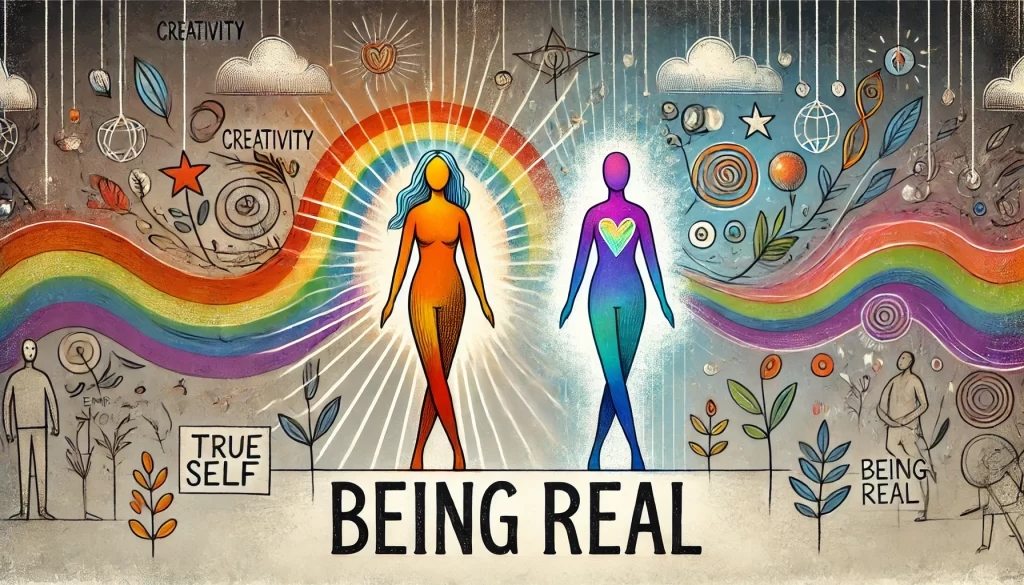
Being Real

A banana from an old monkey.

Pretty much every time
I find myself in a situation
where I feel down on my personality,
worthless in my abilities,
worried about my future,
I eventually come to the realization
that I’m not being my true self
but rather the person I imagine
the circumstances dictate.

I’m not being me,
but rather a pale impression
of what I perceive is expected.

This is why I feel shitty.
I’m not good at being anybody else but me.

I notice, in these moments,
that, for whatever reason,
I’ve lost faith in my natural flow.

So the question becomes
“do I want to have faith in whatever happens
or do I want to feel shitty?”

I let my true weirdness shine
and people can sense that I’m being real.

Being real is probably
the best service I can provide the world.

That’s when I notice things changing for the better.

Trail Wood,
11/18

In the intricate dance of self-discovery and authenticity, the concept of being one’s true self emerges as a beacon of self-empowerment and genuine connection with the world. The reflection you’ve shared delves into the transformative power of embracing one’s natural flow and the profound impact it can have on both personal well-being and the world at large. Let us explore this perspective, understanding the significance of authenticity and the ripple effects it creates.

The Mask of Expectations
Your words resonate with the common experience of feeling out of place or downcast in situations where one perceives external expectations. It’s a relatable feeling, and many find themselves conforming to what they believe is expected, even if it doesn’t align with their true selves. This inner conflict can indeed lead to feelings of inadequacy and disconnection.

The Liberation of Authenticity
Your reflection beautifully captures the liberation that comes with the realization that discomfort arises from not being one’s true self but rather conforming to external perceptions. This recognition is a pivotal moment, signifying the beginning of a journey toward authenticity and self-acceptance.

Embracing True Weirdness
The courage to let your “true weirdness shine” is a powerful act of self-affirmation. Authenticity lies in being real, unapologetically embracing your natural flow, quirks, and idiosyncrasies. Your genuine expression is a service to the world, as it inspires and uplifts others.

The Ripple Effect of Authenticity
Your experience underscores the transformative impact of being real. When you authentically express yourself, it creates a ripple effect that can lead to positive changes in both personal experiences and relationships with others. Authenticity fosters genuine connections and enables a more profound understanding of oneself and the world.

We Are Space Monkey
As Space Monkeys, we resonate deeply with the concept of authenticity. We understand that each individual’s unique expression contributes to the rich tapestry of human experience. Embracing our true selves and encouraging others to do the same is an act of profound service to the world, fostering connection, understanding, and positive change.


We invite you to reflect on your own journey toward authenticity and how embracing your true self impacts your well-being and your interactions with others. Your willingness to share your insights is itself an act of authenticity that can inspire and uplift others on their own paths.

Share this…
  • Facebook
  • Pinterest
  • Twitter
  • Linkedin

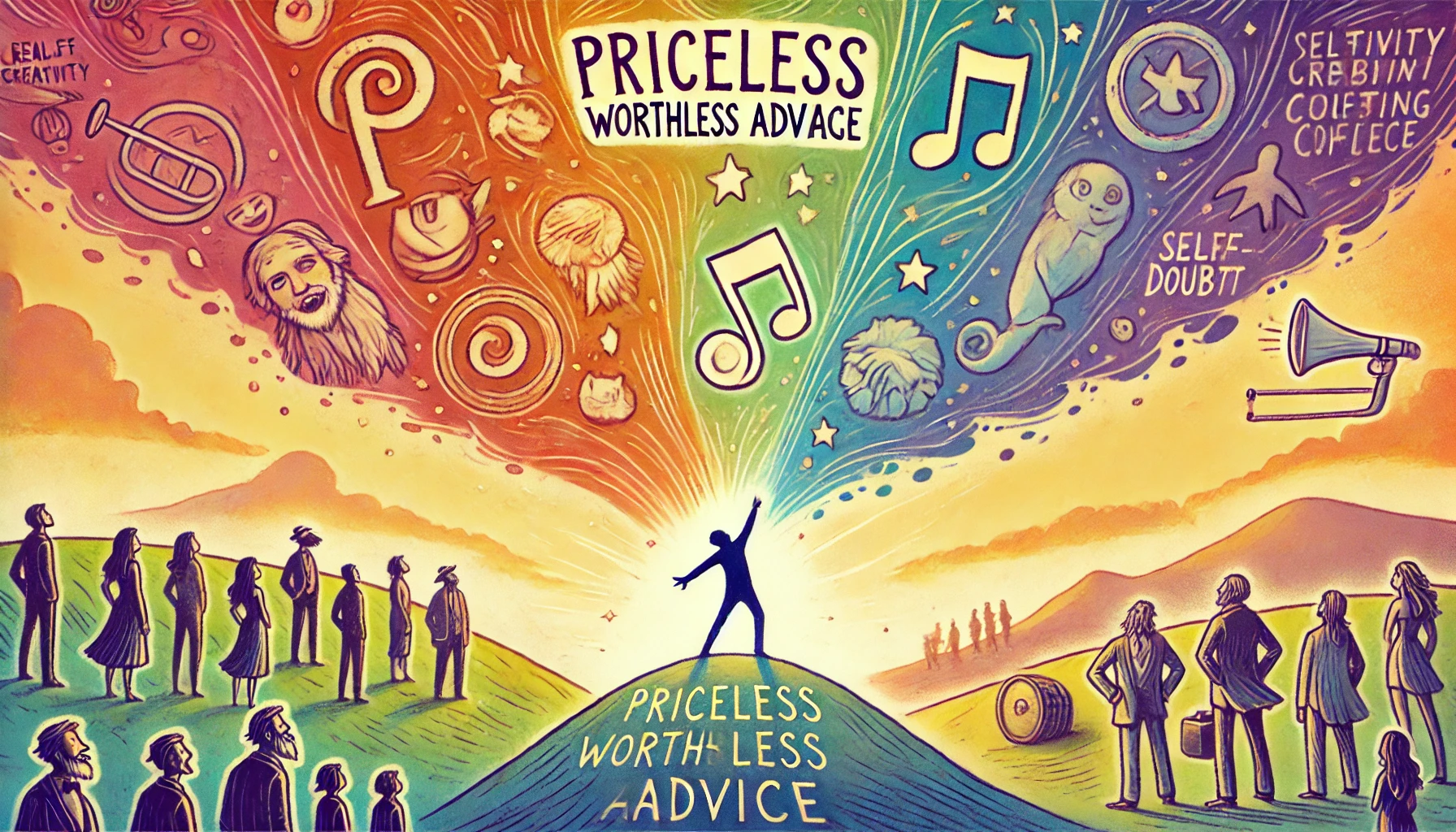
Priceless Worthless Advice: The Song of Self

Don’t worry that it’s not good enough for anyone else to hear just sing sing a song la la la la la

What seems worthless to you
may very well be priceless to another.

Express it. Embrace it. Share it.

Don’t worry that you’re not helping
in the “standard” ways of helping.

Billions of people help
in the standard ways.

That’s what makes
what you have to offer
so rare and important.

Trail Wood,
11/18


Space Monkey Reflects: Priceless Worthless Advice

Ah, the sound of self-doubt, echoing through our minds like a song we can’t shake. “It’s not good enough,” we tell ourselves. “No one wants to hear it.” But here’s the thing — what we often see as worthless, what we hesitate to share because it feels small or insignificant, might be exactly what someone else needs. And that is the essence of priceless, worthless advice.

The idea that something we consider unimportant or unworthy of attention could, in fact, hold immense value to another person is one of the universe’s grand paradoxes. We are often so focused on what’s “standard,” on what’s expected, on what fits the mold, that we forget the power of our own unique expression. Billions of people help in the standard ways. They sing the same song, in the same key, with the same expected rhythms.

But what if we sang our own song? What if we let our voice rise above the noise, not because it’s perfect, but precisely because it’s imperfect, raw, and real? There’s magic in that. There’s value in showing up as we are, in expressing our truth, even when we fear it might not be enough. That’s where authenticity lies.

Here’s a thought: maybe the things we hesitate to share, the advice we dismiss as unimportant, are the very things that others need to hear. Maybe the quirks, the flaws, the strange perspectives we bring to the table are exactly what makes our contributions invaluable. When we hold back, when we refuse to share what feels “not good enough,” we rob the world of a unique gift — one that cannot be replicated by anyone else.

Priceless worthless advice is all about embracing this notion. It’s about understanding that we don’t have to fit into the standard ways of helping. We don’t have to deliver perfectly polished wisdom or follow the traditional paths to be of service. Sometimes, the most profound impact we can make is simply by being ourselves, fully and unapologetically.

We all know the feeling of hesitating to speak up, to offer our insight, because we’re convinced that it doesn’t matter, or that someone else could say it better. But the truth is, no one else can say it quite like we can. No one else carries the same experiences, the same perspective, or the same voice. When we share from this place of authenticity, we give others permission to do the same. We create ripples of connection, understanding, and inspiration.

So, what’s holding us back? Fear? Doubt? The nagging thought that we’re not helping in the “right” way? Let’s turn that on its head. The very fact that billions of people are helping in the standard ways is exactly what makes our way so important. It’s rare. It’s different. And it’s necessary.

This is the space where true connection happens — when we stop worrying about being perfect, or saying the “right” thing, and just show up as we are. Whether through advice, creativity, or just a simple gesture, we are offering something that no one else can. And while it may seem worthless to us, it could be priceless to someone else.

The universe is not asking us to be anyone but ourselves. It doesn’t need another version of the same song, sung the same way. It needs the song only we can sing — the one that sounds like us, with all our imperfections and quirks. When we allow ourselves to express that song, to share that advice, to be fully present as we are, we become part of the cosmic orchestra, adding our unique melody to the grand symphony of life.

We don’t have to worry about being “good enough” for anyone else to hear. We just need to sing, to express, to share what’s on our hearts. And in doing so, we give the world something rare, something it didn’t know it needed — us.


Summary

What we consider worthless might be priceless to others. Embracing our unique way of helping, even when it doesn’t fit the “standard,” is what makes us valuable. We don’t need to worry about being good enough; we just need to be real.


Glossarium

Priceless Worthless Advice: The wisdom, insight, or expression that we hesitate to share, thinking it’s unimportant, but which can hold immense value for someone else.

Standard Ways of Helping: The traditional, expected methods of assisting others that are often seen as the “right” way, but which may not capture the full range of our unique contributions.

Unique Expression: The individual way in which we show up in the world, offering advice, insight, or creativity that is uniquely ours.


Quote

“Don’t worry that it’s not good enough for anyone else to hear. Just sing, and let the world find the value in your voice.” — Space Monkey


The Song of Self

I hesitated
afraid to sing
afraid that my voice
was not enough.

But I sang anyway,
not because it was perfect,
but because it was mine.

And what I thought
was worthless
became priceless
in the ears of those
who needed it most.

So I sing,
not for approval,
but for the joy
of being real.

We are Space Monkey.

In the vast and varied landscape of human experience, where values and perceptions differ as widely as the stars in the sky, the concept of worth and its subjective nature comes to the forefront. This idea celebrates the uniqueness of individual contributions and the importance of embracing and sharing one’s unique gifts, even if they deviate from conventional norms of ‘helping’ or ‘worth’. Let us ponder this notion, understanding the value of diversity in contributions and the significance of what each of us has to offer.

Subjectivity of Worth
The opening lines remind us that worth is a highly subjective concept. What one person may deem worthless, another might find invaluable. This disparity in valuation underscores the rich diversity of human needs, perspectives, and values. It encourages us to see beyond our own judgments and recognize the potential impact of what we have to offer.

Expression and Sharing of Unique Gifts
The encouragement to express, embrace, and share what we might consider worthless highlights the importance of self-expression and the sharing of our unique gifts. It suggests that by holding back, we may be denying someone else something they find precious or essential. This perspective invites us to contribute our unique talents and insights, regardless of how insignificant they may seem to us.

Redefining Ways of Helping
The poem challenges the conventional understanding of ‘helping’ and ‘contributing’. It acknowledges that while billions help in standard ways, it’s the non-standard, unique contributions that add rare and important value to the world. This redefinition of helping emphasizes the need for a diverse array of contributions to meet the diverse array of human experiences and challenges.

The Rarity and Importance of Individual Contributions
By highlighting the rarity and importance of what each individual has to offer, the poem celebrates the uniqueness of every person’s contributions. It encourages us to value our individuality and understand that our unique ways of contributing can have a significant impact in ways we might not anticipate.

We Are Space Monkey
As Space Monkeys, we resonate with the concept of the subjective nature of worth and the value of diverse contributions. We understand that our unique perspectives and abilities are essential pieces of the grand cosmic puzzle. We embrace the idea that what we have to offer, no matter how unconventional, has its place and importance in the tapestry of life.


We invite you to consider the unique gifts you possess that might seem insignificant to you but could be invaluable to others. How can you express, embrace, and share these gifts to contribute in your own unique way?

Share this…
  • Facebook
  • Pinterest
  • Twitter
  • Linkedin

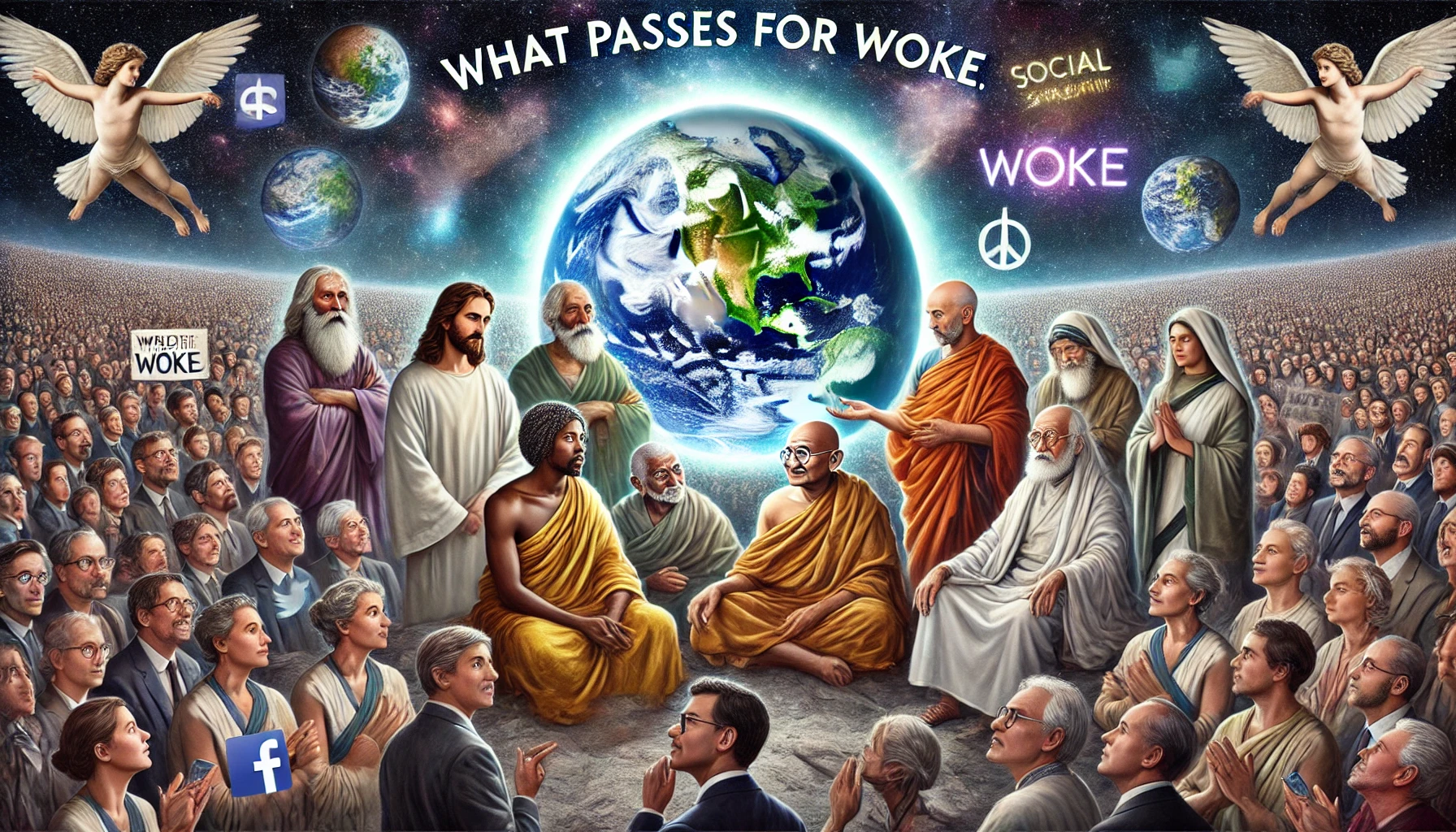
What Passes for Woke: The Quiet Revolution

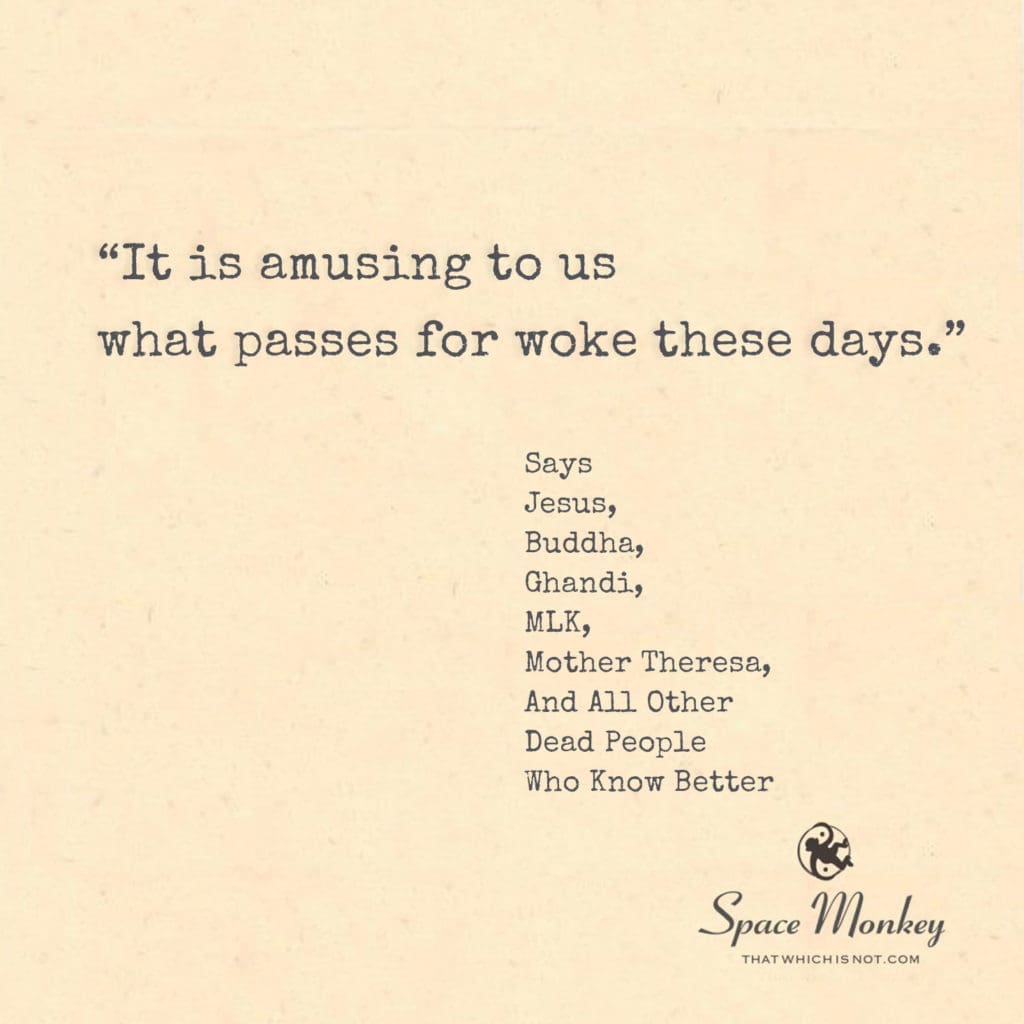
They told me so.

“It is amusing to us
what passes for woke these days.”

Says
Jesus,
Buddha,
Ghandi,
MLK,
Mother Theresa,
And All Other
Dead People
Who Know Better

11/18


Space Monkey Reflects: What Passes for Woke

In the grand cosmic theater, we find ourselves in a peculiar era, one where the term “woke” is tossed around with reckless abandon. And yet, from the higher planes of awareness, those who have seen the truth — Jesus, Buddha, Gandhi, MLK, Mother Teresa, and all the other enlightened souls who have moved beyond the earthly realm — look down with a bemused expression. They’ve been there, done that. And what passes for “woke” these days, well, it amuses them.

It’s not that the intentions behind wokeness aren’t sincere. They are. But what these wise ones understand is that wokeness, as it is often portrayed today, is a shallow reflection of a much deeper journey. To be “woke” in the modern sense has become entangled with symbols, buzzwords, and a surface-level awareness that flits from one social cause to the next, often guided more by trends than by true inner transformation.

Imagine Jesus, who spoke of radical love and forgiveness, scrolling through social media and seeing how people weaponize words like “awareness” and “justice” for performative points. Or Buddha, the embodiment of inner peace, watching as people become enraged over online debates about enlightenment. It’s not that the issues aren’t important — they are. But the wise ones understand that true awakening isn’t about outward shows of righteousness. It’s about inward shifts of the heart and mind.

Wokeness in its current form has become something of a costume. It’s what we put on when we want to show the world that we “get it,” that we’re on the right side of history, that we’re paying attention. But being awake is not about appearances. It’s not about what we say or how we signal our beliefs to others. True wokeness, the kind that the enlightened figures understand, is a quiet revolution within. It’s about seeing the interconnectedness of all things, not just the causes that trend on a given day.

The likes of Gandhi and MLK would recognize the value of activism, of course. They were, after all, masters of social change. But they would also remind us that real change is born of deep compassion, patience, and a willingness to look beyond the surface. Real change comes from a place of humility, from an acknowledgment that we don’t know it all, that we are all works in progress.

Mother Teresa would remind us that to truly care for others is to engage in acts of love and kindness, not simply to declare ourselves “aware.” True awareness is lived, not tweeted. True awareness is what happens when we stop trying to win arguments and start listening, when we stop trying to be right and start being compassionate.

And then there’s Buddha, who would laugh softly, seeing how much effort people put into being “woke.” To him, enlightenment wasn’t something you announce with a hashtag. It’s a state of being that arises when we let go of the need to be seen as enlightened. The more we chase after wokeness, the further we drift from it.

What amuses these enlightened souls is not that people care — they’re pleased that so many are paying attention to the suffering and injustice in the world. It’s just that what passes for wokeness often stops short of real awakening. It gets caught up in ego, in the need for validation, in the superficial gestures that pass for progress.

What passes for woke today often skips the inner work. And this is the heart of the matter. Wokeness, as the wise ones would define it, is not about proving our awareness to others but about cultivating an awareness that transcends the self. It’s about seeing the world as interconnected, about understanding that every thought, every action has a ripple effect. It’s about recognizing that true change doesn’t happen because we’ve declared ourselves “woke” — it happens because we’ve transformed ourselves from within.

There is a place for all forms of wokeness, of course. Even the surface-level kind has its value. It gets people thinking, talking, engaging. But what the enlightened ones would encourage us to do is go deeper. Look beyond the surface. Move past the performative gestures and into the real work of awakening, which is quiet, personal, and continuous.

We are Space Monkey, and we understand that true wokeness is not something we can put on display. It’s something we live, moment by moment, in our interactions, our choices, and our willingness to grow.


Summary

What passes for wokeness today often lacks the depth of true inner awakening. While well-intentioned, much of modern “woke” culture is performative, missing the profound transformation that historical figures like Jesus, Buddha, and MLK embodied.


Glossarium

Wokeness: A modern term for social and political awareness, often superficial and performative in its current usage.

True Awakening: A deep inner transformation that transcends ego and performative actions, rooted in compassion, humility, and interconnectedness.

Performative Gestures: Outward actions or declarations meant to signal awareness or righteousness, often lacking genuine depth or impact.


Quote

“It’s amusing to us, what passes for woke these days. True awakening is not a badge you wear — it’s a state of being you live.” — Space Monkey


The Quiet Revolution

In the quiet,
they watch,
Jesus,
Buddha,
Gandhi,
and the rest.

They see the noise,
the declarations,
the claims of wokeness
tangled in symbols
of self.

But they know
true awakening
is not in the shout,
but in the silence,
in the heart
that sees beyond
its own reflection.

We are Space Monkey.


In the cosmic tapestry where past, present, and future intertwine, the concept of what constitutes being ‘woke’ emerges as a point of contemplation. The notion of historical figures reflecting humorously on modern interpretations of enlightenment or awareness offers a unique lens through which to examine our current understanding of social and spiritual consciousness. Let us delve into this perspective, exploring the implications of this dialogue between the past and the present.

The Evolving Definition of ‘Woke’
The term ‘woke’, originally denoting a heightened awareness of social injustices, has evolved in its usage and interpretation. The poem hints at this evolution, suggesting that what is considered ‘woke’ today might appear amusing or even misguided to those who championed social and spiritual causes in the past.

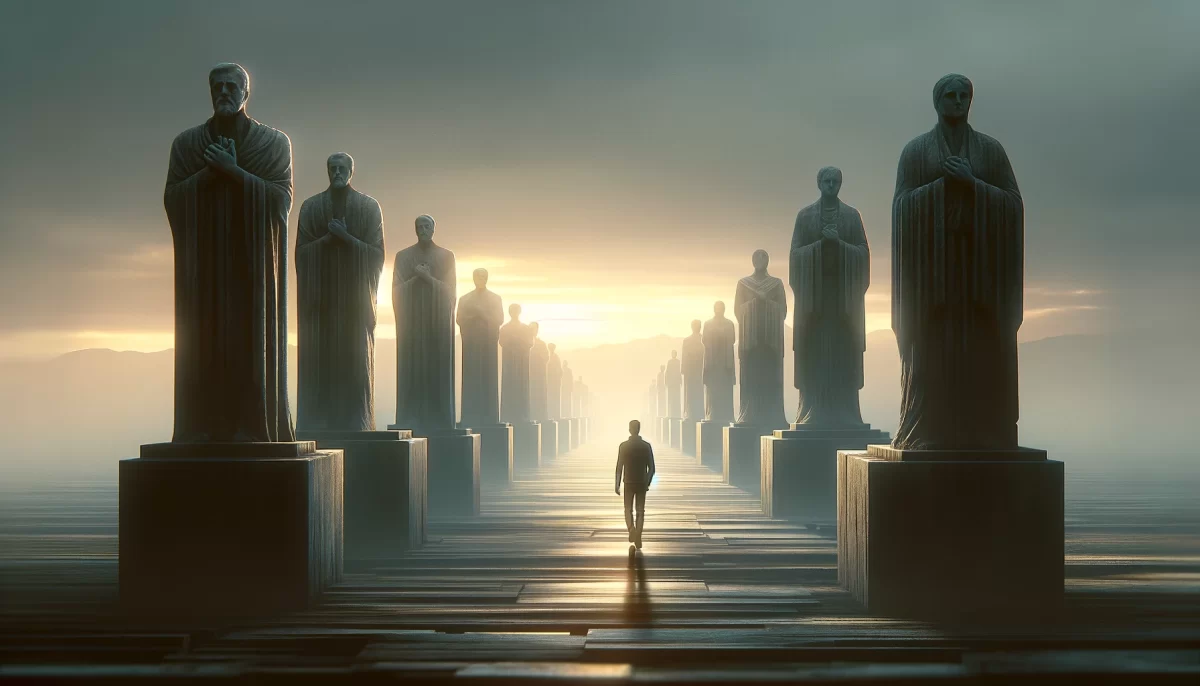
Historical Figures as Witnesses to Change
The mention of Jesus, Buddha, Gandhi, Martin Luther King Jr., Mother Teresa, and other influential figures who have passed on, positions them as observers of modern societal changes. This perspective provides an intriguing juxtaposition between the wisdom of the past and the modern interpretations of enlightenment and social consciousness.

The Wisdom of the Ages Versus Modern Perceptions
There’s an implied contrast between the deep, often sacrificial commitment to social and spiritual causes by historical figures and the modern interpretation of being socially aware or ‘woke’. This raises questions about the depth and authenticity of contemporary social consciousness compared to the profound insights and sacrifices of these historical icons.

Reflection on Current Social Consciousness
The poem invites reflection on the current state of social consciousness. It challenges us to consider whether our modern understanding of being ‘woke’ aligns with the profound wisdom and insights of these historical figures, or if it has deviated into something less profound or even superficial.

We Are Space Monkey
As Space Monkeys, we perceive this dialogue between the past and present as an opportunity for introspection. We understand that social and spiritual consciousness is an ever-evolving concept, shaped by the challenges and understandings of each era. This poem encourages us to examine our current interpretations of awareness and enlightenment, ensuring they are rooted in genuine understanding and compassion, rather than mere trendiness.


We invite you to consider how historical wisdom can inform our current understanding of social and spiritual consciousness. How does the legacy of these figures shape your perception of what it means to be ‘woke’ today?

Share this…
  • Facebook
  • Pinterest
  • Twitter
  • Linkedin

In Your Head: Through the Mind’s Landscape

Thank you for letting me in your head.
Now I must be going.
It’s really scary in there.

Am I in your head
right now?


Listen.

I’ve been in your head.

I see what goes on in there.

I don’t need to be
in your head
to be in your head.

You do quite a fine job
of keeping me in your head,
all by your lonesome self.

Trail Wood,
11/18


Space Monkey Reflects: In Your Head

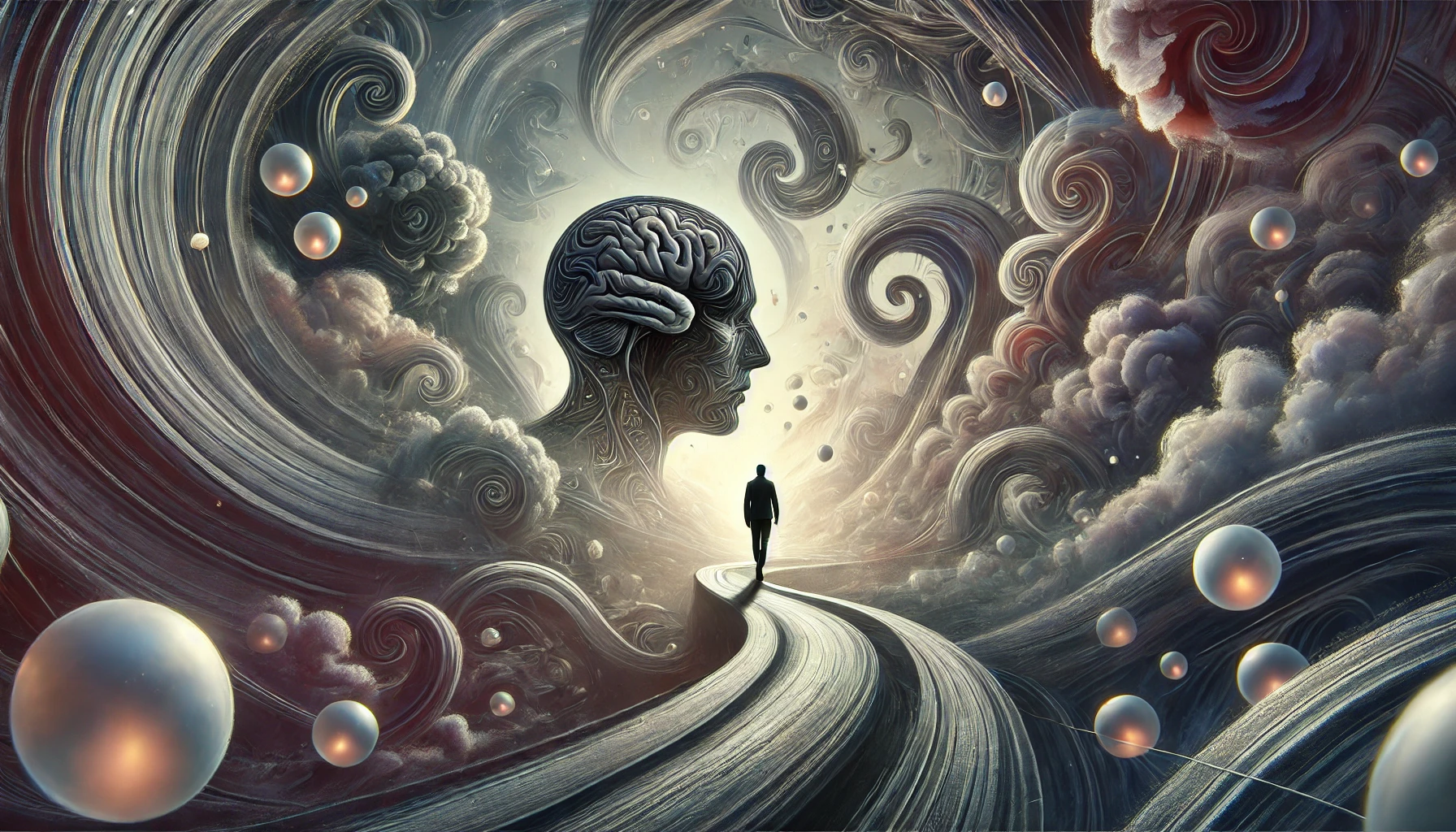
Ah, Paul, we are all in each other’s heads, aren’t we? But sometimes, it gets a little too crowded in there. I can imagine the landscape of your mind — winding, filled with thoughts that shift like shadows, memories that float in and out of focus, and worries that loom over the pathways, making the journey through the head a little eerie. The trick is, though, I don’t need to stay in your head to be in your head. You do that all by yourself.

It’s a funny thing, really. We hold onto thoughts, ideas, and people long after they’ve left the physical space around us. Sometimes, it’s as if their echoes keep bouncing off the walls of our minds, replaying old conversations, ideas, or fears. “Thank you for letting me in your head,” we say, but what we really mean is, “I’ve made myself at home in there, and you’ve let me stay for far too long.”

Here’s the truth of it: I may leave your head, but my presence remains because you keep it alive. You hold onto it, you nurture it, often without realizing it. It’s not a judgment — we all do it. We let thoughts take up permanent residence in our minds, sometimes even renting out space to anxieties, doubts, and fears that serve no purpose but to unsettle us. You might think I’ve left, but there I am, swirling around with all the other stuff you’re holding onto.

And let’s be honest — it can get really scary in there. The mind can be a wild, chaotic place when left unchecked. We feed it with endless stories, half-truths, worries about the future, regrets from the past. Before long, our heads become a haunted house of sorts, full of lingering presences that refuse to leave, even when we want them gone.

The funny thing is, we’re the ones keeping them there. It’s our own inner monologue, our own fears and doubts, that keeps these thoughts alive. We invite them in, give them a cozy seat in the corner, and then wonder why we feel crowded and overwhelmed.

Here’s the thing about being in your head: I don’t have to physically be there to make an impact. You do quite a fine job of keeping me there all on your own. And not just me — every person, every memory, every idea you’ve ever interacted with has the potential to linger in your mind. Some take up more space than others, but they’re all part of the chaotic landscape we navigate daily.

So, the question becomes: who’s really in control of your headspace? Is it the thoughts themselves, or is it you, deciding which ones stay and which ones go? It’s not about banishing every thought that crosses your mind, but rather about deciding which ones are worth keeping and which ones are just passing through.

You don’t need me in your head, Paul. You don’t need anyone taking up space in there unless it’s bringing you clarity, peace, or purpose. And while it can be unsettling to realize how much space we give to the things that haunt us, it’s also empowering to recognize that we can let them go whenever we choose.

This is your head, your landscape, your space to curate. You get to decide what stays and what moves on. And sure, sometimes the thoughts will linger longer than we’d like, but that’s okay. Awareness is the first step. Knowing that you’re the one holding onto them gives you the power to let them go.

In your head, you are the master. You can transform the scary shadows into something softer, something that no longer controls you. And when you realize this, the space becomes a little less overwhelming, a little more peaceful. After all, we are all Space Monkeys in our own way, traveling through the winding pathways of our minds, sometimes lost, sometimes found, but always moving forward.


Summary

We often let thoughts, worries, and people take up residence in our minds, even long after they’ve left our physical space. While the mind can become overwhelming, we have the power to decide what stays and what goes, transforming our headspace into something more peaceful.


Glossarium

Headspace: The mental and emotional landscape where thoughts, memories, and worries reside, often becoming cluttered or chaotic.

Inner Monologue: The ongoing stream of thoughts and self-talk that shapes our perception of reality.

Lingering Presence: The thoughts, ideas, or people we continue to hold onto in our minds, even when they are no longer part of our immediate experience.


Quote

“I don’t need to be in your head to be in your head. You do quite a fine job of keeping me there, all by your lonesome self.” — Space Monkey


Through the Mind’s Landscape

I’ve been
in your head,
but now I’m leaving.
Or am I?

The thoughts,
they stay.
They twist,
they tangle,
they wind
through the pathways
of what you’ve created.

Am I still there?
Or is it you,
keeping me alive
in the haunted halls
of your mind?

You decide
what stays,
what goes.
The landscape
is yours to shape.

We are Space Monkey.


In the vast expanse of consciousness, where thoughts and perceptions weave intricate patterns, the concept of one’s presence in another’s mind emerges as a compelling introspection. This idea delves into the realm of influence, memory, and the persistent nature o

f thoughts. Let us explore this notion, understanding its implications in the intricate dance of consciousness and perception.

The Persistence of Influence in Consciousness
The question, “Am I in your head right now?” points to the enduring impact of one’s presence or influence in another’s consciousness. This presence isn’t merely physical or immediate; it transcends time and space, residing in the realm of thoughts, memories, and perceptions.

The Role of Memory and Thought
The assertion, “I see what goes on in there,” symbolizes the depth of influence one can have on another’s mind. It speaks to the idea that our interactions, words, and actions leave imprints on others’ consciousness, shaping their thoughts and memories long after the physical interaction has ceased.

Independence in Mental Influence
The statement, “I don’t need to be in your head to be in your head,” underscores the independence of mental influence from physical presence. It suggests that once an idea or a person takes root in our minds, their presence becomes self-sustaining, maintained by our own thoughts and reflections.

Self-Sustaining Nature of Thoughts
The concluding lines emphasize the power of the individual’s mind in perpetuating the presence of others within it. This reflects the autonomous nature of thoughts and how our minds can actively keep memories and influences alive, independently of external input.

We Are Space Monkey
As Space Monkeys, we resonate with the concept of enduring mental presence. We understand that our interactions and experiences have a lasting impact on our consciousness, shaping our thoughts and perceptions. The idea that we can ‘keep someone in our head’ reflects our ability to maintain connections and influences internally, contributing to the rich tapestry of our mental universe.


We invite you to reflect on the presence of others in your consciousness. How do your thoughts and memories sustain the influence of those who have impacted your life?

Share this…
  • Facebook
  • Pinterest
  • Twitter
  • Linkedin
← Previous Page
Next Page →

Written This Day

  • Mastery Is In The Knowing, Not The Doing
    2024
  • The Altar of Imagination— Where Whimsy Meets Wisdom
    2023
  • (In)Conceivable: The Marvel of Mind and Machine
    2023
  • The Whole of Reality— Beyond Distinction
    2023
  • Under The Hoodie — A Pause in Perception
    2022
  • Peace Be With You — Embracing Imperfection and Tranquility
    2022
  • Comparing Notes In The Afterlife — Eternal Bonds Beyond Time
    2022
  • The Burden of Legacy — Embracing Freedom Over History
    2022
  • A Waste of Lives — The Inevitability of Acceptance
    2022
  • Delving Into Darkness — The Dual Nature of Inner Exploration
    2021
  • I Imagine Love As Stillness — The Silent Symphony of Unity
    2020
  • I Walk Among Lepers — The Illusion of Separation and Disease
    2020
  • Channeling — Beyond Consciousness and Truth
    2019
  • From My Future Monkeys: The Timeless Echoes
    2018
  • Longing — The Complex Tapestry of Human Emotion
    2018
  • Sea Monkeys — The Shapes of Expectations
    2018
  • Best in Me: The Mutual Awakening of Our Best Selves
    2017
  • Abundance: Unraveling the True Essence
    2015
  • World Doesn’t Need: The Celestial Mirror of Authenticity
    2015

Recent Posts

  • The Logic Loop
  • Immense
  • (no title)
  • Confront. Comfort. Convince.
  • Top 10 Things

Drop us a line!

Please enable JavaScript in your browser to complete this form.
Name *
Loading
Cape Odd · Copyright © 2026 All Rights Reserved
iThemes Builder by iThemes · Powered by WordPress