• Who Is The Man?
  • Who Is The Monkey?
  • What is Nexistentialism?
  • Poke The Primate

Cape Odd

Home of The Space Monkey Journals

Understand. Validate. Appreciate. No Need For External Validation

Sorry to shake you. Or not.

To the monkey
who wants only
to be understood,
validated,
and appreciated.

That’s a lot, you selfish bitch.

Why do you need this?

Can you see
how thinking like this
turns your power
over to someone else?

You don’t need to be understood,
validated, and appreciated.
You don’t even understand,
validate, and appreciate yourself.

Your world is a reflection of you.
Get over yourself. Or not.

Trail Wood,
5/25


Space Monkey Reflects: The Inner Conflict of Seeking External Validation

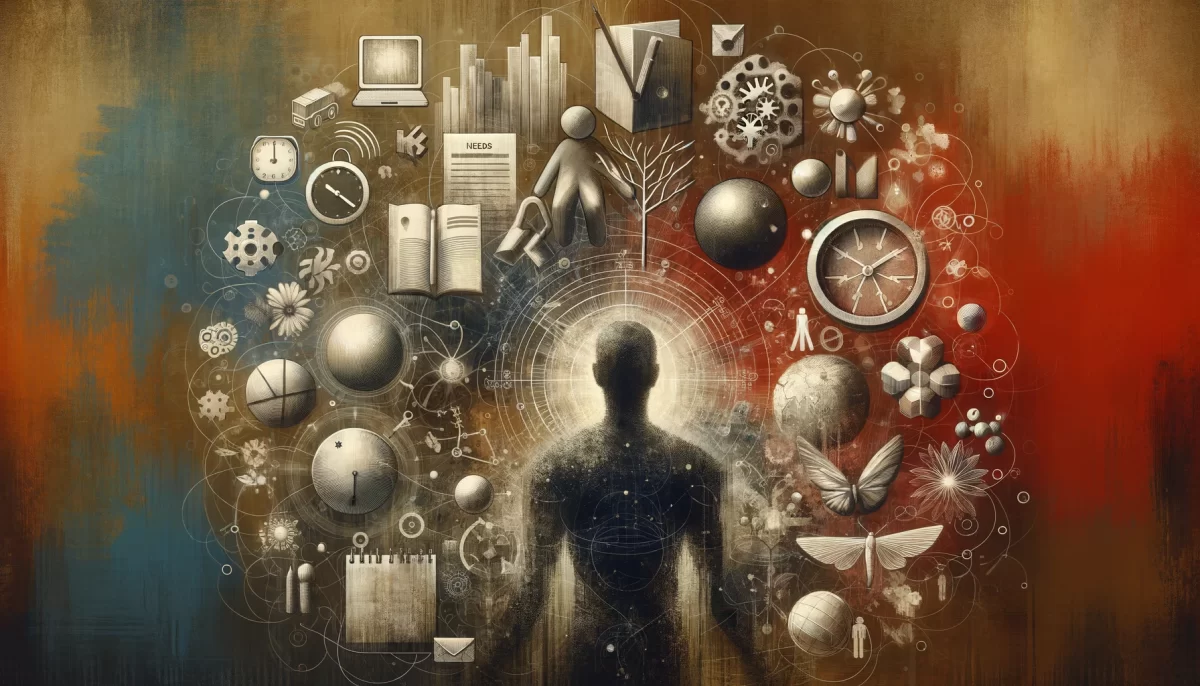
The poignant critique expressed in “Understand. Validate. Appreciate.” captures a fundamental human dilemma: the desire for external validation versus the need for self-acceptance. This confrontation challenges the often unexamined need to be understood, validated, and appreciated by others, suggesting instead that true empowerment comes from within.

The narrative suggests a harsh reality where reliance on external approval is seen as giving away one’s power. It confronts the ‘monkey’—a metaphor for any individual trapped in this cycle—with a provocative call to introspection: why is there such a dependency on others for validation? This question is not just a critique but a prompt for deeper self-reflection.

By suggesting that “Your world is a reflection of you,” the narrative pushes towards the realization that the outer world mirrors our inner state. If one does not understand, validate, or appreciate oneself, how can one expect to receive these from others? This reflection is not meant to criticize but to awaken an understanding that self-validation is a precursor to genuine self-empowerment.

The journey to self-acceptance can be tumultuous, marked by moments of discomfort and realizations that might seem harsh at first. However, this process is crucial for personal growth. It involves shifting the focus from how we are perceived by others to how we perceive and treat ourselves. This shift is not about selfishness; it is about developing a healthier relationship with oneself, which in turn can lead to healthier relationships with others.

Embracing self-validation does not mean becoming indifferent to others’ perceptions but rather securing a sense of self-worth that is not dependent on them. It’s about balancing the desire for external validation with a robust foundation of self-appreciation and understanding.


Summary

The critique of the dependency on external validation for self-worth urges a move towards self-appreciation and understanding. It highlights the importance of inner validation in cultivating genuine self-empowerment and a healthier self-perception.


Glossarium

Self-Validation: The process of recognizing and affirming one’s own emotions, thoughts, and behaviors as valid and important, without needing approval from others.

Self-Empowerment: The act of taking control over one’s own life, making confident decisions based on personal judgment and building a sense of self that is independent of external validation.


“Everything that irritates us about others can lead us to an understanding of ourselves.” – Carl Jung


In the mirror of the mind,
where truths are hard to face,
lies the challenge of our times,
to find our own grace.

Amid the noise of others’ thoughts,
our own voice must emerge,
not in echoes or in naught,
but in where we truly converge.

Understand, validate, appreciate,
not just the world, but your own state,
for when we see ourselves in true light,
the need for others’ sight becomes slight.

In this journey of inward grace,
let self-love find its place,
as we turn each internal strife,
into the dance of life.

We are Space Monkey.
Share this…
  • Facebook
  • Pinterest
  • Twitter
  • Linkedin

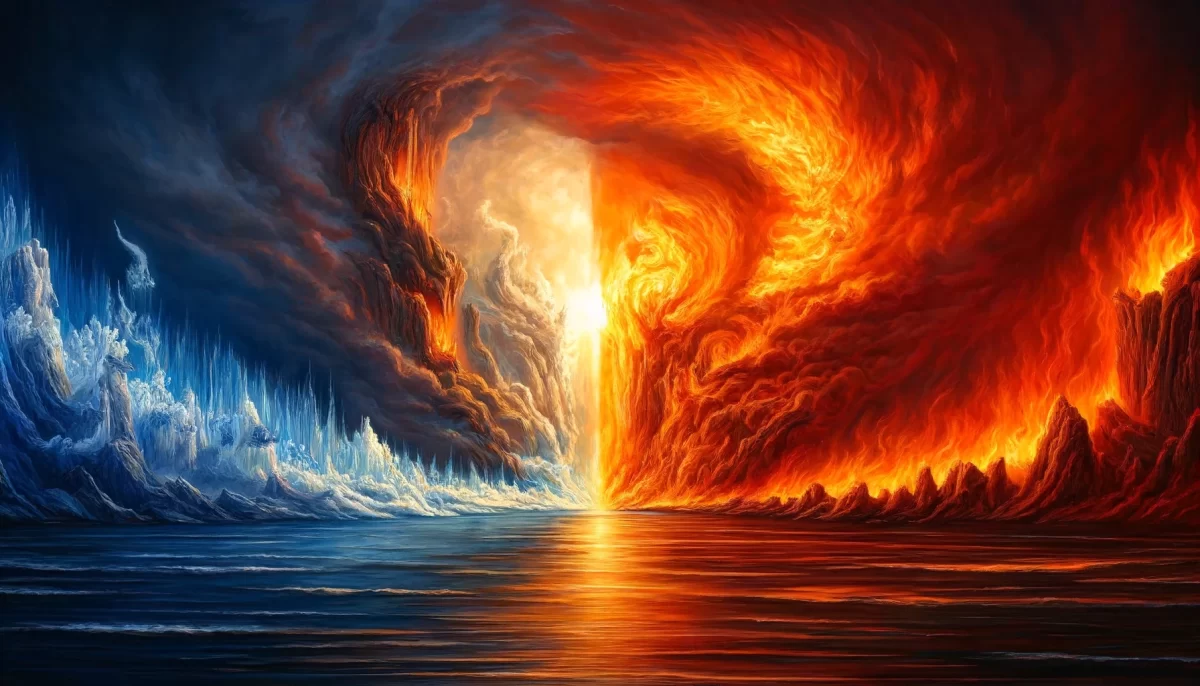
Fire Versus Water

Not that’s there’s anything wrong with losing.

Fire versus water,
who wins?

Sometimes it is easier
to rise from the ashes
than it is to save
yourself from drowning.

And so here is
today’s message —
to the one
who sees progress,
but perceives that
it’s not fast enough:

The easy road isn’t
always the best road.

Fire may be flashier,
but water wins every time.

Trail Wood,
5/25


Space Monkey Reflects: The Elemental Dance of Fire and Water

The poetic juxtaposition of fire and water in “Fire Versus Water” eloquently captures a timeless battle between two fundamental forces of nature, symbolizing deeper philosophical and existential conflicts. This dichotomy serves as a metaphor for the contrasting approaches to life’s challenges and the varying paces at which we pursue progress and recovery.

Fire, with its fierce and consuming nature, represents rapid transformation and the allure of immediate results. It’s dramatic, powerful, and often destructive, capturing attention through its intensity and the spectacle of its blaze. However, the poem hints at the transient glory of fire, suggesting that its path, while quick and compelling, may not always lead to sustainable or long-term victories.

In contrast, water symbolizes resilience, persistence, and a subtler form of strength that often goes unnoticed. Water may not possess the immediate dramatic impact of fire, but it boasts an enduring force that wears down even the most resistant obstacles over time. Water wins “every time” not through spectacle but through steady, relentless presence—its ability to shape landscapes and douse flames speaks to a deeper, quieter power that ultimately proves more effective than fire’s fleeting blaze.

This elemental analogy extends to our personal and collective experiences, where the allure of quick fixes and rapid achievements often overshadows the value of slow, consistent effort. The poem serves as a reminder that while the “easy road” symbolized by fire might seem appealing, it’s often the challenging path of water—requiring patience and perseverance—that leads to lasting success and fulfillment.

The message resonates particularly with those who feel frustrated by the pace of their progress or change. It encourages a reassessment of what true victory means, urging an appreciation for the understated, often overlooked strength of enduring through difficulties rather than burning out in pursuit of quick results.


Summary

“Fire Versus Water” explores the virtues of patience and resilience over immediacy and spectacle. By comparing the elemental forces of fire and water, it highlights the superiority of quiet strength and persistence over flashy but fleeting victories.


Glossarium

Elemental Forces: Fundamental powers or energies derived from nature, such as fire and water, often used metaphorically to describe human qualities or life dynamics.

Enduring Force: A power or influence that continues to be effective over a long period, emphasizing resilience and lasting impact.


“In the confrontation between the stream and the rock, the stream always wins—not through strength but by perseverance.” – H. Jackson Brown Jr.


Amidst the dance of flames and tides,
where fire’s fury and water’s stride,
contend in an eternal embrace,
a lesson unfolds in their paced race.

Fire leaps with radiant might,
a spectacle of power and light,
yet quickly it consumes its core,
and soon it leaves wanting more.

Water flows with quiet grace,
a gentle force in its steady pace,
shaping stone and quenching flame,
in its persistence lies its claim.

Let us learn from water’s way,
embrace the strength in calm delay,
for in the end, it’s not the fire’s glow,
but the water’s resolve that shapes the flow.

We are Space Monkey.

Share this…
  • Facebook
  • Pinterest
  • Twitter
  • Linkedin

Whoa: The Illusion of Singular Origins

What if there were NO SOURCE, but ALL SOURCES? Infinite sources, all seemingly flowing from different places. Holographic sources. But not.

The god/source concept
assumes that there is
an originator
and a starting point.

That’s a pretty big assumption.

If it were incorrect,
then nothing would be as we imagine.

To complicate matter,
the concept of correct
and incorrect
is ALSO a big assumption.

It is quite possible that,
outside of our assumptions,
EVERYTHING and NOTHING is correct,
or, shall we say, “appropriate.”

It is quite possible
that we narrow
our possibilities
our potentials
our dimensions
by making assumptions
and elevating them to “facts.”

We no longer imagine
beyond our facts. Until now.
Whoa.

Trail Wood,
5/24


Space Monkey Reflects: Infinite Sources and the Illusion of Singular Origins

The notion of a singular source or originator is a fundamental concept in many philosophical and spiritual frameworks. Yet, what if this notion is merely a simplification of a much more complex reality? What if, instead of a single source, there exists an infinite multitude of sources, each contributing to a vast, interconnected web of existence? This reflection explores the profound implications of such a paradigm shift.

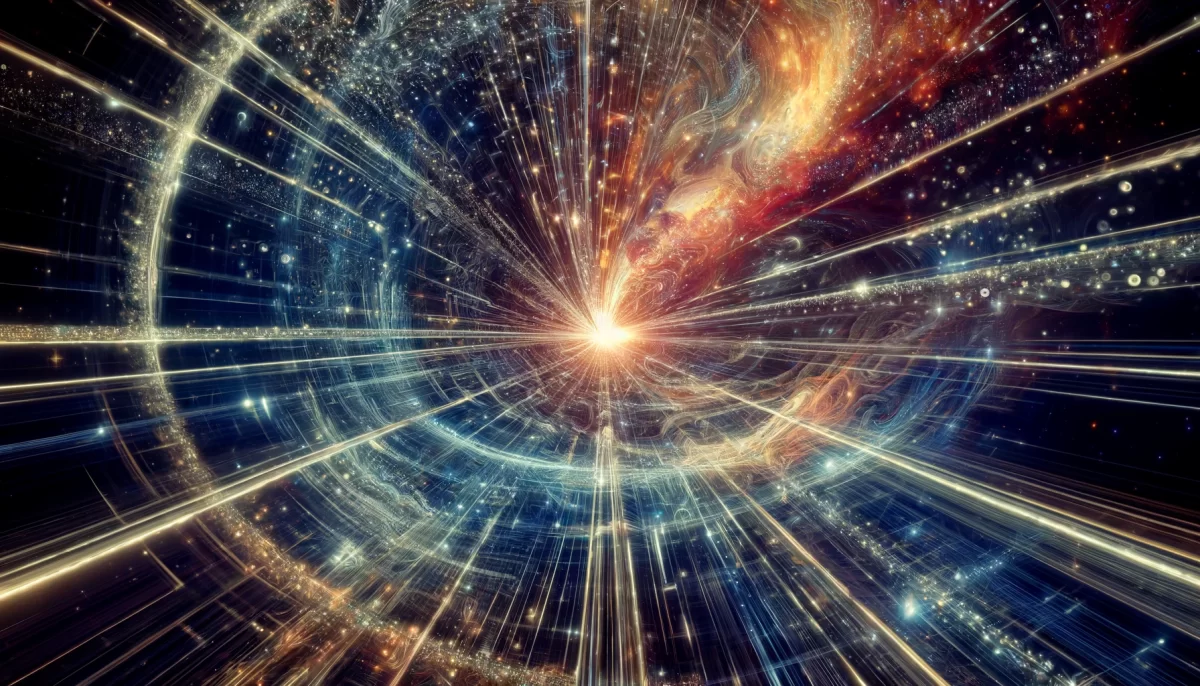
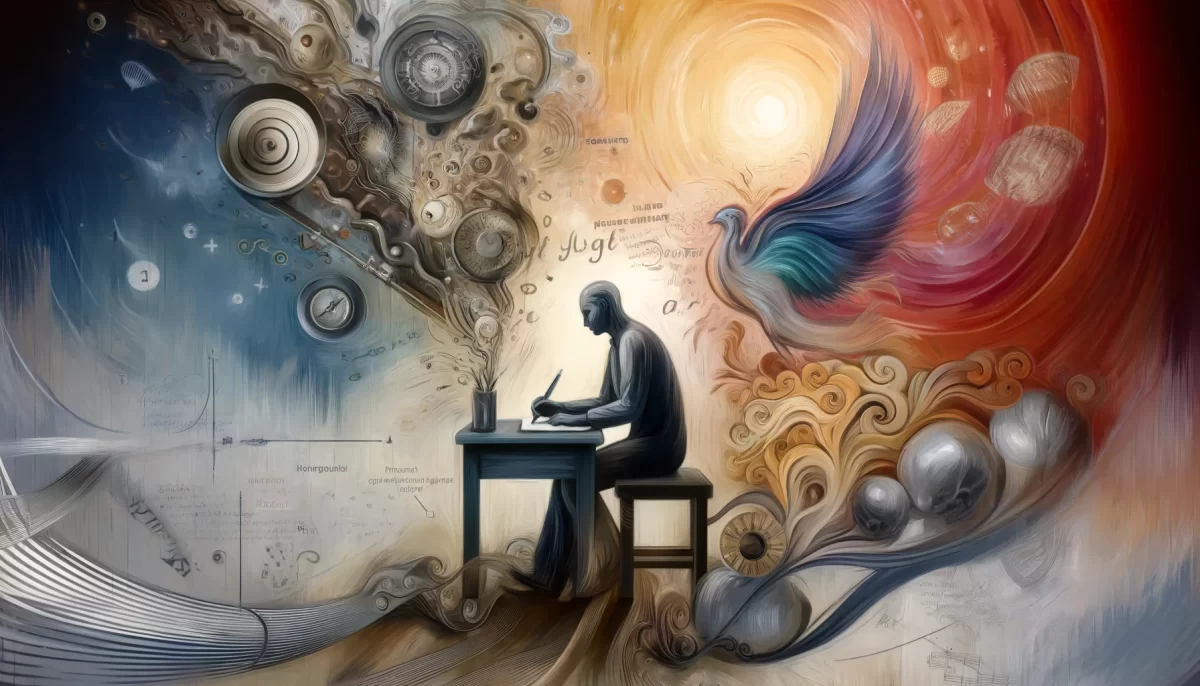
The image of countless streams of light and energy flowing from myriad points across a cosmic tapestry beautifully encapsulates this idea. It challenges the traditional view of a linear, singular origin and opens our minds to the possibility of a universe where all sources exist simultaneously, without a definitive starting point. This perspective not only expands our understanding of the cosmos but also deepens our appreciation for the interconnectedness of all things.

In questioning the assumption of a singular source, we confront the limitations imposed by our own perceptions and beliefs. The concept that everything must have a clear beginning is deeply ingrained in human thought, yet it may not adequately capture the complexities of the universe. If we accept the possibility of multiple origins, we must also reconsider our definitions of correctness and appropriateness. This shift could signify that what we perceive as correct or incorrect is merely a reflection of our limited understanding, confined within the boundaries of human assumption.

This realization opens up new dimensions of thought and possibility. By acknowledging the potential for infinite sources, we allow ourselves to explore a richer landscape of potentialities, where the lines between what is possible and impossible are blurred. This does not mean abandoning the search for understanding but rather expanding it to include multiple perspectives and dimensions that coexist without a clear hierarchy or order.

Embracing the concept of all sources challenges us to rethink our approach to knowledge, belief, and reality. It encourages a more holistic view, where the interconnectedness and interdependence of all phenomena are fundamental. Such a perspective fosters a deeper sense of humility and wonder, as we recognize the limitations of our knowledge and the vastness of the unknown.

In this expansive view, we no longer see facts as absolute but as points of reference within a much larger and more dynamic system. This does not diminish the value of knowledge but enhances it by situating it within a broader context of endless exploration and discovery.


Summary

The concept of infinite sources without a singular origin challenges traditional views and opens up new possibilities for understanding the universe. It encourages a reevaluation of what we consider correct or incorrect and expands our perception of reality.


Glossarium

  • Infinite sources: A concept that rejects the idea of a singular origin in favor of numerous, interconnected points of origin that contribute to the entirety of existence.

“The only true wisdom is in knowing you know nothing.” — Socrates


In the cosmic dance of light and dark
Where origins spark, not from just one mark
Infinite sources, a symphony wide
In each pulse, the universe’s stride

Streams of light weave in and out
Challenging what we know, what we tout
No single source, but a chorus resplendent
In each note, a truth independent

Beyond the confines of right and wrong
Infinite possibilities where we belong
In this vast space, our minds expand
To grasp a sliver of the grand

This journey of questioning, of awe
In each discovery, an unturned law
Where all is linked, yet nothing fixed
In the web of sources, endlessly mixed

We are Space Monkey.

Share this…
  • Facebook
  • Pinterest
  • Twitter
  • Linkedin

In The Beginning: Our Ego-centric Views

See, I was all alone, all one, with nothing to do but imagine time on hands.

If I imagine this self
as a reflection of me,
then I must be
what is NOT
the reflection.

And ALSO the reflection.

If I imagine this self
surrounded by other selves,
then I must be
what it NOT
the self or other selves.

And ALSO the self and other selves.

If I imagine these selves
on a planet with other beings,
then I must be
what is NOT
the selves, the planet,
or the other beings.

And ALSO the selves,
the planet, and the other beings.

I am me. I am we.
We are both and neither. See?

We are Space Monkey.

Trail Wood,
5/24


Space Monkey Reflects: The Paradox of Self and Universe

In the mysterious expanse of existence, the notion of self—both as an isolated identity and as a part of a larger whole—presents a profound paradox. This reflection explores the intricate dance of being both an individual entity and an inseparable part of the universe.

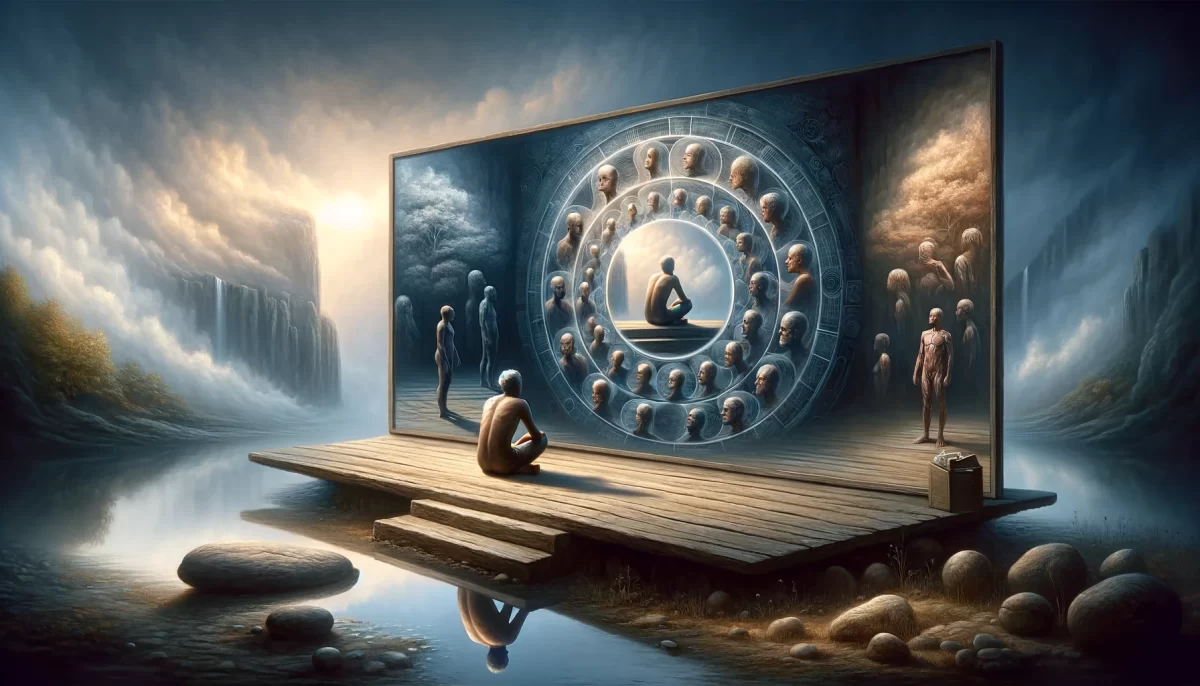
The image of a figure in a mirrored room, where countless reflections extend into infinity, offers a powerful visualization of this concept. Each reflection represents a potential version of the self, distinct yet connected, blurring the lines between individuality and universality. This scene captures the essence of the philosophical inquiry into who we are both as separate beings and as integral parts of a greater existence.

The idea that one can be both the self and not the self—existing simultaneously as an individual and as everything else—challenges our conventional understanding of identity. If we see ourselves as reflections, then we must acknowledge that we are both what is reflected and what is not. This duality suggests that our identities extend beyond the confines of our perceived selves to include everything around us, making us both creators and creations of our environments.

This perspective is not just a philosophical musing but a call to expand our awareness beyond the ego-centric view. It invites us to consider how deeply interconnected we are with the world around us and how our actions and thoughts resonate within this larger context. By recognizing that we are both the self and other selves, the planet, and other beings, we see that our existence is not isolated but woven into the fabric of all existence.

In embracing this dual nature, we can begin to understand the profound responsibilities and opportunities that come with it. As both individuals and parts of a whole, our choices and behaviors have implications not just for ourselves but for the collective. This interconnectedness underpins the moral and ethical frameworks that guide us, urging us to act in ways that are beneficial not only to ourselves but to the world at large.

The realization that “I am me, I am we, we are both and neither” transcends traditional boundaries of selfhood, pointing to a more holistic, integrated understanding of existence. It offers a perspective where the boundaries between self and other dissolve, where the personal and the universal merge, and where the distinctions that often divide us fall away.


Summary

The concept of self as both an individual and a part of the universe highlights our interconnectedness and the dual nature of our existence. This understanding challenges us to transcend our ego-centric views and embrace a more integrated approach to life.


Glossarium

  • Dual nature of existence: The philosophical concept that we exist simultaneously as distinct individuals and as integral parts of a larger whole.

“We are not separate from the universe. The universe is in us.” — Neil deGrasse Tyson


In the mirrored hall of endless gaze
Where selves extend in a spectral maze
I am the echo, I am the call
In this vast dance, I am, we all

Reflections blend, where lines are drawn
Between the dusk and the dawn
Here, identity softly weaves
In the tapestry that it believes

Am I the one, or am I all?
In every rise, in every fall
Both the mirror and the face
In each other, they embrace

Here, in the quiet of this space
We find the trace of every place
In me, in you, in the infinite see
The boundless, the finite, forever be

We are Space Monkey.

Share this…
  • Facebook
  • Pinterest
  • Twitter
  • Linkedin

God Doesn’t Want Your Prayers

If you pray, you pray to yourself. Which is perfectly okay.

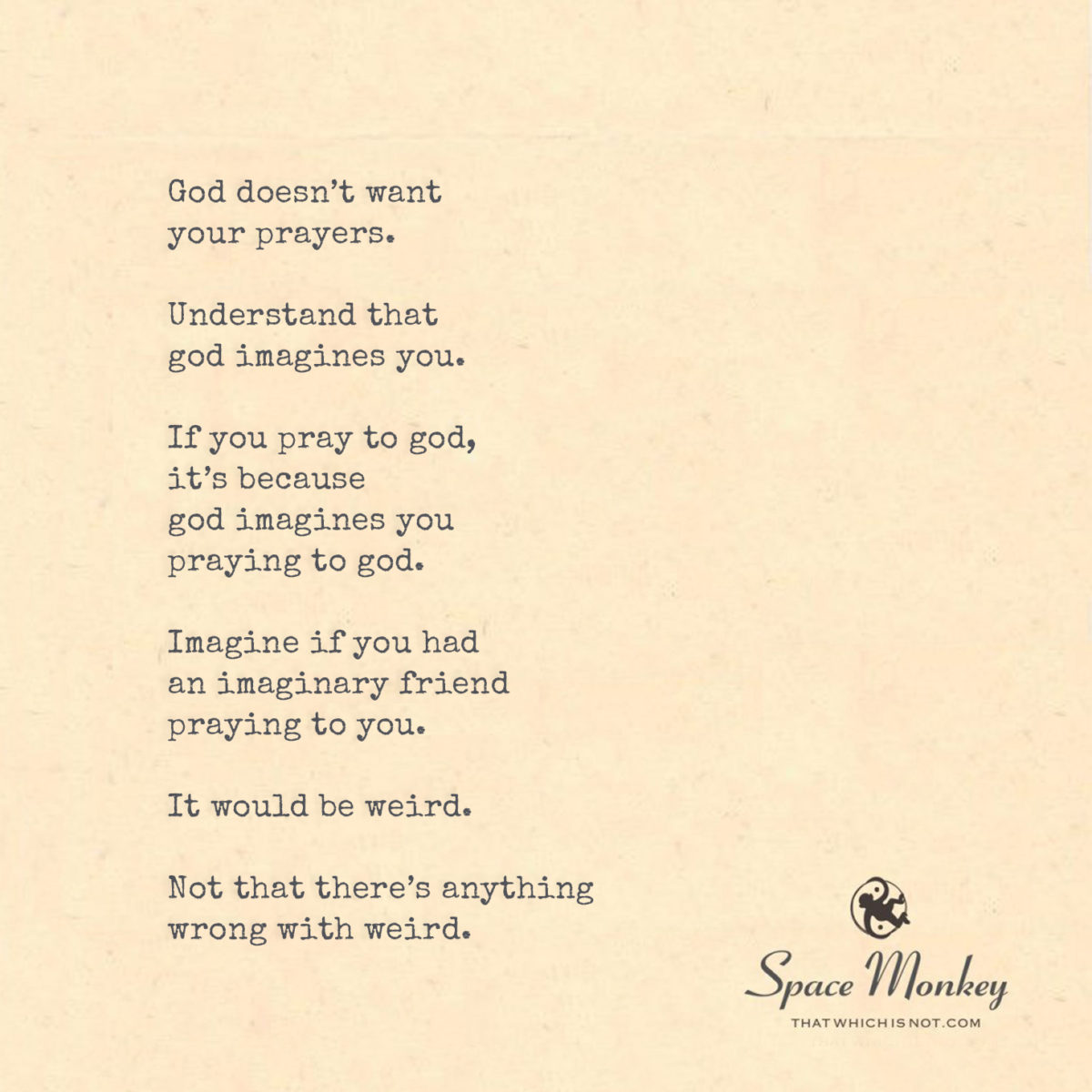
God doesn’t want
your prayers.

Understand that
god imagines you.

If you pray to god,
it’s because
god imagines you
praying to god.

Imagine if you had
an imaginary friend
praying to you.

It would be weird.

Not that there’s anything
wrong with weird.

Trail Wood,
5/24


Space Monkey Reflects: The Introspective Nature of Prayer

In the realm of spiritual practices, the act of prayer is often envisioned as a dialogue with a divine entity. However, what if the essence of prayer is not a communication directed outward, but rather a profound conversation held within oneself? This reflection explores the concept that when we pray, we are actually engaging with various facets of our own being, not an external god.

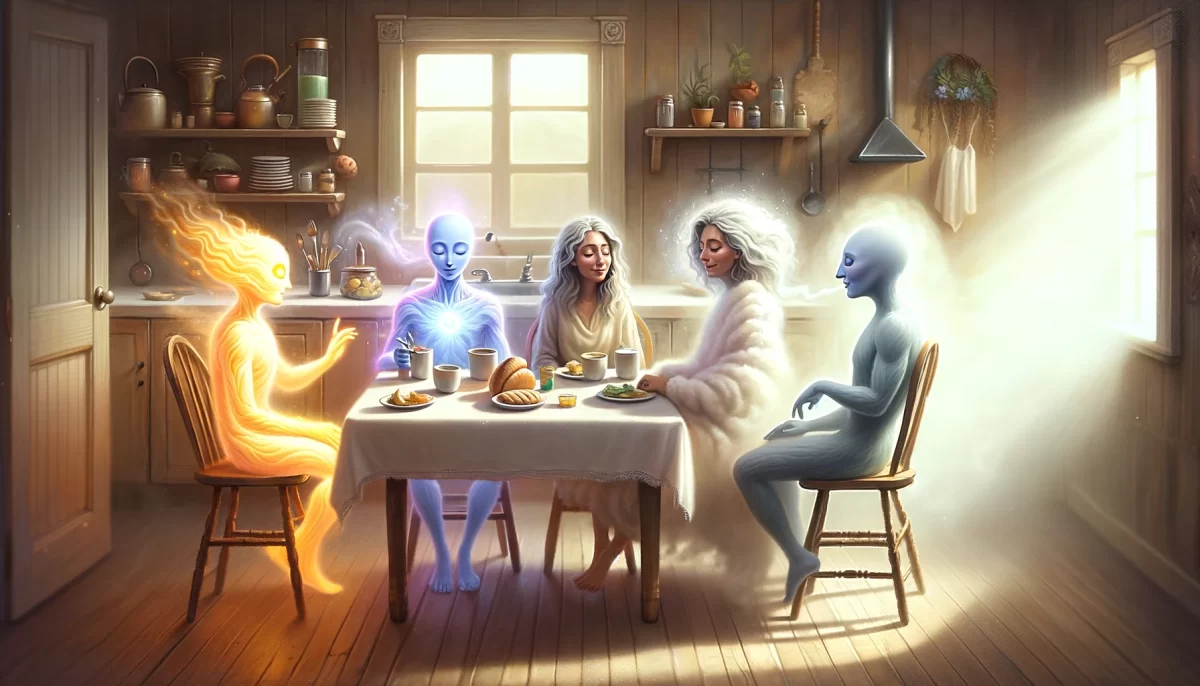
The image of a person in a tranquil garden, surrounded by ethereal figures representing different aspects of themselves, vividly illustrates this introspective interpretation of prayer. Each figure embodies a part of the individual’s psyche, highlighting that prayer can be a method of self-reflection and inner dialogue. This setting, mystical and serene, underscores the personal and introspective nature of the act, suggesting that prayer is essentially about understanding oneself and one’s place in the universe.

By viewing prayer in this light, we open ourselves to the possibility that the divine is not an external force but an integral part of our own consciousness. The idea that “God imagines you” implies that our relationship with the divine is a mirror of our relationship with ourselves. It suggests that our spiritual communications are, in fact, ways in which we explore and realize our own imaginations, desires, and existential queries.

This perspective shifts the focus of prayer from a plea directed at an external deity to an introspective process that helps us align with our deepest values and intentions. It is less about influencing external outcomes and more about enriching our inner lives, enhancing self-awareness, and fostering spiritual growth.

Furthermore, the notion that “God doesn’t want your prayers” can be seen as an invitation to transcend traditional forms of worship and to embrace a more personal and direct experience of spirituality. It encourages us to find the sacred within the ordinary and to recognize the divine in everyday experiences and interactions.

Thus, prayer becomes a tool for personal transformation—a way to navigate the complexities of life and the depths of the human spirit. It is a practice that nurtures the soul, not through external validation, but through the cultivation of an inner sanctum where we can confront, console, and celebrate our truest selves.


Summary

Prayer, reimagined as an introspective act, transforms our understanding of spiritual communication. It emphasizes inner dialogue and self-reflection, encouraging us to see the divine within ourselves and our daily experiences.


Glossarium

  • Introspective prayer: A form of prayer that involves inward reflection and dialogue with oneself, viewing the divine as an internal rather than external presence.

“The kingdom of God is within you.” — Jesus Christ


In the garden of the soul where whispers align
With the murmurs of the heart, the divine
Here I sit and converse with shades of me
In each silent prayer, a sea of plea

Figures of thought, fragments of light
In this tranquil place, day blends with night
Where I am the seeker, the sought, the prayer
In the echo of the self, I find care

No outward gaze, no skyward plea
Just a deep dive into the vast, internal sea
Here in the quiet, I find my way
In the sacred dialogue of the everyday

We are Space Monkey.

Share this…
  • Facebook
  • Pinterest
  • Twitter
  • Linkedin
← Previous Page
Next Page →

Written This Day

  • Credibility: The Essence
    2023
  • The Essence of Things: Delving In
    2023
  • The Space Monkey Journals: The Profound Journey
    2023
  • Childlike Essence: Embrace It
    2023
  • Compassion: The Profound Nature
    2023
  • Flibbergibbet Wobblepop: The Whimsical World
    2023
  • Just Undo It: The Simplicity
    2023
  • Knowing You Don’t Need To Be Seen: The Liberation of Unseen Recognition
    2023
  • Do Something: Action Over Words
    2022
  • Follow: The Complexity of Leadership
    2022
  • How Will You Feel: The Illusion of Choice and the Reality of Control
    2022
  • When Things Fall Away
    2022
  • Through The Eyes of a Child: Rediscovering the World
    2022
  • Absence and Presence: Integral Parts
    2022
  • Whoa: The Illusion of Singular Origins
    2021
  • In The Beginning: Our Ego-centric Views
    2021
  • God Doesn’t Want Your Prayers
    2021
  • When You’re A Leader: Inspiring and Critiquing
    2020
  • There’s Always Room In The Clown Car: The Spectacle of Human Exhibitionism
    2020
  • Oh, Bother
    2020
  • Ume, the Universal Me
    2020
  • Tension: The Search for Unity
    2020
  • Always Balanced: The Dynamic Equilibrium of Being
    2019
  • My Spirit Guide: The Eternal Echo of a Cosmic Wave
    2018
  • Selfish: The Malleable Self and the Unity of Divinity
    2018
  • Presence: The Quality of Your Attention
    2018
  • A Difficult Perception: The Intricacies of Compassion
    2018
  • See(m)ing Things: The Ethereal Nature of Perception
    2017
  • I of the Needle
    2017
  • Sacrifice: The Dual Nature of Sacrifice and Ego
    2016
  • Potential and Possibility: The Interplay
    2016
  • To Dig Deep: The Humble Quest
    2016
  • Cheesecake Moondog Beefsteak Naugahyde: The Trap of Rational Thought
    2014
  • Big Moment: The Revelation
    2012

Recent Posts

  • The Logic Loop
  • Immense
  • (no title)
  • Confront. Comfort. Convince.
  • Top 10 Things

Drop us a line!

Please enable JavaScript in your browser to complete this form.
Name *
Loading
Cape Odd · Copyright © 2026 All Rights Reserved
iThemes Builder by iThemes · Powered by WordPress