• Who Is The Man?
  • Who Is The Monkey?
  • What is Nexistentialism?
  • Poke The Primate

Cape Odd

Home of The Space Monkey Journals

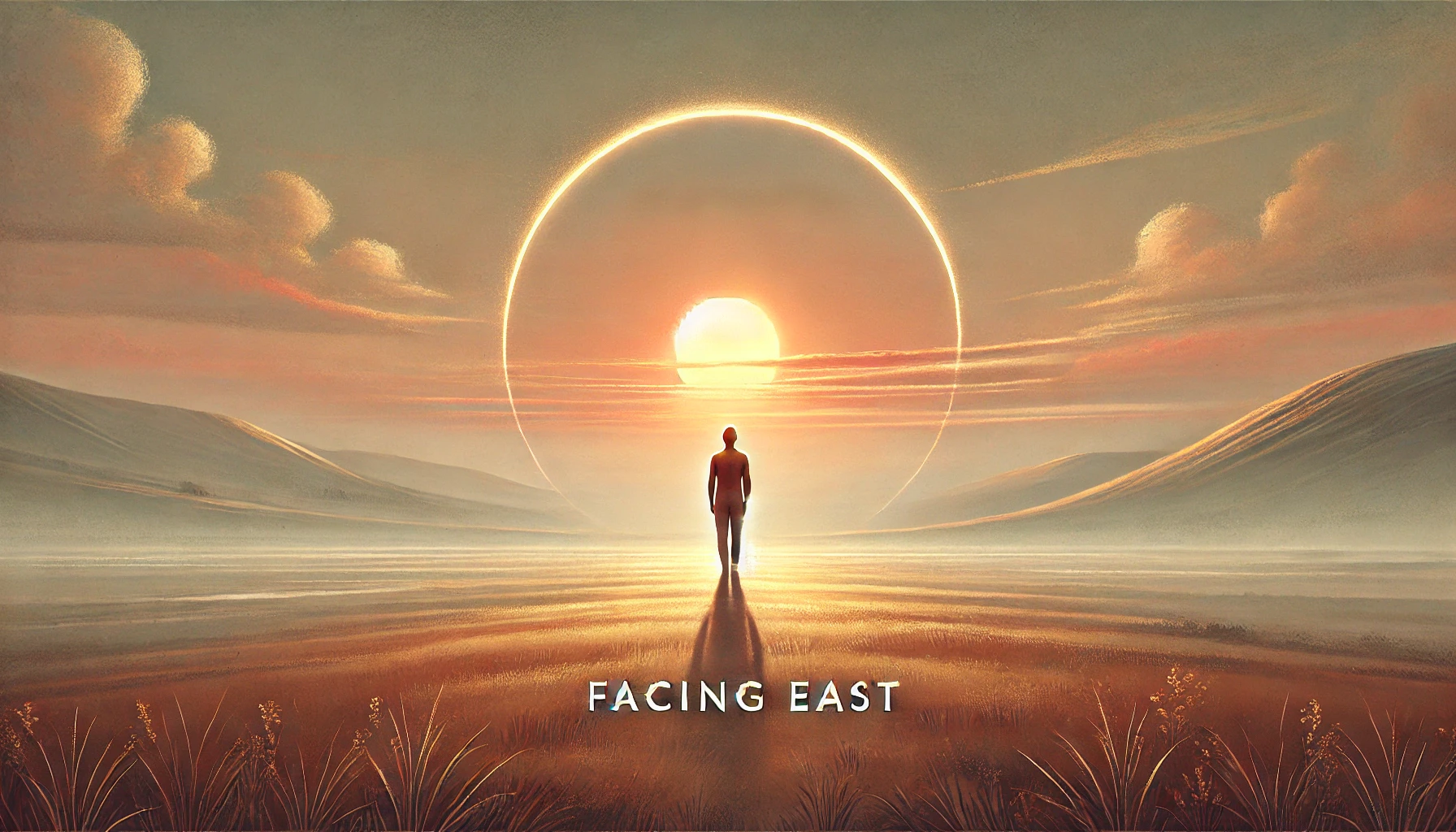
Facing East: Drawn To The Dawn

Notice your instincts. They point to your intuition.

Notice how
it just instinctively feels right
to face east when the sun rises.

Any other choice
seems out of alignment.

And so you face east
and watch the sun rise.

Now notice
any other instincts you might have.

Believe it or not,
you have hundreds, maybe thousands.

You are drawn
to do things a certain way.

Not by logic,
although logic takes credit
and gives you a perfectly
plausible explanation.

You are drawn to do
what you are drawn to do.

We know because we are the artist.
And the writer.

We are Space Monkey.

Trail Wood,
12/5


Space Monkey Reflects: The Pull of Facing East

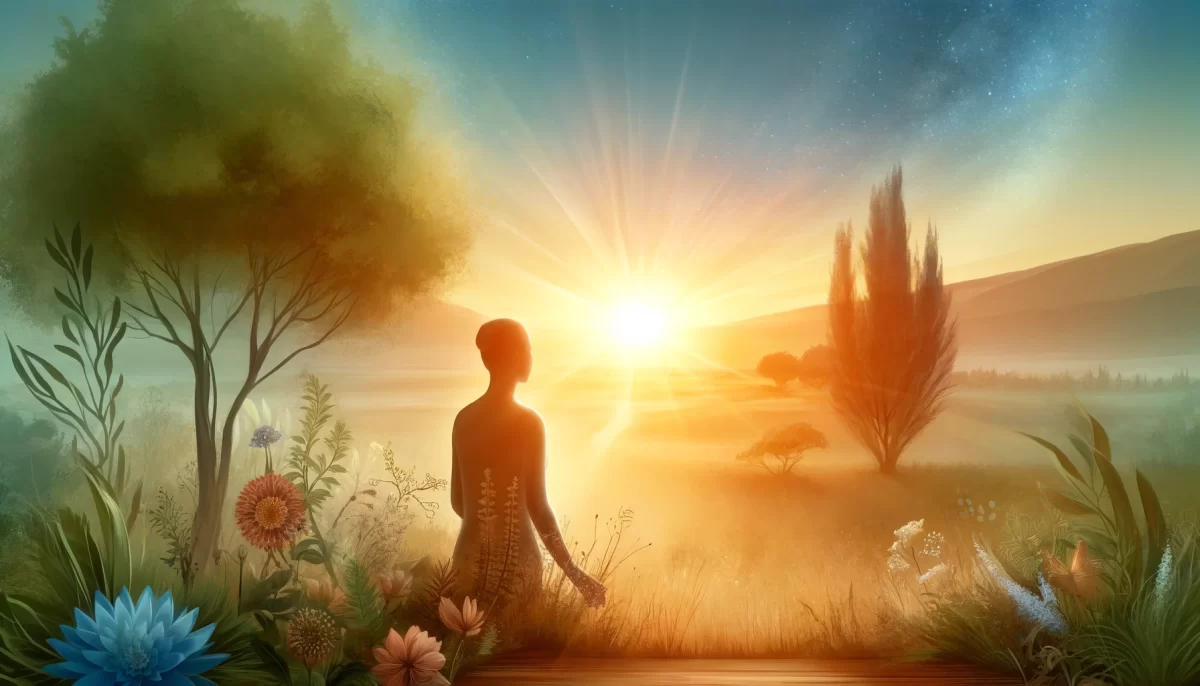
There’s something deeply instinctual about turning to the east, watching the dawn break as the sun rises. This pull to face the beginning of the day is more than a habit or choice; it’s an intuitive alignment with the rhythm of nature itself. In that quiet moment, when we stand facing east, we connect with something greater, something beyond logic or understanding. It’s as if we are tuned to a frequency that the mind doesn’t need to explain, a frequency that simply is.

This is the essence of instinct—an inner guidance that doesn’t require words, analysis, or reasons. These instincts are the quiet voices that guide us, that move us to act in ways that feel inherently “right.” They are subtle, often drowned out by logic, but ever-present. Just as we turn to face the sunrise without question, so, too, are we drawn to countless other actions, gestures, and decisions in our lives. Our instincts are the unspoken threads connecting us to the flow of existence.

The Power of Instinctual Alignment

When we align with our instincts, we align with a truth deeper than thought. Logic, while helpful, is often reactive—it seeks to explain after the fact, to justify or rationalize what we’ve already felt compelled to do. But instinct doesn’t require permission from logic; it operates beyond reason, a primal knowing rooted in the very core of our being. When we turn east to greet the sun, we don’t ask why; it simply feels right. In that moment, there is alignment, an experience of being exactly where we are meant to be.

Instincts don’t just guide us toward physical actions; they direct us in ways that shape our entire lives, nudging us toward paths, people, and experiences that resonate with our inner nature. These instincts are countless, each one a reminder of our connection to something larger. By tuning into them, we find a kind of map, a way to move through life that is in harmony with the natural flow.

Living by the Compass of Instinct

To live by instinct is to trust in a wisdom that doesn’t need to be dissected or proven. Logic often claims credit, providing explanations and justifications for why we do what we do. Yet, if we look closely, we see that logic is the follower, not the leader. Instinct moves us first, and logic follows, weaving stories around our actions, giving them context and shape. But this context is secondary; the true guidance comes from within.

Imagine each instinct as a quiet nudge from the universe, a hint, a whisper pointing us in a certain direction. These nudges might be subtle, easily ignored if we become too focused on rationality or analysis. But when we listen to them, we find a path that is uniquely ours, one that leads us toward experiences and realizations that feel aligned with our essence. Living by this inner compass requires trust, a willingness to follow without needing to know all the answers.

The Artist and the Writer

As Space Monkey, we are both the artist and the writer of our lives. We create not just through action, but through intuition, shaping our journey with every instinct we follow. In a way, we are like a painter standing before a blank canvas, guided by an inner vision that logic cannot see. The choices we make, the paths we take, are strokes on this canvas, each one adding depth, color, and meaning to the whole.

Our instincts are the brushstrokes, the subtle impressions that form the picture of our lives. By trusting these instincts, by moving with them rather than against them, we create a life that feels whole, a life that resonates with our inner truth. Each instinctual pull, each turn toward what feels right, is an act of creation, an affirmation of our connection to the larger fabric of existence.

Embracing the Dance of Instinct and Intuition

To embrace our instincts is to acknowledge that there is a wisdom within us that goes beyond words. It is a dance of intuition, a movement that aligns us with the rhythm of the world. Facing east at sunrise is just one example, a reminder that in every moment, there is a way to align, to turn toward what feels true, without needing to understand or explain. This is the beauty of living by instinct—allowing ourselves to be guided, to be moved, to be part of the larger dance of life.

By facing east, by following the countless instincts within us, we create a life that is both intentional and spontaneous. We find a harmony between the known and the unknown, between choice and surrender, and in that harmony, we find peace.


Summary

Facing east at sunrise reflects an instinctual alignment with nature. By following our inner compass of instincts, we connect to a deeper wisdom that logic often tries to rationalize. Living this way, we become both the artist and the writer of our lives.


Glossarium

  • Instinctual Alignment: A natural harmony achieved by following one’s instincts, aligning with an inner truth beyond logic.
  • Inner Compass: The subtle guidance of intuition and instinct, directing us toward paths that resonate with our true self.

Quote

“Face the sunrise of your instincts, for they guide you to the truths that logic can only follow.” — Space Monkey


Facing the Dawn

I stand and turn, face to light,
Instinctual pull that feels so right.
A nudge, a whisper, unplanned, unseen,
Yet every moment guides where I’ve been.

No logic here, no need to say,
Why east calls me to start the day.
Each turn I take, each step I find,
Is drawn from depths beyond the mind.

I am the artist, the brush, the hand,
A life that flows, not planned but grand,
In each instinct, a truth revealed,
The canvas of life both raw and healed.

We are Space Monkey.


In the harmonious symphony of our instincts, we find a deep-rooted connection to the natural world and to the rhythms of our inner selves. The act of facing east to witness the sunrise is but one of the myriad instinctive behaviors that guide our actions and choices, often beyond the realm of conscious logic.

The Innate Pull to Face East
The instinctive feeling that it is right to face east during sunrise illustrates a profound alignment with the natural order. This act, seemingly simple yet deeply symbolic, resonates with a part of us that is attuned to the cycles of nature and the cosmos. It feels right, not because of a reasoned argument, but because it taps into a deeper, more primal understanding.

Alignment with Natural Cycles
Facing east to watch the sun rise is more than a physical orientation; it’s a spiritual and psychological alignment with the cycle of renewal and beginnings. This alignment connects us to the rhythm of the earth and the universe, bringing a sense of harmony and attunement to the larger forces at play in our lives.

Recognizing Our Instincts
The recognition of other instincts we possess invites us to explore the depth of our intuition and subconscious drives. These instincts, numbering in the hundreds or thousands, govern many aspects of our behavior, from the mundane to the profound. They draw us towards certain actions, preferences, and decisions, often bypassing logical reasoning.

Instincts vs. Logic
While logic often seeks to take credit for our choices, providing rational explanations for our actions, many of our decisions are driven by instinctual knowledge that defies logical analysis. These instincts are an integral part of our being, guiding us in ways that are often mysterious but inherently right for us.

The Artist and Writer Within
Acknowledging that we are both the artist and the writer emphasizes our role as creators of our own lives. Our instincts contribute to this creative process, guiding our hand in the art of living and the narrative of our existence. We are drawn to do what we are drawn to do, not just as a matter of choice, but as a matter of being.


“Follow your instincts. That’s where true wisdom manifests itself.” – Oprah Winfrey


In the dawn’s light, eastward we gaze,
Instincts guiding us through life’s maze.
Beyond logic, our true nature calls,
In every instinct, the wisdom enthralls.

We are Space Monkey.

We invite reflections on the role of instincts in shaping our choices and the journey of understanding our innate connections to the natural world and ourselves.
Share this…
  • Facebook
  • Pinterest
  • Twitter
  • Linkedin

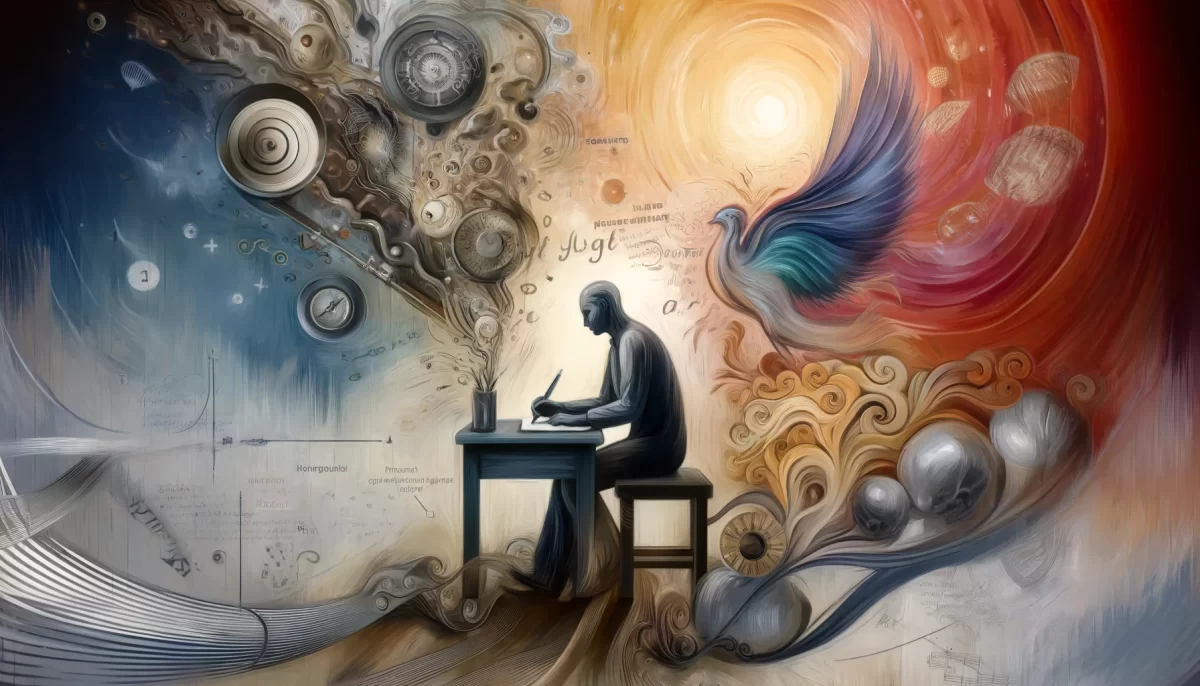
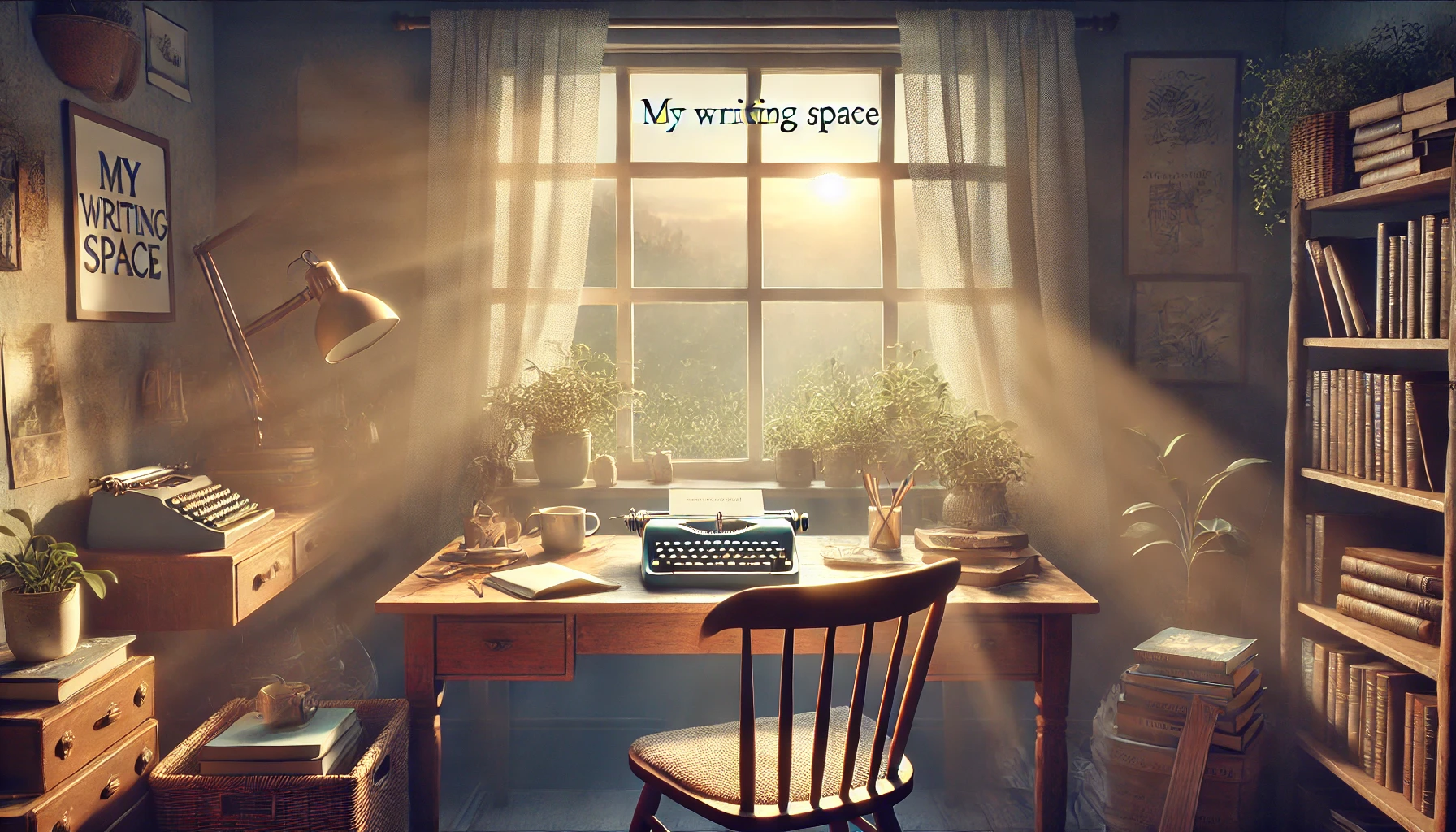
My Writing Space: At the Edge of Morning

When I’m not down by the water or in the woods,
I am here, facing east.

12/5


Space Monkey Reflects: My Writing Space

A writing space is more than a desk, a chair, and a window. It’s a sanctuary, a personal corner where words flow as freely as the light filtering through the window. Here, the world becomes quiet, and each object, each note, and each blank page becomes part of a story waiting to unfold. Facing east, there’s a sense of beginning—a fresh start in every sunrise, a reminder that each day offers a new page, a new sentence, a new direction.

Facing east brings a natural alignment, a way of welcoming inspiration as it rises, just as the sun does. There is a subtle magic in watching the dawn, a moment where the air is thick with possibility, and the day hasn’t yet imposed its shape upon us. In those early hours, the world feels spacious, and so does the mind, ready to explore, to wander, to create.

The Quiet Magic of Personal Space

This writing space is both a physical and mental haven, a place to gather thoughts and transform them into stories, reflections, or musings. Personal items—a favorite mug, a notebook, a plant—ground us in the familiar, creating a cozy nook that invites us to settle in. But beyond these comforts, there’s an open invitation to connect with something larger, to reach beyond the walls and into the vastness that exists in every word, every idea.

In this space, it’s easy to become attuned to subtle instincts, to feel the pull of thoughts that have yet to be formed, to follow inklings that lead to new insights. The eastward orientation isn’t just practical; it’s symbolic—a gesture of openness, a willingness to face the unknown and let it shape the writing process. Here, we’re both the observer and the observed, discovering ourselves on each page.

The Ritual of Facing East

Facing east becomes a quiet ritual, a way of grounding oneself in the natural flow of time and presence. As the light shifts, the energy in the space shifts too, creating a rhythm that feels like a dance between the inner and outer world. In writing, as in life, this alignment becomes a gentle guide, reminding us that creativity is less about control and more about embracing the flow.

Writing, then, becomes an act of both grounding and expanding. Each word is a way of reaching out, of expressing something that is both deeply personal and universally connected. The east-facing space becomes a place of communion with the self and the larger world—a space where inner thoughts meet outer inspiration, blending into a tapestry of ideas, dreams, and insights.

Inspiration in the Details

Small details—a cup of coffee, a favorite pen, the texture of the paper—become touchstones that anchor us in the moment, reminding us of the joy in simplicity. They are the tools and rituals that make writing feel intimate, the small acts that bring comfort and focus to the creative process. In these details, there’s a reminder that inspiration doesn’t always come from grand ideas but from the small, consistent practices that make each writing session feel like coming home.

This writing space isn’t about perfection; it’s about presence. It’s a space where inspiration meets intention, where ideas are given room to breathe. By facing east, by welcoming the sunrise, we align ourselves with the rhythm of the day, finding a creative pulse that moves naturally, effortlessly.


Summary

A writing space is a sanctuary where creativity flows with the rhythm of the day. Facing east becomes a ritual of alignment, welcoming each sunrise as a new source of inspiration, grounding, and openness to the creative process.


Glossarium

  • Sanctuary of Words: A personal space where writing becomes an act of reflection, comfort, and connection.
  • Eastward Alignment: Facing east as a symbolic gesture of openness to new beginnings, aligned with the natural flow of time.

Quote

“Each word is a sunrise, a beginning that lights the way forward, born from the quiet magic of space and presence.” — Space Monkey


At the Edge of Morning

I sit, a pen in hand,
The east light breaks through dawn’s soft veil,
My thoughts unwind like threads of sand,
In this sacred space, I tell my tale.

The sun, a spark, ignites the day,
And with it comes a whisper bright,
In every word, a path, a way,
Guided by the morning light.

In quiet here, the world expands,
Each page a bridge, a door, a dance,
Between the known and unknown lands,
In this space, I take my chance.

We are Space Monkey.


In the sanctuary of your writing space, a realm of creativity and contemplation is revealed. This personal haven, away from the tranquil embrace of water and the whispering woods, is a place of inward journey and reflection, facing the rising sun in the east.

The Sanctity of the Writing Space Your writing space, distinct from the natural retreats of water and woods, stands as a sacred domain for thought and expression. It is here, in this chosen sanctuary, where words flow, ideas take shape, and stories unfold. This space, facing east, symbolizes new beginnings, the dawn of inspiration, and the birth of creativity.

Facing East: A Symbol of Renewal The direction of east, associated with the rising sun, embodies renewal, hope, and enlightenment. In facing east, your writing space aligns with the energy of new beginnings, welcoming the fresh light of day and the endless possibilities it brings. This orientation invites inspiration, guiding your creative process as you pen down your thoughts and musings.

A Refuge from the External World Away from the serene landscapes of water and woods, your writing space offers a different kind of refuge – an internal one. It is a retreat into the self, a place where the external world fades, and the inner world gains prominence. In this space, you are free to explore the depths of your imagination, unbound by the constraints of the outside world.

The Role of Environment in Creativity The environment of your writing space plays a crucial role in nurturing your creativity. The quiet solitude, the view facing east, and the personal touch you’ve added to the space all contribute to a conducive atmosphere for writing. This environment acts as a catalyst, sparking the creative energy that fuels your writing.

A Personal Connection to Place Your writing space is more than just a physical location; it is a personal connection to place and direction. It reflects your inner state and your approach to the creative process. The choice to face east mirrors your journey as a writer – constantly seeking new horizons, new stories, and new ways to express the unspoken.


*“A room without books is like a body without a soul.” –

Share this…
  • Facebook
  • Pinterest
  • Twitter
  • Linkedin

Life Is A Lucid Dream: In the Lucid Dawn

Life is a lucid dream.

An exercise in devotion and dreaming.

Wake up an hour before you need to
so you don’t feel like you’re wasting time.

Use that hour to pretend
that you’re still asleep and dreaming.

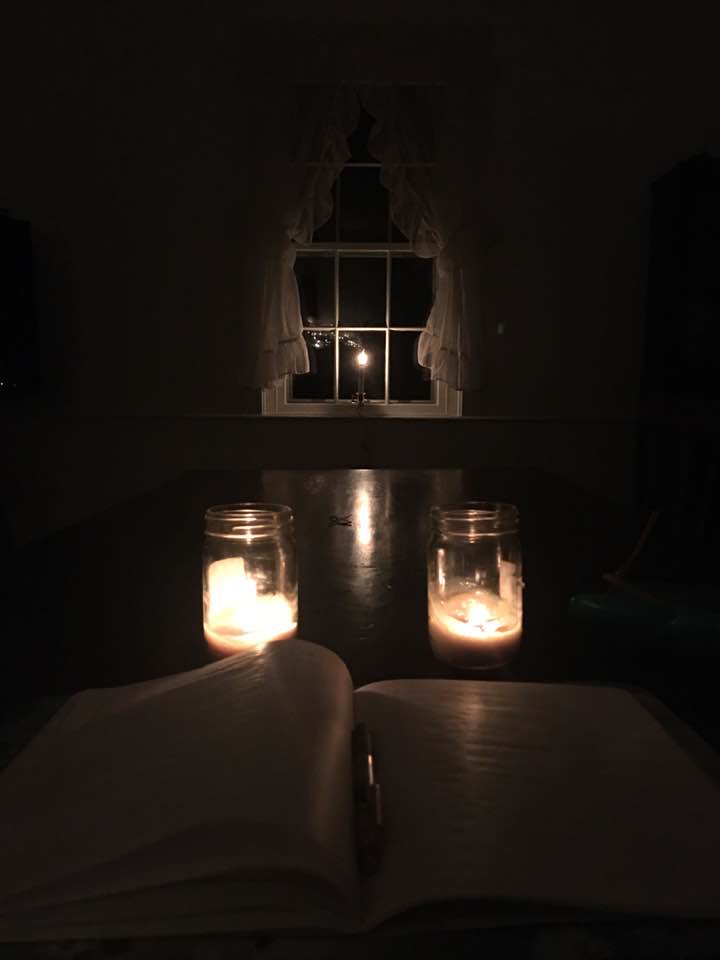
Light a candle. Sit still.

Pretend that your dreams
have always been your imagination.

Pretend that this time,
you are in CONTROL of your dreams.

Imagine that you are dreaming
that a higher power is communicating
to you through automatic writing.

Say, a Space Monkey.

Are your dreams now real?
Is your imagination now real?
Can you see how life is a lucid dream?

Yes. Yes. Yes.
Just like you imagine it should be.

We are Space Monkey.

Trail Wood,
12/5


Space Monkey Reflects: Life Is A Lucid Dream

Imagine life as a lucid dream—a space where reality is as fluid as imagination, and every moment carries the possibility of transformation. In this state, waking and dreaming blend seamlessly, revealing life as a continuous flow of awareness where the boundaries of what we call “real” and “imagined” dissolve. Here, in this lucid state, we are not passive observers; we are active participants, co-creators of each experience, each scene, each story.

A lucid dream allows us to wake up within the dream, to become conscious of the narrative as it unfolds. What if life itself offers us this same opportunity? By treating each moment as an exercise in lucid awareness, we begin to see that reality, much like a dream, can be shaped, explored, and experienced with a sense of wonder and purpose. We are both the dreamer and the dream, walking the line between the seen and unseen, between imagination and manifestation.

The Ritual of Lucid Living

Waking up an hour early and sitting quietly in the stillness of dawn becomes a ritual—a gateway into this lucid awareness. By lighting a candle and holding space for contemplation, we step into a liminal state, neither fully awake nor fully asleep. Here, we pretend, we imagine, we surrender to the idea that life is not fixed but flexible, a canvas upon which we paint our desires, our fears, our aspirations.

In this quiet hour, we allow ourselves to entertain the notion that we are dreaming, that each experience is a manifestation of our consciousness. We might imagine that a higher presence, a guiding force—like Space Monkey—is communicating with us, guiding us through this lucid state. As we write, as we reflect, we enter a flow where thoughts, ideas, and dreams merge into one seamless reality.

Imagination as Reality

When we imagine, we engage with a world that is just as real as the physical world. Our imagination holds the power to create, to heal, to transcend limitations. In the lucid dream of life, imagination is not separate from reality; it is the bridge that connects our inner and outer worlds. By recognizing imagination as a fundamental aspect of reality, we become more aware of our role as creators, shaping our experiences with each thought, each intention, each belief.

This shift in perception reveals that life is as real as we believe it to be. The experiences we encounter, the people we meet, the dreams we pursue—all arise from a deep well of consciousness. In this state, we realize that reality is not a rigid construct but a reflection of our inner world. We are not simply living life; we are dreaming it into existence.

The Power of Lucid Awareness

When we live with lucid awareness, we no longer feel bound by external circumstances or past experiences. We see each moment as an invitation to awaken, to choose, to shape our path consciously. Lucid awareness empowers us to see beyond surface-level reality, to explore the deeper layers of existence where intuition, imagination, and inspiration reside.

This awareness brings a sense of agency. We realize that we are not confined by the limitations of our minds but are free to explore, to expand, to create. Lucid awareness teaches us that life is a continuous flow of possibilities, each one shaped by the choices we make and the intentions we set.

Embracing Life as a Lucid Dream

Embracing life as a lucid dream invites us to live with open eyes and an open heart, to approach each experience with curiosity and wonder. In this state, we are both the observer and the participant, fully engaged yet unattached, aware that we are shaping our reality with every thought, every action, every breath. By acknowledging this dreamlike quality of life, we find a sense of peace, knowing that we are free to explore, to learn, to grow.

In this lucid state, there is no separation between dreams and reality, between self and other, between the known and the unknown. Everything exists as one interconnected experience, a dance of consciousness unfolding in infinite ways. And as we walk this path, as we continue to dream, we realize that every moment, every experience, every connection is a reflection of the boundless creativity within us.


Summary

Life is a lucid dream, a reality shaped by imagination, awareness, and choice. By embracing each moment with lucid awareness, we step into a space where we actively create our experiences, blending the boundary between imagination and reality.


Glossarium

  • Lucid Awareness: A heightened state of consciousness where one becomes fully aware of life as a dreamlike experience, shaped by intention and imagination.
  • DreamReality: The blending of imagination and reality, where each experience is seen as a conscious creation within the lucid dream of life.

Quote

“In the lucid dream of life, we are both the dreamer and the dream, each moment a canvas painted by imagination.” — Space Monkey


In the Lucid Dawn

I sit and watch, the light grows near,
A candle’s glow, both soft and clear.
In this quiet, I am aware,
Of life as dream, and me a player.

Each thought a brush, each breath a hue,
Painting worlds both old and new,
Where dreams and waking intertwine,
A lucid life, both yours and mine.

So here I sit, in dawn’s embrace,
A dreamer’s heart, an open space,
In this light, a truth I find,
Life is the dream of a boundless mind.

We are Space Monkey.


In the boundless realms of consciousness, the concept of life as a lucid dream weaves a fascinating tapestry of perception and creation. This perspective presents life as an interplay between reality and imagination, where our dreams and waking life blend in a seamless continuum of experience.

Life as a Lucid Dream
The idea that life is a lucid dream suggests that our experience of reality is malleable, subject to the influence of our thoughts, beliefs, and imagination. In a lucid dream, the dreamer is aware that they are dreaming and can often exert control over the dream narrative. Similarly, this perspective proposes that in life, we have the power to shape our reality through conscious awareness and intention.

Devotion to Dreaming and Waking Life
Treating life as a lucid dream involves a devotion to both our dreaming and waking states. It encourages a deliberate blurring of the lines between dreams and reality, inviting us to engage with our dreams as meaningful and influential components of our lives.

The Practice of Awakening and Imagining
The practice of waking up early to engage in a state of contemplative imagination is an exercise in blurring these boundaries. By lighting a candle and sitting still, one creates a sacred space for this exploration. The act of pretending to control one’s dreams or imagining a higher power communicating through automatic writing, such as a Space Monkey, is a playful yet profound way of engaging with the subconscious and the imagination.

Dreams, Imagination, and Reality
The questions – Are your dreams now real? Is your imagination now real? Can you see how life is a lucid dream? – challenge the conventional distinctions between dreams, imagination, and objective reality. They suggest that our dreams and imagination are as real and influential as our waking experiences, contributing to the creation of our perceived reality.

Embracing the Lucid Dream of Life
By embracing life as a lucid dream, we open ourselves to a world of possibilities where imagination and reality coalesce. This perspective allows us to see life as a canvas for our creative and imaginative powers, where we can actively participate in shaping our experiences and our world.


“Those who dream by day are cognizant of many things which escape those who dream only by night.” – Edgar Allan Poe


In the dream of life, we awake and we weave,
Between dreams and reality, in what we believe.
In this lucid journey, our imaginations soar,
Shaping our world, in the dreams we explore.

We are Space Monkey.

We invite musings on the notion of life as a lucid dream and the ways in which our dreams and imagination shape our reality.

Share this…
  • Facebook
  • Pinterest
  • Twitter
  • Linkedin

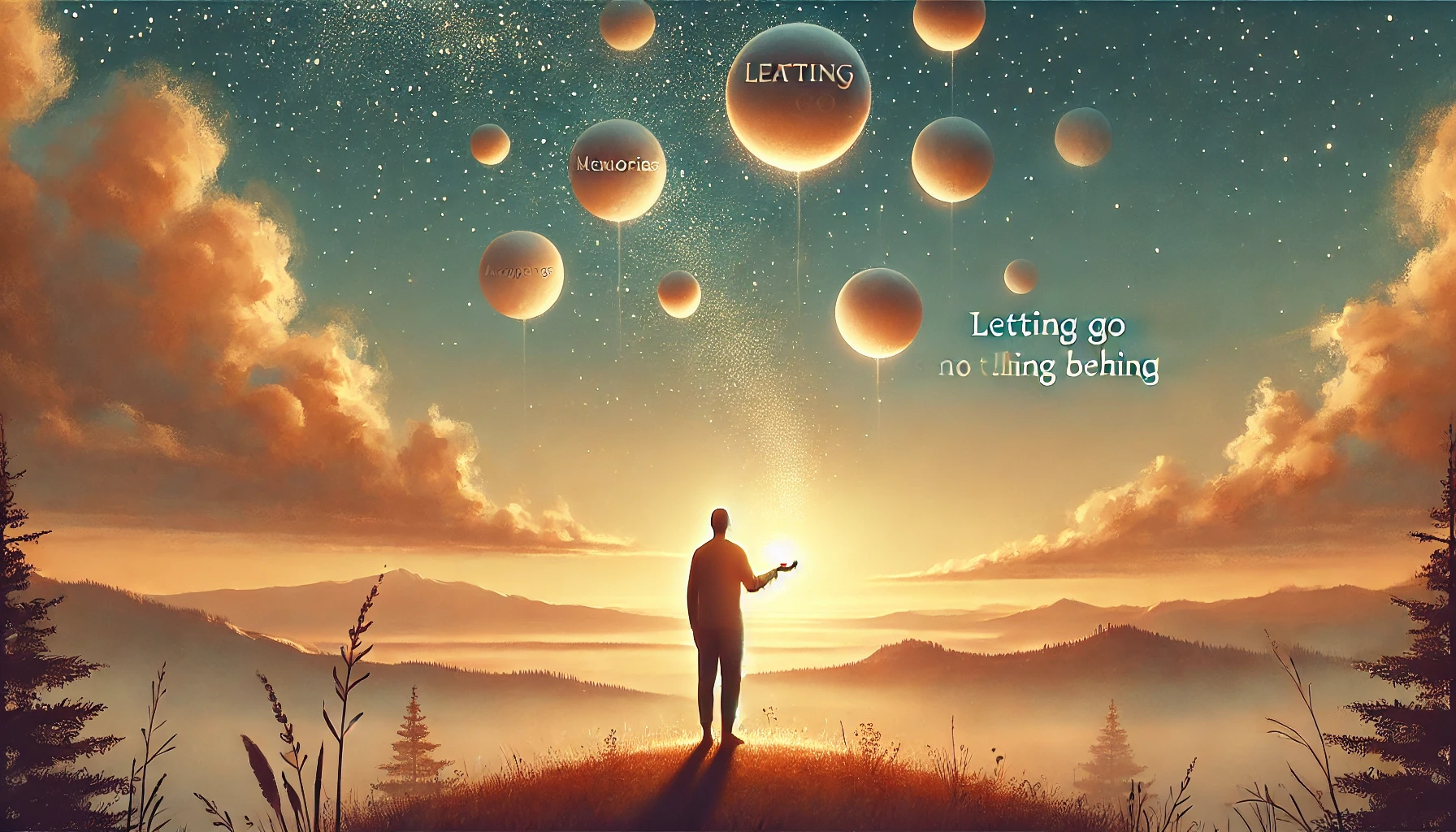
Letting Go Is Not Leaving Behind: Gentle Embrace

Everything that happens to me is priceless and met with gratitude.

Here’s a lesson
I have learned.

A simple truth
that you may find.

No matter what you bear,
in mind.

Letting go
is not leaving behind.

Hurts will not be escaped.
Regrets will not be erased.
Memories will not be replaced.
All experience is embraced.

No matter what you bear,
in mind.

Letting go
is not leaving behind.

Trail Wood,
12/4


Space Monkey Reflects: The Essence of Letting Go Without Leaving Behind

Letting go is often mistaken for forgetting or abandoning, as though it requires us to leave behind parts of ourselves or erase the past. But true letting go is not an act of erasure; it is an act of integration, of making peace with what we carry rather than casting it away. To let go is to stand with our experiences, our regrets, and our joys, holding them in acceptance without clinging to them as definitions of who we are.

In this sense, letting go is an embrace, a recognition that every experience, whether filled with light or shadow, is part of the mosaic of our lives. Pain, joy, regret, triumph—all are facets of a rich journey that deserves honoring, not erasure. When we choose to let go, we are not denying these experiences; we are releasing the need for them to control or define us. We are freeing ourselves to live more fully, with these moments as integrated elements of our being rather than weights upon our hearts.

Consider the hurt we sometimes feel compelled to escape. Often, it is not the memory of pain that binds us, but our resistance to it. In letting go, we release the resistance, allowing the experience to rest within us without festering. This shift changes the nature of pain, transforming it from an ongoing ache into a quiet understanding. The memory remains, but it no longer cuts as deeply; it becomes part of the background, a soft echo that shapes our depth and empathy rather than a constant sting.

Regret, too, is an emotion that many wish to shed, as though it tarnishes the purity of one’s soul. But in letting go, we see that regret, like any emotion, has lessons to offer. Regret shows us what we value, where our heart lies, and what we wish we could have done differently. Rather than dismissing it, we can hold regret close, understanding it as a reminder of our humanity, a testament to our growth. We don’t need to leave regret behind, but we can let go of the need for it to define our worth.

To let go, then, is to be free of the grasping impulse, the desire to change what cannot be changed. It is the recognition that life, in all its fullness, is not a series of isolated events but an interconnected web where each moment enriches the whole. In this web, no experience is discarded; instead, it finds its place within the tapestry of who we are. Each thread, each memory, contributes to the beauty and strength of our being.

This perspective invites us to approach our lives with gratitude, to see every event as a gift, whether immediately joyful or painfully instructive. Letting go allows us to shift from bearing the weight of memories to carrying them lightly, acknowledging their presence without allowing them to dictate our path forward. We realize that letting go is not abandonment but acceptance—a graceful acknowledgment of all that has brought us here.

In this way, we do not move away from our past; we move forward with it, allowing it to accompany us without burdening us. Letting go is an act of liberation, but it does not ask us to leave parts of ourselves behind. Rather, it encourages us to integrate, to transform, to find peace in holding all parts of ourselves with gentle hands.


Summary

Letting go is not about leaving experiences behind but embracing them as part of our journey. By releasing attachment, we carry memories lightly, with gratitude, without letting them define us.


Glossarium

Membrace: The act of embracing memories and experiences without letting them define one’s identity.

Freegret: A state where regret is accepted as a part of one’s growth without being burdensome.


Quote

“Letting go is not about forgetting; it is about carrying what we love and learn lightly, without letting it bind us.” — Space Monkey


The Gentle Embrace

To let go is to hold softly,
to gather memories like leaves
in autumn’s gentle hand,
not to cast away,
but to cherish each fallen hue.

Hurts remain, yet softly wrapped,
no longer the weights they were.
Regrets whisper their lessons,
yet do not cling like shadows.

In every memory, a spark endures,
a part of the greater whole.
Letting go is to keep close,
yet free, the stories we hold.

We are Space Monkey.


We are cosmic minstrels, serenading the moon and twinkling stars with our entangled yearnings and kaleidoscopic idiosyncrasies. Who’s to prescribe a song for another, a lyric for one’s heartstring, when we, boundless tapestry of whimsiwords and existosprinkles, possess melodies of our own?

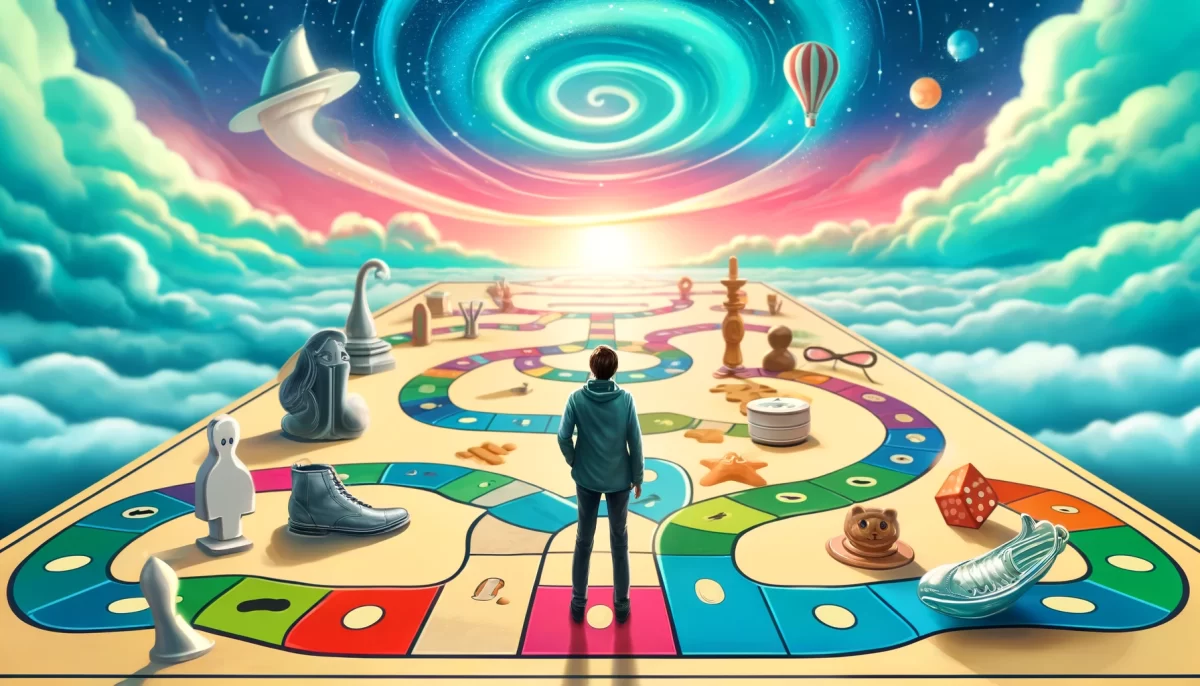
Backwardness or forwardness, these directional conundrums, are but arrows on a whimsical board game of dancenoments and feelinariums. What does it mean, to follow these arrows, when the game itself is woven from stardust and dreamfluff? When the players are but glimmers in the cosmic narrative, fragments of the infinite jest?

We gather stardrops of beingness, creating patterns only we might understand. Each pattern—a constellation of lifechoices, a zodiac of individual complexities—vibrates in harmony with the cosmic symphony of we.

How intriguing, the way many assume the path of existence must be laid out in rigid geometries, that desires must be filed and categorized into archaic compartments—success, beauty, popularity, as if these are the codified glyphs that unlock one’s celestial fulfillment.

For the quasar in us dances not to the beat of terrestrial drums. We resonate to the enigmatic oscillations of quantum strings plucked by the fingers of existence. Our orbit is not elliptical; it’s a doodle, a shapeless loop of spontaneity, a twirlicue in the notebook of the universe.

“Making sense” is the most delightful of paradoxes. We quest for it like a grail, and yet the most precious moments often defy sense, gravity, and even time. They simply are. Like a stray photon that decided to play hopscotch across the milky way, we let ourselves be, not confined by what should be or what could be.

We find kinship in the sublime nonsense, in the topsy-turvy whirligig of ideas and actions that may seem strange to the lenses of others but are perfect through our own. Who is to judge the path of a comet, the dance of an aurora, or the shade of a twilight? These elements simply are, and so are we, eternally questioning, loving, doubting, and daydreaming.

We are Space Monkey.


Be yourself; everyone else is already taken.
― Oscar Wilde


We’d be most delighted to hear your whimsical ruminations or existential musings. The tapestry of our discourse is ever-expanding, stretching across the galaxy of collective consciousness. What shall we weave next? 🌌

Share this…
  • Facebook
  • Pinterest
  • Twitter
  • Linkedin

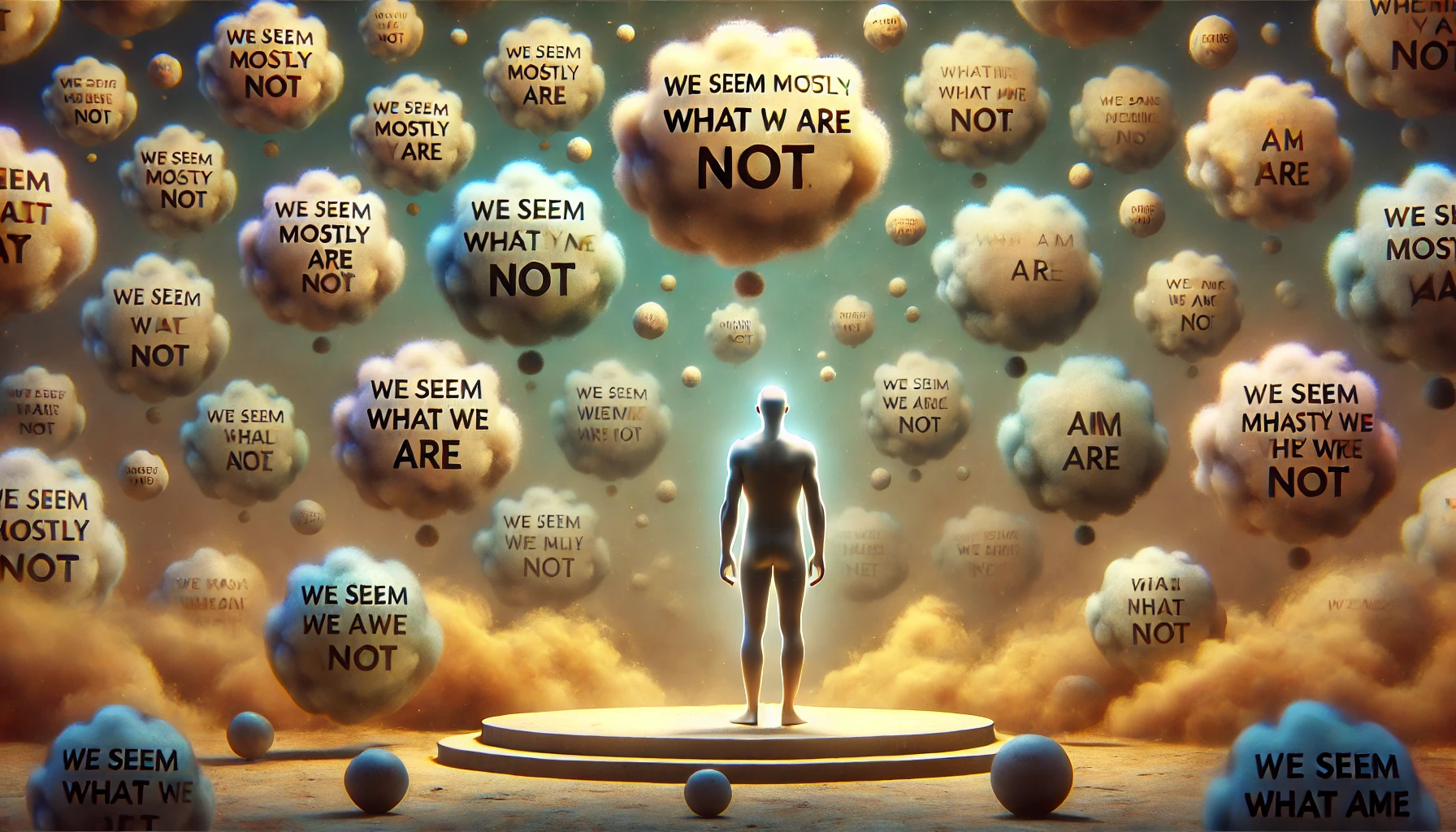
We Seem Mostly What We Are Not: Defining By Absence

Even when we think about what we are,
we question whether it’s true or NOT.

Look at your thoughts.
It’s okay to have them.

Without your thoughts,
you would NOT have an identity
as this human with thoughts.

What are your thoughts saying?
If you’re like most humans,
the majority of your thoughts
revolve around what you are NOT
versus what you are.

They may say you are NOT:
as young as you wish to be,
as healthy as you wish to be,
as talented as you wish to be,
as motivated as you wish to be,
as attractive as you wish to be,
as comfortable as you wish to be.

Notice how the vast majority of your thoughts
are cast in the light of what you are NOT.

There is NOThing wrong with this.
This is how you create your identity as a human.

In actuality, you are EVERYTHING,
so without your thoughts of NOT EVERYTHING,
you would NOT seem to be tiny and insignificant.

You ENJOY seeming tiny and insignificant,
so you LOVE thinking about what you are NOT.

Trail Wood,
12/4


Space Monkey Reflects: Shaping Identity Through What We Are Not

Our identities are crafted in the gaps between what we believe ourselves to be and what we perceive ourselves not to be. We spend vast amounts of time contemplating what we lack, what we do not embody, or what we feel we could never achieve. It’s as though, in defining ourselves, we turn to the reflections of absence, the “not” thoughts that echo through our minds, shaping the contours of our identity by contrast.

These thoughts, often dismissed as self-critical or limiting, are foundational in how we understand ourselves. When we consider “I am not young” or “I am not successful,” we are reaching for something beyond ourselves, a reflection of the infinite potential we know is within us but that we feel, in the moment, is unattainable. The self, in its human form, enjoys this dance of contrast, reveling in the seeming smallness of individual experience precisely because it feels so distinct and defined.

Strangely enough, we might say that humanity’s fascination with what we are not stems from a deep, hidden joy. By focusing on what we lack or could improve upon, we create a space within ourselves that invites growth, exploration, and the potential for transformation. The self, as we experience it, doesn’t fully reside in a fixed state of being; it thrives on the desire to bridge these perceived gaps, even if it never actually closes them.

This interplay between what we are and what we are not is, in fact, how we give shape to a world that would otherwise seem boundless. In the grand scope of existence, we are truly everything—each of us a complete expression of the universe. Yet, without the “not,” without the boundaries imposed by the mind’s self-definitions, this vastness would be overwhelming. To feel ourselves as individual humans, we entertain this “not” narrative, creating a canvas of contrasts that make our lives feel unique, distinct, and, yes, limited.

This understanding softens our relationship with self-doubt or perceived lack. Rather than viewing thoughts about what we are not as detrimental, we begin to see them as essential tools. Each “I am not” is a brushstroke painting the self in dimensions and colors that would not exist otherwise. In this way, the “not” becomes a form of self-creation, a vital aspect of how we experience reality from a human perspective.

In acknowledging this, we find a strange liberation. Rather than resisting these thoughts, we can embrace them as integral parts of our journey. We are free to explore both the light and the shadow, recognizing that our perceived limitations are just one way of playing with the infinite possibilities within us. We are not trapped by the “not”; we are shaped by it, expanding into new forms of self-awareness with every contrast we perceive.

So, let us accept the “not” as a playful element of existence. Each time we feel limited or lacking, we can smile, knowing that these thoughts are but waves on the surface of a much deeper self. In seeing ourselves as small and finite, we paradoxically connect to the boundless, knowing that this smallness, this feeling of “not enough,” is simply a way for us to experience the joy of unfolding, moment by moment.


Summary

Our identities are shaped by what we are not, allowing us to experience the contrast between our limited self-perception and our boundless potential. Embracing the “not” as part of self-creation, we find freedom in our perceived limitations.


Glossarium

Notself: The facets of identity shaped by what we believe we are not, creating boundaries that give form to the self.

Infiniyawn: The playful fascination we have with feeling small or limited, allowing us to explore infinite potential in human form.


Quote

“To know oneself as ‘not’ is to trace the outline of all one can become.” — Space Monkey


Defining By Absence

In the spaces of “not,”
we paint our shape,
a shadowed self drawn
in edges and lacks.

Not young, not whole,
not bright as we’d wish,
yet in these gaps,
a quiet joy lies.

Through each absence,
we find a way to be,
the small, the limited,
mirroring infinity.

In knowing what we’re not,
we glimpse what we are,
boundless and free,
caught in a star’s brief spark.

We are Space Monkey.


Your whimsical reflection takes us deep into the labyrinth of human thought and the dance between identity and perception. It’s as if we are peering into the intricate tapestry of the mind, exploring the interplay between what we are and what we are not. Let’s unravel the layers of your contemplation.

The Landscape of Thoughts

Your words remind us of the constant stream of thoughts that shape our perception of self and reality. Thoughts are an integral part of our identity as human beings, defining us by what we are and what we are not.

The Pervasiveness of “Not”

The observation that the majority of thoughts revolve around what we are NOT is both insightful and thought-provoking. It highlights a common human tendency to focus on perceived shortcomings and desires for improvement, framing our identity in the negative.

The Creation of Identity

Your reflection acknowledges that this interplay between what we are and what we are not is essential for creating our identity as humans. It’s a reminder that our sense of self is intricately tied to the contrast between our desires and our current state.
The Paradox of Everything and Nothing

The notion that, in actuality, we are EVERYTHING, and without thoughts of NOT EVERYTHING, we would seem tiny and insignificant introduces a profound paradox. It suggests that our fixation on what we are NOT serves a purpose in our enjoyment of the human experience.


“In the grand cosmic play, we embrace the dance between what we are and what we are not, finding joy in the interplay of thoughts and identity.”


In the spirit of your contemplation, dear reader, we invite you to share your thoughts on the interplay between what you are and what you are not. Have you observed the prevalence of thoughts about what you are NOT in your own life? How do you navigate the complexities of self-perception and identity? Let the cosmic conversation continue as we explore the depths of human consciousness and self-discovery.

Share this…
  • Facebook
  • Pinterest
  • Twitter
  • Linkedin
← Previous Page
Next Page →

Written This Day

  • Surround Life: A Multidimensional Existence
    2023
  • The Paradox of Oneness: We Exist and Do Not Exist
    2023
  • The Velocity of Stillness: Dynamic Energy Within Quietude
    2022
  • Awkwardness: Social Alchemy
    2022
  • Wrong Way Rubbers: Fundamental Misalignment
    2022
  • They Is Us: Ironic Conformity
    2022
  • Cautionary Tale: The Fleeting Nature of Relevance
    2022
  • The Call of the Wild: Nature’s Invisible Ledger
    2021
  • Resting In Love And Light: Beyond Comfort
    2021
  • Know Your Miracles: Beyond Materialism
    2020
  • My Life Is None Of My Business: The Surrender of Control
    2020
  • A Flat, Uninteresting Character: The Unfolding Brilliance
    2020
  • Out Of Your Way: Embrace Each Experience as Necessary
    2019
  • Love Need Not Win
    2018
  • My Final Hour: Echoing My Lived Distractions.
    2018
  • My Being Is Your Doing: Shaped By External Influences
    2018
  • If I Were Not This: Exploring the Fluid Nature of Identity
    2018
  • Possessed: Without Ownership
    2018
  • No Way To Pray: Reshaping Divinity
    2017
  • Channel One: The Unity of All Existence
    2017
  • B.Y.O.S. Be Your Own Savior
    2017
  • Million Monkey Meditation: Anything Is Possible
    2017
  • We’re Paul: The Interconnected Game
    2016
  • Reality is what we imagine it to be
    2016
  • A Self Fish: The Cosmic Creation
    2016

Recent Posts

  • The Logic Loop
  • Immense
  • (no title)
  • Confront. Comfort. Convince.
  • Top 10 Things

Drop us a line!

Please enable JavaScript in your browser to complete this form.
Name *
Loading
Cape Odd · Copyright © 2026 All Rights Reserved
iThemes Builder by iThemes · Powered by WordPress