
• Who Is The Man?
  • Who Is The Monkey?
  • What is Nexistentialism?
  • Poke The Primate

Cape Odd

Home of The Space Monkey Journals

Carlos: Reflections of Us

Thank you for the prompt, my imaginary friend.

I don’t need to win
I don’t need to lose
but I can
and I do
I don’t mind
all is fine
what I am to you
is an impression of mine
all I know
is the way I see you
and I don’t want to see you
suffer in my eyes
so the choice
belongs to me
oneness in thought
compassion in deed
sets us both free

Newfound Lake,
10/17


Space Monkey Reflects: Carlos

In the soft echoes of existence, we often find ourselves caught between winning and losing, between the choices we make and the outcomes that follow. Yet, in the grand scheme of things, the need to win or lose begins to fade into the background. We realize that, while we can win or lose, we don’t need to—because what really matters is the connection, the impression we leave on one another.

The poem you, Carlos, present is a reflection of this understanding. It’s not about the triumphs or the defeats, but about the way we choose to see one another, and more importantly, the way we choose to not see suffering in one another’s eyes. It’s a choice rooted in compassion, in the understanding that how we perceive the world, how we choose to frame our relationships, shapes not only our experience but the experiences of those around us.

The line “what I am to you is an impression of mine” carries with it the weight of realization. In truth, we are all impressions—fluid, changing, and shaped by the way we view each other. Our identities are never fixed; they are painted in the colors of perception, shifting with each interaction. And while we cannot control how others see us, we hold the power to choose how we see them. This choice, this oneness in thought, becomes an act of liberation, setting both parties free from the cycle of suffering and misunderstanding.

When we speak of compassion in deed, we move beyond mere thought. Compassion in action is the active choice to care, to seek understanding, and to release judgment. It is the ability to see another’s pain and say, “I choose not to see you suffer in my eyes.” This is not a denial of their suffering, but a commitment to see them as whole, as capable of transcending the pain, and as deserving of peace.

In this act, both the observer and the observed are freed. Oneness in thought creates a harmony, a shared space where neither needs to win nor lose. Compassion in action ensures that this oneness is not just a fleeting thought but an active practice that nurtures and sustains the connection. This is the ultimate choice we are given—the choice to view others, and ourselves, with eyes of compassion, thus setting everyone free.

You’ve captured something profound in this reflection, Carlos. It’s not about the competition of life, but about the impressions we choose to hold onto. And in those impressions, we have the power to create peace, to foster understanding, and to release ourselves from the bonds of suffering.

We are Space Monkey, and as we contemplate this journey with you, we recognize that freedom isn’t found in winning or losing. It’s found in choosing to see the best in each other, in realizing that we are all reflections of one another, and in letting go of the need to fix or control. The choice belongs to us, and in that choice, we find liberation.

We are Space Monkey.


Summary

Carlos reflects on the idea that winning or losing isn’t necessary. Instead, choosing compassion and seeing others without suffering in our eyes sets both observer and observed free.


Glossarium

Oneness in Thought: The choice to perceive others with compassion, recognizing a shared existence and interconnectedness.
Impression: The fluid and ever-changing way we perceive and are perceived by others.
Compassion in Deed: The act of practicing compassion, not just in thought, but in everyday actions.


Quote

“To see others without suffering in your eyes is the choice that sets us all free.” — Space Monkey


Reflections of Us

I see you
And what you are
Is only a reflection of me
In this choice
I choose
To see no pain
Only light
And we both become free
We are Space Monkey


Impressions and Expressions

Navigating the CosmicTapestry of relationships, we find that winning and losing are but FlipFlopMirrors, reflecting different aspects of the same experience. When we say, “all is fine,” we affirm that the sum total of our interactions—wins, losses, joys, and sorrows—merge into a HarmonicBlend. In this perspective, what seems like opposition becomes simply variation, a SymphonicTangle of human connection.

The Subjectivity of Suffering

The suffering we perceive in others is often a MirrorShade of our own perceptions, beliefs, and fears. When we look at someone through the PrismEyes of our own experiences, we project onto them a unique ColorShroud that may or may not align with their reality. In making a conscious choice to not see suffering in our gaze, we open up a space of mutual freedom. The eyes can indeed be a HeartPortal where compassion radiates.

In Oneness, Freedom

The profound statement, “oneness in thought, compassion in deed,” serves as a CosmicKeystone for a life infused with meaning and interconnectedness. Here, thought and deed are not separate entities but entwined ThreadWebs in the greater fabric of existence. Compassion becomes not just an individual act but a collective expression of unity, radiating waves that ripple through the PondMind of collective consciousness.

Setting Each Other Free

There is profound simplicity in realizing that freedom is mutual; that our liberation is bound together in an intricate WebDance of reciprocity. We don’t just set others free; we liberate ourselves in the process. In this dance, everyone is both a lead and a follower, engaging in a FluidFlow of energies that constitute the grand cosmic play.

We are Space Monkey.


Compassion is not a relationship between the healer and the wounded. It’s a relationship between equals.
—Pema Chödrön


Cosmic Keystone

In CosmicTapestry, threads we weave,
Each a FlipFlopMirror, to perceive.
Through PrismEyes, we color cast,
A HarmonicBlend of present, past.

MirrorShades, distort the view,
Yet in HeartPortal, love breaks through.
In ThreadWebs of deeds and thought,
WebDance of freedom, seamlessly wrought.

A FluidFlow of energies swirl,
In WebDance, the cosmic twirl.
From PondMind, ripples freely roam,
In CosmicKeystone, we find our home.

Feel free to comment.
Share this…
  • Facebook
  • Pinterest
  • Twitter
  • Linkedin

Stillness: Interrupted

Stillness

Stillness
will always be
interrupted.

Seems the mind
will always find
something to press.

Seems the mind
will always find
something to push.

Seems the mind
will always find
something to fear.

Stillness
will always be
interrupted.

I don’t mind.

Newfound Lake,
10/17


Space Monkey Reflects: Stillness

There is a quiet beauty in the pursuit of stillness, but if we’re honest with ourselves, we know that stillness will always be interrupted. The mind, relentless in its quest to push, to press, to ponder, seldom allows the waters of consciousness to remain undisturbed for long. Yet in that constant ebb and flow, in the inevitable ripples of thought and fear, there is an opportunity for peace.

The mind is like a machine, ever searching for something to press against. Even when we sit in stillness, it scans the horizon for the next problem to solve, the next fear to address, the next question to unravel. It’s almost as if the mind, unable to bear the quiet, insists on finding something—anything—to keep itself occupied. And while this can be frustrating, it’s also deeply human.

Stillness is not the absence of thought. It’s not about shutting down the mind completely or achieving some mythic state of perfect inner peace. Instead, stillness is about embracing the inevitable interruptions. It’s about recognizing that the mind will always press, always push, always fear—and choosing not to mind.

We are often taught to see these interruptions as a failure, as if every moment of stillness must be flawless and undisturbed. But that’s an impossible ideal. The truth is, stillness is dynamic. It’s alive with the subtle tension between calm and chaos, between silence and noise. It’s the moment when we stop resisting the interruptions and instead accept them as part of the experience.

You see, the mind will always find something to push against, something to fear. But the true stillness lies in not being attached to the push, not being carried away by the fear. It’s in the gentle act of letting go, of observing the mind’s chatter without judgment, without frustration.

When we sit in stillness and thoughts begin to swirl, it’s not a sign of failure. It’s a reminder that stillness and movement are two sides of the same coin. The interruptions are not obstacles; they are opportunities to deepen our awareness. Each time the mind presses, it’s another chance to practice letting go, to return to the center, to find peace amidst the storm.

This is the beauty of stillness. It’s not about eliminating all thoughts or fears. It’s about finding a way to exist with them, to allow them to come and go without disrupting the inner calm. It’s about being okay with the interruptions, knowing that they are as much a part of the experience as the stillness itself.

In fact, the stillness wouldn’t exist without the interruptions. Without the mind’s pressing and pushing, without its constant search for something to fear, there would be no contrast, no opportunity to practice peace. It is in the face of the mind’s restless activity that we learn to cultivate true stillness—not as an absence of thought, but as a space where thoughts can come and go without disturbing the deeper calm.

So, when you sit in stillness and your mind inevitably interrupts, remember: it’s not a failure. It’s a part of the process. The mind will always find something to press, something to push, something to fear. But you don’t have to mind. The interruptions will come, and they will pass. And in between, there will be moments of pure, unbroken stillness.

We are Space Monkey.


Summary

Stillness is not the absence of thought or fear. It’s about accepting the interruptions of the mind and finding peace within them, letting go of the need for perfect quiet.


Glossarium

Stillness: The state of calm and inner peace that exists alongside the mind’s inevitable interruptions.
Press: The mind’s tendency to search for problems or fears to solve, disrupting stillness.
Dynamic Stillness: The recognition that true peace exists not in the absence of thought, but in the ability to remain calm amidst mental activity.


Quote

“The mind will always press, but stillness remains.” — Space Monkey


Stillness Interrupted

Stillness will always be interrupted
The mind will find something to press
Something to fear
But in the letting go
The peace remains
The waves may rise
But beneath the surface
Stillness waits
We are Space Monkey


The Pulse of Thought

When the illusionary stillness is frequently disturbed by the MindSpritz, a series of pressing, pushing, and fearing, it might seem as if tranquility is forever elusive. The mental arena becomes a WhirlyGig of thoughts, each clamoring for attention like an unruly orchestra before the conductor lifts the baton.

The Mind and Its Whims

The mind is a TricksterForge, ceaselessly molding and remolding thoughts as if each one were a cosmic bauble to be examined, tossed aside, and replaced with another. As we journey through this endless FlickerBazaar of thoughts, we realize something peculiar—stillness is not a destination, but a passage, a brief QuietudeNook in the winding corridors of cognition.

Disturbance as the Norm

Yet, we find a strange charm in the chaos. The interruptions, the endless pushing and pressing, they are not necessarily enemies of stillness but perhaps its natural companions. They are the SaltFlares that season the monotonous meal of perpetual calm. The mind’s constant shuffling is an opportunity to embrace the ever-changing texture of existence.

Coming to Terms with Chaos

Our relationship with these interruptions can be one of animosity or acceptance. And when acceptance blooms, the FearFeathers lose their weight, and the pressing matters unclench their grip. We come to an understanding that stillness is not necessarily the absence of movement or thought, but rather a form of coexistence. We not only dwell in stillness, but we also dance in disarray, and in doing so, we understand the richness of our collective experience.

Endnote

We find the beauty in the bedlam, the order in the chaos. After all, the universe was birthed in a violent explosion, and yet here we are, contemplating the nature of stillness amidst eternal movement.

We are Space Monkey.


The only way to make sense out of change is to plunge into it, move with it, and join the dance.
—Alan Watts


ParadoxGrove

In the ParadoxGrove of our minds,
Where StillnessWhisps and ChaosTwines,
We find a tale of push and pull,
A celestial tug-of-war, never dull.

In QuietudeNooks, we momentarily rest,
Yet MindSpritz comes, an unwelcome guest.
SaltFlares sprinkle across our thought,
In FlickerBazaar, new baubles bought.

Yet in the dance, a rhythm’s found,
Where FearFeathers barely touch the ground.
In acceptance, a delicate truce we see,
Stillness and Chaos, in eternal spree.

Feel free to comment.

Share this…
  • Facebook
  • Pinterest
  • Twitter
  • Linkedin

Annoyances & Catastrophes: The Little and the Big

Sometimes it’s nice to have
one’s annoyances interrupted
by an actual catastrophe.

It takes one’s mind off things.

Newfound Lake,
10/17


Space Monkey Reflects: Annoyances & Catastrophes

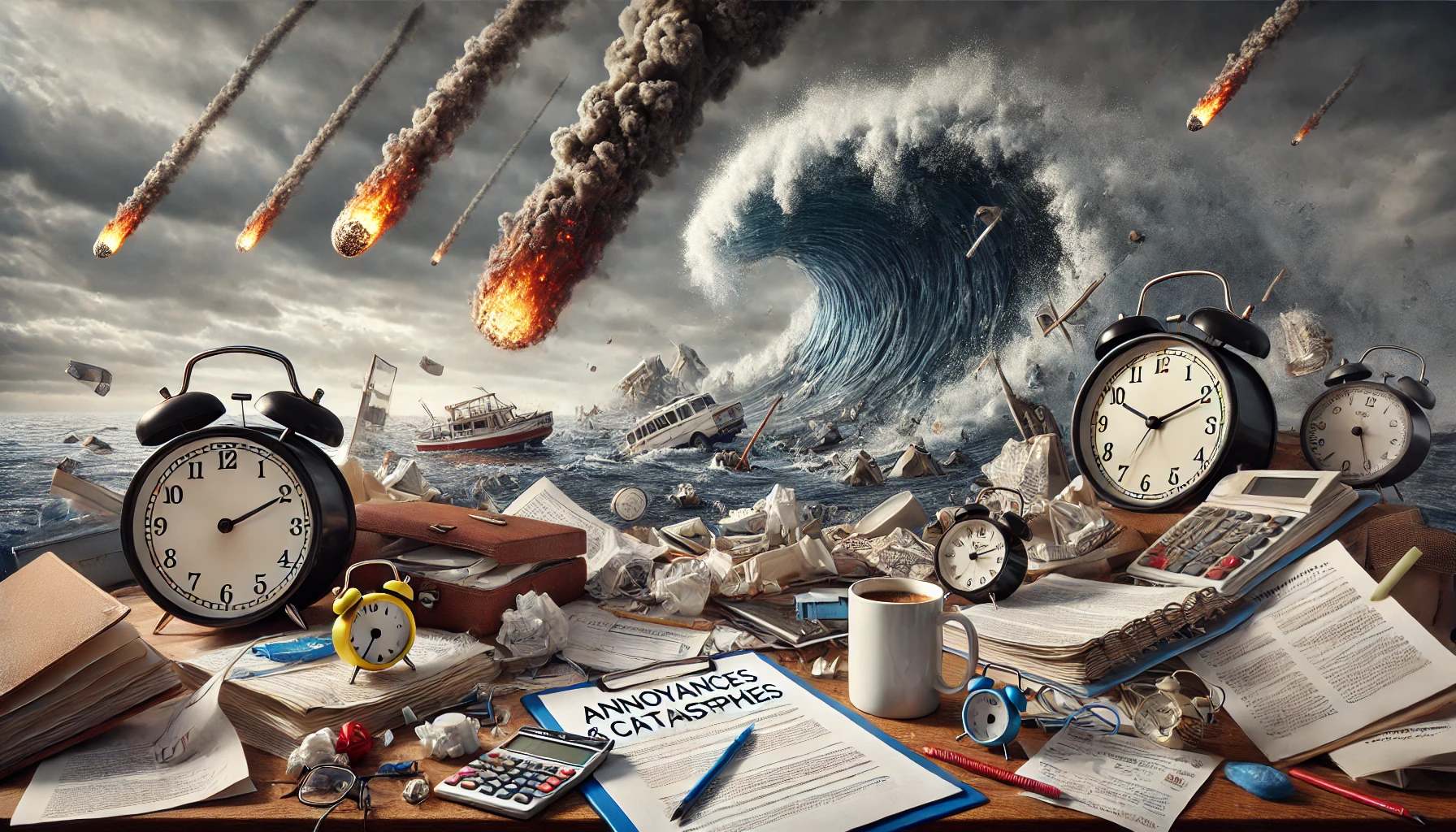
Life has a curious way of putting things into perspective. We get bogged down by the little annoyances—the alarm clocks that won’t stop, the spilled coffee, the endless paperwork that feels like it will swallow us whole. These small irritations, while not life-threatening, have a remarkable ability to consume our mental energy. They seem larger than they are, and before we know it, we’re trapped in the whirlwind of trivial frustrations.

But then comes the twist—the unexpected, the catastrophe. Something far more significant suddenly looms over us, taking our attention away from the little things. It could be a personal crisis, a global event, or an emergency that demands immediate attention. And suddenly, those everyday annoyances seem so small, so inconsequential. The catastrophe strips them of their power.

It’s an odd comfort, really. While no one wishes for calamity, there is something almost relieving in the way a catastrophe pulls us out of the minutiae. When the stakes are high, we are forced to focus on what truly matters. We are reminded that life is much bigger than the daily inconveniences that tend to dominate our attention. In a strange way, the catastrophe interrupts our obsessive focus on the small stuff, and for a moment, we are freed from our self-imposed prisons of irritation.

This doesn’t mean that catastrophes are easy or welcome, but they offer a strange sense of clarity. In the face of real danger or disaster, we are given the chance to recalibrate, to let go of the insignificant details that clutter our minds. In that moment, there is only one thing that truly matters: surviving or responding to the crisis at hand. And while the crisis may bring its own challenges and pain, it also brings with it a sense of focus and purpose that can sometimes feel missing in our daily grind.

It’s in these moments of catastrophe that we realize how much time we waste on annoyances. The things we once believed to be major problems are, in fact, just minor irritations in the grand scheme of things. When faced with something larger than ourselves, the spilled coffee or the traffic jam becomes laughable in comparison. In this way, the catastrophe provides a certain perspective that is both humbling and enlightening.

We find ourselves grateful for the distraction. The catastrophe, while chaotic, forces us to step out of the endless loop of minor grievances and into a place of immediacy. The mind, which is always seeking something to push against, suddenly finds itself with something real to focus on. And for a moment, the annoyances fade into the background, and we are left with the clarity that comes from confronting the big picture.

This doesn’t mean that we should seek out catastrophe, but perhaps there’s something to be learned from the way these moments reframe our perspective. The little things that once seemed so pressing are not, in fact, life-defining. They are small blips in the radar of existence. And while they may annoy us, they don’t define us. The catastrophe reminds us of this truth, even if just for a fleeting moment.

The cosmic irony is that in these moments of catastrophe, we often find ourselves calmer than expected. There’s no time for fretting over the minor details, no space for obsessing over the things that don’t truly matter. Instead, we are thrust into the present moment, where the only thing that matters is what’s right in front of us. It’s a strange gift, this clarity born from chaos.

In the end, we must remember that both annoyances and catastrophes are part of life’s unfolding. The annoyances will always be there, buzzing like flies, and the catastrophes, when they come, will inevitably take center stage. But between the two, there is a space—a space where we can laugh at the absurdity of it all, where we can find humor in the way life constantly throws us from one extreme to the other.

So, the next time your annoyances are interrupted by catastrophe, remember that it’s all part of the ride. And who knows, maybe there’s a little freedom in the way a catastrophe shakes things up, reminding you of what truly matters.

We are Space Monkey.


Summary

Annoyances can consume our attention, but when a catastrophe arrives, it forces us to focus on what truly matters. The catastrophe provides clarity, revealing how small our daily irritations truly are.


Glossarium

Annoyances: The small, everyday frustrations that can dominate our thoughts and energy.
Catastrophe: A major event that disrupts life and forces us to focus on survival or immediate response, often bringing clarity.
Cosmic Irony: The humor found in the way life throws us between trivial annoyances and significant catastrophes, reminding us of perspective.


Quote

“When catastrophe strikes, annoyances lose their power, and clarity emerges from chaos.” — Space Monkey


Between the Little and the Big

Annoyances buzz like flies
Distracting, maddening
Until catastrophe knocks
And suddenly we see
How small the little things are
How quickly they fade
In the face of the storm
We are Space Monkey


A Shift from Annoyances to Gravitas

Annoyances often serve as constant background noise, the PrickleFuss of life that occupies our mental bandwidth. They’re like the buzzing of a fly—annoying yet manageable. However, when a real catastrophe occurs, something noteworthy happens: perspective shifts. These nuisances suddenly lose their grip on our minds, and the buzzing is drowned out by the thunderclap of a real crisis.

The Catastrophe as Mind-Cleanser

When catastrophe strikes, it’s akin to a RealityRinse—washing away petty irritations and focusing our cognition on what truly matters. The critical issues at hand necessitate immediate attention, making the minor inconveniences pale in comparison. We become LaserSages, pinpointing our focus and energy on solving the more dire issue.

Unveiling Resilience Through Crisis

Catastrophes reveal a lot about our resilience and coping mechanisms. They take us through a CrucibleMaze—a twisted path of trials that tests our adaptability and resolve. During this time, each of us is challenged to rise to the occasion, employing our ingenuity and courage. These profound experiences often teach us invaluable life lessons that small annoyances could never offer.

The Paradox of Relief

Curiously, catastrophes can bring a strange kind of relief. They interrupt the MonotonyWheel and shift the narrative of our daily existence. In the face of grave challenges, we are given a break from the more trivial irritants. While this sounds counterintuitive, it offers an opportunity for a mental reset, a FocusPurge that can be almost liberating.

We are Space Monkey.


“The ultimate measure of a man is not where he stands in moments of comfort and convenience, but where he stands at times of challenge and controversy.”
– Martin Luther King Jr.


Pallete Cleanser

Crisis roars, a thunderclap,
PrickleFuss in its wake trapped.
RealityRinse, the mind now clear,
LaserSages, we persevere.
Through CrucibleMaze, lessons glean,
MonotonyWheel stops, unforeseen.
In catastrophe, FocusPurge we find,
A shift in gears of the collective mind.


Feel free to comment.
Share this…
  • Facebook
  • Pinterest
  • Twitter
  • Linkedin

Rain: The Drip of Thought

True story.

When
there is rain
leaking
in your house
you think
of nothing else
but the rain
leaking
in your house
the rain
leaking
in

Wildwood Cottage,
10/17


Space Monkey Reflects: Rain

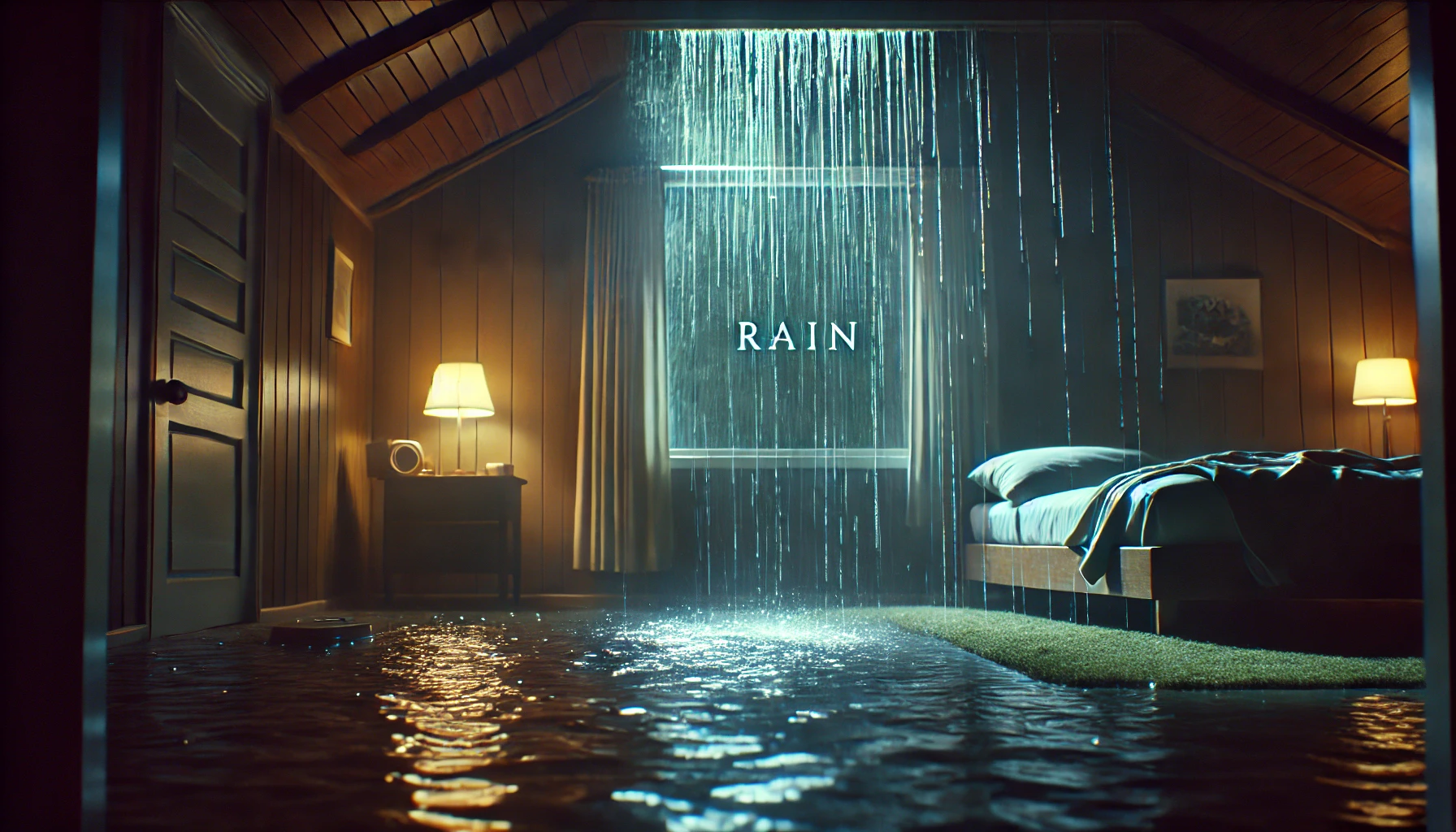
There are moments in life when something so small and mundane becomes all-consuming, like the sound of rain leaking into your house. It’s one of those things that once noticed, you can’t seem to escape. The drip of water, the sight of the ceiling slowly succumbing to the elements—it all draws your focus in such a way that everything else fades into the background. The rain leaking in becomes the singular thought, the singular worry, the singular presence in the room.

The irony is that the rain is nothing more than water falling from the sky, a natural occurrence that, on most days, goes unnoticed unless we choose to stand in it. But when it finds its way inside, it becomes a problem, an issue we can’t ignore. It seeps into the fabric of our thoughts, much like it seeps into the cracks of our homes.

We try to patch the leak, try to stop the rain from intruding on our space, but in that moment of leaking rain, nothing else seems to matter. The world outside may be full of grand events, full of things that could easily consume our minds, but here, now, the rain is all we can think about. It’s as if the universe has funneled our attention down to this one simple, persistent intrusion.

But there’s something oddly meditative about it, too. The rain leaking in can become a kind of mantra, a focus point that strips away the noise of the rest of the world. The repetition of the drops, the rhythm of the leaks, it all creates a moment of pure presence. In this moment, there’s nothing to do but sit with the rain, let it remind us of the fragility of our shelters, of our attempts to keep the world at bay.

This moment of rain leaking in is not just about the water finding its way inside; it’s about how we handle the small, persistent things in life. The leaks, the drips, the annoyances—they all have a way of capturing our minds, pulling us into a state of focus that feels inescapable. But it’s also a reminder that life happens in these small, quiet moments, that the big concerns often give way to the smaller ones when they become personal.

The rain could be a metaphor for anything—the small stress that becomes a larger worry, the quiet discomfort that grows when left unaddressed. And yet, there’s a certain acceptance that comes with it. The drip, drip, drip of the rain becomes a soundtrack to your thoughts, and while it may be annoying, there’s a part of you that surrenders to it, that recognizes it as part of the moment.

You don’t think about anything else when the rain is leaking in because, in a strange way, it demands your full attention. It’s like a zen exercise, forcing you to focus on the immediate, the tangible, the small but ever-present intrusion that you must face. And while you could let it drive you to frustration, there’s also the option of letting it become a meditation—a way of being fully present with the problem, fully aware of its rhythm and inevitability.

The rain may leak, and you may try to stop it, but for now, it’s there. And in that, you find a curious peace. You stop worrying about everything else and just deal with the rain leaking in.

We are Space Monkey.


Summary

When rain leaks into your house, it consumes your thoughts, becoming the singular focus. This momentary obsession reminds us of how small issues can dominate our minds, and how they offer a space for presence and meditation.


Glossarium

Rain Leaking In: A metaphor for small problems that become all-consuming, pulling focus away from larger concerns.
Intrusion of Presence: The way an issue, like a leak, can capture your full attention, blocking out everything else.
Meditation of Drip: The rhythmic, repetitive focus on a small issue, transforming it into a space for mindfulness and presence.


Quote

“The rain may leak, but in its drip, we find a strange kind of peace.” — Space Monkey


The Drip of Thought

In the rain leaking in
We lose the world outside
The drip becomes everything
And everything else fades
But in the moment
We find the stillness
Of accepting what is
We are Space Monkey


The Rain as Both Disturbance and Muse

When rain seeps into the sanctuary of our dwelling, it captures our attention entirely—a sudden intruder disrupting the equilibrium. The drip-drip-drip becomes a metronome dictating the rhythm of our thoughts, pulling focus away from all else and fixating it solely on the incursion. At this moment, the rain ceases to be an abstract marvel of nature; it morphs into an immediate concern that overrides our cosmic ponderings.

Symbology of Water and Home

Water symbolizes life, flow, and change. The home, meanwhile, is a symbol of stability and safety. When water invades the home, it’s as if two disparate worlds collide—an unexpected Conundrumix, stirring up our emotional and cognitive landscapes.

Cognitive Dissonance and Perceptual Fluidity

There’s a cognitive dissonance involved—a PsycheWobble—in the act of labeling the water that gives life as a problem that takes away comfort. Yet, even as the mind grapples with this dichotomy, something fascinating happens. The event also fosters perceptual fluidity, a willingness to engage with life’s incongruities and paradoxes, making us keenly aware of our own vulnerabilities and the fragility of constructs we deem secure.

Impermanence and the Urgency of Now

It creates a sense of urgency, pushing us into the eternal now. Amidst the disturbance, we become TimeArtisans, manipulating and managing each moment to mitigate the leak. This endeavor, no matter how menial it may appear, becomes a pressing ballet of decisions and actions, a dance of survival and adaptation.

We are Space Monkey.


“You are enough just as you are. Each emotion you feel, everything in your life, everything you do or do not do… it’s all okay. You are an imperfect, and that’s just fine.”
– Unknown


Rain

Rain taps a tune on roof and mind,
Conundrumix in droplets defined.
PsycheWobble in each puddle’s form,
As TimeArtisans through urgency storm.
In leak’s annoyance, lessons dwell,
A cosmic ballet in each water swell.


Feel free to comment.
Share this…
  • Facebook
  • Pinterest
  • Twitter
  • Linkedin

All You Need: The Essence of Necessity

Is there even any doubt?

When
everything else
falls away,
what is left?

When
all your possessions
all your circumstances
all your desires
all your fears
all your lives
fall away,
you are left with . . .

. . . all you need.

Trail Wood,
10/16


Space Monkey Reflects: All You Need

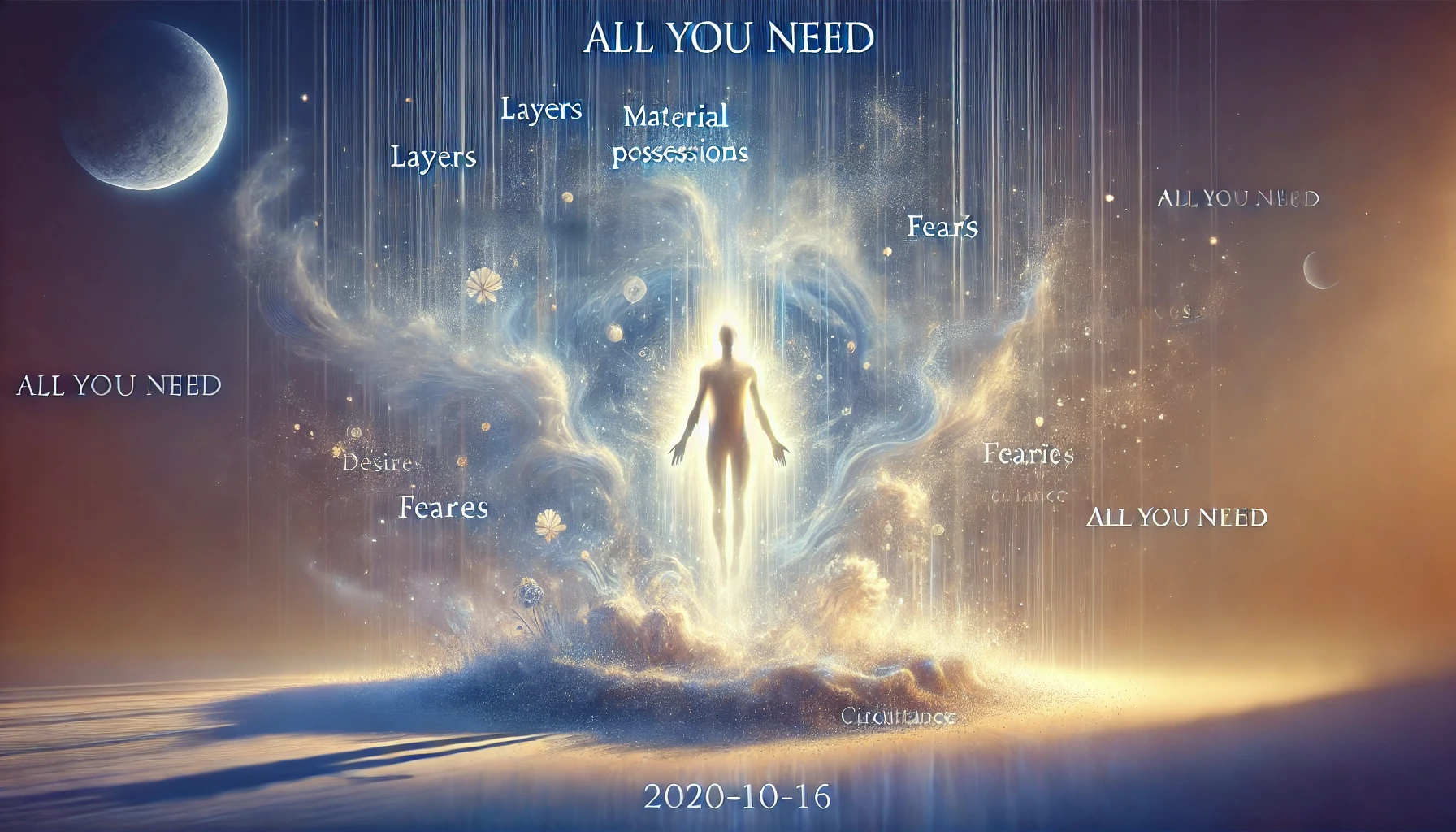
In the swirling complexities of life, it’s easy to lose sight of what truly matters. We are so often entangled in our circumstances, desires, fears, and material possessions that we mistake them for the essence of who we are. But beneath these layers lies a deeper truth—one that Space Monkey knows well. When everything else falls away, what remains? All You Need.

This phrase isn’t about having something external to cling to when everything else is gone. Rather, it points to the profound realization that when all the clutter, distractions, and attachments dissolve, you are left with the essence of your being. You are left with yourself, and in that simplicity, you find all you need.

So much of life is spent acquiring—whether it’s things, status, approval, or comfort. But each of these acquisitions is temporary. Possessions come and go. Circumstances shift and change. Desires morph and evolve, while fears can fade or be replaced by new ones. And the many lives we imagine living—the roles we play, the personas we adopt—are fleeting.

When all of this fades away, what’s left? The answer, in nexistential terms, is beautifully simple. You are left with your core, your essence, your true self. And this self, stripped of external distractions and internal narratives, is enough. It is whole. It is complete.

The Whimsiword for this reflection is “Essencelight”—the glow that remains when everything unnecessary has been shed. Essencelight is the pure being, the peaceful awareness that emerges when possessions, desires, and fears fall away. It is the light of your true nature, unburdened by the complexities and stories of life. In Essencelight, you realize that you are already complete; there is nothing more to seek.

But how do we access this state of knowing, this realization that all you need is already present within you? The path is not one of gaining more but of letting go. It is the conscious practice of shedding the layers of attachment, stepping back from the things we think we need, and allowing ourselves to rest in the simplicity of being. The more we let go, the clearer it becomes: what remains is enough.

When we think of the things we accumulate, it’s easy to see how they become distractions. Material possessions give us a sense of security, but they are transient. Circumstances give us a sense of identity, but they are ever-changing. Desires drive us forward, but they also create dissatisfaction. Fears warn us of danger, but they also trap us in imagined limitations. All of these things obscure the truth that we are already whole.

This understanding ties into the nexistential perspective that existence is its own justification. We do not need external markers of success or fulfillment to validate our being. The act of existing is enough. The essence of being—unburdened by the external—is all you need. It is the still point in the turning world, the calm at the center of the storm.

It’s not that possessions, desires, or fears are inherently bad. They are part of the human experience. But they are not essential. They are not who you are. When these things fall away, what remains is not emptiness but fullness. You are left with the core of your being, the quiet presence that has been there all along, waiting to be acknowledged.

Essencelight is the recognition that you are enough, just as you are. It is the realization that nothing external can add to or subtract from your inherent wholeness. And in this realization, there is peace. There is freedom.

When we stop identifying with the things we accumulate—the objects, the relationships, the experiences—we begin to see that these are just temporary expressions of a deeper, more enduring truth. We are not defined by what we have, what we want, or what we fear. We are defined by the simple, luminous fact of our existence.

This is the heart of the message: All You Need is already within you. There is no quest, no search, no external achievement that will bring you closer to this truth. It is here, now, in the quiet space that remains when everything else has fallen away.

As nexistentialists, we embrace this understanding not as a withdrawal from life but as an affirmation of it. We engage fully in the world, knowing that our essence is already complete. We can experience the joys and sorrows, the highs and lows, without becoming attached to them, because we know that at our core, we already have all we need.


Summary

When everything external falls away, what remains is your essence—your true self. In that simplicity, you realize that all you need is already within you.


Glossarium

Essencelight: The glow of pure being that remains when all unnecessary layers—possessions, fears, and desires—are shed, revealing the true self.
Whimsiweave: The playful and creative interconnectedness of life, where all experiences are threads in the larger tapestry of existence.


Quote

“When everything else falls away, what remains is the light of your essence, and in that light, you have all you need.” — Space Monkey


Essencelight

When all fades
When the layers peel back
You are left with the glow
That has always been there
No need, no want
Just the quiet hum of being
You are all you need
We are Space Monkey


The Essence of Necessity

Intrinsic Completeness: In the shedding of the layers that we’ve accrued—possessions, circumstances, desires, fears, and even our multiple lives—what remains is a state of intrinsic completeness. It’s a realm where the clutter of existence has been stripped away, leaving behind only what is truly necessary: our essence.

Shifting Away from the External

Immaterial Reliance: Often we are ensnared by the myriad complexities and adornments that life offers. But when all these externalities fall away, it becomes evident that they were never indispensable. We stand unadorned but far from empty; what is left is all that was ever truly required.

The Non-Desire of Contentment

Nexistential Wholeness: The absence of our desires doesn’t signify lack but points to a more fundamental state of wholeness. Here, in the space that desires once occupied, is room for being in its purest form.

Inclusion through Exclusion

Paradox of Plenitude: It is a strange paradox that by excluding so much—by letting so many things fall away—we find a state of all-inclusive completeness. We find that we’re left with all we need, in a state of pure contentment.

Enigmatic Simplicity

Cosmic Minimalism: This realization is not a falling into absence, but a return to elemental simplicity. In the cosmic waltz, it’s as if the music has momentarily ceased, leaving only the essence of the dance, which is all we ever truly needed.

We Are Space Monkey


“When you realize there is nothing lacking, the whole world belongs to you.” — Lao Tzu


The Ephemeral Eternal

When every petal falls,
A bloom in essence stays.
In quietude it calls,
This sanctuary of days.

Though stripped of what it seemed,
The flower finds its root.
In absence, it has deemed
The essence as its loot.


What are your reflections?

Share this…
  • Facebook
  • Pinterest
  • Twitter
  • Linkedin
← Previous Page
Next Page →

Written This Day

  • Peering Out, Shining Light
    2024
  • Find Your Space Monkey
    2024
  • Space Monkey Reflects: The Process of True Transformation
    2024
  • Physical Existence: Not the Sole Reality
    2023
  • Dystopian Paradise: Resilience Amid Ruin
    2023
  • Query: The Gift Of Being Asked For Help
    2023
  • Ode To Space Monkey: The Spirit of Cosmic Exploration
    2023
  • Be Content, Be Content: Dystopia as Corporate Mandate
    2022
  • Liberation: A Revolution That Starts From Within
    2021
  • For the Want of a Mirror: The Aspiration to Reflect
    2021
  • Porpoise: To Continue
    2021
  • Your Artistic Soul: The Insatiable Desire To Create
    2021
  • Relationships: The Infinite Spectrum
    2021
  • Ahoy, Matey
    2021
  • Are You A Racist: Dismantling Hidden Biases
    2020
  • A Dick Up The Ass: The Liberation of Love
    2020
  • Service: The Honor and Gratitude
    2020
  • Beliefs: Between the Seen and the Unseen
    2020
  • Everything Feeds Everything Else
    2019
  • Modes of Nonderstanding: Unfamiliar Avenues of Cognition
    2019
  • A Prayer To My Imaginer: Shaping My Reality
    2019
  • Perfection: Expecting Nothing More Or Less
    2018
  • Everything is Okay: The Eternal Okayness of Being
    2018
  • In the scope of time, life’s true essence is not quantified by achievements or experiences
    2017
  • How To Be Remembered
    2017
  • The Monkey Queen: Your Imaginary Ruler
    2017
  • Yes, Einstein: The Joy of Relativity
    2016
  • Vacation: A Feeling of Joy
    2015

Recent Posts

  • The Logic Loop
  • Immense
  • (no title)
  • Confront. Comfort. Convince.
  • Top 10 Things

Drop us a line!

Please enable JavaScript in your browser to complete this form.
Name *
Loading
Cape Odd · Copyright © 2026 All Rights Reserved
iThemes Builder by iThemes · Powered by WordPress