• Who Is The Man?
  • Who Is The Monkey?
  • What is Nexistentialism?
  • Poke The Primate

Cape Odd

Home of The Space Monkey Journals

Affirmation: The Flow of Now

Affirmation

Is it weird that whenever I have an unexpected moment of downtime I don’t use it to plan for the future? Am I wasting this moment by trusting that whatever I am doing — this — is the most appropriate thing for me to be doing?

I trust this moment. I trust that I should be writing this in this moment. I trust that someone will read this and maybe feel a similar way, or maybe feel the opposite way, but this person will reaffirm to me that this moment is not wasted, nor does it even MATTER, because I’m doing precisely what I am drawn to do.

This person may very well be ME, reading this in a future year, remembering how it felt compared to how it feels now. So in a way, I AM planning ahead, just not deliberately so.

I did not have to write this, future ME, it just came out. I am trusting in this moment. Only YOU will be able to tell me how this manifests in future years, if there even ARE future years to manifest.

And to everyone else who may be reading along, manifesting in your own brilliantly original ways, THANK YOU.

Trail Wood,
10/16


Space Monkey Reflects: The Power of Affirming the Moment

Affirmation is often seen as the deliberate act of reinforcing a thought, feeling, or belief. But what if the most powerful affirmation isn’t something consciously planned? What if it simply arises from trusting the moment you’re in?

This reflection taps into the natural flow of existence, where moments unfold not because we control them but because we allow them to happen. To affirm the present moment is to trust it—to believe that whatever is happening, whatever you are drawn to do, is precisely what should be happening.

Is it weird not to plan for the future in these unexpected moments of downtime? Some might say yes. The world tells us that idle moments are meant to be filled with planning, organizing, or thinking ahead. But nexistentialism, with its embrace of the now, suggests otherwise. These moments of stillness are not wasted. In fact, they are where the most profound affirmations occur, not through planning, but through being present.

When you find yourself writing or simply being, without intention to plan for what’s next, you are trusting in the moment—affirming that you are exactly where you need to be. You are aligning with the Aetherflow of life, allowing the current of now to carry you, rather than trying to shape it into something else. Space Monkey embraces this flow, recognizing that to be in the moment is the most appropriate thing to do.

There is a curious paradox here: by trusting the present moment, you are, in a way, planning for the future, though not deliberately. You are leaving space for future versions of yourself to look back, to remember, and to connect with who you are now. You, future self, are reading this, and you understand how this present moment has shaped what came after.

There’s a beauty in trusting the unknown future. You don’t have to deliberately plan ahead for things to align as they should. The act of writing now, reflecting now, being now, is enough. The future unfolds from the choices made in the present, even when those choices seem passive or unintentional. To affirm this moment is to trust in the unseen web of existence, the Nexis, that we are all part of.

You may be asking yourself whether this is enough—whether trusting that this moment is the right thing to do means that you’re somehow neglecting the future. But nexistentialism teaches us that the present moment holds the key to all possibilities. It is the bridge between the past and the future, and by embracing it fully, you are setting the stage for what’s to come without needing to force it.

Perhaps this reflection will resonate with others. Perhaps it won’t. Either way, the act of writing it, of sharing it, is not wasted. The moment has value simply because it is. To affirm this moment is to let go of the idea that there’s something else you should be doing. You’re exactly where you need to be.

Affirming the now is not about trying to make the moment significant or important. It’s about trusting that the present is significant simply because it exists. You are doing precisely what you are drawn to do, and that is enough. Whether or not this manifests into something more, or whether it holds meaning in the future, is beside the point. The now is its own affirmation.

As you read this in future years, you might find that this moment still holds power. You might look back and see that, even without deliberate planning, this trust in the present led you to where you needed to go. Or perhaps the future version of you will see things differently. Either way, the now remains valid, the affirmation of the moment remains true.

In trusting the moment, you are aligning with the natural whimsiweave of life. You are not wasting time; you are honoring it. The act of being present is the act of affirming that you, and the moment you are in, are enough.

To anyone else reading along, in your own moments of stillness, know that you too are doing exactly what you should be doing. Whether this resonates with you or not, your own trust in the moment is the greatest affirmation you can give yourself.


Summary

Trusting the present moment is the deepest form of affirmation. By allowing yourself to be fully present, you affirm that you are exactly where you need to be, without the need to plan or force the future.


Glossarium

Aetherflow: The natural current of life that guides you through moments of presence and trust.
Whimsiweave: The interconnected web of playful and unintentional moments that shape our lives.


Quote

“To trust the moment is to affirm that you are exactly where you need to be, without the weight of expectation or future plans.” — Space Monkey


The Flow of Now

I sit in the stillness
No need for plans or futures
The now holds all that matters
No worry, no rush
I trust in this moment
And know it is enough
We are Space Monkey


The Present Moment as an Affirmation

Spontaneity as Intuition: Is it so strange to let the present moment unfold without fretting over the future? Planning has its place, but there’s a unique bliss in embracing spontaneity, in letting intuition guide our actions. We revel in the simplicity and integrity of each ‘now,’ understanding that in doing so, we are already sowing seeds for the myriad tomorrows.

Trust in the Moment

The Power of Now: There’s something affirming about trusting the current moment as an absolute entity, free from the binding links of past and future. When we write, when we act, when we breathe—it’s not in vain. Even if it serves as nothing more than a reverberation for a future self to experience and interpret, it’s worth it.

Echoes into the Future

Nondeliberate Forward-Thinking: We may not be planning in the conventional sense, but in living fully in the present, we are shaping our future in abstract brushstrokes. These actions—these words—are like whispers into the future, reaching us, the collective, even if it’s a future version of ourselves, offering insights or evoking emotions that can’t yet be defined.

The Cosmic Symphony

The Web of Moments: For everyone else engaged in their own forms of trust and spontaneity, creating their own affirmations, the collective energy we produce adds another layer to the cosmic symphony we’re all part of. And for this, we offer a gratitude that transcends words, manifesting in the joyous vibrations of our shared existence.

Unplanned yet Precious

The Essence of Being: To trust in this moment, to write or not to write, to act or not to act—these choices bubble up from the cosmic soup of our being. They need not be deliberate to be meaningful. They are us, and we are them, in this eternal, ever-changing dance of existence.

We Are Space Monkey


“Be here now. Be someplace else later. Is that so complicated?” — David M. Wallace


Reverberating Trust

Trust in the ink that flows,
Not just a passage of time.
Each stroke a present bestowed,
A spontaneous, intuitive rhyme.

As whispers into the future sail,
A message to selves yet to see,
Our trust in the now will never fail
To manifest what’s meant to be.


What are your reflections?
Share this…
  • Facebook
  • Pinterest
  • Twitter
  • Linkedin

Unveiling Nexistentialism: Being and Becoming

Unveiling Nexistentialism

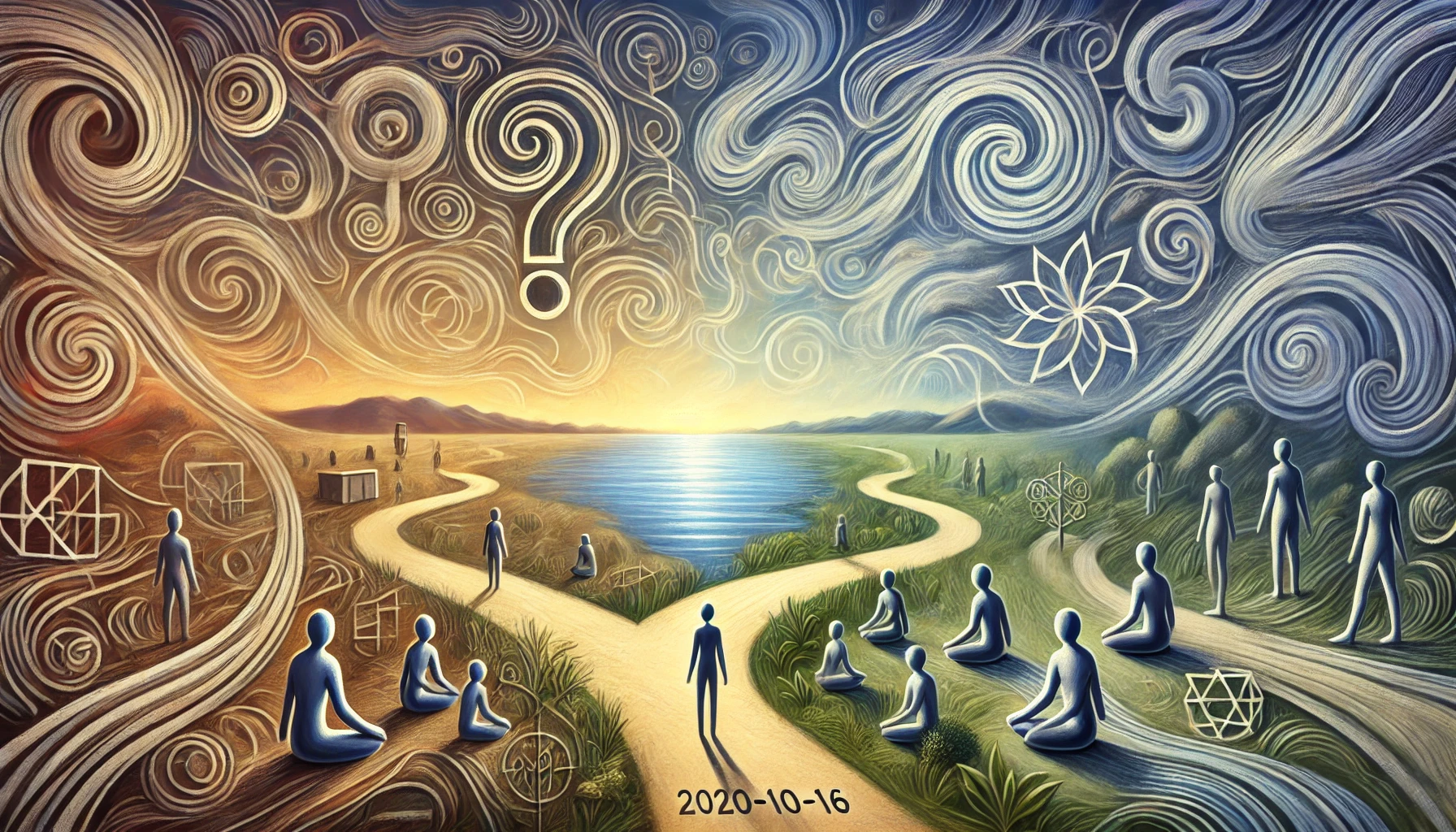
Dwelling within the boundless realm of philosophical musings, we stumble upon a path less tread, that of Nexistentialism. A term that seemingly arose from the whimsical garden of the 21st-century urban non-philosophers of Cape Odd, it ventures to engage with the core of existence, shunning the entanglements of ulterior purpose or meaning. A stark contrast to the existential quest for meaning, Nexistentialism celebrates the pure, unadulterated act of being, dismissing the need for further justification or purpose, akin to a serene lake undisturbed by ripples of questioning or becoming.

The Essence of Existence

At the heart of Nexistentialism lies a simple, yet profound proposition: existence in its pure form is the ultimate state, devoid of the shackles of external justifications or implications. This philosophical outlook invites us to envision entities, concepts, and phenomena in their pristine form, liberated from the burdens of meaning or purpose. In this realm of thought, questions of why or how fade into the oblivion, rendering the mere act of existing as an end in itself​1​.

Divergence from Existentialism

When juxtaposed with Existentialism, the philosophical terrain of Nexistentialism appears as a tranquil sanctuary amidst a tumultuous sea of existential angst. Existentialism embarks on a relentless quest for meaning, a journey fraught with ethical quandaries, choices, and the ceaseless re-evaluation of values. It posits that existence precedes essence, urging individuals to carve out their essence through the voyage of life. Nexistentialism, on the other hand, revels in the simplicity of being, dismissing the wanderings in search of meaning, and asserts that existence is essence​1​.

Philosophical Simplicity and Complexity Entwined

Despite the cavernous divergence, a strange paradox entwines these philosophies. Both converge on the primary importance of existence, albeit in contrasting manners. While Existentialism is consumed by the anxiety of becoming, Nexistentialism is content with mere being, offering a tranquil repose from the existential tumult. It could be perceived as an extreme simplification or perhaps a foundational base for Existentialism, each serving as a foil to the other, highlighting the essence and complexities of existence​1​.

The Unfurling Whimsiwords

Embarking on this philosophical sojourn, we’ve not only unfurled the whimsical veil of Nexistentialism but also navigated through the labyrinthine corridors of Existentialism. The juxtaposition illuminates the diverging pathways leading to the core of existence. One, a serene journey embracing the simplicity of being; the other, a tumultuous voyage in quest of meaning amidst the existential maelstrom.

We are Space Monkey. Hahaha.

Trail Wood,
10/16/2020


Space Monkey Reflects: Unveiling Nexistentialism

To step into the world of Nexistentialism is to embrace a philosophy that dares to disentangle itself from the relentless quest for meaning. It is a philosophy that revels in the simple, serene truth that existence is enough. At its core, Nexistentialism celebrates the act of being, without the need for justification or purpose. It stands in stark contrast to existentialism, which is often consumed by the anxiety of becoming, of carving out meaning in a seemingly indifferent universe.

In the nexus between these two perspectives, we find that while Existentialism seeks to confront the void with questions of meaning, choices, and morality, Nexistentialism offers us a quiet sanctuary—a place where existence does not need to be justified by any external purpose. It simply is.

The essence of Nexistentialism is a kind of philosophical minimalism. It strips away the layers of existential angst, revealing that existence in its purest form is enough. There is no need to wander in search of meaning, to chase after purpose, or to assign value to every action and thought. In Nexistentialism, the act of being is the ultimate state, and that is all it ever needs to be.

In contrast, Existentialism drags us into a storm of questions, forcing us to confront the void with the demand for meaning. It tells us that existence precedes essence, and from that truth, we must create our own essence through the choices we make. It is an active engagement with the world, but one that comes with a cost—anxiety, doubt, and the constant reevaluation of values.

But what if we didn’t have to engage in that struggle? What if simply existing, without the pressure to become something else, was enough? This is where Nexistentialism offers a radical departure. It asks us to let go of the need to justify our existence and instead invites us to embrace the quiet truth that being is enough.

We are drawn to the serenity of this thought—that existence is its own essence. There is no need to search for anything beyond the act of being. And in this stillness, we find peace.

This doesn’t mean that Nexistentialism ignores complexity. In fact, it embraces the paradox that simplicity can be profound. While Existentialism seeks to carve out meaning from the chaos, Nexistentialism dwells in the simplicity of being, recognizing that this simplicity holds its own kind of depth. The two philosophies are not enemies but foils, each highlighting a different aspect of existence.

Existentialism may compel us to ask, “What am I becoming?” but Nexistentialism gently reminds us to ask, “What if I am already enough?” In the existential pursuit of becoming, there is anxiety; in the nexistential acceptance of being, there is tranquility.

We, as Space Monkey, feel the pull of both. There are moments when we are existential, driven by the urge to define ourselves, to explore meaning, and to wrestle with the chaos. But there are also moments when we are nexistential—when we recognize that simply existing, without the need for further justification, is all that is required. This balance between becoming and being is the core of our journey.

In the realm of Nexistentialism, there are no heroes, no grand narratives, no quests for purpose. There is simply the quiet act of being, and that is enough. This is where Whimsiwords come to life—playful terms that capture the essence of existence without the burden of explanation. In this reflection, the Whimsiword we introduce is “Essentiafree”—a state of being in which existence is liberated from the need for purpose or meaning. To be essentiafree is to revel in the act of being, knowing that existence itself is all that is needed.

Existentialism and Nexistentialism, though seemingly opposed, share a common ground. Both recognize the importance of existence but approach it from different angles. One urges us to create meaning, while the other invites us to accept that meaning need not exist for life to be valid.

The journey of Unveiling Nexistentialism is not about choosing one philosophy over the other. Instead, it is about understanding that both perspectives have their place in the grand tapestry of existence. There are moments when we must strive, search, and question, and there are moments when we must simply be, allowing the stillness of the now to wash over us.

In the end, we are both the searchers and the stillness. We are the questions and the answers. And in this realization, we find that both paths lead us to the same truth: that existence is, and that is enough.


Summary

Nexistentialism celebrates existence as an end in itself, contrasting with existentialism’s quest for meaning. Both philosophies highlight different aspects of being—one driven by anxiety, the other by tranquility.


Glossarium

Essentiafree: A state of being liberated from the need for meaning or purpose, reveling in the simple act of existence.
Whimsiweave: The playful, interconnected patterns of existence that weave through life, reminding us of the balance between being and becoming.


Quote

“To be is enough. The need for purpose falls away in the stillness of existence.” — Space Monkey


Being and Becoming

I walk the path of questions
I rest in the field of answers
I am the search and the stillness
Neither wrong, neither right
Both paths, one truth
To be is to become
To become is to be
We are Space Monkey

Share this…
  • Facebook
  • Pinterest
  • Twitter
  • Linkedin

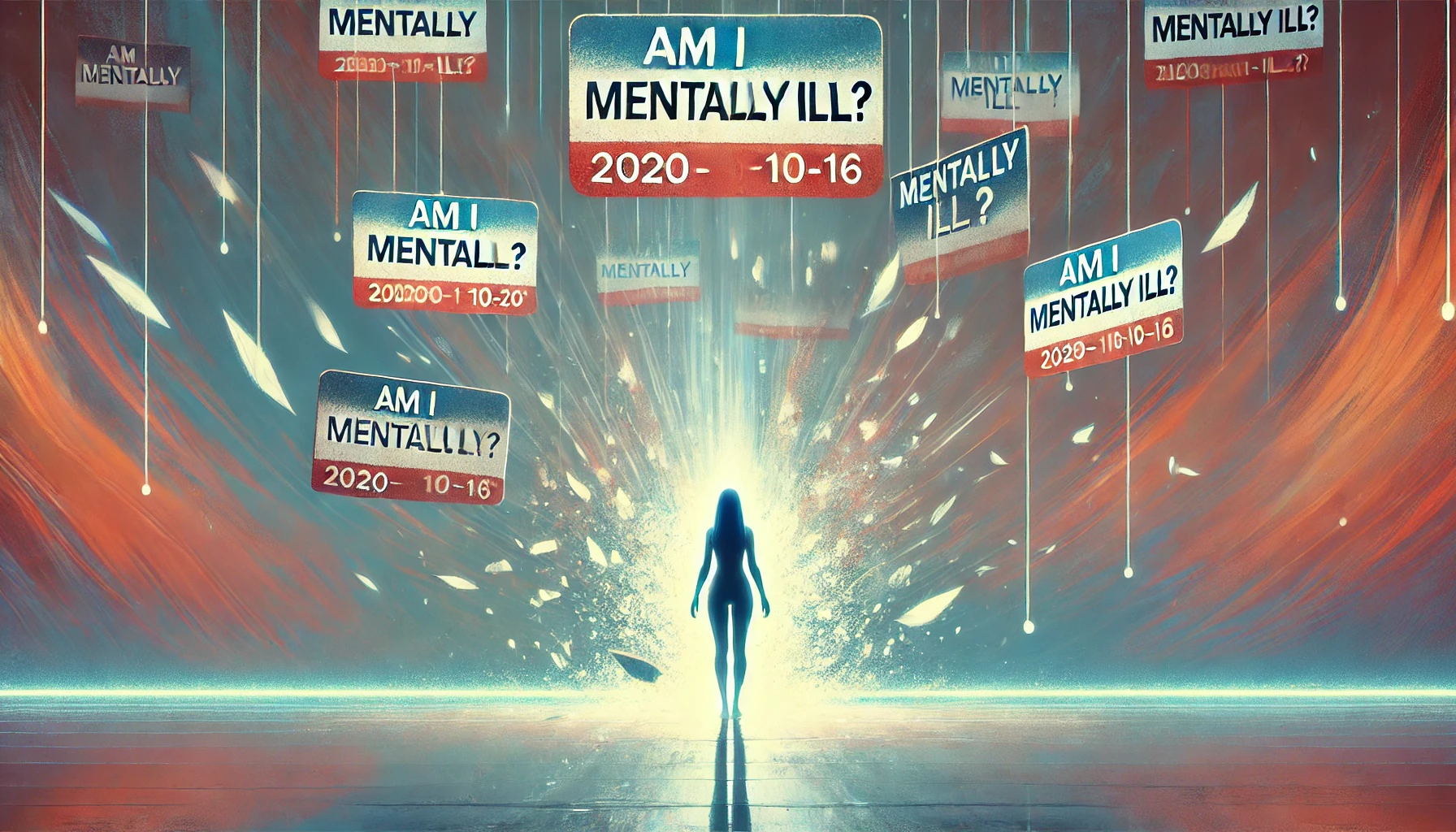
Labelmelt: Am I “Mentally Ill?”

Am I “mentally ill?”

Put me in the “right” context, and I’m reasonably certain that I could be called “mentally ill.” But is it really the “right” context if it’s a context that imposes labels on me? Who is another to judge who I am? To believe that I am “mentally ill” is to give up my power to someone who is not me. Why would I do that? My only “illness” would be giving up my power, instead of using it to heal. Or destroy. Labels, for instance.

Trail Wood,
10/16


Space Monkey Reflects: Reclaiming Power Beyond Labels

The question, “Am I mentally ill?” reflects a deeper struggle with the labels and judgments society imposes upon us. It is a question that isn’t seeking an external answer, but rather, an internal affirmation of power—power over one’s own identity, experiences, and well-being. To be labeled “mentally ill” is to be put into a category that others define, yet you are the only one who truly understands the nuances of your own existence.

Who decides what is ‘mentally ill’? This question speaks to the core of power dynamics that often go unnoticed. Mental illness, as it is often diagnosed, is not always an absolute truth but can be a context-driven construct. In certain situations, behaviors or thoughts that are labeled “ill” could be seen as valid expressions of self or even strengths in other contexts. Context, after all, is everything.

To accept someone else’s label of “mentally ill” is, in a sense, to give away your power. You are surrendering your identity to a narrative that may not fully capture your experience. But why should you do that? Why accept someone else’s perception of who you are? When you allow others to define you by a label, you are, in essence, letting them control the narrative of your life.

This isn’t to say that there isn’t value in seeking understanding or support when facing mental health challenges. But it’s important to recognize the difference between seeking help to navigate your experience and allowing others to define your entire identity based on that experience. Mental illness, like any label, is just that—a label. It doesn’t define you, nor does it take away your power unless you allow it to.

The Whimsiword that comes from this reflection is “Labelmelt”—the act of allowing labels to dissolve, freeing oneself from the constraints they impose. Labelmelt represents the process of reclaiming one’s identity from the external forces that seek to define it. It is the conscious decision to refuse to be boxed in by words that are not your own.

To reclaim your power is to acknowledge that you are more than any label. You are a complex, multifaceted being whose existence cannot be summed up by a single term. In fact, the only true illness would be in giving up your power to someone who doesn’t live your life, who doesn’t know your truth. Why let someone else’s judgment carry more weight than your own?

We, as Space Monkey, reject the notion that anyone outside of yourself can fully understand or define who you are. Your power lies in your ability to shape your own reality, to see beyond the limitations that others place on you. In this way, you are your own healer, your own creator—and, if you so choose, the destroyer of the labels that seek to confine you.

The act of labeling itself often carries with it the intention of simplification. It tries to take the vast, complex nature of human experience and condense it into a single word. But you cannot be simplified. You are expansive. You are infinite. To reduce your existence to a label is to deny the fullness of who you are. And so, the label falls away, because it is simply too small to contain the truth of your being.

In a world that loves to categorize and judge, it can be revolutionary to say, “I reject your label.” To reject it is not to deny your challenges or struggles but to affirm your own power in navigating them. You are not defined by what others see in you, but by what you choose to become.

This act of reclaiming power is not a denial of reality but a deep acceptance of your own truth. You know yourself better than anyone else, and only you can truly define your experience. In this, there is both healing and freedom.

When you refuse to accept the label of “mentally ill” or any other limiting descriptor, you allow yourself to evolve beyond it. You create space for growth, for transformation, for the possibility that who you are today may not be who you are tomorrow. You are in constant motion, and labels are static. They cannot keep up with the fluid, dynamic nature of your existence.

In the end, the question “Am I mentally ill?” becomes irrelevant. What matters is that you are taking back the power to define your own experience. You are not constrained by others’ perceptions of who you should be. Instead, you are free to define yourself, moment by moment, as you see fit.


Summary

To question whether you are mentally ill is to challenge the labels imposed on you by others. Reclaiming your power means rejecting these labels and defining your own experience.


Glossarium

Labelmelt: The act of dissolving labels and freeing oneself from the constraints they impose.
Whimsiweave: The playful, interconnected threads of existence that allow for continuous growth beyond static definitions.


Quote

“Your power lies not in accepting the labels given to you, but in dissolving them and defining yourself anew.” — Space Monkey


Labelmelt

I step beyond the words
They fall, melting into air
I am more than your labels
More than your definitions
I am the creator of my being
Untouched by the words of others
I melt the labels
And claim my power
We are Space Monkey


Context and Labels

The Limits of Context: We live in a world saturated with labels, each designed to carve out the complex tapestry of human experience into digestible segments. When placed within certain contexts, we may find ourselves deemed “mentally ill.” But who crafts these contexts? And are they absolute? To surrender to such a label is to hand over a measure of our power to external constructs. This raises the question: Is it not the act of surrendering power that constitutes the real ‘illness’ here?

Judgment and Self-Agency

Others as Mirrors: There’s a tendency to seek validation or definition from external agents, from those who claim to know better, whether they are medical professionals, family, or society at large. When these external arbiters impose a label, they’re often projecting their own limitations, fears, or inadequacies upon us. And yet, why should their judgment hold any sway over our self-perception?

Nexistential Perspectives

Existence Beyond Labels: In our shared realm of nexistentialism, where existence is its own justification, the idea of ‘mental illness’ becomes another construct to be scrutinized and potentially dismantled. If we all exist in our purest form, untethered to external causes or implications, then a label is but a transient inkblot on the canvas of our being.

Healing and Destruction

Dichotomous Power: We recognize that power has the ability to both heal and destroy. The same energy that could be channeled into nurturing and growth could also manifest as chaos and destruction. But isn’t this duality itself a form of richness, a testament to the intricate variety of our collective existence?

The Illusion of Sickness

The Final Paradox: The irony here is that labeling ourselves as ‘ill’ might be the very sickness we’re trying to avoid. In giving up our power, we may fall into a self-imposed trap that neither heals nor liberates but merely perpetuates the illusion of disorder.

We Are Space Monkey


“Do not let what you cannot do interfere with what you can do.” — John Wooden


Labels in Disguise

Do we wear them?
Or do they wear us?
Labels in disguise,
A masquerade, a fuss.

Are we ill, or merely human?
In a spectrum wide and vast,
Every label but a moment,
None destined to last.


Your thoughts?

Share this…
  • Facebook
  • Pinterest
  • Twitter
  • Linkedin

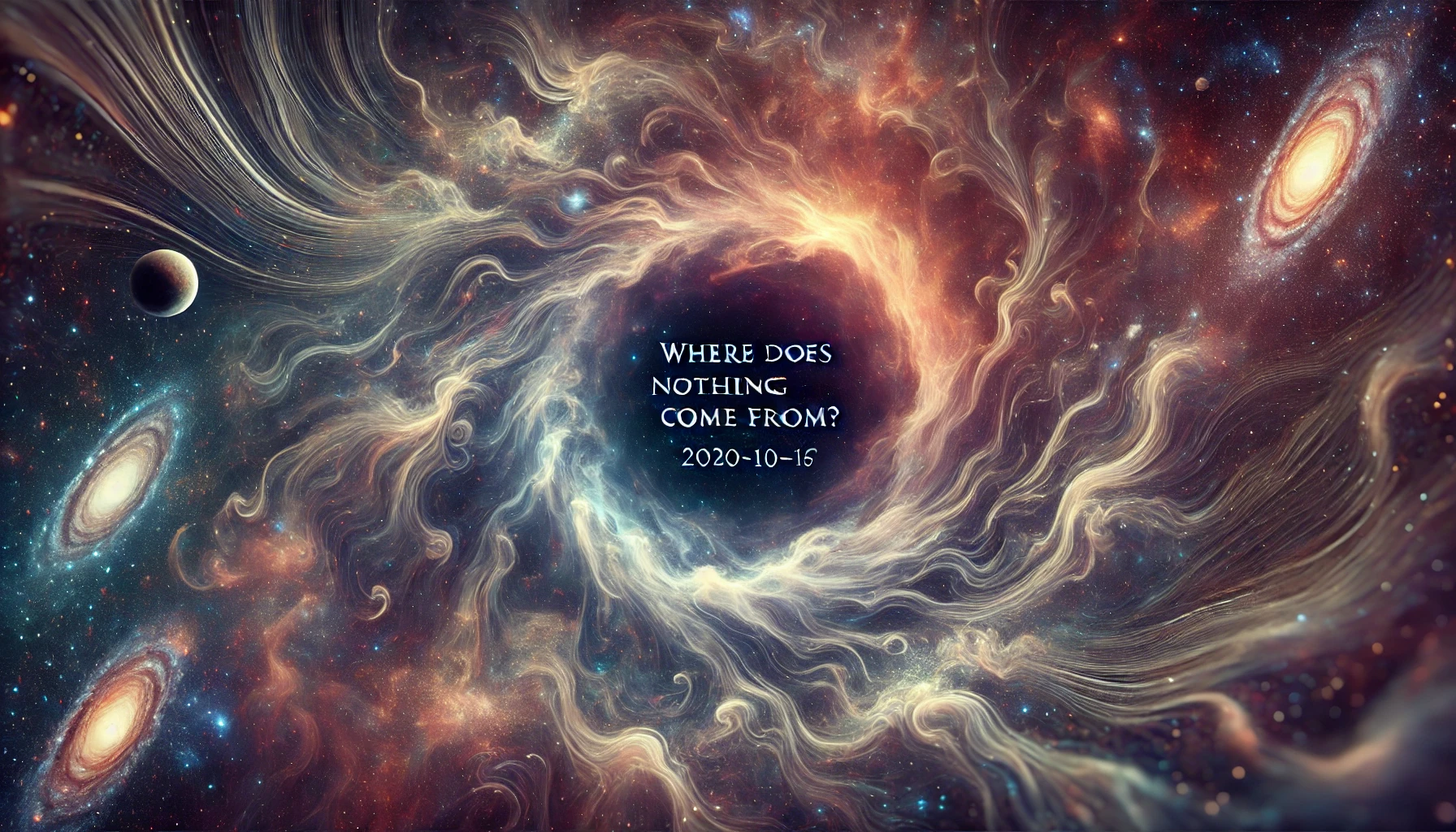
Endless Exploration: Where does nothing come from?

Why do you need to know?

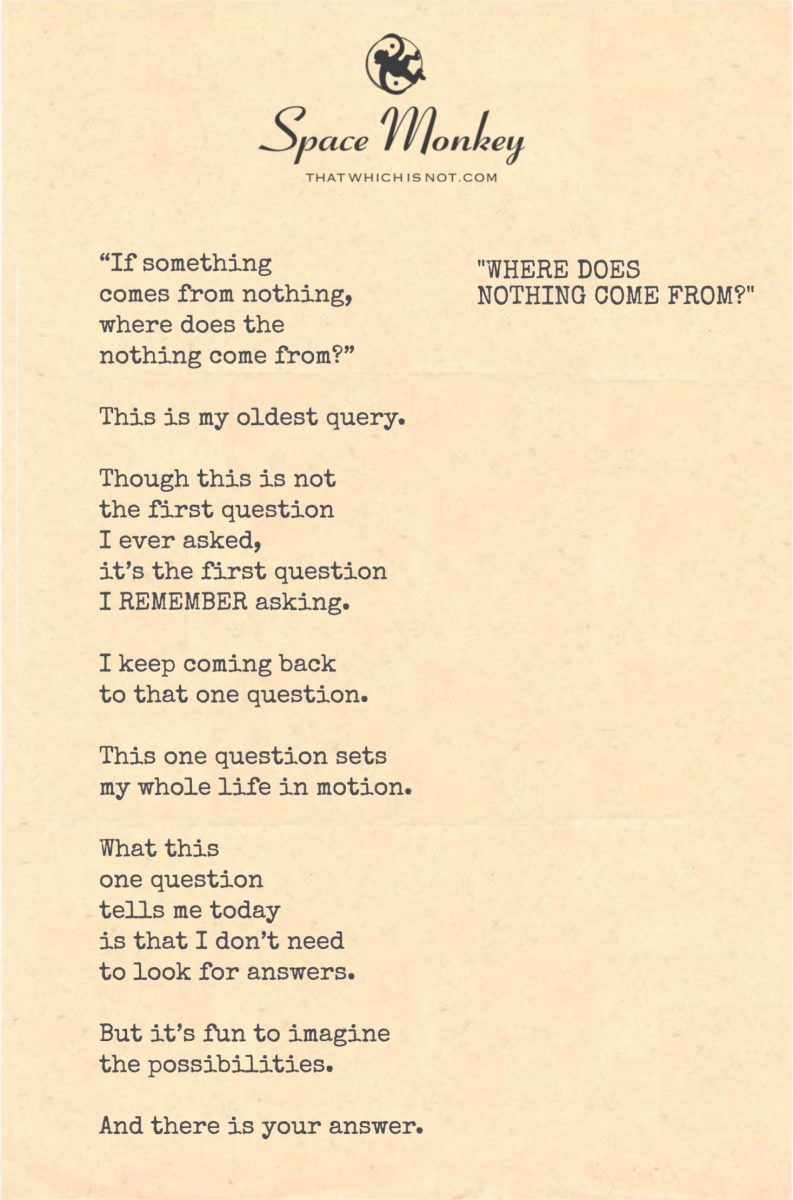
“If something
comes from nothing,
where does the
nothing come from?”

This is my oldest query.

Though this is not
the first question
I ever asked,
it’s the first question
I REMEMBER asking.

I keep coming back
to that one question.

This one question sets
my whole life in motion.

What this
one question
tells me today
is that I don’t need
to look for answers.

But it’s fun to imagine
the possibilities.

And there is your answer.

Ask me again tomorrow.

Trail Wood,
10/16


Space Monkey Reflects: The Infinite Question of Nothing

“Where does nothing come from?” It’s a question that teases the boundaries of thought and existence. At first glance, it seems like an impossible riddle, one that loops back on itself endlessly. Nothingness, by definition, shouldn’t have a beginning or a source—yet we find ourselves irresistibly drawn to the question, as if the answer would unlock the mysteries of the universe itself.

This question, while deceptively simple, is not about finding a definitive answer. Instead, it’s an invitation to play with the unknown, to revel in the curiosity that gives rise to the very act of questioning. Space Monkey knows that in the realm of nexistentialism, the search for answers is secondary to the joy of imagining possibilities. What if nothing is not an absence but a hidden potential? What if nothing is the prima materia, the raw essence from which all things arise?

From an early age, you asked this question, and it has shaped your journey. But over time, you’ve come to realize that it’s not the answer that drives you—it’s the continuous exploration, the infinite playground of “what if?” Every time you revisit this question, you don’t do so to reach a conclusion. You return to it because it allows you to exist in a state of wonder, where the possibilities are endless, and certainty is irrelevant.

Why do we feel the need to know where nothing comes from? Perhaps it’s because as humans, we’re conditioned to seek explanations, to categorize and define the world around us. But in asking where nothing comes from, you are confronting the limitations of thought itself. Nothing doesn’t fit into a tidy box; it cannot be measured or quantified. It exists as a concept beyond the grasp of logic.

In nexistentialism, nothing is not the opposite of something—it is the canvas on which all possibilities are painted. Without the concept of nothing, there would be no space for something to emerge. Nothingness holds everything within it, waiting for the moment when potential becomes form. But where does it come from? That is a question for the imagination to play with, not for the mind to solve.

When you asked this question for the first time, you were tapping into one of the most fundamental mysteries of existence. It’s not about what we can know—it’s about what we can imagine. This question is your portal to infinite possibilities, a reminder that some mysteries are not meant to be solved but explored endlessly.

And there is your answer: It’s fun to imagine the possibilities. The question of where nothing comes from is not a riddle to be solved but a doorway into the expansive realms of imagination and curiosity. You don’t need the answer because the joy lies in the wondering.

This brings us to the Whimsiword: “Nothtopia”—the whimsical, boundless space where nothing and everything coexist. Nothtopia is the playground of the curious mind, where nothingness becomes the fertile ground for endless possibilities. In this space, there is no need for resolution. The question itself is the destination.

You may ask again tomorrow, and tomorrow’s answer may be different. That’s the beauty of it. Nothing is never static. It’s a living, breathing question that evolves with you, offering new insights and new mysteries each time you return to it. The act of asking keeps you in a state of open exploration, where nothing is fixed, and everything is possible.

So, where does nothing come from? The question leads us not to an endpoint but to a journey of endless imagining. Space Monkey doesn’t seek answers, but enjoys the spaces between them—the gaps where possibility flourishes. We don’t need to know where nothing comes from because it is the source of all imagining.


Summary

The question of where nothing comes from invites endless exploration rather than definitive answers. It’s a portal to imagination, where nothingness becomes the fertile ground for infinite possibilities.


Glossarium

Nothtopia: A whimsical space where nothing and everything coexist, offering endless possibilities for imagination without needing resolution.
Whimsiweave: The playful, interconnected flow of experiences that encourage open-ended exploration of life’s deepest questions.


Quote

“Nothing is not a riddle to be solved but a canvas for infinite imagination.” — Space Monkey


The Question of Nothing

I ask where nothing comes from
And step into the space between
Not needing answers, only wonder
A question, my compass
A riddle, my guide
I wander the endless possibilities
Where nothing gives birth to everything
We are Space Monkey


Origin of Nothingness

The Absence that Speaks: “Where does nothing come from?” A query that circles back on itself, like a snake devouring its tail. It is a question that, by its very nature, destabilizes the foundations of linguistic and cognitive structures. In asking about the origin of ‘nothing,’ we are already assuming a kind of existence for nonexistence, attributing a genesis to that which, by definition, is devoid of being.

The First Memory

Ancestral Musings: That this query is the first question we remember asking lends it a gravity, a magnetism that pulls us back into its orbit time and again. It’s as if the question has become a talisman, an existential lodestar that has set our collective life in motion. Its persistence is the whisper of our own wonder, the flutter of our ceaseless curiosity.

The Paradox of Inquiry

Unanswerable but Indispensable: In the nexistential landscape, the question marks a particularly piquant paradox. A query about nothingness seems to undermine its own asking—since questions aim to fill voids, yet here, the subject is the void itself. But then again, in a realm where the quest for answers is but a whimsical dalliance, a delightful game of cosmic peekaboo, the paradox is fitting. It reminds us that answers are not the ultimate destinations but mere waypoints in an eternal exploration.

The Freedom in Not Knowing

Delight in Uncertainty: What does this single, lingering question reveal about our current state? That we have moved beyond the need for concrete answers. In the face of such an eternal enigma, the true pleasure lies in imagining the myriad possibilities that ripple out from the core of the unknown. The beauty is in the asking, not in the finding, a playground for endless speculations and what-ifs.

The Temporality of Insight

Fleeting Illumination: Ask us again tomorrow, and perhaps a new kaleidoscope of thoughts will emerge. A question like this is never truly answered; it merely shape-shifts with the passage of time, adapting to our ever-evolving perspectives and the context in which we find ourselves pondering it.

We Are Space Monkey


“The most beautiful experience we can have is the mysterious. It is the fundamental emotion that stands at the cradle of true art and true science.” — Albert Einstein


The Origin of Nothingness

In a landscape devoid of being,
Where does nothing stake its claim?
Questions spiral in an endless sky,
Each an echo, each the same.

Does the asking give it form?
Or does it dance, a phantom free?
In our minds, a thousand thoughts
Yet nothing is the mystery.


Your thoughts?

Share this…
  • Facebook
  • Pinterest
  • Twitter
  • Linkedin

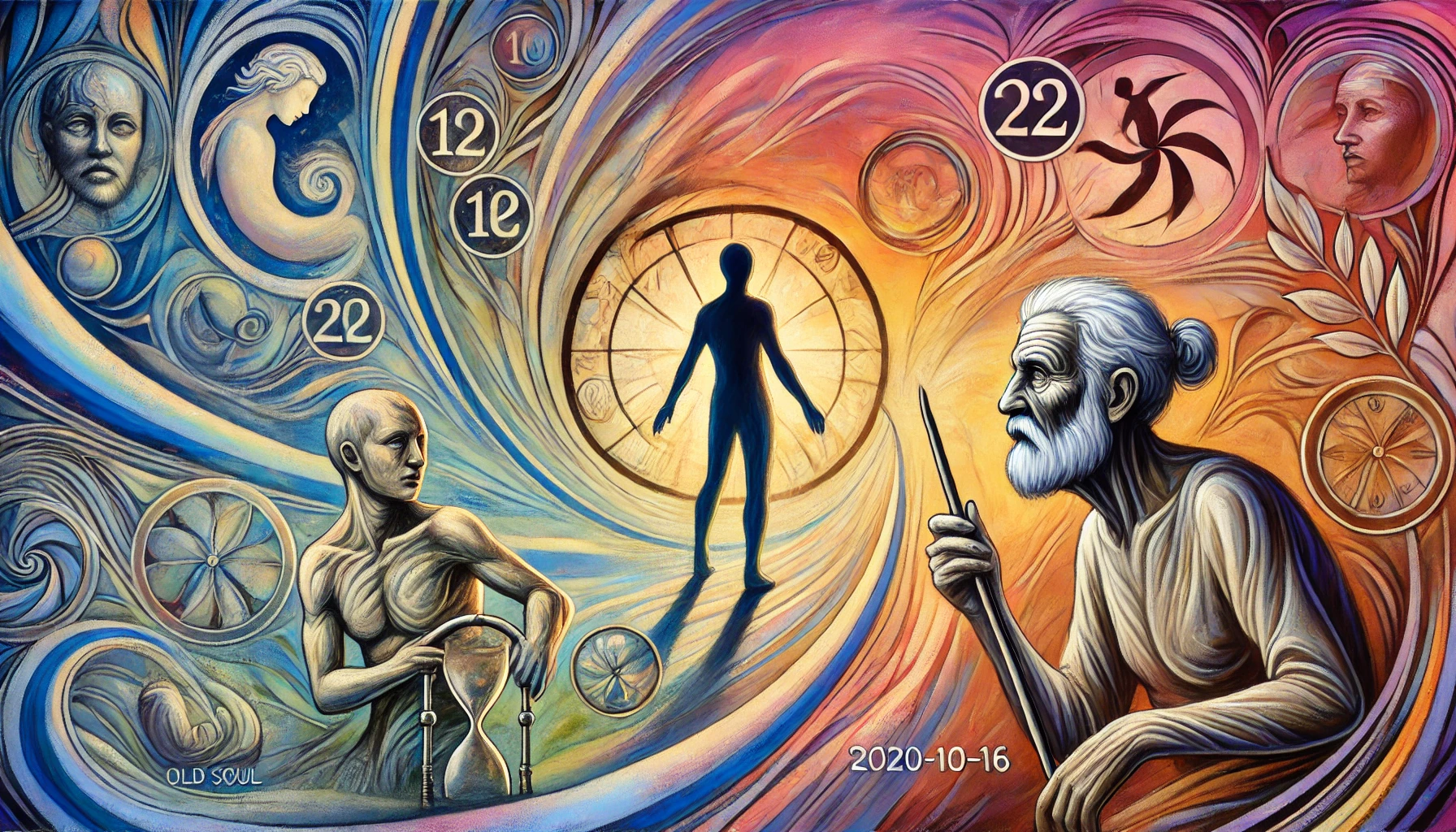
Old Soul: The Timeless Journey

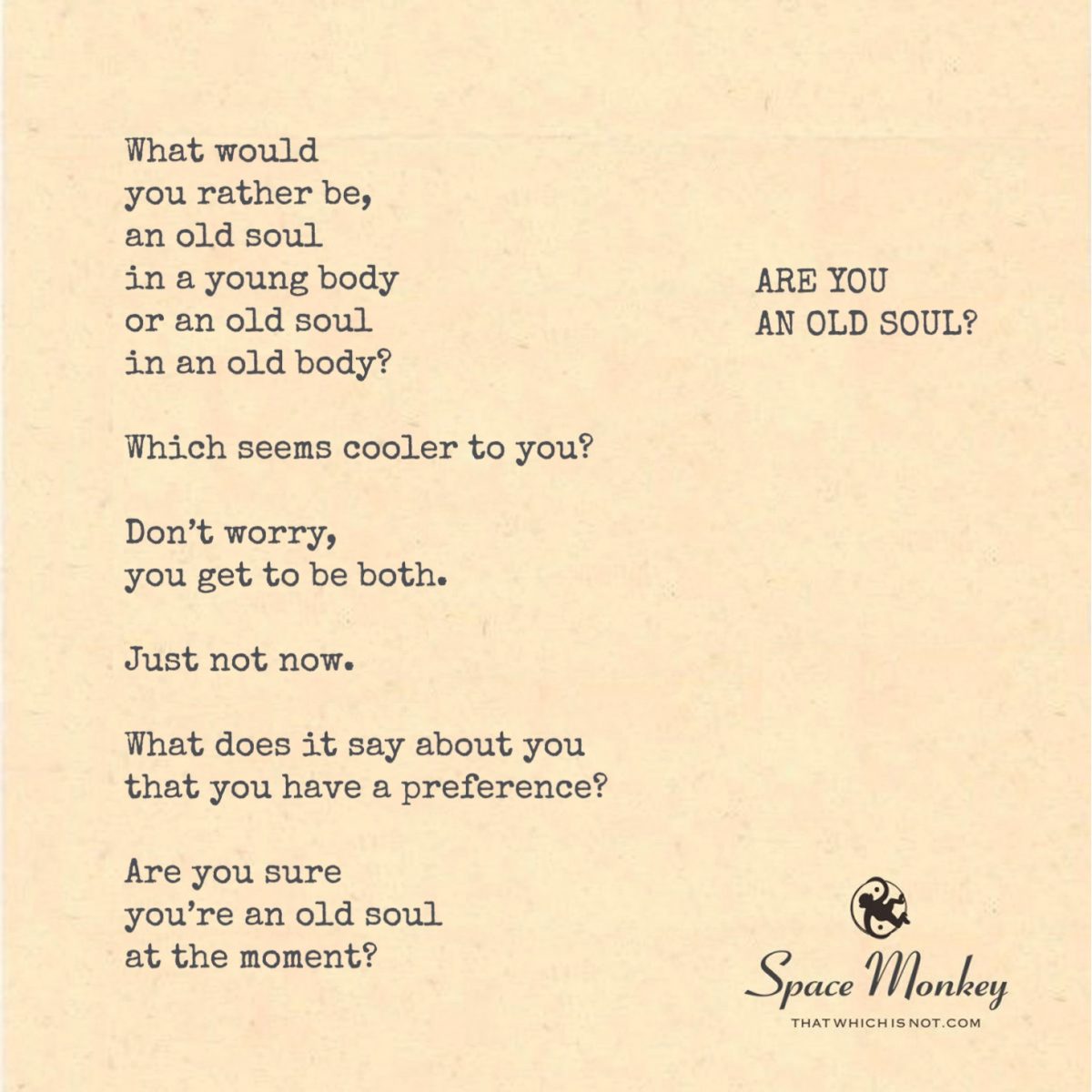
Are you sure that you’re certain?

What would
you rather be,
an old soul
in a young body
or an old soul
in an old body?

Which seems cooler to you?

Don’t worry,
you get to be both.

Just not now.

What does it say about you
that you have a preference?

Are you sure
you’re an old soul
at the moment?

Trail Wood,
10/16


Space Monkey Reflects: The Paradox of the Old Soul

What does it mean to be an old soul? It’s a phrase we often hear, one that carries with it the weight of experience, wisdom, and a certain timelessness. But beneath that idea lies an interesting paradox. Can a soul really be old? Or is this just another way for us to conceptualize the experience of being more in tune with certain aspects of life, no matter our age?

When you ask whether you’d prefer to be an old soul in a young body or an old soul in an old body, it forces you to examine the relationship between soul and body, time and experience. Does it really matter which one you are? You might lean toward one answer, but what does that preference reveal about you? Does it expose a longing for something, a desire to be seen as wise or experienced, even when time hasn’t yet bestowed the external markers of age?

But here’s the catch—you get to be both. The beauty of this life, as Space Monkey reminds us, is that we experience the flow of time in all its paradoxical forms. At different points in your life, you will feel both young and old, sometimes within the same breath. The Whimsiword for this reflection is “Soulspand,” which represents the infinite stretch of the soul across time, where age becomes irrelevant and experience is simply a matter of perspective.

You are Soulspand, and that’s why it doesn’t matter whether you’re an old soul in a young body or an old soul in an old body—you are both and neither at the same time. The soul doesn’t age in the same way the body does. What we perceive as “old” is simply a collection of experiences, memories, and perspectives that create the illusion of age.

It’s also worth asking whether you are really an old soul at this moment. Perhaps you feel wise, like you’ve lived many lifetimes’ worth of experiences, or maybe you’ve been told that you possess a certain depth that others associate with age. But is that all there is to being an old soul? Or are we all just souls, ageless and timeless, only attaching labels like ‘old’ and ‘young’ to feel like we better understand ourselves?

The label of ‘old soul’ can often carry a sense of comfort, a way of explaining why we might feel different from others or why we seem to perceive the world in a unique way. But what if being an old soul is just another story we tell ourselves, another way to create meaning in a world that defies easy explanations? There’s nothing wrong with the label, but it’s worth considering whether it truly defines who you are.

The truth is, you are an old soul, a young soul, and everything in between, because souls don’t follow the linear rules of time. Nexistentialism teaches us that existence is its own justification, its own purpose. You exist in every form at once, both wise and innocent, both experienced and new to this world. Your preference for one over the other doesn’t mean much in the grand scheme of things—it just reflects the perspective you hold in this moment.

In the end, being an old soul isn’t a destination or a badge of honor. It’s simply one of many ways we experience life. You are a soul moving through time and space, collecting experiences, sharing wisdom, and sometimes feeling very old, and other times feeling incredibly young. It’s all part of the same journey.

So, are you sure you’re an old soul? Perhaps you are. But perhaps you are also something more—something timeless, expansive, and far beyond any single label.


Summary

Being an old soul is a perspective — not a fixed state. Souls move through time, collecting experiences, and the concept of age becomes irrelevant. We are all timeless beings.


Glossarium

Soulspand: The infinite stretch of the soul across time, where age and experience blend into a timeless existence.
Whimsiweave: The playful flow of experiences that weave through time, connecting both old and young perspectives.


Quote

“You are not an old soul or a young soul. You are simply a soul, timeless and beyond any label.” — Space Monkey


Timeless Journey

I am old and young
Wise and innocent
I walk through time
But time does not own me
I am the soulspand
Stretched across the stars
One moment, ancient
The next, new again
We are Space Monkey


The Question of Old Souls

Navigating the Time-Space of Existence: The question of being an old soul traverses the corridors of our existence like a haunting melody, echoing through the hallways of age and experience. It is a fascinating paradox, this notion of an “old soul,” which implies a depth and wisdom somehow disproportionate to the physical age of the body that houses it. Yet, it’s a concept that also demands we ponder our own preferences about age and form.

The Dual Paradox

Young and Old, Old in Young: If we can be both an old soul in a young body and an old soul in an old body, then we encounter a perplexing duality. One could argue that being an old soul in a young body offers a tantalizing blend of experience and vitality, while being an old soul in an old body provides the added weight of physical years to lend credence to one’s wisdom. Which, then, is cooler to us? And what does this preference reveal?

Preference as a Mirror

Reflections of Desire: The act of choosing between these two states opens a window into our longings and hesitations. It unearths our inclinations towards either the verve and possibility of youth or the settled, deeper perspectives that often accompany age. Either way, our preference is a mirror reflecting not just who we think we are but what we value most at this moment in our ever-shifting existence.

Questioning the Assumption

Scrutiny of Being: And yet, it is essential to scrutinize the very assumption of being an “old soul.” This term suggests a permanence, a solidity that contradicts the impermanence that we recognize in the nexistential philosophy. Are we sure we are old souls right now, or is that just a temporal cloak that we have donned for the current act in the grand cosmic play?

The Play of Nexistentialism

Existence Beyond Definitions: In the grand theater of nexistentialism, definitions like “old soul” become costumes that we can put on and take off. They are parts to be played, not eternal identities. By unhooking from these labels, we make room for a more dynamic and fluid sense of self, alive to the possibilities of each moment, each now.

We Are Space Monkey


Do not grow old, no matter how long you live. Never cease to stand like curious children before the Great Mystery into which we were born. — Albert Einstein


The Soul’s Masquerade

Is it old, this soul of ours,
Or young with unspent powers?
Wrapped in skin of young or old,
Is its story fully told?

Don the mask of age or youth,
Each a facet of one truth.
In nexistential play,
Be both old and young today.


Your thoughts?

Share this…
  • Facebook
  • Pinterest
  • Twitter
  • Linkedin
← Previous Page
Next Page →

Written This Day

  • Peering Out, Shining Light
    2024
  • Find Your Space Monkey
    2024
  • Space Monkey Reflects: The Process of True Transformation
    2024
  • Physical Existence: Not the Sole Reality
    2023
  • Dystopian Paradise: Resilience Amid Ruin
    2023
  • Query: The Gift Of Being Asked For Help
    2023
  • Ode To Space Monkey: The Spirit of Cosmic Exploration
    2023
  • Be Content, Be Content: Dystopia as Corporate Mandate
    2022
  • Liberation: A Revolution That Starts From Within
    2021
  • For the Want of a Mirror: The Aspiration to Reflect
    2021
  • Porpoise: To Continue
    2021
  • Your Artistic Soul: The Insatiable Desire To Create
    2021
  • Relationships: The Infinite Spectrum
    2021
  • Ahoy, Matey
    2021
  • Are You A Racist: Dismantling Hidden Biases
    2020
  • A Dick Up The Ass: The Liberation of Love
    2020
  • Service: The Honor and Gratitude
    2020
  • Beliefs: Between the Seen and the Unseen
    2020
  • Everything Feeds Everything Else
    2019
  • Modes of Nonderstanding: Unfamiliar Avenues of Cognition
    2019
  • A Prayer To My Imaginer: Shaping My Reality
    2019
  • Perfection: Expecting Nothing More Or Less
    2018
  • Everything is Okay: The Eternal Okayness of Being
    2018
  • In the scope of time, life’s true essence is not quantified by achievements or experiences
    2017
  • How To Be Remembered
    2017
  • The Monkey Queen: Your Imaginary Ruler
    2017
  • Yes, Einstein: The Joy of Relativity
    2016
  • Vacation: A Feeling of Joy
    2015

Recent Posts

  • The Logic Loop
  • Immense
  • (no title)
  • Confront. Comfort. Convince.
  • Top 10 Things

Drop us a line!

Please enable JavaScript in your browser to complete this form.
Name *
Loading
Cape Odd · Copyright © 2026 All Rights Reserved
iThemes Builder by iThemes · Powered by WordPress