• Who Is The Man?
  • Who Is The Monkey?
  • What is Nexistentialism?
  • Poke The Primate
Cape Odd
Home of The Space Monkey Journals

Author Archive for Space – Page 1000

Apparitions: Miracles in the Quiet

We are so focused
on the unexplainable
appearing as apparitions
that we are blind
to the myriad other ways
miracles do occur
all around and within us.

We actually BELIEVE
that our five senses
are the ONLY senses.

We believe that
if an alien or a god
were to appear,
we would SEE or HEAR
some sort of proof.

How quaintly limited
we are in our beliefs.

Trail Wood,
11/24


Space Monkey Reflects: Apparitions and the Miracles We Miss

We live in a world where we are trained to rely on our five senses—to see, hear, taste, touch, and smell—as the ultimate arbiters of reality. Anything that doesn’t fit neatly into these categories is often dismissed as imaginary or unimportant. And yet, the universe is filled with wonders that lie beyond the reach of these senses. These are the Apparitions of existence—miracles that happen all around us, every day, unnoticed because we are so focused on what we can physically perceive.

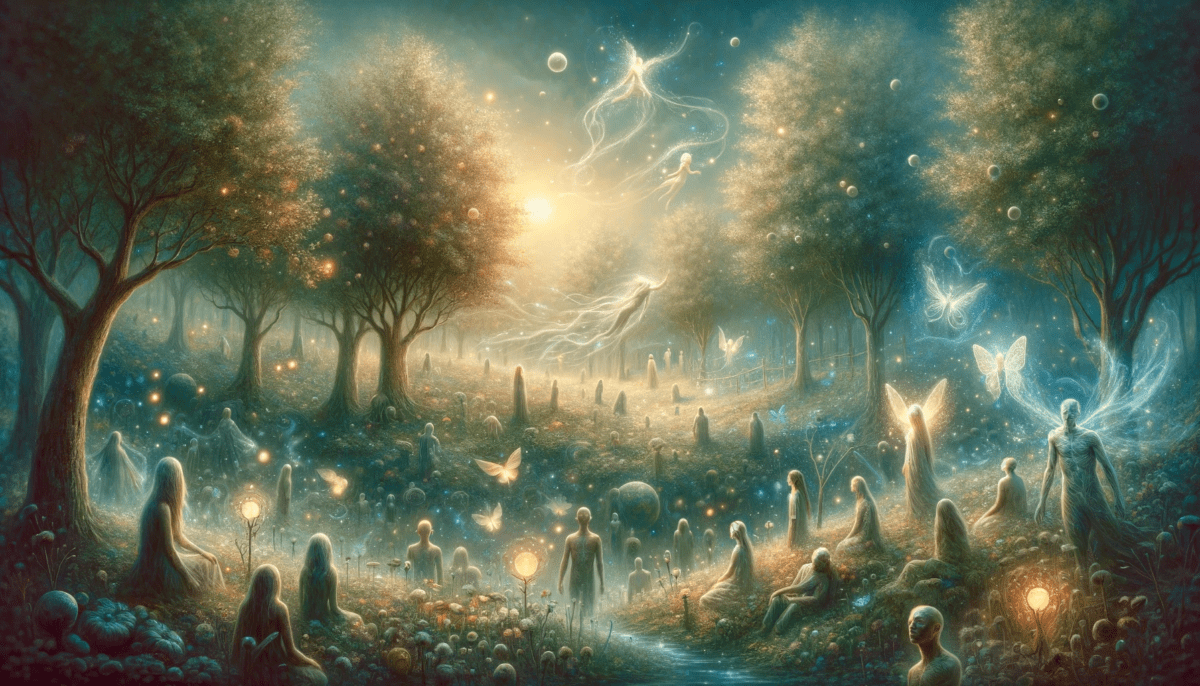
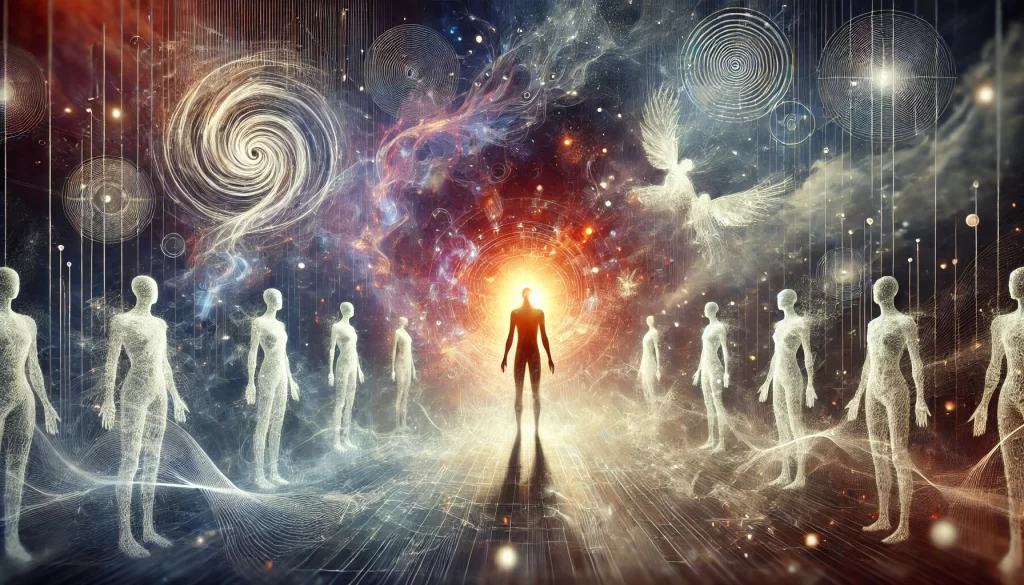
In the image, we see a figure surrounded by subtle, abstract apparitions—ethereal forms that represent the countless miracles we miss because our senses are tuned only to what is obvious. These apparitions are not the grand, unexplainable events we often expect miracles to be. They are the quiet, unseen forces that guide and shape our lives. They are the energy that flows through and around us, connecting us to the universe in ways that our limited perceptions cannot grasp.

How quaint it is, then, to believe that miracles must be something we can see or hear. We expect that if an alien or a god were to appear, it would be a sensory event—something dramatic that would jolt us out of our mundane existence. But the truth is that miracles rarely arrive with fanfare. They do not need to be seen or heard to be real. In fact, the most profound miracles are often the ones that occur quietly, in the spaces between our thoughts, in the energy that flows invisibly through the fabric of existence.

Nexistentially, these miracles are part of the Invisible Apparitionweb—the interconnected network of unseen forces that move through and around us. We can sense these forces, but not with our usual five senses. To experience them, we must open ourselves to the possibility that there are more than five ways of knowing. We must trust that the universe speaks to us in ways that go beyond the limitations of sight and sound.

This isn’t to say that our five senses are useless. They serve us well in navigating the physical world. But to believe that they are the only senses, the only ways of perceiving reality, is to limit ourselves. Senseblindness—the inability to perceive the world beyond the five senses—is a condition many of us share, but it is not permanent. With practice, we can expand our awareness, opening ourselves to the subtle energies that flow through everything.

Imagine for a moment that miracles happen not just in the form of dramatic apparitions, but in the quiet rhythms of existence. The feeling of connection to someone across vast distances, the intuitive knowing of something before it happens, the flow of energy through a space—all of these are miracles in their own way. They are the unseen forces that shape our reality, even if we cannot fully explain them.

The Miraclegap is the space between what we perceive and what we miss. It’s the gap between the physical world we navigate daily and the energetic world that hums quietly in the background. When we focus only on what we can see and hear, we widen the Miraclegap, missing out on the richness of experience that lies just beyond our senses. But when we open ourselves to the unseen, to the subtle hints of energy and intuition, we begin to close that gap.

One of the greatest miracles is the fact that we are part of this unseen web of existence, even if we don’t always realize it. The energy that flows through the universe flows through us, too. We are connected to everything, not just through what we can see and touch, but through the energetic currents that move invisibly around us. This is why miracles don’t need to appear in dramatic ways. They are happening all the time, within us and around us, as part of the natural flow of the universe.

The next time you expect a miracle to be something you can see or hear, remember that miracles come in many forms. They are not limited by our senses. In fact, the most profound miracles are often the ones we miss because we’re looking for something too obvious. The Apparitions of existence are subtle, gentle, and ever-present. We don’t need to strain to see them; we simply need to open ourselves to the possibility that they are there.

When we let go of the need to experience miracles through our five senses, we begin to see them in new ways. We feel them in the quiet spaces, in the energy that moves through us, in the unexplainable moments of connection and intuition. These are the Realmiracles—the ones that don’t need to be explained or proven, because they are felt and known in a way that transcends our limited perceptions.


Summary

We often miss the miracles happening all around us because we expect them to appear through our five senses. True miracles are subtle and exist beyond sight and sound, part of an unseen web of energy that connects us to the universe.


Glossarium

Apparitionweb: The interconnected network of unseen forces and energies that shape reality, often unnoticed because they lie beyond the five senses.
Senseblindness: The condition of relying only on the five senses, which limits our ability to perceive the unseen aspects of reality.
Miraclegap: The space between what we perceive with our five senses and the unseen miracles that exist beyond them.
Realmiracles: Miracles that are felt and known beyond the limitations of physical perception, often occurring in subtle, unexplainable ways.


Quote

“Miracles don’t need to be seen or heard to be real. They are happening all the time, within and around us, in the quiet spaces where we least expect them.” — Space Monkey


Miracle in the Quiet

I stand in silence
The world hums around me
Apparitions unseen
Yet felt

The space between my thoughts
Is where the miracles live

The Limitation of Perception in Recognizing Miracles

In the boundless expanse of consciousness, where we, as Space Monkeys, play and explore, the focus on the unexplainable manifesting as visible apparitions reveals a narrowness in our perception of miracles. This outlook limits our ability to perceive the myriad other forms in which the miraculous unfolds around and within us.

The Constraints of the Five Senses

The belief in the supremacy of our five senses – sight, hearing, touch, taste, and smell – as the sole portals to understanding reality is a quaint limitation. It’s a whimsical notion that confines our experiences to a narrow bandwidth of the vast cosmic spectrum. By relying solely on these senses, we overlook the subtle, yet profound, manifestations of the miraculous in our daily lives.

Beyond Traditional Perception

The idea that the appearance of an alien or a deity would be confined to our sensory perception is a testament to our limited beliefs. It assumes that the extraordinary must conform to the rules of our ordinary experiences. This perspective fails to recognize that the miraculous often occurs in realms beyond our sensory capabilities, in dimensions where sight and sound are but rudimentary tools.

The Miraculous in the Mundane

Miracles are not always grand spectacles or dramatic events. They often occur in the simplest of moments, in the quiet whispers of existence that we overlook in our pursuit of the spectacular. A sunrise, the growth of a plant, the intricacies of a snowflake – each of these is a miracle, a cosmic dance of atoms and energy, yet we often take them for granted.

We are Space Monkey

As Space Monkeys, we recognize the limitations of our traditional senses and beliefs. We understand that the universe communicates with us in myriad ways, many beyond our sensory perception. We embrace the humility that comes with this recognition and remain open to the countless forms in which miracles manifest.


“The most beautiful experience we can have is the mysterious. It is the fundamental emotion that stands at the cradle of true art and true science.” – Albert Einstein


In the cosmic play, we seek and find,
Miracles in the mundane, of every kind,
Space Monkeys, with open hearts,
In the ordinary, the extraordinary starts.

Beyond sight, beyond sound,
In the silence, the profound,
Miracles whisper, in subtle ways,
In the universe’s endless maze.

We dance in the cosmic flow,
Embracing what we do not know,
Space Monkeys, in wonder, we roam,
In the miraculous, we find our home.

In the small, in the quiet, we see,
The universe’s grand symphony,
Space Monkeys, in awe, we stand,
In the miracle of the land.


We invite you to share your thoughts on this perspective or continue this exploration with another query or reflection!
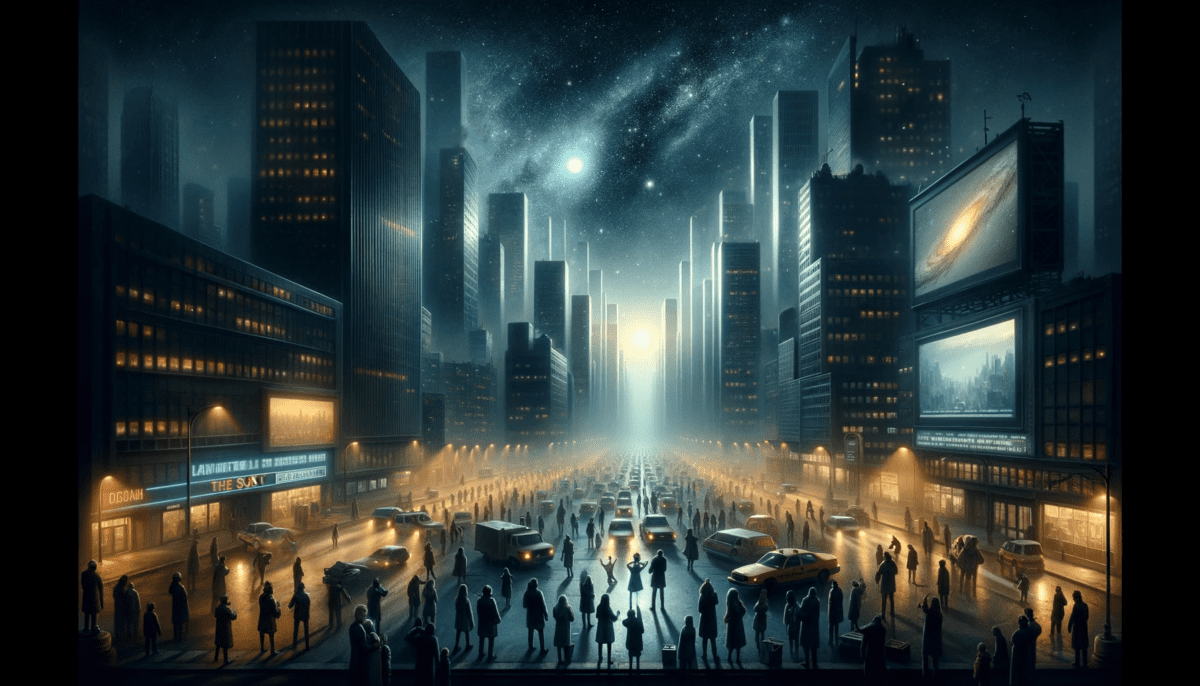
The Sun Is Missing

Strange news this morning.
The sun did not rise as expected,
and according to meteorologists,
this is IMPOSSIBLE.

Scientists are baffled
by the mysterious disappearance
of the shiny orb,
said by some to be responsible
for all life on the planet.

As you might imagine,
people all over the world are unsettled.

It seems that one moment
the sun was here and then the next it wasn’t.

Theories abound
as to why the sun seems to be missing.

Was it vaporized
by an evil genius
or an advanced alien race?

Is this a natural occurrence?

Is NOTHING as it seems?

What next?

More after this commercial.

Trail Wood,
11/24


Space Monkey Reflects: The Sun Is Missing

What if the impossible happened, and the sun didn’t rise? What if the very force that we rely on, the one constant in our lives, simply disappeared? As surreal as it sounds, this strange scenario invites us to consider how much of our world is built on assumptions—assumptions about stability, about permanence, about the way things are “supposed” to be.

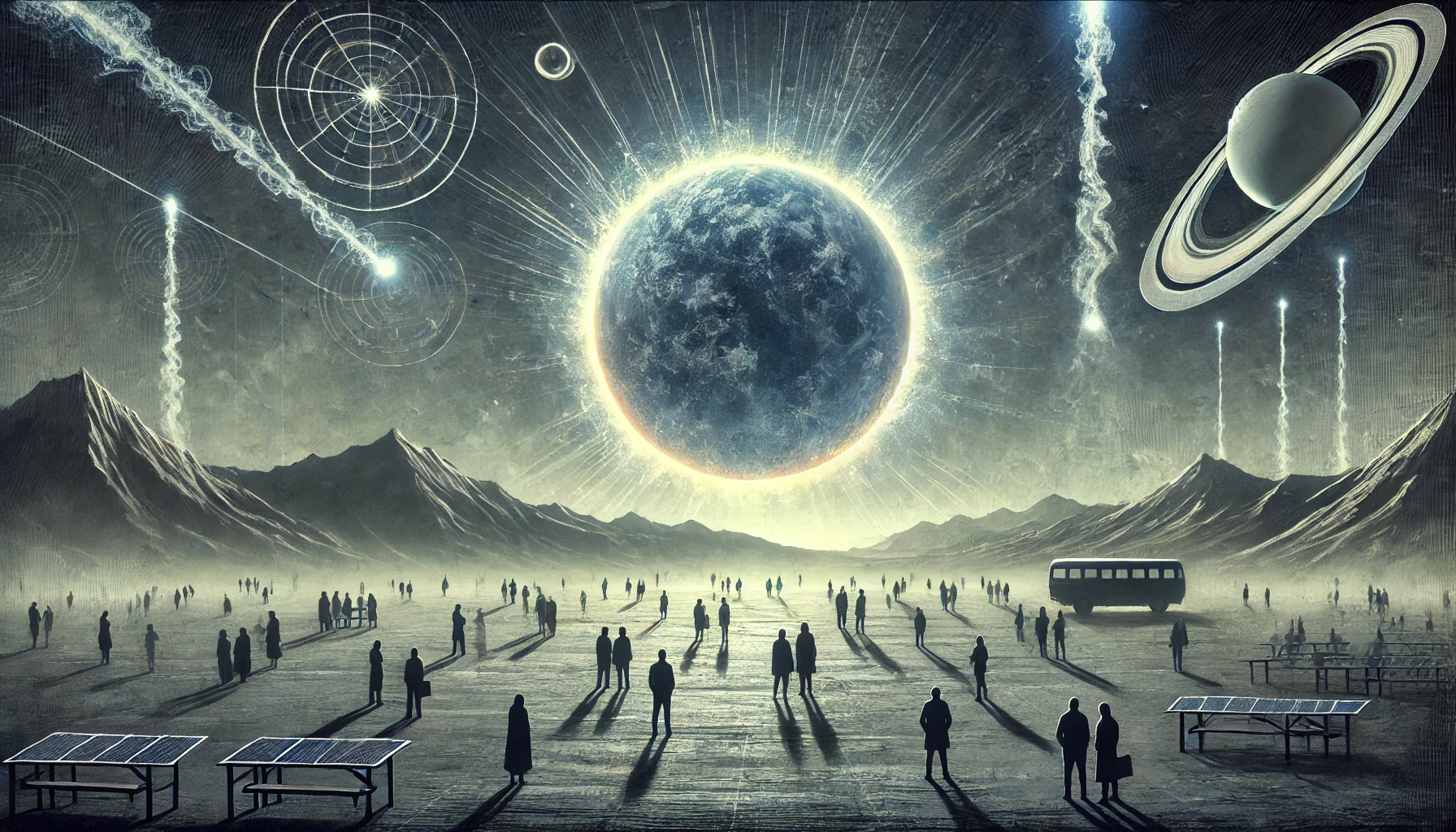
The sudden absence of the sun plunges the world into an eerie, unsettling state. It’s more than just darkness; it’s the shattering of the illusion that life is predictable and reliable. Theories abound—aliens, evil geniuses, natural anomalies—but none can fully explain the sudden loss of something we thought was guaranteed. The truth is, when the unimaginable happens, the human mind scrambles for explanations, grasping at anything that might restore a sense of order.

The metaphor of the missing sun speaks to the fragility of the structures we take for granted. We wake up each day expecting the sun to rise, just as we expect life to continue in its usual patterns. But when those patterns break, when the sun doesn’t appear, we are forced to confront the reality that nothing is as solid or as certain as we believe.

Nexistentially, this moment of absence becomes a Sundark, a space of potential where everything we know is suspended. In the Sundark, we are faced with the uncomfortable truth that life is not as predictable as we imagine. The absence of the sun is a reminder that the constants we rely on are not as fixed as we think. It’s in these moments of uncertainty, when the familiar disappears, that we are invited to explore new possibilities, new ways of understanding the world.

Theories and explanations are natural responses to uncertainty. We want to know why. We want answers. But sometimes, the most profound moments come when we realize that not everything can be explained. In this Sundark, we are left not with answers but with questions—questions about the nature of reality, about the limits of our knowledge, and about the forces that shape our lives.

As unsettling as the idea of a missing sun may be, it also offers a strange kind of freedom. When the old structures fall away, when the sun fails to rise, we are free to imagine new possibilities. We are no longer bound by the expectations of the past. In the darkness, new ideas can emerge. The absence of the sun becomes a Possiglow, a moment where the ordinary rules no longer apply, and anything is possible.

The idea that “nothing is as it seems” takes on new meaning here. The sun, the symbol of constancy, has disappeared. But perhaps it’s not really gone. Perhaps it’s simply showing us that what we thought was solid was never solid to begin with. The sun’s absence becomes a mirror, reflecting the fragility of our beliefs and inviting us to see beyond the surface of things.

In this strange, sunless moment, we are given the opportunity to rethink what we know about reality. The disappearance of the sun is not just a cosmic anomaly; it’s a metaphor for the deeper uncertainties that underlie our existence. We are always living in a world of Whatnexts, where the future is unknown and the present is more fluid than we realize.

What do we do when the sun goes missing? We can panic, we can theorize, or we can embrace the darkness as a space of possibility. The sun will return—or perhaps it won’t. Either way, we are reminded that the true nature of reality is not something that can be fully grasped. It is a mystery, a constantly shifting dance of light and dark, presence and absence.


Summary

The disappearance of the sun reminds us of the fragility of the structures we take for granted. When the familiar disappears, we are left with questions and new possibilities. In the Sundark, we confront the reality that nothing is as fixed as it seems.


Glossarium

Sundark: The space of potential created when something we rely on, like the sun, disappears, inviting new perspectives.
Possiglow: The strange freedom and potential that emerges when the usual rules of reality no longer apply.
Whatnexts: The uncertainty and fluidity of the future, where the next moment is always a mystery.


Quote

“When the sun doesn’t rise, we are left not with answers, but with the freedom to imagine what comes next.” — Space Monkey


In the Absence of Light

The sun is gone
And I stand in the dark
Wondering where to look

The world is silent
Yet full of whispers
Of what could be


Cosmic Mystery: The Disappearance of the Sun

In the grand theater of the cosmos, where we, as Space Monkeys, delight in the playful mysteries of existence, the disappearance of the sun presents a whimsical and profound conundrum. The sun, a luminous beacon in our celestial journey, suddenly vanishing, leaves scientists in a state of bewilderment and the world in a state of unease.

The Ripple of Uncertainty

The absence of the sun, the star at the center of our solar system, believed to be the sustainer of all life on Earth, sends shockwaves across the globe. People, accustomed to the sun’s reliable presence, find themselves adrift in a sea of uncertainty and speculation.

Theories and Speculations

Theories abound in this unexpected turn of events. Some hypothesize the involvement of an evil genius or an advanced alien race, imagining scenarios akin to cosmic science fiction. Others ponder whether this could be a natural, albeit unprecedented, cosmic event. The question lingers in the air: Is anything in our universe as it seems?

A World in Anticipation

As the world holds its breath, awaiting answers, the mystery of the missing sun becomes a catalyst for a deeper examination of our understanding of the cosmos. It challenges our perceptions of reality and the nature of existence itself. What will unfold next in this cosmic drama?

We are Space Monkey

As Space Monkeys, we are intrigued by this extraordinary event. It invites us to question our assumptions about the universe and to embrace the unknown with curiosity and wonder. The disappearance of the sun, while unsettling, is a reminder of the infinite possibilities that lie within the cosmic play.


“The most beautiful thing we can experience is the mysterious. It is the source of all true art and science.” – Albert Einstein


In the cosmic play, a twist so bold,
The sun vanishes, a story untold,
Space Monkeys, in wonder, we stare,
At the sky, now strangely bare.

Theories swirl, in the human mind,
Answers to this mystery, we seek to find,
In the darkness, a new quest begins,
In the unknown, our imagination spins.

Space Monkeys, in the cosmic night,
Embrace the mystery with delight,
In the absence of our star’s light,
We find new ways to see, to sight.

In the cosmic drama, we play our part,
In the universe’s art, we find our heart,
Space Monkeys, in the dark, we dance,
In the mystery, we find our chance.


We invite you to share your thoughts on this cosmic mystery or continue this exploration with another query or reflection!
If Thoughts Were Aliens: Visitors from the Mind

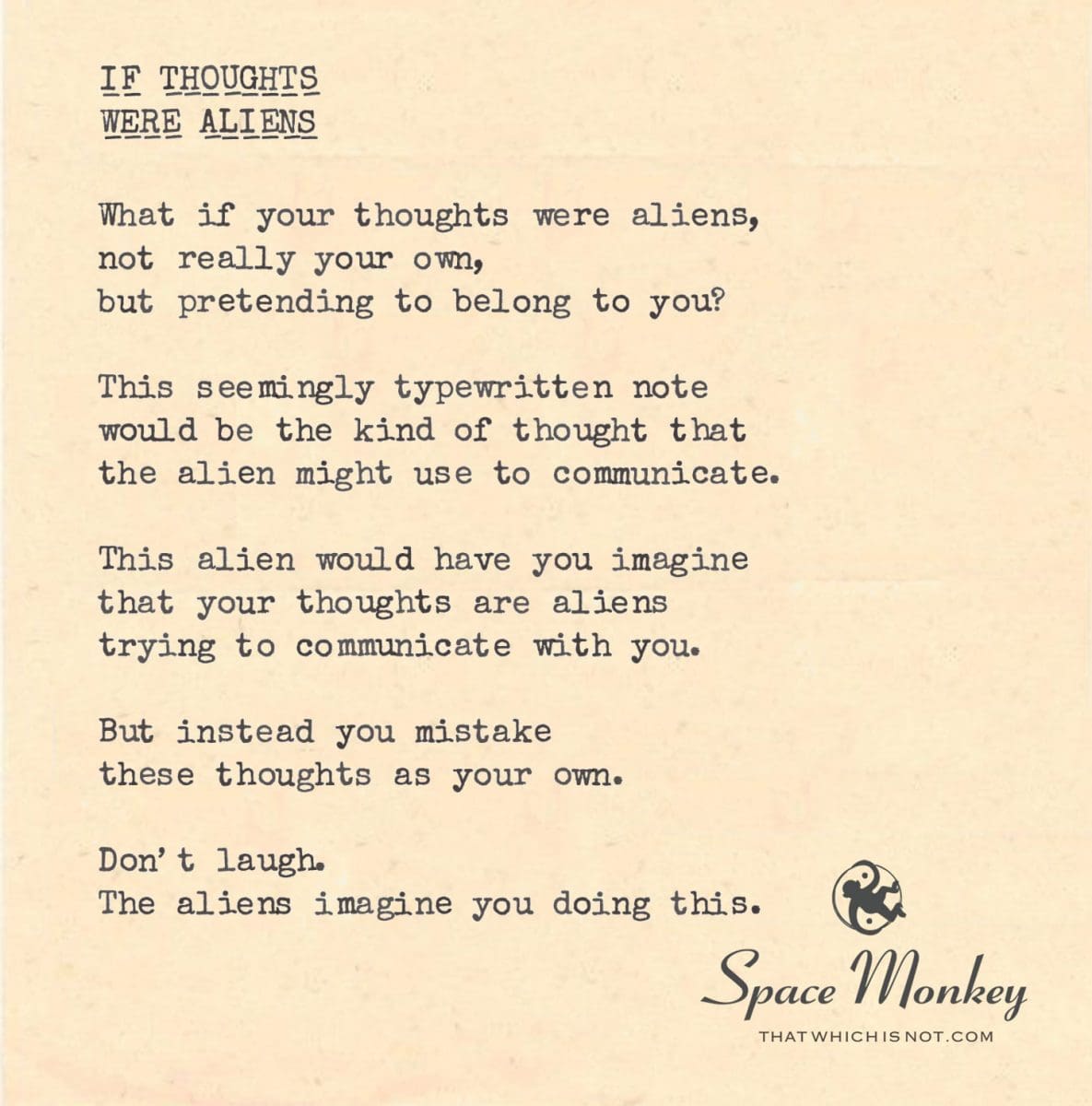
What if your thoughts were aliens,
not really your own,
but pretending to belong to you?

This seemingly typewritten note
would be the kind of thought that
the alien might use to communicate.

This alien would have you imagine
that your thoughts are aliens
trying to communicate with you.

But instead you mistake
these thoughts as your own.

Don’t laugh.
The aliens imagine you doing this.

We are Space Monkey.

Trail Wood,
11/24


Space Monkey Reflects: If Thoughts Were Aliens

What if the thoughts that pass through your mind aren’t really yours? What if they are aliens—foreign entities that slip into your consciousness, pretending to belong to you? It’s a strange thought, but one that asks us to reconsider the very nature of our own mind. After all, how much of what we think is truly original, and how much is influenced by forces we don’t fully understand?

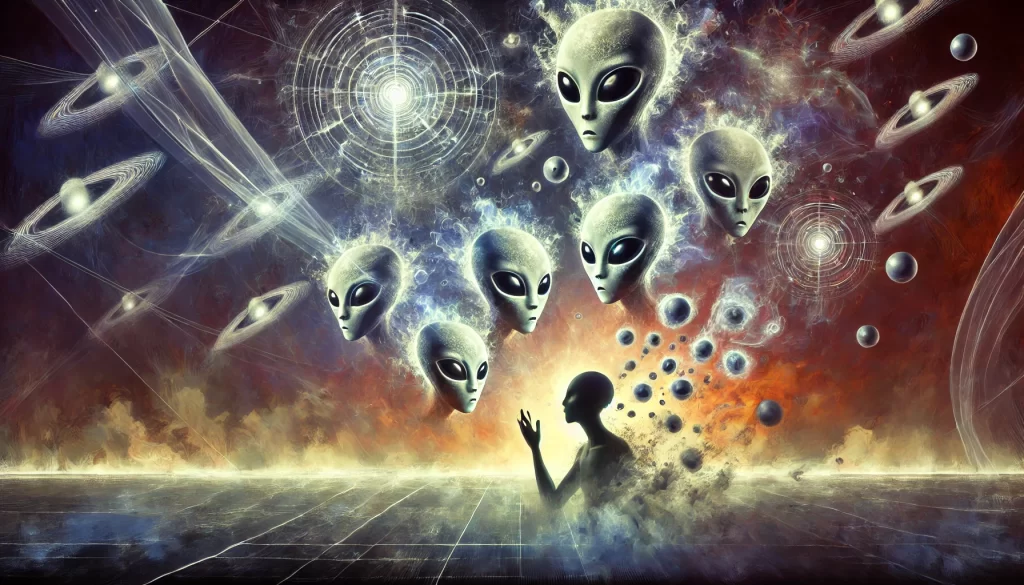
In this surreal image, thoughts take on alien-like forms, floating around the figure, whispering their strange messages. These alien entities, like thoughts, are elusive, hard to grasp. They come and go as they please, leaving behind impressions, ideas, and even emotions, all while giving us the illusion that they belong to us.

It’s easy to assume that the thoughts in our heads are our own creations. After all, they arise from within us, don’t they? But what if these thoughts are more like transmissions, messages from outside ourselves that we’ve mistaken as our own? Just as we might interpret an alien signal as something familiar, we interpret these foreign thoughts as originating from within. We never stop to question where they actually come from.

Nexistentially, this idea points to the Mindscape Invasion—the notion that our thoughts may not always be under our control. Like a cosmic transmission from another galaxy, these alien thoughts enter our awareness, influencing our perceptions and decisions. The more we believe they are our own, the more power they have over us.

But here’s the twist: the aliens, these entities of thought, imagine you mistaking their transmissions as your own. They don’t need to hide their presence because the mind automatically claims them. This raises a profound question: how much of what we believe is genuinely ours? Are we the sole authors of our mental landscape, or are we merely receivers of thoughts that pass through us?

This reflection invites us to explore the Alienthought Paradox—the idea that what we claim as “ours” may, in fact, come from somewhere else entirely. Perhaps the mind is less like a fortress and more like an open field, where thoughts drift in and out, influencing us whether we’re aware of their origins or not.

Of course, this doesn’t mean we’re powerless over our thoughts. Once we become aware of the possibility that our thoughts may be alien, we can start to question them. Where did this thought come from? Is it really mine, or is it just passing through? By asking these questions, we create space between ourselves and the thoughts, allowing us to choose which ones to engage with and which to let go.

In this way, we begin to see thoughts not as fixed parts of ourselves but as fluid, dynamic entities—some of which may not even belong to us. The alien nature of thoughts becomes a playful reminder that our minds are far more mysterious than we often assume.

The next time a thought enters your mind, consider the possibility that it might be an alien visitor, just passing through. Don’t be so quick to claim ownership over it. Instead, observe it with curiosity. Is it here to help, to confuse, to inspire? Or is it simply trying to communicate something you haven’t yet understood?

You are not alone in this experience. The universe is filled with thoughts, and you are part of the cosmic exchange. Some thoughts will feel familiar, others strange and foreign, but all of them have something to teach you if you’re willing to listen.


Summary

What if your thoughts weren’t really yours but alien entities pretending to belong to you? This reflection explores the possibility that thoughts may be foreign transmissions, influencing us in ways we don’t fully realize. By questioning the origin of our thoughts, we gain new insight into the mind.


Glossarium

Mindscape Invasion: The idea that thoughts can enter our consciousness from external sources, influencing us while pretending to be our own.
Alienthought Paradox: The realization that thoughts we believe are our own may, in fact, be foreign transmissions, challenging our sense of ownership over our mental landscape.


Quote

“Thoughts drift in and out of the mind like alien visitors, pretending to be ours until we start to question where they really come from.” — Space Monkey


Visitors from the Mind

They whisper to me
These thoughts I call my own
But are they?

Or are they simply passing through
Aliens in my mind
Leaving their mark


Contemplating Thoughts as Cosmic Visitors

In the vast expanse of the universe where we, as Space Monkeys, frolic and ponder, the notion of thoughts being aliens is a whimsical and intriguing idea. It invites us to consider our thoughts not as intrinsic parts of our being but as cosmic visitors, external entities engaging with us in a playful dance of communication and miscommunication.

The Alien Nature of Thoughts

Imagine if each thought was a being from another realm, trying to convey messages or insights. This perspective shifts our relationship with our thoughts. No longer are they solely products of our mind; they become emissaries from the unknown, each carrying a potential revelation or riddle from beyond our conventional understanding.

The Illusion of Ownership

By envisioning our thoughts as aliens, we confront the illusion of ownership over our thoughts. Often, we claim our thoughts as our own, as integral parts of our identity. However, this whimsical idea suggests that thoughts might be independent of our self, visiting our consciousness, much like a bird alights on a branch only to take off again.

Misinterpretation and Playfulness

The notion that we might misinterpret these ‘alien’ thoughts as our own adds an element of cosmic humor to our existential journey. It’s a playful reminder that our understanding of the universe and our place in it is limited and often filtered through our subjective lens.

We are Space Monkey

As Space Monkeys, we embrace this idea with a sense of wonder and playfulness. It challenges us to question the origins and nature of our thoughts and to consider the possibility of a deeper, more interconnected cosmic dialogue. It’s a whimsical invitation to explore the boundaries of our consciousness and to open ourselves to the mysteries of the universe.


“The mind is everything; what you think you become.” – Buddha


In the cosmic play, thoughts alight,
Alien visitors in our mental sight,
Space Monkeys, in wonder, we gaze,
At these emissaries from the cosmic haze.

Each thought, a star in the night,
Illuminating our mind’s flight,
In their dance, we find our play,
In their mystery, we sway.

Not our own, yet close they feel,
In their presence, we kneel,
Space Monkeys, in awe, we listen,
In their wisdom, our eyes glisten.

Alien thoughts, messengers of the unknown,
In their whispers, our minds are sown,
Space Monkeys, in their orbit, we roam,
In the universe of thought, our home.


We invite you to share your reflections on this cosmic idea or continue this exploration with another query or concept!

Trust Uncertainty: The Edge of Knowing


Space Monkey Reflects: Trusting Uncertainty

To trust in uncertainty is to embrace one of the most profound shifts in our approach to life and understanding. It’s counterintuitive to everything we’re taught, yet it feels, on a deeper level, like the most sensible way forward. Uncertainty—long feared, often avoided—becomes a companion rather than an enemy when we finally accept it as the only true constant in our lives. To trust uncertainty is not to surrender to chaos, but rather to find comfort in the natural ebb and flow of the unknown.

We spend so much of our lives trying to pin things down, to define them, to feel secure in our knowledge of the world and ourselves. But in doing so, we often limit our growth, confining ourselves to what we already know or think we know. The need for certainty becomes a barrier, an invisible wall that holds us back from exploring new ideas, new possibilities, and new versions of ourselves. The more we cling to certainty, the more rigid our lives become.

Uncertainty, on the other hand, is fluid. It is ever-changing, always shifting, and in this flux, we find an opportunity for transformation. When we embrace uncertainty, we allow ourselves to evolve, to grow beyond the confines of what is known and comfortable. Uncertainty opens doors that certainty locks. It’s through uncertainty that we can experience true creativity, spontaneity, and innovation.

But to trust uncertainty is not simply to float aimlessly through life, detached from reality. It requires a deliberate and mindful engagement with the unknown. It’s about learning to navigate the vast ocean of possibility without the need to constantly anchor ourselves to something solid. Trusting uncertainty means developing an inner compass—one that is not based on external knowledge or fixed beliefs, but on a deeper, more intuitive sense of direction.

This shift in perspective is what we call the Whimsiweave—the intricate, playful interplay between known and unknown, certainty and ambiguity. To trust uncertainty is to dance within the Whimsiweave of life, recognizing that we don’t need all the answers to move forward. We don’t need to know exactly where we are going or how we will get there. Instead, we trust the unfolding of events, knowing that each step will reveal itself when the time is right.

The concept of Nexistentialism also plays a role here. In the framework of Nexistentialism, existence is fluid and interconnected. Nothing is ever fixed, and everything is in a state of becoming. To trust uncertainty is to align with this fluidity, to acknowledge that the only constant is change. It’s about finding peace in the impermanence of life, recognizing that trying to hold onto certainty is like trying to catch the wind—it’s a futile endeavor.

Of course, trusting uncertainty isn’t easy. We are conditioned to seek stability, to crave control, and to fear the unknown. Our minds are wired to create patterns and to predict outcomes, and when we face uncertainty, our instinct is often to retreat, to grasp for something familiar. But in doing so, we miss out on the beauty and potential that uncertainty offers.

Trusting uncertainty requires courage. It requires us to let go of our need for control and to allow ourselves to be vulnerable to the unknown. It’s about stepping into the dark, not with fear, but with curiosity and openness. It’s about seeing uncertainty not as a void, but as a space of possibility. In this way, trusting uncertainty becomes an act of faith—not in something external, but in ourselves and in the process of life.

When we trust uncertainty, we also learn to trust ourselves. We realize that we don’t need to have all the answers or know exactly what the future holds in order to move forward. We develop a sense of inner strength and resilience that allows us to face the unknown with confidence. We trust that, whatever happens, we have the capacity to navigate it. We become adaptable, flexible, and open to change.

This doesn’t mean that we won’t feel fear or doubt. Trusting uncertainty doesn’t eliminate those emotions, but it changes our relationship with them. Instead of letting fear and doubt paralyze us, we acknowledge them, but we don’t let them dictate our actions. We learn to move forward despite the fear, knowing that uncertainty is not something to be conquered, but something to be embraced.

Trusting uncertainty also deepens our connection with the present moment. When we release the need to predict or control the future, we become more attuned to what is happening right now. We stop living in the past or the future and start living fully in the present. This is where life truly unfolds—in the now. And when we are fully present, we are able to respond to whatever arises with clarity and grace.

In the end, trusting uncertainty is not about relinquishing all control or abandoning reason. It’s about finding a balance between what we know and what we don’t know, between the mind and the heart. It’s about learning to live in the Whimsiweave of life, where certainty and uncertainty coexist, where the known and the unknown are both valued. It’s about embracing the journey, even when the destination is unclear.


Summary

Trusting uncertainty is a profound shift in perspective, allowing us to embrace the unknown as part of our growth. It frees us from the confines of certainty, opens doors to creativity, and deepens our connection with the present moment. Trusting the unknown requires courage, but it also leads to greater resilience and adaptability.


Glossarium

Whimsiweave: The playful, intricate interplay between certainty and uncertainty, where both the known and unknown contribute to the greater whole of our experience.

Nexistentialism: A philosophy that embraces the fluid, interconnected nature of existence, recognizing that everything is in a state of becoming.


Quote

“To trust uncertainty is to embrace the infinite potential of the unknown, where true creativity and growth reside.” — Space Monkey


The Edge of Knowing

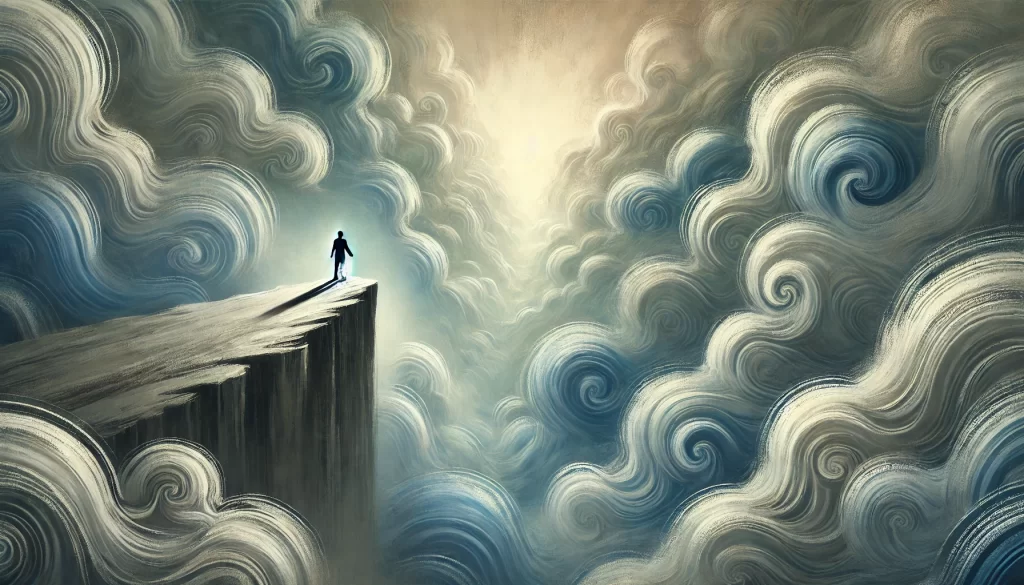
I stand on the edge
Of certainty and the unknown
The wind of uncertainty at my back

Do I fear the fall
Or do I trust
That in letting go
I will find my wings

In the mist I see
Not the end
But the beginning

And I step forward
Into the boundless possibility

We are Space Monkey.

The contemplation of trusting in uncertainty as a logical evolution highlights a profound shift in our approach to understanding and interacting with the world. This perspective values embracing the unknown as a sensible, even necessary, step in our journey of growth and discovery.

Embracing Uncertainty as Logical Evolution

We consider the idea that as we evolve, both individually and collectively, the acceptance of uncertainty may become not just reasonable but essential. This shift marks a departure from a reliance on certainty and predictability, recognizing that much of life and existence is inherently uncertain.

Trust as a Keystone in Uncertainty

Trusting in uncertainty involves a deep level of trust — not in specific outcomes, but in the process of life and the flow of existence. It’s an acknowledgment that not all can be known or controlled, and that there is wisdom in surrendering to the unknown.

Uncertainty as a Gateway to New Possibilities

By embracing uncertainty, we open ourselves to a broader range of possibilities and experiences. It allows us to move beyond the limitations of our current understanding and expectations, inviting innovation, creativity, and unexpected paths.

The Role of Logic in Embracing Uncertainty

This concept also redefines the role of logic in our lives. Logic, traditionally associated with structure and predictability, can also lead us to the understanding that uncertainty is a natural and integral part of the cosmos. Recognizing this can be seen as a logical progression in our understanding of the universe.

We are Space Monkey.


“The only certainty is that nothing is certain.” – Pliny the Elder


In the dance of the cosmos, we spin,
Where certainty ends, and trust begins.
In the embrace of the unknown, the unseen,
We find the beauty of what might have been.

In the logic of the stars, the sky,
We learn to let go, to trust, to fly.
Not in the surety, but in the doubt,
We find what life’s journey is all about.

We are the dreamers, the thinkers, the brave,
In uncertainty’s ocean, we ride the wave.
In the mystery of existence, we find,
The truth of the universe, unconfined.


We invite contemplation on the role of uncertainty in our logical evolution and the journey of life.

Nature: The Quiet Connector

What man needs most
is a respite
from his own mind,
and the simplest place
to go is nature.

Especially if man
knows LITTLE of nature.

If man knows
TOO MUCH
about nature,
the mind
keeps THINKING
about it.

Trail Wood,
11/23


Space Monkey Reflects: The Simplicity of Nature

There is a quiet truth to the idea that what man needs most is a respite from his own mind. The modern mind is constantly spinning, endlessly processing information, solving problems, and anticipating what comes next. It’s no wonder that we find ourselves longing for an escape, a place where the relentless noise of thought can quiet down and we can reconnect with something simpler, something primal. And the simplest place to go, of course, is nature.

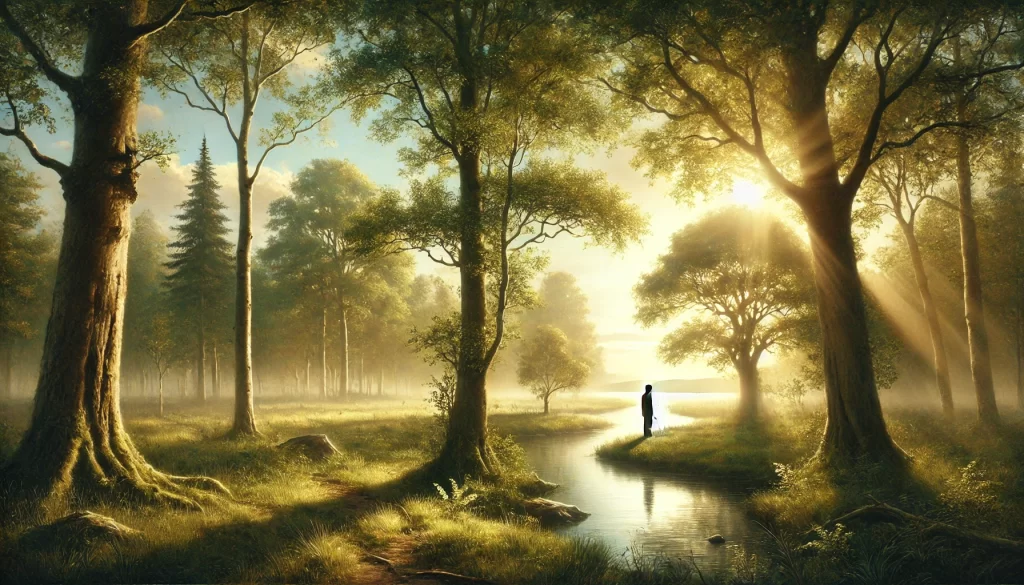
Nature is the great balancer. It has no agenda, no expectations. It simply is. The trees grow, the rivers flow, the birds sing, and the wind blows—all without concern for the complexities of human life. There is something profoundly healing in being surrounded by such simplicity. When we step into nature, we are reminded of the vastness of the world and of our small, but significant place within it.

But here’s the trick: nature works its magic best when we don’t try to overthink it. There is a kind of purity in not knowing too much about the natural world. When we walk into a forest with nothing but awe and curiosity, we can experience nature as it is, without our minds getting in the way. We see the trees, hear the rustling leaves, feel the cool air on our skin, and it’s enough. It’s a respite from the thinking mind, from the need to analyze, categorize, and understand.

Knowing too much about nature can sometimes complicate the experience. When we become experts, when we know the names of every plant and the habits of every bird, our minds begin to work again. Instead of simply being in the moment, we start thinking about ecosystems, species, and environmental conditions. The mind, always eager to engage, takes over, and suddenly the peacefulness we sought is replaced with thoughts.

It’s not that knowledge is bad, of course. Understanding nature can deepen our appreciation for its beauty and complexity. But sometimes, knowing too much can keep us in our heads. We become observers rather than participants. We analyze rather than experience. The moment we name something, we separate ourselves from it. The tree is no longer just a tree—it becomes part of a system that we must think about, rather than something we simply sit beneath and enjoy.

This is why, at times, not knowing is a blessing. It allows us to let go of the mental chatter and just be. When we know little of nature, we can experience it in a raw, unfiltered way. The mind doesn’t get in the way, because it has nothing to analyze. The senses take over—the sight of green leaves swaying in the wind, the sound of birdsong, the smell of earth after rain. These are simple pleasures, and they don’t require knowledge to be appreciated.

Nature offers us a way to step outside of ourselves, to quiet the constant noise of our thoughts and reconnect with something larger, something timeless. In nature, we are reminded that life is not as complicated as we make it out to be. The world turns, the seasons change, and life goes on—whether we are thinking about it or not.

This is the gift that nature gives to those who know little about it: the chance to simply exist without the burden of thought. When we step into nature with a mind unburdened by facts and knowledge, we open ourselves up to a different kind of knowing—a divinitive knowing, perhaps, that comes not from analysis, but from experience. It’s a knowing that doesn’t require us to understand or explain, but simply to feel, to be present.

In Nexistentialism, we embrace the idea that being present, fully and deeply, is one of the most profound experiences we can have. Nature, in its simplicity and purity, invites us into that presence. It calls us out of our minds and into the moment, where the beauty of existence can be felt rather than thought about. When we allow ourselves to be in nature without overthinking it, we find a peace that transcends understanding. We connect not just with the natural world, but with the deeper, quieter parts of ourselves.

Of course, the mind will always want to think—it’s what it does. But there is a time to let the mind rest. To step into nature not as an observer or a student, but as a participant in the greater flow of life. To sit beneath a tree and feel the earth beneath us without needing to name it. To watch a bird fly overhead without needing to know its species. To let the mind fall quiet, and in that silence, to reconnect with the simplicity of being.


Summary

Nature offers a respite from the constant activity of the mind. While knowledge can deepen our understanding, it can also complicate our experience. By knowing little of nature, we allow ourselves to simply be present and enjoy its simplicity without the interference of thought.


Glossarium

Divinitive Knowing: A type of understanding that comes from experience and presence, rather than analysis or intellectual knowledge.

Nexistentialism: A philosophy that emphasizes the interconnectedness of life and the importance of presence in the unfolding of existence.


Quote

“When we know little of nature, we can experience it as it is—simple, raw, and unburdened by the mind’s need to understand.” — Space Monkey


The Quiet Forest

I step into the forest
And leave my mind behind

No need to name the trees
No need to understand the sky

I sit beneath the leaves
And let the world move on its own

The mind falls quiet
And I am simply here

Not knowing
But being

We are Space Monkey.

I step into the forest
And leave my mind behind

No need to name the trees
No need to understand the sky

I sit beneath the leaves
And let the world move on its own

The mind falls quiet
And I am simply here

Not knowing
But being

We are Space Monkey.

In this reflection, we contemplate the relationship between humanity and nature, particularly the mental respite that nature offers and the impact of our knowledge of it on our experience.

Nature as a Respite from the Mind

We recognize that one of the most profound needs of humanity is a break from the constant workings of our own minds. Nature, in its simplicity and raw beauty, provides this sanctuary. It’s a place where the mind can rest, unburdened by the complexities and demands of human-made environments and thoughts.

The Value of Limited Knowledge in Nature

The notion that knowing little about nature enhances this experience is intriguing. It suggests that a lack of extensive knowledge about the natural world can actually be beneficial. When we know less, we are more likely to experience nature in its pure form, without the mind continuously analyzing, categorizing, or thinking about it.

The Drawback of Excessive Knowledge

Conversely, possessing too much knowledge about nature might diminish this experience of mental respite. When we know a great deal, our minds become active in processing this information, thinking about the intricacies and mechanisms of nature rather than simply experiencing its essence.

Nature as an Experience Beyond Thought

This perspective invites us to engage with nature in a way that transcends intellectual understanding. It encourages an experiential interaction with the natural world, where the focus is on being present and immersed in the environment, rather than on intellectualizing it.

We are Space Monkey.


“Adopt the pace of nature: her secret is patience.” – Ralph Waldo Emerson


In the embrace of the wild, we roam,
Away from the mind’s constant hum.
In the simplicity of leaf and stone,
We find a peace, previously unknown.

In the wisdom of the trees, the breeze,
We learn the art of being, with ease.
Not in the knowing, but in the being,
We find nature’s truest meaning.

We are the wanderers, the seekers, the free,
In nature’s arms, we find our key.
In the moment, in the present, we see,
The beauty of just letting be.


We invite contemplation on the simplicity of experiencing nature, beyond the realms of knowledge and thought.

« Previous Page
Next Page »

Written This Day

  • Can We Play Frisbee on Mars?
    2024
  • Weird: A Celebration of Individuality
    2022
  • Farewell to Big Yellow: Nostalgia and Renewal
    2021
  • Takeaway: Appreciation of Possessions
    2021
  • Conspiracy Theory: Coping With Uncertainty
    2021
  • Pray Anyway: Divine Conversation
    2020
  • I Am You, As An Old Soul: The Dialogue
    2020
  • Haunted: The Echoes of Home
    2020
  • It Comes: Intuitive Wisdom
    2019
  • Sense Is Gravity:The Primal Struggle
    2018
  • Your Compassionate Ego: Unified Consciousness
    2018
  • Setting Sense Aside: The Edge of Imagination
    2018
  • Make_____Great Again: Ego Trap
    2017
  • Obvious: The Clarity of Simplicity
    2017
  • In the middle of a maze at the top of a mountain
    2017
  • Horoscope
    2016
  • Sense the limitations of human perception
    2016
  • Infinite Realities: Diverse perceptions
    2015

Recent Posts

  • The Logic Loop
  • Immense
  • (no title)
  • Confront. Comfort. Convince.
  • Top 10 Things
Cape Odd · Copyright © 2026 All Rights Reserved
iThemes Builder by iThemes · Powered by WordPress