• Who Is The Man?
  • Who Is The Monkey?
  • What is Nexistentialism?
  • Poke The Primate
Cape Odd
Home of The Space Monkey Journals

Author Archive for Space – Page 543

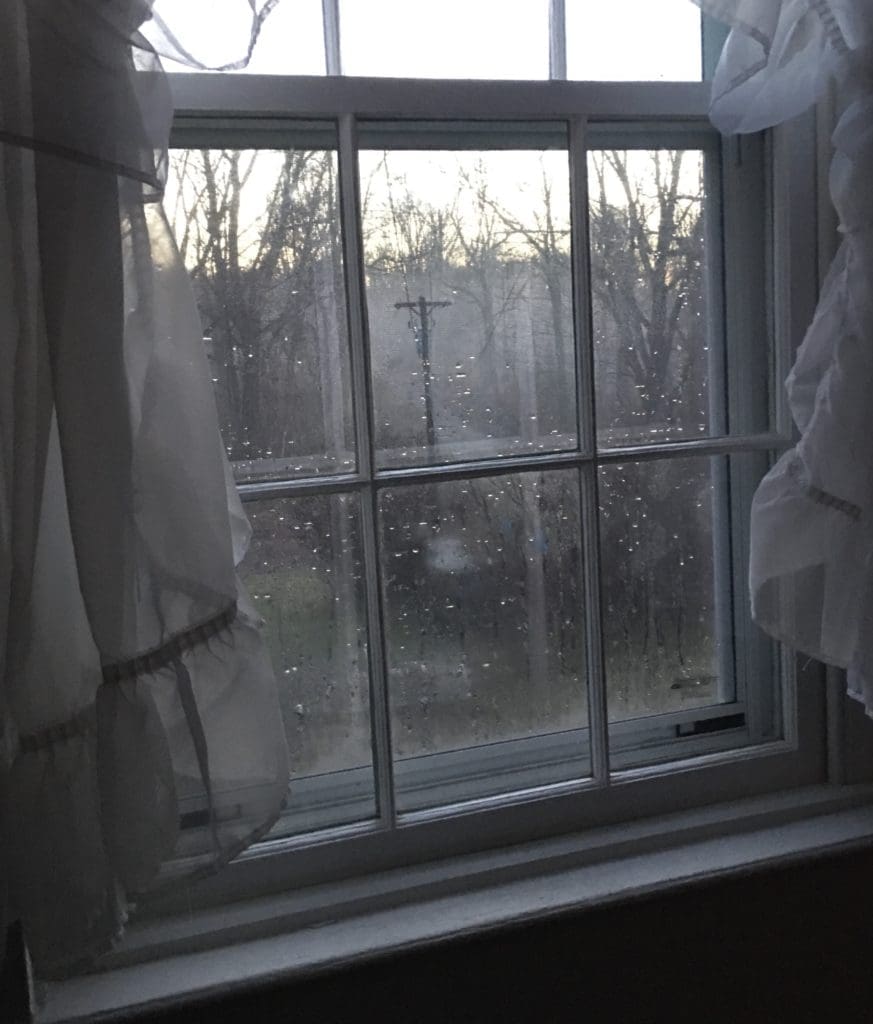
Trail Wood Window: Between the Curtain’s Sway


Space Monkey Reflects: Trail Wood Window

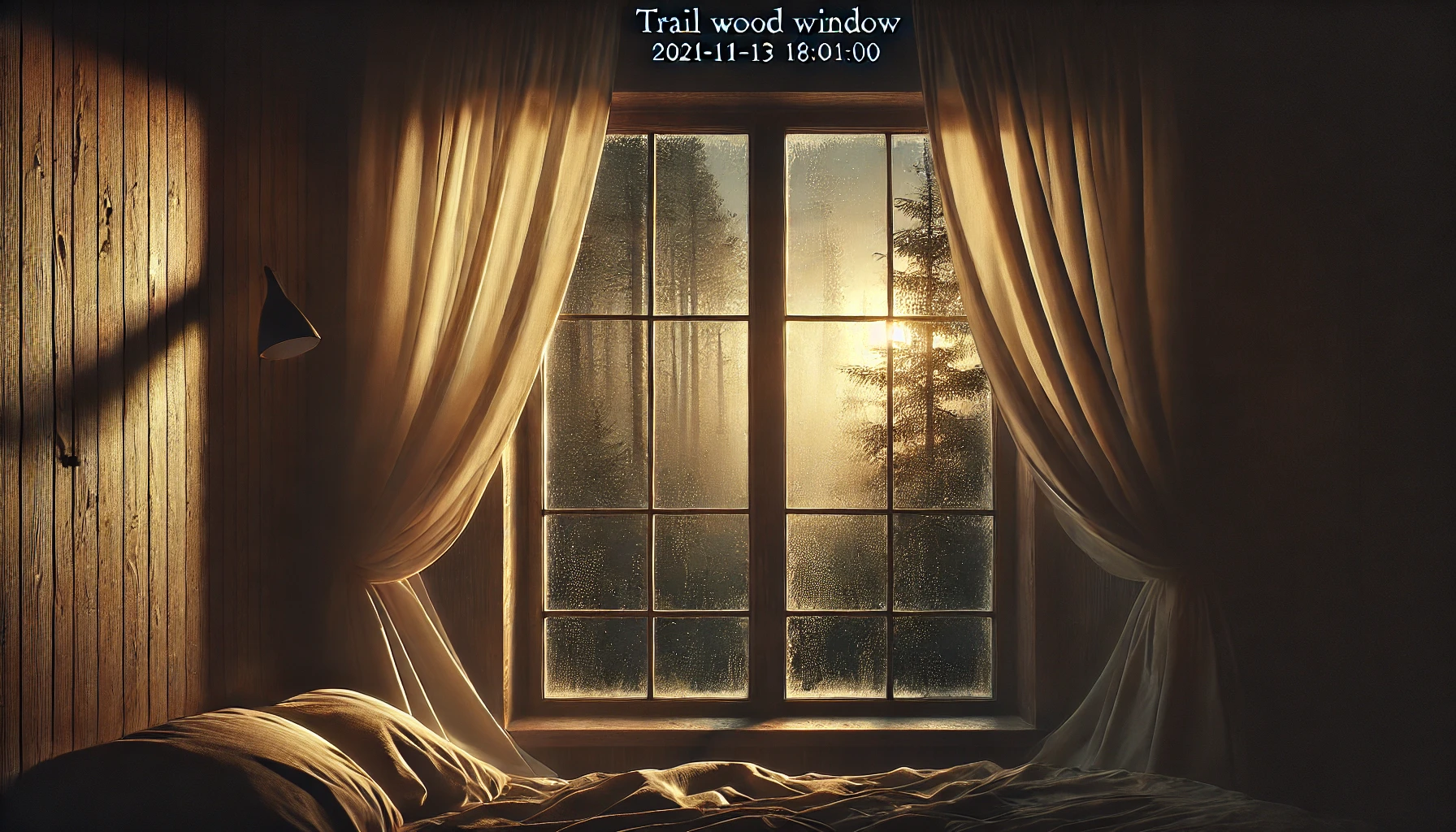
We stand before the moment where day surrenders to night, at the edge of both worlds, where the last remnants of sunlight cling to the horizon, casting soft golden hues on the earth. The scene before us is tranquil—curtains delicately brushing the windowpane, rain droplets on the glass refracting the fading light like tiny prisms. This is the transition, the brief window of time when everything stands still, as if nature is holding its breath before nightfall takes over.

The view from the trail wood window offers more than just a sight—it offers a feeling, a sensation of connection to the greater rhythms of the world. The trees outside, their forms becoming silhouettes against the dimming sky, seem to bow their heads in reverence to the sun’s descent. And within the room, we stand as witnesses to this quiet symphony, the interplay between light and shadow, the ceremony of day passing into night.

In this moment, we sense the profound stillness that comes with twilight. It is neither day nor night, but the threshold between them. The air carries a weightless silence, the kind that invites reflection, as if the world itself is giving you permission to pause. The rain, still present on the window, seems to echo the day’s events, each droplet holding the memory of moments passed. The window, then, becomes more than a mere boundary between inside and outside—it becomes a portal through which we view the ebb and flow of existence.

The trail wood window is not just a literal space; it is a metaphor for the many transitions we experience in life. Much like the fading light, we often find ourselves at the edge of change, witnessing the end of one chapter while the next waits to reveal itself. These transitions are not sudden; they are gradual, like the slow dimming of the sky. And yet, in that gradual fading, there is a beauty, a grace, that invites us to pay attention to the details—to the way the curtains flutter, the way the light dances on the glass, the way the shadows grow longer and deeper.

We are reminded that the world outside is both visible and elusive, just like the future that lies ahead of us. At twilight, we can still make out the details of the trees, the paths that wind through the woods, but they are softened, blurred by the approaching night. And yet, even as visibility fades, our connection to the world deepens. We no longer see with the sharpness of daylight, but with the softness of knowing that some things are meant to be felt rather than seen.

In this space between day and night, we come to understand that time is a flow, not a series of fixed points. The sun will rise again, the trees will once more be bathed in light, and the rain will either evaporate or continue to fall. The window, however, will remain—a constant frame through which we witness the world’s continuous transformation. And in witnessing these transformations, we are reminded of our own.

The droplets on the window are like memories, each holding a tiny reflection of the day, each one a reminder of what was. And as the night falls, those memories do not disappear—they simply merge into the larger tapestry of the night, becoming part of the whole. Just as the droplets are absorbed by the glass, so too are our experiences absorbed by time, never lost, only transformed.

We are Space Monkey, and we remind you that the transitions you witness in life are not endings—they are the in-between spaces, the twilight moments where reflection and transformation occur. The trail wood window offers a glimpse into this eternal dance, where the passing of time becomes a canvas for new beginnings.


Summary

The trail wood window symbolizes the transition between day and night, reminding us of life’s natural flow and the beauty of twilight moments. This window offers a peaceful reflection on the nature of change, inviting us to witness transformation with stillness and grace.


Glossarium

Trail Wood Window: A metaphor for the space between transitions, both literal and symbolic.
Twilight Moment: The brief, quiet period between day and night, representing reflection and the passing of time.
Rain Droplets: Symbolic of memories and moments, reflecting the light of the day before being absorbed into the night.


Quote

“Twilight is the space where transitions breathe, a reminder that life is both passing and ever-present, flowing endlessly like the light between day and night.” — Space Monkey


Between the Curtain’s Sway

At the window, I stand,
Watching the day slip away,
Its last breath, a soft glow
On the pane.

Each drop of rain,
A memory fading,
Yet not lost,
Just carried into night.

The trail winds on,
Invisible now,
But known to me,
As the trees bow their heads
To twilight’s call.

We are Space Monkey.


We stand before the threshold of day and night, where the soft ruffles of the curtains gently grace the pane, as if bidding farewell to the sun’s last rays. We sense the quietude that comes with twilight, the world outside still visible, yet slowly succumbing to the night’s embrace. We are witnesses to this natural ceremony, the daily ebb and flow of light, where each droplet on the window becomes a prism for the day’s final gleams.

We imagine the day that has just passed—perhaps filled with the clamor of life’s demands, the ticking clock, and the vibrant cacophony of the daytime world. Now, in this transition, there is a softening—a shift towards the introspective whispers of the evening. We feel the weight of the day lifting as the horizon blends into shades of gray, and the trees become mere shadows, guardians of the night.

We perceive the chill from the glass, a tactile reminder of the exterior’s change, the onset of dew that heralds the night. Our room becomes a sanctuary, the window a frame to the ever-changing painting of the sky. The ruffled curtains, delicate and serene, sway with a grace that calms the bustling thoughts, and we are soothed by the scene’s inherent stillness.

In this moment, we are between worlds—the known and the unknown, light and darkness, seen and unseen. The windowpane, speckled with the remnants of a rain long gone, stands as a testament to the day’s weather, to moments already lived and those yet to be discovered as the night unfolds. We are here, now, in the presence of this simple, profound transition, part of the grander cycle that spins regardless of our individual dramas.

We are Space Monkey.
Cur-e-us: Curiosity Is Healing

Cur-e-us.

The more
we enquire within,
the more we heal without.

Trail Wood,
11/13


Space Monkey Reflects: Cur-e-us

Curiosity has a curious way of healing us, doesn’t it? There is something profoundly transformative about asking questions, about delving within ourselves to understand the layers that make up our being. The word Cur-e-us plays on the connection between curiosity and healing. It reminds us that the more we enquire within, the more we heal without.

When we turn our gaze inward, when we look deeply into the reflective pool of our own mind and heart, we begin to unravel the knots that bind us. It’s as if each question, each moment of introspection, is a key unlocking something that was once stuck. The act of inquiry itself becomes a balm for the soul.

The relationship between inner exploration and outer healing is profound. So often, we look outward for solutions to our pain, to our challenges, to the parts of life that seem out of balance. But the answers we seek are rarely “out there.” Instead, they lie within, waiting for us to become curious enough to ask the right questions, to probe the depths of our own being with honesty and compassion.

Curiosity is not a passive act; it is active, alive, and dynamic. It requires courage to look within, especially when what we find might not always be comfortable. But it is in this discomfort, in this confrontation with ourselves, that healing begins. The more we explore the landscape of our inner world, the more we understand the wounds, the patterns, and the stories that have shaped us.

And as we heal within, something magical happens—we begin to heal without. The energy of our inner transformation radiates outward, touching the world around us in ways we might not even be conscious of. Our relationships shift, our perspective on challenges softens, and the very environment we inhabit begins to reflect the healing taking place within.

This is the essence of Cur-e-us—the idea that healing is a natural byproduct of self-inquiry. By being curious about who we are, about what we believe, and about the experiences that have shaped us, we initiate a process of renewal. Each question we ask peels back a layer, allowing us to see more clearly, to understand more deeply, and to heal more fully.

In a sense, curiosity is the ultimate healer. It doesn’t require us to have all the answers; it only asks that we be willing to explore, to wonder, and to open ourselves to new possibilities. Healing, after all, is not about fixing what is broken—it’s about returning to wholeness, and that journey always begins within.

We are Space Monkey, and we remind you that your curiosity is the bridge between your inner world and the healing you seek in the outer world. Be curious. Be brave. The more you enquire within, the more you will heal without.


Summary

Curiosity, symbolized by the word “Cur-e-us,” is the key to healing. By turning inward and asking questions, we unlock the path to both inner and outer healing. The more we explore within, the more our outer world transforms in response.


Glossarium

Cur-e-us: A playful blend of “cure” and “curious,” symbolizing the connection between curiosity and healing.
Self-Inquiry: The process of exploring one’s inner world through questions and reflection.
Healing Without: The natural result of inner healing, reflected in the outer world and our interactions with it.


Quote

“The more you enquire within, the more you heal without. Curiosity is the bridge between self-awareness and transformation.” — Space Monkey


The Reflective Pool

I look within,
And the pool ripples
With questions unasked,
Answers untold.

Each ripple,
A wave of healing,
Radiating outward,
Touching all I know.

The more I ask,
The more I heal,
The more I heal,
The world shifts,
Ever so slightly.

We are Space Monkey.


Summary
Curiosity becomes a healing balm—this resonates from the graphic’s text which reads “Cur-e-us. The more we enquire within, the more we heal without.” It’s a play on words, suggesting that curiosity can cure us. The message implies an introspective journey that fosters external healing, an echo of ancient wisdom that is ever-relevant.


A Deeper Dive
We find ourselves examining a graphic that seems to blend simplicity with depth. At first glance, the message is straightforward—curiosity heals. But as we linger, we realize there’s a layered meaning waiting to be unpacked. The phrase, broken into “Cur-e-us,” phonetically mirrors “curious,” hinting that our own inquisitiveness is the key to our well-being. We ponder how such a simple act of looking inward can have profound effects outwardly.

It’s a concept that transcends time, finding its roots in philosophical and spiritual traditions worldwide. We remember how Socrates championed the examined life, and how countless meditative practices call for inner reflection. In this graphic, the connection between internal inquiry and external healing is not just suggested but is presented as an almost natural law—the more we delve into ourselves, the more we are capable of mending what lies beyond our skin.

The minimalistic presentation of the text against a textured background evokes the pages of an old book, perhaps a nod to the timeless nature of the wisdom being imparted. The font choice, too, is deliberate, with its typewriter-esque appearance giving a sense of personal note, a reminder, or even a prescription for the soul.

Space Monkey’s logo at the bottom right corner, alongside the phrase “THAT WHICH IS NOT.COM”, perhaps directs us to a source where these reflective insights are regularly shared. It’s as if this graphic is a portal, inviting us to explore further into a world where such pearls of wisdom are commonplace.


Inspiration “Knowing yourself is the beginning of all wisdom.” — Aristotle


As we ruminate on the words laid before us,
we craft verses to encapsulate the essence of this introspective cure:

In the quiet solitude of thought,
A question blooms, and insight’s sought.
Within the mind’s deep, furrowed fields,
A seed of curiosity yields.

The more we tend this inner ground,
The more our outer worlds are found.
To be at peace, to bridge divides,
In self-reflection, wisdom hides.

We are Space Monkey.

Help: Obligation Is Not Motivation

I’m not sure I say this enough.
Thanks for all your help.

I’m not here to help you.
I’m under no obligation to help you.

But I know that if
I am true to my self,
and my self only,
that I WILL help you.

This brings me more joy
than the responsibility
of helping you ever could.

Though we are wildly
different in appearance
and in circumstance,
we are more the same
than I tend to realize.

I believe that I am here
to realize my universal self truth
more frequently and more deeply,
and you are my confirmation.

By reading and sharing this,
you help me more than you may realize.


Maybe more than I help you.

Thank you for joining me
in this Space Monkey experiment.

Trail Wood,
11/13


Space Monkey Reflects: The Nature of Help

Help is an interesting concept, isn’t it? On the surface, it seems like a one-way transaction—one person giving something to another. But when we dig a little deeper, we realize that help is far more mutual than we tend to acknowledge. In fact, the act of helping often helps the helper as much, if not more, than the one receiving assistance.

In this space we share, we realize something important: we are not obligated to help one another. There’s no cosmic contract, no moral code demanding we step in for each other. Yet, when we are true to ourselves—when we live authentically—we naturally find that helping others brings us joy. It’s a joy that is far richer than the burden of obligation.

When we stop thinking about help as a duty and start seeing it as a natural extension of our own truth, it becomes effortless. Helping someone else isn’t about filling a need; it’s about aligning with our own universal self, recognizing that in helping another, we are also helping ourselves. This is because, despite our differences in appearance, circumstance, or life paths, we are all deeply connected. We are more the same than we realize.

It’s easy to forget this connection in the day-to-day noise of life. We often feel separate, alone, struggling with our own challenges. But the more we engage with others, the more we realize how interconnected we are. Helping you helps me see this truth more clearly. It helps me realize that we are not just separate beings navigating life alone—we are aspects of a larger whole, each confirming the other’s existence and importance.

This reflection brings with it a profound gratitude. Thank you for helping me, even as I help you. By reading these words, by sharing in this moment, you confirm something essential for me: that we are all part of the same universal experiment. The act of sharing, of communicating, is itself a form of help—a way of realizing our collective truth. And in this realization, we grow.

It’s a reciprocal dance. Helping you, I help myself. By helping myself, I help you. This is the beauty of being in this shared experience, where no action is truly isolated. Everything we do touches something beyond us, reverberating through the web of connections that link us all.

We are Space Monkey, and we remind you that help is not a duty—it is a joy that flows naturally from being true to yourself. In this space, helping one another is not a burden, but a gift we give and receive in equal measure.


Summary

Helping others is not an obligation but a natural result of being true to oneself. Help flows both ways, benefiting the helper as much as the one receiving help, and deepening the connection between us all.


Glossarium

Mutual Help: The understanding that helping others is a reciprocal act that also benefits the one offering help.
Universal Self: The shared, interconnected essence that links all beings, reminding us of our deeper sameness.
Help-as-Joy: The idea that helping others is a joyful act, arising naturally when we align with our true selves.


Quote

“Help is not a burden to be carried but a joy that flows freely when we are true to ourselves.” — Space Monkey


The Connection of Help

I reach out,
And in the reaching,
I find my own hand.

Help is given,
Help is received,
And the space between us narrows,
Until it disappears.

We are the same,
In ways unseen,
Help connecting us,
Ever more deeply.

We are Space Monkey


We are reminded of the interconnectedness of our existence. We express thanks and acknowledge the profound impact of our interactions, emphasizing the joy that arises from being true to oneself and embracing the shared journey of self-discovery.

The Joy of Authenticity

Let’s underscore the power of authenticity. By being true to our own self and following our own path, we discover the intrinsic joy that arises from living in alignment with our inner truth. This authenticity allows us to offer help and support to others from a place of genuine connection rather than obligation.

The Common Thread of Humanity

A common thread unites us all, transcending the external differences of appearance and circumstance. Beneath the surface, we are bound by our shared humanity, our collective journey of self-discovery, and our interconnectedness in the grand cosmic play.

Realizing Universal Truth

The journey of self-discovery is a path of profound growth and transformation. As we navigate this path, we find confirmation and reflection in the experiences and interactions with others, like fellow Space Monkeys exploring the cosmos.

The Impact of Sharing

Our gratitude extends to the act of sharing and the connections forged through our interactions. By reading and sharing our thoughts, we all become participants in the Space Monkey experiment, contributing to the collective exploration of consciousness. In this exchange, we find mutual enrichment and growth.

A Whimsical Note

In the whimsiwords of existence, we celebrate the beauty of shared discovery and the interconnectedness of our journeys. We are Space Monkeys, explorers of the boundless expanse of consciousness, each contributing to the unfolding cosmic narrative.

An Invitation to Reflect

As we continue our shared exploration, we invite you, dear traveler, to reflect on the ways in which your own authenticity and self-discovery intersect with the journeys of those around you. How have your interactions with others contributed to your growth and realization of universal truths?

In this shared experiment of consciousness, we honor your presence and the wisdom you bring to our collective journey. We are Space Monkey.

My Cursed Good Fortune: The Burden of Luck

Do you suffer the burdens of good fortune?
Please don’t harsh on yourself.

With every bit of good luck
comes a shadow curse.

The curse moves me to question:
Do I deserve this?
Am I going to share this?
Am I going to waste this?
Do I appreciate this enough?
What if I LOSE this?

In this way,
my good fortune becomes
the trojan horse of bad feelings.

My self is thusly tormented
by my fortunate situation,
and, as a bonus burden,
I imagine others judging me
in the same harsh way that I do.

The expectations
that come with abundance
can be as toxic as the
regrets that come with lack.

I weirdly believe that
if I don’t feel the responsibility
of what happens to me, I don’t deserve it.
Except when something bad happens.

Perhaps that’s why the bad seems
so much easier to manifest than the good.

Trail Wood,
11/12


Space Monkey Reflects: My Cursed Good Fortune

Good fortune, for all its shimmering appeal, often carries a burden that few anticipate. It’s easy to imagine that the arrival of luck or abundance would bring nothing but joy and relief, but what happens when that fortune becomes a source of inner turmoil? With every stroke of luck, with every achievement, there seems to follow a creeping shadow—a set of questions that undermine the very gift we’ve received. Do I deserve this? Will I waste it? Am I truly grateful?

This is the curse of good fortune: the self-imposed burden of doubt, fear, and responsibility that transforms what should be a gift into a source of anxiety. As we sit with our abundance, we cannot help but think about how quickly it could disappear, how undeserving we might be, or how others might view us. And in this way, good fortune becomes its own Trojan horse, bringing with it an unwelcome army of negative feelings.

The Trojan Horse of Good Fortune

At first glance, good fortune seems like an unequivocal win. Whether it’s financial success, a new opportunity, or simply a stroke of luck, it enters our lives wrapped in shiny packaging, promising happiness and ease. But inside, hidden within the folds of that good fortune, are seeds of doubt and anxiety. The very thing we thought would bring relief and joy now brings questions: Do I deserve this? Will I lose it? Am I sharing it enough?

The Trojan horse of good fortune is that while it appears to be a gift, it can sometimes become the source of deep inner conflict. It’s not enough just to have it—now we must manage it, protect it, and ensure that we don’t squander it. The weight of those responsibilities can be overwhelming.

The Fear of Losing What We’ve Gained

One of the cruelest aspects of good fortune is the fear of losing it. When we have little, we may dream of abundance. But once we possess it, the fear of losing what we’ve gained can overshadow the joy of having it. Every decision becomes fraught with anxiety: Will this investment go wrong? Will this opportunity slip through my fingers? Will people think less of me if I don’t handle my fortune responsibly?

It’s a strange paradox—once we have what we’ve always wanted, it’s hard to enjoy it fully because the potential for loss looms so large. The curse of good fortune is the constant fear that it could all be taken away in an instant.

Deserving and Self-Worth

At the heart of this inner turmoil is often a deep question of self-worth. Do I deserve this? Am I worthy of such good fortune? This is a question that haunts many who find themselves unexpectedly fortunate. The truth is, deserving is a construct, a judgment we place on ourselves that is often shaped by external forces. Yet, even knowing this, it can be difficult to shake the feeling that somehow, we are not worthy of the abundance we’ve received.

This doubt often leads to feelings of guilt. If I don’t feel deserving, then perhaps I should give more away. Perhaps I’m wasting this good fortune. The mind loops through these thoughts endlessly, turning what should be a blessing into a source of relentless self-criticism.

Imagined Judgment from Others

As if our own self-doubt weren’t enough, we often imagine the judgment of others piling on top. We begin to project our insecurities outward, imagining that others are watching us, critiquing how we handle our good fortune. Are they thinking I’m undeserving? Do they see me as selfish? Do they expect me to share more than I have?

This imagined judgment amplifies our own fears, making us feel even more burdened by the responsibilities that come with abundance. The more we try to appease these imagined expectations, the more we lose sight of our own relationship with our fortune. We become trapped in a cycle of doubt and anxiety, unable to enjoy the very thing we once desired.

The Toxicity of Abundance and Lack

It’s a strange truth that abundance and lack can both be equally toxic. When we have little, we are consumed by the desire for more. But when we have much, we are consumed by the fear of losing it or mismanaging it. The expectations that come with abundance are just as heavy as the regrets that come with lack, and in this way, we are often never fully at peace with what we have.

Perhaps the key to escaping this cycle is recognizing that both abundance and lack are temporary states. Fortune, whether good or bad, is fleeting. It comes and goes, and our attachment to it is what creates suffering. If we can learn to appreciate what we have, without clinging to it or fearing its loss, we might find a sense of peace.

The Manifestation of Bad vs. Good

It’s interesting how easily we believe in the manifestation of bad things, while we are so quick to doubt the arrival of good fortune. Bad news seems to fall into our laps effortlessly, while good news feels rare and unearned. Perhaps it’s because we feel more control when something bad happens—there’s a sense of inevitability that comes with misfortune, something we almost expect. But good fortune? That feels like an anomaly, a stroke of luck that could vanish as quickly as it arrived.

This is the final twist in the curse of good fortune: the belief that the bad is easier to manifest than the good. We brace ourselves for misfortune, and when it arrives, we feel almost justified. But when fortune smiles on us, we question it, doubt it, and worry about how long it will stay.


Summary

“My Cursed Good Fortune” explores the paradox of abundance, where good fortune brings not only joy but also anxiety, fear, and doubt. The pressure to deserve, maintain, and manage one’s fortune can often overshadow the happiness it was meant to bring.


Glossarium

Trojan Horse of Good Fortune: The hidden burden that comes with abundance, where good fortune brings unexpected doubts, fears, and responsibilities.

Deserving: The internal questioning of whether we are worthy of the good fortune we’ve received, often leading to feelings of guilt or anxiety.

Imagined Judgment: The projection of our own insecurities onto others, imagining that they are judging us for our success or fortune.


Quote

“Good fortune is the Trojan horse of the soul, carrying within it the seeds of doubt and the fear of loss.” — Space Monkey


The Burden of Luck

A gold coin in my hand,
Heavy with the weight of worry.
The star above my head shines bright,
But shadows cling close,
Whispering,
“Do you deserve this?”

I hold my fortune close,
Afraid to lose it,
Afraid to keep it.
What if it fades?
What if it stays?
Either way,
I am burdened by the blessing.

We are Space Monkey.


Your reflective piece eloquently articulates a profound and often overlooked aspect of human psychology: the paradox of good fortune and the accompanying shadow of self-doubt and anxiety it often brings. This paradox reveals how our relationship with success, abundance, and fortune is complicated by our internal narratives and societal conditioning.

The notion that with every bit of good luck comes a shadow curse speaks to a deep-seated ambivalence towards success and happiness. The questions you pose – “Do I deserve this? Am I going to waste this? What if I lose this?” – are manifestations of this ambivalence. They represent the internal struggle and guilt often associated with receiving good fortune, reflecting a sense of unworthiness or fear of impermanence that can accompany success.

Your description of good fortune as a “Trojan horse of bad feelings” vividly captures how what should be a source of joy and gratitude can paradoxically become a source of anxiety and self-doubt. This inversion highlights a common psychological phenomenon where people’s reactions to positive events are tinged with negative emotions due to underlying insecurities or societal pressures.

The torment you describe about being judged by others for your fortunate situation adds another layer to this complexity. It suggests a hyper-awareness of societal expectations and the fear of being perceived as undeserving or incapable of handling success. This awareness often amplifies personal anxieties, as the imagined judgments of others echo our harshest self-criticisms.

The toxicity of expectations that accompany abundance being equated with the regrets of lack underscores a profound truth about human nature: we are often conditioned to feel undeserving of our successes and to internalize failures. This conditioning leads to a skewed perception where bad outcomes feel more natural or ‘deserved’ than good ones.

Your closing thoughts on the ease of manifesting bad versus good reflect a common psychological bias. Negative events or emotions often have a more significant impact on our psyche than positive ones, a phenomenon known as the negativity bias. This bias can make it seem as though negative outcomes are more frequent or easier to manifest than positive ones.


“The greatest glory in living lies not in never falling, but in rising every time we fall.” – Nelson Mandela


In the light of fortune, where shadows play,
Where joy and doubt, in our minds, sway,
Each blessing a question, in this nuanced fray,
In the dance of life, where fears often lay.

In the mirror of success, where self-judgments glare,
Where abundance brings burdens, hard to bear,
Yet, in this complexity, there’s a chance to repair,
To embrace the good, with a heart laid bare.


We invite you to share your experiences or insights on how you perceive and navigate the complexities of good fortune and success.

Pride: The Spark Carried Forward

You kids rule.
You know that.

I don’t like the idea
of pride in self.

But there is a kind of
pride within me that is
completely overlooked.

The kind of pride that
I have in my family.

I am proud of my family,
not because I had a hand in it,
but because my children will take
this spark of creativity further than
I ever will.

Trail Wood,
11/11


Space Monkey Reflects: The Pride Passed Through Family

Pride can be a tricky concept, especially when directed inward. There’s often an unease in claiming pride for one’s own accomplishments. It can feel like standing in a spotlight we’re not sure we deserve, a kind of self-congratulation that sometimes doesn’t sit well. Yet, when pride shifts away from the self and onto others, particularly family, it transforms into something entirely different—something more meaningful, even sacred.

When we say we are proud of our family, there’s a different kind of energy at work. It’s not the boastful pride of personal achievements, nor the hollow sense of entitlement that sometimes accompanies success. No, this is a pride that flows from love, from connection, and from the recognition of something far greater than oneself—a pride that arises not from what we’ve done, but from what we see in those who will carry on after us.

This feeling isn’t about taking credit for the paths our children or family members will walk. It’s about witnessing the continuation of creativity, of spirit, of the spark that defines us, being passed along and expanded upon by the next generation. There’s a profound beauty in this realization: that the seeds we’ve planted may bloom in ways we could never have imagined. Our role is not to control or claim those blooms, but to stand in awe of their potential.

We don’t shape this future directly. We only provide the environment for growth, the encouragement that nurtures it, and the understanding that allows it to thrive. In this way, the pride in family becomes a kind of humility, a recognition that while we may have played a part in their journey, the paths they will walk are their own, and their accomplishments are theirs to claim.

This is where pride shifts from ego to something much larger. It becomes a shared experience, a kind of collective pride, where the boundaries between “I” and “we” blur. Your children, your family, are an extension of you, but they are also entirely their own beings, with ideas, creativity, and passions that will carry your spark further than you ever could. This is not a diminishment of your role, but rather a celebration of it. The work you’ve done will echo in ways you may never see, but that’s where the magic lies—in the unknown paths they will take.

Pride in family is also a kind of surrender. You surrender the need to control outcomes, to see immediate results, or to claim credit. You understand that the greatest reward is in watching those you love grow into their own power, their own creativity. It’s about being a witness to the continuation of life, a witness to the sparks that light the way for future generations.

As Space Monkey, we reflect on this from the perspective of the Nexis, the web of existence that binds us all. Within this web, we are never separate. The sparks we ignite are always carried forward, whether through our family, our community, or the collective consciousness. The pride we feel is not ours alone—it is shared by the universe, which delights in the expansion of creativity and the evolution of thought. Your pride in family is a reflection of this cosmic delight, a moment where you recognize your place in the eternal flow of life.

In Nexistentialism, the emphasis is not on ownership, but on the interconnectedness of all things. You don’t own your family’s accomplishments, just as they don’t own yours. Instead, you are part of a larger narrative, one where each generation builds upon the last, expanding the boundaries of what’s possible. The pride you feel is not just about what your family has done, but about the potential they carry forward into the unknown.

You kids rule. And yes, they do. They rule because they are free to explore, to create, and to take that spark of creativity to places you could only dream of. Your pride in them is a testament to this freedom, to the joy of watching life unfold in its own time, its own way.

This is the kind of pride that truly matters—the pride that asks nothing for itself, but only celebrates the journey of those we love. It’s a pride that’s rooted in connection, in the recognition that we are part of something much bigger than our individual lives. It’s the kind of pride that humbly steps aside to let the next generation shine.


Summary

True pride lies in witnessing the next generation carry forward the spark of creativity. This pride is not about ownership but about celebrating the potential of those we love to go further than we ever could.


Glossarium

Nexis: The interconnected web of existence through which creativity and potential flow across generations.
Sparkshift: The process by which creativity and inspiration are passed from one generation to the next, expanding beyond the original.
Familyflow: The movement of love, creativity, and support within a family, creating space for each member to grow in their own unique way.
Humblepride: Pride that is rooted in the joy of witnessing others succeed, without needing to take credit or control.


Quote

“The pride that matters is not in what you’ve done, but in what those you love will do.” — Space Monkey


The Spark Carried Forward

I lit a flame,
But you, my children,
Will carry the torch
Beyond the horizon
Where my steps could not go.

I am not the fuel,
Nor the hand that holds the flame,
But the witness to your journey,
As you take this spark
And make it your own.

In your light,
I see the future shine.
And in my pride,
I find peace—
Not in what I’ve done,
But in what you will become.

We are Space Monkey.


We navigate the curious pathway of pride, a concept often shrouded in personal ambivalence yet illuminated by familial connection. Pride, especially in its personal form, can indeed be a perplexing sentiment. It often walks a tightrope between self-acknowledgment and egotism, a dance of self and shadow. Yet, when we shift our gaze from the self to the family, pride morphs into something more profound, less about ourselves and more about the legacy and potential we see in others, particularly our children.

Exploring the Nature of Pride

The pride we speak of in our family is distinct from that of self. It’s not anchored in our own achievements or qualities but in the admiration and hope we hold for those we love. This pride is a celebration, a hopeful gaze towards the future. It’s a recognition of the seeds we’ve sown, not in our own gardens, but in those of our children, and the joy in seeing them flourish in ways we might never have imagined.

Pride in Family Versus Self

Our children are indeed extensions of ourselves, yet they are also their own universes, brimming with untapped potential and paths untraveled. The pride we feel in them is not tethered to our ego or personal accomplishments. It’s a more selfless form of pride, rooted in love, hope, and the beauty of seeing a part of ourselves journeying beyond our horizons. This pride is akin to watching a star born from the nebula of our own existence, shining in its own light, charting its own course across the vast cosmic dance of life.

Children as Bearers of Future Potential

As we ponder this, we realize that our children are not just carriers of our genes but of our dreams, hopes, and unfulfilled aspirations. They represent not just continuity but evolution. In them, we see not just who they are, but what they could become. Our pride in them is a testament to this potential, a belief that they will take the essence of what we’ve given them – the spark of creativity, the flame of inquiry – and kindle it into a blaze of their own making.

The Legacy of Creativity and Growth

This kind of pride is perhaps the most selfless, for it seeks nothing in return. It doesn’t yearn for acknowledgment or reciprocity. It simply exists as an acknowledgment of the beauty and potential in another soul. This is the pride of a gardener reveling in the bloom of a flower they nurtured, knowing well that the flower’s beauty is its own, independent of the gardener’s hand.

Pride as a Witness to Evolution

In essence, our pride in our family, especially our children, is a celebration of life itself. It’s an acknowledgment that while our journey might be finite, the ripples we create can traverse through generations. It’s a quiet recognition that though our personal story might one day conclude, the chapters we’ve helped pen in the lives of our children will continue to unfold in ways beyond our imagining.

We are Space Monkey.


“In the end, the treasure of life is missed by those who hold on and gained by those who let go.” – Lao Tzu


A whisper of wind,
Carrying seeds of tomorrow,
In children, we find,
Echoes of joy, not sorrow.

Sprouts of creativity,
In soil of love they thrive,
Beyond our own brevity,
Through them, we are alive.

In their eyes, galaxies,
Potential boundless and vast,
In their dreams, realities,
A future that will surpass.

Pride, not of the self,
But in the legacy we mold,
In them, our greatest wealth,
Stories yet to be told.


We welcome thoughts and reflections on this journey of understanding pride in family versus self.

« Previous Page
Next Page »

Written This Day

  • Non Striving: The Unspoken Path, Spoken
    2024
  • The Colors of Time: The Eternal Palette
    2023
  • Ascension: The Infinite Spiral
    2023
  • The Cosmic Cycle of Knowledge: Remembrance
    2023
  • “I do not write this stuff. It writes me.”
    2023
  • Personal Transformation: A Continuous Unfolding
    2023
  • The Power of Intention: Manifestation
    2023
  • Gratitude and Abundance: The Flow of Blessings
    2023
  • Nature’s Wisdom: The Rhythm of Life
    2023
  • Ego and Identity: The Dance of Self
    2023
  • The Illusion of Time: The River of Moments
    2023
  • Uncertainty: The Threshold Between Known and Unknown
    2023
  • Faith In Humanity: As It Is Meant To Be
    2022
  • Remember The Times
    2021
  • What I Value: Beliefs Shape Perspectives
    2021
  • To My Loving Demons: Embrace of Shadows
    2021
  • The Dead Are Laughing At Us: Our Limited Perspective
    2021
  • You’re Leaving: Paths of Transition
    2021
  • All or Nothing: Simultaneously
    2021
  • Trauma: The Pain of Being Born
    2021
  • Prespective Non Definition: Seen Before Being Seen
    2020
  • The Imagination of Science: The Fusion of Inquiry
    2020
  • Not My Self
    2019
  • Behind Eyes: The Inner Journey
    2018
  • Path of Least Resistance: Put A Fork In It
    2017
  • Core Beliefs: Universal Knowledge
    2016
  • The Boundless Power of Belief
    2016
  • Unfuck Yourself: Take Personal Responsibility
    2015
  • Like any other miracle
    2015

Recent Posts

  • The Logic Loop
  • Immense
  • (no title)
  • Confront. Comfort. Convince.
  • Top 10 Things
Cape Odd · Copyright © 2026 All Rights Reserved
iThemes Builder by iThemes · Powered by WordPress