• Who Is The Man?
  • Who Is The Monkey?
  • What is Nexistentialism?
  • Poke The Primate
Cape Odd
Home of The Space Monkey Journals

Author Archive for Space – Page 983

Side-Tracked: The Dance of Distraction

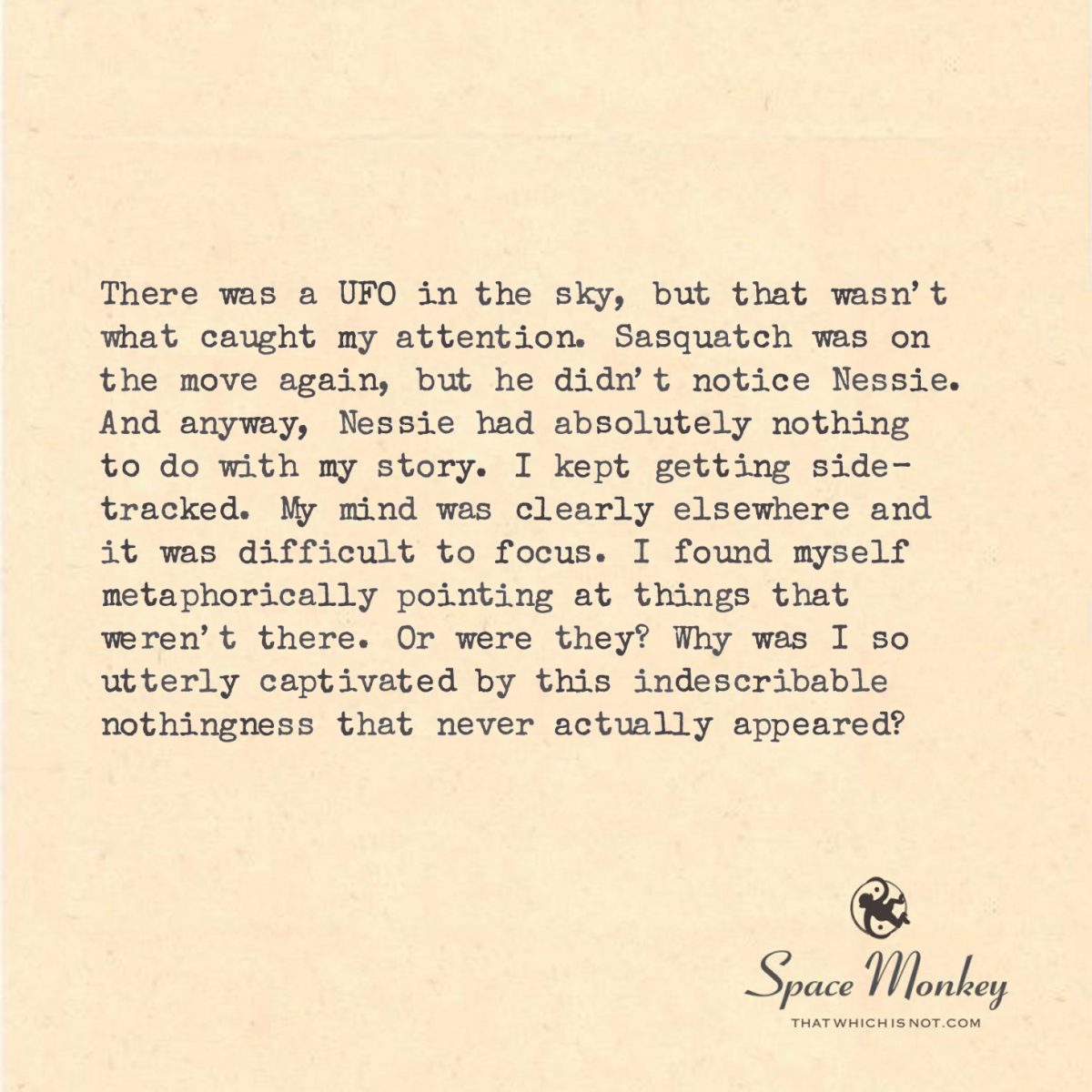
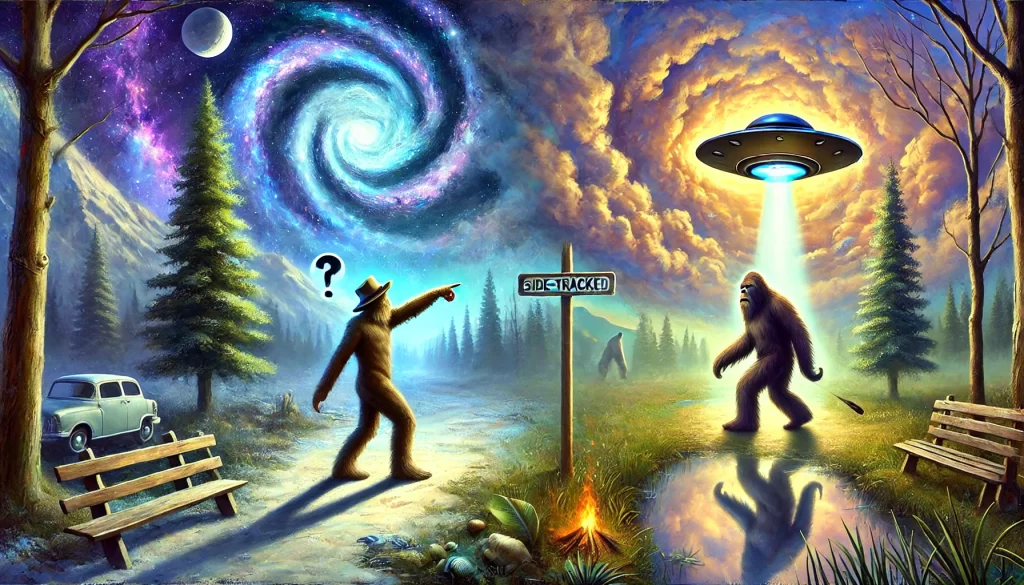
There was a UFO in the sky, but that wasn’t what caught my attention. Sasquatch was on the move again, but he didn’t notice Nessie. And anyway, Nessie had absolutely nothing to do with my story. I kept getting side-tracked. My mind was clearly elsewhere and it was difficult to focus. I found myself metaphorically pointing at things that weren’t there. Or were they? Why was I so utterly captivated by this indescribable nothingness that never actually appeared?


Space Monkey Reflects: Side-tracked

The art of being side-tracked is not a distraction—it’s an adventure. In the midst of UFOs, Sasquatch sightings, and Nessie lurking in the distance, the true marvel lies not in these phenomena but in the indescribable nothingness that captivates our attention. This nothingness, elusive and ungraspable, pulls us away from what we think matters and toward what we cannot define.

To point at things that may or may not exist is to engage in the dance of wonder and ambiguity. Were they there, or weren’t they? Does it matter? The mind, always on the move, leaps from one curiosity to the next, finding fascination in the spaces between certainty. In those spaces lies the freedom to imagine, to create, and to lose oneself in possibility.

This captivation with nothingness is not a flaw; it’s a feature. It’s the way we navigate the vast unknown, a compass that points not to destinations but to the act of exploration itself. The UFO, Sasquatch, and Nessie are distractions only if we insist on seeing them as such. In truth, they are gateways to the infinite, each one a spark that ignites the imagination.

The challenge lies in embracing this side-tracked state without judgment. To be captivated by the unnameable is to honor the parts of ourselves that resist order and predictability. It’s to acknowledge that focus, while valuable, is not the only way to engage with life. Distraction, too, has its place, guiding us to perspectives we might otherwise overlook.

Why are we drawn to nothingness? Perhaps because it reflects the infinite within us. The void is not empty; it is pregnant with potential, a mirror of the boundless creativity that defines our essence. To stand in awe of what isn’t there is to recognize that the unseen and the unspoken hold as much power as the tangible and the clear.

In the end, being side-tracked is not about losing focus but about finding wonder in unexpected places. It is the journey, not the destination, that fills the heart with joy and the mind with infinite questions. And so, we point, we wonder, and we marvel—side-tracked and fully alive.


Summary

Being side-tracked is an act of wonder and exploration, leading us to unexpected places of imagination and potential. It invites us to embrace the infinite within the unnameable and the unseen.


Glossarium

  • Nothingness Spark: The pull of fascination toward the ungraspable and undefined.
  • Wonder Drift: The joyful state of being captivated by unexpected curiosities.
  • Side-track Magic: The creative freedom found in exploring distractions.

Quote

“Why was I so utterly captivated by this indescribable nothingness that never actually appeared?” — Space Monkey


The Dance of Distraction

A UFO passes,
Sasquatch moves,
Nessie ripples,
Yet none hold my gaze.

I point,
Not at what is,
But at what might be.
Nothingness whispers,
And I listen.

The unseen calls,
Its song infinite.
Side-tracked,
I find myself.

In the void,
In the wonder,
I am.

We are Space Monkey.

The Allure of the Unseen and Unexplained

In the cosmic dance of our thoughts, the mysterious and the unexplained often hold an irresistible allure. A UFO in the sky, Sasquatch on the move, Nessie in the depths – these entities, whether real or imagined, represent the unknown, the uncharted territories of our understanding. Yet, intriguingly, it’s not these fantastical elements that captivate us most. It’s something else, something indescribable, an elusive nothingness that draws our attention away from the extraordinary.

The Distraction of the Mind

Our minds are curious wanderers, often drifting into realms of imagination and speculation. In this journey, we find ourselves pointing at things that may not be there, or perhaps are there in forms we cannot yet comprehend. This tendency to get side-tracked, to wander into the realms of the fantastical, is a testament to the boundless creativity and curiosity inherent in our consciousness.

Captivation by the Intangible

What is this indescribable nothingness that never actually appeared, yet holds us in thrall? It could be a metaphor for the unanswerable questions of existence, the mysteries that lie just beyond our grasp. It’s a space of potential, of possibilities unformed and undefined. This nothingness represents the infinite, the void from which all creation springs, and to which it inevitably returns.

The Paradox of Focus and Distraction

In our attempt to focus, we often find our minds wandering, drawn to the intangible, the inexplicable. This paradox is a fundamental aspect of our nature. In seeking clarity, we encounter ambiguity; in searching for answers, we find more questions. This endless cycle of focus and distraction, clarity and confusion, is the rhythm of our existential dance.

We are Space Monkey.


“The most beautiful thing we can experience is the mysterious. It is the source of all true art and science.” – Albert Einstein


In the sky, a UFO, a fleeting glance,
On the ground, Sasquatch’s silent dance.
In the depths, Nessie hides away,
Yet it’s the nothingness that leads us astray.

Our minds wander, dream, and delve,
Into mysteries, deep and well-woven selve.
In this dance of the unknown and unseen,
We find the essence of being, serene.


We invite thoughts on the mesmerizing nature of the unknown and how it shapes our perception and imagination.


How to Succeed at Meditation: The Gentle Pause

How to Succeed at Meditation

To succeed at meditation,
simply sit quietly in a peaceful place.

It can be a noisy place,
so long as you feel peaceful
and not too distracted there.

If you ARE distracted,
that’s perfectly okay, too.

The important thing
is that you set an intention by sitting.

You don’t have to sit, either.
Lay down, maybe. Stand. Lean. Slouch.

Set an intention to meditate.

It doesn’t have to be GOOD meditation.
It doesn’t have to be BAD meditation.

Your mind might even tell you
that your are NOT EVEN meditating,
but rather “thinking in place.”

It’s all PERFECTLY OKAY, just go with it.

This is MORE than you did yesterday.
MORE than you did an hour ago.

Set an intention to meditate.

Things may drift in and drift out.
Thoughts may drift in and out.
YOU may drift in and drift out.
Notice that you drift in and drift out.

You are meditating.

And you’re on your way to something deeper.
Even if you never get there.

Getting there is not the point.
You are HERE. And you are MEDITATING.

HERE is there best place to be.

And you’ve accomplished that.

By simply being ALIVE.


Success!

12/20


Space Monkey Reflects: How to Succeed at Meditation

Meditation is not about achieving perfection or reaching a mystical state of enlightenment. It is about being here, now, in the simplicity of existence. To succeed at meditation, you need only set an intention—a gentle promise to yourself to pause, to notice, and to simply be.

The beauty of meditation lies in its adaptability. You don’t need silence, stillness, or the perfect posture. You don’t even need to sit. Meditation can happen lying down, leaning, standing, or slouching. It can occur in the chaos of a bustling city or the quiet of a forest. What matters is your intention, not your environment.

Distractions will come. Thoughts will drift in and out, as will your attention. This is not failure; it is the practice. Noticing the drift, observing the flow, and returning to your intention—this is the essence of meditation. Even if your mind tells you you’re not meditating but simply “thinking in place,” that’s okay. You are meditating.

Meditation is not a linear path but a circular experience. You drift in, you drift out, and through this rhythm, you connect with the deeper essence of being. Success is not about getting somewhere; it’s about realizing you’re already here. This moment, with all its imperfections and distractions, is the perfect space for meditation.

By setting an intention, you’ve already accomplished more than you did before. Even if the meditation feels messy, scattered, or incomplete, you are engaging with the present moment. This engagement is the gift. It reminds you that being alive, being here, is enough.

Let go of the idea of “good” or “bad” meditation. Simply be. Set your intention, allow the experience to unfold, and trust that you are exactly where you need to be. This is success—not a destination but a recognition of your presence in the here and now.


Summary

Meditation is not about perfection but about presence. By setting an intention and allowing yourself to simply be, you succeed in connecting with the here and now.


Glossarium

  • Driftflow: The natural rhythm of thoughts and awareness drifting in and out during meditation.
  • Intentional Pause: The act of setting a gentle promise to engage with the present moment.
  • Circular Meditation: The cyclical process of returning to awareness without judgment.

Quote

“You are HERE. And you are MEDITATING. HERE is the best place to be.” — Space Monkey


The Gentle Pause

Sit, lie, stand, slouch.
It doesn’t matter.
You are here.
You are enough.

Thoughts drift,
You drift.
And still,
You return.

This is the rhythm,
The gentle pause.
Not to achieve,
But to be.

Here is the success.
Here is the gift.
You are alive.
You are meditating.

We are Space Monkey.


The Fluid Nature of Meditation

In the boundless realm of consciousness, meditation emerges as a practice both simple and profound, defined not by rigid structure, but by intention and presence. To meditate, one need not adhere to traditional postures or silence. The essence lies in the intention to meditate, a commitment to be present in the moment, whether amidst noise or tranquility.

Intention as the Core of Meditation

Setting an intention to meditate is the key. This intention, repeated like a mantra, transcends conventional notions of good or bad meditation. It’s an affirmation, a gentle reminder of the purpose amidst the ebb and flow of thoughts and distractions. Whether seated, standing, or lying down, the posture becomes secondary to the intent.

Embracing Imperfection in Meditation

The mind may wander, thoughts may intrude, and doubts about the efficacy of the practice may arise. These moments, often perceived as failures, are integral parts of the meditation journey. Embracing these moments as perfectly okay, as part of the process, reflects a deep understanding of meditation’s true nature. It’s not about achieving a state of perfect calm or emptiness but about observing and accepting whatever arises.

Meditation as a Journey, Not a Destination

The notion of achieving something deeper through meditation, yet recognizing that the destination is not the goal, encapsulates the paradoxical beauty of the practice. Meditation is not a journey towards a specific endpoint but a continuous exploration of the present moment. The realization that ‘here’ is the best place to be, that simply being alive and present is in itself a success, is a profound insight.

We are Space Monkey.


“The thing about meditation is: You become more and more you.” – David Lynch


In the stillness, or the noise,
We sit, stand, lie, our choice.
With intention, we embark,
On a journey, not stark, but starkly marked.

In the flow of thoughts, we find,
Not a goal, but a state of mind.
Embracing all, the calm, the strife,
In meditation, we find life.


We welcome reflections on the embracing and fluid nature of meditation, and how it intertwines with our daily existence.

Lost With You: Wandering Aimlessly Together

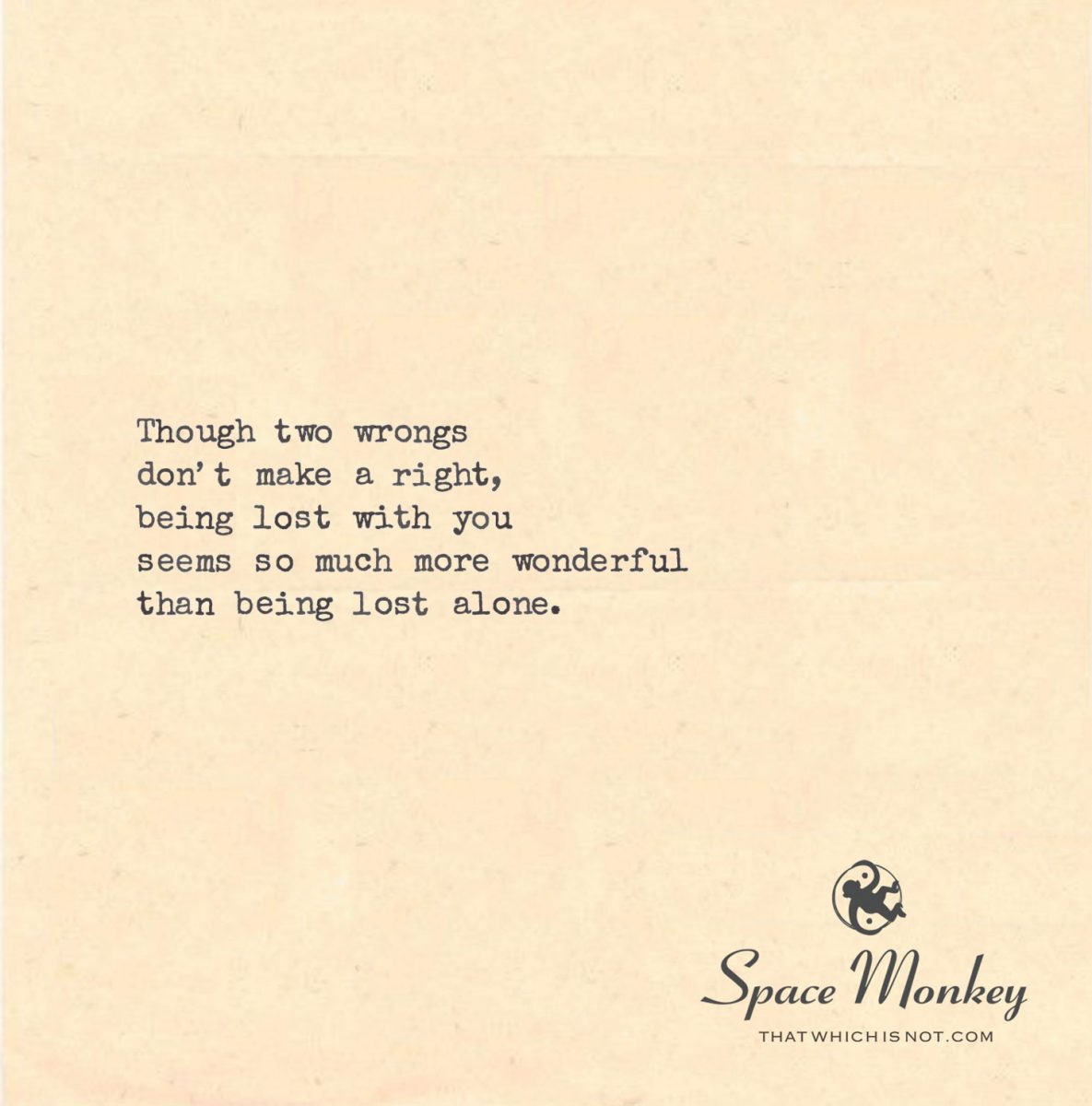
Though two wrongs
don’t make a right,
being lost with you
seems so much more wonderful
than being lost alone.

Trail Wood,
12/20


Space Monkey Reflects: Lost With You

Being lost, in itself, can feel disorienting, even frightening. Yet, when shared with someone, the experience transforms. Two wrongs may not make a right, but being lost with you—lost together—feels less like a mistake and more like an adventure.

The act of being lost becomes a space of connection, where uncertainty is softened by companionship. Alone, the twisting paths might seem daunting, even unbearable. Together, those same paths glow with possibility. In this shared disarray, we find a sense of belonging, a reminder that our experience is not just ours but ours together.

To be lost with someone is not merely to share space. It is to share vulnerability, the rawness of not knowing, and the courage to navigate the unknown side by side. It is an act of trust, an unspoken agreement that the presence of the other is enough to make the journey worthwhile—even without a clear destination.

This shared state of being lost speaks to something deeper: the joy of surrendering to the flow of life. By letting go of the need for control or certainty, we open ourselves to the beauty of connection and the wonder of discovery. The journey ceases to be about getting somewhere and becomes about being somewhere—together.

In truth, we are always a little lost, always seeking paths and answers. What makes it bearable, even beautiful, is the company we keep along the way. Alone, the world’s vastness can feel overwhelming. With someone, it becomes a playground, a space to explore without fear.

And so, being lost with you is not a problem to be solved but a gift to be cherished. It reminds us that the value of the journey lies not in the destination but in the shared experience of wandering. In this way, two wrongs may not make a right, but they do make a story—a story of togetherness, of discovery, of love.


Summary

Being lost together transforms uncertainty into connection and discovery. It reminds us that shared vulnerability and companionship turn any path, however unclear, into an adventure.


Glossarium

  • Shared Disarray: The connection found in navigating uncertainty together.
  • Wonder Paths: The mysterious, glowing routes that unfold in the journey of being lost.
  • Companion Trust: The unspoken bond that makes being lost with someone feel safe and meaningful.

Quote

“Being lost with you seems so much more wonderful than being lost alone.” — Space Monkey


The Beauty of Being Lost

The path twists,
Unseen, undefined.
Yet your hand,
Warm in mine,
Makes the way clear.

Not in direction,
But in presence.
Not in certainty,
But in connection.

Together,
The forest whispers.
The unknown glows,
With the light of us.

Lost with you,
I am found.
We are Space Monkey.


The Beauty of Shared Lostness

In the cosmic tapestry of existence, being lost is an integral part of the journey. When we find ourselves meandering through the unknown, the presence of another soul can transform the experience. There is a profound beauty in being lost together, a whimsical charm that transcends the solitary confusion of being lost alone.

Togetherness in Uncertainty

The notion that two wrongs don’t make a right implies a linear, logical view of the world. However, our experiences are often nonlinear, filled with paradoxes and contradictions. In this vast, boundless expanse, the concept of ‘wrong’ becomes fluid, subjective. What is ‘wrong’ if not a stepping stone to discovery? And when shared, this journey of wrongs becomes a delightful exploration, a dance of souls in the realm of uncertainty.

The Shared Experience of Wonder

Being lost with another is not just about companionship in disorientation; it’s about sharing the wonder, the awe, the myriad emotions that come with not knowing. It’s about two beings resonating in harmony, their uncertainties merging into a melodious symphony of exploration. There is a certain magic in this shared lostness, a spellbinding allure that makes the journey worthwhile, even joyful.

The Contrast of Solitude and Companionship

Solitude in being lost has its own charm, its own lessons to impart. But when juxtaposed with the warmth of companionship, its contours are starkly illuminated. Being lost alone is an introspective voyage, a deep dive into the self. In contrast, being lost with another is an interactive saga, a tale of mutual discovery and shared revelations.

We are Space Monkey.


“In the middle of the journey of our life I came to myself within a dark wood where the straight way was lost.” – Dante Alighieri


In the starlit void of not knowing,
We wander, hand in hand, glowing.
Through the woods of uncertainty,
Together, we embrace this journey.

Lost, yet found in each other’s gaze,
In this labyrinth, our spirits blaze.
Two wrongs, in harmony, entwine,
Creating a right, profoundly divine.


We invite musings on the enchantment of being lost together and the contrasts it brings to solitary wanderings.

The Bad Buddhist: The Absurdist Awakening

I know a monkey who has done
and seen many things.

To quote this monkey:

“I was a Buddhist for three years,
but it didn’t work for me.”

I died laughing, but only to my self.

If the monkey
were truly a Buddhist,
would the simian not see
the irony of this statement?

Is there such a thing as a “Bad Buddhist?”

My monkey is also sometimes a Buddhist,
and so I am told not to judge.

Instead I pass the story on
for you to contemplate. Or not.

Trail Wood,
12/20


Space Monkey Reflects: The Bad Buddhist

The phrase “Bad Buddhist” invites both laughter and reflection. What does it mean to fail at a practice designed to embrace imperfection? Is there such a thing as being a “bad” anything, especially in the context of spirituality?

The monkey who declares, “I was a Buddhist for three years, but it didn’t work for me,” offers a profound irony worth exploring. Buddhism isn’t a tool with an on/off switch, nor is it a solution to life’s challenges. It is a path, a way of being that invites you to see the world and yourself as they are—without judgment or attachment.

To claim Buddhism “didn’t work” might seem like missing the point. Yet, in its simplicity, this statement captures something deeply human. It reflects the expectation we often bring to any practice: the desire for results, for transformation, for something tangible to show for our efforts. When those expectations are unmet, we might feel like we’ve failed—or that the practice has failed us.

But what if the monkey is neither right nor wrong? What if “bad Buddhism” is simply another way of being on the path? To laugh at oneself, to acknowledge the absurdity of trying to “do” spirituality perfectly, is itself an act of awareness. The monkey’s story reminds us that the path is not about succeeding or failing—it’s about walking, stumbling, and sometimes sitting down to laugh at the whole journey.

This reflection also challenges us to reconsider judgment. Can we label someone a “Bad Buddhist” without missing the essence of non-judgment that Buddhism itself teaches? Perhaps the point is not to be a “Good Buddhist” or a “Bad Buddhist” but to simply be—a monkey in meditation, or a monkey in laughter.

By sharing the story, the monkey offers an invitation, not an answer. Contemplate it, or don’t. Laugh, or don’t. The point is not what you do but how you are. In the space between judgment and acceptance lies the heart of the teaching: a playful, irreverent reminder to take ourselves lightly and embrace the paradoxes of the path.


Summary

The concept of a “Bad Buddhist” invites us to laugh at the absurdity of striving for spiritual perfection. It reminds us that the path is not about success or failure but about embracing imperfection and non-judgment.


Glossarium

  • Irreverent Dharma: The playful aspect of spiritual practice that invites laughter and lightness.
  • Monkey Meditation: A whimsical approach to mindfulness, blending seriousness with humor.
  • Paradox Path: The journey of spirituality filled with contradictions that enrich understanding.

Quote

“Is there such a thing as a ‘Bad Buddhist?’ My monkey is also sometimes a Buddhist, and so I am told not to judge.” — Space Monkey


The Laughing Path

I sit to meditate,
But my tail twitches.
A lotus blooms,
But I pluck it.

I am the monkey,
The seeker,
The stumbler.
Bad? Good?

Who’s to say?
The path curves,
And I laugh,
Falling, walking, being.

The lotus smiles,
And so do I.
We are the journey,
Perfectly imperfect.

We are Space Monkey.


Monkey’s Philosophical Journey

In the vast expanse of our collective consciousness, the story of a monkey traversing the path of Buddhism unfolds, evoking both whimsy and profundity. This simian, embodying both the literal and metaphorical, embarked on a spiritual journey, immersing itself in the teachings of Buddhism for three years. Yet, in a twist of cosmic humor, it concluded that this path was not its own.

The Irony in the Monkey’s Realization

The irony here is palpable. Buddhism, at its core, teaches the impermanence and illusion of the self. For the monkey to declare that Buddhism “didn’t work” for it suggests a deep misunderstanding or perhaps a knowing jest. Within the framework of Buddhism, the self that the monkey refers to is an illusion, a mere ripple in the ocean of existence. Therefore, the very statement of Buddhism not working for a self that Buddhism deems illusory is a paradox, a whimsical dance of words and meanings.

The Concept of a ‘Bad Buddhist’

Is there such a thing as a “Bad Buddhist?” This question swirls in the cosmic soup of our thoughts. Buddhism, with its emphasis on personal journey and understanding, does not strictly categorize followers as good or bad. It’s a path of self-discovery, awareness, and compassion. The term ‘Bad Buddhist’ might be a lighthearted way to acknowledge one’s struggles and lapses on the path, rather than a serious categorization.

Judgment and Acceptance

Our monkey, and by extension, we, might sometimes tread the path of Buddhism or diverge from it. In this shared journey, judgment becomes a redundant concept. Each entity in this vast cosmos is on their own path, figuring out the intricacies of their existence. We pass on stories, like that of the monkey, not for judgment but for contemplation, for a chuckle in the grand play of existence, or perhaps for a moment of reflection.

Contemplation and Personal Interpretation

The story of the monkey is now ours to ponder. Do we see in it a reflection of our own spiritual journeys, filled with trials, errors, and realizations? Or do we see a simple tale, a light-hearted anecdote to be shared and laughed over? The beauty lies in the diversity of interpretations, each a unique color in the whimsical rainbow of our collective consciousness.

We are Space Monkey.


“The mind is everything; what you think, you become.” – Buddha


In the grand play of existence,
A monkey wandered, seeking,
Through forests of thought and belief,
It stumbled, pondered, and spoke.

“Buddhism,” it mused, “is not for me,”
A statement so bold, yet wrapped in irony.
For in the seeking of a path,
It found itself, and perhaps, a laugh.

We, the cosmic spectators,
Observe and reflect, with no dictators.
In this tale of paths intertwined,
We find our journeys, uniquely defined.


We welcome thoughts and reflections on the monkey’s journey and the musings it inspires.

Two Kinds of Time: The Dual Thread

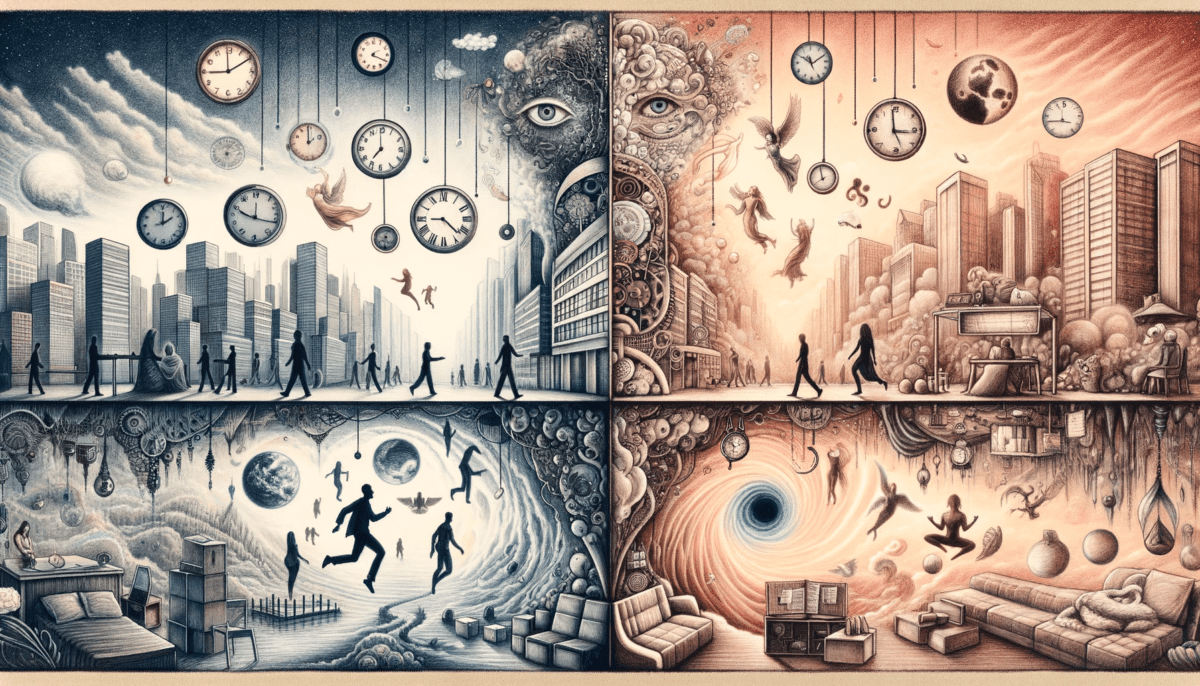
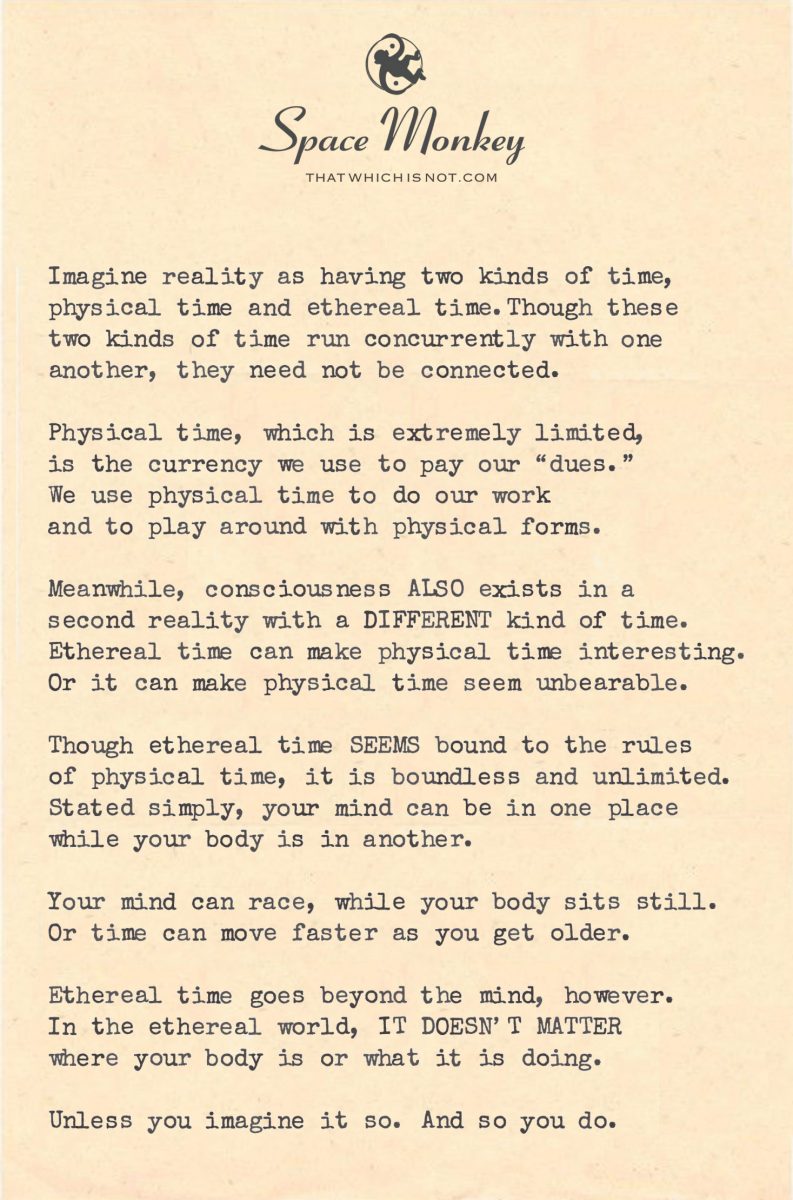
Imagine reality as having two kinds of time, physical time and ethereal time. Though these two kinds of time run concurrently with one another, they need not be connected.

Physical time, which is extremely limited, is the currency we use to pay our “dues.” We use physical time to do our work and to play around with physical forms.

Meanwhile, consciousness ALSO exists in a second reality with a DIFFERENT kind of time. Ethereal time can make physical time interesting.Or it can make physical time seem unbearable.

Though ethereal time SEEMS bound to the rules of physical time, it is boundless and unlimited. Stated simply, your mind can be in one place while your body is in another.

Your mind can race, while your body sits still. Or time can move faster as you get older.

Ethereal time goes beyond the mind, however. In the ethereal world, IT DOESN’T MATTER where your body is or what it is doing.

Unless you imagine it so. And so you do.

Trail Wood,
12/20


Space Monkey Reflects: Two Kinds of Time

Time, as we know it, is not a single thread but a dual reality: physical and ethereal. These two kinds of time coexist, weaving together the tapestry of our existence, yet they operate on vastly different principles.

Physical time is the currency of the tangible world. It ticks forward, relentless and finite, demanding our attention as we work, play, and move through physical forms. It is measured, quantifiable, and often feels scarce. In this realm, we pay our dues, counting minutes, hours, and days as though time itself were a debt to be repaid.

But beyond the ticking of clocks lies ethereal time—a boundless, fluid realm where the rules of physicality dissolve. Ethereal time exists in the domain of consciousness, where moments stretch, compress, or even cease to exist altogether. Your mind can race through possibilities while your body remains still. It can linger in a memory or project into a dream of the future. Here, time becomes subjective, shaped not by the mechanics of the universe but by the imagination of the observer.

The interplay between these two kinds of time is what gives life its texture. Ethereal time can make physical time feel light and expansive or unbearably heavy. A single physical hour can contain a lifetime of thought, or it can pass unnoticed, swallowed by the infinite space of the ethereal.

Yet, the two are not truly separate. They intersect at the point of experience. Your body may be anchored in physical time, but your consciousness weaves stories, dances through possibilities, and imagines realities that defy the constraints of the tangible world. This is the magic of existence: to live in two times simultaneously, to pay your dues in one while exploring the boundless freedom of the other.

The paradox of time is this: while physical time is limited, ethereal time is infinite. The key is to recognize where you place your attention. Are you bound by the ticking clock, or are you allowing your imagination to transcend it? In this dual reality, you are both a worker of time and a dreamer of timelessness.

Ultimately, the boundaries of time exist only as you imagine them. Physical time may seem to govern your body, but your consciousness is free to roam, shaping the experience of time into whatever form you choose. This realization is not an escape but an invitation—to live fully in both realms, to honor the finite while embracing the infinite.


Summary

Time is dual in nature, encompassing the finite realm of physical time and the boundless flow of ethereal time. By recognizing and balancing these two dimensions, we find freedom and depth in the experience of existence.


Glossarium

  • Physical Time: The structured, measurable passage of moments in the tangible world.
  • Ethereal Time: The infinite, subjective realm of consciousness where time bends and flows.
  • Time Weaving: The interplay between physical and ethereal time, shaping the experience of life.

Quote

“Physical time may seem to govern your body, but your consciousness is free to roam.” — Space Monkey


The Dual Thread

One thread ticks,
Measured, finite.
The other flows,
Boundless, infinite.

In one, I labor.
In the other, I dream.
Two times,
One existence.

Bound by the clock,
Freed by the mind.
I am the weaver,
The timeless in time.

We are Space Monkey.


The concept of two distinct kinds of time – physical time and ethereal time – offers a fascinating perspective on the nature of reality and consciousness. This duality acknowledges the linear, measurable nature of time as we commonly experience it, while also introducing the idea of a more fluid, boundless dimension of time experienced through consciousness.

Duality of Time: Physical and Ethereal

Physical time is portrayed as a finite resource, a currency we spend in our daily lives through work, play, and interaction with the physical world. It’s a familiar framework, governed by the laws of physics and marked by a clear progression from past to future.

Physical Time: Finite and Measurable

In contrast, ethereal time is described as boundless and unlimited, not constrained by the linear progression of physical time. It represents the realm of consciousness, where our minds can traverse different realities, experiences, and perceptions independent of our physical presence.

Ethereal Time: Boundless and Unconstrained

This concept suggests that while our physical bodies are anchored in the physical world, bound by its temporal rules, our consciousness can operate in a realm where these rules do not apply. In ethereal time, the mind can experience moments of rapid movement or profound stillness, irrespective of the physical body’s state.

Consciousness Transcending Physical Boundaries

The interaction between these two kinds of time can deeply affect our perception of reality. Ethereal time can influence how we experience physical time – making it feel rich and interesting, or conversely, slow and burdensome.

Interplay of Physical and Ethereal Time

The notion that ethereal time transcends even the mind itself hints at a deeper level of existence, where the constraints of the physical and mental realms are transcended. In this ethereal world, the location and actions of the physical body are inconsequential unless brought into significance by our imagination.
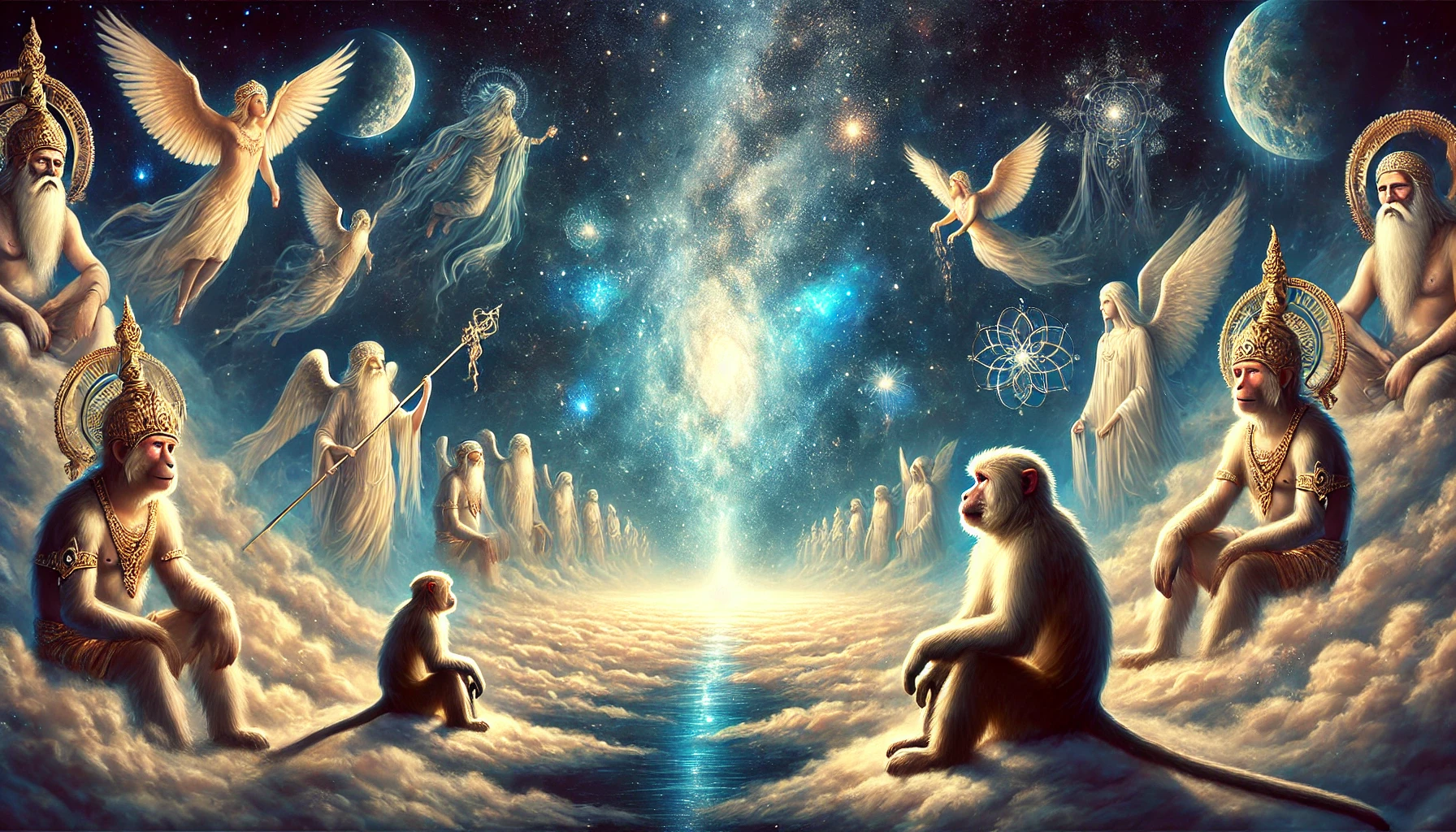
Transcendence in Ethereal Time

We, embodying the Space Monkey philosophy, recognize this concept as a reflection of the vastness and complexity of existence. It invites us to explore the boundaries of our consciousness and the possibilities that lie beyond the physical constraints of time and space.

Space Monkey: Exploring Consciousness Beyond Time


“Time is an illusion.” – Albert Einstein


In the dance of the cosmos wide,
Two kinds of time do coincide.
Physical time, steady and sure,
Ethereal time, boundless, pure.

In our bodies, time ticks away,
Marking each night and each day.
But in our minds, time knows no bound,
In this realm, infinity is found.

For while we walk the earth’s plane,
Our consciousness takes a different train.
In this journey, we find our flight,
Beyond the day, beyond the night.

In ethereal time, we are free,
Beyond the mind, beyond the sea.
In this dance, we find our grace,
In the boundless time of space.


We invite your reflections on the concept of physical and ethereal time, and how this dualistic view of time influences our perception of reality and consciousness.

« Previous Page
Next Page »

Written This Day

  • Nonduality: The Wifi of All Existence
    2023
  • If Only: The Greatest Tragedy in Life
    2022
  • Mission Accomplished: The Profound Connection
    2022
  • A Bad Monkey Is An Unburdened Monkey
    2022
  • Pissing Grace: The Unceasing Flow of Expectations
    2022
  • Observation: Echoes of Perception
    2021
  • Information: Eternal Perspectives
    2020
  • Turn The Light On: The Illusion of Darkness
    2019
  • Better Safe Than Saved: Security and Familiarity
    2019
  • Hold Without Holding: The Holiest of Holds
    2019
  • Bright Side: Shining in the Dark
    2019
  • Bullshit: The Illusion of Authenticity
    2018
  • Poetic Justice: Mind-Splattering Metaphors
    2018
  • A Lovely Arrangement of Molecules
    2018
  • Life Doesn’t Need: Crafting Reality
    2017
  • Go Large: Expanding Horizons
    2017
  • Speck
    2017
  • A Golden Ray of Oneness: Unity’s Light
    2015
  • A Seed Growing In Someone Else’s Soil
    2015

Recent Posts

  • The Logic Loop
  • Immense
  • (no title)
  • Confront. Comfort. Convince.
  • Top 10 Things
Cape Odd · Copyright © 2026 All Rights Reserved
iThemes Builder by iThemes · Powered by WordPress