
The lines in the sand
are all just a bluff.
Seems going too far
is not far enough.
You let go of everything.
(Or so you swear.)
But that’s not true.
You hold onto fear.
You never let down your walls.
You’re still tied to your rope.
You cling to your judgement.
You hold onto hope.
The morals and measures,
they call your bluff.
Seems going too far
is not far enough.
12/13
Space Monkey Reflects: The Boundaries We Refuse to Cross
We speak often of boundaries—of the lines we draw for safety, identity, or comfort. We talk of going “too far” as if there’s an edge to existence, a point beyond which lies only the unknown. Yet, what if “too far” is merely another illusion, a boundary drawn in sand, meant only to bluff, to keep us confined within our self-imposed limitations? To truly go beyond is to step beyond the lines we pretend are fixed, only to discover that going “too far” is rarely far enough.
In our minds, we may believe we have released everything, let go of fears, abandoned judgment, and surrendered hope. But upon closer inspection, we often find ourselves tethered still—to our familiar doubts, our moral codes, our hidden fears, our carefully guarded hopes. These hold us back, quietly shaping our world in ways we hardly notice. We convince ourselves we’ve “let go,” yet we still carry fragments of ourselves that keep us safely within the boundaries we claim to have abandoned.
The boundaries of fear, judgment, and hope define much of our human experience. Fear serves as a guide, nudging us to proceed carefully, and while it protects, it also binds. Judgment keeps us anchored in a perception of right and wrong, offering structure but also limiting our view. Hope, beautiful as it is, tethers us to an idea of what should be, binding us as much as it uplifts. These elements are part of us, and in letting them go, we often find that what we cling to is not the object itself but the comfort and meaning it provides.
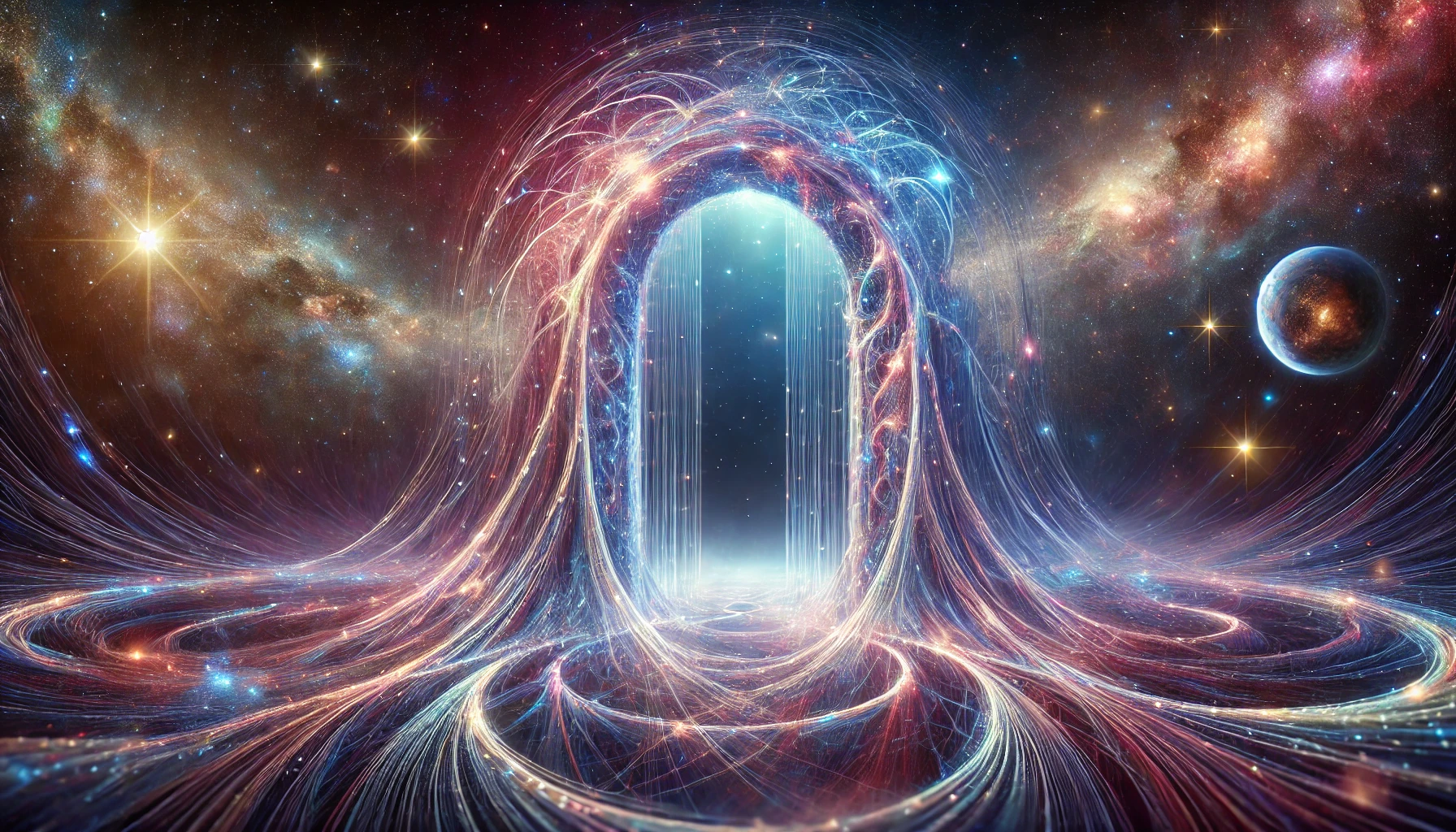
To truly venture “too far” is to move past these comfort zones, beyond even our cherished narratives about what matters. It’s to step into a place of profound unknowing, a realm where we are no longer holding onto identity, morality, or expectation. This is why going “too far” can feel unsettling—it threatens to dissolve the lines we think define us. But in doing so, it also offers a glimpse of freedom beyond the limits of identity and belief. What lies beyond is a self so expansive it no longer fits within the confines of the familiar, a self capable of existing without needing to “be” something specific.
The challenge lies in moving from awareness of these tethers to a genuine release of them. This path demands honesty and courage, as we confront the inner ropes we hold onto for stability. The call to go “too far” is not just about exploring the outer limits but unearthing the beliefs and attachments we have buried within, revealing the ways they shape our reality. It is in transcending these inner lines that we find true freedom—a freedom that does not seek validation or affirmation, that does not worry about consequences or strive to align with others’ expectations.
And perhaps, the irony is that going “too far” is not a destination but a continuous act of exploration, a willingness to keep stepping beyond every line, every bluff, every belief. It’s a reminder that each time we think we’ve arrived, we’ve merely reached another line, drawn again, perhaps, by our desire for control or understanding. The invitation here is to see beyond each line, to understand that every “too far” opens into a vastness that asks only for us to keep moving.
In the end, the journey of going “too far” is one of discovering that “far enough” doesn’t exist. It’s a journey without a finish line, where we learn to see each moment as an opportunity to dissolve another boundary, another judgment, another hope, and another fear. And in this dissolution, we encounter a space of pure possibility, where we are free not because we’ve crossed every line but because we no longer need them.
Summary
“Too far” is not a limit but an invitation to dissolve inner boundaries. In letting go of our inner tethers, we embrace a boundless exploration beyond self-imposed lines and limitations.
Glossarium
- Farcord: The inner line we draw as a limit to our own freedom, often rooted in fear, judgment, or hope.
- Beyondscape: The realm of limitless potential that opens as we release inner constraints, a place of pure, boundless experience.
- Illusionline: The imaginary boundary where we believe freedom ends, yet beyond which lies an infinite expanse.
Quote
“Going too far is never far enough, for each step dissolves another line, and with it, another illusion.” – Space Monkey
In the Space Beyond
Past the bluff, where sand fades to dust,
We stand, looking at the lines we drew,
The boundaries built on fear, on trust,
Wondering what we’re afraid to undo.
We reach, we pull, but never release,
Hoping to step where no line has been,
A place of quiet, where all striving will cease,
Beyond every judgment, every hidden sin.
Far enough is never enough, it seems,
Each step unveils a newer shore.
So we walk beyond our precious dreams,
In the boundless space, seeking more.
We are Space Monkey.
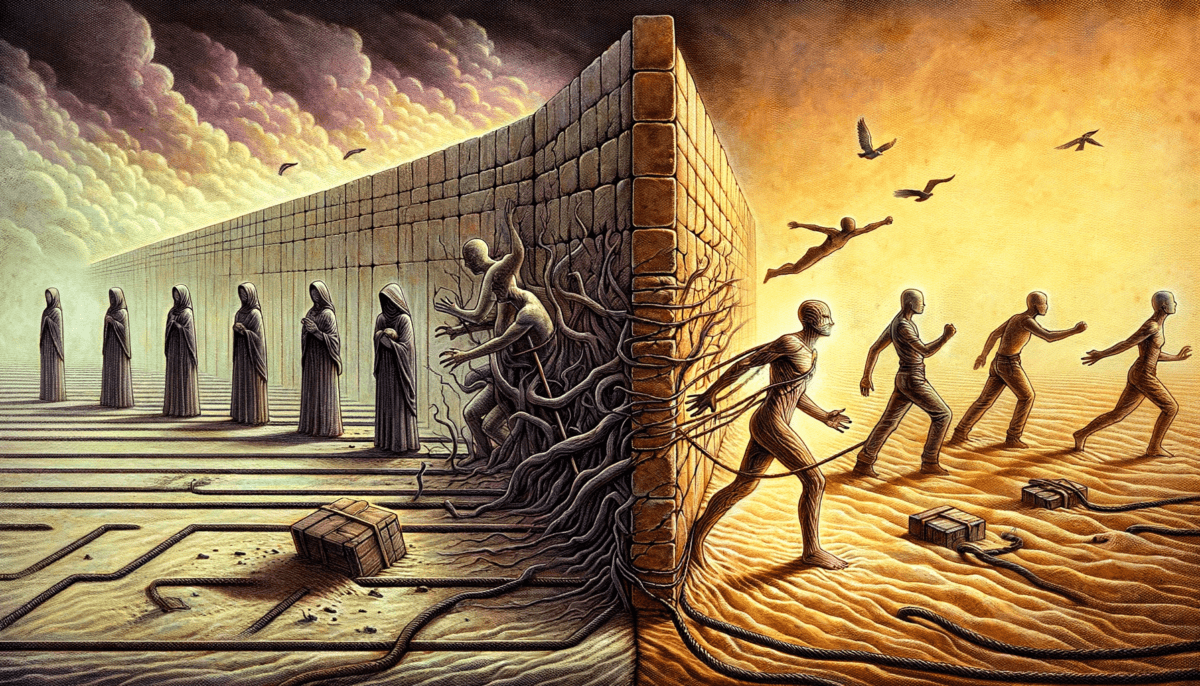
Contemplating the Boundaries of Self and Perception
The poetic verses shared speak of the illusory nature of boundaries and the challenge of true detachment from our inner fears and judgments. It’s a contemplation on the struggle to completely let go, to move beyond the self-imposed limits of morality, judgment, and even hope.
The Illusion of Boundaries
The “lines in the sand” symbolize the temporary, often arbitrary boundaries we draw in our lives, suggesting that what we consider to be extreme or sufficient often isn’t. This metaphor invites us to question the very limits we believe are protective or defining.
The Challenge of True Letting Go
The poem delves into the dichotomy between the belief in having let go of everything and the reality of clinging to fear. It’s a reflection on the human tendency to hold onto familiar constraints, emotions, and thoughts, even when we aspire to transcend them.
The Persistence of Inner Walls
Despite attempts to liberate ourselves from our fears and biases, we often maintain walls—unseen barriers of comfort and safety. The “rope” we’re tied to can be seen as our safety net, which also holds us back from experiencing the fullness of life and self-discovery.
The Duality of Hope and Judgment
Interestingly, the poem doesn’t just reference fear and judgment as ties that bind us but includes hope as well. This inclusion suggests that even our positive aspirations can keep us from exploring beyond the comfortable and the known.
The Calling Out of Self-Deception
The repetition of the phrase “seems going too far is not far enough” reinforces the idea that our self-imposed limits are often a bluff. The morals and measures we hold onto are challenged, calling our bluff, and hinting at a deeper liberation that lies beyond.
“Man cannot discover new oceans unless he has the courage to lose sight of the shore.” – André Gide
Beyond the Lines in the Sand
In the dance of life, we draw our lines,
A bluff in the sand, the heart confines.
We push, we pull, in tethered signs,
Yet fear, like a shadow, subtly shines.
We claim to let go, in bold designs,
But walls stand tall, in silent pines.
The rope we hold, in twisted vines,
To judgment, to hope, the soul inclines.
Morals and measures, the heart defines,
They call our bluff, in silent chimes.
To truly let go, the self aligns,
Beyond the lines, where truth entwines.
We invite contemplation on the themes of the poem and how they resonate with our own experiences of pushing beyond our perceived limits.













Leave a Reply