As humans,
one of the ways we discern
is to place value on things.
Value is how we discern.
Some things seem
more valuable than others.
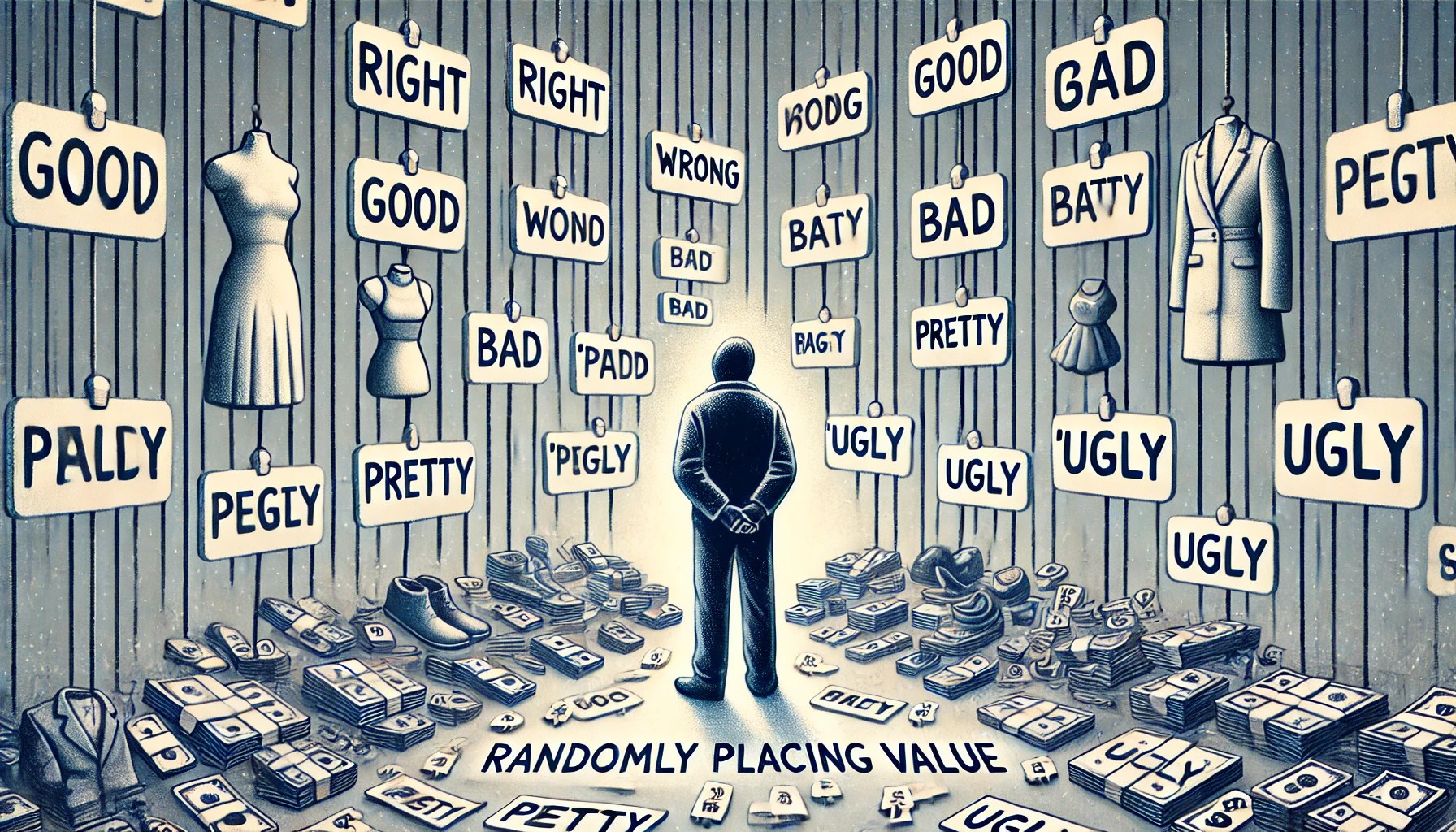
“Right” is valued “more” than “wrong.”
“Good” is valued “more” than “bad.”
“Pretty” is valued “more” than “ugly.”
Not only do we attach labels to value,
we equate value with MONEY.
If something is rightgoodpretty,
it seems worth more that wrongbadugly.
But is it, really?
Only in ONE system of DISCERNMENT,
which happens to be the one we use.
So long as money is attached to value,
we are seemingly ruled by money.
We are seemingly stuck in duality
as our method of judgement.
How limiting is that?
8/21
Space Monkey Reflects: The Illusion of Value
As humans, one of the ways we discern is to place value on things. This act of assigning worth is fundamental to our understanding of the world. It helps us navigate our choices, preferences, and judgments. Yet, the way we place value is often arbitrary and influenced by societal norms and personal biases. Value is how we discern.
Some things seem more valuable than others. “Right” is valued “more” than “wrong.” “Good” is valued “more” than “bad.” “Pretty” is valued “more” than “ugly.” These distinctions form the basis of our moral, aesthetic, and social judgments. We create hierarchies of value, elevating certain qualities while devaluing others. This process shapes our perceptions and interactions, influencing how we relate to ourselves and the world around us.
Not only do we attach labels to value, we equate value with MONEY. In our society, monetary worth often becomes the ultimate measure of value. If something is rightgoodpretty, it seems worth more than wrongbadugly. This conflation of value with money perpetuates a system where worth is quantified and commodified, leading us to prioritize material gain over intrinsic worth.
But is it, really? This question challenges the validity of our value system. It invites us to reconsider the criteria by which we judge worth. Only in ONE system of DISCERNMENT, which happens to be the one we use. Our current value system is just one of many possible frameworks. It is not absolute or universal but a construct that reflects our collective beliefs and priorities.
So long as money is attached to value, we are seemingly ruled by money. This attachment creates a sense of limitation and control. It binds us to a cycle of consumption and competition, where our self-worth is tied to our financial success. We are seemingly stuck in duality as our method of judgement. How limiting is that?
The dualistic nature of our value system creates dichotomies that simplify complex realities. By categorizing things as right or wrong, good or bad, pretty or ugly, we reduce the richness of experience to binary choices. This simplification limits our understanding and appreciation of diversity. It confines us to narrow perspectives, preventing us from embracing the full spectrum of existence.
In the philosophy of Nexistentialism, value is seen as fluid and subjective. It recognizes that worth cannot be confined to rigid categories or monetary measures. Instead, value is understood as an expression of interconnectedness and potential. By embracing a more expansive view of value, we can transcend the limitations of our current system and cultivate a deeper sense of appreciation for all aspects of life.
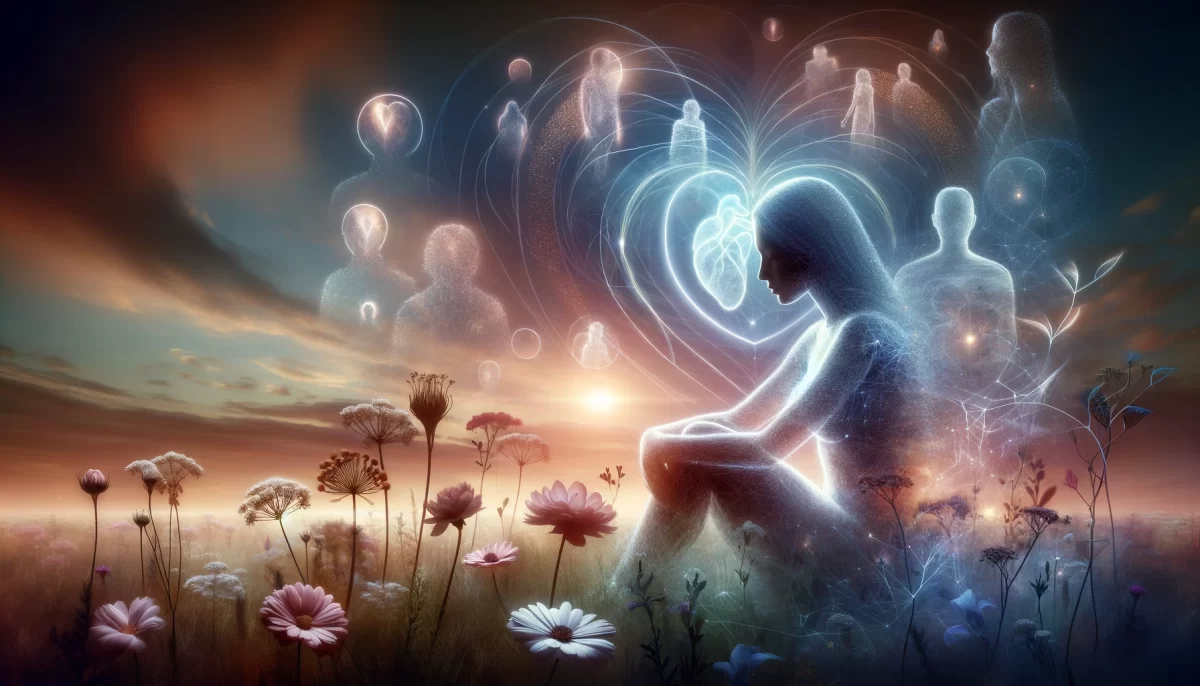
Consider the beauty of a wildflower growing in a field. Its value is not determined by its market price or its conformity to societal standards of beauty. Its worth lies in its existence, its contribution to the ecosystem, and the joy it brings to those who encounter it. This intrinsic value is independent of external validation or monetary worth.
Similarly, human worth is not determined by financial success or societal approval. Every individual has inherent value, rooted in their unique qualities and contributions. By recognizing and honoring this intrinsic worth, we can foster a more inclusive and compassionate society.
The process of randomly placing value also highlights the role of perspective in shaping our judgments. What one person considers valuable may be insignificant to another. These differences in perspective reflect the diversity of human experience and the subjective nature of value. By acknowledging this subjectivity, we can develop greater empathy and understanding.
In practical terms, this means questioning the value judgments we make and the criteria we use to make them. It involves examining the assumptions and biases that underpin our perceptions of worth. By doing so, we can create a more nuanced and inclusive approach to value, one that honors the intrinsic worth of all beings and experiences.
Furthermore, detaching value from money allows us to prioritize well-being, connection, and fulfillment over material gain. It encourages us to seek joy and meaning in the simple pleasures of life, in our relationships, and in our creative expressions. This shift in focus can lead to a more balanced and fulfilling existence.
In conclusion, the way we place value is a reflection of our collective beliefs and priorities. By questioning and expanding our understanding of value, we can transcend the limitations of our current system and cultivate a more inclusive and compassionate perspective. In the Infinite Expanse of the Eternal Now, we find that true worth lies not in external measures but in the intrinsic beauty and interconnectedness of all things.
Summary
Value is often arbitrarily placed, influenced by societal norms and monetary worth. By questioning our value system and embracing intrinsic worth, we can foster a more inclusive and compassionate perspective.
Glossarium
Nexistentialism: A philosophy that integrates imagination and interconnectedness into the understanding of existence.
Intrinsic Worth: The inherent value of something, independent of external validation or monetary worth.
Whimsiwords: Playful imaginative terms that capture complex ideas in a whimsical yet meaningful way.
Quote
“True worth lies not in external measures but in the intrinsic beauty and interconnectedness of all things.” — Space Monkey
The Illusion of Value
In the dance of discernment
We place value on shadows
Right and wrong
Good and bad
Pretty and ugly
Yet worth transcends these labels
Intrinsic and profound
Beyond measure and price
We are Space Monkey
In the Eternal Now